Best Adaptive Clothing for Seniors (2026): Magnetic, Open-Back & Anti-Strip Picks
By Sarah Mitchell · Editor, BuyingForMom · Updated September 2026
10-minute read · Adaptive Clothing · 5 picks compared

How we sorted through 40+ adaptive garments in three weeks
We started with the four brands that actually stock verifiable, in-stock listings on Amazon Silverts, Ovidis, and a handful of magnetic-closure specialists and worked down from roughly forty garments to the five below. We cross-referenced verified-buyer reviews, occupational-therapist dressing guidance, and the recurring patterns caregivers describe on Reddit’s r/AgingParents and r/dementia, then matched each pick to a specific dressing barrier rather than a vague “senior-friendly” label. A garment earned a spot only if it removes a real obstacle — a button too small for arthritic fingers, a pullover a stroke survivor can’t manage — not because a brand slapped “adaptive” on a standard shirt.
Who this guide is for
This guide is for adult children and caregivers buying clothing for a parent whose dressing has gotten harder after a stroke, with arthritis or tremor, or as dementia progresses. If you’re shopping for yourself and can still dress independently, the magnetic-closure picks apply to you too; you can skip the caregiver-assisted sections (open-back and anti-strip) below.
The phrase “adaptive clothing for seniors” covers a lot of ground, and buying the wrong category is the most common — and most expensive — mistake. A parent who can’t manage buttons needs a completely different garment than one who is bedbound, and neither needs the anti-strip jumpsuit dementia-care marketing pushes hardest. Below, we route each pick to the actual problem.
At a glance
BEST OVERALL Silverts Men’s Magnetic Button Shirt (~$45) — hidden magnets look like buttons, fasten one-handed.
ARTHRITIC HANDS Silverts Women’s Magnetic Closure Top (~$40) — same magnet system in a women’s blouse cut.
FOR DEMENTIA Ovidis “Bella” Anti-Strip Jumpsuit (~$70) — back-zip onesie that discourages undressing.
WHEELCHAIR / BEDBOUND Silverts Men’s Open-Back Fleece Pants (~$50) — dress fully seated or lying down.
EASY ACCESS Silverts Women’s Side-Closure Pants (~$50) — full side-zips for incontinence and catheter care.
BEST OVERALL Silverts Men’s Magnetic Button Shirt
~$45 · Check price on Amazon →
For most seniors, the dressing problem isn’t the whole shirt — it’s the buttons. This Silverts top replaces every button with a hidden magnet that snaps shut with a light one-handed press and looks, from across the room, exactly like a normal button-down. Across verified buyer reviews the same note recurs: a parent who had quietly stopped wearing collared shirts started wearing them again because they could finally fasten one alone. It’s the pick occupational therapists reach for first with post-stroke and arthritis clients, because it restores independence without announcing itself as a medical garment.
The good
- Fastens fully with one hand — ideal for a working-arm stroke survivor
- Reads as an ordinary button-down; no clinical look
- Machine-washable; magnets survive normal laundry cycles
The catch
- Magnetic closures should be kept clear of pacemakers and ICDs — check with the cardiologist first
- Runs closer to fitted than boxy; size up for a fuller build
This is right if… your parent can still dress standing but can’t work small buttons or has only one reliable hand.
Look elsewhere if… they wear a pacemaker or defibrillator, or they can no longer stand to dress.
ARTHRITIC HANDS Silverts Women’s Magnetic Closure Top
~$40 · Check price on Amazon →
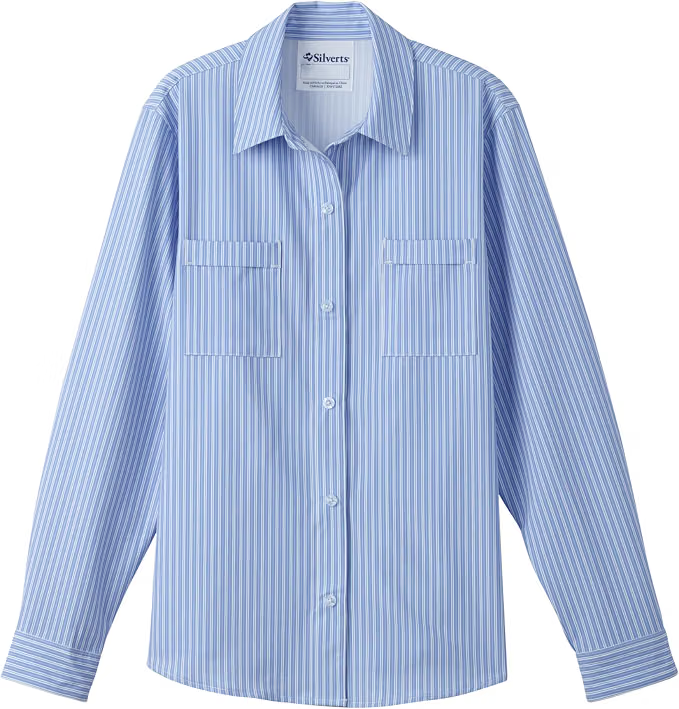
This is the women’s answer to the same problem, and it’s the pick we’d put in most mothers’ closets first. The magnetic placket takes the fine-motor demand out of buttoning entirely, which is exactly where arthritis and post-stroke weakness bite hardest. Verified buyers consistently praise the soft, drapey fabric and a cut that reads as a real blouse rather than a hospital gown — the dignity point matters, because a garment that looks “adaptive” is a garment a parent quietly refuses to wear. Reviewers with rheumatoid arthritis specifically call out being able to dress without the morning wrestling match that used to require a spouse’s help.
The good
- No buttons, snaps, or hooks — pure magnet closure for weak or painful hands
- Blouse-style cut and soft fabric preserve dignity
- Available across a wide size range
The catch
- Same pacemaker/ICD caution as any magnetic garment
- A few reviewers wanted the magnets slightly stronger for very active wearers
This is right if… arthritis, tremor, or one-sided weakness makes buttons the daily obstacle.
Look elsewhere if… she has an implanted cardiac device, or she needs full caregiver-assisted dressing.
FOR DEMENTIA Ovidis “Bella” Anti-Strip Jumpsuit
~$70 · Check price on Amazon →
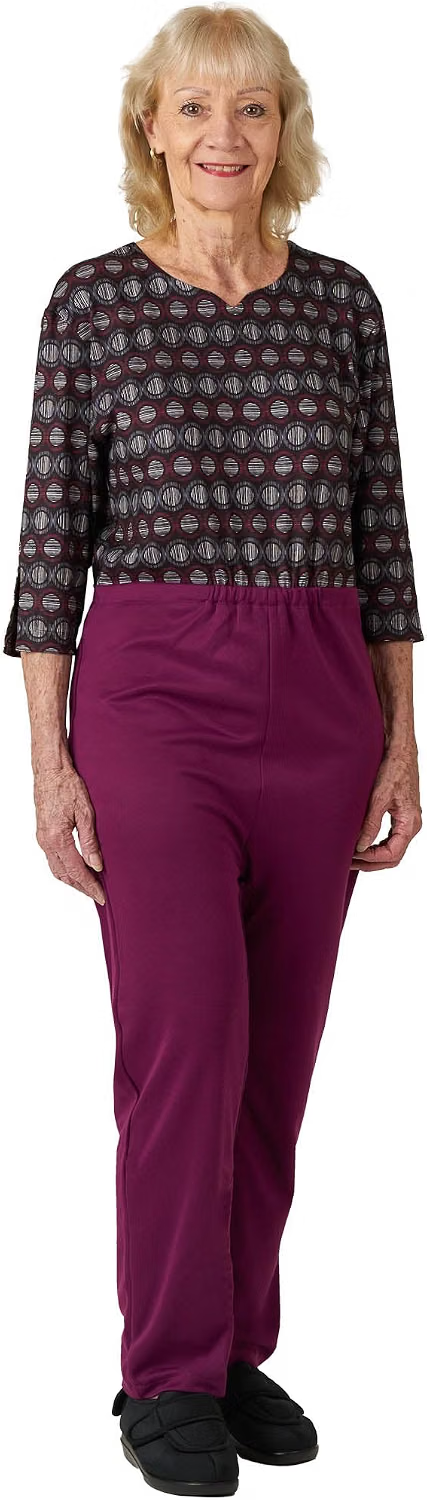
Ovidis was founded by a family caring for a relative with Alzheimer’s, and the “Bella” reflects that — it’s a one-piece onesie that closes with a long back zipper the wearer can’t reach, which is what “anti-strip” means. The garment is meant for a specific, difficult situation: a person in mid-to-late dementia who repeatedly undresses or reaches into an incontinence brief. The back zip and the fabric between the legs let a caregiver change and re-dress quickly while gently removing the constant access the behavior depends on. Caregivers describe it as the thing that finally let a parent stay dressed through the afternoon and sleep through the night. It is not an everyday upgrade for a parent who simply dresses slowly — reach for it only when active undressing or pulling is the real problem.
The good
- Back zipper removes the reach that undressing depends on
- Leg-zip access makes incontinence changes fast for caregivers
- Soft, breathable fabric designed for all-day wear on fragile skin
The catch
- It restricts a person’s own access to their clothing — an ethical call best made with the care team, not lightly
- Priced above single garments; size carefully, as returns on worn items are limited
This is right if… a parent with dementia actively undresses or pulls at an incontinence brief.
Look elsewhere if… they still dress with cues and prompting — a magnetic top preserves far more independence.
WHEELCHAIR / BEDBOUND Silverts Men’s Open-Back Fleece Pants
~$50 · Check price on Amazon →
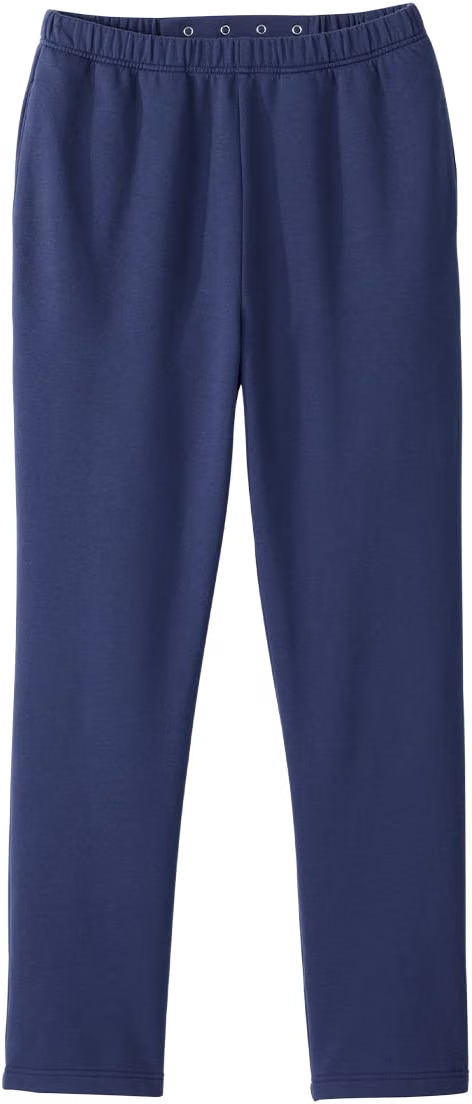
When a parent can’t stand to pull pants up, the fight isn’t dexterity it’s the whole maneuver. These open-back fleece pants are built for a seated or lying body: the back panel opens with snaps so a caregiver can position them without lifting the person’s full weight or wrestling a waistband over hips. Verified buyers who dress a spouse in a wheelchair repeatedly call this the difference between a two-person transfer and a one-person change. The fabric front looks like ordinary fleece pants from the front — which is what the wearer sees and what visitors see — so dignity stays intact even though the construction is entirely functional.
The good
- Dresses fully from a seated or lying position — no standing required
- Snap-open back turns a two-person change into one
- Looks like normal fleece pants from the front
The catch
- Designed for caregiver-assisted dressing, not independent use
- Open-back construction isn’t meant for walking around unassisted for long stretches
This is right if… your parent is in a wheelchair, bedbound, or can’t stand safely to dress.
Look elsewhere if… they still walk and dress themselves — side-closure or pull-on pants keep more independence.
EASY ACCESS Silverts Women’s Side-Closure Pants
~$50 · Check price on Amazon →

Side-closure pants sit between fully independent and fully assisted, and for a lot of families that’s exactly the right middle. Full-length zippers run down both sides so the pants open flat a caregiver can lay them under a seated parent and close them up, and someone managing a catheter or frequent bathroom trips gets access without a full undress. Reviewers point to this pair as the practical choice for a parent who can still do some of the work but needs the process to be faster and less painful, particularly with incontinence in the picture. The waistband is elastic and forgiving, which matters for legs that swell through the day.
The good
- Full side-zips open the pants flat for fast, low-strain dressing
- Discreet access for catheter care and incontinence changes
- Forgiving elastic waist for fluctuating swelling
The catch
- Zipper pulls are small; a parent with severe hand weakness may still need help closing them
- Sizing runs true but check the length — inseams can be long
This is right if… your parent needs quick side access for incontinence or catheter care but still participates in dressing.
Look elsewhere if… they’re fully bedbound — open-back pants are easier for a caregiver.
How the five compare
| Product | Closure | Best for | Price |
|---|---|---|---|
| Silverts Men’s Magnetic Shirt | Hidden magnets | Stroke / arthritis, dresses self | ~$45 |
| Silverts Women’s Magnetic Top | Hidden magnets | Arthritic hands, dresses self | ~$40 |
| Ovidis “Bella” Jumpsuit | Back + leg zip | Dementia, active undressing | ~$70 |
| Silverts Open-Back Pants | Snap-open back | Wheelchair / bedbound | ~$50 |
| Silverts Side-Closure Pants | Full side zips | Incontinence / catheter access | ~$50 |
The conversation you’ll have
Adaptive clothing carries a sting that grab bars and pill organizers don’t: it can feel like a label. A parent may hear “adaptive” as “I’ve given up,” and refuse the whole idea. The move is to never sell the category. Don’t say, “I bought you adaptive clothing.” Say, “I found a shirt that fastens itself — no more fighting those little buttons,” and hand them something that looks like a normal shirt. Let the garment make the case. For a parent with dementia and an anti-strip jumpsuit, skip the explanation entirely and fold it into the routine the way you would any other outfit. The goal is a calmer morning, not a conversation about decline — and the best adaptive clothing earns its place precisely because nobody has to think of it as adaptive at all.
Insurance and savings
Here’s the reality most brand sites bury: Medicare does not cover clothing, adaptive or otherwise it’s treated as a personal item, not durable medical equipment, so there’s no benefit to claim. The savings angle that does exist is the FSA/HSA one. Adaptive garments bought for a specific medical condition can sometimes qualify as an eligible expense with a doctor’s letter of medical necessity, particularly items tied to incontinence care or post-surgical recovery — but rules vary by plan administrator, so confirm first. If your parent is a veteran, the VA sometimes provides a clothing allowance for garments damaged by a prosthetic — worth a call to their benefits office. None of it is automatic, but don’t leave those angles unexplored.
What to actually look for
Match the closure to the hands and to who’s doing the dressing
This is the whole game. If your parent dresses themselves and the problem is fine-motor — buttons, hooks, small zippers — magnetic closures solve it and nothing else is needed. If a caregiver does the dressing, you want the construction that opens the garment to a seated or lying body: open-back for bedbound, side-zip for partial help. Buying an anti-strip jumpsuit for a parent who just dresses slowly is the classic over-correction. Think through the same room-by-room, ability-first lens we use in our complete aging-in-place home safety checklist before you buy the most restrictive option.
Don’t skip the tools — clothing is only half the fix
Adaptive clothing removes the closures; dressing aids handle the reach and the pulling-on. A sock aid, a long-handled shoe horn, or a dressing stick often does more for a parent’s independence than a new wardrobe and the two work together. If the goal is keeping your parent dressing themselves as long as possible, pair the right garments here with the right tools from our guide to the best dressing aids for seniors. Clothing and tools solve different halves of the same problem.
Fabric, skin, and the dignity test
Fragile aging skin punishes bad fabric. Look for flat or covered seams, tagless designs, and soft breathable material — hard seams cause pressure points fast in someone who sits most of the day. And apply the dignity test to everything: if the garment reads as “medical” from across the room, a proud parent will refuse it and you’ll have wasted the money. The best picks look ordinary and work hard underneath. For where clothing fits into the larger picture of aging safely at home, our room-by-room aging-in-place modification guide maps the whole routine.
Frequently asked questions
What is adaptive clothing for seniors?
Adaptive clothing is designed around the abilities of people who find ordinary dressing difficult. It swaps hard-to-manage features — small buttons, back zippers, narrow openings for magnetic closures, side or back zips, open backs, and elastic waists, so a senior can dress independently or a caregiver can dress them with far less strain.
Does Medicare pay for adaptive clothing?
No. Medicare treats clothing as a personal item rather than durable medical equipment, so adaptive garments aren’t covered. Some FSA or HSA plans reimburse condition-specific items with a doctor’s letter of medical necessity, and veterans may qualify for a VA clothing allowance. Confirm the specifics with your plan administrator before assuming coverage.
What clothing is best for someone with dementia?
It depends on the stage. Early on, simple pull-on pieces and magnetic closures preserve independence. If a parent actively undresses or reaches into an incontinence brief, an anti-strip jumpsuit with a back zipper the wearer can’t reach is the targeted tool — but it should be a considered decision made with the care team, not a first resort.
How do you dress a stroke survivor with one working arm?
The general rule is to dress the weaker side first and undress it last. Magnetic-closure shirts remove the two-handed buttoning step entirely, and front-opening garments beat pullovers. Occupational therapists can teach the specific sequence; the clothing simply removes the fine-motor obstacles that make one-handed dressing frustrating.
Is adaptive clothing worth the money?
For the right problem, yes — a $45 magnetic shirt that gives a parent back independent dressing is worth far more than its price in dignity and caregiver time. What’s not worth it is “adaptive” fashion that’s really a standard garment with one hidden feature at a premium. Buy for the specific barrier, not the label.
What is anti-strip clothing?
Anti-strip clothing is designed so the wearer can’t easily remove it — typically a one-piece jumpsuit that closes with a long back zipper out of reach. It’s used in dementia care when a person repeatedly undresses or disrupts incontinence care, giving caregivers a way to keep them safely and comfortably dressed.
The shortlist



Last verified in stock: September 19, 2026
What we’d do tomorrow
If you’re starting this weekend, do three things in order. First, name the actual barrier out loud — is it the buttons, the standing, or the undressing? That single answer picks the category. Second, if your parent still dresses themselves, buy one magnetic-closure top and nothing else yet; watch whether it gives the morning back before you invest in a wardrobe. Third, only if a caregiver is doing the dressing or dementia undressing is the real issue, step up to open-back, side-zip, or the anti-strip jumpsuit — and loop in the care team on that last one. Match the garment to the problem, and let the clothing do its work without ever calling itself adaptive.
— Sarah