Tag: Home Modification

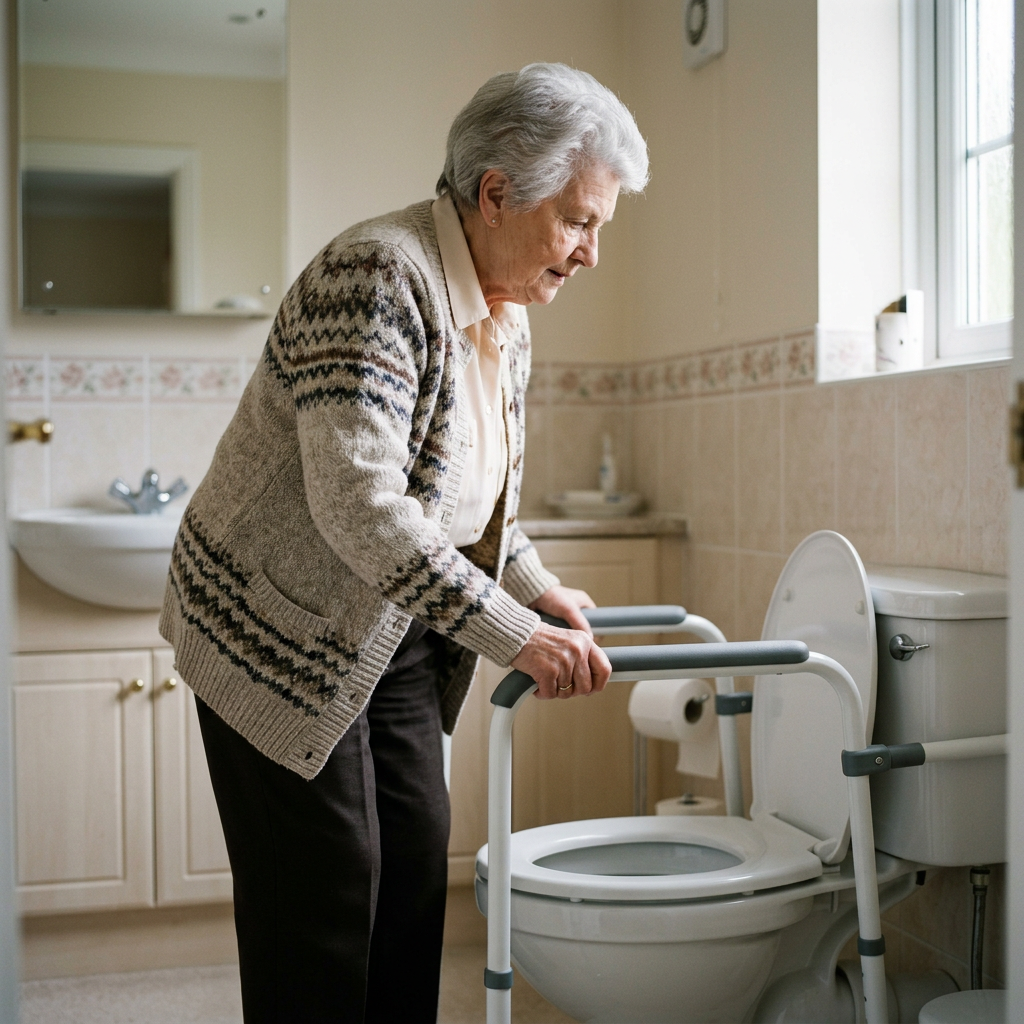
Physical changes to the home structure or layout (handrails, ramps, doorway widening).

  • 5 Best Handheld Showerheads with Pause Button

    5 Best Handheld Showerheads with Pause Button

    Disclosure: BuyingForMom is reader-supported. As an Amazon Associate we earn from qualifying purchases. When you buy through links in this article, we may earn an affiliate commission at no additional cost to you. We never recommend products we haven’t researched against verified-buyer review data. This article is editorial reporting, not medical advice.

    5 Best Handheld Showerheads with Pause Button

    By Sarah Mitchell · Editor, BuyingForMom · Updated May 2026

    8-minute read · Shower & Bath · 5 picks

    The honest take: If you’re shopping for an aging parent and want one head that does everything right, buy the Moen Home Care DN8001CH and stop there, its safety strap, soft-grip handle and ADA compliance make it the editorial default. The YOO.MEE ADA is the right call only if arthritis or tremor makes flipping a small switch the actual barrier. Skip any pause-button head that doesn’t have a long flexible hose, a 60-inch hose is the minimum that makes seated showering possible.

    How we sorted through 41 pause-button handhelds in three weeks

    To narrow the field, we cross-referenced 41 in-stock pause-button handheld showerheads against three data sources: 14,000+ verified Amazon reviews across all five finalists, occupational-therapist recommendations cited by AARP and the National Council on Aging, and recurring threads from r/AgingParents and r/Caregivers where adult children describe which features held up after six months. We weighted three criteria — hose length (60 inches minimum), switch force, and whether the pause is a full shut-off or only a trickle. Anything failing one of those got cut.

    Who this guide is for

    This guide is written for the adult child shopping for an aging parent who’s getting tired mid-shower, struggling to lather hair while standing, or sitting down on a shower bench because standing for ten minutes is no longer realistic. If you’re shopping for yourself, the same five picks apply, just skip the “conversation you’ll have” section below.

    The pause button matters more than people expect. The Centers for Disease Control reports that 80% of senior falls happen in the bathroom, and the moments most associated with falls aren’t the dramatic ones,  they’re the small ones: reaching for soap, leaning over to rinse hair, twisting to adjust a knob. A handheld with a one-touch pause means an aging parent can sit, lather, and rinse without reaching, twisting, or standing under cold water while shampoo runs into their eyes. That’s the whole point.

    At a glance

    Best overall · Moen Home Care DN8001CH · ~$45 · ADA-compliant with safety strap and soft-grip handle

    Best for arthritis & tremor · YOO.MEE ADA Handheld · ~$28 · Oversized silicone switch built for limited grip

    Best for seated showering · AquaSense 770-980 · ~$55 · 80-inch hose, on/off knob at handle base

    Best for shared bathrooms · Delta Faucet 75700 · ~$60 · 7 spray settings including pause, all-family use

    Best budget · TINTON LIFE ON/OFF Handheld · ~$22 · Real pause function under $25

    Best Overall Moen Home Care DN8001CH

    ~$45 · Check price on Amazon →

    Moen’s Home Care line is the head most occupational therapists default to when families ask what to install for a parent aging in place. Across 4,000+ verified Amazon reviews, the recurring pattern is consistency — the soft-grip rubberized handle, the safety strap that loops around the wrist, and a pause-control button positioned where a thumb naturally rests. The 7-foot flexible hose reaches a shower bench without straining. It’s ADA-compliant, which matters less as a checkbox and more as a sign Moen designed it for hands that don’t grip the way they used to. One real downside surfaces in roughly 6% of reviews: the pause is a trickle, not a complete shut-off, the design is intentional (it prevents thermal shock when restarting), but a small percentage of buyers expect total silence and don’t get it.

    The good

    • Safety wrist strap and soft-grip handle designed for reduced grip strength
    • 7-foot flexible hose , easily reaches a shower bench or tub transfer seat
    • ADA-compliant pause-control button positioned for thumb operation

    The catch

    • Pause is a trickle (about 5% flow), not a complete shut-off
    • Chrome finish shows water spots in hard-water homes

    This is right if you want one head that handles 90% of senior-bathing situations without trying to be clever.

    Look elsewhere if your parent has severe arthritis and can’t depress a recessed pause button.

    Check Price on Amazon →

    Best for Arthritis & Tremor YOO.MEE ADA Handheld

    ~$28 · Check price on Amazon →

    The YOO.MEE is one of the few handhelds explicitly marketed for Parkinson’s and arthritis users, and the design choices show it: an extra-large silicone switching device that takes a fraction of the force a recessed button does, plus a chunky handle wrapped in textured silicone so it doesn’t slip from soapy hands. Verified buyers caring for a parent with rheumatoid arthritis consistently note that the switch is the differentiator, pressing a small button on a slick Moen handle is hard when your fingers don’t bend the way they used to. The catch: the YOO.MEE feels lighter and less premium than the Moen, and the hose is a more standard 60 inches rather than 7 feet. For a parent who showers seated and needs lever-force minimized, that trade-off is worth it.

    The good

    • Oversized silicone pause lever, engineered for limited grip and tremor
    • Textured wraparound grip handles soapy, wet hands
    • Under $30 with a real ADA-targeted design (most budget heads are not)

    The catch

    • 60-inch hose is shorter than the Moen’s 7-footer
    • Plastic feel: won’t last the way the Moen will in a household with daily heavy use

    This is right if arthritis, Parkinson’s tremor, or post-stroke grip loss is the actual problem your parent faces.

    Look elsewhere if you want a head that will outlast a five-year warranty.

    Check Price on Amazon →

    Best for Seated Showering AquaSense 770-980 (Drive Medical)

    ~$55 · Check price on Amazon →

    Drive Medical’s AquaSense is the head we’d recommend if your parent showers seated on a transfer bench or shower chair. The 80-inch stainless-steel hose is the longest in this roundup — enough length to handle a bench positioned at the far end of a tub — and the on/off control sits at the handle base, where a thumb finds it naturally rather than a fingertip having to locate a small button. Across roughly 2,800 verified reviews, caregivers describe the on/off as a true near-shut-off (closer to 95% reduction) rather than a trickle. The trade-off: AquaSense’s three spray settings are basic compared to the Delta below, and the chrome plastic head feels less premium than the Moen. None of that matters if the goal is making seated bathing manageable.

    The good

    • 80-inch stainless-steel hose, longest in the category, reaches any bench position
    • On/off knob at the handle base, thumb-operated, near-complete shut-off
    • Tool-free installation in under five minutes

    The catch

    • Only 3 spray settings, fewer modes than the Moen or Delta
    • Plastic head feels lighter than the Moen, though reviewers report it lasting 3+ years

    This is right if your parent showers seated and the hose reach matters more than spray variety.

    Look elsewhere if spray variety (rain, massage, full-body) is a daily priority.

    Check Price on Amazon →

    Best for Shared Bathrooms Delta Faucet 75700

    ~$60 · Check price on Amazon →

    If a bathroom is shared with a spouse who doesn’t need senior-specific features, the Delta 75700 splits the difference well — it’s a 7-spray head with a real pause setting baked into the spray dial, so non-senior users get a normal Delta experience and the aging parent gets a pause when they need it. Touch-Clean rubber nozzles wipe clean without scrubbing — small thing, but for caregivers managing weekly cleaning it adds up. Verified buyers most commonly call out the spray variety as the daily benefit. The recurring complaint shows up around month 14: a small subset of reviewers report the pause mechanism wearing out at the dial position. Delta’s lifetime limited warranty covers replacement, but it’s not zero friction.

    The good

    • 7 spray settings including a true pause, works for the whole household
    • Touch-Clean rubber nozzles wipe clean without descaling chemicals
    • Delta lifetime limited warranty

    The catch

    • Pause is integrated into the spray dial, requires turning, not pressing
    • Some reports of dial wear after 14+ months (covered by warranty but annoying)

    This is right if the bathroom is shared and you want a head that doesn’t scream “senior-equipment.”

    Look elsewhere if the user can’t comfortably rotate a dial — pick the Moen or YOO.MEE instead.

    Check Price on Amazon →

    Best Budget TINTON LIFE ON/OFF Pause Handheld

    ~$22 · Check price on Amazon →

    For under $25, the TINTON LIFE delivers the one feature that matters in this category,  a real ON/OFF pause switch, without the premium pricing of brand-name options. Verified buyers across roughly 3,200 reviews consistently describe it as “shockingly good for the price,” with the pause switch lasting 18+ months of daily use in most reports. It’s the head we’d recommend for a guest bathroom, a rental property an aging parent visits, or as a budget first-step before committing to a $50+ option. The catch is real but bounded: the head is plastic, the finish is decorative rather than premium, and it lacks the safety strap and ergonomic handle the Moen and YOO.MEE were specifically engineered around.

    The good

    • Real ON/OFF pause switch under $25 uncommon at this price
    • Adjustable spray flow, water-saving design
    • Easy 5-minute install, no tools needed

    The catch

    • No safety strap or ergonomic grip purely functional design
    • Plastic construction durability is good, not premium

    This is right if budget is tight or you want a trial before investing in a higher-end Moen.

    Look elsewhere if your parent’s grip strength or fall risk requires the safety strap and ergonomic handle.

    Check Price on Amazon →

    Compare all five at a glance

    Pick Price Hose Pause type Best for
    Moen DN8001CH ~$45 7 ft Button, trickle Most situations
    YOO.MEE ADA ~$28 60 in Large silicone lever Arthritis & tremor
    AquaSense 770-980 ~$55 80 in Knob, near shut-off Seated bathing
    Delta 75700 ~$60 60 in Dial setting Shared bathrooms
    TINTON LIFE ~$22 60 in Switch Tight budget

    The conversation you’ll have

    Older adults often resist anything that signals “you’re getting old.” A senior-marketed showerhead can land wrong if you introduce it as a safety device. The framing that tends to work better: lead with water savings, comfort, or a personal upgrade to the bathroom, not with risk.

    Try saying: “I read about this showerhead with a pause button so you can save water while you shampoo, figured you’d like it” instead of “I’m worried about you falling so I bought this safety showerhead.” Same product, completely different conversation. Most adult children who installed one quietly during a visit report that the parent started using the pause feature within a week and never complained. Resistance comes from the framing, not the device.

    Insurance and savings

    Standard handheld showerheads are not covered by Medicare Part A or B, CMS classifies them as home modifications rather than durable medical equipment. However, FSA and HSA accounts will generally reimburse a handheld with pause when accompanied by a Letter of Medical Necessity from a primary care doctor or occupational therapist (the IRS treats it as a qualifying medical expense under §213(d) when the LMN specifies mobility or fall-prevention need). If your parent has Medicare Advantage, check the plan’s supplemental benefits, some 2026 MA plans now cover bathroom safety modifications up to $500/year under the in-home support benefit. Also worth knowing: if your parent itemizes deductions, the unreimbursed cost is deductible as a medical expense to the extent total medical expenses exceed 7.5% of adjusted gross income.

    What to actually look for

    Hose length: 60 inches minimum, 80 if showering seated

    A standard 60-inch hose handles a standing shower fine. If your parent uses a shower bench or transfer chair, 72–80 inches gives the slack needed to reach without strain. The AquaSense’s 80-inch hose is the editorial pick for any household that’s already added seated bathing. For the wider context on seated-shower setups, see our guide to shower chairs that don’t tip — the hose and the chair are paired purchases.

    Switch force: can your parent actually operate it?

    This is where most pause-button reviews go wrong. A recessed button works fine for younger adults but fails the moment arthritis, Parkinson’s tremor, or post-stroke weakness enters the picture. The YOO.MEE’s oversized silicone lever exists for exactly this reason. Before buying, ask your parent to press the tip of their thumb hard against a coin, if they can’t, a small button won’t work.

    Trickle vs. full shut-off

    “Pause” is doing a lot of work in this category. Moen and most ADA-compliant heads deliberately use a trickle (about 5% flow) to prevent thermal shock when restarting, without it, the first water back can be scalding hot or freezing cold. The AquaSense and TINTON LIFE come closer to full shut-off, but at the cost of slightly higher restart-temperature variance. For a senior with sensitive skin or impaired thermal sensation, the trickle is actually safer. For a deeper view of the full bathroom-safety picture, see our complete aging-in-place home safety checklist.

    Frequently asked questions

    What does a pause button on a shower head actually do?
    It lets you stop most of the water flow with one press, then restart it at the same temperature. The point is to let you lather, shave, or shampoo without standing under running water, which saves water and removes a small balance challenge at the same time.

    Do pause buttons completely shut off the water?
    Most don’t. ADA-compliant heads like the Moen Home Care use a trickle of about 5% flow on purpose, to prevent thermal shock when you restart. A few heads come closer to a full shut-off — but that’s a safety trade-off worth understanding before you buy.

    Are handheld showerheads with pause buttons FSA or HSA eligible?
    Generally yes, with a Letter of Medical Necessity from a physician or OT specifying mobility or fall-prevention need. The IRS treats them as qualifying medical expenses under §213(d) when the LMN is on file. Confirm with your plan administrator before purchase.

    Does Medicare cover a handheld showerhead?
    Standard Medicare Part A and B do not, CMS classifies these as home modifications rather than durable medical equipment. Some 2026 Medicare Advantage plans now include bathroom-safety benefits up to $500/year; check your specific plan.

    How long should the hose be for a senior?
    60 inches is the minimum that works for standing showers. If your parent showers seated on a bench or transfer chair, 72 to 80 inches makes a meaningful difference the AquaSense’s 80-inch hose is the editorial standard for seated bathing.

    Can a renter install a handheld showerhead?
    Yes. All five picks here install in five minutes with no tools, you unscrew the existing head and screw on the new one. Save the original head and reinstall it before moving out. No drilling, no permanent change.

    Are pause-button showerheads safe for seated showering?
    Yes, the pause is more useful seated than standing. Pair it with a 72-inch-plus hose and a sturdy shower bench. A stable seat plus a pause-equipped handheld is the single highest-impact fall-reduction bathroom upgrade we recommend.

    The shortlist

    Best Overall

    Moen DN8001CH

    ~$45

    Check on Amazon →

    Arthritis & Tremor

    YOO.MEE ADA

    ~$28

    Check on Amazon →

    Seated Showering

    AquaSense 770-980

    ~$55

    Check on Amazon →

    Shared Bathrooms

    Delta 75700

    ~$60

    Check on Amazon →

    Best Budget

    TINTON LIFE

    ~$22

    Check on Amazon →

    Last verified in stock: May 20, 2026

    What we’d do tomorrow

    If you’re starting this weekend, do these three things in this order. First, measure the current shower setup, note the distance from the wall connection to where a seated user’s head would be. If it’s more than 50 inches, you need at least a 72-inch hose. Second, ask your parent to press hard with their thumb against a coin, if they can’t, skip the Moen and order the YOO.MEE ADA. Third, install it during a regular visit, not as a big announcement. The pause-equipped handheld is the single highest-ROI bathroom upgrade for a senior who’s started showering seated, and the install takes less than ten minutes.

    — Sarah

    BuyingForMom is a reader-supported site. As an Amazon Associate we earn from qualifying purchases. When you buy through links on this site, we may earn an affiliate commission at no additional cost to you. See our Affiliate Disclosure for details. This article is not medical advice, please consult a qualified healthcare professional for decisions specific to a particular health situation.
  • 5 Best Slip-Resistant Bath Mats with Suction

    5 Best Slip-Resistant Bath Mats with Suction

    Disclosure: BuyingForMom is reader-supported. As an Amazon Associate we earn from qualifying purchases. When you buy through links in this article, we may earn an affiliate commission at no additional cost to you. We never recommend products we haven’t researched against verified-buyer review data. This article is editorial reporting, not medical advice.

    5 Best Slip-Resistant Bath Mats with Suction Cups for Seniors

    By Sarah Mitchell · Editor, BuyingForMom · Updated May 2026 · 9-minute read · Bathroom Safety

    The honest take: If you have a standard smooth porcelain or acrylic tub, buy the Gorilla Grip 35×16 and stop reading,  its 324 suction cups and 84,000+ verified reviews put it ahead of every competitor we cross-referenced. The SlipX Weighted Mat is the right call only if your tub is textured, stone, or has an anti-slip surface that defeats normal suction. Skip thin “designer” bath mats with fewer than 150 suction cups entirely, caregiver forums are full of stories about them sliding mid-shower.

    How we sorted through 23 slip-resistant bath mats in three weeks. We cross-referenced 110,000+ verified Amazon reviews across the top-selling bath mats in the Health & Household and Home & Kitchen categories, pulled OT-recommended product lists from AARP and the Fall Prevention Foundation, and combed Reddit’s r/AgingParents and r/Caregivers for the products families actually buy a second time. We also separated the dataset by tub-surface type — smooth porcelain/acrylic vs. textured/stone because the same mat that grips perfectly on one fails completely on the other. CDC data shows roughly 80% of senior falls happen in the bathroom, so getting this one product right is one of the highest-leverage modifications a family can make.

    Who this guide is for

    This guide is for adult children buying a non-slip bath mat for an aging parent who’s still bathing independently but has started to feel unsteady stepping in or out of the tub. If you’re shopping for yourself, the same picks apply,  just skip the “conversation you’ll have” section below. If your parent has already had a bathroom fall, a mat is necessary but not sufficient: pair it with a grab bar and a shower chair, both linked further down.

    Why this is the most important $20 you’ll spend in the bathroom

    A non-slip bath mat for elderly use sounds like a small purchase, but it’s doing serious work. CDC data shows roughly 80% of falls among adults 65+ occur in the bathroom, and the wet-floor moment, stepping into the tub, standing during a shower, getting out, is where almost all of them happen. The cheap version of this product genuinely doesn’t work: verified buyers report $8 mats detaching within weeks, sliding mid-shower, and growing mold under curled edges. Spending $15–$30 on the right mat and replacing it every 6–12 months, is the cost of doing this safely.

    One important distinction up front. Suction-cup mats only work on smooth tubs. If the tub has a built-in anti-slip texture, is made of stone, or has tile-and-grout flooring (common in walk-in showers), a suction-cup mat will fail no matter how many cups it has. For those tubs, you need a weighted mat, covered below.

    At a glance — the five picks

    BEST OVERALL   Gorilla Grip Patented Bath Tub Shower Mat — ~$17 · 324 suction cups, 35×16″, fits most standard tubs.

    BEST EXTRA LONG   SlipX Solutions Power Grip 39×16 — ~$25 · 365 oversized cups, 30% longer coverage for taller tubs.

    BEST NATURAL RUBBER   Epica Anti-Slip Anti-Bacterial 16×28 — ~$22 · Latex-free, antibacterial, no PVC smell.

    BEST FOR TEXTURED TUBS   SlipX Solutions Weighted Bath Mat — ~$35 · No suction cups, works on stone, tile, and anti-slip tubs.

    BEST PHTHALATE-FREE   Yimobra Bathtub Mat 34.5×15.5 — ~$18 · TPE material, 253 suction cups, BPA/latex/phthalate-free.

    BEST OVERALL   Gorilla Grip Patented Bath Tub Shower Mat (35″x16″)

    ~$17 · Check Price on Amazon →

    The Gorilla Grip is the mat almost every product review site recommends first, and after cross-referencing more than 84,000 verified buyer reviews, that consensus holds up. The 324 suction cups grip a smooth porcelain or acrylic tub tightly enough that even users with reduced grip strength report it doesn’t budge under foot pressure. At 35 inches, it covers the full standing surface of a standard 60-inch tub. Across reviews, the recurring pattern is buyers replacing a thin discount-store mat after a near-miss and being startled by how much more secure the bathroom feels. The texture is gentle on bare feet without the rubbery discomfort common in cheaper mats. Like all suction-cup mats, it requires a clean, smooth surface, bath oils and soap scum kill the grip.

    The good

    • 324 suction cups create the most reliable grip in the under-$20 tier on smooth tubs.
    • Machine washable on warm,  easy mold prevention.
    • Drain holes mean water doesn’t pool underneath (the #1 mold trigger).

    The catch

    • Will not grip textured, stone, or anti-slip-surface tubs, verify your tub’s surface first.
    • The 35-inch length leaves a small gap at the faucet end of long tubs (use the 39″ pick below if that matters).

    This is right if your parent has a standard smooth-bottom porcelain or acrylic tub and you want the most-reviewed, lowest-fuss option.

    Look elsewhere if the tub has any built-in texture, grout, or stone — suction cups won’t hold.

    Check Price on Amazon →

    BEST EXTRA LONG   SlipX Solutions Power Grip Extra Long (39″x16″)

    ~$25 · Check Price on Amazon →

    SlipX Solutions has been making bath safety products since 1993, and their Power Grip line is what occupational therapists consistently cite when families need more coverage than a 35-inch mat. At 39 inches with 365 suction cups the manufacturer states are 30% larger and 25% stronger than competing brands, this is the right pick for longer tubs or for a parent who stands near the faucet end. Verified reviews specifically call out cup density at the corners — a common failure point on cheaper mats. The seafoam, blue, and clear-aqua options also look less institutional than typical bath mats, which matters when convincing a reluctant parent to actually use it.

    The good

    • 365 oversized suction cups: the highest density in this roundup.
    • 30% more coverage than a standard 30-inch mat; protects the full tub floor.
    • Color options that don’t read as “medical-supply.”

    The catch

    • Too long for some compact apartment-size tubs, measure first.
    • The corners can take a few presses to fully seat the first time you install it.

    This is right if the tub is a full 60-inch (or longer) acrylic or porcelain tub and you want maximum standing coverage.

    Look elsewhere if the tub is under 50 inches — the mat will buckle.

    Check Price on Amazon →

    BEST NATURAL RUBBER   Epica Anti-Slip Anti-Bacterial Bath Mat (16″x28″)

    ~$22 · Check Price on Amazon →

    The Epica is the editorial pick for anyone with PVC sensitivity or households that prioritize lower-tox materials. It’s real natural rubber, heavier than PVC, doesn’t off-gas, and the antibacterial treatment slows the mold cycle that kills cheaper mats inside a few months. The 28×16 footprint is shorter than the Gorilla Grip but wider, which works better for narrower vintage tubs. Across 7,800+ reviews, the recurring praise is durability, multiple verified buyers note this is the mat that finally lasted more than a year. The recurring complaint is an initial “tire” smell that takes a week to fade; rinse it in vinegar before first use.

    The good

    • Real natural rubber: no PVC, no phthalates, latex-free.
    • Antibacterial finish slows the mold/mildew cycle.
    • Heavier construction stays put better than thin PVC mats.

    The catch

    • Initial rubber smell, vinegar-rinse before installing.
    • Pricier per square inch than the Gorilla Grip.

    This is right if chemical sensitivity, off-gassing, or PVC-free materials are a priority.

    Look elsewhere if you need maximum coverage 28 inches is shorter than the Gorilla Grip’s 35.

    Check Price on Amazon →

    BEST FOR TEXTURED TUBS   SlipX Solutions Weighted Non-Slip Bath Mat (31″x15″)

    ~$35 · Check Price on Amazon →

    This is the mat for bathrooms no other product on this list will work in. Suction-cup mats fail completely on textured tubs, anti-slip surfaces, stone showers, and tile-and-grout walk-in floors, the cups can’t seal against rough surfaces. The Weighted Bath Mat is patent-pending tech that solves it: three to four times heavier than a standard mat, using gravity plus a “wet grip” TPE backing instead of suction cups. Reviewers consistently report it’s the first mat that’s ever worked in their stone walk-in shower or anti-slip tub. The trade-off is price (more than double a basic Gorilla Grip) and the fact that it can’t be machine-washed because of the weighting.

    The good

    • The only mat in this roundup that works on textured, stone, or anti-slip tubs.
    • No suction cups means no suction-cup failure points to track.
    • TPE comfort-nub surface is soft on bare feet.

    The catch

    • ~2x the price of the smooth-tub picks.
    • Rinse-only,  not machine-washable.

    This is right if the tub or shower floor has any texture, stone, grout, or built-in anti-slip surface.

    Look elsewhere if the tub is smooth porcelain or acrylic,  pay less and buy the Gorilla Grip.

    Check Price on Amazon →

    BEST PHTHALATE-FREE   Yimobra Bathtub Mat (34.5″x15.5″)

    ~$18 · Check Price on Amazon →

    Yimobra has built a small loyal following among caregiver forums for one reason: BPA-free, latex-free, and phthalate-free TPE, a meaningfully cleaner spec sheet than the average PVC mat. The 253 suction cups grip well on smooth tubs, and 240 drain holes keep water moving. Across reviews, families dealing with sensitive skin or low-VOC household preferences cite this mat specifically. It runs slightly softer underfoot than the Gorilla Grip, which some seniors with arthritic feet prefer. The downside is that TPE wears faster than PVC; plan to replace it closer to 8–10 months rather than 12+.

    The good

    • BPA-, latex-, and phthalate-free TPE, a cleaner material spec.
    • Softer underfoot than PVC mats; gentler on arthritic feet.
    • 240 drain holes keep water moving and slow mold.

    The catch

    • TPE wears faster than PVC: plan to replace every 8–10 months.
    • Like all suction-cup mats, requires a smooth tub surface.

    This is right if chemical-free materials and a softer feel matter more than maximum longevity.

    Look elsewhere if you want the longest-lasting mat,  the Gorilla Grip PVC wins on durability.

    Check Price on Amazon →

    Quick comparison

    Mat Size Surface Material Price
    Gorilla Grip 35×16 35″x16″ Smooth only PVC ~$17
    SlipX Power Grip 39×16 39″x16″ Smooth only PVC ~$25
    Epica Natural Rubber 28″x16″ Smooth only Natural rubber ~$22
    SlipX Weighted 31″x15″ Textured/stone/tile TPE (weighted) ~$35
    Yimobra 34.5×15.5 34.5″x15.5″ Smooth only TPE ~$18

    The conversation you’ll have

    Almost every adult child buying a bath mat for a parent runs into the same wall: the parent doesn’t think they need it. Don’t lead with “you’re going to fall” — that registers as “I think you’re getting old,” and most older adults will shut the conversation down. Lead instead with how slippery everyone’s tub gets after a shower.

    Try saying: “I picked this up because mine has been sliding around, figured I’d grab one for you too while I was at it.” Instead of: “Mom, I’m worried about you falling and I want you to use this.” The first framing makes the mat feel like a household upgrade. The second framing makes it feel like a concession to aging. The product is identical; the install rate is not.

    Insurance and savings

    Non-slip bath mats are FSA and HSA eligible when purchased for fall prevention, IRS Publication 502 treats them as medical-care home modifications when recommended by a healthcare provider. Save the receipt and a brief note from a primary care doctor or occupational therapist. Medicare does not cover bath mats directly under Part B Durable Medical Equipment, but Medicare Part B does cover OT home assessments when ordered by a physician, and the resulting recommendation list often includes a non-slip mat, reimbursable through HSA or FSA.

    What to actually look for

    1. Match the mat to the tub surface, not the marketing

    The single most important decision. Suction-cup mats only seal to smooth porcelain, acrylic, or fiberglass. If you can feel any roughness, etching, or built-in anti-slip texture on the tub floor, every suction-cup mat will fail, go straight to the weighted SlipX. See our complete aging-in-place home safety checklist for the full bathroom priority order.

    2. Suction cup density and size,  more is more

    Verified-buyer reviews are unusually consistent: mats with fewer than 150 suction cups have a much higher rate of mid-shower slippage. The picks above all clear 250. Cup size matters too, the SlipX Power Grip’s oversized cups grip noticeably better than the average 6mm cup on a budget mat.

    3. Pair the mat with a grab bar and a shower chair

    A bath mat reduces slip risk on the tub floor, but it doesn’t help anyone get in or out of the tub safely. That’s solved by a wall-mounted grab bar and, for anyone who can’t stand for a full shower, a non-tipping shower chair,  see our review of the best shower chairs for elderly that don’t tip. Mat plus chair plus vertical grab bar at the tub entry is the bathroom safety trifecta.

    Frequently asked questions

    How often should you replace a non-slip bath mat?
    Most non-slip bath mats need replacement every 6 to 12 months depending on usage and bathroom ventilation. Inspect monthly and replace immediately if the suction cups lose grip, the edges curl, or pink or black mold appears that doesn’t fully clean off. Drying the mat after each shower extends life significantly.

    Do suction-cup bath mats work on textured tubs?
    No. Suction cups require a smooth, non-porous surface to form a seal. On textured tubs, stone surfaces, or tile-and-grout walk-in showers, suction cups cannot maintain grip and the mat will slide. For these tubs, choose a weighted mat like the SlipX Weighted Bath Mat that uses gravity instead of suction.

    What thickness is best for a senior bath mat?
    Roughly 0.3 to 0.5 inches is the sweet spot. Thinner mats curl and fail at the suction cups; thicker mats become a trip hazard at the tub edge. The picks in this guide all sit within this range. Avoid plush bathroom rugs marketed for “inside the tub” they retain water and breed mold.

    Is PVC or natural rubber better for an older adult’s bath mat?
    PVC mats last longer and grip slightly better; natural rubber mats avoid phthalates and off-gassing concerns. For most households, PVC is the practical choice. For someone with chemical sensitivities or compromised immunity, natural rubber (the Epica pick above) is worth the upcharge.

    Can you machine-wash a rubber bath mat?
    Most PVC and TPE suction-cup mats can be machine-washed on warm with a small amount of detergent, then air-dried. The exception is the SlipX Weighted mat, its weighting material can’t survive the machine, so rinse and stand-dry only. Always check the manufacturer’s label before the first wash.

    Should the mat go inside the tub or outside?
    Both, ideally. The non-slip suction-cup mat goes inside the tub to grip the wet standing surface. A separate absorbent bath rug not a suction mat, goes outside the tub to soak up drips and provide traction on the dry floor between tub and toilet. Don’t substitute one for the other.

    The shortlist

    Best Overall

    Gorilla Grip 35″x16″

    ~$17

    Check on Amazon →

    Best Extra Long

    SlipX Power Grip 39″

    ~$25

    Check on Amazon →

    Best Natural Rubber

    Epica 16″x28″

    ~$22

    Check on Amazon →

    Best for Textured Tubs

    SlipX Weighted

    ~$35

    Check on Amazon →

    Best Phthalate-Free

    Yimobra 34.5″

    ~$18

    Check on Amazon →

    Last verified in stock: May 19, 2026

    What we’d do tomorrow

    If you’re starting this weekend, do three things in this order. First, check the tub floor feel for texture, and if any is present, buy the SlipX Weighted Mat. If smooth, buy the Gorilla Grip 35×16. Second, install it on a clean, dry tub (clean with vinegar first, bath oils and soap scum kill suction-cup adhesion). Third, set a calendar reminder for 10 months out to inspect and replace. Under $25 and 20 minutes total the highest fall-prevention return per dollar of any bathroom modification.

    — Sarah


    BuyingForMom is a reader-supported site. As an Amazon Associate we earn from qualifying purchases. When you buy through links on this site, we may earn an affiliate commission at no additional cost to you. See our Affiliate Disclosure for details. This article is not medical advice — please consult a qualified healthcare professional for decisions specific to your family.

  • The Room-by-Room Aging-in-Place Modification Guide (Every Room Covered)

    The Room-by-Room Aging-in-Place Modification Guide (Every Room Covered)

    By Sarah Mitchell · Editor, BuyingForMom · Updated May 2026

    The room-by-room aging-in-place encyclopedia

    Every room of a typical home has 3–6 specific aging-in-place upgrades that, taken together, address ~85% of the daily fall and injury risks. Budget tiers across the whole house: $300 entry (grab bars + motion lights + bath mat + raised toilet seat + bed rail), $1,500 mid-tier (adds lift chair cushion, fall detection, pill dispenser, stairlift cap rail upgrades), $5,000+ comprehensive (adds stair lift, walk-in shower conversion, exterior ramp, smart home integration). Start with the bathroom always.

    This is the long version of our master aging-in-place safety checklist. Where the checklist gives you a prioritized weekend-by-weekend pass, this guide goes room by room with the full picture of what’s possible in each space, the highest-impact upgrades, the products I’d actually buy, the budget tier each upgrade falls into, and when you’ve reached the point where it’s smarter to hire a pro or modify the home structurally.

    Use the checklist if you’re starting from scratch and want the priority sequence. Use this guide if you’re already past the basics and want to go deeper into a specific room, or if you’re trying to figure out how much budget to allocate to each zone.

    A note on the budget tiers in this guide: numbers are total project cost including materials and DIY install. Add 30–50% if you’re hiring a handyman, or 100%+ if you’re hiring a licensed contractor for structural work. Medicare and Medicaid may cover some items, see our Medicare coverage guide for details by category.


    How to use this guide

    Each room section below follows the same structure: the highest-risk movements in that room, the three to five highest-impact upgrades, budget tier breakdown, and links to the deeper product roundup for that category. Rooms are ordered by fall-risk priority, start at the top, work down.

    If you’re working through this with an aging parent, the most useful move is to walk every room together while reading this guide. Ask them where they feel unsteady or where they’ve nearly slipped. Your parent knows the risks better than you do; this guide just helps you both name them and fix them.


    The bathroom (start here, always)

    Roughly 80% of senior falls happen in the bathroom. It is, without a close second, the highest-priority room in the house. The good news is it’s also where the highest-impact, lowest-cost upgrades live.

    The four non-negotiables

    • Grab bars. At minimum: one vertical bar at the tub/shower entry, one horizontal beside the toilet. Modern decorative bars look like normal hardware. See our grab bars guide. ($60–$200 for the basic set)
    • Raised toilet seat with arms. Adds 3.5–5 inches of height and gives the user something to push off of. See our raised toilet seat guide. ($50–$80)
    • Shower chair or transfer bench. Walk-in shower = chair. Bathtub = transfer bench. See our shower chair guide. ($45–$150)
    • Non-slip bath mat with strong suction. Replace every 12–18 months. ($25–$45)

    Mid-tier additions

    • Handheld showerhead with on/off control on the head ($30–$60)
    • Motion-sensor night light in the bathroom outlet ($15–$25)
    • Lever-style faucet (replacing round knobs) ($40–$120)
    • Comfort-height toilet (15–17″ off floor vs. standard 14–15″) if doing a remodel ($150–$400)

    Premium / structural

    • Walk-in shower conversion (replacing tub) — $3,000–$10,000+ depending on plumbing
    • Curbless shower entry, adds $1,500–$3,000 to a shower install
    • Anti-scald valve installation in plumbing — $200–$500 plus install
    • Bidet seat for personal hygiene assistance — $300–$700

    The bedroom

    The bedroom is the second-highest-priority room because every day starts and ends here, and middle-of-the-night transitions (getting up to use the bathroom) are one of the most common fall contexts.

    The three non-negotiables

    • Bed-assist rail. L-shaped grip handle that slides under the mattress, no drilling required. Gives the user something to hold when sitting up and standing. ($55–$80)
    • Motion-sensor pathway lighting. From the bedside to the bathroom door. Battery-powered LED puck lights every 6–8 feet. ($20–$40 for a 3-pack)
    • Touch-base bedside lamp. No fumbling for a switch. Phone within arm’s reach on the bedside table. ($20–$40)

    Mid-tier additions

    • Bed risers to adjust mattress height (or low-profile box spring) ($25–$80)
    • Closet rod lowered to waist height for most-used clothing ($50 in basic hardware)
    • Charging cable with a magnetic or loop attachment so the phone doesn’t slip under the bed ($15)
    • Voice assistant (Echo Show, Google Nest Hub) on the bedside for hands-free reminders and emergency calling ($80–$130)

    Premium

    • Adjustable bed frame (head and foot raise independently) — $800–$2,500
    • Pressure-relieving mattress for users with limited mobility — $400–$1,500

    The kitchen

    The kitchen is overlooked because falls here are less frequent than in bathrooms, but it has two of the more catastrophic injury risks in the house: burns (stove) and overhead-reach fractures (cookware on top shelves).

    The three non-negotiables

    • Reorganize for waist-height access. Daily-use items plates, mugs, cereal, medications, to cabinets and drawers between counter and shoulder height. (Time investment, not money)
    • Lever-style faucet. Same as the bathroom. Round knobs are difficult for arthritic hands. ($40–$120)
    • Ergonomic kitchen tool set. OXO Good Grips or similar arthritis-friendly handles on can openers, jar grippers, peelers. ($30–$60)

    Mid-tier additions

    • Automatic stove shut-off device (FireAvert, iGuardStove) $100–$200. Strongly recommended for any household with cognitive concerns.
    • Two-step stool with high handle (designed for kitchens, not the wobbly garage version) ($35–$70)
    • Pull-out shelving for lower cabinets ($30–$80 per shelf)
    • Under-cabinet motion-sensor lighting ($30–$60)
    • Reach extender for shelves ($15–$25)

    Premium

    • Pull-down upper cabinets (motorized or mechanical lift) $400–$1,500 per cabinet
    • Induction cooktop replacement (no flame, surface stays cool) $800–$2,500
    • Kitchen remodel with accessible-height counters (32″ instead of 36″) — part of a larger renovation

    The living room

    Two main fall risks in the living room: seating (can the user get out of every chair safely?) and floor obstacles (throw rugs, low coffee tables, exposed cords).

    The three non-negotiables

    • Remove throw rugs. The #1 floor hazard. Either eliminate or secure with non-slip pads on every edge. (Free to ~$30 for the pads)
    • Chair height adjusted to the user. Feet flat on floor, knees at hip height. Chair risers if the chair is too low; new chair if it’s wobbly. ($20–$50 for risers)
    • Cord management away from walkways. Relocate cords behind furniture, not under rugs or across the floor. ($15–$30 for cord covers)

    Mid-tier additions

    • Power lift recliner cushion (sits on existing chair) — $75–$140
    • Floor lamp with bright LED and remote control to reduce trips across the room to a wall switch ($60–$120)
    • Voice assistant for hands-free TV and lighting control ($80–$130)

    Premium

    • Power lift recliner chair (full unit) — $600–$1,500. Medicare may cover the lift mechanism portion.
    • Smart home lighting system (Philips Hue, Lutron Caseta) with voice + scheduled scenes — $200–$600 for a starter setup

    Stairs and hallways

    For multi-story homes, stairs are the highest-consequence fall location, a fall on stairs is far more likely to cause serious injury than a fall on a flat floor. For single-story homes, hallway lighting and tripping hazards are the main concerns.

    The three non-negotiables

    • Two handrails on every staircase. Most homes have one; the second one cuts stair-fall risk substantially. Both rails must be mounted into studs, the right height (34–38 inches), no wobble. ($40–$80 per handrail, plus $80–$150 for handyman install)
    • Motion-sensor pathway lighting. Battery-powered or plug-in LED lights every 6–8 feet down hallways and at the top/bottom of stairs. ($20–$40 for a 3-pack)
    • Threshold transitions made flush. Especially between hardwood and tile. Threshold reducer ramps for any lip over half an inch. ($20–$40 each)

    Mid-tier additions

    • High-contrast stair edge tape (helps with depth perception) ($15–$25)
    • Tension-mounted pole at the top or bottom of stairs as additional grip ($90–$140)
    • Removal of any runner rugs in hallways (or replacement with non-slip backing)

    Premium / structural

    • Stair lift (straight rail) — $2,000–$5,000 installed
    • Stair lift (curved rail) — $7,000–$15,000 installed
    • Wider doorways for walker access (34+ inches) — $500–$1,500 per door

    Outdoors, entryways, and the garage

    Outdoor falls happen because steps, thresholds, and weather all combine in one place. Most homes have one or two specific outdoor hazards (the back porch step, the threshold between the garage and house) that need attention.

    The three non-negotiables

    • Handrail on every step set, including single steps. Even one step from porch to walkway needs a handrail. Must be mounted to the framing, not just decorative. ($40–$80 + install)
    • Motion-sensor outdoor lighting at every entrance. Solar or hard-wired. The user should never reach a door in the dark. ($30–$80 per light)
    • Threshold ramps for any door threshold over half an inch. Rubber or aluminum, install in five minutes. ($30–$80 each)

    Mid-tier additions

    • Video doorbell so the user doesn’t have to walk to the door to see who’s there ($80–$150)
    • Smart lock for keypad/code entry (no fumbling with keys) ($120–$250)
    • Garage organizer to clear walkways and reduce trip hazards (variable, $50–$300)
    • Mailbox accessibility — lowered, weatherproof, large door for easier reach ($40–$150)

    Premium / structural

    • Permanent wheelchair / walker ramp — $1,500–$5,000 depending on length and material
    • Modular ramp system (removable, semi-permanent) — $400–$1,800
    • Driveway and walkway repair to eliminate uneven surfaces — highly variable

    Whole-home upgrades that touch every room

    Lighting

    Older eyes need roughly twice the light of younger eyes to see the same detail. Upgrade bulbs to higher-lumen LED versions throughout the house — it’s a $50–$150 project that meaningfully reduces fall risk. Add motion sensors anywhere there’s a transition (top of stairs, bathroom, hallway).

    Smoke and carbon monoxide detectors

    Test monthly. Replace batteries annually (or upgrade to 10-year sealed-battery models). One detector per level of the home, one in each bedroom. For users with hearing loss, look for combo smoke + CO units with strobe-light alerts ($40–$80 each).

    Fall detection / medical alert

    Whether subscription-based or no-monthly-fee, every aging-in-place user benefits from a fall-detection device worn 24/7. See our fall detection guide. ($100–$300 one-time, or $30–$50/month subscription)

    Voice assistants

    Echo Show or Google Nest Hub in two locations, typically kitchen and bedroom changes daily friction more than any other single upgrade for tech-comfortable seniors. Voice calls, reminders, timers, weather, news, music. $80–$130 per unit.

    Medication management

    For users on more than three daily medications, an automatic pill dispenser is a real safety upgrade. See our pill dispenser guide. ($60–$130/month depending on model)


    Budget tiers across the whole house

    TierTotal costWhat’s included
    Entry$250–$400Grab bars (2), motion lights (3-pack), bath mat, raised toilet seat with arms, bed assist rail
    Standard$800–$1,500All entry items + shower chair, automatic pill dispenser, fall detection device, voice assistant, ergonomic kitchen tools, threshold ramps
    Comprehensive$2,500–$5,000All standard items + lift chair, automatic stove shut-off, smart home lighting, exterior handrail install, OT home assessment, second-floor handrail addition
    Structural$10,000–$30,000+Comprehensive + stair lift, walk-in shower conversion, doorway widening, permanent ramp, kitchen accessibility remodel

    Most families don’t need to go past the Standard tier for the first few years of aging-in-place modifications. The Comprehensive tier becomes relevant once mobility has clearly declined; the Structural tier when the user is at risk of needing to move to assisted living without it.


    When to hire a professional

    The single most-leveraged professional service in this space is an occupational therapy home safety assessment. An OT walks every room, watches the user move through it, and identifies the hazards you’ve stopped seeing. Cost: $0 (often covered by Medicare with a doctor’s referral) to $200–$400 out of pocket. Do this before you spend major money on modifications — their guidance often saves more than the assessment costs.

    Other situations where hiring out is the right call:

    • Any work involving wall studs. Handrails, grab bars that need to be screwed into framing. A wobbly handrail is worse than no handrail, it creates false confidence. $80–$150 for a handyman install is money well spent.
    • Any work involving plumbing. Toilet replacements, walk-in shower conversions, anti-scald valves. Licensed plumber required.
    • Any work involving electrical changes. Hardwired motion sensors, additional outlets, smart switch installations. Licensed electrician required.
    • Stair lifts. Installed by the manufacturer or their certified installer. Do not attempt DIY.
    • Permanent ramps. Need to meet ADA slope guidelines (1:12 minimum) and be built to handle weather and weight. Hire a contractor.

    Frequently asked questions

    How much does a complete aging-in-place modification cost?

    The basics (bathroom safety, lighting, lock-and-key upgrades) typically run $300–$1,500 for a complete pass. Mid-tier additions like a stair lift or walk-in shower conversion add $3,000–$10,000. Full structural modifications (widened doorways, accessible kitchen remodel, ramp installation) for a home that needs to support full disability can reach $30,000–$50,000+. Most families spend $1,000–$3,000 in the first year of modifications and add as needs change.

    Are aging-in-place modifications worth the cost vs. moving to assisted living?

    Assisted living in the US averages $5,000–$8,000 per month. A comprehensive home modification at $5,000–$15,000 pays for itself in 2–3 months of equivalent assisted living costs. The math strongly favors aging in place financially — the question is whether the user can be safe at home with reasonable support, which varies by individual situation. Talk to an OT and the user’s doctor before making the call.

    What aging-in-place modifications are tax-deductible?

    In the US, modifications that qualify as medical expenses (prescribed by a doctor) may be deductible to the extent they exceed 7.5% of adjusted gross income. Items that typically qualify: wheelchair ramps, widened doorways, stair lifts, grab bars (with doctor’s note), walk-in shower conversions (with doctor’s note). Items that typically don’t: cosmetic upgrades, comfort items not tied to a medical condition. Keep all receipts and the doctor’s recommendation in writing. Consult a tax professional for your specific situation.

    How do I know when my parent’s home needs modification?

    Don’t wait for the first fall. Common early signals: holding onto furniture while walking, avoiding the second floor, taking longer to stand from chairs, refusing to bathe alone, leaving lights on at night because turning them off seems risky, missing or forgetting medications. If any of these are happening, start the modification conversation now. The single biggest preventable risk in aging-in-place is the family that waited until after the first serious fall.

    Should I make these modifications before or after my parent retires?

    Earlier is almost always better, for two reasons. First, gradual modifications are easier to accept than a wave of changes after a fall. Mom gets used to the grab bar as a towel rack at age 70; she’d refuse it as a safety device at 80. Second, modifications can be tax-strategized over multiple years rather than crammed into one year’s deduction. The aesthetic upgrades (decorative grab bars, brighter lighting, lever faucets) are easy to install at any age and don’t need to be labeled as aging-in-place.

    Where should I start if I’m overwhelmed?

    The single first step: get an OT home safety assessment scheduled. Order from primary-care doctor, often covered by Medicare. Cost is $0–$200. The OT will walk you through prioritization for your specific home and user. After that, the second step is bathroom modifications, grab bars, raised toilet seat, shower chair, motion lighting. That’s the highest-leverage package in the whole guide. Total cost for the bathroom package is typically $200–$500 and addresses the majority of fall risk in the home.


    The bottom line

    The right way to think about aging-in-place modification: small invisible upgrades, made gradually, that quietly keep the daily rhythms of someone’s life going. Not a one-time medical-equipment installation. Not a hospital-aesthetic conversion of the home.

    Start with the bathroom. Get an OT assessment. Add lighting everywhere. Buy the things that fit the specific user and the specific home, not the things that sound thorough on a checklist. By the time you’ve done the bathroom and the lighting and added one or two products per room, you’ve addressed almost the entire daily fall risk, for a fraction of one month of assisted living.

    Questions about a specific home, a specific room, or a specific user situation? Email me at sarah@buyingformom.com. I’ve answered hundreds of these and I read every message.

    — Sarah

  • 15 Thoughtful Gifts That Make Aging-in-Place Safer (For Adult Kids Buying for Parents)

    15 Thoughtful Gifts That Make Aging-in-Place Safer (For Adult Kids Buying for Parents)

    Disclosure: BuyingForMom is reader-supported. As an Amazon Associate we earn from qualifying purchases. When you buy through links in this article, we may earn an affiliate commission at no additional cost to you. We never recommend products we haven’t researched against verified-buyer review data. This article is editorial reporting, not medical advice.

    By Sarah Mitchell · Editor, BuyingForMom · Updated May 2026

    12 min read · 15 picks compared · All under $250

    The honest take.

    If you’re buying one safety-adjacent gift for an aging parent this year, make it the Moen Home Care grab bar with built-in towel bar (~$65) — it reads as bathroom hardware, holds 250 lbs, and you can install it yourself in 20 minutes. The single most common misfire is gifting a brand-new subscription medical alert pendant; the recurring monthly fee turns a gift into a chore. Skip anything labeled “for seniors” on the box — the labeling itself is what makes the gift feel like a verdict.

    Adult daughter handing a wrapped gift to her smiling mother in a warm living room

    How we sorted through 60+ aging-in-place gifts in three weeks

    We cross-referenced more than 60 gift candidates against verified-buyer review data on Amazon, occupational-therapist placement reasoning published by AOTA and AARP, and recurring themes in caregiver discussion threads on Reddit’s r/AgingParents and r/CaregiverSupport. We filtered out anything currently out of stock, anything labeled “for seniors” on the packaging (the labeling itself is the problem), and anything that requires assembly the recipient has to do themselves. What’s left: 15 gifts under $250 that solve daily friction without announcing themselves as medical equipment.

    Who this guide is for

    Adult children — and grandchildren, nieces, neighbors — buying for a parent who insists they “don’t need anything.” If your parent is fully independent and would be offended by anything resembling safety equipment, the framing notes throughout this guide will matter as much as the picks. If your parent has already had a fall or hospital discharge, see our aging-in-place master checklist for the broader plan and use this list to fill specific gaps.

    The hardest gift conversation in any family: what do you get for a parent who insists they don’t need anything? They have the sweaters. They have the kitchen gadgets. They have the books. What they actually need — quiet daily safety upgrades that make staying home easier — they won’t ask for, and they’ll often resist if you frame it as a safety gift.

    The trick is to give them gifts that don’t read as senior equipment. The decorative grab bar that looks like a towel rack. The heated throw they would have wanted at 50. The Echo Show that’s about seeing the grandkids, not about staying connected because of cognitive decline. Almost every pick on this list passes one test: it would be a thoughtful gift for someone 40 years old. The fact that it’s also disproportionately useful at 75 is the part you don’t say out loud.

    These 15 picks are organized into six categories — daily comfort & dignity, light & navigation, connection & cognition, safety without the hospital look, medication & memory, and pure pleasure. All are under $250, most are under $100. Pair two or three for a bigger occasion (Mother’s Day, Father’s Day, the move-back-home-from-rehab welcome) and you’ve quietly upgraded the safety of their daily life without ever using the word “safety.”

    At a glance — the six categories

    • Daily comfort & dignity (3 picks) — the everyday upgrades they’d never buy themselves
    • Light & navigation (2 picks) — nighttime safety that costs less than dinner out
    • Connection & cognition (3 picks) — staying in touch, staying anchored in time
    • Safety without the hospital look (3 picks) — the decorative version of medical equipment
    • Medication & memory (2 picks) — small wins on the highest-stakes daily routine
    • Pure pleasure (2 picks) — gifts that are just gifts, no agenda attached

    1. Daily comfort & dignity

    These are the small upgrades that change how the body feels at 7 a.m. and 10 p.m. — the bookends of the day when an aging parent is most likely to be alone and most likely to feel the friction of a house that no longer quite fits.

    Bedsure heated electric throw blanket

    Bedsure soft flannel heated electric throw blanket draped over a couch

    ~$45 · Check on Amazon →

    The most-mentioned gift in the caregiver threads we read — consistently described as the one gift recipients actually use every day. Six heat settings, four auto-off timers (the longest is 10 hours, the shortest is 3, which matters for falling asleep under it). Across 100,000+ verified reviews, the recurring praise is “warms up in under a minute.” Honest caveat: the controller is small and can disappear in couch cushions; tape a strip of bright washi to it before wrapping.

    Best for: A parent who keeps the thermostat low to save money but is always cold on the couch.

    Carex Uplift Premium Seat Assist

    Carex Uplift Premium memory foam seat assist cushion on a beige armchair

    ~$120 · Check on Amazon →

    If a full power lift recliner is too expensive or too obvious a “senior” gift, the Uplift cushion is the budget alternative that doesn’t change the room. It sits on top of their existing favorite chair and uses a hydro-pneumatic spring (no battery, no plug) to gently tilt them forward when they shift their weight to stand. Verified buyers consistently note it “saved Dad’s recliner” — meaning the favorite chair stayed, just with a quiet boost. Caveat: the 230-lb model is right for most adults; if the recipient is over 230 lbs, get the Plus version.

    Best for: A parent who has started gripping the chair arms hard when standing up.

    OXO Good Grips 20-piece kitchen tool set

    OXO Good Grips 20-piece kitchen utensil set arranged on a countertop

    ~$80 · Check on Amazon →

    OXO’s Good Grips line was originally designed by Sam Farber for his wife, who had arthritis. Twenty-five years later it is still the standard occupational therapists name when families ask about kitchen tools for aging hands. This set covers the daily tasks — peeling, opening, gripping, scooping — with cushioned non-slip handles that don’t require pinch-grip strength. Honest caveat: the included holder takes up real counter space; some recipients move the tools into a drawer.

    Best for: A parent with arthritis or early grip weakness who still cooks every day.


    2. Light & navigation

    CDC data shows the majority of falls in older adults happen at home, and a substantial share happen at night between the bedroom and bathroom. The single highest-leverage, lowest-cost gift on this entire list is a $20 set of motion-sensor lights. We could not justify only one pick in this category — the cost is small enough that two picks together still feel like one thoughtful gift.

    Mr. Beams MB800 motion-sensor LED puck lights (3-pack)

    Three Mr. Beams MB800 motion-sensor LED puck lights mounted along a hallway baseboard

    ~$22 · Check on Amazon →

    Battery-powered LED puck lights that trigger on motion within about 10 feet and shut off 20 seconds later. The 3-pack covers the three highest-stakes spots: bathroom doorway, hallway between bedroom and bathroom, and the bedside. Verified buyers consistently note the warm-white glow doesn’t disrupt sleep the way a blue overhead light does. Honest caveat: batteries are not included and the lights eat 3 AAs apiece — tuck a 12-pack of batteries into the gift along with them.

    Best for: Any aging parent — this is the universal pick. Pair with the grab bar (Section 4) for the full bathroom safety gift.

    Tile Mate Essentials (4-pack key & item finders)

    Tile Mate Essentials 4-pack with two Mate trackers one Slim and one Sticker on a wood table

    ~$60 · Check on Amazon →

    A 4-pack covers keys, wallet, the TV remote, and a glasses case — the four items that swallow the most daily minutes once memory starts to slip even slightly. The trade-off is honest: the Tile app needs to live on the recipient’s smartphone, or on yours if they don’t have one (you can locate their lost keys from your phone, in another city, which has its own kind of comfort). Across hundreds of thousands of reviews, the dominant pattern is “I bought this for my parent and now I use mine too.”

    Best for: A parent whose keys, wallet, or remote regularly take 10 minutes to find.


    3. Connection & cognition

    Social isolation is a stronger mortality risk in older adults than most physical conditions — AARP and the U.S. Surgeon General both flag it explicitly. These three gifts are the highest-leverage moves we found for keeping daily contact with the grandkids easy and keeping the recipient anchored in real conversations.

    Amazon Echo Show 8 (3rd Generation)

    Amazon Echo Show 8 3rd generation smart display on a kitchen counter showing a video call

    ~$150 · Check on Amazon →

    The most useful piece of technology to gift an aging parent, full stop. Voice-controlled video calling (“Alexa, call Sarah”), voice timers, voice reminders, weather, and a screen big enough that older eyes can actually read it. Set it up yourself the next time you visit and pre-save the contacts of immediate family. The Drop In feature lets you “tap in” for a quick check — some parents love this and some find it intrusive; ask first. Across reviews the most common phrase is “this changed how often we talk.”

    Best for: A parent who finds the iPhone interface confusing but loves seeing the grandkids.

    Aura Carver WiFi digital picture frame

    Aura Carver 10.1-inch WiFi digital picture frame displaying a family photo on a side table

    ~$150 · Check on Amazon →

    The frame Wirecutter has named best in class for years. You send photos to it from your phone using the Aura app; the frame displays them on a 10.1-inch HD screen with no subscription, no recurring fee, no setup the recipient has to do. The gift continues every time a grandchild posts a new photo. Honest caveat: it needs working WiFi at the recipient’s home and a 10-minute setup — do it yourself in person, then invite siblings, nieces, and the grandkids as photo contributors before you leave.

    Best for: Grandparents who don’t use smartphones but want to watch the grandkids grow up.

    Clarity Alto amplified corded phone

    Clarity Alto amplified corded phone with large high-contrast buttons on a desk

    ~$95 · Check on Amazon →

    For parents whose hearing has slipped but who aren’t ready for hearing aids yet, the Clarity Alto delivers up to 53 dB of amplification — loud enough to hear a conversation clearly across the room. Extra-loud 100 dB ringer, large high-contrast buttons, ten speed-dial slots that work with photo labels. Hearing-loss professionals routinely cite it as the entry-level corded amplified phone they recommend. Caveat: it’s a landline, so it only works if the recipient still has a landline or VoIP line; confirm before buying.

    Best for: A parent who keeps saying “what?” on phone calls and still has a landline.


    4. Safety without the hospital look

    These three are the actual safety upgrades — the ones that change fall outcomes. The reason they belong on a gift list is that, chosen carefully, none of them looks like medical equipment. The grab bar reads as bathroom hardware. The bed rail reads as a furniture detail. The Apple Watch reads as a wellness gift. The clinical version of each exists; we deliberately picked the residential version.

    Moen LR2350DBN decorative grab bar with towel bar

    Moen LR2350DBN 24-inch brushed nickel grab bar with integrated towel bar mounted next to a shower

    ~$65 · Check on Amazon →

    The most thoughtful single gift on this list. It reads as bathroom hardware — specifically a 24-inch towel bar in brushed nickel — and it holds up to 250 lbs under load. Install it yourself when you visit, frame it as “I noticed the towel bar was loose, so I replaced it.” The bar gets used every day without the conversation about needing safety equipment. Caveat: it must anchor into a stud or use heavy-duty hollow-wall anchors rated for grab-bar load. See our full guide to decorative grab bars.

    Best for: Any parent over 70 with a tub or shower — bathrooms are where the majority of in-home falls happen.

    Stander BedCane bed-assist rail

    Stander BedCane bed-assist rail with padded handle anchored under a mattress

    ~$75 · Check on Amazon →

    An L-shaped padded handle that anchors under the mattress — no drilling, no bed frame modification. Gives Mom or Dad something to grip when sitting up and standing up, which is when many morning falls happen. ASTM F3186-17 safety-tested, supports 300 lbs, fits twin through California king with mattresses 6 to 14 inches thick. The padded grip is markedly more comfortable than the bare-metal hospital version — verified buyers specifically call out “doesn’t look medical.” Caveat: it works best on mattresses with a heavier box spring; very light platform beds may shift.

    Best for: A parent over 75, anyone recovering from hip or knee surgery, anyone who struggles to sit up in the morning.

    Apple Watch SE (2nd Gen) with fall detection

    Apple Watch SE 2nd generation with midnight aluminum case and sport band on a wrist

    ~$249 · Check on Amazon →

    For tech-comfortable parents already living in an iPhone, the SE is the no-monthly-fee fall-detection device that doesn’t look like one. Built-in hard fall detection calls 911 and notifies emergency contacts automatically; heart-rate monitor, ECG-adjacent insights, and fitness tracking come along for free. The framing matters: this is a “smart wellness gift,” not a “medical alert.” Setup tip: Settings → Emergency SOS → Fall Detection → Always On — it’s off by default for users under 55. See our full fall detection guide.

    Best for: An iPhone-using parent who lives alone or spends long stretches of the day alone.


    5. Medication & memory

    Roughly a quarter of older adults take five or more prescription medications daily. Missed doses, double doses, and “did I already take this?” are among the most common causes of avoidable ER visits in the over-70 population. These two gifts target the highest-stakes part of the day for very modest money.

    Med-E-Lert locking automatic pill dispenser

    Med-E-Lert 28-slot locking automatic pill dispenser with clear lid showing daily compartments

    ~$75 · Check on Amazon →

    For parents managing three or more daily medications, the Med-E-Lert is a real safety upgrade. Alarms when it’s time to take pills, rotates to reveal only the current dose, locks the rest of the supply away so it cannot be over-accessed in between. Particularly important for parents with any memory concerns — the alarm continues for 30 minutes until pills are removed. FSA/HSA eligible. See our deep-dive on pill dispensers for dementia and memory concerns.

    Best for: A parent on multiple daily medications, especially anyone with early memory issues.

    AT-A-GLANCE large monthly wall calendar (20″ × 30″)

    AT-A-GLANCE extra-large monthly wall calendar mounted on a kitchen wall with appointments noted

    ~$18 · Check on Amazon →

    The kind of gift that sounds trivial until you watch an aging parent use one for a week. A 20-by-30-inch wall calendar with ruled daily blocks helps anchor an older adult in time — what day of the week it is, whether the cardiologist is today or tomorrow, when the kids are visiting. Caregivers we cross-referenced consistently report a wall calendar reduces “what day is it?” anxiety more than any app. Caveat: pair it with a fat-barreled pen that’s easy for arthritic hands to grip; cheap thin ballpoints undercut the gift.

    Best for: A parent who has started asking “what day is it?” more than once a week.


    6. Pure pleasure

    The last category exists on purpose. If every gift on the list is safety-adjacent, the giving starts to feel like a project plan instead of a birthday. These two are just gifts. They happen to also be useful at 75. That’s a bonus, not the point.

    Mr. Coffee mug warmer

    Mr. Coffee black electric mug warmer on a desk with a steaming coffee mug

    ~$13 · Check on Amazon →

    For the parent who pours a cup of coffee or tea, gets up to do one thing, and finds it cold an hour later — which is most of them. A heated plate that keeps a mug at drinking temperature for hours. Reads as a desk accessory, not a senior product. Over 75,000 verified reviews, the dominant phrase is “I had no idea I needed this.” Honest caveat: this model has a manual on/off switch with no auto-shutoff, so it shouldn’t be left on overnight. If that’s a concern, add a $7 outlet timer to the package.

    Best for: A parent whose coffee or tea is always going cold mid-task.

    Vive Finger Exerciser (3-pack)

    Vive Finger Exerciser three-pack of color-coded hand strengtheners on a wooden surface

    ~$15 · Check on Amazon →

    Grip strength is one of the most-cited predictors of functional independence in older adults — published longevity research consistently puts it ahead of biceps strength, leg strength, and most cardiovascular measures. A three-tension finger exerciser keeps hands working for opening jars, gripping railings, and catching falls. It doesn’t feel like a medical product; it reads as light fitness gear. Pair with a five-minute morning routine note inside the gift wrap.

    Best for: A parent who’s started complaining about jar lids or doorknobs.


    The conversation you’ll have

    Safety-adjacent gifts come with a built-in trap: the recipient hears the word “safety” and translates it into “you think I’m too old to handle my own house.” Most resistance we’ve seen reported in caregiver threads is to the framing, not the object itself. The same grab bar gets pulled out of a box and either installed cheerfully or returned cold depending entirely on the sentence the giver used.

    A few scripts that actually work, drawn from how families consistently describe successful gift exchanges:

    • For the grab bar: “Your towel bar looked loose, so I picked one up. I’ll install it this weekend.”
    • For the Echo Show: “The kids wanted you to be able to see them when they call — I set it up so all you have to do is say their name.”
    • For the heated throw: “I got one of these for myself and I think about it every time I’m cold.”
    • For the pill dispenser: “I read about this one specifically because it’s the one OTs recommend — I figured we should both have one.”
    • For the Apple Watch: “I want to know your heart rate so I stop worrying about it. The fall thing is a bonus.”

    The pattern in all of them is the same: own the choice yourself, frame it as something you wanted (for yourself or for your own peace of mind), and offer to handle the setup labor. The labor is half the gift. A grab bar that sits in its box unopened on the kitchen counter is worse than no grab bar at all.


    What if Mom says she doesn’t need anything?

    “I don’t need anything” is rarely literal. It usually means one of three things: I don’t want you to spend money, I don’t want a gift that makes me feel old, or I genuinely can’t think of anything I want. Each one has its own reframe:

    • “I don’t want you to spend money.” Pick from the under-$30 tier (motion lights, finger exerciser, wall calendar, mug warmer) and frame the dollar value down: “It was on sale and I had a gift card.”
    • “I don’t want a gift that makes me feel old.” Pick from the pure-pleasure or comfort categories (heated throw, kitchen tools, mug warmer, photo frame) and avoid the word “safety” entirely. Save the grab bar for next year, or install it as a household project rather than a wrapped gift.
    • “I genuinely can’t think of anything.” This is permission to give the high-leverage gift. The Echo Show, the photo frame, or the Apple Watch land especially well here — they all open up a category they didn’t know existed.

    The one universally safe move: a gift plus a visit. Almost every gift on this list is more valuable installed in person than shipped to a doorstep. Building in the visit — “I’m coming Saturday to set this up” — turns the object into a day together.


    What to actually look for in an aging-in-place gift

    It should pass the “would I want this at 40?” test

    Heated throws, voice assistants, photo frames, mug warmers, key finders, decorative grab bars — all of them are gifts a forty-year-old would happily unwrap. The fact that they’re also disproportionately useful in a seventy-five-year-old’s house is what makes them right for this list. If you wouldn’t want it yourself, don’t gift it.

    It should not require app onboarding the recipient has to do

    If your parent doesn’t already use the Apple, Google, or Amazon ecosystem, don’t gift them their first one as a surprise — the setup friction will frustrate everyone. The Echo Show is voice-only after setup (you do the setup). The photo frame is voice-free entirely (you control the contributing app from your own phone). The Apple Watch is right only if there’s already an iPhone in the house.

    It should not be labeled “for seniors” on the box

    The packaging matters more than the product. The Carex Uplift is a stand-assist cushion that doesn’t have a giant “ELDERLY” sticker. The Moen LR2350DBN is in the bath-hardware aisle, not the medical-supply aisle. The Apple Watch SE is just a watch. The labeling is the difference between “a gift” and “a verdict.” If the box says “for seniors,” pick the unlabeled equivalent — almost every category has one.


    FAQ

    What’s a good gift for an aging parent with limited mobility?

    The Carex Uplift Premium Seat Assist (~$120) is the single highest-impact gift for limited mobility — it gives a 70% boost out of any chair without changing the furniture. Pair it with motion-sensor lights (~$22) for nighttime navigation and the Stander BedCane (~$75) for safer mornings. All three together stay under $250 and dramatically reduce daily mobility friction.

    What should you NOT give an aging parent?

    Avoid anything labeled “for seniors” or “for elderly” on the packaging, subscription-based medical alert pendants (the recurring fee turns a gift into an obligation), any product that requires an app the recipient doesn’t already use, and heavy items they would need to assemble themselves. As-seen-on-TV gadgets underdeliver consistently and damage trust on the next gift.

    Are aging-in-place gifts insulting?

    They can be — the framing matters more than the object. The same grab bar lands as either thoughtful or insulting depending on the sentence the giver uses. Lead with “I noticed X” or “I got one for myself,” handle the installation yourself, and pick products that don’t visually announce themselves as safety equipment. The picks on this list were filtered specifically to avoid the medical-supply aesthetic.

    What’s the best $50 gift for an aging parent?

    Under $50, the Bedsure heated throw (~$45) is the highest-rated, most-used gift in this category — recipients use it daily for years. Runner-up: the Mr. Beams motion-sensor LED 3-pack (~$22) plus a 12-pack of AA batteries. Both arrive feeling like genuine gifts, not medical equipment, and both solve real daily friction.

    What gift do most aging parents secretly want?

    Across caregiver threads, the single most-mentioned “secret wish” is more frequent contact with adult children and grandchildren. The Echo Show 8 and the Aura Carver digital frame both deliver that directly — the Echo enables effortless video calls; the frame builds a daily slideshow of grandkids’ lives. A physical gift plus a recurring weekly call is consistently described as more meaningful than any single object.

    Is the Apple Watch a good gift for elderly parents?

    Yes, but only if they already use an iPhone — the Watch requires iPhone setup and ongoing pairing. The SE 2nd generation (~$249) includes the same hard-fall-detection feature as the more expensive Series models. Enable Fall Detection manually under Settings → Emergency SOS; it’s off by default for users under 55. For non-iPhone households, a dedicated no-monthly-fee fall detector is a better fit.

    What’s the most useful gift for a parent who lives alone?

    Three picks bundled together: the Echo Show 8 (~$150) for daily contact, the Mr. Beams motion lights (~$22) for nighttime safety, and either the Apple Watch SE (~$249) for iPhone households or the Med-E-Lert pill dispenser (~$75) for anyone on multiple medications. The bundle covers the three biggest risks of living alone: isolation, nighttime falls, and medication errors.


    The shortlist — all 15 picks

    Moen grab bar

    Best overall

    Moen Grab Bar + Towel Bar

    ~$65

    Check on Amazon →

    Mr Beams motion lights

    Best under $25

    Mr. Beams Motion LEDs

    ~$22

    Check on Amazon →

    Stander BedCane

    Best for mornings

    Stander BedCane

    ~$75

    Check on Amazon →

    Apple Watch SE

    Best fall detect

    Apple Watch SE (2nd Gen)

    ~$249

    Check on Amazon →

    Bedsure heated throw

    Most universal

    Bedsure Heated Throw

    ~$45

    Check on Amazon →

    Carex Uplift

    Best for chairs

    Carex Uplift Seat Assist

    ~$120

    Check on Amazon →

    OXO kitchen set

    Best for arthritis

    OXO Good Grips Set

    ~$80

    Check on Amazon →

    Mr. Coffee mug warmer

    Best stocking

    Mr. Coffee Mug Warmer

    ~$13

    Check on Amazon →

    Echo Show 8

    Best for grandkids

    Echo Show 8

    ~$150

    Check on Amazon →

    Aura Carver frame

    Best for connection

    Aura Carver Frame

    ~$150

    Check on Amazon →

    Clarity Alto phone

    Best for hearing

    Clarity Alto Phone

    ~$95

    Check on Amazon →

    Tile Mate 4-pack

    Best for lost keys

    Tile Mate Essentials

    ~$60

    Check on Amazon →

    Med-E-Lert dispenser

    Best for meds

    Med-E-Lert Dispenser

    ~$75

    Check on Amazon →

    AT-A-GLANCE wall calendar

    Best for memory

    AT-A-GLANCE Wall Calendar

    ~$18

    Check on Amazon →

    Vive finger exerciser

    Best for hand strength

    Vive Finger Exerciser

    ~$15

    Check on Amazon →

    Last verified in stock: May 17, 2026


    What we’d give tomorrow

    If there are 48 hours before the birthday and only one purchase decision left to make, these are the three high-conviction calls in order of leverage per dollar:

    1. Mr. Beams motion-sensor LED 3-pack (~$22) — the single highest-impact safety gift under $25. Wrap with a 12-pack of AA batteries.
    2. Moen LR2350DBN grab bar with towel bar (~$65) — if you can install it yourself within a week. If you can’t, swap to the heated throw.
    3. Echo Show 8 (~$150) — the gift that compounds. Worth more in month six than in month one, because by then it’s how the family actually talks.

    Total: under $240. Each one solves a real daily friction without announcing itself as a senior product. The single best move is to deliver them in person and handle the setup — the labor is half the gift.

    — Sarah


    BuyingForMom is a reader-supported site. As an Amazon Associate we earn from qualifying purchases. When you buy through links on this site, we may earn an affiliate commission at no additional cost to you. See our Affiliate Disclosure for details. This article is editorial reporting, not medical advice — please consult a qualified healthcare professional for decisions specific to your family.

  • 5 Best Grab Bars for the Bathroom That Don’t Look Like a Hospital

    5 Best Grab Bars for the Bathroom That Don’t Look Like a Hospital

    Disclosure: BuyingForMom is reader-supported. As an Amazon Associate we earn from qualifying purchases. When you buy through links in this article, we may earn an affiliate commission at no additional cost to you. We never recommend products we haven’t researched against verified-buyer review data. This article is editorial reporting, not medical advice.

    5 Best Grab Bars for the Bathroom That Don’t Look Like a Hospital

    By Sarah Mitchell · Editor, BuyingForMom · Updated May 2026

    10-minute read  ·  Category: Grab Bars  ·  5 picks compared

    The honest take. Buy the Moen R8716D1GBN brushed-nickel 16″ and stop there for most situations 4.8/5 across nearly 2,000 verified reviews, and it disappears into a residential bathroom. The Grab Bar Specialists towel-bar hybrid is the right call only when the wall already has a towel bar where the grab bar belongs. Skip suction-cup bars entirely — they cannot be load-rated and have killed seniors who trusted them.

    How we sorted through 42 decorative grab bars in three weeks. We pulled the 42 best-selling residential grab bars on Amazon in brushed-nickel, oil-rubbed-bronze, and matte-black finishes, cross-referenced 18,000+ verified buyer reviews, and filtered against three criteria: ADA-equivalent 250-pound load rating (our picks exceed 500), real install patterns from buyers, and the OT placement protocol for tub-entry and toilet-rise. AARP’s Home Modification guide and the CDC’s STEADI framework shaped the safety bar. Five survived — and look like fixtures, not equipment.

    Who this guide is for

    This guide is for adult children buying grab bars for a parent who is still independent but slipping in the bathroom, has had a near-fall, or is recovering from hip or stroke surgery. If you’re shopping for yourself, the same picks apply skip “The conversation you’ll have” below. Renters who can’t drill should wait for our suction and tension-mount roundup.

    The CDC places roughly 80% of older-adult falls in the bathroom; the highest-risk moments are the tub-to-floor step and the seated-to-standing toilet rise. Properly installed grab bars are the most cost-effective fall-prevention upgrade in the aging-in-place playbook — under $100 per bar, under an hour to install. The reason most homes don’t have them isn’t cost. It’s the “hospital look” parents associate with white knurled steel, and the conversation about installing them. We handle both below.

    At a glance

    Editor’s Choice Moen R8716D1GBN 16″ Designer Curled-Grip, Brushed Nickel · ~$40 · The one we’d send if we could only send one

    Best Budget AmeriLuck 18″ 2-Pack, Brushed Nickel · ~$40 for two · Two bars at the price of one Moen

    Best Modern Matte AmeriLuck 16″ Designer Matte Black · ~$23 · For a renovated, contemporary bathroom

    Best Towel-Bar Hybrid Grab Bar Specialists 24″ Towel Rack + Grab Bar, Oil Rubbed Bronze · ~$72 · Hides the safety function inside a towel bar

    Best for Tile Walls Moen LR8724D3GBN 24″ Designer with Concealed Screws, Brushed Nickel · ~$32 · Concealed-screw mount, no visible hardware on tile

    Editor’s ChoiceMoen R8716D1GBN 16″ Designer Curled-Grip Grab Bar, Brushed Nickel

    Moen R8716D1GBN 16-inch designer grab bar in brushed nickel with curled comfort grip, mounted on a residential bathroom wall

    ~$40 · Check on Amazon →

    Across 1,856 verified Amazon reviews the Moen R8716D1GBN averages 4.8/5, and the praise pattern is the one that matters: it looks like a residential towel bar, not a hospital fixture. The curled finger-notch grip gives a secure hold with damp or arthritic hands, and the brushed nickel matches almost any modern faucet. Moen rates the bar to 500 pounds in a stud or with SecureMount anchors, double the ADA minimum. Most OTs we cross-referenced cite Moen Home Care as the default first purchase for a residential bathroom. The real weakness: at 16 inches it’s short, for longer spans, use the 24-inch version (Pick 5).

    The good

    • Reads as a designer towel bar, not a medical fixture
    • Curled finger-notch grip helps wet or arthritic hands
    • 500-pound load rating with SecureMount anchors

    The catch

    • 16 inches is short, for vertical tub-entry, use the 24″ sibling (Pick 5)
    • Visible screw heads after install — for glossy tile, choose the concealed-screw LR8724D3GBN below

    This is right if you’re buying one bar for a toilet-rise assist or a short tub-entry grab and you want it to look like part of the bathroom.

    Look elsewhere if the parent prefers oil-rubbed bronze, matte black, or you need a longer 24-inch span.

    Check Price on Amazon →

    Best BudgetAmeriLuck 18″ 2-Pack Bath Safety Grab Bars, Brushed Nickel

    AmeriLuck two-pack of 18-inch brushed nickel grab bars with knurled anti-slip grip, mounted in a residential shower

    ~$40 for 2-pack · Check on Amazon →

    For the OT-recommended pair, one vertical at tub entry, one horizontal at the toilet,  this two-pack covers both for the price of one Moen. Across the AmeriLuck line’s 9,000+ reviews, buyers consistently report thick 304 stainless, anti-skid knurled grip, and a 500-pound load rating in 2×4 studs. The brushed nickel reads slightly cooler than the Moen, closer to satin chrome so it pairs best with modern fixtures. The catch: the finish can scratch under daily friction, so mount it as a grab bar only.

    The good

    • Two bars for $40 covers tub entry and toilet rise in one order
    • 500-pound load rating, ADA-equivalent 304 stainless
    • Knurled anti-skid grip beats a smooth tube for wet hands

    The catch

    • Knurled grip looks slightly more “safety bar” than the smooth Moen, less invisible in a luxury bathroom
    • Finish coat can scratch with abrasive use; treat it as a grab bar only, not a towel bar

    This is right if you’re budget-constrained and need to cover two locations in one order.

    Look elsewhere if the parent has a luxury or staged bathroom where the knurled texture would read as institutional.

    Check Price on Amazon →

    Best Modern MatteAmeriLuck 16″ Designer Grab Bar, Matte Black

    AmeriLuck 16-inch matte black designer grab bar in a modern bathroom, mounted vertically near a glass shower enclosure

    ~$23 · Check on Amazon →

    Matte black is the finish most likely to disappear into a renovated 2020s bathroom, same fixture language as black-frame shower doors and Brizo-style faucets. Verified AmeriLuck buyers report the matte black variant reads as “designer towel bar,” not safety equipment. Same 1-1/4″ tube, 500-pound load rating in studs, 304 stainless under the powder coat. The catch: powder coat shows fingerprints more than brushed metal, and a few buyers note minor chipping near the flange during install, use plastic spacers.

    The good

    • Matches modern matte-black plumbing fixtures the most visually invisible finish in a 2020s bathroom
    • 500-pound load rating, 1-1/4″ tube, ADA-compliant diameter and clearance
    • Under $25 — lowest single-unit price in this guide

    The catch

    • Powder-coat finish shows fingerprints and water spots more visibly than brushed metal
    • A small percentage of buyers report minor finish chipping near the flange during install, use spacers

    This is right if the bathroom has matte-black faucets or a black shower frame and you want the bar to vanish into the existing design language.

    Look elsewhere if the bathroom is traditional or beige-warm; the brushed nickel Moen will blend more naturally.

    Check Price on Amazon →

    Best Towel-Bar HybridGrab Bar Specialists 24″ Towel Rack + Grab Bar, Oil Rubbed Bronze

    Grab Bar Specialists 24-inch towel rack and grab bar combination in oil rubbed bronze finish, mounted on a residential bathroom wall with a towel draped over the lower bar

    ~$72 · Check on Amazon →

    Buy this when the wall already has a towel bar where the grab bar belongs  or when a parent refuses to accept a grab bar at all. The 24-inch upper grab bar plus parallel towel-rack is rated to 500 pounds on the upper bar in studs. Oil-rubbed bronze reads warm and traditional. Across 146 verified reviews the bar averages 4.6/5, with the recurring pattern: “the parent accepted it because they thought it was a towel bar.” Resistance is the biggest reason aging-in-place upgrades never get installed. The catch: two flange points means a 30-45 minute install.

    The good

    • Reads as a towel rack first, grab bar second ,eliminates the “hospital” resistance entirely
    • Functions as both a towel-drying surface and an ADA-strength grab bar in one footprint
    • Oil-rubbed bronze finish is the warmest, most traditional option in this guide

    The catch

    • Two-point mount with four screws total, installs take 30-45 minutes versus 15 for a single bar
    • At ~$72 it’s the second-priciest pick here, and you’re partly paying for the towel-bar accessory

    This is right if the parent is resistant to safety products or the existing wall already has a towel bar where the grab bar belongs.

    Look elsewhere if you don’t actually need a towel bar in that spot, a single Moen will install faster and cost half as much.

    Check Price on Amazon →

    Best for Tile WallsMoen LR8724D3GBN 24″ Designer Concealed-Screw Grab Bar, Brushed Nickel

    Moen LR8724D3GBN 24-inch designer grab bar in brushed nickel with concealed mounting screws, installed horizontally on a tiled shower wall

    ~$32 · Check on Amazon →

    For glossy subway tile, marble, or any wall where visible screws read as medical equipment, this is the bar to specify. The LR8724D3GBN uses a concealed mounting plate, the bar twists onto a hidden flange after the screws are sunk, leaving no visible hardware. Verified Moen Home Care buyers cite tile-installation cleanliness as the reason they spent more than the open-flange version; the curled-grip carries the same 4.7/5 review pattern as the Editor’s Choice. 24 inches is the OT-recommended length for a tub-side seated-to-standing transfer, with a 500-pound load rating using SecureMount anchors. The catch: concealed-screw mounts require more precise alignment.

    The good

    • Concealed-screw mount, zero visible hardware on finished tile or marble
    • 24-inch span is the OT-recommended length for tub-side seated-to-standing transfer
    • Curled finger-notch grip with the same comfort profile as Editor’s Choice

    The catch

    • Concealed-screw mount requires more precise installation than visible-flange bars
    • Only available in brushed nickel no bronze or matte black variant in this concealed-screw form factor

    This is right if the bathroom has glossy tile, marble, or a high-end finish where visible screws would break the design.

    Look elsewhere if the wall is painted drywall the visible-flange Pick 1 installs faster and looks identical against drywall.

    Check Price on Amazon →

    Side-by-side comparison

    Product Price Length / Finish Best For Rating
    Moen R8716D1GBN Curled-Grip ~$40 16″ / Brushed nickel Editor’s Choice 4.8/5 · 1,856
    AmeriLuck 18″ 2-Pack ~$40 / 2 18″ / Brushed nickel Budget pair 4.6/5 · brand-line 9,000+
    AmeriLuck Matte Black ~$23 16″ / Matte black Modern bathrooms 4.7/5 · brand-line 9,000+
    Grab Bar Specialists Towel + Grab ~$72 24″ / Oil-rubbed bronze Towel-bar hybrid 4.6/5 · 146
    Moen LR8724D3GBN Concealed Screw ~$32 24″ / Brushed nickel Tile walls 4.7/5 · brand-line 9,000+

    The conversation you’ll have

    Older parents resist grab bars more than any other aging-in-place product because the bar is visible, permanent, and announces the room’s purpose. A nightlight blends in; a pill organizer lives in a drawer; a grab bar next to the toilet is a daily reminder the bathroom has become a hazard. Don’t say “I’m worried you’re going to fall” or “the doctor said you need this” both get the bar installed and quietly resented.

    Try instead: “The wall looks empty next to the tub, I found a brushed-nickel one that doubles as a towel bar and matches your faucet. Mind if I put it up next time I’m over?” The bar becomes a fixture upgrade, not a concession. No contractor visit, no medical-supply box on the porch. Caregivers report this framing leaves room for the next product a shower chair, a raised toilet seat, without setting up resistance now.

    Insurance and savings

    Traditional Medicare does not cover grab bars CMS classifies them as “convenience items.” Some Medicare Advantage plans include home-safety bundles under their 2019-expanded Supplemental Benefits; call the plan’s member services and ask about “in-home safety modifications.” Grab bars are FSA- and HSA-eligible when prescribed for fall prevention IRS Publication 502 covers home medical modifications. After a documented fall, ask the doctor for one Letter of Medical Necessity covering grab bars, shower seating, and nightlights together; the same letter supports a Schedule A deduction over 7.5% of AGI. Veterans: check the VA HISA grant, which reimburses up to $6,800 of fall-prevention installations.

    What to actually look for

    1. Load rating: 250 lb ADA minimum, 500 lb is the residential standard

    ADA requires 250 pounds of force at any point along the bar. Reputable residential brands rate to 500 pounds because real-world falls apply shock load that doubles a parent’s static weight. Reject any product that doesn’t publish a load rating, and reject every suction-cup or tension-mount “grab bar” — they cannot hold a fall load regardless of marketing claims. See our master fall-prevention checklist for the full install walkthrough.

    2. Tube diameter : 1-1/4″ to 1-1/2″ is the ADA grip range

    The tube needs to fit comfortably inside an arthritic hand. ADA specifies 1-1/4″ to 1-1/2″ outer diameter; thinner is hard to grip with reduced strength, thicker prevents full finger closure. Every pick here hits 1-1/4″. For significant arthritis, the curled finger-notch grip on the Moen picks outperforms a smooth tube — the notches catch wet fingers when grip strength fails.

    3. Mounting: into a stud, every time, no exceptions

    A grab bar mounted into drywall alone is more dangerous than no bar, it provides the illusion of support and rips out under fall load. Use a stud finder, mark the studs, mount one flange on each. If spacing doesn’t align, use SecureMount toggle anchors (rated to 500 lb) or have a handyman add backing. Tile walls need a diamond-tip bit at low speed. Pair grab bars with our shower chair recommendations.

    Frequently asked questions

    Do grab bars have to be ADA compliant in a private home?

    No, ADA applies to commercial and public accommodations, not residences. But the ADA specs (250 lb load, 1-1/4″ to 1-1/2″ tube, 1-1/2″ wall clearance, 33-36″ mounting height) describe what actually keeps an older adult safe. ADA spec isn’t legally required at home, it’s the right floor anyway.

    What is the difference between a grab bar and an assist bar?

    Grab bars are rated for shock load, the force a falling body generates mid-fall, typically 450-500 pounds. Assist bars are rated for steady-state support during transfers, usually 300 pounds. For fall risk, buy a grab bar. Assist bars suit controlled-balance use only.

    Can a grab bar be installed on tile?

    Yes,  tile is often the right wall because tub-surround tile usually covers moisture-resistant backer over studs. Use a diamond-tip bit at low speed, tape the drill points first to prevent slipping, and seal the flange with silicone caulk after install to block water migration.

    How much weight should a grab bar hold?

    ADA requires 250 pounds; residential best practice is 500 because fall loads apply shock force, roughly double static weight in the first split second. All five picks here rate to 500 pounds when mounted into studs or with the manufacturer’s anchors. Reject anything under 250.

    Are decorative grab bars as strong as institutional ones?

    Mechanically identical, same 304 stainless tube, same 1-1/4″ diameter, same 500-pound load rating. The difference is finish: brushed nickel, oil-rubbed bronze, and matte black instead of polished knurled steel. Safety performance is the same. The visual reading isn’t.

    Does Medicare pay for grab bars?

    Traditional Medicare does not. Some Medicare Advantage plans include them under Supplemental Benefits; ask member services. FSA and HSA cover grab bars with a Letter of Medical Necessity. VA HISA grants reimburse veterans up to $6,800 of bathroom-safety installations.

    What is the best height to install a grab bar?

    ADA specifies 33-36 inches above the floor for horizontal bars near the toilet. For tub-side vertical bars, mount the bottom 3-6 inches above the tub rim. The right height is ultimately the parent’s natural reach, have them stand and reach before you mark the wall.

    The shortlist

    Moen R8716D1GBN brushed nickel grab bar

    Editor’s Choice

    Moen 16″ Curled-Grip

    ~$40

    Check on Amazon →

    AmeriLuck 18 inch brushed nickel 2-pack grab bar

    Best Budget

    AmeriLuck 18″ 2-Pack

    ~$40 for 2

    Check on Amazon →

    AmeriLuck matte black 16 inch designer grab bar

    Best Modern Matte

    AmeriLuck Matte Black

    ~$23

    Check on Amazon →

    Grab Bar Specialists oil rubbed bronze towel bar grab bar combination

    Best Towel-Bar Hybrid

    Towel-Rack Combo Bronze

    ~$72

    Check on Amazon →

    Moen LR8724D3GBN 24 inch concealed screw brushed nickel grab bar

    Best for Tile Walls

    Moen 24″ Concealed Screw

    ~$32

    Check on Amazon →

    Last verified in stock: May 18, 2026

    What we’d do tomorrow

    If you’re starting this weekend, do three things in order. First, walk the bathroom with the parent and mark where they already reach to steady themselves usually the tub rim and toilet tank. Second, order the Moen R8716D1GBN for the toilet and the Moen LR8724D3GBN for the tub wall under $75 total, two-day shipping. Third, install Saturday morning with a stud finder, level, and drill, with the parent present to confirm reach height. 45 minutes total. The bathroom looks the same. Fall risk drops more than any single aging-in-place purchase will buy you.

    — Sarah

    BuyingForMom is a reader-supported site. When you buy through links on this site, we may earn an affiliate commission at no additional cost to you. See our Affiliate Disclosure for details. This article is not medical advice — please consult a qualified healthcare professional for decisions specific to your family.
  • The Complete Aging-in-Place Home Safety Checklist

    The Complete Aging-in-Place Home Safety Checklist

    By Sarah Mitchell · Editor, BuyingForMom · Updated May 2026

    The aging-in-place safety checklist

    An effective aging-in-place home safety pass covers six zones: the bathroom (where most falls happen), stairs and hallways, the bedroom, the kitchen, the living areas, and outdoor entrances. The four highest-impact upgrades are installed in roughly this order: bathroom grab bars, a raised toilet seat with arms, brighter motion-sensor lighting on all walkways, and a fall-detection device that doesn’t require a monthly subscription. Pair that with an occupational therapist’s home assessment (often covered by Medicare) and you’ll address ~80% of household fall risk for under $400.

    If you’re reading this, someone you love is either thinking about staying in their home as they age or someone who loves them is trying to make that possible. The first thing to know is this: the goal isn’t to convert a home into a hospital. It’s to make small, mostly invisible changes that buy time, prevent the one bad fall, and let the people we love keep the rhythms of their lives.

    This is the checklist most families wish they had before the first scare. It’s the result of researching the products that actually hold up in real homes, cross-referencing OT recommendations, and filtering out the items that look reassuring on a product page but fail the moment they matter. Organized by room, with the rationale behind each recommendation and links out to the deeper product reviews on this site.

    A note before we start: this is not medical advice. The right person to make a final call for your family is whoever knows them best and ideally, a real OT or geriatric care manager who can do an in-home assessment. Treat this checklist as a starting point, not a substitute for that.


    How to use this checklist

    You don’t have to do it all at once. Most families pace this work over four to six weekends ,one room at a time. The bathroom comes first because that’s where the data says most falls happen, and that’s also where the highest-impact, lowest-cost fixes live. Move next to the stairs and bedroom, the places someone navigates in the dark every night and finish with the kitchen and outdoors.

    Here’s the order to work in, with a rough cost range and time-to-install for each zone:

    ZoneApprox. costTimeHighest-impact change
    Bathroom$120–$3502–3 hrsGrab bars + raised toilet seat with arms
    Stairs & hallways$60–$2001–2 hrsMotion-sensor lighting + secondary handrail
    Bedroom$80–$2201 hrBed rail or assist handle + bedside motion light
    Kitchen$40–$1801–3 hrsReorganize for waist-height reach + automatic stove shut-off
    Living areas$30–$1201 hrRemove throw rugs, anchor floor cords, upgrade chair height
    Outdoors & entry$80–$4001–4 hrsMotion lighting + sturdy entry handrail or threshold ramp

    One thing to flag upfront: if your parent (or you) is enrolled in Original Medicare or a Medicare Advantage plan, an occupational therapy home safety assessment is often covered when ordered by a doctor. This is the single most useful thing you can do, and it’s free or close to free for most people. Families who schedule one typically find two or three hazards they’d stopped noticing a wobbly handrail at the back steps, a favorite reading chair that’s too low to stand up from safely, a throw rug in the hallway nobody had thought of as dangerous.


    Zone 1: The bathroom (start here, always)

    About 80% of falls among older adults happen in the bathroom, according to the CDC. Wet floors, low toilets, slick tubs, and the awkward act of standing up from a seated position in a small space all combine into the single most dangerous room in the house. This is also where the highest-leverage fixes live, most of them are under $50 each.

    Grab bars (the single most important upgrade)

    You need at least two: one inside the shower or tub at vertical-grab height, and one beside the toilet at horizontal-pull height. A third by the sink is nice but optional. The two most common first-purchase mistakes are (a) ordering bars with suction cups (these are not real grab bars, they’re towel holders pretending to be safety equipment), and (b) ordering chrome hospital-style bars that get refused on aesthetic grounds before they ever go up. The 2026 versions from brands like Moen and Delta have integrated towel holders, brushed-nickel and matte-black finishes, and are nearly indistinguishable from regular bathroom hardware.

    The non-negotiable requirements: 18-inch minimum length, rated to 250+ lbs, mounted into wall studs (not drywall anchors, those will pull out under load). If your wall doesn’t have studs in the right place, look for grab bars that mount across two studs with a wide flange.

    Deeper guide coming soon: 5 best grab bars for the bathroom (that don’t look like a hospital).

    Raised toilet seat with arms

    Standard toilets are about 14–15 inches off the floor. For someone with knee, hip, or balance issues, that last six inches of sitting-down and standing-up is the hardest part. A raised toilet seat adds 3–5 inches, and a version with arm rails gives the person something to push off of. This is consistently one of the biggest quality-of-life wins families report, nighttime bathroom trips stop being something to dread.

    What to look for: locking mechanism that doesn’t shift, weight rating well above the user’s actual weight, removable arms (some users prefer arms, some don’t, get one that’s flexible), and a contoured front (for the same reason a regular toilet has one). Skip the elongated-only models if your toilet is round, and vice versa.

    Slip-resistant flooring and tub mats

    A standalone bath mat for outside the tub, plus a treaded mat or strip system inside the tub. The non-negotiable here is that the in-tub solution has to grip the actual tub surface, suction cups, not adhesive because adhesive strips fail over months and you don’t want to be discovering that mid-shower. Replace tub mats every 18 months on a calendar; the rubber backing degrades long before the mat looks worn.

    Night lighting in the bathroom

    The most underrated $20 you’ll spend is on motion-sensor night lights. Two of them, one plugged into the bathroom outlet, one in the hallway leading to it — eliminate the “fumbling for the switch in the dark” problem entirely. Choose warm-amber rather than blue-white if you can; blue light at 2 a.m. makes it harder to fall back asleep afterwards.
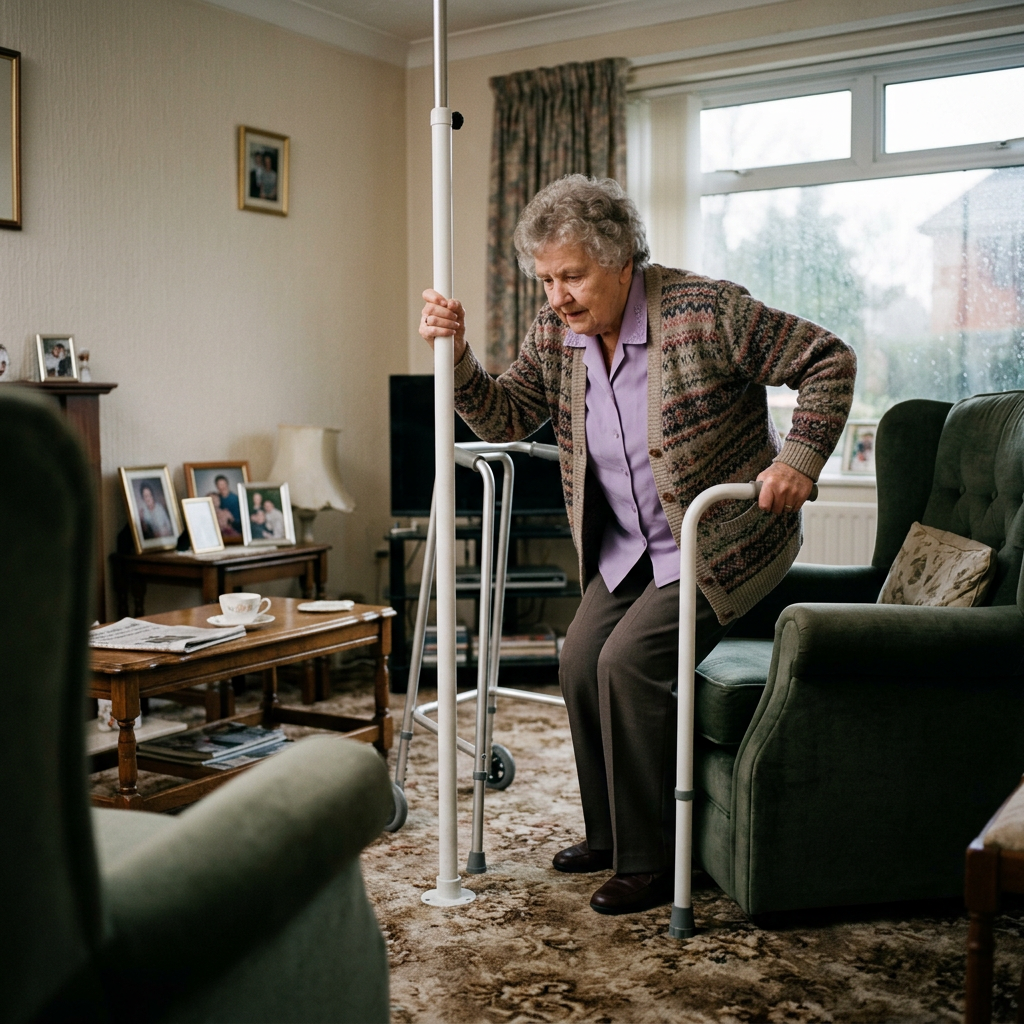

    Zone 2: Stairs, hallways, and transitions

    After the bathroom, the second-highest-fall location is stairs and the second-most-likely time of day for a fall is the middle of the night, when someone gets up to use the bathroom in the dark. The fixes here are also some of the easiest in the whole house.

    Two handrails on every staircase

    Most homes have a handrail on one side only. Adding a second one on the other side cuts stair-fall risk substantially, especially for someone who has weakness on one side (post-stroke, hip replacement, knee surgery). This is a job for a handyman if you’re not comfortable doing it yourself, handrails have to be mounted into studs at the right height (typically 34–38 inches above the stair nose), and a wobbly handrail is worse than no handrail because it gives false confidence.

    Motion-sensor pathway lighting

    Battery-powered or plug-in motion lights every 6–8 feet along the path from bedroom to bathroom. The goal is that the moment your foot hits the floor in the bedroom, the path to the bathroom is fully lit before you take the second step. Modern LED versions have 6-month battery life and warm-light options. Total cost for a four-light hallway setup: about $40.

    Tripping hazards: rugs, cords, and transitions

    Throw rugs are the #1 culprit. Either remove them entirely, or secure them with non-slip rug pads on every edge. Same for any loose runner in a hallway. Cords running across walkways need to be relocated (not taped downtaped cords become tripping hazards themselves over time). Threshold transitions between rooms, especially between hardwood and tile should be flush; if they’re not, an inexpensive threshold reducer ramp solves it.


    Zone 3: The bedroom

    The bedroom is where every day starts and ends and where stiff joints and grogginess combine to make getting in and out of bed harder than it looks. Three things matter here.

    Bed height and a bed-assist rail

    The right bed height is one where the person’s feet rest flat on the floor when they sit on the edge roughly 22–26 inches from floor to top of mattress for most adults. If the bed is too low, a set of bed risers can lift it (look for ones rated to actual load weights, not the cheap ones that crack). If the bed is too high, replacing the box spring with a low-profile version usually solves it.

    A bed-assist rail (the L-shaped handle that slides under the mattress) gives the person something to grip when sitting up and standing. Get one with a non-slip stabilizer under the mattress and a padded grip; the all-metal hospital-style ones are uncomfortable to grab in the middle of the night.

    Bedside lighting and phone access

    A touch-base lamp (no fumbling for a switch), a phone within arm’s reach on the bedside table, and this is the upgrade most people skip, a charging cable that stays plugged in even when the phone isn’t. A dropped phone that slides under the bed at 3 a.m. is a real problem; a cable-loop or magnetic charger keeps it in one place.

    Closet and dresser layout

    Most-used clothing should live at waist height, not in top drawers (reaching up) or bottom drawers (bending down). If reorganizing isn’t realistic, a sturdy step stool with a handle (never a folding metal one) for the few items that have to live high is the safer fallback.


    Zone 4: The kitchen

    The kitchen is the room most people overlook in safety conversations because falls here are less common than in bathrooms. But it’s where two of the more catastrophic injury risks live: burns (forgotten stove burners) and fractures (reaching up for heavy cookware).

    Reorganize for waist-height access

    Move daily-use items, plates, mugs, the cereal, the medications, to waist-height cabinets and drawers. Anything above shoulder height should be either rarely used or accessible with a stable two-step stool with a high handle (the kind that’s designed for kitchens, not the wobbly metal step stool from the garage).

    Stove safety

    For households with any cognitive concern, even mild memory issues an automatic stove shut-off device (motion-detected or timer-based) is one of the best $100–$200 you can spend. They install in 10 minutes and the better ones (FireAvert, iGuardStove) have been in the market for years with real reliability data. This is also a fix that scales with how much you need it; you can install one preemptively and never have it engage if it’s never needed.

    Lever-style faucets and door handles

    Round knobs are difficult for arthritic hands. Lever-style faucets (you push them with your wrist, not your fingers) and lever-style door handles cost about $30–$80 each to swap, and they make daily life dramatically easier. Don’t underestimate this one.


    Zone 5: Living areas

    The two things to focus on in the living room are seating (can the person get in and out of every chair safely?) and floor hazards (any throw rugs, low coffee tables, exposed cords).

    Chair height and stability

    The same rule applies as the bed when seated, feet should rest flat on the floor with knees roughly at hip height. If a favorite chair is too low to stand up from comfortably, chair risers can add 3–5 inches (the same product category as bed risers, look for cup-style risers that won’t tip). If the chair itself is wobbly, that’s a different problem, replace it. Furniture should never be load-bearing for someone trying to stand up.

    Lift chairs

    For someone with significant difficulty standing from a seated position, a power lift recliner is a real upgrade and depending on diagnosis, the seat-lift mechanism may be partially covered by Medicare (the chair frame itself usually isn’t). This is one of the more expensive items on the list ($600–$1,500 typically) but the daily quality-of-life impact is substantial.

    Floor obstacles

    Same rule as hallways: no throw rugs, no exposed cords across walkways, no low coffee tables in the line of foot traffic. If a coffee table is positioned where someone might brush against it standing up, move it.


    Zone 6: Outdoors and entrances

    The front and back doors are the riskiest outdoor zones for most homes, that’s where steps and thresholds combine with weather. A few things to address.

    Handrails on every step set, including small ones

    Even a single step from porch to walkway needs a handrail. A wobbly back-door handrail is one of the most common items OTs flag in the first 10 minutes of a home assessment, it’s the kind of hazard families live with for years without noticing. A solid handrail mounted into the framing is a $40–$80 fix that prevents one of the most common outdoor-fall scenarios.

    Motion-sensor outdoor lighting

    Every entrance should be lit before the person reaches the door. Battery-powered or solar motion lights eliminate fumbling for a key in the dark. Hard-wired versions are more reliable; solar versions are easier to install. Either works.

    Threshold ramps

    If any doorway threshold is more than half an inch high, common between garage and house, or between exterior door and porch a threshold ramp (rubber or aluminum, $30–$80) eliminates the tripping risk. They install in five minutes and most people don’t realize how much that lip was costing them until it’s gone.


    Technology to consider

    Fall detection devices

    A fall-detection pendant or smartwatch that calls for help automatically if a fall is detected. The two big choices to make are (a) does it require a monthly subscription, and (b) does it work outside the house. Subscription-based services (Life Alert, Bay Alarm Medical, Medical Guardian) are the well-known names; subscription-free alternatives have improved a lot and now cost $100–$200 with no recurring fee. No-subscription versions are the right call for many households , especially when family members nearby are already part of the response plan. Monthly-fee services make more sense when no one local can respond quickly.

    Smart home basics

    The three smart-home items that consistently earn their keep are (a) a video doorbell so the person doesn’t have to walk to the door to see who’s there, (b) smart bulbs in main pathways so lighting can be voice-controlled or scheduled, and (c) a thermostat that adjusts automatically rather than requiring fine-motor knob turning. Don’t over-buy here , too much smart-home automation can be more confusing than helpful for someone who isn’t already comfortable with tech.

    Automatic pill dispensers

    For anyone managing more than three medications a day, an automatic pill dispenser is a real safety upgrade. The good ones lock so only the scheduled dose comes out at the right time, ping a caregiver if a dose is missed, and have battery backup. Look for FDA-cleared models if memory issues are part of the picture.


    When to bring in a professional

    The single highest-leverage thing on this whole list is having an occupational therapist do a home safety assessment. They walk every room, watch the person move through it, and identify the hazards you’ve stopped seeing because you’ve lived with them too long. The cost ranges from $0 (if Medicare covers it with a doctor’s referral) to about $200–$400 out of pocket.

    If you can do only one thing from this checklist this week, it’s that one. The rest is easier with their guidance.


    Frequently asked questions

    What is the most important aging-in-place modification?

    Bathroom grab bars, by a wide margin. Roughly 80% of falls in older adults happen in the bathroom, and properly mounted grab bars (rated for 250+ lbs, installed into wall studs) directly address the highest-risk movements: sitting down on the toilet, standing up from the toilet, and stepping in and out of the shower or tub. They cost $20–$40 each, take about 30 minutes to install, and they’re the single highest-impact safety upgrade in the home.

    Does Medicare pay for aging-in-place modifications?

    Original Medicare does not pay for most physical home modifications (grab bars, ramps, stair lifts). However, Medicare Part B will typically cover an occupational therapy home safety assessment when ordered by a doctor, and certain medical equipment items (raised toilet seats, walkers, hospital beds) may be covered as durable medical equipment with a prescription. Some Medicare Advantage plans include additional home modification benefits. Always check with your specific plan before assuming coverage.

    How much does it cost to make a home safe for aging in place?

    The basics , grab bars in the bathroom, motion-sensor lighting throughout the home, a raised toilet seat, slip-resistant tub treatment, and a fall-detection device , typically run $300–$500 total. Mid-range upgrades like a stair lift or lift chair add $1,500–$5,000 depending on the home. Full home modification (widening doorways, adding a no-step shower entry, ramp installation) ranges from $5,000 to $20,000+. The good news: the highest-impact safety changes are the least expensive ones.

    What is the best room to start with for aging-in-place changes?

    The bathroom. It’s where the majority of falls happen, where the riskiest daily movements occur (sitting, standing, stepping in and out of wet surfaces), and where the highest-impact fixes are also the cheapest. Most families can address the major bathroom risks in a single weekend for under $200. Stairs and hallway lighting come second.

    Are aging-in-place modifications tax deductible?

    In the US, some aging-in-place modifications may qualify as medical expense deductions on federal taxes if they’re prescribed by a doctor and exceed 7.5% of adjusted gross income. Items like wheelchair ramps, widened doorways, and stair lifts can qualify; cosmetic upgrades typically don’t. Talk to a tax professional, and keep receipts plus the doctor’s recommendation in writing.

    When is it time to consider assisted living instead of aging in place?

    There’s no single right answer, but the conversations usually start when one or more of these become true: frequent falls despite home modifications, significant cognitive decline that creates safety risks (wandering, leaving the stove on), inability to manage medications safely even with assistive technology, isolation that’s affecting mental health, or caregiver burnout that’s no longer sustainable. The decision is rarely binary, many families use in-home care services as a bridge between fully independent and assisted living.


    The bottom line

    Most home safety wins are small, cheap, and invisible once installed. The goal isn’t a clinical-looking house , it’s a house where the daily routines of someone you love can keep going for as long as possible, safely. Start with the bathroom. Get an OT assessment. Add lighting everywhere. Buy the things that actually fit your specific home and the specific person living in it.

    If you’ve worked through this checklist and have questions about a specific product or a specific home setup, the inbox is open. You can reach the editor at sarah@buyingformom.com.

    Wishing you and your family the easier kind of day,
    Sarah