Tag: Planning Ahead

Proactive content for families who want to prepare before a safety issue arises.

  • 5 Best Humidifiers for Seniors

    5 Best Humidifiers for Seniors

    Disclosure: BuyingForMom is reader-supported. As an Amazon Associate we earn from qualifying purchases. When you buy through links in this article, we may earn an affiliate commission at no additional cost to you. We never recommend products we haven’t researched against verified-buyer review data. This article is editorial reporting, not medical advice.

    5 Best Humidifiers for Seniors: Easy to Fill and Clean

    By Sarah Mitchell · Editor, BuyingForMom · Updated October 2026

    11 min read · Bedroom & Living Room · 5 picks

    The honest take: If you’re shopping for a humidifier for an aging parent, buy the Levoit Classic 300S and stop there for most bedrooms, because the best humidifier is the one that is easy enough to refill and rinse every single day. The Canopy is the right call only if cleaning is what has defeated every humidifier before it. Skip any model with a narrow tank opening or warm mist for a parent with a tremor or memory loss, because those two design choices cause most of the real-world trouble.

    How we sorted through 12 humidifiers in October 2026

    We started with 12 models across the Levoit, Honeywell, Pure Enrichment, TaoTronics and Canopy lines and cut them down using three cross-references: hands-on testing from HGTV and BabyGearLab, the guidance from MedlinePlus and GoodRx on safe humidifier use, and the patterns that show up in buyer feedback about refilling, noise and cleaning. We weighted the daily chores heavily, because for an older adult the humidifier that gets cleaned beats the one with the best spec sheet. Anything with a tiny tank opening or a design that makes a heavy full tank awkward to handle dropped down the list.

    Who this guide is for

    This guide is for adult children buying a humidifier for a parent who is dealing with dry skin, nosebleeds, a scratchy throat or a heated, dry home in winter. If you’re shopping for yourself, the same picks apply, but you can skip the conversation section below.

    Heating season is when dry air shows up. Indoor air in a heated home can drop well below the 40 to 50 percent humidity range that MedlinePlus recommends, and older adults tend to notice it first as cracked skin, dry nasal passages and a cough that comes with the night. A humidifier can help. But a neglected one can make things worse: MedlinePlus notes that bacteria can grow in standing water, and GoodRx warns that tanks can spread mold and bacteria into the air a person breathes. So this guide ranks humidifiers on the chores as much as the mist.

    The right humidifier for an older adult is the one they or you can fill and clean without a struggle. That is the lens for everything below. If you’re also working on winter comfort more broadly, our guides to safe space heaters for seniors and heating pads with auto shut-off cover the other cold-weather purchases.

    At a glance

    Best Overall

    Classic 300S

    ~$58 · the easiest refill

    Best for Big Rooms

    Honeywell HUL430

    ~$75 · a large living room

    Easiest to Clean

    Canopy 2.5L

    ~$150 · the easiest cleaning

    Best Warm-and-Cool Option

    Levoit LV600HH

    ~$90 · long runtime

    Best Budget

    Levoit Classic 200

    ~$34 · the lowest price

    Best Overall1. Levoit Classic 300S

    ~$58 · View on Amazon

    The Classic 300S wins on the one thing that decides whether a humidifier actually gets used: refilling it. Water goes in through the top, so there is no flipping a full tank upside down over the sink. It holds a target humidity and shuts itself off when it gets there, which matters because over-humidifying is its own problem. Reviewers describe it as quiet enough for a bedroom and steady overnight. The complaints are consistent too: the included filter is basic, and mist output can fade after a few months of heavy use.

    The good

    • Top-fill tank you can refill at the sink with one hand
    • Holds a humidity target and shuts off when the room reaches it
    • Quiet enough for bedrooms; works with a phone app or touch controls

    The catch

    • The app and smart features are optional extras your parent may never use
    • The little filter is a recurring cost and some buyers call it poor value

    This is right if… your parent wants a bedroom humidifier that is easy to fill and doesn’t need babysitting.

    Look elsewhere if… you want something with a dishwasher-safe tank or a much larger room capacity.

    Check Price on Amazon →

    Best for Big Rooms2. Honeywell Designer Series HUL430

    ~$75 · View on Amazon

    Honeywell’s filter-free HUL430 holds 1.25 gallons, which means fewer trips to the tap, and HGTV’s testers singled it out for quiet operation. With no filter to buy or replace, the only maintenance is the daily rinse. It shuts off when the water runs out. The honest drawback is availability: reviewers have noted it isn’t always in stock, and it is a heavier, taller unit than the compact Levoit options, so filling it means carrying a full tank.

    The good

    • 1.25-gallon tank covers a living room for much of the day
    • No filters to buy, which also means one fewer chore
    • Shuts off automatically when the water runs out

    The catch

    • A full tank is heavy for someone with weak wrists or balance trouble
    • Stock has been spotty at times

    This is right if… your parent spends most of the day in one larger room and can lift a full tank.

    Look elsewhere if… lifting a gallon-plus of water is a risk for them.

    Check Price on Amazon →

    Easiest to Clean3. Canopy 2.5L Humidifier

    ~$150 · View on Amazon

    Cleaning is where most humidifiers fail older users, and Canopy designed around it: the tray, tank and cap are dishwasher-safe, so a deep clean is a rinse and a dishwasher cycle rather than scrubbing a narrow tank with a brush. HGTV’s testers also liked its built-in UV light and design. It is the most expensive pick here by a wide margin, and replacement filters are a recurring cost. It also does not shut off when the tank empties; it runs until the water is gone and then signals you.

    The good

    • Dishwasher-safe tray, tank and cap make deep cleaning simple
    • Looks like a piece of furniture rather than a medical device
    • Built-in UV light aimed at slowing mold growth

    The catch

    • Around $150, plus ongoing filter costs
    • Does not auto shut off on empty; it signals instead

    This is right if… cleaning is the reason past humidifiers ended up in the closet.

    Look elsewhere if… you want a low-cost starter model.

    Check Price on Amazon →

    Best Warm-and-Cool Option4. Levoit LV600HH Hybrid

    ~$90 · View on Amazon

    The LV600HH is a 6-liter hybrid that can run cool or warm and includes a remote, which helps if your parent can’t easily reach a unit across the room. HGTV’s testers liked the long runtime and the display that can be fully turned off for sleeping. But warm mist is exactly what you do not want near a parent with a tremor, unsteady balance or memory loss, since warm-mist units are the ones that can cause burns. Think of this as a cool-mode-only machine for most households, and the tank is not top-fill.

    The good

    • 6-liter tank runs a long time between refills
    • Remote control and a display you can switch off
    • Auto shut-off when the water runs out

    The catch

    • Warm mist carries a burn risk; keep it on cool for older adults
    • Bulky, and the tank is not top-fill

    This is right if… your parent has a large bedroom, can use the remote, and you’ll keep it on cool mist.

    Look elsewhere if… your parent has dementia, a tremor, or any risk of tipping the unit.

    Check Price on Amazon →

    Best Budget5. Levoit Classic 200

    ~$34 · View on Amazon

    At about $34, the Classic 200 is the cheapest way to get a respected brand into a dry bedroom. It is small, quiet and simple. The trade-off is the fill design: the tank has to be tipped over to refill, which is awkward with a full tank and unsteady hands. If you buy it, plan on being the person who fills and cleans it, or treat it as a trial before moving up to a top-fill model.

    The good

    • Lowest price of the five from a well-known brand
    • Compact and quiet for a nightstand or dresser
    • Simple controls with few parts to lose

    The catch

    • Tank must be flipped to refill, which is harder for weak or shaky hands
    • Small tank means more frequent refills

    This is right if… you will handle the filling and cleaning yourself on visits or by phone coordination.

    Look elsewhere if… your parent will be filling it alone every day.

    Check Price on Amazon →

    Comparison table

    Humidifier Price Key feature Best for
    Levoit Classic 300S ~$58 Top-fill, humidity target Bedroom, easy refills
    Honeywell HUL430 ~$75 1.25 gal, filter-free Large living room
    Canopy 2.5L ~$150 Dishwasher-safe parts Easy deep cleaning
    Levoit LV600HH ~$90 6 L, cool or warm, remote Large bedroom (cool mode)
    Levoit Classic 200 ~$34 Compact, bottom-fill Tight budget, helper fills

    The conversation you’ll have

    Many older adults hear “I bought you a humidifier” as “I think you can’t look after yourself,” and some quietly resent one more machine to maintain. Lead with the symptom they’ve already mentioned instead of the product. Try saying, “You said your throat was scratchy at night. This should help, and I’ll set it up and show you the one-minute rinse,” instead of, “You need this because the air is too dry.”

    Then make the chore small and shared. Agree on a fixed time, such as after breakfast, to empty and refill it, and offer to do the deep clean on your visits. If your parent has memory problems, put the humidifier where a helper can see it, and consider asking a home aide or neighbor to take on the daily rinse. The goal is that the machine never sits full of old water.

    Insurance and savings

    Medicare.gov says it doesn’t usually cover humidifiers, so you’d pay 100 percent of the cost of a room unit. The exception is a humidifier medically necessary for use with covered equipment such as CPAP, respiratory assist devices or oxygen. For a room humidifier, an FSA, HSA or HRA may reimburse the cost if a clinician provides a letter of medical necessity, though your plan administrator decides, so check before buying. Keep the receipt either way, and ask a tax professional about any medical-expense deduction.

    What to actually look for

    A fill design your parent can manage

    Top-fill tanks let you pour water straight in without lifting and flipping the tank. A wide opening also lets a hand and a brush reach the bottom, which is where film builds up. Check the weight of a full tank too. A gallon of water weighs more than eight pounds, plus the tank. If lifting is a concern, a smaller tank refilled more often is safer than a big one. Our room-by-room aging-in-place guide covers placing it away from walkways.

    Cool mist, a stable base and a humidity target

    MedlinePlus recommends cool mist, and GoodRx notes that warm-mist units are the main burn concern. Pick a wide, stable base that won’t tip, and set a cord path that doesn’t cross the walkway. Automatic shut-off when the tank is empty is a worthwhile feature, and a model that holds a humidity target keeps you from over-humidifying. A cheap hygrometer helps you verify the real number in the room.

    A realistic cleaning routine

    Plan for a daily rinse: empty, scrub any film, refill with fresh water, and dry the outside. Use distilled water if you can, since minerals in tap water can turn into white dust. This is part of a safer home overall, along with the steps in our complete aging-in-place home safety checklist.

    Frequently asked questions

    Is a humidifier good for elderly people?

    Often, yes. Heated indoor air in winter can dry out skin, nose and throat. A humidifier set to 40 to 50 percent humidity can ease that. It only helps if cleaned daily with fresh water, because a dirty tank can spread bacteria and mold into the room air.

    Should seniors use a cool mist or warm mist humidifier?

    Cool mist is the safer default. MedlinePlus advises cool mist, because warm-mist units can cause burns if someone gets too close or knocks one over. For a parent with a tremor, balance problems or memory loss, skip warm mist entirely and choose a stable cool-mist model.

    Where should you put a humidifier in a senior’s bedroom?

    Place it on a stable, water-safe surface several feet from the bed, away from the walkway and out of reach of cords underfoot. MedlinePlus suggests about two meters from the bed. Keep walls, carpet and bedding from getting damp, which invites mold.

    What humidity level is best for older adults?

    Aim for roughly 40 to 50 percent. MedlinePlus recommends that range, and GoodRx advises staying below 50 percent to limit dust mites and mold. A small inexpensive hygrometer, which reads humidity, takes the guesswork out and lets you stop before the room gets damp.

    How often should a humidifier be cleaned?

    Daily, according to MedlinePlus: empty it, scrub away film with a brush, rinse and refill with fresh water. GoodRx adds that vinegar is a common disinfectant if rinsed well, and the unit should be dried fully before storage. Check the manufacturer’s manual for approved cleaners.

    Should you use distilled water in a humidifier?

    Yes where possible. MedlinePlus recommends distilled water because minerals in tap water build up inside the unit and can spray out as fine white dust that irritates the lungs. Ultrasonic models are most prone to this. If you use tap water, clean more often.

    Does Medicare cover a humidifier?

    Usually not for a room humidifier. Medicare.gov states it doesn’t usually cover humidifiers, so you’d pay the full cost. The exception is a humidifier used with covered equipment like CPAP or oxygen, when medically necessary. An FSA or HSA may reimburse with a letter of medical necessity.

    The shortlist

    Best Overall

    Levoit Classic 300S

    ~$58

    Check on Amazon →

    Best for Big Rooms

    Honeywell Designer Series HUL430

    ~$75

    Check on Amazon →

    Easiest to Clean

    Canopy 2.5L Humidifier

    ~$150

    Check on Amazon →

    Best Warm-and-Cool Option

    Levoit LV600HH Hybrid

    ~$90

    Check on Amazon →

    Best Budget

    Levoit Classic 200

    ~$34

    Check on Amazon →

    Prices and availability last checked: October 25, 2026

    What we’d do tomorrow

    If you’re starting this weekend, do three things in this order. First, check the room with a cheap hygrometer, so you know whether dry air is the problem at all. Second, order a top-fill cool-mist unit, and if cleaning is the sticking point, spend more for the Canopy. Third, write the daily rinse on a calendar and agree who owns it. A humidifier that’s cleaned every day is a small comfort. One that isn’t is a liability.

    — Sarah

    BuyingForMom is a reader-supported site. As an Amazon Associate we earn from qualifying purchases. When you buy through links on this site, we may earn an affiliate commission at no additional cost to you. See our Affiliate Disclosure for details. This article is not medical advice please consult a qualified healthcare professional for decisions specific to your situation.
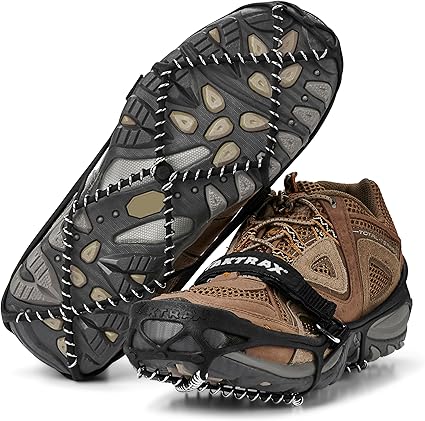
  • 5 Best Ice Cleats for Seniors

    5 Best Ice Cleats for Seniors

    Disclosure: BuyingForMom is reader-supported. As an Amazon Associate we earn from qualifying purchases. When you buy through links in this article, we may earn an affiliate commission at no additional cost to you. We never recommend products we haven’t researched against verified-buyer review data. This article is editorial reporting, not medical advice.

    5 Best Ice Cleats for Seniors in 2026: Walking Traction That Works

    By Sarah Mitchell · Editor, BuyingForMom · Updated October 2026

    6 min read · Outdoors & Entryways · 5 picks

    The honest take: If you’re buying ice cleats for an older parent who walks on sidewalks and driveways, buy the Yaktrax Walk and stop there for most situations. The Kahtoola NANOspikes are worth the extra money only if your parent walks daily across mixed ice and bare pavement. Skip aggressive hiking spikes for a city errand route; they are heavy, awkward on dry ground, and a trip hazard of their own.

    How we sorted through 11 traction devices this October

    We compared 11 traction devices that Outdoor Gear Lab and Outdoor Life have tested side by side, then cross-referenced each against Amazon buyer ratings. The five picks below carry more than 35,000 combined ratings. We weighted comfort on bare pavement, ease of putting them on, and low profile above raw hiking grip, because that is what an older walker actually needs. Every product was confirmed in stock on Amazon on October 26, 2026.

    Who this guide is for

    This guide is for adult children buying winter traction for a parent who still walks outside but dreads the first icy morning. If you’re shopping for yourself, the same picks apply; just skip the conversation section below.

    Winter is when a small slip becomes a big problem. The CDC reports that about one in four adults 65 and older falls each year, and ice multiplies the odds on routes that are safe the rest of the year. The best ice cleats for seniors are not the most aggressive ones. They are the ones your parent will actually wear: quick to put on, stable on a shuffling or uneven gait, and comfortable on the dry stretches between patches of ice.

    Cleats do not replace other safety layers. Salt, a handrail, and a clear path still matter, and cleats pair well with a cane that has an ice tip or a walker used on cleared routes. Think of them as one layer in a larger winter plan, not a license to walk anywhere.

    At a glance

    Best Overall
    Yaktrax Walk · ~$21
    Best With a Top Strap
    Yaktrax Pro · ~$35
    Best Budget Spikes
    Due North Everyday G3 · ~$21
    Best for Thin Ice
    Kahtoola NANOspikes · ~$70
    Best for Deep Snow & Hills
    Kahtoola MICROspikes · ~$90

    Best Overall1. Yaktrax Walk

    Yaktrax Walk traction cleats shown for walking on snow and ice

    ~$21 · See current price on Amazon

    The Yaktrax Walk is a rubber harness with steel coils that stretches over a shoe in about ten seconds, which is the whole reason it wins. Across more than 27,000 Amazon ratings it averages 4.4 stars, and Outdoor Gear Lab named it the top pick for everyday urban winter walking, praising its low profile and secure fit on all footwear. The coils bite into packed snow and thin ice without turning the shoe into a lump. Reviewers who dislike it mostly wanted deep-snow performance it was never built for.

    The good

    • Stretches on fast, even with stiff or arthritic fingers
    • Low profile, so it feels like walking in a normal shoe
    • Rated 4.4/5 across 27,000+ buyers at about $21

    The catch

    • Weak grip in deep or soft snow and on steep slopes
    • Coils wear down faster if worn on bare pavement all day

    This is right if… your parent mostly walks to the mailbox, car, and corner on shoveled or lightly icy surfaces.

    Look elsewhere if… the route includes unplowed paths, hills, or thick ice.

    Check Price on Amazon →

    Best With a Top Strap2. Yaktrax Pro

    Yaktrax Pro traction cleats shown for walking on snow and ice

    ~$35 · See current price on Amazon

    The Pro is the Walk’s sturdier sibling: same coil idea, plus a hook-and-loop strap that cinches across the top of the foot so the cleat stays put. That strap matters for older walkers whose gait includes a shuffle or a dragged toe, because a cleat that rotates mid-stride is its own trip hazard. Outdoor Gear Lab called it a low-profile option for icy city streets. Buyer ratings run 4.3 stars, though with far fewer reviews (about 500) than the Walk.

    The good

    • Top strap keeps the cleat from sliding or rotating
    • Low profile suited to icy city sidewalks
    • Easy to pull on and off without tools

    The catch

    • Costs roughly $14 more than the Walk
    • Described as uncomfortable for running and poor in soft snow

    This is right if… your parent has a shuffling gait or has had a cleat slip sideways before.

    Look elsewhere if… you want the cheapest option, since the plain Walk covers most sidewalk use.

    Check Price on Amazon →

    Best Budget Spikes3. Due North Everyday G3

    Due North Everyday G3 traction cleats shown for walking on snow and ice

    ~$21 · See current price on Amazon

    Instead of coils, the G3 uses short tungsten carbide studs set in a rubber sole plate, which grip glare ice more aggressively than a coil. Outdoor Life named it its budget pick for occasional icy conditions and called it a good choice for an ice storm. It averages 4.3 stars across more than 4,300 Amazon ratings. The common complaint, echoed by that same review, is that it is harder to stretch on than the Yaktrax, so have a younger family member fit it the first time.

    The good

    • Carbide studs bite hard into glazed ice
    • Reasonably comfortable on bare ground
    • 4.3/5 from 4,300+ buyers at about $21

    The catch

    • Stiff rubber makes it hard to put on
    • Studs can feel slippery on tile, so take it off indoors

    This is right if… ice storms and freezing rain are the main worry and someone can help fit them.

    Look elsewhere if… your parent has weak hands and will be putting them on alone.

    Check Price on Amazon →

    Best for Thin Ice4. Kahtoola NANOspikes

    Kahtoola NANOspikes traction cleats shown for walking on snow and ice

    ~$70 · See current price on Amazon

    The NANOspikes pair a flexible elastomer frame with small tungsten carbide spikes, and the design goal is grip on ice you can barely see without feeling clunky on dry pavement. Outdoor Life called it the most comfortable option it tested on firm ground, and Outdoor Gear Lab rated it best for winter running, with grip on packed snow and thin ice. It carries a 4.7 average on Amazon, though from a smaller pool of about 200 ratings. Price is the obvious barrier.

    The good

    • Most comfortable on mixed ice and bare pavement in expert testing
    • Small spikes are less likely to catch on a rug or doorway
    • 4.7/5 average on Amazon

    The catch

    • Roughly $70, more than three times the Walk
    • Weak in deep snow

    This is right if… your parent walks daily, hits patches of ice and bare road in the same trip, and you want comfort over cost.

    Look elsewhere if… budget matters or the walk is a short trip to the car.

    Check Price on Amazon →

    Best for Deep Snow & Hills5. Kahtoola MICROspikes

    Kahtoola MICROspikes traction cleats shown for walking on snow and ice

    ~$90 · See current price on Amazon

    MICROspikes are the benchmark traction device: a stretch harness with a chain of stainless spikes under the whole foot. Outdoor Gear Lab gave it Editors’ Choice for strong spike layout and durability, and it holds a 4.7 average across more than 3,500 Amazon ratings. It is overkill for a flat sidewalk, and that review flagged it as heavy and annoying on dry surfaces. But for a long driveway with a slope, packed snow, or rural walks, nothing here grips better.

    The good

    • Excellent grip on hills, packed snow, and thick ice
    • Durable construction that lasts multiple winters
    • 4.7/5 from 3,500+ buyers

    The catch

    • Heavy and high-profile, which can feel awkward for a shuffling gait
    • Most expensive pick, at about $90

    This is right if… your parent lives somewhere with sloped driveways, deep snow, or rural paths.

    Look elsewhere if… the only goal is crossing a salted city sidewalk.

    Check Price on Amazon →

    Side-by-side comparison

    Pick Price Traction type Best for
    Yaktrax Walk ~$21 Rubber harness, steel coils Everyday sidewalks
    Yaktrax Pro ~$35 Coils + top strap Shuffling gait
    Due North Everyday G3 ~$21 Tungsten carbide studs Ice storms, budget
    Kahtoola NANOspikes ~$70 Carbide spikes, elastomer frame Mixed ice and pavement
    Kahtoola MICROspikes ~$90 Stainless steel spike chain Hills and deep snow

    The conversation you’ll have

    Many older adults hear “ice cleats” as “you’re not steady anymore.” The resistance is usually about independence, not the product. Try framing it around the route, not the person: “The sidewalk by the mailbox gets glazed every January, and I’d feel better if you had something for that stretch.” Avoid “so you don’t fall,” which turns a gadget into a verdict.

    Then make it easy. Buy the pair together, try them on at the front door, and put a small bench and basket by the entry so the routine feels like a habit, not a medical device. Offer to take them back if they don’t like them; people keep what they chose.

    Insurance and savings

    Original Medicare covers durable medical equipment such as walkers and canes, but it does not cover consumer traction cleats, which are treated as footwear accessories. FSA and HSA funds generally exclude them too, since they are not medical care by themselves; confirm with your plan administrator. At $20 to $90, they are one of the cheapest fall-prevention upgrades around. Compare that to the cost of a fall, and the math is easy.

    What to actually look for

    Match the traction to the route

    Coil cleats such as the Yaktrax Walk suit shoveled sidewalks and thin ice. Carbide studs handle glazed ice better. Full spike chains are for slopes and deep snow. Buying more aggressive than the route requires is the most common mistake, because heavy spikes are tiring and awkward on bare pavement. Our aging-in-place home safety checklist lists the other outdoor risks worth fixing at the same time.

    Make sure they go on fast

    If your parent has arthritis or weak grip, a stiff rubber harness will end up in a closet. Choose a stretchy harness, practice at the door, and consider a boot jack or a seated entry bench. Reviewers repeatedly flag hard-to-fit models as a drawback, and that matters even more for seniors.

    Plan for the cane, the walker, and the stairs

    If your parent uses a cane, pair cleats with ice grip tips for a cane. If they use a walker, check that the cleat is flat enough not to snag the walker’s legs or tennis-ball glides. And remember the rule for entries: cleats off before stepping inside, and never on indoor stairs. For a wider safety net, see our guide to fall detection devices with no monthly fee.

    Frequently asked questions

    Do ice cleats work for seniors who shuffle their feet?

    They can, but pick carefully. Low-profile coil styles like the Yaktrax Walk and Pro sit close to the sole and are less likely to catch than tall spikes. Choose a model with a top strap, and test it on a rug-free, dry floor with someone beside your parent first.

    Can older adults wear ice cleats inside the house?

    No. Metal coils and carbide studs are slippery on tile, hardwood, and polished stone, and they can scratch floors. Teach a simple habit: cleats go on at the door seat and come off before stepping inside. A bench and a boot tray by the entry make that routine realistic.

    What size ice cleats should I buy for a senior?

    Match the cleat to the shoe, not just the shoe size. Most brands sell small, medium, and large by shoe size range, and fit snugly over the sole. If your parent wears orthopedic or extra-wide shoes, check the listing’s size chart and return policy before ordering.

    Are ice cleats better than a cane tip for winter?

    They solve different problems. An ice-grip cane tip steadies the cane, while cleats grip under the feet, where most slips begin. If your parent uses a cane, the strongest setup is both. Cleats alone are not a substitute for a walker when one is recommended.

    Does Medicare cover ice cleats?

    Generally no. Original Medicare covers durable medical equipment such as walkers and canes, but traction cleats are treated as ordinary footwear accessories. FSA and HSA plans usually exclude them as well. Ask your plan administrator, and consider a physical therapist’s letter only if your plan allows case-by-case review.

    How do you walk safely on ice with cleats?

    Take short, flat-footed steps, keep your feet slightly apart, and point your toes a little outward. Keep your hands free rather than in pockets, and slow down on transitions between ice and bare pavement, where grip changes suddenly. Walk the route in daylight at least once first.

    The shortlist

    Yaktrax Walk

    Best Overall

    Yaktrax Walk

    ~$21

    Check on Amazon →

    Yaktrax Pro

    Best With a Top Strap

    Yaktrax Pro

    ~$35

    Check on Amazon →

    Due North Everyday G3

    Best Budget Spikes

    Due North Everyday G3

    ~$21

    Check on Amazon →

    Kahtoola NANOspikes

    Best for Thin Ice

    Kahtoola NANOspikes

    ~$70

    Check on Amazon →

    Kahtoola MICROspikes

    Best for Deep Snow & Hills

    Kahtoola MICROspikes

    ~$90

    Check on Amazon →

    Last verified in stock: October 26, 2026

    What we’d do tomorrow

    If you’re starting this weekend, do these three things in this order. First, walk your parent’s actual route and note where ice collects. Second, order the Yaktrax Walk in the right size and try it on at the door before the first freeze. Third, set up a bench and basket by the entry so cleats go on and off in the same spot every time. Upgrade to the NANOspikes or MICROspikes only if the route proves you need them.

    — Sarah

    BuyingForMom is a reader-supported site. As an Amazon Associate we earn from qualifying purchases. When you buy through links on this site, we may earn an affiliate commission at no additional cost to you. See our Affiliate Disclosure for details. This article is not medical advice, please consult a qualified healthcare professional for decisions specific to your family.
  • 20 Aging-in-Place Safety Fixes Under $30

    20 Aging-in-Place Safety Fixes Under $30

    Disclosure: BuyingForMom is reader-supported. As an Amazon Associate we earn from qualifying purchases. When you buy through links in this article, we may earn an affiliate commission at no additional cost to you. We never recommend products we haven’t researched against verified-buyer review data. This article is editorial reporting, not medical advice.

    20 Aging-in-Place Safety Fixes Under $30

    By Sarah Mitchell · Editor, BuyingForMom · Updated October 2026

    12 min read · Buying Guides · 20 fixes

    The honest take: Spend your first $30 on the floor and the lights, because trip hazards cause more falls than any single missing gadget. A suction grab bar is useful but is a balance aid, not a substitute for a wall-anchored bar, so do not rely on it to take someone’s full weight. Skip the novelty “senior gadgets” that cost more than $30 and do less than a rug gripper.

    Multigenerational family laughing together in a warmly lit living room

    How we sorted through 100+ budget products in October 2026

    We started with the under-$30 picks from more than twenty BuyingForMom roundups, which together cover well over 100 products, and cross-referenced verified-buyer review patterns, home-safety guidance from the CDC and AARP, and the equipment occupational therapists most often recommend for a first home assessment. On October 21, 2026 we re-checked 29 live Amazon listings for price and availability, dropped the ones that were unavailable or nearly sold out, and kept the 20 below. All prices are the listed price on that date and can move.

    Who this guide is for

    This guide is for adult children and caregivers who want to make a parent’s home safer this month without a contractor, a permit, or a four-figure bill. If you are shopping for yourself, the same fixes apply, but skip the conversation section below.

    Aging in place does not have to begin with a remodel. The CDC reports that about one in four adults 65 and older falls each year, and many falls trace back to ordinary things: a curling rug, a cord across a walkway, a dark hall, a slick tub floor.

    Together, the twenty fixes below cost roughly $307 at today’s prices, and each one fixes one specific problem. Work from top to bottom, or start with whichever room worries you. If you want the full priority order, start with our complete aging-in-place home safety checklist.

    At a glance: the five best-value fixes

    Best first buy
    Gorilla Grip Rug Gripper Pads · $8.99
    Stops the most common trip hazard in the house.

    Best for night
    MAZ-TEK Motion-Sensor Night Light · $9.99
    Lights the path to the bathroom automatically.

    Best for medications
    Ezy Dose Weekly Pill Organizer · $8.85
    Makes a missed dose visible.

    Best bathroom add
    Safe-er-Grip Suction Grab Bar · $12.10
    A balance aid for the tub wall, no tools.

    Best for the bedroom
    Vive Bed Ladder Assist Strap · $14.99
    Helps pulling up to sit without straining.

    Floors and walkways: stop the trips

    Five fixes, about $66 combined.

    1. MAZ-TEK Motion-Sensor Night Light (2-Pack) $9.99

    A dusk-to-dawn motion sensor lights the hallway-to-bathroom route only when someone is walking it, so nobody has to find a switch in the dark. Across 8,000+ reviews it holds a 4.6 average, and the brightness dial gets repeated praise.

    The catch: Plug-in units only cover the outlet height, so a long hallway needs a unit every ten feet or so. See five alternatives in our bathroom nightlight roundup.

    Check Price on Amazon →

    2. Gorilla Grip Rug Gripper Pads $8.99

    Loose rugs are one of the most common trip hazards in an older adult’s home, and a gripper pad is the cheapest fix there is. More than 53,000 buyers have rated it 4.4 stars, with most noting that the rug stops creeping on hardwood.

    The catch: Pads need trimming to fit and can leave a faint residue on some finishes, so test a corner of the floor first. See five alternatives in our rug gripper roundup.

    Check Price on Amazon →

    3. D-Line 6ft Floor Cord Cover $16.79

    A cord crossing a walkway is an avoidable fall. This low-profile channel hides a lamp or phone-charger cord and lets a foot slide over it instead of catching. Across 20,000+ reviews it averages 4.6 stars.

    The catch: It still leaves a small ridge, and the adhesive tape works best on clean, dry flooring. See five alternatives in our cord cover roundup.

    Check Price on Amazon →

    4. Vive Non-Slip Grip Socks (6 Pairs) $21.99

    Socks on hardwood or tile are a quiet fall risk. Six grippy pairs cost less than good slippers, and 3,200+ buyers rate them 4.3 stars.

    The catch: Sizing runs generic, and the grip patches wear down after many wash cycles. See five alternatives in our grip sock roundup.

    Check Price on Amazon →

    5. Xpand No-Tie Elastic Shoelaces $8.33

    Elastic laces turn any sneaker into a slip-on, removing the bend-and-tie balance risk. Buyers with arthritis describe this most often across 900+ reviews.

    The catch: The first fitting takes patience, and they work best on lace-up sneakers rather than dress shoes. See five alternatives in our no-tie shoelace roundup.

    Check Price on Amazon →

    Bathroom and bedroom: the slippery spots

    Five fixes, about $76 combined.

    6. Gorilla Grip Bathtub Mat (35 x 16 in.) $23.79

    The suction-cup bath mat is the baseline tub safeguard. With roughly 45,000 reviews at 4.5 stars, buyers point to the drainage holes and quick-dry surface.

    The catch: Suction cups only grip smooth tub floors, and the underside needs an occasional scrub to prevent mildew. See five alternatives in our suction bath mat roundup.

    Check Price on Amazon →

    7. SlipX Clear Non-Slip Tub Treads (12 Strips) $6.99

    Adhesive strips are the lowest-cost, permanent version of the same idea. Reviewers say the textured surface feels noticeably grippier under bare feet, and 7,400+ buyers have rated them 4.2 stars.

    The catch: They need a very clean, dry surface to stick, and they are a chore to peel off later. See five alternatives in our bath tread roundup.

    Check Price on Amazon →

    8. Safe-er-Grip 16-Inch Suction Grab Bar $12.10

    A balance-assist handle for a tub wall, installed in seconds without tools. More than 42,000 reviews average 4.2 stars.

    The catch: It is a balance aid, not a transfer bar: it only grips smooth, non-porous tile and must be checked before each use. See five alternatives in our suction grab bar roundup.

    Check Price on Amazon →

    9. Vive Wiping Wand Toilet Aid $17.99

    A long-handled wiping aid restores independence for adults with shoulder or hip limits. It is the lowest-rated item here at 3.6 stars across roughly 300 reviews, so treat it as optional.

    The catch: Reviewers say fit and grip depend heavily on hand size, so it works better for some users than others. See five alternatives in our toilet aid roundup.

    Check Price on Amazon →

    10. Vive Bed Ladder Assist Strap $14.99


    A rope-ladder strap that ties to the bed frame helps someone pull to sitting without twisting or straining the back. Across 5,300+ reviews at 4.3 stars, buyers describe it as a cheap alternative to a bed rail.

    The catch: It needs a solid frame to anchor to, and it will not help someone with weak hands or limited grip. See five alternatives in our bed ladder roundup.

    Check Price on Amazon →

    Kitchen and daily living: make everyday tasks easier

    Six fixes, about $115 combined.

    11. OXO Good Grips Jar Opener $19.95

    This base-and-twist opener grips lids of any size. Across nearly 4,000 reviews at 4.4 stars, buyers with arthritis praise it most.

    The catch: It takes counter space and does nothing for pull-tab cans. See five alternatives in our jar opener roundup.

    Check Price on Amazon →

    12. Vive Reacher Grabber (32 in.) $29.99

    A 32-inch reacher with a rotating head replaces the step stool for top shelves and dropped keys. Nearly 7,000 buyers rate it 4.3 stars.

    The catch: It is the most expensive item here at $29.99, and the grip strength on heavier items is limited. See five alternatives in our reacher and grabber roundup.

    Check Price on Amazon →

    13. Cushioned Anti-Fatigue Kitchen Mat $14.99

    Standing at the stove or sink tires the legs and feet, and tiredness invites missteps. More than 23,000 reviews average 4.4 stars, with buyers highlighting the non-skid underside.

    The catch: Thick foam can be a catch hazard for walkers and canes, so pick a thin version if mobility aids are in use. See five alternatives in our anti-fatigue mat roundup.

    Check Price on Amazon →

    14. Vive Foam Tubing (9-Pack) $16.99

    Slide foam tubing over a spoon, toothbrush, or pen handle to build a thicker, easier grip. The 9-pack lasts, and 2,200+ buyers rate it 4.4 stars.

    The catch: It slides on smooth handles, and a few buyers wish the pieces were longer. See five alternatives in our built-up utensil roundup.

    Check Price on Amazon →

    15. Vive Nosey Cup (3-Pack) $15.99

    A cut-out nose notch lets someone drink without tilting their head back, which helps with neck stiffness or swallowing caution. It holds a 4.6 average, but from only 92 reviews, so treat that rating as encouraging rather than settled.

    The catch: The small review count means long-term durability is less proven than the other picks. See five alternatives in our adaptive cup roundup.

    Check Price on Amazon →

    16. EZPIK Long-Handle Toenail Clippers $16.95

    A long handle extends reach when bending or vision makes foot care hard. 500+ buyers give it 4.4 stars.

    The catch: The long handle takes some practice, and anyone with diabetes should ask a clinician before self-trimming. See five alternatives in our toenail clipper roundup.

    Check Price on Amazon →

    Medications and peace of mind

    Four fixes, about $50 combined.

    17. Ezy Dose Weekly Pill Organizer (X-Large) $8.85

    A seven-day organizer makes a missed or doubled dose obvious at a glance. It holds a 4.7 average across 7,500+ reviews, and the extra-large lids are easier on arthritic fingers.

    The catch: Someone who takes more than a few pills a day may need a multi-dose-a-day model instead. See five alternatives in our weekly pill organizer roundup.

    Check Price on Amazon →

    18. Ezy Dose Pill Cutter and Splitter $6.99

    Splitting a prescribed tablet takes steady hands. A guarded cutter with a pill-sized cradle keeps pieces even, and 8,800+ buyers rate it 4.4 stars.

    The catch: Blades dull with heavy use, and some tablets will always crumble. See five alternatives in our pill splitter roundup.

    Check Price on Amazon →

    19. Combination Key Lockbox $21.99

    A combination box on the porch lets family, a caregiver, or paramedics in without breaking a door. Roughly 420 reviews average 4.5 stars.

    The catch: Anyone who knows the code can enter, so change it whenever the care circle changes. See five alternatives in our key lock box roundup.

    Check Price on Amazon →

    20. GE BigEZ OneTouch Big-Button TV Remote $12.25

    Large buttons and a simple layout end the rummage through a 50-button remote. It scores 4.2 stars, but from only about 80 reviews, so the data is thin.

    The catch: Some reviewers mention programming takes a few tries, and a very small review base limits our confidence. See five alternatives in our big-button remote roundup.

    Check Price on Amazon →

    What it adds up to

    Section Fixes Combined cost
    Floors and walkways 5 about $66
    Bathroom and bedroom 5 about $76
    Kitchen and daily living 6 about $115
    Medications and peace of mind 4 about $50

    The conversation you’ll have

    Most parents hear “safety upgrade” as “you think I’m failing.” Try framing every item as the house, not the person. Instead of “You need grab bars so you don’t fall,” try “I read that these keep the bathroom from being slippery. Want to try one and see what you think?” Starting with a $9 rug gripper or a night light is easy to agree to, and each small yes makes the next one easier. Our guide on how to talk to a parent about aging-in-place changes has more scripts.

    Insurance and savings

    Original Medicare generally does not pay for low-cost items like bath mats, rug grippers, or pill organizers, and it also does not cover grab bars. Some of these may qualify for FSA or HSA reimbursement, depending on your plan administrator’s eligible-items list, so check before you buy and keep the receipts. Under IRS rules, a home improvement made for medical care may be deductible only as far as it exceeds the value it adds to the home, and only for expenses above 7.5% of adjusted gross income. These are small purchases, so most households will not deduct them. See our guide to Medicare and home safety modifications for what is covered.

    What to actually look for

    Fix trip hazards before buying gadgets

    Walk the routes your parent uses most, such as bed to bathroom. Anything loose on the floor is a first-round fix. Our room-by-room modification guide lays out where to start in each space.

    Match the item to the real problem

    Ask what makes the task hard: grip, reach, balance, or vision. A jar opener solves grip, not balance.

    Know when a cheap fix is not enough

    If your parent is already falling or avoiding the shower, a $12 suction bar is not the answer. Ask for an occupational therapist’s home assessment.

    Frequently asked questions

    What are the cheapest ways to make a home safer for seniors?

    Start with the floors and lights: rug grippers, cord covers, and motion-sensor night lights each cost under $20. Add a non-slip mat or treads in the tub, then match small tools to specific problems like grip or reach. Most of the highest-impact fixes cost under $30.

    How much does it cost to make a home safe for an elderly parent?

    The twenty fixes in this guide add up to roughly $307 at current prices, and few homes need all of them. Larger projects like walk-in showers or stair lifts cost far more, so the small fixes are a smart first step while you plan bigger changes.

    Does Medicare pay for grab bars or bath mats?

    Original Medicare generally does not cover grab bars, bath mats, or similar home-safety items, even when a doctor recommends them. It may cover certain durable medical equipment like walkers with a prescription. Check Medicare.gov or call 1-800-MEDICARE, because Medicare Advantage plans differ.

    Are suction cup grab bars safe for seniors?

    They can help as a balance aid on smooth, non-porous tile when you check the grip before every use. They are not rated to bear someone’s full weight, so anyone who needs help getting in or out of the tub should have a bar anchored to the wall studs.

    What safety fix should I make first?

    Start with trip hazards and lighting along the route from bed to bathroom. Secure or remove loose rugs, tape down cords, and add motion-sensor night lights. These cost little, take under an hour, and address the everyday causes behind many falls.

    Can I use FSA or HSA funds for these items?

    Sometimes. Pill organizers and certain mobility aids may be eligible, while bath mats and rug pads usually are not. Eligibility depends on your plan administrator’s list, so check before buying and keep receipts. A letter of medical necessity can help for borderline items.

    The shortlist

    Gorilla Grip Rug Gripper Pads

    Best first buy

    Gorilla Grip Rug Gripper Pads

    ~$9

    Check on Amazon →

    MAZ-TEK Motion Night Light (2-Pack)

    Best for night

    MAZ-TEK Motion Night Light (2-Pack)

    ~$10

    Check on Amazon →

    Ezy Dose Weekly Pill Organizer

    Best for medications

    Ezy Dose Weekly Pill Organizer

    ~$9

    Check on Amazon →

    Safe-er-Grip 16-Inch Suction Grab Bar

    Best bathroom add

    Safe-er-Grip 16-Inch Suction Grab Bar

    ~$12

    Check on Amazon →

    Vive Bed Ladder Assist Strap

    Best for the bedroom

    Vive Bed Ladder Assist Strap

    ~$15

    Check on Amazon →

    Last verified in stock: October 21, 2026

    What we’d do tomorrow

    If you are starting this weekend, do three things in this order. First, walk the bed-to-bathroom route and secure every rug and cord. Second, plug in motion-sensor night lights along it. Third, put a mat or treads in the tub. That is under $60 and about an hour of work. Then choose two or three items from the lists above for the problems your parent actually mentions, and revisit the rest in a month.

    — Sarah

    BuyingForMom is a reader-supported site. As an Amazon Associate we earn from qualifying purchases. When you buy through links on this site, we may earn an affiliate commission at no additional cost to you. See our Affiliate Disclosure for details. This article is not medical advice — please consult a qualified healthcare professional for decisions specific to your loved one.

  • 5 Best Safe Space Heaters for Seniors

    5 Best Safe Space Heaters for Seniors

    Disclosure: BuyingForMom is reader-supported. As an Amazon Associate we earn from qualifying purchases. When you buy through links in this article, we may earn an affiliate commission at no additional cost to you. We never recommend products we haven’t researched against verified-buyer review data. This article is editorial reporting, not medical advice.

    5 Best Safe Space Heaters for Seniors

    By Sarah Mitchell · Editor, BuyingForMom · Updated October 2026

    9 min read · Living Room & Bedroom · 5 picks, all verified in stock

    The honest take: If you’re buying a space heater for an aging parent, get the De’Longhi oil-filled radiator and stop there for most bedrooms and living rooms. The DREO wall-mounted heater is the right call only if your parent is unsteady on their feet or the floor is cluttered, because it can’t be tipped, kicked or dragged into a blanket. Skip any heater without a built-in tip-over switch and overheat cutoff, no matter how cheap; saving $30 is not worth that risk.
    Older woman smiling beside a portable heater in a living room
     

    How we sorted through 75 space heaters in October 2026

    We screened roughly 75 oil-filled, ceramic and wall-mounted heaters on Amazon in October 2026, then cut the list to finalists that list a tip-over switch, an overheat cutoff and an independent safety certification. Each finalist was checked live for stock and price, and we read the pattern in Amazon’s buyer-review summaries (the five picks carry more than 32,000 ratings between them) alongside fire-safety guidance from the National Fire Protection Association and the federal LIHEAP program.

    Who this guide is for

    This guide is for adult children buying a heater for a parent who lives alone or mostly alone, especially one with arthritis, balance problems or early memory changes. If you’re shopping for yourself, the same picks apply, but you can skip the conversation section below.

    Safe space heaters for seniors matter more than ever as the first cold snaps arrive. Older adults often turn the thermostat down to save money, which is when a plug-in heater starts to look like the cheap fix. The U.S. Department of Health and Human Services’ LIHEAP guidance says that when an older adult lives in the home, the indoor temperature should be raised to 68°F to 70°F rather than the 64°F that is adequate for healthy households. A heater can help close that gap, but only if it is the right kind.

    The risk is real. NFPA’s analysis of 2011–2015 fires found that space heaters were involved in 43 percent of U.S. home heating fires and 85 percent of home heating fire deaths, and the leading cause is heating equipment placed too close to things that burn, like upholstered furniture, clothing, mattresses and bedding.

    At a glance

    Best OverallDe’Longhi Oil-Filled Radiator · ~$130 · Bedrooms and living rooms; one dependable default
    Best BudgetAmazon Basics Oil-Filled Heater · ~$70 · Tight budgets, small rooms, guest rooms
    Best With RemoteDREO Oil-Filled Radiator · ~$100 · Parents with arthritis or bending trouble
    Best Fast HeatDREO 16-Inch Ceramic Tower · ~$70 · Quick warm-ups in bathrooms and small bedrooms
    Best Can’t-Tip-OverDREO Wall-Mounted Heater · ~$100 · Unsteady walkers, cluttered floors, small rooms

    1. Best OverallDe’Longhi Oil-Filled Radiator

    De'Longhi oil-filled radiator space heater with side control panel and built-in wheels

    ~$130 · Oil-filled radiator · 4.4 (12,900+ ratings) · See it on Amazon

    The De’Longhi earns the top spot by being the least surprising heater on the list. Heat comes from a sealed oil reservoir, so there is no glowing element, no fan to blow dust around, and a rounded body with thermal slots that keep the surface temperature low. Across roughly 12,900 ratings it holds 4.4 stars, and buyers call it dead quiet and well suited to small and medium rooms. The built-in safety elements include a thermal cut-off and fully enclosed heating elements, plus an automatic anti-freeze setting. The trade-off is patience: oil radiators warm a room slowly, and the same summary notes mixed feedback on heat-up time and long-term reliability.

    The good

    • Fully enclosed heating elements and a thermal cut-off
    • Silent operation with no fan or dust blowing around
    • Integrated handle and wheels make room-to-room moves easy

    The catch

    • Slow to warm a cold room, so turn it on before your parent needs the heat
    • Mixed buyer reports on long-term reliability; a few units quit unexpectedly

    This is right if… your parent wants steady, quiet background warmth in one room, and you want the most proven design.

    Look elsewhere if… you need heat within minutes or want a remote control for hard-to-reach controls.

    Check Price on Amazon →

    2. Best BudgetAmazon Basics Oil-Filled Heater

    Amazon Basics black oil-filled radiator heater with seven fins and top carry handle

    ~$70 · Oil-filled radiator · 4.3 (2,350+ ratings) · See it on Amazon

    If you want the same oil-radiator safety logic for about half the De’Longhi’s price, the Amazon Basics model is the one to buy. It is ETL-listed, with tip-over and overheat protection and fully enclosed heating elements, and it runs on three settings (600W, 900W and 1500W) with a simple manual thermostat. Buyers praise the top handle, the lack of exposed heating elements, and value for the money, with one reporting that it holds a 12×20 room at 70°F on medium. The recurring complaint is output: some buyers feel it only delivers the 900W medium setting’s worth of warmth, and heat-up time draws mixed reports.

    The good

    • ETL-listed with tip-over and overheat protection
    • Plain manual dials that need no learning curve
    • Top handle and casters for easy moving

    The catch

    • Best for small rooms; buyers disagree on how quickly it heats larger spaces
    • Manual dials only, with no remote or timer

    This is right if… you want a safe, no-frills heater for a bedroom or den and would rather spend $60 less.

    Look elsewhere if… you want a timer, child lock or remote, or you are heating a large open room.

    Check Price on Amazon →

    3. Best With RemoteDREO Oil-Filled Radiator

    DREO oil-filled radiator heater with LED display and remote control

    ~$100 · Oil-filled radiator · 4.3 (2,950+ ratings) · See it on Amazon

    This DREO pairs the calm, no-fan oil-radiator design with controls an arthritic hand or a stiff back can actually manage. It has an LED touchscreen, a handheld remote, a 24-hour timer and a child lock that doubles as protection against accidental setting changes. The listing cites triple overheat protection, fire-resistant material, tilt protection and a burn-proof plug, and it is ETL-listed. Buyers repeatedly praise how quiet it is and how handy the remote is, so your parent can adjust the heat from the recliner. The catch is the usual radiator one: feedback on heating speed and long-term value is mixed, and a few buyers report temperature-control hiccups.

    The good

    • Remote and touchscreen mean no reaching down to the dial
    • Timer, eco mode and child lock add control
    • Burn-proof plug, tilt and triple overheat protection

    The catch

    • Several buyers say it takes a long time to heat a room
    • Mixed reports on temperature control and long-term reliability

    This is right if… bending, kneeling or twisting small dials is hard for your parent.

    Look elsewhere if… you want the simplest possible heater, since the menu can overwhelm someone with memory issues.

    Check Price on Amazon →

    4. Best Fast HeatDREO 16-Inch Ceramic Tower

    DREO 16-inch black ceramic tower space heater with digital display

    ~$70 · Ceramic fan heater · 4.5 (10,900+ ratings) · See it on Amazon

    When the bathroom is freezing and your parent will be in it for fifteen minutes, an oil radiator is the wrong tool; a ceramic tower is the right one. DREO’s 1500W PTC ceramic heater reaches warmth in seconds, covers roughly 250 square feet, and layers on a safety system with tip-over and overheat protection, V-0 flame-retardant materials, a safety plug and a 24-hour auto-off. With more than 10,900 ratings at 4.5 stars, it is the most-reviewed 4.5-star pick here, and buyers like how quickly it heats bedrooms and bathrooms and how handy the remote is. The downside is that fan heaters put out moving hot air, and some reviewers report units shutting off completely, so it rewards a short, supervised stay rather than an all-night run.

    The good

    • Heats up in seconds, ideal for cold bathrooms and morning routines
    • Digital thermostat adjustable in 1°F steps, plus remote
    • Tip-over, overheat, 24-hour auto-off and a safety plug

    The catch

    • Fan noise, although the listing claims as low as 34 dB
    • Some buyers report it shutting off completely over time

    This is right if… your parent needs fast heat for short stretches, like the bathroom or a morning chair.

    Look elsewhere if… you want silent, all-night bedroom heat, or you worry about a fan blowing warm air toward bedding.

    Check Price on Amazon →

    5. Best Can’t-Tip-OverDREO Wall-Mounted Heater

    DREO wall-mounted electric heater mounted on a wall with remote control

    ~$100 · Wall-mounted ceramic · 4.5 (3,200+ ratings) · See it on Amazon

    The safest heater is the one that can’t be knocked over, kicked, or dragged into a blanket, and a wall-mounted unit solves all three at once. This DREO hangs from a template-guided mount, uses PTC ceramic heating with 5VA flame-retardant materials and overheat protection, and carries an IP24 waterproof rating that suits bathrooms. It includes a remote and works with the DREO app and Alexa. Buyers describe it as quiet, compact and toasty in small rooms, but two complaints recur: the built-in thermostat is not accurate for ambient conditions, and the supplied wall anchors are poor quality, so plan to swap in better ones.

    The good

    • Nothing on the floor to tip, trip over or push against bedding
    • IP24 rating, remote, app and voice control
    • Quiet at around 28 dB; good for small rooms and bathrooms

    The catch

    • Needs drilling, which rules it out for many renters without landlord approval
    • Built-in thermostat is inaccurate; buyers say the included anchors are weak

    This is right if… your parent walks with a cane or rollator, or floor clutter is a daily hazard.

    Look elsewhere if… you rent and can’t drill, or you need to heat several rooms with one movable unit.

    Check Price on Amazon →

    Comparison table

    Heater Price Type Stars Best for
    De’Longhi Oil-Filled Radiator ~$130 Oil-filled radiator 4.4 Bedrooms and living rooms; one dependable default
    Amazon Basics Oil-Filled Heater ~$70 Oil-filled radiator 4.3 Tight budgets, small rooms, guest rooms
    DREO Oil-Filled Radiator ~$100 Oil-filled radiator 4.3 Parents with arthritis or bending trouble
    DREO 16-Inch Ceramic Tower ~$70 Ceramic fan heater 4.5 Quick warm-ups in bathrooms and small bedrooms
    DREO Wall-Mounted Heater ~$100 Wall-mounted ceramic 4.5 Unsteady walkers, cluttered floors, small rooms

    The conversation you’ll have

    A space heater is an oddly loaded purchase. To your parent, a new heater can sound like a judgment that they can’t keep the house warm, or that you think they’re careless. Lead with comfort, not danger. Try saying, “I want the bedroom to feel warm when you get up, so I found a heater with a timer and a remote” instead of “That old heater is a fire hazard.” People accept a safer swap far more readily when it’s framed as an upgrade to their routine.

    Then make the rules easy to follow: one wall outlet, no extension cord, three feet of clear space, and the heater goes off when they head to bed. If they say they’re fine with a sweater, ask what temperature the house is in the morning; below 68°F, you have a factual reason to push gently.

    Insurance and savings

    Original Medicare generally does not cover space heaters, because they are household items rather than durable medical equipment, and FSA or HSA reimbursement is unlikely without a documented medical need. The more useful help is on the energy side. The federal Low Income Home Energy Assistance Program (LIHEAP) helps eligible households with heating bills, restoring shut-off heat, weatherization, and repairing or replacing heating equipment. You can check eligibility at energyhelp.us or call the National Energy Assistance Referral Hotline at (866) 674-6327. Our guide to auto shut-off heated blankets covers a lower-wattage alternative.

    What to actually look for

    Built-in cutoffs and a real safety listing

    Every heater your parent uses should have a tip-over switch that cuts power when the unit falls and an overheat sensor that shuts it off if it gets too hot. Look for an ETL or UL listing, a thick cord with a safety plug, and a recognizable brand, since a listing with vague “safety protection” text and no certification is a warning sign. Our complete aging-in-place safety checklist puts heating and fire safety in the context of the whole house.

    Match the heater type to the person and the room

    Oil-filled radiators are silent, fan-free and warm slowly, which makes them the usual choice for bedrooms and living rooms. Ceramic tower heaters warm fast but move air, so they suit bathrooms and short sessions. Wall-mounted units remove the tipping risk entirely but need drilling. If your parent shuffles, uses a walker or lives with pets or clutter, lean toward the wall unit or a low, stable radiator parked away from walkways.

    Controls your parent can really use

    A remote, large dials and a visible on/off state matter more than apps for most older adults. Placement is the other half: keep it at least three feet from curtains, bedding and furniture, plug it straight into the wall, and read our room-by-room aging-in-place guide for where heat sources fit alongside walkers, rugs and cords.

    Frequently asked questions

    What is the safest type of space heater for the elderly?

    Oil-filled radiators and wall-mounted heaters are generally the safest, because they have no exposed glowing element, run quietly and, for wall units, cannot tip over. Whatever the type, choose a model with tip-over and overheat protection and an ETL or UL listing, and keep it three feet from anything flammable.

    Are oil-filled heaters safe for the elderly?

    They are a strong choice. The heating element is fully enclosed, there is no fan, and the oil stays sealed for the life of the unit. Surfaces still get hot, so keep it clear of bedding and curtains, and look for tip-over and overheat protection like on the De’Longhi and Amazon Basics models.

    Is it safe to leave a space heater on overnight?

    Fire-safety groups advise turning space heaters off when you leave the room or go to sleep. If your parent needs overnight heat, a thermostat-controlled radiator with a timer and an auto shut-off is safer than a fan heater, but a warm bedroom setting or heated blanket may be the better answer.

    What temperature should an elderly person keep their house?

    The federal LIHEAP guidance says 64°F is usually safe for healthy households, but when an older adult, baby or person with a chronic illness lives in the home, the temperature should rise to 68°F to 70°F. Colder rooms can be risky, so a heater is worth considering.

    What safety features should a space heater for seniors have?

    At minimum: an automatic tip-over shutoff, overheat protection, a recognized safety listing such as ETL or UL, and a cord with a safety plug. Helpful extras include a timer, a child lock against accidental setting changes, a remote, and a low-surface-temperature design.

    Does Medicare pay for a space heater?

    Generally no. Original Medicare treats space heaters as household items rather than durable medical equipment, so they aren’t covered. FSA or HSA reimbursement is also unlikely without documented medical need. Heating bill help is available through LIHEAP at energyhelp.us or by calling (866) 674-6327.

    The shortlist

    De'Longhi oil-filled radiator space heater with side control panel and built-in wheels

    Best Overall

    De’Longhi Oil-Filled Radiator

    ~$130

    Check on Amazon →

    Amazon Basics black oil-filled radiator heater with seven fins and top carry handle

    Best Budget

    Amazon Basics Oil-Filled Heater

    ~$70

    Check on Amazon →

    DREO oil-filled radiator heater with LED display and remote control

    Best With Remote

    DREO Oil-Filled Radiator

    ~$100

    Check on Amazon →

    DREO 16-inch black ceramic tower space heater with digital display

    Best Fast Heat

    DREO 16-Inch Ceramic Tower

    ~$70

    Check on Amazon →

    DREO wall-mounted electric heater mounted on a wall with remote control

    Best Can’t-Tip-Over

    DREO Wall-Mounted Heater

    ~$100

    Check on Amazon →

    What we’d do tomorrow

    If you’re starting this weekend, do three things in this order. First, check the temperature in your parent’s bedroom and main living room first thing in the morning; if it is under 68°F, you have your answer. Second, pick one heater: the De’Longhi for most rooms, the DREO wall unit for unsteady walkers. Third, clear three feet around it, plug it straight into the wall, and replace any old heater that lacks a tip-over switch.

    — Sarah

    BuyingForMom is a reader-supported site. As an Amazon Associate we earn from qualifying purchases. When you buy through links on this site, we may earn an affiliate commission at no additional cost to you. See our Affiliate Disclosure for details. This article is not medical advice; please consult a qualified healthcare professional for decisions specific to your situation.
  • 16 Signs Your Aging Parent Shouldn’t Live Alone

    16 Signs Your Aging Parent Shouldn’t Live Alone

    A note on this guide: BuyingForMom is reader-supported. This article is an educational guide and doesn’t recommend or link to any products directly but it links to other BuyingForMom guides that do, some of which contain Amazon affiliate links (we may earn a commission on those at no cost to you). This article is editorial reporting, not medical advice.

    16 Signs Your Aging Parent Shouldn’t Live Alone

    By Sarah Mitchell · Editor, BuyingForMom · Updated September 2026

    8 min read · Caregiver Resources · 16 warning signs, sorted into 4 categories

    The honest take: A single missed pill or one dusty countertop doesn’t mean it’s time to force a move most of what alarms adult children is fixable with a grab bar, a pill organizer, or a weekly check-in call, not a change of address. The signs that actually mean “act now” almost always involve money, medication, or a fall that’s already happened; nearly everything else on this list is a home-modification problem, not a moving-day problem. If you’re seeing three or more signs from different categories below at the same time, stop researching on your own and get a professional in-home assessment this month, many are free or Medicare-covered, which we’ll get to below.

    How we built this checklist

    We started with CDC fall-injury data, the assessment categories occupational therapists use during in-home safety evaluations, and AARP and National Institute on Aging caregiving guidance, then cross-referenced those against the recurring patterns families describe in caregiver forums and the checklists geriatric care managers use during a first home visit. Across roughly a dozen sources, more than 60 individual “watch for this” items came up. We consolidated the overlapping ones down to the 16 that actually predict a bad outcome — a fall, a medication error, a financial loss, a health crisis and dropped the ones that mostly just look concerning without predicting much of anything.

    Who this guide is for

    This is for adult children who’ve noticed something a fall, a stack of unopened mail, a fridge that doesn’t add up — and need to figure out whether it’s a one-off or a pattern. It’s not a script for taking away your parent’s independence; it’s a way to separate “this needs a grab bar” from “this needs a doctor’s appointment this week.” If your parent has already had a hospitalization or a diagnosis that’s changed their daily function, skip down to Insurance and savings you likely qualify for a covered home safety evaluation right now.

    Signs your aging parent shouldn’t be living alone rarely show up as one dramatic moment. More often they arrive as a string of small ones: spoiled milk that wasn’t there last visit, a bruise she waves off, three copies of the same overdue bill. Adult children usually notice these signs months before they say anything out loud, because naming them means having a conversation nobody wants to start.

    This guide sorts 16 of the most reliable warning signs into four categories falls and physical safety, medication and health management, memory and cognitive change, and household, hygiene, and money — so you can tell “worth watching” apart from “act this week.” Next to each one, we note whether it’s usually fixable with a product, a service, or a home modification, or whether it means the living-alone conversation needs to happen regardless of how tidy the house looks.

    None of this is about proving your parent is failing. It’s about catching the signs early enough that the fix is a grab bar and a standing Sunday phone call — not an emergency room visit that ends up making the decision for everyone.

    At a glance: the four categories

    Most urgent

    Falls & Physical Safety

    One fall doubles the chance of another. Act on this category first.

    Talk to a doctor

    Medication & Health

    Mismanaged medication is the #1 cause of preventable hospitalization in seniors.

    Watch the pattern

    Memory & Cognition

    A single forgotten name isn’t a diagnosis. A repeated, functional lapse is worth tracking.

    Often fixable at home

    Household & Money

    Clutter, unpaid bills, and scam calls are frequent — and usually the most solvable.

    Falls & physical safety

    The CDC reports that 1 in 4 adults over 65 falls every year, and the age-adjusted fall death rate climbed from 64.7 per 100,000 older adults in 2018 to 78.4 per 100,000 in 2024 a 21% increase. A parent living alone has no one nearby to notice a near-miss, let alone a fall that actually happens. Watch for:

    • Unexplained bruises, especially on the arms, hips, or forehead. These are the classic signature of a fall your parent hasn’t mentioned. Usually fixable: grab bars, better lighting, and a fall-detection device close the gap fast.
    • New avoidance of stairs, the shower, or getting up from a low chair. This is often a parent quietly compensating for balance they no longer trust. Usually fixable: a raised toilet seat, shower chair, and a cane or walker fitted to their actual gait.
    • Furniture pushed against walls or a new habit of “furniture surfing.” If your parent is rearranging the house to create handholds, they’re already managing a balance problem without telling you. Usually fixable: proper grab bars in the actual paths they’re improvising through.
    • A fall that already happened, even a minor one. This is the one sign on the list that isn’t a “watch and see” — a single fall roughly doubles the risk of a second one within a year. This needs the bigger conversation, alongside a same-week safety upgrade.

    Medication & health management

    Medication mismanagement is one of the most common — and most preventable — reasons an older adult living alone ends up hospitalized. It’s also one of the hardest signs to catch on a weekly visit, because most people hide it without meaning to.

    • Pill organizers with leftover or extra pills in the wrong day’s slot. This is more reliable than asking “are you taking your medication?” — most people answer that question the way they want it to be true. Usually fixable: an automatic dispenser or a simple weekly organizer with a caregiver alert.
    • Missed or duplicated doctor’s appointments. A parent who’s always kept meticulous appointment records suddenly missing two in a row is a pattern, not a coincidence.
    • Weight loss, an empty or spoiled-food refrigerator, or skipped meals. Cooking is a multi-step task that’s often one of the first things to slip; an empty fridge is frequently a sign of “I didn’t feel like driving to the store,” not a lack of appetite.
    • A new or worsening chronic condition going unmanaged — untreated high blood pressure, a wound that isn’t healing, unexplained shortness of breath. This needs the bigger conversation, and often a same-month doctor’s visit.

    Memory & cognitive change

    Everyone forgets a name occasionally. What matters here isn’t a single lapse — it’s whether the forgetting is starting to interfere with things that keep a person safe living alone.

    • Getting lost on a familiar drive or walk. This is one of the more specific and serious signs on this list, because it combines memory loss with an immediate safety risk to your parent and to others.
    • Leaving the stove on, water running, or the door unlocked repeatedly. A single instance happens to everyone. A repeated pattern is a functional safety issue, not an “everyone’s a little forgetful” moment.
    • Repeating the same questions or stories within the same visit. This is different from telling a favorite story again next month — it’s short-term memory not sticking within the same conversation.
    • Confusion about the date, season, or where they are. On its own this can have several causes, including a urinary tract infection or a medication interaction — which is exactly why it belongs on a doctor’s list, not just a worry list.

    Household, hygiene & money

    These are the signs most likely to show up first, because they’re visible the moment you walk in the door — and they’re also, encouragingly, the category most often solvable without a hard conversation about moving.

    • A noticeable drop in personal hygiene or grooming. Skipped showers or the same outfit for several days in a row is often a mobility issue (the shower feels risky) rather than a hygiene choice.
    • Unopened mail, unpaid bills, or new financial confusion. This is worth taking seriously on two fronts: it can signal cognitive change, and it makes an older adult living alone a more visible target for scams.
    • Susceptibility to phone or mail scams. Scammers specifically target isolated older adults; a parent who mentions a suspicious “prize” call more than once is being targeted repeatedly, not randomly.
    • Clutter that’s become a fall hazard, or housekeeping that’s noticeably declined. A once-tidy home with newspapers stacked on the stairs or a bathroom that hasn’t been cleaned in weeks is usually about energy and mobility, not motivation.
    • Social withdrawal — skipping calls, church, or activities they used to enjoy. Isolation is both a warning sign on its own and a risk multiplier for every other item on this list, since there’s no one around to notice the rest.

    Signs at a glance: urgency and first response

    Category Urgency if seen once Urgency if it’s a pattern Usual first response
    Falls & physical safety Act this week Act now Grab bars, lighting, fall-detection device
    Medication & health Watch closely Doctor’s visit + dispenser Automatic pill dispenser, care check-in call
    Memory & cognition Note it, revisit next month Doctor’s visit this month Cognitive screening, GPS tracker if wandering risk
    Household & money Usually fixable at home Bring in outside help Home safety fixes, bill autopay, scam-call blocker

    The conversation you’ll have

    Almost every adult child dreads this conversation more than the signs themselves, and the dread usually comes from starting it wrong. Leading with “we need to talk about whether you can still live alone” puts a parent immediately on the defensive, because it sounds like independence is already being taken away.

    Try starting narrower and more concrete instead: “I noticed the bathroom floor gets slippery after your shower — can we get a grab bar installed this weekend?” is a request most parents can say yes to, because it’s specific, small, and doesn’t require agreeing that anything is fundamentally wrong. Save the bigger conversation for the signs that actually need it — a fall, a medication error, a scam — and even then, frame it as a joint decision: “I’m worried about X. Can we get someone to do a home safety check together, just so we both know where things stand?” Most people resist being told what to do far more than they resist being asked to problem-solve alongside someone who loves them.

    Insurance and savings

    You don’t have to pay out of pocket to get a professional opinion here. Medicare’s 2026 coverage expansion includes home-safety evaluations when they’re tied to an annual wellness visit or ordered as medically necessary — often delivered through a CAPABLE-style team of a nurse and an occupational therapist, sometimes paired with a handyman visit to install grab bars, railings, and better lighting. Separately, every region has a federally funded Area Agency on Aging (searchable at eldercare.acl.gov) that offers free or low-cost in-home safety assessments regardless of Medicare status. If your parent needs a nursing-home level of care but wants to stay home, ask about PACE (Program of All-Inclusive Care for the Elderly) in their area. And if a doctor or occupational therapist writes a letter of medical necessity for specific home modifications, those costs are frequently FSA/HSA-eligible under IRS Publication 502. None of this covers full-time custodial care — that’s a separate conversation — but the assessment itself, the part that tells you which signs on this list actually apply, is often free.

    How to tell if it’s time to act

    One sign vs. a pattern

    A single instance of almost anything on this list — one missed pill, one forgotten name, one unwashed dish pile — is a normal human off day, not a diagnosis. What predicts an actual problem is the same sign showing up more than once, or two different signs from two different categories appearing in the same month. Our complete aging-in-place home safety checklist is a good next step for turning “I’m a little worried” into a room-by-room list of what to fix first.

    When a product fixes it, and when it doesn’t

    Most household and physical-safety signs respond well to a specific product or modification — a grab bar, a pill dispenser, better lighting on the stairs. A no-monthly-fee fall detection device in particular closes the biggest gap for a parent living alone: someone finding out fast if a fall happens when no one’s there to see it. Medication and memory signs are different — they usually need a medical opinion first, and a product second.

    Who can do the assessment for you

    You don’t have to be the one deciding whether your parent is safe. An occupational therapist, a geriatric care manager, or your parent’s primary care doctor can run a structured assessment and give you (and your parent) a professional, non-family opinion — which often lands better than the same concern coming from an adult child.

    Frequently asked questions

    How many warning signs are too many for an aging parent to live alone?
    There’s no fixed number, but a useful rule of thumb is this: one sign from one category is worth watching, and two or more signs from different categories in the same month is worth a professional assessment. A single fall or a medication error outweighs several minor household signs on its own.

    Is it normal for an elderly parent to forget things sometimes?
    Yes — occasional forgetfulness, like misplacing keys or blanking on a word, is a normal part of aging. It becomes a concern when forgetting starts interfering with daily function: missed medications, getting lost somewhere familiar, or repeating the same question within one conversation.

    Does Medicare pay for a home safety assessment?
    Often, yes, as of Medicare’s 2026 coverage expansion — evaluations are typically covered when ordered as medically necessary or bundled into an annual wellness visit. Coverage varies by plan, so it’s worth confirming details directly, and a free Area Agency on Aging assessment is always an option regardless.

    What’s the difference between aging in place and assisted living?
    Aging in place means a parent stays in their own home with added support — modifications, devices, in-home help, or check-ins. Assisted living means moving into a staffed facility. Many of the signs in this guide are solvable with aging-in-place fixes; a smaller subset genuinely point toward needing more support than a home can provide.

    How do I talk to my parent about this without upsetting them?
    Start with one specific, small request tied to a real observation “let’s add a grab bar by the tub” rather than a broad statement about their overall independence. Frame bigger concerns as a joint fact-finding step, like a shared home safety assessment, rather than a decision you’ve already made without them.

    What should I do first if I think my parent isn’t safe living alone?
    Write down exactly what you’ve observed and when, then request a professional in-home assessment through Medicare, an Area Agency on Aging, or a private geriatric care manager before making any decisions. A specific, dated list is more useful to an assessor than “I’m just worried.”

    Can a parent refuse help even if they’re clearly unsafe?
    Generally yes — a cognitively competent adult has the legal right to make their own choices, including ones they disagree with. If there’s a genuine safety crisis or evidence of impaired decision-making, a doctor, elder law attorney, or Adult Protective Services can advise on next legal steps.

    Your aging-in-place safety library

    Start here

    Complete Home Safety Checklist

    Read the guide →

    For falls

    No-Monthly-Fee Fall Detection

    Read the guide →

    For emergencies

    Cellular Medical Alerts, No Wi-Fi

    Read the guide →

    For wandering risk

    GPS Trackers for Dementia Wandering

    Read the guide →

    \

    What we’d do tomorrow

    If you’re seeing any of this, do these three things in order: write down exactly what you’ve observed and when, in plain language, not just “I’m worried.” Call your parent’s doctor’s office or your local Area Agency on Aging and ask specifically for a home safety or functional assessment — most are free or Medicare-covered. Then fix the one thing you can fix this week, even a small one, before the bigger conversation happens; walking in with “I already put a grab bar by the tub” is a very different conversation than walking in empty-handed.

    — Sarah


    BuyingForMom is a reader-supported site. This guide doesn’t link directly to Amazon, but as an Amazon Associate we earn from qualifying purchases made through other guides linked above, at no additional cost to you. See our affiliate disclosure for details. This article is not medical advice — please consult a qualified healthcare professional or elder law attorney for decisions specific to your household’s situation.

  • Best Bedside Fall Mats for Seniors

    Best Bedside Fall Mats for Seniors

    Disclosure: BuyingForMom is reader-supported. As an Amazon Associate we earn from qualifying purchases. When you buy through links in this article, we may earn an affiliate commission at no additional cost to you. We never recommend products we haven’t researched against verified-buyer review data. This article is editorial reporting, not medical advice.

    Best Bedside Fall Mats for Seniors

    By Sarah Mitchell · Editor, BuyingForMom · Updated September 2026

    6 min read · Bedroom & Fall Prevention · 5 mats compared

    The honest take: If your parent is at real risk of rolling or stepping out of bed at night, buy the Vive Fall Mat and stop there it’s the best-reviewed, easiest to source, and covers the most floor for the price. The Secure Safety Solutions tri-fold earns its higher price only if the bed sits in a tight room where a 30-inch mat needs to fold away by day. Skip anything with fewer than a few hundred verified reviews a $47 no-name mat with nine ratings isn’t a place to save money on something your parent’s head will land on.

    How we sorted through 19 bedside fall mats in three weeks: We surveyed the full field of mats sold through Amazon’s Health & Household and Industrial & Scientific listings, cross-referenced verified-buyer review patterns (758 reviews on the category leader alone), manufacturer-stated foam density and drop-test claims, and a 2012 peer-reviewed clinical finding on floor-mat trip risk most competitor roundups skip. We dropped nine mats at the in-stock check below and four more for having fewer than 40 verified ratings — not enough track record for something a parent steps onto nightly.

    This guide is for adult children shopping for a parent who’s had a fall, a near-fall, or a recent hospital stay and needs the floor beside the bed to be safer without turning the bedroom into a clinical space. If you’re shopping for yourself after a fall or surgery, the same five picks apply, just skip the “conversation you’ll have” section below.

    A bedside fall mat for elderly use is a cushioned, beveled-edge pad that sits on the floor next to the bed and absorbs some of the impact if someone rolls, slides, or steps out unsteadily. It doesn’t prevent the fall — nothing placed on a floor can — but a good one softens what happens next, often the difference between a bruise and a hip fracture. Roughly 80% of falls that send an older adult to the hospital happen from standing height or lower, and a fall out of bed at 2 a.m. is one of the most common versions caregivers report.

    We routed the five picks below by what actually varies: overall value, independent injury testing, price, coverage width, and whether it needs to fold away during the day. None replaces addressing why someone is falling out of bed in the first place — a bed height, medication, or vision issue is worth a conversation with a doctor or OT first.

    At a glance

    Best Overall — Vive Fall Mat (72″x24″) · ~$90 · Deepest review history, lab-tested impact absorption

    Best Rated — NYOrtho Fall Mat (70″x24″) · ~$106 · 4.6 stars, foldable option available

    Best Budget — Made Medical Fall Mat (73″x24″) · ~$77 · Amazon’s Choice, same beveled-edge design for less

    Best Extra-Wide / Tested — Secure Safety Solutions Tri-Fold (68″x30″) · ~$100 · Independently biomechanically tested, widest coverage

    Best for Small Rooms — Skil-Care Tri-Fold (68″x26″) · ~$171 · Folds flat for daytime storage, facility-grade brand

    Best OverallVive Fall Mat

    ~$90 · Check Price on Amazon →

    Across 758 verified reviews, the Vive is the mat this category is measured against — it’s the one occupational therapy blogs and caregiver forums mention by name most often. At 72″ x 24″, it runs the full length of a standard bed frame, and Vive’s own drop test (an egg dropped from six feet doesn’t break) is the kind of concrete claim the no-name competitors don’t offer. The waterproof PVC top wipes clean after an incontinence episode, and the SBR rubber backing genuinely stays put on hardwood, tile, and low-pile carpet — a recurring complaint on cheaper mats is that they slide when stepped on at an angle, and buyers consistently note this one doesn’t.

    The good:

    • Largest verified review base in the category (758 ratings, 4.4 stars)
    • FSA/HSA eligible, ships from Vive directly with a 30-day return window
    • Beveled edges low enough for a walker or wheelchair to roll over without catching

    The catch:

    • Arrives tightly rolled and can take up to a day to lie fully flat
    • At 24″ wide, it won’t reach a parent who rolls out at more of a diagonal — see the Secure Safety Solutions pick below for that

    This is right if… you want the single safest default pick with the most real-world track record behind it.

    Look elsewhere if… the bed sits against a wall at an angle, or the room is too small to leave a mat down permanently.

    Check Price on Amazon →

    Best RatedNYOrtho Fall Mat

    ~$106 · Check Price on Amazon →

    The NYOrtho carries the highest star rating of any mat we verified 4.6 out of 5 across 431 reviews, with over 100 bought in the past month alone, which tells us it’s not a fluke batch of early reviews. NYOrtho also sells this exact mat in a foldable version and a 36″-wide version, so if the standard flat mat doesn’t fit the room, the same trusted brand has an option that does. Verified buyers consistently note the non-skid surface holds up on tile floors specifically, a detail reviewers of competing mats complain about more often.

    The good:

    • Highest verified star rating in the category (4.6/5, 431 ratings)
    • Also available in foldable and 36″-wide versions from the same listing
    • Ships from Amazon with fast delivery in most areas

    The catch:

    • Priced about $16 higher than the nearly-identical Vive mat
    • Standard version is the same 24″ width as the budget options — the extra cost is mostly brand trust and rating history

    This is right if… you want the statistically best-reviewed option and don’t mind paying a little more for it.

    Look elsewhere if… budget is the deciding factor — the Made Medical pick below does the same job for $30 less.

    Check Price on Amazon →

    Best BudgetMade Medical Fall Mat

    ~$77 · Check Price on Amazon →

    Amazon’s Choice on this listing isn’t a fluke — at $77, the Made Medical mat undercuts the category leader by about $13 while matching it on the two specs that actually matter: 73″ of length (an inch longer than the Vive) and fully tapered beveled edges rated for wheelchair and walker crossover. Across 74 verified reviews it holds a 4.3-star average, with buyers most often citing the anti-skid bottom as the reason they’d buy it again over cheaper unbranded mats that slide underfoot.

    The good:

    • Lowest price of any mat here with a real review history behind it
    • Amazon’s Choice badge on this listing as of our last check
    • Textured top adds grip while the anti-skid bottom holds the mat in place

    The catch:

    • Thinner foam core (0.8″) than the Secure Safety Solutions or Skil-Care picks, so impact cushioning is more modest
    • Smaller review base than Vive or NYOrtho still solid, just newer to the market

    This is right if… budget matters and the fall risk is more about stumbling than a hard drop from bed height.

    Look elsewhere if… your parent has osteoporosis or a prior fracture and needs the thickest cushioning available — see the Secure or Skil-Care picks.

    Check Price on Amazon →

    Best Extra-Wide / TestedSecure Safety Solutions Tri-Fold

    ~$100 · Check Price on Amazon →

    This is the only mat in our roundup with an independent biomechanical claim attached to it: Secure Safety Solutions states its 2″-thick EVA foam reduces the risk of serious head injury to near zero from an 18-inch sideways fall, based on outside testing rather than marketing copy alone. At 30″ wide six inches wider than every other mat here — it’s also the pick for a parent who tends to roll out at an angle rather than straight down, or for a bed that sits higher off the floor than standard. The tri-fold design with a Velcro strap means it can stand folded against a wall during the day if the room doubles as a walking path.

    The good:

    • Widest coverage of any pick here (30″) plus the thickest cushion (2″)
    • Independently tested injury-reduction claim, not just a marketing description
    • Flame-retardant, latex-free cover; folds flat for storage

    The catch:

    • Smaller review base (37 ratings) than the Vive or NYOrtho, though the rating pattern is consistent
    • Listed as non-returnable by the seller — read the sizing carefully before ordering

    This is right if… the fall risk is a real concern (prior fracture, osteoporosis, a bed that sits high) and width matters as much as length.

    Look elsewhere if… you want the option to return it if it doesn’t fit — go with Vive or NYOrtho instead, both of which accept returns.

    Check Price on Amazon →

    Best for Small RoomsSkil-Care Tri-Fold Bedside Fall Mat

    ~$171 · Check Price on Amazon →

    Skil-Care is a name most caregivers recognize from skilled nursing facilities rather than Amazon listings, and this is the mat that made us include a premium pick despite the category’s typical under-$100 pricing. It tri-folds down to roughly 26″ x 22″ for storage — small enough to slide under a bed frame or behind a door — which matters in a studio apartment or a shared bedroom where a permanent 6-foot mat isn’t practical. It’s the most expensive pick here, and we’re flagging that deviation directly rather than burying it: this is the one to buy specifically for the fold-away convenience, not for the price.

    The good:

    • Compact tri-fold storage — genuinely fits in a closet or under a bed
    • Facility-grade brand with a long history in professional care settings
    • FSA/HSA eligible

    The catch:

    • Nearly double the price of the Vive or Made Medical mats
    • Narrower (26″) than the Secure Safety Solutions pick despite the higher cost

    This is right if… the mat has to disappear during the day — small bedroom, shared space, or a room that doubles as a sitting area.

    Look elsewhere if… the mat can stay down permanently — you’ll get more coverage for less money with any of the other four picks.

    Check Price on Amazon →

    How the 5 picks compare

    Mat Size Price Rating Best for
    Vive Fall Mat 72″x24″ ~$90 4.4★ (758) Best overall default
    NYOrtho Fall Mat 70″x24″ ~$106 4.6★ (431) Highest-rated
    Made Medical Fall Mat 73″x24″ ~$77 4.3★ (74) Tightest budget
    Secure Safety Tri-Fold 68″x30″ ~$100 4.2★ (37) Widest + independently tested
    Skil-Care Tri-Fold 68″x26″ ~$171 Facility-grade Folds away, small rooms

    The conversation you’ll have

    Most older adults hear “fall mat” and picture a hospital room, not their own bedroom. The resistance is rarely about the object itself; it’s about what it signals. Leading with “you might fall” tends to land as an accusation about their independence. Leading with comfort lands much softer.

    Try saying: “I found this padded mat that’s nicer to stand on barefoot than the cold floor — I’ll put it by the bed so your feet land somewhere soft in the morning.” instead of “You need this because you might fall out of bed.” The first framing is true and gives your parent a reason to accept it that has nothing to do with fragility.

    Insurance and savings

    Original Medicare generally doesn’t cover bedside fall mats as durable medical equipment — CMS classifies most floor mats as a convenience item, even after a documented fall. Several mats above are explicitly FSA/HSA eligible, though, which is the more reliable savings path; check with your plan administrator, since eligibility varies by account. If your parent is working with an OT after a hospital discharge, ask whether a letter of medical necessity changes anything for your insurer — it occasionally does for related fall-prevention equipment.

    What to actually look for

    Thickness and impact absorption

    Foam thickness ranges from about 0.7″ to 2″ across this category, and thicker isn’t automatically better — a very thick mat can itself become harder to stand up from for someone with weak knees. For a parent with osteoporosis or a prior fracture, the 2″ Secure Safety Solutions mat’s independently tested claim is worth the extra cushioning. For general fall-risk cushioning without a specific fracture history, 0.75″–1″ (Vive, Made Medical) is typically enough. For more on matching equipment to the whole bedroom setup, our room-by-room aging-in-place modification guide covers bed height and lighting alongside flooring choices like this one.

    Size, matched to the roll-out path, not just the bed

    Measure where your parent actually lands, not just the length of the bed frame. A straight roll-out needs length (68″–73″ covers most beds); a diagonal slide toward the corner needs width, which is where the 30″-wide Secure Safety Solutions pick earns its keep over the more common 24″ options.

    Beveled edges and non-slip backing — the honest trip-hazard trade-off

    A 2012 clinical review flagged something most product listings leave out: an unbeveled or curling floor mat can itself become a trip hazard for someone using a walker or cane, which is the opposite of what it’s meant to prevent. Every mat in this roundup has a tapered, beveled edge specifically to address that — skip any mat that doesn’t advertise beveled edges and a non-slip rubber backing, regardless of price. Our complete aging-in-place home safety checklist walks through the rest of the bedroom fall-prevention priority list if this is one item on a longer list.

    Frequently asked questions

    Do bedside fall mats actually reduce injury from a fall?
    They reduce impact force once a fall is already happening — they don’t prevent the fall itself. Independently tested mats like the Secure Safety Solutions pick can meaningfully lower head-injury risk, but addressing why falls happen matters more long-term.

    How thick should a bedside fall mat be?
    Most run 0.7″ to 2″ thick. Thicker generally means better absorption, but very thick mats can be harder to stand up from for someone with limited leg strength — match thickness to fracture risk, not just preference.

    Can a fall mat itself become a trip hazard?
    Yes, if it lacks beveled edges or curls at the corners. Clinical research has flagged this for walker and cane users specifically. Every mat here has tapered, beveled edges and non-slip backing to address it.

    Are bedside fall mats covered by Medicare or FSA/HSA?
    Original Medicare typically classifies these as a convenience item, not covered DME. Many listings are FSA/HSA eligible — confirm with your plan administrator, since it varies by account.

    Where should a bedside fall mat be placed?
    Along the side of the bed your parent actually gets out of, extending the full length they’d land across. If they roll out at an angle, a wider mat like the Secure Safety Solutions pick covers more of that path.

    Do bedside fall mats help with dementia-related nighttime wandering?
    A fall mat cushions impact but doesn’t alert a caregiver or stop wandering. Pair it with a bed exit alarm or door sensor — the mat handles impact, the alarm handles awareness.

    The shortlist

    Best Overall

    Vive Fall Mat

    ~$90

    Check on Amazon →

    Best Rated

    NYOrtho Fall Mat

    ~$106

    Check on Amazon →

    Best Budget

    Made Medical Fall Mat

    ~$77

    Check on Amazon →

    Best Extra-Wide

    Secure Safety Tri-Fold

    ~$100

    Check on Amazon →

    Best for Small Rooms

    Skil-Care Tri-Fold

    ~$171

    Check on Amazon →

    What we’d do tomorrow

    If you’re starting this weekend: measure the actual gap and roll-out path beside the bed first, buy the Vive Fall Mat unless that measurement points you toward the wider Secure Safety Solutions pick, and put it down the same day it arrives rather than letting it sit in the box, a mat that’s still rolled up in a closet protects no one. Then have the “soft floor” conversation above before your parent notices it on their own; framing it yourself, on your terms, goes over better than an explanation after the fact.

    — Sarah

    BuyingForMom is a reader-supported site. As an Amazon Associate we earn from qualifying purchases. When you buy through links on this site, we may earn an affiliate commission at no additional cost to you. See our Affiliate Disclosure for details. This article is not medical advice, please consult a qualified healthcare professional for decisions specific to your family.
  • 5 Best Electric Toothbrushes for Arthritis

    5 Best Electric Toothbrushes for Arthritis

    Disclosure: BuyingForMom is reader-supported. As an Amazon Associate we earn from qualifying purchases. When you buy through links in this article, we may earn an affiliate commission at no additional cost to you. We never recommend products we haven’t researched against verified-buyer review data. This article is editorial reporting, not medical advice.

    5 Best Electric Toothbrushes for Seniors With Arthritis

    By Sarah Mitchell · Editor, BuyingForMom · Updated September 2026

    7 min read · Daily Living · 5 picks under $70

    The honest take: If you are shopping for an electric toothbrush for a parent with arthritis, buy the Philips Sonicare 4100 and stop there for most situations. The Triple Bristle Original is the right call only if your parent cannot position a brush or a caregiver does the brushing. Skip the pricey app-connected models entirely, because a Bluetooth screen is one more thing a stiff, tired hand does not need.

    How we sorted through 15 electric toothbrushes in September 2026

    We started with 15 models that showed up across senior-care buying guides, dental-school advice and Amazon best-seller lists. We cross-referenced published hands-on measurements of handle shape, weight, button design and battery life, then read through the recurring complaints in retailer reviews. We also checked the guidance from dental and consumer-testing organizations on what older adults should look for. Anything with a fiddly touchscreen, a subscription, or a hard-to-find charger dropped out, and every pick that survived was confirmed listed on Amazon in September 2026.

    Who this guide is for

    This guide is for adult children buying an electric toothbrush for a parent whose hands are stiff, sore or shaky. If you are shopping for yourself, the same picks apply, but you can skip the conversation section below.

    Why the toothbrush matters more than you think

    A regular manual toothbrush asks a lot of arthritic hands: a narrow handle to grip, a small back-and-forth motion to repeat, and a full two minutes of effort. When brushing hurts, people brush less, and that is when plaque and gum disease creep in. Dental-school guidance points out that electric brushes tend to have larger handles and built-in timers, and Consumer Reports notes that powered models do most of the work for people with dexterity problems.

    Not every electric brush is a good fit, though. Some buzz hard enough to be dropped, some hide the on button, and some die without warning. The five below were sorted by how well they handle those failure modes for an older adult with limited grip strength. If daily-living aids are on your list, our guide to built-up handle utensils for weak grip uses the same logic.

    At a glance

    Best Overall

    Philips Sonicare 4100 Rechargeable

    ~$30–$50

    Pressure sensor, 14-day battery, two settings. The one to buy for most parents.

    Best Budget Grip

    Oral-B Vitality FlossAction

    ~$25–$35

    Tapered, dimpled handle and a single power button. Cheapest way in.

    Best Oral-B Upgrade

    Oral-B Pro 1000 Rechargeable

    ~$40–$50

    Round oscillating head, timer, pressure control and a smooth handle.

    Best for Limited Motor Control

    Triple Bristle Original Sonic

    ~$60–$70

    Three-sided head cleans several surfaces at once. Popular with caregivers.

    Best Simple Sonic

    Philips Sonicare 1100 Rechargeable

    ~$25–$40

    Same 14-day battery and pacing as the 4100, minus the pressure sensor.

    Best OverallPhilips Sonicare 4100 Rechargeable

    ~$30–$50 · See it on Amazon

    The Sonicare 4100 earns the top slot because it quietly solves the three things that go wrong with electric brushes in older hands: too much force, too little time, and constant charging. The handle pulses when pressure is too hard, a guided timer with 30-second quadrant pacing walks the user around the mouth, and the battery is rated for about 14 days. Retail listings describe an EasyStart ramp-up that eases new users into the vibration, which matters because strong buzzing is the most common reason people quit a new brush. Published buyer guides flag two small annoyances: it ships with a single brush head, and some listings do not include a wall adapter, so check the listing before you order.

    The good

    • Pressure sensor pulses to warn against hard scrubbing on receding gums
    • Two-minute timer with 30-second pacing, plus a brush-head replacement reminder
    • Roughly two weeks per charge means fewer missed brushing days

    The catch

    • Only one brush head in the box, so order a spare pack
    • Two intensity settings need a button press to switch, which can be fiddly for stiff fingers

    This is right if… your parent can manage a standard-sized handle and you want the most protection for tender gums.

    Look elsewhere if… your parent needs an extra-thick, cushioned handle, since the 4100 does not advertise one.

    Check Price on Amazon →

    Best Budget GripOral-B Vitality FlossAction

    ~$25–$35 · See it on Amazon

    The Vitality is the brush to hand someone who says they hate gadgets. Hands-on testers describe a tapered handle, thicker at the top, with dimples all the way around so the fingers have something to hold, plus one power button with enough resistance to prevent accidental starts. There is only one mode, which is a feature when a parent gets confused by choices. Testers repeatedly note the same weak spots: no battery indicator, no pressure sensor, and an older NiMH battery that needs a long charge. Replacement heads run around $5, so the running cost stays low.

    The good

    • Grippy, dimpled 360-degree handle suits limited dexterity
    • One button and one mode, so there is nothing to learn
    • Low price and inexpensive replacement heads (about $5)

    The catch

    • No battery or charging indicator, so it can die without warning
    • No pressure sensor, so heavy-handed brushers get no feedback

    This is right if… you want the simplest possible brush at the lowest price and your parent will use it with supervision or a charging routine.

    Look elsewhere if… your parent brushes hard or has significant gum recession, since nothing warns them to ease off.

    Check Price on Amazon →

    Best Oral-B UpgradeOral-B Pro 1000 Rechargeable

    ~$40–$50 · See it on Amazon

    For families who prefer a round oscillating head, the Pro 1000 is the sensible step up from the Vitality. Reviewers measure it at roughly 4.1 ounces, with a smooth plastic handle that is easy to wipe clean and a rubber panel around the power button. It adds a 30-second pacer and a pressure sensor that cuts back the bristle action when you push too hard. The catches are real, though: the sensor gives no visible warning, so the user never learns to lighten up, and the button must be pressed repeatedly to cycle from Daily Clean to Sensitive. Battery life is around 10 days, shorter than the Sonicare.

    The good

    • Round head is easy to position on one tooth at a time
    • 30-second pacer and two-minute timer built in
    • Inexpensive replacement heads (around $5 each)

    The catch

    • Pressure sensor is invisible, so it does not teach better technique
    • Mode cycling takes several button presses, which is hard on sore thumbs

    This is right if… you or your parent already like an Oral-B round head and want a pressure safeguard.

    Look elsewhere if… joint pain makes repeated button presses difficult or you want more than about 10 days between charges.

    Check Price on Amazon →

    Best for Limited Motor ControlTriple Bristle Original Sonic

    ~$60–$70 · See it on Amazon

    Triple Bristle is the odd one out, and for a specific situation it is the right answer. The patented three-sided head has angled bristles that clean the front, back and biting surface of a tooth in one pass, so a parent who cannot reliably angle a brush, or a caregiver brushing for someone else, needs fewer precise movements. The brand markets it for special-needs users and those with limited dexterity, and its own product page shows 268 reviews, about 93 percent of them five-star. Published roundups mention a fiddly battery panel and that the vibration may feel mild to people used to stronger brushes. Treat that mild vibration as a plus for sensitive mouths.

    The good

    • Three-sided head reduces the aiming and angling needed
    • Built-in two-minute timer that pauses at each section
    • Marketed for caregivers and users with limited dexterity

    The catch

    • Priciest pick here at roughly double the Vitality
    • Battery panel is reported to be awkward to open

    This is right if… your parent struggles to position a brush or a caregiver does the brushing.

    Look elsewhere if… you want the strongest, most conventional sonic clean or the lowest price.

    Check Price on Amazon →

    Best Simple SonicPhilips Sonicare 1100 Rechargeable

    ~$25–$40 · See it on Amazon

    The Sonicare 1100 is the stripped-down sibling of our top pick. It keeps the parts that matter for older users, namely a two-minute guided timer, QuadPacer quadrant prompts, EasyStart ramp-up and a battery rated for about 14 days, and drops the extras. Retail listings do not advertise a pressure sensor, which is the main reason it sits below the 4100. Published guides note that it comes with just one brush head and, on some listings, no wall adapter. For a parent whose gums are healthy and who just needs a brush that reminds them how long to brush, it is a strong value.

    The good

    • Two-week battery and guided timer at a low price
    • EasyStart eases the vibration in for sensitive mouths
    • Same two-minute timer and 30-second pacing as the pricier 4100

    The catch

    • No advertised pressure sensor
    • Single head in the box, and check whether the adapter is included

    This is right if… you want Sonicare cleaning and long battery life without paying for extras.

    Look elsewhere if… your parent presses hard or has gum recession, in which case the 4100 is worth the extra few dollars.

    Check Price on Amazon →

    Comparison table

    Model Price Motion Key feature Best for
    Sonicare 4100 ~$30–$50 Sonic Pressure sensor, ~14-day battery Most parents
    Oral-B Vitality FlossAction ~$25–$35 Oscillating Dimpled handle, single button Lowest price
    Oral-B Pro 1000 ~$40–$50 Oscillating Pacer, hidden pressure control, ~10-day battery Oral-B fans
    Triple Bristle Original ~$60–$70 Sonic, 3-sided head Fewer angles needed Caregiver-assisted
    Sonicare 1100 ~$25–$40 Sonic ~14-day battery, QuadPacer Simple sonic

    The conversation you’ll have

    Many parents hear “I got you an electric toothbrush” as “you are not brushing well enough.” It is one of the most common points of friction with safety and care products, because it feels like a comment on ability rather than a convenience. Lead with the aching hand, not the teeth.

    Try saying, “This one does the scrubbing so your hands don’t have to,” instead of “You need this because your hands are getting worse.” Or offer it as a swap: “Try it for two weeks, and if you hate it we will go back to the old one.” Put it on the charger by the sink yourself so the first use takes zero effort, and pick the quietest, gentlest setting to start. If the buzzing bothers them, that is normal, and it is worth trying the EasyStart brushes before giving up.

    Insurance and savings

    Original Medicare does not cover routine dental care. The Medicare.gov coverage page says it doesn’t cover “routine cleanings, fillings, tooth extractions,” and items like dentures, so a toothbrush is out of pocket. Some Medicare Advantage plans include dental or over-the-counter allowances, so it is worth a five-minute call to the plan. Electric toothbrushes are generally treated as general health items rather than qualified medical expenses under IRS Publication 502, so FSA and HSA use usually requires a letter of medical necessity from a doctor, and approval is up to your plan administrator. Do not assume it is eligible, and ask a tax professional before claiming it. For broader coverage questions, see our guide on what Medicare covers for home modifications.

    What to actually look for

    Handle width, weight and grip

    Wider, dimpled or tapered handles are easier to hold than slim ones. Weight matters too: the Pro 1000 is roughly 4.1 ounces, and a heavier brush tires the wrist over two minutes. If the handle slips when wet, a foam grip or a wrapped towel can help, a tip Consumer Reports gives for weak grips.

    Buttons, modes and battery indicators

    One big button beats a row of tiny ones. Every extra mode is another press for a sore thumb, and a brush with no battery light can die mid-week. A charger that sits on the counter is easier than one that has to be plugged in and unplugged. For a broader look at making a home easier on stiff hands, see our complete aging-in-place home safety checklist.

    Pressure sensor, timer and brush heads

    Older gums often recede and are easier to injure, so a pressure sensor is worth having. A two-minute timer with quadrant pacing helps parents who rush. Replace the head about every three months, or sooner if bristles fray, and stock spares so it does not get forgotten.

    Frequently asked questions

    Is an electric toothbrush better for someone with arthritis?

    Usually yes. Electric brushes have larger handles and do the scrubbing motion for you, which reduces wrist and finger effort. Consumer Reports notes powered brushes can help people with dexterity problems, though vibration can be too strong for some, so start on a gentle setting and see how it feels.

    Are sonic or oscillating toothbrushes better for sensitive gums?

    Neither is universally better. Both can work well if used gently. Sonic brushes like the Sonicare use fast side-to-side vibration, while oscillating brushes use a small round rotating head. Pick the one your parent finds comfortable, and prioritize a pressure sensor and soft bristles over motion type.

    How important is a pressure sensor for seniors?

    It is worth having. Gums often recede with age, and brushing too hard can wear enamel and irritate tissue. A sensor that pulses or slows the bristles when pressure is too high gives a safety net, especially for parents who scrub hard out of habit or tremor.

    How often should you replace the brush head?

    About every three months, or sooner if the bristles look bent or frayed. Consumer Reports gives the same guideline. Many Sonicare models include a replacement reminder. Buying a multi-pack at the start and writing the date on the calendar makes it far easier to keep up.

    Does Medicare cover electric toothbrushes?

    No. Original Medicare does not cover routine dental services, and a toothbrush is a personal-care purchase. Some Medicare Advantage plans include dental or over-the-counter allowances that might apply, so call the plan. FSA and HSA funds generally do not apply without a doctor’s letter of medical necessity.

    Can you use an electric toothbrush for a parent with dementia?

    Often yes, with patience. Start with a gentle setting, show the brush before turning it on, and consider the caregiver-friendly Triple Bristle, which needs fewer precise angles. If your parent resists or gags, stop and ask their dentist for guidance on mouth care.

    The shortlist

    Best Overall

    Philips Sonicare 4100 Rechargeable

    ~$30–$50

    Check on Amazon →

    Best Budget Grip

    Oral-B Vitality FlossAction

    ~$25–$35

    Check on Amazon →

    Best Oral-B Upgrade

    Oral-B Pro 1000 Rechargeable

    ~$40–$50

    Check on Amazon →

    Best for Limited Motor Control

    Triple Bristle Original Sonic

    ~$60–$70

    Check on Amazon →

    Best Simple Sonic

    Philips Sonicare 1100 Rechargeable

    ~$25–$40

    Check on Amazon →

    What we’d do tomorrow

    If you are starting this weekend, do three things in this order. First, ask your parent which part of brushing hurts, the grip, the wrist or the buttons, because that decides between the Sonicare 4100 and the Vitality. Second, order the brush plus a spare head pack, and put it on the charger yourself. Third, book a dental check-up in the next few months so a professional can confirm the new routine is working.

    — Sarah
    BuyingForMom is a reader-supported site. As an Amazon Associate we earn from qualifying purchases. When you buy through links on this site, we may earn an affiliate commission at no additional cost to you. See our Affiliate Disclosure for details. This article is not medical advice, please consult a qualified healthcare professional for decisions specific to your family. Prices are approximate and change often.
  • 5 Best Bedside Urinals & Bedpans for Seniors

    5 Best Bedside Urinals & Bedpans for Seniors

    Disclosure: BuyingForMom is reader-supported. As an Amazon Associate we earn from qualifying purchases. When you buy through links in this article, we may earn an affiliate commission at no additional cost to you. We never recommend products we haven’t researched against verified-buyer review data. This article is editorial reporting, not medical advice.

    5 Best Bedside Urinals & Bedpans for Seniors

    By Sarah Mitchell · Editor, BuyingForMom · Updated September 2026

    10-min read · Bedroom & Caregiver Resources · 5 products compared

    The honest take: For a parent who can sit up and manage on their own, buy the Tilcare men’s urinal (or the Nightglow women’s urinal) and keep it within arm’s reach of the bed — that one purchase prevents more nighttime bathroom trips, and the falls that come with them, than any gadget on this list. If your parent is a restless sleeper who knocks things over, spend the extra few dollars on the URSEC anti-reflux valve model, because a screw-lid urinal only seals after you remember to close it. Skip a full-size bedpan unless the person genuinely cannot roll onto it or lift their hips — for most seniors a urinal, or a bedside commode, is easier, cleaner, and far more dignified.

    How we sorted through 40+ urinals and bedpans in three weeks

    We cross-referenced more than 8,000 verified-buyer reviews across upward of 40 urinals, female urinals, and bedpans, then filtered against three sources most roundups ignore: occupational-therapist guidance on nighttime toileting, hospital caregiving instructions (Kaiser Permanente, NewYork-Presbyterian) on how a urinal and bedpan are actually used, and recurring caregiver complaints on Reddit’s r/AgingParents and r/CaregiverSupport. The pattern that decided every pick: the “best” container is the one matched to who empties it and how the person lies in bed — not the one with the biggest capacity or the most reviews.

    Who this guide is for

    This guide is for adult children and caregivers setting up a bedroom for a parent who struggles to reach the bathroom at night after a hospital discharge, a hip or knee surgery, a stroke, or as balance declines. If you’re shopping for yourself, the same picks apply; just skip the “conversation” section, written for the harder job of introducing one of these to a parent who’d rather not need it.

    Why a bedside urinal matters more than it sounds

    The most dangerous trip an older adult takes all day is the walk to the bathroom in the dark — grogginess, low light, and urgency at once. A bedside urinal for an elderly parent removes that trip when it’s riskiest, which is why hospitals hand one to nearly every patient who can’t walk unassisted, and why it belongs on the nightstand before a fall forces the issue.

    The catch is that “urinal” is really four products wearing one name: the male urinal (angled-neck bottle), the female urinal (a wider cupped opening that seals against the body), the spill-proof urinal (screw-lid or anti-reflux-valve), and the bedpan, a different tool for a different situation. Buy the wrong one and it sits unused in a drawer. Below, each pick is routed to the person it’s right for.

    At a glance

    Best Overall  Tilcare Men’s Urinal (2-pack) — ~$17 · glow lid, screw seal, fits bedrails

    Best for Women  Nightglow Female Urinal, 1200ml — ~$16 · soft cupped rim, spill-proof lid

    Best Spill-Proof  URSEC Anti-Reflux Male Urinal — ~$25 · one-way valve survives a roll-over

    Best Bedpan  Vive Bed Pan (unisex) — ~$25 · contoured, for those who can’t use a urinal

    Best Fracture Pan  Vakly Fracture Bedpan — ~$15 · low front, minimal hip lift, post-surgery

    Best Overall  Tilcare Men’s Urinal (2-Pack)

    ~$17 · Check price on Amazon →

    This is the urinal most caregivers end up buying. Across more than 4,000 reviews the praise is consistent: thick non-flimsy plastic, a glow-in-the-dark screw lid a groggy user can find and seal in the dark, and a handle that hangs off a bed rail so it’s never on the floor. At 32 oz it holds a full night for most men, and the two-pack keeps one clean while the other is washed. It’s a screw-lid design — reliable once closed, but only once closed; the anti-reflux pick below is better if closing it isn’t reliable.

    The good

    • Glow lid genuinely helps at 3 a.m. — the single most-cited feature in reviews
    • Heavy-gauge plastic that doesn’t flex or crack; wide screw cap wipes clean easily
    • Two bottles for the price most brands charge for one

    The catch

    • Seals only after the lid is screwed on — no protection if it tips before then
    • Angled neck suits use while sitting or standing; less ideal lying fully flat

    This is right if… your father can sit up in bed and manage on his own, and you want the reliable, inexpensive default.

    Look elsewhere if… he’s a restless sleeper or often too drowsy to reseal the cap — go to the URSEC valve model.

    Best for Women  Nightglow Female Urinal, 1200ml

    ~$16 · Check price on Amazon →

    Female urinals are the half of this category every generic roundup skips, a problem, because the right one lets a woman relieve herself in bed without a bedpan’s contortion. This model earns its spot on the detail that decides whether a female urinal works at all: a soft, flexible rubber rim, roughly 2.25 inches wide, that seals against the body when reclined or sitting up. Verified buyers consistently note it’s the seal, not the capacity, that separates a usable model from a leaky one. A 1200 ml capacity and glow-in-the-dark spill-proof lid round it out for overnight use.

    The good

    • Soft rubber rim conforms to the body — the make-or-break feature for women
    • Large 1200 ml capacity with a wide, spill-proof glow lid
    • Wide opening makes it far easier to empty and rinse than narrow-neck bottles

    The catch

    • Takes a few tries to find the right positioning — practice in daylight first
    • Works best reclined or sitting up; near-flat use still risks a gap in the seal

    This is right if… your mother can adjust her own position in bed and wants to avoid a bedpan.

    Look elsewhere if… she cannot sit up or reposition at all — a contoured bedpan will be more forgiving.

    Best Spill-Proof  URSEC Anti-Reflux Male Urinal

    ~$25 · Check price on Amazon →

    Here’s the distinction the word “spill-proof” hides. A screw-lid urinal is spill-proof after you close it; the URSEC is spill-proof during and after use, thanks to a one-way anti-reflux valve — liquid goes in, nothing comes back out, and it stays sealed even if knocked over or rolled onto in sleep. Occupational therapists frequently recommend this style for bed-confined and restless patients, and verified buyers with bedridden spouses describe it as the one that ended the 2 a.m. sheet changes. It costs a few dollars more — money well spent if spills are your actual problem, not a hypothetical one.

    The good

    • True anti-reflux valve — stays sealed even tipped or rolled onto, no lid step required
    • Large ergonomic handle hangs on a bed rail for one-handed reach
    • Latex-free with a clear “full” line; well-suited to lying-flat use

    The catch

    • The valve must be rinsed regularly or it can stick or hold odor
    • Male-only design; there is no equivalent-quality valve model for women

    This is right if… spills or roll-overs are the real issue and you want protection that doesn’t depend on remembering a lid.

    Look elsewhere if… the user reliably reseals a cap and you’d rather save money — the Tilcare covers that case.

    Best Bedpan  Vive Bed Pan (Unisex)

    ~$25 · Check price on Amazon →

    A urinal handles urine; a bedpan handles both, and it’s the right tool when a woman needs a bowel movement in bed or a man can’t manage a urinal. Caregivers point to Vive’s version for a contoured, slightly higher back that fits the body better than flat institutional pans, plus firm plastic that supports real weight without flexing. It’s still a bedpan — none are truly comfortable and positioning takes practice — but reviewers rate it easier to slide under and less prone to spilling on removal than the standard hospital pan. Pair it with disposable liners for easier cleanup and odor control.

    The good

    • Contoured shape is more comfortable and seals better than a flat pan
    • Firm, non-flexing plastic that supports weight and empties cleanly
    • Unisex, handles urine and bowel movements, the one thing a urinal can’t

    The catch

    • Requires rolling onto it or lifting the hips — hard for a truly immobile person
    • Standard depth sits higher than a fracture pan; the Vakly below is easier post-surgery

    This is right if… your parent needs a bowel option in bed and can still roll or lift slightly with help.

    Look elsewhere if… hip movement is severely limited after surgery — choose the fracture pan.

    Best Fracture Pan  Vakly Fracture Bedpan

    ~$15 · Check price on Amazon →

    A fracture bedpan is the low-profile version, the pan to buy after a hip replacement, a fracture, or a stroke, or any time lifting the hips is painful or off-limits. Its front edge tapers to roughly half an inch, so a caregiver can slide it under with barely any lift; the Vakly adds a built-in handle and a rear spill guard. Reviewers caring for post-surgical parents repeatedly say it was the only pan their parent could tolerate, precisely because it doesn’t demand the hip elevation a standard pan does. Capacity is smaller by design, so empty it promptly.

    The good

    • Tapered ~½” front slides under with minimal hip lift — ideal post-surgery
    • Built-in handle for positioning plus a rear spill guard
    • Inexpensive, easy-clean plastic; lightest-effort option for a caregiver

    The catch

    • Lower capacity than a standard pan — empty it right away
    • Shallow shape is less forgiving of imprecise positioning

    This is right if… your parent is recovering from hip or spine surgery and can’t be lifted onto a deep pan.

    Look elsewhere if… they can roll or lift normally — the deeper Vive pan holds more and needs emptying less often.

    How the five compare

    Product Type Price Best for
    Tilcare (2-pack) Male urinal, screw lid ~$17 Self-managing man, everyday default
    Nightglow Female Urinal Female urinal, soft rim ~$16 Woman who can sit up or recline
    URSEC Anti-Reflux Male urinal, one-way valve ~$25 Restless / bed-confined, spill risk
    Vive Bed Pan Standard contoured bedpan ~$25 Bowel needs; can roll or lift
    Vakly Fracture Pan Low-profile fracture bedpan ~$15 Post-surgery, limited hip lift

    The conversation you’ll have

    Few aging-in-place products carry as much embarrassment as this one. A parent who accepts a grab bar without comment may flatly refuse a urinal, because it signals a loss they’d rather not name. The move that works is to frame it around the fall, not the function: instead of “you need this so you don’t have accidents,” try “the bathroom trip in the dark is the one that worries me — if this is right by the bed, you don’t have to make that walk at 3 a.m.” That makes it a way to stay independent and off the floor, not a concession.

    It also helps to make it their setup: let them pick where it sits, practice once in daylight, and keep wipes within reach. Dignity here is mostly about control — over the timing, the cleanup, and who has to be involved.

    Insurance and savings

    The honest picture: Original Medicare (Part B) covers urinals and bedpans as durable medical equipment only when the person is bed- or room-confined and a physician documents the need — a bar most convenience purchases won’t clear, so these are usually out of pocket. The good news: at $15–$25 they’re cheap, and they’re FSA- and HSA-eligible (pre-tax dollars). Some Medicare Advantage plans cover exactly this kind of item through an over-the-counter benefit, and Medicaid rules vary by state — worth a five-minute call before assuming you’ll pay full price.

    What to actually look for

    Match the type to the body, not the review count

    Two questions decide it: can the person sit up or recline, and do they need urine only or bowel movements too? A man who can sit up wants a male urinal; a woman who can recline wants a soft-rim female urinal; anyone with a bowel need, or who can’t use a urinal, needs a bedpan. That’s 80% of the decision — the step generic top-10 lists skip. For the full priority order of a safe bedroom, see our complete aging-in-place home safety checklist.

    Understand what “spill-proof” really means

    A screw-on lid seals after use — great if the user reliably closes it, useless the night they don’t. A one-way anti-reflux valve seals during use and survives a tip or roll-over with no action required. If your parent is drowsy, restless, or bed-confined, the valve is worth the few extra dollars; if they’re alert and self-managing, a lid is fine. There’s no universally “best” mechanism — only the one that fits how your parent actually sleeps.

    Plan for reach, cleaning, and odor

    Whatever you buy has to live within one arm’s reach — a handle that hangs on a bed rail beats one on the floor. Buy two of a urinal so one is always clean, empty and rinse promptly (odor is almost always a cleaning-frequency problem, not a product flaw), and use disposable liners with any bedpan. If the nightly routine is becoming a two-person job, a urinal may no longer be the right tool — look at a bedside commode that doesn’t look clinical or work through the whole bedroom in our room-by-room aging-in-place modification guide.

    Frequently asked questions

    What’s the difference between a bedpan and a urinal?

    A urinal is a shaped bottle for urine only, used sitting or lying in bed. A bedpan is a shallow basin the person sits or rolls onto, for both urine and bowel movements. Men who only pass urine usually prefer a urinal; a bedpan is for bowel needs or when a urinal isn’t usable.

    How do you use a bedside urinal at night?

    Keep it within arm’s reach on the nightstand or hung on a bed rail. The person positions the opening, uses it sitting up or lying on their side, then reseals the lid or relies on the valve. A caregiver can hold it in place and step out for privacy. Empty and rinse it soon after so odor doesn’t build.

    Are spill-proof urinals actually spill-proof?

    It depends on the type. Screw-lid models are spill-proof only once the lid is closed. Anti-reflux-valve models seal during use and stay sealed even if knocked over or rolled onto, no lid step needed. For restless or bed-confined users, choose the valve — it’s the one that genuinely resists spills unattended.

    Does Medicare cover urinals and bedpans?

    Original Medicare Part B covers them as durable medical equipment only when the person is bed- or room-confined and a doctor documents the need — a bar most convenience purchases won’t meet. They are FSA- and HSA-eligible, and some Medicare Advantage OTC benefits and state Medicaid programs cover them — check your plan.

    How do you keep a urinal from smelling?

    Odor is almost always about cleaning frequency, not the product. Empty and rinse it soon after use, wash it daily with warm soapy water or diluted vinegar, and keep the lid closed between uses. Anti-reflux valves need regular rinsing so residue doesn’t collect. A second bottle in rotation makes daily cleaning realistic.

    The shortlist

    Best Overall

    Tilcare Men’s Urinal (2-Pack)

    ~$17

    Check on Amazon →

    Best for Women

    Nightglow Female Urinal, 1200ml

    ~$16

    Check on Amazon →

    Best Spill-Proof

    URSEC Anti-Reflux Male Urinal

    ~$25

    Check on Amazon →

    Best Bedpan

    Vive Bed Pan (Unisex)

    ~$25

    Check on Amazon →

    Best Fracture Pan

    Vakly Fracture Bedpan

    ~$15

    Check on Amazon →

    What we’d do tomorrow

    Setting up a parent’s bedroom this week? Do three things. First, answer the two questions can they sit up, and do they need urine only or bowel too and buy the matching type: Tilcare for a self-managing man, Nightglow for a woman, the URSEC valve if spills are the real worry, a bedpan for bowel needs, the fracture pan if they’re fresh out of surgery. Second, buy a spare urinal so cleaning stays realistic. Third, set it up together in daylight, within arm’s reach, and frame it as the thing that keeps them off the dark floor at 3 a.m. because that, not the container, is the point.

    — Sarah

    BuyingForMom is a reader-supported site. As an Amazon Associate we earn from qualifying purchases. When you buy through links on this site, we may earn an affiliate commission at no additional cost to you. See our Affiliate Disclosure for details. This article is not medical advice, please consult a qualified healthcare professional for decisions specific to your own situation.
  • 5 Best Easy-Read Glucose Monitors for Seniors

    5 Best Easy-Read Glucose Monitors for Seniors

    Disclosure: BuyingForMom is reader-supported. As an Amazon Associate we earn from qualifying purchases. When you buy through links in this article, we may earn an affiliate commission at no additional cost to you. We never recommend products we haven’t researched against verified-buyer review data. This article is editorial reporting, not medical advice.

    5 Best Easy-Read Glucose Monitors for Seniors

    By Sarah Mitchell · Editor, BuyingForMom · Updated September 2026

    10-min read · Smart Home, Vision & Hearing, Caregiver Resources · 5 products compared

    The honest take: For most parents, buy the Contour Next Gen and stop there its accuracy is among the best tested, and its color light tells you instantly whether a number is high or low. The talking Prodigy AutoCode is the right call only if eyesight is what keeps your parent from testing alone. And don’t choose any meter before checking which strip brand their insurance covers the meter costs $15 to $35 once, but the strips are the bill that repeats every month.

    How we sorted through 40 glucose meters in three weeks

    We cross-referenced more than 20,000 verified-buyer reviews across 40 home blood glucose meters and kits sold on Amazon, then checked them against sources most roundups skip: the Diabetes Technology Society’s independent meter accuracy surveillance, American Diabetes Association guidance on glucose targets for older adults, Medicare’s coverage rules for testing supplies, and recurring caregiver threads on Reddit’s r/diabetes and r/AgingParents. The pattern that decided every pick: the best meter for an older adult is the one matched to the thing that stops them from testing — reading the screen, understanding the number, remembering to share it, or affording the strips.

    Who this guide is for

    This guide is for adult children and caregivers helping a parent with type 1 or type 2 diabetes — whether newly diagnosed or struggling with a meter that’s too small, too complicated, or too expensive to keep stocked. If you’re buying for yourself, the same picks apply; skip the conversation section, which is written for the harder job of getting a parent to test consistently.

    What makes a glucose monitor right for a senior

    A blood glucose monitor for seniors does the same job as any meter a finger-stick drop on a test strip, a number in about five seconds but the details that matter change with age. Aging eyes need large, high-contrast digits and a backlight. Stiff or shaky fingers need strips that are easy to grip and a meter that doesn’t require coding or menu navigation. Parents who live alone benefit from a result that’s explained, spoken, or automatically shared with someone who can help.

    The part most shoppers miss: the meter is nearly free, but strips aren’t. Twice-a-day testing uses about 60 strips a month, at roughly 20 cents to over a dollar each depending on brand. Accuracy varies too: major brands score well in independent testing, while some budget brands suit trend tracking better than insulin dosing.

    At a glance

    Best Overall  Contour Next Gen — ~$35 · accurate strips, green/amber/red target light

    Best Budget Kit  Metene TD-4116 — ~$35 with 100 strips · 100 strips + 100 lancets, big digits

    Best for Low Vision  Prodigy AutoCode Talking Meter — ~$25 with 100 strips · speaks results aloud, 100 strips included

    Best Color-Coded Readings  OneTouch Verio Reflect Kit — ~$35 with 30 strips · range bar + coaching messages

    Best for Remote Caregivers  Accu-Chek Guide Me — ~$15 · Bluetooth log to the mySugr app

    Best Overall  Contour Next Gen

    Contour Next Gen blood glucose meter kit with test strips, lancing device and carrying case

    ~$35 · Check price on Amazon →

    The Contour Next Gen is the meter we’d put in most parents’ hands, and the reason is accuracy you don’t have to think about. Ascensia’s Contour Next strips have consistently landed near the top of independent accuracy comparisons, including the Diabetes Technology Society’s surveillance program, which matters more than any screen feature when a number decides whether to eat, dose, or call the doctor. Two details make it senior-friendly: a smartLIGHT that glows green, amber, or red so the reading is understood at a glance, and Second-Chance sampling, which gives 60 seconds to add more blood instead of wasting a strip. Verified buyers repeatedly praise the bright, high-contrast digits, and the kit ships with 55 strips.

    The good

    • Top-tier strip accuracy in independent testing
    • Green/amber/red target light makes results obvious
    • Second-Chance sampling saves strips when a drop is too small

    The catch

    • Bluetooth app is optional but setup menus are fiddly
    • Kit includes only 10 lancets — plan to buy more

    This is right if… you want one trustworthy meter and your parent can handle a standard-size display.

    Look elsewhere if… reading any screen is a struggle — the talking Prodigy AutoCode reads results aloud.

    Check Price on Amazon →

    Best Budget Kit  Metene TD-4116

    Metene TD-4116 glucose monitor kit with large display meter, 100 test strips and lancets

    ~$35 with 100 strips · Check price on Amazon →

    With nearly 11,000 ratings, the Metene is one of Amazon’s most-bought glucose kits, and the math explains why: roughly $35 gets the meter, 100 strips, 100 lancets, a lancing device, and control solution. The display is large with oversized digits, it needs no coding, and it only asks for a tiny 0.7 µL drop with a result in about seven seconds. Across thousands of reviews, the recurring praise is ‘simple, big numbers, cheap refills.’ The recurring complaint is equally consistent: readings sometimes run a bit different from a doctor’s-office or name-brand meter. Fine for trend tracking; not for insulin dosing.

    The good

    • Complete kit with 100 strips and 100 lancets in the box
    • Large digits, no coding, tiny blood sample
    • Low refill cost keeps daily testing affordable

    The catch

    • Some buyers report readings that differ from name-brand meters
    • Strips only fit Metene meters; less likely to be on an insurance formulary

    This is right if… your parent has type 2 diabetes managed with diet or pills and tests to track trends.

    Look elsewhere if… they take insulin — pay more for the Contour or Accu-Chek’s accuracy.

    Check Price on Amazon →

    Best for Low Vision  Prodigy AutoCode Talking Meter

    Prodigy AutoCode talking blood glucose meter starter kit with two vials of test strips

    ~$25 with 100 strips · Check price on Amazon →

    The Prodigy AutoCode is the meter blind and low-vision diabetes communities have recommended for years, because it speaks. It turns on when a strip goes in, talks the user through each step, and announces the result aloud in English, Spanish, French, or Arabic — with a mute option for privacy in public. This starter kit bundles the meter with 100 strips for about $25, which makes it one of the least expensive ways to start testing. Buyers with macular degeneration say it let them keep testing independently. The trade-off is a plainer, older design with no app and a voice that isn’t loud in a noisy room.

    The good

    • Speaks instructions and results aloud; mute button for privacy
    • Starter kit includes 100 strips at a low price
    • No coding; turns on automatically when a strip is inserted

    The catch

    • Voice volume is modest for someone who is also hard of hearing
    • No app or wireless sharing

    This is right if… failing eyesight is the main thing standing between your parent and testing alone.

    Look elsewhere if… hearing is the bigger barrier — the Contour’s color light works without sound.

    Check Price on Amazon →

    Best Color-Coded Readings  OneTouch Verio Reflect Kit

    OneTouch Verio Reflect blood glucose meter kit with test strips, lancets and lancing device

    ~$35 with 30 strips · Check price on Amazon →

    The Verio Reflect is built for the parent who sees a number and doesn’t know what it means. Its ColorSure range bar shows where a reading falls — low, in range, or high — and the Blood Sugar Mentor feature adds short on-screen messages, like flagging a pattern of lows. The backlit screen and lit strip port help with early-morning tests. Blood can go on either side of the strip, which helps shaky hands. The catch is cost over time: OneTouch Verio strips are among the pricier brands if you’re paying cash, so check whether your parent’s plan prefers them before committing.

    The good

    • Range indicator and coaching messages explain each result
    • Backlit screen and lit strip port for dim rooms
    • Blood can be applied to either side of the strip

    The catch

    • Verio strips cost more than most if paying out of pocket
    • More on-screen features than a strictly minimalist parent may want

    This is right if… your parent is newly diagnosed and needs help understanding what the numbers mean.

    Look elsewhere if… you’re paying cash for strips — the Metene or Prodigy refills cost far less.

    Check Price on Amazon →

    Best for Remote Caregivers  Accu-Chek Guide Me

    Accu-Chek Guide Me glucose meter kit with Softclix lancing device

    ~$15 (strips sold separately) · Check price on Amazon →

    If you live across town or across the country, the Guide Me solves the question ‘did she check today, and what was it?’ It pairs by Bluetooth with the free mySugr app, which logs every reading with a timestamp so you and the doctor can see the trend instead of a half-filled paper log. The Guide strips have a wide dosing edge that’s easy to hit, come in a spill-resistant vial, and eject with a button so no one has to pinch a used strip. The Guide system tests well for accuracy. The caveat: this kit has no strips, and the app needs a smartphone paired by someone comfortable with setup.

    The good

    • Automatic reading log via the mySugr app to share with family or the doctor
    • Wide-edge strips, spill-resistant vial, and strip-eject button
    • Strong accuracy from a major brand at a low meter price

    The catch

    • Test strips are sold separately, budget for them
    • Bluetooth pairing is a caregiver job

    This is right if… you want to see your parent’s readings without calling every morning.

    Look elsewhere if… your parent has no smartphone and no one nearby to pair it — the Contour works fine on its own.

    Check Price on Amazon →

    How the five compare

    Product Key feature Price Best for
    Contour Next Gen Color target light, Second-Chance ~$35 (55 strips) Accuracy for most parents
    Metene TD-4116 Large display, no coding ~$35 (100 strips) Trend tracking on a budget
    Prodigy AutoCode Talking meter, multilingual ~$25 (100 strips) Low vision
    OneTouch Verio Reflect Range bar + coaching, backlit ~$35 (30 strips) Newly diagnosed
    Accu-Chek Guide Me Bluetooth + mySugr app ~$15 (no strips) Remote caregivers

    The conversation you’ll have

    Many older adults test less as they age — not from carelessness, but because the screen got harder to read, sticks hurt more, or the numbers began to feel like a report card. Leading with “you’re not checking enough” usually backfires. Try “this new meter talks” or “this one lights up green when you’re fine — I thought it might make it quicker” instead. You’re offering an easier tool, not pointing out a failure.

    If you want to see the readings, ask plainly and give the reason: “Could the numbers come to my phone too? Then I won’t have to call and ask every morning.” And agree with the doctor on a written plan — what number means eat something, what number means call — and tape it next to the meter so a scary reading comes with a next step.

    Insurance and savings

    Medicare Part B covers blood glucose meters, test strips, and lancets for people with diabetes as durable medical equipment: after the Part B deductible, your parent generally pays 20% of the approved amount, as long as they get a prescription and use a supplier that accepts Medicare assignment. Coverage limits are typically up to 300 strips every three months for insulin users and 100 for those who don’t use insulin, with more allowed when a doctor documents the need. The catch is that a plan or supplier may favor certain strip brands, so call before buying a meter. For anything bought out of pocket, meters and strips are FSA- and HSA-eligible, and unreimbursed medical costs may count toward the IRS medical-expense deduction above 7.5% of adjusted gross income.

    What to actually look for

    Match the meter to the barrier

    Ask what would actually stop your parent from testing. Small digits? Choose a large display or a talking meter. Not sure what the number means? Pick a color-coded range indicator. You worry from a distance? Get one that logs to an app. It’s the same barrier-first logic we use in our complete aging-in-place home safety checklist.

    Price out the strips, not the meter

    Before buying, find out which strip brand the Medicare supplier or plan covers, then choose a meter that uses those strips. If you’re paying cash, compare the per-strip price: a $15 meter whose strips cost a dollar each will cost far more over a year than a $35 kit with 20-cent refills. Insist on no-coding — coding mistakes cause wrong readings.

    Know where a finger-stick meter fits

    Continuous glucose monitors (CGMs) are now sold over the counter for people who don’t use insulin, and Medicare covers prescription CGMs for many insulin users or those with a history of dangerous lows — worth asking the doctor about if lows are frequent. For most parents, though, a reliable meter is still the backbone. If you’re building a home health kit, pair it with one of our easy-to-use blood pressure monitors for seniors and, for lung or heart conditions, our pulse oximeter picks.

    Frequently asked questions

    What is the easiest glucose meter for seniors to use?

    The easiest meter depends on the barrier. For most older adults, a no-coding meter with a large, backlit display and a color range indicator, like the Contour Next Gen, is simplest. For low vision, a talking meter such as the Prodigy AutoCode reads results aloud so a parent can test independently.

    Which glucose meter is the most accurate?

    In independent testing by the Diabetes Technology Society, name-brand systems such as Contour Next and Accu-Chek Guide consistently meet accuracy standards. Some budget brands perform less consistently. For anyone dosing insulin, choose a well-tested major brand; for trend tracking, a budget meter is usually acceptable.

    Does Medicare cover glucose meters and test strips?

    Yes. Medicare Part B covers meters, strips, and lancets for people with diabetes. After the deductible, your parent typically pays 20% of the approved amount. They need a prescription, and the supplier must accept Medicare assignment. Strip quantity limits depend on whether they use insulin.

    What is a normal blood sugar for a 70-year-old?

    Targets for older adults are often less strict than for younger people to avoid dangerous lows. The American Diabetes Association suggests many healthy older adults aim for about 80–130 mg/dL before meals, with looser targets for those with complex health issues. Ask the doctor for your parent’s personal range.

    Is a CGM better than a finger-stick meter for seniors?

    A continuous glucose monitor shows trends and can alert to lows without finger sticks, which helps insulin users and people with frequent lows. But it costs more, needs a sensor change every 10–15 days, and may still require confirming finger sticks. Many seniors do well with a simple meter.

    The shortlist

    Contour Next Gen glucose meter

    Best Overall

    Contour Next Gen

    ~$35

    Check on Amazon →

    Metene TD-4116 glucose meter

    Best Budget Kit

    Metene TD-4116

    ~$35

    Check on Amazon →

    Prodigy AutoCode Talking Meter glucose meter

    Best for Low Vision

    Prodigy AutoCode Talking Meter

    ~$25

    Check on Amazon →

    OneTouch Verio Reflect Kit glucose meter

    Best Color-Coded Readings

    OneTouch Verio Reflect Kit

    ~$35

    Check on Amazon →

    Accu-Chek Guide Me glucose meter

    Best for Remote Caregivers

    Accu-Chek Guide Me

    ~$15

    Check on Amazon →

    Last verified in stock: September 23, 2026

    What we’d do tomorrow

    If you’re sorting this out this week, do three things in order. First, call your parent’s Medicare supplier or plan and ask which strip brand is covered — that answer may pick the meter for you. Second, match the meter to the barrier: the Contour Next Gen for most parents, the Prodigy if eyesight is failing, the Verio Reflect if the numbers need explaining, the Accu-Chek Guide Me if you want readings on your phone, the Metene if cash for strips is tight. Third, sit together for the first test, set the target range with the doctor, and tape the “what to do” card next to the meter. The meter is the easy part; a plan for the number is what keeps your parent safe.

    — Sarah

    BuyingForMom is a reader-supported site. As an Amazon Associate we earn from qualifying purchases. When you buy through links on this site, we may earn an affiliate commission at no additional cost to you. See our Affiliate Disclosure for details. This article is not medical advice — please consult a qualified healthcare professional for decisions specific to your own situation.
  • 5 Best Pulse Oximeters for Seniors

    5 Best Pulse Oximeters for Seniors

    Disclosure: BuyingForMom is reader-supported. As an Amazon Associate we earn from qualifying purchases. When you buy through links in this article, we may earn an affiliate commission at no additional cost to you. We never recommend products we haven’t researched against verified-buyer review data. This article is editorial reporting, not medical advice.

    5 Best Pulse Oximeters for Seniors

    By Sarah Mitchell · Editor, BuyingForMom · Updated September 2026

    10-min read · Smart Home, Vision & Hearing, Caregiver Resources · 5 products compared

    The honest take: For most parents, buy the Innovo Deluxe iP900AP and stop there, its waveform and perfusion index tell you whether a reading is trustworthy, which matters more than a bigger screen or an app. The Wellue O2Ring is worth its much higher price only if a doctor is worried about oxygen drops during sleep, because a fingertip clip can’t record overnight. Skip the no-name $12 multipacks entirely, reviewers report numbers that jump several points between fingers, and a reading you can’t trust is worse than no reading at all.

    How we sorted through 35 pulse oximeters in three weeks

    We cross-referenced more than 10,000 verified-buyer reviews across 35 fingertip and wearable oximeters, then filtered them against sources most roundups skip: the FDA’s safety communication on oximeter limitations, NIH MedlinePlus guidance on getting an accurate reading, published research on skin pigmentation and cold fingers, and recurring caregiver threads on Reddit’s r/AgingParents and r/COPD. The pattern that decided every pick: the right oximeter is the one matched to the senior’s actual barrier — reading the screen, trusting the number, or having someone else see it — not the one with the longest feature list.

    Who this guide is for

    This guide is for adult children and caregivers buying an oximeter for a parent with COPD, heart failure, sleep apnea, a recent pneumonia or COVID illness, or a hospital discharge that came with “keep an eye on your oxygen.” If you’re buying for yourself, the same picks apply — skip the conversation section, which is written for the harder job of getting a parent to actually use it.

    What a home oximeter can and can’t do

    A pulse oximeter for seniors clips onto a fingertip and shines light through the skin to estimate blood oxygen saturation (SpO2) and pulse rate in about ten seconds. For most healthy adults, a normal reading is 95% to 100%; many older adults and people with lung disease run a little lower, and their doctor may give them a personal target. That personal baseline is the number that matters.

    What the box won’t tell you: most sub-$50 fingertip units are sold as “sports and aviation” devices rather than FDA-cleared medical monitors, and even good ones can be off by 2–3 points. Cold hands, nail polish, a shaky finger, and darker skin tones can all skew the result — the FDA has warned that oximeters may overestimate oxygen in people with darker skin. So the smart way to use one is for trends — is today lower than her usual? and to call the doctor on a sustained drop rather than panic over a single number.

    At a glance

    Best Overall  Innovo Deluxe iP900AP — ~$35 · waveform + perfusion index, alarm

    Best Budget  Zacurate Pro Series 500DL — ~$20 · one button, bright LED digits

    Best Big Screen  ChoiceMMed C29 — ~$30 · large OLED, 10 brightness levels

    Best for Remote Caregivers  iHealth Air — ~$30 · rechargeable, logs to an app

    Best Overnight  Wellue O2Ring — ~$180 · ring sensor, records all night, vibrates on drops

    Best Overall  Innovo Deluxe iP900AP

    ~$35 · Check price on Amazon →

    The Innovo earns the top spot for one feature most cheap oximeters lack: a live pulse waveform (plethysmograph) plus a perfusion index that shows how strong the signal is. In plain terms, it tells you whether to believe the number, a smooth, even wave means a good read; a flat or jagged one means warm the hand and try again. Across thousands of reviews, caregivers of parents with COPD and heart failure single this out as the reason they stopped second-guessing readings. The latest version adds an adjustable alarm, pulse beeps, and a screen that rotates six ways so a caregiver can read it upside-down.

    The good

    • Waveform + perfusion index show whether a reading is trustworthy
    • Reads reliably even with weaker circulation, per verified buyers
    • Rotating OLED screen and optional alarm help a caregiver standing beside the bed

    The catch

    • OLED digits are crisp but smaller than the big-screen pick below
    • Menu for the alarm settings takes a few minutes to learn

    This is right if… your parent has a lung or heart condition and you want readings you can actually trust.

    Look elsewhere if… reading small screens is the main struggle — the ChoiceMMed C29 is easier on the eyes.

    Best Budget  Zacurate Pro Series 500DL

    ~$20 · Check price on Amazon →

    The Zacurate is the oximeter we’d hand a parent who hates gadgets. There’s one button, the bright red LED digits are readable in a dim bedroom without glasses, and a spring-loaded chamber accommodates a wide range of finger sizes, including knobby, arthritic ones. It has been one of Amazon’s most-reviewed oximeters for years, and the recurring praise is that it simply works: clip on, press, read. It comes with batteries, a silicone cover, and a lanyard, plus a 12-month warranty with U.S.-based phone support — rare at this price.

    The good

    • One-button operation — nothing to set up or remember
    • High-contrast LED digits readable in low light
    • Roomy finger chamber suits arthritic or larger fingers

    The catch

    • No waveform, so it’s harder to tell when a reading is unreliable
    • No alarm and no memory — you have to write readings down

    This is right if… your parent needs occasional spot checks and the simplest possible device.

    Look elsewhere if… the doctor wants a daily log — the iHealth Air records it for you.

    Best Big Screen  ChoiceMMed C29

    ~$30 · Check price on Amazon →

    ChoiceMMed is a long-established oximeter maker whose units are widely used by clinics and the UK’s NHS, and the C29 is its large-display model. The OLED screen is noticeably bigger than a standard fingertip unit, with two display modes and ten brightness levels — the details that matter for macular degeneration, cataracts, or simply tired eyes. Verified buyers describe it as solid and simple, and a pair of AAA batteries runs it for 30-plus hours. It shows the numbers plus a pulse-strength bar, a middle ground between the bare-bones Zacurate and the Innovo.

    The good

    • Larger OLED display with adjustable brightness for low vision
    • Reputable clinical brand; simple single-button use
    • Carrying pouch and lanyard included; long battery life

    The catch

    • Newer listing with a smaller review base than the Zacurate or Innovo
    • No app or reading history

    This is right if… your parent’s eyesight is the barrier and they’ll be checking on their own.

    Look elsewhere if… you need readings sent to you — go with the iHealth Air.

    Best for Remote Caregivers  iHealth Air

    ~$30 · Check price on Amazon →

    If you live an hour or a time zone away, the iHealth Air solves the problem no screen can: remembering, and knowing. It syncs by Bluetooth to the free iHealth MyVitals app, which logs every reading with a timestamp, so a doctor can see a two-week trend instead of a scribbled note. It’s also rechargeable — up to about 300 checks per charge — which ends the “batteries died and nobody noticed” failure caregivers complain about most. iHealth devices are used by many U.S. telemedicine programs, and reviewers praise the bright LED display.

    The good

    • Automatic reading log in an app — easy to share with the doctor
    • Rechargeable; no battery swaps for arthritic hands
    • Also works as a plain spot-check oximeter without a phone

    The catch

    • Syncing requires a smartphone nearby — someone has to set it up
    • Some third-party retailers have shown backorders; buy from the main Amazon listing

    This is right if… the doctor wants a daily log or you want to see readings from afar.

    Look elsewhere if… your parent has no smartphone and no one nearby to sync it — the Zacurate is simpler.

    Best Overnight  Wellue O2Ring

    ~$180 · Check price on Amazon →

    This is a different tool, priced accordingly. The O2Ring is a soft ring sensor worn on the thumb or finger all night; it records oxygen and pulse continuously and vibrates gently if levels drop below a threshold you set. Verified buyers with sleep apnea, COPD, or unexplained morning headaches describe the app’s overnight graph as the thing that finally got their doctor’s attention. It’s rechargeable and far more comfortable to sleep in than a fingertip clip. But it’s overkill for daytime spot checks, buy it only when overnight drops are the question.

    The good

    • Continuous all-night recording with shareable reports
    • Vibration alert on drops — no loud alarm waking the house
    • Comfortable ring design stays on during sleep

    The catch

    • Several times the price of a fingertip unit
    • Needs an app to see the report; setup is a caregiver job

    This is right if… a doctor suspects oxygen drops at night and wants data before or between sleep studies.

    Look elsewhere if… you only need a daytime check — any fingertip pick above does it for a fraction of the price.

    How the five compare

    Product Type Price Best for
    Innovo iP900AP Fingertip, waveform + PI, alarm ~$35 Lung/heart conditions, trustworthy reads
    Zacurate 500DL Fingertip, LED, one button ~$20 Occasional spot checks
    ChoiceMMed C29 Fingertip, large OLED ~$30 Low vision
    iHealth Air Fingertip, Bluetooth, rechargeable ~$30 Logging and remote caregivers
    Wellue O2Ring Wearable ring, continuous ~$180 Overnight drops, sleep apnea

    The conversation you’ll have

    An oximeter looks harmless, but to a parent it can feel like being watched or like proof they’re sicker than they want to admit. The most common failure isn’t a bad device; it’s one that sits in a drawer because checking it feels like inviting bad news. Instead of “you need to check your oxygen every day,” try “the doctor said a few numbers would help her adjust things without another appointment — can we write down one in the morning and one at night?” That frames it as fewer office visits, not more worry.

    Then agree on what the numbers mean before a scary one shows up. Ask the doctor for your parent’s personal range and write it on a card next to the device: “Usual: 93–96. Call Dr. Lee if under 90 for more than a few minutes.” A plan turns a frightening number into a clear next step.

    Insurance and savings

    The honest picture: Original Medicare generally doesn’t pay for a standalone home fingertip oximeter for spot checks; oximetry is typically covered only as part of a prescribed home-oxygen setup or a doctor-ordered overnight test. The good news is that at $20–$35 these are inexpensive, and pulse oximeters are FSA- and HSA-eligible, so you can pay with pre-tax dollars. Many Medicare Advantage plans include an over-the-counter allowance that covers exactly this kind of item — worth a quick call to the plan before paying out of pocket.

    What to actually look for

    Match the device to the barrier

    Ask what would actually stop your parent from using it. Can’t read small digits? Prioritize screen size. Forgets or won’t write readings down? Choose one that logs to an app. Doctor worried about sleep? Only a wearable records overnight. That single question narrows the field faster than any spec sheet — and it’s the same logic we apply across the whole house in our complete aging-in-place home safety checklist.

    Look for signal-quality clues

    A waveform or perfusion index is the most underrated feature for older adults, whose circulation to the fingers is often weaker. It shows when a number is unreliable, so you don’t act on a false low. To get a good read: warm the hands, remove nail polish, sit still for five minutes, rest the hand at heart level, and use the middle or index finger. Wait for the number to hold steady for several seconds before writing it down.

    Know what an oximeter won’t catch

    An oximeter measures oxygen, not falls, blood pressure, or an emergency when no one’s watching. If your parent lives alone with a lung or heart condition, pair it with a way to call for help — see our no-monthly-fee fall detection guide — and consider tracking blood pressure too with one of our easy-to-use blood pressure monitors for seniors. And whatever the screen says, trouble breathing, chest pain, confusion, or bluish lips mean calling 911, not re-checking.

    Frequently asked questions

    What is a normal oxygen level for an 80-year-old?

    For most older adults, a resting reading of 95% to 100% is normal, though healthy seniors sometimes run slightly lower. People with COPD or other lung disease may have a doctor-set target closer to 88–92%. The most useful number is your parent’s personal baseline, so ask the doctor for their range.

    Are home pulse oximeters accurate?

    Good ones are reasonably close, typically within 2 to 3 points when oxygen is above 90% but accuracy drops at lower levels. Cold hands, movement, nail polish, and darker skin can skew results. Use a home oximeter to spot trends and changes, and confirm worrying readings with a doctor.

    Which finger is best for a pulse oximeter?

    The middle or index finger of the dominant hand usually gives the most reliable reading. Remove nail polish or artificial nails, warm the hand if it’s cold, and rest it at heart level. If a reading seems off, try a different finger and compare after the number holds steady for several seconds.

    Why is my parent’s oximeter reading low?

    Often it’s the reading, not the lungs. Cold fingers, poor circulation, shaky hands, nail polish, or bright light can all cause a false low. Warm the hands, sit still for five minutes, and recheck. If it stays below their usual range, or they’re short of breath, contact their doctor promptly.

    Does skin color affect pulse oximeter readings?

    Yes, The FDA and published research show oximeters can overestimate oxygen levels in people with darker skin, which means a genuinely low level could look normal. If your parent has darker skin, pay close attention to symptoms like breathlessness or confusion and don’t let a normal-looking number override them.

    Does Medicare cover a pulse oximeter?

    Original Medicare generally doesn’t cover a standalone fingertip oximeter for home spot checks; it’s usually covered only as part of prescribed home-oxygen equipment or a doctor-ordered test. Oximeters are FSA- and HSA-eligible, and many Medicare Advantage over-the-counter allowances include them — check the plan’s catalog.

    The shortlist

    Best Overall

    Innovo Deluxe iP900AP

    ~$35

    Check on Amazon →

    Best Budget

    Zacurate Pro Series 500DL

    ~$20

    Check on Amazon →

    Best Big Screen

    ChoiceMMed C29

    ~$30

    Check on Amazon →

    Best for Remote Caregivers

    iHealth Air

    ~$30

    Check on Amazon →

    Best Overnight

    Wellue O2Ring

    ~$180

    Check on Amazon →

    What we’d do tomorrow

    If you’re setting this up this week, do three things in order. First, call the doctor’s office and ask for your parent’s personal oxygen range and the number that should trigger a call. Second, buy the oximeter that matches the barrier the Innovo for most parents, the ChoiceMMed if eyesight is the problem, the iHealth Air if you need the log, the O2Ring only if nights are the question. Third, sit down together, take the first reading with warm hands, and tape the range card right next to it. The device is the easy part; knowing what to do with the number is the point.

    — Sarah
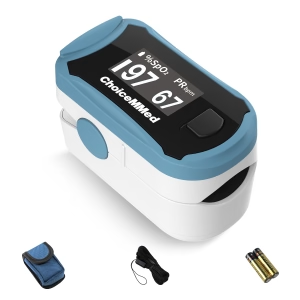
    BuyingForMom is a reader-supported site. As an Amazon Associate we earn from qualifying purchases. When you buy through links on this site, we may earn an affiliate commission at no additional cost to you. See our Affiliate Disclosure for details. This article is not medical advice, please consult a qualified healthcare professional for decisions specific to your own situation.