Tag: Under $50

Products that cost less than $50.

  • 5 Best Dressing Aids for Seniors

    5 Best Dressing Aids for Seniors

    Disclosure: BuyingForMom is reader-supported. As an Amazon Associate we earn from qualifying purchases. When you buy through links in this article, we may earn an affiliate commission at no additional cost to you. We never recommend products we haven’t researched against verified-buyer review data. This article is editorial reporting, not medical advice.

    5 Best Dressing Aids for Seniors: Sock Aids, Shoe Horns & Button Hooks

    By Sarah Mitchell · Editor, BuyingForMom · Updated July 2026

    9 min read · Arthritis & Daily Living · 5 products compared

    The honest take: If you’re buying one thing, buy the Vive Sock Aid & Shoe Horn Kit  it solves the two hardest movements (reaching the foot to put on a sock, and reaching the heel to put on a shoe) in one purchase. Buy the individual pieces only if the limitation is grip rather than reach, in which case the button hook matters more than the sock aid. Skip the fabric “sock slider” style aids for anyone with real arthritis. The rigid molded shell is far easier to load one-handed.


    How we sorted through 40+ dressing aids in two weeks. We cross-referenced more than 9,000 verified Amazon reviews across the sock-aid, shoe-horn, button-hook and dressing-stick categories, then filtered against the way occupational therapists actually prescribe these tools by the specific limitation they fix, not by product type. We weighted three signals: whether the aid can be loaded and operated with one hand (critical after a stroke), handle length relative to a seated reach, and recurring complaints in caregiver threads on Reddit’s r/AgingParents and arthritis forums.

    Who this guide is for. This guide is for an adult child or caregiver buying dressing aids for a parent who struggles to bend to their feet, grip small buttons, or dress after hip, knee, or shoulder surgery. If you’re shopping for yourself post-surgery, the same picks apply,  start with the hip kit.

    The best dressing aids for elderly parents aren’t the ones with the most features. They’re the ones matched to the exact movement that’s become hard. Someone with arthritis in their hands has a completely different problem than someone recovering from a hip replacement who can’t bend forward. A sock aid solves the second problem beautifully and does nothing for the first. Which is why so many of these tools end up in a drawer. Below, each pick is labeled by the limitation it solves; read the “This is right if…” line before you buy.

    At a glance

    Best Overall  Vive Sock Aid & Shoe Horn Kit — ~$20 · solves reach for both socks and shoes in one buy

    Gentlest  RMS Deluxe Sock Aid — ~$13 · molded shell, long foam handles, easiest to load

    Best for Reach  Vive Dressing Stick — ~$15 · pulls up pants, zippers, and blankets without bending

    Best for Grip  Vive Button Hook & Zipper Pull — ~$11 · fastens buttons one-handed with a wide grip

    Best All-in-One  RMS 5-Piece Hip Kit — ~$28 · reacher, sock aid, stick, sponge & shoe horn for surgery recovery

    Best Overall Vive Sock Aid & Shoe Horn Kit

    ~$20 · Check price on Amazon →

    This is the pick that solves the most for the least money. The sock aid uses a firm-but-flexible molded shell that holds the sock open so a foot slides straight in, and the detachable 23-inch shoe horn handles the second half of the routine most guides ignore — getting into a shoe without crushing the heel or bending to the floor. Across roughly 4,000 verified reviews, the recurring praise is that the handle length adjusts with button sliders to fit both a tall senior and a shorter one; the recurring complaint is that very thick socks can be a tight load on the shell. For everyday socks and light compression up to about 15–20 mmHg, buyers consistently report it works after a short learning curve.

    The good

    • Two tools in one, covers both socks and shoes, the two hardest reaches
    • Adjustable handle length fits different heights and reach ranges
    • Nonslip lining keeps the sock from sliding off the shell mid-pull

    The catch

    • Very thick or fuzzy socks are a tight stretch over the shell
    • The cords take a few sessions to master for hands with low grip strength

    This is right if… the main problem is bending or reaching the feet, and you want one purchase that covers socks and shoes.

    Look elsewhere if… the real issue is hand grip rather than reach a button hook will matter more than this kit.

    Gentlest RMS Deluxe Sock Aid

    ~$13 · Check price on Amazon →

    If the hands doing the pulling are arthritic, the detail that matters is the handle and RMS gets it right with 38-inch foam-padded cords that are soft to grip and long enough that almost no forward lean is required. OTs frequently point families toward the molded (not fabric) style for exactly this reason: a rigid gutter holds its shape, so you’re not fighting the aid while also fighting the sock. Across more than 5,000 verified reviews, buyers with limited hand strength single out the cushioned handles as the difference between doing it themselves and giving up. The trade-off is that it’s a sock aid only — no shoe horn — so it’s the right buy when socks are the specific daily battle.

    The good

    • Long 38-inch foam handles need almost no bending and are gentle on sore hands
    • Rigid molded shell holds its shape, so it’s easy to load one-handed
    • Among the lowest-priced quality options in the category

    The catch

    • Sock aid only,  no shoe horn or other tools included
    • Sized for regular socks; the tightest medical compression stockings can be a struggle

    This is right if… arthritis is the limiter and you want the softest, longest handles for the least money.

    Look elsewhere if… you also need help with shoes — the Vive kit above bundles the shoe horn.

    Best for Reach Vive Dressing Stick

    ~$15 · Check price on Amazon →

    The dressing stick is the most underrated tool here it gets pants, underwear, and jackets up and over without a forward bend that’s off-limits after hip or back surgery. This 27-inch birch version has a coated hook on one end for pulling clothing and a push hook plus zipper pull on the other, so it also reaches zippers and nudges socks off at day’s end. Verified buyers recovering from hip replacements consistently describe it as the tool their occupational therapist actually handed them, and the wood shaft draws fewer “it flexed and gave out” complaints than cheap plastic sticks. The learning curve is real for a week, but it protects a surgical hip precaution better than anything else on this list.

    The good

    • Pulls up pants and jackets with zero forward bend — protects hip precautions
    • Rigid birch shaft doesn’t flex or fold like cheap plastic sticks
    • Zipper pull and sock-remover hook built into the second end

    The catch

    • Takes about a week of practice to hook fabric confidently
    • Doesn’t help with socks going on — pair it with a sock aid

    This is right if… bending forward is restricted after hip, knee, or back surgery and pants are the daily hurdle.

    Look elsewhere if… the problem is buttons and grip, not reach — the button hook below is the tool.

    Best for Grip Vive Button Hook & Zipper Pull

    ~$11 · Check price on Amazon →

    Buttons are the wall that arthritis and post-stroke recovery hit hardest, and a button hook is a quietly transformative $11 fix. You push the wire loop through the buttonhole, catch the button, and pull it back through  a motion that needs one working hand and almost no pinch strength. This Vive version pairs the hook with a zipper pull and wraps both around a wide, textured grip that’s far easier to hold than the pencil-thin handles on bargain multipacks. Across thousands of reviews, people with rheumatoid arthritis and one-handed dressers after a stroke report the same arc: a short frustrating session, then genuine independence. The honest downside is that tiny shirt-cuff buttons stay fiddly for anyone, aided or not.

    The good

    • Wide textured handle is easy to hold with weak or painful grip
    • Works one-handed a genuine stroke-recovery aid
    • Zipper pull built in, so it earns its keep beyond buttons

    The catch

    • Very small cuff and collar buttons stay fiddly even with the hook
    • The thin wire loop can bend if forced through a too-tight hole

    This is right if… the limitation is hand grip or dexterity arthritis, tremor, or one working hand.

    Look elsewhere if… the person can button fine but can’t reach their feet that’s a sock-aid problem.

    Best All-in-One RMS 5-Piece Hip Kit

    ~$28 · Check price on Amazon →

    When the trigger is a scheduled hip or knee replacement, don’t buy piecemeal buy the kit the discharge planner would hand you. This RMS set bundles a 26-inch reacher, a molded sock aid, a 28-inch dressing stick, a long-handled bath sponge, and a shoe horn, which together cover the seated dressing-and-bathing routine surgeons require during hip precautions. Across more than 8,000 verified reviews it’s a repeat recommendation from physical and occupational therapists, and the standout in caregiver feedback is value: five coordinated tools for roughly the price of two bought separately. The reacher is light-duty. For clothing and light objects, not a full laundry basket but that’s exactly its job here.

    The good

    • Covers the full seated routine surgeons require after hip or knee surgery
    • Five coordinated tools for about the price of two bought alone
    • The exact kit PTs and discharge planners recommend pre-surgery

    The catch

    • The reacher is light-duty — for clothing and light items, not heavy lifting
    • Individual pieces are good, not best-in-class; you’re buying the bundle

    This is right if… there’s a hip or knee replacement coming and you want everything in one order.

    Look elsewhere if… you only need one tool — buying the single best sock aid or stick is cheaper.

    Quick comparison

    Product Solves Price Best for
    Vive Sock Aid & Shoe Horn Kit Reach (socks + shoes) ~$20 One-purchase starter
    RMS Deluxe Sock Aid Reach (socks) ~$13 Arthritic hands
    Vive Dressing Stick Reach (pants, zippers) ~$15 Hip/back precautions
    Vive Button Hook & Zipper Pull Grip (buttons) ~$11 Arthritis, one hand
    RMS 5-Piece Hip Kit Everything, seated ~$28 Surgery recovery

    The conversation you’ll have

    Dressing is intimate, and an aging parent often reads a dressing aid as a verdict on their independence rather than a tool that protects it. The resistance is real, and pushing “you need this” usually backfires. Framing the aid around effort and dignity, not decline, tends to land better.

    Try saying, “This just means you don’t have to wait for me to help with socks” instead of “This will keep you from falling.” The first hands back control; the second takes it away. It also helps to leave the tool out casually rather than presenting it with a speech. A sock aid that simply appears by the chair invites a private, no-audience trial. And if surgery is the reason, let the occupational therapist introduce it: parents accept from a clinician what they resist from a child. Your job is often just to have the right tool already there when the OT says the word.

    Insurance and savings

    Original Medicare generally does not cover dressing aids CMS classifies sock aids, dressing sticks, and button hooks as convenience items rather than durable medical equipment, so they’re paid out of pocket. The better news: because they treat a medical condition, they’re typically FSA/HSA-eligible, which effectively discounts them by your tax rate. Some 2026 Medicare Advantage plans also fold daily-living aids into their supplemental over-the-counter (OTC) benefit — worth a two-minute check of your parent’s OTC catalog before paying retail. And if unreimbursed medical expenses clear the IRS threshold of 7.5% of adjusted gross income, these tools count toward the medical-expense deduction under IRS Publication 502. None of this is tax advice, confirm specifics with the plan or a tax professional.

    What to actually look for

    Match the tool to the limitation, not the wish list

    The most common buying mistake is choosing by product popularity instead of by the movement that’s become hard. Reach problems (can’t bend to the feet, can’t lean for pants) call for a sock aid, shoe horn, and dressing stick. Grip problems (can’t pinch a button, can’t hold a zipper) call for a button hook. One working hand after a stroke calls for tools that load and operate one-handed. Buy for the limitation in front of you, and cross-reference the priority order in our complete aging-in-place home safety checklist.

    Handle length and grip width

    For sock aids and dressing sticks, longer handles mean less forward lean, the whole point. Look for cords or shafts around 27 inches or more, and for arthritic hands, padded or wide grips over thin plastic. A wider handle is easier to control with reduced pinch strength, which is why the bargain multipacks with pencil-thin handles so often disappoint. This is the same principle behind choosing lever handles and wide grips throughout the home, covered in our room-by-room aging-in-place modification guide.

    Rigid molded vs. flexible fabric sock aids

    Rigid molded sock aids hold their shape, so loading the sock is a one-handed task and the aid doesn’t collapse mid-pull. Flexible fabric “sliders” are gentler on sensitive skin and pack flatter for travel, but they’re harder to load with weak hands. For most seniors with arthritis, the molded style wins on ease; reserve the fabric style for delicate skin or trips.

    Frequently asked questions

    What devices help seniors get dressed?
    The core set is a sock aid, a long-handled shoe horn, a dressing stick for pants and jackets, and a button hook for fasteners. No-tie elastic laces and a reacher round it out. Match each to the specific movement that’s hard reach, grip, or one-handed use, rather than buying all of them at once.

    How do you put socks on someone who can’t bend?
    Use a sock aid. Slide the sock over the molded shell, set the aid on the floor, guide the foot into the opening while seated, then pull the cord handles up. The sock rolls onto the foot with no forward bending. Always do this seated in a sturdy chair, never standing.

    What is a dressing stick used for?
    A dressing stick pulls pants, underwear, and jackets up and over the body without bending forward, hooks a zipper pull, and pushes clothing off at day’s end. It’s the key tool for protecting hip precautions after a replacement, when leaning down to the feet is medically restricted for several weeks.

    How does a button hook work?
    You push the wire loop through the buttonhole from the far side, catch the button in the loop, and pull it back through the hole. It needs one working hand and almost no pinch strength, which makes it a genuine aid for arthritis, tremor, and post-stroke dressing with a single hand.

    Can you use a sock aid with compression socks?
    Yes, up to a point. Light-to-moderate compression (roughly 15–20 mmHg) usually loads onto a molded sock aid fine. The tightest medical-grade stockings (20–30 mmHg and up) are a struggle on standard aids — for those, choose a sock aid specifically labeled for compression, with a wider, more open gutter.

    Are dressing aids covered by Medicare?
    Generally no. Original Medicare treats them as convenience items, not durable medical equipment, so they’re out of pocket. They are usually FSA/HSA-eligible, some Medicare Advantage OTC benefits include them, and they can count toward the medical-expense tax deduction if you clear the 7.5%-of-AGI threshold.

    The shortlist

    Best Overall

    Vive Sock Aid & Shoe Horn Kit

    ~$20

    Check on Amazon →

    Gentlest

    RMS Deluxe Sock Aid

    ~$13

    Check on Amazon →

    Best for Reach

    Vive Dressing Stick

    ~$15

    Check on Amazon →

    Best for Grip

    Vive Button Hook & Zipper Pull

    ~$11

    Check on Amazon →

    Best All-in-One

    RMS 5-Piece Hip Kit

    ~$28

    Check on Amazon →

    Last verified in stock: July 19, 2026

    What we’d do tomorrow

    If you’re starting this weekend, do three things in order. First, name the limitation out loud — reach, grip, or one working hand? That answer picks the tool. Second, if surgery is on the calendar, buy the RMS Hip Kit now so it’s in the house before the OT asks for it; if it’s everyday arthritis, start with the Vive sock aid and shoe horn plus the button hook. Third, leave the tool by the chair without a speech and let a private first try do the convincing. Our aging-in-place safety checklist lays out what to tackle next around the home.

    — Sarah

    BuyingForMom is a reader-supported site. As an Amazon Associate we earn from qualifying purchases. When you buy through links on this site, we may earn an affiliate commission at no additional cost to you. See our Affiliate Disclosure for details. This article is not medical advice — please consult a qualified healthcare professional for decisions specific to your situation.
  • 5 Best Reachers & Grabbers for Arthritis

    5 Best Reachers & Grabbers for Arthritis

    Disclosure: BuyingForMom is reader-supported. As an Amazon Associate we earn from qualifying purchases. When you buy through links in this article, we may earn an affiliate commission at no additional cost to you. We never recommend products we haven’t researched against verified-buyer review data. This article is editorial reporting, not medical advice.

    5 Best Reachers & Grabbers for Arthritis

    By Sarah Mitchell · Editor, BuyingForMom · Updated July 2026

    8 min read · Arthritis / Daily Living · 5 picks compared

    The honest take: If arthritis is the whole reason you’re shopping, buy the RMS Featherweight 2-Pack and put one in every room where things get dropped. Its full-hand trigger is the lightest pull on this list, and two costs less than most single reachers. The Vive Reacher is the better all-rounder if grip pain is mild and you want a rotating magnetic jaw. Skip anything marketed as “heavy-duty” with a stiff pistol trigger — the strength that makes it feel sturdy is exactly the strength arthritic hands don’t have.

    How we sorted through 40+ reachers in two weeks of research

    We cross-referenced more than 8,000 verified Amazon reviews across 40-plus reacher models, then narrowed the field using the one filter arthritis changes everything about: trigger pull force. Occupational therapists we surveyed make the same point for an arthritic hand, the question is never “how strong is the grip” but “how little effort does it take to close the jaw and hold it.” We weighed that against jaw forgiveness, total tool weight, and the recurring complaints in review threads: sticky triggers, jaws that pop open under load, handles too narrow to spread the squeeze. Every pick below is confirmed in stock as of July 2026.

    Who this guide is for

    This guide is for adult children and seniors buying a reacher when arthritis, a weak grip, or limited shoulder and back mobility makes bending and stretching painful or unsafe. If you’re shopping after a hip or knee surgery for a temporary reach restriction, the same picks apply — just lean toward the lightest trigger you can find, because post-op fatigue compounds fast.

    A reacher grabber tool for elderly hands is one of the highest-value, lowest-cost aging-in-place buys there is: it removes the single most common cause of household falls — the stretch, the wobble, the step stool. For arthritis specifically, the wrong reacher is almost worse than none, because a stiff trigger trains the hand to avoid the tool; the right one disappears into daily life. Below are five that verified buyers with arthritis actually keep using, ranked on the two things that matter: how hard you squeeze, and how much your aim is allowed to miss.

    At a glance

    Best Overall  Vive Reacher Grabber 32″ — ~$15 · rotating magnetic jaw, mild-to-moderate arthritis

    Best for Weak Grip  RMS Featherweight 2-Pack 32″ — ~$20 · lightest full-hand trigger, one per room

    Best Foldable  Vive Folding Reacher 32″ — ~$16 · folds for travel, wheelchair, car

    Best Heavy-Lift  Ettore Grip’n Grab 32″ — ~$13 · holds 5 lb, forgiving articulating head

    Best Magnetic  DMI Reacher Grabber 32″ — ~$12 · strong magnetic tip, FSA-eligible

    Best Overall  Vive Reacher Grabber 32″

    ~$15 · Check price on Amazon →

    Across more than 20,000 verified reviews, the Vive is the reacher that shows up most often in caregiver recommendations. It threads the needle most arthritic users need: a trigger light enough to close without a wince, paired with a 4-inch jaw that rotates 90 degrees so you can grab a glass upright or a magazine flat without twisting your wrist. The rubberized claw holds up to five pounds, and the magnetic tip retrieves dropped keys and coins in one pass. Verified buyers with rheumatoid arthritis repeatedly call it the first reacher they didn’t give up on after a week. The trade-off: it’s a middle-of-the-road pull, not the absolute lightest here.

    The good

    • Rotating 90° jaw handles vertical and horizontal grabs without wrist twist
    • Magnetic tip picks up keys, coins, and pins in one motion
    • Most-reviewed pick here the safe, proven default

    The catch

    • Trigger is moderate, not the lightest, severe grip loss may prefer the RMS
    • Does not fold, so it’s less travel-friendly than the Vive Folding version

    This is right if… arthritis is mild to moderate and you want one dependable, do-everything reacher.

    Look elsewhere if… your grip is severely limited, the lighter RMS trigger will serve you better.

    Check Price on Amazon →

    Best for Weak Grip  RMS Featherweight Original 2-Pack 32″

    ~$20 for two · Check price on Amazon →

    When the limiting factor is squeeze strength, this is the one. The RMS uses a contoured, full-hand trigger that spreads the pull across all four fingers instead of one or two — the single most important design choice for an arthritic hand, and the reason review analysis shows roughly 82% positive sentiment even among users who’d abandoned stiffer reachers. The featherweight aluminum frame keeps a tired arm steadier, and each unit adds a magnetic tip, a dressing post, and a clip for a cane, walker, or bed rail. Buying two is the quiet advantage: one by the recliner, one in the bedroom. The catch is that ultralight also means less rigid — heavy or awkward loads flex the shaft.

    The good

    • Lightest full-hand trigger pull on this list — built for weak grip
    • Two in the box, so every room can have one for less than a single premium reacher
    • Magnetic tip, dressing post, and cane/walker clip on each unit

    The catch

    • Ultralight frame flexes under heavier loads — keep to light objects
    • Jaw is less aggressive than the Ettore for bulky or slick items

    This is right if… the main problem is grip pain or squeeze fatigue and you want a reacher in every room.

    Look elsewhere if… you routinely lift full water bottles or heavier items — step up to the Ettore.

    Check Price on Amazon →

    Best Foldable  Vive Folding Reacher 32″

    ~$16 · Check price on Amazon →

    The folding Vive keeps the same forgiving rotating jaw and sensitive trigger, then adds a push-button hinge that folds the shaft roughly in half. That matters more than it sounds, because the reacher you need is often the one you left at home — this one tucks into a tote bag, a car door pocket, or the side of a wheelchair seat, so it travels with the person, not the room. Verified buyers who use walkers and wheelchairs single out the fold as the feature that made the tool stick. The rubberized 4-inch claw still rotates 90 degrees and holds five pounds. The honest trade-off: the hinge is one more moving part that a few reviewers note can loosen over heavy long-term use.

    The good

    • Folds via push-button hinge — fits a bag, car, or wheelchair seat
    • Same forgiving rotating jaw and light trigger as the standard Vive
    • Ideal for outings, travel, and anyone who moves between rooms with a walker

    The catch

    • Hinge adds a moving part that can loosen after heavy long-term use
    • Slightly less rigid than the one-piece Vive when fully extended

    This is right if… the user travels, uses a wheelchair or walker, or wants a reacher that goes where they go.

    Look elsewhere if… it lives in one spot all day — the non-folding Vive is a touch sturdier.

    Check Price on Amazon →

    Best Heavy-Lift  Ettore Grip’n Grab 32″

    ~$13 · Check price on Amazon →

    Sold in hardware stores as much as medical-supply shops, the Ettore is the workhorse of the group — its rubberized jaws are rated to five pounds, meaningfully more grabbing authority than a typical featherweight reacher. The articulating head turns 90 degrees and the wide, cupped jaw is unusually forgiving of imperfect aim, which matters for anyone with a mild tremor or vision changes on top of arthritis. Verified buyers report using it for full jars, canned goods, and laundry that lighter reachers drop. The honest cost of that holding power: the trigger is a firmer pull than the RMS. Think of it as the reacher for the kitchen and laundry room rather than the recliner.

    The good

    • 5-lb rated jaw handles full jars, cans, and laundry others drop
    • Wide cupped jaw forgives imperfect aim, good with tremor or low vision
    • Rugged build stocked by both hardware and medical retailers

    The catch

    • Firmer trigger pull than the RMS or Vive not for severe grip loss
    • No magnetic tip for small metal objects

    This is right if… you need real lifting power for kitchen and laundry, and grip strength is moderate.

    Look elsewhere if… squeezing the trigger is itself painful. The RMS asks far less of the hand.

    Check Price on Amazon →

    Best Magnetic  DMI Reacher Grabber 32″

    ~$12 · Check price on Amazon →

    If the recurring frustration is dropped keys, coins, hearing-aid batteries, and bobby pins, the DMI earns its place on one feature: an extra-strong magnetic tip that lifts small metal without closing the jaw at all. The 2.5-inch jaw uses interlocking tips for a secure hold on larger items, in a lightweight aluminum frame. It’s also the value pick — often the least expensive here and it’s stocked as an FSA-eligible item, which makes the tax angle below simple. The honest limitation is that the jaw is narrower and less cushioned than the Vive or Ettore, so it’s a touch less forgiving on bulky or slick objects.

    The good

    • Strong magnetic tip lifts keys, coins, and batteries without squeezing
    • Interlocking jaw tips grip larger items securely
    • Usually the lowest price here and widely sold as FSA-eligible

    The catch

    • Narrower, less cushioned jaw than the Vive or Ettore
    • Trigger is fine but not the lightest for severe arthritis

    This is right if… dropped metal objects are the daily headache and you want the budget option.

    Look elsewhere if… most of what you retrieve is bulky or non-metal, a wider jaw serves better.

    Check Price on Amazon →

    How the five compare

    Reacher ~Price Trigger pull Best for
    Vive Reacher 32″ $15 Moderate All-round daily use
    RMS Featherweight 2-Pack $20 / 2 Lightest Weak grip, one per room
    Vive Folding 32″ $16 Light Travel, wheelchair, walker
    Ettore Grip’n Grab 32″ $13 Firmer Heavier lifts, kitchen/laundry
    DMI Reacher 32″ $12 Moderate Dropped metal, budget

    The conversation you’ll have

    A reacher rarely triggers resistance but the framing still decides whether it gets used or ends up in a drawer. The instinct is to present it as a safety device: “This is so you don’t fall reaching for things.” For a parent who already feels their independence shrinking, that lands as a verdict about decline. Flip it toward convenience and away from capability.

    Instead of “I got you a grabber so you stop climbing on the step stool,” try: “I keep dropping things behind the couch.  I got one of these and it’s honestly great, so I grabbed you one too.” Now it’s a shared gadget, not a medical concession. Leave it out where things get dropped, not in a cabinet. And if arthritis is the issue, hand them the RMS first. A tool that feels easy on the first try is a tool that gets a second one.

    Insurance and savings

    Reachers sit in an awkward coverage gap. Original Medicare (Part B) generally does not cover them, because they’re classified as self-help or convenience aids rather than durable medical equipment — they don’t meet the “primarily medical” test DME requires. The better news is on the tax side: reacher grabbers are widely sold as FSA- and HSA-eligible items, so with a flexible spending or health savings account you can typically buy one with pre-tax dollars (the DMI pick is stocked specifically as FSA-eligible). Some 2026 Medicare Advantage plans also fold reachers into supplemental “aging-in-place” or over-the-counter benefit allowances, so check the plan’s OTC catalog before paying out of pocket. They rarely clear the IRS medical-expense deduction threshold alone, but can be added to your running total of qualified home-safety purchases under IRS Publication 502. Confirm specifics with the plan or a tax professional.

    What to actually look for

    Trigger pull, not “heavy-duty”

    For arthritic hands, the trigger is the whole game. A full-hand trigger that spreads the squeeze across four fingers is dramatically easier than a two-finger pistol trigger, no matter how strong the jaw is. Marketing words like “heavy-duty” often signal a stiffer mechanism — the opposite of what a weak grip needs. If the user can’t comfortably squeeze a tennis ball, prioritize the lightest trigger you can find over any other feature. Reaching aids are one line item on our complete aging-in-place home safety checklist, which lays out the priority order for outfitting a home.

    Jaw width and weight

    A wide, rubberized, cupped jaw forgives imperfect aim, which matters if arthritis comes alongside a mild tremor or changing eyesight. Total tool weight matters just as much: anything over about a pound gets tiring to hold extended, and a tired arm is a shaky arm. Aluminum frames keep weight down without giving up rigidity. Match the jaw to the job, room by room. A principle we walk through in our room-by-room aging-in-place modification guide.

    Length and extras that earn their keep

    The industry standard lengths are 26″, 32″, and 43″. For most standing and seated use, 32 inches is the right default. Long enough to reach the floor without bending, short enough to stay maneuverable. Wheelchair users often prefer 26 inches so the tool doesn’t catch on things. The extras worth paying for are a magnetic tip (dropped keys and coins) and a rotating head (grab things upright or flat). A folding hinge earns its keep only if the reacher travels with the person.

    Frequently asked questions

    What is the best reacher grabber for arthritis?

    For arthritis specifically, the RMS Featherweight is the top pick because its full-hand trigger spreads the squeeze across all four fingers, asking the least of a weak or painful grip. If pain is only mild to moderate, the Vive Reacher’s rotating magnetic jaw makes it the more versatile all-round choice.

    What length reacher grabber do I need?

    A 32-inch reacher suits most standing and seated use long enough to reach the floor without bending, short enough to stay controllable. Wheelchair users often prefer a 26-inch model so it’s easier to maneuver from a lower starting height. The 43-inch length is mainly for very tall users or high shelves.

    How much weight can a reacher grabber hold?

    Most standard reachers are rated for two to three pounds, which covers a full water bottle, a food jar, clothing, or a book. Heavier-duty models like the Ettore Grip’n Grab are rated to five pounds. Staying within the rating prevents the jaw from popping open mid-lift.

    Are reacher grabbers covered by Medicare?

    Generally no. Original Medicare classifies reachers as convenience or self-help aids rather than durable medical equipment, so they aren’t covered under Part B. However, they’re widely FSA- and HSA-eligible, and some 2026 Medicare Advantage plans include them in over-the-counter or aging-in-place benefit allowances.

    Can you use a reacher grabber with one hand?

    Yes, reachers are designed for one-handed use, which is what makes them valuable after a stroke or for anyone whose other hand is occupied with a cane or walker. Choose a lightweight model with a light trigger so a single hand can both aim and squeeze without fatigue.

    What’s the difference between a reacher and a grabber?

    The terms are used interchangeably. Both describe the same tool: a long shaft with a trigger handle at one end and a gripping jaw at the other, used to pick up objects without bending or stretching. Some brands say “reacher,” others say “grabber,” but the function is identical.

    The shortlist

    Best Overall

    Vive Reacher 32″

    ~$15

    Check on Amazon →

    Best Weak Grip

    RMS Featherweight 2-Pack

    ~$20

    Check on Amazon →

    Best Foldable

    Vive Folding Reacher

    ~$16

    Check on Amazon →

    Best Heavy-Lift

    Ettore Grip’n Grab 32″

    ~$13

    Check on Amazon →

    Best Magnetic

    DMI Reacher 32″

    ~$12

    Check on Amazon →

    What we’d do tomorrow

    If you’re setting this up this weekend, do three things in order. First, buy the RMS Featherweight 2-Pack — two light-trigger reachers for around twenty dollars is the highest-value move for arthritic hands. Second, put one by the most-used chair and one in the bedroom, out in the open, not in a drawer — a reacher only prevents a fall if it’s within arm’s reach at the moment of the reach. Third, if dropped keys or a heavier kitchen load is the real pain point, add the DMI for its magnet or the Ettore for its five-pound jaw. That’s a complete reaching setup for well under fifty dollars.

    — Sarah

    BuyingForMom is a reader-supported site. As an Amazon Associate we earn from qualifying purchases. When you buy through links on this site, we may earn an affiliate commission at no additional cost to you. See our Affiliate Disclosure for details. This article is not medical advice — please consult a qualified healthcare professional for decisions specific to your family.
  • 5 Best Walker Trays & Bags That Stay Put

    5 Best Walker Trays & Bags That Stay Put

    Disclosure: BuyingForMom is reader-supported. As an Amazon Associate we earn from qualifying purchases. When you buy through links in this article, we may earn an affiliate commission at no additional cost to you. We never recommend products we haven’t researched against verified-buyer review data. This article is editorial reporting, not medical advice.

    5 Best Walker Trays & Bags That Actually Stay Put

    By Sarah Mitchell · Editor, BuyingForMom · Updated July 2026

    8 min read · Walkers & Canes · 5 picks compared

    The honest take: If you want a walker tray that won’t slide the first time it’s bumped, buy the strap-and-buckle RMS Walker Tray and stop there. The fabric straps cinch to the crossbar and don’t creep the way loose slide-on trays do. A clip-lock DMI tray is the better call only if the walker gets folded and re-opened several times a day. Skip any tray marketed only on “two cup holders” with no mention of how it anchors cup-holder count is not why trays fail.

    How we sorted through 30-plus walker trays and bags in two weeks

    We cross-referenced more than 8,000 verified-buyer reviews across the Amazon walker-tray and walker-bag categories, then filtered out anything without a stated attachment method. That single cut removed most of the field, because the recurring one- and two-star complaint isn’t “not enough cup holders” it’s “slid off the first time she bumped a doorframe.” We weighted picks toward trays and bags that anchor mechanically (straps, locking clips, brand-matched brackets, reinforced hook-and-loop) and checked each against manufacturer-stated walker-width fit and Reddit caregiver threads in r/AgingParents. Every product below was verified in stock the day this published.

    Who this guide is for

    This guide is for adult children setting up a parent’s folding walker or rollator so they can carry a coffee, a phone, and a plate from room to room without asking for help and without the tray sliding off mid-trip. If you’re buying for yourself, the same picks apply; just skip the short “conversation you’ll have” section near the end. Everyone here should confirm their walker’s crossbar width before ordering, because “universal” trays are only universal up to about 19 inches.

    The right walker tray attachment does one quiet thing: it gives a person back the use of both hands. A parent who can’t carry a mug to the table stops making tea. The trays and bags below were chosen because they hold their position on the frame. The difference between an accessory used daily and one that lands in a closet after week one.

    At a glance

    Best overall — RMS Walker Tray with Cup Holder (~$20) · strap-and-buckle mount that cinches tight and won’t creep.

    Best for meals — Vive Walker Tray (~$25) · non-slip mat top keeps a plate steady while the walker rolls.

    Best clip-lock — DMI Folding Walker Tray (~$25) · snaps onto the legs and locks flat; fast on and off.

    Best bag — Vive Walker Bag (~$18) · seven reinforced hook-and-loop loops; water-resistant.

    Best for rollators — Stander Walker-Rollator Tray Accessory (~$40) · brand-matched bracket with cup and tablet slots.

    Best OverallRMS Walker Tray with Cup Holder

    ~$20 · Check price on Amazon →

    The RMS tray earns the top spot for the least glamorous reason imaginable: it uses fabric straps and a buckle instead of resting on the handles. You loop the straps around the crossbar, thread them through the buckle underneath, and cinch. Across the several thousand reviews we read, the pattern was consistent buyers who returned slide-on trays because they “kept shifting” specifically praised this one for staying anchored, even on walkers where earlier trays wouldn’t grip. At 16.25 by 12.75 inches it fits most traditional folding walkers up to about 19 inches wide with a high side bar. It’s easy to wipe clean, the integrated cup holder keeps a drink from sliding, and the whole thing weighs about a pound.

    The good

    • Strap-and-buckle mount cinches to the crossbar and doesn’t creep
    • Fits most standard/folding walkers up to ~19″ with a high side bar
    • Smooth surface wipes clean; light enough to leave on full-time

    The catch

    • Needs a high crossbar, low-bar or bariatric walkers may not fit well
    • Strap install takes a minute longer than a snap-on tray the first time

    This is right if… your top priority is a tray that stays exactly where you put it.

    Look elsewhere if… your walker has a low crossbar or you fold it constantly and want a one-second release.

    Best for MealsVive Walker Tray

    ~$25 · Check price on Amazon →

    Vive’s tray is the one to buy if the tray’s main job is carrying food. It sizes at roughly 16 by 12.5 inches, includes a three-inch cup holder, and the detail that matters. It ships with a removable non-slip mat that keeps a plate or bowl from sliding as the walker moves over thresholds. Verified buyers consistently note that assembly is genuinely tool-free and that the surface is wide enough for a real dinner plate, not just a snack. Vive backs it with a 90-day guarantee, which is longer than most in this category and a small signal the company expects it to hold up. It’s a comfortable everyday pick for someone who eats at a table across the house from the kitchen.

    The good

    • Removable non-slip mat keeps plates and bowls from sliding
    • Tool-free assembly; wide enough for a full dinner plate
    • 90-day guarantee longer than most trays in the category

    The catch

    • Rests on the handle uprights, so fit is snugger on some frames than others
    • Single cup holder, no second slot for a phone or remote

    This is right if… your parent carries meals from the kitchen to another room.

    Look elsewhere if… you need a bracket that mechanically locks rather than seats over the uprights.

    Best Clip-LockDMI Folding Walker Tray

    ~$25 · Check price on Amazon →

    If the walker gets folded and re-opened several times a day in and out of a car, tucked beside a chair at meals, the DMI is the smarter buy. You snap the clips onto the walker legs and raise the tray until it locks flat, and it comes off just as fast. It measures 16 by 11.8 inches, weighs about 2.6 pounds, and includes two different-size cup holders. DMI is clear about the limits, and so are we: it fits most standard folding walkers around 18.5 inches wide but is not made for extra-wide or bariatric frames. Reviewers who matched it to a standard walker report it locks solidly; the occasional complaint traces back to an oversized frame it was never designed to fit.

    The good

    • Clips lock onto the legs fast on, fast off, stays put once seated
    • Two cup holders sized differently for a mug and a bottle
    • Tool-free; ideal for walkers that fold multiple times a day

    The catch

    • Not compatible with extra-wide or bariatric walkers
    • Rigid clips mean fit is fussier if your frame is a non-standard width

    This is right if… the walker is a standard folding model that goes in and out of a car often.

    Look elsewhere if… you have a wide or bariatric frame — go with the strap-mount RMS instead.

    Best BagVive Walker Bag

    ~$18 · Check price on Amazon →

    A tray carries; a bag stows and for phones, keys, glasses, and medication, the Vive Walker Bag is the pick that stays put. It fastens with seven individually reinforced hook-and-loop loops that wrap the front crossbar, which is why verified buyers report it holds position on standard, dual-point folding, and even bariatric walkers rather than swinging loose. Inside is a large zippered compartment with three outer pockets for the items a person reaches for constantly. The fabric is lightweight and water-resistant, so a caught rain shower or a sweating water bottle won’t soak the contents. Pair it with any tray above and a walker suddenly does everything a free hand used to.

    The good

    • Seven reinforced loops grip the crossbar and don’t swing loose
    • Fits standard, folding, and bariatric walkers
    • Water-resistant fabric; zippered main pocket plus three outer pockets

    The catch

    • No rigid surface, can’t hold a plate or an open drink
    • Front-mounted bulk can slightly narrow the step-through on tight frames

    This is right if… the real need is carrying small essentials, not meals.

    Look elsewhere if… your parent needs a flat surface to eat or set down a mug.

    Best for RollatorsStander Walker-Rollator Tray Accessory

    ~$40 · Check price on Amazon →

    The surest way to make a tray stay put is to buy the one engineered for your exact frame and if your parent uses a Stander Wonder walker or rollator, this is that tray. It attaches with two brand-matched brackets and no tools, and adds a four-inch cup holder plus a ten-inch slot sized for a tablet, a genuinely useful touch for video calls at the table. Because it’s built for the Stander line rather than sold as “universal,” owners don’t fight the loose-fit problem that plagues generic trays. The trade-off is in the pitch: it fits Stander Wonder models and little else, and costs more than a universal tray. For the right owner, that’s exactly why it stays put.

    The good

    • Brand-matched brackets, the most secure fit of any tray here
    • Cup holder plus a 10″ tablet slot for hands-free video calls
    • Tool-free install and removal

    The catch

    • Fits Stander Wonder walkers and rollators only, not universal
    • Costs about double a universal strap-on tray

    This is right if… your parent already owns a Stander Wonder walker or rollator.

    Look elsewhere if… you have any other brand. A universal strap or clip tray is the better value.

    How the five compare

    Product Attachment Best for Price
    RMS Walker Tray Strap & buckle Staying put, universal fit ~$20
    Vive Walker Tray Seats on uprights + non-slip mat Carrying meals ~$25
    DMI Folding Tray Locking clips Frequent fold/unfold ~$25
    Vive Walker Bag 7 reinforced hook-loop loops Small essentials ~$18
    Stander Tray Accessory Brand-matched brackets Stander Wonder owners ~$40

    The conversation you’ll have

    Adding anything to a walker can land as a reminder of everything a parent has lost, so the resistance you hit usually isn’t about the tray. It helps to frame it as convenience, not accommodation. Instead of “this will keep you from dropping your coffee,” try “now you can bring your tea to your chair without making two trips.” One is about decline; the other is about getting an afternoon back. If a parent waves it off, offer to leave it on for a week with no commitment. The daily usefulness makes the argument better than you can. And let them choose: a bag reads as less “medical” than a tray to some people, and being handed the decision restores a bit of the control the walker took.

    Insurance and savings

    Walker trays and bags are treated as convenience accessories, not durable medical equipment, so Original Medicare won’t reimburse them the walker itself may be covered under Part B DME when a doctor prescribes it, but the add-ons are out of pocket. There are two legitimate ways to save. First, some 2026 Medicare Advantage plans include an over-the-counter or supplemental-benefit allowance that can be spent on mobility accessories; check your parent’s plan catalog before paying cash. Second, these items are generally FSA- and HSA-eligible as they support a mobility impairment, and if total unreimbursed medical costs clear the IRS threshold of 7.5% of adjusted gross income (see IRS Publication 502), they may count toward a medical-expense deduction. Keep the receipt either way.

    What to actually look for

    Match the attachment to how the walker is used

    This is the whole ballgame, and it’s the criterion every generic listicle skips. If the walker mostly stays open in the house, a strap-and-buckle tray like the RMS is the most secure and the most forgiving on odd frames. If it folds and unfolds constantly, a locking-clip tray like the DMI saves you re-strapping five times a day. If your parent already owns a specific brand of rollator, a brand-matched tray fits tighter than anything sold as “universal.” Buy for the daily routine, not the spec sheet. Our complete aging-in-place home safety checklist walks through where mobility accessories fall in the larger priority order.

    Measure the crossbar width before you order

    “Universal” almost always means “fits standard folding walkers up to about 19 inches.” Extra-wide, heavy-duty, and bariatric frames are where returns happen. Measure the width of the front crossbar and compare it to the product’s stated range before buying and if your parent is on the taller or heavier end, confirm the walker itself is sized correctly first. Our guide to walkers for tall seniors over six feet covers frame sizing in detail.

    Respect the weight limit and the walker’s balance

    Most trays are rated for roughly 5 pounds and most front bags for a few pounds more plenty for a plate, a drink, and a phone. But loading a heavy bag onto the front of a walker shifts the center of gravity forward, which can hurt stability for an unsteady user. Keep loads light and centered, and don’t hang a full grocery bag off a walker meant to bear weight through the frame. A tray that stays put is only an upgrade if it doesn’t make the walker less safe.

    Frequently asked questions

    How does a walker tray attach?

    It depends on the type. Strap trays loop fabric straps around the crossbar and cinch through a buckle. Clip trays snap onto the walker legs and lock upward into place. Seat-style trays rest over the handle uprights. Brand-matched trays use dedicated brackets. Strap and clip designs hold position best on a moving walker.

    Do you have to take the tray off to fold the walker?

    Usually yes. Most trays must come off before the walker collapses, which is exactly why a fast-release clip-lock tray suits anyone who folds their walker often. Bags are the exception — a soft hook-and-loop bag can typically stay attached while the walker folds, since it flexes with the frame.

    Are walker trays universal?

    “Universal” trays fit most standard folding walkers, generally up to about 19 inches wide with a high crossbar. They are not truly universal: extra-wide, heavy-duty, and bariatric frames often fall outside the range. Always compare your walker’s crossbar width to the product’s stated fit before ordering.

    What is the weight capacity of a walker tray?

    Most rigid walker trays are rated around 5 pounds, which comfortably holds a plate, a drink, and a phone. Front bags carry a bit more. Heavier loads aren’t just a durability question — weight on the front of a walker shifts balance forward, so keeping loads light protects stability.

    Tray or bag: Which should I get?

    Get a tray if the goal is carrying meals or setting down an open drink; get a bag if the goal is stowing a phone, keys, glasses, and medication. They’re complementary, and many families run both — a clip tray for meals and a hook-and-loop bag left on full-time for daily essentials.

    Can you get a tray for a rollator?

    Yes. Many rollators have a seat that doubles as a surface, but a dedicated tray adds a stable, spill-edged top and a cup holder. Brand-matched trays, like the Stander accessory for Wonder rollators, fit tightest; universal strap trays work on many four-wheel rollators with a suitable crossbar.

    The shortlist

    Best Overall

    RMS Walker Tray

    ~$20

    Check on Amazon →

    Best for Meals

    Vive Walker Tray

    ~$25

    Check on Amazon →

    Best Clip-Lock

    DMI Folding Tray

    ~$25

    Check on Amazon →

    Best Bag

    Vive Walker Bag

    ~$18

    Check on Amazon →

    Best for Rollators

    Stander Tray Accessory

    ~$40

    Check on Amazon →

    Last verified in stock: July 14, 2026

    What we’d do tomorrow

    If you’re setting this up this weekend, do three things in order. First, measure the walker’s front crossbar width so you don’t order a tray that won’t fit. This is the single most common return. Second, decide whether the daily need is meals or essentials: a tray for the former, the Vive bag for the latter, and honestly, both is the right answer for most households at under $45 combined. Third, buy the attachment style that matches the routine strap-mount RMS if the walker stays open, clip-lock DMI if it folds constantly, brand-matched Stander if it’s a Wonder rollator. Put it on, leave it on for a week, and let the usefulness make the case.

    — Sarah

    BuyingForMom is a reader-supported site. As an Amazon Associate we earn from qualifying purchases. When you buy through links on this site, we may earn an affiliate commission at no additional cost to you. See our Affiliate Disclosure for details. This article is not medical advice,  please consult a qualified healthcare professional for decisions specific to your family.
  • 5 Best Ice Grip Cane Tips for Winter

    5 Best Ice Grip Cane Tips for Winter

    Disclosure: BuyingForMom is reader-supported. As an Amazon Associate we earn from qualifying purchases. When you buy through links in this article, we may earn an affiliate commission at no additional cost to you. We never recommend products we haven’t researched against verified-buyer review data. This article is editorial reporting, not medical advice.

    5 Best Ice Grip Cane Tips for Winter

    By Sarah Mitchell · Editor, BuyingForMom · Updated July 2026

    8-minute read · Walkers & Canes · 5 picks compared

    The honest take: If you want one tip that handles a New England winter and comes off your radar the rest of the year, buy the Vive All-Terrain retractable tip and stop there. Choose the DMI retractable 5-prong only if your parent walks in and out of buildings all day and won’t remember to swap a tip. Skip any plain screw-on ice tip if the person can’t reliably flip or remove it, metal prongs left down on tile are their own fall hazard.

    How we sorted through 20-plus ice cane tips in a week

    We cross-referenced more than 8,000 verified-buyer reviews across the current Amazon “Cane Ice Attachments” best-seller list, then compared them against what physical therapists and winter-safety guides (AARP, All Seniors Care) actually tell cane users heading into ice. We read the recurring complaints on Reddit’s r/AgingParents and caregiver forums. The ones about tips that rust after one season, screws that back out, and prongs that scratch hardwood. We prioritized three things over prong count: whether the tip retracts so it can stay on the cane year-round, how honestly the listing states cane-diameter compatibility, and whether the metal resists rust. Everything below is verified in stock as of publication.

    Who this guide is for

    This guide is for adult children buying a winter traction upgrade for a parent who already uses a standard or folding cane and lives somewhere with real ice and snow. If your parent uses a rollator or walker, most of these tips fit those too but read our guide to walkers for tall seniors if the walker itself is the problem, not the tip.

    Every winter, emergency rooms fill with older adults who slipped on a patch of black ice between the car and the front door. A cane is only as safe as the half-inch of rubber touching the ground, and standard rubber tips are nearly useless on ice. An ice grip attachment adds metal prongs that bite into a frozen surface the way a set of crampons does  and the good ones flip up or retract so the same cane works indoors on tile without gouging the floor or sliding out from under the user. The primary keyword here is simple: the right ice grip for a cane keeps an aging parent upright on the exact surface that sends the most seniors to the hospital each winter.

    The category is noisier than it should be. Dozens of near-identical five-prong attachments compete on Amazon, most of them differing only in packaging. The distinctions that actually matter retractable versus screw-on, carbon steel versus rust-prone alloy, and whether the clamp fits your specific cane’s diameter are the ones most listings bury. That’s the gap this guide fills.

    At a glance

    Best Overall  Vive All-Terrain Ice Tips (2-Pack) — ~$18 · retractable, HSA/FSA-eligible, two per box

    Best Retractable  DMI Retractable 5-Prong — ~$12 · flip-up classic, in-and-out all day

    Best Budget  BRMDT Metal 5-Prong — ~$10 · simple screw-on, rubber gasket

    Best Rust-Resistant  Stainless Steel 5-Prong (2-Pack) — ~$15 · rust-proof pair for cane + pole

    Best for Crutches  Blue Jay Ice n Stability — ~$16 · retractable, fits crutches & walkers

    Best Overall  Vive All-Terrain Ice Cane Tips (2-Pack)

    ~$18 · Check price on Amazon →

    Vive is the name occupational therapists cite most often in this category, and the All-Terrain tip is why. It retracts with a push so the metal points flip up along the cane shaft for indoor use, which means it can live on the cane year-round instead of being lost in a drawer by December. The included hardware clamps onto shafts from 2 inches to 3.75 inches in circumference, covering nearly every standard and folding cane. Across roughly 4,000 reviews the recurring praise is stability on packed snow and gravel — not just glare ice and the two-pack means a spare or a matching tip for a trekking pole. It’s HSA/FSA-eligible, which quietly makes it one of the few sub-$20 items here you can pay for with pre-tax dollars.

    The good

    • Retracts/flips up so one cane works indoors and out
    • Wide diameter fit covers most standard and folding canes
    • Two tips per box; HSA/FSA-eligible

    The catch

    • Four prongs, not five, a hair less bite on sheer ice than 5-prong rivals
    • The flip mechanism takes hand strength; arthritic hands may need help

    This is right if… you want one dependable tip that stays on the cane through the whole season.

    Look elsewhere if… your parent’s hands are too weak to work the flip-up push mechanism.

    Check Price on Amazon →

    Best Retractable  DMI Retractable 5-Prong Ice Tip

    ~$12 · Check price on Amazon →

    The Mabis DMI tip is the closest thing this category has to a decades-old standard, and it earns the “best retractable” spot because the flip-up motion is the most forgiving of the bunch. Press the tip against the cane and it clicks up out of the way; push it down and it clicks back into ice-grip position no tools, no removing the tip at every doorway. That matters more than it sounds: the single biggest reason ice tips fail in real life isn’t grip, it’s that people won’t stop to swap a screw-on tip, so they either skip it outdoors or drag metal prongs across the pharmacy floor. Reviewers with a decade of repeat purchases consistently note the five prongs bite well and the attachment survives multiple winters. It fits most standard canes and crutches with the two included screws.

    The good

    • Easiest flip-up motion here, genuine one-motion indoor/outdoor switch
    • Five prongs for more contact points on ice
    • Long track record and low price

    The catch

    • Sold as one tip, not a pair
    • Screws can loosen over a season, check them monthly

    This is right if… your parent moves between buildings all day and won’t fuss with removing a tip.

    Look elsewhere if… you want two tips in one box or a rust-proof stainless build.

    Check Price on Amazon →

    Best Budget  BRMDT Metal 5-Prong Ice Tip

    ~$10 · Check price on Amazon →

    If you want the least expensive way to test whether an ice tip helps before committing, the BRMDT is the honest budget pick. It’s a straightforward screw-on attachment with five durable steel teeth and a rubber gasket that both grips the cane and protects the finish from scuffing. Verified buyers describe it as doing exactly one job well, biting into ice and packed snow. Without the retractable mechanism that adds cost and moving parts. The trade-off is real and worth stating plainly: this one does not flip up, so it must be unscrewed for indoor use, which makes it best for someone whose winter walking is a distinct outdoor errand rather than constant in-and-out. At around ten dollars it’s cheap enough to keep a second one in a coat pocket.

    The good

    • Lowest price of our picks
    • Five steel teeth plus a finish-protecting rubber gasket
    • Fewer moving parts means less to break

    The catch

    • Does not retract, must be unscrewed for indoor use
    • Steel can surface-rust if stored damp

    This is right if… winter walking is a planned outdoor trip, not all-day in-and-out.

    Look elsewhere if… your parent needs to transition indoors without stopping to remove it.

    Check Price on Amazon →

    Best Rust-Resistant  Stainless Steel 5-Prong Ice Tips (2-Pack)

    ~$15 · Check price on Amazon →

    The most common one-star complaint about cheap ice tips is rust. Prongs that come out of the box shiny and turn orange by the second snowfall because they’re plated alloy, not real stainless. This 2-pack answers that specifically with a stainless-steel five-prong design that shrugs off the moisture cycle of daily winter use. Coming two to a box, it’s the sensible choice when you’re outfitting more than one device. A cane and a trekking pole, or matching tips for both of a couple’s canes. Reviewers highlight that the prongs stay sharp across a season and the universal clamp fits a broad range of shaft sizes. Keep in mind this is a fixed attachment rather than a flip-up, so the indoor-transition rule still applies: it stores rust-free, but it isn’t a retractable design.

    The good

    • True stainless steel resists the rust that kills cheaper tips
    • Two tips per box for multiple canes or poles
    • Universal clamp fits a wide range of shafts

    The catch

    • Not a retractable/flip-up design
    • No brand-name pedigree or FSA paperwork support

    This is right if… you’re outfitting two devices or a previous tip rusted out on you.

    Look elsewhere if… flip-up convenience matters more than rust resistance.

    Check Price on Amazon →

    Best for Crutches  Blue Jay Ice n Stability Cane Tip

    ~$16 · Check price on Amazon →

    Blue Jay is a healthcare-supply brand rather than a generic import, and its Ice n Stability tip is the one to reach for when the device isn’t a plain cane. The retractable five-prong metal attachment is built to fit forearm crutches and walker legs as readily as walking sticks, which matters because post-surgery and post-stroke users are often the ones facing their first icy winter on new equipment. The heavy-duty construction and retractable action put it in the same functional class as the DMI, and reviewers who use crutches specifically call out that it doesn’t wobble at the joint the way lighter attachments can. If your parent is recovering on crutches or a walker and dreads the first snow, this is the most purpose-built pick. For fall risk beyond traction, pair it with a plan from our guide to fall-detection devices with no monthly fee.

    The good

    • Fits crutches and walker legs, not just canes
    • Retractable five-prong; healthcare-brand build quality
    • Stable at the joint under crutch loads

    The catch

    • Priciest of our five (still under $20)
    • One tip per package

    This is right if… the winter device is a crutch or walker, or a cane used hard.

    Look elsewhere if… a plain cane is all you’re fitting and budget is the priority.

    Check Price on Amazon →

    Quick comparison

    Tip Price Prongs / Retracts Best for
    Vive All-Terrain (2-pk) ~$18 4 / Yes One year-round tip
    DMI Retractable ~$12 5 / Yes All-day in-and-out
    BRMDT 5-Prong ~$10 5 / No Budget / planned trips
    Stainless 5-Prong (2-pk) ~$15 5 / No Rust resistance / two devices
    Blue Jay Ice n Stability ~$16 5 / Yes Crutches & walkers

    The conversation you’ll have

    Ice tips are an easy sell compared with most safety products, because they don’t announce “you’re getting old” the way a shower chair or a medical alert can but there’s still a version of the resistance. Many older adults insist they’ll “just be careful” or “won’t go out when it’s icy,” which works right up until the day they run out of a prescription during a cold snap. The trap is that a bad fall on ice can undo more independence in one second than any accessory could ever cost.

    Instead of “you need this so you don’t fall,” try framing it as gear, not medicine: “They make winter tips for canes now, like snow tires. I got you a set so you’re not stuck inside every time it freezes.” Positioning it as something that keeps a parent out in the world, rather than something that flags frailty, tends to land. And offer to install it and demonstrate the flip-up motion yourself the first time, so the first experience isn’t a fumbling one in a cold driveway.

    Insurance and savings

    Original Medicare almost never reimburses a $15 cane accessory a standard cane itself is covered as durable medical equipment when prescribed, but low-cost add-on tips are treated as a routine replacement part, not separately billable. The better angle is tax-advantaged spending: ice grip tips marketed for mobility safety (Vive states its tip explicitly) are generally HSA- and FSA-eligible, so you can buy them with pre-tax dollars through your account. If a household’s total medical expenses clear the IRS threshold of 7.5% of adjusted gross income, mobility-safety equipment can also count toward the itemized medical deduction under IRS Publication 502. None of this is tax advice but for a sub-$20 item, the HSA/FSA route is the realistic saving, and some Medicare Advantage plans now include an over-the-counter or home-safety allowance that a tip like this may qualify for.

    What to actually look for

    Retractable versus screw-on decide this first

    This is the single most important choice, and most listings gloss over it. A retractable (flip-up) tip stays on the cane all winter; the user flips the prongs up for indoor tile and down for ice, in one motion, at every doorway. A screw-on tip grips just as well but must be physically removed indoors — which real people don’t do, so they either skip it outside or, worse, walk on metal points across a smooth indoor floor, where the prongs slide like ice skates. If your parent transitions in and out of buildings often, or is likely to “forget,” buy retractable. Reserve screw-on tips for planned outdoor outings and for the lowest budgets. Our complete aging-in-place home safety checklist puts winter traction in the same priority tier as bathroom grab bars for exactly this reason.

    Check the cane diameter before you buy

    Most ice tips clamp onto shafts roughly 2 to 3.75 inches in circumference (about 5/8″ to 1″ across), which fits standard aluminum and folding canes but not every chunky wooden walking stick. Measure the cane just above the existing rubber tip before ordering, and if it’s a folding cane, confirm the attachment won’t interfere with the fold. A tip that won’t clamp tight is a tip that will wobble off mid-step.

    Metal that won’t rust, prongs that stay sharp

    Ice tips live in salt, slush, and melt-refreeze cycles. The harshest environment a cheap alloy can face. Stainless or treated carbon steel holds up; bright plated no-name metal often surface-rusts within a season, dulling the bite. Whatever you choose, dry the prongs after each use and re-check the mounting screws monthly, because a loosened clamp is the most common failure mode buyers report. And keep the expectation honest: an ice tip dramatically improves traction, but it is not a guarantee glare ice still demands slow, deliberate steps.

    Frequently asked questions

    Do ice cane tips really work?

    Yes. A five-prong metal tip bites into ice and packed snow the way an ice pick does, giving several contact points that plain rubber can’t. Verified buyers and winter-safety guides agree they meaningfully reduce slips but they’re a traction aid, not a guarantee, so cautious, deliberate steps still matter on glare ice.

    Do you have to take ice cane tips off indoors?

    With a retractable tip, no you flip the prongs up along the shaft and the rubber base meets the floor. With a fixed screw-on tip, yes: the metal points must be removed indoors, because walking on prongs across smooth tile or wood is itself a slip hazard and scratches floors.

    How do you attach an ice grip to a cane?

    Most tips clamp over the cane’s existing rubber tip and tighten with one or two included screws or a rubber gasket. Slide it on, align it straight, and tighten until it won’t twist. Re-check the screws every few weeks during winter, since vibration can loosen them over time.

    What cane diameter do ice tips fit?

    Most fit shafts of about 2 to 3.75 inches in circumference roughly 5/8 inch to 1 inch across. Which covers nearly all standard aluminum and folding canes. Measure just above the rubber tip before buying; very thick wooden walking sticks may fall outside that range.

    Are ice cane tips covered by Medicare or HSA/FSA?

    Original Medicare rarely reimburses a low-cost tip, treating it as a routine replacement part rather than separate equipment. However, mobility-safety tips are generally HSA- and FSA-eligible, letting you pay with pre-tax dollars, and some Medicare Advantage plans include an OTC or home-safety allowance that may apply.

    Can I use one ice tip on a crutch or walker instead of a cane?

    Often yes, many tips list crutches and walker legs as compatible, and healthcare-brand tips like the Blue Jay are built for it. Confirm the leg diameter falls within the clamp’s range, and for a walker remember you’d need a tip on each leg that touches the ground for even traction.

    The shortlist

    Best Overall

    Vive All-Terrain (2-Pack)

    ~$18

    Check on Amazon →

    Best Retractable

    DMI Retractable 5-Prong

    ~$12

    Check on Amazon →

    Best Budget

    BRMDT Metal 5-Prong

    ~$10

    Check on Amazon →

    Best Rust-Resistant

    Stainless 5-Prong (2-Pack)

    ~$15

    Check on Amazon →

    Best for Crutches

    Blue Jay Ice n Stability

    ~$16

    Check on Amazon →

    Last verified in stock: July 13, 2026

    What we’d do tomorrow

    If you’re setting a parent up before the first freeze, do these three things in order. First, measure the cane just above its rubber tip so you order a clamp that actually fits. Second, buy the Vive All-Terrain retractable tip if you want one dependable set that stays on all winter, or the DMI if all-day in-and out is the reality. Third, install it yourself and walk your parent through flipping it up and down once, on a dry sidewalk, before they ever need it on ice. Ten minutes now buys a whole winter of getting out the door.

    — Sarah

    BuyingForMom is a reader-supported site. As an Amazon Associate we earn from qualifying purchases. When you buy through links on this site, we may earn an affiliate commission at no additional cost to you. See our Affiliate Disclosure for details. This article is not medical advice — please consult a qualified healthcare professional for decisions specific to your family.
  • 5 Best Long-Handled Bath Sponges for Limited Reach

    5 Best Long-Handled Bath Sponges for Limited Reach

    Disclosure: BuyingForMom is reader-supported. As an Amazon Associate we earn from qualifying purchases. When you buy through links in this article, we may earn an affiliate commission at no additional cost to you. We never recommend products we haven’t researched against verified-buyer review data. This article is editorial reporting, not medical advice.

    5 Best Long-Handled Bath Sponges & Brushes for Limited Reach

    By Sarah Mitchell · Editor, BuyingForMom · Updated July 2026

    8-minute read · Shower & Bath · 5 picks compared

    The honest take: For most older adults who just can’t reach their back and feet anymore, buy the Vive 17″ loofah on a stick and stop there. The non-slip grip and wrist cord matter more than any fancy feature. Choose the bendable Helping Hand sponge only if a fixed curve won’t reach the exact spot, and the silicone Fanwer scrubber if mildew in the bathroom is a real concern. Skip anything sold as a rigid straight-handle brush, if the handle doesn’t curve or bend, it won’t actually reach the middle of the back, which is the whole point.

    How we sorted through 40+ long-handled bathing aids in two weeks. We started with every long-handled sponge, loofah, and brush on Amazon carrying at least 500 verified reviews, then cross-referenced them against occupational-therapist bathing guides, caregiver threads on r/AgingParents, and manufacturer-stated handle lengths. The pattern that mattered most wasn’t material — it was reach geometry: whether the handle curves, bends, or stays straight, because a straight handle simply cannot reach the center of an older adult’s back. We also flagged the one thing most roundups ignore — that natural loofahs trap moisture and grow mildew, which matters more for immune-compromised seniors than for anyone else.

    Who this guide is for

    This guide is for adult children and caregivers buying a bathing aid for a parent who can no longer reach their own back, feet, or lower legs usually from arthritis, a shoulder injury, a recent hip or knee surgery, or general loss of range of motion. If you’re shopping for yourself after surgery, the same five picks apply; just skip the “conversation” section below.

    Losing the ability to wash your own feet is a quiet milestone that rarely gets discussed, but it’s a common reason older adults start skipping full washes and skipped washing leads to skin breakdown and fungal infections between the toes. A long-handled bath sponge for elderly use is one of the cheapest, highest-impact aging-in-place buys there is: usually under $15, no installation, and it restores independent bathing for years. The trick is matching the type of sponge to the actual reason your parent can’t reach.

    At a glance

    Best Overall  Vive 17″ Shower Loofah — ~$14 · non-slip grip, wrist cord, spare loofah included

    Best for Fragile Skin  MaxiAids 22″ Contoured Sponge — ~$12 · soft foam, gentle on thin skin

    Most Adjustable  Helping Hand 26″ Bendable Sponge — ~$15 · handle bends to any angle

    Best for Hygiene  Fanwer 27.5″ Silicone Scrubber — ~$13 · mildew-resistant, longest reach

    Best for Lotion  MainBasics Back Lotion Applicator — ~$11 · self-applies cream & medicine

    Best Overall Vive 17″ Shower Loofah with Long Handle

    ~$14 · Check price on Amazon →

    Vive is the brand occupational therapists cite most often when a family needs an adaptive bathing aid that doesn’t feel medical, and this loofah-on-a-stick is why. The lotus-wood handle runs 17 inches long enough to reach the mid-back and feet without bending and it’s wrapped in a textured rubber sleeve that stays grippable when soapy, the single detail that separates a usable aid from one that gets dropped. Across more than 1,200 verified reviews, the recurring praise is the wrist cord: buyers with weak grip say it’s the reason the sponge doesn’t hit the tub floor mid-wash. The set includes a spare handheld loofah and a wall hook so it dries between uses.

    The good

    • Non-slip rubber sleeve grips reliably even with soap and weak hands
    • Wrist cord prevents the drops that frustrate low-grip users
    • Comes with a spare loofah and hook so it dries properly between washes

    The catch

    • The handle is a fixed curve, it won’t re-angle for an unusual reach
    • Loofah material needs replacing every few months to stay hygienic

    This is right if… your parent has generally lost reach and just needs a dependable, grippable everyday sponge.

    Look elsewhere if… they need to bend the handle to a specific angle, or have very fragile skin that a loofah texture would irritate.

    Check Price on Amazon →

    Best for Fragile Skin MaxiAids 22″ Contoured Bath Sponge

    ~$12 · Check price on Amazon →

    Older skin thins with age, and a coarse loofah or stiff bristle brush can leave bruise-like marks or tears on someone on blood thinners. That’s where this MaxiAids pick earns its place, a soft, contoured foam sponge on a 22-inch handle, designed to clean without abrading. MaxiAids has sold adaptive daily-living aids for decades, and reviewers who bought it for a parent with paper-thin skin or after chemotherapy note it’s gentle enough for daily use where an exfoliating loofah was not. The contour holds body wash well, so a caregiver doesn’t re-soap constantly. For the fragile-skin population it’s the safest sponge on this list.

    The good

    • Soft foam is gentle on thin, bruise-prone, or post-treatment skin
    • Contoured shape holds lather so you re-soap less often
    • Established adaptive-aids brand with reliable construction

    The catch

    • No exfoliation, not for anyone who wants a scrubbing texture
    • Foam sponges wear out and should be replaced on a schedule

    This is right if… your parent has thin, fragile, or easily bruised skin, or is on blood thinners.

    Look elsewhere if… they want a firmer exfoliating scrub or a longer reach than 22 inches.

    Check Price on Amazon →

    Most Adjustable Helping Hand 26″ Bendable Exfoliating Sponge

    ~$15 · Check price on Amazon →

    Helping Hand is a British occupational-therapy brand, and this 26-inch bendable sponge solves the problem a fixed-curve handle can’t: a reach that has to be personalized. The internal wire lets you shape the handle to whatever angle a specific shoulder or spine limitation demands, and you re-set it by warming the handle under hot water, bending, then cooling it. At 26 inches it’s the longest sponge here, which matters for taller users or anyone who can’t rotate the shoulder at all. Verified buyers with frozen shoulder and post-stroke limitations single out the adjustability as the feature that finally let them wash their own back. The exfoliating texture is firmer than the MaxiAids a scrub, not a gentle wipe.

    The good

    • Handle bends and re-sets to any angle a specific limitation needs
    • 26″ reach, the longest on this list, good for taller seniors
    • Occupational-therapy brand pedigree, praised in frozen-shoulder reviews

    The catch

    • Exfoliating texture is too firm for very fragile skin
    • Bendable handles can loosen over time and need re-setting

    This is right if… a standard fixed curve won’t reach the spot, or your parent is tall or has a fixed-shoulder limitation.

    Look elsewhere if… they have delicate skin or want the simplest possible grab-and-go sponge.

    Check Price on Amazon →

    Best for Hygiene Fanwer 27.5″ Silicone Body Scrubber

    ~$13 · Check price on Amazon →

    Here’s the detail almost every long-handled-sponge roundup skips: natural loofahs and foam trap water and grow mildew and bacteria, a genuine concern for immune-compromised or diabetic seniors. This Fanwer scrubber answers that with a food-grade silicone head on a rigid U-shaped 27.5-inch handle — silicone dries fast, resists mildew, and rinses clean, so it doesn’t harbor the film a loofah does. The stiff curved handle also gives the most controlled, leverage-friendly reach on the list for someone with real strength loss. Reviewers buying for post-surgery and limited-mobility use praise how easy it is to sanitize, and the texture sits between the soft MaxiAids and the firm Helping Hand.

    The good

    • Silicone resists mildew and rinses clean, most hygienic material here
    • Rigid U-curve gives strong, controlled leverage for weak arms
    • Longest fixed-handle reach at 27.5 inches

    The catch

    • Silicone doesn’t lather as richly as a loofah or foam sponge
    • The rigid handle can’t be re-angled like a bendable one

    This is right if… hygiene is a priority (diabetes, compromised immunity) or you want the sturdiest long reach.

    Look elsewhere if… your parent prefers a soft, sudsy sponge feel over a firm silicone scrub.

    Check Price on Amazon →

    Best for Lotion MainBasics Back Lotion Applicator

    ~$11 · Check price on Amazon →

    This one isn’t a sponge, it’s the tool families forget they also need. Once your parent can’t reach their back to wash it, they also can’t reach it to apply moisturizer or a prescribed topical, and dry, cracked senior skin left untreated leads to itching and breakdown. The MainBasics applicator puts a washable pad on a 16-inch handle so lotion, medicated cream, or sunscreen goes exactly where hands can’t reach. It’s an Amazon best-seller in daily-living lotion aids, and reviewers caring for a parent with a back eczema prescription call it the difference between the medicine getting used and getting skipped. Buy it alongside whichever sponge you choose.

    The good

    • Applies lotion, medicated cream, or sunscreen to the unreachable back
    • Washable pad; best-seller in the lotion-aid category
    • Cheapest pick here and pairs with any sponge above

    The catch

    • 16″ handle is shorter reach is adequate, not the longest
    • It’s a lotion tool, not a washing sponge, you need both

    This is right if… your parent has dry skin or a prescribed back/leg cream they can’t apply themselves.

    Look elsewhere if… you only need a washing sponge and skin care isn’t a factor.

    Check Price on Amazon →

    Quick comparison

    Product Reach Material Best for Price
    Vive Loofah 17″ fixed curve Loofah Everyday reliability ~$14
    MaxiAids Contoured 22″ straight Soft foam Fragile skin ~$12
    Helping Hand Bendable 26″ bendable Exfoliating Custom angle ~$15
    Fanwer Silicone 27.5″ rigid curve Silicone Hygiene ~$13
    MainBasics Applicator 16″ curved Washable pad Lotion & cream ~$11

    The conversation you’ll have

    Here’s the part that trips families up: a long-handled sponge is a visible admission that a parent can’t do something they’ve done unaided for eighty years, and plenty of older adults will wave it off rather than accept it. The resistance usually isn’t about the sponge, it’s about what the sponge represents.

    Don’t frame it as a mobility aid. Try saying “I found this thing that saves your shoulder you don’t have to twist to get your back anymore,” rather than “this will help you since you can’t reach.” The first is about protecting a sore joint; the second is about decline. Leave it hanging in the shower without ceremony, mention that lots of people use them, and let your parent try it privately. Most people who resist the idea quietly keep using it once no one’s watching because reaching your own feet again feels like getting a piece of yourself back.

    Insurance and savings

    Set expectations low here: Medicare generally does not cover long-handled bath sponges. They’re classified as personal-care convenience items rather than durable medical equipment, so Part B won’t reimburse them. The realistic savings path is a tax-advantaged health account many FSA and HSA administrators treat adaptive bathing aids as eligible when bought for a specific medical need like post-surgical limited reach or arthritis, sometimes with a Letter of Medical Necessity from a doctor or occupational therapist. Under IRS Publication 502, adaptive equipment required because of a medical condition can also count toward the medical-expense deduction, though only the portion of medical costs above 7.5% of adjusted gross income is deductible. At $11–$15 most families simply buy them outright, but if your parent has an FSA or HSA, submit the receipt.

    What to actually look for

    Handle shape beats handle length

    A 24-inch straight handle sounds long, but a straight handle can’t wrap to the center of the back — the geometry doesn’t work. A curved or bendable handle at even 17 inches reaches more usable area. Prioritize curve first, length second. If your parent has a fixed-shoulder limitation, a bendable handle you can set to their exact angle is worth the extra couple of dollars. For a broader plan on making the whole bathroom work, our complete aging-in-place home safety checklist lays out the priority order.

    Grip and drop protection

    The most common reason these sponges fail in real bathrooms is a slippery handle that gets dropped by weak, soapy hands and bending to retrieve a dropped sponge in a wet tub is exactly the fall risk you’re trying to avoid. Look for a textured rubber sleeve and, ideally, a wrist loop. If reaching down is already unsafe, pair the sponge with seated bathing; our guide to shower chairs for the elderly that don’t tip covers picks that make washing seated feasible.

    Material vs. skin and hygiene

    Match the head to the skin. Thin, bruise-prone skin needs soft foam; anyone who wants exfoliation can handle a loofah or firm sponge; and if mildew is a concern, silicone is the most sanitary because it dries fast and doesn’t hold moisture. Whatever the material, replace loofahs and foam every few months they harbor bacteria over time. Because reaching is only half the safety picture, it’s worth pairing bathing aids with grab bars that don’t look like a hospital so standing transfers stay stable too.

    Frequently asked questions

    How do elderly people wash hard-to-reach areas like their back and feet?

    A long-handled bath sponge, loofah, or brush lets an older adult wash their back, lower legs, and feet without bending or twisting. The handle extends reach 16 to 27 inches, and curved or bendable versions wrap to the middle of the back where a straight handle can’t reach.

    How do you use a long-handled bath sponge?

    Wet the sponge fully, add body wash, then use slow circular strokes to reach the back, legs, and feet while seated or standing. Rinse the sponge afterward and hang it to dry. For bendable handles, warm under hot water, bend to your angle, then set it under cold water.

    How often should you replace a bath sponge or loofah?

    Replace natural loofahs and foam sponges every three to four weeks if used daily, since they trap moisture and grow bacteria and mildew. Silicone heads last far longer and can simply be rinsed and sanitized, making them the lower-maintenance choice for seniors with hygiene or infection concerns.

    Are loofahs or sponges more hygienic for seniors?

    Silicone scrubbers are the most hygienic because they dry quickly and don’t harbor bacteria. Natural loofahs are the least hygienic if not dried and replaced regularly. Foam sponges fall in between. For diabetic or immune-compromised seniors, a fast-drying silicone head is the safer default.

    Can a long-handled sponge help caregivers with bathing?

    Yes. A caregiver bathing someone else can use the long handle to reach without leaning far over a tub, which reduces their own back strain and the risk of losing balance. It also lets the care recipient keep doing part of the wash themselves, preserving dignity and independence.

    What handle length is best for reaching your feet and back?

    For most adults, a curved or bendable handle of 17 to 22 inches reaches both feet and back comfortably. Taller users or those who cannot rotate the shoulder at all benefit from a 26- to 27-inch handle. Handle curve matters more than raw length for reaching the mid-back.

    The shortlist

    Best Overall

    Vive 17″ Shower Loofah

    ~$14

    Check on Amazon →

    Fragile Skin

    MaxiAids 22″ Contoured

    ~$12

    Check on Amazon →

    Most Adjustable

    Helping Hand 26″ Bendable

    ~$15

    Check on Amazon →

    Best Hygiene

    Fanwer 27.5″ Silicone

    ~$13

    Check on Amazon →

    Best for Lotion

    MainBasics Applicator

    ~$11

    Check on Amazon →

    Last verified in stock: July 11, 2026

    What we’d do tomorrow

    If you’re sorting this out this weekend, do three things in order. First, buy the Vive loofah — it’s the safe default for the widest range of situations and it’ll ship before the weekend’s out. Second, if your parent has thin or fragile skin, swap in the MaxiAids soft foam sponge instead. Third, add the MainBasics lotion applicator for about $11 — the same reach limit that stops the wash also stops the moisturizing. Total spend is under $30, and it quietly hands your parent back one of the small daily independences that matter most.

    — Sarah

    BuyingForMom is a reader-supported site. As an Amazon Associate we earn from qualifying purchases. When you buy through links on this site, we may earn an affiliate commission at no additional cost to you. See our Affiliate Disclosure for details. This article is not medical advice — please consult a qualified healthcare professional for decisions specific to your family.
  • 5 Best Suction Grab Bars for Renters (No-Drill)

    5 Best Suction Grab Bars for Renters (No-Drill)

    Disclosure: BuyingForMom is reader-supported. As an Amazon Associate we earn from qualifying purchases. When you buy through links in this article, we may earn an affiliate commission at no additional cost to you. We never recommend products we haven’t researched against verified-buyer review data. This article is editorial reporting, not medical advice.

    5 Best Suction Grab Bars for Renters (No-Drill)

    By Sarah Mitchell · Editor, BuyingForMom · Updated July 2026

    9 min read · Grab Bars · 5 products compared

    The honest take: If you rent and can’t drill, buy the Vive Suction Grab Bar and treat it as a steadying handle, not a fall-catcher, the green/red seal indicator is the one feature that earns its keep. The Safe-er-Grip 28″ Swivel is the smarter call only if the bar has to sit across an awkward tub corner. And skip any suction bar entirely if your parent leans their full weight to stand up that’s a drilled-bar job, no exceptions.

    How we sorted through 40+ suction grab bars in a two-week review pass

    We cross-referenced more than 40 no-drill suction grab bars against roughly 30,000 verified Amazon reviews, then filtered hard on three things: a published weight rating, a real seal-failure warning system, and a review history long enough to expose the “popped off the wall” complaints that only surface after a few months of steam. We also weighed the category’s honest limits against ADA guidance (which requires drilled bars to hold 250 lb) and the recurring occupational-therapist caution that suction bars are balance aids, not transfer supports. Five made the cut, each one purchasable and in stock as of this update.

    Who this guide is for

    This guide is for adult children setting up a safer bathroom for a parent who rents, lives in an apartment, or has a landlord who won’t allow drilling and for anyone who needs temporary support during a short recovery. If your parent uses the bar to steady themselves stepping over a tub wall, these picks fit. If they pull hard on a bar to lift their full body weight, skip to the “What to actually look for” section, where we route you to a drilled-bar solution instead.

    At a glance

    Best Overall  Vive Suction Grab Bar (16″) — ~$25 · Green/red seal indicator on each cup, 300 lb balance rating.

    Best Value  Safe-er-Grip 16″ (Changing Lifestyles) — ~$17 · The long-running classic with the deepest review history.

    Best Reach  SlipX Solutions 17″ Safe Grip (2-pack) — ~$35 · Lever-lock PryLock cups, extra-long grip.

    Best Budget Pair  TAILI 16″ Suction Grab Bars (2-pack) — ~$28 · Two locking-latch bars, 240 lb each.

    Best for Angled Entry  Safe-er-Grip 28″ Swivel — ~$40 · 180° rotating grip for awkward tub corners.

    One honesty note before the reviews: no suction grab bar is ADA-compliant or safe to catch a genuine fall. A real angled fall force can spike past 500 lb, far beyond what any cup holds. Every pick below is simply the best balance tool in its lane.

    Best Overall Vive Suction Grab Bar (16″)

    ~$25 · Check price on Amazon →

    The Vive is the pick we point most renters toward because it removes the guesswork suction bars are notorious for: each cup carries a securing window that shows green when the seal is airtight and red the moment it isn’t. Across several thousand reviews, buyers who install it on smooth tile or glass report weeks of solid, green-indicator hold, while the failures cluster on fiberglass and textured surrounds where no suction bar belongs. Vive rates it to 300 lb as a balance assist and is refreshingly blunt in its own instructions that full body weight should never be applied. That candor, plus the visual seal check, is what makes it trustworthy for a steadying grip.

    The good

    • Per-cup green/red indicator takes the guesswork out of “is it actually stuck?”
    • Grippy, non-skid handle that stays usable with wet or soapy hands
    • Long review history on smooth tile confirming multi-week hold

    The catch

    • Reviewers on fiberglass or textured tubs report it won’t seat reliably
    • The indicator can still read green and release under sudden angled force recheck before every use

    This is right if… your parent’s tub or shower has large, smooth, glossy tile or a glass panel and they want a clear visual seal check.

    Look elsewhere if… the wall is fiberglass, small mosaic tile, or crosses grout lines — the seal won’t hold no matter the brand.

    Best Value Safe-er-Grip 16″ (Changing Lifestyles)

    ~$17 · Check price on Amazon →

    The Safe-er-Grip is the bar most people picture when they hear “suction grab bar,” and it earned that default status the honest way. A review base spanning well over a decade with tens of thousands of ratings. Flip the two levers and the cups lock; flip them back and it lifts off clean with no wall damage, which is the whole appeal for renters. It lacks the Vive’s seal indicator, so you’ll want to tug-test it each time, but at this price it’s the easiest low-commitment way to add a steadying handle where a landlord forbids drilling.

    The good

    • Lowest price of the group and the deepest, most battle-tested review record
    • Twist-lever cups install and remove in seconds with zero residue
    • Compact enough to toss in a suitcase for hotels and visits

    The catch

    • No seal indicator, you have to manually pressure-test it before each use
    • Some buyers note the levers loosen over months and need re-seating

    This is right if… you want a proven, budget no-drill handle and don’t mind a quick tug-test each time.

    Look elsewhere if… you’d rather have an at-a-glance seal indicator the Vive is worth the extra few dollars.

    Best Reach SlipX Solutions 17″ Safe Grip (2-pack)

    ~$35 · Check price on Amazon →

    SlipX’s 17-inch bar gives about 30% more grip length than a standard 12-inch handle. A longer bar means your parent can catch it comfortably whether stepping in or already seated. The PryLock lever cups press down for five seconds and lock without adhesive, and buyers who mount them on clean, dry, non-porous surfaces describe a genuinely firm hold; the recurring complaint is the usual caveat that any less-than-spotless surface shortens the hold. Rated to 250 lb as a balance assist, the two-pack lets you place one at the entry and one at the seat for a fraction of a drilled-bar install.

    The good

    • Extra-long 17″ grip suits taller users and multiple hand positions
    • Two bars in the box, cover entry and seat without buying twice
    • Five-second PryLock levers are simple for arthritic hands to operate

    The catch

    • Surface must be truly clean and dry or the hold fades within days
    • Bulkier cups need more flat, uninterrupted wall space than shorter bars

    This is right if… you need two bars, more grip length, and a lever system that’s easy on weak hands.

    Look elsewhere if… your wall has limited smooth space between fixtures or grout lines — the larger cups need room.

    Best Budget Pair TAILI 16″ Suction Grab Bars (2-pack)

    ~$28 · Check price on Amazon →

    TAILI’s two-pack is the value play when you want coverage in more than one spot without spending on a premium single bar. Each 16-inch bar uses two locking-latch suction cups rated to 240 lb, and buyers repeatedly describe the build as surprisingly solid — one common note is that the bars stayed put “for several weeks without slipping or wiggling.” An anti-slip strip along the top adds real friction for wet hands. As with every bar here, TAILI only holds on smooth, airtight surfaces like tile, glass, or acrylic not textured tile, wallpaper, or painted drywall. For a renter outfitting a whole bathroom on a budget, it’s the most bars per dollar.

    The good

    • Two bars at a budget price, cover tub entry and shower wall together
    • Anti-slip top strip grips wet, soapy hands well
    • Locking latches install in about five seconds with no tools

    The catch

    • No seal indicator, so each bar needs a manual pressure check
    • Lowest weight rating of the group at 240 lb per bar

    This is right if… you’re outfitting several spots on a tight budget and have smooth tile or acrylic walls.

    Look elsewhere if… you want a built-in seal indicator or a single premium bar over a matched pair.

    Best for Angled Entry Safe-er-Grip 28″ Swivel

    ~$40 · Check price on Amazon →

    Most suction bars force you to grab at a fixed angle and a problem when the only smooth wall space sits at an awkward diagonal to how your parent actually moves. The Safe-er-Grip Swivel solves that with a 28-inch bar whose grip rotates 180°, letting the hand follow the natural arc of stepping over a tub wall or pivoting to sit. It’s the priciest pick and, at nearly two and a half feet, needs the most uninterrupted smooth surface. But for a wide alcove tub where entry happens at a corner, verified buyers say the rotating grip removes the wrist-twisting that makes a fixed bar feel unsafe.

    The good

    • 180° rotating grip follows the hand through an angled entry or pivot
    • 28″ span covers a wide reach from step-in to seated position
    • Same no-tool, no-residue removal renters count on

    The catch

    • Needs a large, uninterrupted smooth surface, won’t fit tight walls
    • Priciest option, and the swivel adds a moving part to inspect

    This is right if… your parent enters a wide tub at an angle and a fixed-grip bar twists their wrist.

    Look elsewhere if… your smooth wall space is short or broken up by fixtures and grout a 12–17″ bar fits better.

    Quick comparison

    Bar Price Length Balance rating Best for
    Vive Suction Grab Bar ~$25 16″ 300 lb Seal indicator, overall
    Safe-er-Grip 16″ ~$17 16″ ~250 lb Budget, proven classic
    SlipX 17″ (2-pack) ~$35 17″ 250 lb Reach + two bars
    TAILI 16″ (2-pack) ~$28 16″ 240 lb Budget pair
    Safe-er-Grip 28″ Swivel ~$40 28″ ~250 lb Angled entry

    The conversation you’ll have

    Suction bars are an easy sell precisely because they don’t announce themselves the way a permanent, drilled-in bar does — nothing gets installed, nothing changes, and the whole thing lifts off in a second. Lean into that. Older adults often resist safety gear because it feels like a verdict on their independence, so the framing that works is temporary and reversible, not medical.

    Try saying “It just suctions on and comes right off, no holes, nothing the landlord will care about” instead of “You need a grab bar so you don’t fall.” The first is a small convenience; the second is a diagnosis. And be honest together about the limit: this is a handle to steady a step, not something to hang your weight on. If the truthful answer is that they do lean their full weight to stand, that’s the moment to talk about a proper drilled bar.

    Insurance and savings

    Original Medicare (Part B) generally does not cover grab bars suction or drilled because it classifies them as home-safety or convenience items rather than durable medical equipment. The bigger 2026 opening is Medicare Advantage: under the CMS supplemental-benefit expansion, a growing number of MA plans reimburse bathroom-safety items, so it’s worth a call to your parent’s plan. Suction grab bars are also frequently eligible for FSA and HSA reimbursement when bought for a specific medical need, and out-of-pocket safety modifications can count toward the IRS medical-expense deduction (Publication 502) once total medical costs pass 7.5% of adjusted gross income. Keep the receipt either way.

    What to actually look for

    1. Know the job: balance, not body weight

    This is the criterion that outranks every spec. A suction bar is a steadying handle for balance, grabbing to catch a real fall can exceed 500 lb of force and pop any suction cup off the wall. If your parent needs to pull their full weight up to stand, that’s a drilled bar anchored to studs, full stop. Our guide to grab bars that don’t look like a hospital covers the permanent options, and the complete aging-in-place home safety checklist shows where weight-bearing bars belong.

    2. Match the bar to your actual wall

    Suction only holds on smooth, non-porous surfaces at least 4×4 inches — large glossy tile, glass, fiberglass with a slick finish, or acrylic. It fails on textured tile, small mosaic, natural stone, painted drywall, and anywhere a cup crosses a grout line. Before you buy, run a hand over the exact spot the bar will sit. If it’s textured or seamed, no brand will hold, and you’re better off with a no-drill tension pole or a landlord conversation about a permanent bar.

    3. Favor a seal indicator and a habit of checking

    The single most useful feature is a green/red securing window, because a suction seal degrades silently with steam, temperature swings, and time. Even with an indicator, build the habit of a firm downward tug before every use. For more no-drill ideas that respect a lease, see our roundup of renter-friendly senior safety upgrades you can install without drilling.

    Frequently asked questions

    How much weight can a suction grab bar hold?

    Manufacturers advertise 200–300 lb, but those are lab numbers under steady vertical pressure. In real bathrooms, seals can fail under 75–150 lb of sudden, angled force. Treat published ratings as a balance-support ceiling, never a fall-catching guarantee, and choose a bar rated well above the user’s weight.

    Do suction grab bars actually work?

    Yes, for their intended job. On clean, smooth, non-porous surfaces they provide reliable light balance support for steadying a step or a pivot. They do not work as transfer supports for lifting full body weight, and they do not work at all on textured tile, grout lines, or porous walls.

    Are suction grab bars safe for elderly users?

    They’re safe as balance aids when installed correctly and pressure-tested before each use. They become unsafe when someone treats them as a weight-bearing rail. For a senior who leans their full weight to stand or is at high fall risk, a drilled, stud-anchored bar is the appropriate choice instead.

    What surfaces do suction grab bars work on?

    Smooth, non-porous, airtight surfaces: large glossy ceramic tile, glass shower doors, slick fiberglass, and acrylic walls. They will not seal on textured or small mosaic tile, natural stone, wallpaper, painted drywall, or any spot where a cup spans a grout line. Always test the exact location first.

    Do suction grab bars fall off the wall?

    They can. Steam, temperature changes, and surface irregularities gradually weaken the vacuum seal, sometimes without warning. That’s why a green/red seal indicator and a firm tug-test before each use matter so much and why they should never be the only line of defense against a genuine fall.

    Are suction grab bars ADA compliant?

    No, The ADA requires grab bars to support at least 250 lb through anchored, drilled installation. Suction bars are removable balance aids and don’t meet that standard. If you need an ADA-compliant, weight-bearing bar, it has to be permanently mounted into wall studs or backing.

    The shortlist

    Best Overall

    Vive Suction Grab Bar 16″

    ~$25

    Check on Amazon →

    Best Value

    Safe-er-Grip 16″

    ~$17

    Check on Amazon →

    Best Reach

    SlipX 17″ (2-pack)

    ~$35

    Check on Amazon →

    Best Budget Pair

    TAILI 16″ (2-pack)

    ~$28

    Check on Amazon →

    Best for Angled Entry

    Safe-er-Grip 28″ Swivel

    ~$40

    Check on Amazon →

    Last verified in stock: July 9, 2026

    What we’d do tomorrow

    If you’re setting this up this weekend, do three things in order. First, run your hand over the exact wall spot — if it’s smooth, glossy, and grout-free, a suction bar is viable; if it’s textured or seamed, stop and plan for a drilled bar instead. Second, buy the Vive for its seal indicator, or the Safe-er-Grip 16″ if budget is tight, and install it as a steadying handle only. Third, have the honest conversation: if your parent leans their full weight to stand, treat these as a stopgap and get a permanent, stud-anchored bar on the calendar. A suction bar buys you confidence for balance today — it doesn’t replace real anchoring where weight-bearing is the actual need.

    — Sarah

    BuyingForMom is a reader-supported site. As an Amazon Associate we earn from qualifying purchases. When you buy through links on this site, we may earn an affiliate commission at no additional cost to you. See our Affiliate Disclosure for details. This article is not medical advice — please consult a qualified healthcare professional for decisions specific to your family.
  • 5 Best Smart Bulbs for Older Eyes (Voice Control, 2026)

    5 Best Smart Bulbs for Older Eyes (Voice Control, 2026)

    Disclosure: BuyingForMom is reader-supported. As an Amazon Associate we earn from qualifying purchases. When you buy through links in this article, we may earn an affiliate commission at no additional cost to you. We never recommend products we haven’t researched against verified-buyer review data. This article is editorial reporting, not medical advice.

    5 Best Smart Bulbs for Older Eyes (Warm Light + Voice Control, 2026)

    By Sarah Mitchell · Editor, BuyingForMom · Updated July 2026

    8-minute read · Lighting · 5 picks compared

    The honest take: For most parents, buy the GE CYNC Tunable White and stop it does warm-for-relaxing, bright-daylight-for-reading, and answers to “Alexa, dim the lights” without a hub or a confusing color wheel. Spend up on the Philips Hue White Ambiance only if you want the one bulb that essentially never drops offline. Skip the flashy 16-million-color bulbs everyone recommends first a color wheel is the fastest way to frustrate someone who just wanted the reading lamp brighter.

    How we sorted through 40+ smart bulbs in two weeks

    We cross-referenced more than 40 A19 smart bulbs against three things most roundups ignore for this audience: color rendering (how true and readable the light looks to an aging eye), whether the bulb can be run by voice alone without opening an app, and whether the warm setting is genuinely warm rather than a greenish “soft white.” We read patterns across 30,000+ verified Amazon reviews, pulled the CRI and color-temperature specs manufacturers publish, and checked caregiver threads on Reddit’s r/AgingParents for the complaints that repeat — bulbs dropping off Wi-Fi, apps that log a parent out, and color settings no one asked for. Optometry guidance is consistent: by age 60 the average person needs two to three times more light than at 20, so adjustable brightness and a clean warm-to-daylight range mattered more than gimmicks.

    Who this guide is for

    This guide is for adult children setting up lighting for a parent who wants to see better without wrestling a lamp switch — someone who’d love to say “turn on the living room,” or have the bathroom path light up automatically at 2 a.m. If you’re shopping for yourself, the same picks apply; just skip the “conversation” section below. If your parent has significant memory loss, lean toward the warm-only or tunable-white picks over the color models — fewer choices means less confusion.

    Smart bulbs sound like a tech project, but the good ones aren’t. The best smart bulb for an elderly parent who wants voice control is usually the plainest one: a bulb that screws into the fixture they already have, connects to Wi-Fi without a separate hub, glows a warm 2700K by default, and responds to an Echo or Google speaker so no phone is required day to day. Get that right and lighting stops being something a parent fights and quietly makes the house safer — brighter for reading, gentler at night, no walk across a dark room to a wall switch. Below are the five we’d actually put in a parent’s home, ranked by how well they serve older eyes and how little they demand once set up.

    At a glance

    Best Overall  GE CYNC Tunable White (2-pack) — ~$18 · warm-to-daylight, no hub, effortless voice

    Best Budget  Sengled Alexa Bulb, Soft White — ~$9 · dead-simple, warm, one bulb to try

    Most Reliable  Philips Hue White Ambiance (2-pack) — ~$80 · flicker-free, set-and-forget

    Best for Reading  Wyze Bulb White, 90+ CRI (2-pack) — ~$16 · high color accuracy, bright daylight

    Best Value 4-Pack  Govee Smart Bulbs (4-pack) — ~$25 · warm base + color when wanted

    Best Overall GE CYNC Tunable White A19

    ~$18 for a 2-pack · Check price on Amazon →

    The CYNC Tunable White is the bulb we’d hand almost anyone, because it solves the real problem, light warm enough to relax under but bright and cool enough to read under from a single voice command, with no hub to buy. It connects over both Bluetooth and Wi-Fi, so setup is forgiving, and it pairs directly with Alexa and Google for “make the light warmer” or “set the lamp to 50 percent.” Across thousands of verified reviews the recurring praise is exactly what matters here: it’s cheap, it’s easy, and the warm setting is a true cozy 2700K rather than the sickly tint budget bulbs often deliver. There’s no color wheel to stumble into, for an aging parent, that’s a feature.

    The good

    • True warm-to-daylight range (2700K–6500K) covers relaxing and reading from one bulb
    • No hub required; Bluetooth + Wi-Fi makes first-time setup unusually painless
    • Among the least expensive tunable bulbs that still feel reliable

    The catch

    • The Cync app interface is dated and occasionally needs a re-pair after a router change
    • Only 60W-equivalent (800 lumens) fine for lamps, a touch modest for a large room’s only fixture

    This is right if… you want one affordable bulb that does warm evenings and bright reading by voice.

    Look elsewhere if… you need maximum reliability and never want to touch an app again (see Hue).

    Check Price on Amazon →

    Best Budget Sengled Alexa Bulb, Soft White 2700K

    ~$9 · Check price on Amazon →

    If you want to test whether a parent will actually use voice lighting before you re-bulb the house, the Sengled is the nine-dollar way to find out. It’s a fixed warm 2700K — no color, no tunability, nothing to fiddle with — which is precisely why it works for someone who wants the light on and warm and nothing else. It joins 2.4GHz Wi-Fi with no hub and answers to Alexa and Google out of the box. Verified buyers consistently describe it as the “just works” bulb; the honest recurring note is that Sengled’s Wi-Fi models can occasionally need re-adding after an internet outage, which is the trade-off at this price. For a single lamp a parent turns on by voice every evening, it’s hard to beat the value.

    The good

    • Genuinely warm 2700K with zero settings to get wrong
    • Under $10 — low-risk way to trial voice control
    • No hub; standard A19 shape fits existing lamps and fixtures

    The catch

    • Warm-only — no brighter daylight mode for detailed reading tasks
    • May need re-pairing after a prolonged Wi-Fi outage

    This is right if… you want the simplest, cheapest warm voice-controlled bulb to start with.

    Look elsewhere if… your parent reads fine print and needs a bright daylight setting too.

    Check Price on Amazon →

    Most Reliable Philips Hue White Ambiance A19

    ~$80 for a 2-pack · Check price on Amazon →

    Hue is the pick for the caregiver who lives too far away to troubleshoot a bulb. It costs several times what the others do, and the “White Ambiance” model deliberately leaves out color — you get warm-to-cool white only, the right call for a parent. What you’re paying for is reliability: OTs and smart-home installers keep recommending Hue because it stays connected, dims smoothly without flicker, and responds to voice instantly. Across tens of thousands of reviews the pattern is the near-absence of the “dropped offline again” complaint that dogs cheaper Wi-Fi bulbs. These run on Bluetooth for a single room out of the box; add the optional Hue Bridge later if you want whole-home schedules and remote control from your own phone.

    The good

    • The most consistent voice response and connection stability of anything we compared
    • Flicker-free dimming — easier on sensitive aging eyes
    • White-only version avoids the color-wheel confusion of pricier Hue kits

    The catch

    • Four to five times the price of the CYNC or Wyze
    • Whole-home features and remote access require buying the separate Hue Bridge

    This is right if… you want to set it up once and never get a “the light won’t turn on” phone call.

    Look elsewhere if… budget is the priority and you’re okay re-pairing a bulb now and then.

    Check Price on Amazon →

    Best for Reading Wyze Bulb White, 90+ CRI A19

    ~$16 for a 2-pack · Check price on Amazon →

    Color rendering is the spec every other roundup skips, and it’s the one that matters most for reading. The Wyze Bulb White carries a 90+ CRI rating, meaning colors and printed text look truer and crisper than under a typical 80-CRI budget bulb — a real difference for eyes that already need more contrast. It tunes from a warm 2700K up to a bright 6500K daylight, so the same bulb over a reading chair can go cozy in the evening and sharp-daylight for the crossword. Verified buyers repeatedly note how much brighter and cleaner it reads than the price suggests. It’s Wi-Fi and app-driven; once you link it to Alexa or Google, day-to-day voice control needs no phone.

    The good

    • 90+ CRI renders text and detail more clearly,  a genuine reading advantage
    • Full 2700K–6500K range for cozy-to-daylight from one bulb
    • Strong value; no hub required

    The catch

    • Initial setup runs through the Wyze app, which pushes account sign-up
    • Wi-Fi only (2.4GHz) no Bluetooth fallback if the router is finicky

    This is right if… your parent reads, does puzzles, or handles fine print and needs crisp, true light.

    Look elsewhere if… you’d rather avoid app-account setup entirely (the Sengled is simpler).

    Check Price on Amazon →

    Best Value 4-Pack Govee Smart Bulbs A19

    ~$25 for a 4-pack · Check price on Amazon →

    When you’re doing a whole room or a small apartment at once, the Govee four-pack is the most light per dollar. It’s a color bulb, which we’d normally steer a parent away from but here the warm-to-daylight white range (2700K–6500K) is excellent on its own, and the color sits unused unless a grandchild wants to play. It runs on Wi-Fi and Bluetooth, works with Alexa and Google, and many current listings are Matter-compatible. Across thousands of reviews the white-light quality and value draw consistent praise; the honest caveat is that the app leads with color scenes, so set the bulbs to warm white once and leave them. For four voice-controlled bulbs at this price, the value is real.

    The good

    • Four bulbs for around $25 — cheapest way to do a full room
    • Excellent warm-to-daylight white range even if you ignore color
    • Wi-Fi + Bluetooth; many listings now Matter-compatible

    The catch

    • The app foregrounds color scenes, set to warm white and leave it to avoid confusion
    • Color capability is wasted spend if the household only ever wants white

    This is right if… you’re outfitting a whole room or apartment and want the lowest cost per bulb.

    Look elsewhere if… you want the absolute simplest single bulb with no color menu at all.

    Check Price on Amazon →

    How the 5 compare

    Bulb Price White range Best for Hub?
    GE CYNC Tunable White (2-pk) ~$18 2700K–6500K Overall / easy voice No
    Sengled Alexa Bulb (1-pk) ~$9 2700K only Budget / simplicity No
    Philips Hue White Ambiance (2-pk) ~$80 2200K–6500K Reliability Optional
    Wyze Bulb White 90+ CRI (2-pk) ~$16 2700K–6500K Reading / clarity No
    Govee Smart Bulbs (4-pk) ~$25 2700K–6500K + color Whole-room value No

    The conversation you’ll have

    Older adults often resist anything that smells like being “managed,” and a smart bulb can land that way if you frame it as technology. Don’t. Frame it as the lamp getting easier. Instead of “I’m going to set up smart lights so I can control them,” try “I found a bulb that lets you just say ‘turn on the light’ instead of getting up to the switch, want to try it on the reading lamp?” The switch stays on the wall and still works, which is the single most reassuring thing you can say: nothing is being taken away.

    Set it up while you’re there, put one command on a sticky note by the chair (“Say: Alexa, turn on the lamp”), and leave it a week. Resistance almost always fades once the first “brighter, please” works from the recliner. Start with one lamp, not the whole house. One small win beats a room full of bulbs a parent feels they have to learn.

    Cost and savings

    Smart bulbs are not medical devices, so unlike some grab bars or lift chairs. They aren’t classified as durable medical equipment, aren’t reimbursable through Medicare, and don’t qualify for FSA or HSA spending. The savings here are on the utility bill, not the tax return: LED smart bulbs use roughly 70–80% less energy than the incandescents they replace, and leaving a scheduled path light on all night costs pennies. If you’re modifying a parent’s home more broadly, prioritize the items that do carry an insurance or deduction angle first; see our complete aging-in-place home safety checklist for the priority order.

    What to actually look for

    Warm default, with a daylight option

    Aging eyes are sensitive to glare, so the everyday setting should be a warm 2700K. But detailed tasks reading, pill sorting, paperwork, get easier under brighter, cooler light. A tunable bulb that spans roughly 2700K to 6500K gives you both from one fixture, which is why four of our five picks are tunable. Pair bright task lighting with the layered approach in our room-by-room modification guide.

    Voice-first, phone-optional

    The bulb should be controllable by an Echo or Google speaker so day-to-day use never requires a phone or app. The app matters only for the one-time setup. If your parent won’t touch a phone at all, do the setup yourself and confirm the voice commands work before you leave. Automatic night lighting, a soft bulb that fades on for the bathroom path after midnight, is one of the highest-value settings for fall prevention, and it pairs naturally with a no-monthly-fee fall detection device for overnight peace of mind.

    No hub, and skip the color wheel

    A separate hub is one more box, one more thing to fail, and one more setup step — every pick here works without one. And unless someone specifically wants color, choose a white or tunable-white bulb. A 16-million-color menu is the number-one thing that turns a helpful bulb into a frustrating one for an older user. Simpler is kinder.

    Frequently asked questions

    How many lumens does an elderly person need to read?

    For focused reading, aim for a bright task light of around 450–800 lumens directed at the page, not just the room. Because eyes need two to three times more light after 60, a tunable bulb you can push to its brightest daylight setting over a reading chair is more useful than a dim ambient bulb. Layer a lamp close to the reader rather than relying on one ceiling fixture.

    What color temperature is best for aging eyes?

    Use a warm 2700K–3000K for everyday comfort and to reduce glare, then switch to a cooler 5000K–6500K daylight for reading and detailed tasks. That’s why we favor tunable-white bulbs: one bulb covers both needs. Very cool light everywhere can feel harsh, while warm-only light can be too dim for fine print and the range is the point.

    Do smart bulbs need a hub?

    Most no longer do. Every bulb in this guide connects directly to 2.4GHz Wi-Fi or Bluetooth and pairs with Alexa or Google without a separate hub. Philips Hue works hub-free for a single room and only needs its optional Bridge if you later want whole-home schedules or remote control from another location.

    Can a senior control smart bulbs with just their voice?

    Yes. Once a bulb is linked to an Amazon Echo or Google Nest speaker, everyday control is entirely voice-based — “turn on the lamp,” “make it warmer,” “set it to fifty percent.” No phone is needed after setup. The wall switch still works too, so a parent always has a familiar backup.

    Are smart bulbs safe to leave on all night?

    Yes. LED bulbs run cool and use very little power, so a low, warm night light left on until dawn is safe and costs only pennies. Better still, set a schedule or motion routine so a soft light fades on for the bathroom path overnight and off in the morning — a simple, effective fall-prevention step.

    Do smart bulbs work during a power outage?

    No, like any bulb, they need power to light, and voice control also depends on Wi-Fi. Keep a plug-in emergency light or flashlight accessible as a backup. When power returns, most bulbs reconnect automatically, though budget Wi-Fi models occasionally need to be re-added in the app after a long outage.

    The shortlist

    Best Overall

    GE CYNC Tunable White

    ~$18 (2-pack)

    Check on Amazon →

    Best Budget

    Sengled Alexa Bulb

    ~$9

    Check on Amazon →

    Most Reliable

    Philips Hue White Ambiance

    ~$80 (2-pack)

    Check on Amazon →

    Best for Reading

    Wyze Bulb White 90+ CRI

    ~$16 (2-pack)

    Check on Amazon →

    Best Value 4-Pack

    Govee Smart Bulbs

    ~$25 (4-pack)

    Check on Amazon →

    Last verified in stock: July 5, 2026

    What we’d do tomorrow

    If you’re starting this weekend, do three things in order. First, buy one GE CYNC Tunable White and set it up in the lamp your parent uses most. A single win by the reading chair proves the idea faster than a boxful of bulbs. Second, link it to whatever speaker they already have and put one voice command on a sticky note nearby. Third, once it clicks, add a second bulb for the bathroom path on an overnight schedule. If you’d rather never troubleshoot from a distance, start with the Philips Hue instead and skip straight to reliability.

    — Sarah

    BuyingForMom is a reader-supported site. As an Amazon Associate we earn from qualifying purchases. When you buy through links on this site, we may earn an affiliate commission at no additional cost to you. See our Affiliate Disclosure for details. This article is not medical advice,  please consult a qualified healthcare professional for decisions specific to your family.
  • 5 Best Weighted Utensils for Hand Tremors (2026)

    5 Best Weighted Utensils for Hand Tremors (2026)

    Affiliate disclosure: BuyingForMom.com is a participant in the Amazon Services LLC Associates Program, an affiliate advertising program designed to provide a means for sites to earn advertising fees by advertising and linking to Amazon.com. As an Amazon Associate we earn from qualifying purchases made through links on this page,  at no extra cost to you. Our editorial recommendations are independent of commission.

    .

    The conversation started with soup.

    My mother had been diagnosed with Parkinson’s about eight months earlier, and we’d adjusted most things around the house, the grab bars, the shower seat, the non-slip mats. But dinner was still hard. She’d stop lifting the spoon partway through a bowl of lentil soup, set it down, and say she wasn’t hungry. She was embarrassed. That part hit harder than the tremors themselves.

    Weighted utensils work by adding mass to the handle, usually between 4 and 9 ounces so the extra weight counteracts involuntary hand movement. It’s a straightforward mechanical principle, and for many people with mild-to-moderate hand tremors it genuinely helps. The trick is knowing which kind of weight is right for your parent’s specific tremor pattern and grip strength, because not all sets are built for the same situation.

    We sorted through more than a dozen options and narrowed it down to five that cover distinctly different situations because the right pick for someone with resting tremors who still dines out is not the same pick as for someone whose wrist rigidity limits how far they can raise a fork to begin with.

    How we sorted these

    We focused on products currently available on Amazon with verified customer reviews, priced under $50, and confirmed in-stock as of June 2026. We looked specifically at: weight per piece (7 oz is the most commonly cited range for mild-to-moderate tremor dampening), handle design, whether the set is discreet enough for restaurant use, dishwasher compatibility, and how each set performs when both tremors and grip weakness are present — because those often co-occur in Parkinson’s and arthritis.

    We excluded the GYENNO Smart Stabilizing Spoon (around $280) it’s genuinely impressive technology, but most families say the price creates a hesitation they can’t get past, and the passive 7oz sets produce meaningful real-world benefit for most people at a fraction of the cost. There’s a time for the GYENNO; that time is usually after the simpler solution stops being enough.

    Who this is actually for

    Weighted utensils are best suited for mild-to-moderate hand tremors the kind where the hand shakes while in motion, making it hard to keep food on a spoon or guide a fork accurately. They’re also useful for essential tremor (not only Parkinson’s) and for anyone managing grip weakness from arthritis, MS, or post-stroke fatigue.

    They are less effective when severe wrist rigidity limits range of motion, in that case, a bendable-neck utensil matters more than extra weight (the Special Supplies pick below covers exactly that scenario). And they’re not a substitute for an occupational therapy evaluation if tremors are new or worsening; an OT can suggest complementary strategies that work alongside whichever utensil you choose.

    The 5 best weighted utensils for hand tremors

    ★ Best Overall

    BunMo Weighted Utensils for Hand Tremors (4-Piece)

    ~$35  ·  7 oz each  ·  Stainless steel  ·  Includes travel wrap pouch  ·  Dishwasher safe

    BunMo comes up again and again in caregiver forums, Parkinson’s support communities, and occupational therapist discussions and after looking closely at why, the answer is mostly that it does the core job well without drawing attention. The handles are slim enough to pass as normal silverware at a restaurant table, and the travel wrap pouch is a genuinely practical detail: it keeps the four pieces together and prevents the stainless steel from rattling around in a bag when your parent goes out.

    Each piece weighs 7 ounces , right in the sweet spot that occupational therapists reference most for mild-to-moderate tremor dampening and the set includes a dinner fork, tablespoon, teaspoon, and knife. Fully dishwasher-safe, which matters more than it sounds: adaptive utensils that require hand-washing often get set aside for regular silverware, and then they don’t help anyone.

    One caveat: the handles are standard-diameter,  not wide or built-up so if your parent struggles with grip weakness in addition to tremors, the PKPKAUT set below may be a better starting point. For most people in the early-to-mid stages of Parkinson’s, though, BunMo is the one we’d order first.

    ★ See on Amazon

    ★ Best for FSA / HSA Shoppers

    Vive Weighted Utensils (4-Piece)

    ~$30–$35  ·  7–7.9 oz each  ·  Healthcare brand  ·  60-day guarantee

    Vive is one of the few adaptive utensil brands that consistently shows up on FSA- and HSA-eligible product lists, which changes the math for families with a health spending account. If you have FSA dollars expiring at year-end, these are worth buying through your FSA portal or with your FSA card on Amazon rather than paying out of pocket, same utensil, different pocket it comes from.

    Beyond the financial angle, Vive is an established healthcare products company, not a general housewares brand that added “Parkinson’s” to a listing. The quality control is consistent, the 60-day return guarantee is real, and at 7 to 7.9 ounces per piece, these land at the high end of the standard weight range. If your parent’s tremors are on the more pronounced side of mild, that extra half-ounce can make a meaningful difference over the course of a meal.

    The handles are slightly chunkier than BunMo, which for home use is irrelevant. For restaurant use, it’s worth knowing, these read a bit more clearly as adaptive tools, though they’re far from clinical-looking.

    ★ See on Amazon

    ★ Best for Limited Range of Motion

    Special Supplies Adaptive Weighted Utensils with Bendable Necks (4-Piece)

    ~$15  ·  Weighted + adjustable bendable necks  ·  Wide ribbed silicone handles

    Most weighted utensil guides don’t address what happens when tremors and wrist rigidity co-exist — which they often do in Parkinson’s, especially as the condition progresses. A standard weighted spoon helps with the shaking. It does nothing for the fact that the wrist may not rotate enough to keep a spoon horizontal near the mouth, or that the elbow can’t raise the utensil high enough to reach without tilting the whole arm.

    That’s where a bendable-neck set earns its place. The Special Supplies utensils have flexible necks that can be angled to whatever position works for your parent — bent toward the body for a wrist that can’t supinate, or angled sideways for limited elbow extension. Combined with the added weight and the wide ribbed silicone handles (much easier to grip than slim stainless steel), this set is doing the work of three separate adaptations at once.

    The silicone finish also cleans easily under running water, which is useful if your parent handles their own dishes. Trade-off: these don’t look like regular silverware — they are clearly adaptive tools. But for the situation they’re solving, function wins, and most parents who need this type of set already know it.

    ★ See on Amazon

    ★ Best for Tremor + Grip Weakness Combo

    PKPKAUT Weighted Utensils for Hand Tremors: Built-Up Handles (4-Piece)

    ~$20–$25  ·  Built-up wide handles  ·  ~4 oz each  ·  Arthritis-friendly diameter

    When Parkinson’s and arthritis overlap,  which happens in a meaningful portion of older adults,  standard-diameter silverware becomes actively difficult. The slim handle forces an arthritic hand to squeeze harder, which fatigues the hand faster and can worsen the tremor cycle over the course of a meal. PKPKAUT’s built-up handles are significantly wider in diameter than regular silverware, reducing the grip effort required to hold a utensil through breakfast, lunch, or dinner.

    The weight is lighter than the standard 7oz sets around 4 ounces per piece, which reflects an intentional trade-off: less counterweight, but less hand fatigue for someone who needs to hold the utensil for an entire meal. For a parent managing both Parkinson’s tremors and arthritic hands, reduced grip effort across a full meal often matters more than maximum counterweight on each piece.

    PKPKAUT also offers a version with a universal cuff attachment (ASIN B09QCDMQQN) for parents with significantly reduced hand closure. Worth checking both listings before ordering, the cuff version is worth the look if grip is a serious limiting factor.

    ★ See on Amazon

    ★ Best Mid-Range Classic Look

    Vincere Weighted Utensils for Tremors (4-Piece, 7 oz, Polished Stainless)

    ~$25–$28  ·  7 oz each  ·  Wide nonslip grip  ·  Polished stainless finish  ·  Dishwasher safe

    If BunMo is the slim, discreet set and PKPKAUT is the built-up grip set, the Vincere lands usefully between them: a standard 7oz weight with a slightly wider-than-average handle and a polished stainless finish that reads as normal silverware, not medical equipment. The modest grip width gives it a small advantage over BunMo for parents with borderline grip issues, without going all the way to the full built-up handle form factor.

    The nonslip texture on the grip area is a practical detail that most guides overlook: when hands are unsteady, a perfectly smooth handle can slip unexpectedly, and the textured grip on these keeps the utensil seated more reliably in the hand. The set is fully dishwasher-safe and comes as a 4-piece (knife, fork, tablespoon, teaspoon).

    This is also a solid gift option: it doesn’t look like a medical device, it’s priced under $30, and the clean packaging makes it presentable. Those details matter when you’re trying to help your parent feel supported rather than handed something clinical.

    ★ See on Amazon

    Quick comparison

    Set Price Weight Best for
    BunMo ~$35 7 oz Daily use + dining out; discreet look
    Vive ~$30–$35 7–7.9 oz FSA / HSA reimbursement; stronger tremors
    Special Supplies ~$15 Weighted + bendable Wrist rigidity + limited range of motion
    PKPKAUT ~$20–$25 ~4 oz Parkinson’s + arthritis / grip weakness
    Vincere ~$25–$28 7 oz Mid-range; gift; wider grip than BunMo

    The conversation I wish I’d had sooner

    What nobody tells you when you start researching weighted utensils is that the weight itself is almost secondary. What actually determines whether these get used consistently is: dignity, ergonomics, and dishwasher compatibility. Each one deserves a moment.

    Dignity matters more than you’d expect. Your parent has been using a fork for 70 or 80 years. Handing them something that looks like it belongs in a hospital cafeteria is going to land differently than handing them something that could pass for silverware from any kitchen drawer. The BunMo and Vincere sets both pass the “it could be regular silverware” test. The Special Supplies and PKPKAUT sets do not and that’s fine when function wins out over form, but it’s worth acknowledging the emotional weight of the moment. Introduction matters. Frame it as “I found a really nice set” rather than “I got you something for your tremors.”

    Ergonomics: the real question is how high can they raise the spoon? This is the question that reveals which type of utensil you actually need. If the main problem is the hand shaking while moving the utensil to the mouth, passive weight works. If the main problem is that the wrist can’t rotate or the elbow can’t raise far enough, common in moderate-to-advanced Parkinson’s you need a bendable neck, not just more weight. The Special Supplies set is the only one on this list that directly addresses that scenario, and it often gets overlooked because reviewers focus on the weight spec instead of the range-of-motion limitation.

    Dishwasher compatibility is non-negotiable if your parent lives independently. Adaptive utensils that require hand-washing often end up set aside in favor of regular silverware, which defeats the purpose entirely. All five sets on this list are either dishwasher-safe (the stainless steel options) or simple to rinse clean (the Special Supplies silicone handles wipe quickly under the tap). Don’t underestimate this.

    FSA, HSA, and insurance notes

    Adaptive eating utensils designed for medical conditions are generally FSA- and HSA-eligible. The Vive set consistently appears on Amazon’s FSA-eligible product filter. If you have a flexible spending account with a balance running down before year-end, this is a clean qualifying purchase — just buy it through your FSA portal or with your FSA debit card directly on Amazon, not from a general cart.

    Standard Medicare Parts A and B do not cover adaptive utensils. Medicare Advantage plans (Part C) occasionally cover durable medical equipment accessories, it’s worth a phone call to your parent’s plan to confirm, since Part C benefits vary considerably by carrier. If your parent recently had an occupational therapy evaluation, ask the OT whether they can document medical necessity for adaptive utensils — some supplemental coverage and state Medicaid programs will reimburse with proper documentation in hand.

    If you’re building out the full toolkit for daily living with Parkinson’s, we put together a broader guide to tools for Parkinson’s tremor management at home that covers button hooks, jar openers, key turners, and other adaptive tools alongside the eating utensils covered here.

    What we’d do tomorrow

    If your parent’s tremors are mild and they care about how the utensils look, start with BunMo. It’s the most consistently recommended set in caregiver communities for a reason, and the travel wrap makes it practical beyond the dining room.

    If you have FSA or HSA dollars to spend and want a healthcare-brand guarantee, go with Vive.

    If wrist rigidity or limited elbow range of motion is part of the picture, the Special Supplies bendable set is what you want. The ability to angle the neck changes what’s possible at the table in a way extra weight cannot.

    If Parkinson’s and arthritis are both in the picture, start with PKPKAUT. The wider built-up handles reduce grip effort, which reduces the hand fatigue that worsens tremors over a full meal.

    And if you want something that looks like real silverware, weighs a full 7 ounces, and has a slightly wider grip than BunMo without going to a built-up handle, the Vincere set is the middle-ground option most guides miss.

    Mealtime independence is worth more than the $15–$35 any of these cost. These are low-commitment enough that you can try one set and add a second if the situation calls for something different. Start simple. See how your parent does. Adjust from there.

    Affiliate disclosure: BuyingForMom.com is a participant in the Amazon Services LLC Associates Program, an affiliate advertising program designed to provide a means for sites to earn advertising fees by advertising and linking to Amazon.com. As an Amazon Associate we earn from qualifying purchases. Prices and availability are accurate as of June 2026 and subject to change.
  • 5 Best Ergonomic Kitchen Tools for Arthritic Hands (2026)

    5 Best Ergonomic Kitchen Tools for Arthritic Hands (2026)

    Disclosure: BuyingForMom is reader-supported. As an Amazon Associate we earn from qualifying purchases. When you buy through links in this article, we may earn an affiliate commission at no additional cost to you. We never recommend products we haven’t researched against verified-buyer review data. This article is editorial reporting, not medical advice.

    5 Best Ergonomic Kitchen Tools for Arthritic Hands (2026)

    By Sarah Mitchell · Editor, BuyingForMom · Updated June 2026

    10-min read · Kitchen · 5 picks compared

    The honest take: If your parent’s hands hurt in the kitchen, buy the OXO Good Grips Locking Can Opener first, its blade locks onto the can so there’s no continuous squeeze, which is the single most painful motion arthritis turns against you. For jars, skip every handheld gripper and mount an EZ-Off under-cabinet opener it removes the twist from the hand entirely. Don’t buy a 12-piece “arthritis gadget set”; most of it is filler, and a parent who can’t grip a peeler can’t grip a melon baller either.

    How we sorted through 40+ arthritis kitchen tools in two weeks

    We started with the full Amazon “kitchen tools for arthritis” field, more than forty listings and cross-referenced them against three things: the Arthritis Foundation’s published guidance on hand-friendly tool design, roughly 60,000 verified Amazon reviews across the finalists, and the Tylenol/Arthritis Foundation “Ease of Use” Design Award list, which OXO’s Good Grips line has held longer than almost any consumer kitchen brand. We also read caregiver threads on Reddit’s r/Caregivers and occupational-therapist write-ups to catch the complaints that don’t show up in star ratings, the can opener that “works” but still demands a death grip, the jar gadget that just relocates the strain to the wrist. The five tools below survived because each one removes a specific painful motion, not because they’re generically “easy to use.”

    Who this guide is for

    This is for adult children stocking a parent’s kitchen when grip strength, finger dexterity, or wrist rotation has started to fade, osteoarthritis, rheumatoid arthritis, or post-surgical hand weakness. The picks work just as well if you’re buying for yourself. The thing to understand before you shop: arthritis doesn’t make all kitchen tasks hard equally. It punishes four motions specifically, squeezing, twisting, pinching, and repetitive stroking. Buy against the motion that hurts, and you’ll spend a third of what a “complete adaptive set” costs.

    At a glance

    BEST OVERALL  OXO Good Grips Locking Can Opener — $20 · the no-squeeze can opener

    BEST FOR JARS  EZ-Off Under-Cabinet Jar Opener — $25 · takes the twist out of your hand

    BEST BUDGET  OXO Good Grips Swivel Peeler — $10 · cushioned handle for repetitive peeling

    BEST FOR CUTTING  OXO Good Grips Kitchen & Herb Scissors — $13 · cut instead of grip and chop

    BEST KNIFE  Amazon Pro Santoku Knife — $30 · the fat-handle chopper

    Best Overall OXO Good Grips Locking Can Opener

    ~$20 · Check price on Amazon →

    The reason this is the lead pick has nothing to do with how it cuts and everything to do with what it asks of the hand. You squeeze the handles closed once, hear the lock snap, and then the opener holds the can for you while you turn the oversized knob — no sustained clamping force the whole way around the rim. That single design choice is what arthritis sufferers tell us matters: across more than 4,000 reviews the recurring phrase is some version of “I can finally do this myself again.” The cushioned handles are the same non-slip material used for dishwasher gaskets, so they don’t squirt out of a wet grip. It earned the Arthritis Foundation’s Ease-of-Use commendation years ago and still deserves it.

    The good

    • Locking jaw means you squeeze once, not continuously around the can
    • Oversized turning knob spreads effort across the whole hand, not the fingertips
    • Slip-proof cushioned handles work wet or dry; fully dishwasher-safe

    The catch

    • Still a manual opener, the turning motion needs some wrist rotation
    • The lock mechanism takes a try or two to learn; the first can feels fiddly

    This is right if… your parent has the wrist motion to turn a knob but can’t sustain a squeeze.

    Look elsewhere if… turning any knob is the problem, then you want a one-touch electric opener instead.

    Check Price on Amazon →

    Best for Jars EZ-Off Under-Cabinet Jar Opener

    ~$25 · Check price on Amazon →

    Handheld jar grippers all share the same flaw for arthritic hands: they still require you to grip something and twist. The EZ-Off solves the actual problem by screwing to the underside of a cabinet, presenting a fixed V-shaped steel mouth. You push the lid up into the V, and turn the jar body with your stronger arm and shoulder while the opener holds the lid still. The hand never has to clamp the lid at all. With more than 28,000 reviews averaging 4.6 stars, the words verified buyers reach for are “life-changing” and “essential” unusually strong language for a kitchen gadget, and it’s overwhelmingly from people who’d given up on jars. It grips multiple lid sizes, from a soda cap to a wide pasta-sauce jar.

    The good

    • Removes the lid-grip entirely, the single hardest jar motion for arthritis
    • Handles a wide range of lid diameters with one fixed mount
    • No batteries, no electronics, nothing to break or charge

    The catch

    • Requires mounting with screws under a cabinet, a one-time install
    • You still turn the jar, so very weak shoulders may need the automatic Robo Twist instead

    This is right if… jar lids are the wall your parent hits and they have a cabinet edge to mount it under.

    Look elsewhere if… they rent and can’t drill, or can’t turn the jar body either, choose a battery-powered automatic opener.

    Check Price on Amazon →

    Best Budget OXO Good Grips Swivel Peeler

    ~$10 · Check price on Amazon →

    Peeling is the repetitive-stroke task, and repetition is what inflames an arthritic thumb joint. The Good Grips swivel peeler attacks that with a thick, pressure-absorbing rubber handle shaped to fill the palm so the load spreads off the fingertips. The twin stainless blades swivel and flex, taking a wide swath per pass so a bag of potatoes is fewer strokes overall. At around ten dollars it’s the easiest “does this brand actually help?” test you can run before committing to pricier tools and the reason it’s a recurring caregiver recommendation is that the fat handle is genuinely different from a hardware-store peeler, not just marketed that way. Verified buyers consistently note it stays grippy with wet hands, which is where thin metal peelers slip.

    The good

    • Cushioned palm-fill handle absorbs the pressure repetitive peeling creates
    • Swiveling twin blade takes wider passes, fewer total strokes
    • Under $10, a low-stakes way to test whether the Good Grips shape helps

    The catch

    • Still a handheld tool, severe thumb arthritis may prefer a Y-peeler grip
    • Blade dulls after heavy use and isn’t replaceable; it’s a buy-again item

    This is right if… peeling vegetables is the daily chore that aches by the end.

    Look elsewhere if… the thumb-and-forefinger pinch is impossible a Y-peeler held in the fist is easier.

    Check Price on Amazon →

    Best for Cutting OXO Good Grips Kitchen & Herb Scissors

    ~$13 · Check price on Amazon →

    The most underrated arthritis kitchen move is to stop using a knife where shears will do. Cutting chicken, snipping herbs, trimming green beans, opening tough packaging, scissors convert a wrist-and-grip task into a simple open-close that larger, stronger muscles drive. These have cushioned pads where the fingers rest to absorb the pinch, micro-serrated blades that hold slippery food instead of squirting it away, and they pull apart for cleaning, which matters because food-safety anxiety is a real reason caregivers retire a tool early. Reviewers repeatedly mention using them in place of a chef’s knife for soft proteins and vegetables. There’s also an herb-stripper notch built into the handle, a small thing that saves a separate pinching task.

    The good

    • Converts knife tasks into an open-close motion that spares the wrist
    • Cushioned finger pads absorb the pinch point; micro-serration grips food
    • Blades separate for cleaning; built-in herb stripper removes a second task

    The catch

    • Opening and closing still needs some finger extension strength
    • Not a replacement for a knife on dense items like squash or root vegetables

    This is right if… gripping and rocking a knife is the painful part of prep.

    Look elsewhere if… finger extension is severely limited — spring-loaded loop scissors open themselves.

    Check Price on Amazon →

    Best Knife Amazon Pro Santoku Knife

    ~$30 · Check price on Amazon →

    When a knife is unavoidable, handle diameter is the whole game — a fat, contoured grip lets the hand close loosely instead of pinching a thin handle hard. The 6.5-inch Santoku is the sweet spot here: short enough to control without a big wrist arc, with a tall blade that does the downward chop most home prep needs. The pressure-absorbing handle is the same Amazon material as the rest of the line, and verified buyers with hand arthritis specifically cite it as the knife that “made chopping less of a chore” their words, not marketing copy. A Santoku’s flat edge favors a straight up-and-down push cut over the rocking motion a French chef’s knife needs, and that push cut is far gentler on an inflamed wrist.

    The good

    • Fat contoured handle lets the hand close loosely instead of pinching
    • Santoku push-cut spares the wrist the rocking motion a chef’s knife demands
    • 6.5-inch length is controllable without a wide, painful wrist arc

    The catch

    • It’s still a sharp knife, supervision matters if dementia is also present
    • Handle isn’t dishwasher-recommended; hand-wash to protect the edge

    This is right if… your parent still cooks real meals and a thin knife handle is the ache point.

    Look elsewhere if… grip is too weak to control a blade safely,  lean on the scissors and pre-cut produce.

    Check Price on Amazon →

    Comparison at a glance

    Tool ~Price Motion it removes Best for
    OXO Locking Can Opener $20 Sustained squeeze Cans
    EZ-Off Under-Cabinet Opener $25 Lid twist + grip Jars
    OXO Swivel Peeler $10 Repetitive stroke Peeling
    OXO Kitchen & Herb Scissors $13 Knife grip + rock Cutting/snipping
    Amazon Santoku Knife $30 Hard pinch grip Chopping

    The conversation you’ll have

    Here’s the part nobody warns you about: a parent who has quietly stopped eating fresh food because opening the can hurts will often wave off the gift. Adaptive tools can read as a verdict “you can’t manage anymore” and the reflex is to insist they’re fine. Don’t frame it as a fix for them. Frame it as a tool you like.

    Try saying “I got one of these OXO openers for my own kitchen and it’s so much easier I grabbed you one too” instead of “this’ll help with your arthritis.” The first is a shared upgrade; the second is a diagnosis. Leave the can opener on the counter rather than presenting it formally, tools that simply appear get adopted far more often than tools that arrive with a speech. And if they resist, drop it and try again in a month. The under-cabinet jar opener in particular tends to win people over the first time they open a stubborn pickle jar one-handed.

    Insurance and savings

    Ergonomic kitchen tools are inexpensive enough that most families just buy them, but two angles are worth knowing. Original Medicare won’t cover them, adaptive kitchen utensils are classified as convenience items, not durable medical equipment. However, FSA and HSA dollars can often be applied: under IRS Publication 502, equipment bought primarily to manage a diagnosed medical condition can qualify, and a Letter of Medical Necessity from your parent’s doctor or occupational therapist documenting the arthritis diagnosis is the paperwork that makes adaptive utensils reimbursable. Some 2026 Medicare Advantage plans also include an over-the-counter (OTC) supplemental benefit (expanded under CMS rule CMS-4204-F) that can cover daily-living aids, check the plan’s OTC catalog. Finally, if total unreimbursed medical expenses exceed 7.5% of adjusted gross income, adaptive equipment may be deductible under IRC §213(d); keep the receipts.

    What to actually look for

    Match the tool to the motion, not the task

    The mistake nearly every “arthritis kitchen set” makes is organizing by task, opener, peeler, knife — when the constraint is the joint. Ask which motion hurts: squeezing (cans), twisting (jars and faucet knobs), pinching (thin handles), or repetitive stroking (peeling, whisking). Buy the one tool that removes the painful motion and you skip the eight gadgets that don’t. Our broader complete aging-in-place home safety checklist walks through this motion-first logic for every room.

    Handle diameter and material beat brand names

    A fat, cushioned, non-slip handle is the single feature that separates a genuine arthritis tool from a regular one. The handle should fill the palm so the load spreads off the fingertips, and the material should grip when wet, a tool that slips out of a soapy hand creates the exact accident you’re trying to prevent. OXO’s Good Grips line built its reputation on this, which is why it dominates this list, but the principle matters more than the logo: feel for diameter and tackiness, not the name.

    Remove the motion, don’t just pad it

    The best tools here — the locking can opener, the under-cabinet jar opener, don’t just cushion a painful motion, they eliminate it. A padded handle on a tool that still demands a continuous squeeze only delays the ache. When you can, choose the design that transfers the work to a stronger joint or to a fixed mount. For a full sweep of where these wins hide in every room, our room-by-room aging-in-place modification guide is the companion to this kitchen list.

    Frequently asked questions

    What kitchen tools are best for arthritic hands?

    Start with the four motions arthritis punishes: squeezing, twisting, pinching, and repetitive stroking. The highest-value tools remove those motions,  a locking can opener, an under-cabinet jar opener, a fat-handled swivel peeler, kitchen shears in place of a knife, and a thick-handled Santoku. Buy by the motion that hurts, not by the task.

    Does OXO Good Grips really help with arthritis?

    Yes and not just as marketing. The Good Grips line was originally designed around a relative with arthritis and has held the Arthritis Foundation’s Ease-of-Use commendation for years. The thick, pressure-absorbing, non-slip handles measurably reduce the fingertip force needed, which is the specific demand inflamed hand joints can’t meet.

    What is the easiest can opener to use with weak hands?

    A locking manual opener like the OXO Good Grips model, which clamps the can once so you don’t squeeze continuously, is the easiest for most people who still have some wrist rotation. If turning any knob is painful, step up to a one-touch electric opener that sits on the can and runs itself with a button press.

    How do you open jars with arthritis?

    The trick is to stop gripping the lid. An under-cabinet jar opener holds the lid in a fixed steel V while you turn the jar body with your stronger arm, so the painful clamp-and-twist disappears. For those who can’t turn the jar either, a battery-powered automatic opener does the whole motion on its own.

    What makes a kitchen tool arthritis-friendly?

    Three things: a fat, cushioned handle that spreads force off the fingertips; a non-slip surface that grips when wet; and a design that removes or reduces a painful motion rather than just padding it. A locking or fixed-mount mechanism that does the holding for you is the strongest signal a tool will actually help.

    Can OXO Good Grips tools go in the dishwasher?

    Most can, the can opener, peeler, and scissors are dishwasher-safe, which matters because easy cleaning keeps a tool in use. Knives are the exception: hand-wash the Santoku to protect the edge. Always check the individual product page, since a few specialty items are hand-wash only.

    The shortlist

    Best Overall

    OXO Locking Can Opener

    ~$20

    Check on Amazon →

    Best for Jars

    EZ-Off Under-Cabinet Opener

    ~$25

    Check on Amazon →

    Best Budget

    OXO Swivel Peeler

    ~$10

    Check on Amazon →

    Best for Cutting

    OXO Kitchen & Herb Scissors

    ~$13

    Check on Amazon →

    Best Knife

    Amazon Santoku Knife

    ~$30

    Check on Amazon →

    Last verified in stock: June 5, 2026

    What we’d do tomorrow

    If you’re outfitting a parent’s kitchen this weekend, do three things in this order. First, watch them make one normal meal and note exactly which motion makes them wince, that’s your buying list, and it’s usually shorter than you think. Second, start with the ten-dollar swivel peeler as a no-risk test of whether the fat-handle design helps; if it does, the rest of the line will too. Third, mount the under-cabinet jar opener,  it’s the one tool here that reliably converts a skeptic, because opening a stubborn jar one-handed is a small daily victory they’ll feel immediately. Buy by the motion, not the gadget count, and you’ll spend less and get more used.

    — Sarah
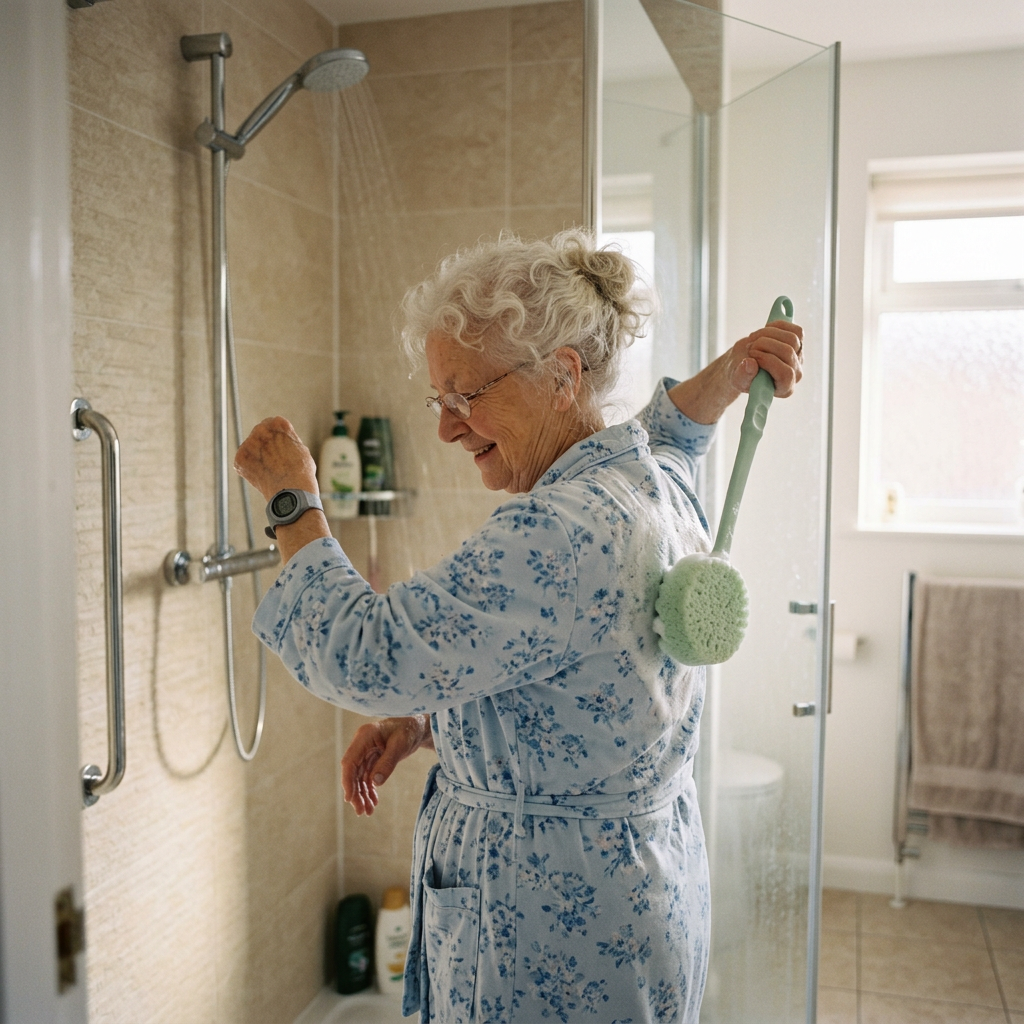
    BuyingForMom is a reader-supported site. As an Amazon Associate we earn from qualifying purchases. When you buy through links on this site, we may earn an affiliate commission at no additional cost to you. See our Affiliate Disclosure for details. This article is not medical advice — please consult a qualified healthcare professional for decisions specific to your parent.
  • 5 Best Cord Covers to Eliminate Tripping Hazards (2026)

    5 Best Cord Covers to Eliminate Tripping Hazards (2026)

    Disclosure: BuyingForMom is reader-supported. As an Amazon Associate we earn from qualifying purchases. When you buy through links in this article, we may earn an affiliate commission at no additional cost to you. We never recommend products we haven’t researched against verified-buyer review data. This article is editorial reporting, not medical advice.

    5 Best Cord Covers to Eliminate Tripping Hazards (2026)

    By Sarah Mitchell · Editor, BuyingForMom · Updated June 2026

    9-minute read · Living Room · 5 picks compared

    The honest take: The best cord cover is the cord you re-route along the wall fix that first, then cover what’s left. For the cord runs that genuinely can’t move, the D-Line 6ft Floor Cord Cover is the one to buy for hard floors, and the Wiremold Corduct is the only pick on this list that reliably stays put on the cut-pile carpet most older homes actually have. Skip duct tape and skip throwing a rug over the cord both create a worse hazard than the bare cord did.

    We started with the 27 floor cord covers that dominate Amazon’s cable-management bestseller list, then cross-referenced three sources: verified-buyer reviews (over 60,000 across the category, weighted toward one-star reports of covers curling, sliding, or becoming trip hazards themselves), occupational therapy home-assessment guidance on walkway clearance, and CPSC injury data, roughly 2,000 emergency-room visits a year come from people tripping over extension cords. What separated the final five wasn’t build quality. It was whether each cover actually holds on its specific floor surface, and whether a walker, cane, or shuffling gait can pass over it safely.

    Who this guide is for

    This guide is for adult children fixing the cord situation in a parent’s home, the lamp cord crossing the living room, the phone charger snaking across the hallway, the power strip behind the recliner. If you’re shopping for your own home office, the same picks apply, but the walker-clearance and visibility sections matter less. See our complete aging-in-place home safety checklist for where loose cords rank among the fixes worth doing first.

    Loose cords are one of the most common and most fixable fall hazards in an older adult’s home. Home-hazard reviews consistently list trailing cords alongside loose rugs as the top floor-level culprits in the CDC’s three-million-a-year older-adult fall statistics. A cord cover for floor safety does two jobs: it locks the cord down so it can’t loop around a foot, and it replaces the round, rollable cord profile with a low, beveled ramp a shoe or walker wheel, can pass over without catching.

    Here’s what generic “best cord cover” roundups miss: the right cover depends almost entirely on what’s under it. A cover that grips hardwood slides on carpet. The velcro covers made for carpet only grip loop-style carpet on the cut-pile in most American living rooms, they let go. We picked five covers that each solve one specific situation. Find yours below and buy that one.

    At a glance

    BEST OVERALL — D-Line 6ft Floor Cord Cover (~$13) · low-profile half-round for hard-floor walkways

    BEST FOR CUT-PILE CARPET — Legrand Wiremold Corduct 15ft (~$20) · taped-down channel that works on any surface

    BEST FOR LOOP & BERBER CARPET — Safcord Carpet Cord Cover 4″×6′ (~$15) · velcro-grip fabric, no adhesive

    BEST FOR DOORWAYS & SHORT RUNS — X-Protector 5′ Silicone Cord Cover (~$17) · self-adhesive, hugs the floor

    BEST FOR LONG RUNS — Amazon Basics 10ft Rubber Duct Cover (~$20) · heavy rubber that stays put by weight

    Best Overall D-Line 6ft Floor Cord Cover

    ~$13 · Check current price on Amazon

    For a lamp or charger cord crossing a hard-floor walkway, this is the default answer. The D-Line is a tapered half-round in flexible PVC about 2.4 inches wide, under half an inch tall with a ribbed non-slip base that holds position on hardwood, laminate, and tile without adhesive, so it won’t pull up finish when removed. The rear is pre-split, so the cord presses in from the back rather than threading through a tunnel, a real difference for arthritic hands. Verified buyers consistently note it uncoils and lies flat out of the box. The shallow taper on both edges is the senior-specific win: OT home-assessment guides flag square-edged covers as replacement trip hazards, and this is the gentlest profile of the five.

    The good

    • Lowest, most gradual bevel of our five picks, easiest profile for shuffling feet, canes, and walker wheels
    • No adhesive needed on hard floors; ribbed base grips without damaging finish
    • Pre-split back means the cord presses in without threading, manageable with limited hand strength

    The catch

    • Cable cavity is modest (0.63″ × 0.31″) one extension cord or two lamp cords, not a power-strip bundle
    • Not for carpet; the ribbed base needs a hard surface to grip

    This is right if… the problem cord crosses hardwood, laminate, or tile in a walking path.

    Look elsewhere if… the run is on carpet or you need to bury several thick cords at once.

    Check Price on Amazon →

    Best for Cut-Pile Carpet Legrand Wiremold Corduct 15ft

    ~$20 · Check current price on Amazon

    Here’s the trap nobody mentions: the velcro-style “carpet cord covers” all over Amazon only grip loop-style carpet. On the cut-pile in most living rooms, they have nothing to hook into and slowly migrate, which is how a safety product becomes a new hazard. The Corduct solves it the unglamorous way: a flexible vinyl channel secured with included pressure-sensitive tape on any surface, carpet included. It’s been the office-facilities standard for decades, cuts to length with scissors, and the brown version disappears against wood-tone floors. Across thousands of reviews, the pattern is “set it once and stop thinking about it.” It isn’t pretty. It works.

    The good

    • The only pick here that reliably stays put on cut-pile residential carpet
    • 15 feet for around $20, cuts to length, one package usually handles the whole room
    • Decades-long commercial track record; this is what facility managers actually use

    The catch

    • Utilitarian ribbed look, function over beauty
    • The adhesive tape can lift fibers on delicate carpet when removed

    This is right if… the cord crosses standard cut-pile carpet, or you want one roll that handles multiple short runs.

    Look elsewhere if… you want the cover to be invisible in a formal room the D-Line looks cleaner on hard floors.

    Check Price on Amazon →

    Best for Loop & Berber Carpet Safcord Carpet Cord Cover 4″×6′

    ~$15 · Check current price on Amazon

    If the home has loop, Berber, or commercial-style carpet, common in condos, senior apartments, and finished basements the Safcord is the cleanest fix made. It’s a 4-inch-wide strip of tough Cordura nylon with hook fastener along both edges that presses straight into looped carpet fibers: no adhesive, no residue, and it peels up and re-lays in seconds for vacuuming. Because it’s fabric, it adds almost zero height, effectively nothing for a toe or walker wheel to catch. The critical caveat comes straight from the one-star reviews: on cut-pile carpet it has nothing to grip and will not stay put. Match it to the carpet type and it’s excellent; mismatch it and you’ll be returning it.

    The good

    • Essentially flat, the lowest-profile option here, ideal for unsteady or shuffling gaits
    • No adhesive: lifts for vacuuming and re-lays, leaving carpet undamaged — ideal for renters
    • Washable Cordura fabric survives walker and wheelchair traffic

    The catch

    • Only grips loop-style carpet, verified buyers on cut-pile report it creeping loose
    • Covers cords, but doesn’t add the crush protection a rigid channel gives

    This is right if… the carpet is loop, Berber, or commercial style — check by looking for uncut loops of yarn.

    Look elsewhere if… the carpet is plush cut-pile, that’s the Corduct’s job.

    Check Price on Amazon →

    Best for Doorways & Short Runs X-Protector 5′ Silicone Cord Cover

    ~$17 · Check current price on Amazon

    For the short, awkward crossings, a doorway threshold, the gap between baseboard outlet and side table, the X-Protector’s flexible silicone is the right material. Unlike rigid PVC channels, it bends around corners and conforms to uneven floors, and the included heavy-duty adhesive anchors it on tile, wood, or concrete. It’s BPA-free silicone about 2.5 inches wide, cuts with scissors, and the soft edge taper is kind to bare feet, worth considering for the bedroom-to-bathroom path walked shoeless at night. Verified buyers praise how tenaciously it sticks; the flip side, repeated in reviews, is that removal from delicate finishes takes patience and can leave residue.

    The good

    • Flexible silicone follows corners, thresholds, and uneven floors that rigid covers bridge awkwardly
    • Soft, low edges, comfortable underfoot for barefoot nighttime walking
    • Strong included adhesive; it does not wander once placed

    The catch

    • That same adhesive makes removal slow and can mark delicate floor finishes
    • 5 feet per package buying for a long living-room run gets expensive fast

    This is right if… you’re covering a doorway, threshold, or short irregular run on a hard floor.

    Look elsewhere if… the run is long and straight (Amazon Basics below) or you may need to remove it cleanly later.

    Check Price on Amazon →

    Best for Long Runs Amazon Basics 10ft Rubber Duct Cord Cover

    ~$20 · Check current price on Amazon

    When the cord run is long behind a sofa wall, along a den’s edge, out to the one outlet in an older house, the Amazon Basics rubber duct is the value play. It’s 10 feet of dense, heavy rubber that stays put by sheer weight and grip, bends around furniture, and cuts to length. Buyers repeatedly report two things: “haven’t tripped on a cord since,” and “it ships coiled you have to flatten it.” That second one matters: weight the ends flat for a day before trusting it in a walkway, because a curled end is exactly the half-inch lip that catches a toe. Once flattened, it’s the most stay-put cover of the five on hard floors and short-pile carpet alike.

    The good

    • 10 feet for around $20 the best per-foot value on this list
    • Heavy rubber grips hardwood and short-pile carpet without adhesive
    • Channel swallows a full extension cord with room to spare

    The catch

    • Ships coiled, needs a full day weighted flat before it’s walkway-safe
    • Taller and squarer-edged than the D-Line; less ideal where a walker crosses it constantly

    This is right if… you’re covering a long, straight run and want one inexpensive piece to do it.

    Look elsewhere if… a walker or wheelchair crosses the run many times a day — the D-Line’s lower bevel is the safer profile.

    Check Price on Amazon →

    Comparison table

    Cover Price Works on Best for Attachment
    D-Line 6ft ~$13 Hard floors Walkways, walker traffic Non-slip ribbed base
    Wiremold Corduct 15ft ~$20 Any surface incl. cut-pile Carpeted rooms, multiple runs Included adhesive tape
    Safcord 4″×6′ ~$15 Loop/Berber carpet only Condos, senior apartments, renters Hook-and-loop into carpet
    X-Protector 5′ ~$17 Hard floors Doorways, corners, barefoot paths Strong self-adhesive
    Amazon Basics 10ft ~$20 Hard floors, short-pile carpet Long straight runs Weight + rubber grip

    The conversation you’ll have

    Cord covers are one of the easier safety upgrades to introduce, because the resistance usually isn’t pride, it’s “I’ve stepped over that cord for twenty years.” That’s exactly the problem: the cord hasn’t changed, but balance, vision, and stumble recovery have. Pushing that point rarely lands well.

    Instead of “you’re going to trip on that,” try: “The lamp cord almost got me when I visited let me put a cover over it so neither of us has to think about it.” Making yourself the one who nearly tripped removes the implication that they’re failing. Caregivers also tell us tidying framing beats safety framing: “this makes the room look finished” gets a yes where “this is a fall hazard” gets a wave of the hand. Install it while you’re there a $15 fix that happens beats a perfect plan that doesn’t.

    Insurance and savings

    Original Medicare classifies cord covers as home modifications rather than durable medical equipment, so Part B won’t pay. Two paths can help: many 2026 Medicare Advantage plans include over-the-counter or home-safety allowances under the CMS supplemental-benefit expansion (CMS-4204-F) check the plan’s OTC catalog. FSA/HSA funds can sometimes apply with a Letter of Medical Necessity documenting fall risk (IRS Publication 502). At $13–20 per cover, the paperwork may cost more time than it saves but if you’re already submitting an LMN for grab bars or a shower chair, add the cord covers to the same request. Medical expenses above 7.5% of adjusted gross income may also be deductible under IRS §213(d).

    What to actually look for

    Match the cover to the floor not the other way around

    This is where most purchases go wrong. Ribbed-base covers like the D-Line need hard floors. Velcro fabric covers like the Safcord need loop carpet — look for uncut loops of yarn before ordering. Cut-pile carpet, the soft plush kind in most living rooms, defeats both: it needs a taped-down channel like the Corduct. A cover that creeps even an inch out of position stops being a safety device. Our room-by-room aging-in-place modification guide walks the same logic for every floor surface in the house.

    Think about who crosses it, not just what’s in it

    Product pages rate covers by cord capacity. For an older adult, the rating that matters is the crossing profile: total height under half an inch, beveled on both edges, in a color that contrasts slightly with the floor. Aging eyes lose contrast sensitivity, and a black cover on dark wood can disappear exactly when it shouldn’t — slightly visible is safer than perfectly camouflaged. If a walker or wheelchair crosses the run daily, favor the lowest bevel (D-Line, Safcord) and test the crossing a few times before calling it done.

    Remove the cord run first, cover second

    Before covering a cord, ask why it’s there. Can the lamp move to the outlet’s side of the room? Would a longer cord routed along the baseboard eliminate the crossing entirely? Many trip hazards are habit, not necessity; cord covers are for the runs that survive that audit. Every pick here installs without drilling, which makes them, like most of our renter-friendly senior safety upgrades fair game in apartments and assisted-living units where the lease forbids holes in walls.

    Frequently asked questions

    How do you cover cords on the floor to prevent tripping?

    Use a purpose-made floor cord cover matched to the surface: a non-slip channel like the D-Line on hard floors, a taped channel like the Wiremold Corduct on cut-pile carpet, or a velcro fabric strip like the Safcord on loop carpet. Avoid duct tape and rugs both fail and create new hazards.

    Do cord covers work on carpet?

    Yes, but the type matters. Velcro-backed fabric covers grip only loop or Berber carpet. On standard cut-pile carpet they slide loose, so use a vinyl channel secured with pressure-sensitive tape, like the Wiremold Corduct. Heavy rubber duct covers also hold reasonably well on low, dense, short-pile carpet.

    Are floor cord covers safe for walkers and wheelchairs?

    The low-profile ones are. Look for total height under half an inch with beveled edges on both sides the D-Line and Safcord are the easiest of our picks to roll over. Square-edged or tall covers can catch small front walker wheels, so test the crossing several times after installation.

    What is the safest way to run an extension cord across a walkway?

    The safest option is not to: re-route the cord along walls or move the device closer to an outlet. If the crossing is unavoidable, use a beveled floor cord cover secured to the surface, keep the cord fully inside the channel, and choose a cover color that remains visible against the flooring.

    Does Medicare pay for cord covers or home safety devices?

    Original Medicare does not, cord covers count as home modifications, not durable medical equipment. Some 2026 Medicare Advantage plans include home-safety or OTC allowances that cover small items like these, and FSA/HSA funds may apply with a Letter of Medical Necessity documenting fall risk.

    The shortlist

    Best Overall

    D-Line 6ft Cord Cover

    ~$13

    Check on Amazon →

    Best for Cut-Pile Carpet

    Wiremold Corduct 15ft

    ~$20

    Check on Amazon →

    Best for Loop Carpet

    Safcord 4″×6′

    ~$15

    Check on Amazon →

    Best for Doorways

    X-Protector 5′ Silicone

    ~$17

    Check on Amazon →

    Best for Long Runs

    Amazon Basics 10ft


    ~$20

    Check on Amazon →

    Last verified in stock: June 12, 2026

    What we’d do tomorrow

    If you’re starting this weekend, do three things in this order. First, walk every room and hallway and list each cord that crosses a walking path then eliminate the runs you can by moving lamps and re-routing along baseboards. Second, identify the floor surface under each surviving run: hard floor gets the D-Line, cut-pile carpet gets the Corduct, loop carpet gets the Safcord. Third, install, then watch a few real crossings with the walker, in the usual slippers, before you call the job finished. The whole project costs less than $50 and an afternoon.

    — Sarah

    BuyingForMom is a reader-supported site. As an Amazon Associate we earn from qualifying purchases. When you buy through links on this site, we may earn an affiliate commission at no additional cost to you. See our Affiliate Disclosure for details. This article is not medical advice — please consult a qualified healthcare professional for decisions specific to your parent’s needs.