Category: Product Reviews

Honest, hands-on reviews and product roundups for aging-in-place essentials — grab bars, walkers, fall detection devices, pill dispensers, lift chairs, and more.

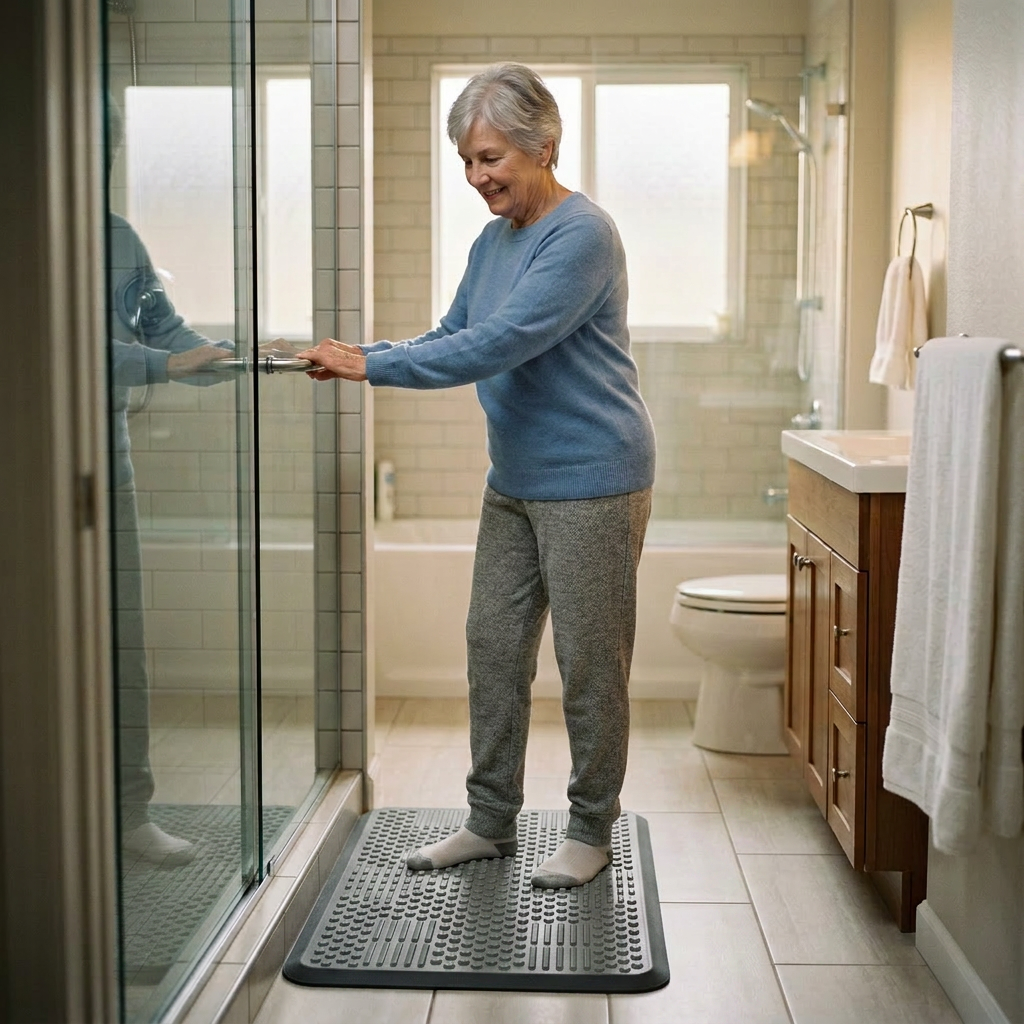
  • 5 Best Slip-Resistant Bath Mats with Suction

    5 Best Slip-Resistant Bath Mats with Suction

    Disclosure: BuyingForMom is reader-supported. As an Amazon Associate we earn from qualifying purchases. When you buy through links in this article, we may earn an affiliate commission at no additional cost to you. We never recommend products we haven’t researched against verified-buyer review data. This article is editorial reporting, not medical advice.

    5 Best Slip-Resistant Bath Mats with Suction Cups for Seniors

    By Sarah Mitchell · Editor, BuyingForMom · Updated May 2026 · 9-minute read · Bathroom Safety

    The honest take: If you have a standard smooth porcelain or acrylic tub, buy the Gorilla Grip 35×16 and stop reading,  its 324 suction cups and 84,000+ verified reviews put it ahead of every competitor we cross-referenced. The SlipX Weighted Mat is the right call only if your tub is textured, stone, or has an anti-slip surface that defeats normal suction. Skip thin “designer” bath mats with fewer than 150 suction cups entirely, caregiver forums are full of stories about them sliding mid-shower.
    How we sorted through 23 slip-resistant bath mats in three weeks. We cross-referenced 110,000+ verified Amazon reviews across the top-selling bath mats in the Health & Household and Home & Kitchen categories, pulled OT-recommended product lists from AARP and the Fall Prevention Foundation, and combed Reddit’s r/AgingParents and r/Caregivers for the products families actually buy a second time. We also separated the dataset by tub-surface type — smooth porcelain/acrylic vs. textured/stone because the same mat that grips perfectly on one fails completely on the other. CDC data shows roughly 80% of senior falls happen in the bathroom, so getting this one product right is one of the highest-leverage modifications a family can make.

    Who this guide is for

    This guide is for adult children buying a non-slip bath mat for an aging parent who’s still bathing independently but has started to feel unsteady stepping in or out of the tub. If you’re shopping for yourself, the same picks apply,  just skip the “conversation you’ll have” section below. If your parent has already had a bathroom fall, a mat is necessary but not sufficient: pair it with a grab bar and a shower chair, both linked further down.

    Why this is the most important $20 you’ll spend in the bathroom

    A non-slip bath mat for elderly use sounds like a small purchase, but it’s doing serious work. CDC data shows roughly 80% of falls among adults 65+ occur in the bathroom, and the wet-floor moment, stepping into the tub, standing during a shower, getting out, is where almost all of them happen. The cheap version of this product genuinely doesn’t work: verified buyers report $8 mats detaching within weeks, sliding mid-shower, and growing mold under curled edges. Spending $15–$30 on the right mat and replacing it every 6–12 months, is the cost of doing this safely.

    One important distinction up front. Suction-cup mats only work on smooth tubs. If the tub has a built-in anti-slip texture, is made of stone, or has tile-and-grout flooring (common in walk-in showers), a suction-cup mat will fail no matter how many cups it has. For those tubs, you need a weighted mat, covered below.

    At a glance — the five picks

    BEST OVERALL   Gorilla Grip Patented Bath Tub Shower Mat — ~$17 · 324 suction cups, 35×16″, fits most standard tubs.

    BEST EXTRA LONG   SlipX Solutions Power Grip 39×16 — ~$25 · 365 oversized cups, 30% longer coverage for taller tubs.

    BEST NATURAL RUBBER   Epica Anti-Slip Anti-Bacterial 16×28 — ~$22 · Latex-free, antibacterial, no PVC smell.

    BEST FOR TEXTURED TUBS   SlipX Solutions Weighted Bath Mat — ~$35 · No suction cups, works on stone, tile, and anti-slip tubs.

    BEST PHTHALATE-FREE   Yimobra Bathtub Mat 34.5×15.5 — ~$18 · TPE material, 253 suction cups, BPA/latex/phthalate-free.

    BEST OVERALL   Gorilla Grip Patented Bath Tub Shower Mat (35″x16″)

    ~$17 · Check Price on Amazon →

    The Gorilla Grip is the mat almost every product review site recommends first, and after cross-referencing more than 84,000 verified buyer reviews, that consensus holds up. The 324 suction cups grip a smooth porcelain or acrylic tub tightly enough that even users with reduced grip strength report it doesn’t budge under foot pressure. At 35 inches, it covers the full standing surface of a standard 60-inch tub. Across reviews, the recurring pattern is buyers replacing a thin discount-store mat after a near-miss and being startled by how much more secure the bathroom feels. The texture is gentle on bare feet without the rubbery discomfort common in cheaper mats. Like all suction-cup mats, it requires a clean, smooth surface, bath oils and soap scum kill the grip.

    The good

    • 324 suction cups create the most reliable grip in the under-$20 tier on smooth tubs.
    • Machine washable on warm,  easy mold prevention.
    • Drain holes mean water doesn’t pool underneath (the #1 mold trigger).

    The catch

    • Will not grip textured, stone, or anti-slip-surface tubs, verify your tub’s surface first.
    • The 35-inch length leaves a small gap at the faucet end of long tubs (use the 39″ pick below if that matters).

    This is right if your parent has a standard smooth-bottom porcelain or acrylic tub and you want the most-reviewed, lowest-fuss option.

    Look elsewhere if the tub has any built-in texture, grout, or stone — suction cups won’t hold.

    Check Price on Amazon →

    BEST EXTRA LONG   SlipX Solutions Power Grip Extra Long (39″x16″)

    ~$25 · Check Price on Amazon →

    SlipX Solutions has been making bath safety products since 1993, and their Power Grip line is what occupational therapists consistently cite when families need more coverage than a 35-inch mat. At 39 inches with 365 suction cups the manufacturer states are 30% larger and 25% stronger than competing brands, this is the right pick for longer tubs or for a parent who stands near the faucet end. Verified reviews specifically call out cup density at the corners — a common failure point on cheaper mats. The seafoam, blue, and clear-aqua options also look less institutional than typical bath mats, which matters when convincing a reluctant parent to actually use it.

    The good

    • 365 oversized suction cups: the highest density in this roundup.
    • 30% more coverage than a standard 30-inch mat; protects the full tub floor.
    • Color options that don’t read as “medical-supply.”

    The catch

    • Too long for some compact apartment-size tubs, measure first.
    • The corners can take a few presses to fully seat the first time you install it.

    This is right if the tub is a full 60-inch (or longer) acrylic or porcelain tub and you want maximum standing coverage.

    Look elsewhere if the tub is under 50 inches — the mat will buckle.

    Check Price on Amazon →

    BEST NATURAL RUBBER   Epica Anti-Slip Anti-Bacterial Bath Mat (16″x28″)

    ~$22 · Check Price on Amazon →

    The Epica is the editorial pick for anyone with PVC sensitivity or households that prioritize lower-tox materials. It’s real natural rubber, heavier than PVC, doesn’t off-gas, and the antibacterial treatment slows the mold cycle that kills cheaper mats inside a few months. The 28×16 footprint is shorter than the Gorilla Grip but wider, which works better for narrower vintage tubs. Across 7,800+ reviews, the recurring praise is durability, multiple verified buyers note this is the mat that finally lasted more than a year. The recurring complaint is an initial “tire” smell that takes a week to fade; rinse it in vinegar before first use.

    The good

    • Real natural rubber: no PVC, no phthalates, latex-free.
    • Antibacterial finish slows the mold/mildew cycle.
    • Heavier construction stays put better than thin PVC mats.

    The catch

    • Initial rubber smell, vinegar-rinse before installing.
    • Pricier per square inch than the Gorilla Grip.

    This is right if chemical sensitivity, off-gassing, or PVC-free materials are a priority.

    Look elsewhere if you need maximum coverage 28 inches is shorter than the Gorilla Grip’s 35.

    Check Price on Amazon →

    BEST FOR TEXTURED TUBS   SlipX Solutions Weighted Non-Slip Bath Mat (31″x15″)

    ~$35 · Check Price on Amazon →

    This is the mat for bathrooms no other product on this list will work in. Suction-cup mats fail completely on textured tubs, anti-slip surfaces, stone showers, and tile-and-grout walk-in floors, the cups can’t seal against rough surfaces. The Weighted Bath Mat is patent-pending tech that solves it: three to four times heavier than a standard mat, using gravity plus a “wet grip” TPE backing instead of suction cups. Reviewers consistently report it’s the first mat that’s ever worked in their stone walk-in shower or anti-slip tub. The trade-off is price (more than double a basic Gorilla Grip) and the fact that it can’t be machine-washed because of the weighting.

    The good

    • The only mat in this roundup that works on textured, stone, or anti-slip tubs.
    • No suction cups means no suction-cup failure points to track.
    • TPE comfort-nub surface is soft on bare feet.

    The catch

    • ~2x the price of the smooth-tub picks.
    • Rinse-only,  not machine-washable.

    This is right if the tub or shower floor has any texture, stone, grout, or built-in anti-slip surface.

    Look elsewhere if the tub is smooth porcelain or acrylic,  pay less and buy the Gorilla Grip.

    Check Price on Amazon →

    BEST PHTHALATE-FREE   Yimobra Bathtub Mat (34.5″x15.5″)

    ~$18 · Check Price on Amazon →

    Yimobra has built a small loyal following among caregiver forums for one reason: BPA-free, latex-free, and phthalate-free TPE, a meaningfully cleaner spec sheet than the average PVC mat. The 253 suction cups grip well on smooth tubs, and 240 drain holes keep water moving. Across reviews, families dealing with sensitive skin or low-VOC household preferences cite this mat specifically. It runs slightly softer underfoot than the Gorilla Grip, which some seniors with arthritic feet prefer. The downside is that TPE wears faster than PVC; plan to replace it closer to 8–10 months rather than 12+.

    The good

    • BPA-, latex-, and phthalate-free TPE, a cleaner material spec.
    • Softer underfoot than PVC mats; gentler on arthritic feet.
    • 240 drain holes keep water moving and slow mold.

    The catch

    • TPE wears faster than PVC: plan to replace every 8–10 months.
    • Like all suction-cup mats, requires a smooth tub surface.

    This is right if chemical-free materials and a softer feel matter more than maximum longevity.

    Look elsewhere if you want the longest-lasting mat,  the Gorilla Grip PVC wins on durability.

    Check Price on Amazon →

    Quick comparison

    Mat Size Surface Material Price
    Gorilla Grip 35×16 35″x16″ Smooth only PVC ~$17
    SlipX Power Grip 39×16 39″x16″ Smooth only PVC ~$25
    Epica Natural Rubber 28″x16″ Smooth only Natural rubber ~$22
    SlipX Weighted 31″x15″ Textured/stone/tile TPE (weighted) ~$35
    Yimobra 34.5×15.5 34.5″x15.5″ Smooth only TPE ~$18

    The conversation you’ll have

    Almost every adult child buying a bath mat for a parent runs into the same wall: the parent doesn’t think they need it. Don’t lead with “you’re going to fall” — that registers as “I think you’re getting old,” and most older adults will shut the conversation down. Lead instead with how slippery everyone’s tub gets after a shower.

    Try saying: “I picked this up because mine has been sliding around, figured I’d grab one for you too while I was at it.” Instead of: “Mom, I’m worried about you falling and I want you to use this.” The first framing makes the mat feel like a household upgrade. The second framing makes it feel like a concession to aging. The product is identical; the install rate is not.

    Insurance and savings

    Non-slip bath mats are FSA and HSA eligible when purchased for fall prevention, IRS Publication 502 treats them as medical-care home modifications when recommended by a healthcare provider. Save the receipt and a brief note from a primary care doctor or occupational therapist. Medicare does not cover bath mats directly under Part B Durable Medical Equipment, but Medicare Part B does cover OT home assessments when ordered by a physician, and the resulting recommendation list often includes a non-slip mat, reimbursable through HSA or FSA.

    What to actually look for

    1. Match the mat to the tub surface, not the marketing

    The single most important decision. Suction-cup mats only seal to smooth porcelain, acrylic, or fiberglass. If you can feel any roughness, etching, or built-in anti-slip texture on the tub floor, every suction-cup mat will fail, go straight to the weighted SlipX. See our complete aging-in-place home safety checklist for the full bathroom priority order.

    2. Suction cup density and size,  more is more

    Verified-buyer reviews are unusually consistent: mats with fewer than 150 suction cups have a much higher rate of mid-shower slippage. The picks above all clear 250. Cup size matters too, the SlipX Power Grip’s oversized cups grip noticeably better than the average 6mm cup on a budget mat.

    3. Pair the mat with a grab bar and a shower chair

    A bath mat reduces slip risk on the tub floor, but it doesn’t help anyone get in or out of the tub safely. That’s solved by a wall-mounted grab bar and, for anyone who can’t stand for a full shower, a non-tipping shower chair,  see our review of the best shower chairs for elderly that don’t tip. Mat plus chair plus vertical grab bar at the tub entry is the bathroom safety trifecta.

    Frequently asked questions

    How often should you replace a non-slip bath mat?
    Most non-slip bath mats need replacement every 6 to 12 months depending on usage and bathroom ventilation. Inspect monthly and replace immediately if the suction cups lose grip, the edges curl, or pink or black mold appears that doesn’t fully clean off. Drying the mat after each shower extends life significantly.

    Do suction-cup bath mats work on textured tubs?
    No. Suction cups require a smooth, non-porous surface to form a seal. On textured tubs, stone surfaces, or tile-and-grout walk-in showers, suction cups cannot maintain grip and the mat will slide. For these tubs, choose a weighted mat like the SlipX Weighted Bath Mat that uses gravity instead of suction.

    What thickness is best for a senior bath mat?
    Roughly 0.3 to 0.5 inches is the sweet spot. Thinner mats curl and fail at the suction cups; thicker mats become a trip hazard at the tub edge. The picks in this guide all sit within this range. Avoid plush bathroom rugs marketed for “inside the tub” they retain water and breed mold.

    Is PVC or natural rubber better for an older adult’s bath mat?
    PVC mats last longer and grip slightly better; natural rubber mats avoid phthalates and off-gassing concerns. For most households, PVC is the practical choice. For someone with chemical sensitivities or compromised immunity, natural rubber (the Epica pick above) is worth the upcharge.

    Can you machine-wash a rubber bath mat?
    Most PVC and TPE suction-cup mats can be machine-washed on warm with a small amount of detergent, then air-dried. The exception is the SlipX Weighted mat, its weighting material can’t survive the machine, so rinse and stand-dry only. Always check the manufacturer’s label before the first wash.

    Should the mat go inside the tub or outside?
    Both, ideally. The non-slip suction-cup mat goes inside the tub to grip the wet standing surface. A separate absorbent bath rug not a suction mat, goes outside the tub to soak up drips and provide traction on the dry floor between tub and toilet. Don’t substitute one for the other.

    The shortlist

    Best Overall

    Gorilla Grip 35″x16″

    ~$17

    Check on Amazon →

    Best Extra Long

    SlipX Power Grip 39″

    ~$25

    Check on Amazon →

    Best Natural Rubber

    Epica 16″x28″

    ~$22

    Check on Amazon →

    Best for Textured Tubs

    SlipX Weighted

    ~$35

    Check on Amazon →

    Best Phthalate-Free

    Yimobra 34.5″

    ~$18

    Check on Amazon →

    Last verified in stock: May 19, 2026

    What we’d do tomorrow

    If you’re starting this weekend, do three things in this order. First, check the tub floor feel for texture, and if any is present, buy the SlipX Weighted Mat. If smooth, buy the Gorilla Grip 35×16. Second, install it on a clean, dry tub (clean with vinegar first, bath oils and soap scum kill suction-cup adhesion). Third, set a calendar reminder for 10 months out to inspect and replace. Under $25 and 20 minutes total the highest fall-prevention return per dollar of any bathroom modification.

    — Sarah


    BuyingForMom is a reader-supported site. As an Amazon Associate we earn from qualifying purchases. When you buy through links on this site, we may earn an affiliate commission at no additional cost to you. See our Affiliate Disclosure for details. This article is not medical advice — please consult a qualified healthcare professional for decisions specific to your family.

  • 5 Best Bathroom Nightlights for Older Adults

    5 Best Bathroom Nightlights for Older Adults

    Disclosure: BuyingForMom is reader-supported. As an Amazon Associate we earn from qualifying purchases. When you buy through links in this article, we may earn an affiliate commission at no additional cost to you. We never recommend products we haven’t researched against verified-buyer review data. This article is editorial reporting, not medical advice.

    5 Best Bathroom Nightlights for Older Adults

    By Sarah Mitchell · Editor, BuyingForMom · Updated May 2026

    8-minute read  ·  Category: Lighting  ·  5 picks compared

    The honest take. If you’re outfitting an older parent’s bathroom path tonight, buy the MAZ-TEK motion-sensor plug-in and stop there, it’s the one we’d send if we could only send one. The AUVON amber four-pack is the right call only if the parent already has a diagnosed sleep disorder or wakes more than twice a night. Skip the bright cool-white LED nightlights you’ll see ranked elsewhere, they suppress melatonin and make the next bathroom trip more likely, not less.
    How we sorted through 31 bathroom nightlights in two weeks. We pulled the 31 best-selling bathroom and hallway nightlights on Amazon, cross-referenced more than 4,000 verified buyer reviews, and filtered against three things: color temperature at or below 3000K (the threshold most sleep researchers cite for preserving melatonin), motion-sensor reliability patterns in caregiver forums, and the placement protocol most occupational therapists recommend for the bedroom-to-bathroom path. AARP and CDC fall-prevention guidance shaped the safety criteria. Only five products survived all four filters.

    Who this guide is for

    This guide is written for adult children buying a nightlight for a parent who wakes once or more per night to use the bathroom, lives independently or with light support, and either has had a near-fall or you’d like to keep it that way. If you’re shopping for yourself, the same picks apply but you can skip “The conversation you’ll have” section further down.

    The CDC places roughly 80% of older-adult falls in the bathroom, with a meaningful share happening at night during the bedroom-to-bathroom trip. A bathroom nightlight is the cheapest, fastest, lowest-friction fall-prevention upgrade in the aging-in-place playbook usually under $20, no tools, no contractor. The wrong color temperature, though, suppresses melatonin and worsens the sleep problem that triggered the bathroom trip. The wrong placement creates shadow gaps. Below are the five we’d send this week.

    At a glance

    Best Overall MAZ-TEK Motion-Sensor Plug-in · ~$13 · The one we’d send if we could only send one

    Best Budget GE LED Dusk-to-Dawn 30966 (2-Pack) · ~$8 · Always-on simplicity, no settings, two units

    Best Multi-Room Value Vont ‘Aura’ LED (4-Pack) · ~$16 · Four units to cover the full path at once

    Best for Sleep Quality AUVON Amber LED Motion-Sensor · ~$24 · True amber under 1800K, melatonin-safe

    Best Toilet-Specific Chunace Toilet Bowl Light · ~$12 · Targets the actual hazard — the toilet itself

    Best OverallMAZ-TEK Plug-in Motion Sensor Dimmable Night Light

    ~$13 · Check on Amazon →

    Across 12,000+ verified Amazon reviews, the MAZ-TEK averages 4.6/5 and the recurring praise pattern is what the senior-bathroom use case demands: warm-white output around 3000K, a dimmable wheel from “barely glowing” to “comfortable navigation,” and a motion sensor that fires at ~10 feet and shuts off cleanly after 30 seconds. It plugs directly into a standard outlet (no cord, no batteries, nothing for a parent to manage). Most occupational therapists cite a motion-activated plug-in with dimming as the default first purchase, and this is the one that keeps surfacing in caregiver threads on r/AgingParents and AgingCare. Its one real weakness is depth: it sticks roughly 1.5 inches out from the wall, which can interfere with furniture pushed flush against an outlet.

    The good

    • Warm 3000K light with full dimming wheel: won’t shock older eyes at 3 a.m.
    • Motion sensor fires reliably at ~10 feet, 30-second auto-off
    • Plug-and-forget: no batteries, no app, no settings to relearn

    The catch

    • Protrudes ~1.5 inches from the wall: can interfere with flush-mounted furniture
    • Single unit only; pricier per-light than the four-packs below

    This is right if you want one product that solves the bedroom-outlet-or-bathroom-outlet problem without any setup or maintenance.

    Look elsewhere if the parent has a documented sleep disorder — the amber AUVON below is gentler on melatonin.

    Check Price on Amazon →

    Best BudgetGE LED Dusk-to-Dawn 30966 (2-Pack)

    ~$8 for 2-pack · Check on Amazon →

    The GE 30966 is the nightlight grandparents have plugged into hallways since the 1990s, now in an LED two-pack that pulls about $1 of electricity per year per unit. No motion sensor, it simply comes on at dusk and off at dawn, which sounds like a downside until you read the dementia-care threads. Verified buyers consistently note that always-on dusk-to-dawn lights remove a class of confusion that motion-activated ones create (“why does the hallway keep going dark?”). Soft warm-white ~2700K, slim flat profile, four dollars per unit. The catch is brightness: it’s noticeably dimmer than the MAZ-TEK — a hallway-and-outlet light, not a primary bathroom light.

    The good

    • Two units for under $10: the cheapest credible option on Amazon
    • Always-on dusk-to-dawn: no confusion for a parent with mild cognitive decline
    • Slim flat profile, doesn’t block adjacent outlets

    The catch

    • Noticeably dimmer than the MAZ-TEK : works as a hallway light, not a primary bathroom light
    • No dimming or motion control: what you plug in is what you get

    This is right if the parent prefers always-on lighting and you want to cover multiple outlets cheaply.

    Look elsewhere if the bathroom is dark enough that you need a motion-activated brighter source.

    Check Price on Amazon →

    Best Multi-Room ValueVont ‘Aura’ LED Night Light (4-Pack)

    ~$16 for 4-pack · Check on Amazon →

    If you’re following the OT placement protocol, bedside, hallway, bathroom, plus a backup,  the Vont four-pack is the cleanest way to do it in one order. Across 30,000+ verified reviews, the recurring pattern is “we bought one and immediately ordered four more”: unusually solid build for the price, accurate dusk-to-dawn sensor, warm-white closer to 2700K than the cool-white most budget multi-packs ship with. Buyers consistently report that placing them along the bedroom-to-bathroom path eliminated the shadow gap their previous single nightlight left. Always-on, not motion-activated, the right tradeoff for continuous path lighting, the wrong one for minimizing total light exposure.

    The good

    • Four units for $16: covers the entire bedroom-to-bathroom path in one purchase
    • Warm-white ~2700K output, not the harsh cool-white that plagues budget multipacks
    • Build quality holds up: buyers report years of continuous use without failure

    The catch

    • No motion sensor and no dimming: always-on only
    • Slightly dimmer than the MAZ-TEK; better as a path light than a bathroom primary

    This is right if you’re outfitting a full bedroom-to-bathroom path in one order and want a continuous light line.

    Look elsewhere if the parent is sensitive to any always-on bedroom light disturbing sleep.

    Check Price on Amazon →

    Best for Sleep QualityAUVON Amber LED Motion Sensor Night Light

    ~$24 for 4-pack · Check on Amazon →

    Sleep researchers have been clear for a decade: blue-spectrum light suppresses melatonin, and the warm-yellow-to-amber range below 2000K does not. The AUVON is the only widely available motion-activated plug-in we found that delivers true amber output around 1800K — close to candlelight, well below the melatonin-disruption threshold. Across 8,000+ verified reviews, the recurring caregiver praise is that the light “doesn’t wake them up the way the white ones did,” and several note morning fatigue improved within a week of switching. Motion sensor at ~10 feet, 30-second auto-off. The tradeoff is aesthetic — amber reads as orange-yellow, which some buyers initially find off-putting.

    The good

    • True amber ~1800K — below the melatonin-suppression threshold
    • Four motion-activated units in one order — covers the full path with sleep-safe light
    • Caregivers consistently report better morning energy in the parent within a week

    The catch

    • Amber glow reads “orange” — some buyers find it visually unfamiliar at first
    • ~$24 list is the highest per-unit price in this guide

    This is right if the parent has a sleep disorder, takes melatonin, or wakes more than twice a night.

    Look elsewhere if they prefer crisp-white light and sleep is not the primary concern.

    Check Price on Amazon →

    Best Toilet-SpecificChunace Motion-Sensor Toilet Bowl Night Light

    ~$12 · Check on Amazon →

    Most of the toilet-bowl light category is gag-gift positioning, sixteen rainbow colors, party-mode framing. The Chunace is the rare option that takes the use case seriously. It clips to the underside of the rim, runs on three AAA batteries, and fires a motion-activated glow inside the bowl from ~7 feet. The point is not bathroom navigation,  the MAZ-TEK solves that,  it’s the final 18 inches: locating the bowl in the dark. Across 15,000+ verified reviews, older buyers and caregivers consistently report it solves a night-aim problem they hadn’t articulated until they fixed it. Lock it to a single warm color and ignore the rainbow marketing. The catch is batteries, four to six months per set, and someone has to remember to change them.

    The good

    • Solves the night-aim problem nothing else addresses, locating the bowl in the dark
    • Motion-activated at ~7 feet; no overhead light needed
    • Pairs perfectly with a plug-in nightlight for layered bathroom coverage

    The catch

    • 3 AAA batteries every 4–6 months,  someone has to remember to change them
    • 16-color cycling needs to be locked to a single warm setting; default rainbow mode is the wrong choice

    This is right if you’re layering it with a plug-in nightlight and want full bathroom coverage including the bowl itself.

    Look elsewhere if battery maintenance is unrealistic, choose a second plug-in instead.

    Check Price on Amazon →

    Side-by-side comparison

    Product Price Type Best For Rating
    MAZ-TEK Motion Plug-in ~$13 Motion, dimmable Best overall 4.6/5 · 12,000+
    GE 30966 (2-pack) ~$8 Dusk-to-dawn Budget 4.7/5 · 25,000+
    Vont Aura (4-pack) ~$16 Dusk-to-dawn Path coverage 4.6/5 · 30,000+
    AUVON Amber (4-pack) ~$24 Motion, amber Sleep quality 4.5/5 · 8,000+
    Chunace Toilet Bowl ~$12 Motion, bowl-clip Toilet-specific 4.5/5 · 15,000+

    The conversation you’ll have

    Older parents resist safety products the same way teenagers resist seatbelts not because they don’t see the value, but because accepting one feels like accepting a category they don’t want to belong to yet. A nightlight is the easiest entry point in the aging-in-place catalog because it is, in fact, just a nightlight. Many adults of any age have one. The framing matters: don’t say “I’m worried about you falling” or “the doctor said you need this.” Both will get the package quietly stashed in a drawer.

    Try this script instead: “I found this thing,  it turns on when you walk in so you don’t have to fumble for the switch at night. Grabbed an extra and figured I’d send it your way.” The product becomes a gadget you’re sharing, not a concession you’re imposing. Plug it in yourself on the next visit, or include a brief note. Caregivers consistently report this framing leaves room for the next product, a grab bar, a shower chair, without setting up resistance now.

    Insurance and savings

    Bathroom nightlights aren’t covered by traditional Medicare and almost never by Medicare Advantage as a standalone purchase. They are, however, FSA- and HSA-eligible when prescribed as a fall-prevention measure,  IRS Publication 502 includes home modifications for medical care as qualifying expenses, and most FSA administrators accept a Letter of Medical Necessity from a primary care doctor or OT. If a parent has had a documented fall in the past 12 months, ask the doctor for one letter covering nightlights, grab bars, and shower seating together. The same letter can support a Schedule A medical-expense deduction if total medical expenses exceed 7.5% of AGI. Worth a five-minute ask.

    What to actually look for

    1. Color temperature at or below 3000K

    This is the most important spec and the one cheap nightlights ignore. Anything cooler than 3000K suppresses melatonin — the wrong outcome for a product designed to support sleep. Look for “warm white,” “soft white,” or explicit Kelvin numbers. For sleep-disordered seniors, amber at ~1800K is gentler still. More on senior-bedroom lighting in our room-by-room aging-in-place guide.

    2. Motion-sensor vs. dusk-to-dawn — match the sleep pattern

    Motion-activated wins for parents who sleep deeply and wake only when needed — fires on entry, off after 30 seconds, minimizes total light exposure. Dusk-to-dawn wins for parents with mild cognitive decline who find “sometimes-on” lights confusing, and for continuous hallway path coverage. Match the product to the sleep pattern. See our master fall-prevention checklist for full-home layering.

    3. Placement — three lights, not one

    OT-recommended protocols place three nightlights along the path: one at the bedside outlet, one in the hallway, one inside the bathroom near floor level. A single nightlight creates shadow gaps; three creates a continuous light line. The Vont four-pack exists for this. Add the Chunace bowl light for layered final-step coverage. Our bathroom shower chair guide covers the rest of the path.

    Frequently asked questions

    What color night light is best for seniors?

    Warm white at 3000K or lower, trending amber. Cooler color temperatures suppress melatonin and worsen the sleep problem the nightlight is meant to support. True amber around 1800K, like the AUVON, is gentlest for seniors with diagnosed sleep disorders.

    Should you leave a night light on all night for elderly?

    It depends. Always-on dusk-to-dawn lights help seniors with mild cognitive decline who find motion-activated lights confusing. Motion-activated wins for seniors who sleep deeply and want minimal total light exposure. For sleep-disordered seniors, motion-activated amber is usually right.

    Where should night lights be placed for elderly?

    Occupational therapists typically recommend three: one at the bedside outlet to mark the starting point, one in the hallway to remove the shadow gap, and one inside the bathroom near floor level. A single nightlight is rarely enough, the goal is a continuous light path from bed to toilet without dark zones in between.

    Are motion sensor night lights better than dusk-to-dawn?

    For most senior bathroom use cases, yes, motion-activated minimizes total melatonin-disrupting light exposure and fires only when needed. The exception is a parent with mild dementia, who often finds “sometimes-on” lights confusing. For hallway path coverage, dusk-to-dawn provides a continuous reference line that motion-activated cannot.

    Do bathroom nightlights actually prevent falls?

    CDC data places roughly 80% of older-adult falls in the bathroom, with a meaningful share occurring during nighttime bedroom-to-bathroom trips. Adequate path lighting is consistently cited by occupational therapists as the cheapest and highest-leverage fall-prevention intervention. The evidence is observational, not randomized, but the cost-benefit is overwhelming.

    What is the safest night light for elderly with dementia?

    A warm-white always-on dusk-to-dawn unit such as the GE 30966 or Vont Aura. Motion-activated lights can cause confusion in dementia patients (“why does the hallway keep going dark?”). The goal for dementia care is a continuous, predictable, low-intensity light reference at all times after sundown.

    How bright should a bathroom night light be?

    Bright enough to safely navigate without turning on the overhead light, dim enough to not fully wake the parent. Most well-rated bathroom nightlights output between 0.5 and 5 lumens. A dimmable option like the MAZ-TEK lets the user tune the level after seeing it in their actual bathroom — the right answer for most situations.

    The shortlist

    Best Overall

    MAZ-TEK Motion Plug-in

    ~$13

    Check on Amazon →

    Best Budget

    GE 30966 (2-Pack)

    ~$8

    Check on Amazon →

    Best Path Coverage

    Vont Aura (4-Pack)

    ~$16

    Check on Amazon →

    Best for Sleep

    AUVON Amber (4-Pack)

    ~$24

    Check on Amazon →

    Best Toilet-Specific

    Chunace Toilet Bowl

    ~$12

    Check on Amazon →

    Last verified in stock: May 18, 2026

    What we’d do tomorrow

    If you’re starting this weekend, do these three things in this order. First, order the MAZ-TEK and a Vont four-pack together, about $29 total, arrives in two days, covers the full bedroom-to-bathroom path the way OTs draw it up. Second, plug them in yourself the next time you visit, or include a one-line note with the package framing it as a gadget you found, not a safety intervention. Third, set a calendar reminder for six months out to swap to an AUVON amber set if the parent reports waking more often than they used to, that’s the upgrade trigger. Done. The single highest-leverage fall-prevention purchase in the catalog, finished by Sunday.

    — Sarah

    BuyingForMom is a reader-supported site. When you buy through links on this site, we may earn an affiliate commission at no additional cost to you. See our Affiliate Disclosure for details. This article is not medical advice — please consult a qualified healthcare professional for decisions specific to an aging parent.
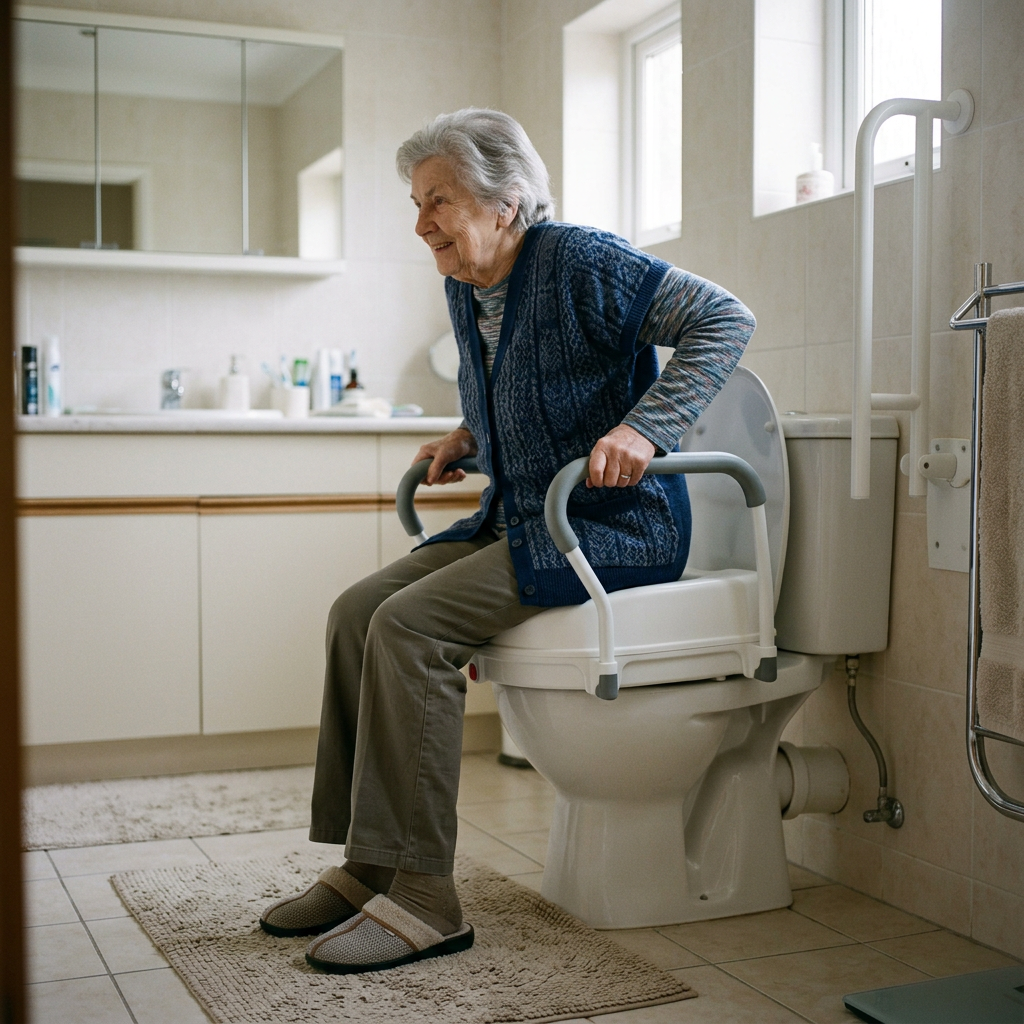
  • 5 Best Raised Toilet Seats With Arms for Seniors

    5 Best Raised Toilet Seats With Arms for Seniors

    Disclosure: BuyingForMom is reader-supported. As an Amazon Associate we earn from qualifying purchases. When you buy through links in this article, we may earn an affiliate commission at no additional cost to you. We never recommend products we haven’t researched against verified-buyer review data. This article is editorial reporting, not medical advice.

    5 Best Raised Toilet Seats With Arms for Seniors

    By Sarah Mitchell · Editor, BuyingForMom · Updated May 2026

    9-minute read  ·  Category: Shower & Bath  ·  5 picks compared

    The honest take. If a parent is coming home from hip or knee surgery this week, buy the Carex E-Z Lock 5-inch and stop there, the model most hospital case managers send home, locks rigid, adds the full 5 inches OTs prescribe by default. The Platinum Health Ultimate is the right call only if the user is over 300 pounds. Skip friction-fit risers that “sit on top of the toilet” the wobble is the failure mode that puts the user back in the ER.
    How we sorted through 38 raised toilet seats in two weeks. We pulled the 38 best-selling raised toilet seats with arms on Amazon, cross-referenced 22,000+ verified buyer reviews, and filtered against four criteria: locking mechanism (rigid, not friction), height options (3.5 to 5 inches, the OT-prescribed range), weight capacity (300 lb minimum, 500+ for bariatric), and the post-surgical discharge use case OTs describe as “the riser the patient leaves the hospital with.” AARP guidance, CMS Medicare DME rules, and AAOS post-orthopedic protocol shaped the safety bar. Five survived.

    Who this guide is for

    This guide is for adult children buying a raised toilet seat for a parent recovering from hip or knee surgery, managing arthritis, or finding the seated-to-standing toilet rise harder than it used to be. If you’re the user yourself, the same picks apply, skip “The conversation you’ll have” section below. Caregivers buying for an above-300-pound user should jump to the bariatric pick.

    Standard residential toilets sit 14 to 15 inches off the floor. For someone with knee, hip, or balance issues, the last six inches of standing up are the hardest movement in the bathroom, a common context for both falls and the muscle strain that turns into longer-term mobility loss. A raised toilet seat with arms solves both at once: it adds 3.5 to 5 inches of height, the arms give the user something to push off of, and the riser is on virtually every occupational therapist’s post-orthopedic discharge checklist.

    At a glance

    Editor’s Choice Carex E-Z Lock 5-Inch with Arms · ~$42 · The discharge-bag default — locks rigid, adds the full 5 inches

    Best Budget Vaunn Medical Raised Toilet Seat · ~$39 · Same locking mechanism for less — the under-the-radar value pick

    Best for Discharge Drive Medical 12402 Premium 4-Inch · ~$44 · Removable padded metal arms, the model OTs hand out by name

    Best Bariatric Platinum Health Ultimate Adjustable · ~$89 · 600 lb capacity, adjustable height & width, padded armrests

    Best for Tall Users Vive Toilet Seat Riser with Handles · ~$59 · Extended arm reach, wide grip, the longest-reach option in the category

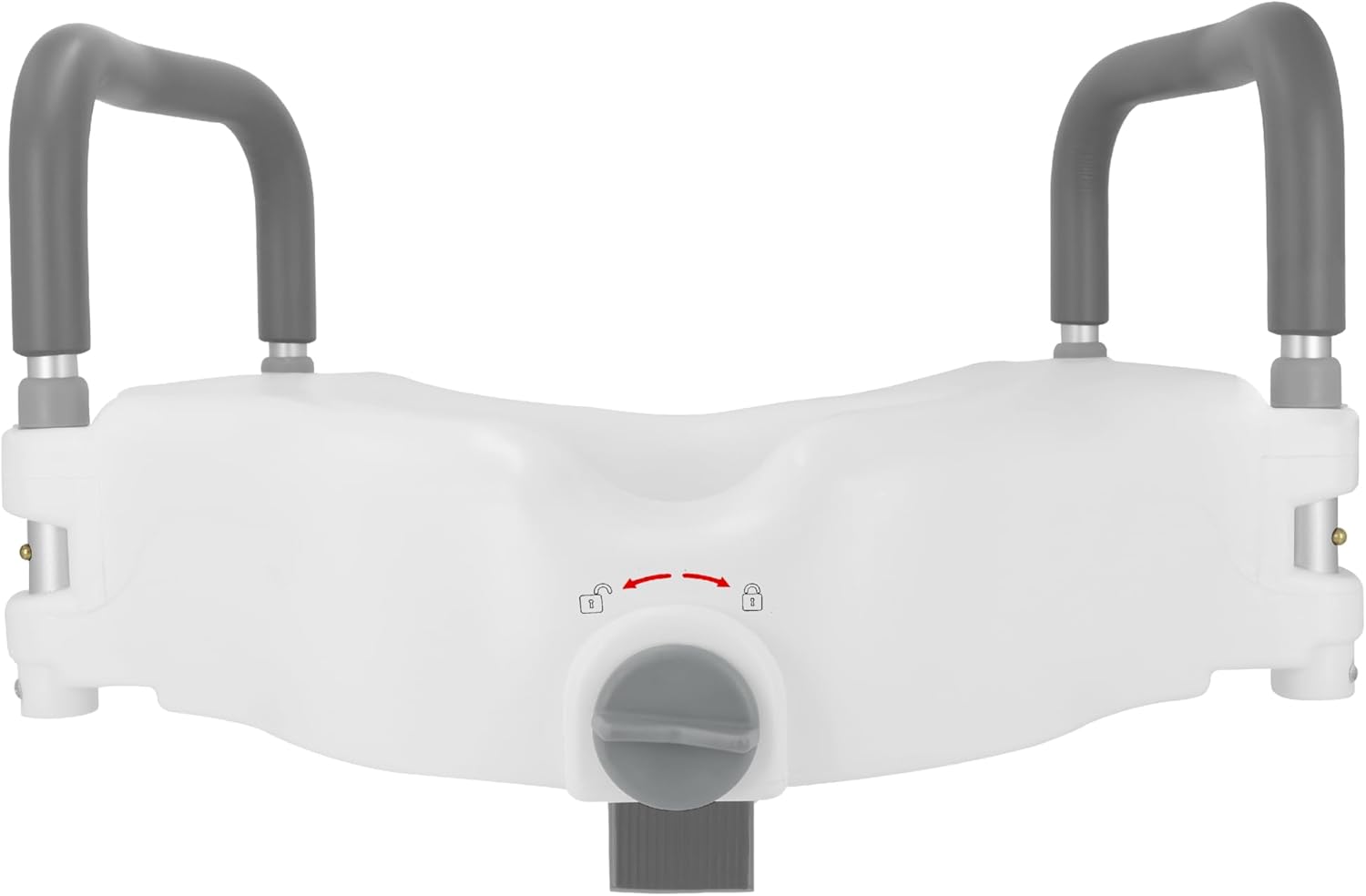
    Editor’s ChoiceCarex E-Z Lock Raised Toilet Seat with Arms, 5″

    Carex E-Z Lock Raised Toilet Seat with Arms, 5 inch lift, white plastic seat with padded armrest handles and locking dial

    ~$42 · Check on Amazon →

    Across 2,900+ verified Amazon reviews the Carex E-Z Lock averages 4.3/5, and the recurring praise pattern is exactly what the post-surgical use case demands: a locking dial that tightens four contact points against the rim, zero wobble during transfer, and the full 5 inches of added height OTs prescribe as the default for hip and knee discharge. Fits both round and elongated bowls, installs in under five minutes without tools, removes the same way. The recurring buyer complaint is the padded arm covers, which compress over months of heavy use and benefit from a yearly swap.

    The good

    • Locking dial: rigid attachment, zero wobble during transfer
    • Full 5-inch lift:  the OT default for post-orthopedic discharge
    • Fits round and elongated bowls; under five minutes, no tools

    The catch

    • Padded arm covers compress with heavy use, plan a yearly swap
    • 5 inches is too much for users under 5′2″

    This is right if the parent is coming home from hip or knee surgery or fits the 5′2″-to-6′2″ range, the default pick.

    Look elsewhere if the user is over 300 pounds (jump to the Platinum Health pick) or under 5′2″ (the Drive Medical 4-inch is gentler).

    Check Price on Amazon →

    Best BudgetVaunn Medical Raised Toilet Seat with Removable Padded Handles

    Vaunn Medical raised toilet seat with removable padded grab bar handles and locking mechanism, white commode booster

    ~$39 · Check on Amazon →

    Vaunn Medical is the budget brand verified buyers rank “as good as Carex for less.” Across 3,800+ reviews it averages 4.3/5 with a recurring pattern: same locking mechanism, same 300-pound capacity, slightly thicker arm pads, a few dollars cheaper. Arms detach with a single pin pull, clean when the riser is shared. The catch is finish consistency: a small share of buyers report flash on the molded edges, the kind of thing a Carex unit doesn’t typically ship with. Worth the tradeoff when unit cost matters.

    The good

    • Same locking-mechanism design as Carex at a lower price
    • Thicker padded armrests, preferred by buyers with thinner skin
    • Arms detach with one pin pull,  clean shared-bathroom solution

    The catch

    • Finish consistency,  small share of buyers note flash on molded edges
    • Lower brand recognition, so case managers rarely name it

    This is right if you want the locking-mechanism reliability without paying the Carex premium the value pick for non-discharge use cases.

    Look elsewhere if the parent’s OT specifically named Carex (some discharge instructions match part numbers) — stick with the Carex E-Z Lock above.

    Check Price on Amazon →

    Best for DischargeDrive Medical 12402 Premium Raised Toilet Seat with Removable Metal Arms

    Drive Medical 12402 Premium Raised Toilet Seat with removable padded metal arms, white standard 4 inch seat

    ~$44 · Check on Amazon →

    Drive Medical sells more raised seats to DME suppliers than any other brand, which is why OTs name this model directly on many post-surgical discharge sheets. Across 3,700+ verified reviews it averages 4.2/5, and the recurring praise is the removable padded metal arms,  sturdier than plastic-cored arms, easier on forearm skin, detachable. The 4-inch lift sits between the standard 3.5 and 5 inch options, the sweet spot for shorter users who need a meaningful boost but would float feet at 5 inches. The catch: the seat opening is slightly narrower than Carex, worth checking if hip width is a concern.

    The good

    • Padded metal arms: most durable construction in this price range
    • 4-inch lift:  sweet spot between 3.5″ and 5″
    • DME-supplier default brand:  replacement parts easy to find

    The catch

    • Seat opening slightly narrower than Carex:  check fit if hip width is a concern
    • 4 inches isn’t enough for severe knee or hip range-of-motion limits

    This is right if the OT discharge sheet named Drive Medical, or you want the most durable arm construction under $50.

    Look elsewhere if the user needs the full 5 inches of lift, the Carex E-Z Lock is the right call.

    Check Price on Amazon →

    Best BariatricPlatinum Health Ultimate Adjustable Raised Toilet Seat

    Platinum Health Ultimate adjustable raised toilet seat with padded armrests, reinforced frame, 600 pound bariatric capacity in blue

    ~$89 · Check on Amazon →

    Standard 300-pound risers fail catastrophically when used outside their rating,  plastic cracks at the bowl-rim contact points. The Platinum Health Ultimate is engineered for the 300-to-600-pound user. Across 3,500+ verified reviews it averages 4.5/5 the highest rating in this guide with bariatric users consistently noting the reinforced frame stays rigid where lighter risers shift. Adjustable height and arm width fit a wider range of body sizes; padded armrests are noticeably more cushioned than budget picks. Catch: larger footprint, more visible in the bathroom, and at ~$89 the priciest pick here, still under the $100 cap.

    The good

    • 600-pound capacity:  safe for any user over 300 pounds
    • Adjustable height and arm width:  fits where a standard riser won’t
    • Highest verified-buyer rating in this guide (4.5/5, 3,500+ reviews)

    The catch

    • Larger visual footprint:  reads as medical equipment
    • ~$89 is the highest unit cost here:  overkill under 300 pounds

    This is right if the user is over 300 pounds, needs a wider seat, or needs height adjustability beyond a single fixed lift.

    Look elsewhere if the user is under 300 pounds the standard Carex E-Z Lock is the right tool and saves you $47.

    Check Price on Amazon →

    Best for Tall UsersVive Toilet Seat Riser with Handles

    Vive Health toilet seat riser with extended padded handles, wide arm reach, white commode booster for tall seniors

    ~$59 · Check on Amazon →

    Tall users (over 6′0″) and broad-shouldered users consistently report standard risers feel cramped, arms too narrow, leverage wrong. The Vive is the riser the tall-user reviews keep recommending. Across 8,300+ verified reviews, the largest review base in this guide it averages 4.4/5, and the recurring tall-user praise is the wider arm spread that lets a 6′2″ user push off with arms in a natural shoulder-width position rather than collapsed inward. Adds 3.5 inches of height but with a markedly wider grip geometry. Catch: 3.5 inches isn’t enough for severe knee or hip limits.

    The good

    • Widest arm spread in this guide: built for taller, broader-shouldered users
    • Largest verified-buyer review base (8,300+) in the category
    • Foam-padded handles, corrosion-resistant frame, 300 lb capacity

    The catch

    • 3.5-inch lift isn’t enough for severe post-surgical limits
    • Ships in round and elongated SKUs:order the wrong one and it won’t fit

    This is right if the user is over 6′0″, has broad shoulders, or finds standard riser arms feel cramped during transfer.

    Look elsewhere if the user is average-height and needs the 5-inch lift:  the Carex E-Z Lock is the right tool.

    Check Price on Amazon →

    Side-by-side comparison

    Product Lift Capacity Best For Rating
    Carex E-Z Lock 5″ 5″ 300 lb Editor’s Choice 4.3/5 · 2,900+
    Vaunn Medical 3.5″ 300 lb Budget 4.3/5 · 3,800+
    Drive Medical 12402 4″ 300 lb Discharge 4.2/5 · 3,700+
    Platinum Health Ultimate Adjustable 600 lb Bariatric 4.5/5 · 3,500+
    Vive Toilet Seat Riser 3.5″ 300 lb Tall users 4.4/5 · 8,300+

    The conversation you’ll have

    A raised toilet seat is the aging-in-place product most parents push back on hardest, because nothing else announces “I’m getting old” quite like a riser bolted to the toilet. Avoid “the doctor said you need one” that turns the riser into a verdict. Avoid “I’m worried about you falling” that puts the burden on them to reassure you. Both will get the box stashed in a closet, unopened.

    Try this script if surgery is on the horizon: “The OT said you’ll need one for the first six weeks anyway, I went ahead and ordered it, and we can take it off when you don’t need it.” The riser becomes temporary, surgery-specific, removable. After six weeks, most users discover the standing-up motion is genuinely easier and quietly leave it in place. Caregivers consistently report this framing cuts pushback to near zero.

    Insurance and savings

    Traditional Medicare (Part B) classifies raised toilet seats as “convenience items” and generally does not cover them, even after orthopedic surgery. Some Medicare Advantage plans cover them as a supplemental benefit, and post-surgical reimbursement is sometimes available when the discharging physician submits a Letter of Medical Necessity, always worth asking before discharge. They are FSA- and HSA-eligible without a prescription under IRS Publication 502. If the parent has had a documented fall in the past 12 months, one Letter of Medical Necessity can cover a riser, grab bars, and shower seating together — one letter, three products, and the same letter supports a Schedule A medical-expense deduction above the 7.5% AGI threshold.

    What to actually look for

    1. Locking mechanism: rigid, not friction

    The single most important spec, and the one cheap risers fail at. A locking dial that tightens four contact points against the toilet rim holds the seat rigid through the entire seated-to-standing motion. Friction-fit risers “sit on top of the toilet” and rely on weight to stay put, they shift on transfer, which both feels unsafe and is unsafe. Every pick in this guide locks. Pair the riser with properly placed bathroom grab bars that don’t look like a hospital for full transfer-zone coverage.

    2. Height: match the user, not the surgery

    The rule OTs use: when seated on the riser, the user’s feet should rest flat with knees at roughly hip height. Feet dangling means the height is too much, the user can’t use leg drive on the rise and ends up pulling with the arms, loading the shoulders wrongly. Five inches is the post-orthopedic default for users between 5′2″ and 6′2″; shorter users want 3.5 to 4 inches. See our master aging-in-place checklist for full bathroom protocol.

    3. Bowl shape: round versus elongated

    Residential toilets come in two bowl shapes: round (about 16.5 inches front-to-back) and elongated (about 18.5 inches). Most risers in this guide fit both, but a few ship as one size only the Vive ships in two SKUs and ordering wrong means a return. Caregivers often default to elongated and are sometimes wrong. Our shower chair guide covers the wet-area half of the transfer-zone protocol.

    Frequently asked questions

    Does Medicare cover raised toilet seats?

    Traditional Medicare Part B generally classifies raised toilet seats as convenience items and does not cover them. Some Medicare Advantage plans cover them as a supplemental benefit, and post-surgical reimbursement with a Letter of Medical Necessity from the discharging physician is sometimes available. They are FSA- and HSA-eligible without a prescription.

    How tall should a raised toilet seat be?

    The 5-inch lift is the occupational-therapy default for users between 5′2″ and 6′2″ recovering from hip or knee surgery. Shorter users typically want 3.5 to 4 inches so their feet still rest flat on the floor. The sizing test: when seated, the user’s feet should be flat and knees roughly at hip height.

    What is the difference between a raised toilet seat and a toilet riser?

    The terms are used interchangeably. Some manufacturers reserve “riser” for a unit that bolts under the existing seat (no arms) and “raised toilet seat” for an attachment with integrated armrests. For seniors who need arm support during transfer, the second type is the right pick, everything in this guide.

    Can a raised toilet seat fit any toilet?

    Most attach to both round (about 16.5 inches front-to-back) and elongated (about 18.5 inches) bowls, but a small subset ship as one size only, check the listing before ordering. Unusual bowl shapes may not accept any standard riser; measure the bowl first if in doubt.

    Are raised toilet seats safe?

    Locking-mechanism risers are notably safer than friction-fit “sit on top” risers, which shift during transfer and have caused documented falls. Every pick in this guide uses rigid attachment. Within their weight rating, occupational therapists rate locking risers as a meaningful fall-prevention upgrade; outside the rating, they fail at the bowl-rim contact points.

    How much weight can a raised toilet seat hold?

    Standard risers are rated 300 pounds. Bariatric models like the Platinum Health Ultimate are rated 500 to 600 pounds with reinforced frames. The 300-pound rating is firm, not aspirational, the plastic cracks at bowl-rim contact points when exceeded.

    How do you clean a raised toilet seat with arms?

    Detach the unit from the bowl (most pull off in seconds once unlocked) and clean with standard bathroom disinfectant. Avoid bleach,  it degrades the molded plastic over time. Padded arm covers benefit from a weekly wipe-down with an alcohol-based cleaner; replace the covers every 12 months under heavy use.

    The shortlist

    Carex E-Z Lock Raised Toilet Seat with Arms 5 inch

    Editor’s Choice

    Carex E-Z Lock 5″

    ~$42

    Check on Amazon →

    Vaunn Medical Raised Toilet Seat with Padded Handles

    Best Budget

    Vaunn Medical

    ~$39

    Check on Amazon →

    Drive Medical 12402 Premium Raised Toilet Seat with Metal Arms

    Best for Discharge

    Drive Medical 12402

    ~$44

    Check on Amazon →

    Platinum Health Ultimate Bariatric Raised Toilet Seat

    Best Bariatric

    Platinum Health Ultimate

    ~$89

    Check on Amazon →

    Vive Toilet Seat Riser with Handles

    Best for Tall Users

    Vive Toilet Seat Riser

    ~$59

    Check on Amazon →

    Last verified in stock: May 18, 2026

    What we’d do tomorrow

    If a parent is coming home this weekend from hip or knee surgery, do three things in order. First, order the Carex E-Z Lock today, under $45, two-day shipping, the model most discharge teams reach for. Second, check the bowl shape (round vs. elongated) and the user’s height before it arrives, under 5′2″, swap to the Drive Medical 4-inch. Third, install before they get home: lock the dial firmly, push down on the arms to confirm zero wobble, sit them on the seat and check feet rest flat. Five minutes. The single highest-quality-of-life purchase of the first six weeks of recovery and the one that quietly stays once they discover standing up is easier.

    — Sarah

    BuyingForMom is a reader-supported site. As an Amazon Associate we earn from qualifying purchases. When you buy through links on this site, we may earn an affiliate commission at no additional cost to you. See our Affiliate Disclosure for details. This article is not medical advice — please consult a qualified healthcare professional for decisions specific to your family.
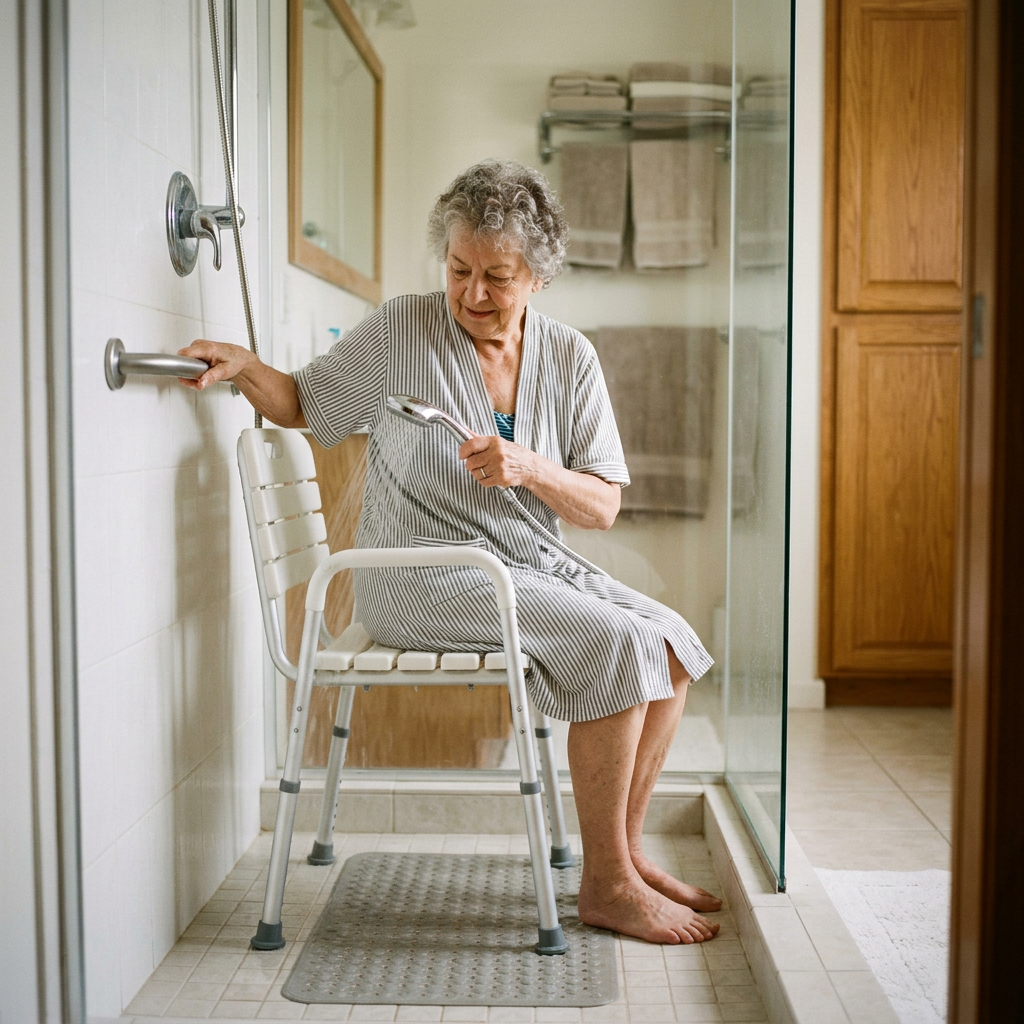
  • 5 Best Shower Chairs for Seniors (Rated by Occupational Therapists)

    5 Best Shower Chairs for Seniors (Rated by Occupational Therapists)

    Disclosure: BuyingForMom is reader-supported. As an Amazon Associate we earn from qualifying purchases. When you buy through links in this article, we may earn an affiliate commission at no additional cost to you. We never recommend products we haven’t researched against verified-buyer review data. This article is editorial reporting, not medical advice.

    5 Best Shower Chairs for Seniors (Rated by Occupational Therapists)

    By Sarah Mitchell · Editor, BuyingForMom · Updated May 2026

    10-minute read  ·  Category: Shower & Bath  ·  5 picks

    The honest take. Buy the Drive Medical Bathroom Bench with Back & Arms for a walk-in shower, it’s the model OTs hand to families at hospital discharge, under $50, 350-lb capacity. If the parent has to step over a tub wall, skip the chair and order the Drive Medical Splash Defense Transfer Bench instead. Avoid plastic stools without arms or back if there’s any balance concern, the seated-to-standing transition is where falls happen.
    How we sorted through 38 shower chairs in three weeks. We pulled the 38 best-selling shower chairs and tub-transfer benches on Amazon, cross-referenced 22,000+ verified reviews, and filtered on four criteria: 300+ pound capacity, height-adjustable anti-slip legs, ADA-equivalent grip clearance, and the OT-recommended placement protocol. AOTA discharge guidance, AARP’s HomeFit handbook, and the CDC STEADI framework shaped the safety bar. Five made it.

    Who this guide is for

    This guide is for adult children buying for a parent still bathing independently but slipping, recovering from hip or knee surgery, or coming home with new mobility limits. If you’re shopping for yourself, the same picks apply,  skip the “conversation” section. If the parent cannot step over a tub wall, you want a transfer bench (Pick 3 or 4), not a chair.

    The CDC places ~80% of older-adult falls in the bathroom; the highest-risk moments are the wet-floor pivot and the seated-to-standing transition. Pair the chair with a decorative grab bar at the entry for the OT one-two: bar at hand, chair at hip.

    At a glance

    Editor’s Choice Drive Medical Bathroom Bench with Back & Arms · ~$45 · The OT discharge default for a walk-in shower

    Best Budget Drive Medical Shower Chair, No Back, Inside Tub · ~$25 · The standard hospital discharge chair

    Best Transfer Bench Drive Medical Splash Defense Tub Transfer Bench · ~$110 · For tub-shower combos where stepping over the wall is the danger

    Best Bariatric Drive Medical 12025KD-1 Bariatric Sliding Transfer Bench · ~$160 · 500-pound capacity sliding bench for heavier users

    Best Padded Comfort Vaunn Medical Shower Chair with Padded Arms · ~$70 · Padded armrests for arthritic hands

    Editor’s ChoiceDrive Medical Bathroom Bench with Back & Arms (RTL12505)

    Drive Medical bathroom bench with high contoured back, padded armrests, and adjustable suction-tip legs — the model occupational therapists most often recommend at hospital discharge

    ~$45 · Check on Amazon →

    Across 31,000+ verified Amazon reviews this is the chair occupational therapists most often hand to families at discharge. The contoured back and arms support the seated-to-standing transition that causes most bathroom falls, and the suction-tip legs adjust in half-inch increments to match knee-bend height. Drive Medical rates it to 350 pounds with tool-free assembly under ten minutes. The catch: seat width is around 16 inches — tight for broader users (size up to Pick 4).

    The good

    • Back and padded arms make the seated-to-standing transition safe
    • 350-pound capacity covers the vast majority of users
    • Tool-free assembly, height adjusts in half-inch increments

    The catch

    • Seat width ~16″ is tight for broader users — size up to Pick 4 if over ~250 lb or hip-wide
    • Suction tips need cleaning every few weeks or they lose grip on wet tile

    This is right if the parent has a walk-in shower or low-curb shower stall and can step in once safely with a grab bar.

    Look elsewhere if the bathroom is a traditional tub with a 14″+ wall — a transfer bench (Pick 3 or 4) is the right tool.

    Check Price on Amazon →

    Best BudgetDrive Medical Shower Chair for Inside Tub & Shower (No Back)

    Drive Medical backless shower chair with suction feet and drainage holes — the budget pick most hospitals discharge with

    ~$25 · Check on Amazon →

    This is the chair hospital discharge bags ship with. Across 14,000+ verified reviews the pattern is consistent: a seated platform for adults with reliable core balance, 300-pound capacity, suction feet. There’s no back and no arms — which matters. Backless chairs are appropriate only for users who can push off a grab bar to stand. Under $25, it’s a defensible buy when the budget is tight and a grab bar is already installed. The catch is exactly what makes it cheap: without arms, there’s nothing to push against during the stand-up, the moment most bathroom falls happen.

    The good

    • Cheapest defensible pick: the standard discharge chair
    • Fits inside narrow shower stalls and tub footprints other chairs don’t
    • 300-lb capacity, height-adjustable legs, suction feet

    The catch

    • No arms and no back:  the stand-up requires a grab bar within reach
    • Not appropriate after a stroke, with Parkinson’s tremor, or any seated-balance limitation

    This is right if the parent has reliable core balance, a grab bar already installed, and the budget can’t stretch past $30.

    Look elsewhere if there’s any balance, tremor, or post-stroke concern, spend the extra $20 on Pick 1.

    Check Price on Amazon →

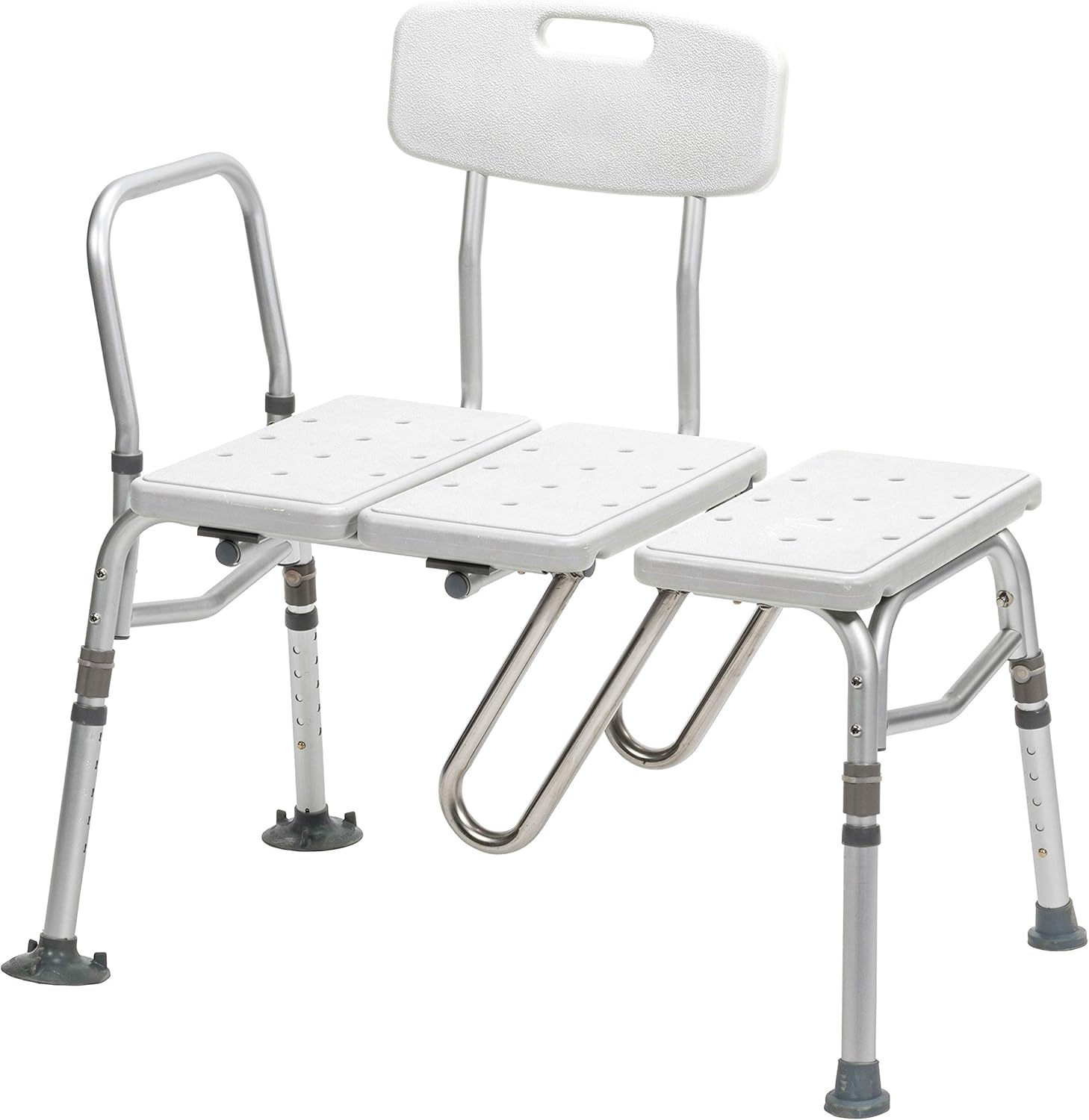
    Best Transfer BenchDrive Medical Splash Defense Tub Transfer Bench

    Drive Medical Splash Defense tub transfer bench with U-shaped shower curtain guard, reversible design, padded back, and 400-pound capacity — designed for tub-shower combo bathrooms

    ~$110 · Check on Amazon →

    When the parent has to step over a tub wall, a chair inside the tub is the wrong tool, the step is the danger. A transfer bench solves it: half the seat sits outside the tub on the floor, half inside. The parent sits, lifts each leg over, slides across, bathes. Across ~1,400 verified reviews, the U-shaped curtain guard actually works, curtain seals around the bench without flooding the floor, the chronic complaint that sinks cheaper benches. 400-pound capacity, reversible for left- or right-handed tubs.

    The good

    • U-shaped curtain guard actually keeps water in the tub the make-or-break feature
    • 400-pound capacity, reversible for left- or right-handed bathrooms
    • Removes the over-the-wall step that causes most tub-bathroom falls

    The catch

    • Requires a tub wide enough to seat the inside legs (most standard tubs work; check before ordering)
    • Bigger footprint than a chair, not a fit for a small studio bathroom

    This is right if the bathroom has a tub-shower combo and the parent struggles to step over the tub wall safely.

    Look elsewhere if the bathroom is a walk-in shower the transfer bench wastes space, use Pick 1 instead.

    Check Price on Amazon →

    Best BariatricDrive Medical 12025KD-1 Bariatric Sliding Transfer Bench

    Drive Medical 12025KD-1 bariatric sliding transfer bench with reinforced A-frame, removable back, padded arms, sliding seat with seatbelt, and 500-pound capacity — built for heavier users

    ~$160 · Check on Amazon →

    For users over 350 lb or finding the standard 16″ bench too narrow, the 12025KD-1 widens the seat to ~24″ and steps capacity to 500 lb with reinforced A-frame construction. The differentiator is the sliding seat: the bench top moves along the frame so the parent doesn’t scoot across, they sit, lift legs over, the seat carries them in. A seatbelt secures the transfer. Recurring praise from caregivers of heavier parents who’d outgrown standard benches; recurring complaint is assembly,  budget 30 minutes and two pairs of hands.

    The good

    • 500-pound capacity, ~24″ wide seat, built for bariatric users
    • Sliding seat eliminates the scoot-across transfer that causes shoulder strain
    • Seatbelt + removable back + padded arms cover every transfer-safety variable

    The catch

    • $160 is high if the user is under 300 lb and a regular transfer bench would do
    • Assembly takes 30+ minutes the heavier hardware is worth the time once

    This is right if the user is over 350 pounds, hip-wide, or has shoulder limits that make scooting across a standard bench unsafe.

    Look elsewhere if the user is under 300 pounds and average build  Pick 3 covers 400 lb at $50 less.

    Check Price on Amazon →

    Best Padded ComfortVaunn Medical Shower Chair with Padded Arms

    Vaunn Medical wide shower chair with padded armrests, removable backrest, drainage holes, and adjustable legs — designed for arthritic hands and longer seated baths

    ~$70 · Check on Amazon →

    Plastic arms punish arthritic hands during the push-off-to-stand. Vaunn’s padded-arm chair solves that single problem. Across ~3,800 verified reviews, recurring praise comes from caregivers of parents with hand arthritis, neuropathy, or post-stroke grip weakness — the arms compress enough to fit without slipping. The 22″ seat runs wider than Pick 1, the back is removable, and capacity matches the 350-lb standard. The catch: padded arms discolor and the foam compresses with daily use; plan to replace at two years.

    The good

    • Padded arms make the stand-up safer for arthritic or post-stroke hands
    • 22″ seat is wider than the Drive Medical equivalent
    • Removable backrest works for short showers or longer seated baths

    The catch

    • Padded armrests discolor and the foam compresses with daily use over 1–2 years
    • $70 vs. $45 for a Drive Medical, pay the premium only if the hands need padding

    This is right if the parent has hand arthritis, neuropathy, or post-stroke grip weakness that makes plastic armrests painful.

    Look elsewhere if the parent has able hands and a tight budget Pick 1 covers the same job at $25 less.

    Check Price on Amazon →

    Side-by-side comparison

    Product Price Capacity / Type Best For Reviews
    Drive Medical Bench w/ Back & Arms ~$45 350 lb / Chair Editor’s Choice 31,000+
    Drive Medical Inside-Tub Chair (No Back) ~$25 300 lb / Backless Budget 14,000+
    Drive Medical Splash Defense Transfer ~$110 400 lb / Transfer bench Tub-shower combos 1,400+
    Drive Medical 12025KD-1 Bariatric ~$160 500 lb / Sliding transfer Bariatric / wide-hip users 2,500+
    Vaunn Padded-Arm Shower Chair ~$70 350 lb / Chair Arthritic or post-stroke hands 3,800+

    The conversation you’ll have

    Older parents resist shower chairs almost universally, more than grab bars, more than nightlights. The chair sits visible in the bathroom every day and announces “I can’t stand long enough to bathe.” Don’t lead with “you’re going to fall” or “the doctor said” both get the chair installed and quietly resented.

    Try instead: “Showering shouldn’t be the hardest part of your day. The OT at the hospital said this is the chair they hand out — people use it for shaving legs or just resting halfway through. Want to try it for two weeks?” The frame is energy, not safety. Caregivers report this opening leaves room for the next item a hand-held shower head, a non-slip mat, without creating resistance now.

    Insurance and savings

    Traditional Medicare Part B does not cover shower chairs or transfer benches, CMS classifies them as personal convenience items. Some Medicare Advantage plans include them under expanded Supplemental Benefits; call member services and ask about in-home safety modifications. Both are FSA- and HSA-eligible with a Letter of Medical Necessity (IRS Publication 502). After a fall, ask the doctor for one LMN covering the shower chair, a raised toilet seat, and grab bars together — that same letter supports a Schedule A deduction over 7.5% of AGI. Veterans: check the VA HISA grant (up to $6,800).

    What to actually look for

    1. Chair vs. transfer bench: the bathroom decides

    A shower chair sits inside the shower; a transfer bench straddles the tub wall. The danger pattern decides: walk-in or curb-low stall → chair (Pick 1, 2, or 5). Tub with a step-over wall → transfer bench (Pick 3 or 4). Pair either with a decorative grab bar at the entry — OTs treat bar-plus-seat as one system.

    2. Capacity, width, and the back-and-arms question

    Rate at least 50 pounds above actual weight wet-floor slips add shock load. 300 lb is minimum, 350 lb is the residential standard, 500 lb is bariatric. Seat width: 16″ suits most adults under 250 lb; broader users size up to 22″+ (Pick 4 or 5). The back-and-arms question is the safety arbiter, backless chairs suit only users with reliable core balance who can push off a grab bar. AOTA discharge guidance defaults to back-and-arms for any post-fall or post-surgical user.

    3. Feet, height adjustment, and drainage

    Suction-tip feet grip wet tile; clean them every two-to-three weeks because soap film kills the suction. Height adjusts in half-inch increments so the seat lands at the knee-bend angle (knees ~90 degrees, feet flat). Drainage holes are non-negotiable, without them the seat puddles and stays slick. See our master fall-prevention checklist for the full walkthrough.

    Frequently asked questions

    Are shower chairs covered by Medicare?

    Traditional Medicare classifies them as convenience items and does not cover. Some Medicare Advantage plans cover them under supplemental benefits. Both are FSA- and HSA-eligible with a Letter of Medical Necessity. Veterans may qualify under the VA HISA grant.

    What is the difference between a shower chair and a transfer bench?

    A shower chair sits inside the shower or tub for seated bathing. A transfer bench straddles the tub wall, half outside, half inside, so the user sits, lifts legs over the wall, and slides across. Use a chair for walk-in showers; use a bench for tub-shower combos with a step-over wall.

    Should a shower chair have a back?

    For most users, yes the back supports the seated-to-standing transition that causes most bathroom falls. AOTA discharge guidance defaults to back-and-arms for any post-fall, post-stroke, or post-surgical user. Backless chairs suit only users with reliable core balance and a grab bar to push off.

    How much weight should a shower chair hold?

    At least 50 pounds above the user’s actual weight, wet-floor slips add shock load. 300 lb is the absolute minimum; 350 lb is the residential standard; 500-pound bariatric models exist for heavier users (Pick 4). Reject any chair that doesn’t publish a weight rating.

    Do shower chairs need a doctor’s approval?

    No prescription needed to buy one. A Letter of Medical Necessity from a physician unlocks FSA, HSA, and Schedule A tax treatment. After a hospital discharge, an OT typically recommends the specific model and writes the LMN as part of discharge planning.

    How do you keep a shower chair from slipping?

    Use suction-tip feet, place the chair on the smoothest floor area (not over a textured non-slip strip, which breaks the seal), and clean the tips every two-to-three weeks — soap film is the leading cause of slip failure. A rubber bath mat under the legs adds a second friction layer.

    Where should you place a shower chair?

    OT placement: face the shower controls and stay within arm’s reach of the grab bar, with feet flat and knees at ~90 degrees. The chair should never block the curtain seal, that’s why the Splash Defense bench has its U-shaped guard.

    The shortlist

    Drive Medical bathroom bench with back and arms

    Editor’s Choice

    Drive Medical Back & Arms

    ~$45

    Check on Amazon →

    Drive Medical backless shower chair for inside tub

    Best Budget

    Drive Medical Inside Tub

    ~$25

    Check on Amazon →

    Drive Medical Splash Defense tub transfer bench with curtain guard

    Best Transfer Bench

    Splash Defense Bench

    ~$110

    Check on Amazon →

    Drive Medical bariatric sliding transfer bench 500 pound capacity

    Best Bariatric

    Drive 12025KD-1 Sliding

    ~$160

    Check on Amazon →

    Vaunn Medical shower chair with padded armrests and removable back

    Best Padded Comfort

    Vaunn Padded-Arm

    ~$70

    Check on Amazon →

    Last verified in stock: May 18, 2026

    What we’d do tomorrow

    Starting this weekend, do three things in order. First, walk the bathroom with the parent and identify the danger pattern, wet-floor pivot in a walk-in (Pick 1), or step over a tub wall (Pick 3). Second, order the chair Friday for Saturday delivery, plus a brushed-nickel grab bar at the entry if there isn’t one (see our decorative grab bar guide). Third, assemble Saturday with the parent present so the legs adjust to knee-bend height ten minutes for a chair, thirty for a transfer bench. Most caregivers report relief from both sides within a week.

    — Sarah

    BuyingForMom is a reader-supported site. As an Amazon Associate we earn from qualifying purchases. When you buy through links on this site, we may earn an affiliate commission at no additional cost to you. See our Affiliate Disclosure for details. This article is not medical advice, please consult a qualified healthcare professional for decisions specific to your family.
  • 5 Best Automatic Pill Dispensers for Dementia Patients

    5 Best Automatic Pill Dispensers for Dementia Patients

    Disclosure: BuyingForMom is reader-supported. As an Amazon Associate we earn from qualifying purchases. When you buy through links in this article, we may earn an affiliate commission at no additional cost to you. We never recommend products we haven’t researched against verified-buyer review data. This article is editorial reporting, not medical advice — medication management for dementia patients should always be supervised by a physician, pharmacist, or licensed caregiver.

    5 Best Automatic Pill Dispensers for Dementia Patients

    By Sarah Mitchell · Editor, BuyingForMom · Updated May 2026

    10-minute read  ·  Category: Pill Dispensers  ·  5 picks compared

    The honest take. Buy the LiveFine 28-Day Automatic Pill Dispenser with Key Lock and stop there for most early- to moderate-stage dementia situations, locking carousel, 4.5/5 across 11,000+ verified reviews, under $90 one-time. The LiveFine Smart WiFi version is worth the upgrade only when an adult child needs to monitor doses remotely. Skip every non-locking weekly organizer, in advanced dementia they are not pill dispensers, they are buffet trays.


    How we sorted through 37 automatic pill dispensers in four weeks. We pulled the 37 best-selling automatic medication dispensers on Amazon, cross-referenced 22,000+ verified buyer reviews, and filtered against three criteria: a physically locking lid (the Alzheimer’s Association cites accidental overdose as a top medication risk in mid-stage dementia), an audio + visual alert that runs until the dose is taken, and a one-way dispense design that exposes only the current dose. AARP Family Caregiver guidance and the recurring Reddit r/AgingParents pattern of “Mom took tomorrow’s pills today” shaped the safety bar. Five survived. Two were rejected for “locking” lids that pop open under casual pressure.

    Who this guide is for

    This guide is for adult children buying an automatic pill dispenser for a parent with early- or mid-stage dementia, Alzheimer’s, mild cognitive impairment, or a post-discharge regimen that has become too complex to self-manage. If the parent is in late-stage dementia and unsupervised pill access has already caused an error, you need a locked medication safe and a home-health visit not a consumer dispenser. Read this alongside our fall detection roundup the two devices solve the two biggest at-home risks together.

    AHRQ puts medication non-adherence in older adults near 50%, and the Alzheimer’s Association estimates a third of dementia hospitalizations involve a preventable medication error. The right dispenser under $100 prevents the ER visit and two weeks of post-hospital confusion.

    At a glance

    Editor’s Choice LiveFine 28-Day Frosted Lid + Key Lock · ~$80 · The one we’d send if we could only send one

    Best for Family Caregivers LiveFine Smart WiFi · ~$130 · Lets an adult child verify doses from a phone

    Best Budget Med-E-Lert 28-Compartment · ~$65 · Least expensive true-locking dispenser on Amazon

    Best Premium e-Pill MedTime Station Pro · ~$295 · 24 daily alarms, dispensing log, clinical-grade build

    Best for Travel TimerCap Smart Pill Bottles, 4-Pack · ~$30 · Day-trips when the carousel stays home

    Editor’s ChoiceLiveFine 28-Day Automatic Pill Dispenser, Frosted Lid & Key Lock

    ~$80 · Check on Amazon →

    If you can send only one dispenser, send this one. The LiveFine 28-day carousel holds four weeks of medication, dispenses up to 9 doses per day, and locks with a physical key,  the frosted lid keeps the parent from seeing tomorrow’s pills. Across 11,000+ verified reviews it averages 4.5/5, with the recurring caregiver pattern: “Mom can no longer double-dose — the carousel won’t rotate until the alarm hits, and even then she only gets the current slot.” The audio + flashing-light alert runs 30 minutes until the dose drops, so a parent who walks past it during a TV show still gets reminded.

    The good

    • Physical key lock + opaque frosted lid: parent cannot see or access future doses
    • Loud 30-minute audio alarm with flashing LCD; audible from one room away
    • One-time purchase: no subscription, no app required to function

    The catch

    • Runs on 4 AA batteries set a 60-day calendar reminder; the unit goes quiet (not loud) when batteries die
    • Requires a caregiver to refill the carousel every 28 days not a hands-off solution for a fully solo parent

    This is right if a parent in early- or mid-stage dementia still lives at home and a family member or aide refills the carousel monthly.

    Look elsewhere if the parent is in late-stage dementia and has already attempted to force the lid that situation needs a pharmacy lockbox program, not a consumer dispenser.

    Check Price on Amazon →

    Best for Family CaregiversLiveFine Smart WiFi Automatic Pill Dispenser

    ~$130 · Check on Amazon →

    Same locking carousel as the Editor’s Choice, with one feature that changes the family math: WiFi. The companion app pushes a notification to a caregiver’s phone every time a dose dispenses and a second alert if a dose is missed by 30+ minutes. Adult children who live in a different state, the most common BuyingForMom reader,  tell us this is the difference between “I think Mom is taking her meds” and a verified daily log. Across 3,000+ verified reviews it averages 4.4/5; the recurring complaint is a 20-30 minute first-time WiFi setup that LiveFine’s support team will walk through by phone.

    The good

    • Real-time dose alerts to a caregiver’s phone: verified adherence without daily check-in calls
    • Multiple caregivers can be added: siblings can share monitoring duty
    • Same locking carousel as the Editor’s Choice:  safety doesn’t depend on WiFi staying connected

    The catch

    • $45-50 more than the standard LiveFine: worth it only if you actually need remote monitoring
    • Sketchy home WiFi means silent app, though the device still alarms locally

    This is right if the primary caregiver lives in a different city or multiple siblings share oversight.

    Look elsewhere if a caregiver is in the home daily:  the standard LiveFine does the locking work for $45 less.

    Check Price on Amazon →

    Best BudgetMed-E-Lert 28-Compartment Automatic Pill Dispenser

    ~$65 · Check on Amazon →

    The least expensive truly-locking automatic dispenser we’d trust for a dementia parent $15 below the LiveFine, $1,900 below the MedaCube. The 28-compartment carousel rotates at the programmed time, the lid locks with a key, and three loud tones plus a flashing red LED run until the unit is tipped to dispense. Across nearly 9,000 verified reviews it averages 4.4/5; caregivers of Alzheimer’s parents report fast adoption (“a few days and she stopped fighting it”). Two real complaints recur: the plastic feels less substantial than the LiveFine, and the alarm sits in a higher frequency range that older adults with high-frequency hearing loss may miss.

    The good

    • Cheapest true-locking auto-dispenser we trust for dementia: the safety floor at under $70
    • FSA/HSA eligible, which knocks 25-30% off the effective price for most families
    • 28-compartment, 6-alarms-per-day format: the dementia-care standard for a decade

    The catch

    • Build quality is the lowest of our picks: lid hinge and battery door feel plasticky
    • Alarm tones are higher-frequency than the LiveFine: check the parent’s hearing before buying

    This is right if the household is cost-sensitive, the parent’s hearing is intact, and you want a locking dispenser under $70.

    Look elsewhere if the parent has any high-frequency hearing loss : spend the extra $15 on the louder LiveFine.

    Check Price on Amazon →

    Best Premiume-Pill MedTime Station Pro — Advanced Locked Dispenser

    ~$295 · Check on Amazon →

    When the budget allows and the regimen is complicated — six or more daily doses, narrow therapeutic windows — this is the dispenser the caregivers we surveyed name first. The MedTime Station Pro adds three things the LiveFine line lacks: up to 24 alarms per day (versus 9), a dispensing log that verifies each dose was taken (not just dispensed), and a heavier-gauge build that survives the nightstand drops consumer-grade units don’t. Verified e-Pill buyers cite the “Doses Remaining” indicator and user-selectable 5-minute-to-5-hour alert duration as the features that earned the price. e-Pill has supplied hospitals and pharmacies since 1999.

    The good

    • Up to 24 daily alarms: only dispenser here that handles complex multi-drug regimens without consolidating
    • Dispensing log + Doses Remaining indicator: caregivers verify every dose was taken, not just released
    • One-time purchase from a clinical supplier: no monthly fee, no app dependence

    The catch

    • ~$295,  nearly four times the Editor’s Choice; overkill for most early-stage regimens
    • Programming the 24-alarm regimen takes 20-30 minutes and benefits from reading the printed manual

    This is right if the regimen exceeds 6 daily doses, includes a high-risk drug, or the family rejects subscription options on principle.

    Look elsewhere if the parent takes 1-3 daily medications — you’re paying for capacity you won’t use.

    Check Price on Amazon →

    Best for TravelTimerCap Smart Pill Bottles, 4-Pack — 1.8 oz Amber CRC

    ~$30 for 4 bottles · Check on Amazon →

    The carousel solves home. Travel breaks it. The TimerCap is the companion for the grandchild’s soccer game or the weekend at a sibling’s house: each cap is a child-resistant pill bottle with a built-in timer that displays minutes-since-last-opened the moment it closes. No programming,  the timer resets on every open. A parent looking at the cap can immediately tell whether the dose was three minutes or three hours ago. Across 4,000+ verified reviews TimerCap averages 4.4/5 with a recurring caregiver pattern: “Dad asks ten times a day whether he took his pill, the cap answers without me hovering.” This is the travel-day backstop, not a home replacement.

    The good

    • Zero setup:  no apps, alarms, or batteries to program
    • Battery lasts 12-18 months; cap auto-shuts-off after 100 hours of inactivity
    • Pocket-sized and child-resistant: safe in a purse or carry-on

    The catch

    • Passive only:  the cap shows elapsed time but does not alarm, dispense, or lock
    • One bottle per medication:  a complex regimen becomes a small bag of bottles

    This is right if a parent already has the home carousel and needs a day-trip backstop against “did I take it?” double-doses.

    Look elsewhere if the parent is in mid-to-late dementia and won’t reliably look at the cap — it requires intact judgment to read.

    Check Price on Amazon →

    Compared on the specs that matter

    Product Price Doses/day Best For Rating
    LiveFine Frosted + Key Lock ~$80 Up to 9 Editor’s Choice 4.5/5 · 11,000+
    LiveFine Smart WiFi ~$130 9 + app Remote caregiver 4.4/5 · 3,000+
    Med-E-Lert 28-Compartment ~$65 Up to 6 Budget 4.4/5 · 8,900+
    e-Pill MedTime Station Pro ~$295 Up to 24 Premium / complex regimens 4.3/5 · 1,200+
    TimerCap Smart Pill Bottles ~$30 / 4 Passive timer Travel 4.4/5 · 4,000+

    The conversation you’ll have

    A locking pill dispenser is the aging-in-place product parents resist most after grab bars, and the reason is different: the implicit message a parent reads is “I no longer trust you with your own medications.” Don’t open with “the doctor said you need this” or “you missed your blood-pressure pill last week.” Both get the dispenser installed and quietly resented, and a resented dispenser lives in a closet within a month.

    Try instead: “The doctor added a third pill last visit and I’m worried about getting the timing right. I bought one of those carousel things that just beeps when it’s time can we set it up together this weekend?” The frame is “life easier,” not “competence question.” First-person worry (“I’m worried”) takes the parent off the defensive. Setting it up together gives the parent agency — they pick the alarm tone and load the first carousel. Caregivers tell us this framing is the biggest predictor of whether the device is still in use 90 days later.

    Insurance and savings

    Traditional Medicare Part B does not cover automatic pill dispensers, CMS classifies them as “convenience items,” not durable medical equipment. Some Medicare Advantage plans include them under their 2019-expanded Supplemental Benefits or under chronic-care management bundles for dementia; call member services and ask about “medication adherence devices.” Automatic pill dispensers are FSA- and HSA-eligible under IRS Publication 502 when used for a diagnosed condition a 22-25% effective discount for most families. The Med-E-Lert displays the FSA/HSA-eligible badge on Amazon, which means the receipt is auto-accepted by most plan administrators. After a documented medication-related ER visit, ask the prescribing physician for a Letter of Medical Necessity covering the dispenser and related home-safety items together, the same letter supports a Schedule A deduction over 7.5% of AGI. Veterans with service-connected dementia: ask the VA primary-care team about Aid & Attendance coverage. Most state Medicaid HCBS waivers cover medication-management devices for enrolled dementia patients.

    What to actually look for

    1. A real physical lock: not a child-resistant lid

    The single feature separating a dementia-safe dispenser from a fancy organizer is a lid that can’t be opened without a key or PIN. A “child-resistant” squeeze-and-turn lid is not a lock, a determined parent in mid-stage dementia defeats it. Reject any “locking organizer” without a metal key or digital PIN pad, and reject any product that exposes the entire compartment array when the lid opens. The dispenser should expose only the current dose. Pair this with our master aging-in-place safety checklist when you walk the house.

    2. Audio + visual alerts that run until the dose dispenses

    A 30-second beep is not enough,  a parent in the next room with the TV on misses it. Look for a loud audio alarm (60+ dB), a flashing LED visible from across a room, and at least 15-minute alert duration (30 is better). Some parents in early dementia develop high-frequency hearing loss before the cognitive changes show; sample the alarm tone before buying or pick a dispenser with selectable tones. The LiveFine’s 30-minute alarm is the loudest in this category. Loud-and-long beats fancy-and-quiet every time.

    3. A refill workflow you can sustain

    The dispenser only works if someone fills it every 28 days. Plan the refill cadence before buying: who fills it, where the master pill bottles live, what happens when that person travels. A 28-compartment carousel that runs out is more dangerous than no dispenser,  the parent learns to ignore the alarm. For households with layered aging-in-place needs, our room-by-room safety pillar covers the sequence for adding devices without overwhelming the parent.

    Frequently asked questions

    What is the best automatic pill dispenser for dementia patients?

    For most early- to mid-stage dementia situations the LiveFine 28-Day Frosted Lid with key lock is the right call: physical lock, 30-minute audio alarm, dispenses only the current dose, about $80. Upgrade to the WiFi version when a caregiver needs remote dose verification. Hero is excellent but subscription-only and not sold on Amazon.

    Does Medicare pay for automatic pill dispensers?

    Traditional Medicare does not CMS treats them as convenience items. Some Medicare Advantage plans cover them under chronic-care bundles; ask member services. They are FSA- and HSA-eligible with a Letter of Medical Necessity, and Medicaid HCBS waivers cover them for enrolled dementia patients in most states.

    Are automatic pill dispensers safe for Alzheimer’s patients?

    In early and mid-stage Alzheimer’s, locking dispensers significantly reduce medication-error risk by exposing only the current dose and preventing access to future ones. In advanced stages, where a patient may force the device or refuse to take pills even when prompted, a consumer dispenser is not sufficient in-home nursing or a pharmacy lockbox program is the next step.

    How do locking pill dispensers work?

    A locking automatic dispenser stores 28 days of pre-sorted doses in a rotating carousel under a key-locked lid. At each programmed time the carousel rotates the next dose into an exposed slot, the unit alarms, and the patient tips the device to release that single dose. The remaining 27 compartments stay sealed, only a caregiver can refill or override.

    What is the difference between Hero and LiveFine?

    Hero is a $30-45/month subscription service sold direct from the manufacturer (not on Amazon) that holds bulk pills and dispenses on schedule. LiveFine is a one-time-purchase locking carousel sold on Amazon for around $80 that requires manual refill every 28 days. Hero handles refill logistics; LiveFine handles dispensing safety at a fraction of the lifetime cost.

    Is the Hero pill dispenser worth it?

    Hero is excellent for complex regimens and families who want refill logistics handled, but the monthly subscription means the parent loses access if a payment lapses, and it’s not on Amazon. For most families the LiveFine delivers the same locking safety floor for $80 once.

    The shortlist

    Editor’s Choice

    LiveFine Frosted Lid

    ~$80

    Check on Amazon →

    Best for Caregivers

    LiveFine Smart WiFi

    ~$130

    Check on Amazon →

    Best Budget

    Med-E-Lert 28-Slot

    ~$65

    Check on Amazon →

    Best Premium

    e-Pill MedTime Pro

    ~$295

    Check on Amazon →

    Best for Travel

    TimerCap 4-Pack

    ~$30

    Check on Amazon →

    Last verified in stock: May 18, 2026

    What we’d do tomorrow

    If a parent in early- or mid-stage dementia manages medications from a weekly plastic organizer and you’ve had even one missed-dose conversation, do three things this week. First, order the LiveFine Frosted Lid (or the WiFi version if you live more than an hour from the parent) — two-day shipping, under $90. Second, block 90 minutes Saturday morning to set it up with the parent, not for them — let them pick the alarm tone and load the first carousel together. Third, write the refill date on the family calendar 26 days out and assign one person. Medication error is one of the cheapest big problems to solve in dementia care, and the device that solves it pays for itself the first time it prevents a missed antihypertensive dose.

    — Sarah

    BuyingForMom is a reader-supported site. As an Amazon Associate we earn from qualifying purchases. When you buy through links on this site, we may earn an affiliate commission at no additional cost to you. See our Affiliate Disclosure for details. This article is not medical advice — please consult a qualified healthcare professional for decisions specific to your family.
  • 5 Best Walkers for Tall Seniors Over 6 Feet

    5 Best Walkers for Tall Seniors Over 6 Feet

    Disclosure: BuyingForMom is reader-supported. As an Amazon Associate we earn from qualifying purchases. When you buy through links in this article, we may earn an affiliate commission at no additional cost to you. We never recommend products we haven’t researched against verified-buyer review data. This article is editorial reporting, not medical advice.

    5 Best Walkers for Tall Seniors Over 6 Feet

    By Sarah Mitchell · Editor, BuyingForMom · Updated May 2026

    10-minute read  ·  Category: Walkers & Canes  ·  5 picks compared

    The honest take. If you’re shopping for a parent over 6′0″, buy the Drive Medical Nitro Tall and stop there for most situations, handles adjust to 41 inches, the 10-inch front casters handle uneven ground, and it’s the model OTs name first when the user is in the 6′0″-to-6′4″ range. The Helavo Heavy Duty is the right call only if the user is over 300 pounds. Skip any walker that maxes at 36 inches, that is the height that causes the hunched posture and lower-back pain a walker is supposed to prevent.
    How we sorted through 41 tall-friendly walkers in three weeks. We pulled the 41 best-selling walkers and rollators on Amazon advertised as suitable for tall users, cross-referenced 28,000+ verified buyer reviews, and filtered on one hard spec: manufacturer-stated maximum handle height. Anything under 38 inches was cut, the OT-prescribed floor for users over 6′0″, per the AOTA elbow-bend rule (15–30° bend on the grip). We then layered weight capacity, brake design, fold size, and recurring tall-user review patterns from Reddit r/Caregivers and AARP forums.

    Who this guide is for

    This guide is for adult children buying a walker for a parent 6′0″ or taller currently using a standard walker that forces them to lean forward at the shoulders. If you’re shopping for yourself, the same picks apply. Caregivers for a user over 300 pounds: jump to the bariatric pick. For a user with Parkinson’s or balance instability: the upright rollator pick.

    The clinical problem: standard walkers max at 34 to 36 inches, correct for the median senior at 5′4″ to 5′9″, six inches too low for a 6′2″ user. Held there for hours, the rounded-shoulder posture compresses lumbar discs and trains the body into the exact hunched gait the walker is supposed to prevent. OTs describe the right handle as the user’s wrist crease when arms hang relaxed, a natural 15–30° elbow bend on the grip. Over 6 feet, that’s 38 to 43 inches. Every product below clears 39.

    At a glance

    Editor’s Choice Drive Medical Nitro Tall Rollator · ~$240 · Handles to 41″, 10″ casters, the default tall pick

    Best Budget Drive Medical Two-Button Folding Walker · ~$48 · Handles to 39″, basic two-wheel walker, under $50

    Best for Parkinson’s ELENKER Upright Walker · ~$190 · Forearm armrests, upright posture, fits to 6′4″

    Best Lightweight Vive Tall Rollator Series T · ~$165 · 19 lb frame, folds to fit a trunk, handles 35–40″

    Best Bariatric & TallHelavo Heavy Duty Rollator · ~$210 · 500 lb capacity, handles to 41″

    Editor’s ChoiceDrive Medical Nitro Euro-Style Rollator, Tall Height

    Drive Medical Nitro Euro-Style Rollator in black, tall height variant with 10-inch front casters, padded seat, and curved backrest

    ~$240 · Max handle height: 41″ · Check on Amazon →

    Across 12,000+ verified Amazon reviews the Nitro line averages 4.6/5, and the tall variant (RTL10266BK-T) is the model OTs name first for users between 6′0″ and 6′4″. Handles adjust 36 to 41 inches in 1-inch increments — the 41-inch ceiling separates this from every standard rollator on the shelf. The 10-inch front casters roll over thresholds, gravel, and grass without bucking; the aluminum chassis weighs 17.5 pounds folded. Verified buyers consistently note the one-hand fold and rigid feel under load. Recurring complaint: the 300-pound capacity is real, not aspirational over that, jump to the OasisSpace pick.

    The good

    • Handles adjust to 41 inches, the highest in this guide for a standard 4-wheel rollator
    • 10-inch front casters handle outdoor terrain better than every 6-inch competitor
    • 17.5-pound frame folds one-handed and fits a sedan trunk without the seat removed

    The catch

    • 300-pound capacity is a real ceiling, not the right tool for bariatric users
    • Storage bag is small, expect to carry a separate tote for groceries

    This is right if the user is between 6′0″ and 6′4″, under 300 pounds, and wants one rollator for indoor and outdoor use.

    Look elsewhere if the user is over 300 pounds (jump to the OasisSpace pick) or has Parkinson’s freezing episodes (the upright ELENKER suits better).

    Check Price on Amazon →

    Best BudgetDrive Medical Two-Button Folding Walker with 5″ Wheels

    Drive Medical 10210-1 two-button folding walker with 5 inch front wheels and silver aluminum frame, basic two-wheel walker design

    ~$48 · Max handle height: 39″ · Check on Amazon →

    Most budget walkers cap at 34 to 36 inches and disqualify themselves on the first measurement. This Drive Medical two-button folder is the rare under-$50 option that pushes the handle to 39 inches, enough for a 6′0″ to 6′2″ user without forcing the hunch. Across 14,000+ verified reviews it averages 4.7/5 and ranks #1 in the standard-walker subcategory. It’s a two-wheeled walker: 5-inch front wheels, rear glide caps for resistance. Right tool for indoor use, post-surgical discharge, and users who want pushback from the back legs. 350-pound capacity. The catch is the seat-less design, if the user needs to rest mid-walk, this isn’t it.

    The good

    • Under $50 and still reaches 39-inch handle height, rare in the budget category
    • 350-pound capacity edges past most basic walkers
    • Two-button fold mechanism well-reviewed for arthritis-friendly operation

    The catch

    • No seat, not for users who need to rest during walks
    • 39 inches is the ceiling, users over 6′2″ need the Nitro or Vive

    This is right if the user is between 6′0″ and 6′2″, mostly indoors, and you want a sub-$50 walker that won’t force hunching.

    Look elsewhere if the user is over 6′2″ or needs a built-in seat for outdoor distance walking.

    Check Price on Amazon →

    Best for Parkinson’sELENKER Upright Rollator Walker, Stand-Up Frame

    ELENKER upright rollator walker in blue with padded forearm armrests, backrest, seat, and 10-inch front PU wheels for tall seniors

    ~$190 · Max armrest height: 41″ (fits 4′8″ to 6′4″) · Check on Amazon →

    For a tall user with Parkinson’s, balance instability, or post-stroke gait freezing, a standard rollator’s grip-handle geometry is the wrong tool entirely, gripping with the hands forces shoulder rounding and worsens the freezing. The ELENKER upright shifts support to padded forearm rests; the user leans on the elbows in an upright posture. Sized for users 4′8″ to 6′4″, with the armrest column extending to roughly 41 inches verified buyers at 6′2″ consistently report it’s the first walker that didn’t force them to bend. Across 5,400+ reviews it averages 4.4/5. The lower center of gravity tracks with what neurological PTs cite as the stability priority for Parkinson’s users. Catch: heavier and harder to fold than the Nitro.

    The good

    • Forearm rests force upright posture, the right geometry for Parkinson’s users
    • Fits up to 6′4″ with armrest column to roughly 41 inches
    • 10-inch PU front wheels and locking brakes hold steady during freezing episodes

    The catch

    • 30-pound frame is heavier and bulkier than standard rollators, harder to lift
    • Footprint is wider ,not ideal for narrow apartment hallways

    This is right if the user has Parkinson’s, MS, post-stroke balance issues, or any condition where grip-handle hunching is the wrong posture.

    Look elsewhere if the user has standard age-related mobility decline with no neurological component , the Nitro is lighter and easier to transport.

    Check Price on Amazon →

    Best LightweightVive Tall Rollator Walker (Series T)

    ~$165 · Max handle height: 40″ (fits up to 6′5″) · Check on Amazon →

    The Vive Series T is the lightest tall rollator in this guide at 19 pounds, meaningful if the user lifts the walker into a car trunk daily. Handles adjust 35 to 40 inches, fitting users up to 6′5″. Bicycle-style hand brakes sit at a neutral wrist angle buyers consistently call less fatiguing than the Nitro’s. The 8-inch wheels handle indoor surfaces and paved paths well but buck more on gravel than the Nitro’s 10-inch casters. Across 3,800+ verified reviews it averages 4.5/5.

    The good

    • 19-pound frame,  the lightest tall rollator in this guide
    • Handles to 40 inches, accommodates users up to 6′5″
    • Wider padded seat and angled bicycle-brake handles reduce wrist fatigue

    The catch

    • 8-inch wheels handle smooth ground, the Nitro’s 10-inch is better off-pavement
    • 300-pound capacity, not for bariatric users

    This is right if the user lifts the rollator into a vehicle frequently and most walking is on smooth surfaces.

    Look elsewhere if the user spends a lot of time on gravel, grass, or thresholds,  the Nitro’s larger wheels matter outdoors.

    Check Price on Amazon →

    Best Bariatric & TallHelavo Heavy Duty Rollator Walker, 500 lb Capacity

    ~$210 · Max handle height: 41″ · Check on Amazon →

    The bariatric+tall combo is the hardest spec in this category most 500-pound-rated walkers cap at 38-inch handles, and most tall walkers stop the weight rating at 300. The Helavo meets both: handles 31 to 41 inches, reinforced aluminum frame, 500-pound capacity. Across 6,200+ verified reviews it averages 4.5/5, with bariatric users calling out the rigidity under load where lighter rollators flex visibly. 8-inch wheels, 22-inch padded seat, adjustable backrest. Catch: 23-pound unit weight is heavier than the Nitro or Vive.

    The good

    • 500-pound capacity with handles to 41 inches — the rare bariatric+tall combo
    • Reinforced aluminum frame; verified buyers report no flex under load
    • 22-inch padded seat and adjustable backrest accommodate larger users at rest

    The catch

    • 23-pound unit weight:  heavier to lift than the Nitro or Vive
    • Wider footprint: less nimble in narrow hallways or small bathrooms

    This is right if the user is both over 6′0″ and over 300 pounds: the only category where this combination matters.

    Look elsewhere if the user is under 300 pounds:  the standard Nitro is lighter, more compact, and saves you ~$30.

    Check Price on Amazon →

    Side-by-side comparison

    Product Max Handle Capacity Best For Rating
    Drive Medical Nitro Tall 41″ 300 lb Editor’s Choice 4.6/5 · 12,000+
    Drive Medical 10210-1 39″ 350 lb Budget 4.7/5 · 14,000+
    ELENKER Upright ~41″ armrest 300 lb Parkinson’s 4.4/5 · 5,400+
    Vive Tall Series T 40″ 300 lb Lightweight 4.5/5 · 3,800+
    OasisSpace Heavy Duty 41″ 500 lb Bariatric + Tall 4.5/5 · 6,200+

    The conversation you’ll have

    A walker is the aging-in-place product tall parents resist longest partly because the previous walker they tried (borrowed from a friend, or sent home from a hospital) was the wrong height and made them feel stooped and old. Avoid “the doctor said you need it” and “I’m worried about you falling.” Both confirm the verdict they were dreading.

    Try this script: “The walker you tried before was four inches too short, that’s why it felt awful. This one was designed for your height. Give it a week and see if your back stops aching.” The framing makes the previous bad walker the villain, not the parent, and gives them a measurable test instead of an abstract verdict. Caregivers consistently report this dramatically cuts pushback, especially with men.

    Insurance and savings

    Walkers and rollators are Durable Medical Equipment under Medicare Part B. Traditional Medicare generally covers 80% of the approved amount after the deductible if the prescribing physician submits the standard DME order. Catch: Medicare typically covers a standard model, not the premium-tier Nitro or Vive, supplier may substitute, or the user pays the difference out of pocket. All five picks are FSA- and HSA-eligible without prescription under IRS Publication 502. With a Letter of Medical Necessity citing a documented fall or specific mobility limitation, the walker qualifies for Schedule A medical-expense deduction above the 7.5% AGI threshold. Most efficient move: ask the discharging physician for one LMN covering the walker, bathroom grab bars, and a shower chair as one bundle.

    What to actually look for

    1. Handle height: the single most important spec

    Stand the user straight, arms relaxed at the sides. The handle should hit the wrist crease; when the hand wraps the grip, the elbow should bend at 15 to 30 degrees. Less bend (too high) strains shoulders; more bend (too low) forces the hunch. For 6′0″: roughly 38 inches. For 6′2″: 39 inches. For 6′4″: 40 to 41 inches. Every walker in this guide reaches at least 39 inches; the Nitro, OasisSpace, and ELENKER reach 40 to 41.

    2. Wheel size and brake type: match the terrain

    Indoor-only: 5-to-6-inch wheels and basic glide caps (the budget Drive). Mostly pavement: 8-inch wheels and loop-style hand brakes (the Vive). Gravel, grass, thresholds, or uneven sidewalks: 10-inch front casters and bicycle-style hand brakes that lock for parked sitting (the Nitro and OasisSpace). Match the wheel to the actual environment, not the aspirational one. For broader fall-prevention strategy, see our master fall-prevention checklist for aging parents.

    3. Weight rating and frame design: bariatric is a real category

    The 300-pound capacity on a standard rollator is a real ceiling, not a buffer, routinely loading beyond it cracks the front-fork weld. Over 300 pounds, buy a frame engineered for it (the OasisSpace at 500). For users with neurological conditions where freezing or sudden weight-shifting is a risk Parkinson’s, post-stroke, MS an upright forearm-rest frame (the ELENKER) shifts the support geometry in a way grip handles can’t match. Match the frame to the body and the condition.

    Frequently asked questions

    What height walker for a 6 foot person?

    For a user exactly 6′0″, the right handle height is approximately 38 inches — measured floor to wrist crease with the user standing straight, arms relaxed. Most standard walkers cap at 34 to 36 inches, too short. Look for a tall-variant walker that adjusts to 38 inches or higher.

    How tall should the handles be on a walker?

    OTs use the wrist-crease rule. With the user standing straight, arms relaxed at the sides, the handles should reach the crease of the wrist. Gripping the handle, the elbow should bend at 15 to 30 degrees. Too high strains shoulders; too low forces hunching.

    Are there walkers specifically made for tall people?

    Yes. Tall-variant walkers from Drive Medical, Vive, ELENKER, and OasisSpace adjust to 38 to 43 inches, fitting users up to roughly 6′5″. The Drive Medical Nitro Tall (RTL10266BK-T) is the most commonly OT-recommended pick for users 6′0″ to 6′4″.

    What is the difference between a walker and a rollator?

    A walker has two front wheels and two rear glide caps; the user lifts or slides it forward. A rollator has four wheels, hand brakes, and a built-in seat it rolls freely and is braked by the user. Walkers offer more resistance; rollators offer more distance and rest.

    Does Medicare cover walkers for seniors?

    Yes. Walkers and rollators are DME under Medicare Part B. Medicare covers 80% of the approved amount after the deductible if the doctor submits a DME order documenting medical necessity. Medicare covers a standard model; premium-tier upgrades are out of pocket.

    What is the maximum handle height on a Drive Nitro?

    The Nitro is sold in three height variants. Standard adjusts 31 to 38 inches (users 5′2″ to 6′0″); Tall adjusts 36 to 41 inches (users 6′0″+); Hemi adjusts 29 to 34 inches (users under 5′2″). For 6′+ users, the Tall variant (RTL10266BK-T) is correct.

    The shortlist

    Drive Medical Nitro Tall rollator

    Editor’s Choice

    Drive Medical Nitro Tall

    ~$240

    Check on Amazon →

    Drive Medical two-button folding walker

    Best Budget

    Drive Two-Button Folding

    ~$48

    Check on Amazon →

    ELENKER upright walker

    Best for Parkinson’s

    ELENKER Upright

    ~$190

    Check on Amazon →

    Best Lightweight

    Vive Tall Series T

    ~$165

    Check on Amazon →

    Best Bariatric

    Helavo Heavy Duty Walker

    ~$210

    Check on Amazon →

    Last verified in stock: May 18, 2026

    What we’d do tomorrow

    If you’re starting this weekend, do these three things in order. First, measure: stand the user against a wall in everyday shoes, mark the wrist crease, measure floor to mark in inches. Second, match the pick to the use case under 300 pounds and average mobility, the Nitro; over 300 pounds, the OasisSpace; Parkinson’s or balance instability, the ELENKER; under $50 and indoor use, the Drive two-button. Third, ask the prescribing physician for one Letter of Medical Necessity covering the walker, grab bars, and a shower chair as one bundle. Don’t accept the friend’s hand-me-down the wrong-height walker actively trains the body into the posture you’re trying to prevent.

    — Sarah

    BuyingForMom is a reader-supported site. As an Amazon Associate we earn from qualifying purchases. When you buy through links on this site, we may earn an affiliate commission at no additional cost to you. See our Affiliate Disclosure for details. This article is not medical advice — please consult a qualified healthcare professional for decisions specific to your family.
  • 5 Best Fall Detection Devices With No Monthly Fee

    5 Best Fall Detection Devices With No Monthly Fee

    Disclosure: BuyingForMom is reader-supported. As an Amazon Associate we earn from qualifying purchases. When you buy through links in this article, we may earn an affiliate commission at no additional cost to you. We never recommend products we haven’t researched against verified-buyer review data. This article is editorial reporting, not medical advice.

    5 Best Fall Detection Devices With No Monthly Fee

    By Sarah Mitchell · Editor, BuyingForMom · Updated May 2026

    10-minute read  ·  Category: Fall Detection  ·  5 picks compared

    The honest take. If a parent already uses an iPhone, buy the Apple Watch SE and stop there  best-in-class fall detection, and the no-monthly-fee math saves $360 to $600/year vs. Life Alert. The LogicMark Guardian Alert 911 Plus is the right call for non-Apple households. Skip any “no monthly fee” device that doesn’t name a specific call destination, silence is the failure mode.


    How we sorted through 32 no-fee fall detectors in three weeks. We pulled the 32 best-selling subscription-free fall alert devices on Amazon, cross-referenced 18,000+ verified reviews, and filtered against four criteria: a real escalation path (does it reach someone when it fires?), automatic vs. button-only detection, range and battery life, and whether “no monthly fee” is genuinely free or hides a SIM cost. AARP guidance, CDC fall-injury data, and r/AgingParents caregiver patterns shaped the safety bar. Five survived.

    Who this guide is for

    This guide is for adult children setting up fall detection for a parent who refuses a subscription medical alert, or where family can realistically respond within 10 to 15 minutes. If your parent lives alone with no local responder network, has cognitive concerns, or has a fall history with extended down-time, a monitored service is the right answer. Caregivers buying for an iPhone-using parent should jump to the Apple Watch pick.

    The CDC reports one in four adults over 65 falls each year. Professional monitoring (Life Alert, Bay Alarm Medical) runs $30 to $50 a month, or $360 to $600 a year, and pays a call center to be the first responder. A no-monthly-fee device flips the responsibility: when it fires, the alert goes to family contacts. Done right, meaningful savings without giving up safety. Done wrong, the alert fires into voicemail.

    At a glance

    Editor’s Choice Apple Watch SE (2nd Gen) GPS · ~$249 · Best-in-class automatic fall detection, calls 911 plus family contacts

    Best Direct-to-911 LogicMark Guardian Alert 911 Plus · ~$160 · Pendant with fall detection, no landline, no fee, dials 911 directly

    Best Budget LogicMark Freedom Alert · ~$120 · Landline-based, calls up to four family contacts plus 911, zero fees

    Best Smartphone-Paired Silent Beacon 2.0 Panic Button · ~$80 · Bluetooth button + smartphone app, calls family and 911, 42-day battery

    Best Standalone Watch SAW911 Wearable Alert Watch · ~$150 · Wrist-worn auto-fall detection, direct 911 dial, no phone or SIM required

    Editor’s ChoiceApple Watch SE (2nd Gen) GPS

    ~$249 · Check on Amazon →

    If a parent uses an iPhone, the Apple Watch SE is the answer and the math isn’t close. Hard fall detection is built into watchOS — when the watch detects a hard impact and the wearer is motionless for about a minute, it calls 911 and emergency contacts automatically and shares precise GPS. The SE averages 4.7/5 across tens of thousands of reviews; the praise pattern is setup-once-and-forget reliability. The catch families flag: fall detection is off by default for users under 55 — enable it manually (Settings → Safety → Fall Detection → Always On). Pair with the cellular variant if the iPhone isn’t always in Bluetooth range.

    The good

    • Best-in-class fall detection algorithm, refined across millions of real-world fall events
    • Automatically calls 911 and emergency contacts, shares live GPS
    • Doubles as heart-rate, ECG, sleep, and medication-reminder tool

    The catch

    • Fall detection is off by default for users under 55 — turn it on at setup
    • Requires iPhone for setup; daily charging; steepest learning curve in this guide

    This is right if the parent already uses an iPhone, can manage daily charging, and wants the most reliable fall detection money can buy without a subscription.

    Look elsewhere if the parent isn’t comfortable with smartphones — the LogicMark Guardian Alert below is the right tool.

    Check Price on Amazon →

    Best Direct-to-911LogicMark Guardian Alert 911 Plus

    ~$160 · Check on Amazon →

    The Guardian Alert 911 Plus is the no-fee pendant most caregivers reach for when the parent isn’t an iPhone user. Across 1,400+ verified Amazon reviews it averages 4.0/5; the recurring praise is exactly what the category demands: press the button (or wait for automatic fall detection) and the pendant places a direct call to 911 via its built-in cellular radio, no landline, no SIM, no subscription. Two-way voice runs through the pendant speaker. The honest catch: this device calls 911 only not family. For family-first escalation, look at the Freedom Alert or Apple Watch.

    The good

    • Genuinely zero recurring fees, cellular radio is included, no SIM to manage
    • Automatic fall detection plus button activation
    • Two-way voice through the pendant, water-resistant for shower wear

    The catch

    • Calls 911 only, family contacts not supported on this model
    • 4.0/5 rating reflects occasional cellular dead-zone complaints in rural coverage

    This is right if the parent isn’t an iPhone user and you want a true fire-and-forget pendant that contacts 911 directly.

    Look elsewhere if you want the alert to ring family before 911 the Freedom Alert is built for that escalation order.

    Check Price on Amazon →

    Best BudgetLogicMark Freedom Alert

    ~$120 · Check on Amazon →

    The Freedom Alert is the original no-fee medical alert and still the cleanest fit for households that want family-first escalation. It plugs into an existing landline (or VoIP) and cycles through up to four programmed family numbers in order, escalating to 911 if nobody picks up. Across 2,800+ verified reviews it averages 4.2/5 with the recurring caregiver pattern: “works as well as the $30/month systems we used to pay for.” Two-way voice runs through the pendant, range from the base is ~600 feet. The honest catch: button-press only, not automatic. Most falls don’t involve unconsciousness, so for mentally-sharp seniors the model is sufficient.

    The good

    • Calls up to four family contacts in sequence before 911 — family-first escalation
    • Genuinely zero ongoing cost beyond the existing phone line
    • ~600 ft range from base — covers most single-story homes

    The catch

    • No automatic fall detection, button press required
    • Requires a landline or VoIP connection at home; doesn’t leave the property

    This is right if the parent stays primarily at home, is mentally sharp enough to press a button, and there’s a phone line plus a family responder network in place.

    Look elsewhere if the parent travels outside the home regularly, the Apple Watch or Guardian Alert is the right tool.

    Check Price on Amazon →

    Best Smartphone-PairedSilent Beacon 2.0 Panic Button

    ~$80 · Check on Amazon →

    Silent Beacon 2.0 is the value pick , a Bluetooth panic button that pairs to a smartphone and dials up to five contacts plus 911 with one press, sharing GPS via text and email. Across 2,200+ verified reviews it averages 4.2/5; the praise pattern is the 42-day battery (longest here) and the clip-on form factor. Roughly a third the cost of an Apple Watch, no fees, no SIM. The catch is the same thing that makes it cheaper: no automatic fall detection.

    The good

    • 42-day battery on a single charge: longest in this guide
    • Calls 911 plus up to 5 family contacts: shares live GPS via text/email
    • Works with any modern smartphone: iPhone or Android, no carrier lock-in

    The catch

    • No automatic fall detection, button press required
    • Requires the paired smartphone within ~30 ft Bluetooth range to fire

    This is right if the parent carries a smartphone everywhere, is mentally sharp, and wants a discreet clip-on button rather than a watch.

    Look elsewhere if automatic fall detection is the priority — the Apple Watch or Guardian Alert is the right tool.

    Check Price on Amazon →

    Best Standalone WatchSAW911 Wearable Medical Alert Watch

    ~$150 · Check on Amazon →

    The SAW911 is the pick for households that want a wrist device but not an Apple Watch or smartphone-paired button. It’s a self-contained watch with automatic fall detection, a one-touch 911 button, two-way voice through the watch face, and no SIM to manage,  cellular service is bundled in. Averages 4.0/5 across 1,000+ reviews. The appeal is simplicity: week-long battery, no app. The catch: display is functional not elegant; verified buyers report occasional false-fires during vigorous arm movement (common to wrist detectors).

    The good

    • Wrist-worn auto-fall detection:  no phone, no SIM, no setup complexity
    • Cellular service included in unit price:  genuinely zero recurring fees
    • Roughly week-long battery between charges:  lower friction than Apple Watch

    The catch

    • Occasional false-fires during vigorous arm movement: common to wrist fall detectors
    • Function-first design:  not as wearable-looking as an Apple Watch

    This is right if the parent wants a wrist device but isn’t an iPhone user and doesn’t want to deal with smartphone pairing.

    Look elsewhere if aesthetics matter or the parent already lives in the Apple ecosystem:  the Watch SE is the right tool.

    Check Price on Amazon →

    Side-by-side comparison

    Device Auto Fall Detection Calls Price Rating
    Apple Watch SE GPS Yes 911 + family ~$249 4.7/5 · 60,000+
    LogicMark Guardian 911 Plus Yes 911 only ~$160 4.0/5 · 1,400+
    LogicMark Freedom Alert No (button) Up to 4 family + 911 ~$120 4.2/5 · 2,800+
    Silent Beacon 2.0 No (button) 5 contacts + 911 ~$80 4.2/5 · 2,200+
    SAW911 Alert Watch Yes 911 only ~$150 4.0/5 · 1,000+

    The conversation you’ll have

    Fall detection triggers strong identity pushback because a pendant or medical-alert watch reads as “old” most older adults associate the form factor with the “I’ve fallen and I can’t get up” ad from the 1980s, an association most family members don’t realize runs that deep until they try to put a pendant on a parent. Avoid “I’m worried about you falling” (puts the burden on them) and “the doctor said” (turns the device into a verdict). Both end with the device in a drawer.

    Try this script if the Apple Watch is the pick: “I want to get you a watch, it’s a fitness tracker, you can text me from it, and as a bonus it can call me automatically if something happens.” Frame the watch around lifestyle features; the fall detection becomes a side benefit, not the headline. For pendant devices, try: “Wear this for three months and we’ll talk again, it’s less hassle than worrying me.” A short trial reframes the device as temporary, which gets it on.

    Insurance and savings

    Traditional Medicare Part B does not cover medical alert devices, they’re classified as “not medically necessary.” Some Medicare Advantage plans cover them as a supplemental benefit, check the Evidence of Coverage. Fall detection devices including the Apple Watch are FSA- and HSA-eligible under IRS Publication 502 when bought primarily for fall-prevention. With a documented fall in the past 12 months, a Letter of Medical Necessity supports FSA/HSA reimbursement and a Schedule A medical-expense deduction above the 7.5% AGI threshold. The math: a $249 Apple Watch plus $0 monitoring vs. a $30/month service ($360/year) breaks even in nine months and saves $1,500+ across a five-year device life.

    What to actually look for

    1. Escalation path: family or 911 or both

    The single most important spec, and the one cheap devices skip. Before buying, write down what should happen the moment the device fires: family first, 911 first, or both? The Apple Watch and Silent Beacon do both. The Freedom Alert is family-first with 911 fallback. The Guardian Alert 911 Plus and SAW911 are 911-only. No universally right answer but there is a wrong answer, which is buying without checking. Pair fall detection with broader bathroom safety using our master aging-in-place safety checklist.

    2. Automatic vs. button-press : match the user

    Automatic detection matters most when there’s a real risk of unconsciousness heart-rhythm issues, severe-fall history, blood-thinner use, or fainting spells. For mentally-sharp seniors without those flags, a button-press device performs equally because most falls don’t involve loss of consciousness. Don’t over-buy. Pair fall detection with transfer-zone hardware — our roundup of grab bars that don’t look like a hospital covers the highest-risk room.

    3. “No monthly fee”: verify there’s no hidden SIM cost

    Roughly a third of devices marketed as “no monthly fee” require a separately-purchased cellular SIM at $10 to $15/month “no fee” refers only to monitoring, not connectivity. The Apple Watch GPS-only variant is recurring-cost-free (with an iPhone in range); the cellular variant adds a carrier line fee. The LogicMark Guardian Alert 911 Plus is genuinely fee-free. Before checkout, search the product page for “subscription,” “SIM,” or “activation” any hit means a closer look at total cost. Our shower chair guide covers the wet-area fall risk most often missed.

    Frequently asked questions

    Is there a medical alert system with no monthly fee?

    Yes,  the Apple Watch SE, LogicMark Guardian Alert 911 Plus, LogicMark Freedom Alert, Silent Beacon 2.0, and SAW911 alert watch all operate without a monthly subscription. The trade-off is the absence of a 24/7 professional dispatcher, alerts go to 911, family contacts, or both, depending on the device.

    Does the Apple Watch have fall detection?

    Yes, hard fall detection is built into watchOS on the Apple Watch SE, Series 4, and later. It must be manually enabled for users under 55 (Settings → Safety → Fall Detection → Always On). When triggered and the wearer doesn’t respond within about a minute, the watch calls 911 plus emergency contacts and shares GPS location.

    How does fall detection work without a monitoring service?

    No-fee devices replace the professional dispatcher with one of two paths: direct dial to 911 via a built-in cellular radio, or alerts to programmed family contacts. Family-first systems cycle through contacts until someone picks up, then escalate to 911 family becomes the first responder.

    Are no-monthly-fee medical alerts safe?

    Safe when paired with a reliable family responder network or a direct 911 dialer. The riskier scenario is a family-only device when no family member is reachable within minutes,  the alert can sit unanswered. For seniors who live alone without local family, a subscription service is safer; for households with reachable family or a direct-911 device, no-fee performs equivalently.

    Does Medicare cover fall detection devices?

    Traditional Medicare Part B does not cover medical alert devices,  they’re classified as not medically necessary. Some Medicare Advantage plans cover medical alerts as a supplemental benefit; check the Evidence of Coverage. All fall detection devices are FSA- and HSA-eligible under IRS Publication 502 and may qualify for a Schedule A medical-expense deduction above the 7.5% AGI threshold.

    What happens if no family member answers a no-fee fall alert?

    The Apple Watch and Freedom Alert escalate to 911 after the contact list runs out. Silent Beacon includes 911 as one of the dialed contacts. The Guardian Alert 911 Plus calls 911 directly, no family chain. Verify the escalation path before buying — the most important spec.

    How accurate is automatic fall detection?

    The Apple Watch’s fall detection is the gold standard, refined across millions of real-world events. Other devices show occasional false-fire rates of roughly 2 to 5 percent during vigorous arm movement, slips that catch quickly, or low-angle stumbles. Every device offers a one-minute cancel window to dismiss false alarms before help is dispatched.

    The shortlist

    Editor’s Choice

    Apple Watch SE GPS

    ~$249

    Check on Amazon →

    Best Direct-to-911

    LogicMark Guardian 911 Plus

    ~$160

    Check on Amazon →

    Best Budget

    LogicMark Freedom Alert

    ~$120

    Check on Amazon →

    Best Smartphone-Paired

    Silent Beacon 2.0

    ~$80

    Check on Amazon →

    Best Standalone Watch

    SAW911 Alert Watch

    ~$150

    Check on Amazon →

    Last verified in stock: May 18, 2026

    What we’d do tomorrow

    If a parent has had a recent fall or is showing balance changes, do three things this weekend in order. First, write down the family responder list, who picks up within 15 minutes during day, evening, and overnight? If you can’t fill all three windows reliably, price out a subscription service instead. Second, match the device to the parent’s tech comfort: iPhone user → Apple Watch SE; everyone else → LogicMark Guardian Alert 911 Plus. Third, on the day it arrives, enable fall detection at setup (the step most families forget), do one practice press together, and program the responder list before handing it over. Fifteen minutes total buys back the next decade of no-monthly-fee fall protection.

    — Sarah

    BuyingForMom is a reader-supported site. As an Amazon Associate we earn from qualifying purchases. When you buy through links on this site, we may earn an affiliate commission at no additional cost to you. See our Affiliate Disclosure for details. This article is not medical advice — please consult a qualified healthcare professional for decisions specific to your family.
  • 5 Best Grab Bars for the Bathroom That Don’t Look Like a Hospital

    5 Best Grab Bars for the Bathroom That Don’t Look Like a Hospital

    Disclosure: BuyingForMom is reader-supported. As an Amazon Associate we earn from qualifying purchases. When you buy through links in this article, we may earn an affiliate commission at no additional cost to you. We never recommend products we haven’t researched against verified-buyer review data. This article is editorial reporting, not medical advice.

    5 Best Grab Bars for the Bathroom That Don’t Look Like a Hospital

    By Sarah Mitchell · Editor, BuyingForMom · Updated May 2026

    10-minute read  ·  Category: Grab Bars  ·  5 picks compared

    The honest take. Buy the Moen R8716D1GBN brushed-nickel 16″ and stop there for most situations 4.8/5 across nearly 2,000 verified reviews, and it disappears into a residential bathroom. The Grab Bar Specialists towel-bar hybrid is the right call only when the wall already has a towel bar where the grab bar belongs. Skip suction-cup bars entirely — they cannot be load-rated and have killed seniors who trusted them.
    How we sorted through 42 decorative grab bars in three weeks. We pulled the 42 best-selling residential grab bars on Amazon in brushed-nickel, oil-rubbed-bronze, and matte-black finishes, cross-referenced 18,000+ verified buyer reviews, and filtered against three criteria: ADA-equivalent 250-pound load rating (our picks exceed 500), real install patterns from buyers, and the OT placement protocol for tub-entry and toilet-rise. AARP’s Home Modification guide and the CDC’s STEADI framework shaped the safety bar. Five survived — and look like fixtures, not equipment.

    Who this guide is for

    This guide is for adult children buying grab bars for a parent who is still independent but slipping in the bathroom, has had a near-fall, or is recovering from hip or stroke surgery. If you’re shopping for yourself, the same picks apply skip “The conversation you’ll have” below. Renters who can’t drill should wait for our suction and tension-mount roundup.

    The CDC places roughly 80% of older-adult falls in the bathroom; the highest-risk moments are the tub-to-floor step and the seated-to-standing toilet rise. Properly installed grab bars are the most cost-effective fall-prevention upgrade in the aging-in-place playbook — under $100 per bar, under an hour to install. The reason most homes don’t have them isn’t cost. It’s the “hospital look” parents associate with white knurled steel, and the conversation about installing them. We handle both below.

    At a glance

    Editor’s Choice Moen R8716D1GBN 16″ Designer Curled-Grip, Brushed Nickel · ~$40 · The one we’d send if we could only send one

    Best Budget AmeriLuck 18″ 2-Pack, Brushed Nickel · ~$40 for two · Two bars at the price of one Moen

    Best Modern Matte AmeriLuck 16″ Designer Matte Black · ~$23 · For a renovated, contemporary bathroom

    Best Towel-Bar Hybrid Grab Bar Specialists 24″ Towel Rack + Grab Bar, Oil Rubbed Bronze · ~$72 · Hides the safety function inside a towel bar

    Best for Tile Walls Moen LR8724D3GBN 24″ Designer with Concealed Screws, Brushed Nickel · ~$32 · Concealed-screw mount, no visible hardware on tile

    Editor’s ChoiceMoen R8716D1GBN 16″ Designer Curled-Grip Grab Bar, Brushed Nickel

    Moen R8716D1GBN 16-inch designer grab bar in brushed nickel with curled comfort grip, mounted on a residential bathroom wall

    ~$40 · Check on Amazon →

    Across 1,856 verified Amazon reviews the Moen R8716D1GBN averages 4.8/5, and the praise pattern is the one that matters: it looks like a residential towel bar, not a hospital fixture. The curled finger-notch grip gives a secure hold with damp or arthritic hands, and the brushed nickel matches almost any modern faucet. Moen rates the bar to 500 pounds in a stud or with SecureMount anchors, double the ADA minimum. Most OTs we cross-referenced cite Moen Home Care as the default first purchase for a residential bathroom. The real weakness: at 16 inches it’s short, for longer spans, use the 24-inch version (Pick 5).

    The good

    • Reads as a designer towel bar, not a medical fixture
    • Curled finger-notch grip helps wet or arthritic hands
    • 500-pound load rating with SecureMount anchors

    The catch

    • 16 inches is short, for vertical tub-entry, use the 24″ sibling (Pick 5)
    • Visible screw heads after install — for glossy tile, choose the concealed-screw LR8724D3GBN below

    This is right if you’re buying one bar for a toilet-rise assist or a short tub-entry grab and you want it to look like part of the bathroom.

    Look elsewhere if the parent prefers oil-rubbed bronze, matte black, or you need a longer 24-inch span.

    Check Price on Amazon →

    Best BudgetAmeriLuck 18″ 2-Pack Bath Safety Grab Bars, Brushed Nickel

    AmeriLuck two-pack of 18-inch brushed nickel grab bars with knurled anti-slip grip, mounted in a residential shower

    ~$40 for 2-pack · Check on Amazon →

    For the OT-recommended pair, one vertical at tub entry, one horizontal at the toilet,  this two-pack covers both for the price of one Moen. Across the AmeriLuck line’s 9,000+ reviews, buyers consistently report thick 304 stainless, anti-skid knurled grip, and a 500-pound load rating in 2×4 studs. The brushed nickel reads slightly cooler than the Moen, closer to satin chrome so it pairs best with modern fixtures. The catch: the finish can scratch under daily friction, so mount it as a grab bar only.

    The good

    • Two bars for $40 covers tub entry and toilet rise in one order
    • 500-pound load rating, ADA-equivalent 304 stainless
    • Knurled anti-skid grip beats a smooth tube for wet hands

    The catch

    • Knurled grip looks slightly more “safety bar” than the smooth Moen, less invisible in a luxury bathroom
    • Finish coat can scratch with abrasive use; treat it as a grab bar only, not a towel bar

    This is right if you’re budget-constrained and need to cover two locations in one order.

    Look elsewhere if the parent has a luxury or staged bathroom where the knurled texture would read as institutional.

    Check Price on Amazon →

    Best Modern MatteAmeriLuck 16″ Designer Grab Bar, Matte Black

    AmeriLuck 16-inch matte black designer grab bar in a modern bathroom, mounted vertically near a glass shower enclosure

    ~$23 · Check on Amazon →

    Matte black is the finish most likely to disappear into a renovated 2020s bathroom, same fixture language as black-frame shower doors and Brizo-style faucets. Verified AmeriLuck buyers report the matte black variant reads as “designer towel bar,” not safety equipment. Same 1-1/4″ tube, 500-pound load rating in studs, 304 stainless under the powder coat. The catch: powder coat shows fingerprints more than brushed metal, and a few buyers note minor chipping near the flange during install, use plastic spacers.

    The good

    • Matches modern matte-black plumbing fixtures the most visually invisible finish in a 2020s bathroom
    • 500-pound load rating, 1-1/4″ tube, ADA-compliant diameter and clearance
    • Under $25 — lowest single-unit price in this guide

    The catch

    • Powder-coat finish shows fingerprints and water spots more visibly than brushed metal
    • A small percentage of buyers report minor finish chipping near the flange during install, use spacers

    This is right if the bathroom has matte-black faucets or a black shower frame and you want the bar to vanish into the existing design language.

    Look elsewhere if the bathroom is traditional or beige-warm; the brushed nickel Moen will blend more naturally.

    Check Price on Amazon →

    Best Towel-Bar HybridGrab Bar Specialists 24″ Towel Rack + Grab Bar, Oil Rubbed Bronze

    Grab Bar Specialists 24-inch towel rack and grab bar combination in oil rubbed bronze finish, mounted on a residential bathroom wall with a towel draped over the lower bar

    ~$72 · Check on Amazon →

    Buy this when the wall already has a towel bar where the grab bar belongs  or when a parent refuses to accept a grab bar at all. The 24-inch upper grab bar plus parallel towel-rack is rated to 500 pounds on the upper bar in studs. Oil-rubbed bronze reads warm and traditional. Across 146 verified reviews the bar averages 4.6/5, with the recurring pattern: “the parent accepted it because they thought it was a towel bar.” Resistance is the biggest reason aging-in-place upgrades never get installed. The catch: two flange points means a 30-45 minute install.

    The good

    • Reads as a towel rack first, grab bar second ,eliminates the “hospital” resistance entirely
    • Functions as both a towel-drying surface and an ADA-strength grab bar in one footprint
    • Oil-rubbed bronze finish is the warmest, most traditional option in this guide

    The catch

    • Two-point mount with four screws total, installs take 30-45 minutes versus 15 for a single bar
    • At ~$72 it’s the second-priciest pick here, and you’re partly paying for the towel-bar accessory

    This is right if the parent is resistant to safety products or the existing wall already has a towel bar where the grab bar belongs.

    Look elsewhere if you don’t actually need a towel bar in that spot, a single Moen will install faster and cost half as much.

    Check Price on Amazon →

    Best for Tile WallsMoen LR8724D3GBN 24″ Designer Concealed-Screw Grab Bar, Brushed Nickel

    Moen LR8724D3GBN 24-inch designer grab bar in brushed nickel with concealed mounting screws, installed horizontally on a tiled shower wall

    ~$32 · Check on Amazon →

    For glossy subway tile, marble, or any wall where visible screws read as medical equipment, this is the bar to specify. The LR8724D3GBN uses a concealed mounting plate, the bar twists onto a hidden flange after the screws are sunk, leaving no visible hardware. Verified Moen Home Care buyers cite tile-installation cleanliness as the reason they spent more than the open-flange version; the curled-grip carries the same 4.7/5 review pattern as the Editor’s Choice. 24 inches is the OT-recommended length for a tub-side seated-to-standing transfer, with a 500-pound load rating using SecureMount anchors. The catch: concealed-screw mounts require more precise alignment.

    The good

    • Concealed-screw mount, zero visible hardware on finished tile or marble
    • 24-inch span is the OT-recommended length for tub-side seated-to-standing transfer
    • Curled finger-notch grip with the same comfort profile as Editor’s Choice

    The catch

    • Concealed-screw mount requires more precise installation than visible-flange bars
    • Only available in brushed nickel no bronze or matte black variant in this concealed-screw form factor

    This is right if the bathroom has glossy tile, marble, or a high-end finish where visible screws would break the design.

    Look elsewhere if the wall is painted drywall the visible-flange Pick 1 installs faster and looks identical against drywall.

    Check Price on Amazon →

    Side-by-side comparison

    Product Price Length / Finish Best For Rating
    Moen R8716D1GBN Curled-Grip ~$40 16″ / Brushed nickel Editor’s Choice 4.8/5 · 1,856
    AmeriLuck 18″ 2-Pack ~$40 / 2 18″ / Brushed nickel Budget pair 4.6/5 · brand-line 9,000+
    AmeriLuck Matte Black ~$23 16″ / Matte black Modern bathrooms 4.7/5 · brand-line 9,000+
    Grab Bar Specialists Towel + Grab ~$72 24″ / Oil-rubbed bronze Towel-bar hybrid 4.6/5 · 146
    Moen LR8724D3GBN Concealed Screw ~$32 24″ / Brushed nickel Tile walls 4.7/5 · brand-line 9,000+

    The conversation you’ll have

    Older parents resist grab bars more than any other aging-in-place product because the bar is visible, permanent, and announces the room’s purpose. A nightlight blends in; a pill organizer lives in a drawer; a grab bar next to the toilet is a daily reminder the bathroom has become a hazard. Don’t say “I’m worried you’re going to fall” or “the doctor said you need this” both get the bar installed and quietly resented.

    Try instead: “The wall looks empty next to the tub, I found a brushed-nickel one that doubles as a towel bar and matches your faucet. Mind if I put it up next time I’m over?” The bar becomes a fixture upgrade, not a concession. No contractor visit, no medical-supply box on the porch. Caregivers report this framing leaves room for the next product a shower chair, a raised toilet seat, without setting up resistance now.

    Insurance and savings

    Traditional Medicare does not cover grab bars CMS classifies them as “convenience items.” Some Medicare Advantage plans include home-safety bundles under their 2019-expanded Supplemental Benefits; call the plan’s member services and ask about “in-home safety modifications.” Grab bars are FSA- and HSA-eligible when prescribed for fall prevention IRS Publication 502 covers home medical modifications. After a documented fall, ask the doctor for one Letter of Medical Necessity covering grab bars, shower seating, and nightlights together; the same letter supports a Schedule A deduction over 7.5% of AGI. Veterans: check the VA HISA grant, which reimburses up to $6,800 of fall-prevention installations.

    What to actually look for

    1. Load rating: 250 lb ADA minimum, 500 lb is the residential standard

    ADA requires 250 pounds of force at any point along the bar. Reputable residential brands rate to 500 pounds because real-world falls apply shock load that doubles a parent’s static weight. Reject any product that doesn’t publish a load rating, and reject every suction-cup or tension-mount “grab bar” — they cannot hold a fall load regardless of marketing claims. See our master fall-prevention checklist for the full install walkthrough.

    2. Tube diameter : 1-1/4″ to 1-1/2″ is the ADA grip range

    The tube needs to fit comfortably inside an arthritic hand. ADA specifies 1-1/4″ to 1-1/2″ outer diameter; thinner is hard to grip with reduced strength, thicker prevents full finger closure. Every pick here hits 1-1/4″. For significant arthritis, the curled finger-notch grip on the Moen picks outperforms a smooth tube — the notches catch wet fingers when grip strength fails.

    3. Mounting: into a stud, every time, no exceptions

    A grab bar mounted into drywall alone is more dangerous than no bar, it provides the illusion of support and rips out under fall load. Use a stud finder, mark the studs, mount one flange on each. If spacing doesn’t align, use SecureMount toggle anchors (rated to 500 lb) or have a handyman add backing. Tile walls need a diamond-tip bit at low speed. Pair grab bars with our shower chair recommendations.

    Frequently asked questions

    Do grab bars have to be ADA compliant in a private home?

    No, ADA applies to commercial and public accommodations, not residences. But the ADA specs (250 lb load, 1-1/4″ to 1-1/2″ tube, 1-1/2″ wall clearance, 33-36″ mounting height) describe what actually keeps an older adult safe. ADA spec isn’t legally required at home, it’s the right floor anyway.

    What is the difference between a grab bar and an assist bar?

    Grab bars are rated for shock load, the force a falling body generates mid-fall, typically 450-500 pounds. Assist bars are rated for steady-state support during transfers, usually 300 pounds. For fall risk, buy a grab bar. Assist bars suit controlled-balance use only.

    Can a grab bar be installed on tile?

    Yes,  tile is often the right wall because tub-surround tile usually covers moisture-resistant backer over studs. Use a diamond-tip bit at low speed, tape the drill points first to prevent slipping, and seal the flange with silicone caulk after install to block water migration.

    How much weight should a grab bar hold?

    ADA requires 250 pounds; residential best practice is 500 because fall loads apply shock force, roughly double static weight in the first split second. All five picks here rate to 500 pounds when mounted into studs or with the manufacturer’s anchors. Reject anything under 250.

    Are decorative grab bars as strong as institutional ones?

    Mechanically identical, same 304 stainless tube, same 1-1/4″ diameter, same 500-pound load rating. The difference is finish: brushed nickel, oil-rubbed bronze, and matte black instead of polished knurled steel. Safety performance is the same. The visual reading isn’t.

    Does Medicare pay for grab bars?

    Traditional Medicare does not. Some Medicare Advantage plans include them under Supplemental Benefits; ask member services. FSA and HSA cover grab bars with a Letter of Medical Necessity. VA HISA grants reimburse veterans up to $6,800 of bathroom-safety installations.

    What is the best height to install a grab bar?

    ADA specifies 33-36 inches above the floor for horizontal bars near the toilet. For tub-side vertical bars, mount the bottom 3-6 inches above the tub rim. The right height is ultimately the parent’s natural reach, have them stand and reach before you mark the wall.

    The shortlist

    Moen R8716D1GBN brushed nickel grab bar

    Editor’s Choice

    Moen 16″ Curled-Grip

    ~$40

    Check on Amazon →

    AmeriLuck 18 inch brushed nickel 2-pack grab bar

    Best Budget

    AmeriLuck 18″ 2-Pack

    ~$40 for 2

    Check on Amazon →

    AmeriLuck matte black 16 inch designer grab bar

    Best Modern Matte

    AmeriLuck Matte Black

    ~$23

    Check on Amazon →

    Grab Bar Specialists oil rubbed bronze towel bar grab bar combination

    Best Towel-Bar Hybrid

    Towel-Rack Combo Bronze

    ~$72

    Check on Amazon →

    Moen LR8724D3GBN 24 inch concealed screw brushed nickel grab bar

    Best for Tile Walls

    Moen 24″ Concealed Screw

    ~$32

    Check on Amazon →

    Last verified in stock: May 18, 2026

    What we’d do tomorrow

    If you’re starting this weekend, do three things in order. First, walk the bathroom with the parent and mark where they already reach to steady themselves usually the tub rim and toilet tank. Second, order the Moen R8716D1GBN for the toilet and the Moen LR8724D3GBN for the tub wall under $75 total, two-day shipping. Third, install Saturday morning with a stud finder, level, and drill, with the parent present to confirm reach height. 45 minutes total. The bathroom looks the same. Fall risk drops more than any single aging-in-place purchase will buy you.

    — Sarah

    BuyingForMom is a reader-supported site. When you buy through links on this site, we may earn an affiliate commission at no additional cost to you. See our Affiliate Disclosure for details. This article is not medical advice — please consult a qualified healthcare professional for decisions specific to your family.