
5 Best Canes for Elderly Parents: Quad & Folding
By Sarah Mitchell · Editor, BuyingForMom · Updated September 2026
9-minute read · Walkers & Canes · 5 picks compared

Who this guide is for. This is for adult children choosing a first (or better) cane for a parent who’s started feeling unsteady, is recovering from a fall or surgery, or leans on furniture to get around. Shopping for yourself? The same picks apply skip the “conversation” section below.
A cane is the most underrated fall-prevention tool in the house and the most commonly bought wrong. Get the best cane for an elderly parent right and it quietly adds a third point of contact that turns a wobble into a non-event; get it wrong (too tall, too heavy, wrong base for their balance) and it becomes the thing they leave by the door. The decision comes down to three questions, none about color: how much balance have they lost, do they need it to stand on its own, and will they realistically carry it? The five canes below cover every honest answer — from a discreet single-point cane to a 500-pound-rated quad — each with its tradeoffs spelled out.
At a glance
Best Overall HurryCane Freedom Edition — ~$45 · folding pivot base, steadies without a quad gait
Best Budget Fold Vive Folding Cane — ~$20 · folds in four, drops in a purse or glovebox
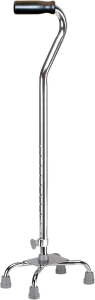
Best for Balance Drive Medical Small-Base Quad Cane — ~$25 · four feet, stands alone, real weight-bearing support
Best Everyday HealthSmart Comfort-Grip Offset Cane — ~$18 · light gel offset handle, discreet
Best Heavy-Duty Drive Medical Heavy-Duty Quad Cane — ~$35 · 500 lb capacity, quad base for larger users
Best Overall HurryCane Freedom Edition
~$45 · Check price on Amazon →

The HurryCane solves the biggest reason canes fail: it steadies a person without forcing the slow, deliberate gait a rigid quad demands. Its three-point SteadiGrip base flexes to stay flat as the foot rolls through a step and lets the cane stand on its own instead of clattering to the floor. Across 4,000-plus reviews the pattern is telling — caregivers describe a parent who refused a cane finally accepting this one because it doesn’t read as “medical.” It folds to about 14 inches, adjusts from 30.5 to 37.5 inches, and is rated to 350 pounds. The honest caveat: a few long-term reviewers report the joints loosening with heavy use, so check the pivot periodically.
The good
- Pivoting three-point base steadies without the awkward stop-start gait of a quad
- Folds small and stands on its own — the two features that keep it actually being used
- 350 lb capacity and quiet “WhisperFlex” flex that doesn’t clack on hard floors
The catch
- A few long-term reviewers report joints loosening or wobbling with heavy use
- Heavier and pricier than a plain single-point cane
This is right if… your parent needs meaningful steadiness but still walks at a normal pace and will only use a cane that doesn’t look clinical.
Look elsewhere if… they need to lean their full weight on the cane and let go with the other hand — that calls for a true quad.
Best Budget Fold Vive Folding Cane
~$20 · Check price on Amazon →
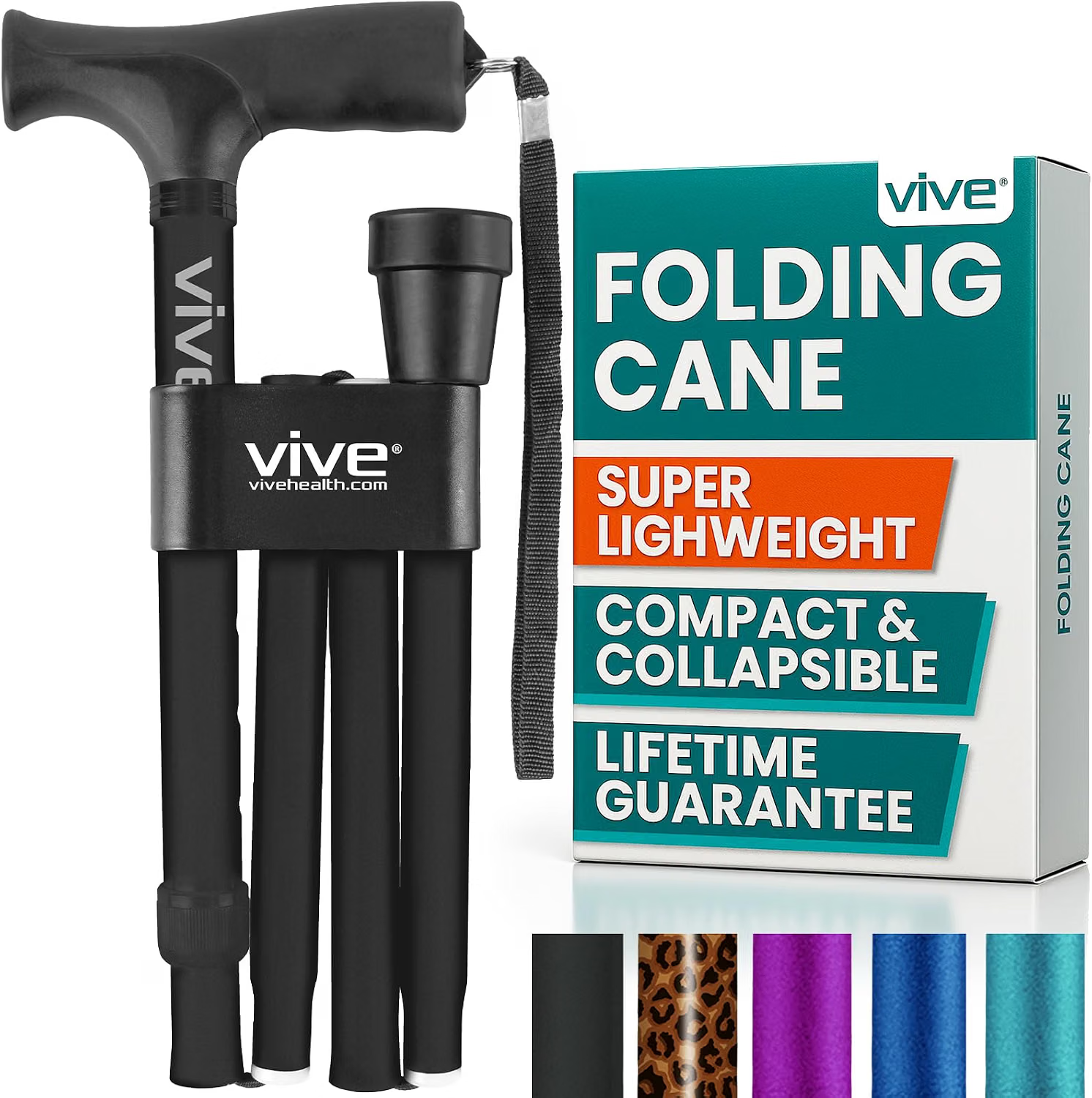
If portability matters more than heavy support, the Vive Folding Cane is the value pick and one of the most reviewed folding canes on Amazon. This single-point cane breaks at four points and collapses small enough for a purse, tote, or glovebox — ideal for a parent who walks fine at home but wants something for the store or an uneven parking lot. The anodized aluminum weighs almost nothing, adjusts from 33 to 37 inches, and supports 250 pounds, with a lifetime guarantee reviewers repeatedly cite as the reason to trust it at the price. The honest trade-off: it’s a single narrow tip, for light steadying, not for someone who lists to one side. A few reviewers note the folding joints can rattle — snugging the internal cord tension fixes most of it.
The good
- Folds into four sections — genuinely bag-sized for travel and errands
- Very light aluminum with a comfortable adjustable height range
- Lifetime guarantee at a sub-$25 price
The catch
- Single narrow tip — light support only, not for real balance loss
- Folding joints can rattle a little until the cord tension is snugged
This is right if… your parent is mostly steady and wants a grab-when-needed cane that disappears into a bag.
Look elsewhere if… they need support every step — a folding single-point cane isn’t stable enough for that.
Best for Balance Drive Medical Small-Base Quad Cane
~$25 · Check price on Amazon →

When balance loss is real — after a stroke, during recovery, or for a parent who can’t trust a single tip — a quad cane is the right tool, and Drive Medical’s small-base model is the sensible default. Four feet on a compact base give a wide, stable footprint, and the offset handle puts the user’s weight directly over it. It adjusts from 30 to 39 inches and holds up to 300 pounds. The “small” base is deliberate: it clears doorways and stair edges more easily than a wide quad while still standing alone. The recurring complaint is worth knowing — a few units arrive with feet that don’t sit level, which defeats the whole point, so set it on a flat floor on day one and return it if it rocks.
The good
- Four-foot base stands on its own and bears real weight
- Offset handle centers weight over the base for better stability
- Small base clears doorways and stairs better than a wide quad
The catch
- Some units arrive with feet that don’t sit level — test on day one
- Vinyl grip can get slick with perspiration (foam-grip version available)
This is right if… your parent has meaningful balance loss and needs a cane that stands alone and takes real weight.
Look elsewhere if… they walk quickly and steadily — a quad’s four feet slow the gait and can feel clunky for the mildly unsteady.
Best Everyday HealthSmart Comfort-Grip Offset Cane
~$18 · Check price on Amazon →
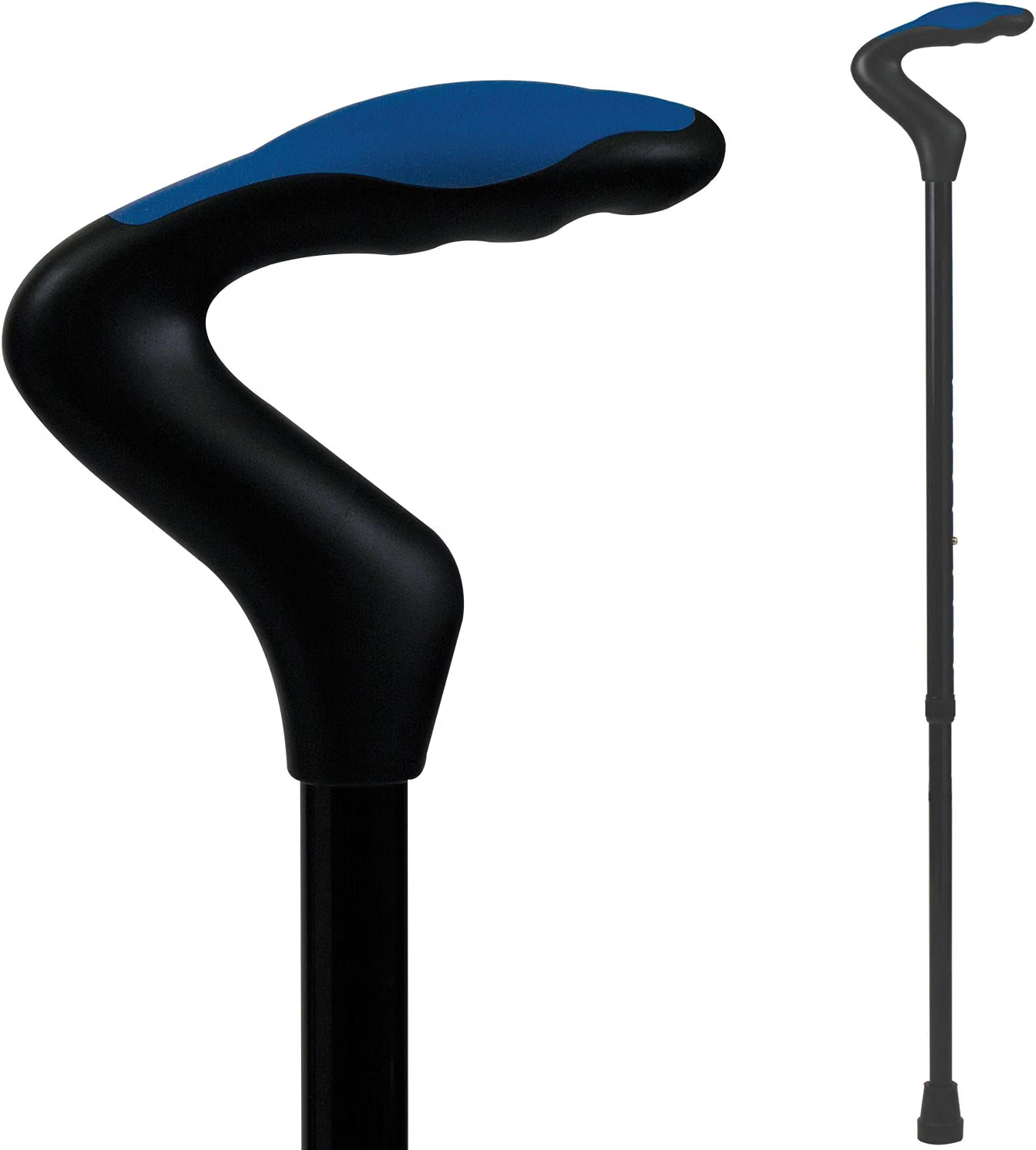
For the parent who needs a touch of steadiness and nothing more the most common situation of all — a simple offset single-point cane is often the honest right answer, and the HealthSmart Comfort-Grip is a well-made, inexpensive version. The offset handle, which occupational therapists tend to prefer over a straight shaft, places body weight directly over the tip, and the gel grip reduces the hand fatigue that makes people abandon canes. It’s lightweight aluminum, adjusts from 31 to 40 inches — enough range for a tall parent, which many budget canes lack — and supports 250 pounds. Verified buyers consistently praise the grip comfort and how discreet it looks. It’s the least supportive of the five, but for mild unsteadiness that’s the point: the best cane is the lightest one that does the job, because a heavy cane is a cane left at home.
The good
- OT-preferred offset handle centers weight over the tip
- Gel-cushioned grip cuts hand and wrist fatigue on longer walks
- Adjusts up to 40 inches genuinely usable for taller parents
The catch
- Single tip — least stable of the five, for mild support only
- Doesn’t stand on its own; will slide down if hooked over a chair
This is right if… your parent just needs light, everyday steadiness and will use the cane most if it’s light and unobtrusive.
Look elsewhere if… they’ve had a fall or lean noticeably to one side — move up to a three-point or quad base.
Best Heavy-Duty Drive Medical Heavy-Duty Quad Cane
~$35 · Check price on Amazon →

Most canes top out around 250 to 300 pounds, which rules out larger users — and a cane rated below the person leaning on it is a real safety problem. Drive Medical’s heavy-duty small-base quad is built for that gap, rated to 500 pounds on a reinforced four-foot base while keeping the same compact footprint and offset handle as the standard model. It stands on its own and gives a heavier or less steady parent a weight-bearing base they can genuinely trust; reviewers who bought it for the capacity report it feels reassuringly solid. The tradeoffs are any quad’s — heavier to lift each step, a slower walk — plus a bit more than a basic quad, the price of the higher rating.
The good
- 500 lb capacity — one of the few canes safe for larger users
- Stands on its own with a wide, weight-bearing four-foot base
- Compact small base still clears doorways despite the higher rating
The catch
- Heavier to lift each step, like every quad
- Costs more than a basic quad cane
This is right if… the person using it is heavier than a standard cane’s rating or needs the most weight-bearing base you can get.
Look elsewhere if… they’re under 250 pounds and steady — the extra weight and slower gait aren’t worth it for them.
How the five compare
| Cane | Base type | Capacity | Best for | ~Price |
|---|---|---|---|---|
| HurryCane Freedom Edition | Folding, pivoting 3-point | 350 lb | Steadiness without a quad gait | ~$45 |
| Vive Folding Cane | Folding single point | 250 lb | Travel & errands, bag-sized | ~$20 |
| Drive Small-Base Quad | Quad, small base | 300 lb | Real balance loss, stands alone | ~$25 |
| HealthSmart Offset Cane | Single point, offset | 250 lb | Light everyday steadiness | ~$18 |
| Drive Heavy-Duty Quad | Quad, small base | 500 lb | Larger users, max support | ~$35 |
The conversation you’ll have
A cane is loaded with meaning in a way a grab bar isn’t for many older adults it’s the first visible admission that something has changed, which is exactly why so many refuse one until after a fall. The instinct is to frame it as safety (“I worry about you falling”), but that lands as a verdict on their independence. It goes better framed around what the cane protects — energy and freedom. Try “This means you don’t have to hold the walls, so you can walk the whole garden with me” instead of “You need this so you don’t fall.” One offers something back; the other takes something away.
It also helps to let them choose: order two options and let a parent pick which handle feels right a cane someone chose is a cane someone uses. And if they’ll only accept the single-point cane when they arguably need a quad, take the win — a cane used imperfectly beats the perfect cane by the door.
Insurance and savings
Here’s the part most roundups skip: a cane is durable medical equipment, so Medicare Part B can cover roughly 80% after your deductible — but only with a doctor’s prescription for medical necessity and a Medicare-enrolled supplier. In practice, the sub-$50 canes here often cost less out of pocket than the paperwork and copay are worth, so most families just buy one outright. The better angle at this price is an FSA or HSA: canes are eligible, so you can buy any of these with pre-tax dollars. (General information, not tax or medical advice; confirm with the plan and a clinician.)
What to actually look for
Match the base to their real balance level
This is the decision that matters most, and the one every “15 best canes” list glosses over. A single-point cane is for mild steadiness; a three-point pivoting base like the HurryCane’s bridges the middle; a quad is for genuine balance loss, when the person needs the cane to stand on its own and bear weight. The honest tradeoff runs one way: the wider the base, the slower the gait, so “more support to be safe” backfires if it saddles a mobile parent with a clunky quad they’ll resent. Our complete aging-in-place home safety checklist shows where a cane fits in the fall-prevention priority order.
Get the height right — this decides whether it helps or hurts
A cane at the wrong height is worse than none, and it’s astonishingly common. Have your parent stand in normal shoes with arms relaxed; the top of the cane should line up with the crease of the wrist, putting a comfortable 15-to-20-degree bend in the elbow. Too tall and they hunch; too short and they lean forward into a fall. Every cane here adjusts, so set it on the person, not the box. If they’re already leaning on furniture across whole rooms, it may be time for more support — our guide to walkers for tall seniors covers the step up when a cane isn’t enough.
Handle, tip, and weight the details that get it used
An offset or ergonomic handle distributes weight and eases arthritic hands far more than a straight handle, and a gel or foam grip prevents the fatigue that makes people quit a cane. Check the rubber tip on arrival and replace it the moment the tread wears smooth. And weigh the cane in your hand: the lightest cane that gives enough support is almost always the right one, because the heavy cane is the one that stays home. If falls are the worry driving this purchase, pair the cane with a backup — our roundup of fall-detection devices with no monthly fee covers the safety net for when a cane isn’t in hand.
Frequently asked questions
What is the best type of cane for balance?
For genuine balance loss, a quad cane is safest because its four-foot base stands on its own and bears weight without tipping. For milder unsteadiness, a pivoting three-point base like the HurryCane’s gives strong stability while still allowing a natural walking stride, which a rigid quad does not.
Are quad canes better than regular canes for seniors?
Not universally. Quad canes provide far more stability and stand on their own, but the four feet slow the gait and can feel clunky for someone who’s only mildly unsteady. A quad is better for real balance loss or post-stroke recovery; a single-point cane is better for light, everyday support and faster walking.
How tall should a cane be for an elderly person?
Have them stand in normal shoes with arms relaxed at their sides. The top of the cane should reach the crease of the wrist, creating a comfortable 15-to-20-degree bend in the elbow. Too tall causes hunching; too short pushes them forward. Every cane here adjusts, so fit it to the person.
Which side should a cane be held on?
Hold the cane on the stronger side — opposite the weak or injured leg. It moves forward together with the weak leg, sharing the load. Holding it on the weak side is a common mistake that reduces its benefit and can throw off balance.
Do canes actually prevent falls?
A correctly fitted cane, used on the right side, meaningfully reduces fall risk by adding a stable third point of contact. The key words are fitted and used — a cane at the wrong height, on the wrong side, or left by the door protects no one.
The shortlist

Last verified in stock: September 15, 2026
What we’d do tomorrow
If you’re sorting this out this week, do three things. First, watch how your parent moves for a day — walking fine but tiring, or grabbing furniture and listing to one side? That picks the base: single- or three-point for the former, a quad for the latter. Second, order the match — the HurryCane Freedom Edition for most, the Drive small-base quad if balance loss is real. Third, the day it arrives, fit it to the wrist crease and confirm they hold it on the strong side. That’s the whole job — an afternoon, not a project.
— Sarah
Leave a Reply