Tag: Post-Hospital Discharge

Equipment and modifications most useful when a senior is coming home from a hospital stay.

  • 5 Best Gait Belts & Transfer Belts for Seniors

    5 Best Gait Belts & Transfer Belts for Seniors

    Disclosure: BuyingForMom is reader-supported. As an Amazon Associate we earn from qualifying purchases. When you buy through links in this article, we may earn an affiliate commission at no additional cost to you. We never recommend products we haven’t researched against verified-buyer review data. This article is editorial reporting, not medical advice.

    5 Best Gait Belts & Transfer Belts for Seniors

    By Sarah Mitchell · Editor, BuyingForMom · Updated August 2026

    8-minute read · Balance & Mobility · 5 caregiver-tested picks compared

    The honest take: For most families helping a parent stand, steady, and walk at home, buy the Vive Transfer Belt with Handles and stop there the padded handles are what keep a solo caregiver from grabbing a fistful of shirt and losing control. Reach for the COW&COW padded belt only if your parent has fragile ribs or osteoporosis, where a 2-inch strap digs in. Skip the handle-free metal-buckle belts unless a therapist has actually trained you on gait-belt transfers. A belt is a guide-and-steady tool, never a sling for hoisting dead weight.

    How we sorted through 40+ gait belts in two weeks

    We cross-referenced more than 8,000 verified Amazon reviews across 40-plus gait and transfer belts, then narrowed by the criteria physical and occupational therapists actually name: buckle security, handle placement, webbing width, and weight rating. We weighed caregiver-forum patterns from r/AgingParents and r/CaregiverSupport against manufacturer-stated specs, and we cross-checked each pick’s buckle style against the way real home caregivers describe using it solo, one-handed, over clothing. Every belt below was confirmed as a live, in-stock Amazon listing in August 2026.

    Who this guide is for

    This guide is for adult children and family caregivers who help a parent rise from a chair, steady themselves at the sink, or walk a few steps to the bathroom — and who want a safer handhold than a grabbed sleeve or forearm. If your parent can no longer bear any weight on their legs, a gait belt is the wrong tool; you need a mechanical or sit-to-stand lift instead, and we say so plainly below.

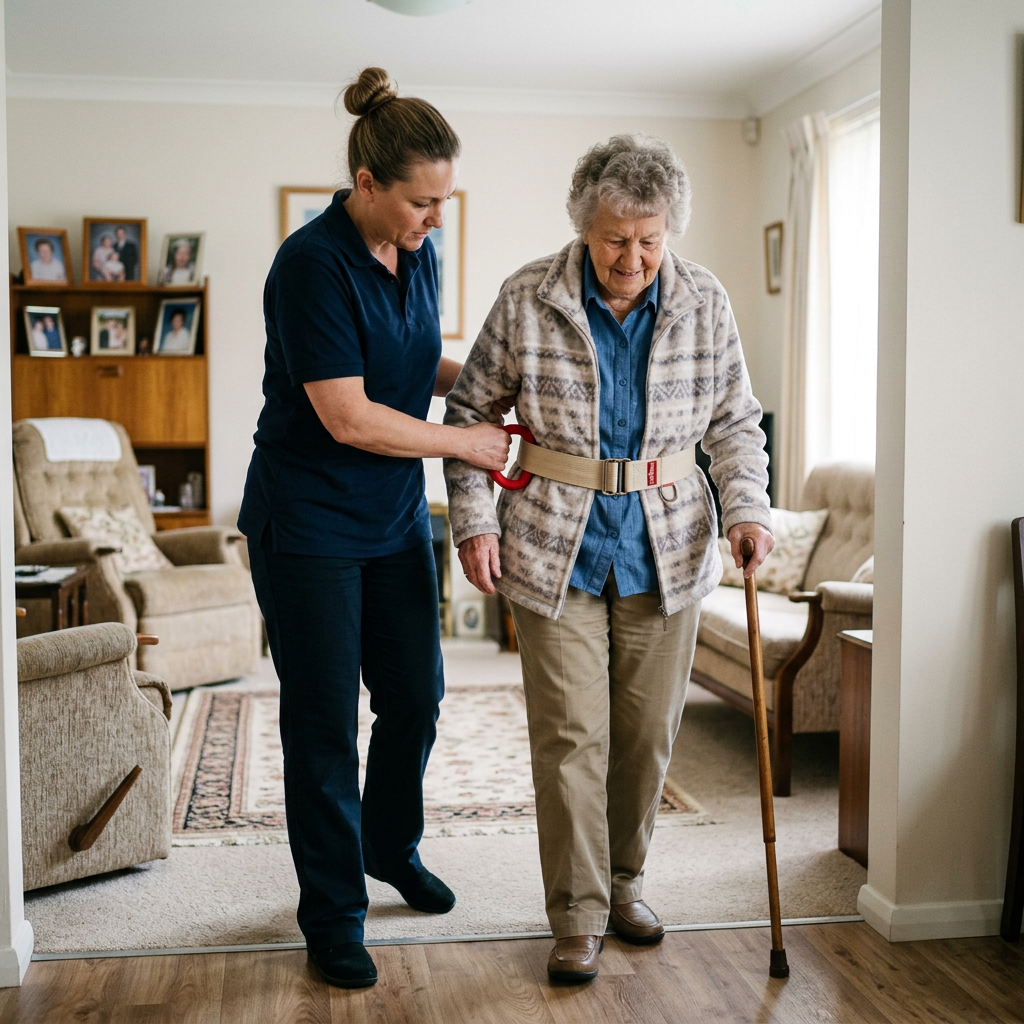
    A gait belt (also sold as a “transfer belt”) is a simple strap that buckles snugly around a person’s waist over their clothing, giving the caregiver a sturdy handhold at the body’s center of gravity. Done right, it protects two people at once: your parent from a fall, and your own back from the twisting reach that sends so many caregivers to the doctor. The catch is that the belts are not interchangeable the buckle and the width should match your specific situation, and that’s where most roundups go quiet.

    At a glance

    BEST OVERALL  Vive Transfer Belt with Handles (~$25) — 4-inch padded webbing, quick-release metal buckle, 350 lb. Best all-round pick for home caregivers.

    MOST GRIP POINTS  NYOrtho 6-Handle Gait Belt (~$20) — six handles, easy-fasten buckle. Best when you transfer from several angles.

    BEST QUICK-RELEASE  Secure 6-Handle Gait Belt (~$22) — one-press side-release clip, 350 lb. Best for solo, one-handed caregivers.

    BEST PADDED  COW&COW Padded Gait Belt (~$20) — wide cushioned band with handles. Best for fragile ribs or osteoporosis.

    BEST BUDGET  NYOrtho Metal-Buckle Gait Belt (~$11) — 2-inch cotton webbing, no handles. Best for trained caregivers on a budget.

    BEST OVERALL  Vive Transfer Belt with Handles

    ~$25  ·  Check price on Amazon →

    The Vive is the belt we point most families to first, and the reason is the extra-wide 4-inch webbing paired with padded grab handles. Across several thousand verified reviews, the recurring praise is that the wide band spreads pressure so it doesn’t dig in during a slow stand, and caregivers consistently note the handles give a confident hold without reaching for clothing. The quick-release metal buckle uses grabbing teeth that lock at any length up to a 51-inch waist and hold a rated 350 pounds, so it suits heavier parents that lighter belts can’t. It’s also listed as FSA/HSA-eligible. The most common complaint is simply that the belt is stiff out of the package and softens after a few uses — worth knowing, not a dealbreaker.

    The good

    • 4-inch padded band spreads pressure, comfortable for slow transfers
    • Padded handles give a secure hold without grabbing clothing
    • 350 lb rating and 51-inch fit handle heavier parents

    The catch

    • Webbing is stiff at first and needs a few uses to soften
    • The wide band can feel bulky under a fitted waistband

    This is right if… you want one dependable belt for daily stand-and-steady help at home.

    Look elsewhere if… your parent has fragile ribs, a padded belt sits gentler (see the COW&COW below).

    Check Price on Amazon →

    MOST GRIP POINTS  NYOrtho Gait Belt with 6 Heavy Handles

    ~$20  ·  Check price on Amazon →

    NYOrtho is a name that turns up repeatedly in occupational-therapy supply lists, and this belt earns it with four vertical and two horizontal handles spaced around the band. That layout lets you pick the best leverage point depending on whether you’re behind, beside, or in front of your parent — the pattern caregivers describe most is grabbing a vertical handle at the hip for a sit-to-stand, then switching to a horizontal one for walking. The easy-fasten buckle threads and cinches without a metal lock to fight, which reviewers with arthritic hands appreciate. The honest limit: it’s rated to 275 pounds, lower than the 350-pound belts here, so confirm the fit for a heavier parent before ordering.

    The good

    • Six handles let you choose leverage from any angle
    • Easy-fasten buckle is gentle on arthritic hands
    • Adjusts 28 to 55 inches; therapist-favored brand

    The catch

    • 275 lb rating, lower than the Vive and Secure
    • Non-padded band; less cushioned than the COW&COW

    This is right if… you transfer from different positions and want handle options.

    Look elsewhere if… your parent is over ~250 lb step up to a 350 lb belt.

    Check Price on Amazon →

    BEST QUICK-RELEASE  Secure Gait Belt with 6 Handles & Quick-Release Clip

    ~$22  ·  Check price on Amazon →

    If you’re the only person doing transfers, the buckle is the whole decision — and the Secure’s one-press side-release clip is the one solo caregivers reach for. It snaps shut and pops open with a single hand, so you’re not wrestling a metal buckle while steadying a parent with the other arm. Verified buyers repeatedly call it fast and foolproof, and the six-handle band gives the same four-vertical, two-horizontal grip options as the NYOrtho, at a rated 350 pounds. The trade-off is inherent to plastic clips: they’re less bomb-proof than a metal buckle under sudden load, so this belt is best for guided standing and walking, not for catching a hard fall. Some reviewers also wish the clip clicked more audibly to confirm it’s locked — always tug-test it before you rely on it.

    The good

    • One-handed press-and-release — ideal for solo caregivers
    • Six handles and a 350 lb rating
    • Simple to teach a spouse or rotating helper

    The catch

    • Plastic clip is less rugged than a metal buckle under shock load
    • Confirm the clip is fully seated — tug-test every time

    This is right if… you transfer alone and need a buckle you can work one-handed.

    Look elsewhere if… you want the maximum-security lock of a metal buckle.

    Check Price on Amazon →

    BEST PADDED  COW&COW Padded Gait Belt with Handles

    ~$20  ·  Check price on Amazon →

    For a parent with osteoporosis, a recent rib injury, or simply very little padding of their own, a standard 2-inch strap can bite. The COW&COW solves that with a wide, cushioned band and a soft inner layer that disperses pressure across the waist rather than concentrating it on a thin line. Its handful of verified reviews skew strongly positive — buyers describe it as noticeably gentler than a plain webbing belt while still giving handles and a quick-release buckle for control. It’s the belt we’d choose when comfort is the deciding factor and the transfer is a supported stand rather than a heavy lift. The catch is that the extra cushioning adds bulk, and the review count is smaller than the big brands’, so there’s less long-term durability data.

    The good

    • Wide cushioned band is gentle on fragile ribs and thin skin
    • Keeps handles and a quick-release buckle
    • Soft inner layer disperses pressure evenly

    The catch

    • Padding adds bulk under clothing
    • Fewer reviews, so less long-term durability data

    This is right if… comfort matters most osteoporosis, fragile ribs, or thin skin.

    Look elsewhere if… you want the largest verified-review track record (choose the Vive).

    Check Price on Amazon →

    BEST BUDGET  NYOrtho Metal-Buckle Gait Belt

    ~$11  ·  Check price on Amazon →

    This is the belt you see in hospitals and rehab gyms: 2-inch cotton webbing, a nickel-plated metal buckle, no handles, and a price around eleven dollars. Threaded and cinched correctly, the metal buckle is the most secure lock of any style here, which is exactly why therapists trust it — the flip side is that it takes both hands and a bit of practice to fasten and adjust. Reviewers who’ve been shown the technique love the simplicity and the machine-washable cotton; those who buy it cold often wish it had handles. That’s the honest divide: this belt rewards training. If a physical therapist has shown you the two-handed grip, it’s all you need. If not, spend the extra few dollars on a handled belt above.

    The good

    • Metal buckle is the most secure lock here
    • Machine-washable cotton; clinic-standard simplicity
    • Lowest price of any pick  around $11

    The catch

    • No handles, you hold the belt itself, which needs technique
    • Two-handed buckle takes practice to fasten quickly

    This is right if… a therapist has trained you and you want the clinic standard.

    Look elsewhere if… you’re new to transfers, handles make a solo caregiver far safer.

    Check Price on Amazon →

    Quick comparison

    Belt Buckle Width / handles Rating Best for
    Vive (~$25) Quick-release metal 4″ padded, handles 350 lb Everyday home use
    NYOrtho 6-Handle (~$20) Easy-fasten 6 handles 275 lb Multi-angle transfers
    Secure (~$22) Side-release clip 6 handles 350 lb Solo caregivers
    COW&COW (~$20) Quick-release Wide padded, handles — Fragile ribs
    NYOrtho Metal (~$11) Metal buckle 2″, no handles — Trained caregivers

    The conversation you’ll have

    A gait belt can feel loaded with meaning to a parent, it can read as “you think I’m going to fall,” which is exactly the thing they’re trying not to admit. The resistance is rarely about the strap; it’s about what agreeing to wear it says. So don’t frame it as a safety device for them. Frame it as one for you.

    Try saying: “My back’s been bothering me when I help you up the therapist said if you wear this belt, I can help without hurting myself.” That reframes the belt as protecting your body, not signaling their decline, and most parents will accept a tool that keeps you from getting hurt long before they’ll accept one that labels them a fall risk. It also happens to be true. If a home-health physical therapist is involved, ask them to demonstrate the belt on a good day — parents almost always trust the strap more coming from a clinician than from an adult child.

    Insurance and savings

    Original Medicare (Part B) generally does not cover gait belts, at roughly $11 to $25 they fall below the durable-medical-equipment threshold and are treated as low-cost convenience items rather than DME. There are still real ways to save. Gait belts are widely FSA- and HSA-eligible (the Vive is explicitly listed as such), so you can buy one with pre-tax dollars. If you itemize deductions and total medical costs clear the 7.5%-of-AGI floor, a belt can count toward the IRS Publication 502 medical-expense deduction. Many Medicare Advantage plans also carry an over-the-counter or home-safety allowance that a gait belt can fit under — worth a two-minute call to the plan. And if your parent has home-health services, the visiting physical therapist often supplies a belt and, just as valuable, trains you to use it correctly.

    What to actually look for

    Match the buckle to who’s doing the transfer

    This is the decision that matters most and the one nobody explains. A metal buckle is the most secure lock but needs two hands and training. It’s built for clinical caregivers and trained family members. A quick-release side clip opens one-handed, which is what a solo home caregiver actually needs when the other arm is busy steadying a parent. Pick the buckle for your real situation, not the belt’s star rating. Our complete aging-in-place safety checklist walks through where transfer aids fit in the bigger home-safety picture.

    Match the width to your parent’s frailty

    A 2-inch belt is standard and fine for most people. But for a parent with osteoporosis, fragile ribs, or very thin skin, a 4-inch padded band spreads the load and prevents the digging-in that makes a belt hurt — and a belt that hurts gets left in a drawer. Handles matter too: they let you hold the belt, not clothing, which is the difference between control and a fistful of shirt. If falls are already a worry, pair the belt with a no-monthly-fee fall detection device for the moments you’re not in the room.

    Know what a gait belt is not

    A gait belt is a guide-and-steady tool: you use it to help a parent who can bear some weight rise, balance, and walk. It is not a sling for hoisting someone who can’t support themselves. Trying to dead-lift a full-weight transfer with a belt injures both of you. If your parent can’t reliably stand, you’ve outgrown the belt and need a sit-to-stand aid or mechanical lift. A stand-assist floor-to-ceiling pole can bridge the gap for a parent who needs something firm to pull up on between transfers.

    Frequently asked questions

    What’s the difference between a gait belt and a transfer belt?

    Technically a gait belt assists walking and a transfer belt helps move someone between surfaces, like bed to wheelchair. In practice, nearly every modern belt does both, and the two terms are used interchangeably. Choose based on buckle, width, and handles rather than the label on the package.

    Where should a gait belt be placed on the body?

    Around the waist, over clothing, never against bare skin. It should sit at the natural waistline the body’s center of gravity .Not up over the ribs or down on the hips. Keep the buckle centered in front and the tag facing out so you can find the release quickly.

    How tight should a gait belt be?

    Snug enough that you can slide two fingers flat between the belt and your parent’s body, and no looser. A loose belt slides up under the arms during a stand and loses all control; too tight restricts breathing. Two fingers is the standard therapists teach.

    Can one person use a gait belt to transfer someone alone?

    Yes, for a parent who can bear weight and follow simple cues. That’s exactly what a solo caregiver belt with handles and a one-handed quick-release buckle is for. If your parent can’t reliably support their own weight, a single person should not attempt the transfer; use a mechanical or sit-to-stand lift instead.

    Does Medicare cover gait belts?

    Original Medicare generally does not, since gait belts fall below the durable-medical-equipment cost threshold. They are, however, usually FSA- and HSA-eligible, and some Medicare Advantage plans reimburse them under an over-the-counter or home-safety allowance. Ask your plan directly before buying.

    When should you not use a gait belt?

    Avoid it after recent abdominal or back surgery, with certain hernias, feeding tubes, or fragile skin conditions, and for anyone who can’t bear weight at all. When in doubt, ask a physical or occupational therapist whether a belt is appropriate for your parent’s specific condition before you rely on it.

    The shortlist

    Best Overall

    Vive Transfer Belt with Handles

    ~$25

    Check on Amazon →

    Most Grip Points

    NYOrtho 6-Handle Gait Belt

    ~$20

    Check on Amazon →

    Best Quick-Release

    Secure 6-Handle Gait Belt

    ~$22

    Check on Amazon →

    Best Padded

    COW&COW Padded Gait Belt

    ~$20

    Check on Amazon →

    Best Budget

    NYOrtho Metal-Buckle Gait Belt

    ~$11

    Check on Amazon →

    Last verified in stock: August 9, 2026

    What we’d do tomorrow

    If you’re starting this weekend, do three things in order. First, buy the Vive Transfer Belt with Handles — it’s the safest default for a home caregiver, and if your parent’s ribs are fragile, add the COW&COW padded belt instead. Second, before you use it for real, practice fastening it to the two-finger snugness and doing one slow sit-to-stand while your parent is fresh and steady. Third, if there’s any home-health visit on the calendar, ask the physical therapist to watch you use it once — five minutes of coaching prevents the most common mistakes. A ten-dollar strap and a little practice is one of the highest-value safety upgrades in the whole house.

    — Sarah

    BuyingForMom is a reader-supported site. As an Amazon Associate we earn from qualifying purchases. When you buy through links on this site, we may earn an affiliate commission at no additional cost to you. See our Affiliate Disclosure for details. This article is not medical advice — please consult a qualified healthcare professional for decisions specific to your loved one.
  • 5 Best Pill Splitters & Crushers for Seniors

    5 Best Pill Splitters & Crushers for Seniors

    Disclosure: BuyingForMom is reader-supported. As an Amazon Associate we earn from qualifying purchases. When you buy through links in this article, we may earn an affiliate commission at no additional cost to you. We never recommend products we haven’t researched against verified-buyer review data. This article is editorial reporting, not medical advice.

    5 Best Pill Splitters & Crushers for Seniors

    By Sarah Mitchell · Editor, BuyingForMom · Updated August 2026

    8-minute read · Pill Dispensers & Medication Management · 5 picks compared

    The honest take: For most households the Ezy Dose Original splitter is all you need  it’s a few dollars, cuts a clean half, and the V-groove holds the pill so arthritic fingers don’t have to. Reach for the Equadose only if your parent is splitting tiny, unscored, or high-value tablets where a ragged cut wastes money. And before you buy anything, settle the one question that actually matters: ask the pharmacist which of your parent’s pills can be split or crushed at all because roughly a third of common tablets should never be touched.

    How we sorted through 40+ pill splitters and crushers in three weeks

    We cross-referenced more than 8,000 verified Amazon reviews across the four brands that dominate this category Ezy Dose, Apex, Equadose, and Providence alongside pill-splitting safety guidance from Drugs.com, AARP medication-management resources, and pharmacist commentary on how tablet coatings behave under a blade. We paid special attention to the recurring failure patterns caregivers report: cracked plastic hinges, blades that dull after a few months, and cutters that crush small pills instead of halving them. The five below are the ones that survived that filter, each mapped to a specific limitation an older adult is likely to have rather than ranked by star count alone.

    Who this guide is for

    This guide is for adult children and caregivers helping a parent who either can’t swallow whole pills comfortably or has been told to take a half-dose. If your parent has arthritis, tremor, or low vision, the “which tool” section below matters more than the price the wrong device turns a 10-second task into a daily frustration and, worse, into inconsistent dosing.

    Split or crush? Answer this before you buy

    Splitting and crushing solve two different problems. You split when a doctor prescribes a half-dose or when a large tablet is hard to swallow whole. You crush when a pill needs to go into applesauce, pudding, or a feeding tube because swallowing is genuinely unsafe. What they share is a hard rule: extended-release, enteric-coated, and many capsule medications must never be split or crushed doing so can dump a full day’s dose at once or destroy the coating that protects the stomach. Verified buyers and pharmacists say the same thing again and again: the tool is the easy part; confirming the pill is safe to cut is the part people skip. Get that list from your pharmacist first, then pick the device that fits your parent’s hands and eyes.

    At a glance: the 5 picks

    BEST OVERALL  Ezy Dose Original Pill Cutter & Splitter — ~$7 — the default clean-half cutter for most pills.

    BEST PRECISION  Equadose Pill Cutter V2 — ~$18 — twin blades + centering guide for tiny or unscored tablets.

    BEST FOR WEAK GRIP  Apex Ultra Pill Splitter — ~$8 — flexible V-holder grips any shape, retracting blade guard.

    BEST FOR LOW VISION  Ezy Dose Pill Cutter with Magnifier — ~$8 — built-in magnifier and safety shield.

    BEST FOR SWALLOWING TROUBLE  Ezy Dose Pill Crusher & Grinder — ~$7 — crushes to fine powder with a built-in drinking cup.

    Best Overall  Ezy Dose Original Pill Cutter & Splitter

    ~$7 · Check price on Amazon →

    This is the cutter most pharmacies hand out, and across roughly 20,000 reviews it earns its 4.6-star reputation for one reason: it does the boring job reliably. A spring-loaded lid presses a stainless-steel blade straight down through the tablet, while a small V-shaped channel holds the pill centered so an unsteady hand doesn’t have to. Verified buyers consistently note that the blade stays sharp for a year or more of daily use, and the closed lid keeps stray halves from bouncing off the counter — a small thing that matters when picking a pill up off the floor is the hard part. It’s not fancy, and that’s the point: for standard round or oval tablets, spending more buys you very little.

    The good

    • V-groove centers the pill so weak or shaky hands still get a clean cut
    • Stainless blade holds an edge through daily use for a year-plus
    • A few dollars, the lowest-risk first purchase in the category

    The catch

    • Very small or unscored pills can shift and cut unevenly
    • The plastic hinge is the part that eventually wears out, not the blade

    This is right if… your parent takes standard scored tablets and just needs a dependable, low-cost cutter.

    Look elsewhere if… the pills are tiny, unscored, or expensive enough that a ragged cut is a real waste.

    Check Price on Amazon →

    Best Precision  Equadose Pill Cutter V2

    ~$18 · Check price on Amazon →

    Where the budget cutters struggle small, round, unscored tablets that skid out from under a single blade the Equadose is built to win. It uses two stainless blades that meet at a fixed point plus a sliding centering device that grips the pill before the cut, so the two halves come out genuinely even rather than one fat and one thin. Across its reviews the pattern is clear: people who split high-value medications, thyroid tablets, or pet meds buy this one specifically because an uneven cut means an unreliable dose. It costs several times what the Ezy Dose does, and for a scored acetaminophen that’s overkill but for a tiny, pricey, unscored pill it’s the difference between splitting confidently and guessing.

    The good

    • Twin-blade + centering guide produces the most even halves in the category
    • Handles tiny and unscored pills that defeat single-blade cutters
    • Solid all-steel-and-heavy-plastic build; frequently HSA/FSA-eligible

    The catch

    • Two to three times the price of a basic cutter
    • More moving parts to line up — a slightly longer learning curve

    This is right if… your parent splits small, unscored, or expensive tablets where an even cut actually matters.

    Look elsewhere if… every pill they split is already scored and cheap — you’re paying for precision you won’t use.

    Check Price on Amazon →

    Best for Weak Grip  Apex Ultra Pill Splitter

    ~$8 · Check price on Amazon →

    The Apex Ultra is the one occupational therapists tend to point arthritic hands toward. Its flexible V-shaped holder squeezes in to grip pills of nearly any shape, so a knobbly or oblong tablet stays put, and the lid needs less downward force than most cutters to drive the blade through. A retracting blade guard covers the edge automatically when the lid opens — the detail caregivers praise most, because it removes the risk of a fingertip meeting a blade during a fumbled one-handed cut. Reviewers with rheumatoid arthritis repeatedly describe it as the first cutter they could operate without pain. The trade-off is that the softer holder isn’t quite as surgically precise as the Equadose on tiny pills.

    The good

    • Flexible V-holder grips odd shapes; needs less hand force to close
    • Auto-retracting blade guard protects fingers between cuts
    • Widely recommended by OTs for arthritis and limited dexterity

    The catch

    • Less precise than a twin-blade cutter on very small tablets
    • The gripper can hold onto pill dust; needs an occasional rinse

    This is right if… arthritis, tremor, or weak grip makes a standard cutter painful or unsafe to press.

    Look elsewhere if… your parent’s hands are strong and the priority is millimeter-precise halves.

    Check Price on Amazon →

    Best for Low Vision  Ezy Dose Pill Cutter with Magnifier

    ~$8 · Check price on Amazon →

    For a parent whose eyesight makes lining up a small tablet a squinting ordeal, this version of the Ezy Dose adds a built-in magnifier over the cutting area and a hinged safety shield around the blade. The magnification isn’t dramatic, but reviewers with macular degeneration and diabetic retinopathy say it’s enough to see the score line and place the pill correctly the first time instead of the third. It splits the same way the Original does — the same dependable spring-loaded blade — so you’re paying a dollar or two for the lens, not for a different mechanism. Verified buyers do note the magnifier can scratch over time, so it earns its keep as a low-vision aid rather than a lifetime optic.

    The good

    • Integrated magnifier helps low-vision users place and cut accurately
    • Hinged safety shield reduces the chance of a blade slip
    • Same proven Ezy Dose cutting action at a near-identical price

    The catch

    • Magnification is modest — a help, not a substitute for good lighting
    • The plastic lens can scuff with heavy daily use

    This is right if… failing eyesight is the main obstacle to splitting pills accurately.

    Look elsewhere if… vision is fine and grip or precision is the real issue.

    Check Price on Amazon →

    Best for Swallowing Trouble  Ezy Dose Pill Crusher & Grinder

    ~$7 · Check price on Amazon →

    When swallowing a whole pill is genuinely unsafe after a stroke, or in mid-stage dementia — crushing into food is often the only route, and this is the crusher caregivers reach for. You drop the tablet in, twist the top down, and its threaded mechanism grinds to a fine powder with far less hand strength than a mortar and pestle demands. The powder collects in a compartment that doubles as a small drinking cup, so it mixes straight into applesauce, pudding, or a few sips of water. Across its reviews the recurring praise is that it turns a two-handed, high-effort chore into a one-handed twist. The one caution worth repeating: it will happily crush anything, so it’s on you to confirm the medication is safe to crush — extended-release and enteric-coated pills are not.

    The good

    • Twist mechanism grinds to fine powder with minimal hand force
    • Built-in cup lets you mix and serve in the same device
    • Storage compartment keeps a pre-crushed dose portable and covered

    The catch

    • No built-in safeguard against crushing pills that shouldn’t be crushed
    • Very hard or oversized tablets can take extra twists

    This is right if… your parent can’t swallow pills whole and a pharmacist has confirmed the medication is safe to crush.

    Look elsewhere if… the goal is a precise half-dose — that’s a splitter’s job, not a crusher’s.

    Check Price on Amazon →

    Quick comparison

    Product ~Price Type Best for
    Ezy Dose Original $7 Splitter Everyday scored tablets
    Equadose V2 $18 Splitter Tiny / unscored / pricey pills
    Apex Ultra $8 Splitter Arthritis / weak grip
    Ezy Dose Magnifier $8 Splitter Low vision
    Ezy Dose Crusher $7 Crusher Swallowing trouble

    The conversation you’ll have

    Medication is a touchy subject,  a parent can hear “let me split your pills” as “I don’t think you can manage your own care.” The way in is to frame it as convenience and cost, not decline. Instead of “You’re not cutting these right,” try “The pharmacy prices the double-strength tablet almost the same as the half, so if we split them you basically get two months for one — want me to set up the little cutter so it’s quick?” If swallowing is the issue, skip the word “crush” entirely and say “This grinds it so fine you can stir it into your morning yogurt and not taste it.” Keep the tool on the counter next to the coffee, not tucked in a medical drawer when it looks like an ordinary kitchen gadget, it stops feeling like a loss of independence.

    Insurance and savings

    Original Medicare won’t cover a pill splitter or crusher at a few dollars, these aren’t durable medical equipment. But two money angles are real. First, most of these tools are FSA- and HSA-eligible (the Equadose is explicitly listed as such), so you can buy them with pre-tax dollars. Second, and bigger: pill-splitting itself is one of the most reliable ways to cut a drug bill. Because many prescriptions cost nearly the same at double strength, splitting a 40 mg tablet into two 20 mg doses can roughly halve the monthly cost of that medication — ask the prescriber to write it that way and confirm the tablet is safe to split. If out-of-pocket medical spending is high, IRS Publication 502 also lets you count qualifying costs above 7.5% of income as an itemized deduction. For where medication management fits among your other priorities, see our complete aging-in-place home safety checklist.

    What to actually look for

    Match the tool to the failing ability

    Don’t buy on star rating, buy on the specific limitation. Weak or arthritic hands want a gripping V-holder and a low-force lid; low vision wants a magnifier and high contrast; tiny or unscored pills want a twin-blade centering cutter; true swallowing difficulty wants a crusher, not a splitter. A parent who checks two of those boxes may need two tools, and at these prices that’s still under $20. Our guide to automatic pill dispensers for dementia patients covers the next layer — making sure the split or crushed dose is actually taken on schedule.

    Blade quality and a safety guard

    Stainless steel holds an edge; the cheap coated blades in dollar-store cutters dull fast and start crushing instead of cutting. A retracting or shielded blade is not a luxury for an older adult — a fumbled one-handed cut is exactly when a fingertip finds an exposed edge. Every pick here uses stainless steel, and three of the five guard the blade automatically.

    Easy to clean, easy to see

    Pill residue builds up and can cross-contaminate the next tablet, so look for a design that rinses out or wipes clean in seconds. Light-colored interiors also help a dropped white pill show up instead of vanishing. For the wider setup — where to keep medications, lighting the counter, reducing clutter our room-by-room aging-in-place modification guide maps it out.

    Frequently asked questions

    Is it safe to split pills?
    Only when your doctor or pharmacist confirms that specific tablet can be split. Many can, but extended-release, enteric-coated, and some capsule medications cannot — cutting them can release a full dose at once or destroy a protective coating. Always ask before you split, and split one pill at a time.

    What pills should never be crushed?
    Extended-release, controlled-release, and enteric-coated tablets, plus most capsules, should never be crushed. Crushing them can flood the body with a full day’s dose or expose the stomach to a drug the coating was meant to protect it from. Your pharmacist can give you a “do-not-crush” list for your parent’s exact medications.

    How do you cut a pill evenly?
    Center the tablet in the cutter’s holder along its score line, close the lid in one firm motion rather than sawing, and let the blade do the work. A twin-blade cutter with a centering guide gives the most even halves on small or unscored pills. Split just before the dose halved pills degrade faster.

    Are pill splitters better than using a knife?
    Yes, clearly. A knife or razor tends to splinter or crush tablets, produces uneven doses, and puts a bare blade near your fingers. A dedicated splitter holds the pill, guides a clean cut, and shields the blade safer and more accurate, which matters most for arthritic or unsteady hands.

    Do pill splitters work on small or unscored pills?
    Basic single-blade cutters struggle with tiny or unscored tablets that skid under the blade. A twin-blade model with a sliding centering device, like the Equadose, is built for exactly those pills. Even then, confirm with your pharmacist that an unscored tablet is approved for splitting before relying on halved doses.

    Can you crush pills and mix them with food?
    If the pharmacist confirms the medication is crush-safe, yes — a fine powder stirs well into applesauce, pudding, yogurt, or oatmeal, which also helps with a bitter taste. Use a soft food the person will finish so the full dose is taken, and mix it fresh at each dose rather than in advance.

    The shortlist

    Best Overall

    Ezy Dose Original Splitter

    ~$7

    Check on Amazon →

    Best Precision

    Equadose Cutter V2

    ~$18

    Check on Amazon →

    Best for Weak Grip

    Apex Ultra Splitter

    ~$8

    Check on Amazon →

    Best for Low Vision

    Ezy Dose Magnifier Cutter

    ~$8

    Check on Amazon →

    Best for Swallowing

    Ezy Dose Crusher & Grinder

    ~$7

    Check on Amazon →

    Last verified in stock: August 6, 2026

    What we’d do tomorrow

    If you’re sorting this out this week, do three things in order. First, call the pharmacy and ask which of your parent’s medications are safe to split and which are safe to crush — write it down, because that list decides everything else. Second, match the tool to the hurdle: for ordinary scored tablets, the Ezy Dose Original is the safe default; add the Apex Ultra if arthritis is in the picture, or the Ezy Dose Crusher if swallowing is the real problem. Third, while you’re talking to the prescriber, ask whether a double-strength-and-split prescription could cut the monthly cost. The whole fix runs under $20 and takes one phone call.

    — Sarah

    BuyingForMom is a reader-supported site. As an Amazon Associate we earn from qualifying purchases. When you buy through links on this site, we may earn an affiliate commission at no additional cost to you. See our Affiliate Disclosure for details. This article is not medical advice — please consult a qualified healthcare professional and your pharmacist before splitting or crushing any medication.
  • 5 Best Car Assist Handles for Seniors

    5 Best Car Assist Handles for Seniors

    Disclosure: BuyingForMom is reader-supported. As an Amazon Associate we earn from qualifying purchases. When you buy through links in this article, we may earn an affiliate commission at no additional cost to you. We never recommend products we haven’t researched against verified-buyer review data. This article is editorial reporting, not medical advice.

    5 Best Car Assist Handles for Seniors Getting In and Out

    By Sarah Mitchell · Editor, BuyingForMom · Updated August 2026

    10-minute read · Balance & Mobility · 5 products compared

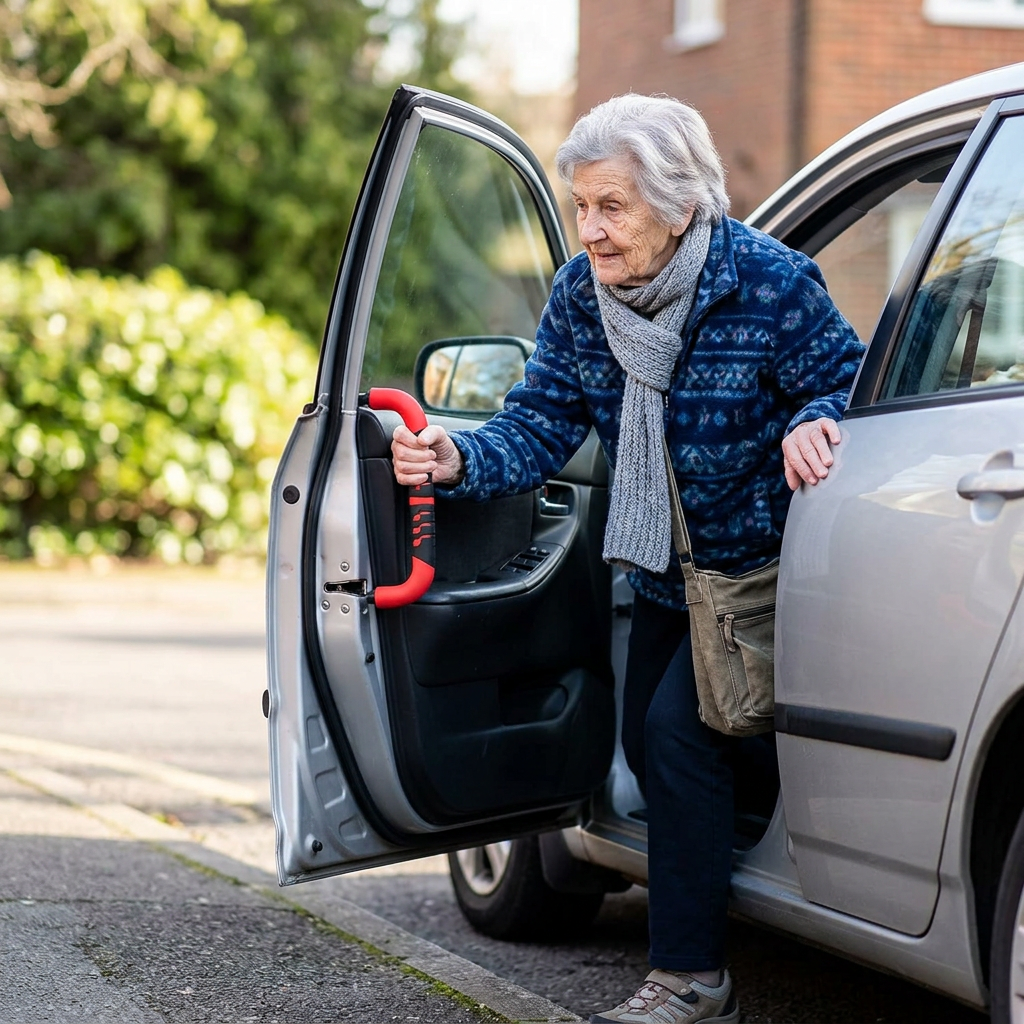
    The honest take: For most parents, the Stander HandyBar is the one to buy it drops into the door latch, gives a rock-solid push-down grip, and doubles as an emergency window breaker. But it only works if the car has a U-shaped latch striker; if it doesn’t, or your parent needs to pull up rather than press down, get the strap-style Stander CarCaddie instead. And if the real struggle is swinging stiff hips and twisting to face forward, no handle fixes that a swivel cushion does.

    How we sorted through 40+ car assist handles in three weeks

    We cross-referenced more than 8,000 verified-buyer reviews across the four dominant brands in this category (Stander, Able Life, Vive, and the flood of near-identical import handles), then filtered by the one thing most roundups ignore: which physical problem is the handle actually solving? A senior who can’t push down through weak wrists needs a different tool than one who can’t lift a stiff leg over the sill. We weighted occupational-therapist guidance from AARP and university aging programs, mined Reddit caregiver threads for the recurring complaints, and threw out anything with a pattern of “wouldn’t fit my car.” Everything below was confirmed as a live, in-stock Amazon listing the week this went up.

    Who this guide is for

    This is for adult children buying for a parent who has started grabbing the door frame, the seat, or your arm every time they get in or out of the car, the people for whom a $25 handle buys back a surprising amount of independence and dignity. If you’re shopping for yourself after a hip or knee surgery, the same picks apply; just pay extra attention to the “pull-up vs push-down” distinction, because it changes which one is right for you.

    At a glance

    Best Overall  Stander HandyBar — ~$28 · push-down door-latch bar with emergency tools

    Best Lightweight  Able Life Auto Cane — ~$25 · fits a glovebox or purse, comes in colors

    Best for Pulling Up  Stander CarCaddie — ~$18 · strap over the window frame, no latch needed

    Best for Stiff Hips  Vive Swivel Car Seat Cushion — ~$35 · 360° rotation kills the twist

    Best for Weak Grip  Able Life Auto Assist Grab Bar — ~$30 · cushioned grip + key storage, FSA-eligible

    Best Overall Stander HandyBar

    ~$28 · Check price on Amazon →

    The HandyBar is the handle most occupational therapists point to first, and the reviews explain why: across thousands of verified buyers, the recurring word is “sturdy.” You slip its forked base into the U-shaped striker on the door frame, and a solid steel post gives your parent something to press straight down on while they pivot and stand  the exact motion that fails when knees and quads are weak. It’s rated to about 350 pounds, and the bright non-slip grip is easy to spot for eyes that don’t see contrast well. As a bonus, the head hides a seatbelt cutter and a spring-loaded window breaker, so it earns its place in the door pocket even on the days no one needs a boost. The honest caveat, echoed by a minority of reviewers, is fit: on a few vehicles the base sits a touch loose in the striker.

    The good

    • Steel post feels genuinely solid, the most-praised trait in reviews
    • Built-in window breaker and seatbelt cutter add real emergency value
    • High-contrast grip is easy to locate for low-vision users

    The catch

    • Only works with a U-shaped door-latch striker (see the buying guide below)
    • A handful of buyers report a slightly loose fit on certain models

    This is right if… your parent needs firm push-down leverage and the car has a standard U-shaped latch.

    Look elsewhere if… the car has a bolt-style striker, or your parent can’t press down and needs to pull up instead.

    Check Price on Amazon →

    Best Lightweight Able Life Auto Cane

    ~$25 · Check price on Amazon →

    If the HandyBar is the workhorse, the Auto Cane is the one your parent will actually keep in the car, because it weighs about a third of a pound and disappears into a glovebox or handbag. It works on the same principle drop it into the U-shaped striker and press down but the compact profile and the choice of colors (blue, lavender, red) make it feel less like a medical device, which matters more than caregivers expect. Verified buyers consistently note that it “travels well” and works across their own car, a spouse’s car, and the grandkids’ SUV. It’s rated to about 300 pounds. The trade-off for that featherweight design is a shorter, slimmer grip; a large hand or a very heavy user will prefer the beefier HandyBar or the cushioned Able Life grab bar further down this list.

    The good

    • Barely a third of a pound — genuinely purse- and glovebox-portable
    • Color options make it feel less clinical than a bare steel bar
    • Moves easily between multiple vehicles

    The catch

    • Same U-shaped-striker requirement as every latch handle
    • Slimmer, shorter grip than the HandyBar — less ideal for large hands

    This is right if… the handle needs to travel between cars or vanish into a bag when not in use.

    Look elsewhere if… your parent has large hands or wants the most substantial grip they can get.

    Check Price on Amazon →

    Best for Pulling Up Stander CarCaddie

    ~$18 · Check price on Amazon →

    The CarCaddie solves the two problems every latch handle can’t. First, some cars simply don’t have a U-shaped striker and on those vehicles a latch bar is useless. Second, some seniors can’t press down at all (painful wrists, a recent shoulder repair) but can still pull themselves up against a strap. The CarCaddie loops a padded nylon strap over the top of the window frame; you roll the window up to pin it, adjust the length between roughly 7 and 16 inches, and your parent hauls up on the grip like a subway strap. Buyers who “couldn’t get the HandyBar to fit” repeatedly land here as the fix. The honest limits: it’s rated to a lower ~250 pounds, it needs a framed window (frameless coupe windows won’t hold it), and it flexes a bit it’s leverage, not a fixed steel post.

    The good

    • Works on cars with no U-shaped latch striker
    • Pull-up motion suits weak wrists or a healing shoulder
    • Cheapest pick here and folds flat into a door pocket

    The catch

    • Lower ~250 lb capacity than the steel latch bars
    • Needs a framed window and has natural strap flex

    This is right if… the car has no usable latch, or your parent needs to pull up rather than push down.

    Look elsewhere if… you want a rigid, no-flex handle or the user is over ~250 pounds.

    Check Price on Amazon →

    Best for Stiff Hips Vive Swivel Car Seat Cushion

    ~$35 · Check price on Amazon →

    Sometimes the problem isn’t standing up it’s the twist. Getting out of a car means swiveling stiff hips 90 degrees to face the door before you can put a foot down, and for a parent with arthritis or a replaced hip, that rotation is the painful part a handle does nothing for. Vive’s swivel cushion sits on the seat and spins a full 360 degrees on a low-noise bearing, so your parent sits, then rotates to face out with almost no hip strain. The memory-foam top wins praise for long-drive comfort. Two honest cautions from reviewers: it raises seat height by a few inches (a problem in an already-tall SUV or for a short driver near the wheel), and it’s meant for a flat seat — deep bucket seats keep it from spinning freely. Use it as a passenger aid, not under a driver working the pedals.

    The good

    • Kills the hip-twisting motion no handle can help with
    • Memory-foam top is comfortable for long rides
    • Works in the car, then moves to a dining or office chair

    The catch

    • Raises seat height a few inches awkward in tall vehicles
    • Needs a flat seat; won’t rotate freely on deep bucket seats

    This is right if… the hard part is twisting stiff hips to face the door, not standing up.

    Look elsewhere if… the car already sits high or the seats are deep buckets.

    Check Price on Amazon →

    Best for Weak Grip Able Life Auto Assist Grab Bar

    ~$30 · Check price on Amazon →

    This is the latch handle to choose when the hands themselves are the weak link. Where the HandyBar and Auto Cane give you a slim bar, Able Life’s Auto Assist Grab Bar wraps a wider, softer ergonomic grip that arthritic fingers can close around without the pressure points a thin post creates. It fits the same U-shaped striker, is rated to about 300 pounds, and tucks a small key compartment into the handle a genuinely thoughtful touch for a parent who’s forever hunting for keys mid-transfer. It’s also marketed as HSA/FSA-eligible, which the thin bars usually aren’t. Reviewers who bought it specifically for a spouse with rheumatoid arthritis call the cushioned grip the difference-maker. The trade-off is bulk: it’s chunkier in the door pocket than the featherweight Auto Cane.

    The good

    • Wide cushioned grip is far kinder to arthritic hands
    • Built-in key compartment is a small but real convenience
    • Marketed as HSA/FSA-eligible

    The catch

    • Same U-shaped-striker requirement as the other latch bars
    • Bulkier to store than the ultralight Auto Cane

    This is right if… arthritis or a weak grip makes a thin steel bar uncomfortable to hold.

    Look elsewhere if… you want the smallest, lightest handle for a purse.

    Check Price on Amazon →

    Quick comparison

    Handle Type Capacity Best for Price
    Stander HandyBar Push-down latch ~350 lb Most people; emergency tools ~$28
    Able Life Auto Cane Push-down latch ~300 lb Travel & portability ~$25
    Stander CarCaddie Pull-up strap ~250 lb No-latch cars; weak wrists ~$18
    Vive Swivel Cushion Rotating seat ~300 lb Stiff hips; twisting ~$35
    Able Life Auto Assist Grab Bar Push-down latch ~300 lb Arthritic / weak grip ~$30

    The conversation you’ll have

    Here’s the part no product page warns you about: a lot of parents don’t want a “handicap handle” clipped to their car. It reads as a public admission that they’re getting old, and for a proud person that’s a bigger barrier than the stiff knee itself. Pushing the safety angle (“you’re going to fall”) usually backfires, it makes the object a symbol of decline.

    Try leading with convenience instead of frailty. Rather than “I got you this so you don’t fall,” say “This clips into the door so you’ve got something solid to hold — I keep grabbing the door frame and it’s filthy, this is better.” Framing it as a shared annoyance, or as the smart thing everyone should have, lets your parent accept it without conceding anything. It also helps to leave it in the car and say nothing for a week; most people quietly start using a handle once it’s simply there, long before they’ll admit they need one. The colored Auto Cane and the strap-style CarCaddie both read less “medical” than a bare steel bar, which is worth the trade if resistance is the real obstacle.

    Insurance and savings

    Set expectations honestly: Original Medicare almost never pays for a car assist handle. Durable medical equipment has to be “primarily medical” and used in the home, and a $25 handle that helps you in and out of a car fails both tests, so Part B treats it as a convenience item. The realistic levers are elsewhere. Most of these handles the Able Life Auto Assist Grab Bar explicitly, and many others — are sold as HSA/FSA-eligible, so tax-advantaged dollars can cover them, sometimes with a simple letter of medical necessity from a doctor. If your parent itemizes, the IRS (Publication 502) allows medical-expense deductions above 7.5% of adjusted gross income, and mobility aids can count toward that total. And some Medicare Advantage plans now carry supplemental over-the-counter or home-safety allowances that a $20–$35 handle fits neatly inside — worth a five-minute call to the plan to check.

    What to actually look for

    1. Check the door latch before you buy anything

    This is the return-rate killer. A latch-style handle only works if the car’s door frame has a U-shaped striker the metal loop the door clicks shut against with a visible gap you can slide the forked base into. Many newer cars use a covered or bolt-style striker with no gap, and on those, the HandyBar, Auto Cane, and Auto Assist Grab Bar simply won’t seat. Open the front passenger door and look at the frame before ordering. If there’s no U-loop, go straight to the strap-style CarCaddie or the swivel cushion. This one check saves the most grief and belongs at the top of any complete aging-in-place home safety checklist.

    2. Match the motion to the weakness

    Watch which part of the transfer actually fails. If it’s standing up, a push-down latch bar gives the leverage. If it’s wrists or shoulders that can’t press down, a pull-up strap works with their body instead of against it. If it’s twisting stiff hips to face the door, no handle helps, you want the swivel cushion. Buying the wrong category is the most common mistake, and it’s why generic “best handle” lists fail people. Getting in and out of the car is one line item in a bigger picture; our room-by-room aging-in-place modification guide walks through the rest.

    3. Weight rating and grip size

    Buy well above your parent’s body weight a transfer puts more than static weight through the handle when someone catches a stumble on it. The steel latch bars top out around 300–350 pounds; the strap sits lower at ~250. And don’t overlook grip diameter: arthritic hands do far better on a wide cushioned grip than a thin bar. Because a fall during a transfer is exactly the scenario families worry about, pairing a handle with a no-monthly-fee fall detection device gives peace of mind for the moments no one’s there to spot them.

    Frequently asked questions

    Do car assist handles work on all cars?

    No. Latch-style handles need a U-shaped door-latch striker with an open gap, and some newer vehicles use a covered or bolt-style striker where they won’t fit. Check the door frame before buying. If there’s no U-loop, a strap-style handle that loops over the window frame works on virtually any car with a framed window.

    What is the best car handle for an elderly person getting out of the car?

    For most people it’s the Stander HandyBar a steel push-down bar that seats in the door latch and doubles as an emergency tool. But “best” depends on the weakness: choose a pull-up strap if wrists can’t press down, or a swivel cushion if the hard part is twisting stiff hips rather than standing.

    Does Medicare cover a car assist handle?

    Original Medicare generally does not. To qualify as durable medical equipment, an item must be primarily medical and used in the home, and a car handle meets neither test. However, most are HSA/FSA-eligible, may count toward itemized medical deductions, and can sometimes be bought through a Medicare Advantage OTC allowance.

    How much weight do car assist handles hold?

    Steel latch-style handles are typically rated to about 300–350 pounds, while strap-style handles hold roughly 250 pounds. Always choose a capacity comfortably above the user’s body weight, because catching a stumble briefly loads the handle with far more than a person’s standing weight.

    Do swivel seat cushions really help getting out of the car?

    Yes, for the right problem. A 360-degree swivel cushion removes the painful hip-twisting motion of turning to face the door, which a handle can’t address. The trade-offs are that it raises seat height a few inches and needs a flat seat deep bucket seats keep it from rotating freely.

    How do you safely help an elderly person in and out of a car?

    Park on flat ground, open the door fully, and have them scoot to the seat edge before standing. For exits, swing both legs out together to face the door first, then rise. Give a stable handle to hold rather than pulling on their arm, and never rush the movement.

    The shortlist

    Best Overall

    Stander HandyBar

    ~$28

    Check on Amazon →

    Best Lightweight

    Able Life Auto Cane

    ~$25

    Check on Amazon →

    Best for Pulling Up

    Stander CarCaddie

    ~$18

    Check on Amazon →

    Best for Stiff Hips

    Vive Swivel Cushion

    ~$35

    Check on Amazon →

    Best for Weak Grip

    Able Life Auto Assist Grab Bar

    ~$30

    Check on Amazon →

    Last verified in stock: August 4, 2026

    What we’d do tomorrow

    If you’re sorting this out this weekend, do three things in order. First, walk out to the car and look at the passenger door frame U-shaped latch or not. If yes, order the Stander HandyBar and you’re done for most situations. If there’s no U-loop, order the CarCaddie strap instead. Second, if the real fight is stiff hips twisting to face the door, add the swivel cushion it solves a different problem than any handle. Third, leave whatever you buy in the car without a lecture, and let your parent discover it on their own terms.

    — Sarah

    BuyingForMom is a reader-supported site. As an Amazon Associate we earn from qualifying purchases. When you buy through links on this site, we may earn an affiliate commission at no additional cost to you. See our Affiliate Disclosure for details. This article is not medical advice — please consult a qualified healthcare professional for decisions specific to your situation.
  • 5 Best Lift-Assist Seat Cushions for Standing Up

    5 Best Lift-Assist Seat Cushions for Standing Up

    Disclosure: BuyingForMom is reader-supported. As an Amazon Associate we earn from qualifying purchases. When you buy through links in this article, we may earn an affiliate commission at no additional cost to you. We never recommend products we haven’t researched against verified-buyer review data. This article is editorial reporting, not medical advice.

    5 Best Lift-Assist Seat Cushions for Standing Up

    By Sarah Mitchell · Editor, BuyingForMom · Updated August 2026

    9-minute read · Living Room / Balance & Mobility · 5 picks compared

    The honest take: For most parents who still have some leg strength but need a boost, buy the self-powered Carex Upeasy Seat Assist Plus and stop there — it lifts up to 70% of their weight with no cords, no charging, and a 340 lb capacity. Go electric with the Carex Uplift Premium Power Seat only if standing has become nearly impossible, because it does 100% of the work at the push of a button. Skip the bare foam wedges as a long-term answer if a real sit-to-stand problem exists they help posture, not lift.

    How we sorted through 30+ lift cushions over three weeks

    We started with more than thirty lift-assist cushions on Amazon and pared the field to five by cross-referencing manufacturer-stated capacities and lift percentages, roughly 9,000 verified-buyer reviews, the recurring complaints caregivers post in Reddit’s r/AgingParents and r/CaregiverSupport, and how occupational therapists match a lift device to a person’s remaining leg strength. We kept only cushions in stock as of August 2026 and a deliberate spread of mechanisms, foam, spring, air, and electric because the right pick depends far more on why standing is hard than on the star rating.

    Who this guide is for: This is for adult children and caregivers buying for a parent who has started struggling to rise from a favorite chair the pause, the rock-back-and-forth, the hand on a wobbly side table. If you’re shopping for yourself, the same picks apply; just skip the “conversation” section below.

    A lift-assist seat cushion is the in-between step most families reach for before a full lift chair. You set it on an existing armchair or firm sofa, and when your parent leans forward to stand, it gives back a portion of the effort — tilting them up and forward instead of leaving them to muscle out of a low, soft seat. The best lift assist seat cushion for elderly use is the one matched to how much help is actually needed: a little nudge, most of the work, or all of it.

    The category splits into four mechanisms. Foam cushions give a passive angled boost; spring (self-powered) cushions store energy as the person sits and release it to help them up; air cushions inflate on a remote; electric power seats do 100% of the lifting with a motor. One quirk: spring cushions must be set to the user’s weight, and an under- or over-loaded spring either won’t lift or lifts too aggressively.

    At a glance

    Best overall (self-powered) — Carex Upeasy Seat Assist Plus · ~$218 · 70% lift, 340 lb, no cords

    Best electric — Carex Uplift Premium Power Seat (20″) · ~$330 · 100% push-button lift

    Best budget — Seat Boost Lift Assist Cushion · ~$45 · firm foam boost, 340 lb

    Best adjustable — Vive Inflatable Seat Assist · ~$120 · remote-controlled air lift

    Best for heavier users — Carex Uplift Premium Seat Assist Plus w/ Memory Foam · ~$110 · 350 lb, cushioned

    Best OverallCarex Upeasy Seat Assist Plus

    ~$218 · Check price on Amazon →

    This is the cushion most families should look at first. It’s self-powered — a hydro-pneumatic gas spring compresses when your parent sits and gives back roughly 70% of their weight as a smooth boost when they stand, with no motor, cord, or battery. At about 9 lb with a carry handle, it travels from the living-room chair to a friend’s sofa or the car. Across several thousand verified reviews, buyers return to the same line it “does most of the work but still makes you feel like you stood up yourself” the dignity balance OTs say keeps a device in use rather than in a closet. The one learning curve: the spring is calibrated to a weight range, so it has to be set correctly to feel right.

    The good

    • No cords or charging — works anywhere, including outdoors
    • High 340 lb capacity covers most users the electric models can’t
    • Lightweight with a handle; genuinely portable chair-to-chair

    The catch

    • Must be set to the user’s weight; a wrong setting lifts poorly or too hard
    • Not for recliners, wheelchairs, or deep soft sofas — needs a firm base

    This is right if… your parent has some leg strength left and needs a reliable, no-fuss boost they can take anywhere.

    Look elsewhere if… standing is nearly impossible for them — they’ll need the electric model’s 100% lift.

    Best ElectricCarex Uplift Premium Power Seat (20″)

    ~$330 · Check price on Amazon →

    When leg strength has faded past what a spring cushion can cover, the electric Uplift Premium Power Seat does 100% of the lifting with a push button. Its patented LeveLift design raises the person gently and straight up rather than tipping them forward that pitch-forward sensation is the most common fear caregivers report with lift devices. The 20″-wide model is the version currently stocked on Amazon (the 17″ variant is frequently unavailable). Verified buyers single out the same benefit: a parent who had started needing two-person help can stand alone again. The trade-offs are inherent to electric it needs an outlet, it’s heavier and less portable, and the capacity is lower than the self-powered cushions.

    The good

    • 100% push-button lift no leg strength required from the user
    • LeveLift raises straight up, reducing the pitch-forward feeling
    • Restores solo standing for people who needed hands-on help

    The catch

    • Needs an outlet; the cord tethers it to one chair
    • Lower weight capacity and heavier than the self-powered picks

    This is right if… your parent can no longer reliably stand on their own, even with a boost.

    Look elsewhere if… they still have decent leg strength you’re paying for lift they don’t need, and losing portability.

    Best BudgetSeat Boost Lift Assist Cushion

    ~$45 · Check price on Amazon →

    At roughly a fifth of the spring cushions’ price, the Seat Boost is the honest entry point and it’s worth being clear what it is. This is a firm, angled high-density memory-foam wedge rated to 340 lb; it raises the front of the seat so a person starts higher and forward-tilted, with less distance to standing. It’s not a mechanical lift the assist is passive. Buyers who understand that going in tend to be happy, describing it as “the difference between sinking into the couch and perching on the edge, ready to go.” The recurring one-star complaint comes from shoppers who expected a spring or motor and felt the foam “didn’t lift.” For a parent whose problem is a too-soft, too-low chair rather than real weakness, it’s often all that’s needed.

    The good

    • Inexpensive, with nothing to set, charge, or break
    • 340 lb capacity and a washable cover
    • Great for firming up a soft sofa or deep chair

    The catch

    • Passive foam only no mechanical lift for real weakness
    • The raised angle can feel too firm for long sitting

    This is right if… the real issue is a low, soft seat and your parent needs a head start, not a lift.

    Look elsewhere if… they truly can’t push up on their own foam won’t close that gap.

    Best AdjustableVive Inflatable Seat Assist

    ~$120 · Check price on Amazon →

    Vive’s air-powered cushion splits the difference between passive foam and a fixed-strength spring. A remote inflates and deflates a 17″×17″ bladder, so the lift is adjustable in the moment gentler on a good day, more assist on a stiff morning and the deflate-to-sit motion is smooth rather than a hard drop. Rated to 220 lb, it’s aimed at lighter users, and caregivers tell us the remote is the selling point for arthritic hands that struggle with a spring’s setup. The common critique is what you’d expect from an inflatable: the motor hums during inflation, and a few buyers wished it lifted a touch higher. For a parent whose needs vary day to day, that adjustability is the reason to choose it over a fixed spring.

    The good

    • Remote-controlled lift you can dial up or down per day
    • Smooth, controlled descent when sitting back down
    • No weight-spring to set friendlier for arthritic hands

    The catch

    • Lower 220 lb capacity than the spring cushions
    • Audible hum while inflating; a short wait for the lift

    This is right if… your parent’s strength varies day to day and they want to control the amount of help.

    Look elsewhere if… they’re over ~220 lb or want an instant, set-and-forget boost.

    Best for Heavier UsersCarex Uplift Premium Seat Assist Plus (Memory Foam)

    ~$110 · Check price on Amazon →

    This is the self-powered spring with a comfort upgrade and the highest capacity here: rated to 350 lb, it pairs the same 70% hydro-pneumatic lift as the Upeasy with a memory-foam top that buyers say makes it tolerable for a full evening a common gripe with firmer spring cushions. For a larger-framed parent who found the standard spring uncomfortable or over the 340 lb line, it’s the natural pick, and it typically costs less than the flagship Upeasy Plus. Like any spring cushion, it must be matched to the user’s weight and wants a firm base, not a plush recliner. Caregivers who bought it for a heavier spouse most often note it finally let them stop bracing for the lift themselves.

    The good

    • 350 lb capacity the highest here
    • Memory-foam top is comfortable for longer sitting
    • Same 70% self-powered lift, usually at a lower price than the Upeasy

    The catch

    • Weight-set spring, same as the other self-powered models
    • Needs a firm base; not for soft recliners

    This is right if… your parent is larger-framed or wants more cushioning than a firm spring seat.

    Look elsewhere if… they need zero-effort standing — that’s still the electric model’s job.

    How the five compare

    Cushion Type Capacity ~Price Best for
    Carex Upeasy Seat Assist Plus Self-powered spring 340 lb $218 Reliable no-cord boost
    Carex Uplift Premium Power Seat Electric ~300 lb $330 100% lift, near-zero strength
    Seat Boost Lift Assist Cushion Foam wedge 340 lb $45 Budget / firming a soft seat
    Vive Inflatable Seat Assist Air / remote 220 lb $120 Adjustable day-to-day help
    Carex Uplift Premium (Memory Foam) Self-powered spring 350 lb $110 Heavier users / comfort

    The conversation you’ll have

    Almost no one wants a “device” in their chair. A lift cushion can read as a small surrender, and plenty of parents will wave it off “I’m fine, I just need a second.” The move that works is to frame it as protecting the chair they love, not admitting weakness. Instead of “You’re having trouble standing, so I got you a lift cushion,” try: “I hate watching you push off that flimsy side table — this just gives the chair a little spring so you’re not gripping the furniture.” You’ve named a real hazard grabbing unstable objects to stand is a leading fall trigger and made the cushion about the room, not their body.

    It also helps to let them keep control. Set it up and say “try it for a week; if you hate it, it goes in the closet.” The self-powered and air models lift out easily, so the offer is genuine — and the parents who agree to a trial almost always keep it once standing stops being a daily negotiation.

    Insurance and savings

    Here’s the nuance most listings skip. Medicare Part B covers the “seat-lift mechanism” as durable medical equipment when a doctor prescribes it for a qualifying condition (typically severe hip or knee arthritis, or a neuromuscular disease) and the person can’t stand from a regular chair but can walk once up. The catch: Medicare reimburses the lifting mechanism, not the furniture or padding, and the classic covered device is a motorized seat-lift — so the electric power seat is the one most likely to qualify, and only with a prescription and a Medicare-enrolled supplier. The self-powered and foam cushions are generally out-of-pocket; for those, an FSA or HSA is the better route, since lift-assist cushions are commonly eligible medical expenses (sometimes with a letter of medical necessity), effectively discounting them by your tax rate. Confirm with your plan administrator and your parent’s doctor if reimbursement matters.

    What to actually look for

    Match the mechanism to their leg strength

    This is the whole decision. If your parent can stand with a little help but tires or wobbles, a self-powered spring is the sweet spot. If they can barely rise even with a boost, only an electric 100% lift will reliably work. If the real problem is a too-soft, too-low chair, foam may be all they need. Getting this wrong is the top source of disappointed reviews. For the bigger picture of where a lift device fits, our complete aging-in-place home safety checklist lays out the priority order for the whole home.

    Confirm the weight range both directions

    Spring cushions have a floor and a ceiling. Too light for the spring and it launches the user forward; too heavy and it won’t lift at all. Read the rated range, not just the maximum, and if your parent is near either edge, choose the electric or air model, which don’t rely on body weight to store energy.

    Check the chair it’s going on

    Every cushion here needs a firm, stable base a solid armchair or firm sofa with arms to push against. None belong on a recliner, a wheelchair, or a deep plush couch. If the chair itself is the problem and no cushion fixes it, that’s the signal to step up to a full lift chair; see our guide to the best lift chairs under $1,000. And if you’re mapping safety across the whole house, the room-by-room aging-in-place modification guide covers what pairs well with seating changes.

    Frequently asked questions

    Does Medicare cover a seat lift cushion?
    Medicare Part B may cover the motorized seat-lift mechanism as durable medical equipment with a doctor’s prescription and a qualifying condition, but it reimburses the lifting mechanism only — not padding or furniture. Self-powered and foam cushions are generally out-of-pocket, though FSA/HSA funds often apply.

    What’s the difference between an electric and a self-powered lift cushion?
    An electric cushion uses a motor to do 100% of the lifting at the push of a button but needs an outlet. A self-powered cushion stores energy from the person sitting down and returns about 70% of their weight as a boost no cords, but they still need some leg strength.

    How much weight can a lift assist cushion hold?
    It varies widely. The foam and self-powered spring models here are rated up to 340–350 lb, while the electric and inflatable options top out lower around 220–300 lb. Always check the rated range, since spring cushions have a minimum weight as well as a maximum.

    Are lift cushions safe for someone with balance problems?
    They help with the sit-to-stand transition, but they don’t provide standing balance. For someone unsteady on their feet, pair a cushion with a nearby grab rail or walker, and choose a model like the electric LeveLift that lifts straight up rather than tipping the person forward.

    Can you use a lift cushion on a recliner or soft sofa?
    No, Every model here needs a firm, stable base to work safely a solid armchair or firm sofa with arms. On a recliner, wheelchair, or deep plush couch the cushion can shift or fail to lift. If the chair is the problem, a dedicated lift chair is the better answer.

    Is a lift cushion better than a lift chair?
    A cushion is cheaper, portable, and works with a chair they already love, making it the right first step for partial weakness. A lift chair replaces the furniture and suits people who need full support all day. Many families start with a cushion and move up only if it’s not enough.

    The shortlist

    Best Overall

    Carex Upeasy Seat Assist Plus

    ~$218

    Check on Amazon →

    Best Electric

    Carex Uplift Premium Power Seat

    ~$330

    Check on Amazon →

    Best Budget

    Seat Boost Lift Assist Cushion

    ~$45

    Check on Amazon →

    Best Adjustable

    Vive Inflatable Seat Assist

    ~$120

    Check on Amazon →

    Best for Heavier Users

    Carex Uplift Premium (Memory Foam)

    ~$110

    Check on Amazon →

    What we’d do tomorrow

    If you’re starting this weekend, do these three things in order. First, watch your parent stand up once and be honest about which bucket they’re in: a boost, most of the work, or all of it. Second, check the chair if it’s a firm armchair with arms, any of these will work; if it’s a plush recliner, skip the cushion and look at a lift chair instead. Third, match the mechanism: get the Carex Upeasy Seat Assist Plus for partial weakness, the electric Uplift Premium Power Seat if standing is nearly impossible, or the $45 Seat Boost if the chair is just too soft. Order tonight, set it up together, and offer the one-week trial that framing is what turns a rejected “device” into a kept one.

    — Sarah

    BuyingForMom is a reader-supported site. As an Amazon Associate we earn from qualifying purchases. When you buy through links on this site, we may earn an affiliate commission at no additional cost to you. See our Affiliate Disclosure for details. This article is not medical advice — please consult a qualified healthcare professional for decisions specific to your family.
  • 5 Best Overbed Tables for Recovery & Bed Meals

    5 Best Overbed Tables for Recovery & Bed Meals

    Disclosure: BuyingForMom is reader-supported. As an Amazon Associate we earn from qualifying purchases. When you buy through links in this article, we may earn an affiliate commission at no additional cost to you. We never recommend products we haven’t researched against verified-buyer review data. This article is editorial reporting, not medical advice.

    5 Best Overbed Tables for Recovery & Bed Meals

    By Sarah Mitchell · Editor, BuyingForMom · Updated July 2026

    8-minute read · Bedroom · 5 picks compared

    The honest take: If you’re buying one overbed table for a parent recovering at home, get the Vaunn Medical Pneumatic Tilt the split top (tilt on one side, flat on the other) is the single feature that makes it useful for both a book and a bowl of soup at the same time. The FLEXISPOT H7 is the right call only if the table also needs to serve a recliner in the living room, thanks to its low C-shaped base. Skip the heavy H-base crank models as your only table if the user has weak hands  the “light pressure” lock they advertise is exactly what slips at the wrong moment.

    How we sorted through 40+ overbed tables in a week of research

    We cross-referenced Amazon’s Overbed Tables best-seller lists, roughly 12,000 verified-buyer reviews across the top-selling models, occupational-therapist guidance on bedside setups for post-surgical recovery, and caregiver threads on Reddit’s r/AgingParents. We paid closest attention to the three things reviews argue about most: whether the height lock holds under a leaning elbow, whether the base tucks under the bed or catches on the frame, and how much hand strength the adjustment takes. The five picks below each solve a different recovery scenario we didn’t just rank one design five times.

    Who this guide is for

    This guide is for adult children setting up a bedroom for a parent coming home from surgery or the hospital, or planning ahead for someone who’s spending more of the day in bed or a recliner. If you’re buying for yourself during a knee or hip recovery, the same picks apply just weigh the charging-station and laptop-desk options more heavily, since you’ll likely want to work from bed.

    The wrong base shape catches on the bed frame, the wrong lock slips when someone puts weight on it, and the wrong height range leaves the top hovering above the mattress. The differences below are small on a spec sheet and large in a bedroom. For the bigger picture, our complete aging-in-place home safety checklist lays out the priority order room by room.

    At a glance

    BEST OVERALL  Vaunn Medical Pneumatic Tilt — ~$85 · split tilt-and-flat top, one-hand pneumatic lift

    BEST BUDGET  Drive Medical Woodgrain — ~$65 · classic H-base, woodgrain top that doesn’t look clinical

    BEST FOR RECLINERS  FLEXISPOT H7 — ~$110 · low C-base slides under bed or chair, gas-spring lift

    BEST FOR TECH  Tribesigns with Outlets + USB — ~$130 · wide top, built-in charging, tilting board

    BEST FOR LAPTOP  Mount-It! Tilting Overbed Desk — ~$90 · tilting top, lifetime warranty

    BEST OVERALL  Vaunn Medical Pneumatic Adjustable Tilt Overbed Table

    ~$85 · Check price on Amazon →

    The Vaunn is Amazon’s runaway best-seller in this category for a reason most listings bury: the tabletop is split, so half tilts up to a reading or laptop angle while the other half stays flat for a mug or a plate. Across the thousands of verified reviews on Vaunn’s overbed line, the pattern buyers return to is the pneumatic lift — squeeze a lever and the top glides between roughly 29 and 41 inches with one hand, no crank, no bending. Caregivers note it’s the table a parent will actually reposition themselves rather than leave stuck at one height. The powder-coated steel base and locking casters keep it steady under a leaning elbow. It’s the most versatile single table here for genuine bed-bound recovery.

    The good

    • Split top means reading angle and flat surface at the same time
    • One-hand pneumatic height change no crank, no bending down
    • Locking casters hold firm under a leaning elbow

    The catch

    • The tilt half has a lip stop, but a few reviewers wanted a steeper max angle for laptops
    • Dispersed weight limit is modest (~40–45 lb) — not a workbench

    This is right if… you want one table that handles meals, reading, and a tablet without fiddling with a crank.

    Look elsewhere if… the table needs to reach a low recliner in the living room the base isn’t the lowest-profile option here.

    BEST BUDGET  Drive Medical Overbed Table, Woodgrain Top

    ~$65 · Check price on Amazon →

    If the budget is tight and the need is short-term, the Drive Medical is the honest default. Its walnut woodgrain laminate top is the reason it earns a spot over cheaper plastic models verified buyers consistently note it reads as furniture rather than hospital equipment, which matters when it’s parked in a bedroom for months. The H-shaped base slides under most standard bed frames, and the top adjusts between about 28 and 45 inches. The trade-off to be blunt about: the height lock releases with “light pressure,” and a recurring complaint across reviews is that it can pop up or drift if it isn’t seated firmly. For a weak-grip user who leans on the table to rise, that’s a real concern — pair it with a sturdier transfer aid.

    The good

    • Lowest price of the five, widely available
    • Woodgrain top blends into a bedroom instead of looking clinical
    • Wide height range (28–45″) suits tall beds and recliners alike

    The catch

    • The light-pressure lock can slip or pop up if not seated firmly
    • No tilt — it’s a flat surface only

    This is right if… you need an affordable, good-looking flat table for meals and it won’t be used to push up from.

    Look elsewhere if… the user has weak hands or tends to lean hard on the table the lock isn’t reassuring enough.

    BEST FOR RECLINERS  FLEXISPOT H7 Adjustable Overbed Table

    ~$110 · Check price on Amazon →

    Recovery rarely happens only in bed a lot of it happens in a recliner, and that’s where the FLEXISPOT H7 earns its keep. Its C-shaped base sits low and open, so it slides under a recliner or a bed frame and brings the top over a lap without the legs catching. The built-in gas spring lifts the top from roughly 26 to 42 inches with one smooth pull, which reviewers with arthritis single out as the difference between a table they’ll adjust and one they won’t. Four hidden casters let it roll room to room. The honest caveat, echoed in an independent review, is a bit of wobble at the tallest settings and some cosmetic scuffing over time. For a table that has to double between bed and chair, it’s the most flexible pick.

    The good

    • Low C-base tucks under both beds and recliners
    • Gas-spring lift is genuinely one-handed and smooth
    • Hidden casters roll easily between rooms

    The catch

    • Noticeable wobble at the highest height settings
    • Top surface scuffs more than the laminate models over time

    This is right if… the table has to serve both a bed and a living-room recliner.

    Look elsewhere if… you want the sturdiest possible surface for heavy laptop or hobby use the wobble will bother you.

    BEST FOR TECH  Tribesigns Overbed Table with Outlets & USB

    ~$130 · Check price on Amazon →

    For a longer recovery where the person lives from the bed video calls, a tablet, a phone that always needs charging the Tribesigns turns the overbed table into a small workstation. It spans a queen bed, carries two AC outlets and two USB ports built into the frame, and adds a separate tilting board for reading alongside the flat main surface. Verified buyers who bought it for a bedridden parent highlight the charging ports specifically: no more cords snaking to a far wall or a phone dying out of reach. The trade-off is size and setup a wider footprint than the medical-style tables, and it requires assembly. If the bedroom is becoming the main living space, though, the outlets alone justify the premium.

    The good

    • Built-in outlets and USB ports keep devices charged within reach
    • Wide top spans a queen bed with room for a laptop and a meal
    • Separate tilting board for reading plus a flat surface

    The catch

    • Larger footprint than the medical-style tables
    • Requires assembly out of the box

    This is right if… the bedroom has become the main living space and devices need charging within arm’s reach.

    Look elsewhere if… the room is small or you want something you can roll in and use in two minutes.

    BEST FOR LAPTOP  Mount-It! Height-Adjustable Overbed Desk with Tilting Top

    ~$90 · Check price on Amazon →

    The Mount-It! reads more like a proper adjustable desk than a bedside tray, which is exactly what someone working or reading from bed for weeks wants. The generous 31.5-by-15.7-inch top tilts for a laptop or a book, the gas-spring column raises it one-handed, and the low-profile base rolls in under the bed. Reviewers point to the lifetime warranty as the reassurance that pushes them over competing models, and Mount-It!’s customer support gets steady praise in the review pattern. The MDF top is the honest weak point fine for daily use but less forgiving of spills than sealed laminate, so a placemat under a soup bowl is wise. As a bed-based work-and-read surface, it’s the most desk-like option under $100.

    The good

    • Large tilting top works genuinely well for laptops and reading
    • Gas-spring lift and low-profile base roll under the bed
    • Lifetime warranty and responsive customer support

    The catch

    • MDF top is less spill-resistant than sealed laminate
    • Heavier than the tray-style tables to reposition

    This is right if… the user works, reads, or does hobbies from bed and wants a real desk surface.

    Look elsewhere if… the main use is messy meals — the MDF top wants protecting.

    How the five compare

    Table Price Lift type Best for
    Vaunn Pneumatic Tilt ~$85 Pneumatic, one-hand Meals + reading in bed
    Drive Medical Woodgrain ~$65 Pressure lock, H-base Budget flat surface
    FLEXISPOT H7 ~$110 Gas spring, C-base Bed + recliner use
    Tribesigns + Outlets ~$130 Fixed frame, tilt board Charging + workstation
    Mount-It! Tilting Desk ~$90 Gas spring, low base Laptop + reading

    The conversation you’ll have

    Overbed tables are one of the easier recovery purchases to introduce, because they read as convenience, not decline but timing and framing still matter. A parent who’s proud of managing on their own can hear “so you don’t have to get up” as “so you’re stuck in bed.” The reframe is to attach it to something they want to do, not something they can’t do.

    Instead of “I got you a table so you don’t have to keep getting up,” try: “I set this up so you can have your coffee and your book in the same spot without balancing everything on the blanket.” One version is about limits; the other is about comfort. If they resist, offer to leave it in the corner for a few days most people start using it on their own once it’s simply there.

    Insurance and savings

    Set expectations here: original Medicare (Part B) classifies a standard overbed table as a convenience item, not durable medical equipment, so it generally is not covered for a private home — coverage typically applies only to equipment furnished in a facility. Some Medicare Advantage plans have expanded supplemental “home safety” allowances recently, so it’s worth a call to the plan, but don’t count on it. FSA and HSA funds usually don’t cover one without a letter of medical necessity tying it to a specific condition, and as an inexpensive, non-prescribed item it rarely clears the IRS medical-expense deduction threshold. Translation: budget to pay out of pocket, and treat any coverage as a pleasant surprise.

    What to actually look for

    Match the base to the furniture

    This is the decision people get wrong most. An H-base or U-base needs clearance under the bed frame; if the bed sits low or has a solid platform, the legs won’t slide under and the top can’t reach the lap. A low C-shaped base clears more furniture and is the safer bet if the same table will visit a recliner. Measure the gap under the bed first. Our room-by-room aging-in-place modification guide covers the bedroom measurements worth taking.

    Prioritize the lift mechanism over the tabletop

    A gorgeous woodgrain top is worthless if the height won’t change without two strong hands. Gas-spring and pneumatic lifts move with one hand and hold their position; the old-style “light pressure” pressure-lock is cheaper but is the mechanism reviewers report slipping. For anyone with arthritis or post-surgical weakness, the one-hand lift is the feature that decides whether the table gets used at all.

    Don’t treat it as a grab surface

    Overbed tables roll and their tops can slip, none of them are designed to bear weight for standing up. If the user tends to push off nearby furniture to rise, the table is a fall risk, not a support. Pair it with a proper stand-assist aid and locking casters, and confirm the wheels are locked before use.

    Frequently asked questions

    How tall does an overbed table get?
    Most adjust within a range of roughly 28 to 45 inches, depending on the model. That covers standard beds, taller adjustable beds, and recliners. Check the specific model’s range against your bed height before buying a table that maxes out too low will hover above the mattress instead of clearing a lap.

    Will it fit under my bed or recliner?
    It depends on the base. C-shaped and low-profile bases clear most furniture, while H-bases and U-bases need a few inches of clearance under the frame. Measure the gap beneath the bed or chair first. If the bed is a solid platform with no clearance, choose a low C-base model.

    What’s the weight limit?
    Most home overbed tables hold about 40 to 50 pounds of evenly distributed weight plenty for a meal, a laptop, and a lamp. They are not built for heavy or concentrated loads, and none should be used to lean on for standing. If you need a work surface for heavier items, look at a dedicated desk instead.

    Are overbed tables covered by Medicare?
    Generally no. Original Medicare treats a standard overbed table as a convenience item rather than durable medical equipment, so it’s usually not covered for home use. Some Medicare Advantage plans offer home-safety allowances call your plan to check but plan to pay out of pocket in most cases.

    Can you use one in a recliner, not just a bed?
    Yes, and many people do during recovery. A low C-shaped base slides under a recliner and brings the top over your lap the same way it does over a bed. The FLEXISPOT H7 above is our pick specifically because it handles both without the legs catching on the chair.

    Do overbed tables tip over?
    A quality table on a wide, weighted base is stable for normal use, but any rolling table can tip if someone leans on the far edge or pushes down to stand. Lock the casters before use, keep heavier items centered, and never use the table as a support to rise from bed.

    The shortlist

    Best Overall

    Vaunn Pneumatic Tilt

    ~$85

    Check on Amazon →

    Best Budget

    Drive Medical Woodgrain

    ~$65

    Check on Amazon →

    Best for Recliners

    FLEXISPOT H7

    ~$110

    Check on Amazon →

    Best for Tech

    Tribesigns + Outlets

    ~$130

    Check on Amazon →

    Best for Laptop

    Mount-It! Tilting Desk

    ~$90

    Check on Amazon →

    Last verified in stock: July 28, 2026

    What we’d do tomorrow

    If you’re setting up a recovery bedroom this week, do three things in order. First, measure the clearance under the bed and, if relevant, the recliner — that one number decides whether an H-base works or you need the low C-base FLEXISPOT. Second, choose by lift mechanism, not looks: if the user has weak or arthritic hands, buy a one-hand pneumatic or gas-spring model and don’t compromise. Third, for most bedrooms, start with the Vaunn Pneumatic Tilt — it’s the versatile default — and only move up to the Tribesigns if the bedroom is becoming the main living space and devices need charging within reach. Order today, and it’ll be set up before the first meal that would otherwise balance on a blanket.

    — Sarah

    BuyingForMom is a reader-supported site. As an Amazon Associate we earn from qualifying purchases. When you buy through links on this site, we may earn an affiliate commission at no additional cost to you. See our Affiliate Disclosure for details. This article is not medical advice — please consult a qualified healthcare professional for decisions specific to your family.
  • 5 Best Waterproof Mattress Protectors for Incontinence

    5 Best Waterproof Mattress Protectors for Incontinence

    Disclosure: BuyingForMom is reader-supported. As an Amazon Associate we earn from qualifying purchases. When you buy through links in this article, we may earn an affiliate commission at no additional cost to you. We never recommend products we haven’t researched against verified-buyer review data. This article is editorial reporting, not medical advice.

    5 Best Waterproof Mattress Protectors for Incontinence

    By Sarah Mitchell · Editor, BuyingForMom · Updated July 2026

    10-minute read · Bedroom · 5 protectors compared

    The honest take: For most homes, a fitted SafeRest cotton protector plus a washable pad on top is the setup that actually works, the pad catches the accident and washes in minutes, so the mattress never gets tested. If incontinence is chronic or a parent with dementia pulls loose pads off, skip fitted covers and buy a full zippered encasement that seals all six sides. Don’t rely on a single thin “waterproof” fitted sheet for heavy nightly leaks, that’s the mistake that ruins mattresses.

    How we sorted through 40+ incontinence protectors in two weeks

    We cross-referenced more than 40 waterproof mattress products marketed for incontinence, fitted protectors, six-sided encasements, and washable underpads. Against roughly 200,000 combined verified Amazon reviews, the product-selection guidance National Incontinence publishes for caregivers, and the recurring complaints families raise on AgingCare and Reddit’s r/AgingParents. Two patterns drove every pick. First, “waterproof” and “leakproof” are not the same claim, and the reviews that mention a ruined mattress almost always involve a thin fitted sheet asked to do an encasement’s job. Second, the households that stay dry treat this as a two-layer system a protector that guards the mattress and a washable pad on top that takes the hit, not a single hero product.

    Who this guide is for

    This guide is for adult children and caregivers protecting a bed against nighttime incontinence, whether it’s occasional leaks, post-surgery recovery, or chronic nightly accidents tied to dementia, Parkinson’s, or a stroke. If you’re buying for yourself, the same picks apply; just match the product to how heavy and how frequent the leaks are, which is the axis most roundups skip.

    The waterproof-mattress-protector market is crowded and confusingly labeled, and the single most expensive mistake is buying the wrong type for the situation — a breathable fitted cover for someone who needs a sealed encasement, or an encasement for someone who’d be better served by a washable pad they can strip and launder before breakfast. Below, the five picks are organized by the job each one actually does, with honest notes on where each falls short.

    At a glance

    Best overall — SafeRest Premium Cotton Protector (~$30) · fitted, breathable, light-to-moderate leaks

    Best for chronic/heavy — SafeRest Zippered Encasement (~$45) · six-sided seal, dementia-proof

    Best for hot sleepers — PlushDeluxe Bamboo Protector (~$40) · cooling, silent, wicks heat

    Best layer-on-top — Gorilla Grip Washable Underpad (~$25) · tuck wings, restless sleepers

    Best budget — Green Lifestyle Washable Underpads (~$25) · simple reusable 2-pack

    Best Overall SafeRest Premium Cotton Mattress Protector

    ~$30 (queen) · Check price on Amazon

    SafeRest is the default recommendation across caregiver forums for a reason: with well over 100,000 verified ratings averaging about 4.5 stars, it’s the most-vetted fitted protector on the market. A soft cotton-terry top sits over a membrane that blocks fluid while still letting the mattress breathe, and the deep-stretch skirt fits up to an 18-inch mattress without popping off. Verified buyers consistently praise that it’s genuinely noiseless — no crinkle — which is the detail that makes a parent willing to keep it on the bed. The honest caveat that shows up in reviews: it’s built for light-to-moderate leaks, so pair it with a washable pad for anything heavier rather than expecting it to stop a full overnight flood on its own.

    The good

    • Most reviewed fitted protector available, with a long track record
    • Truly silent cotton-terry top no plastic crinkle
    • Deep-stretch skirt stays put on mattresses up to 18″

    The catch

    • Protects the top surface only leaks can still reach the sides
    • Water-resistant under heavy volume; not a substitute for an encasement in chronic cases

    This is right if the leaks are occasional to moderate and you’ll add a washable pad on top for the wet zone.

    Look elsewhere if incontinence is heavy and nightly, or a parent tends to soak through to the mattress sides.

    Check Price on Amazon →

    Best for Chronic/Heavy SafeRest Zippered Mattress Encasement

    ~$45 (queen) · Check price on Amazon

    When a fitted protector isn’t enough, the answer is a full encasement and SafeRest’s zippered version wraps all six sides of the mattress and seals with a secure micro-zipper, so fluid can’t reach the top, sides, or bottom no matter how the sleeper moves. Reviewers who care for a bedridden parent or someone with severe nightly incontinence single this out as the product that finally stopped mattress damage after fitted covers failed. It matters just as much in memory care: a loose washable pad gets pushed off in the night, but an encasement can’t be pulled away, so protection stays where it needs to be. The tradeoff caregivers note is that a six-sided cover retains a little more warmth and takes longer to launder, so it’s overkill for occasional accidents.

    The good

    • Six-sided seal protects sides and bottom, not just the top
    • Can’t be pulled loose ideal for dementia care
    • Doubles as bed-bug and dust-mite protection

    The catch

    • Sleeps slightly warmer than a top-only protector
    • Wrestling a full encasement on and off for washing takes two people

    This is right if incontinence is chronic and heavy, or a parent with dementia dislodges loose pads.

    Look elsewhere if accidents are occasional a fitted protector plus a washable pad is easier to live with.

    Check Price on Amazon →

    Best for Hot Sleepers PlushDeluxe Premium Bamboo Mattress Protector

    ~$40 (queen) · Check price on Amazon

    Night sweats and incontinence often travel together, and the usual complaint about waterproof covers is that the barrier layer traps heat. PlushDeluxe answers that with a viscose-from-bamboo surface over a breathable membrane that wicks moisture and helps regulate temperature, so it protects without turning the bed into a sauna. Verified buyers repeatedly describe it as ultra-soft and completely silent — no crinkle when the sleeper shifts — which, alongside the cooling, is why it earns strong marks from people who found other protectors too hot or too noisy. It’s a fitted top-surface protector like the SafeRest cotton pick, so the same rule applies: for heavy leaks, add a washable pad rather than leaning on it alone.

    The good

    • Bamboo-derived surface sleeps noticeably cooler than standard covers
    • Ultra-soft and genuinely noiseless
    • Fits deep mattresses up to about 18″

    The catch

    • Top-surface protection only sides remain exposed
    • Premium price for a fitted protector

    This is right if the sleeper runs hot or has previously rejected a protector for being sweaty or crinkly.

    Look elsewhere if you need side-and-bottom coverage, choose the zippered encasement instead.

    Check Price on Amazon →

    Best Layer-on-Top Gorilla Grip Washable Underpad

    ~$25 (2-pack, 34×36 with wings) · Check price on Amazon

    This is the piece that makes the whole system practical. A washable underpad lies on top of the fitted sheet over the wet zone, absorbs the accident, and goes straight in the wash — so the mattress protector underneath rarely gets tested and the bed is remade in minutes. Gorilla Grip’s version stands out on two counts caregivers care about: 19-inch tuck wings that slide under the mattress so a restless sleeper can’t ball it up, and hundreds of grip dots on the underside that keep it from sliding. Verified buyers report the four-layer core holds up to roughly eight cups before it leaks, and that it survives repeated hot washes without the backing cracking. The catch is coverage, a pad guards the middle of the bed, not the edges, so it complements a protector rather than replacing one.

    The good

    • Tuck wings and grip dots keep it from bunching or sliding
    • High absorbency (~8 cups) for a reusable pad
    • Washes and reuses, far cheaper over time than disposables

    The catch

    • Covers the center of the bed only, not the edges
    • Bulkier to launder than a thin disposable pad

    This is right if you want a strip-and-wash layer that stays put for a mover in the night.

    Look elsewhere if you need full-mattress coverage on its own, a pad is a complement, not a standalone.

    Check Price on Amazon →

    Best Budget Green Lifestyle Washable Underpads

    ~$25 (2-pack, 34×36) · Check price on Amazon

    If the Gorilla Grip’s wings are more than you need, the Green Lifestyle pads are the no-frills version of the same idea: quilted cloth over a waterproof backing, machine washable, sold in a two-pack so one’s always on the bed while the other dries. Verified buyers use them interchangeably as senior bed pads, chair pads, and pet pads, and they praise the soft cloth top over the clammy plastic feel of cheaper underpads. There are no tuck wings, so they suit a still sleeper or a chair better than a restless one, and the absorbency is aimed at light-to-moderate leaks rather than heavy floods. For a caregiver stocking several rooms or rotating pads through frequent washes, they’re the honest budget workhorse.

    The good

    • Lowest cost per pad among reusable options
    • Soft quilted top, not clammy like plastic-backed pads
    • Doubles for chairs, recliners, and pets

    The catch

    • No tuck wings, can shift under an active sleeper
    • Absorbency suits light-to-moderate, not heavy nightly leaks

    This is right if you want cheap reusable pads to rotate across beds and chairs.

    Look elsewhere if the sleeper moves a lot the winged Gorilla Grip stays put better.

    Check Price on Amazon →

    Quick comparison

    Product Type Coverage Best for Price
    SafeRest Cotton Fitted protector Top surface Light-moderate, everyday ~$30
    SafeRest Encasement Zippered, 6-sided All sides Chronic/heavy, dementia ~$45
    PlushDeluxe Bamboo Fitted protector Top surface Hot sleepers ~$40
    Gorilla Grip Pad Washable underpad Center zone Restless sleepers ~$25
    Green Lifestyle Pads Washable underpad Center zone Budget, multi-room ~$25

    The conversation you’ll have

    Incontinence is one of the hardest subjects to raise with a parent, because the products can feel like an announcement that independence is slipping. The move that works is to frame it as protecting the mattress, not the person. Instead of “we need to get you pads because of the accidents,” try “let’s put something under the sheet so we never have to worry about the mattress — it’s what hotels do.” A washable pad tucked beneath a normal sheet is invisible once the bed is made, which lets a parent keep their dignity intact. If resistance is strong, start with the least clinical option — the bamboo protector reads as a comfort upgrade, not a medical device and add the washable pad quietly once it’s part of the routine.

    Insurance and savings

    Original Medicare (Parts A and B) does not cover incontinence supplies pads, protectors, or encasements — for home use, because it classifies them as personal-care rather than durable medical equipment. There are two real exceptions worth chasing. Many state Medicaid programs do cover reusable and disposable incontinence products with a doctor’s documentation, and a growing number of Medicare Advantage (Part C) plans include an over-the-counter or supplemental benefit allowance that can be spent on bed pads and protectors call the plan and ask specifically. Separately, waterproof pads and protectors bought for a diagnosed incontinence condition are generally FSA- and HSA-eligible, and if your total medical expenses clear the IRS 7.5%-of-AGI threshold (Publication 502), they can count toward a deduction. Keep the receipts either way. None of this is tax advice — confirm specifics with the plan or a tax professional.

    What to actually look for

    Match the type to the severity

    This is the decision that matters most. Occasional or light leaks are handled well by a fitted top-surface protector plus a washable pad. Chronic, heavy, nightly incontinence needs a six-sided encasement so fluid can’t wrap around to the sides. Buying a thin fitted sheet for a heavy-leak situation is the number-one reason mattresses still get ruined despite a “waterproof” cover. Our complete aging-in-place home safety checklist covers where bedroom protection fits in the broader priority order.

    Breathability and noise

    The two reasons a parent quietly stops using a protector are heat and crinkle. A membrane-backed cover with a cotton-terry or bamboo top breathes far better than an old-style vinyl sheet, and the reviews that mention comfort almost always mention silence too. If the sleeper runs hot, prioritize a cooling bamboo surface; if noise is the objection, confirm “noiseless” appears in verified reviews, not just the listing. For a room-by-room view of where comfort upgrades pay off, see our room-by-room aging-in-place modification guide.

    Laundry load and fit

    Be honest about who does the washing. Washable pads strip and launder in minutes and are the caregiver-friendly choice for frequent accidents; a full encasement protects more but is a two-person job to remove. Check the skirt depth against the mattress — most fitted protectors fit up to 18 inches, but a pillow-top can exceed that and buy pads in a two-pack minimum so one’s always on the bed while the other dries.

    Frequently asked questions

    Are waterproof mattress protectors good for incontinence?

    Yes, when matched to severity. A fitted protector handles light-to-moderate leaks and, paired with a washable pad on top, keeps most mattresses dry. For chronic, heavy nightly incontinence, a six-sided zippered encasement is the reliable choice because it seals the sides and bottom a fitted cover leaves exposed.

    What’s the difference between a mattress protector and a washable bed pad?

    A protector covers the whole mattress and defends it from fluid; a washable pad lies on top of the sheet over the wet zone, absorbs the accident, and washes quickly. The smartest setup uses both the pad takes the hit so the protector, and the mattress underneath, rarely get tested.

    Do waterproof protectors make the bed hot or noisy?

    Older vinyl covers did both. Modern membrane-backed protectors with a cotton-terry or bamboo top breathe far better and are effectively silent. If heat is a concern, choose a bamboo-derived surface; if noise is the dealbreaker, confirm “noiseless” shows up in verified buyer reviews rather than just the product listing.

    Does Medicare cover incontinence mattress protectors?

    Original Medicare does not cover incontinence supplies for home use. However, many state Medicaid programs cover them with documentation, and some Medicare Advantage plans include an OTC or supplemental allowance that can apply. Protectors bought for a diagnosed condition are typically FSA- and HSA-eligible keep receipts.

    How often should you wash an incontinence mattress protector?

    Wash a top-surface protector on a routine weekly cycle, and any washable pad immediately after each accident. Buying pads in a two-pack or more means one is always on the bed while the other dries. Most protectors tolerate regular hot washes; check the label to preserve the waterproof backing.

    Will a mattress protector fit a thick or pillow-top mattress?

    Most fitted protectors have a deep-stretch skirt rated to about 18 inches, which covers standard and many pillow-top mattresses. Measure your mattress height first, very deep pillow-tops can exceed 18 inches. A zippered encasement is sized by depth range, so pick the band that matches your mattress thickness.

    The shortlist

    Best Overall

    SafeRest Cotton Protector

    ~$30

    Check on Amazon →

    Best Heavy

    SafeRest Encasement

    ~$45

    Check on Amazon →

    Best Cooling

    PlushDeluxe Bamboo

    ~$40

    Check on Amazon →

    Best Layer-On-Top

    Gorilla Grip Underpad

    ~$25

    Check on Amazon →

    Best Budget

    Green Lifestyle Pads

    $25

    Check on Amazon →

    Last verified in stock: July 29, 2026

    What we’d do tomorrow

    If you’re setting up bed protection this weekend, do three things in order. First, be honest about severity for occasional-to-moderate leaks, buy the SafeRest cotton protector; for chronic, heavy, or dementia-related incontinence, buy the zippered encasement instead. Second, add a washable pad on top regardless of which you chose. It’s the layer that saves you the 2 a.m. mattress panic and remakes the bed in minutes. Third, buy the pad in a two-pack so there’s always a dry one ready while the other washes. Match the type to the severity, layer the pad on top, and the mattress stays dry.

    — Sarah

    BuyingForMom is a reader-supported site. As an Amazon Associate we earn from qualifying purchases. When you buy through links on this site, we may earn an affiliate commission at no additional cost to you. See our Affiliate Disclosure for details. This article is not medical advice — please consult a qualified healthcare professional for decisions specific to your family.
  • 5 Best Bed Alarms for Elderly Falls & Wandering

    5 Best Bed Alarms for Elderly Falls & Wandering

    Disclosure: BuyingForMom is reader-supported. As an Amazon Associate we earn from qualifying purchases. When you buy through links in this article, we may earn an affiliate commission at no additional cost to you. We never recommend products we haven’t researched against verified-buyer review data. This article is editorial reporting, not medical advice.

    5 Best Bed Alarms for Elderly Falls & Wandering

    By Sarah Mitchell · Editor, BuyingForMom · Updated July 2026

    10-minute read · Fall Detection & Dementia Safety · 5 picks compared

    The honest take: For most families, buy the Smart Caregiver Bed Exit Alarm with Wireless Pager and put the buzzer in your room, not your parent’s that one design choice is what separates a helpful alert from a device that gets unplugged by the second night. If your parent has dementia and pulls off anything they can feel, the Lunderg Under-Mattress pad is the only pick they can’t refuse, because they never know it’s there. Skip any bed alarm whose speaker sits at the bedside and only sounds after they’re already standing, by then the warning is too late to matter.

    How we sorted through 40+ bed alarms in two weeks

    We started with roughly 40 bed-exit and floor-mat alarms carrying a meaningful Amazon review base across Smart Caregiver, Lunderg, Vive, and Secure and cross-referenced three things: verified-buyer patterns (we read 6,000+ reviews for false-alarm and pad-shifting complaints), the CMS guidance that reclassified in-room bedside buzzers as a potential restraint in 2017, and the frustration caregivers describe on Reddit’s r/AgingParents and r/dementia that most alarms either sound too late or get disabled by the person they’re meant to protect. We cut anything needing Wi-Fi or an app, anything whose pager is sold separately and often out of stock, and anything without a carry-the-alert-to-the-caregiver design. Five survived.

    Who this guide is for

    This guide is for adult children and caregivers who need to know the moment a parent gets out of bed usually after a recent fall, nighttime bathroom trips, or dementia-related wandering. If your parent is cognitively sharp and simply unsteady, an on-top sensor pad with a pager is plenty; if they have dementia and resist help, skip ahead to the under-mattress pick. Either way, remember a bed alarm is an early-warning tool, not a fall-prevention device on its own. It buys you seconds to get there, pair it with the physical changes in our checklist below.

    At a glance

    BEST OVERALL  Smart Caregiver Bed Exit Alarm with Wireless Pager — ~$45 · put the alert in your room, no Wi-Fi

    BEST DISCREET  Lunderg Under-Mattress Bed Alarm — ~$100 · invisible pad for parents who refuse monitoring

    BEST EXPANDABLE  Vive Wireless Bed Alarm Kit — ~$45 · one pager runs up to 10 bed, chair & door sensors

    BEST SILENT/VIBRATE  Secure Floor-Mat Bed Alarm with Vibrating Pager — ~$65 · 500 ft range, buzzes silently at night

    BEST FOR RESTLESS SLEEPERS  Lunderg Large 20″x30″ Wireless Bed Alarm — ~$90 · extra coverage, anti-slip stickers

    Best Overall Smart Caregiver Bed Exit Alarm with Wireless Pager

    ~$45 · Check price on Amazon →

    This is the system we point most families to first, and the reason is architecture, not features. A soft 10″ x 30″ weight-sensing pad goes on top of the mattress under the sheet; the moment your parent’s weight lifts off it, a portable pager up to 300 feet away chimes or vibrates in your pocket. Nothing sounds in your parent’s room, which is exactly why it doesn’t get unplugged. Across thousands of reviews, the recurring notes are “excellent price,” “easy setup,” and “pleased with the response time.” Smart Caregiver is a U.S. company that has made fall-prevention gear for 30 years, and the pager pairs with up to six sensors, so you can add a chair or door pad later. The honest limitation: the on-top pad is visible, so a parent who fights being watched may try to move it.

    The good

    • Alert lives with the caregiver, not the patient, no bedside buzzer to disable
    • No Wi-Fi, Bluetooth, or app; batteries included, works out of the box
    • Pager expands to six sensors (bed, chair, door) on one base

    The catch

    • On-top pad is visible and can be pushed aside by a resistant sleeper
    • Pad sensors wear over 12–18 months and eventually need replacing

    This is right if… you want the simplest reliable system and your parent won’t actively fight a pad they can see.

    Look elsewhere if… your parent has dementia and removes anything they can feel — go under-mattress instead.

    Best Discreet Lunderg Under-Mattress Bed Alarm

    ~$100 · Check price on Amazon →

    The most common failure mode in this category is a parent with dementia who pulls off the wearable, kicks away the on-top pad, or unplugs the buzzer. Lunderg’s answer is to put the sensor under the mattress (mattresses 13 inches or less), so there’s nothing to see, feel, or refuse. Its patented PreRise early-alert technology is the real differentiator: instead of firing when weight leaves the bed, it detects the pressure shift as your parent begins to sit up those extra seconds are often the difference between reaching them and finding them. Verified buyers repeatedly praise that there’s “no annoying noise to disturb your loved one,” with pager volume adjustable for day or night. It’s the priciest pick, and worth it for the refuses-help scenario.

    The good

    • Completely invisible under the mattress, nothing for a resistant parent to remove
    • PreRise alert fires before they stand, not after
    • Silent at the bedside; pager alerts you up to 300 feet away

    The catch

    • Most expensive option in this roundup
    • Won’t fit mattresses thicker than 13 inches

    This is right if… your parent has dementia or actively resists being monitored.

    Look elsewhere if… you’re on a tight budget and your parent doesn’t tamper with equipment.

    Best Expandable Vive Wireless Bed Alarm Kit

    ~$45 · Check price on Amazon →

    If you’re building coverage across a whole home rather than one bed, Vive’s kit is the value play. The included pager pairs with up to ten devices, bed pad, chair pad, floor mat, door and window sensors — so a single unit can cover the entire nighttime route a parent might take. The waterproof 29.5″ x 10″ pad is roomier than most, and the transmitter’s adjustable delay (up to four seconds) meaningfully cuts the false alarms from normal shifting. The honest catch, echoed by verified buyers, is that the in-unit alarm isn’t very loud, so run this through the pager on your belt, not as a room speaker. Buy the kit (this ASIN), not the pad-only listing, the standalone Vive pad’s pager is frequently out of stock.

    The good

    • One pager runs up to 10 sensors cheapest way to cover multiple rooms
    • Up-to-4-second delay setting reduces restlessness false alarms
    • Waterproof pad; pager does vibrate, chime, or both

    The catch

    • Built-in alarm volume is modest, rely on the pager, not the unit
    • Add-on sensors are an extra purchase to realize the expandability

    This is right if… you want one alert system to grow into bed, chair, and door coverage over time.

    Look elsewhere if… you only need a single bed pad and want the loudest, simplest option.

    Best Silent/Vibrate Secure Floor-Mat Bed Alarm with Vibrating Pager

    ~$65 · Check price on Amazon →

    Some parents are light sleepers who shift constantly, so an on-mattress pad throws false alarms all night. Secure sidesteps that: a 24″ x 36″ pressure mat sits on the floor beside the bed, triggering only when feet actually land — you get the alert at the point of standing, not every time your parent rolls over. The wireless pager reaches roughly 500 feet and offers 32 tones plus a true silent-vibrate mode — the standout for caregivers who sleep in the next room and don’t want a chime waking the household. Verified buyers rate it 3.8 out of 5 across a smaller review base, praising the vibrate feature and range. Being a floor mat, it warns a step later than a mattress pad — the tradeoff for zero in-bed false alarms.

    The good

    • True silent-vibrate pager mode — won’t wake the household at night
    • ~500 ft range, the longest here; 32 selectable tones
    • Floor mat eliminates in-bed false alarms from restless sleepers

    The catch

    • Warns at the point of standing, a beat later than a mattress pad
    • Smaller review base (3.8/5) than the Smart Caregiver and Lunderg picks

    This is right if… your parent is a restless sleeper and you need a silent, next-room alert.

    Look elsewhere if… you need the earliest possible warning before they stand.

    Best for Restless Sleepers Lunderg Large 20″x30″ Wireless Bed Alarm

    ~$90 · Check price on Amazon →

    A standard 10″ pad has one real weakness: a parent who sleeps near the edge or shifts a lot can be off the sensor without ever leaving the bed, missing the exit or firing a false alarm. Lunderg’s large 20″ x 30″ pad doubles the coverage so the sensor reads the whole sleeping area, and it pairs with the same carry-anywhere pager (up to 400 feet, no Wi-Fi) as the brand’s other systems. The detail verified buyers keep calling out is the included anti-slip stickers — a shifting pad is the number-one cause of false alarms, and Lunderg is one of the few brands that ships a fix in the box. The surface is incontinence-resistant and wipes clean, a middle price for a noticeably more forgiving pad.

    The good

    • 20″x30″ pad covers restless and edge sleepers a standard pad misses
    • Anti-slip stickers included — directly attacks the top false-alarm cause
    • Incontinence-resistant, wipe-clean surface; 400 ft pager, no Wi-Fi

    The catch

    • Larger pad is more noticeable on the mattress
    • Pricier than a basic 10″ pad system

    This is right if… your parent shifts a lot or sleeps near the mattress edge.

    Look elsewhere if… a standard pad already reads reliably, or you need the pad hidden.

    How the five compare

    System ~Price Sensor type Best for Range
    Smart Caregiver Bed Exit $45 On-top pad Most families 300 ft
    Lunderg Under-Mattress $100 Hidden under mattress Dementia / refuses help 300 ft
    Vive Wireless Kit $45 On-top pad (10-device) Whole-home coverage ~185 ft
    Secure Floor-Mat $65 Floor mat Silent/vibrate at night 500 ft
    Lunderg Large 20″x30″ $90 Large on-top pad Restless sleepers 400 ft

    The conversation you’ll have

    Here’s the part no product page prepares you for: a bed alarm can feel, to an aging parent, like being surveilled in their own bedroom — read as a signal they’re being treated like a patient or a child. The resistance is real. The move that works is to frame it around your peace of mind, not their capability. Instead of “This is so we know when you get up,” which lands as a leash, try “This just lets me sleep instead of checking on you six times a night — it’s really for me.” That turns the alarm from a judgment into a favor. For a parent with dementia where that conversation isn’t possible, the under-mattress pad sidesteps the issue entirely: nothing to consent to, because there’s nothing to notice.

    Insurance and savings

    Original Medicare (Parts A and B) does not cover bed alarms for home use CMS doesn’t classify them as durable medical equipment, so you’ll pay out of pocket. Some Medicare Advantage (Part C) plans now fold safety devices into their supplemental benefits, so it’s worth a call to your parent’s plan before assuming no. The better news for most families: bed alarms are widely FSA- and HSA-eligible, letting you buy with pre-tax dollars. The several picks here are explicitly listed as HSA/FSA-eligible by their makers. And if a physician recommends the device in a fall-prevention plan, it can count toward the medical-expense deduction once total medical costs pass 7.5% of adjusted gross income (IRS Publication 502). One dignity note: CMS reclassified bedside alarms as a potential restraint in institutional settings in 2017 precisely why every pick here routes the alert to a caregiver’s pager instead of buzzing in the resident’s room.

    What to actually look for

    Where the alert sounds

    This is the whole ballgame. A bed alarm that buzzes in your parent’s room gets unplugged and, worse, can startle a disoriented person into a fall. A system that sends the alert to a pager you carry is both kinder and more effective treat an in-room-only buzzer as a dealbreaker. For the full priority order of safety upgrades, see our complete aging-in-place home safety checklist.

    On-top pad vs. under-mattress vs. floor mat

    On-top pads give the earliest warning but are visible and removable. Under-mattress pads are tamper-proof and best for dementia. Floor mats never false-alarm from bed movement but warn a step later. Match the sensor to the person, not the spec sheet. A bed alarm is one layer — it works best alongside a personal alert your parent wears when they leave the room; our guide to fall detection devices with no monthly fee covers that side.

    False-alarm defenses

    The fastest way to get an alarm abandoned is nightly false triggers. Two features prevent them: an adjustable exit-delay (Vive’s up-to-4-second setting) and anti-slip pad stickers (Lunderg ships them). If your parent’s nighttime routine also involves medication timing, pair the alarm with a good dispenser — our roundup of automatic pill dispensers for dementia patients covers the memory side of nighttime safety.

    Frequently asked questions

    Do bed alarms actually prevent falls?

    Not by themselves. A bed alarm doesn’t stop a fall, it alerts you the instant your parent starts getting up, giving you seconds to reach them before they’re standing or walking. That early warning is what reduces fall injuries: it’s detection paired with your response, not prevention on its own.

    How do bed alarms for elderly work?

    A pressure-sensitive pad sits under the sheet, under the mattress, or on the floor. When your parent’s weight lifts off it or lands on it, for floor mats it sends a wireless signal within a second or two to a pager the caregiver carries, so you know the moment they’re moving.

    Are bed alarms covered by Medicare?

    Original Medicare does not cover home bed alarms, since they aren’t classified as durable medical equipment. Some Medicare Advantage plans include them under supplemental safety benefits, so check your parent’s specific plan. Most systems are FSA- and HSA-eligible, which is the more reliable way to save on the purchase.

    Are bed alarms considered a restraint?

    In institutional settings, CMS reclassified in-room bedside alarms as a potential restraint in 2017 because of dignity and comfort concerns. Modern home systems solve this by sending alerts to a caregiver’s pager instead of sounding in the resident’s room, so they don’t function as a restraint.

    What’s the difference between a bed alarm and a fall-detection device?

    A bed alarm warns you when someone leaves the bed, before any fall. A fall-detection device (usually a pendant or watch) triggers after a fall has already happened, wherever the person is. They cover different moments many families use both, a bed alarm at night and a wearable during the day.

    Are bed alarms FSA/HSA eligible?

    Most are. Many bed-alarm systems, including several picks here, are explicitly listed as HSA/FSA-eligible by their manufacturers, letting you pay with pre-tax dollars. Keep the receipt, and if your plan asks, a note from your parent’s doctor recommending it for fall prevention settles any eligibility question.

    The shortlist

    Best Overall

    Smart Caregiver Bed Exit Alarm

    ~$45

    Check on Amazon →

    Best Discreet

    Lunderg Under-Mattress Alarm

    ~$100

    Check on Amazon →

    Best Expandable

    Vive Wireless Bed Alarm Kit

    ~$45

    Check on Amazon →

    Best Silent/Vibrate

    Secure Floor-Mat Bed Alarm

    ~$65

    Check on Amazon →

    Best for Restless Sleepers

    Lunderg Large 20″x30″ Alarm

    ~$90

    Check on Amazon →

    Last verified in stock: July 27, 2026

    What we’d do tomorrow

    If you’re setting this up this weekend, do three things in order. First, decide who your parent is: cooperative and unsteady, buy the Smart Caregiver system and put the pager in your room tonight; dementia or fights being watched, buy the Lunderg under-mattress pad and say nothing about it. Second, place the sensor correctly and set an exit delay if your parent shifts a lot, so night one doesn’t train you to ignore false alarms. Third, treat the alarm as one layer: walk the path from bed to bathroom and clear the trip hazards, because the alarm only buys you the seconds you’ll spend covering that route.

    — Sarah

    BuyingForMom is a reader-supported site. As an Amazon Associate we earn from qualifying purchases. When you buy through links on this site, we may earn an affiliate commission at no additional cost to you. See our Affiliate Disclosure for details. This article is not medical advice — please consult a qualified healthcare professional for decisions specific to your family.
  • 5 Best Non-Slip Grip Socks for Seniors

    5 Best Non-Slip Grip Socks for Seniors

    Disclosure: BuyingForMom is reader-supported. As an Amazon Associate we earn from qualifying purchases. When you buy through links in this article, we may earn an affiliate commission at no additional cost to you. We never recommend products we haven’t researched against verified-buyer review data. This article is editorial reporting, not medical advice.

    5 Best Non-Slip Grip Socks for Seniors

    By Sarah Mitchell · Editor, BuyingForMom · Updated July 2026

    8-min read · Balance & Mobility · 5 picks compared

    The honest take: For most seniors, buy the Vive Non-Slip Grip Socks six-pack and be done, full-sole silicone, soft terry lining, cheap enough to replace when the tread wears. Step up to the Secure dual-tread pair only if the socks keep spinning around and the grips end up on top of the foot. Skip anything sold to seniors with scattered rubber “dots” instead of a full grip sole, that’s the single spec cheap non-slip socks fail, and it’s why a parent slides anyway.

    How we sorted through 40+ grip socks in three weeks

    We cross-referenced more than 8,000 verified Amazon reviews across roughly 40 non-slip sock listings marketed to older adults, then filtered against occupational-therapist guidance on fall prevention and the recurring complaints families leave on Reddit’s r/AgingParents and in caregiver forums. We weighted three things competitors ignore: whether the grip covers the whole sole or just a printed dot pattern, whether the cuff stays put without cutting into a swollen ankle, and whether the sock keeps working when it inevitably rotates on the foot. The picks below each solve a different one of those failure points because the “best” grip sock depends entirely on why the last pair didn’t get worn.

    Who this guide is for

    This is for adult children buying grip socks for a parent who is unsteady on smooth indoor floors tile, hardwood, or vinyl especially on the trip to the bathroom at night or after a hospital discharge. If you’re shopping for yourself, the same picks apply. One honest caveat up front: grip socks are a complement to proper footwear and a wider safety plan, not a substitute for shoes if your parent has significant balance loss, dizziness, or leg weakness.

    At a glance

    Best Overall  Vive Non-Slip Grip Socks (6 Pairs) — ~$15 · full-sole silicone + terry lining, the safe default.

    Best Dual-Tread  Secure All-Around Grip Tread (4 Pairs) — ~$15 · grips top and bottom, works even when the sock spins.

    Best for Swollen Feet  CaiDieNu Non-Binding Diabetic Grip Socks (4 Pairs) — ~$16 · loose non-binding cuff for edema and diabetes.

    Best Breathable  Pembrook Cotton Non-Skid Hospital Socks (2-Pack) — ~$9 · thin cotton for hot feet and warm rooms.

    Best Everyday Look  ZAKASA Non-Slip Grip Crew Socks — ~$13 · looks like a normal sock, not a hospital issue.

    Fall prevention rarely comes down to one purchase. A pair of grip socks belongs alongside the other low-cost fixes in our complete aging-in-place home safety checklist, which lays out the priority order most families should follow. Non-slip socks are near the top of that list precisely because they’re cheap, immediate, and require no installation but they work best when the whole path from bed to bathroom is also addressed.

    Best Overall Vive Non-Slip Grip Socks (6 Pairs)

    ~$15 · Check price on Amazon →

    Vive is the pick we’d hand to almost any family that hasn’t tried grip socks yet. The sole uses a continuous field of silicone grip rather than a sparse dot print, which is the difference between real traction and the illusion of it. Across roughly 4,000 verified reviews the recurring praise is the soft terry-cloth lining. It reads as comfortable enough for all-day wear, not stiff like typical hospital issue and buyers repeatedly note the six-pair count means you can keep pairs in rotation while others are in the wash. It’s a non-binding fit that runs generously, so most standard adult feet land comfortably in one size.

    The good

    • Full-sole silicone grip, not a dot pattern
    • Soft terry lining rated comfortable for all-day wear
    • Six pairs keeps a clean pair always available

    The catch

    • Grips are on the bottom only, offers no help if the sock rotates
    • Terry lining runs warm for hot sleepers or summer rooms

    This is right if… you want one safe, inexpensive default that covers the common indoor case.

    Look elsewhere if… your parent’s socks constantly twist around, or their feet run hot.

    Best Dual-Tread Secure All-Around Grip Tread (4 Pairs)

    ~$15 · Check price on Amazon →

    The most under-discussed failure mode in grip socks is rotation: on a foot with limited dexterity, a sock creeps until the grip ends up on top and the sole is bare. Secure’s answer is gripping tread on both sides of the sock, so even when it twists your parent is still standing on tread. Verified buyers — many of them nurses and caregivers ordering for a facility — consistently single out this feature as the reason they re-order. The trade-off is that all-around tread makes for a slightly stiffer, more clinical-feeling sock, and the color options lean utilitarian. For a parent who can’t reliably keep a sock oriented, that’s a worthwhile swap.

    The good

    • Tread on both sides — safe even if the sock spins
    • Caregiver-favorite for facilities and post-hospital use
    • Non-binding fit accommodates a range of foot sizes

    The catch

    • Stiffer, more clinical feel than a terry-lined sock
    • Utilitarian colors — no dignity-of-appearance win here

    This is right if… the socks keep twisting and grips end up in the wrong place.

    Look elsewhere if… your parent keeps socks oriented fine and wants something that looks normal.

    Best for Swollen Feet CaiDieNu Non-Binding Diabetic Grip Socks (4 Pairs)

    ~$16 · Check price on Amazon →

    A standard grip sock with a tight ribbed cuff is the wrong tool for a parent with edema, diabetes, or lymphedema. The elastic leaves a ring and can restrict circulation exactly where you don’t want to. CaiDieNu’s loose-knit non-binding top is built for that situation: it stays up without digging in, and the sole still carries proper grip. Verified buyers with swollen ankles and diabetic feet describe them as the first grip socks that didn’t leave marks. If your parent has been peeling regular socks off because of the pressure line at the calf, this is the pick but the loose knit means they’re a relaxed rather than snug fit, and very slim feet may find them roomy.

    The good

    • Non-binding cuff won’t restrict swollen ankles or calves
    • Grip sole retained despite the loose therapeutic knit
    • Four pairs at a low price point

    The catch

    • Relaxed fit can feel roomy on very slim feet
    • Bottom-only grip, so rotation is still possible

    This is right if… your parent has swollen feet, diabetes, or hates the mark tight cuffs leave.

    Look elsewhere if… they have narrow feet and prefer a snug, secure hold.

    Best Breathable Pembrook Cotton Non-Skid Hospital Socks (2-Pack)

    ~$9 · Check price on Amazon →

    Terry-lined socks are cozy in January and miserable in a warm room, and plenty of older adults simply run hot. Pembrook’s cotton hospital sock is the thin, breathable counterpoint a lightweight cotton knit with a grip sole, no fuzzy interior to trap heat. Pembrook is one of the most widely used hospital-sock brands, stocked across facilities and homes, and verified buyers who bought them specifically for sweaty or overheating feet report they solve the problem the plush versions create. They’re the least expensive pick here, which also makes them the easy answer if you just want to test whether grip socks help before committing to a nicer pair.

    The good

    • Thin, breathable cotton for hot feet and warm rooms
    • Lowest price — an easy, low-risk first try
    • Trusted, widely stocked hospital-sock brand

    The catch

    • Thin knit offers little warmth for cold feet
    • Only two pairs, so a bigger rotation needs multiple packs

    This is right if… your parent’s feet run hot or the house stays warm.

    Look elsewhere if… cold feet are the complaint go with a terry or fuzzy lining instead.

    Best Everyday Look ZAKASA Non-Slip Grip Crew Socks

    ~$13 · Check price on Amazon →

    The quietest reason grip socks fail is that a parent refuses to wear socks that announce “I’m a fall risk.” ZAKASA’s crew grip socks look like ordinary athletic socks normal ribbing, everyday colors with the grip discreetly on the sole. Verified buyers who ordered them for exactly this reason describe finally getting a resistant parent to keep them on, which is the whole point: the safest sock is the one that actually stays on the foot. They’re marketed for yoga and Pilates as well, which is a fair signal of the low-key look. The grip is bottom-only, so they’re best for someone steady enough that rotation isn’t a concern.

    The good

    • Looks like a normal crew sock, no clinical stigma
    • Higher wear-compliance for parents who reject “old-person” socks
    • Comfortable everyday knit, not stiff hospital fabric

    The catch

    • Bottom-only grip no protection if it twists
    • Fashion-forward fit is less roomy for very swollen feet

    This is right if… your parent resists anything that looks medical.

    Look elsewhere if… swelling or rotation is the priority, dignity is secondary to those.

    Compare the 5 picks

    Sock Best for Grip Price
    Vive (6 pairs) Safe default Full-sole silicone ~$15
    Secure (4 pairs) Socks that twist Both sides ~$15
    CaiDieNu (4 pairs) Swollen / diabetic feet Bottom, non-binding ~$16
    Pembrook Cotton (2 pk) Hot feet / warm rooms Bottom, thin cotton ~$9
    ZAKASA Crew Everyday look Bottom, discreet ~$13

    The conversation you’ll have

    Grip socks seem too small to argue about, yet they’re often refused not over the socks, but over what they represent. Framing matters. Instead of “these will stop you from falling,” which lands as a verdict on their independence, try “the hospital and physical therapists use these on smooth floors — I grabbed a few so your feet aren’t cold on the tile in the morning.” You’ve made it about comfort and about what professionals do, not about decline. If your parent still balks at the clinical look, that’s exactly why the ZAKASA everyday-crew pick exists let them choose a color, and the sock stops being a symbol and becomes just a sock.

    Insurance and savings

    Set expectations honestly: Original Medicare classifies non-slip socks as a convenience or personal-comfort item, not durable medical equipment, so Part B does not reimburse them unlike, say, a prescribed bedside commode. Two real levers remain. Many 2026 Medicare Advantage plans include an over-the-counter (OTC) or supplemental allowance that covers exactly these low-cost safety items, so check your parent’s plan’s OTC catalog. And grip socks bought for a qualifying medical need are generally FSA/HSA-eligible; if you itemize, unreimbursed amounts may count toward the IRS Publication 502 medical-expense deduction, which applies only above 7.5% of adjusted gross income. For a $15 purchase the paperwork rarely pays off  but the OTC-allowance route often makes them effectively free.

    What to actually look for

    Full-sole grip, not a dot pattern

    The most common way a “senior” grip sock disappoints is a sparse print of rubber dots that leaves most of the sole bare. Look for continuous silicone or PVC coverage across the whole footbed that’s what raises the friction enough to matter on tile and hardwood. If the product photo shows tidy little dots, keep scrolling.

    A cuff that stays up without cutting in

    The cuff has one job with two failure modes: too loose and the sock slides down and bunches into a trip hazard; too tight and it restricts circulation and leaves a mark on a swollen leg. Non-binding tops solve the second problem, which is why they lead our picks for anyone with edema or diabetes. Match the cuff to the leg, not the other way around.

    Grip that survives rotation

    On a foot with limited dexterity, a sock will turn during wear and a bottom-only grip becomes useless the moment it does. Dual-tread socks put grip on both sides for that reason. Grip socks are one layer of a plan, not the whole thing; pair them with the other steps in our no-monthly-fee fall detection guide so that if a fall does happen, help is one button away.

    Frequently asked questions

    Do grip socks actually prevent falls?

    They reduce small slides on smooth indoor floors by increasing traction, and hospital studies show they can lower fall recurrence. But research also finds proper shoes protect better, so treat grip socks as one layer of a wider fall-prevention plan, not a standalone fix.

    What’s the difference between grip socks and regular socks?

    Grip socks add silicone or rubber tread to the sole that grabs smooth flooring, where a regular sock slides. The best senior versions use full-sole coverage rather than a dot pattern, and often add non-binding cuffs and softer linings for all-day comfort.

    Can seniors wear non-slip socks all day?

    Yes, and many do. Choose a breathable, non-binding pair so extended wear doesn’t overheat the feet or restrict circulation. Rotate multiple pairs so a clean, dry sock is always available, since damp socks lose grip and comfort over a long day.

    Are grip socks safe for diabetics?

    Look specifically for non-binding, seamless diabetic-friendly designs like our CaiDieNu pick, which avoid tight cuffs and toe seams that can irritate fragile skin. Diabetics should still inspect feet daily and check with their clinician, since sensation loss changes what problems a sock can hide.

    What should elderly look for in non-slip socks?

    Prioritize full-sole grip over dot patterns, a non-binding cuff, and breathable fabric. If the socks rotate on the foot, choose a dual-tread pair with grip on both sides. Match warmth to the room — terry for cold feet, thin cotton for hot ones.

    The shortlist

    Best Overall

    Vive Grip Socks (6 Pairs)

    ~$15

    Check on Amazon →

    Best Dual-Tread

    Secure All-Around Tread

    ~$15

    Check on Amazon →

    Swollen Feet

    CaiDieNu Non-Binding

    ~$16

    Check on Amazon →

    Best Breathable

    Pembrook Cotton (2-Pack)

    ~$9

    Check on Amazon →

    Everyday Look

    ZAKASA Grip Crew

    ~$13

    Check on Amazon →

    What we’d do tomorrow

    If you’re starting this weekend, do three things in order. First, buy the Vive six-pack it’s the low-risk way to see whether grip socks help at all. Second, watch how they actually wear for a week: if they spin, switch to the Secure dual-tread; if they leave a mark on the ankle, switch to the CaiDieNu non-binding; if your parent refuses to wear them, order the ZAKASA everyday crew and let them pick the color. Third, treat this as one line on a longer list, not the whole job clear the nighttime path to the bathroom and add a light, because the best sock in the world can’t help on a floor your parent can’t see.

    — Sarah

    BuyingForMom is a reader-supported site. As an Amazon Associate we earn from qualifying purchases. When you buy through links on this site, we may earn an affiliate commission at no additional cost to you. See our Affiliate Disclosure for details. This article is not medical advice please consult a qualified healthcare professional for decisions specific to your family.
  • 5 Best No-Tie Elastic Shoelaces for Elderly Hands

    5 Best No-Tie Elastic Shoelaces for Elderly Hands

    Disclosure: BuyingForMom is reader-supported. As an Amazon Associate we earn from qualifying purchases. When you buy through links in this article, we may earn an affiliate commission at no additional cost to you. We never recommend products we haven’t researched against verified-buyer review data. This article is editorial reporting, not medical advice.

    5 Best No-Tie Elastic Shoelaces for Elderly Hands

    By Sarah Mitchell · Editor, BuyingForMom · Updated July 2026

    7-minute read · Daily Living Aids · 5 picks compared

    The honest take: For most older adults, buy the Lock Laces No-Tie Elastic Shoelaces and stop there, the tension lock is the one feature that keeps a shoe secure enough to walk in safely, which cheap tuck-in laces can’t promise. Go with the Zubits magnets instead only if fine-motor control is gone entirely and even a lock toggle is too fiddly. Skip any “one-size silicone” lace sold purely on color variety for a parent at fall risk, heel security matters more than looks.

    How we sorted through 40+ no-tie lacing systems in a week of research

    We cross-referenced more than 8,000 verified Amazon reviews across the elastic-lace and magnetic-closure categories, weighted the products occupational therapists most often cite for arthritis and Parkinson’s, and read caregiver threads on Reddit’s r/AgingParents and r/arthritis for the complaints that don’t show up in star ratings. We ignored fashion-driven listings sold on color alone and kept only the systems that solve an actual hand-function problem: a weak grip, an inability to bend to the floor, or the loss of fine-motor control that makes a bow impossible. Every product below was confirmed in stock the week this guide was updated.

    Who this guide is for

    This is for adult children buying for a parent who still wants to wear their own shoes but struggles to tie them because of arthritis, tremor, a recent hip or knee replacement, or simple difficulty bending down. If you’re shopping for yourself, the same picks apply. We focus on lace-conversion systems rather than new slip-on shoes on purpose: they cost a fraction of the price, keep a parent in footwear they already trust, and sidestep the sizing guesswork of buying shoes online for someone else.

    The math is simple. A pair of elastic no-tie laces runs under $15, converts a shoe your parent already owns into a slip-on in minutes, and removes a common fall trigger: the trailing, half-tied lace. The CDC reports one in four adults over 65 falls each year, and poorly secured footwear is a preventable contributor. Every product here has the same goal, a shoe that goes on without a bow but stays snug enough that the heel doesn’t slide.

    At a glance

    Best Overall  Lock Laces No-Tie Elastic Shoelaces — ~$22 (2-pack) · lock toggle keeps the fit secure

    Best Custom Fit  Xpand No-Tie Elastic Lacing System — ~$12 · cut-to-length with lock beads

    Best No Threading  Coolnice Silicone No-Tie Laces — ~$9 · individual straps, no lace to thread

    Best for No Grip  Zubits Magnetic Lacing Solution (#2) — ~$20 · magnets, no pulling required

    Best Budget  HOMAR Elastic No-Tie Shoelaces — ~$7 · simple stretch laces, lowest cost

    Best Overall Lock Laces No-Tie Elastic Shoelaces

    ~$22 (2-pack) · Check price on Amazon →

    Lock Laces are the system with 8 million-plus pairs sold and 80,000 reviews, and the volume is deserved for one specific reason: the spring-loaded toggle. You thread the round elastic laces once, then slide a small plastic lock down to set the tension exactly where the shoe is snug but slips on. Across thousands of reviews from buyers who mention arthritis, back problems, or recent surgery, the recurring phrase is “game-changer” because unlike laces you simply tuck in, the lock means the fit doesn’t loosen over a day of walking. That heel security is what separates a genuine mobility aid from a convenience gadget. The toggle does take a firm pinch to release.

    The good

    • Tension lock keeps the fit secure all day, no mid-walk loosening
    • Fits virtually any lace-up shoe; two pairs per pack
    • Massive review base with consistent praise from arthritis and post-surgery buyers

    The catch

    • The lock toggle needs a firm pinch to adjust, awkward for the weakest grips
    • The single dangling lock end can look sporty on dress shoes

    This is right if… your parent has a functional pinch grip and you want the most secure, walk-all-day no-tie fit.

    Look elsewhere if… even a small toggle is too fiddly, jump to the Zubits magnets below.

    Check Price on Amazon →

    Best Custom Fit Xpand No-Tie Elastic Lacing System

    ~$12 · Check price on Amazon →

    Xpand takes a different approach: instead of a visible toggle, you thread the flat elastic laces, set the stretch, anchor them with small lock beads hidden inside the shoe, then trim the excess for a clean, tie-free look. Verified buyers who want the no-tie function without the “athletic” appearance pick Xpand for exactly this — the repeated note is that they “disappear” into a dress sneaker or walking shoe. The trade-off is a one-time cut at setup, best handled by the caregiver rather than the parent. Once installed, there’s nothing to operate day to day. It’s the pick when appearance matters as much as function.

    The good

    • Trimmed, tuck-away finish looks like normal laces, not gym gear
    • Lock beads hold the set tension without a toggle to fumble
    • Flat weave lies comfortably across the top of the foot

    The catch

    • One-time install requires cutting to length best done by the caregiver
    • Tension isn’t re-adjustable on the fly the way a toggle is

    This is right if… the look of the shoe matters and you want a set-and-forget install with no visible hardware.

    Look elsewhere if… your parent’s foot swells through the day and needs re-tightening — the Lock Laces toggle handles that better.

    Check Price on Amazon →

    Best No Threading Coolnice Silicone No-Tie Laces

    ~$9 · Check price on Amazon →

    The Coolnice system skips the full-length lace entirely. You get individual silicone straps that each snap across a single pair of eyelets, so there’s no lace to thread from bottom to top — a real advantage for anyone who can’t manage the weaving step. Verified buyers with limited hand strength note that snapping one short strap at a time is far easier than pulling a lace tight, and the silicone wipes clean and doesn’t fray. The honest limitation is holding power: silicone flexes more than a locked elastic lace, so for an active walker it feels less rigidly secure than the Lock Laces. For a lighter-activity parent who mainly needs a shoe on and off without bending, it’s an elegant, inexpensive answer.

    The good

    • No lace to thread, snap one short strap per eyelet pair
    • Silicone wipes clean, waterproof, and won’t fray
    • Lowest fine-motor demand of any lace-style system here

    The catch

    • Flexes more than a locked elastic lace, less rigid heel hold
    • Best for lighter activity, not brisk daily walking

    This is right if… threading a full lace is the sticking point and your parent walks at a gentle, everyday pace.

    Look elsewhere if… your parent is an active walker who needs a firmer, locked-in fit.

    Check Price on Amazon →

    Best for No Grip Zubits Magnetic Lacing Solution (Size #2)

    ~$20 · Check price on Amazon →

    Zubits are the pick when hand function is the real barrier. You lace them into the shoe once, and from then on the two magnetic ends simply click together — no pulling, no pinching, no fine-motor task. Reviewers who mention disabilities, tremor, or severe arthritis are the most enthusiastic in the category, and occupational-therapy suppliers stock Zubits for clients who’ve aged out of every other system. The two honest knocks: they cost more than elastic laces, and the magnets are strong enough that a very weak hand may need a slight heel-twist to separate them. But they’re reusable across new shoes for years, which softens the price. Size #2 covers most adult shoes.

    The good

    • No pulling, pinching, or fine-motor step, magnets do the work
    • Reusable on new shoes for years, unlike wear-out elastic laces
    • The category favorite among buyers with tremor or severe arthritis

    The catch

    • Costs more than elastic laces up front
    • Strong magnets can need a slight twist to separate with a very weak hand

    This is right if… fine-motor control is largely gone and even a toggle or snap is too much.

    Look elsewhere if… your parent has a strong metal-sensitive medical device concern, confirm magnet safety with their clinician first.

    Check Price on Amazon →

    Best Budget HOMAR Elastic No-Tie Shoelaces

    ~$7 · Check price on Amazon →

    If you want to test whether the no-tie approach works before spending more, HOMAR is the low-risk way in. These are straightforward stretch elastic laces you thread once and leave slightly loose so the shoe pulls on; there’s no lock hardware, which is both the appeal and the limit. Verified buyers call them a solid value and like the color range for matching shoes, and at around $7 the downside of experimenting is small. The trade-off versus Lock Laces is real: without a lock, the tension is whatever you set at install, so set them a touch snugger than feels obvious to keep the heel from lifting. For a first try, or a parent who only needs slip-on ease at a light pace, they do the job.

    The good

    • Lowest cost an easy, low-risk first test of the no-tie approach
    • Wide color range to match existing shoes
    • Nothing to operate once installed

    The catch

    • No lock, set the tension carefully or the heel can lift
    • Elastic relaxes over time and eventually needs replacing

    This is right if… you want an inexpensive trial pair or a light-duty slip-on solution.

    Look elsewhere if… secure, walk-all-day tension is the priority — the Lock Laces earn their extra few dollars.

    Check Price on Amazon →

    How the five compare

    Product Approx price Mechanism Best for
    Lock Laces (2-pack) ~$22 Elastic + lock toggle Secure all-day fit
    Xpand System ~$12 Elastic + hidden lock beads Clean, dressy look
    Coolnice Silicone ~$9 Individual snap straps No threading needed
    Zubits (#2) ~$20 Magnetic closure No grip / no fine motor
    HOMAR Elastic ~$7 Stretch elastic, no lock Budget trial pair

    The conversation you’ll have

    Here’s the part most guides skip. Many older adults hear “aids for you” and quietly resist, because the object reads as a marker of decline. Shoelaces are small, but the pushback is real a parent who’s tied their own shoes for eighty years may wave off the offer. The move that works is to frame the laces as a convenience, not a concession. Try “these save you from bending down every morning” instead of “these are safer for you.” Better yet, put a pair on your own sneakers first and mention how much easier mornings got, modeling beats arguing. If they’re still hesitant, start with the $7 HOMAR pair on one shoe and let the result speak.

    Insurance and savings

    Don’t expect Medicare to reimburse a $10 set of laces, original Medicare classifies simple daily-living aids like these as convenience items, not durable medical equipment, so they aren’t covered. Two angles are worth knowing. First, no-tie laces and other dressing aids are generally FSA- and HSA-eligible when used for a qualifying medical need, so the purchase can come out of pre-tax dollars check your plan administrator. Second, if a household’s total unreimbursed medical expenses clear the IRS threshold of 7.5% of adjusted gross income (IRS Publication 502, Section 213(d)), assistive dressing aids can count toward an itemized medical deduction. Neither is a windfall on a single lace purchase, but they add up alongside larger aging-in-place spending.

    What to actually look for

    Match the mechanism to the hand problem

    This is the decision most buyers get backwards. If the issue is a weak grip but bending is fine, a locking elastic lace works. If bending to the floor is the problem, any no-tie lace helps once installed. If fine-motor control is gone, the hallmark of advanced arthritis or Parkinson’s tremor skip laces with any toggle and go straight to magnets. Pairing this with the rest of a home-safety plan matters; our complete aging-in-place home safety checklist lays out where footwear fits in the priority order.

    Prioritize heel security, not just easy on-off

    A shoe that slips on easily but lets the heel lift is a fall risk, not a fix. This is the trade-off cheap tuck-in laces hide: set too loose for easy entry, they let the foot shift inside the shoe. Look for a lock, or set the tension deliberately snug. Since a loose lace is a documented fall trigger, treat secure footwear as part of the same layer as fall alerts our guide to fall detection devices with no monthly fee is the backstop for when prevention isn’t enough.

    Confirm the fit and who installs it

    Most systems here are “one size fits all,” meaning one length you cut or tuck to fit. Check the eyelet count on your parent’s actual shoes, and plan for the caregiver to handle the one-time install. Daily use should demand nothing; the setup is where the fine-motor work lives, so keep it off the parent’s plate.

    Frequently asked questions

    Are no-tie shoelaces safe for seniors?

    Yes and they can reduce fall risk when installed correctly. Properly threaded elastic laces don’t trail on the ground, which removes a common trip hazard. The one caution is tension: laces set too loose for easy entry can let the heel slide. Aim for snug-but-slip-on, or choose a locking system that holds the fit.

    Do elastic no-tie shoelaces come untied or slip off?

    A locked elastic lace, like Lock Laces or Xpand, holds its set tension and won’t loosen through the day. Simpler no-lock laces rely on the tension you set at install and can relax over months of use. There’s no bow to come untied, so the trailing-lace fall risk is eliminated on all of them.

    What are the best no-tie shoelaces for arthritis?

    It depends on grip. With a working pinch, a locking elastic lace like Lock Laces gives the most secure fit. If gripping and pinching are painful, silicone snap straps lower the effort. For hands that can’t manage fine motions at all, magnetic closures like Zubits remove the task entirely. Match the tool to the day’s worst symptoms.

    How do no-tie elastic shoelaces work?

    You thread stretchy laces through the existing eyelets once, then set them at a tension loose enough to slide the shoe on but snug enough to hold. Most systems anchor with a lock toggle, hidden beads, or a knot you trim. After that one-time setup, the shoe behaves like a slip-on with no tying required.

    Do no-tie shoelaces fit all shoes?

    Nearly all standard lace-up shoes with eyelets, including sneakers, walking shoes, and many casual styles. “One size fits all” means one length you trim or tuck to your shoe’s eyelet count. Very high boots or shoes with unusually many eyelets may need a longer set, so check the count before buying.

    Are no-tie laces good for Parkinson’s or hand tremors?

    They can be, and magnetic systems are usually the best match. Tremor makes threading and pinching unreliable, so a closure that clicks together, like Zubits, removes the precision step entirely. If tremor is mild, a pre-set elastic lace with no daily adjustment also works. Have a caregiver handle the one-time install.

    The shortlist

    Best Overall

    Lock Laces

    ~$22 (2-pack)

    Check on Amazon →

    Best Custom Fit

    Xpand System

    ~$12

    Check on Amazon →

    Best No Threading

    Coolnice Silicone

    ~$9

    Check on Amazon →

    Best for No Grip

    Zubits Magnets

    ~$20

    Check on Amazon →

    Best Budget

    HOMAR Elastic

    ~$7

    Check on Amazon →

    Last verified in stock: July 21, 2026

    What we’d do tomorrow

    If you’re starting this weekend, do three things in order. First, count the eyelets on the shoes your parent actually wears most and honestly assess their grip that decides the pick. Second, buy one system: the Lock Laces for a secure everyday fit if the grip works, or the Zubits magnets if it doesn’t. Third, install them yourself, set the tension snug, and hand the shoe back ready to wear, no setup left for your parent to wrestle with. If you’re unsure it’ll land, spend $7 on the HOMAR pair for one shoe first and let the result make the case for you.

    — Sarah

    BuyingForMom is a reader-supported site. As an Amazon Associate we earn from qualifying purchases. When you buy through links on this site, we may earn an affiliate commission at no additional cost to you. See our Affiliate Disclosure for details. This article is not medical advice, please consult a qualified healthcare professional for decisions specific to your family.
  • The Best Easy-On Compression Socks for Swollen Legs

    The Best Easy-On Compression Socks for Swollen Legs

    Disclosure: BuyingForMom is reader-supported. As an Amazon Associate we earn from qualifying purchases. When you buy through links in this article, we may earn an affiliate commission at no additional cost to you. We never recommend products we haven’t researched against verified-buyer review data. This article is editorial reporting, not medical advice.

    The Best Easy-On Compression Socks for Swollen Legs 

    By Sarah Mitchell · Editor, BuyingForMom · Updated July 2026

    9 min read · Balance & Mobility · 5 picks compared

    The honest take: If a compression sock is sitting unworn in a drawer, the problem is almost never the compression level. It’s the thirty seconds of wrestling at the ankle, so buy the Doc Miller Zipper Open-Toe and stop there. The HealthyNees Extra-Wide Zipper is the right call only if the calf measures past a standard XL, which is common once edema is chronic. Skip the “gentle 8–15 mmHg” socks marketed to seniors as easy. They slide on beautifully and do almost nothing for real leg swelling.

    How we sorted through 40+ compression socks in three weeks

    We started with roughly 40 knee-high compression socks and sleeves marketed to older adults on Amazon in mid-2026, then cut every pair that couldn’t clear one bar: could a person with reduced grip strength and limited hip flexion get it on without help? That eliminated most of the category, including several best-sellers.

    From there we cross-referenced verified-buyer review patterns (searching specifically for “zipper broke,” “couldn’t pull it up,” and “cut into my leg”), donning guidance published by vascular clinics and occupational therapy programs, and manufacturer-stated calf circumference ranges, which vary far more between brands than the size labels suggest. All mmHg ratings below are the manufacturer’s stated figures.

    Who this guide is for

    This guide is for adult children buying compression socks for a parent whose ankles and lower legs swell by the afternoon. From venous insufficiency, heart or kidney conditions, long sitting, or post-surgical recovery and who either can’t get standard stockings on or has quietly stopped trying. If you’re shopping for yourself and your hands and hips still work fine, the same picks apply; skip the conversation section below. Compression level should come from the prescribing clinician; what this guide sorts out is which design your parent will actually wear.

    Why “easy-on” is a design problem, not a compression problem

    Compression works by squeezing hardest at the ankle and easing as it climbs the calf. That gradient is the whole point and it’s also why a therapeutic sock has to be tight at the heel, which makes pulling it past the heel the hardest single movement in getting dressed.

    Manufacturers have solved this three ways, and which one you’re buying matters more than any other spec. A side zipper lets the sock open flat, wrap the leg, and close, no heel struggle at all. An open toe with a wide entry lets you use a slip aid to glide the fabric over the foot. A footless calf sleeve removes the foot from the equation entirely, at the cost of leaving the ankle untreated. Everything else marketed as “easy-on” is usually just a weaker sock,  a different product solving a different problem.

    At a glance

    BEST OVERALL Doc Miller Zipper Open-Toe 15–20 mmHg · ~$25 · Side zipper plus open toe — the fewest failure points for most people.

    BEST EXTRA-WIDE HealthyNees Big Plus Zipper 15–20 mmHg · ~$27 · Sized well past standard XL for chronically swollen calves.

    BEST VALUE PAIR Presadee Seniors Zipper 2-Pack · ~$30 · Two pairs, two compression levels, fabric zip guard.

    BEST NO-ZIPPER Copper Fit 2.0 Easy-On Easy-Off · ~$20 · Mild support in a genuinely stretchy knit; the everyday-wear option.

    BEST FOOTLESS Doc Miller Calf Sleeve 20–30 mmHg · ~$20 · No foot to fight; firm calf support when nothing else goes on.

    BEST OVERALL Doc Miller Compression Socks with Zipper

    ~$25 · 15–20 mmHg · open toe · wide calf · Check current price on Amazon

    This pick solves both hard parts at once. The side zipper means the sock never has to be dragged over the heel, and the open toe means the forefoot isn’t compressed at all which matters more than most listings admit, since toe pressure is a common reason older adults abandon compression. It’s a true 15–20 mmHg graduated sock. The range most commonly recommended as a starting point for everyday swelling in a nylon-spandex knit that washes well. Across Doc Miller’s zipper listings, the recurring verified-review complaint is sizing, not construction: buyers who ordered by shoe size rather than calf circumference found the zipper hard to close.

    The good

    • Zipper eliminates the heel-pull entirely, the single biggest barrier to daily use
    • Open toe keeps pressure off arthritic or sensitive forefeet and lets you check circulation
    • Genuine 15–20 mmHg graduated compression, not a token squeeze

    The catch

    • Zippers are a moving part, the one component on any of these socks that can fail outright
    • Runs to calf measurement, not shoe size; ordering wrong makes the zipper nearly unclosable

    This is right if… your parent has moderate daily swelling and has given up on pull-on stockings because of the heel.

    Look elsewhere if… the calf measures beyond a standard XL , go to the HealthyNees pick below instead.

    Check Price on Amazon →

    BEST EXTRA-WIDE HealthyNees Big Plus Zipper Compression Sock

    ~$27 · 15–20 mmHg · open toe · extra-wide calf sizing · Check current price on Amazon

    HealthyNees builds this line around the measurement most brands quietly ignore — calf circumference well past what a standard XL accommodates. That’s the population that needs compression most, since chronic edema enlarges the leg it’s meant to treat, and it’s why so many families end up with a sock that won’t zip or leaves a deep band mark. The stretch panel and zipper together give a wider entry range than the size labels suggest. Verified buyers in this category consistently report two things: relief at finally finding something that closes, and a caution that the top band still needs checking for indentation on soft skin. Sizing runs from S/M through 5XL depending on the listing variant, so read the calf range on the specific size, not the letter.

    The good

    • Sized for calves that standard “wide calf” socks don’t actually fit
    • Zipper plus stretch panel gives real tolerance if swelling fluctuates day to day
    • Open toe, same forefoot-comfort advantage as the lead pick

    The catch

    • The top band can still leave a mark on fragile skin worth inspecting daily
    • Fewer color options and a more medical look than the mainstream brands

    This is right if… a standard XL sock has already failed to close or dug in at the top of the calf.

    Look elsewhere if… the calf is average-sized — the extra width will let the sock slide down.

    Check Price on Amazon →

    BEST VALUE PAIR Presadee Seniors Zipper Compression 2-Pack

    ~$30 · one 15–20 mmHg pair + one 20–30 mmHg pair · Check current price on Amazon

    Presadee’s two-pack answers a real problem: buying one pair at a time means the sock is either in the wash or on the leg, never both. This set pairs a moderate 15–20 mmHg with a firmer 20–30 mmHg, letting a family start gentler and step up if a clinician recommends it without buying twice. The detail worth paying for is the inner fabric strip behind the zippe a zip guard that keeps metal teeth off skin, a genuine issue on thin, papery legs where a zipper track can abrade. Presadee’s sizing charts are reasonably honest, though the fabric is noticeably more utilitarian than Copper Fit’s.

    The good

    • Two pairs at two compression levels — rotation plus room to step up
    • Fabric zip guard protects fragile skin from the zipper track
    • Lowest cost per pair of any zipper option here

    The catch

    • The 20–30 mmHg pair is firm enough that it needs a clinician’s sign-off, not a guess
    • Fabric feels stiffer and looks more clinical than the everyday-wear picks

    This is right if… you want a laundry rotation and the flexibility to increase compression later.

    Look elsewhere if… only a mild level has been recommended, you’d be paying for a pair that stays in the drawer.

    Check Price on Amazon →

    BEST NO-ZIPPER Copper Fit 2.0 Easy-On Easy-Off Knee High

    ~$20 · mild everyday compression · closed toe · Check current price on Amazon

    Some people simply won’t wear a zippe, it reads as medical, and that objection is worth respecting. Copper Fit built this line around a knit that stretches far more at the entry than a conventional graduated stocking, and it genuinely is the easiest non-zipper sock here to get over a heel. Be clear-eyed about the trade: this is mild everyday support, not a therapeutic 15–20 mmHg stocking, and for pronounced afternoon edema it will underdeliver. Where it earns its place is compliance — a mild sock worn daily beats a firmer sock worn twice a month. Reviewers consistently note it looks like a normal sock, which is exactly the point.

    The good

    • Wide, forgiving entry, the easiest true sock here to don without a zipper
    • Looks like an ordinary athletic sock, which removes the stigma objection
    • Cheapest option and widely available in multi-packs

    The catch

    • Mild support only, not a substitute for prescribed medical-grade compression
    • Closed toe means forefoot pressure, which some arthritic feet won’t tolerate

    This is right if… the swelling is mild or intermittent and your parent has flatly refused anything that looks medical.

    Look elsewhere if… a clinician specified 15–20 mmHg or higher — choose one of the zipper picks.

    Check Price on Amazon →

    BEST FOOTLESS Doc Miller Calf Compression Sleeve

    ~$20 · 20–30 mmHg · footless · Check current price on Amazon

    When the heel is genuinely impossible, advanced arthritis in the hands, a hip that won’t flex, a foot too tender to touch. A footless sleeve is the honest fallback. There’s nothing to pull over: it goes on like a leg warmer and lands entirely on the calf. At 20–30 mmHg it delivers firm graduated support to the calf muscle, where a good deal of venous return happens. The limitation shouldn’t be glossed over: it does nothing for ankle or foot swelling, often exactly where fluid pools. OTs generally treat sleeves as a partial measure, not a replacement for a full stocking,  that’s the right framing. Verified buyers using them for calf-focused swelling rate them well; those expecting ankle relief did not.

    The good

    • No foot opening at all by far the easiest item here to get on
    • Firm 20–30 mmHg graduated support where calf-muscle pumping matters
    • Wears under normal socks, so it’s invisible

    The catch

    • Leaves the ankle and foot completely untreated, often where swelling is worst
    • 20–30 mmHg is firm; it needs clinician sign-off, especially with arterial disease or diabetes

    This is right if… full stockings are physically impossible and the swelling is concentrated in the calf.

    Look elsewhere if… ankles and feet are the swollen part a sleeve won’t touch it.

    Check Price on Amazon →

    Compared side by side

    Pick Price Compression How it goes on Best for
    Doc Miller Zipper ~$25 15–20 mmHg Side zipper, open toe Most people
    HealthyNees Big Plus ~$27 15–20 mmHg Side zipper, open toe Extra-wide calves
    Presadee 2-Pack ~$30 15–20 & 20–30 Zipper with zip guard Rotation + step-up
    Copper Fit 2.0 ~$20 Mild Stretch knit, pull-on Refuses medical look
    Doc Miller Calf Sleeve ~$20 20–30 mmHg Footless, slides on Heel impossible

    The conversation you’ll have

    Compression socks carry a particular sting: they’re prescribed, visible, and a daily reminder that circulation isn’t what it was. The resistance usually isn’t stubbornness it’s that the first attempt was humiliating. Someone spent ten minutes on the edge of the bed, out of breath, couldn’t get the thing past the heel, and rather than say that out loud said the socks are uncomfortable. Treating an ability complaint as a comfort complaint is how these end up in a drawer.

    Try naming the mechanism instead of the medicine. Rather than “the doctor said you have to wear these,” try: “These are the kind with the zipper, you don’t have to pull them over your heel at all. Want to try one and see if it’s easier?” That reframes the ask as a product upgrade rather than a compliance check, and gives your parent an easy exit if it still doesn’t work. Two practical add-ons: put them on first thing in the morning before swelling builds, and keep rubber dishwashing gloves nearby — grip on the fabric does more work than hand strength does. If dressing in general has become a struggle, our guide to dressing aids that help seniors dress independently covers the sock aids that pair well with open-toe compression.

    Insurance and savings

    Original Medicare generally does not cover compression stockings Part B classifies most as non-covered supplies rather than durable medical equipment. The notable exception is gradient compression used to treat an open venous stasis ulcer, which Medicare has historically covered as a surgical dressing when the ulcer is documented. Many Medicare Advantage plans fold compression garments into supplemental or over-the-counter allowances, so a call to the plan is worth ten minutes. Compression socks are reliably FSA- and HSA-eligible when bought for a medical purpose; some administrators request a Letter of Medical Necessity at higher compression levels, so keep the prescription. And if unreimbursed medical expenses exceed 7.5% of adjusted gross income, these are deductible under IRS Publication 502.

    What to actually look for

    Measure the calf, not the shoe

    This is the most common ordering mistake in the category and the reason most returns happen. Compression sizing is driven by calf circumference at its widest point; shoe size is secondary. Measure in the morning before swelling peaks and compare to the specific size variant you’re buying not the letter on the label, which means something different at every brand. If the measurement lands between two sizes on a zipper sock, size up; a zipper that won’t close is a sock that never gets worn.

    Match the compression to the recommendation, not the marketing

    For everyday leg swelling, 15–20 mmHg is the range most commonly recommended as a starting point, with 20–30 mmHg reserved for more significant venous disease and prescribed accordingly. Anything at 8–15 mmHg is comfort-grade pleasant, easy to wear, not a treatment. Compression is also contraindicated in some situations, particularly peripheral arterial disease, so the level should come from a clinician who has checked circulation. Our complete aging-in-place home safety checklist covers where circulation and mobility changes fit into keeping a parent safe at home.

    Check the skin and plan the laundry

    Check the top band daily — and, on zipper models, the zipper track — for redness, indentation, or broken skin. Thin skin marks easily, and a sock leaving a groove is the wrong size. Elastic fatigues too: most manufacturers put useful life at roughly three to six months of daily wear, which is why two pairs beats one. Hand-wash or use a delicates bag, skip the dryer, and buy the second pair before the first loses its snap. For the other changes worth making as mobility shifts, see our room-by-room aging-in-place modification guide.

    Frequently asked questions

    How do you get compression socks on swollen legs?
    Put them on first thing in the morning before swelling peaks. Wear rubber dishwashing gloves for grip, turn the sock inside out to the heel, seat the heel first, then roll the fabric up. For open-toe styles, a silky slip sock over the foot lets the fabric glide.

    What compression level is best for elderly with swelling?
    For everyday leg swelling, 15–20 mmHg is the range most commonly recommended as a starting point. Firmer 20–30 mmHg is typically reserved for diagnosed venous insufficiency and should be prescribed. Compression can be harmful with peripheral arterial disease, so the level should come from a clinician who has assessed circulation.

    Are zipper compression socks as effective as regular ones?
    When the stated mmHg rating is the same, yes the zipper changes how the sock goes on, not how it compresses. The practical caveat is fit: a zipper sock sized too small won’t close, and one sized too large loses the gradient. Measure calf circumference and order to that number.

    Should seniors wear compression socks at night?
    Generally no. Standard graduated compression is designed for upright hours, when gravity is working against venous return, and is usually removed at bedtime. Some conditions call for overnight garments, but those are specifically prescribed. Wearing daytime stockings to bed without guidance isn’t recommended.

    How tight should compression socks be on swollen legs?
    Snug and even, never painful. They should feel firmest at the ankle and gradually lighter toward the knee. Warning signs of too-tight: numbness, tingling, color change in the toes, or a deep indentation left in the skin after removal. Any of those means stop and re-measure.

    The shortlist

    Best Overall

    Doc Miller Zipper Open-Toe

    ~$25 · 15–20 mmHg

    Check on Amazon →

    Best Extra-Wide

    HealthyNees Big Plus Zipper

    ~$27 · 15–20 mmHg

    Check on Amazon →

    Best Value Pair

    Presadee Seniors 2-Pack

    ~$30 · two levels

    Check on Amazon →

    Best No-Zipper

    Copper Fit 2.0 Easy-On

    ~$20 · mild support

    Check on Amazon →

    Best Footless

    Doc Miller Calf Sleeve

    ~$20 · 20–30 mmHg

    Check on Amazon →

    What we’d do tomorrow

    If you’re starting this weekend, do three things in order. First, measure the widest part of the calf in the morning and save the number every decision here depends on it. Second, confirm the compression level with whoever is managing the swelling, because a 20–30 mmHg sock bought on a guess is the one that can do harm. Third, order the Doc Miller zipper sock in the measured size and a pair of rubber dishwashing gloves. Then put them on together the first morning, so the first attempt isn’t a solo struggle at the edge of the bed that morning usually decides whether these get worn all year or get put in a drawer.

    — Sarah

    BuyingForMom is a reader-supported site. As an Amazon Associate we earn from qualifying purchases. When you buy through links on this site, we may earn an affiliate commission at no additional cost to you. See our Affiliate Disclosure for details. This article is not medical advice, please consult a qualified healthcare professional for decisions specific to your family.