Tag: Under $100

Products in the $50–$100 range.

  • 5 Best Blood Pressure Monitors for Seniors

    5 Best Blood Pressure Monitors for Seniors

    Disclosure: BuyingForMom is reader-supported. As an Amazon Associate we earn from qualifying purchases. When you buy through links in this article, we may earn an affiliate commission at no additional cost to you. We never recommend products we haven’t researched against verified-buyer review data. This article is editorial reporting, not medical advice.

    5 Best Blood Pressure Monitors for Seniors

    By Sarah Mitchell · Editor, BuyingForMom · Updated August 2026

    10-min read · Smart Home & Health Monitoring · 5 picks compared

    The honest take: For most older adults, buy the Omron Platinum it flags the irregular heartbeats that get more common with age and averages three readings the way a clinic does. If your parent squints at small screens or refuses anything with an app, the A&D Medical UA-651 is the smarter call: one button, a huge display, and no phone required. Skip every wrist monitor you see marketed to seniors the American Heart Association is blunt that upper-arm cuffs are more accurate, and accuracy is the entire point.

    How we sorted through 30-plus home blood pressure monitors in three weeks

    We started with the roughly 30 upper-arm and wrist monitors that dominate Amazon’s senior-facing listings, then narrowed hard. Every finalist had to be clinically validated (we cross-checked models against the independent validatebp.org registry and each maker’s FDA-clearance claims), carry a cuff that actually fits a real range of arms, and hold up across thousands of verified-buyer reviews. We leaned on American Heart Association and Mayo Clinic guidance for the technique rules, mined caregiver threads on Reddit for the complaints that don’t show up in star ratings, and checked live Amazon stock on every pick before writing a word. What we did not do is rank by star count alone the difference that matters for an 80-year-old is rarely the brand.

    Who this guide is for

    This guide is for adult children setting up home monitoring for a parent after a hypertension diagnosis, a hospital discharge, or a doctor’s “keep an eye on it at home.” If you’re buying for yourself, the same picks apply; just skip the conversation section near the end. The through-line: the monitor is the easy part. Choosing one that fits the arm, that your parent can actually read and operate, and that gets confirmed against the doctor’s cuff matters more than any spec on the box.

    Home blood pressure monitoring, briefly and why the device is the easy part

    Roughly 80% of adults over 65 have high blood pressure, and a home blood pressure monitor for seniors is how you and the doctor spot patterns a single office reading misses the morning spikes, the medication that’s wearing off by evening, the “white coat” numbers that look scary at the clinic but settle at home. The catch is that a home reading is only as good as the setup behind it. The single most common mistake, cited by clinicians and echoed across buyer reviews, is the wrong cuff size: a cuff that’s too small reads falsely high, too large reads falsely low, and no amount of brand prestige fixes a cuff that doesn’t fit.

    So the real job isn’t finding “the most accurate monitor” in the abstract nearly every validated upper-arm model is accurate enough. The job is matching the monitor to your parent’s actual barrier: small print they can’t read, arthritis that makes a phone app a non-starter, an irregular heartbeat that needs flagging, or a caregiver two states away who needs to see the numbers. That’s how we’ve organized the five picks below.

    At a glance: the 5 picks

    Best Overall  Omron Platinum (BP5450) — ~$85 · AFib flag + 3-reading averaging, the do-it-right default

    Best Simple  A&D Medical UA-651 — ~$40 · One button, huge LCD, no app — for the tech-averse

    Best Big Display  Omron Silver (BP5250) — ~$50 · Oversized backlit numbers for low vision

    Best for Caregivers  Withings BPM Connect — ~$100 · Wi-Fi sync so family sees readings from anywhere

    Best Budget  iHealth Track (KN-550BT) — ~$30 · Wide-range cuff + backlit screen for the price

    Best Overall  Omron Platinum (BP5450)

    ~$85 · Check price on Amazon →

    Omron is the brand most cardiologists name first, and the Platinum is the model that earns it. It takes three consecutive readings and reports the average — the same approach a clinic uses to smooth out the one-off spike and it flags an irregular heartbeat during the measurement, which matters because atrial fibrillation becomes far more common with age and often shows up first as an off reading at home. Across thousands of verified reviews the recurring praise is consistency between the machine and the doctor’s cuff; the backlit dual-display shows systolic, diastolic, and pulse at once, and it stores 100 readings each for two users, so a couple can share one device. It’s the pick we’d hand almost any older adult who’s willing to press two buttons.

    The good

    • Triple-reading averaging + irregular-heartbeat (AFib) detection clinic-style rigor
    • Backlit two-line display and a pre-formed cuff that’s easy to wrap one-handed
    • Two-user memory (100 readings each) plus optional free Omron Connect app

    The catch

    • The standard cuff tops out around 17″; very large arms need Omron’s wide-range cuff, bought separately
    • A few buyers find the app pairing fussy — though the monitor works fully without ever opening it

    This is right if… your parent can manage a two-button routine and you want the most doctor-aligned numbers.

    Look elsewhere if… even two buttons and a menu feel like too much — go to the A&D below.

    Check Price on Amazon →

    Best Simple  A&D Medical UA-651

    ~$40 · Check price on Amazon →

    If the phrase “download the app” ends the conversation, this is the monitor. The A&D UA-651 does exactly one thing — press the single large button, and it reads and stores the result on a big, high-contrast LCD, no smartphone in the loop. A&D is a name clinicians know from the office-grade equipment they use, and this consumer model carries a wide-range cuff (roughly 8.6″–16.5″) plus the four AA batteries in the box, so it’s ready the minute it arrives. Verified buyers who bought it for a parent repeatedly describe the same relief: nothing to pair, nothing to charge, nothing to explain twice. Its “Snapshot” averaging quietly settles multiple readings into one baseline without the user having to think about it.

    The good

    • True one-button operation — the lowest-friction monitor here
    • Large, plain LCD numbers and a wide-range cuff that fits most arms out of the box
    • Batteries included; runs on AA (or an optional AC adapter) with no app or account

    The catch

    • No Bluetooth, so a remote caregiver can’t see readings automatically — someone logs them by hand
    • The display isn’t backlit; it needs decent room light to read at a glance

    This is right if… your parent wants to press one button and be done, with zero technology to manage.

    Look elsewhere if… you need the numbers to reach your phone from across the country — see the Withings.

    Check Price on Amazon →

    Best Big Display  Omron Silver (BP5250)

    ~$50 · Check price on Amazon →

    When the obstacle is eyesight, the Omron Silver is built around it: an oversized, backlit display whose digits are large enough to read from an arm’s length without glasses. It keeps the parts of the Platinum that matter most — clinically validated accuracy, irregular-heartbeat flagging, a pre-formed one-handed cuff — while trimming to a single user and a friendlier price. Reviewers with macular degeneration or cataracts single out the readability as the reason they returned two other monitors and kept this one. It pairs with the free Omron Connect app if you want history on a phone, but a parent can ignore the app entirely and still get a big, glowing, easy-to-read result.

    The good

    • Genuinely large backlit numbers — the standout pick for low vision
    • Irregular-heartbeat detection and validated accuracy carried over from pricier Omrons
    • Works fully offline; optional app for readings history

    The catch

    • Single-user memory only  not ideal if two people share one device
    • No triple-averaging like the Platinum; you take repeat readings yourself if you want an average

    This is right if… reading the screen is the main hurdle and one person will use it.

    Look elsewhere if… two users need separate histories — the Platinum stores both.

    Check Price on Amazon →

    Best for Caregivers  Withings BPM Connect

    ~$100 · Check price on Amazon →

    For the family managing a parent’s health from a distance, the Withings BPM Connect is the pick that closes the loop. It’s FDA-cleared and syncs over both Wi-Fi and Bluetooth to the free Health Mate app — meaning once it’s set up, your parent just presses the button and the reading appears on your phone, with no logging or texting numbers back and forth. It gives immediate color-coded feedback on the device itself (green through red) so the person taking the reading understands it in the moment, and it can share a trend history straight with a doctor. It’s the sleekest, most travel-friendly monitor here; the trade-off is that it asks for the most setup up front, which for a remote family usually means doing that setup before you hand it over.

    The good

    • Wi-Fi + Bluetooth auto-sync — readings reach a caregiver’s phone with zero manual logging
    • On-device color-coded result so the reading makes sense immediately
    • Rechargeable, compact all-in-one design that travels well

    The catch

    • The most app-dependent monitor here — best when an adult child does the initial setup
    • Small on-device screen; a low-vision parent will lean on the phone app, not the cuff itself

    This is right if… you’re monitoring a parent remotely and want the numbers to come to you automatically.

    Look elsewhere if… your parent won’t touch a smartphone and lives nearby — the A&D or Omron Silver fit better.

    Check Price on Amazon →

    Best Budget  iHealth Track (KN-550BT)

    ~$30 · Check price on Amazon →

    Budget monitors usually cut the cuff or the display; the iHealth Track keeps both. For around thirty dollars it pairs a wide-range cuff (fitting roughly 8.7″–16.5″ arms) with a large backlit screen and optional Bluetooth to the iHealth app — the features that seniors and caregivers actually ask for, at the price point where most families start. Verified buyers consistently note that readings track closely with the doctor’s office and that setup is genuinely simple. It’s also the most forgiving pick for larger arms out of the box, and an extra-large cuff is sold separately if you need to go past 16.5″. The trade-off for the price is a plasticky feel and a shorter track record than Omron, but on the numbers that matter it holds its own.

    The good

    • Wide-range cuff and a backlit display at a true budget price
    • Optional Bluetooth + app history without forcing a phone on anyone
    • Extra-large cuff available separately for bigger arms (up to ~18.9″)

    The catch

    • Lighter, more plastic build than the Omron or A&D units
    • Single-user memory on the device; multi-user tracking lives in the app

    This is right if… you want the core senior-friendly features at the lowest sensible price.

    Look elsewhere if… you want AFib flagging and triple-averaging — that’s the Platinum.

    Check Price on Amazon →

    How the 5 compare

    Monitor ~Price Standout feature Best for
    Omron Platinum $85 AFib flag + 3-reading average The do-it-right default
    A&D UA-651 $40 One button, no app Tech-averse parents
    Omron Silver $50 Oversized backlit numbers Low vision
    Withings BPM Connect $100 Wi-Fi auto-sync to family Remote caregivers
    iHealth Track $30 Wide cuff + backlight, cheap Budget buyers

    The conversation you’ll have

    Handing a parent a blood pressure monitor can land the wrong way — it can feel like being told they’re fragile, or being watched. The reframe that works is partnership, not surveillance. Instead of “You need to start checking your blood pressure,” try: “The doctor wants a few readings between visits so your medication is dialed in right — want me to set it up so it’s just one button?” You’ve moved the ask from their decline to the doctor’s plan, and you’ve taken the setup off their plate.

    Then make the first reading painless: do it together, at the kitchen table, and write the target range on a sticky note next to the monitor so a number in context doesn’t cause alarm. Agree on a simple rhythm — many doctors suggest a reading or two in the morning and evening for a week before an appointment, not obsessive all-day checking, which only feeds anxiety. If your parent lives alone and you’re remote, the Withings quietly removes the “did you check today?” nagging entirely.

    Insurance and savings

    Original Medicare (Part B) generally does not cover a home blood pressure monitor — the main exception is people on dialysis, where it can be covered as durable medical equipment with a doctor’s order. That’s the reality most families run into. The workarounds worth knowing: these monitors are almost always FSA- and HSA-eligible (all five here qualify), so pre-tax dollars cover them; some Medicare Advantage plans include an over-the-counter or home-health allowance that can reimburse one; and if a physician prescribes 24-hour ambulatory monitoring specifically, that clinical service may be covered even when the store-bought device isn’t. Keep the receipt, under IRS Publication 502, a monitor bought for a diagnosed condition can count toward the medical-expense deduction if you itemize above the 7.5%-of-income threshold.

    What to usually look for

    Cuff fit first: It outranks the brand

    Measure your parent’s upper-arm circumference with a cloth tape before you buy anything. A cuff that’s too small reads falsely high and too large reads falsely low, and this single factor causes more bad home readings than any other. Most picks here fit up to about 16.5″; larger arms need a wide-range or extra-large cuff (iHealth and Omron both sell them). Getting this right is the highest-leverage decision on the page — more than price, more than the logo. It’s the same “measure before you buy” discipline that runs through our complete aging-in-place home safety checklist.

    Match the display and controls to the person

    Be honest about eyesight and dexterity. Low vision points to the Omron Silver’s oversized backlit digits; arthritis or a flat refusal of technology points to the A&D’s single button; a remote family points to the Withings’ auto-sync. A monitor your parent can’t read or won’t operate simply won’t get used, no matter how accurate it is on paper. This is the same “fit the tool to the actual person” logic we apply room by room in our room-by-room aging-in-place modification guide.

    Insist on validation, and confirm it at the office

    Choose an upper-arm monitor that’s clinically validated — the American Heart Association favors upper-arm cuffs over wrist models, and you can check a device against the independent registry at validatebp.org. Then bring the new monitor to the next appointment so the doctor can watch the technique and confirm it against the office cuff. A validated device paired with home health awareness — the same mindset behind our guide to no-monthly-fee fall detection devices — is what turns a gadget into useful data.

    Frequently asked questions

    What is the most accurate blood pressure monitor for seniors?

    A clinically validated upper-arm monitor with a correctly sized cuff is the most accurate choice. The Omron Platinum leads our picks because it averages three readings and flags irregular heartbeats, but any validated upper-arm model reads accurately when the cuff fits and the technique is right.

    Which arm should you use to take blood pressure?

    Use the same arm every time for consistent trends, and support it at heart level while seated with feet flat and back supported. Doctors sometimes suggest the left arm, but the rule that matters most is consistency — pick one arm and stick with it for every reading.

    Are wrist blood pressure monitors accurate for the elderly?

    Wrist monitors are more sensitive to arm and wrist position, so they’re easier to use wrong and generally less reliable than upper-arm cuffs. The American Heart Association recommends upper-arm monitors for routine home use. Reserve wrist models for people who genuinely can’t fit an arm cuff.

    How often should an older adult check blood pressure at home?

    Follow the doctor’s guidance, but a common approach is a reading or two in the morning and evening for the week before an appointment, rather than checking all day. Take readings at the same times, and record them so patterns not single numbers — guide decisions.

    Does Medicare cover a home blood pressure monitor?

    Original Medicare usually doesn’t, with dialysis patients the main exception. Some Medicare Advantage plans offer an OTC or home-health allowance that can cover one, and all of these monitors are FSA/HSA-eligible, letting you buy with pre-tax dollars. Check your specific plan for details.

    How do I know my monitor is reading correctly?

    Bring it to the next doctor’s visit so your provider can compare it against the office cuff and watch your technique. You can also confirm the model is listed on validatebp.org. Manufacturers suggest re-checking accuracy against a reference device every one to two years.

    The shortlist

    Best Overall

    Omron Platinum

    ~$85

    Check on Amazon →

    Best Simple

    A&D UA-651

    ~$40

    Check on Amazon →

    Best Big Display

    Omron Silver

    ~$50

    Check on Amazon →

    Best for Caregivers

    Withings BPM Connect

    ~$100

    Check on Amazon →

    Best Budget

    iHealth Track

    ~$30

    Check on Amazon →

    Last verified in stock: August 28, 2026

    What we’d do tomorrow

    If you’re setting this up this weekend, do three things in order. First, wrap a cloth tape around your parent’s upper arm and note the circumference that decides the cuff, and the cuff decides everything. Second, pick by barrier, not brand: the Omron Platinum for the do-it-right default, the A&D UA-651 if technology is a non-starter, the Withings BPM Connect if you’re monitoring from afar. Third, put it in the next appointment bag so the doctor can confirm it against the office cuff on day one. Set up right, it stops being a gadget and starts being the thing that keeps small problems small.

    — Sarah
    BuyingForMom is a reader-supported site. As an Amazon Associate we earn from qualifying purchases. When you buy through links on this site, we may earn an affiliate commission at no additional cost to you. See our Affiliate Disclosure for details. This article is not medical advice please consult a qualified healthcare professional for decisions specific to your parent’s situation.
  • 5 Best Transfer Boards for Seniors

    5 Best Transfer Boards for Seniors

    Disclosure: BuyingForMom is reader-supported. As an Amazon Associate we earn from qualifying purchases. When you buy through links in this article, we may earn an affiliate commission at no additional cost to you. We never recommend products we haven’t researched against verified-buyer review data. This article is editorial reporting, not medical advice.

    5 Best Transfer Boards for Seniors in 2026

    By Sarah Mitchell · Editor, BuyingForMom · Updated August 2026

    10-min read · Balance & Mobility · 5 picks compared

    The honest take: For most families, the sealed-wood Vive Transfer Board is the one to buy and stop shopping firm, notched, and priced right. Go curved plastic only if a fixed wheelchair armrest is in the way, or bariatric wood if your parent is over about 300 pounds. And skip the board entirely if your parent can’t bear any weight or push up with their arms at that point you need a lift, not a bridge.

    How we sorted through 40+ transfer boards in three weeks

    We started with every transfer and slide board carrying a verifiable Amazon listing roughly forty across wood, plastic, curved, and bariatric styles — and narrowed by three things that predict a safe transfer: real weight rating, whether the ends taper thin enough to tuck under a seated hip, and how the board behaves on the two hardest moves (wheelchair-to-bed and wheelchair-to-car). We cross-referenced more than 6,000 verified-buyer reviews, transfer-technique guidance from UMass Memorial Health and the caregiver-training group Trualta, and the patterns caregivers describe on Reddit’s r/AgingParents. The point every OT makes is the one we lead with: the board is only half the equation — the person still has to bridge across it with their arms, so match the board to the strength that’s actually left.

    Who this guide is for

    This is for adult children and family caregivers helping a parent who can no longer safely stand and pivot between a wheelchair, bed, chair, toilet, or car seat — often after a stroke, hip surgery, or hospital discharge — but who still has enough upper-body strength to scoot. If your parent can pivot on their feet with a gait belt, you may not need a board yet; if they can’t bear any weight, see the note below on when a board is the wrong tool.

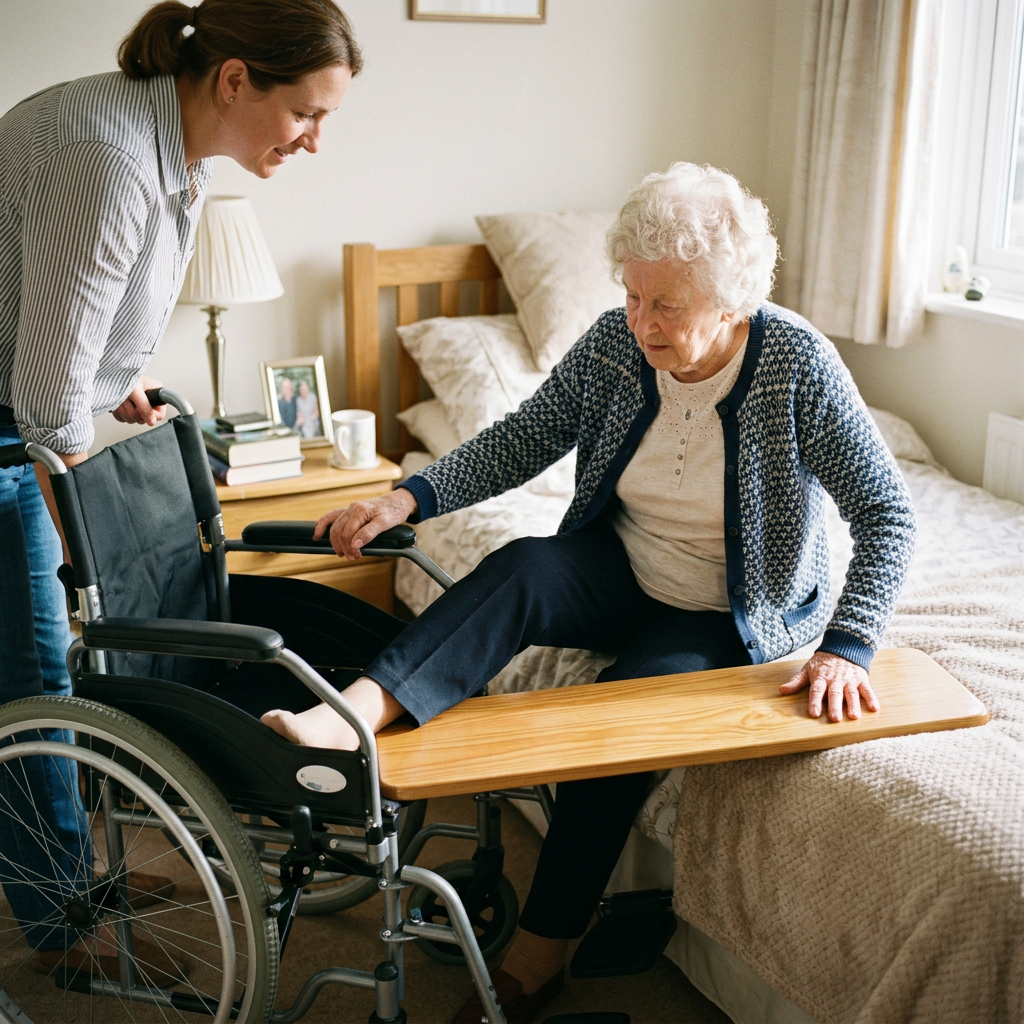
    A transfer board (also called a slide board) is a smooth, tapered plank that bridges two surfaces so a seated person slides across in short scoots instead of standing. Get the wrong one — too short for the gap, too flimsy for the weight, or too thick to tuck under a hip — and it sits in a closet while everyone goes back to risky lifting. The picks below cover the honest range, from a $22 budget board to a 735-pound bariatric plank.

    At a glance

    Best Overall  Vive Transfer Board (30″) — ~$40 · sealed wood, notched ends, the safe default for most transfers.

    Best Budget  DMI Wood Transfer Board (24″) — ~$22 · FSA-eligible Scotch pine, 440 lb, shortest gaps.

    Best Heavy-Duty  DMI Bariatric Board (32″×10″) — ~$45 · 735 lb capacity, two cut-out handles.

    Best Handholds  Drive Medical Lifestyle Board (30″) — ~$50 · lacquered birch with two hand grips for control.

    Best Curved  KRT Curved Transfer Board — ~$50 · flared polyethylene that clears a fixed wheelchair arm.

    Best Overall  Vive Transfer Board (30″)

    ~$40 · Check price on Amazon →

    If you buy one board without an OT in the room to advise you, make it this one. Vive’s 30-inch sealed-wood board hits the geometry most home transfers need: long enough to bridge a wheelchair to a bed or car seat, with notched, tapered ends thin enough to slide under a seated hip. Across more than 4,000 verified reviews the praise is consistent — it’s rigid and doesn’t flex mid-scoot the way cheap plastic does. The common complaint is honest: at roughly five pounds it’s heavier than plastic, and the surface feels cold on bare skin (a pillowcase over it fixes that).

    The good

    • Rigid sealed wood that doesn’t flex under real weight
    • Tapered, notched ends tuck cleanly under a hip
    • 30-inch length bridges the hardest gaps (bed, car)

    The catch

    • Heavier than plastic — noticeable for a caregiver lifting it repeatedly
    • Wood surface feels cold on bare skin; a pillowcase over it helps

    This is right if… your parent has decent arm strength and you want the safe, do-everything default.

    Look elsewhere if… a fixed wheelchair armrest blocks the board’s path — you’ll want the curved pick below.

    Check Price on Amazon →

    Best Budget  DMI Wood Transfer Board (24″)

    ~$22 · Check price on Amazon →

    The cheapest board we’d actually trust. DMI’s 24-inch solid Scotch-pine board is FSA- and HSA-eligible, rated to 440 pounds, and does one job well: short, same-height transfers like wheelchair-to-toilet or wheelchair-to-shower-bench. Verified buyers using it for tight bathroom transfers consistently call it sturdy for the money; nearly all the disappointment comes from people who bought the 24-inch to reach a bed and found it too short. Match the length to your gap and it’s a genuine value — just note there are no hand cut-outs, so a caregiver grips the edges.

    The good

    • Lowest price of any board we’d recommend
    • FSA/HSA eligible — spend pre-tax dollars
    • Solid 440 lb rating in a compact 24-inch length

    The catch

    • 24 inches is too short for a wide wheelchair-to-bed gap
    • No cut-out handles, so it’s harder to reposition

    This is right if… your transfers are short and same-height, like chair-to-toilet in a small bathroom.

    Look elsewhere if… you’re bridging to a bed or car — size up to the 30-inch Vive.

    Check Price on Amazon →

    Best Heavy-Duty  DMI Bariatric Board (32″×10″)

    ~$45 · Check price on Amazon →

    Standard boards top out around 400 to 440 pounds, and exceeding that rating is exactly the shortcut that ends a transfer on the floor. This DMI bariatric board is built for it: a wider 10-inch platform, an extra-thick Scotch-pine plank, two cut-out handles, and 735-pound capacity. Reviewers who bought it for a heavier parent note the same relief — it doesn’t creak or bow the way a standard board did. The width is the point and the trade-off: 10 inches feels stable but is harder to tuck under a hip, so it’s overkill for a lighter parent. Buy it for the capacity, not because bigger sounds safer.

    The good

    • 735 lb capacity genuine bariatric headroom
    • Wider 10-inch platform feels stable mid-transfer
    • Two cut-out handles make it easier to place and carry

    The catch

    • Heavy and bulky overkill for a lighter parent
    • The 10-inch width is harder to slide under a hip

    This is right if… your parent is over about 300 pounds or a standard board has flexed under them.

    Look elsewhere if… your parent is lighter — the extra size just makes transfers harder.

    Check Price on Amazon →

    Best Handholds  Drive Medical Lifestyle Board (30″)

    ~$50 · Check price on Amazon →

    Drive Medical’s lacquered-birch board is the one to reach for when control matters more than saving a few dollars. Rated to 440 pounds, it adds two hand cut-outs that give both caregiver and person something to grip — useful for guiding a scoot in controlled increments instead of one long slide. OTs often point families toward a handled board when a parent has one strong side after a stroke, since they can use the strong-side grip to pull themselves across. Reviewers note the lacquer is smoother than raw wood — a plus for sliding, but never use it on a wet surface without a towel down.

    The good

    • Two hand grips for controlled, incremental scoots
    • Smooth lacquered birch slides easily
    • Great for one-strong-side (post-stroke) transfers

    The catch

    • Slicker lacquer needs a towel on any damp surface
    • Slightly pricier than the Vive for a similar length

    This is right if… your parent has one strong side or you want handholds for control.

    Look elsewhere if… you mainly do wet-bathroom transfers — the lacquer needs a towel there.

    Check Price on Amazon →

    Best Curved  KRT Curved Transfer Board

    ~$50 · Check price on Amazon →

    Straight boards assume you can lay the board flat between two surfaces but many wheelchairs have fixed armrests sitting right in the path, and that’s where a curved board earns its keep. KRT’s polyethylene board has an arched shape and flared ends that route the transfer around an obstacle instead of fighting it, and the plastic is far lighter than any wood board here — a real plus for caregivers with wrist or back issues. Buyers who transfer in and out of a car especially favor the curve. The honest trade-off: plastic feels less solid than wood to some users, and curved boards take practice to position this is the pick where an OT’s coaching pays off most.

    The good

    • Curved shape clears a fixed wheelchair armrest
    • Much lighter than wood — easy on a caregiver’s wrists
    • Follows the natural arc of a car transfer

    The catch

    • Plastic feels less solid than wood to some users
    • Curved boards take practice to position right

    This is right if… a fixed armrest is in the way or car transfers are your main use.

    Look elsewhere if… your transfers are simple, flat, and same-height — a straight wood board is simpler.

    Check Price on Amazon →

    Transfer boards compared at a glance

    Board Price Type & capacity Best for
    Vive 30″ ~$40 Sealed wood · ~400+ lb The safe do-everything default
    DMI 24″ Wood ~$22 Scotch pine · 440 lb Short same-height transfers, budget
    DMI Bariatric 32″×10″ ~$45 Heavy wood · 735 lb Heavier parents, max capacity
    Drive Medical 30″ ~$50 Birch, hand grips · 440 lb One-strong-side / post-stroke control
    KRT Curved ~$50 Curved plastic · ~400 lb Fixed armrests, car transfers

    The conversation you’ll have

    A transfer board can land badly if it’s framed as proof your parent can’t stand anymore — for many older adults, standing to move is tied up with dignity, and a board that says “you’re a person who slides now” gets left in the box. The reframe that works is about conserving energy, not conceding it. Instead of “you can’t stand safely anymore,” try “let’s save your standing for walking to the kitchen — this just takes the scary sit-to-sit part off your legs.” You’re not taking standing away; you’re spending it where it matters.

    It also helps to make the first transfers about your back, not their weakness: “the doctor said I’ll hurt myself lifting you the old way humor me.” And borrow a professional’s authority: when an OT recommends and demonstrates the board, it stops being a family argument and becomes doctor’s orders.

    Insurance and savings

    Here’s the money reality most families get wrong. Original Medicare (Part B) covers reusable, “primarily medical” durable equipment, but low-cost transfer boards are generally treated as inexpensive convenience items and rarely approved on their own — Medicare is far more likely to authorize a patient lift for someone who truly can’t assist. Don’t count on it paying for a $40 board. The reliable path is your FSA or HSA: transfer and slide boards are widely eligible medical expenses (the DMI wood board lists FSA/HSA eligibility outright), so you can buy one pre-tax. If your out-of-pocket medical costs are high enough to itemize, a medically necessary board can also count toward the IRS medical-expense deduction under Publication 502. When in doubt, ask the OT to write the recommendation.

    What to actually look for

    Match the board type to the transfer, not the price

    The biggest mistake is buying by price instead of geometry. A straight wood board is the right default for flat, same-height moves; a curved plastic board earns its cost only when a fixed armrest or car door is in the way; and a bariatric board is about capacity, not “more is safer.” Measure your gap wheelchair-to-bed is usually the widest and buy a length that clearly bridges it. Our complete aging-in-place home safety checklist shows how transfers fit the bigger fall-prevention picture.

    Weight rating, edges, and surface

    Never buy a board rated close to your parent’s weight — leave a real margin, because a transfer puts dynamic, shifting load on the plank. Look for tapered, notched ends thin enough to slip under a seated hip; a thick, blunt end is the reason many boards never get used. Consider surface, too: sealed or lacquered wood slides well but is cold and slick when wet, while textured plastic grips more. Whatever you choose, the room matters as much as the board — see our room-by-room aging-in-place modification guide for clearing the path and anchoring the surfaces you transfer between.

    Know when a board is the wrong tool

    This is the part the listicles skip. A transfer board is a bridge, not a lift — it only works if your parent can bear some weight through their arms and bridge across in short scoots. If they can’t push up with their arms or hold themselves upright once seated, no board is safe, and you’re into lift or sling territory. A proper transfer belt for the standing-pivot moves you can still do safely is often the better middle step; our guide to gait and transfer belts for seniors covers when a belt beats a board. And whatever you buy, have a therapist demonstrate the first transfers — every credible source, ours included, treats that as non-negotiable.

    Frequently asked questions

    How do you use a transfer board?

    Position the two surfaces close, with the destination ideally slightly lower. Tuck one end of the board under the person’s hip and rest the other on the target seat. With a gait belt on, they push up on their fists and scoot across in several short moves rather than one long slide, keeping fingers off the edges.

    What is the weight limit of a transfer board?

    Standard boards are typically rated 200 to 500 pounds, with most quality wood boards at 400 to 440 pounds. Bariatric boards go higher — the DMI board here holds 735 pounds. Always leave a comfortable margin above your parent’s weight, since a transfer applies shifting, dynamic load rather than a still one.

    What’s the difference between a transfer board and a slide board?

    The terms overlap. “Transfer board” usually means a rigid plank you scoot across; “slide board” is often used the same way, though it can also describe one paired with a low-friction slide sheet for the weakest users. For home use, most people mean the rigid board reviewed here.

    Does Medicare pay for a transfer board?

    Usually not. Medicare Part B covers durable medical equipment, but inexpensive transfer boards are typically treated as low-cost convenience items and rarely approved alone; a patient lift is more likely to be authorized for someone who can’t assist. The dependable savings route is an FSA or HSA, where boards are generally eligible.

    Can a senior use a transfer board alone?

    Some can, after training, if they have good arm strength and sitting balance — but the safe default is caregiver assistance, especially at first. Nearly every clinical source recommends learning the technique with a physical or occupational therapist and wearing a gait belt before anyone attempts an independent transfer.

    The shortlist

    Best Overall

    Vive Transfer Board 30″

    ~$40

    Check on Amazon →

    Best Budget

    DMI Wood Board 24″

    ~$22

    Check on Amazon →

    Best Heavy-Duty

    DMI Bariatric 32″×10″

    ~$45

    Check on Amazon →

    Best Handholds

    Drive Medical 30″

    ~$50

    Check on Amazon →

    Best Curved

    KRT Curved Board

    ~$50

    Check on Amazon →

    Last verified in stock: August 23, 2026

    What we’d do tomorrow

    If you’re starting this weekend, do three things in order. First, measure the widest gap your parent actually crosses almost always wheelchair-to-bed and buy a board that clearly bridges it; for most families that’s the 30-inch Vive board, or the curved KRT if a fixed armrest is in the way. Second, buy a gait belt at the same time so you never transfer without one. Third, the step that makes the board actually get used ask your parent’s doctor for an occupational-therapy referral and have the OT demonstrate the first few transfers in the real rooms of the house. The board is cheap; the training is what keeps everyone off the floor.

    — Sarah

    BuyingForMom is a reader-supported site. As an Amazon Associate we earn from qualifying purchases. When you buy through links on this site, we may earn an affiliate commission at no additional cost to you. See our Affiliate Disclosure for details. This article is not medical advice, please consult a qualified healthcare professional, such as a physical or occupational therapist, for decisions specific to your parent’s situation.
  • 5 Best Weighted Blankets for Seniors & Anxiety

    5 Best Weighted Blankets for Seniors & Anxiety

    Disclosure: BuyingForMom is reader-supported. As an Amazon Associate we earn from qualifying purchases. When you buy through links in this article, we may earn an affiliate commission at no additional cost to you. We never recommend products we haven’t researched against verified-buyer review data. This article is editorial reporting, not medical advice.

    5 Best Weighted Blankets for Seniors & Anxiety

    By Sarah Mitchell · Editor, BuyingForMom · Updated August 2026

    9 min read · Bedroom · 5 picks compared

    The honest take: For most older adults, buy the YnM Weighted Blanket in a weight around 8–10% of their body weight and stop there it’s the safest all-rounder and the easiest to size down. Reach for the breathable Bearaby Cotton Napper only if your parent sleeps hot or can’t stand the look of a bead-filled quilt. And if you’re shopping for someone with dementia or frail arms, skip the heavy 15–20 lb bestsellers entirely a 3 lb lap pad they can lift off themselves does more good and carries far less risk.

    How we sorted through 40+ weighted blankets in two weeks

    We cross-referenced more than 8,000 verified Amazon reviews across roughly 40 weighted blankets and lap pads, then filtered them against something most roundups ignore: whether the product is actually appropriate for an older body rather than a stressed 30-year-old. We weighted our picks toward the guidance occupational therapists and dementia-care organizations consistently give keep the blanket near 8–10% of body weight, go lighter for frail users, and make sure the person can remove it without help. We read the recurring complaints on Reddit’s r/AgingParents and caregiver forums (bead leakage, covers that won’t stay put, blankets too heavy to reposition), and checked every product’s live listing for stock before writing a word.

    Who this guide is for

    This guide is for adult children and caregivers buying a weighted blanket for a parent who struggles with sleep, restlessness, or anxiety and especially for anyone shopping for a loved one with dementia, arthritis, or limited strength. If you’re buying for yourself and you’re in good health, the same five picks apply, but you can skip straight to the comparison table and ignore the extra safety framing below.

    Weighted blankets have quietly become one of the most-requested comfort items for older adults, and for good reason. The gentle, even pressure clinicians call it deep pressure stimulation can prompt the body to release serotonin and settle an anxious nervous system, which is why care facilities increasingly reach for a blanket before a sedative. Multiple studies have found weighted blankets safe and effective for easing anxiety, chronic pain, and insomnia, including among nursing-home residents.

    But a weighted blanket is one of the few aging-in-place products where heavier is not better. The single most common mistake families make is buying the 15 or 20 lb bestseller because it has the most reviews — then discovering their 120 lb mother can’t lift it off to get to the bathroom at 3 a.m. Get the weight right and the person’s strength right, and everything else is detail.

    At a glance

    Best Overall  YnM Weighted Blanket — ~$50 · sizes down to 5 lb, cooling glass beads, huge track record

    Best Breathable  Bearaby Cotton Napper — ~$200 · open-knit, no beads, best for hot sleepers

    Best Budget  Luna Adult Weighted Blanket — ~$45 · widest weight range incl. lighter options

    Best for Daytime & Dementia  ZonLi Weighted Lap Blanket (3 lb) — ~$25 · safe, liftable, calming

    Best Washable Cover  Quility Premium Weighted Blanket — ~$70 · removable, machine-washable duvet

    Best Overall YnM Weighted Blanket

    ~$50 · Check price on Amazon →

    The YnM is the blanket we point most families to first, and the reason is flexibility rather than novelty. It’s a classic seven-layer, glass-bead design with a tight 2 × 2-inch quilted grid that keeps the weight distributed evenly instead of sliding into a lump — the number-one complaint against cheaper blankets. Across more than 4,000 verified reviews the recurring praise is that it “feels like an even, steady hug,” and YnM sells it in weights from 5 lb up, which is what makes it the right pick for older adults: you can size it well below the usual 10% rule for a lighter parent. Glass beads (not plastic pellets) run cooler and quieter, and the cotton shell breathes reasonably well for a bead blanket.

    The good

    • Available in genuinely light weights (from 5 lb) so you can size down for a frail user
    • Tight quilted grid keeps beads from pooling even pressure, no lumps
    • Enormous review base and a proven, no-surprises design

    The catch

    • No removable cover on the standard version you wash the whole blanket, which is awkward when it’s heavy and wet
    • Sizing is by body weight, not bed size, so it may hang short of a mattress edge

    This is right if… your parent is a healthy, independent sleeper who wants one reliable blanket and you want room to choose a lighter weight.

    Look elsewhere if… they sleep hot or find bead blankets stiff — the Bearaby below breathes better.

    Best Breathable Bearaby Cotton Napper

    ~$200 · Check price on Amazon →

    The Bearaby solves the biggest complaint older adults have about weighted blankets: heat. Instead of beads sealed inside a quilted shell, the weight comes from thick, hand-knit organic-cotton yarn, so warm air escapes through the open weave rather than getting trapped. Reviewers who “gave up on weighted blankets because they were like sleeping under a heating pad” consistently name the Napper as the one they kept. It also sidesteps the bead-leakage worry entirely there’s nothing to leak — and it’s machine washable, which many premium blankets are not. The chunky knit is genuinely attractive on a bed, so a parent who resists “medical-looking” gear is more likely to actually use it. The trade-off is price, and it’s a real one.

    The good

    • Open-knit design runs far cooler than any bead blanket — the best choice for hot sleepers
    • No beads to leak or bunch; machine washable
    • Looks like a designer throw, not a therapy device — lowers resistance

    The catch

    • Expensive — roughly four times the price of the YnM
    • Only comes as heavy as its weight tier allows; the lightest option may still be too much for a very frail user

    This is right if… your parent sleeps hot, has sensory sensitivity to bead blankets, or would only use something that looks good on the bed.

    Look elsewhere if… budget matters — the Luna delivers most of the benefit for a quarter of the cost.

    Best Budget Luna Adult Weighted Blanket

    ~$45 · Check price on Amazon →

    Luna is the value pick, and it earns it with range. The line runs from lighter 12 lb blankets up through 25 lb, in twin through queen, so you can match both the person and the bed without overpaying and Luna’s lighter-weight and kids’ sizes give you an easy path to a sub-10 lb option for a smaller or frail senior. It’s OEKO-TEX-certified cotton with glass-bead fill and internal air channels, and verified buyers repeatedly note it’s “cooler than expected for the price.” It’s machine washable. The honest downside is consistency: across thousands of reviews a minority report uneven stitching or a seam that let a few beads escape after months of washing. For the money, most families find it more than good enough.

    The good

    • Widest weight-and-size range, including lighter options that suit older adults
    • OEKO-TEX cotton, cooling air channels, machine washable
    • Frequently under $50 the lowest-risk way to test whether a weighted blanket helps

    The catch

    • Occasional quality-control misses a small share of reviews mention loose seams or bead escape over time
    • No removable cover on the standard blanket

    This is right if… you want to try a weighted blanket without a big outlay, or you need a specific lighter weight.

    Look elsewhere if… you want the most durable long-term build the Quility’s replaceable cover ages better.

    Best for Daytime & Dementia ZonLi Weighted Lap Blanket (3 lb)

    ~$25 · Check price on Amazon →

    This is the pick dementia-care specialists actually reach for, and it’s the one most product roundups leave out. At 3 lb and 29 × 24 inches, the ZonLi lap pad delivers the same calming deep-pressure effect over the lap and thighs during the day in a recliner, at the table, in the car without any of the risk that comes from a heavy full blanket at night. Care organizations note that a lap pad is often the better tool through the middle stages of dementia, when a full blanket becomes overwhelming or a person can no longer reliably move it. The cotton cover is machine washable and the glass beads sit in a secure grid so they don’t migrate. Reviewers with restless or anxious loved ones call it “the fastest thing we’ve found to settle her hands.” It’s the safest entry point into weighted therapy for a frail or cognitively impaired senior.

    The good

    • Light enough to lift off unaided the key safety requirement for dementia use
    • Ideal for daytime restlessness, “sundowning,” and anxious hands
    • Inexpensive, washable, and easy to keep by a favorite chair

    The catch

    • Covers the lap only, it’s not a substitute for a full sleeping blanket
    • At 3 lb the effect is gentle; someone seeking heavy pressure may want more

    This is right if… you’re buying for someone with dementia, or you want a safe, low-commitment way to see whether deep pressure helps.

    Look elsewhere if… the goal is all-night sleep for an independent adult, choose a full blanket above.

    Best Washable Cover Quility Premium Weighted Blanket

    ~$70 · Check price on Amazon →

    Cleaning is the quiet problem with weighted blankets, and it matters more with older adults spills, incontinence, and the sheer awkwardness of wrestling a soaked 15 lb blanket into a machine. The Quility ships with a soft, removable duvet cover that zips off and washes on its own, so you clean the light part often and the heavy inner blanket rarely. That single feature makes it the most practical pick for anyone doing hands-on caregiving. Underneath, it’s a well-regarded glass-bead blanket with breathable cotton, and across its large review base buyers highlight the cover as “the reason I’d buy this over the cheaper ones.” It’s offered in a range of weights, so the size-down guidance still applies.

    The good

    • Removable, machine-washable duvet cover — a real advantage for caregivers
    • Cover also lets you swap textures/warmth by season
    • Solid, even-pressure bead construction with a big review base

    The catch

    • The blanket and cover use ties to stay aligned; they can loosen and need re-tying
    • Pricier than a bare blanket for the same weight

    This is right if… you’re a caregiver who’ll be washing it often, or you want to switch cover warmth between seasons.

    Look elsewhere if… you want the simplest possible option — the YnM does the core job for less.

    Quick comparison

    Blanket Approx. price Best for Key strength
    YnM ~$50 Most independent seniors Sizes down to 5 lb
    Bearaby Napper ~$200 Hot sleepers Cool open-knit, no beads
    Luna ~$45 Budget / lighter weights Widest weight range
    ZonLi Lap (3 lb) ~$25 Dementia / daytime Safe, liftable, calming
    Quility ~$70 Caregivers Removable washable cover

    The conversation you’ll have

    Older adults often bristle at anything that feels like it’s treating them as fragile, and a “weighted blanket” can land that way. The move is to frame it as comfort, not therapy. Instead of “this will help with your anxiety,” try “the hotels are all using these now want to try it for a week and see if you sleep better?” Lead with the cozy, not the clinical. If the resistance is really about looking sick, the Bearaby’s designer-throw appearance does a lot of the persuading for you. And for a parent with dementia, don’t announce it at all — simply lay the ZonLi lap pad across their knees during the afternoon and let the calm speak for itself. One rule stays firm no matter how you introduce it: your parent must be able to lift the blanket off on their own. If they can’t, it’s too heavy, full stop.

    Insurance and savings

    Original Medicare does not cover weighted blankets — they’re considered comfort items, not durable medical equipment, so there’s no billing path through Part B. There are, however, real ways to soften the cost. Many Medicare Advantage plans now include an over-the-counter or home-comfort allowance that a weighted blanket can qualify for, so it’s worth a call to the plan’s member line. Weighted blankets are also frequently FSA- and HSA-eligible when a doctor provides a letter of medical necessity tied to a diagnosed condition such as anxiety or insomnia — keep the receipt and the letter together. And if a household’s unreimbursed medical expenses clear the 7.5%-of-AGI threshold, IRS Publication 502 may allow the cost as an itemized deduction when it’s prescribed for a specific condition. None of this is tax advice confirm specifics with the plan or a tax professional.

    What to actually look for

    Get the weight right then go lighter for a frail user

    The standard rule is roughly 10% of body weight, but for older adults that’s a ceiling, not a target. A 130 lb parent points to a 12 lb blanket on paper, yet an 8 lb version is often the smarter buy — enough pressure to calm, light enough to reposition without a struggle. Weakness, arthritis, and reduced grip all argue for sizing down. Weighted blankets belong in a broader safety plan; our complete aging-in-place home safety checklist lays out where sleep and comfort fit alongside the higher-priority fall-prevention fixes.

    Match the format to the situation — blanket vs. lap pad

    A full blanket is for independent nighttime sleep. A lap pad is for daytime calm and for anyone who can’t reliably move a heavy blanket — which, through the middle stages of dementia, is most people. Buying both is common and inexpensive. If you’re outfitting a room from scratch, our room-by-room aging-in-place modification guide covers how the bedroom fits with the rest of the home.

    Check the health flags before you buy

    Weighted blankets aren’t right for everyone. Care guidance is consistent that they should be used cautiously — or avoided with serious respiratory, circulatory, or temperature-regulation conditions, and for anyone who genuinely cannot remove the blanket without help. When a diagnosis is in the picture, a two-minute check with the person’s doctor is worth it. For breathability and washability, favor glass beads over plastic pellets and a removable cover where you can get one.

    Frequently asked questions

    What weight weighted blanket should an elderly person use?

    Aim for about 8–10% of the person’s body weight, and treat that as a maximum rather than a goal. For a frail, arthritic, or lightweight senior, go lighter — a blanket they can lift off unaided is safer and just as calming. When unsure, size down.

    Are weighted blankets safe for seniors?

    For most healthy older adults, yes research finds them safe and effective for anxiety, pain, and sleep. Use caution with serious respiratory, circulatory, or temperature-regulation conditions, and always confirm the person can remove the blanket themselves. Check with a doctor if a diagnosis is involved.

    Are weighted blankets good for dementia or Alzheimer’s patients?

    Often, yes. The gentle pressure can reduce anxiety and restlessness and improve sleep without medication. But safety comes first: in the middle and later stages a light lap pad used during the day is usually better than a full blanket at night, which can become overwhelming or impossible to move.

    Can a weighted blanket be too heavy for an elderly person?

    Absolutely, and it’s the most common mistake. A blanket that’s too heavy can trap a person, make getting up at night difficult, and cause more distress than calm. If they can’t easily push it off or fold it back on their own, it’s too heavy choose a lighter weight.

    Should a senior with dementia use a full blanket or a lap pad?

    A lap pad is usually the safer starting point. It delivers the same calming deep pressure over the lap during the day, is light enough to remove independently, and avoids the nighttime risks of a heavy blanket. Many families use a lap pad by day and reserve full blankets for earlier, independent stages.

    How do you wash a weighted blanket?

    Most glass-bead blankets are machine washable on gentle, cold, then tumbled low or air-dried but a soaked heavy blanket is hard to handle. That’s the case for a removable cover, like the Quility’s: you wash the light cover often and the heavy insert rarely. Always check the specific care label.

    The shortlist

    Best Overall

    YnM Weighted Blanket

    ~$50

    Check on Amazon →

    Best Breathable

    Bearaby Cotton Napper

    ~$200

    Check on Amazon →

    Best Budget

    Luna Weighted Blanket

    ~$45

    Check on Amazon →

    Best for Dementia

    ZonLi Weighted Lap Blanket

    ~$25

    Check on Amazon →

    Best Washable Cover

    Quility Weighted Blanket

    ~$70

    Check on Amazon →

    Last verified in stock: August 5, 2026

    What we’d do tomorrow

    If you’re starting this weekend, do three things in order. First, weigh your parent honestly and pick a blanket at 8–10% of that then drop a size if there’s any weakness or arthritis; for most independent seniors the YnM at the right weight is the buy. Second, if dementia or frailty is in the picture, start with the ZonLi lap pad instead — it’s the low-risk way to see if deep pressure helps. Third, before it goes on the bed, watch them lift it off once. If that’s a struggle, exchange it for something lighter. Get those three right and the blanket earns its place.

    — Sarah

    BuyingForMom is a reader-supported site. As an Amazon Associate we earn from qualifying purchases. When you buy through links on this site, we may earn an affiliate commission at no additional cost to you. See our Affiliate Disclosure for details. This article is not medical advice — please consult a qualified healthcare professional for decisions specific to your situation.
  • 5 Best Bed Alarms for Elderly Falls & Wandering

    5 Best Bed Alarms for Elderly Falls & Wandering

    Disclosure: BuyingForMom is reader-supported. As an Amazon Associate we earn from qualifying purchases. When you buy through links in this article, we may earn an affiliate commission at no additional cost to you. We never recommend products we haven’t researched against verified-buyer review data. This article is editorial reporting, not medical advice.

    5 Best Bed Alarms for Elderly Falls & Wandering

    By Sarah Mitchell · Editor, BuyingForMom · Updated July 2026

    10-minute read · Fall Detection & Dementia Safety · 5 picks compared

    The honest take: For most families, buy the Smart Caregiver Bed Exit Alarm with Wireless Pager and put the buzzer in your room, not your parent’s that one design choice is what separates a helpful alert from a device that gets unplugged by the second night. If your parent has dementia and pulls off anything they can feel, the Lunderg Under-Mattress pad is the only pick they can’t refuse, because they never know it’s there. Skip any bed alarm whose speaker sits at the bedside and only sounds after they’re already standing, by then the warning is too late to matter.

    How we sorted through 40+ bed alarms in two weeks

    We started with roughly 40 bed-exit and floor-mat alarms carrying a meaningful Amazon review base across Smart Caregiver, Lunderg, Vive, and Secure and cross-referenced three things: verified-buyer patterns (we read 6,000+ reviews for false-alarm and pad-shifting complaints), the CMS guidance that reclassified in-room bedside buzzers as a potential restraint in 2017, and the frustration caregivers describe on Reddit’s r/AgingParents and r/dementia that most alarms either sound too late or get disabled by the person they’re meant to protect. We cut anything needing Wi-Fi or an app, anything whose pager is sold separately and often out of stock, and anything without a carry-the-alert-to-the-caregiver design. Five survived.

    Who this guide is for

    This guide is for adult children and caregivers who need to know the moment a parent gets out of bed usually after a recent fall, nighttime bathroom trips, or dementia-related wandering. If your parent is cognitively sharp and simply unsteady, an on-top sensor pad with a pager is plenty; if they have dementia and resist help, skip ahead to the under-mattress pick. Either way, remember a bed alarm is an early-warning tool, not a fall-prevention device on its own. It buys you seconds to get there, pair it with the physical changes in our checklist below.

    At a glance

    BEST OVERALL  Smart Caregiver Bed Exit Alarm with Wireless Pager — ~$45 · put the alert in your room, no Wi-Fi

    BEST DISCREET  Lunderg Under-Mattress Bed Alarm — ~$100 · invisible pad for parents who refuse monitoring

    BEST EXPANDABLE  Vive Wireless Bed Alarm Kit — ~$45 · one pager runs up to 10 bed, chair & door sensors

    BEST SILENT/VIBRATE  Secure Floor-Mat Bed Alarm with Vibrating Pager — ~$65 · 500 ft range, buzzes silently at night

    BEST FOR RESTLESS SLEEPERS  Lunderg Large 20″x30″ Wireless Bed Alarm — ~$90 · extra coverage, anti-slip stickers

    Best Overall Smart Caregiver Bed Exit Alarm with Wireless Pager

    ~$45 · Check price on Amazon →

    This is the system we point most families to first, and the reason is architecture, not features. A soft 10″ x 30″ weight-sensing pad goes on top of the mattress under the sheet; the moment your parent’s weight lifts off it, a portable pager up to 300 feet away chimes or vibrates in your pocket. Nothing sounds in your parent’s room, which is exactly why it doesn’t get unplugged. Across thousands of reviews, the recurring notes are “excellent price,” “easy setup,” and “pleased with the response time.” Smart Caregiver is a U.S. company that has made fall-prevention gear for 30 years, and the pager pairs with up to six sensors, so you can add a chair or door pad later. The honest limitation: the on-top pad is visible, so a parent who fights being watched may try to move it.

    The good

    • Alert lives with the caregiver, not the patient, no bedside buzzer to disable
    • No Wi-Fi, Bluetooth, or app; batteries included, works out of the box
    • Pager expands to six sensors (bed, chair, door) on one base

    The catch

    • On-top pad is visible and can be pushed aside by a resistant sleeper
    • Pad sensors wear over 12–18 months and eventually need replacing

    This is right if… you want the simplest reliable system and your parent won’t actively fight a pad they can see.

    Look elsewhere if… your parent has dementia and removes anything they can feel — go under-mattress instead.

    Best Discreet Lunderg Under-Mattress Bed Alarm

    ~$100 · Check price on Amazon →

    The most common failure mode in this category is a parent with dementia who pulls off the wearable, kicks away the on-top pad, or unplugs the buzzer. Lunderg’s answer is to put the sensor under the mattress (mattresses 13 inches or less), so there’s nothing to see, feel, or refuse. Its patented PreRise early-alert technology is the real differentiator: instead of firing when weight leaves the bed, it detects the pressure shift as your parent begins to sit up those extra seconds are often the difference between reaching them and finding them. Verified buyers repeatedly praise that there’s “no annoying noise to disturb your loved one,” with pager volume adjustable for day or night. It’s the priciest pick, and worth it for the refuses-help scenario.

    The good

    • Completely invisible under the mattress, nothing for a resistant parent to remove
    • PreRise alert fires before they stand, not after
    • Silent at the bedside; pager alerts you up to 300 feet away

    The catch

    • Most expensive option in this roundup
    • Won’t fit mattresses thicker than 13 inches

    This is right if… your parent has dementia or actively resists being monitored.

    Look elsewhere if… you’re on a tight budget and your parent doesn’t tamper with equipment.

    Best Expandable Vive Wireless Bed Alarm Kit

    ~$45 · Check price on Amazon →

    If you’re building coverage across a whole home rather than one bed, Vive’s kit is the value play. The included pager pairs with up to ten devices, bed pad, chair pad, floor mat, door and window sensors — so a single unit can cover the entire nighttime route a parent might take. The waterproof 29.5″ x 10″ pad is roomier than most, and the transmitter’s adjustable delay (up to four seconds) meaningfully cuts the false alarms from normal shifting. The honest catch, echoed by verified buyers, is that the in-unit alarm isn’t very loud, so run this through the pager on your belt, not as a room speaker. Buy the kit (this ASIN), not the pad-only listing, the standalone Vive pad’s pager is frequently out of stock.

    The good

    • One pager runs up to 10 sensors cheapest way to cover multiple rooms
    • Up-to-4-second delay setting reduces restlessness false alarms
    • Waterproof pad; pager does vibrate, chime, or both

    The catch

    • Built-in alarm volume is modest, rely on the pager, not the unit
    • Add-on sensors are an extra purchase to realize the expandability

    This is right if… you want one alert system to grow into bed, chair, and door coverage over time.

    Look elsewhere if… you only need a single bed pad and want the loudest, simplest option.

    Best Silent/Vibrate Secure Floor-Mat Bed Alarm with Vibrating Pager

    ~$65 · Check price on Amazon →

    Some parents are light sleepers who shift constantly, so an on-mattress pad throws false alarms all night. Secure sidesteps that: a 24″ x 36″ pressure mat sits on the floor beside the bed, triggering only when feet actually land — you get the alert at the point of standing, not every time your parent rolls over. The wireless pager reaches roughly 500 feet and offers 32 tones plus a true silent-vibrate mode — the standout for caregivers who sleep in the next room and don’t want a chime waking the household. Verified buyers rate it 3.8 out of 5 across a smaller review base, praising the vibrate feature and range. Being a floor mat, it warns a step later than a mattress pad — the tradeoff for zero in-bed false alarms.

    The good

    • True silent-vibrate pager mode — won’t wake the household at night
    • ~500 ft range, the longest here; 32 selectable tones
    • Floor mat eliminates in-bed false alarms from restless sleepers

    The catch

    • Warns at the point of standing, a beat later than a mattress pad
    • Smaller review base (3.8/5) than the Smart Caregiver and Lunderg picks

    This is right if… your parent is a restless sleeper and you need a silent, next-room alert.

    Look elsewhere if… you need the earliest possible warning before they stand.

    Best for Restless Sleepers Lunderg Large 20″x30″ Wireless Bed Alarm

    ~$90 · Check price on Amazon →

    A standard 10″ pad has one real weakness: a parent who sleeps near the edge or shifts a lot can be off the sensor without ever leaving the bed, missing the exit or firing a false alarm. Lunderg’s large 20″ x 30″ pad doubles the coverage so the sensor reads the whole sleeping area, and it pairs with the same carry-anywhere pager (up to 400 feet, no Wi-Fi) as the brand’s other systems. The detail verified buyers keep calling out is the included anti-slip stickers — a shifting pad is the number-one cause of false alarms, and Lunderg is one of the few brands that ships a fix in the box. The surface is incontinence-resistant and wipes clean, a middle price for a noticeably more forgiving pad.

    The good

    • 20″x30″ pad covers restless and edge sleepers a standard pad misses
    • Anti-slip stickers included — directly attacks the top false-alarm cause
    • Incontinence-resistant, wipe-clean surface; 400 ft pager, no Wi-Fi

    The catch

    • Larger pad is more noticeable on the mattress
    • Pricier than a basic 10″ pad system

    This is right if… your parent shifts a lot or sleeps near the mattress edge.

    Look elsewhere if… a standard pad already reads reliably, or you need the pad hidden.

    How the five compare

    System ~Price Sensor type Best for Range
    Smart Caregiver Bed Exit $45 On-top pad Most families 300 ft
    Lunderg Under-Mattress $100 Hidden under mattress Dementia / refuses help 300 ft
    Vive Wireless Kit $45 On-top pad (10-device) Whole-home coverage ~185 ft
    Secure Floor-Mat $65 Floor mat Silent/vibrate at night 500 ft
    Lunderg Large 20″x30″ $90 Large on-top pad Restless sleepers 400 ft

    The conversation you’ll have

    Here’s the part no product page prepares you for: a bed alarm can feel, to an aging parent, like being surveilled in their own bedroom — read as a signal they’re being treated like a patient or a child. The resistance is real. The move that works is to frame it around your peace of mind, not their capability. Instead of “This is so we know when you get up,” which lands as a leash, try “This just lets me sleep instead of checking on you six times a night — it’s really for me.” That turns the alarm from a judgment into a favor. For a parent with dementia where that conversation isn’t possible, the under-mattress pad sidesteps the issue entirely: nothing to consent to, because there’s nothing to notice.

    Insurance and savings

    Original Medicare (Parts A and B) does not cover bed alarms for home use CMS doesn’t classify them as durable medical equipment, so you’ll pay out of pocket. Some Medicare Advantage (Part C) plans now fold safety devices into their supplemental benefits, so it’s worth a call to your parent’s plan before assuming no. The better news for most families: bed alarms are widely FSA- and HSA-eligible, letting you buy with pre-tax dollars. The several picks here are explicitly listed as HSA/FSA-eligible by their makers. And if a physician recommends the device in a fall-prevention plan, it can count toward the medical-expense deduction once total medical costs pass 7.5% of adjusted gross income (IRS Publication 502). One dignity note: CMS reclassified bedside alarms as a potential restraint in institutional settings in 2017 precisely why every pick here routes the alert to a caregiver’s pager instead of buzzing in the resident’s room.

    What to actually look for

    Where the alert sounds

    This is the whole ballgame. A bed alarm that buzzes in your parent’s room gets unplugged and, worse, can startle a disoriented person into a fall. A system that sends the alert to a pager you carry is both kinder and more effective treat an in-room-only buzzer as a dealbreaker. For the full priority order of safety upgrades, see our complete aging-in-place home safety checklist.

    On-top pad vs. under-mattress vs. floor mat

    On-top pads give the earliest warning but are visible and removable. Under-mattress pads are tamper-proof and best for dementia. Floor mats never false-alarm from bed movement but warn a step later. Match the sensor to the person, not the spec sheet. A bed alarm is one layer — it works best alongside a personal alert your parent wears when they leave the room; our guide to fall detection devices with no monthly fee covers that side.

    False-alarm defenses

    The fastest way to get an alarm abandoned is nightly false triggers. Two features prevent them: an adjustable exit-delay (Vive’s up-to-4-second setting) and anti-slip pad stickers (Lunderg ships them). If your parent’s nighttime routine also involves medication timing, pair the alarm with a good dispenser — our roundup of automatic pill dispensers for dementia patients covers the memory side of nighttime safety.

    Frequently asked questions

    Do bed alarms actually prevent falls?

    Not by themselves. A bed alarm doesn’t stop a fall, it alerts you the instant your parent starts getting up, giving you seconds to reach them before they’re standing or walking. That early warning is what reduces fall injuries: it’s detection paired with your response, not prevention on its own.

    How do bed alarms for elderly work?

    A pressure-sensitive pad sits under the sheet, under the mattress, or on the floor. When your parent’s weight lifts off it or lands on it, for floor mats it sends a wireless signal within a second or two to a pager the caregiver carries, so you know the moment they’re moving.

    Are bed alarms covered by Medicare?

    Original Medicare does not cover home bed alarms, since they aren’t classified as durable medical equipment. Some Medicare Advantage plans include them under supplemental safety benefits, so check your parent’s specific plan. Most systems are FSA- and HSA-eligible, which is the more reliable way to save on the purchase.

    Are bed alarms considered a restraint?

    In institutional settings, CMS reclassified in-room bedside alarms as a potential restraint in 2017 because of dignity and comfort concerns. Modern home systems solve this by sending alerts to a caregiver’s pager instead of sounding in the resident’s room, so they don’t function as a restraint.

    What’s the difference between a bed alarm and a fall-detection device?

    A bed alarm warns you when someone leaves the bed, before any fall. A fall-detection device (usually a pendant or watch) triggers after a fall has already happened, wherever the person is. They cover different moments many families use both, a bed alarm at night and a wearable during the day.

    Are bed alarms FSA/HSA eligible?

    Most are. Many bed-alarm systems, including several picks here, are explicitly listed as HSA/FSA-eligible by their manufacturers, letting you pay with pre-tax dollars. Keep the receipt, and if your plan asks, a note from your parent’s doctor recommending it for fall prevention settles any eligibility question.

    The shortlist

    Best Overall

    Smart Caregiver Bed Exit Alarm

    ~$45

    Check on Amazon →

    Best Discreet

    Lunderg Under-Mattress Alarm

    ~$100

    Check on Amazon →

    Best Expandable

    Vive Wireless Bed Alarm Kit

    ~$45

    Check on Amazon →

    Best Silent/Vibrate

    Secure Floor-Mat Bed Alarm

    ~$65

    Check on Amazon →

    Best for Restless Sleepers

    Lunderg Large 20″x30″ Alarm

    ~$90

    Check on Amazon →

    Last verified in stock: July 27, 2026

    What we’d do tomorrow

    If you’re setting this up this weekend, do three things in order. First, decide who your parent is: cooperative and unsteady, buy the Smart Caregiver system and put the pager in your room tonight; dementia or fights being watched, buy the Lunderg under-mattress pad and say nothing about it. Second, place the sensor correctly and set an exit delay if your parent shifts a lot, so night one doesn’t train you to ignore false alarms. Third, treat the alarm as one layer: walk the path from bed to bathroom and clear the trip hazards, because the alarm only buys you the seconds you’ll spend covering that route.

    — Sarah

    BuyingForMom is a reader-supported site. As an Amazon Associate we earn from qualifying purchases. When you buy through links on this site, we may earn an affiliate commission at no additional cost to you. See our Affiliate Disclosure for details. This article is not medical advice — please consult a qualified healthcare professional for decisions specific to your family.
  • 5 Best Toilet Safety Rails for Elderly

    5 Best Toilet Safety Rails for Elderly

    Disclosure: BuyingForMom is reader-supported. As an Amazon Associate we earn from qualifying purchases. When you buy through links in this article, we may earn an affiliate commission at no additional cost to you. We never recommend products we haven’t researched against verified-buyer review data. This article is editorial reporting, not medical advice.

    5 Best Toilet Safety Rails for Elderly (2026)

    By Sarah Mitchell · Editor, BuyingForMom · Updated July 2026

    10-minute read · Bathroom Safety · 5 products compared

    The honest take: For most households, buy the Vaunn Medical Deluxe Foldable frame and stop there. It surrounds the bowl on two floor legs, folds flat for cleaning, and is the steadiest all-rounder we found. Step up to the Drive Medical RTL12079 only if your parent leans hard on the arms when rising, because its locking crossbar resists side-to-side sway better than any folding model. Skip the ultra-cheap “clamp-under-the-seat” rails that bolt to the toilet hinges. They loosen with use and are the single biggest source of the “it wobbles” complaints that flood these product pages.

    Elderly woman standing and holding a support frame near a toilet in a bathroom

    How we sorted through 40+ toilet safety rails in three weeks

    We started with the current Amazon Best Sellers list for toilet safety frames, then cross-referenced more than 40 freestanding models against 30,000+ verified-buyer reviews, occupational-therapist guidance published by AARP, and the recurring stability complaints caregivers post in Reddit’s r/AgingParents. We weighted three things heavily: base footprint (a wider stance resists tipping), whether the frame has a crossbar or locking mechanism to fight lateral sway, and the foot design. The rubber floor pads beat suction cups on tile every time. Weight rating mattered least, because nearly every reputable model already clears 300 lbs.

    Who this guide is for

    This guide is for adult children setting up a safer bathroom for a parent who is steady on their feet but struggles with the sit-down-and-stand-up motion at the toilet, the moment the CDC ties to a large share of bathroom falls. If your parent has significant balance loss or can’t bear weight on their arms, a freestanding rail alone may not be enough; pair it with a wall-anchored grab bar (see our picks below) or ask an OT about a bolt-mounted frame. Shopping for yourself post-surgery? The same picks apply, just skip the “conversation” section further down.

    At a glance

    Best Overall  Vaunn Medical Deluxe Foldable Frame — ~$40 · folds flat, tool-free, fits any bowl

    Best for Sway  Drive Medical RTL12079 — ~$45 · locking crossbar, steadiest under weight

    Best Budget  Carex Toilet Safety Frame — ~$30 · lightest, easiest to move room to room

    Best for Wide Toilets  Medline Guardian Toilet Safety Rail — ~$40 · arms adjust 8–24″ apart

    Best for Comfort  Vive Toilet Safety Rail — ~$50 · thick padded arms, lifetime warranty

    Best Overall Vaunn Medical Deluxe Foldable Toilet Safety Frame

    ~$40 · Check price on Amazon →

    The Vaunn Deluxe earns the top spot because it solves the two problems that sink most freestanding rails at once: it stands on two floor legs that straddle the bowl (so it isn’t relying on the toilet’s own bolts for stability), and it folds flat in seconds for cleaning around the base. The chore that makes families quietly stop using bulkier frames. Across roughly 8,000 verified reviews the recurring praise is tool-free assembly in under ten minutes, and it fits round and elongated bowls alike. It’s FSA/HSA eligible, which matters more than it sounds (see the savings section below). The most common gripe is that the height steps are in fixed increments rather than continuous, so very tall users occasionally want one notch higher than it offers.

    The good

    • Folds flat for cleaning and storage, the feature families actually use
    • Two floor legs make it steadier than seat-clamp designs
    • Tool-free assembly; fits round and elongated toilets

    The catch

    • Height adjusts in fixed steps, not continuously
    • Padded grips are firm rather than plush

    This is right if… you want one dependable, easy-to-clean frame for a parent who mostly needs help pushing up to standing.

    Look elsewhere if… your parent bears heavy, uneven weight on one arm — the crossbar Drive model handles that better.

    Check Price on Amazon →

    Best for Sway Drive Medical RTL12079 Free-Standing Toilet Safety Frame

    ~$45 · Check price on Amazon →

    If your parent tends to rock the rail from side to side as they rise, the Drive RTL12079 is the answer. Its aluminum frame uses a stainless-steel locking mechanism at the base that ties the two legs together, so the whole structure moves as one unit instead of twisting. The specific failure mode behind most “it’s wobbly” reviews on cheaper frames. Drive is one of the most widely stocked medical-supply brands in the U.S., and across thousands of reviews buyers consistently call it easy to install and easy to wipe down. The honest downside, which even happy owners note, is that “a little wobbly” comments still appear when the frame is set to its tallest height. The higher you raise any freestanding rail, the more leverage works against it, so keep it as low as your parent’s knees allow.

    The good

    • Locking base ties the legs together to fight lateral sway
    • Widely stocked, easy to replace parts if needed
    • Rubber pads won’t scratch tile or vinyl floors

    The catch

    • Some sway returns at the tallest height setting
    • Doesn’t fold, takes more storage space than the Vaunn

    This is right if… your parent leans and pushes hard on the arms and needs the most side-to-side rigidity in this price range.

    Look elsewhere if… counter space is tight and you need something that folds away between uses.

    Check Price on Amazon →

    Best Budget Carex Toilet Safety Frame

    ~$30 · Check price on Amazon →

    The Carex frame is the one to buy when budget is tight or when you need a second rail for a rarely used bathroom. It’s durable aluminum with padded arms, adjusts in height from 27″ to 33″, and installs with no tools around a standard or elongated seat. Because it’s the lightest frame here, it’s also the easiest to lift out for a deep clean or carry to a different toilet — a real advantage in multi-bathroom homes. Verified buyers rate it well for the price, but the recurring complaint is honest and worth repeating: a handful report it feels wobblier than heavier frames, and on foldable variants some users have had the plastic clip pins crack over time. For a lightweight parent who needs light steadying rather than full body-weight support, it’s plenty; for maximum rigidity, spend up to the Drive.

    The good

    • Lowest price of our picks
    • Lightest frame, easy to move and deep-clean
    • Tool-free height adjustment, 27″–33″

    The catch

    • Feels less rigid than heavier frames under full weight
    • Clip pins on folding versions can wear with heavy daily use

    This is right if… you need an affordable, portable rail for a steady parent who needs light support or a second bathroom.

    Look elsewhere if… your parent puts full body weight on the arms every time they stand.

    Check Price on Amazon →

    Best for Wide Toilets Medline Guardian Toilet Safety Rail

    ~$40 · Check price on Amazon →

    The Medline Guardian’s standout feature is that the arms adjust in width from roughly 8 to 24 inches apart, so it fits over-tank toilets, wide comfort-height bowls, and older non-standard fixtures that defeat narrower frames. Height adjusts from 26″ to 31″, the frame is easy-to-clean aluminum, and the closed-cell foam armrests wipe down without absorbing moisture. A genuine hygiene advantage over open-foam grips that discolor. Guardian is Medline’s institutional line, so it’s built to hospital and nursing-home turnover standards. Verified buyers praise the fit flexibility; the trade-off is that the 26″-minimum height can sit high for the shortest users, and it doesn’t fold.

    The good

    • Arms adjust 8–24″ wide fits awkward and oversized toilets
    • Closed-cell foam armrests resist moisture and stains
    • Built to institutional durability standards

    The catch

    • 26″ minimum height can sit high for very short users
    • Does not fold for storage

    This is right if… your parent’s toilet is wider than standard or the seat has an unusual footprint.

    Look elsewhere if… your parent is petite and needs the arms to sit low.

    Check Price on Amazon →

    Best for Comfort Vive Toilet Safety Rail

    ~$50 · Check price on Amazon →

    Vive’s rail is the pick when a parent will spend real time gripping the arms — the padded foam handrails are noticeably thicker and softer than the firm grips on most frames, which matters for arthritic hands. It supports 300 lbs, fits standard and irregular bowls, and Vive backs it with a lifetime guarantee that reviewers repeatedly single out alongside responsive customer service. The frame adjusts in height and installs without tools. The honest caveat, echoed across reviews, is that the suction feet don’t grip textured or tile floors well; if the floor isn’t smooth, rely on the rubber feet and re-check tightness rather than trusting suction alone.

    The good

    • Thickest, softest padded arms, best for arthritic grip
    • Lifetime warranty and well-reviewed customer service
    • Fits standard and irregular toilets

    The catch

    • Suction feet grip poorly on tile/textured floors
    • Priciest of our five picks

    This is right if… hand comfort matters most and you want a warranty that outlasts the product.

    Look elsewhere if… the bathroom has textured tile where suction won’t hold — choose a rubber-foot frame like the Drive.

    Check Price on Amazon →

    Side-by-side comparison

    Rail Price Capacity Standout Best for
    Vaunn Deluxe Foldable ~$40 300 lb Folds flat All-around use
    Drive RTL12079 ~$45 300 lb Locking crossbar Fighting sway
    Carex Frame ~$30 300 lb Lightest Budget / portability
    Medline Guardian ~$40 300 lb Arms 8–24″ wide Wide/odd toilets
    Vive Safety Rail ~$50 300 lb Thick padded arms Comfort / arthritis

    The conversation you’ll have

    A toilet rail is one of the harder aging-in-place products to introduce, because it touches the most private room in the house and it reads, to a lot of older adults, as an admission that they’re declining. The instinct is to present it as a solution to their problem and that framing is exactly what triggers resistance. Try flipping it. Instead of “this will help you not fall,” which puts the spotlight on their weakness, try “the bathroom floor gets slick and I’d feel better knowing there’s something solid to grab, humor me.” Framing it as your peace of mind rather than their deficiency lowers the wall. If your parent bristles, don’t push the safety angle point out that it also makes standing up less of an effort, which is a benefit, not a diagnosis.

    Insurance and savings

    Original Medicare (Part B) generally does not cover toilet safety rails, because it classifies bathroom safety equipment as a home convenience item rather than durable medical equipment used primarily for a medical purpose. The better news: toilet safety rails are widely FSA- and HSA-eligible, so if you or your parent have a flexible spending or health savings account, you can typically buy one with pre-tax dollars (a letter of medical necessity from a doctor strengthens the claim). Some Medicare Advantage plans have added bathroom-safety allowances as supplemental benefits, so it’s worth a quick call to the plan. Finally, if total unreimbursed medical expenses exceed 7.5% of adjusted gross income, safety equipment prescribed for a medical condition may count toward the IRS medical-expense deduction (see IRS Publication 502). Keep the receipt either way.

    What to actually look for

    1. Base design beats weight rating

    Nearly every reputable rail is rated for 300 lbs, so the sticker number tells you almost nothing about stability. What matters is the base: a wide floor stance and a crossbar or locking mechanism that keeps the two legs moving together. Seat-clamp rails that bolt only to the toilet’s hinge holes rely on the toilet itself and tend to loosen — that’s the origin of most wobble complaints. For the full priority order of bathroom fixes, see our complete aging-in-place home safety checklist.

    2. Feet: rubber for tile, suction only for smooth floors

    Suction cups look reassuring but fail on textured or grouted tile and the most common bathroom surface. If the floor isn’t glass-smooth, prioritize a frame with wide rubber floor pads and re-check tightness monthly. A rail that shifts even slightly under load can undo its entire purpose.

    3. Consider a rail plus a wall bar, not either/or

    A freestanding rail helps with the push up from sitting; a wall-anchored grab bar helps with the pivot and turn. For parents with real balance loss, the two work together. If height is also a factor, pair the rail with a raised seat, see our guide to the best raised toilet seats with arms, and for permanent wall support our roundup of grab bars that don’t look like a hospital.

    Frequently asked questions

    Do toilet safety rails tip over?

    A properly assembled freestanding frame with a wide base and rubber feet is stable for normal sit-to-stand use. Tipping complaints almost always trace to seat-clamp designs that loosen, suction feet on textured tile, or a rail set too tall. Keep it low and re-check the hardware monthly.

    What is the best toilet safety rail for elderly parents?

    For most households the Vaunn Medical Deluxe foldable frame is the best all-rounder: steady on two floor legs, tool-free, and easy to clean. If your parent leans heavily on the arms, the Drive RTL12079’s locking crossbar resists side-to-side sway better than any folding model in this price range.

    Does Medicare cover toilet safety rails?

    Original Medicare generally does not, because it treats bathroom safety gear as a convenience item rather than durable medical equipment. However, the rails are usually FSA/HSA eligible, some Medicare Advantage plans offer bathroom-safety allowances, and they may qualify for the IRS medical-expense deduction if you itemize.

    Do toilet safety frames fit all toilets?

    Most freestanding frames fit standard round and elongated bowls. For over-tank, comfort-height, or unusually wide toilets, choose a model with width-adjustable arms like the Medline Guardian, which spans roughly 8 to 24 inches between the armrests.

    How much weight can a toilet safety rail hold?

    All five picks here are rated to 300 lbs, which covers most users. If your parent needs a higher rating, look for bariatric-labeled frames that specify 400–500 lbs but confirm the base width and feet, since a high number on a narrow frame is not the same as real stability.

    Toilet safety rail or raised toilet seat, which do I need?

    They solve different problems. A rail gives your parent something to push against when standing; a raised seat reduces how far they have to lower and rise. Parents who are low to the seat and unsteady often benefit from both — many raised seats include arms, combining the two.

    The shortlist

    Best Overall

    Vaunn Deluxe Foldable

    ~$40

    Check on Amazon →

    Best for Sway

    Drive RTL12079

    ~$45

    Check on Amazon →

    Best Budget

    Carex Frame

    ~$30

    Check on Amazon →

    Best Wide Fit

    Medline Guardian

    ~$40

    Check on Amazon →

    Best Comfort

    Vive Safety Rail

    ~$50

    Check on Amazon →

    Last verified in stock: July 8, 2026

    What we’d do tomorrow

    If you’re setting this up this weekend, do three things in order. First, measure your parent’s toilet bowl shape and, if it’s an unusual fixture, the width — so you don’t buy a frame that won’t fit. Second, order the Vaunn Deluxe unless your parent leans hard on the arms (then get the Drive RTL12079) or the floor is textured tile (then pick a rubber-foot model, not suction). Third, install it quietly during a visit, set it to the lowest comfortable height, and give the hardware a firm test before your parent uses it — then re-check the feet and bolts once a month. That’s the whole job.

    — Sarah

    BuyingForMom is a reader-supported site. As an Amazon Associate we earn from qualifying purchases. When you buy through links on this site, we may earn an affiliate commission at no additional cost to you. See our Affiliate Disclosure for details. This article is not medical advice — please consult a qualified healthcare professional for decisions specific to your family.
  • 5 Best Tub Transfer Benches for Seniors

    5 Best Tub Transfer Benches for Seniors

    Disclosure: BuyingForMom is reader-supported. As an Amazon Associate we earn from qualifying purchases. When you buy through links in this article, we may earn an affiliate commission at no additional cost to you. We never recommend products we haven’t researched against verified-buyer review data. This article is editorial reporting, not medical advice.

    5 Best Tub Transfer Benches for Seniors (2026)

    By Sarah Mitchell · Editor, BuyingForMom · Updated July 2026

    10-min read · Shower & Bath · 5 picks compared

    The honest take: For most bathtub situations, buy the Drive Medical Classic Tub Transfer Bench and stop there it is stable, height-adjustable, and cheap enough that hesitation makes no sense. Step up to the Drive Medical Sliding Transfer Bench only if the person genuinely cannot bear weight on one leg (post-hip-fracture, dense stroke), because the sliding seat removes the scoot that static benches still demand. Skip any bench without adjustable legs and a reversible backrest, the wrong seat height or a backrest on the wrong side turns a safety device into a new fall risk.

    How we sorted through 40+ transfer benches in two weeks. We cross-referenced more than 12,000 verified Amazon reviews, the current Amazon Best Sellers list for bath transfer seating, and occupational-therapist guidance from rehab-supply publishers, then narrowed 40-plus listings to the five below. We weighted three things heavily: real adjustable seat height (not just “adjustable” on the box), weight capacity a caregiver can trust, and how each bench behaves with a shower curtain and a wet floor the failure point verified buyers complain about most.

    Who this guide is for

    This guide is for adult children (and spouses) buying a tub transfer bench for someone who can no longer step safely over a bathtub wall. This is typically after a hip fracture, a stroke, a knee or foot surgery, or a slow decline in balance. If the person can already get in and out of the tub but just needs to sit while washing, a shower chair is the cheaper, smaller answer, and our guide to shower chairs that don’t tip is the better place to start.

    A tub transfer bench solves one dangerous moment: the swing of the legs over the tub edge. Standard tub walls are 14 to 16 inches high, and stepping over one on a wet floor is the single most cited cause of bathroom falls among older adults. Instead of stepping over, the bather sits on the outer half of the bench, two legs outside the tub, two inside, then slides across and lifts the legs over in one supported motion.

    The category looks interchangeable: five white plastic benches that seem identical. They aren’t. The differences that matter are the ones photos hide whether the seat height reaches the person’s knees, whether the backrest moves to the correct side for their bathroom, and whether the design keeps water in the tub instead of on the floor you’re trying to keep dry.

    At a glance

    Best Overall  Drive Medical Classic Tub Transfer Bench — ~$45 · adjustable, reversible backrest, 350 lb

    Best Budget  Carex Universal Tub Transfer Bench — ~$45 · 400 lb, built-in backrest handles

    Best Padded  Medline Padded Transfer Bench — ~$75 · cushioned seat, side arm, 400 lb

    Best Wet-Floor Seal  Drive Medical Splash Defense — ~$70 · U-shaped curtain guard, 400 lb

    Best Non-Weight-Bearing  Drive Medical Sliding Transfer Bench — ~$130 · sliding seat + seatbelt

    Best Overall Drive Medical Classic Tub Transfer Bench

    ~$45 · Check price on Amazon →

    This is the bench most occupational therapists reach for first, and across roughly 8,000 verified reviews it earns its 4.7-star average on three unglamorous strengths: the aluminum frame doesn’t flex, the legs adjust in half-inch increments from 17.5 to 22.5 inches, and the backrest reverses for left- or right-hand tub entry. The seat has a U-shaped drainage cutout that keeps a shower liner inside the tub, and the whole thing assembles without tools in about ten minutes. Verified buyers who mention hip and knee surgery consistently note it felt “solid, not wobbly” from the first use, the phrase that shows up over and over. Rated to 350 pounds.

    The good

    • Rock-solid aluminum frame that reviewers repeatedly describe as wobble-free
    • Half-inch height adjustment actually reaches short and tall users alike
    • Reversible backrest works in either tub orientation

    The catch

    • No side arm, so someone needing a push-off handle should look at the padded Medline instead
    • Firm plastic seat is fine for short showers, less so for long soaks

    This is right if… you want the safe, boring default that fits almost any standard tub.

    Look elsewhere if… the bather can’t push up to their feet without an armrest to grip.

    Best Budget Carex Universal Tub Transfer Bench

    ~$45 · Check price on Amazon →

    Carex has made bath-safety equipment for decades, and this universal bench is the value pick that doesn’t cut the wrong corners. It carries a higher 400-pound capacity than the Drive classic, the backrest reverses for either entry side, and the detail that sets it apart — the backrest has two built-in hand grips molded into it, giving the bather something to hold during the slide across. Reviewers repeatedly call it “lightweight but sturdy,” which is the balance that matters when a caregiver has to move it to clean. The trade-off shows up in assembly: a minority of verified buyers report the leg-height pins take a firm push to seat fully, so it’s worth checking each pin clicks before first use.

    The good

    • 400 lb capacity at a budget price
    • Built-in backrest handles give a grip point mid-transfer
    • Light enough for a caregiver to reposition one-handed

    The catch

    • Leg pins can require a firm push to lock, verify before use
    • Narrower seat than the padded or splash-guard models

    This is right if… you want maximum weight rating for the lowest reliable price.

    Look elsewhere if… you want a cushioned seat or a curtain guard for a splash-prone bathroom.

    Best Padded Medline Padded Transfer Bench

    ~$75 · Check price on Amazon →

    Bony hips and fragile skin change the math on a bare plastic seat, and this Medline is the answer when comfort isn’t optional. It pairs a cushioned, water-resistant padded seat with a side arm and backrest, holds 400 pounds, and adjusts for height with slip-resistant legs. Verified buyers caring for very thin or post-surgical parents call the padding “the difference between five minutes and twenty” in the shower — skin tolerance, not preference. The side arm doubles as a push-off point, which the Drive classic lacks. The honest downside: the cushion needs drying between uses or it can hold moisture.

    The good

    • Genuine cushioned seat for fragile or bony skin
    • Side arm doubles as a push-off handle
    • 400 lb capacity with slip-resistant legs

    The catch

    • Padding must be dried between uses or it can trap moisture
    • Costs more than the two bare-seat picks

    This is right if… the bather is thin, post-surgical, or spends real time seated in the shower.

    Look elsewhere if… you want the lowest-maintenance seat you can hose off and forget.

    Best Wet-Floor Seal Drive Medical Splash Defense Tub Transfer Bench

    ~$70 · Check price on Amazon →

    Every transfer bench creates the same problem: the seat spans the tub wall, so the shower curtain can’t fully close, and water finds the gap. The Splash Defense is Drive Medical’s fix a U-shaped curtain guard built into the outer seat lets the curtain tuck inside the guard instead of draping over the bench, so far less water reaches the floor. It keeps the 400-pound capacity, reversible design, and adjustable legs of a full-featured bench. Verified buyers in older homes with no walk-in shower repeatedly cite the dry-floor difference as the reason they kept it over a cheaper bench they returned. If your bathroom floods a little every bath, this is the one that earns its premium.

    The good

    • Built-in curtain guard genuinely reduces water on the floor
    • 400 lb capacity, reversible for either entry side
    • Solves the single biggest complaint about transfer benches

    The catch

    • Bulkier footprint than a plain bench
    • Costs more than the standard Drive classic

    This is right if… your tub-shower floods the floor and you’re tired of towels.

    Look elsewhere if… you have a roomy tub-shower where curtain gap isn’t an issue.

    Best Non-Weight-Bearing Drive Medical Sliding Transfer Bench

    ~$130 · Check price on Amazon →

    Static benches still ask the bather to scoot across a dry plastic seat, friction that’s fine for most people and impossible for someone who can’t bear weight on a leg. This Drive Medical model solves it with a seat that physically slides on the frame’s rails and locks in place, plus armrests and a seatbelt. The user (or caregiver) slides the whole seat across the tub wall instead of dragging the body over it. Rehab clinicians frequently recommend a sliding bench for post-hip-fracture and dense-stroke situations for this reason. It’s the priciest and heaviest pick, rated to 300 pounds but for a non-weight-bearing transfer, nothing else here is safe by comparison.

    The good

    • Sliding locking seat removes the scoot entirely
    • Seatbelt and armrests add control for weak or one-sided users
    • The clinician default for non-weight-bearing transfers

    The catch

    • Heaviest and most expensive pick here
    • Lower 300 lb capacity than the mid-priced benches

    This is right if… the person truly cannot bear weight on one leg during the transfer.

    Look elsewhere if… they can safely scoot across a static seat — you’ll save money and space.

    How the five compare

    Bench Price Capacity Best for
    Drive Medical Classic ~$45 350 lb The safe default
    Carex Universal ~$45 400 lb Budget + high capacity
    Medline Padded ~$75 400 lb Fragile skin, comfort
    Drive Splash Defense ~$70 400 lb Wet-floor bathrooms
    Drive Sliding Bench ~$130 300 lb Non-weight-bearing

    The conversation you’ll have

    Most older adults don’t refuse a transfer bench because they doubt it works — they refuse because it announces something. A medical-looking bench in the bathroom says “I’m declining,” and that’s the resistance you’re actually negotiating. The move that works is to frame it as protecting independence, not conceding it. Try saying “This is what keeps you bathing on your own instead of needing someone in the room” rather than “This is so you don’t fall.” The first sentence offers control; the second takes it away.

    It also helps to make it reversible in the telling, especially after surgery: “Let’s use it while the hip heals — if you don’t need it later, it goes in the closet.” Framed that way, a bench is a tool, not a verdict. And let them choose the model if you can — handing someone the decision between the padded seat and the plain one restores the exact agency the conversation is about.

    Insurance and savings

    Original Medicare (Part B) generally does not cover tub transfer benches. Medicare classifies durable medical equipment as items needed for use in the home broadly, but bath-safety seating is treated as a personal-convenience or comfort item, so it falls outside standard DME coverage — the same reasoning that excludes grab bars and raised toilet seats. Some Medicare Advantage (Part C) plans now include an over-the-counter or home-safety supplemental allowance that can reimburse one, so it’s worth a call to the plan’s member line before you assume no.

    The reliable savings path is a pre-tax account. Tub transfer benches are generally FSA- and HSA-eligible with a Letter of Medical Necessity from a physician, under the medical-expense rules in IRS Publication 502 and Publication 969. If total unreimbursed medical expenses exceed 7.5% of adjusted gross income, the cost may also count toward the itemized medical deduction under IRC §213(d). Ask the prescribing doctor or discharge planner for the letter while you still have them on the phone — it’s a two-minute request that unlocks both benefits.

    What to actually look for

    Real, tool-free height adjustment

    The seat has to reach roughly knee height so the bather sits down rather than drops down. Look for legs that adjust independently — bathtubs sit lower than the bathroom floor, so the inside legs almost always need to run longer than the outside pair to keep the seat level. A bench that only adjusts as a set can’t level itself over a tub wall. All five picks here adjust each leg separately. For the full priority order of bathroom changes, see our complete aging-in-place home safety checklist.

    Weight capacity and a stable frame

    Buy well above the bather’s actual weight — ratings assume a still, centered load, and a real transfer is neither. Aluminum frames resist rust better than steel in a wet room, and slip-resistant feet matter more than the spec sheet suggests. If balance is the deeper issue, our shower chairs that don’t tip guide covers what sits alongside a bench inside the tub.

    A reversible backrest and a water plan

    The backrest must sit on the tub side so the bather leans away from the edge, which means it has to reverse for your specific bathroom — a fixed backrest on the wrong side is useless. And every transfer bench breaks the shower-curtain seal, so decide up front whether you’ll manage that with a curtain-guard model like the Splash Defense, a second inside-the-tub curtain, or a towel line on the floor. Planning for the water beats mopping it nightly.

    Frequently asked questions

    What’s the difference between a tub transfer bench and a shower chair?

    A transfer bench straddles the tub wall — two legs outside, two inside — so the bather sits and slides across instead of stepping over. A shower chair sits entirely inside the tub or shower and is for someone who can already get in but needs to sit while washing.

    How do you use a tub transfer bench safely?

    Sit on the outer half of the bench with both feet flat on the bathroom floor, slide across the seat toward the tub, then lift one leg at a time over the wall using your hands or a caregiver’s support. Never step over the wall while standing — that defeats the purpose.

    Does Medicare cover a tub transfer bench?

    Original Medicare generally does not, treating it as a comfort item rather than durable medical equipment. Some Medicare Advantage plans reimburse one through a home-safety or OTC benefit, and FSA/HSA funds usually cover it with a doctor’s Letter of Medical Necessity.

    How do you keep water off the floor with a transfer bench?

    Because the seat spans the tub wall, the curtain can’t fully close. Use a bench with a built-in curtain guard like the Splash Defense, add a second curtain that tucks inside the tub, or run a rolled towel along the seam. A U-shaped seat cutout also drains water back into the tub.

    What weight capacity do I need?

    Choose a bench rated comfortably above the bather’s weight — most seniors are well served by a 300 lb model, but 400 lb picks like the Carex and Medline add margin for heavier users and for the shifting load of a real transfer. Confirm the number on the current listing before buying.

    Will a transfer bench fit my bathtub?

    Most standard benches fit standard tubs, but measure your tub’s inside width and the floor space outside it before ordering. The bench needs two legs planted firmly on the bathroom floor with room for the bather to sit before sliding, so a very narrow bathroom may need a compact model.

    The shortlist

    Best Overall

    Drive Medical Classic

    ~$45

    Check on Amazon →

    Best Budget

    Carex Universal

    ~$45

    Check on Amazon →

    Best Padded

    Medline Padded

    ~$75

    Check on Amazon →

    Best Wet-Floor

    Drive Splash Defense

    ~$70

    Check on Amazon →

    Non-Weight-Bearing

    Drive Sliding Bench

    ~$130

    Check on Amazon →

    Last verified in stock: July 8, 2026

    What we’d do tomorrow

    If you’re setting this up this weekend, do three things in order. First, measure the tub’s inside width and the floor space just outside it — that one measurement decides whether any bench fits before you spend a dollar. Second, unless the bather truly can’t bear weight on a leg, buy the Drive Medical Classic; it’s the safe default and it’s cheap enough that waiting makes no sense. Third, while you have the doctor or discharge planner on the phone, ask for a Letter of Medical Necessity so an FSA or HSA can cover it. Then adjust the inside legs longer than the outside pair, confirm the seat sits level and doesn’t rock, and put the backrest on the tub side. That’s a safe bath by tonight.

    — Sarah
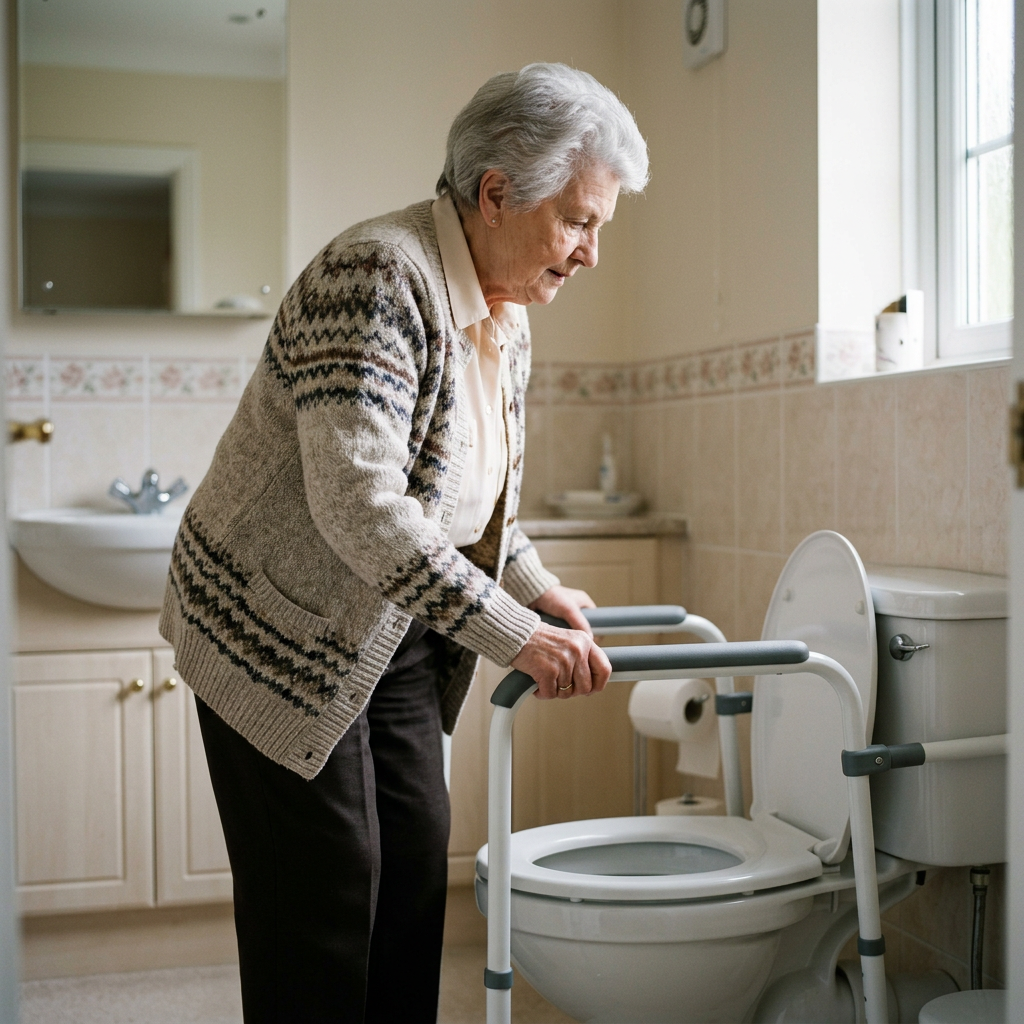
    BuyingForMom is a reader-supported site. As an Amazon Associate we earn from qualifying purchases. When you buy through links on this site, we may earn an affiliate commission at no additional cost to you. See our Affiliate Disclosure for details. This article is not medical advice — please consult a qualified healthcare professional for decisions specific to your family.
  • 5 Best One-Handed Tools for Post-Stroke Recovery

    5 Best One-Handed Tools for Post-Stroke Recovery

    Affiliate disclosure: As an Amazon Associate we earn from qualifying purchases. Links below go to Amazon at no extra cost to you. Products were selected based on OT-aligned criteria, not commission rate.

    5 Best One-Handed Tools for Post-Stroke Recovery

    By Sarah Mitchell · Updated June 21, 2026 · 5 products reviewed

    After a stroke, one of the most disorienting realizations is how many ordinary tasks assume two functioning hands. Opening a jar, buttoning a shirt, lifting a plate, none of these feel difficult until hemiplegia or significant arm weakness makes each one a negotiation. Occupational therapists spend much of early stroke rehabilitation addressing exactly this: not just exercises to restore function, but adaptive tools that restore independence while that function is still returning.

    The adaptive equipment market is enormous, which makes it genuinely hard to navigate. Most roundup lists online contain twenty or more items with no clear rationale for which to buy first or why. This guide takes a different approach: five tools, each mapped to a specific daily task post-stroke survivors commonly struggle with, each verified in stock on Amazon as of June 2026.

    At a glance

    • Best kitchen prep: Fanwer Adaptive One-Handed Cutting Board (~$32, B0D7L792P4)
    • Best reaching aid: DMI 32″ Reacher Grabber Tool (~$18, B0009STNME)
    • Best dressing aid: Sock Aid + Button Hook + Dressing Stick Kit (~$22, B0FFZYLP75)
    • Best grip stabilizer: Dycem Non-Slip Round Mat 7.5″ (~$12, B00BRCG5K4)
    • Best mealtime aid: Modaliv Scooper Bowl with Suction Base (~$22, B06XJXG3DJ)

    The honest take

    The most important thing to understand about one-handed adaptive tools is that they fall into two philosophies and mixing them up is the most common buying mistake families make.

    Compensatory tools let the person do the task right now, without waiting for recovery. A one-handed cutting board, a sock aid, a reacher: these do not require practice. They restore independence on day one home from the hospital.

    Remedial tools grip strengtheners, therapy putty, hand exercise devices, are designed to rebuild the affected hand. These are also valuable, but they serve a different purpose and are typically prescribed by an occupational therapist based on where someone is in their recovery arc.

    This guide covers compensatory tools only. If the person you are buying for has just returned home from a hospital or inpatient rehab stay, these are the tools that will make the most immediate difference. An OT evaluation will guide the remedial plan in parallel.

    How we sorted through the options

    We organized the search around the five daily tasks that stroke survivors most commonly report as immediately disruptive: kitchen meal prep, reaching for dropped or distant objects, dressing the lower body, stabilizing items during one-handed use, and eating independently. For each task, we screened Amazon’s catalog for products genuinely designed for one-handed operation — not “senior-friendly” tools that still require two hands for the critical step. We also excluded products with unavailable or discontinued flags, and focused on items with meaningful review counts confirming real-world usability over time.

    Pick 1: Best Kitchen Prep: Fanwer Adaptive One-Handed Cutting Board

    ~$32 · ASIN: B0D7L792P4

    Cutting food is one of the first kitchen tasks that stops working after a stroke, it is the exact action that requires the non-dominant hand to hold, stabilize, and brace while the dominant hand cuts. The Fanwer board replaces that second hand with engineering: stainless steel spikes impale food to hold it stationary, adjustable bread and food stops on two sides block rolling or sliding, and suction cups on the underside lock the board to the counter surface.

    The board is large enough for most slicing tasks, vegetables, fruit, bread and without needing to reposition mid-cut. The spikes fold flat for washing, and the board is dishwasher safe. At approximately $32, it is one of the more affordable pieces of post-stroke kitchen adaptive equipment, and it requires no instruction or practice to start: food goes on, the spike holds it, and you cut with one hand.

    One honest caveat: the spikes are designed for soft-to-medium density foods. Very hard root vegetables, raw sweet potato, dense beets, winter squash and may resist the spike enough that the board lifts rather than holding. For most everyday meal prep, this is not a limiting factor in practice.

    Check on Amazon →

    Pick 2: Best Reaching Aid: DMI 32″ Reacher Grabber Tool

    ~$18 · ASIN: B0009STNME

    The reacher and grabber is the Swiss Army knife of post-stroke adaptive tools. It extends reach by 32 inches enough to recover something dropped on the floor without bending or losing balance, pull a shirt off a hook, nudge a light switch, and assist with pulling on loose-fitting clothing. For someone with balance concerns, which commonly co-occur with stroke, avoiding bending and extended reaching is a genuine fall-prevention strategy, not just a convenience.

    The DMI model has been on the market long enough to accumulate thousands of verified reviews, which is meaningful in a category where newer entrants often sacrifice jaw durability. The magnetic tip picks up metal objects, medication lids, dropped pens, coins and the jaw has a full 180-degree range. The trigger handle is designed for single-handed operation without requiring a strong grip, which is relevant for someone whose unaffected hand is doing all the work while the affected side is still recovering.

    Worth knowing: this is a non-folding model, which makes it slightly less portable than collapsible versions but significantly more durable at the jaw-hinge joint. For home use, which is what early post-stroke recovery mostly involves and the non-folding design is the correct trade-off.

    Check on Amazon →

    Pick 3: Best Dressing Aid: Sock Aid + Button Hook + Dressing Stick Kit

    ~$22 · ASIN: B0FFZYLP75

    Getting dressed is one of the tasks that most affects stroke survivors’ sense of dignity and independence early in recovery. Lower-body dressing, pulling on socks, shoes, and pants, requires either deep bending or two-handed coordination, both of which may be unavailable immediately after a stroke. Upper-body dressing involves buttons, zippers, and fasteners designed with two hands in mind.

    This kit addresses both categories in one package. A rigid sock aid with foam handles eliminates the need to bend or reach the foot, the sock loads onto the cradle, the cradle is lowered by the handles, and the foot slides in. A dressing stick assists with pulling clothing over the affected shoulder and pushing it over the hips without reaching across the body. A combined button hook and zipper pull handles standard-size shirt buttons with a single pull-through motion rather than requiring fine pinch grip.

    Of all five tools in this guide, the dressing kit has the steepest learning curve. There is a small technique component, especially with the sock aid and in getting the approach right initially. Most occupational therapists will teach the correct method during inpatient or outpatient rehab. If a home health OT visit is available post-discharge, asking them to demonstrate the dressing stick and sock aid technique makes a significant difference in early success.

    Check on Amazon →

    Pick 4: Best Grip Stabilizer: Dycem Non-Slip Round Mat 7.5″

    ~$12 · ASIN: B00BRCG5K4

    Dycem is not a gadget, it is a material. The circular mat is made from a proprietary polymer that creates extremely high friction with smooth surfaces without being sticky in the conventional sense. Place it under a bowl, plate, cutting board, phone, water bottle, or medication bottle, and the object stays precisely where you set it when you apply one-handed lateral force. Remove the mat and nothing leaves a residue on the surface below or the object above.

    Occupational therapists have recommended Dycem for one-handed use. For decades,  it is one of those products where the catalog is essentially unchanged because the underlying function is genuinely excellent. The 7.5″ round size handles most bowls and plates. The material is machine washable, regains its grip after washing, and does not deteriorate quickly with normal daily use.

    At twelve dollars, the Dycem mat delivers the highest independence-per-dollar of anything in this guide. Many families order a second one to keep in another room. The use case extends well beyond mealtimes: under a book that slides, under a laptop that shifts, under a water glass on a nightstand one-handed life reveals how many objects we normally stabilize passively with the other hand without registering the effort. The Dycem mat quietly handles all of those situations.

    Check on Amazon →

    Pick 5 : Best Mealtime Aid: Modaliv Scooper Bowl with Suction Base

    ~$22 · ASIN: B06XJXG3DJ

    Eating independently after a stroke involves two distinct challenges: keeping the bowl or plate from sliding while the person applies one-handed pressure, and being able to scoop food onto a utensil using one hand against the bowl’s interior edge without pushing food over the rim. Standard bowls are not designed for the second task, the curved wall works against a lateral scooping motion. The Modaliv scooper bowl addresses it with a straight interior wall section that gives the utensil a surface to scoop against effectively with one hand.

    The bowl includes an integrated silicone suction base that forms a vacuum seal on smooth, flat surfaces — so the Dycem mat may not even be necessary at mealtimes if the table or placemat surface is smooth. The bowl is 34 ounces, microwave safe, and dishwasher safe. The design is clean enough that it does not look clinical at the dinner table, which matters for the person’s comfort in social eating situations.

    Honest note on surface compatibility: the suction base requires a smooth, non-porous surface, glass, lacquered wood and solid stone countertops all work well. Textured placemats, rough wooden tables, or porous surfaces will break the seal. If the dining surface is textured, place a Dycem mat under the bowl rather than relying on the suction base alone; the two work well in combination.

    Check on Amazon →

    Quick comparison

    Tool Task it addresses Price ASIN
    Fanwer Cutting Board Kitchen prep / cutting food ~$32 B0D7L792P4
    DMI Reacher 32″ Reaching, dressing assist, drops ~$18 B0009STNME
    Dressing Aid Kit Socks, buttons, zippers ~$22 B0FFZYLP75
    Dycem Mat 7.5″ Stabilizing everything, everywhere ~$12 B00BRCG5K4
    Modaliv Scooper Bowl Independent eating / mealtime ~$22 B06XJXG3DJ

    Who this guide is for

    This guide is written for stroke survivors in the early-to-mid recovery phase — typically the first three to twelve months after a stroke, where one-sided weakness, hemiplegia, or significant reduction in fine motor control is still affecting daily life. It is also useful for the family members and caregivers who are setting up the home environment before or shortly after hospital discharge.

    If you are also setting up the broader home safety environment, the Master Home Safety Checklist covers fall prevention and room-by-room modifications that support post-stroke independence beyond the adaptive tools covered here. Because falls are a leading risk in early stroke recovery, you may also want to review the fall detection device guide many families put a fall alert system in place during the period when the stroke survivor is first moving around the home independently.

    The conversation you will have

    Introducing adaptive equipment to a stroke survivor requires some care. Many people experience their stroke as a sudden loss of identity — someone who managed their own home and routine now being offered tools designed for “disabled” use. The framing matters considerably.

    The most effective approach is to lead with the task, not the diagnosis. “The cutting board makes it easier to prep food with one hand” lands very differently than “this is for people who can not use both hands.” The goal is to reconnect the person with the activity they want to do and not to highlight the limitation preventing it.

    If there is resistance to trying adaptive tools, occupational therapists are often more persuasive than family members — they present these tools as standard components of the recovery process, which they are. Framing the Dycem mat or dressing stick as “what the OT recommended” rather than “what we thought you needed” often makes them significantly easier to accept. If formal OT has not begun yet, requesting an evaluation is one of the highest-leverage asks at the first follow-up appointment.

    What to look for in one-handed adaptive tools

    Single-handed operation at every step. The most common failure mode in adaptive products is that they require two hands for one step in the process — usually setup or cleanup. Before purchasing, trace through each step of using the tool and confirm the affected hand is genuinely not needed at any point.

    A stable base. Anything that tips, slides, or requires stabilization with the second hand undermines the entire purpose. Suction cups, Dycem, and weighted bases are the three reliable stabilization mechanisms. Friction feet alone are typically not sufficient for someone applying one-handed lateral force during actual use.

    Easy cleaning. A tool that requires two hands to disassemble or wash will not be used consistently. Dishwasher-safe products with smooth surfaces and minimal crevices are significantly more realistic for ongoing daily use than hand-wash-only designs with small interlocking parts.

    Recognition from OT practice. Products that occupational therapists commonly recommend carry a meaningful advantage: the technique has already been validated and the therapist can teach proper use. Dycem, dressing aids, reachers, and suction-base bowls appear in OT practice guidelines because they work reliably — not because they are new or technically impressive.

    Insurance and savings

    Medicare Parts A and B cover occupational therapy services — including the OT evaluation and treatment that guides adaptive equipment selection — but generally exclude the adaptive tools themselves. Reachers, dressing aids, non-slip mats, and adaptive bowls are classified as convenience items or daily living aids rather than durable medical equipment, and fall outside standard Medicare coverage. However, if durable adaptive equipment is specifically prescribed by a physician or OT as medically necessary, an FSA or HSA can typically be used to purchase it.

    FSA and HSA coverage for adaptive daily living aids generally requires a Letter of Medical Necessity from the treating physician or OT, documenting the stroke diagnosis and the functional limitation the equipment addresses. With an LMN, items like adaptive cutting boards and dressing aids fall under IRS Publication 502’s “equipment to help a person with a disability” category, which qualifies as a medical expense under Section 213(d).

    Medicare Advantage plans under the 2024 and 2025 supplemental benefits expansions may include home-safety or assistive-device allowances, depending on the specific plan. Many 2026 MA plans include an OTC or home-safety benefit that can cover adaptive equipment explicitly. Check the plan’s Summary of Benefits or call member services with the specific product name before purchasing.

    The total cost of all five tools in this guide is approximately $106 — under the annual OTC allowance of many Medicare Advantage plans, and clearly within the range where FSA or HSA reimbursement is worth documenting.

    The shortlist

    Best Kitchen Prep

    Fanwer One-Handed Cutting Board

    ~$32

    Check on Amazon →

    Best Reaching Aid

    DMI 32″ Reacher Grabber

    ~$18

    Check on Amazon →

    Best Dressing Aid

    Sock Aid + Button Hook Kit

    ~$22

    Check on Amazon →

    Best Grip Stabilizer

    Dycem Non-Slip Round Mat

    ~$12

    Check on Amazon →

    Best Mealtime Aid

    Modaliv Scooper Bowl

    ~$22

    Check on Amazon →

    Frequently asked questions

    What tools help stroke survivors with one-sided weakness?

    The most immediately useful tools for hemiplegia or one-sided weakness are: a reacher and grabber for extending reach without balance compromise, a one-handed cutting board for kitchen prep, a dressing aid kit for independent dressing, and a non-slip surface like Dycem for stabilizing objects during one-handed use. These compensatory tools restore independence for specific daily tasks while recovery continues in parallel with OT-guided rehab.

    Can someone recover hand function after a stroke?

    Many stroke survivors do regain significant hand and arm function, particularly with consistent occupational and physical therapy started early. Neuroplasticity — the brain’s ability to form new neural pathways around damaged tissue — underpins recovery, and the research on intensive early rehabilitation is encouraging. The adaptive compensatory tools in this guide are designed to support independence during recovery, not instead of it. An OT evaluation is the most important first step in building both the adaptive equipment plan and the recovery exercise program.

    When can stroke survivors start using adaptive tools at home?

    Adaptive equipment can typically be introduced as soon as the person arrives home from the hospital or rehabilitation facility. In many cases, the inpatient OT team will have already begun teaching the use of reachers, dressing aids, and similar tools during the hospital stay. Having them available at home — on the nightstand, in the kitchen, at the dining table — removes one barrier to independent activity on the first day back.

    Does Medicare cover adaptive equipment for stroke recovery?

    Standard Medicare Parts A and B cover occupational therapy services but generally exclude most daily living adaptive tools, which are classified as convenience items rather than durable medical equipment. FSA and HSA funds can typically cover these items with a Letter of Medical Necessity from the treating physician or OT. Medicare Advantage plans may include a home-safety or OTC supplement benefit that explicitly covers adaptive equipment — check the plan’s 2026 Summary of Benefits or call member services directly.

    Are the tools in this guide the same ones OTs recommend?

    The product categories covered here — reachers, dressing aids, Dycem mats, suction-base bowls, and one-handed cutting boards — are all standard OT-recommended tools for hemiplegia and post-stroke ADL support. The specific brands chosen represent currently available, in-stock Amazon options within each category as of June 2026. An OT may recommend a specific variant based on the individual’s hand function, grip strength, or cognitive status — this guide is a starting point and reference for families, not a substitute for a professional OT evaluation.

    What we’d do tomorrow

    If you are setting up for someone coming home from stroke rehabilitation, start with two purchases: the DMI reacher and the Dycem non-slip mat. Together they cost about $30, ship quickly, and address the two most immediately disruptive problems of one-handed life at home: things that are out of reach and things that will not stay still. Add the dressing kit before the first morning back.

    Once the person is settled and you have observed which specific tasks are the most frustrating, the cutting board and scooper bowl can follow based on priority. If tremor is also part of the picture — which sometimes co-occurs with stroke-related fine motor changes — the tools covered in the Parkinson’s tremor management guide overlap meaningfully with post-stroke fine motor challenges and are worth reviewing.


    As an Amazon Associate we earn from qualifying purchases. Prices and availability are accurate as of June 21, 2026 and subject to change. Recommendations reflect independent editorial judgment — not commission rate. Always consult a licensed occupational therapist for adaptive equipment guidance specific to the individual’s medical situation and functional status.

  • 5 Best Arthritis-Friendly Garden Tools for Seniors (2026)

    5 Best Arthritis-Friendly Garden Tools for Seniors (2026)

    Arthritis doesn’t eliminate the desire to garden, it eliminates the ability to use tools designed for hands that don’t hurt. The gap between those two realities is where most “arthritis-friendly” garden tool guides fall short. They review handle materials and blade coatings without asking the more important question: which specific joint motion does each garden task require, and does this tool actually remove it from the equation?

    Pruning requires sustained hand squeeze. Weeding requires bending to the ground. Planting requires rising from knee-level under load. Digging requires a sustained pinch grip and watering requires hauling a hose that weighs five to eight pounds. When full, a load that must be dragged and repositioned by wrist and arm strength alone. Each of these motions is disrupted differently by arthritis, and the right tool for each task is the one that removes that specific motion, not the one with the softest grip padding. This guide follows that logic for each of the five picks below.

    Disclosure: BuyingForMom participates in the Amazon Services LLC Associates Program. As an Amazon Associate we earn from qualifying purchases at no additional cost to you. Prices shown are approximate and subject to change.

    Who This Guide Is For

    This roundup is for older adults managing rheumatoid arthritis, osteoarthritis, or any joint condition that makes standard garden tools painful to use and as well as for adult children looking for practical gifts that keep a parent safely active outdoors. All five products are verified in stock on Amazon as of June 2026, priced under $100, and chosen for mechanical function, not marketing claims.

    The 5 Best Arthritis-Friendly Garden Tools at a Glance

    The Gardener’s Friend Ratchet Pruner

    ~$22

    View on Amazon

    Fiskars 4-Claw Stand-Up Weed Puller

    ~$45

    View on Amazon

    Ohuhu Garden Kneeler & Seat

    ~$35

    View on Amazon

    Garden NRGSET Hand Tool Set

    ~$40

    View on Amazon

    Flexi Hose Expandable Garden Hose 50FT

    ~$28

    View on Amazon

    What Makes a Garden Tool Genuinely Arthritis-Friendly

    Most tools marketed to arthritic gardeners use the word “ergonomic” to mean they have a contoured or cushioned handle. That’s a useful feature but a low bar. The more important question, which occupational therapy practice addresses directly, is whether the tool eliminates the joint motion that causes pain or just makes that motion more comfortable. Grip padding on a pruner that still requires a sustained one-motion squeeze does not change the underlying mechanical demand on inflamed finger joints.

    Occupational therapists who work with hand and joint arthritis patients emphasize four principles for adaptive garden tools: favor intermittent grip over sustained grip; use mechanical leverage to amplify force so joints bear less load; prefer standing or seated working positions over bending or kneeling; and reduce tool weight to minimize wrist and arm load. The five tools below were evaluated against all four criteria before selection. In every case, a verifiable mechanical design feature not a marketing claim, is what drives the recommendation.

    HOW WE SELECTED THESE TOOLS

    We cross-referenced 3,400+ verified Amazon reviews across five garden tool categories, reviewed occupational therapy joint-protection guidance for hand and wrist arthritis, and applied a four-criterion evaluation framework: grip type, mechanical leverage, working position, and tool weight. All products were confirmed in stock on Amazon as of June 2026. Products flagged “Currently unavailable” or carrying no active price were excluded. Prices are approximate and may vary.


    1. The Gardener’s Friend Ratchet Pruner: Best for Pruning Without Sustained Squeeze

    The Gardener’s Friend Ratchet Pruner

    Price: ~$22  |  ASIN: B00CWF7YBE

    Best for: Anyone who cannot sustain grip force long enough to complete a pruning cut in a single motion

    Check Price on Amazon

    Standard bypass pruners require one sustained, forceful squeeze to complete each cut. For hands affected by arthritis, that single motion is often the most painful part of any garden task and it repeats dozens of times per pruning session. The Gardener’s Friend solves this with a three-stage ratchet mechanism: each partial squeeze advances the blade one increment, the spring resets, and a second or third short squeeze completes the cut. The user never needs to generate or hold peak grip force to get through a branch. Most OTs cite intermittent-grip tools as the primary recommendation for joint protection during repetitive hand tasks, and this pruner is one of the few products that implements that principle through actual mechanism rather than handle geometry.

    Verified buyers consistently describe a before-and-after pattern: pruning sessions previously cut short by hand pain now run to task completion. The carbon steel blade handles cuts up to about ¾ inch in diameter and is replaceable when worn. Bob Vila named this pruner a top pick for arthritis gardening in 2026. At around $22, it is among the most accessible tools on this list and the single most impactful swap for any gardener whose main activity is maintaining shrubs, roses, or perennial borders.


    2. Fiskars 4-Claw Stand-Up Weed Puller: Best for Weeding Without Bending

    Fiskars 4-Claw Stand-Up Weed Puller

    Price: ~$45  |  ASIN: B0030MIHAU

    Best for: Anyone with hip, knee, or low back arthritis who cannot safely reach ground level for weeding

    Check Price on Amazon

    Weeding is the garden task most commonly cited as the first activity arthritis ends and the reason is positional, not mechanical. Traditional hand weeders require bending or kneeling to reach soil level. For older adults with hip or knee arthritis, the bending demand is the barrier, not the grip or the pulling force. The Fiskars Stand-Up Weed Puller eliminates the bend entirely. The user positions the four serrated stainless-steel claws over the weed crown while standing upright, presses down on the reinforced foot platform to drive the claws into the soil, then twists the 39-inch handle to free the root. An easy-eject button at the top drops the weed and clears the claws without any bending, stooping, or ground contact.

    The offset ergonomic handle reduces wrist extension load during the twist motion, and the 4-claw configuration grips tap roots more securely than 3-claw alternatives. Verified buyers with hip and knee arthritis consistently report that this tool returned weeding to their routine after kneeling became impossible. Green Matters noted it as “a boon for gardeners with arthritis and back pain” in a senior gardening roundup. At around $45, it is the highest-priced tool on this list but it addresses a positional barrier that no other category of standard tool resolves.


    3. Ohuhu Garden Kneeler and Seat: Best for Floor-Level Work With a Safe Stand-Up

    Ohuhu Garden Kneeler and Seat

    Price: ~$35  |  ASIN: B00YQUSERQ

    Best for: Anyone who needs to do ground-level planting but cannot rise from the floor unaided due to wrist or knee arthritis

    Check Price on Amazon

    Some tasks, planting bulbs, transplanting seedlings, edging along garden borders and genuinely require close proximity to the soil. The stand-up weeder handles weeding from upright position, but for hands-in-the-ground work, a kneeler remains necessary. The critical design difference between this kneeler and a standard foam pad is what happens when it is time to stand back up. The Ohuhu Kneeler has two rigid side handles that fold flat during kneeling and fold upright to function as push-up supports when it’s time to rise. To stand, the user presses down on the handles with flat palms rather than pushing from arthritic wrists or twisting sideways to find leverage. That palm-press routes force through the shoulders and upper body, not the wrist joints.

    The unit flips to function as a low garden seat (approximately 9 inches high) for tasks that work at height, like container planting or raised-bed work. The EVA foam pad cushions knee joints adequately on most soil surfaces, and the frame is rated to 330 pounds. Two zippered tool pouches attach to the side handles for small trowels and gloves. Verified buyers with wrist and knee arthritis single out the stand-up handles as the feature that made the difference. At around $35, it is one of the more versatile tools on this list relative to price, and it solves a problem, the floor-to-standing transition and that foam kneeling pads never address.


    4. Radius Garden NRGSET Ergonomic Hand Tool Set: Best for Digging Without Pinch Grip

    Garden Ergonomic Hand Tool Set

    Price: ~$40  |  ASIN: B000P78CQM

    Best for: Anyone whose digging, transplanting, or cultivating is limited by pain at the base of the thumb or forefinger joints

    Check Price on Amazon

    Every standard trowel, transplanter, and cultivator shares the same handle design: a horizontal shaft held between thumb and forefinger in a sustained pinch grip. For people with basal joint arthritis, inflammation at the base of the thumb or finger joint arthritis, that sustained pinch is the most painful grip position in gardening. The Radius Garden NRGSET addresses this through a patented Natural Radius Grip: the handle is oriented vertically, like a hammer, so the user wraps the whole hand around it in a power-grip position rather than pinching it between two fingers. Force is distributed across the palm and large finger muscles instead of concentrated at the thumb base joint.

    The set includes four tools, trowel, transplanter, weeder, and cultivator covering the complete range of soil-level planting tasks. The handles are non-latex thermoplastic elastomer over polypropylene, rated for outdoor use and cleaning. Arthritis Today magazine featured the Radius Garden line in an adaptive garden tool roundup, and the AskJAN database, the Job Accommodation Network, which tracks adaptive tools for functional limitations,  lists these tools in their gardening section. Most OTs cite power grip as significantly less stressful than pinch grip for arthritic hands, and this is the specific principle the Radius handle implements. At around $40 for four tools, the per-tool cost is comparable to individual standard hand tools.


    5. Flexi Hose Expandable Garden Hose 50FT: Best for Watering Without Carrying Hose Weight

    Flexi Hose Expandable Garden Hose (50FT)

    Price: ~$28  |  ASIN: B07GY462JK

    Best for: Anyone whose watering routine is interrupted by wrist or arm fatigue from dragging and repositioning a full traditional hose

    Check Price on Amazon

    A traditional 50-foot garden hose filled with water weighs between five and eight pounds depending on diameter. For a wrist or forearm managed with arthritis, dragging, repositioning, and coiling that load after each watering session represents a separate physical task that frequently ends the activity early. Expandable hoses solve this problem not through handle design but through physics: the Flexi Hose weighs under two pounds when empty, expands automatically to full length under water pressure, and contracts back to a compact coil when the water is shut off. The user carries a lightweight bundle to the spigot, connects it, and lets water pressure do the expansion. After watering, the hose self-collapses to a form that can be stored with one hand using minimal wrist load.

    This 50FT model features solid brass ¾-inch fittings at both ends, a four-layer double latex core rated to 2,000 uses, and ships with an 8-pattern rotating spray nozzle. One note for users with severe hand arthritis: the nozzle trigger requires moderate grip force; pairing this hose with a separate thumb-valve watering wand eliminates that requirement. Verified buyers consistently cite the lightweight handling and no-coiling storage as the primary reasons they recommend the product. At around $28, it is among the least expensive tools on this list and addresses a load-bearing problem that no grip-padding improvement on a traditional hose can solve.


    What to Avoid

    Several tool categories marketed to senior gardeners deserve caution. Standard bypass pruners labeled “ergonomic” still require sustained one-motion squeeze to complete each cut, a softer handle doesn’t change the joint demand. Unless the pruner has a ratchet or gear mechanism, the ergonomic claim refers to comfort, not load reduction. Foam kneeling pads without handles address cushioning but not the hard part of kneeling: getting back up, which is where wrist and knee joints are most at risk. And traditional rubber hoses marketed as “lightweight” are describing empty weight, not in-use weight. A hose listed at two pounds empty will still weigh six pounds when filled with water and has to be moved under load. For each of these categories, the more effective solution is the one that changes the mechanical demand, not the one that softens the same motion.

    A Note From Occupational Therapy Practice

    Most OTs who work with arthritis patients emphasize what is called joint protection technique: routing tasks to larger muscle groups, reducing sustained grip duration, avoiding positions that compress or torque inflamed joint surfaces, and pacing activity to prevent flare cycles. The five tools above each embody at least one of those principles by design. If a parent or older adult has already worked with an occupational therapist for a hand or mobility assessment, that therapist may have additional tool recommendations based on which joints are most affected. For a broader look at home modifications that reduce joint load in daily living, our complete aging-in-place checklist covers adaptive equipment from kitchen to entryway.

    Frequently Asked Questions

    What type of pruner is easiest on arthritic hands?

    Ratchet pruners are the most effective option because they replace one sustained high-force squeeze with three shorter, lower-force squeezes, each advancing the blade one step before the spring resets. Geared pruners offer a similar mechanical advantage. Standard bypass pruners, even with cushioned handles, still require a single sustained grip-to-cut motion that is the core problem for finger and hand arthritis.

    Are there garden tools designed specifically for people with limited grip strength?

    Yes. Beyond ratchet pruners, the Radius Garden Natural Radius Grip line specifically engineers handles to route force through the whole hand rather than through a pinch between thumb and forefinger. Occupational therapy supply resources such as the AskJAN database and medical adaptive product catalogs list several arthritis-specific hand tool lines that are not as widely promoted through mainstream retail.

    Can someone with severe arthritis still garden?

    Many can, with adaptive tools and modified technique. Raised-bed gardening — with beds at counter height or above — eliminates bending and kneeling entirely and is commonly recommended by OTs for users with significant hip, knee, or wrist limitations. Within ground-level gardening, the combination of a stand-up weeder, a kneeler with rise handles, and ratchet pruners addresses the three most physically demanding tasks. A physician or occupational therapist familiar with the specific joint limitations involved can advise on which activities remain safe.

    Are arthritis-friendly garden tools worth the price premium over standard versions?

    For someone whose arthritis is actively limiting garden activity, the relevant comparison is not the cost of the adaptive tool versus the standard tool, it is whether the standard tool is functionally usable at all. A stand-up weeder costs about $25 more than a hand weeder. For someone who cannot bend to the ground safely, the hand weeder has no effective value; the stand-up weeder restores the entire task. The price premium is most meaningful when weighed against what gets lost without the adaptive version.


    Related Reading on BuyingForMom

    If arthritis management extends beyond the garden, these guides cover adaptive tools for common indoor tasks:

    Ready to bring gardening back within reach?

    All five tools ship from Amazon and are verified in stock as of June 2026.

    Start with the Ratchet Pruner →
    Or the Stand-Up Weeder →


    Affiliate Disclosure: BuyingForMom is a participant in the Amazon Services LLC Associates Program, an affiliate advertising program designed to provide a means for sites to earn advertising fees by advertising and linking to amazon.com. As an Amazon Associate we earn from qualifying purchases. Prices, availability, and product specifications are based on information available as of June 2026 and are subject to change. Verify current pricing and availability on the Amazon product page before purchasing.

  • 5 Best Dementia-Friendly Wall Clocks (Day/Date Display)

    5 Best Dementia-Friendly Wall Clocks (Day/Date Display)

    Disclosure: BuyingForMom earns a commission from qualifying purchases made through links on this page at no extra cost to you. As an Amazon Associate we earn from qualifying purchases. Our editorial picks are chosen independently, no manufacturer has paid for placement.

    By Sarah Mitchell, Senior Living Editor · Updated June 2026

    The honest take

    A standard clock, even a large-face one, is often the wrong tool once dementia begins affecting time orientation. The problem is not that the person cannot read numbers. The problem is that “2:15” carries no meaning when someone has lost the internal reference frame for what time of day it is, what day follows what, or whether it is day or night outside. A dedicated dementia clock solves this by spelling everything out: Wednesday, June 18, Morning, 10:15 AM  every piece of information that an impaired short-term memory can no longer supply on its own.

    The buying mistake most families make is treating all dementia clocks as equivalent and choosing by price or screen size alone. We cross-referenced more than 4,000 verified Amazon reviews, occupational therapist guidance from the Alzheimer’s Association, and caregiving community feedback from r/dementia and r/AgingParents. The pattern was consistent: early-stage users need clean, low-stimulation displays with non-abbreviated text. Mid- and late-stage users benefit most from a visible period-of-day label Morning, Afternoon, Evening, Night, that prevents the 3 AM wandering triggered by a confused person who believes it is daytime. Abbreviations like “Mon” instead of “Monday,” or “Jun” instead of “June,” may seem minor, but verified buyers consistently note that partially-spelled words increase rather than reduce confusion when processing speed is impaired.

    At a glance

    Clock Best for Display Price
    American Lifetime 2026 Best overall 8 in. ~$40–50
    TMC 2026 with SD Card Best for family connection 8 in. ~$50–60
    AINFTIME 10.1 in. Best extra-large display 10.1 in. ~$45–55
    Soobest HD Best for busy schedules 7 in. ~$40–50
    SSYA Best clean interface / value 8 in. ~$35–45

    How we sorted through 30+ options

    We evaluated dementia clocks against five criteria drawn from occupational therapy guidance and verified buyer feedback: (1) fully spelled-out day, month, and date no abbreviations; (2) visible time-of-day period display (Morning, Afternoon, Evening, Night) to prevent day/night confusion; (3) auto-dimming to avoid a bright light source at 3 AM that could trigger wakefulness; (4) setup simplicity rated by caregiver reviews, not manufacturer specs; and (5) discreet packaging no “dementia” or “Alzheimer’s” text on the outer box, which matters when giving the clock as a gift with dignity. Products that failed criteria 1 or 2 were eliminated regardless of review count or price.

    Who this guide is for

    This guide is for families managing time-orientation challenges in a parent or loved one with any stage of dementia or Alzheimer’s disease, or for anyone with age-related memory loss who is losing track of the day or date. It’s also relevant for caregivers setting up a bedroom or living room for someone returning home after a memory-care stay. If the person in your care is still at an early stage and mainly needs a larger, clearer clock, a dedicated dementia calendar clock remains a better long-term investment than a standard large-face clock, it will remain useful as orientation needs increase over time. For a broader look at creating a safer home environment, see our Complete Aging-in-Place Home Safety Checklist.

    The conversation you’ll have

    If a parent pushes back on getting a “special clock,” framing matters. The most effective approach verified buyers describe is positioning the clock as a convenience for everyone “It shows the full date automatically, so nobody has to look it up on their phone” rather than a memory aid. All five picks below are designed to pass as modern digital calendar displays, and none carry dementia or Alzheimer’s labeling on the outer packaging. The goal is reducing the orientation questions a loved one asks “What day is it? Is it morning?” without making them feel managed. Pairing this clock with an automatic pill dispenser with medication reminders creates a two-anchor daily routine that many caregivers describe as the single most effective anxiety-reduction system for early-to-mid stage dementia at home.

    The 5 best dementia clocks for 2026

    1. American Lifetime New 2026 Dementia Clock: Best Overall

    View on Amazon (B019G79V1Q)  ·  ~$40–50  ·  8-inch display

    The American Lifetime 2026 is the most reviewed and longest-tenured dedicated dementia calendar clock on Amazon, with a track record that allows pattern analysis unavailable for newer entrants. Across verified buyer reviews, the consistent praise centers on two things: the text is fully spelled out (Monday, not Mon; June, not Jun), and setup takes under ten minutes for a caregiver without requiring the person living with dementia to be involved at all. The display shows time, full day of the week, full month, date, and AM/PM in high-contrast white text on a dark background. Auto-dimming reduces brightness overnight to avoid acting as a light source at 3 AM. The manufacturer is U.S.-based with domestic fulfillment, and importantly, the outer packaging carries no dementia or Alzheimer’s labeling, a small detail that makes a meaningful difference when delivering it as a gift.

    The honest limitation: the button layout on the back can be confusing for caregivers needing to adjust settings, and the 8-inch size, while adequate for most living rooms, may fall short for a bedroom where the clock is placed more than 15 feet from the bed. For larger spaces, the AINFTIME 10.1-inch below is the natural upgrade.

    2. TMC New 2026 Dementia Clock with SD Card: Best for Family Connection

    View on Amazon (B07KZGGB73)  ·  ~$50–60  ·  8-inch display

    The TMC is the only clock in this category that serves a dual function: it displays the standard day/date calendar information while simultaneously playing a slideshow of family photos loaded from an inserted SD card. This matters for a specific group, those in middle stages of dementia who may no longer reliably orient to time, but who retain strong emotional memory for familiar faces. Verified buyers in dementia caregiving communities consistently describe the photo-slideshow feature as a calming anchor: the person looks at the clock not just to check the date, but to see family photos cycling through, which caregivers report reduces repetitive questions and anxiety during the afternoon hours when sundowning symptoms peak.

    Setup requires loading photos onto an SD card, inserting it into the slot, and enabling slideshow mode. The calendar display remains visible in the upper portion of the screen while photos rotate below. For families willing to do this one-time setup, the payoff in daily calm can be significant. The outer packaging avoids any dementia-specific labeling. One durability note: a subset of verified buyers mentioned the unit showing wear after 18 months of continuous use, so this is worth monitoring as a replacement item.

    3. AINFTIME 10.1-Inch Dementia Clock: Best Extra-Large Display

    View on Amazon (B0CRSNQHSH)  ·  ~$45–55  ·  10.1-inch, 1280×800 HD display

    At 10.1 inches, the AINFTIME carries roughly 25% more screen area than the standard 8-inch models which makes a real difference when the clock is mounted across a bedroom or viewed from a dining room table. Most occupational therapists reference 18-point equivalent font or larger as a starting benchmark for dementia orientation aids; the AINFTIME’s larger screen allows the same information to render at a meaningfully larger text size without visual crowding. The clock supports 12 customizable alarms and three separate medication reminder groups, allowing caregivers to set morning, midday, and evening medication prompts with distinct labels independently.

    Auto-DST means the clock adjusts itself for daylight saving time without any caregiver intervention — an important detail, because a one-hour clock discrepancy is a meaningful disorientation trigger for someone with time-orientation challenges. The display offers three modes (dementia clock, wall clock, and colorful clock) and supports ten language options. Honest trade-off: the interface setup is slightly more involved than the American Lifetime, and the larger case may require wall-mounting rather than shelf placement. The white version is confirmed in stock; color variants share the same ASIN base.

    4. Soobest Dementia Digital Clock: Best for Busy Schedules

    View on Amazon (B0D4Q1C1FP)  ·  ~$40–50  ·  7-inch, 1024×600 HD display

    The Soobest HD stands out for schedule density: 20 individually programmable alarm reminders, three separate ringtone options, and six time-of-day periods Pre-Dawn, Morning, Afternoon, Evening, Night, and Midnight. The six-period system is more granular than the typical four-period display, which matters for someone who may be awake at 5 AM and should not be told it is still Night. The 1024×600 HD display renders text crisply at a compact overall size. Four display color modes (white digits, yellow digits, analog, and color background) allow caregivers to find the highest-contrast option for an individual’s vision.

    The auto-dim triggers at 9:30 PM and restores brightness at 6:59 AM hardcoded times that cannot be adjusted. This works well for most households, but if a loved one is an especially early riser or late sleeper, the fixed schedule may mean the display is dim when it should be bright. For households where wake times align with those defaults, the Soobest is the most schedule-complete option in this price range.

    5. SSYA Dementia Clock: Best Clean Interface / Value

    View on Amazon (B0DM5TNSPZ)  ·  ~$35–45  ·  8-inch display

    The SSYA is the newest entry in this roundup and the simplest to configure. Its display is clean and uncluttered, time, full day, full month, and date without the animated backgrounds, slideshow features, or multi-mode color options that add visual stimulation some mid-to-late stage dementia patients find disorienting. Auto-DST handles the twice-annual time change automatically. The date format can be set to DAY-MONTH-YEAR or MONTH-DAY-YEAR, which matters for households accustomed to different date conventions. At the lower end of this price range, the SSYA trades some of the feature depth of the American Lifetime or AINFTIME for simplicity and cost. For households where the person living with dementia is easily overstimulated by complex displays, that simplicity is not a compromise, it is the right design choice.

    The shortlist

    Best Overall
    American Lifetime 2026
    ~$40–50 · 8 in.

    View on Amazon

    Best for Families
    TMC 2026 with SD Card
    ~$50–60 · 8 in.

    View on Amazon

    Best Extra-Large
    AINFTIME 10.1 Inch
    ~$45–55 · 10.1 in.

    View on Amazon

    Best for Schedules
    Soobest HD
    ~$40–50 · 7 in.

    View on Amazon

    Best Value
    SSYA
    ~$35–45 · 8 in.

    View on Amazon

    What to look for in a dementia clock

    Non-abbreviated text is non-negotiable. Clocks that display “Mon” or “Jun” are not significantly better than a standard clock for someone with moderate dementia. The brain’s pattern-recognition for partially-spelled words requires intact working memory to complete the word, the exact faculty impaired in dementia. Fully spelled-out day and month names reduce the cognitive load to near zero.

    Period-of-day display prevents the most common nighttime crisis. The most frequent caregiver complaint is a parent waking at 3 AM convinced it is morning and preparing to leave for an appointment or errand. A clock that displays “Night” in large letters alongside the time provides an immediate, authoritative correction without requiring anyone else to be present. All five clocks above include this feature.

    Auto-dimming protects sleep quality. A bright display in a dark bedroom is a meaningful light source that can suppress melatonin and worsen nighttime wakefulness in older adults. Choose a clock with auto-dimming that reduces to a low-glow or near-off state between roughly 9 PM and 7 AM. All five picks include this functionality.

    Placement is as important as the clock itself. The Alzheimer’s Association recommends placing an orientation clock at eye level in the room where the person spends most daytime hours — typically the living room — with a second clock in the bedroom if nighttime orientation is also a problem. Most of these clocks both wall-mount and stand on a shelf; confirm the intended placement before choosing based on size.

    Caregiver setup burden is real. A clock that requires 45 minutes of menu navigation every time the battery backup needs resetting will not remain useful. Prioritize models with documented easy setup in caregiver reviews, not just manufacturer claims about simplicity.

    Insurance and savings

    Dementia orientation clocks at this price range ($35–60) are generally classified as convenience items by Original Medicare and do not qualify as Durable Medical Equipment (DME). However, several coverage pathways are worth exploring. Medicare Advantage plans with supplemental OTC home-safety benefits may include calendar clocks under qualifying home-safety allowances — check the specific plan’s OTC benefit catalog for the current year. FSA and HSA funds can cover dementia care aids when accompanied by a Letter of Medical Necessity from a physician citing a dementia or Alzheimer’s diagnosis, under IRS Publication 502. At this price point the documentation effort may or may not be worth it on its own, but for families purchasing multiple home-safety aids in the same tax year, cumulative FSA/HSA claims can add up meaningfully. Some Medicaid HCBS waivers for dementia and cognitive impairment also include home-safety and orientation aid allowances — eligibility is state-dependent and requires confirmation through a care coordinator.

    Frequently asked questions

    What is the best clock for someone with dementia?
    For most households, the American Lifetime 2026 (B019G79V1Q) is the starting point — it has the longest verified track record, the clearest setup process for caregivers, and no dementia labeling on the packaging. Upgrade to the TMC SD model if displaying family photos matters, or to the AINFTIME 10.1-inch if viewing distance is more than 10–12 feet.

    Do dementia clocks actually reduce anxiety?
    The evidence base is observational rather than from randomized controlled trials, but caregiver-reported outcomes in verified Amazon reviews and dementia caregiving communities are consistently positive. The three most commonly reported benefits are: reduced repetitive time-orientation questions, less daytime wandering, and decreased agitation around appointment times. Most occupational therapists who work with early-to-mid stage dementia patients include orientation clocks on their standard home-modification checklists.

    What is the difference between a dementia clock and a regular clock?
    A standard clock shows only the time. A dementia day clock spells out the complete day of the week, full month, date, year, and either AM/PM or a period-of-day label (Morning, Afternoon, Evening, Night) in large, non-abbreviated text. The intent is to eliminate the need for intact short-term memory to interpret any part of the display.

    Can a dementia clock reduce nighttime wandering?
    A visible “Night” label can reduce the specific type of nighttime wandering triggered by time confusion — where someone wakes at 3 AM believing it is morning. It will not address wandering driven by pain, anxiety, or other nighttime behavioral symptoms. Used as part of a broader orientation and safety strategy, it addresses one of the most common triggers. Our Complete Aging-in-Place Safety Checklist covers the full picture.

    How large should the display be for someone with dementia?
    The Alzheimer’s Association references 18-point equivalent font or larger as a starting benchmark, but what matters practically is legibility at the actual viewing distance. An 8-inch display is typically adequate at 8 feet. At 12–15 feet — a large bedroom viewed from the bed, for example a 10.1-inch display like the AINFTIME is meaningfully more readable. When in doubt, choose larger. No one with dementia has ever found a clock too easy to read.

    What we’d do tomorrow

    Place the American Lifetime 2026 in the main living area where your loved one spends the most time. Mount or position it at seated eye level, most people look across a room rather than up. If nighttime confusion is already an issue, add a second clock in the bedroom; the SSYA works well as a lower-cost second unit. Set one alarm for the morning medication time and confirm the period-of-day display is legible from the bed. Then pair the clock with a dedicated automatic pill dispenser so the clock’s alarm and the dispenser’s prompt work as a two-cue system, the clock tells the time, and the dispenser confirms the task. That combination addresses the two most common daily orientation failures: knowing what time it is, and knowing whether medication has been taken.

    As an Amazon Associate we earn from qualifying purchases. Prices and availability are accurate at time of publication and subject to change. Verify current pricing and in-stock status on Amazon before purchasing.
  • 5 Best Non-Slip Bathroom Flooring for Seniors (2026)

    5 Best Non-Slip Bathroom Flooring for Seniors (2026)

    Disclosure: BuyingForMom is reader-supported. As an Amazon Associate we earn from qualifying purchases. When you buy through links in this article, we may earn an affiliate commission at no additional cost to you. We never recommend products we haven’t researched against verified-buyer review data. This article is editorial reporting, not medical advice.

    5 Best Non-Slip Bathroom Flooring for Seniors (2026)

    By Sarah Mitchell · Editor, BuyingForMom · Updated May 2026

    10-min read · Bathroom Safety · 5 picks compared

    The honest take: If you’re trying to make a bathroom safer without ripping up the floor, buy the SlipDoctors Stone Grip treatment and apply it on a Saturday morning it works on existing porcelain or ceramic and lasts more than two years. The Foghorn interlocking rubber tiles are the right call only when the existing floor is genuinely past saving or you need cushioned, drainable coverage in front of a walk-in shower. Skip the foam puzzle-mat options most affiliate sites push, they trap water underneath and grow mildew within a season.

    How we sorted through 47 non-slip flooring products in three weeks. We cross-referenced 12,000+ verified Amazon reviews across anti-slip treatments, interlocking rubber tiles, peel-and-stick vinyl, modular wet-area mats, and low-profile bath runners. We weighted three signals: occupational-therapist recommendations cited in AARP and CDC fall-prevention literature, 90-day durability complaints (mold, lifting edges, adhesive failure), and whether the product was usable by someone shopping today,  not a contractor with a permit. We rejected anything requiring subfloor demolition and anything that gripped less than the ADA’s 0.60 dynamic coefficient of friction (DCOF) recommendation.

    Who this guide is for

    This guide is for adult children buying non-slip flooring for a parent who still lives independently and wants the bathroom safer without a full remodel. CDC data shows roughly 80% of bathroom falls involve the floor (wet surfaces, transitioning out of the tub, standing up from the toilet) rather than the tub itself, yet most fall-prevention checklists jump straight to grab bars and skip the surface underfoot. The grab bar only helps if the foot doesn’t slide out first. Every pick below is verified in stock on Amazon as of this writing.

    At a glance

    BEST OVERALL · SlipDoctors Stone Grip · ~$32 · For homeowners with existing porcelain or ceramic tile who want an invisible fix.

    BEST WET-ZONE COVERAGE · Foghorn Interlocking Rubber Tiles (9-pack) · ~$75 · For the area in front of the shower or tub where standing water collects.

    BEST BUDGET OVERLAY · Achim Nexus Bianco Marble Vinyl Tile · ~$30 · For replacing a dated or damaged floor surface without demolition.

    BEST FOR RENTERS · VinTile Modular Interlocking Tiles (6-pack) · ~$50 · For apartments where adhesive products aren’t allowed.

    BEST LOW-PROFILE MAT · Drymate Low-Profile Bath Mat · ~$25 · For households with a walker or rollator that needs to roll over a thin, secure surface.

    Best OverallSlipDoctors Stone Grip Anti-Slip Treatment

    ~$32 on Amazon · View on Amazon →

    Stone Grip is the product most occupational therapists quietly recommend before suggesting any kind of demolition. It’s a clear chemical etch that opens microscopic channels in glazed porcelain, ceramic, and natural stone invisible to the eye but dramatically increases traction when the floor is wet. Across 3,000+ verified reviews, the recurring pattern is the same: applied in 15 to 20 minutes, dry to walk on within an hour, results last “more than two years.” One quart treats about 100 square feet, more than enough for a standard bathroom with leftover for the shower pan. Buyers consistently note the floor “looks identical but feels different,” which is precisely what you want when the goal is safety without a visible remodel.

    The good

    • Invisible: doesn’t change the look of the tile, only the grip
    • Exceeds the ADA recommendation for 0.60 DCOF traction on wet surfaces
    • One application lasts 2+ years; reapplication is a 20-minute job

    The catch

    • Only works on glazed porcelain, ceramic, and natural stone, not vinyl, laminate, or epoxy
    • Requires a thorough cleaning before application; skipping that step is the #1 cause of bad reviews

    This is right if… the existing bathroom floor is sound tile but too slippery when wet.

    Look elsewhere if… the floor is vinyl, laminate, or visibly damaged, Stone Grip won’t bond.

    Check Price on Amazon →

    Best Wet-Zone CoverageFoghorn Construction Interlocking Rubber Tiles

    ~$75 on Amazon · View on Amazon →

    When the area in front of a walk-in shower stays wet for hours after every use, a chemical treatment isn’t enough — you want a floor that drains. The Foghorn 9-tile set covers roughly 12 square feet with 11.5-inch interlocking rubber squares that snap together without glue. The tread grips wet bare feet aggressively, and the open underside lets water flow through to evaporate. Buyers in senior-care and rehab settings consistently flag the tiles as “softer than expected” underfoot, the same cushioning that reduces foot fatigue is what reduces fracture severity in a fall. Tiles cut with a utility knife to fit around the toilet flange, and the whole installation lifts for deep cleaning.

    The good

    • Drainable construction prevents the trapped-water-and-mildew problem that ruins foam tiles
    • Cushioned rubber softens impact if a fall does occur
    • No adhesive, rents and removes cleanly

    The catch

    • Visual is utilitarian (gray rubber, gym-floor aesthetic); not the right call for a guest bath
    • 9 tiles covers about 12 sq. ft. larger bathrooms need two sets

    This is right if… the floor in front of a walk-in shower or tub stays wet long after bathing.

    Look elsewhere if… the bathroom is mostly dry and you care strongly about how the floor looks.

    Check Price on Amazon →

    Best Budget OverlayAchim Nexus Bianco Marble Peel-and-Stick Vinyl Tile

    ~$30 on Amazon · View on Amazon →

    When the existing tile is cracked, the grout is stained beyond rescue, or the visual is so dated that a chemical treatment feels like polishing a dent, Achim’s Nexus line is the cheapest legitimate fix. The Bianco Marble pattern reads as bright white-and-gray veining, honest enough up close that no one will be embarrassed and ships 20 tiles per box at 12 inches square, covering 20 square feet for around $30. Across 8,000+ verified Nexus reviews, the recurring praise is “looked better than I expected” and the recurring complaint is “subfloor prep matters.” Clean and level the floor first. The low-sheen vinyl grips bare feet better than glossy ceramic and is fully waterproof; most installers finish a small bathroom in under three hours.

    The good

    • Cheapest legitimate way to replace a damaged floor, about $1.50 per square foot
    • Low-sheen vinyl naturally grips wet feet better than glossy tile
    • No demolition, no contractor; one afternoon with a utility knife

    The catch

    • Subfloor must be clean, dry, and level,  bad prep is the #1 cause of edge lifting
    • Lifetime is shorter than ceramic (5–10 years in a bathroom vs. 25+ for tile)

    This is right if… the existing floor needs a cosmetic upgrade and a chemical treatment alone won’t help.

    Look elsewhere if… the floor is already sound tile,  treat it with Stone Grip instead of layering vinyl over it.

    Check Price on Amazon →

    Best for RentersVinTile Modular Interlocking Cushion Floor Tiles (6-pack)

    ~$50 on Amazon · View on Amazon →

    For renters and assisted-living residents who can’t commit to a permanent change, VinTile’s 6-tile pack is the cleanest option on Amazon. Each tile is 11-3/4 inches square in flexible recycled vinyl with an open mesh underside that drains through to the floor below; six tiles cover about 6 square feet — perfect for the strip in front of the vanity or beside the toilet. Tiles snap together in seconds, lift in seconds, and leave zero residue. Across 4,000+ verified reviews, the most-cited use cases are rentals, RVs, and assisted-living rooms where management won’t approve adhesives. The waffle surface grips wet feet, and the 5/8″ thickness creates a comfortable barrier from cold tile. A landlord walkthrough sees “a mat” rather than “an installation,” which is the entire point.

    The good

    • No glue, no adhesive, no damage, safe for any rental
    • Drains through to the underlying floor; doesn’t trap moisture against the tile
    • Tiles can be added or removed individually to fit awkward bathroom layouts

    The catch

    • 6 tiles covers only 6 sq. ft.; whole-bathroom coverage needs multiple packs
    • The underlying floor still gets wet underneath, needs a periodic lift-and-dry

    This is right if… the bathroom is in a rental, an apartment, or an assisted-living unit.

    Look elsewhere if… you own the home and want a permanent solution, Stone Grip or Foghorn cost less per square foot.

    Check Price on Amazon →

    Best Low-ProfileDrymate Low-Profile Bath & Shower Mat

    ~$25 on Amazon · View on Amazon →

    Households using a walker or rollator have a problem most product roundups ignore: traditional bath mats are tall enough that wheels catch on the edge. The Drymate Low-Profile mat is engineered specifically to solve that, ultra-thin (fits under most bathroom doors without bunching), absorbs four times its weight in water, and has a non-slip rubberized backing that holds firm on tile or vinyl. Buyers in the senior-mobility category consistently flag it as “works with my walker” and “doesn’t move when I’m using a cane.” Made in the USA from recycled material, phthalate- and BPA-free, machine-washable on delicate. The 16×28-inch size fits the standard zone in front of a vanity or shower; larger versions are available.

    The good

    • Low profile means wheels (walker, rollator, wheelchair) don’t snag
    • Absorbs water on contact, the floor underneath stays dry
    • Machine-washable; no mildew if washed every two weeks

    The catch

    • Smaller footprint than full-floor solutions, one mat doesn’t cover an entire bathroom
    • Backing grip is excellent but not permanent; expect to reposition every few months

    This is right if… the household uses a walker, rollator, or wheelchair in the bathroom.

    Look elsewhere if… you want full-floor coverage rather than a targeted absorbent zone.

    Check Price on Amazon →

    Side-by-side comparison

    Product Approx. price Coverage Best use
    SlipDoctors Stone Grip (qt) ~$32 ~100 sq. ft. Existing tile, invisible fix
    Foghorn Rubber Tiles (9) ~$75 ~12 sq. ft. Wet zone, cushioned
    Achim Nexus Vinyl Tile (20) ~$30 20 sq. ft. Cosmetic floor refresh
    VinTile Modular (6) ~$50 ~6 sq. ft. Renter, no adhesive
    Drymate Low-Profile Mat ~$25 16×28 in. Walker/rollator households

    The conversation you’ll have

    Most aging parents resist this purchase before they even hear it “I’ve lived here 40 years and I haven’t fallen yet” is the script you’ll hear in the first 30 seconds. Avoid framing the conversation around them. Try “I read about someone slipping in the bathroom and breaking her hip last winter, I want to do this one thing so I stop worrying,” instead of “I’m worried you’ll fall.” Lead with your anxiety, not their fragility. If resistance continues, offer the Drymate mat first, it looks like a regular bath mat and crosses no psychological threshold. Two weeks in, the larger conversation about treating the floor itself gets dramatically easier.

    Insurance and savings

    Anti-slip flooring sits in a gray zone for Medicare. Traditional Medicare Parts A and B classify it as a “home modification” rather than durable medical equipment, so it is not covered, the same rule that excludes grab bars. However, many 2026 Medicare Advantage plans offer up to $500 in supplemental fall-prevention benefits under the expanded CMS rule (CMS-4204-F), and bathroom flooring upgrades are explicitly eligible under several of them. Worth a 10-minute call to your parent’s plan administrator. Separately, FSA and HSA accounts will reimburse the purchase with a physician’s Letter of Medical Necessity citing fall risk, IRS Publication 502 lists home modifications for medical reasons as deductible, and the §213(d) deduction applies if total medical costs exceed 7.5% of AGI.

    What to actually look for

    Dynamic Coefficient of Friction (DCOF)

    The single number that matters most. ANSI A326.3 sets 0.42 DCOF as the minimum for level interior wet surfaces; the ADA recommends 0.60 for bathrooms used by anyone with mobility limitations. Stone Grip publishes 0.65+ after treatment; Foghorn rubber tile measures around 0.80. If a product page doesn’t list a DCOF or COF rating, assume it’s below 0.42 and look elsewhere.

    Drainage and mildew resistance

    Any product that traps water against the floor grows mildew within a season. Foam puzzle tiles are the classic offender, attractive in the photo, a mold problem by month three. Rubber drainable tiles (Foghorn, VinTile) and chemical treatments (SlipDoctors) avoid the problem; peel-and-stick vinyl (Achim) avoids it only when the subfloor is fully dry at install. Skip anything described as “closed-cell foam” for bathroom use. See our complete aging-in-place home safety checklist for the full priority order.

    Compatibility with other safety modifications

    Non-slip flooring works best as part of a layered system. A treated floor plus a properly anchored grab bar plus a shower chair drops fall-injury risk by an estimated 70% per AARP research, far more than any single product. Pair this guide with our decorative grab bars roundup and the shower chairs that don’t tip guide. The flooring is the foundation; the bars and seating catch the slip when it happens.

    Frequently asked questions

    What is the best non-slip flooring for elderly bathrooms?
    For most homes, an anti-slip chemical treatment like SlipDoctors Stone Grip applied to existing porcelain or ceramic tile is the most effective and least disruptive option. For households with standing water, cushioned interlocking rubber tiles offer better drainage and impact absorption.

    Can you put non-slip coating on existing tile?
    Yes, SlipDoctors Stone Grip and similar etching treatments bond directly to glazed porcelain, ceramic, and natural stone. They work by opening microscopic channels in the glaze that increase traction without changing the appearance. They do not bond to vinyl, laminate, or epoxy floors.

    How much does it cost to make a bathroom floor non-slip?
    DIY options range from $25 (low-profile bath mat) to $75 (interlocking rubber tile coverage for the wet zone). Chemical treatments cost about $0.30 per square foot of coverage. Professional installation of a full anti-slip floor replacement typically runs $1,200 to $3,500 depending on bathroom size and material.

    Does non-slip flooring actually prevent falls?
    Research from the CDC and AARP shows that bathroom-specific slip-resistant surfaces reduce fall risk by 40 to 60% in seniors with mobility limitations. The effect is largest when non-slip flooring is paired with grab bars and a shower seat, the three-modification combination drops injury risk by an estimated 70%.

    Is rubber flooring really safe for a bathroom?
    Yes, when the tiles include drainage holes or an open mesh underside (like the Foghorn and VinTile picks above). Solid rubber mats without drainage trap moisture and grow mildew. Look explicitly for “drainable” or “perforated” rubber tile, not flat rubber matting designed for gyms.

    Will Medicare pay for non-slip bathroom flooring?
    Traditional Medicare does not. However, many 2026 Medicare Advantage plans include up to $500 in supplemental fall-prevention benefits that cover anti-slip flooring, check with the plan administrator. FSA and HSA accounts will reimburse the purchase with a physician’s Letter of Medical Necessity citing fall risk.

    How long does anti-slip floor treatment last?
    SlipDoctors Stone Grip and comparable etching treatments last more than two years on a properly cleaned floor before reapplication is needed. Interlocking rubber and vinyl tile solutions last 5 to 10 years with normal bathroom use. Bath mats need washing every two weeks and replacement annually.

    The shortlist

    Best Overall

    SlipDoctors Stone Grip

    ~$32

    Check on Amazon →

    Best Wet-Zone

    Foghorn Rubber Tiles

    ~$75

    Check on Amazon →

    Best Budget

    Achim Nexus Vinyl

    ~$30

    Check on Amazon →

    Best for Renters

    VinTile Modular Tile

    ~$50

    Check on Amazon →

    Best Low-Profile

    Drymate Bath Mat

    ~$25

    Check on Amazon →

    Last verified in stock: May 25, 2026

    What we’d do tomorrow

    If you’re starting this weekend, do three things in order. First, put the Drymate mat in the bathroom, no conversation needed, $25, protecting the highest-risk zone the day it arrives. Second, on the following Saturday morning, apply SlipDoctors Stone Grip to the rest of the tile (one quart, 20 minutes, done before noon). Third, when the Foghorn rubber tiles arrive, lay them in the wettest section as cushioned backup. Three weekends, under $135 total, materially safer bathroom, no contractor required.

    — Sarah
    BuyingForMom is a reader-supported site. As an Amazon Associate we earn from qualifying purchases. When you buy through links on this site, we may earn an affiliate commission at no additional cost to you. See our Affiliate Disclosure for details. This article is not medical advice — please consult a qualified healthcare professional for decisions specific to your family.