
5 Best Pulse Oximeters for Seniors
By Sarah Mitchell · Editor, BuyingForMom · Updated September 2026
10-min read · Smart Home, Vision & Hearing, Caregiver Resources · 5 products compared

How we sorted through 35 pulse oximeters in three weeks
We cross-referenced more than 10,000 verified-buyer reviews across 35 fingertip and wearable oximeters, then filtered them against sources most roundups skip: the FDA’s safety communication on oximeter limitations, NIH MedlinePlus guidance on getting an accurate reading, published research on skin pigmentation and cold fingers, and recurring caregiver threads on Reddit’s r/AgingParents and r/COPD. The pattern that decided every pick: the right oximeter is the one matched to the senior’s actual barrier — reading the screen, trusting the number, or having someone else see it — not the one with the longest feature list.
Who this guide is for
This guide is for adult children and caregivers buying an oximeter for a parent with COPD, heart failure, sleep apnea, a recent pneumonia or COVID illness, or a hospital discharge that came with “keep an eye on your oxygen.” If you’re buying for yourself, the same picks apply — skip the conversation section, which is written for the harder job of getting a parent to actually use it.
What a home oximeter can and can’t do
A pulse oximeter for seniors clips onto a fingertip and shines light through the skin to estimate blood oxygen saturation (SpO2) and pulse rate in about ten seconds. For most healthy adults, a normal reading is 95% to 100%; many older adults and people with lung disease run a little lower, and their doctor may give them a personal target. That personal baseline is the number that matters.
What the box won’t tell you: most sub-$50 fingertip units are sold as “sports and aviation” devices rather than FDA-cleared medical monitors, and even good ones can be off by 2–3 points. Cold hands, nail polish, a shaky finger, and darker skin tones can all skew the result — the FDA has warned that oximeters may overestimate oxygen in people with darker skin. So the smart way to use one is for trends — is today lower than her usual? and to call the doctor on a sustained drop rather than panic over a single number.
At a glance
Best Overall Innovo Deluxe iP900AP — ~$35 · waveform + perfusion index, alarm
Best Budget Zacurate Pro Series 500DL — ~$20 · one button, bright LED digits
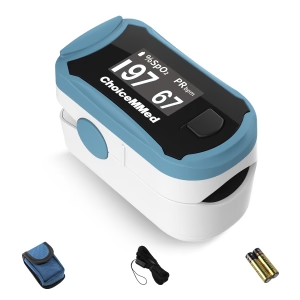
Best Big Screen ChoiceMMed C29 — ~$30 · large OLED, 10 brightness levels
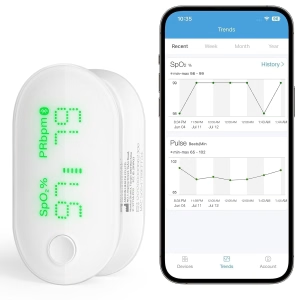
Best for Remote Caregivers iHealth Air — ~$30 · rechargeable, logs to an app
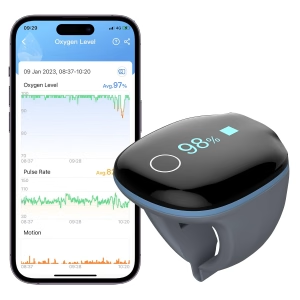
Best Overnight Wellue O2Ring — ~$180 · ring sensor, records all night, vibrates on drops
Best Overall Innovo Deluxe iP900AP
~$35 · Check price on Amazon →
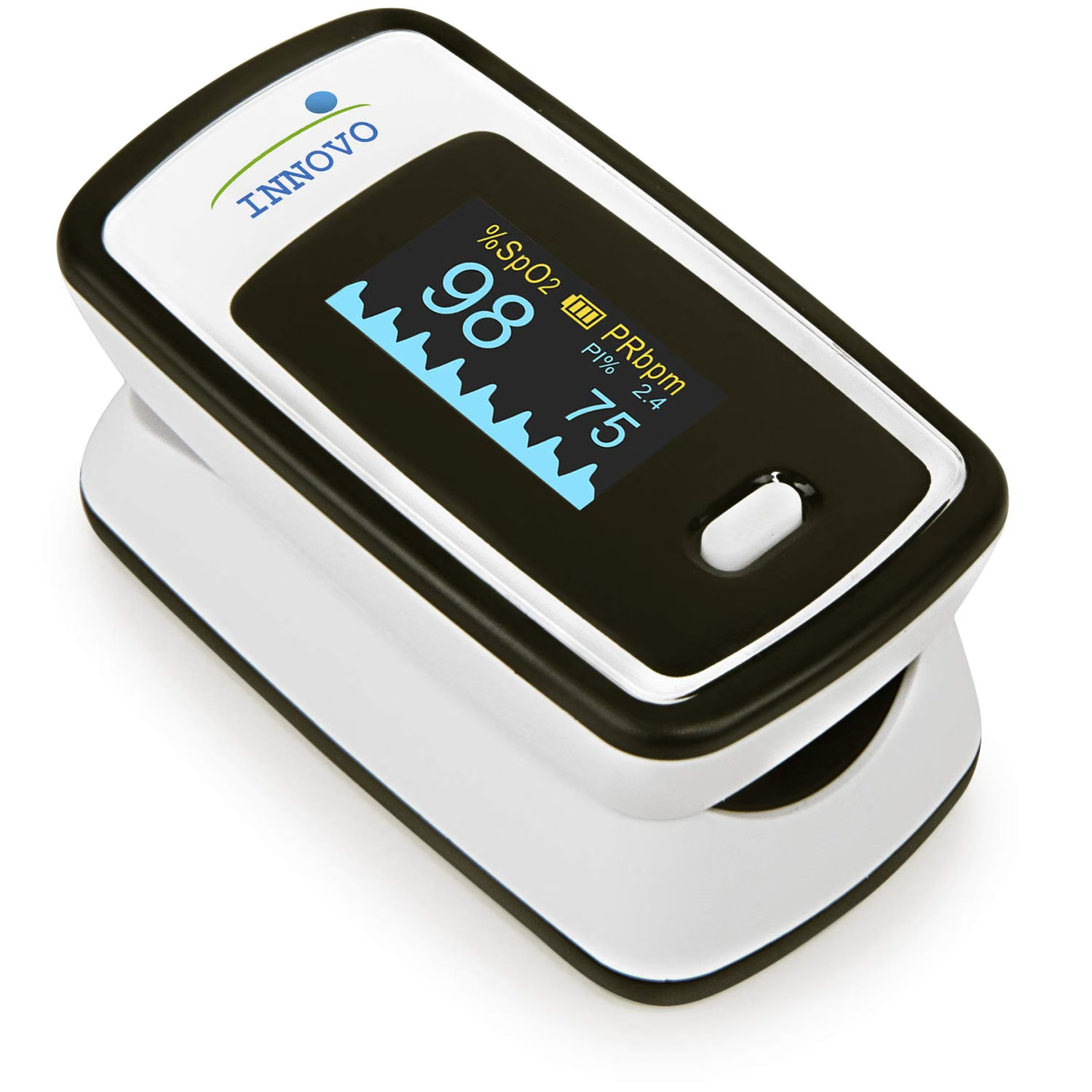
The Innovo earns the top spot for one feature most cheap oximeters lack: a live pulse waveform (plethysmograph) plus a perfusion index that shows how strong the signal is. In plain terms, it tells you whether to believe the number, a smooth, even wave means a good read; a flat or jagged one means warm the hand and try again. Across thousands of reviews, caregivers of parents with COPD and heart failure single this out as the reason they stopped second-guessing readings. The latest version adds an adjustable alarm, pulse beeps, and a screen that rotates six ways so a caregiver can read it upside-down.
The good
- Waveform + perfusion index show whether a reading is trustworthy
- Reads reliably even with weaker circulation, per verified buyers
- Rotating OLED screen and optional alarm help a caregiver standing beside the bed
The catch
- OLED digits are crisp but smaller than the big-screen pick below
- Menu for the alarm settings takes a few minutes to learn
This is right if… your parent has a lung or heart condition and you want readings you can actually trust.
Look elsewhere if… reading small screens is the main struggle — the ChoiceMMed C29 is easier on the eyes.
Best Budget Zacurate Pro Series 500DL
~$20 · Check price on Amazon →
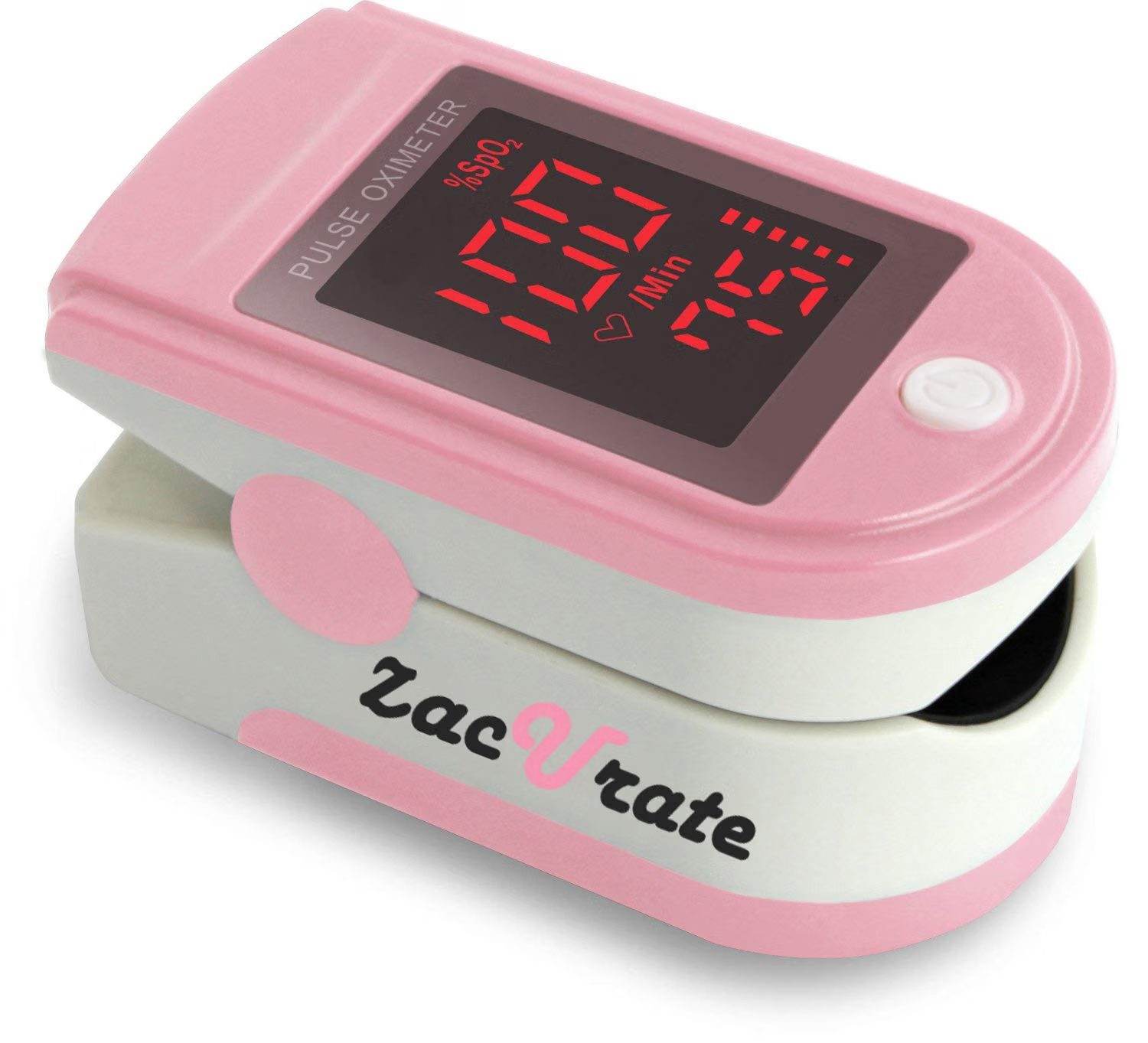
The Zacurate is the oximeter we’d hand a parent who hates gadgets. There’s one button, the bright red LED digits are readable in a dim bedroom without glasses, and a spring-loaded chamber accommodates a wide range of finger sizes, including knobby, arthritic ones. It has been one of Amazon’s most-reviewed oximeters for years, and the recurring praise is that it simply works: clip on, press, read. It comes with batteries, a silicone cover, and a lanyard, plus a 12-month warranty with U.S.-based phone support — rare at this price.
The good
- One-button operation — nothing to set up or remember
- High-contrast LED digits readable in low light
- Roomy finger chamber suits arthritic or larger fingers
The catch
- No waveform, so it’s harder to tell when a reading is unreliable
- No alarm and no memory — you have to write readings down
This is right if… your parent needs occasional spot checks and the simplest possible device.
Look elsewhere if… the doctor wants a daily log — the iHealth Air records it for you.
Best Big Screen ChoiceMMed C29
~$30 · Check price on Amazon →
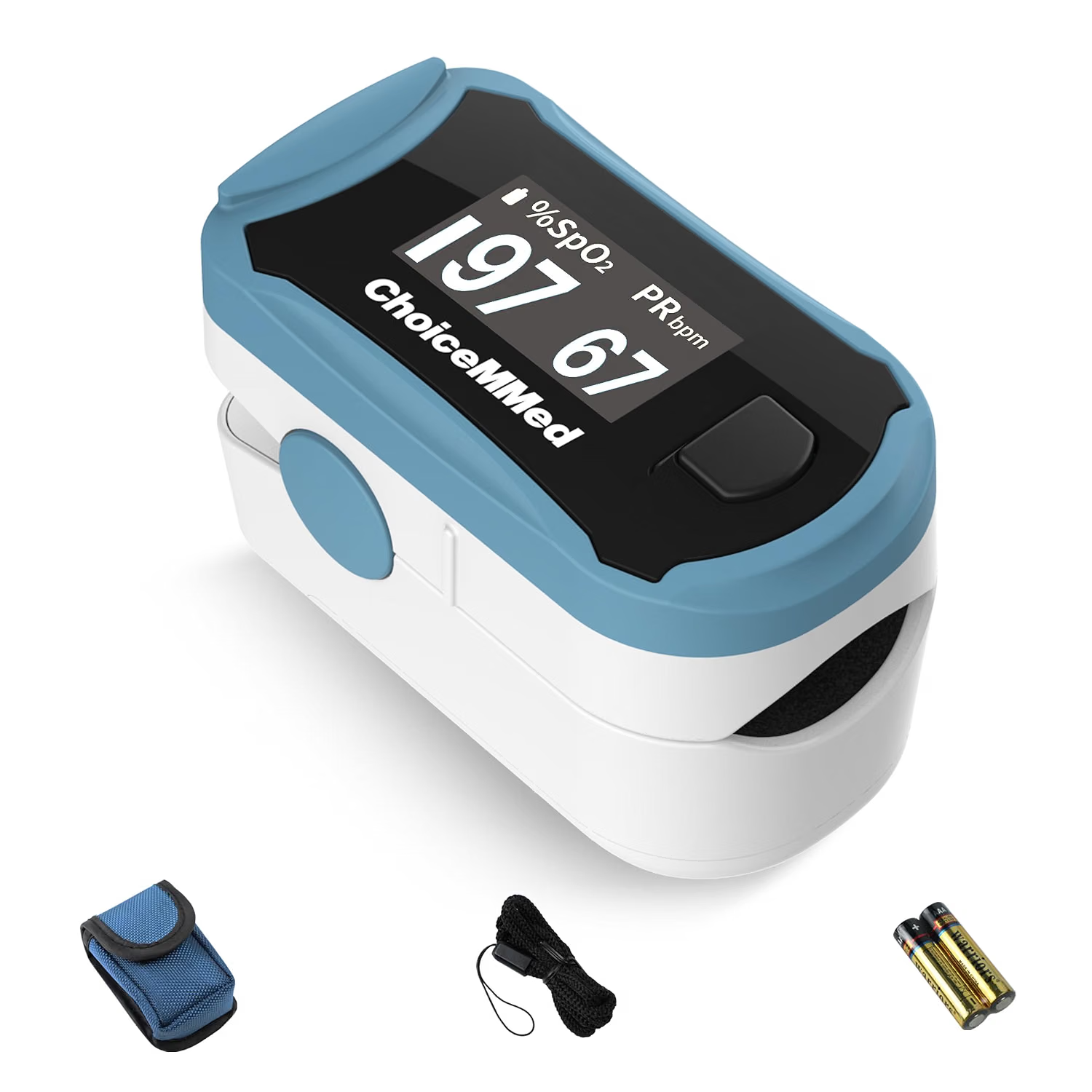
ChoiceMMed is a long-established oximeter maker whose units are widely used by clinics and the UK’s NHS, and the C29 is its large-display model. The OLED screen is noticeably bigger than a standard fingertip unit, with two display modes and ten brightness levels — the details that matter for macular degeneration, cataracts, or simply tired eyes. Verified buyers describe it as solid and simple, and a pair of AAA batteries runs it for 30-plus hours. It shows the numbers plus a pulse-strength bar, a middle ground between the bare-bones Zacurate and the Innovo.
The good
- Larger OLED display with adjustable brightness for low vision
- Reputable clinical brand; simple single-button use
- Carrying pouch and lanyard included; long battery life
The catch
- Newer listing with a smaller review base than the Zacurate or Innovo
- No app or reading history
This is right if… your parent’s eyesight is the barrier and they’ll be checking on their own.
Look elsewhere if… you need readings sent to you — go with the iHealth Air.
Best for Remote Caregivers iHealth Air
~$30 · Check price on Amazon →
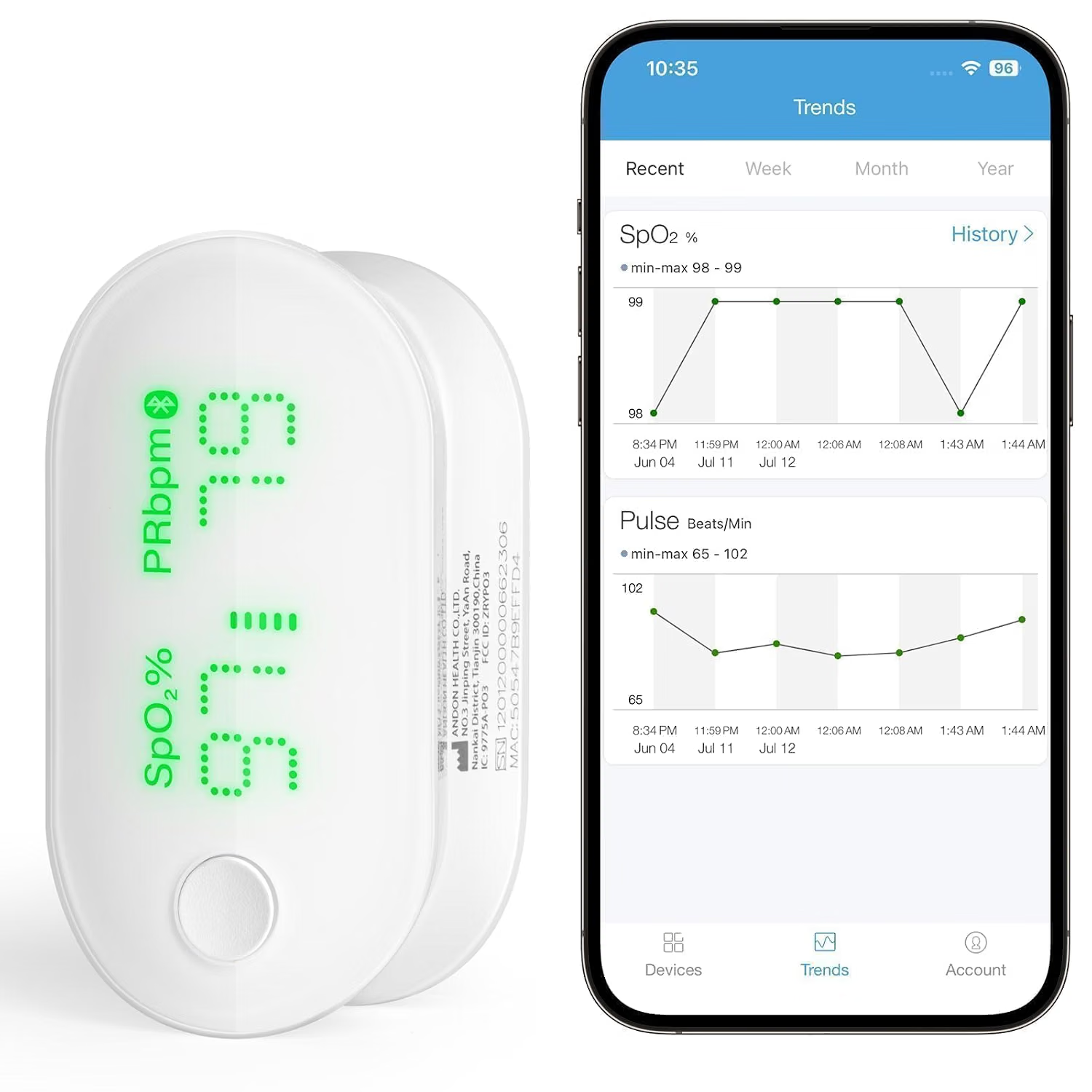
If you live an hour or a time zone away, the iHealth Air solves the problem no screen can: remembering, and knowing. It syncs by Bluetooth to the free iHealth MyVitals app, which logs every reading with a timestamp, so a doctor can see a two-week trend instead of a scribbled note. It’s also rechargeable — up to about 300 checks per charge — which ends the “batteries died and nobody noticed” failure caregivers complain about most. iHealth devices are used by many U.S. telemedicine programs, and reviewers praise the bright LED display.
The good
- Automatic reading log in an app — easy to share with the doctor
- Rechargeable; no battery swaps for arthritic hands
- Also works as a plain spot-check oximeter without a phone
The catch
- Syncing requires a smartphone nearby — someone has to set it up
- Some third-party retailers have shown backorders; buy from the main Amazon listing
This is right if… the doctor wants a daily log or you want to see readings from afar.
Look elsewhere if… your parent has no smartphone and no one nearby to sync it — the Zacurate is simpler.
Best Overnight Wellue O2Ring
~$180 · Check price on Amazon →

This is a different tool, priced accordingly. The O2Ring is a soft ring sensor worn on the thumb or finger all night; it records oxygen and pulse continuously and vibrates gently if levels drop below a threshold you set. Verified buyers with sleep apnea, COPD, or unexplained morning headaches describe the app’s overnight graph as the thing that finally got their doctor’s attention. It’s rechargeable and far more comfortable to sleep in than a fingertip clip. But it’s overkill for daytime spot checks, buy it only when overnight drops are the question.
The good
- Continuous all-night recording with shareable reports
- Vibration alert on drops — no loud alarm waking the house
- Comfortable ring design stays on during sleep
The catch
- Several times the price of a fingertip unit
- Needs an app to see the report; setup is a caregiver job
This is right if… a doctor suspects oxygen drops at night and wants data before or between sleep studies.
Look elsewhere if… you only need a daytime check — any fingertip pick above does it for a fraction of the price.
How the five compare
| Product | Type | Price | Best for |
|---|---|---|---|
| Innovo iP900AP | Fingertip, waveform + PI, alarm | ~$35 | Lung/heart conditions, trustworthy reads |
| Zacurate 500DL | Fingertip, LED, one button | ~$20 | Occasional spot checks |
| ChoiceMMed C29 | Fingertip, large OLED | ~$30 | Low vision |
| iHealth Air | Fingertip, Bluetooth, rechargeable | ~$30 | Logging and remote caregivers |
| Wellue O2Ring | Wearable ring, continuous | ~$180 | Overnight drops, sleep apnea |
The conversation you’ll have
An oximeter looks harmless, but to a parent it can feel like being watched or like proof they’re sicker than they want to admit. The most common failure isn’t a bad device; it’s one that sits in a drawer because checking it feels like inviting bad news. Instead of “you need to check your oxygen every day,” try “the doctor said a few numbers would help her adjust things without another appointment — can we write down one in the morning and one at night?” That frames it as fewer office visits, not more worry.
Then agree on what the numbers mean before a scary one shows up. Ask the doctor for your parent’s personal range and write it on a card next to the device: “Usual: 93–96. Call Dr. Lee if under 90 for more than a few minutes.” A plan turns a frightening number into a clear next step.
Insurance and savings
The honest picture: Original Medicare generally doesn’t pay for a standalone home fingertip oximeter for spot checks; oximetry is typically covered only as part of a prescribed home-oxygen setup or a doctor-ordered overnight test. The good news is that at $20–$35 these are inexpensive, and pulse oximeters are FSA- and HSA-eligible, so you can pay with pre-tax dollars. Many Medicare Advantage plans include an over-the-counter allowance that covers exactly this kind of item — worth a quick call to the plan before paying out of pocket.
What to actually look for
Match the device to the barrier
Ask what would actually stop your parent from using it. Can’t read small digits? Prioritize screen size. Forgets or won’t write readings down? Choose one that logs to an app. Doctor worried about sleep? Only a wearable records overnight. That single question narrows the field faster than any spec sheet — and it’s the same logic we apply across the whole house in our complete aging-in-place home safety checklist.
Look for signal-quality clues
A waveform or perfusion index is the most underrated feature for older adults, whose circulation to the fingers is often weaker. It shows when a number is unreliable, so you don’t act on a false low. To get a good read: warm the hands, remove nail polish, sit still for five minutes, rest the hand at heart level, and use the middle or index finger. Wait for the number to hold steady for several seconds before writing it down.
Know what an oximeter won’t catch
An oximeter measures oxygen, not falls, blood pressure, or an emergency when no one’s watching. If your parent lives alone with a lung or heart condition, pair it with a way to call for help — see our no-monthly-fee fall detection guide — and consider tracking blood pressure too with one of our easy-to-use blood pressure monitors for seniors. And whatever the screen says, trouble breathing, chest pain, confusion, or bluish lips mean calling 911, not re-checking.
Frequently asked questions
What is a normal oxygen level for an 80-year-old?
For most older adults, a resting reading of 95% to 100% is normal, though healthy seniors sometimes run slightly lower. People with COPD or other lung disease may have a doctor-set target closer to 88–92%. The most useful number is your parent’s personal baseline, so ask the doctor for their range.
Are home pulse oximeters accurate?
Good ones are reasonably close, typically within 2 to 3 points when oxygen is above 90% but accuracy drops at lower levels. Cold hands, movement, nail polish, and darker skin can skew results. Use a home oximeter to spot trends and changes, and confirm worrying readings with a doctor.
Which finger is best for a pulse oximeter?
The middle or index finger of the dominant hand usually gives the most reliable reading. Remove nail polish or artificial nails, warm the hand if it’s cold, and rest it at heart level. If a reading seems off, try a different finger and compare after the number holds steady for several seconds.
Why is my parent’s oximeter reading low?
Often it’s the reading, not the lungs. Cold fingers, poor circulation, shaky hands, nail polish, or bright light can all cause a false low. Warm the hands, sit still for five minutes, and recheck. If it stays below their usual range, or they’re short of breath, contact their doctor promptly.
Does skin color affect pulse oximeter readings?
Yes, The FDA and published research show oximeters can overestimate oxygen levels in people with darker skin, which means a genuinely low level could look normal. If your parent has darker skin, pay close attention to symptoms like breathlessness or confusion and don’t let a normal-looking number override them.
Does Medicare cover a pulse oximeter?
Original Medicare generally doesn’t cover a standalone fingertip oximeter for home spot checks; it’s usually covered only as part of prescribed home-oxygen equipment or a doctor-ordered test. Oximeters are FSA- and HSA-eligible, and many Medicare Advantage over-the-counter allowances include them — check the plan’s catalog.
The shortlist


What we’d do tomorrow
If you’re setting this up this week, do three things in order. First, call the doctor’s office and ask for your parent’s personal oxygen range and the number that should trigger a call. Second, buy the oximeter that matches the barrier the Innovo for most parents, the ChoiceMMed if eyesight is the problem, the iHealth Air if you need the log, the O2Ring only if nights are the question. Third, sit down together, take the first reading with warm hands, and tape the range card right next to it. The device is the easy part; knowing what to do with the number is the point.
— Sarah
Leave a Reply