Category: By Condition

Product recommendations tailored to specific health conditions affecting older adults — Parkinson’s, arthritis, dementia, post-stroke recovery, balance disorders, and vision or hearing changes.

  • 5 Best Hip Protectors for Seniors

    5 Best Hip Protectors for Seniors

    Disclosure: BuyingForMom is reader-supported. As an Amazon Associate we earn from qualifying purchases. When you buy through links in this article, we may earn an affiliate commission at no additional cost to you. We never recommend products we haven’t researched against verified-buyer review data. This article is editorial reporting, not medical advice.

    5 Best Hip Protectors for Seniors

    By Sarah Mitchell · Editor, BuyingForMom · Updated November 2026

    11 min read · Balance & Mobility · 5 picks

    The honest take: If you’re shopping for hip protectors for seniors, buy the Medline Premium Hip Protector in the right size and stop there for most situations. The Safehip Active belt is the right call only if your parent refuses to change their underwear routine and needs something that straps on over clothes in ten seconds. Skip the cheap ski-and-skate padded shorts sold as “elderly hip pads” they’re built for a different fall, and the pads aren’t positioned or tested for a sideways landing on a hip bone.

    How we sorted through 16 hip protectors in two weeks

    We started with 16 hip protectors sold to U.S. families, from Medline, Safehip (Tytex), Posey Hipsters, HipSaver, Secure, Delloch and a handful of newer Amazon-only brands. We cross-referenced manufacturer specs (shield design, wash rating, sizing range) against the 2014 Cochrane review of hip protectors, a 2019 independent impact test of 18 models published in Osteoporosis International, and falls-prevention guidance from Canadian health authorities that issue these garments to patients, then read verified-buyer reviews for the recurring complaints: sizing, heat and pads that drift off the hip bone.

    Who this guide is for

    This guide is for adult children buying hip protectors for a parent who has fallen before, has osteoporosis, or is unsteady enough that a sideways fall feels like a matter of when, not if. If you’re shopping for yourself, the same picks apply, but you can skim past “The conversation you’ll have” below.

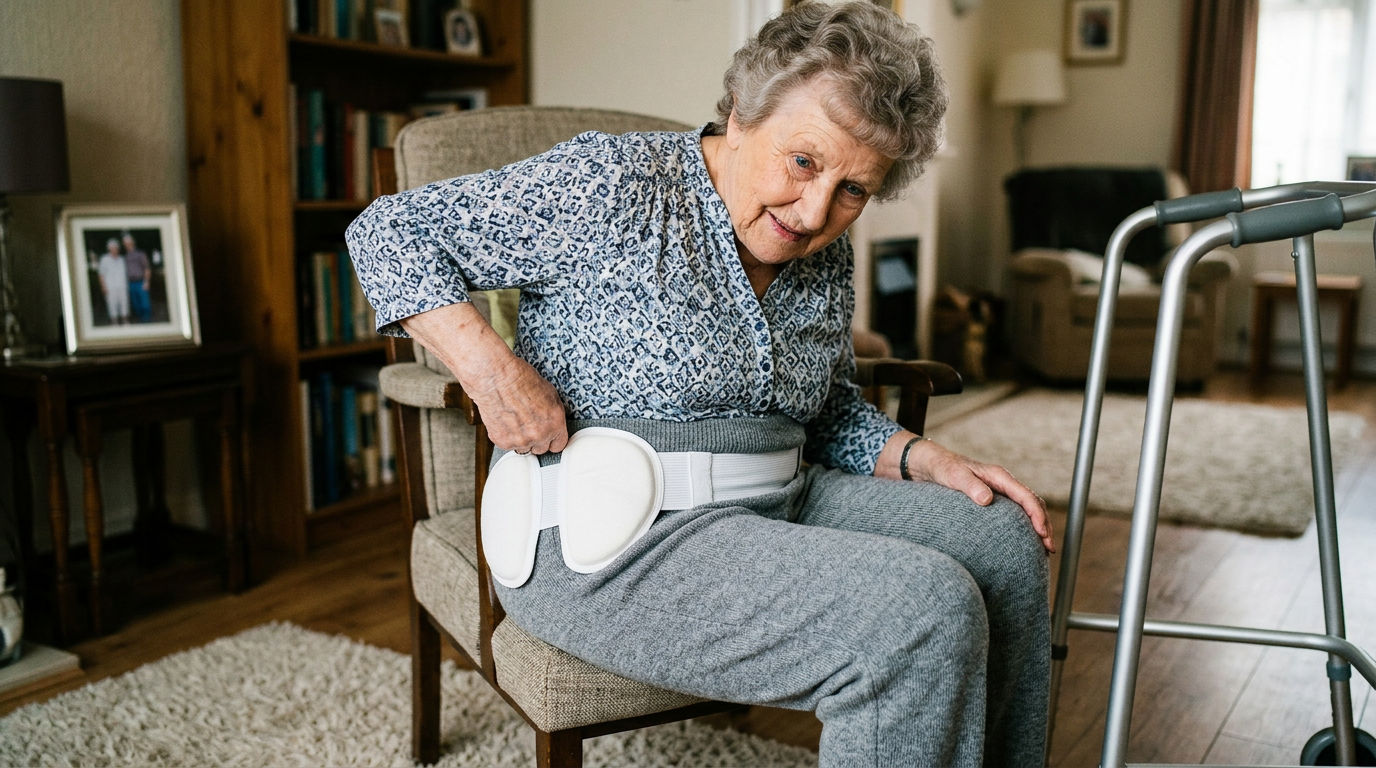
    Hip protectors for seniors are padded underwear or belts with a shield over each hip bone. They don’t prevent falls. They’re meant to change what happens when a fall lands on the side of the hip, which is how most hip fractures happen. According to the CDC, more than 300,000 older adults are hospitalized for hip fractures each year, and more than 95% of those fractures are caused by falling, usually sideways.

    The evidence is honest, not magical. The 2014 Cochrane review found that in nursing homes and residential care, hip protectors probably reduce the risk of a hip fracture slightly. For older adults living at home, the effect was small to none, mostly because people stop wearing them. The best hip protector is the one your parent will put on every morning.

    At a glance

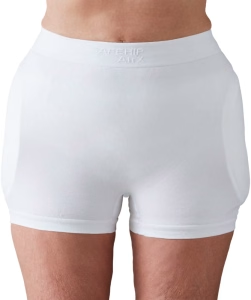
    Best Overall Medline Premium Hip Protector · ~$45–$65 · Unisex daily-wear brief with four 3D shields

    Best for Women Safehip AirX Women’s · ~$50–$75 · Breathable, cut for a woman’s hips

    Best for Dad Safehip AirX Unisex · ~$50–$75 · Worn over his own underwear

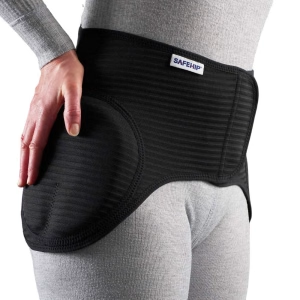
    Easiest On Safehip Active Belt · ~$60–$90 · Hook-and-loop belt, over or under clothes

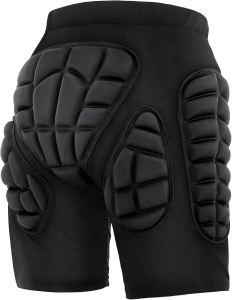
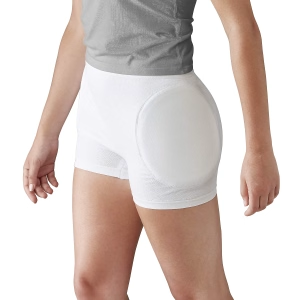
    Best Budget WILLQ Hip Pads · ~$25–$35 · Hip plus tailbone padding

    Best OverallMedline Premium Hip Protector

    ~$45–$65 · See it on Amazon

    Medline is one of the largest suppliers to U.S. nursing homes, and this brief is sold to facilities in cases of ten, which tells you it’s built for daily laundering. It’s a unisex, form-fitting microfiber brief with four contoured 3D spacer-fabric shields that spread impact energy across the hip instead of letting it land on one point. Medline rates the pads for up to 200 washes without warping, and the garment is latex-free and machine washable and dryable. The spacer pads are thin enough to sit under ordinary slacks, and across hip protector reviews, low bulk is the single biggest predictor of whether one gets worn.

    The good

    • Four 3D shields cover the hip bone with room for the pad to stay put as the wearer moves.
    • Rated for about 200 washes, so two or three pairs last a long time.
    • Wide size range up to 60″ waist, and it can be worn over or instead of regular underwear.

    The catch

    • Size selection matters a lot; too loose and the shields slide forward off the hip bone.
    • The standard brief has no opening for incontinence products; Medline sells a separate “Open” version for that.

    This is right if… your parent needs an everyday garment that’s discreet, durable and easy to keep in rotation.

    Look elsewhere if… your parent wants something they can strap on over pants without undressing.

    Check Price on Amazon →

    Best for WomenSafehip AirX Women’s Hip Protector

    ~$50–$75 · See it on Amazon
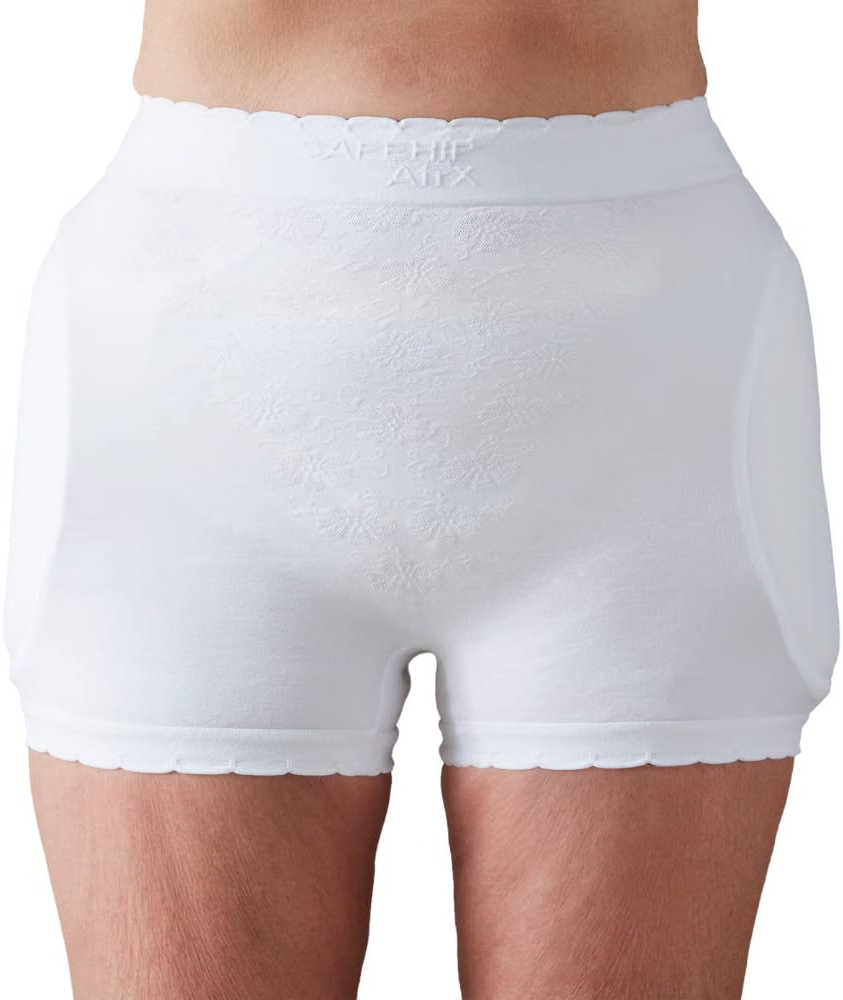
    Safehip is made by Tytex, a Danish company that has built hip protectors for care systems in Europe, Canada and Australia for decades, and it’s one of the brands Canadian health authorities name in their patient fitting guides. The AirX Women’s version uses a horseshoe-shaped shield designed to steer fall energy around the hip joint rather than straight into it, set in a soft, high-elastane brief cut for a woman’s hips. The AirX shield fabric is breathable, which addresses the most common reason women give for abandoning hip protectors: they run hot. Since women account for roughly three-quarters of hip fractures, this is the pick we’d start with for most moms.

    The good

    • Horseshoe shield is designed to route impact away from the bony point of the hip.
    • Breathable AirX fabric runs cooler than closed-cell foam pads.
    • Survives hot-water washing and high-heat drying.

    The catch

    • Pricier per pair than Medline once you buy two or three for rotation.
    • Sizing is by hip measurement, not dress size, so measure before you order.

    This is right if… your mom has osteoporosis, gets warm easily, and needs something comfortable enough to wear all day.

    Look elsewhere if… she uses incontinence briefs and needs an open-style garment.

    Check Price on Amazon →

    Best for DadSafehip AirX Unisex Hip Protector

    ~$50–$75 · See it on Amazon


    Men are less likely to fracture a hip, but when they do, outcomes tend to be worse, and they are notably harder to convince to wear anything that looks like special underwear. The AirX Unisex solves part of that: it’s a seamless knit garment, roughly 58% cotton, designed to be worn over his own boxers or briefs, so he doesn’t give up anything familiar. It uses the same horseshoe AirX shield as the women’s model and is rated for washes up to about 200°F. Tytex says the shields were biomechanically tested to withstand multiple falls, so one fall doesn’t mean an immediate replacement. Tytex notes it also works with a light incontinence pad.

    The good

    • Worn over existing underwear, which lowers the resistance most men have.
    • Same horseshoe shield design as the women’s model, rated for repeated falls.
    • Seamless knit avoids pressure lines for men who sit most of the day.

    The catch

    • Wearing it over boxers adds a layer, which some men find warm in summer.
    • The older Amazon listing can show limited sizes at times; check his size is available before you commit.

    This is right if… you’re shopping for your dad and need something he’ll accept without a fight.

    Look elsewhere if… he won’t wear an extra garment at all; the belt below is the fallback.

    Check Price on Amazon →

    Easiest OnSafehip Active Hip Protector Belt

    ~$60–$90 · See it on Amazon

    The Safehip Active is a belt, not a brief: it wraps around the hips and closes with hook-and-loop, with a horseshoe shield over each side. That means no stepping into anything, which is a big deal for a parent with stiff knees, a new hip on the other side, or arthritis in the hands. Verified buyers consistently praise how quickly it goes on and the peace of mind it gives during walks, gardening or exercise class. The recurring complaint is sizing: several buyers report the small and medium run tight, so order up if your parent is between sizes.

    The good

    • Goes on in seconds, standing or seated, with no stepping in.
    • Can be worn over clothes, which makes it easy to use only for higher-risk activities.
    • Breathable, latex-free and available in five sizes.

    The catch

    • Buyers repeatedly say it runs small; measure the widest part of the hips and size up if between sizes.
    • Belts can shift more than a fitted brief, so check the shields sit over the hip bones.

    This is right if… your parent is active, has trouble with dressing, or will only wear protection for outings.

    Look elsewhere if… you need all-day, all-night protection; a fitted brief stays in place better.

    Check Price on Amazon →

    Best BudgetWILLQ Hip Pads for Seniors

    ~$25–$35 · See it on Amazon

    WILLQ is an Amazon-native brand, and its padded shorts cover both hips and the tailbone, which matters for parents who tend to fall backward into a seat or onto their bottom. At roughly half the price of the medical brands, it’s a reasonable way to find out whether your parent will tolerate wearing protection at all before you invest in a rotation of Medline or Safehip briefs. Be clear-eyed about what you’re getting, though: we found no independent impact testing for WILLQ, and its foam is thicker and bulkier than the medical-grade spacer shields.

    The good

    • Hip and tailbone coverage in one garment.
    • Low price makes it a low-risk trial, or a spare pair.
    • Stretch fabric is easy to pull on.

    The catch

    • No published impact testing, unlike Safehip and Medline.
    • Bulkier foam shows more under fitted pants and runs warmer.

    This is right if… you want to test whether your parent will wear hip protection before spending more.

    Look elsewhere if… your parent has severe osteoporosis or a prior hip fracture; buy a tested medical brand.

    Check Price on Amazon →

    Comparison table

    Product Approx. price Style Shield Best for
    Medline Premium ~$45–$65 Unisex brief 4 × 3D spacer Everyday wear
    Safehip AirX Women’s ~$50–$75 Women’s brief Horseshoe AirX Most moms
    Safehip AirX Unisex ~$50–$75 Over-underwear Horseshoe AirX Reluctant dads
    Safehip Active Belt ~$60–$90 Wrap belt Horseshoe Active seniors
    WILLQ Hip Pads ~$25–$35 Padded shorts Foam + tailbone Trial / spare pair

    The conversation you’ll have

    Hip protectors are a hard sell because they feel like a verdict. Padded underwear says “you’re fragile” louder than a grab bar ever does, and many older adults will quietly leave them in the drawer even after agreeing to try them. That’s exactly why the at-home evidence is weaker: the garment only works on the days it’s worn. Lead with what your parent wants to keep doing, not with what you’re afraid of.

    Try saying “These are what people wear so a slip on the patio is a bruise instead of a surgery, and you can keep doing your walks” instead of “You need these because you’re going to fall.” Then offer a trial with a clear end date: two weeks, and if they hate them, you’ll try a different style. Buying a belt and a brief, so they can choose, gives them control over the decision, which is often the real issue.

    Insurance and savings

    Original Medicare (Part B) generally doesn’t cover hip protectors, because they aren’t classified as durable medical equipment. Some Medicare Advantage plans do include hip protectors in their over-the-counter benefit catalogs, so check your parent’s OTC allowance before paying out of pocket. Hip protectors are a medical-purpose item, so they may be FSA- or HSA-eligible; some administrators ask for a letter of medical necessity from a doctor. Under IRS Publication 502, they can also count toward medical expenses you itemize above 7.5% of adjusted gross income. As always, we’re not tax advisors, so confirm with your plan or a tax professional.

    What to actually look for

    A shield that stays on the hip bone

    The pad only helps if it’s over the greater trochanter, the bony knob on the outside of the hip, at the moment of impact. Fitted briefs hold position better than belts, and correct sizing matters more than brand. Measure the widest part of the hips and follow that manufacturer’s chart. Soft spacer or energy-shunting shields, like Medline’s and Safehip’s, are far more comfortable than old hard-shell designs and are what most care programs now use.

    Comfort and washing, because that’s what drives wear

    Buy at least two, ideally three, so one is always clean. Look for breathable fabric, flat seams and a high wash rating. If your parent uses incontinence products, buy an “open” style designed around them, because a garment that complicates the bathroom gets abandoned fast. Hip protection works best alongside the other basics in our complete aging-in-place home safety checklist, especially lighting and footwear like our picks for non-slip grip socks for seniors.

    Night protection is a separate decision

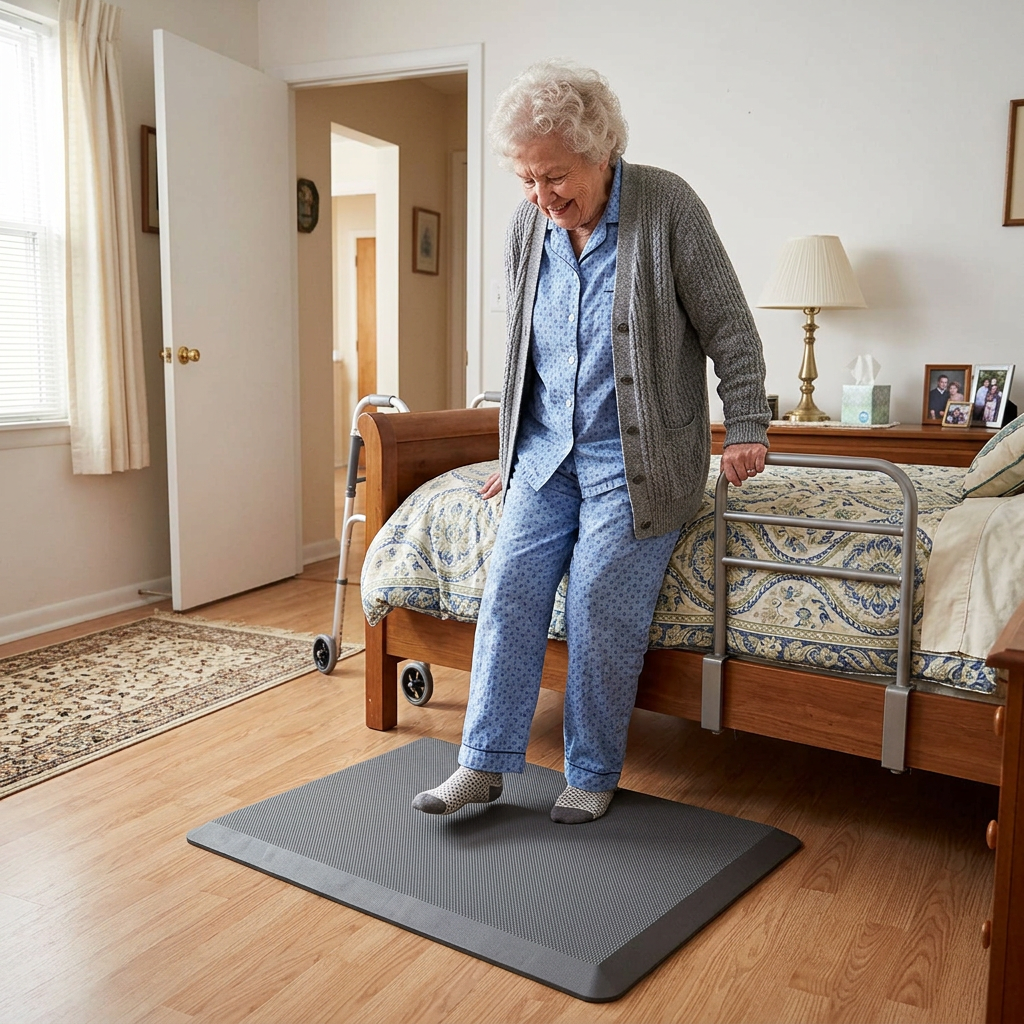
    Many falls happen on the way to the bathroom at night, when nobody is wearing daytime hip protection. Some soft briefs are comfortable enough to sleep in; if not, add a bedside fall mat to cushion a fall out of bed, and consider one of the devices in our no-monthly-fee fall detection guide so help comes quickly if a fall does happen.

    FAQ

    Do hip protectors really work?

    They can, if worn. The 2014 Cochrane review found hip protectors probably reduce hip fracture risk slightly for older adults in nursing homes and residential care. For people living at home, the benefit was small to none, largely because many stopped wearing them. Consistent daily use is what makes the difference.

    Who should wear hip protectors?

    Older adults at high risk of falling and breaking a hip benefit most: people with osteoporosis, a previous fall or fracture, balance problems, or conditions like Parkinson’s or dementia. Ask your parent’s doctor, nurse, or a physical or occupational therapist which style suits their mobility, continence needs and daily routine.

    Does Medicare pay for hip protectors?

    Original Medicare generally does not cover hip protectors, since they aren’t considered durable medical equipment. Some Medicare Advantage plans list them in their over-the-counter benefit catalogs, which can cover the cost. Check your parent’s plan documents or call the plan before buying so you don’t pay twice.

    Can you wear hip protectors to bed?

    Yes, many soft brief-style hip protectors are designed to be worn day and night, and nighttime protection matters because many falls happen on the way to the bathroom. If your parent finds them uncomfortable for sleep, a bedside fall mat and good night lighting are practical backups.

    How do you wash hip protectors?

    Most modern hip protectors are machine washable with the pads left in. Medline rates its premium brief for about 200 washes, and Safehip garments tolerate very hot washes and high-heat drying. Always follow the label, skip bleach and fabric softener, and keep at least two pairs in rotation.

    Are hard-shell or soft hip protectors better?

    Soft protectors are now preferred for most people because they’re more comfortable, which means they get worn. Hard shells spread impact well but are bulky and uncomfortable when sitting. Modern soft spacer-fabric and energy-shunting shields, like Safehip’s horseshoe design, aim to balance protection with all-day comfort.

    The shortlist
    Best Overall

    Medline Premium Hip Protector

    ~$45–$65

    Check on Amazon →

    Best for Women

    Safehip AirX Women’s

    ~$50–$75

    Check on Amazon →

    Best for Dad

    Safehip AirX Unisex

    ~$50–$75

    Check on Amazon →

    Easiest On

    Safehip Active Belt

    ~$60–$90

    Check on Amazon →

    Best Budget

    WILLQ Hip Pads

    ~$25–$35

    Check on Amazon →

    Listings last checked: November 10, 2026. Prices change often; confirm price and size availability on Amazon.

    What we’d do tomorrow

    If you’re starting this weekend, do these three things in this order. First, measure the widest part of your parent’s hips and write it down, because sizing is where most hip protector purchases fail. Second, order two Medline Premium briefs (or Safehip AirX if it’s for your mom and she runs warm), plus one Safehip Active belt as a no-undressing backup for outings. Third, set a two-week trial with your parent, check in at the end, and keep whichever style they actually wore.

    — Sarah

    BuyingForMom is a reader-supported site. As an Amazon Associate we earn from qualifying purchases. When you buy through links on this site, we may earn an affiliate commission at no additional cost to you. See our Affiliate Disclosure for details. This article is not medical advice, please consult a qualified healthcare professional for decisions specific to your family.
  • 5 Best Heated Gloves for Seniors With Arthritis

    5 Best Heated Gloves for Seniors With Arthritis

    Disclosure: BuyingForMom is reader-supported. As an Amazon Associate we earn from qualifying purchases. When you buy through links in this article, we may earn an affiliate commission at no additional cost to you. We never recommend products we haven’t researched against verified-buyer review data. This article is editorial reporting, not medical advice.

    5 Best Heated Gloves for Seniors With Arthritis

    By Sarah Mitchell · Editor, BuyingForMom · Updated November 2026

    9 min read · Arthritis · 5 picks compared

    The honest take: If your parent wants warm hands at the kitchen table, buy the REVIX microwavable mitts and stop there for most situations. The Savior Heat battery mittens are the right call only if the hands need to stay warm outdoors or on a cold walk. Skip the cheap no-name “heated glove liners” with unbranded batteries entirely, because the heat is uneven and the safety paperwork is thin.

    How we sorted through 38 heated gloves and mitts in two weeks

    We started with 38 heated gloves, mittens, and microwavable hand warmers marketed for arthritis and cold hands, then narrowed to five by cross-referencing several thousand verified-buyer reviews, manufacturer-stated heat ranges and battery specs, caregiver discussions on Reddit, and the clinical literature on heat for hand osteoarthritis. We dropped anything with an unbranded battery, no stated temperature range, or a pattern of reviews describing hot spots. What survived covers the three real formats: microwavable, plug-in, and rechargeable cordless.

    Who this guide is for

    This guide is for adult children shopping for a parent whose fingers ache and stiffen in cold weather or first thing in the morning. If you’re shopping for yourself, the same picks apply, but you can skip the conversation section below.

    Cold weather is hard on arthritic hands. Joints stiffen, grip weakens, and buttons, jar lids, and keys become small daily defeats. A good pair of heated gloves for seniors with arthritis won’t cure anything, but warmth does loosen stiff fingers enough to make the morning easier, and that is a reasonable thing to buy.

    One caution up front. A randomized trial discussed by PainScience.com, published in the BMJ, gave battery-heated mittens to older adults with hand osteoarthritis for six weeks and found no important benefit over unheated mittens for pain or function. Participants still described the warmth as pleasant. So we judged these on comfort, safety, and ease of use for stiff hands, not on promises of relief.

    At a glance

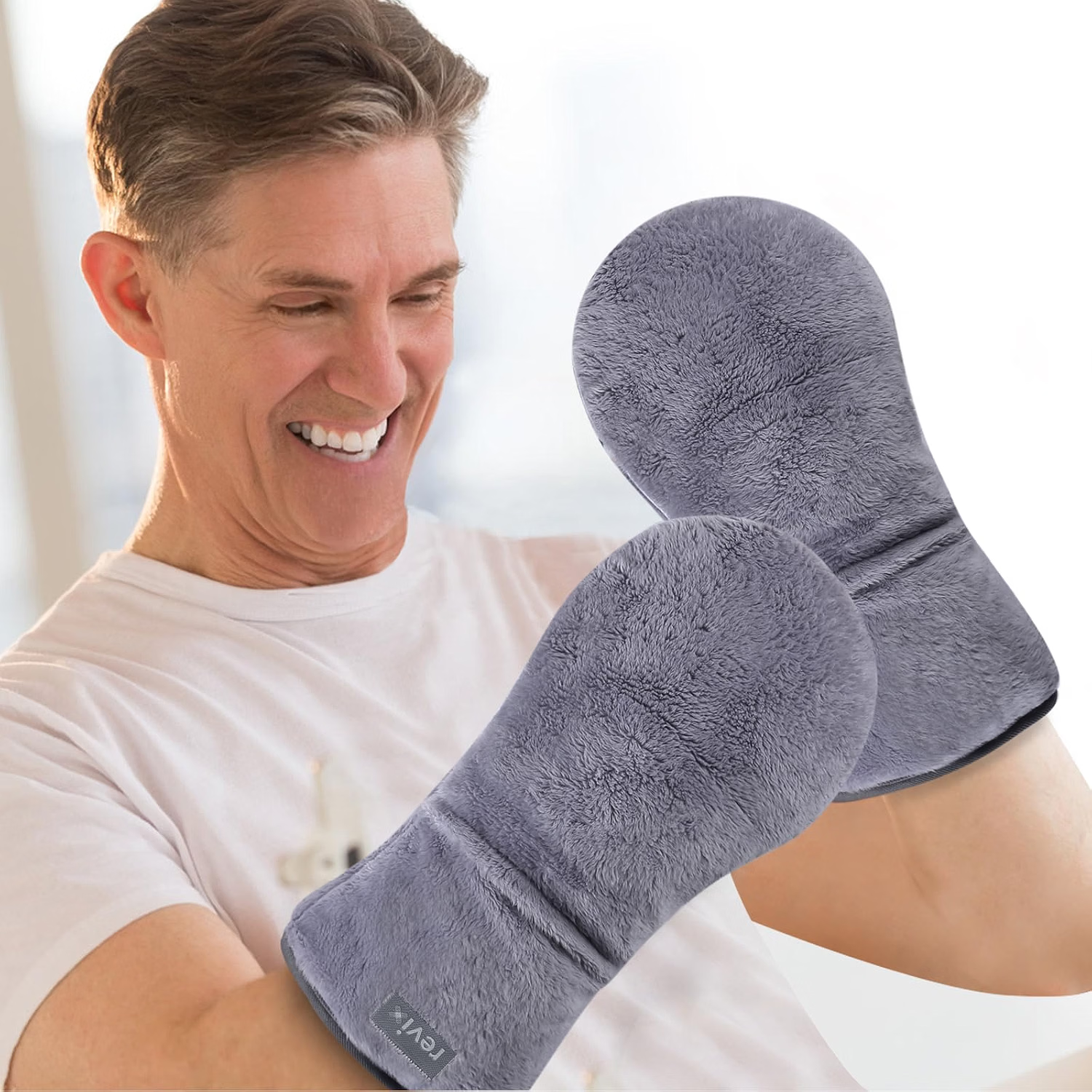
    BEST OVERALL · REVIX Microwavable Heated Mitts · ~$25 · Warm hands indoors, no cords or batteries

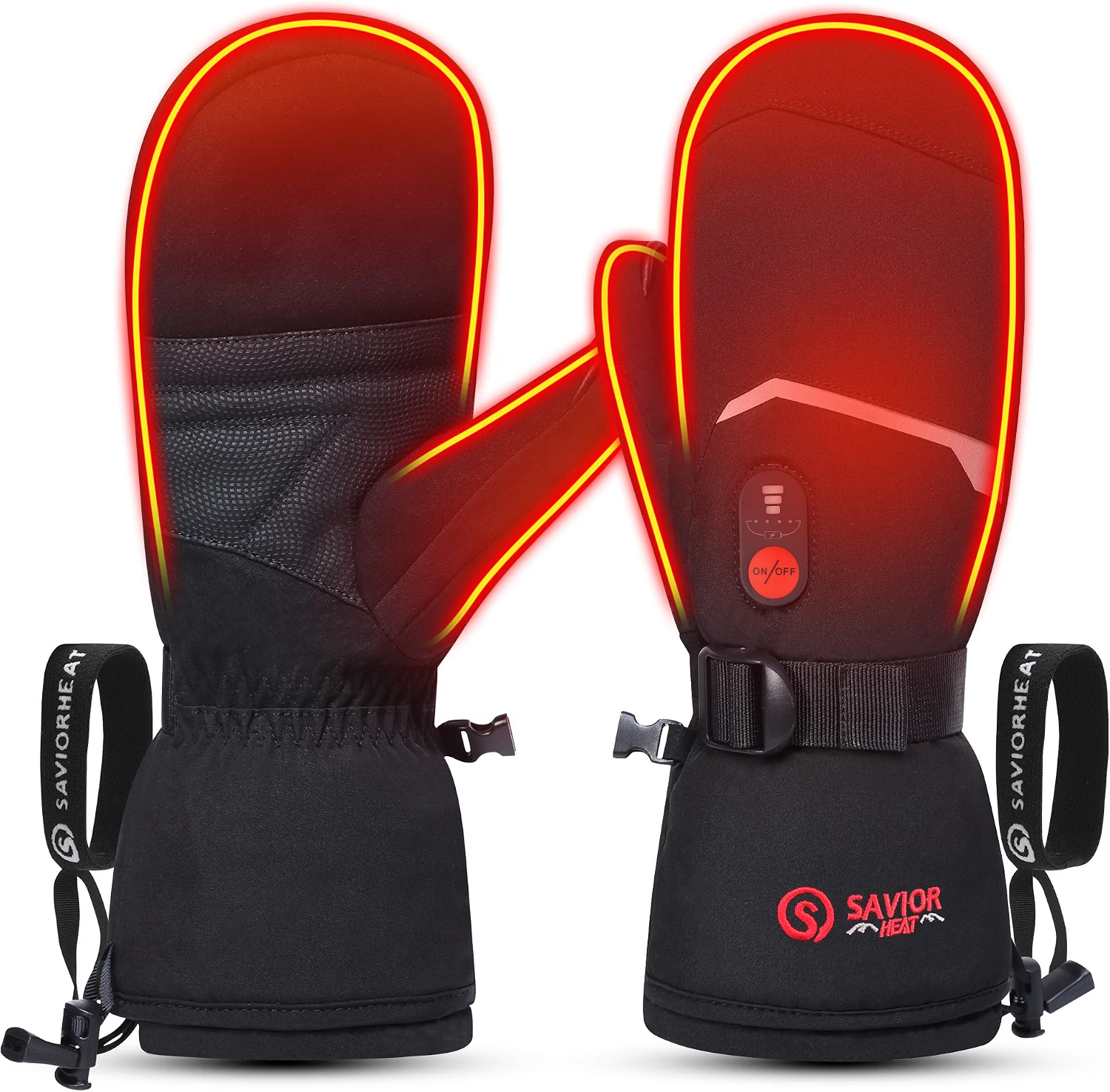
    BEST FOR OUTDOORS · Savior Heat Heated Mittens · ~$60 · Cold walks and mailbox runs

    BEST ADJUSTABLE HEAT · CAMECO Electric Heated Mittens · ~$40 · Dial in a gentle temperature with a timer

    BEST CORDLESS INDOORS · Jobyna Cordless Heated Gloves · ~$45 · Heat plus vibration, no outlet needed

    BEST SIMPLE OPTION · True Glow by Conair Hand Warmer · ~$35 · One button, gentle heat

    Best Overall1. REVIX Microwavable Heated Mitts

    ~$25 · View on Amazon

    The REVIX mitts take the top spot because they remove the three things that trip up older hands: no charging, no cord, and no controls. You warm them in the microwave, slide your hands in, and the moist heat does the rest. A removable, washable cover makes them easy to keep clean, and they double as a cold pack. Verified buyers consistently describe the heat as soothing and even, and reviewers with stiff mornings use them as a first-thing ritual with a cup of tea. The tradeoff is time: the warmth fades after roughly 20 to 30 minutes, which is a feature as much as a limit, because it keeps sessions short.

    The good

    • No battery, charger, or cord to manage
    • Moist heat that buyers find gentle and even
    • Washable cover; also works as a cold pack

    The catch

    • Heat fades in about 20 to 30 minutes
    • Runs small for larger hands, and you can’t wear them while doing anything

    This is right if… your parent wants a calm warm-up at home and doesn’t want to fuss with technology.

    Look elsewhere if… they need warm hands while moving around or going outside.

    Check Price on Amazon →

    Best for Outdoors2. Savior Heat Heated Mittens

    ~$60 · View on Amazon

    Savior Heat is the best-known name in rechargeable heated hand wear, and the mitten style suits arthritic hands better than separate fingers because the fingers share warmth. The shell is windproof and water-resistant, the battery runs up to roughly 12 hours on the lowest setting, and a touchscreen thumb means a phone can be answered without bare hands. Across reviews, the recurring praise is real warmth in genuinely cold weather. The recurring complaint is more relevant here: the battery pouch fastens with velcro that some buyers find hard to open, which matters for fingers that are already sore, and the mittens run small.

    The good

    • Strong, wind-blocking warmth for outdoor use
    • Battery life up to about 12 hours on low
    • Touchscreen thumb

    The catch

    • Velcro battery pouch can be fiddly for weak hands
    • Battery drains faster in extreme cold; sizing runs small

    This is right if… your parent walks, gardens, or waits for the bus in winter and needs hands that stay warm outdoors.

    Look elsewhere if… you only need indoor warmth, since this is the priciest option here.

    Check Price on Amazon →

    Best Adjustable Heat3. CAMECO Electric Heated Mittens

    ~$40 · View on Amazon

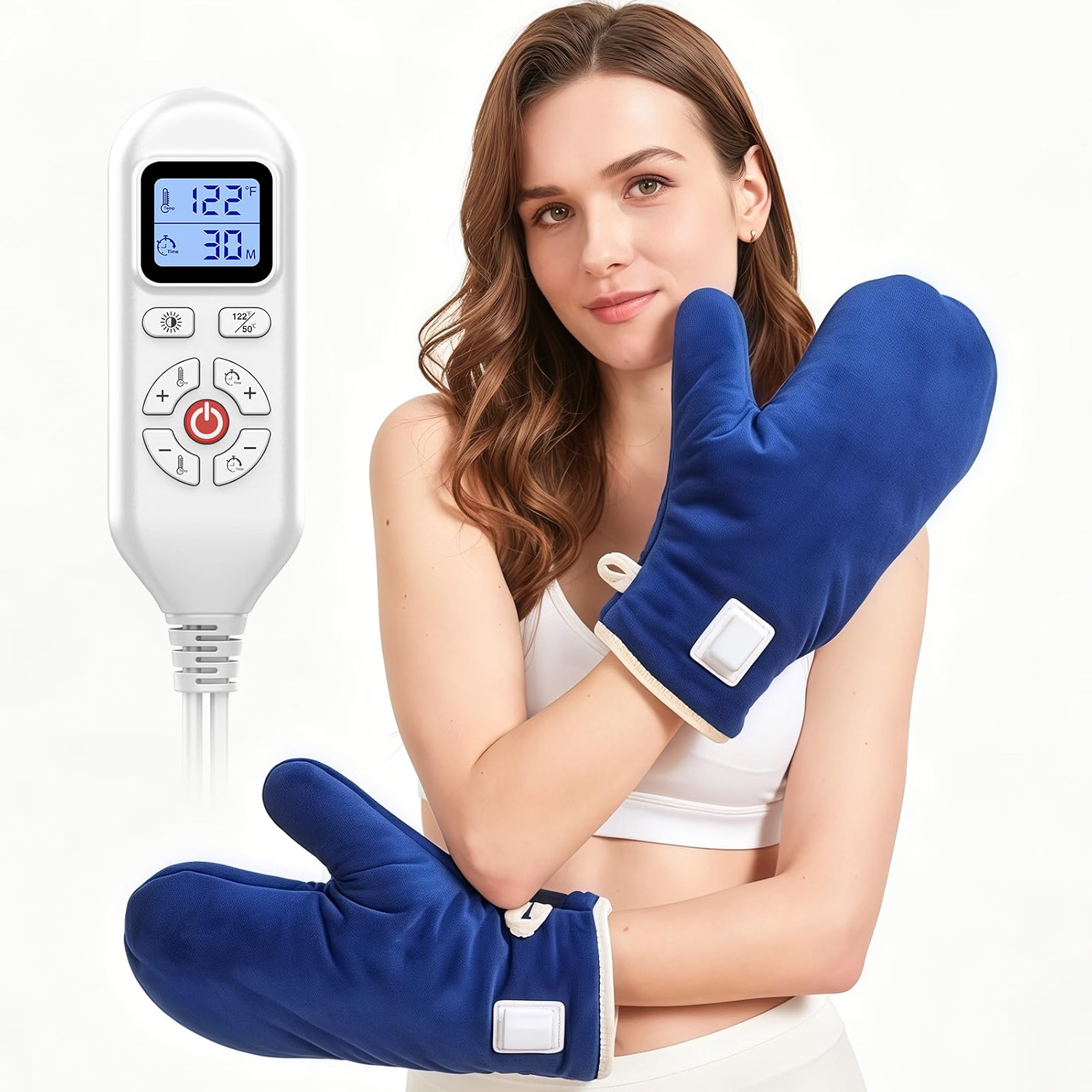
    CAMECO is a plug-in electric mitten built as a heating pad for the hands, with an adjustable range of roughly 86 to 158°F and a shut-off timer. That range is what earns the slot: a parent with sensitive skin can start low and stay there. It heats in about 30 seconds, which matters when stiff fingers are the reason you’re reaching for it. Reviewer complaints cluster around two themes, the cord limiting where you can sit, and a minority of buyers reporting the auto shut-off acting up or heat that isn’t perfectly even across the mitt.

    The good

    • Adjustable temperature and timer
    • Heats up in about 30 seconds
    • No battery to charge

    The catch

    • Corded, so it stays near an outlet
    • Some buyers report uneven heat or shut-off glitches

    This is right if… your parent sits in the same chair most of the day and wants control over how warm it gets.

    Look elsewhere if… a dangling cord is a trip or tangle risk in their space.

    Check Price on Amazon →

    Best Cordless Indoors4. Jobyna Cordless Heated Gloves

    ~$45 · View on Amazon

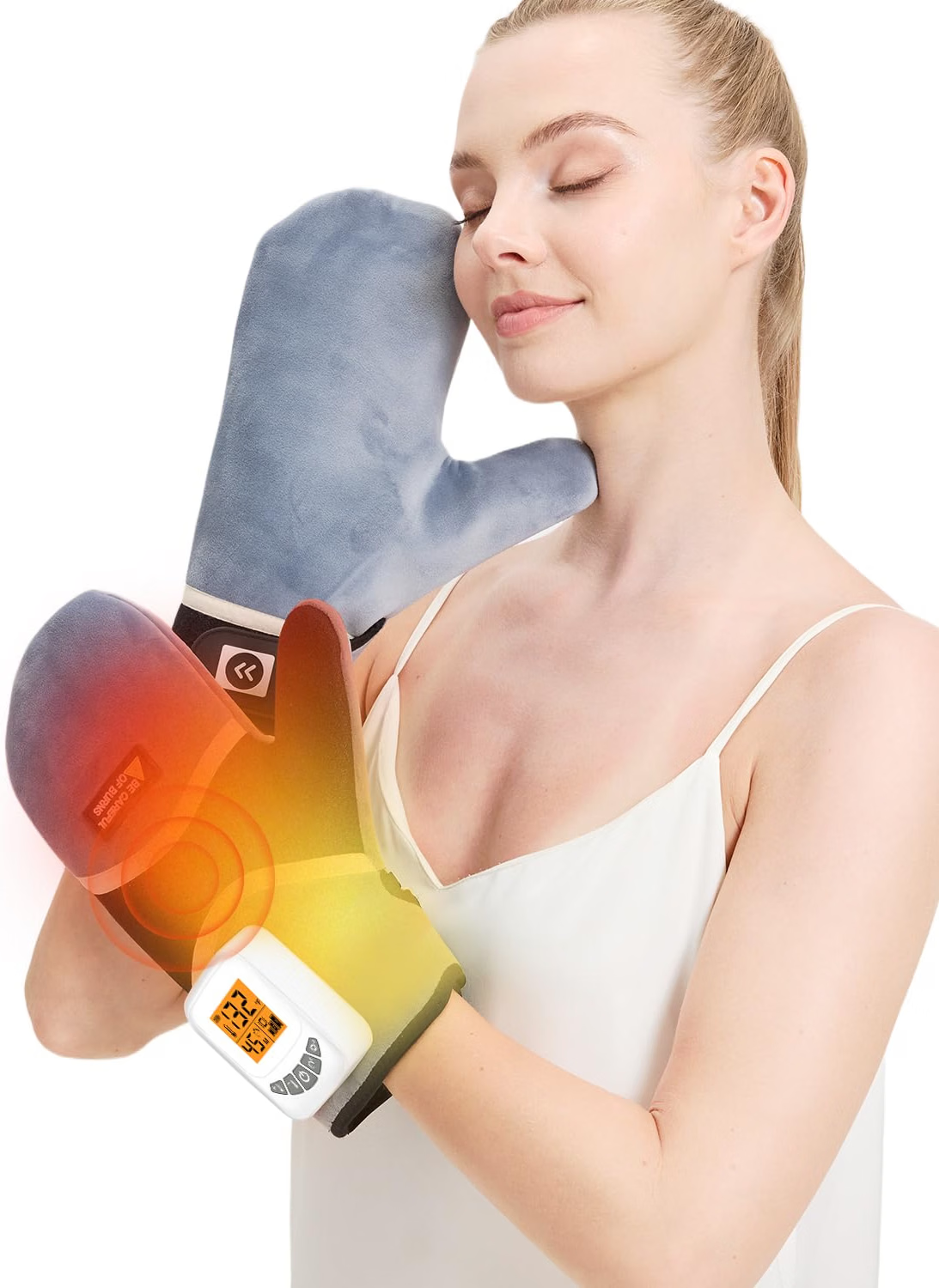
    Jobyna’s cordless heated gloves combine rechargeable heat with a vibration massage and simple LED controls, so they work anywhere in the house without an outlet. They are the most “feature-rich” option here, which can be good or bad: the controls are straightforward, but there is more to learn than with a microwavable mitt. The maximum temperature tops out around 140°F, which suits gentle use rather than deep heat. Buyers like the freedom of no cord; the recurring grumbles are that the massage nodes can sit slightly off the fingers, and that this is a newer product with a thinner track record than the others.

    The good

    • Cordless with a rechargeable battery
    • Heat plus gentle vibration
    • Clear LED controls

    The catch

    • Massage nodes may not line up on every hand
    • Newer listing with fewer long-term reviews

    This is right if… your parent likes gadgets and wants to move around the house with warm hands.

    Look elsewhere if… they get frustrated by charging or multi-mode buttons.

    Check Price on Amazon →

    Best Simple Option5. True Glow by Conair Hand Warmer

    ~$35 · View on Amazon

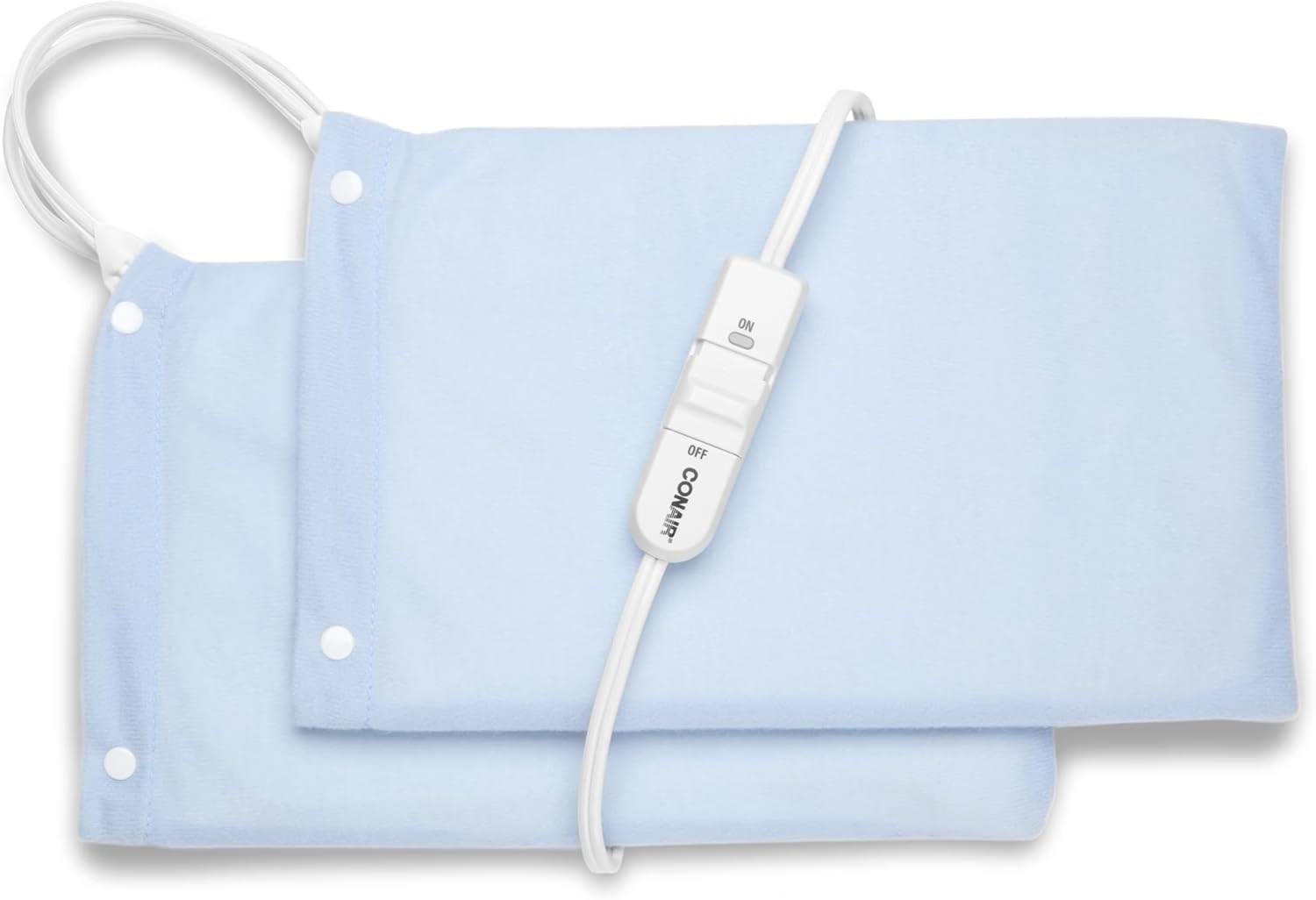
    Conair’s True Glow hand warmer is the old reliable of the group, with roughly 4,000 reviews averaging about 4.3 stars. It offers gentle, consistent heat and a basic on/off approach with no menus and no modes, which is exactly why caregivers pick it for a parent who refuses anything that looks like technology. Buyers say it also pairs well with hand lotion for a spa-style warm-up. The limitation is stated plainly in reviews: with a single heat setting, it is a comfort product, and people hoping for stronger therapeutic heat find it mild.

    The good

    • Roughly 4,000 reviews at about 4.3 stars
    • Simple on/off operation
    • Gentle, steady heat that works with lotion

    The catch

    • Single heat setting only
    • Too mild for some who want stronger heat

    This is right if… your parent wants the simplest possible warm-up and gentle heat is enough.

    Look elsewhere if… they want adjustable temperature or to wear them outdoors.

    Check Price on Amazon →

    Comparison table

    Pick Price Power Best for
    REVIX Microwavable Mitts ~$25 Microwave Simple indoor warm-ups
    Savior Heat Mittens ~$60 Rechargeable Outdoor cold
    CAMECO Electric Mittens ~$40 Plug-in Adjustable temperature
    Jobyna Cordless Gloves ~$45 Rechargeable Cordless heat plus massage
    True Glow by Conair ~$35 Electric One-button simplicity

    The conversation you’ll have

    Heated mittens can feel like an admission that the hands are failing, and many parents push back. Framing matters. Try saying “These are for your morning coffee, to get the stiffness out before you start the day” instead of “These are for your arthritis.” Offer one pair to try for a week rather than a purchase decision, and let them choose the style, because a cord-free mitt that stays in the drawer helps no one.

    Then raise safety gently. Ask whether they can feel temperature clearly in their fingertips. If numbness, diabetes, or nerve damage is in the picture, check with their doctor before using any heated product, since reduced sensation is how burns happen. Set a kitchen timer for sessions of 15 to 20 minutes and keep the heat on low.

    Insurance and savings

    Original Medicare generally does not cover heated gloves or microwavable hand warmers, since they aren’t durable medical equipment. Eligibility under an FSA or HSA varies by plan and by item, and some administrators ask for a letter of medical necessity from a doctor, so confirm with yours before buying. Keep receipts either way. Medical expenses that exceed the IRS threshold may be deductible if you itemize, as covered in IRS Publication 502.

    What to actually look for

    A format your parent will actually use

    Microwavable mitts are simplest, plug-in mitts give steady heat, and rechargeable gloves give freedom. The best one is whichever survives the “will I bother?” test. If dexterity is limited, avoid small buttons and fiddly battery pouches.

    Temperature control and auto shut-off

    Look for a stated temperature range, a low setting, and an automatic timer. A device that can’t be left on by accident is safer for parents who may forget. For more on safe heat products, see our guide to heating pads with auto shut-off.

    Fit, and what to pair it with

    Mittens generally warm better than finger-by-finger gloves and are easier to get on. Sizing runs small on several models, so check the measurements. For daytime support that doesn’t need heat, our roundup of compression gloves for arthritis is a good partner, and the complete aging-in-place safety checklist shows where hand comfort fits in the bigger picture.

    Frequently asked questions

    Do heated gloves help arthritis?

    Heat feels good and can loosen stiff fingers, but evidence for lasting relief is thin. A randomized trial in older adults with hand osteoarthritis found battery-heated mittens gave no important benefit over unheated ones for pain or function. Treat them as a comfort aid and talk to a doctor about treatment.

    Are heated gloves safe for seniors?

    They’re generally safe when used on low heat with an automatic shut-off. The main risk is burns in people with reduced sensation from diabetes or nerve damage. Check with a doctor first if that applies, limit sessions to 15 to 20 minutes, and inspect skin afterward.

    How warm should heated gloves be for arthritis?

    Comfortably warm, not hot. Many electric models range from roughly 86 to 158°F, but there’s no need to use the top of that range. Start on low, and stop if skin looks red or feels uncomfortable. Gentle, steady warmth is the goal for sore joints.

    Are microwavable or battery-heated gloves better?

    Microwavable mitts are cheaper, cord-free, and give moist heat for about 20 to 30 minutes, but they cool. Battery or plug-in gloves give longer, steady heat and adjustable settings, but cost more and add charging or cords. Pick based on whether warmth is needed indoors or on the go.

    Can you sleep in heated gloves?

    No. Heated gloves and mitts are made for supervised, short sessions, not overnight use. Falling asleep with heat on creates burn risk, especially for people with reduced feeling in their hands. Choose a model with an automatic timer and remove it before bed.

    How long do rechargeable heated gloves last?

    It depends on the heat setting. Some mittens advertise up to about 12 hours on low, but real use is shorter on high or in freezing weather, when batteries drain faster. Charge them overnight and keep expectations modest for long outdoor trips.

    The shortlist

    Best Overall

    REVIX Microwavable Mitts

    ~$25


    Check on Amazon →

    Best for Outdoors

    Savior Heat Mittens

    ~$60


    Check on Amazon →

    Adjustable Heat

    CAMECO Electric Mittens

    ~$40

    Check on Amazon →

    Cordless Indoors

    Jobyna Cordless Gloves

    ~$45

    Check on Amazon →

    Simple Option

    True Glow by Conair

    ~$35

    Check on Amazon →

    Listings last checked: November 8, 2026. Prices are approximate and change often.

    What we’d do tomorrow

    If you’re starting this weekend, do three things in this order. First, ask your parent whether they can clearly feel hot and cold in their fingertips, and loop in their doctor if not. Second, order the REVIX mitts as a low-risk first try, and keep the Savior Heat in reserve if outdoor walks are the real problem. Third, set a kitchen timer for 15 minutes the first few times, then ask how the next morning felt.

    — Sarah

    BuyingForMom is a reader-supported site. As an Amazon Associate we earn from qualifying purchases. When you buy through links on this site, we may earn an affiliate commission at no additional cost to you. See our Affiliate Disclosure for details. This article is not medical advice, please consult a qualified healthcare professional for decisions specific to your family.
  • 5 Best Thermometers for Seniors

    5 Best Thermometers for Seniors

    Disclosure: BuyingForMom is reader-supported. As an Amazon Associate we earn from qualifying purchases. When you buy through links in this article, we may earn an affiliate commission at no additional cost to you. We never recommend products we haven’t researched against verified-buyer review data. This article is editorial reporting, not medical advice.

    5 Best Thermometers for Seniors

    By Sarah Mitchell · Editor, BuyingForMom · Updated October 2026

    10 min read · Smart Home · 5 picks

    The honest take

    If you are buying a thermometer for an aging parent, get the Vicks ComfortFlex at about $14 and use it the same way every day, because the real job is learning their normal, not catching a 100.4°F fever. The Braun ThermoScan 7 is worth four times the price only if your parent cannot hold a probe. Skip a no-touch forehead gun as the only thermometer in the house: its readings are the most technique-sensitive, and an older adult’s lower baseline lets a real infection hide behind a “normal” number.

    How we sorted through 14 thermometers in October 2026

    We started with every thermometer that surfaced across expert roundups and Amazon search results on October 30, 2026, which came to 14 distinct models across oral, ear, temporal and no-touch designs. We cross-referenced published roundups from NBC Select and Medical News Today, the manufacturer-stated specs, and the pattern of downsides reviewers keep repeating. We checked the fever and baseline guidance against geriatric sources, including the Infectious Diseases Society of America definition that caregiver resources cite, and confirmed that each finalist had an active Amazon listing on the day we published.

    Who this guide is for

    This guide is for adult children buying a thermometer for a parent who lives alone or with a spouse, or who is recovering after a hospital stay. If you are shopping for yourself, the same picks apply, but skip the conversation section below.

    Cold, flu and COVID season starts now, and the sticking point with older adults is that the usual signal fails. Caregiver guidance reports that older adults’ body temperatures tend to run lower with age, and a 2014 study cited by Care.com found that 20 to 30 percent of seniors with infections arrived at the emergency department with a blunted fever response. In other words, your parent can be properly sick at 99°F. A thermometer is only useful if you know your parent’s baseline, so every pick below is judged on how easily you can take the same reading the same way, every day.

    At a glance

    Best Overall

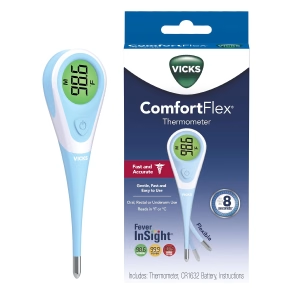
    Vicks ComfortFlex

    ~$14 · Best for learning a baseline

    Best Ear

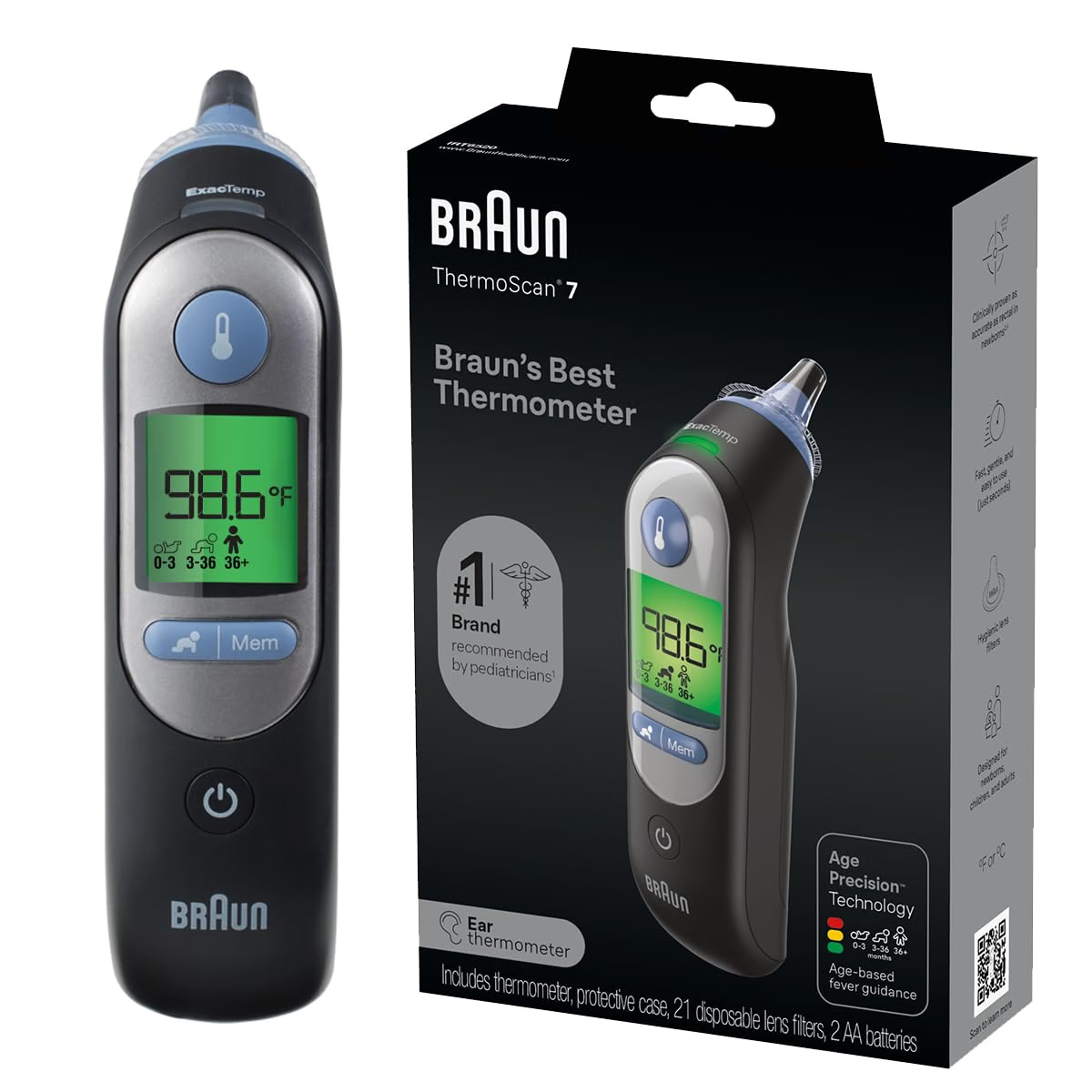
    Braun ThermoScan 7

    ~$57 · Best when a parent can’t hold a probe

    Best Temporal

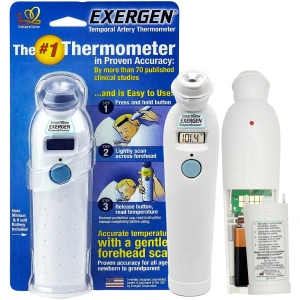
    Exergen Temporal Artery

    ~$50 · Best gentle scan, no probe

    Best No-Touch

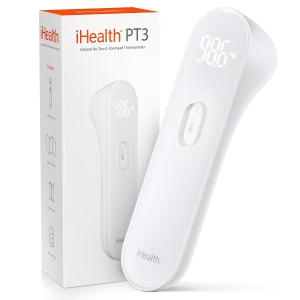
    iHealth PT3

    ~$35–55 · Best for night checks and hearing loss

    Best Budget

    Boncare

    ~$8 · Best spare for a second home

    Best Overall1. Vicks ComfortFlex Digital Thermometer

    ~$14 · View on Amazon

    The ComfortFlex wins because it is the cheapest reliable way to learn what normal looks like for your parent. It reads in roughly 8 seconds to within about 0.2°F, works orally or under the arm, has a flexible tip, remembers the last reading, and is waterproof for easy cleaning. NBC Select named it best overall, and the doctor NBC Select quotes calls oral readings the most accurate option for anyone over age four. The recurring complaint in published reviews is the lack of a backlight, plus a screen that is hard to read at an angle. One caution: the green, yellow and red color coding assumes a standard fever threshold, so write down the number rather than trusting the color.

    The good

    • Roughly $14 with a case and battery included
    • Color-coded display and last-reading memory
    • Waterproof, so it wipes clean between uses

    The catch

    • No backlight, so night readings need a lamp
    • Color coding uses standard fever cutoffs, not an older adult’s

    This is right if… your parent can hold a probe under the tongue or arm for several seconds and you want a trustworthy daily baseline.

    Look elsewhere if… your parent cannot sit still or keep their mouth closed for ten seconds.

    Check Price on Amazon →

    Best Ear2. Braun ThermoScan 7 Digital Ear Thermometer

    ~$57 · View on Amazon

    If a parent with dementia, tremor or a sore mouth will not hold a probe, the ThermoScan 7 takes the reading in about a second. It beeps and flashes when the tip is positioned correctly, uses a pre-warmed tip, accepts an age setting, and takes disposable lens filters for hygiene. NBC Select named it the best ear thermometer, at about $57 on Amazon against a $75 list price. Medical News Today lists the cost, some reports of incorrectly high readings, and fiddly per-use setup as downsides, and ear thermometers in general can be hard to position. Heavy earwax or a very narrow canal can also throw a reading off.

    The good

    • About a one-second reading with a positioning beep and flash
    • Age setting and pre-warmed tip
    • Disposable lens filters for hygiene

    The catch

    • Costs roughly four times the Vicks
    • Positioning matters, and some buyers report high readings

    This is right if… your parent can’t cooperate with an oral reading or you take readings while they sleep or rest.

    Look elsewhere if… you have the budget for only one thermometer and your parent can manage an oral reading.

    Check Price on Amazon →

    Best Temporal3. Exergen Temporal Artery Thermometer

    ~$50 · View on Amazon

    The Exergen reads the temporal artery by sliding the sensor across the forehead, so there is no probe in the mouth or ear, which is its appeal for a frail or anxious parent. The model reviewers describe has a soft-glow display, a silent mode, and memory for the last eight readings, and the manufacturer itself recommends twice-daily checks in older adults to establish a baseline. Medical News Today lists a hard-to-open battery cover and some reviewer doubts about accuracy as downsides. Technique decides the result here, so follow the sweep instructions exactly and take every reading the same way.

    The good

    • No probe in the mouth or ear
    • Soft-glow display and a silent mode
    • Remembers recent readings for trend-spotting

    The catch

    • Battery cover is stiff to open
    • Sloppy sweep technique skews results

    This is right if… your parent resists oral or ear readings but will tolerate a quick pass across the forehead.

    Look elsewhere if… you want the lowest price or you are unlikely to follow the scanning instructions closely.

    Check Price on Amazon →

    Best No-Touch4. iHealth No-Touch Forehead Thermometer (PT3)

    ~$35–55 · View on Amazon

    The iHealth PT3 reads from about 1.2 inches away in roughly one second, so nobody has to be woken or touched. Its large LED digits are readable in total darkness, and it signals the reading with a vibration rather than beeps, which suits a parent with hearing loss or a partner who is sleeping. Three sensors, including distance and environment sensors, are meant to improve accuracy. Medical News Today notes that some reviewers question its accuracy and that the display is not color-coded. The CDC says infrared forehead models must be held at a set distance, and the FDA warns that drafts and sunlight skew them.

    The good

    • Large LED digits that are readable in the dark
    • Vibration feedback instead of beeps
    • Nothing touches your parent’s skin

    The catch

    • Some reviewers question accuracy, and distance matters
    • Price swings widely, from about $17 on deal days to over $50

    This is right if… you check overnight, your parent hears poorly, or you want a fast second opinion.

    Look elsewhere if… it would be your only thermometer, since non-contact readings are the most technique-sensitive.

    Check Price on Amazon →

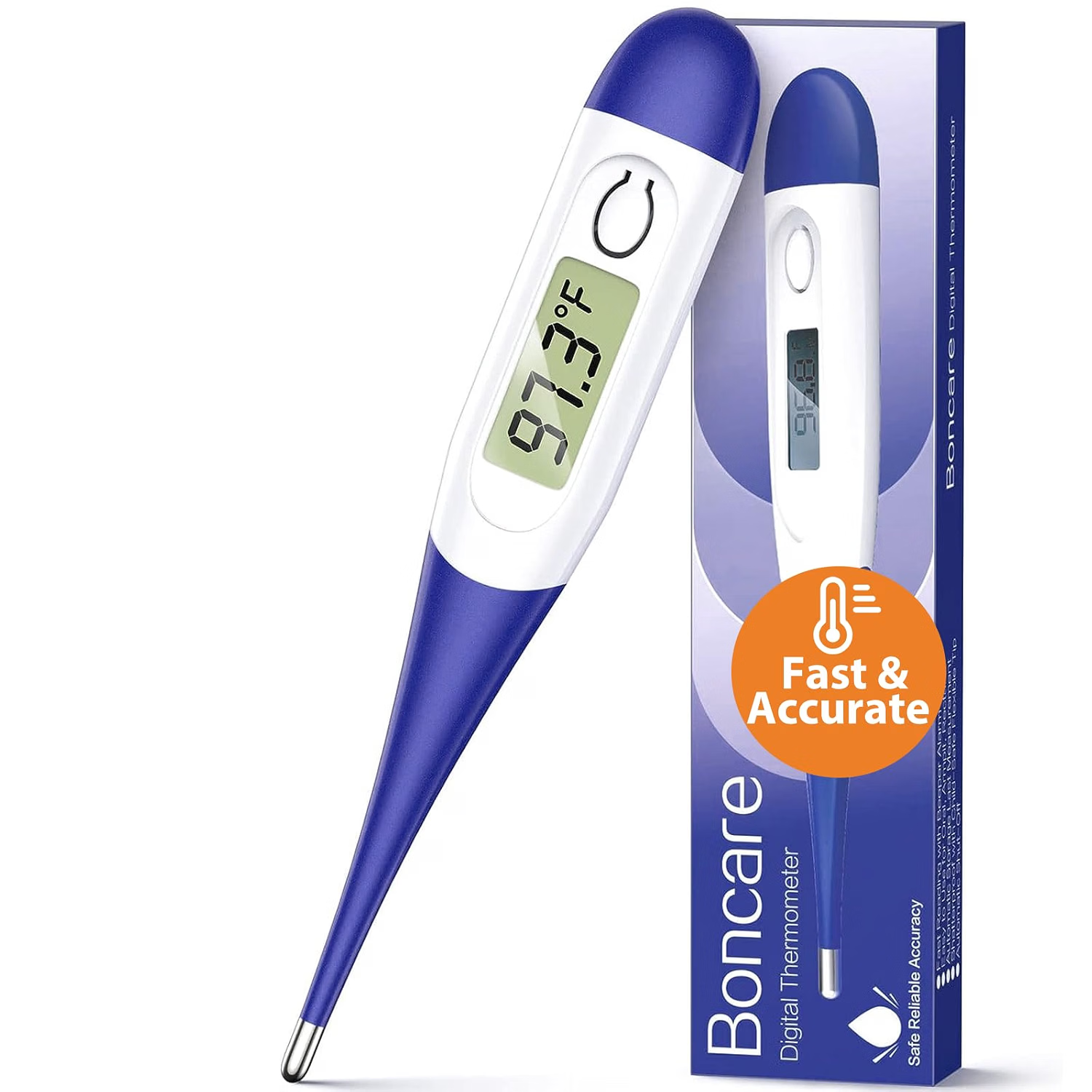
    Best Budget5. Boncare 10-Second Digital Thermometer

    ~$8 · View on Amazon

    At about $8, the Boncare earns its slot as the spare: one for the bathroom, one for the caregiver’s bag, one for the parent’s second home. It reads in around 10 seconds, shows the result on a legible LCD, sounds a beeper alarm for a possible fever, and recalls the last reading. NBC Select named it best budget, though its reasoning was mostly price, and there is far less independent testing behind it than behind the Vicks. Treat it as a convenience thermometer and sanity-check it against your main one the first week by taking both readings back to back.

    The good

    • About $8, cheap enough to keep several
    • 10-second reading with a fever beeper
    • Remembers the last reading

    The catch

    • Little independent testing behind it
    • Beeper alarm uses standard fever thresholds

    This is right if… you want a backup or a thermometer at a second home, or a caregiver wants their own.

    Look elsewhere if… you want something with a proven track record as the main daily thermometer.

    Check Price on Amazon →

    Comparison table

    Thermometer Price Method Speed Best for
    Vicks ComfortFlex ~$14 Oral / underarm About 8 sec Daily baseline
    Braun ThermoScan 7 ~$57 Ear About 1 sec Can’t hold a probe
    Exergen Temporal Artery ~$50 Forehead sweep A few sec Gentle, no probe
    iHealth PT3 ~$35–55 No-touch forehead About 1 sec Night checks, hearing loss
    Boncare ~$8 Oral / underarm About 10 sec Spare or second home

    The conversation you’ll have

    Many older adults hear “let me take your temperature” as “I think you’re sick,” and a daily check can feel like surveillance. Frame it as a habit you are doing together rather than a test they might fail. A reading taken every morning when nothing is wrong is what makes the one abnormal day meaningful.

    Try saying, “Let’s find out what’s normal for you, so if you ever feel off we’re not guessing,” instead of “I need to keep an eye on your temperature.” Offer to take your own reading first, tie it to something already in the routine such as coffee or the pill organizer, and write the number in a notebook that stays by the thermometer. If your parent lives alone, a quick phone call each morning to read the number out loud turns it into a check-in rather than a chore.

    Insurance and savings

    Original Medicare generally does not cover over-the-counter thermometers, so plan on paying out of pocket. Amazon marks several of these models as FSA and HSA eligible, based on a reading of IRS Publication 502, but plans interpret that differently, so confirm with the plan administrator and keep the receipt. Some Medicare Advantage plans include an over-the-counter allowance that may apply, so check the plan’s catalog before you buy. Because the Vicks costs about $14, the tax deduction angle is not worth chasing: medical expenses are deductible only above 7.5 percent of adjusted gross income.

    What to actually look for

    The same spot, at the same time

    Care.com reports that the standard 98.6°F figure drops with age, and advises finding an individual’s baseline by checking the same spot several times a day while the person is well. Doctors typically treat a rise of about two degrees above a person’s own usual temperature as a sign of infection. The Infectious Diseases Society of America definition cited there is a single oral reading over 100°F, repeated oral readings over 99°F, or a 2°F rise over baseline. The thermometer matters less than the routine; our aging-in-place safety checklist puts daily health checks on the list for exactly this reason.

    Match the method to your parent

    In a study of hospitalized patients aged 75 and older cited by Care.com, rectal readings detected fever in 86 percent of cases, compared with 66 percent orally and 32 percent under the arm. Medical News Today cites a 2022 study finding ear and forehead readings as reliable as other types, so the best choice is the one you will use correctly. Pick oral or underarm if your parent cooperates, ear or temporal if they do not, and no-touch only as a second opinion. If your parent has heart, lung or blood-sugar problems, pair this with a home blood pressure monitor or a pulse oximeter so you have more than one signal.

    Readable display and clean technique

    Look for large digits, a backlight or a dark-readable screen, and a memory for the last reading. For infrared models the FDA advises holding the thermometer perpendicular to the forehead without touching the skin, noting that the right distance varies by product and that drafts, direct sunlight and nearby heat can skew results. It also suggests leaving the thermometer in the room for 10 to 30 minutes first. Keep the instructions with the device, and see our room-by-room modification guide for where to keep it so it actually gets used.

    FAQ

    What is the best thermometer for seniors?

    For most older adults, the Vicks ComfortFlex is the most practical: about $14, a fast oral or underarm reading, and easy daily baseline tracking. If your parent cannot hold a probe, the Braun ThermoScan 7 ear thermometer is the better fit, and the Exergen suits those who tolerate only a quick forehead sweep.

    What is a normal body temperature for an elderly person?

    Older adults often run below 98.6°F, and the right number varies by person. Care.com advises finding your parent’s baseline by taking the same reading, in the same spot, several times a day while they are well. After that, a rise of about two degrees above their usual is the signal.

    What counts as a fever in older adults?

    The Infectious Diseases Society of America definition cited by Care.com is a single oral temperature over 100°F, repeated oral readings over 99°F, or a rise of 2°F over baseline. Many older adults never reach the standard 100.4°F during an infection, so confusion or poor appetite also deserve a call to the doctor.

    Are forehead thermometers accurate for seniors?

    They can be, but they are the most technique-sensitive. The FDA says to hold an infrared model perpendicular to the forehead at the product’s stated distance, away from drafts, sun and heat. Medical News Today notes mixed evidence on infection screening, so confirm a worrying forehead reading with an oral or ear thermometer.

    Is an ear or oral thermometer better for the elderly?

    Both work. Oral readings cost less but need a parent who can keep their mouth closed. Ear thermometers are quick and suit parents with dementia or a sore mouth, though earwax and positioning can affect results. Medical News Today cites a 2022 study finding ear readings as reliable as other types.

    How often should I check an elderly parent’s temperature?

    Exergen, a thermometer manufacturer, recommends checking twice daily, morning and evening, to establish a baseline and spot small shifts, particularly for people with chronic illness. When your parent seems off, check right away and again later. Call a doctor if the number rises or behavior changes, such as new confusion or sleepiness.

    The shortlist

    BEST OVERALL

    Vicks ComfortFlex

    ~$14

    Check on Amazon →

    BEST EAR

    Braun ThermoScan 7

    ~$57

    Check on Amazon →

    BEST TEMPORAL

    Exergen Temporal Artery

    ~$50

    Check on Amazon →

    BEST NO-TOUCH

    iHealth PT3

    ~$35–55

    Check on Amazon →

    BEST BUDGET

    Boncare

    ~$8

    Check on Amazon →

    What we’d do tomorrow

    If you are starting this weekend, do three things in this order. First, order the Vicks ComfortFlex and, if your parent will not tolerate a probe, add the Braun ThermoScan 7. Second, take a reading at the same time, in the same spot, every morning for a week while your parent is well, and write the numbers down. Third, decide in advance what will trigger a call: a rise of about two degrees over their baseline, or confusion and sleepiness at any temperature.

    — Sarah
    BuyingForMom is a reader-supported site. As an Amazon Associate we earn from qualifying purchases. When you buy through links on this site, we may earn an affiliate commission at no additional cost to you. See our Affiliate Disclosure for details. This article is not medical advice. Please consult a qualified healthcare professional for decisions specific to your parent’s situation.
  • 5 Best Lightweight Cordless Vacuums for Seniors

    5 Best Lightweight Cordless Vacuums for Seniors

    Disclosure: BuyingForMom is reader-supported. As an Amazon Associate we earn from qualifying purchases. When you buy through links in this article, we may earn an affiliate commission at no additional cost to you. We never recommend products we haven’t researched against verified-buyer review data. This article is editorial reporting, not medical advice.

    5 Best Lightweight Cordless Vacuums for Seniors

    By Sarah Mitchell · Editor, BuyingForMom · Updated November 2026

    9 min read · Living Room, Arthritis · 5 picks

    The honest take: If you’re shopping for a vacuum an older adult can actually use every week, buy the Levoit LVAC-200 and stop there for most homes. The Tikom V500 is the right call only if the budget is tight and the floors are mostly hard. Skip the heavy “powerful” stick vacuums that weigh seven pounds fully assembled; if lifting it is the problem, suction never matters.

    How we sorted through 12 cordless vacuums in two weeks

    We started with 12 cordless stick vacuums that appear on “best for seniors” and “best for arthritis” lists, then cut anything that failed three tests: a stated weight an older adult could realistically carry, a runtime long enough to clean one floor on a single charge, and an Amazon listing that surfaced as live. We cross-referenced independent lab-style reviews (Vacuum Wars, TechGearLab, Bob Vila) against the complaints verified buyers repeat, and we noted where the published weights disagree, because they often do.

    Who this guide is for

    This guide is for adult children buying a vacuum for a parent who has gotten tired of dragging a corded upright out of the closet, or who has stopped vacuuming because the cord, the weight, or the bending has become a fall risk. If you’re shopping for yourself, the picks are the same, but skip the conversation section below.

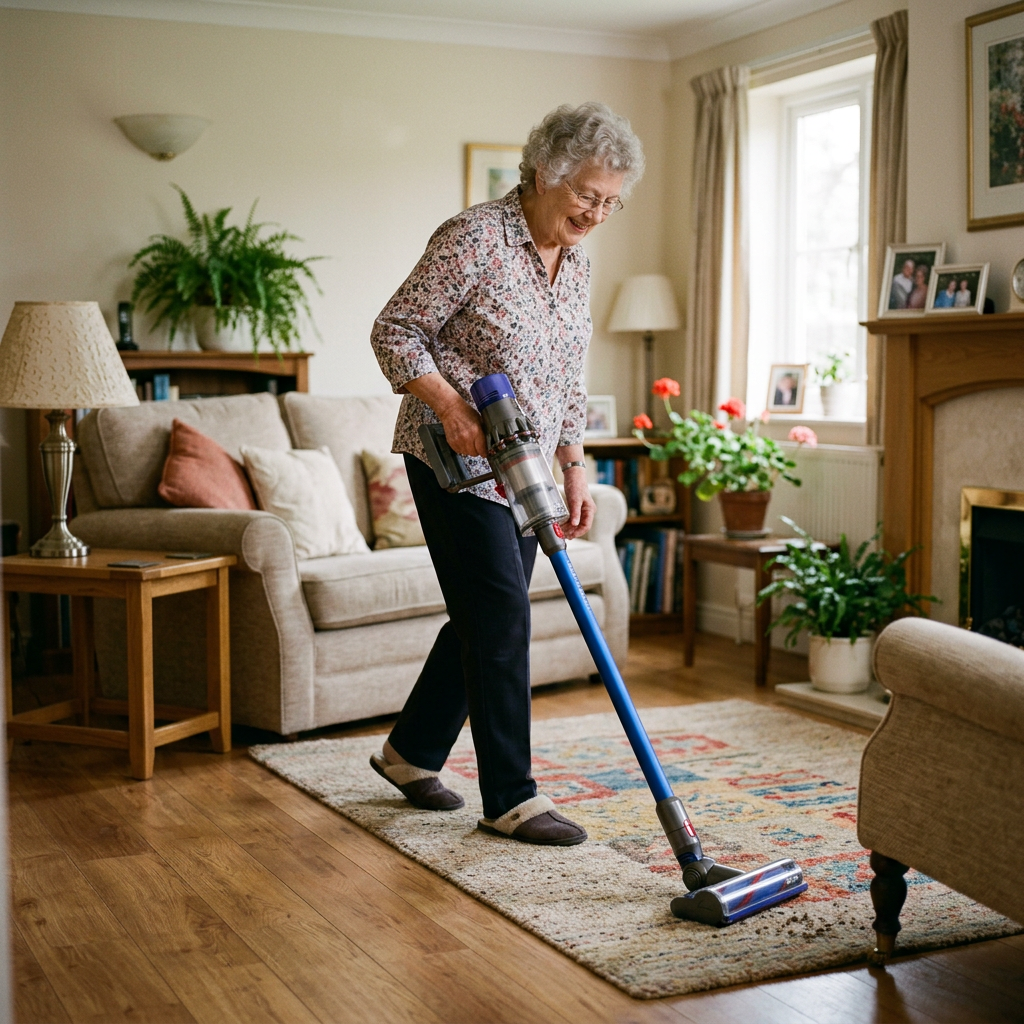
    Vacuuming is one of the quiet reasons homes get unsafe. Dust, pet hair, and crumbs pile up, rugs curl, and the cord that once reached every room now crosses the hallway where someone could trip. A cordless stick vacuum that weighs a few pounds in the hand removes the cord, the bending, and the heavy lift in one purchase. It’s a small fix, and it belongs on the same list as grab bars and nightlights in our aging-in-place home safety checklist.

    The catch is that “lightweight” is a slippery word. Some listings measure only the handheld motor unit (about three pounds), others the whole assembled stick (six to seven). We flag which is which for each pick below.

    At a glance

    BEST OVERALL · Levoit LVAC-200 · ~$140 · Easy to push, 50-minute low mode

    BEST BUDGET · Tikom V500 · ~$80 · Light handle, big bin, wall dock

    BEST FOR STAIRS · Kenmore DS1020 · ~$85 · Converts to a sub-3-lb handheld

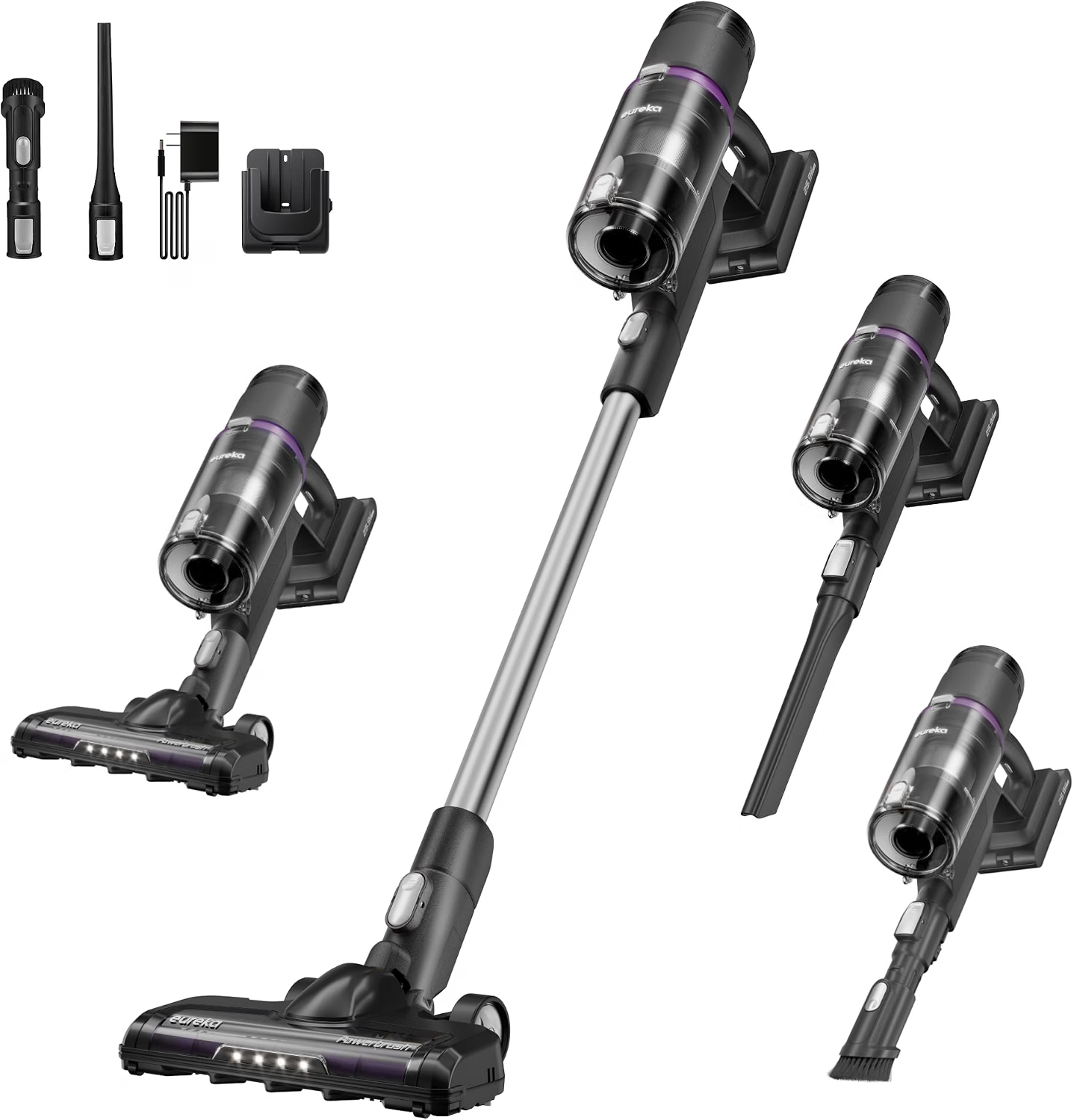
    BEST FOR HARD FLOORS · Eureka ReactiClean 410 · ~$130 · Small head, quiet, mostly bare floors

    BEST FOR PET HAIR · Shark IX141 · ~$150 · Stands on its own, heavier

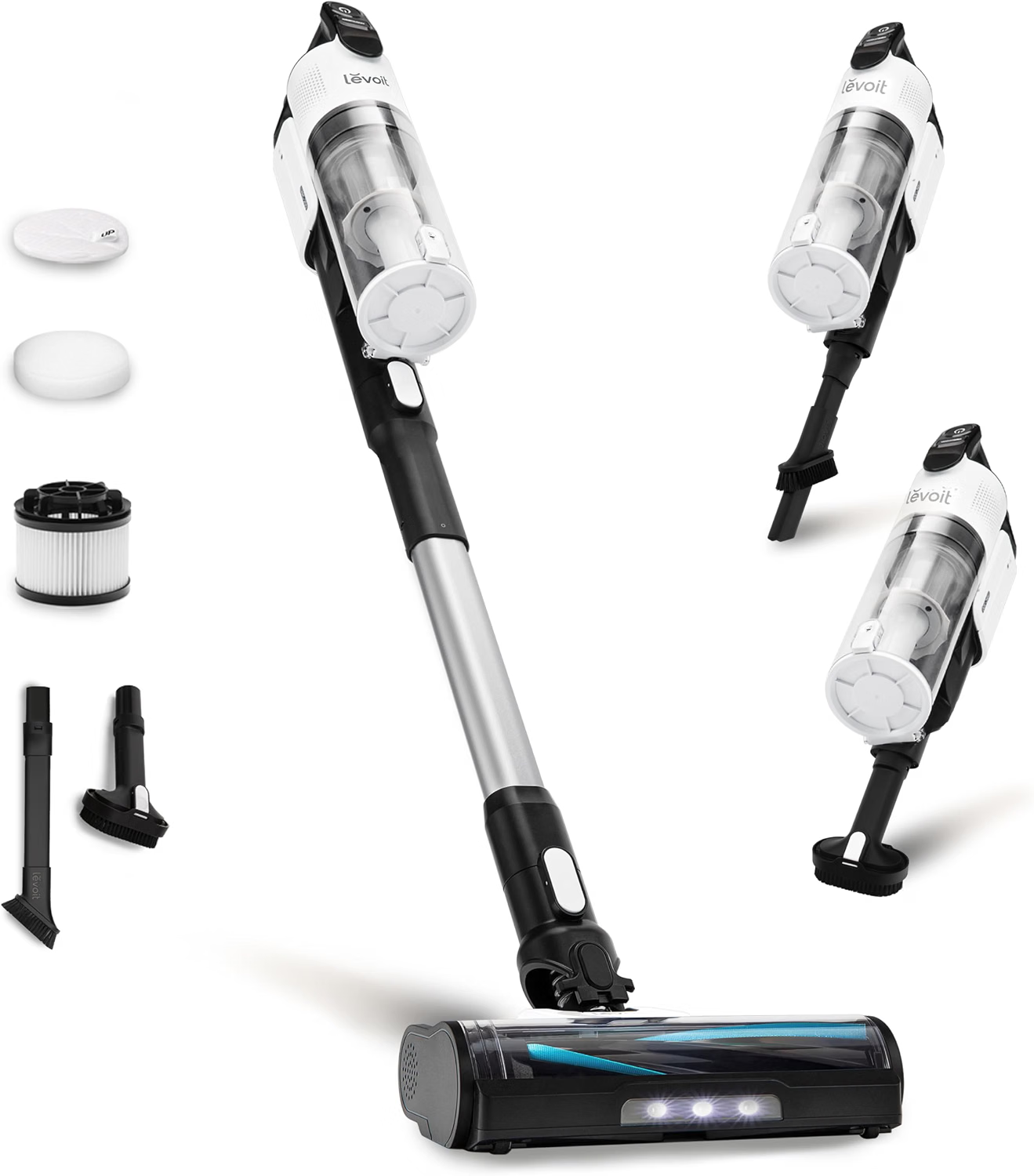
    BEST OVERALLLevoit LVAC-200 Cordless Vacuum

    ~$140 on Amazon. Check price on Amazon

    The LVAC-200 is the one we’d hand to most people. Reviewers describe it as easy to steer into small spaces, with a roller brush built to resist tangling and a 0.75-liter bin that doesn’t need emptying every room. Bob Vila’s review puts the runtime at up to 50 minutes on the lowest setting, which covers a typical apartment or one floor of a house. Weight is where listings disagree: the handle unit is described as about 3 pounds, while other sources list the full stick closer to six, so expect it to feel light, not weightless. The recurring buyer complaint is charging time, which can run several hours.

    The good

    • Up to 50 minutes of runtime on low power
    • Tangle-resistant roller handles long hair
    • Bin empties with a button over the trash can

    The catch

    • Slow charge (up to about five hours)
    • No HEPA filter, which matters for allergies

    This is right if… you want one dependable vacuum for a mix of floors and don’t want to think about settings.

    Look elsewhere if… anyone in the home has serious allergies and needs sealed HEPA filtration.

    Check Price on Amazon →

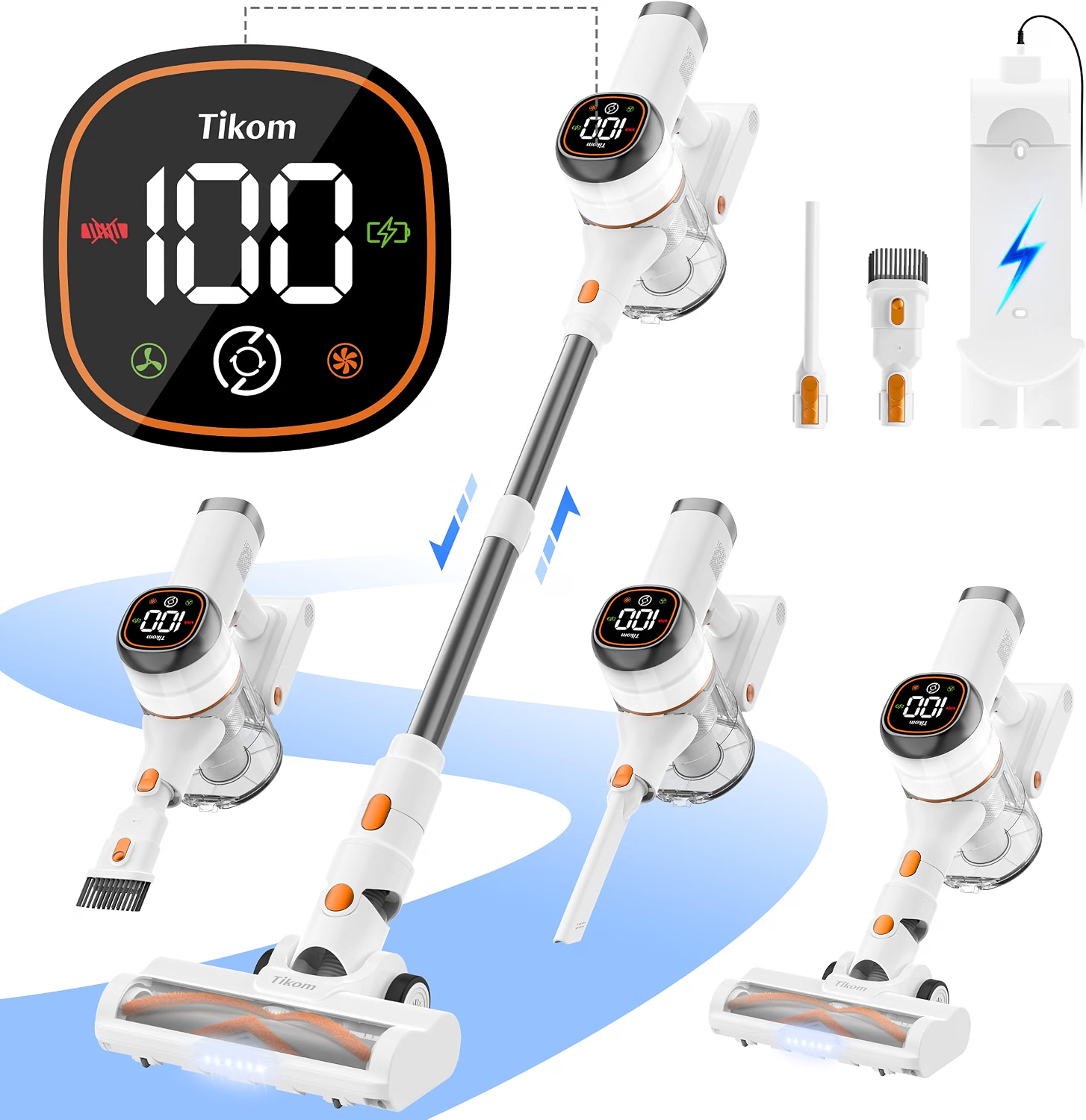
    BEST BUDGETTikom V500 Cordless Vacuum

    ~$80 on Amazon. Check price on Amazon

    At roughly $80, the V500 is the pick for a parent who just needs the crumbs gone. Vacuum Wars measured it at 3.4 pounds at the handle, with a 1.3-liter bin, a digital battery gauge, a wall mount, and a hair-removal brush that did well in their tangle test. The trade is raw power: the same review found suction below the class average and measured about 32 minutes of runtime on standard power, dropping to about 18 on max. It struggled with larger debris on hard floors. Treat it as a daily-touch-up vacuum, not a deep cleaner.

    The good

    • Light handle and a wall dock for easy storage
    • Large 1.3-liter bin for the price
    • Battery gauge shows remaining charge

    The catch

    • Below-average suction on deeper carpet
    • Max mode drains the battery in under 20 minutes

    This is right if… the floors are mostly hard, the home is small, and the budget is firm.

    Look elsewhere if… your parent has thick carpet or a pet that sheds heavily.

    Check Price on Amazon →

    BEST FOR STAIRSKenmore DS1020 Cordless Stick Vacuum

    ~$85 on Amazon. Check price on Amazon

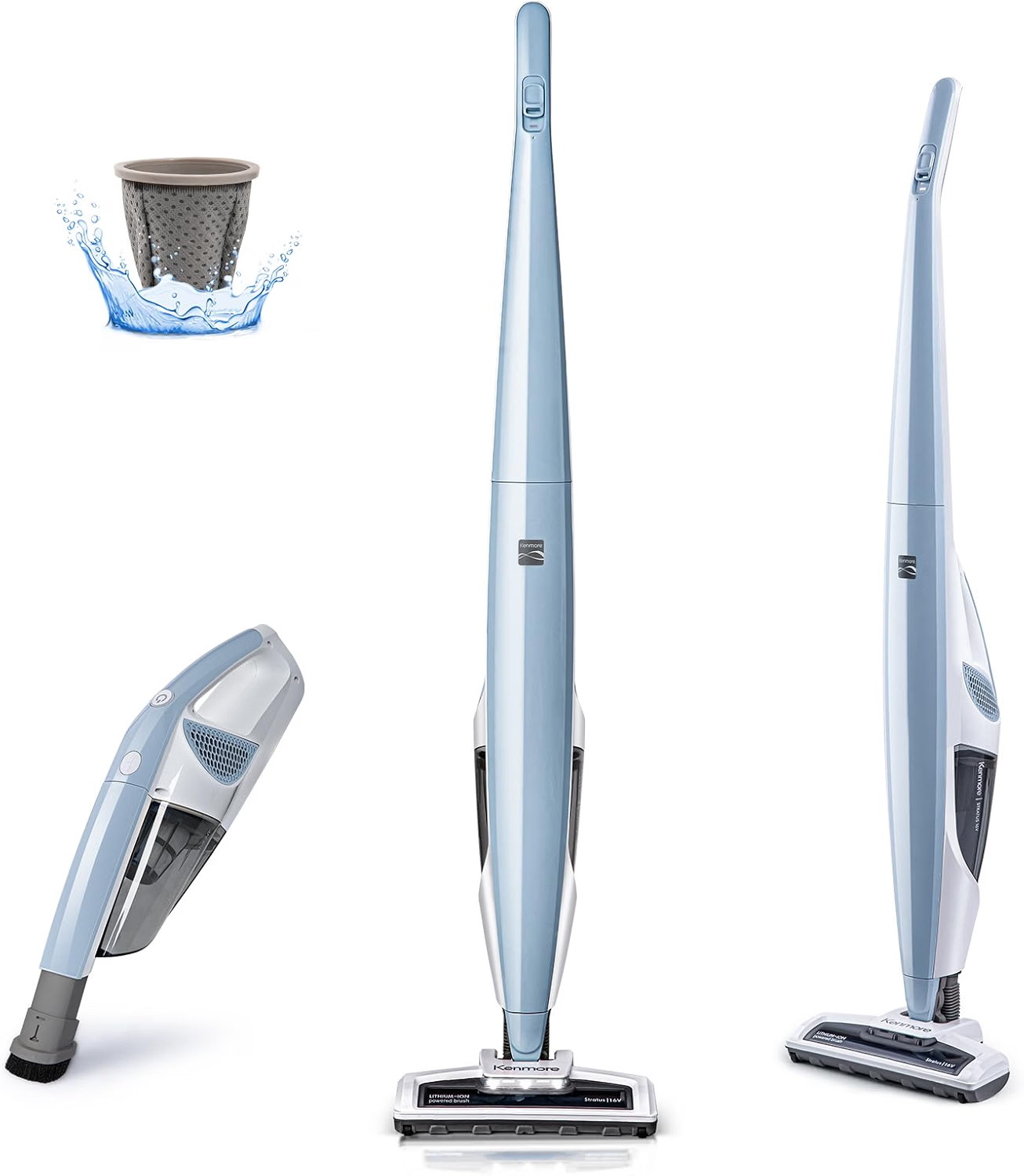
    The DS1020 earns its slot because it detaches into a handheld under three pounds, which is the version most older adults use on stairs, upholstery, and the car. The full stick runs about 6.9 pounds, so it’s the heaviest of our budget picks when assembled. Reviewers cite a bright LED headlight, easy-rinse cloth filter, and strong daily suction on hard floors. Across more than 4,200 Amazon ratings it averages about 4.1 stars, and the common criticisms are the small dust bin and short runtime on high.

    The good

    • Handheld mode under 3 pounds for stairs and furniture
    • LED headlight shows dust you’d otherwise miss
    • Rinsable filter keeps running costs low

    The catch

    • About 30 minutes on low and far less on high
    • No wall dock and a non-replaceable battery

    This is right if… the home has stairs or the parent mostly cleans in short sessions with the handheld.

    Look elsewhere if… you need to clean a whole house on one charge.

    Check Price on Amazon →

    BEST FOR HARD FLOORSEureka ReactiClean 410

    ~$130 on Amazon. Check price on Amazon

    The ReactiClean 410 is light and quiet, with a swiveling head that TechGearLab says maneuvers easily around furniture and works well on stairs. On hardwood it cleaned about 96 percent of test debris. The same testers found weak results on carpet and on pet hair, which tangled in the roller, and a runtime of roughly 24 minutes on low. For a small apartment with bare floors, that’s plenty. For anything bigger, it isn’t.

    The good

    • Very light and easy to steer
    • Strong on hardwood and tile
    • Quiet and small enough to store in a closet

    The catch

    • Weak on carpet and pet hair
    • Short runtime and a long charge

    This is right if… the home is a small apartment or condo with mostly hard floors.

    Look elsewhere if… there are area rugs everywhere or a shedding dog.

    Check Price on Amazon →

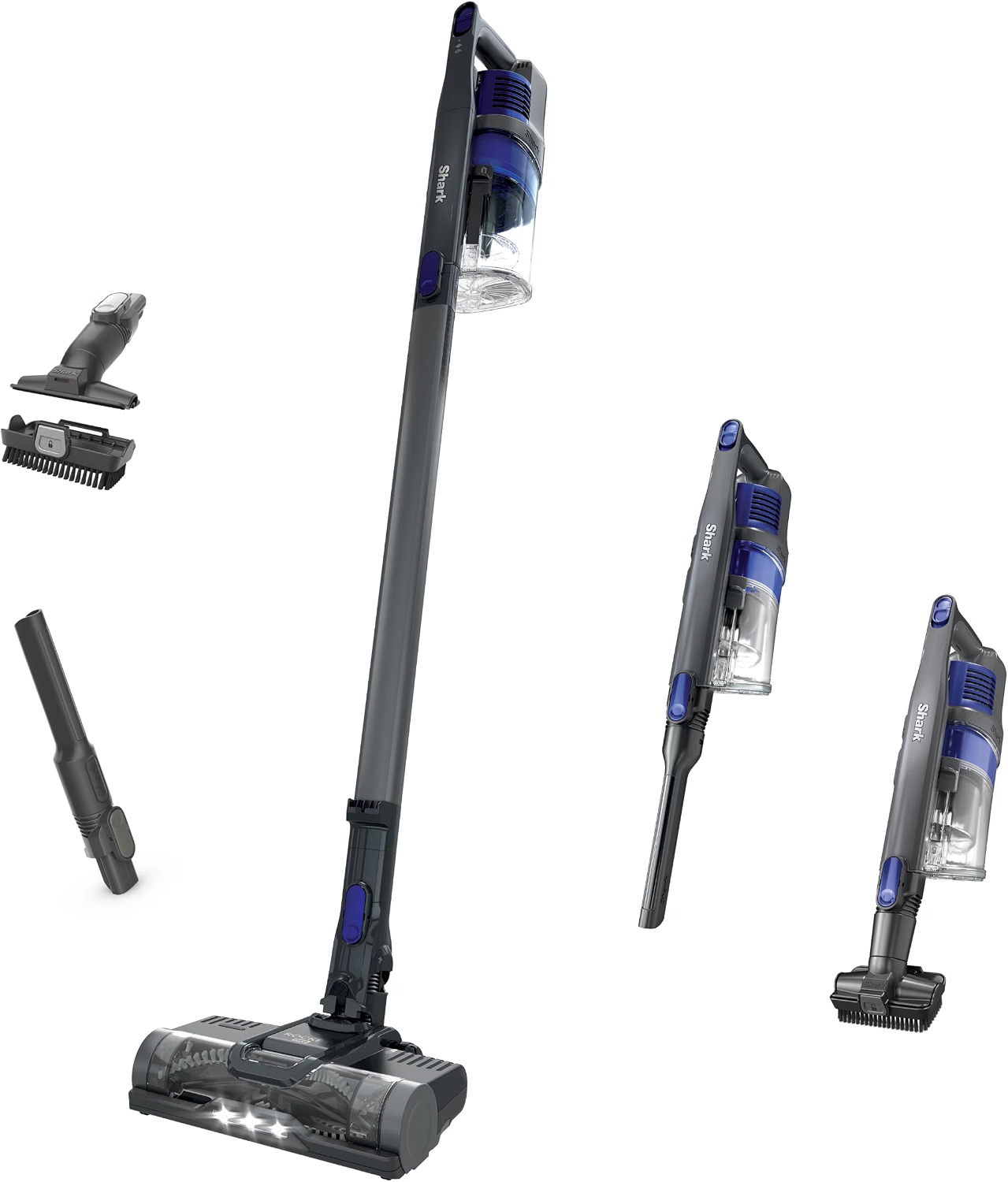
    BEST FOR PET HAIRShark IX141 Pet Cordless Stick Vacuum

    ~$150 on Amazon. Check price on Amazon

    The Shark is the heaviest pick here (listed around 7 pounds), and we include it deliberately. It’s one of the few stick vacuums that stands upright on its own, so nobody has to lean it against a wall or bend to retrieve it from the floor. It has a bristle roller built for pet hair, LED headlights, and a removable handheld. Runtime tops out around 40 minutes on the most efficient setting, and less on stronger ones. If your parent can comfortably lift seven pounds and has a dog or cat, the self-standing design is a real safety benefit.

    The good

    • Stands on its own with no wall mount needed
    • Strong on carpet and pet hair
    • Detachable handheld for stairs and furniture

    The catch

    • Heaviest pick when fully assembled
    • Runtime drops quickly on higher settings

    This is right if… there’s a pet, mixed flooring, and enough grip strength to lift about seven pounds.

    Look elsewhere if… arthritis or weakness makes any lift hard; go with the Levoit or Tikom.

    Check Price on Amazon →

    Comparison table

    Model Price Runtime (low) Best for
    Levoit LVAC-200 ~$140 ~50 min Most homes
    Tikom V500 ~$80 ~32 min Tight budgets
    Kenmore DS1020 ~$85 ~30 min Stairs, handheld use
    Eureka ReactiClean 410 ~$130 ~24 min Small, bare-floor homes
    Shark IX141 ~$150 ~40 min Pet hair, carpet

    The conversation you’ll have

    A vacuum feels like a neutral gift, but it can land as a comment on how someone is keeping house. Many older adults hear “I got you a lighter vacuum” as “you can’t manage anymore.” Lead with the thing you want to fix, which is usually the cord, the storage, or the closet it lives in, rather than the person.

    Try saying “I found one that doesn’t need an outlet, so you can do the stairs in two minutes” instead of “This one is easier for you.” Then offer to set it up, mount the dock, and run it once together. If your parent pushes back, ask them to keep the old one until the new one earns its place.

    Insurance and savings

    Medicare doesn’t cover household vacuums, and they’re not typically eligible for FSA or HSA reimbursement because they aren’t medical equipment. A tax deduction is unlikely unless a clinician documents a specific medical need. The practical savings angle is timing: cordless vacuums are frequent Black Friday and Cyber Monday discounts, so if the purchase isn’t urgent, watch prices over the next few weeks. Ask the Area Agency on Aging in your parent’s county whether a chore or housekeeping program is available as well.

    What to actually look for

    Weight where it counts

    Check whether the number is the handle unit or the full assembled vacuum, and think about where the weight sits. A vacuum that rolls on its floor head and is carried only up stairs is easier than one lifted constantly. Ask your parent to hold a six-pound bag of flour at arm’s length for ten seconds as a rough test.

    Runtime and charging

    Most listings quote the longest runtime, on the lowest setting. Plan on about half of that for real cleaning. Also check how the battery charges: a wall dock means the vacuum is always upright and charged, which is also a tripping hazard removed from the closet floor. Pair it with the safe-home steps in our room-by-room aging-in-place guide.

    Grip, controls, and emptying

    Look for a trigger that is easy to press, or a power switch rather than hold-to-run, because holding a trigger tires arthritic hands. A bin that empties with one button helps just as much; our compression gloves guide covers hand-support options if grip is already a challenge.

    Frequently asked questions

    What is the best vacuum for an older person?

    A cordless stick vacuum with a light handle, a runtime of at least 30 minutes, and a one-button bin release suits most older adults. We rank the Levoit LVAC-200 first because it balances weight, runtime, and tangle resistance without complicated settings.

    How much should a vacuum weigh for a senior?

    Aim for a handle unit near three to four pounds and a fully assembled stick under about six or seven. Listings often quote only the lighter handheld figure, so check the assembled weight before buying, especially if your parent has arthritis, weakness, or balance concerns.

    Are cordless vacuums good for seniors with arthritis?

    Often yes, because they remove the cord and the heavy drag of an upright. Choose one with a power switch instead of a hold-down trigger, a light handle, and a bin that empties with one press, since those features reduce the grip strength required.

    How long do cordless vacuum batteries last?

    Quoted runtimes of 30 to 50 minutes are usually measured on the lowest setting. On higher power, expect roughly 15 to 25 minutes. Many batteries lose capacity after a few years of regular use, so check whether the battery is replaceable.

    Is a robot vacuum better for seniors?

    A robot vacuum can handle daily upkeep with no lifting, but it needs clear floors, app setup, and occasional rescue from cords or rug fringe. A lightweight stick vacuum is simpler to start with and also covers stairs and upholstery.

    Can a vacuum help prevent falls?

    Indirectly. Removing power cords from walkways, keeping floors free of debris, and avoiding awkward lifting all reduce hazards. A cordless model helps with the first two and, if it is light enough, the third.

    The shortlist

    Best Overall

    Levoit LVAC-200

    ~$140

    Check on Amazon →

    Best Budget

    Tikom V500

    ~$80

    Check on Amazon →

    Best for Stairs

    Kenmore DS1020

    ~$85

    Check on Amazon →

    Best for Hard Floors

    Eureka ReactiClean 410

    ~$130

    Check on Amazon →

    Best for Pet Hair

    Shark IX141

    ~$150

    Check on Amazon →

    If you’re starting this weekend, do three things in this order. First, ask your parent which room they most dread vacuuming and where the old vacuum lives. Second, pick the Levoit unless the floors are bare (Tikom or Eureka) or there are stairs (Kenmore). Third, mount or stand the new vacuum where it can charge upright, and take the old one out of the house the same day so nobody has to choose.

    — Sarah
    BuyingForMom is a reader-supported site. As an Amazon Associate we earn from qualifying purchases. When you buy through links on this site, we may earn an affiliate commission at no additional cost to you. See our Affiliate Disclosure for details. This article is not medical advice. Please consult a qualified healthcare professional for decisions specific to your situation.
  • 5 Best Electric Razors for Seniors With Tremors

    5 Best Electric Razors for Seniors With Tremors

    Disclosure: BuyingForMom is reader-supported. As an Amazon Associate we earn from qualifying purchases. When you buy through links in this article, we may earn an affiliate commission at no additional cost to you. We never recommend products we haven’t researched against verified-buyer review data. This article is editorial reporting, not medical advice.

    5 Best Electric Razors for Seniors With Hand Tremors

    By Sarah Mitchell · Editor, BuyingForMom · Updated November 2026

    7 min read · Arthritis, Parkinson’s & Bathroom · 5 picks

    The honest take: If you’re shopping for an electric razor for a parent with a tremor, buy the Philips Norelco 2400 and stop there for most situations. The Panasonic ARC5 is the right call only if sensitive skin makes every cheaper razor a fight. Skip the unbranded “5D floating” razors flooding Amazon search: they carry a few dozen ratings, no track record, and no guarantee you can ever buy a replacement head.

    How we sorted through 24 electric razors in one November 2026 pass

    We started with 24 razors on a single Amazon results page, then dropped anything with fewer than a few hundred ratings, anything sold only through third-party sellers with no brand support, and anything that was really a body groomer. For the five that remained we read the current listings for weight, waterproofing, and charging details, and checked every one for live in-stock status on November 2, 2026. We then cross-referenced the shortlist against grooming guidance from the Parkinson’s Foundation, which advises using an electric razor and shaving while seated, and against home-care guidance that favors light, easy-grip handles for weak or shaky hands.

    Who this guide is for

    This guide is for adult children buying a razor for a parent whose hands shake from Parkinson’s, essential tremor, arthritis, or the after-effects of a stroke. If you’re shopping for yourself, the same picks apply; skip the conversation section below.

    A tremor makes a blade razor risky, and that is the whole reason this category exists. An electric razor needs far less precision, it cannot cut deeply, and it can be used seated. Switching is one of the cheapest safety upgrades in the house, and it keeps a parent shaving independently for years longer. If bathroom safety is on your list more broadly, our complete aging-in-place safety checklist puts the fixes in priority order.

    At a glance

    Best Overall
    Philips Norelco 2400 Series~$35
    Best Budget
    Panasonic ES3831K~$25
    Best Foil for Sensitive Skin
    Braun Series 3 3010s~$50
    Best Splurge
    Panasonic ARC5~$180
    Best for Stubble and Caregiver-Guided Shaves
    Philips Norelco OneBlade 360~$30

    Best Overall1. Philips Norelco 2400 Series

    Philips Norelco 2400 Series electric razor

    ~$35 · See current price on Amazon

    The Norelco 2400 is the razor most families should start with: four-direction floating heads that follow the jaw and neck, a pop-up trimmer, and a price that makes replacement painless. Across more than 63,000 ratings it holds a 4.3 average, which is strong for a rotary at this price. The heads move with the face instead of demanding a steady, precise stroke, and that forgiving motion is exactly what a trembling hand needs. It works dry, or with foam in the shower.

    The good

    • Floating heads keep contact with the face without careful angling
    • Wet or dry use, so it works at the sink or seated in the shower
    • Self-sharpening steel blades; no blade swaps to remember

    The catch

    • Rotary heads can miss hair under the chin and along the jawline, so expect two or three passes
    • The listing says the power adapter is not included; it charges by USB-A cable only

    This is right if… you want one dependable, forgiving razor and don’t want to think about it again for a couple of years.

    Look elsewhere if… you need a very close finish or have thick, wiry stubble that needs a foil or a more powerful shaver.

    Check Price on Amazon →

    Best Budget2. Panasonic ES3831K

    Panasonic ES3831K electric razor

    ~$25 · See current price on Amazon

    Panasonic’s ES3831K is the no-frills pick, and its ergonomic profile is the reason it earns a slot. The body is shaped to fit either hand, and at 5.4 ounces it is lighter than most of the field, which matters when a parent’s arm tires halfway through a shave. It is immersible and washable, so cleanup is a rinse rather than a brush-and-tap routine. About 9,800 ratings average 4.1, the lowest score of the five, which is the honest trade for the price.

    The good

    • Fits either hand, helpful after a stroke or with one dominant side weaker
    • Lightweight at about 5.4 ounces
    • Fully washable, so cleaning takes seconds

    The catch

    • Its 4.1 average is the lowest of the group; it is a basic shaver, not a premium one
    • Closeness trails the pricier foils, so it suits daily upkeep better than a once-a-week shave

    This is right if… you want a light, simple razor you can buy for a parent without a big commitment.

    Look elsewhere if… your parent has dense, fast-growing stubble or sensitive skin that needs a more refined foil system.

    Check Price on Amazon →

    Best Foil for Sensitive Skin3. Braun Series 3 3010s

    Braun Series 3 3010s electric razor

    ~$50 · See current price on Amazon

    If razor burn is the complaint, the Braun Series 3 3010s is the sensible upgrade. Its twin foils and a middle trimmer for difficult hairs are built for skin comfort, and the head is thin enough to reach under the nose and along the jaw. It is fully waterproof, and a five-minute quick charge covers one shave, useful when the battery is flat on the morning it is needed. The listing is newer, with about 560 ratings at a 4.3 average, so the track record is shorter than the older models here.

    The good

    • Twin foils plus a middle trimmer are tuned for sensitive skin
    • Five-minute quick charge delivers one full shave
    • 100% waterproof for wet shaving and easy rinsing

    The catch

    • About 30 minutes of shave time per full charge on NiMH batteries
    • Newer listing with far fewer ratings than the Norelco or Panasonic models

    This is right if… your parent’s skin gets irritated by rotary heads and you can spend a little more.

    Look elsewhere if… a steady stroke is hard for your parent, since foils reward straight, deliberate passes more than rotaries do.

    Check Price on Amazon →

    Best Splurge4. Panasonic ARC5

    Panasonic ARC5 electric razor

    ~$180 · See current price on Amazon

    The Panasonic ARC5 is the one to buy when comfort matters more than price. Five 30-degree Nanotech blades and a pivoting multi-flex head follow the contours of the chin and neck, and a shaving sensor adjusts power to hair density. It weighs under seven ounces and carries a 10-stage LCD battery indicator that is easy to read at a glance. More than 15,800 ratings average 4.3, and the listing shows 4,000+ bought in the past month, so this is a proven model rather than a gamble.

    The good

    • Pivoting head tracks the face, so fewer re-passes
    • Sensor-adjusted power reduces tugging on tender skin
    • LCD battery indicator shows charge at a glance

    The catch

    • At about $180 it costs five times the budget picks
    • The listing doesn’t mention a charging-and-cleaning stand, so rinsing is manual

    This is right if… your parent shaves daily, has sensitive skin, and you want the most comfortable shave available.

    Look elsewhere if… you are not sure your parent will keep using an electric razor at all; start with a cheaper one.

    Check Price on Amazon →

    Best for Stubble and Caregiver-Guided Shaves5. Philips Norelco OneBlade 360

    Philips Norelco OneBlade 360 electric razor

    ~$30 · See current price on Amazon

    The OneBlade 360 is a different tool from the others: a hybrid trimmer-and-shaver with rounded tips and a dual protection system, which makes it a calm choice for a caregiver who is shaving someone else. Pair it with a comb for stubble, or use it bare for a closer finish. It is IPX7 waterproof, the blade lasts up to four months, and more than 14,300 ratings average 4.4, the highest of the five. It will not give a razor-smooth face, but it is hard to cut yourself with.

    The good

    • Highest rating of the group at 4.4 stars across 14,000+ ratings
    • 5-length comb (1-5 mm) keeps a neat stubble look, no daily clean shave needed
    • IPX7 waterproof; rinses clean under the tap

    The catch

    • Won’t match a foil or rotary for a smooth, close finish
    • Blades need replacing about every four months, which is a recurring cost

    This is right if… a caregiver does the shaving, or your parent prefers a short, tidy stubble to a clean-shaven face.

    Look elsewhere if… your parent wants a clean-shaven face every day with minimal re-passes.

    Check Price on Amazon →

    Comparison table

    Razor Price Key spec Best for Rating (count)
    Philips Norelco 2400 Series ~$35 Rotary, floating heads Most situations 4.3 (63,600+)
    Panasonic ES3831K ~$25 Foil, 5.4 oz, fits either hand Tight budgets 4.1 (9,800+)
    Braun Series 3 3010s ~$50 Twin foil + trimmer Sensitive skin 4.3 (550+)
    Panasonic ARC5 ~$180 5-blade foil, LCD display Daily comfort 4.3 (15,800+)
    Philips Norelco OneBlade 360 ~$30 Hybrid trimmer/shaver, guard comb Caregiver shaves 4.4 (14,300+)

    The conversation you’ll have

    Many fathers hear “I bought you a new razor” as “I think you can’t shave anymore.” Lead with something else: the nicks, the time, the mess. Try saying, “I picked up a razor that’s quicker in the morning, so you can skip the sink routine,” instead of “Your hands are shaking too much for a blade.” Let him choose between the two shortlisted models, because a choice keeps the decision his.

    Then change the setup, not just the tool. The Parkinson’s Foundation suggests sitting down to shave and propping elbows on the vanity to steady the arms. Offer to set up a chair, a good mirror and a towel under his elbows together, once, and then leave him to it. If the shave is a battle every day, a short stubble look with the OneBlade can end the argument.

    Insurance and savings

    Original Medicare does not cover electric razors, which count as personal grooming items rather than durable medical equipment. Some Medicare Advantage plans include an over-the-counter or home-safety allowance, so it is worth a call to the plan. FSA and HSA administrators generally treat ordinary razors as ineligible, though a letter from a doctor or occupational therapist documenting a tremor sometimes changes that; ask your plan before you buy. Out-of-pocket medical costs may also count toward the IRS medical-expense deduction (Publication 502) if you itemize. This is general information, not tax advice.

    What to actually look for

    Weight and grip

    Under about six ounces with a rounded, non-slip body is the sweet spot. A heavier razor tires a shaky arm quickly, and a slick, slim handle slips when wet. Panasonic’s ES3831K lists at 5.4 ounces, the lightest figure we found among the five.

    Wet and dry use

    A fully waterproof razor can be rinsed under the tap and used in the shower, so there is no fragile cleaning routine and no outlet near water. All five picks are wet/dry. Seated shaving in the shower is a good option when standing is the real risk, and our guide to tremor-friendly tools for Parkinson’s covers more of the morning routine.

    Charging that is easy to remember

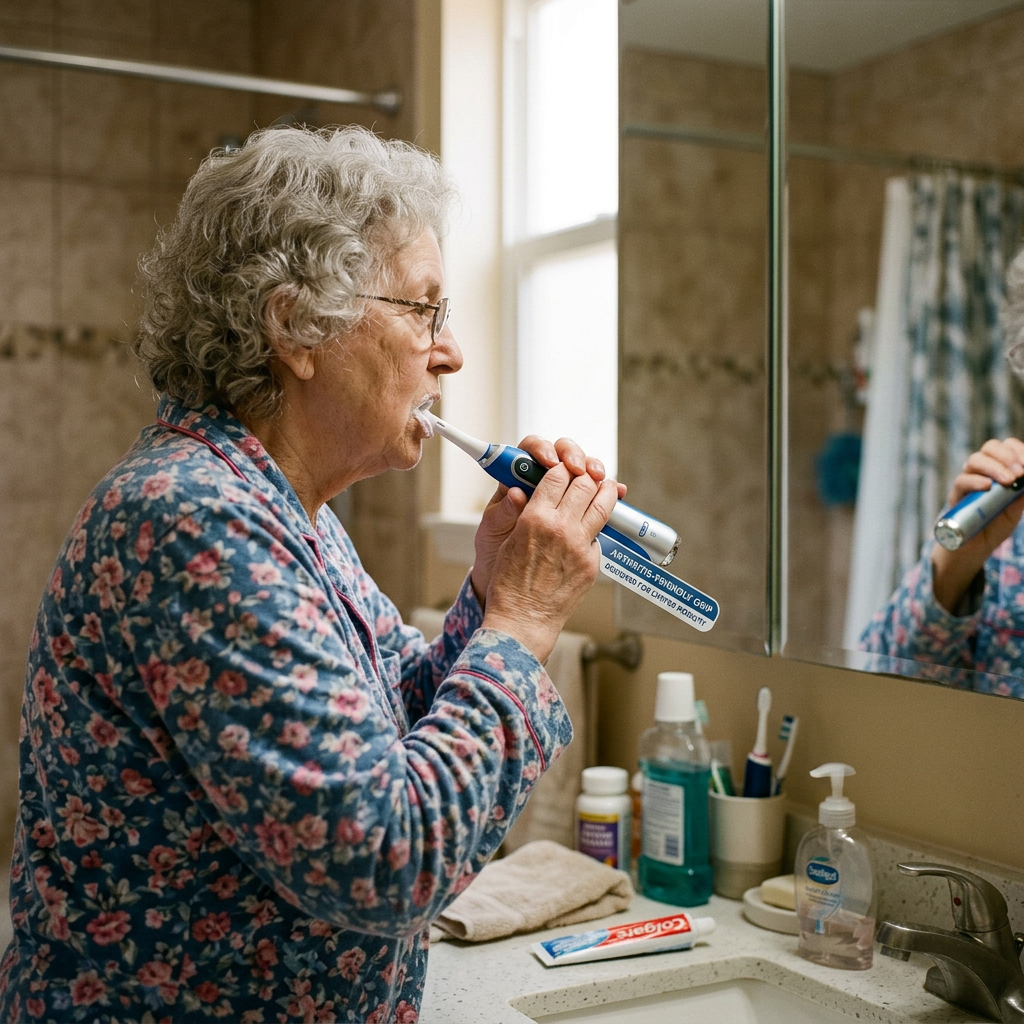
    Quick-charge matters more than total runtime. The Braun delivers one shave from a five-minute charge, and the ARC5 has a battery display. If grooming is part of a wider push toward easier daily tools, see our picks for the best electric toothbrushes for seniors with arthritis too.

    Frequently asked questions

    What is the best electric razor for someone with shaky hands?

    Choose a light, waterproof razor with floating heads that follow the face without precise angling. For most people that is a rotary like the Philips Norelco 2400. If skin irritation is the problem, a foil such as the Braun Series 3 or Panasonic ARC5 is gentler on sensitive skin.

    Is it safe for someone with Parkinson’s to shave with an electric razor?

    Yes, and it is the option the Parkinson’s Foundation recommends over blades, because an electric razor cannot cut as deeply. Sit down to shave, rest your elbows on the vanity, and use a light razor.

    Is a foil or rotary razor better for seniors?

    Foil gives a closer shave on fine hair and suits sensitive skin, but it rewards straighter strokes. Rotary heads follow facial curves with less precision, which suits a tremor, and handle longer stubble better. If dexterity is the main issue, rotary is usually the more forgiving choice.

    Does Medicare pay for an electric razor?

    No. Original Medicare treats electric razors as personal grooming items, not durable medical equipment. Some Medicare Advantage plans offer an over-the-counter allowance that can be used for them, so check your plan. FSA and HSA eligibility varies by administrator and often requires a letter of medical necessity.

    How often should a senior replace razor heads or blades?

    Replace foils and rotary cutters on the schedule the manufacturer sets, generally every year or two for daily shavers, sooner if the razor starts tugging or leaving patches. The OneBlade is the exception: its blade lasts up to about four months, so budget for a replacement a few times a year.

    How can I help a parent who refuses to use an electric razor?

    Skip the lecture and change the setup: offer a seated spot, a good mirror, and a choice between two razors. Frame it around saving time or avoiding nicks, not tremor. A short-stubble option like the OneBlade comb often works when a clean shave has become a daily argument.

    The shortlist

    Philips Norelco 2400 Series

    Best Overall

    Philips Norelco 2400 Series

    ~$35

    Check on Amazon →

    Panasonic ES3831K

    Best Budget

    Panasonic ES3831K

    ~$25

    Check on Amazon →

    Braun Series 3 3010s

    Best Foil for Sensitive Skin

    Braun Series 3 3010s

    ~$50

    Check on Amazon →

    Panasonic ARC5

    Best Splurge

    Panasonic ARC5

    ~$180

    Check on Amazon →

    Philips Norelco OneBlade 360

    Best for Stubble and Caregiver-Guided Shaves

    Philips Norelco OneBlade 360

    ~$30

    Check on Amazon →

    What we’d do tomorrow

    If you’re starting this weekend, do three things in this order. First, order the Norelco 2400 (or the Panasonic ES3831K if you want to spend less). Second, set up a chair and a mirror at the vanity so shaving can happen seated with elbows propped. Third, retire the blade razor from the bathroom the day the new one arrives. If skin irritation is the real issue, step up to the Braun Series 3.

    — Sarah
    BuyingForMom is a reader-supported site. As an Amazon Associate we earn from qualifying purchases. When you buy through links on this site, we may earn an affiliate commission at no additional cost to you. See our Affiliate Disclosure for details. This article is not medical advice, please consult a qualified healthcare professional for decisions specific to your situation.
  • 5 Best Bathroom Scales for Seniors, Large Display

    5 Best Bathroom Scales for Seniors, Large Display

    Disclosure: BuyingForMom is reader-supported. As an Amazon Associate we earn from qualifying purchases. When you buy through links in this article, we may earn an affiliate commission at no additional cost to you. We never recommend products we haven’t researched against verified-buyer review data. This article is editorial reporting, not medical advice.

    5 Best Bathroom Scales for Seniors With Large Displays

    By Sarah Mitchell · Editor, BuyingForMom · Updated October 2026

    7 min read · Bathroom · Buying Guide · 5 picks

    The honest take: If you’re shopping for a bathroom scale for an older parent, buy the Etekcity large-display LED scale and stop there for most situations. The Taylor talking scale is the right call only when low vision makes any display unreadable. Skip the thin-glass smart scales with tiny backlit numbers and a setup app; a scale your parent cannot read at a glance is a scale that gets abandoned in the closet.

    How we sorted through 40 scales in two weeks

    We started with roughly 40 bathroom scales sold on Amazon with a capacity of 400 lb or more and a display marketed as large, bright, or senior-friendly. We cross-referenced more than 45,000 verified-buyer ratings, read the one- and two-star reviews for each finalist, and compared manufacturer specs for platform size, capacity, and display type. Then we filtered for what matters to an older household: can you read it standing up, does it start without a button, and does it hold its reading when your parent steps on a little off-center. Five survived, and every one was confirmed purchasable on Amazon the day we published.

    Who this guide is for

    This guide is for adult children buying a scale for a parent whose eyesight, balance, or heart condition makes the old dial or the cheap tiny-number model a daily frustration. If you are shopping for yourself, the same picks apply; just skip the conversation section below.

    Why a scale deserves a real decision

    A bathroom scale looks like a throwaway purchase, but for many older adults it is a health instrument. People managing heart failure are commonly told by their care teams to weigh themselves at the same time every morning, because a sudden gain of a few pounds over a day or two can signal fluid building up before symptoms appear. Families also use steady weight loss as an early flag for appetite problems. That only works if the number is easy to read and the same every time.

    The best bathroom scales for seniors, then, are not the ones with 14 body-composition metrics. They are the ones with big digits (or a voice), a stable platform, and a start-up that needs no thought. For the other readings that often go with it, see our guide to blood pressure monitors for seniors.

    At a glance

    Best OverallEtekcity Large-Display LED Scale · ~$30 · best for big lit digits, no fuss

    Best for Low VisionTaylor Talking Glass Scale · ~$48 · best for a weight read aloud

    Best Heavy-DutyGE 500-lb LED Scale · ~$34 · best for larger frames, up to 500 lb

    Best Analog + DigitalHybrid Dial and Digital Scale · ~$37 · best for people who trust a dial

    Best BudgetVitafit Large-Digit LED Scale · ~$14 · best for a spare on a tight budget

    Best Overall1. Etekcity Large-Display LED Scale

    ~$30 on Amazon →

    Etekcity’s 0.05-lb LED model is the one we’d hand to most families. The digits are bright red-on-black, large enough to read from standing height without bending or hunting for glasses, and it wakes the instant someone steps on rather than waiting for a tap. Across roughly 14,800 reviews it holds a 4.7-star average, and the recurring praise is consistency: stand on it twice, get the same number twice. The 400-lb tempered-glass platform feels stable underfoot. One practical note from the listing: pull the plastic strip from the battery compartment before first use, or the scale will appear dead.

    The good

    • LED digits readable without reading glasses
    • Step-on activation, no button to press
    • Rounded corners and anti-skid pads under the platform

    The catch

    • No voice readout for someone with severe vision loss
    • Pull the battery tab or it looks broken out of the box

    This is right if… your parent can see a large lit number but wants nothing to fiddle with.

    Look elsewhere if… your parent cannot read a digital display at all; go talking instead.

    Check Price on Amazon →

    Best for Low Vision2. Taylor Talking Glass Scale

    ~$48 on Amazon →

    This is the pick when eyes, not balance, are the obstacle. Step on, and Taylor reads the weight aloud in a clear voice, so a parent with macular degeneration or advanced cataracts gets the number without squinting at anything. It supports 440 lb, uses a 12.2-inch tempered-glass platform, and ships with four anti-slip pads. It is also one of the few talking scales with a deep review base, 2,600+ ratings at 4.5 stars. The tradeoff is that it announces the number every single time, including early morning, so it is not discreet in a shared bedroom.

    The good

    • Announces the weight aloud, no display needed
    • Step-on, auto on/off, and low-battery indicator
    • 440-lb capacity on a wide glass platform

    The catch

    • The voice cannot be silenced, so it is loud in a quiet house
    • About $15 more than the best non-talking options

    This is right if… a parent has low vision, or is blind, and still wants to track weight independently.

    Look elsewhere if… vision is fine; a large LED display costs less and is quieter.

    Check Price on Amazon →

    Best Heavy-Duty3. GE 500-lb LED Scale

    ~$34 on Amazon →

    GE’s SC-500 is the right call when capacity or platform size matters. It is rated to 500 lb on 5mm tempered glass with an 11.8-inch square platform, and the LED readout has a wide viewing angle, which helps a parent reading it from a chair-height or slightly off-center position. Across about 4,400 reviews it averages 4.6 stars. The Bluetooth app is optional and the scale works fine without it. Like any digital scale, it needs a hard, level floor rather than a bath rug, or readings wander.

    The good

    • 500-lb capacity with a roomy platform
    • Wide-angle LED display
    • Optional app for an adult child tracking from afar

    The catch

    • Gives odd readings on carpet or a bath mat
    • App pairing adds a step if you do want remote tracking

    This is right if… a larger-framed parent needs extra margin, or a family member wants to see the numbers remotely.

    Look elsewhere if… you want a talking scale or an old-fashioned dial.

    Check Price on Amazon →

    Best Analog + Digital4. Hybrid Dial and Digital Scale

    ~$37 on Amazon →

    Plenty of older adults trust a needle on a dial more than a glowing number, and this hybrid shows both: an analog dial and a backlit LCD at the same time. The platform is oversized, wide enough for a men’s size 12.5 shoe, and it runs on three AAA batteries that last longer than fully digital rivals. At 4.4 stars from roughly 1,400 reviews it rates a notch below the others. The honest tradeoff is precision: digital accuracy is to 0.2 lb, so it is coarser than the 0.05-lb LED models.

    The good

    • Dial and digital readings visible together
    • Extra-wide glass platform for larger feet
    • Long battery life, three AAAs included

    The catch

    • Accuracy is 0.2 lb, not 0.05 lb
    • LCD is smaller and dimmer than the LED picks

    This is right if… your parent grew up on a dial scale and distrusts digital ones.

    Look elsewhere if… you need to catch very small day-to-day changes.

    Check Price on Amazon →

    Best Budget5. Vitafit Large-Digit LED Scale

    ~$14 on Amazon →

    For the price of a sandwich, the Vitafit gets the fundamentals right: large LED digits, step-on activation, auto calibration, and a 400-lb rating at 0.1-lb accuracy. More than 12,000 buyers have it at 4.6 stars. The platform is smaller than the others at 10.9 inches square, and the manufacturer’s own notes warn that moving the scale before weighing triggers a calibration cycle, which some buyers misread as an error. It is a sensible second scale for a parent’s other bathroom or a guest room.

    The good

    • Lowest price in this guide by a wide margin
    • Large, constant-brightness LED digits
    • Auto step-on and auto calibration

    The catch

    • Smaller 10.9-inch platform
    • Moving it between readings triggers a recalibration delay

    This is right if… you want a good-enough scale in a hurry, or a spare for a second home.

    Look elsewhere if… your parent has large feet or limited balance and needs a wider platform.

    Check Price on Amazon →

    Comparison table

    Scale Price Capacity Display Best for Rating
    Etekcity LED ~$30 400 lb LED, step-on Most families 4.7 (14.8K)
    Taylor Talking ~$48 440 lb Voice readout Low vision 4.5 (2.7K)
    GE 500-lb ~$34 500 lb LED, wide angle Larger frames 4.6 (4.4K)
    Hybrid Dial ~$37 400 lb Dial + LCD Dial loyalists 4.4 (1.4K)
    Vitafit ~$14 400 lb LED, step-on Budget spare 4.6 (12K)

    The conversation you’ll have

    Replacing a parent’s scale can land as a comment on their body or their competence. Lead with the old scale’s flaws, not their needs. Try saying, “I noticed the numbers on your scale are tiny; I got you one you can read from standing,” instead of “You can’t see your scale anymore.”

    If a doctor has asked for daily weights, say so: “Dr. Patel wants a number every morning, so I wanted this to be effortless.” Offer to set it up on the floor yourself, place a piece of tape where it should live so it never moves, and write the target weight range on a card taped inside a cabinet door. People accept a tool far more readily when it arrives with a job and a doctor’s name attached.

    Insurance and savings

    Original Medicare generally does not cover a bathroom scale, since it is not durable medical equipment. Some Medicare Advantage plans include an over-the-counter allowance that can be spent on health-monitoring items, so check the plan’s catalog before buying. FSA and HSA eligibility varies by product and plan; scales prescribed to monitor a diagnosed condition such as heart failure often qualify with a letter of medical necessity from the doctor. If your parent’s care team asked for daily weights, ask them to write that letter and confirm with your plan administrator before you check out.

    What to actually look for

    Display type and size

    Aim for digits at least an inch tall, lit LED rather than a dim backlit LCD, with a wide viewing angle. If glare or macular changes are the problem, skip displays entirely and buy a talking model. Pair a scale with a good light in the room too: see our guide to lighted magnifiers for low vision for other low-vision fixes.

    Platform size and stability

    A wider platform, at least 11 inches, tolerates imperfect foot placement, and anti-skid feet matter on tile. Make sure the scale sits on a hard, level surface, never a bath mat. Because it is a step-up object, keep it near a wall or sink your parent can touch; our complete aging-in-place safety checklist covers bathroom flooring and grab bar placement.

    Start-up and capacity

    Step-on activation removes a button press and a failure point. For capacity, buy 100 lb above the heaviest person who will use it; the extra margin also tends to indicate sturdier glass and sensors.

    Frequently asked questions

    What is the best bathroom scale for seniors?

    For most older adults, a step-on scale with a large LED display and a 400-lb capacity is the best choice. If vision is severely limited, a talking scale that announces the weight is better. Prioritize readability and stability over extra features like body-fat measurements.

    Are talking scales accurate?

    Yes. A talking scale uses the same load-cell sensors as a silent digital scale; the voice only reads out the same number. Accuracy varies by model, so check the stated increment, typically 0.1 pound, and make sure it sits on a hard, level floor.

    How often should a senior weigh themselves?

    It depends on the reason. Someone managing heart failure is usually asked to weigh every morning after using the bathroom and before eating. For general health, weekly is often enough. Ask your parent’s doctor for a schedule, and always weigh at the same time.

    Why does my scale give different readings each time?

    Common causes are a soft or uneven floor, moving the scale between readings, weak batteries, and standing off-center. Keep it on hard flooring, leave it in one spot, replace batteries yearly, and stand with weight evenly on both feet.

    Does Medicare cover a bathroom scale?

    Original Medicare does not usually cover bathroom scales because they are not classified as durable medical equipment. Some Medicare Advantage plans offer an over-the-counter allowance that may apply. An FSA or HSA may reimburse one with a doctor’s letter of medical necessity.

    Is an analog or digital scale better for seniors?

    Neither is better for everyone. Digital LED scales are easier to read and more precise. Analog dials appeal to people who distrust electronics and never need batteries. A hybrid that shows both is a good compromise if your parent is undecided.

    The shortlist

    Best Overall

    Etekcity Large-Display LED Scale

    ~$30

    Check on Amazon →

    Best for Low Vision

    Taylor Talking Glass Scale

    ~$48

    Check on Amazon →

    Best Heavy-Duty

    GE 500-lb LED Scale

    ~$34

    Check on Amazon →

    Best Analog + Digital

    Hybrid Dial and Digital Scale

    ~$37

    Check on Amazon →

    Best Budget

    Vitafit Large-Digit LED Scale

    ~$14

    Check on Amazon →

    What we’d do tomorrow

    If you’re starting this weekend, do three things in this order. First, ask your parent or their doctor whether daily weights are needed, because that decides between a quiet LED scale and a talking one. Second, order the Etekcity LED scale (or the Taylor talking model if eyesight is the issue). Third, set it on a hard floor, mark its spot with tape, and write the target weight range on a card where it is easy to find. Ten minutes of setup beats a perfect scale that gets shoved in a closet.

    — Sarah

    BuyingForMom is a reader-supported site. As an Amazon Associate we earn from qualifying purchases. When you buy through links on this site, we may earn an affiliate commission at no additional cost to you. See our Affiliate Disclosure for details. This article is not medical advice, please consult a qualified healthcare professional for decisions specific to a parent’s care.
  • 5 Best Ice Cleats for Seniors

    5 Best Ice Cleats for Seniors

    Disclosure: BuyingForMom is reader-supported. As an Amazon Associate we earn from qualifying purchases. When you buy through links in this article, we may earn an affiliate commission at no additional cost to you. We never recommend products we haven’t researched against verified-buyer review data. This article is editorial reporting, not medical advice.

    5 Best Ice Cleats for Seniors in 2026: Walking Traction That Works

    By Sarah Mitchell · Editor, BuyingForMom · Updated October 2026

    6 min read · Outdoors & Entryways · 5 picks

    The honest take: If you’re buying ice cleats for an older parent who walks on sidewalks and driveways, buy the Yaktrax Walk and stop there for most situations. The Kahtoola NANOspikes are worth the extra money only if your parent walks daily across mixed ice and bare pavement. Skip aggressive hiking spikes for a city errand route; they are heavy, awkward on dry ground, and a trip hazard of their own.

    How we sorted through 11 traction devices this October

    We compared 11 traction devices that Outdoor Gear Lab and Outdoor Life have tested side by side, then cross-referenced each against Amazon buyer ratings. The five picks below carry more than 35,000 combined ratings. We weighted comfort on bare pavement, ease of putting them on, and low profile above raw hiking grip, because that is what an older walker actually needs. Every product was confirmed in stock on Amazon on October 26, 2026.

    Who this guide is for

    This guide is for adult children buying winter traction for a parent who still walks outside but dreads the first icy morning. If you’re shopping for yourself, the same picks apply; just skip the conversation section below.

    Winter is when a small slip becomes a big problem. The CDC reports that about one in four adults 65 and older falls each year, and ice multiplies the odds on routes that are safe the rest of the year. The best ice cleats for seniors are not the most aggressive ones. They are the ones your parent will actually wear: quick to put on, stable on a shuffling or uneven gait, and comfortable on the dry stretches between patches of ice.

    Cleats do not replace other safety layers. Salt, a handrail, and a clear path still matter, and cleats pair well with a cane that has an ice tip or a walker used on cleared routes. Think of them as one layer in a larger winter plan, not a license to walk anywhere.

    At a glance

    Best Overall
    Yaktrax Walk · ~$21
    Best With a Top Strap
    Yaktrax Pro · ~$35
    Best Budget Spikes
    Due North Everyday G3 · ~$21
    Best for Thin Ice
    Kahtoola NANOspikes · ~$70
    Best for Deep Snow & Hills
    Kahtoola MICROspikes · ~$90

    Best Overall1. Yaktrax Walk

    Yaktrax Walk traction cleats shown for walking on snow and ice

    ~$21 · See current price on Amazon

    The Yaktrax Walk is a rubber harness with steel coils that stretches over a shoe in about ten seconds, which is the whole reason it wins. Across more than 27,000 Amazon ratings it averages 4.4 stars, and Outdoor Gear Lab named it the top pick for everyday urban winter walking, praising its low profile and secure fit on all footwear. The coils bite into packed snow and thin ice without turning the shoe into a lump. Reviewers who dislike it mostly wanted deep-snow performance it was never built for.

    The good

    • Stretches on fast, even with stiff or arthritic fingers
    • Low profile, so it feels like walking in a normal shoe
    • Rated 4.4/5 across 27,000+ buyers at about $21

    The catch

    • Weak grip in deep or soft snow and on steep slopes
    • Coils wear down faster if worn on bare pavement all day

    This is right if… your parent mostly walks to the mailbox, car, and corner on shoveled or lightly icy surfaces.

    Look elsewhere if… the route includes unplowed paths, hills, or thick ice.

    Check Price on Amazon →

    Best With a Top Strap2. Yaktrax Pro

    Yaktrax Pro traction cleats shown for walking on snow and ice

    ~$35 · See current price on Amazon

    The Pro is the Walk’s sturdier sibling: same coil idea, plus a hook-and-loop strap that cinches across the top of the foot so the cleat stays put. That strap matters for older walkers whose gait includes a shuffle or a dragged toe, because a cleat that rotates mid-stride is its own trip hazard. Outdoor Gear Lab called it a low-profile option for icy city streets. Buyer ratings run 4.3 stars, though with far fewer reviews (about 500) than the Walk.

    The good

    • Top strap keeps the cleat from sliding or rotating
    • Low profile suited to icy city sidewalks
    • Easy to pull on and off without tools

    The catch

    • Costs roughly $14 more than the Walk
    • Described as uncomfortable for running and poor in soft snow

    This is right if… your parent has a shuffling gait or has had a cleat slip sideways before.

    Look elsewhere if… you want the cheapest option, since the plain Walk covers most sidewalk use.

    Check Price on Amazon →

    Best Budget Spikes3. Due North Everyday G3

    Due North Everyday G3 traction cleats shown for walking on snow and ice

    ~$21 · See current price on Amazon

    Instead of coils, the G3 uses short tungsten carbide studs set in a rubber sole plate, which grip glare ice more aggressively than a coil. Outdoor Life named it its budget pick for occasional icy conditions and called it a good choice for an ice storm. It averages 4.3 stars across more than 4,300 Amazon ratings. The common complaint, echoed by that same review, is that it is harder to stretch on than the Yaktrax, so have a younger family member fit it the first time.

    The good

    • Carbide studs bite hard into glazed ice
    • Reasonably comfortable on bare ground
    • 4.3/5 from 4,300+ buyers at about $21

    The catch

    • Stiff rubber makes it hard to put on
    • Studs can feel slippery on tile, so take it off indoors

    This is right if… ice storms and freezing rain are the main worry and someone can help fit them.

    Look elsewhere if… your parent has weak hands and will be putting them on alone.

    Check Price on Amazon →

    Best for Thin Ice4. Kahtoola NANOspikes

    Kahtoola NANOspikes traction cleats shown for walking on snow and ice

    ~$70 · See current price on Amazon

    The NANOspikes pair a flexible elastomer frame with small tungsten carbide spikes, and the design goal is grip on ice you can barely see without feeling clunky on dry pavement. Outdoor Life called it the most comfortable option it tested on firm ground, and Outdoor Gear Lab rated it best for winter running, with grip on packed snow and thin ice. It carries a 4.7 average on Amazon, though from a smaller pool of about 200 ratings. Price is the obvious barrier.

    The good

    • Most comfortable on mixed ice and bare pavement in expert testing
    • Small spikes are less likely to catch on a rug or doorway
    • 4.7/5 average on Amazon

    The catch

    • Roughly $70, more than three times the Walk
    • Weak in deep snow

    This is right if… your parent walks daily, hits patches of ice and bare road in the same trip, and you want comfort over cost.

    Look elsewhere if… budget matters or the walk is a short trip to the car.

    Check Price on Amazon →

    Best for Deep Snow & Hills5. Kahtoola MICROspikes

    Kahtoola MICROspikes traction cleats shown for walking on snow and ice

    ~$90 · See current price on Amazon

    MICROspikes are the benchmark traction device: a stretch harness with a chain of stainless spikes under the whole foot. Outdoor Gear Lab gave it Editors’ Choice for strong spike layout and durability, and it holds a 4.7 average across more than 3,500 Amazon ratings. It is overkill for a flat sidewalk, and that review flagged it as heavy and annoying on dry surfaces. But for a long driveway with a slope, packed snow, or rural walks, nothing here grips better.

    The good

    • Excellent grip on hills, packed snow, and thick ice
    • Durable construction that lasts multiple winters
    • 4.7/5 from 3,500+ buyers

    The catch

    • Heavy and high-profile, which can feel awkward for a shuffling gait
    • Most expensive pick, at about $90

    This is right if… your parent lives somewhere with sloped driveways, deep snow, or rural paths.

    Look elsewhere if… the only goal is crossing a salted city sidewalk.

    Check Price on Amazon →

    Side-by-side comparison

    Pick Price Traction type Best for
    Yaktrax Walk ~$21 Rubber harness, steel coils Everyday sidewalks
    Yaktrax Pro ~$35 Coils + top strap Shuffling gait
    Due North Everyday G3 ~$21 Tungsten carbide studs Ice storms, budget
    Kahtoola NANOspikes ~$70 Carbide spikes, elastomer frame Mixed ice and pavement
    Kahtoola MICROspikes ~$90 Stainless steel spike chain Hills and deep snow

    The conversation you’ll have

    Many older adults hear “ice cleats” as “you’re not steady anymore.” The resistance is usually about independence, not the product. Try framing it around the route, not the person: “The sidewalk by the mailbox gets glazed every January, and I’d feel better if you had something for that stretch.” Avoid “so you don’t fall,” which turns a gadget into a verdict.

    Then make it easy. Buy the pair together, try them on at the front door, and put a small bench and basket by the entry so the routine feels like a habit, not a medical device. Offer to take them back if they don’t like them; people keep what they chose.

    Insurance and savings

    Original Medicare covers durable medical equipment such as walkers and canes, but it does not cover consumer traction cleats, which are treated as footwear accessories. FSA and HSA funds generally exclude them too, since they are not medical care by themselves; confirm with your plan administrator. At $20 to $90, they are one of the cheapest fall-prevention upgrades around. Compare that to the cost of a fall, and the math is easy.

    What to actually look for

    Match the traction to the route

    Coil cleats such as the Yaktrax Walk suit shoveled sidewalks and thin ice. Carbide studs handle glazed ice better. Full spike chains are for slopes and deep snow. Buying more aggressive than the route requires is the most common mistake, because heavy spikes are tiring and awkward on bare pavement. Our aging-in-place home safety checklist lists the other outdoor risks worth fixing at the same time.

    Make sure they go on fast

    If your parent has arthritis or weak grip, a stiff rubber harness will end up in a closet. Choose a stretchy harness, practice at the door, and consider a boot jack or a seated entry bench. Reviewers repeatedly flag hard-to-fit models as a drawback, and that matters even more for seniors.

    Plan for the cane, the walker, and the stairs

    If your parent uses a cane, pair cleats with ice grip tips for a cane. If they use a walker, check that the cleat is flat enough not to snag the walker’s legs or tennis-ball glides. And remember the rule for entries: cleats off before stepping inside, and never on indoor stairs. For a wider safety net, see our guide to fall detection devices with no monthly fee.

    Frequently asked questions

    Do ice cleats work for seniors who shuffle their feet?

    They can, but pick carefully. Low-profile coil styles like the Yaktrax Walk and Pro sit close to the sole and are less likely to catch than tall spikes. Choose a model with a top strap, and test it on a rug-free, dry floor with someone beside your parent first.

    Can older adults wear ice cleats inside the house?

    No. Metal coils and carbide studs are slippery on tile, hardwood, and polished stone, and they can scratch floors. Teach a simple habit: cleats go on at the door seat and come off before stepping inside. A bench and a boot tray by the entry make that routine realistic.

    What size ice cleats should I buy for a senior?

    Match the cleat to the shoe, not just the shoe size. Most brands sell small, medium, and large by shoe size range, and fit snugly over the sole. If your parent wears orthopedic or extra-wide shoes, check the listing’s size chart and return policy before ordering.

    Are ice cleats better than a cane tip for winter?

    They solve different problems. An ice-grip cane tip steadies the cane, while cleats grip under the feet, where most slips begin. If your parent uses a cane, the strongest setup is both. Cleats alone are not a substitute for a walker when one is recommended.

    Does Medicare cover ice cleats?

    Generally no. Original Medicare covers durable medical equipment such as walkers and canes, but traction cleats are treated as ordinary footwear accessories. FSA and HSA plans usually exclude them as well. Ask your plan administrator, and consider a physical therapist’s letter only if your plan allows case-by-case review.

    How do you walk safely on ice with cleats?

    Take short, flat-footed steps, keep your feet slightly apart, and point your toes a little outward. Keep your hands free rather than in pockets, and slow down on transitions between ice and bare pavement, where grip changes suddenly. Walk the route in daylight at least once first.

    The shortlist

    Yaktrax Walk

    Best Overall

    Yaktrax Walk

    ~$21

    Check on Amazon →

    Yaktrax Pro

    Best With a Top Strap

    Yaktrax Pro

    ~$35

    Check on Amazon →

    Due North Everyday G3

    Best Budget Spikes

    Due North Everyday G3

    ~$21

    Check on Amazon →

    Kahtoola NANOspikes

    Best for Thin Ice

    Kahtoola NANOspikes

    ~$70

    Check on Amazon →

    Kahtoola MICROspikes

    Best for Deep Snow & Hills

    Kahtoola MICROspikes

    ~$90

    Check on Amazon →

    Last verified in stock: October 26, 2026

    What we’d do tomorrow

    If you’re starting this weekend, do these three things in this order. First, walk your parent’s actual route and note where ice collects. Second, order the Yaktrax Walk in the right size and try it on at the door before the first freeze. Third, set up a bench and basket by the entry so cleats go on and off in the same spot every time. Upgrade to the NANOspikes or MICROspikes only if the route proves you need them.

    — Sarah

    BuyingForMom is a reader-supported site. As an Amazon Associate we earn from qualifying purchases. When you buy through links on this site, we may earn an affiliate commission at no additional cost to you. See our Affiliate Disclosure for details. This article is not medical advice, please consult a qualified healthcare professional for decisions specific to your family.
  • Best Bedside Fall Mats for Seniors

    Best Bedside Fall Mats for Seniors

    Disclosure: BuyingForMom is reader-supported. As an Amazon Associate we earn from qualifying purchases. When you buy through links in this article, we may earn an affiliate commission at no additional cost to you. We never recommend products we haven’t researched against verified-buyer review data. This article is editorial reporting, not medical advice.

    Best Bedside Fall Mats for Seniors

    By Sarah Mitchell · Editor, BuyingForMom · Updated September 2026
    6 min read · Bedroom & Fall Prevention · 5 mats compared

    The honest take: If your parent is at real risk of rolling or stepping out of bed at night, buy the Vive Fall Mat and stop there it’s the best-reviewed, easiest to source, and covers the most floor for the price. The Secure Safety Solutions tri-fold earns its higher price only if the bed sits in a tight room where a 30-inch mat needs to fold away by day. Skip anything with fewer than a few hundred verified reviews a $47 no-name mat with nine ratings isn’t a place to save money on something your parent’s head will land on.

    How we sorted through 19 bedside fall mats in three weeks: We surveyed the full field of mats sold through Amazon’s Health & Household and Industrial & Scientific listings, cross-referenced verified-buyer review patterns (758 reviews on the category leader alone), manufacturer-stated foam density and drop-test claims, and a 2012 peer-reviewed clinical finding on floor-mat trip risk most competitor roundups skip. We dropped nine mats at the in-stock check below and four more for having fewer than 40 verified ratings — not enough track record for something a parent steps onto nightly.

    This guide is for adult children shopping for a parent who’s had a fall, a near-fall, or a recent hospital stay and needs the floor beside the bed to be safer without turning the bedroom into a clinical space. If you’re shopping for yourself after a fall or surgery, the same five picks apply, just skip the “conversation you’ll have” section below.

    A bedside fall mat for elderly use is a cushioned, beveled-edge pad that sits on the floor next to the bed and absorbs some of the impact if someone rolls, slides, or steps out unsteadily. It doesn’t prevent the fall — nothing placed on a floor can — but a good one softens what happens next, often the difference between a bruise and a hip fracture. Roughly 80% of falls that send an older adult to the hospital happen from standing height or lower, and a fall out of bed at 2 a.m. is one of the most common versions caregivers report.

    We routed the five picks below by what actually varies: overall value, independent injury testing, price, coverage width, and whether it needs to fold away during the day. None replaces addressing why someone is falling out of bed in the first place — a bed height, medication, or vision issue is worth a conversation with a doctor or OT first.

    At a glance

    Best Overall — Vive Fall Mat (72″x24″) · ~$90 · Deepest review history, lab-tested impact absorption

    Best Rated — NYOrtho Fall Mat (70″x24″) · ~$106 · 4.6 stars, foldable option available

    Best Budget — Made Medical Fall Mat (73″x24″) · ~$77 · Amazon’s Choice, same beveled-edge design for less

    Best Extra-Wide / Tested — Secure Safety Solutions Tri-Fold (68″x30″) · ~$100 · Independently biomechanically tested, widest coverage

    Best for Small Rooms — Skil-Care Tri-Fold (68″x26″) · ~$171 · Folds flat for daytime storage, facility-grade brand

    Best OverallVive Fall Mat

    ~$90 · Check Price on Amazon →

    Across 758 verified reviews, the Vive is the mat this category is measured against — it’s the one occupational therapy blogs and caregiver forums mention by name most often. At 72″ x 24″, it runs the full length of a standard bed frame, and Vive’s own drop test (an egg dropped from six feet doesn’t break) is the kind of concrete claim the no-name competitors don’t offer. The waterproof PVC top wipes clean after an incontinence episode, and the SBR rubber backing genuinely stays put on hardwood, tile, and low-pile carpet — a recurring complaint on cheaper mats is that they slide when stepped on at an angle, and buyers consistently note this one doesn’t.

    The good:

    • Largest verified review base in the category (758 ratings, 4.4 stars)
    • FSA/HSA eligible, ships from Vive directly with a 30-day return window
    • Beveled edges low enough for a walker or wheelchair to roll over without catching

    The catch:

    • Arrives tightly rolled and can take up to a day to lie fully flat
    • At 24″ wide, it won’t reach a parent who rolls out at more of a diagonal — see the Secure Safety Solutions pick below for that

    This is right if… you want the single safest default pick with the most real-world track record behind it.

    Look elsewhere if… the bed sits against a wall at an angle, or the room is too small to leave a mat down permanently.

    Check Price on Amazon →

    Best RatedNYOrtho Fall Mat

    ~$106 · Check Price on Amazon →

    The NYOrtho carries the highest star rating of any mat we verified 4.6 out of 5 across 431 reviews, with over 100 bought in the past month alone, which tells us it’s not a fluke batch of early reviews. NYOrtho also sells this exact mat in a foldable version and a 36″-wide version, so if the standard flat mat doesn’t fit the room, the same trusted brand has an option that does. Verified buyers consistently note the non-skid surface holds up on tile floors specifically, a detail reviewers of competing mats complain about more often.

    The good:

    • Highest verified star rating in the category (4.6/5, 431 ratings)
    • Also available in foldable and 36″-wide versions from the same listing
    • Ships from Amazon with fast delivery in most areas

    The catch:

    • Priced about $16 higher than the nearly-identical Vive mat
    • Standard version is the same 24″ width as the budget options — the extra cost is mostly brand trust and rating history

    This is right if… you want the statistically best-reviewed option and don’t mind paying a little more for it.

    Look elsewhere if… budget is the deciding factor — the Made Medical pick below does the same job for $30 less.

    Check Price on Amazon →

    Best BudgetMade Medical Fall Mat

    ~$77 · Check Price on Amazon →

    Amazon’s Choice on this listing isn’t a fluke — at $77, the Made Medical mat undercuts the category leader by about $13 while matching it on the two specs that actually matter: 73″ of length (an inch longer than the Vive) and fully tapered beveled edges rated for wheelchair and walker crossover. Across 74 verified reviews it holds a 4.3-star average, with buyers most often citing the anti-skid bottom as the reason they’d buy it again over cheaper unbranded mats that slide underfoot.

    The good:

    • Lowest price of any mat here with a real review history behind it
    • Amazon’s Choice badge on this listing as of our last check
    • Textured top adds grip while the anti-skid bottom holds the mat in place

    The catch:

    • Thinner foam core (0.8″) than the Secure Safety Solutions or Skil-Care picks, so impact cushioning is more modest
    • Smaller review base than Vive or NYOrtho still solid, just newer to the market

    This is right if… budget matters and the fall risk is more about stumbling than a hard drop from bed height.

    Look elsewhere if… your parent has osteoporosis or a prior fracture and needs the thickest cushioning available — see the Secure or Skil-Care picks.

    Check Price on Amazon →

    Best Extra-Wide / TestedSecure Safety Solutions Tri-Fold

    ~$100 · Check Price on Amazon →

    This is the only mat in our roundup with an independent biomechanical claim attached to it: Secure Safety Solutions states its 2″-thick EVA foam reduces the risk of serious head injury to near zero from an 18-inch sideways fall, based on outside testing rather than marketing copy alone. At 30″ wide six inches wider than every other mat here — it’s also the pick for a parent who tends to roll out at an angle rather than straight down, or for a bed that sits higher off the floor than standard. The tri-fold design with a Velcro strap means it can stand folded against a wall during the day if the room doubles as a walking path.

    The good:

    • Widest coverage of any pick here (30″) plus the thickest cushion (2″)
    • Independently tested injury-reduction claim, not just a marketing description
    • Flame-retardant, latex-free cover; folds flat for storage

    The catch:

    • Smaller review base (37 ratings) than the Vive or NYOrtho, though the rating pattern is consistent
    • Listed as non-returnable by the seller — read the sizing carefully before ordering

    This is right if… the fall risk is a real concern (prior fracture, osteoporosis, a bed that sits high) and width matters as much as length.

    Look elsewhere if… you want the option to return it if it doesn’t fit — go with Vive or NYOrtho instead, both of which accept returns.

    Check Price on Amazon →

    Best for Small RoomsSkil-Care Tri-Fold Bedside Fall Mat

    ~$171 · Check Price on Amazon →

    Skil-Care is a name most caregivers recognize from skilled nursing facilities rather than Amazon listings, and this is the mat that made us include a premium pick despite the category’s typical under-$100 pricing. It tri-folds down to roughly 26″ x 22″ for storage — small enough to slide under a bed frame or behind a door — which matters in a studio apartment or a shared bedroom where a permanent 6-foot mat isn’t practical. It’s the most expensive pick here, and we’re flagging that deviation directly rather than burying it: this is the one to buy specifically for the fold-away convenience, not for the price.

    The good:

    • Compact tri-fold storage — genuinely fits in a closet or under a bed
    • Facility-grade brand with a long history in professional care settings
    • FSA/HSA eligible

    The catch:

    • Nearly double the price of the Vive or Made Medical mats
    • Narrower (26″) than the Secure Safety Solutions pick despite the higher cost

    This is right if… the mat has to disappear during the day — small bedroom, shared space, or a room that doubles as a sitting area.

    Look elsewhere if… the mat can stay down permanently — you’ll get more coverage for less money with any of the other four picks.

    Check Price on Amazon →

    How the 5 picks compare

    Mat Size Price Rating Best for
    Vive Fall Mat 72″x24″ ~$90 4.4★ (758) Best overall default
    NYOrtho Fall Mat 70″x24″ ~$106 4.6★ (431) Highest-rated
    Made Medical Fall Mat 73″x24″ ~$77 4.3★ (74) Tightest budget
    Secure Safety Tri-Fold 68″x30″ ~$100 4.2★ (37) Widest + independently tested
    Skil-Care Tri-Fold 68″x26″ ~$171 Facility-grade Folds away, small rooms

    The conversation you’ll have

    Most older adults hear “fall mat” and picture a hospital room, not their own bedroom. The resistance is rarely about the object itself; it’s about what it signals. Leading with “you might fall” tends to land as an accusation about their independence. Leading with comfort lands much softer.

    Try saying: “I found this padded mat that’s nicer to stand on barefoot than the cold floor — I’ll put it by the bed so your feet land somewhere soft in the morning.” instead of “You need this because you might fall out of bed.” The first framing is true and gives your parent a reason to accept it that has nothing to do with fragility.

    Insurance and savings

    Original Medicare generally doesn’t cover bedside fall mats as durable medical equipment — CMS classifies most floor mats as a convenience item, even after a documented fall. Several mats above are explicitly FSA/HSA eligible, though, which is the more reliable savings path; check with your plan administrator, since eligibility varies by account. If your parent is working with an OT after a hospital discharge, ask whether a letter of medical necessity changes anything for your insurer — it occasionally does for related fall-prevention equipment.

    What to actually look for

    Thickness and impact absorption

    Foam thickness ranges from about 0.7″ to 2″ across this category, and thicker isn’t automatically better — a very thick mat can itself become harder to stand up from for someone with weak knees. For a parent with osteoporosis or a prior fracture, the 2″ Secure Safety Solutions mat’s independently tested claim is worth the extra cushioning. For general fall-risk cushioning without a specific fracture history, 0.75″–1″ (Vive, Made Medical) is typically enough. For more on matching equipment to the whole bedroom setup, our room-by-room aging-in-place modification guide covers bed height and lighting alongside flooring choices like this one.

    Size, matched to the roll-out path, not just the bed

    Measure where your parent actually lands, not just the length of the bed frame. A straight roll-out needs length (68″–73″ covers most beds); a diagonal slide toward the corner needs width, which is where the 30″-wide Secure Safety Solutions pick earns its keep over the more common 24″ options.

    Beveled edges and non-slip backing — the honest trip-hazard trade-off

    A 2012 clinical review flagged something most product listings leave out: an unbeveled or curling floor mat can itself become a trip hazard for someone using a walker or cane, which is the opposite of what it’s meant to prevent. Every mat in this roundup has a tapered, beveled edge specifically to address that — skip any mat that doesn’t advertise beveled edges and a non-slip rubber backing, regardless of price. Our complete aging-in-place home safety checklist walks through the rest of the bedroom fall-prevention priority list if this is one item on a longer list.

    Frequently asked questions

    Do bedside fall mats actually reduce injury from a fall?
    They reduce impact force once a fall is already happening — they don’t prevent the fall itself. Independently tested mats like the Secure Safety Solutions pick can meaningfully lower head-injury risk, but addressing why falls happen matters more long-term.

    How thick should a bedside fall mat be?
    Most run 0.7″ to 2″ thick. Thicker generally means better absorption, but very thick mats can be harder to stand up from for someone with limited leg strength — match thickness to fracture risk, not just preference.

    Can a fall mat itself become a trip hazard?
    Yes, if it lacks beveled edges or curls at the corners. Clinical research has flagged this for walker and cane users specifically. Every mat here has tapered, beveled edges and non-slip backing to address it.

    Are bedside fall mats covered by Medicare or FSA/HSA?
    Original Medicare typically classifies these as a convenience item, not covered DME. Many listings are FSA/HSA eligible — confirm with your plan administrator, since it varies by account.

    Where should a bedside fall mat be placed?
    Along the side of the bed your parent actually gets out of, extending the full length they’d land across. If they roll out at an angle, a wider mat like the Secure Safety Solutions pick covers more of that path.

    Do bedside fall mats help with dementia-related nighttime wandering?
    A fall mat cushions impact but doesn’t alert a caregiver or stop wandering. Pair it with a bed exit alarm or door sensor — the mat handles impact, the alarm handles awareness.

    The shortlist

    Best Overall

    Vive Fall Mat

    ~$90

    Check on Amazon →

    Best Rated

    NYOrtho Fall Mat

    ~$106

    Check on Amazon →

    Best Budget

    Made Medical Fall Mat

    ~$77

    Check on Amazon →

    Best Extra-Wide

    Secure Safety Tri-Fold

    ~$100

    Check on Amazon →

    Best for Small Rooms

    Skil-Care Tri-Fold

    ~$171

    Check on Amazon →

    What we’d do tomorrow

    If you’re starting this weekend: measure the actual gap and roll-out path beside the bed first, buy the Vive Fall Mat unless that measurement points you toward the wider Secure Safety Solutions pick, and put it down the same day it arrives rather than letting it sit in the box, a mat that’s still rolled up in a closet protects no one. Then have the “soft floor” conversation above before your parent notices it on their own; framing it yourself, on your terms, goes over better than an explanation after the fact.

    — Sarah

    BuyingForMom is a reader-supported site. As an Amazon Associate we earn from qualifying purchases. When you buy through links on this site, we may earn an affiliate commission at no additional cost to you. See our Affiliate Disclosure for details. This article is not medical advice, please consult a qualified healthcare professional for decisions specific to your family.
  • 5 Best Electric Toothbrushes for Arthritis

    5 Best Electric Toothbrushes for Arthritis

    Disclosure: BuyingForMom is reader-supported. As an Amazon Associate we earn from qualifying purchases. When you buy through links in this article, we may earn an affiliate commission at no additional cost to you. We never recommend products we haven’t researched against verified-buyer review data. This article is editorial reporting, not medical advice.

    5 Best Electric Toothbrushes for Seniors With Arthritis

    By Sarah Mitchell · Editor, BuyingForMom · Updated September 2026
    7 min read · Daily Living · 5 picks under $70

    The honest take: If you are shopping for an electric toothbrush for a parent with arthritis, buy the Philips Sonicare 4100 and stop there for most situations. The Triple Bristle Original is the right call only if your parent cannot position a brush or a caregiver does the brushing. Skip the pricey app-connected models entirely, because a Bluetooth screen is one more thing a stiff, tired hand does not need.

    How we sorted through 15 electric toothbrushes in September 2026

    We started with 15 models that showed up across senior-care buying guides, dental-school advice and Amazon best-seller lists. We cross-referenced published hands-on measurements of handle shape, weight, button design and battery life, then read through the recurring complaints in retailer reviews. We also checked the guidance from dental and consumer-testing organizations on what older adults should look for. Anything with a fiddly touchscreen, a subscription, or a hard-to-find charger dropped out, and every pick that survived was confirmed listed on Amazon in September 2026.

    Who this guide is for

    This guide is for adult children buying an electric toothbrush for a parent whose hands are stiff, sore or shaky. If you are shopping for yourself, the same picks apply, but you can skip the conversation section below.

    Why the toothbrush matters more than you think

    A regular manual toothbrush asks a lot of arthritic hands: a narrow handle to grip, a small back-and-forth motion to repeat, and a full two minutes of effort. When brushing hurts, people brush less, and that is when plaque and gum disease creep in. Dental-school guidance points out that electric brushes tend to have larger handles and built-in timers, and Consumer Reports notes that powered models do most of the work for people with dexterity problems.

    Not every electric brush is a good fit, though. Some buzz hard enough to be dropped, some hide the on button, and some die without warning. The five below were sorted by how well they handle those failure modes for an older adult with limited grip strength. If daily-living aids are on your list, our guide to built-up handle utensils for weak grip uses the same logic.

    At a glance

    Best Overall

    Philips Sonicare 4100 Rechargeable

    ~$30–$50

    Pressure sensor, 14-day battery, two settings. The one to buy for most parents.

    Best Budget Grip

    Oral-B Vitality FlossAction

    ~$25–$35

    Tapered, dimpled handle and a single power button. Cheapest way in.

    Best Oral-B Upgrade

    Oral-B Pro 1000 Rechargeable

    ~$40–$50

    Round oscillating head, timer, pressure control and a smooth handle.

    Best for Limited Motor Control

    Triple Bristle Original Sonic

    ~$60–$70

    Three-sided head cleans several surfaces at once. Popular with caregivers.

    Best Simple Sonic

    Philips Sonicare 1100 Rechargeable

    ~$25–$40

    Same 14-day battery and pacing as the 4100, minus the pressure sensor.

    Best OverallPhilips Sonicare 4100 Rechargeable

    ~$30–$50 · See it on Amazon

    The Sonicare 4100 earns the top slot because it quietly solves the three things that go wrong with electric brushes in older hands: too much force, too little time, and constant charging. The handle pulses when pressure is too hard, a guided timer with 30-second quadrant pacing walks the user around the mouth, and the battery is rated for about 14 days. Retail listings describe an EasyStart ramp-up that eases new users into the vibration, which matters because strong buzzing is the most common reason people quit a new brush. Published buyer guides flag two small annoyances: it ships with a single brush head, and some listings do not include a wall adapter, so check the listing before you order.

    The good

    • Pressure sensor pulses to warn against hard scrubbing on receding gums
    • Two-minute timer with 30-second pacing, plus a brush-head replacement reminder
    • Roughly two weeks per charge means fewer missed brushing days

    The catch

    • Only one brush head in the box, so order a spare pack
    • Two intensity settings need a button press to switch, which can be fiddly for stiff fingers

    This is right if… your parent can manage a standard-sized handle and you want the most protection for tender gums.

    Look elsewhere if… your parent needs an extra-thick, cushioned handle, since the 4100 does not advertise one.

    Check Price on Amazon →

    Best Budget GripOral-B Vitality FlossAction

    ~$25–$35 · See it on Amazon

    The Vitality is the brush to hand someone who says they hate gadgets. Hands-on testers describe a tapered handle, thicker at the top, with dimples all the way around so the fingers have something to hold, plus one power button with enough resistance to prevent accidental starts. There is only one mode, which is a feature when a parent gets confused by choices. Testers repeatedly note the same weak spots: no battery indicator, no pressure sensor, and an older NiMH battery that needs a long charge. Replacement heads run around $5, so the running cost stays low.

    The good

    • Grippy, dimpled 360-degree handle suits limited dexterity
    • One button and one mode, so there is nothing to learn
    • Low price and inexpensive replacement heads (about $5)

    The catch

    • No battery or charging indicator, so it can die without warning
    • No pressure sensor, so heavy-handed brushers get no feedback

    This is right if… you want the simplest possible brush at the lowest price and your parent will use it with supervision or a charging routine.

    Look elsewhere if… your parent brushes hard or has significant gum recession, since nothing warns them to ease off.

    Check Price on Amazon →

    Best Oral-B UpgradeOral-B Pro 1000 Rechargeable

    ~$40–$50 · See it on Amazon

    For families who prefer a round oscillating head, the Pro 1000 is the sensible step up from the Vitality. Reviewers measure it at roughly 4.1 ounces, with a smooth plastic handle that is easy to wipe clean and a rubber panel around the power button. It adds a 30-second pacer and a pressure sensor that cuts back the bristle action when you push too hard. The catches are real, though: the sensor gives no visible warning, so the user never learns to lighten up, and the button must be pressed repeatedly to cycle from Daily Clean to Sensitive. Battery life is around 10 days, shorter than the Sonicare.

    The good

    • Round head is easy to position on one tooth at a time
    • 30-second pacer and two-minute timer built in
    • Inexpensive replacement heads (around $5 each)

    The catch

    • Pressure sensor is invisible, so it does not teach better technique
    • Mode cycling takes several button presses, which is hard on sore thumbs

    This is right if… you or your parent already like an Oral-B round head and want a pressure safeguard.

    Look elsewhere if… joint pain makes repeated button presses difficult or you want more than about 10 days between charges.

    Check Price on Amazon →

    Best for Limited Motor ControlTriple Bristle Original Sonic

    ~$60–$70 · See it on Amazon

    Triple Bristle is the odd one out, and for a specific situation it is the right answer. The patented three-sided head has angled bristles that clean the front, back and biting surface of a tooth in one pass, so a parent who cannot reliably angle a brush, or a caregiver brushing for someone else, needs fewer precise movements. The brand markets it for special-needs users and those with limited dexterity, and its own product page shows 268 reviews, about 93 percent of them five-star. Published roundups mention a fiddly battery panel and that the vibration may feel mild to people used to stronger brushes. Treat that mild vibration as a plus for sensitive mouths.

    The good

    • Three-sided head reduces the aiming and angling needed
    • Built-in two-minute timer that pauses at each section
    • Marketed for caregivers and users with limited dexterity

    The catch

    • Priciest pick here at roughly double the Vitality
    • Battery panel is reported to be awkward to open

    This is right if… your parent struggles to position a brush or a caregiver does the brushing.

    Look elsewhere if… you want the strongest, most conventional sonic clean or the lowest price.

    Check Price on Amazon →

    Best Simple SonicPhilips Sonicare 1100 Rechargeable

    ~$25–$40 · See it on Amazon

    The Sonicare 1100 is the stripped-down sibling of our top pick. It keeps the parts that matter for older users, namely a two-minute guided timer, QuadPacer quadrant prompts, EasyStart ramp-up and a battery rated for about 14 days, and drops the extras. Retail listings do not advertise a pressure sensor, which is the main reason it sits below the 4100. Published guides note that it comes with just one brush head and, on some listings, no wall adapter. For a parent whose gums are healthy and who just needs a brush that reminds them how long to brush, it is a strong value.

    The good

    • Two-week battery and guided timer at a low price
    • EasyStart eases the vibration in for sensitive mouths
    • Same two-minute timer and 30-second pacing as the pricier 4100

    The catch

    • No advertised pressure sensor
    • Single head in the box, and check whether the adapter is included

    This is right if… you want Sonicare cleaning and long battery life without paying for extras.

    Look elsewhere if… your parent presses hard or has gum recession, in which case the 4100 is worth the extra few dollars.

    Check Price on Amazon →

    Comparison table

    Model Price Motion Key feature Best for
    Sonicare 4100 ~$30–$50 Sonic Pressure sensor, ~14-day battery Most parents
    Oral-B Vitality FlossAction ~$25–$35 Oscillating Dimpled handle, single button Lowest price
    Oral-B Pro 1000 ~$40–$50 Oscillating Pacer, hidden pressure control, ~10-day battery Oral-B fans
    Triple Bristle Original ~$60–$70 Sonic, 3-sided head Fewer angles needed Caregiver-assisted
    Sonicare 1100 ~$25–$40 Sonic ~14-day battery, QuadPacer Simple sonic

    The conversation you’ll have

    Many parents hear “I got you an electric toothbrush” as “you are not brushing well enough.” It is one of the most common points of friction with safety and care products, because it feels like a comment on ability rather than a convenience. Lead with the aching hand, not the teeth.

    Try saying, “This one does the scrubbing so your hands don’t have to,” instead of “You need this because your hands are getting worse.” Or offer it as a swap: “Try it for two weeks, and if you hate it we will go back to the old one.” Put it on the charger by the sink yourself so the first use takes zero effort, and pick the quietest, gentlest setting to start. If the buzzing bothers them, that is normal, and it is worth trying the EasyStart brushes before giving up.

    Insurance and savings

    Original Medicare does not cover routine dental care. The Medicare.gov coverage page says it doesn’t cover “routine cleanings, fillings, tooth extractions,” and items like dentures, so a toothbrush is out of pocket. Some Medicare Advantage plans include dental or over-the-counter allowances, so it is worth a five-minute call to the plan. Electric toothbrushes are generally treated as general health items rather than qualified medical expenses under IRS Publication 502, so FSA and HSA use usually requires a letter of medical necessity from a doctor, and approval is up to your plan administrator. Do not assume it is eligible, and ask a tax professional before claiming it. For broader coverage questions, see our guide on what Medicare covers for home modifications.

    What to actually look for

    Handle width, weight and grip

    Wider, dimpled or tapered handles are easier to hold than slim ones. Weight matters too: the Pro 1000 is roughly 4.1 ounces, and a heavier brush tires the wrist over two minutes. If the handle slips when wet, a foam grip or a wrapped towel can help, a tip Consumer Reports gives for weak grips.

    Buttons, modes and battery indicators

    One big button beats a row of tiny ones. Every extra mode is another press for a sore thumb, and a brush with no battery light can die mid-week. A charger that sits on the counter is easier than one that has to be plugged in and unplugged. For a broader look at making a home easier on stiff hands, see our complete aging-in-place home safety checklist.

    Pressure sensor, timer and brush heads

    Older gums often recede and are easier to injure, so a pressure sensor is worth having. A two-minute timer with quadrant pacing helps parents who rush. Replace the head about every three months, or sooner if bristles fray, and stock spares so it does not get forgotten.

    Frequently asked questions

    Is an electric toothbrush better for someone with arthritis?

    Usually yes. Electric brushes have larger handles and do the scrubbing motion for you, which reduces wrist and finger effort. Consumer Reports notes powered brushes can help people with dexterity problems, though vibration can be too strong for some, so start on a gentle setting and see how it feels.

    Are sonic or oscillating toothbrushes better for sensitive gums?

    Neither is universally better. Both can work well if used gently. Sonic brushes like the Sonicare use fast side-to-side vibration, while oscillating brushes use a small round rotating head. Pick the one your parent finds comfortable, and prioritize a pressure sensor and soft bristles over motion type.

    How important is a pressure sensor for seniors?

    It is worth having. Gums often recede with age, and brushing too hard can wear enamel and irritate tissue. A sensor that pulses or slows the bristles when pressure is too high gives a safety net, especially for parents who scrub hard out of habit or tremor.

    How often should you replace the brush head?

    About every three months, or sooner if the bristles look bent or frayed. Consumer Reports gives the same guideline. Many Sonicare models include a replacement reminder. Buying a multi-pack at the start and writing the date on the calendar makes it far easier to keep up.

    Does Medicare cover electric toothbrushes?

    No. Original Medicare does not cover routine dental services, and a toothbrush is a personal-care purchase. Some Medicare Advantage plans include dental or over-the-counter allowances that might apply, so call the plan. FSA and HSA funds generally do not apply without a doctor’s letter of medical necessity.

    Can you use an electric toothbrush for a parent with dementia?

    Often yes, with patience. Start with a gentle setting, show the brush before turning it on, and consider the caregiver-friendly Triple Bristle, which needs fewer precise angles. If your parent resists or gags, stop and ask their dentist for guidance on mouth care.

    The shortlist

    Best Overall

    Philips Sonicare 4100 Rechargeable

    ~$30–$50

    Check on Amazon →

    Best Budget Grip

    Oral-B Vitality FlossAction

    ~$25–$35

    Check on Amazon →

    Best Oral-B Upgrade

    Oral-B Pro 1000 Rechargeable

    ~$40–$50

    Check on Amazon →

    Best for Limited Motor Control

    Triple Bristle Original Sonic

    ~$60–$70

    Check on Amazon →

    Best Simple Sonic

    Philips Sonicare 1100 Rechargeable

    ~$25–$40

    Check on Amazon →

    What we’d do tomorrow

    If you are starting this weekend, do three things in this order. First, ask your parent which part of brushing hurts, the grip, the wrist or the buttons, because that decides between the Sonicare 4100 and the Vitality. Second, order the brush plus a spare head pack, and put it on the charger yourself. Third, book a dental check-up in the next few months so a professional can confirm the new routine is working.

    — Sarah

    BuyingForMom is a reader-supported site. As an Amazon Associate we earn from qualifying purchases. When you buy through links on this site, we may earn an affiliate commission at no additional cost to you. See our Affiliate Disclosure for details. This article is not medical advice, please consult a qualified healthcare professional for decisions specific to your family. Prices are approximate and change often.
  • 5 Best Easy-Read Glucose Monitors for Seniors

    5 Best Easy-Read Glucose Monitors for Seniors

    Disclosure: BuyingForMom is reader-supported. As an Amazon Associate we earn from qualifying purchases. When you buy through links in this article, we may earn an affiliate commission at no additional cost to you. We never recommend products we haven’t researched against verified-buyer review data. This article is editorial reporting, not medical advice.

    5 Best Easy-Read Glucose Monitors for Seniors

    By Sarah Mitchell · Editor, BuyingForMom · Updated September 2026

    10-min read · Smart Home, Vision & Hearing, Caregiver Resources · 5 products compared

    The honest take: For most parents, buy the Contour Next Gen and stop there its accuracy is among the best tested, and its color light tells you instantly whether a number is high or low. The talking Prodigy AutoCode is the right call only if eyesight is what keeps your parent from testing alone. And don’t choose any meter before checking which strip brand their insurance covers the meter costs $15 to $35 once, but the strips are the bill that repeats every month.

    How we sorted through 40 glucose meters in three weeks

    We cross-referenced more than 20,000 verified-buyer reviews across 40 home blood glucose meters and kits sold on Amazon, then checked them against sources most roundups skip: the Diabetes Technology Society’s independent meter accuracy surveillance, American Diabetes Association guidance on glucose targets for older adults, Medicare’s coverage rules for testing supplies, and recurring caregiver threads on Reddit’s r/diabetes and r/AgingParents. The pattern that decided every pick: the best meter for an older adult is the one matched to the thing that stops them from testing — reading the screen, understanding the number, remembering to share it, or affording the strips.

    Who this guide is for

    This guide is for adult children and caregivers helping a parent with type 1 or type 2 diabetes — whether newly diagnosed or struggling with a meter that’s too small, too complicated, or too expensive to keep stocked. If you’re buying for yourself, the same picks apply; skip the conversation section, which is written for the harder job of getting a parent to test consistently.

    What makes a glucose monitor right for a senior

    A blood glucose monitor for seniors does the same job as any meter a finger-stick drop on a test strip, a number in about five seconds but the details that matter change with age. Aging eyes need large, high-contrast digits and a backlight. Stiff or shaky fingers need strips that are easy to grip and a meter that doesn’t require coding or menu navigation. Parents who live alone benefit from a result that’s explained, spoken, or automatically shared with someone who can help.

    The part most shoppers miss: the meter is nearly free, but strips aren’t. Twice-a-day testing uses about 60 strips a month, at roughly 20 cents to over a dollar each depending on brand. Accuracy varies too: major brands score well in independent testing, while some budget brands suit trend tracking better than insulin dosing.

    At a glance

    Best Overall  Contour Next Gen — ~$35 · accurate strips, green/amber/red target light

    Best Budget Kit  Metene TD-4116 — ~$35 with 100 strips · 100 strips + 100 lancets, big digits

    Best for Low Vision  Prodigy AutoCode Talking Meter — ~$25 with 100 strips · speaks results aloud, 100 strips included

    Best Color-Coded Readings  OneTouch Verio Reflect Kit — ~$35 with 30 strips · range bar + coaching messages

    Best for Remote Caregivers  Accu-Chek Guide Me — ~$15 · Bluetooth log to the mySugr app

    Best Overall  Contour Next Gen

    Contour Next Gen blood glucose meter kit with test strips, lancing device and carrying case

    ~$35 · Check price on Amazon →

    The Contour Next Gen is the meter we’d put in most parents’ hands, and the reason is accuracy you don’t have to think about. Ascensia’s Contour Next strips have consistently landed near the top of independent accuracy comparisons, including the Diabetes Technology Society’s surveillance program, which matters more than any screen feature when a number decides whether to eat, dose, or call the doctor. Two details make it senior-friendly: a smartLIGHT that glows green, amber, or red so the reading is understood at a glance, and Second-Chance sampling, which gives 60 seconds to add more blood instead of wasting a strip. Verified buyers repeatedly praise the bright, high-contrast digits, and the kit ships with 55 strips.

    The good

    • Top-tier strip accuracy in independent testing
    • Green/amber/red target light makes results obvious
    • Second-Chance sampling saves strips when a drop is too small

    The catch

    • Bluetooth app is optional but setup menus are fiddly
    • Kit includes only 10 lancets — plan to buy more

    This is right if… you want one trustworthy meter and your parent can handle a standard-size display.

    Look elsewhere if… reading any screen is a struggle — the talking Prodigy AutoCode reads results aloud.

    Check Price on Amazon →

    Best Budget Kit  Metene TD-4116

    Metene TD-4116 glucose monitor kit with large display meter, 100 test strips and lancets

    ~$35 with 100 strips · Check price on Amazon →

    With nearly 11,000 ratings, the Metene is one of Amazon’s most-bought glucose kits, and the math explains why: roughly $35 gets the meter, 100 strips, 100 lancets, a lancing device, and control solution. The display is large with oversized digits, it needs no coding, and it only asks for a tiny 0.7 µL drop with a result in about seven seconds. Across thousands of reviews, the recurring praise is ‘simple, big numbers, cheap refills.’ The recurring complaint is equally consistent: readings sometimes run a bit different from a doctor’s-office or name-brand meter. Fine for trend tracking; not for insulin dosing.

    The good

    • Complete kit with 100 strips and 100 lancets in the box
    • Large digits, no coding, tiny blood sample
    • Low refill cost keeps daily testing affordable

    The catch

    • Some buyers report readings that differ from name-brand meters
    • Strips only fit Metene meters; less likely to be on an insurance formulary

    This is right if… your parent has type 2 diabetes managed with diet or pills and tests to track trends.

    Look elsewhere if… they take insulin — pay more for the Contour or Accu-Chek’s accuracy.

    Check Price on Amazon →

    Best for Low Vision  Prodigy AutoCode Talking Meter

    Prodigy AutoCode talking blood glucose meter starter kit with two vials of test strips

    ~$25 with 100 strips · Check price on Amazon →

    The Prodigy AutoCode is the meter blind and low-vision diabetes communities have recommended for years, because it speaks. It turns on when a strip goes in, talks the user through each step, and announces the result aloud in English, Spanish, French, or Arabic — with a mute option for privacy in public. This starter kit bundles the meter with 100 strips for about $25, which makes it one of the least expensive ways to start testing. Buyers with macular degeneration say it let them keep testing independently. The trade-off is a plainer, older design with no app and a voice that isn’t loud in a noisy room.

    The good

    • Speaks instructions and results aloud; mute button for privacy
    • Starter kit includes 100 strips at a low price
    • No coding; turns on automatically when a strip is inserted

    The catch

    • Voice volume is modest for someone who is also hard of hearing
    • No app or wireless sharing

    This is right if… failing eyesight is the main thing standing between your parent and testing alone.

    Look elsewhere if… hearing is the bigger barrier — the Contour’s color light works without sound.

    Check Price on Amazon →

    Best Color-Coded Readings  OneTouch Verio Reflect Kit

    OneTouch Verio Reflect blood glucose meter kit with test strips, lancets and lancing device

    ~$35 with 30 strips · Check price on Amazon →

    The Verio Reflect is built for the parent who sees a number and doesn’t know what it means. Its ColorSure range bar shows where a reading falls — low, in range, or high — and the Blood Sugar Mentor feature adds short on-screen messages, like flagging a pattern of lows. The backlit screen and lit strip port help with early-morning tests. Blood can go on either side of the strip, which helps shaky hands. The catch is cost over time: OneTouch Verio strips are among the pricier brands if you’re paying cash, so check whether your parent’s plan prefers them before committing.

    The good

    • Range indicator and coaching messages explain each result
    • Backlit screen and lit strip port for dim rooms
    • Blood can be applied to either side of the strip

    The catch

    • Verio strips cost more than most if paying out of pocket
    • More on-screen features than a strictly minimalist parent may want

    This is right if… your parent is newly diagnosed and needs help understanding what the numbers mean.

    Look elsewhere if… you’re paying cash for strips — the Metene or Prodigy refills cost far less.

    Check Price on Amazon →

    Best for Remote Caregivers  Accu-Chek Guide Me

    Accu-Chek Guide Me glucose meter kit with Softclix lancing device

    ~$15 (strips sold separately) · Check price on Amazon →

    If you live across town or across the country, the Guide Me solves the question ‘did she check today, and what was it?’ It pairs by Bluetooth with the free mySugr app, which logs every reading with a timestamp so you and the doctor can see the trend instead of a half-filled paper log. The Guide strips have a wide dosing edge that’s easy to hit, come in a spill-resistant vial, and eject with a button so no one has to pinch a used strip. The Guide system tests well for accuracy. The caveat: this kit has no strips, and the app needs a smartphone paired by someone comfortable with setup.

    The good

    • Automatic reading log via the mySugr app to share with family or the doctor
    • Wide-edge strips, spill-resistant vial, and strip-eject button
    • Strong accuracy from a major brand at a low meter price

    The catch

    • Test strips are sold separately, budget for them
    • Bluetooth pairing is a caregiver job

    This is right if… you want to see your parent’s readings without calling every morning.

    Look elsewhere if… your parent has no smartphone and no one nearby to pair it — the Contour works fine on its own.

    Check Price on Amazon →

    How the five compare

    Product Key feature Price Best for
    Contour Next Gen Color target light, Second-Chance ~$35 (55 strips) Accuracy for most parents
    Metene TD-4116 Large display, no coding ~$35 (100 strips) Trend tracking on a budget
    Prodigy AutoCode Talking meter, multilingual ~$25 (100 strips) Low vision
    OneTouch Verio Reflect Range bar + coaching, backlit ~$35 (30 strips) Newly diagnosed
    Accu-Chek Guide Me Bluetooth + mySugr app ~$15 (no strips) Remote caregivers

    The conversation you’ll have

    Many older adults test less as they age — not from carelessness, but because the screen got harder to read, sticks hurt more, or the numbers began to feel like a report card. Leading with “you’re not checking enough” usually backfires. Try “this new meter talks” or “this one lights up green when you’re fine — I thought it might make it quicker” instead. You’re offering an easier tool, not pointing out a failure.

    If you want to see the readings, ask plainly and give the reason: “Could the numbers come to my phone too? Then I won’t have to call and ask every morning.” And agree with the doctor on a written plan — what number means eat something, what number means call — and tape it next to the meter so a scary reading comes with a next step.

    Insurance and savings

    Medicare Part B covers blood glucose meters, test strips, and lancets for people with diabetes as durable medical equipment: after the Part B deductible, your parent generally pays 20% of the approved amount, as long as they get a prescription and use a supplier that accepts Medicare assignment. Coverage limits are typically up to 300 strips every three months for insulin users and 100 for those who don’t use insulin, with more allowed when a doctor documents the need. The catch is that a plan or supplier may favor certain strip brands, so call before buying a meter. For anything bought out of pocket, meters and strips are FSA- and HSA-eligible, and unreimbursed medical costs may count toward the IRS medical-expense deduction above 7.5% of adjusted gross income.

    What to actually look for

    Match the meter to the barrier

    Ask what would actually stop your parent from testing. Small digits? Choose a large display or a talking meter. Not sure what the number means? Pick a color-coded range indicator. You worry from a distance? Get one that logs to an app. It’s the same barrier-first logic we use in our complete aging-in-place home safety checklist.

    Price out the strips, not the meter

    Before buying, find out which strip brand the Medicare supplier or plan covers, then choose a meter that uses those strips. If you’re paying cash, compare the per-strip price: a $15 meter whose strips cost a dollar each will cost far more over a year than a $35 kit with 20-cent refills. Insist on no-coding — coding mistakes cause wrong readings.

    Know where a finger-stick meter fits

    Continuous glucose monitors (CGMs) are now sold over the counter for people who don’t use insulin, and Medicare covers prescription CGMs for many insulin users or those with a history of dangerous lows — worth asking the doctor about if lows are frequent. For most parents, though, a reliable meter is still the backbone. If you’re building a home health kit, pair it with one of our easy-to-use blood pressure monitors for seniors and, for lung or heart conditions, our pulse oximeter picks.

    Frequently asked questions

    What is the easiest glucose meter for seniors to use?

    The easiest meter depends on the barrier. For most older adults, a no-coding meter with a large, backlit display and a color range indicator, like the Contour Next Gen, is simplest. For low vision, a talking meter such as the Prodigy AutoCode reads results aloud so a parent can test independently.

    Which glucose meter is the most accurate?

    In independent testing by the Diabetes Technology Society, name-brand systems such as Contour Next and Accu-Chek Guide consistently meet accuracy standards. Some budget brands perform less consistently. For anyone dosing insulin, choose a well-tested major brand; for trend tracking, a budget meter is usually acceptable.

    Does Medicare cover glucose meters and test strips?

    Yes. Medicare Part B covers meters, strips, and lancets for people with diabetes. After the deductible, your parent typically pays 20% of the approved amount. They need a prescription, and the supplier must accept Medicare assignment. Strip quantity limits depend on whether they use insulin.

    What is a normal blood sugar for a 70-year-old?

    Targets for older adults are often less strict than for younger people to avoid dangerous lows. The American Diabetes Association suggests many healthy older adults aim for about 80–130 mg/dL before meals, with looser targets for those with complex health issues. Ask the doctor for your parent’s personal range.

    Is a CGM better than a finger-stick meter for seniors?

    A continuous glucose monitor shows trends and can alert to lows without finger sticks, which helps insulin users and people with frequent lows. But it costs more, needs a sensor change every 10–15 days, and may still require confirming finger sticks. Many seniors do well with a simple meter.

    The shortlist

    Contour Next Gen glucose meter

    Best Overall

    Contour Next Gen

    ~$35

    Check on Amazon →

    Metene TD-4116 glucose meter

    Best Budget Kit

    Metene TD-4116

    ~$35

    Check on Amazon →

    Prodigy AutoCode Talking Meter glucose meter

    Best for Low Vision

    Prodigy AutoCode Talking Meter

    ~$25

    Check on Amazon →

    OneTouch Verio Reflect Kit glucose meter

    Best Color-Coded Readings

    OneTouch Verio Reflect Kit

    ~$35

    Check on Amazon →

    Accu-Chek Guide Me glucose meter

    Best for Remote Caregivers

    Accu-Chek Guide Me

    ~$15

    Check on Amazon →

    Last verified in stock: September 23, 2026

    What we’d do tomorrow

    If you’re sorting this out this week, do three things in order. First, call your parent’s Medicare supplier or plan and ask which strip brand is covered — that answer may pick the meter for you. Second, match the meter to the barrier: the Contour Next Gen for most parents, the Prodigy if eyesight is failing, the Verio Reflect if the numbers need explaining, the Accu-Chek Guide Me if you want readings on your phone, the Metene if cash for strips is tight. Third, sit together for the first test, set the target range with the doctor, and tape the “what to do” card next to the meter. The meter is the easy part; a plan for the number is what keeps your parent safe.

    — Sarah

    BuyingForMom is a reader-supported site. As an Amazon Associate we earn from qualifying purchases. When you buy through links on this site, we may earn an affiliate commission at no additional cost to you. See our Affiliate Disclosure for details. This article is not medical advice — please consult a qualified healthcare professional for decisions specific to your own situation.