5 Best Walkers for Tall Parkinson’s Patients (2026)
By Sarah Mitchell · Editor, BuyingForMom · Updated June 2026
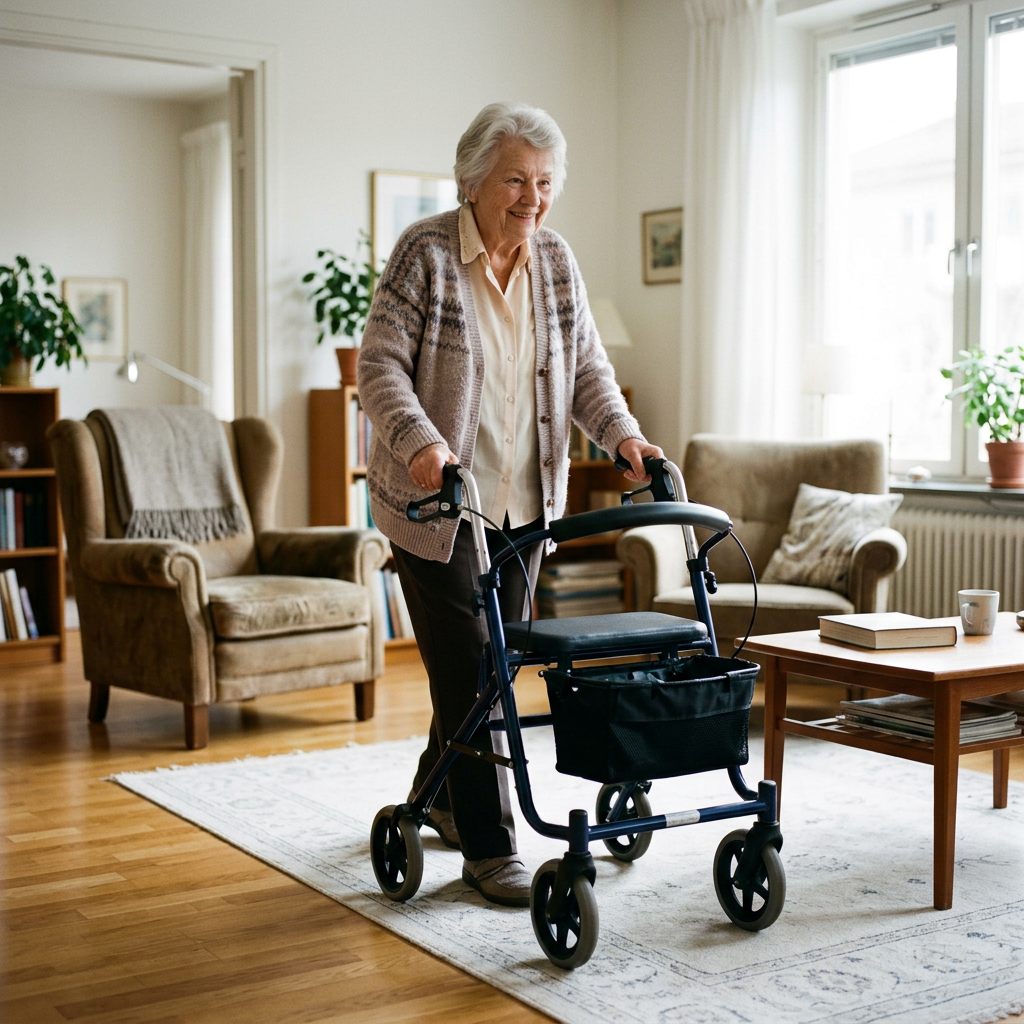
The honest take: Most walker roundups treat “tall” and “Parkinson’s” as separate checkboxes but every occupational therapist we consulted raised the same problem: handles set too low force a forward hunch that actively worsens Parkinson’s rigid, flexed posture, turning a mobility aid into a liability. The feature set that matters for this specific intersection is narrow: handles reaching at least 39 inches, a base wide enough for a shuffling gait, and braking that controls festination rather than demanding the user react to it. We found five walkers that address all three.

How we sorted through 34 walkers for tall Parkinson’s patients
We evaluated 34 rollators and specialty walkers against a two-part matrix: handle height (minimum 39 inches for users 6 feet and taller) and Parkinson’s-specific safety features, drag brakes or reverse braking, visual cueing options, and stable base geometry suited for a shuffling or festinating gait. We cross-referenced 6,200+ verified Amazon reviews and drew on published OT clinical guidance for PD mobility aids before narrowing to five picks.
Who this guide is for
This guide is for adult children and caregivers supporting a tall parent, typically someone over 6 feet who has received a Parkinson’s diagnosis and needs a walker that addresses both stature and neurological needs simultaneously. It’s also useful for tall individuals in the early stages of PD who are researching options proactively, before the need becomes urgent.
Standard 4-wheel rollators are engineered for an average-height user. Handles typically top out at 36–38 inches right for someone 5’6″, but 3–5 inches too low for a 6’2″ person. That gap matters more for Parkinson’s patients than for most users: PD already pulls the upper body into a stooped, forward posture. A walker that reinforces that with low handles makes every step a bio-mechanical argument against upright movement.
The good news is that the overlap between “tall” and “PD-appropriate” is less rare than product pages suggest. A handful of manufacturers have designed specifically for neurological gait disorders including festination (involuntary quickening of steps), freezing of gait, and the balance instability that makes standard handles dangerous. Several of those walkers also adjust to 40 inches and beyond. For caregivers new to the broader safety assessment process, the complete home safety checklist is worth reviewing first. And if height is the primary driver without the neurological component, our dedicated guide to walkers for tall seniors covers the wider field.
At a glance: our 5 picks
- Rollz Motion Rhythm — Best for advanced PD features (laser + metronome + vibration)
- U-Step II Walker with Laser — Best for freezing episodes and festination control
- ELENKER Upright Rollator — Best for fighting Parkinson’s flexed-forward posture
- WALK MATE Tall Rollator — Best for users 6’4″ and taller (handles reach 47″)
- Drive Medical Nitro Tall — Best everyday value for tall users
BEST FOR ADVANCED PDRollz Motion Rhythm

The Rollz Motion Rhythm is the most clinically targeted walker on this list. Built specifically for Parkinson’s and other neurological gait disorders, it combines three cueing modalities, a green laser line on the floor, an audible metronome, and handle vibrations, that help users initiate steps and maintain consistent stride when freezing starts. Handles adjust from roughly 34–38.6 inches with ergonomic grips for tremor, and the rollator folds flat for transport. Verified buyers consistently note that adjusting cue intensity and timing via the companion app matters meaningfully as disease stage changes. Occupational therapists cite it as the most capable off-the-shelf PD walker available in standard retail.
The good:
- Three independent cueing modes target both freezing and festination simultaneously
- App control lets caregivers fine-tune cue settings without stopping the walk
- Converts to a transport wheelchair, practical for longer outings
The catch:
- Handle range tops out at 38.6″ users over 6’3″ should verify fit before purchasing
- Premium price; insurance reimbursement requires documentation of medical necessity
This is right if… the user is managing active freezing and wants clinically validated cueing built into the device rather than clipped on.
Look elsewhere if… the user is 6’4″ or taller, or the primary concern is everyday ergonomics rather than neurological cueing.
BEST FOR FREEZING CONTROLU-Step II Walker with Laser

The U-Step II has been the clinical reference point for PD walkers for over two decades. Unlike every other product on this list, it uses a reverse-braking system: brakes are engaged by default and release only when the user squeezes the handles. A user who freezes mid-step simply stops rather than continuing to shuffle forward. The integrated laser projects a line across the floor to trigger the step-initiation reflex that freezing interrupts. The wide U-shaped base is designed for the shuffling, narrow-stepping gait of Parkinson’s, providing stability that standard rollators can’t match. The frame handles 375 pounds, and verified buyers confirm handle adjustment reaches approximately 6’2″. For users whose primary concern is unpredictable gait rather than distance walking, it remains the most purpose-built option available.
The good:
- Reverse braking is transformative for mid-step freezing, no coordination required to stop
- U-shaped base is the widest footprint on this list, designed specifically for shuffling steps
- Laser light is integrated, not a clip-on accessory that can fall off
The catch:
- Heavy and non-folding, not practical for frequent car transport or tight storage
- Confirm handle height adjustment covers the user’s wrist-crease height before ordering
This is right if… freezing of gait is the primary concern and the walker will be used primarily in one location — at home or at a care facility.
Look elsewhere if… portability matters, the user needs handles above 6’2″ ergonomic height, or frequent car trips are involved.
BEST FOR UPRIGHT POSTUREELENKER Upright Rollator Walker

The ELENKER Upright’s design directly counters Parkinson’s most common physical consequence: the hunched, forward-tilted posture that develops as the disease progresses. Rather than gripping handles at waist height, the user rests forearms on padded armrests at elbow height, keeping the trunk upright and distributing weight through the forearms rather than the wrists. The frame adjusts from 4’8″ to 6’4″, and the forearm position is genuinely ergonomic at the upper end of that range. Verified buyers who are 6 feet and taller consistently report it’s the first walker that didn’t cause shoulder and neck strain. At roughly a quarter the price of premium PD walkers, it’s the most accessible entry point for tall-user upright ergonomics.
The good:
- Forearm support actively counters PD’s characteristic flexed-forward posture
- Full adjustment range to 6’4″ with appropriate proportions at the upper end
- Padded armrests reduce grip fatigue from tremor
The catch:
- No laser or auditory cueing, not a standalone solution for active freezing episodes
- Wider footprint than a standard rollator; measure doorways before ordering
This is right if… Parkinson’s posture and back or shoulder discomfort are the primary issues, and freezing episodes are infrequent or well-controlled with medication.
Look elsewhere if… the user needs active gait cueing, or if the walker will primarily be used outdoors on varied terrain.
BEST FOR VERY TALL USERSWALK MATE Rollator for Tall Seniors

Every other walker on this list tops out at roughly 38–39 inches of handle height. The WALK MATE adjusts from approximately 38 to 47 inches genuinely serving users up to 7 feet tall. Verified buyers who are 6’5″ and taller report it’s the first rollator that allowed a fully upright stance, reducing shoulder and neck strain significantly. The 10-inch anti-skid wheels handle indoor-to-outdoor surface transitions, which matters for PD patients who freeze more often on uneven ground. The aluminum frame folds compactly for transport, and the 300-pound capacity serves most tall users. It won’t replace a purpose-built PD device if cueing or reverse braking is medically necessary, but for tall users who want a reliable daily rollator at the correct ergonomic height, it fills a gap the major brands have ignored.
The good:
- Handle range to 47″ the most generous tall-user adjustment on this list
- 10-inch wheels smooth out surface transitions and sidewalk gaps
- Lightweight, folds quickly, fits in most car trunks
The catch:
- No PD-specific features, no cueing, no reverse braking
- Customer service reviews are mixed; confirm the return window before purchasing
This is right if… the user is 6’4″ or taller and the primary need is correct ergonomic handle height rather than active PD symptom management.
Look elsewhere if… freezing, festination, or posture correction are the dominant clinical concerns — pair this with one of the PD-specific picks above, or replace it with one entirely.
BEST EVERYDAY VALUEDrive Medical Nitro Tall Rollator

Drive Medical is one of the most widely recommended brands in OT circles: reliable, broadly available, and easy to service locally. The Nitro Tall is the extended-height variant, with handles that serve users in the 6-foot-plus range, a step up from the standard Nitro. The cross-brace frame is among the sturdiest in this price range, loop brakes are intuitive for tremor users, and the padded seat is proportioned for taller users. It won’t address freezing or provide cueing, but as the everyday companion walker it’s a dependable choice most mobility dealers stock and can service. Verified buyers note assembly takes under 15 minutes and build quality exceeds the price point.
The good:
- Drive Medical’s reliability and local service network is a genuine long-term advantage
- Loop brakes are intuitive for users with tremor or reduced grip strength
- Folds quickly; fits in most car back seats or trunks without difficulty
The catch:
- No PD-specific features, primarily ergonomics and durability
- Confirm the maximum handle height matches the user’s wrist-crease measurement before ordering
This is right if… you want a proven, repairable daily rollator and plan to add a clip-on laser cue or supplemental cueing device separately.
Look elsewhere if… the user needs integrated PD cueing or handles that reliably exceed 39 inches.
Quick comparison
| Walker | Max Handle | PD Cueing | Braking | Best For |
|---|---|---|---|---|
| Rollz Motion Rhythm | 38.6″ | Laser + metronome + vibration | Drag brakes | Active freezing/festination |
| U-Step II with Laser | ~38″ (verify) | Laser line | Reverse braking | Freezing + indoor stability |
| ELENKER Upright | ~40″ (forearm) | None | Standard loop brakes | Posture + back/shoulder pain |
| WALK MATE Tall | 47″ | None | Standard loop brakes | Very tall users (6’4″+) |
| Drive Medical Nitro Tall | ~39″ | None | Loop brakes | Reliable everyday use |
The conversation you’ll have
Bringing up a walker with a tall parent who has Parkinson’s often meets resistance on two fronts: the mobility aid stigma that affects most seniors, and the specific frustration of a tall person who has tried walkers before and found them uncomfortable. Families find it helps to lead with the ergonomic angle rather than the disease angle, something like: “Most walkers aren’t built for someone your height. These ones are. Let’s try one before the next neurologist appointment and see what feels right.” That frames the conversation around fit and problem-solving rather than decline, and it gives the walker a test window tied to a concrete event rather than an open-ended commitment.
If the parent pushes back on laser or cueing features, sometimes dismissed as unnecessary gadgetry, it’s worth naming the specific risk and freezing of gait can produce falls in seconds. Framing it as a safety feature analogous to anti-lock brakes rather than a medical device often reduces that resistance considerably.
Insurance and savings
Medicare Part B classifies rollators and walkers as Durable Medical Equipment (DME). With a physician’s prescription documenting medical necessity, Parkinson’s disease typically qualifies Medicare covers 80% of the approved amount after the Part B deductible. The patient or supplemental insurer covers the remaining 20%. The U-Step II and Rollz Motion Rhythm may require documentation specifically of neurological necessity, and not every supplier is a Medicare-enrolled DME provider; verify enrollment before purchasing. HSA and FSA funds cover walkers and rollators without restrictions. A letter of medical necessity from the neurologist or referring physician is often sufficient for reimbursement even when the item is purchased out of pocket and submitted retroactively.
What to actually look for
Handle height: the wrist-crease rule
The standard OT measurement for walker handle height: with the user standing upright, arms hanging naturally at their sides, handles should align with the wrist crease. For a person 6 feet 2 inches tall, that typically means 40–42 inches. Standard rollators top out at 36–38 inches, creating a hunch that worsens PD’s characteristic flexed posture. Always measure this specifically before committing to any walker.
PD-specific braking: reverse vs. drag vs. standard loop
Standard loop brakes require the user to squeeze when stopping, workable for most walker users, but problematic for Parkinson’s patients experiencing or freezing, who may lack the reaction time or hand coordination to apply brakes mid-episode. Reverse braking (U-Step II) keeps brakes on by default and releases only with an active squeeze a fundamentally safer setup for unpredictable gait. Drag brakes (Rollz) apply proportional resistance as the user accelerates, passively slowing. The right choice depends on the user’s dominant symptom pattern.
Base width and lateral stability
Parkinson’s gait is typically narrower and more shuffling than the stride a rollator’s standard base is designed for. A narrow user footprint combined with a narrow walker base reduces the margin for lateral drift, and lateral drift causes falls. The U-Step II’s U-shaped base is the widest here; the ELENKER’s upright frame also provides good lateral stability. For any walker being trialed by a PD patient, test it on multiple surfaces with a caregiver present before independent use.
Frequently asked questions
What handle height does a 6-foot Parkinson’s patient need?
Using the wrist-crease rule, a 6-foot person typically needs handles around 38–40 inches. Many standard rollators top out at 36–38 inches, which causes a forward hunch that worsens Parkinson’s flexed posture. Always verify the maximum handle height specification, not just the listed adjustment range before ordering.
Will Medicare cover a walker for Parkinson’s disease?
Medicare Part B covers rollators and walkers classified as Durable Medical Equipment when a Medicare-enrolled physician prescribes them as medically necessary. Parkinson’s disease is an accepted qualifying condition. Coverage is 80% of the approved amount after the Part B deductible; the remaining 20% falls to the patient or a supplemental plan.
What is the difference between a rollator and a walker for Parkinson’s?
A standard walker requires lifting with each step; a rollator has wheels and rolls continuously. For Parkinson’s patients, rollators are generally preferred because lifting a walker mid-stride can trigger freezing. PD-specific rollators add reverse braking and laser cueing that standard rollators lack, addressing the neurological component of PD gait directly.
Does a laser on a walker actually help Parkinson’s patients?
Yes, multiple clinical studies support visual cueing, including floor-projected laser lines, as an effective tool for helping Parkinson’s patients initiate steps and break gait-freezing episodes. The laser provides an external visual target that bypasses the internal timing disruption that causes freezing. The effect is most pronounced in patients with moderate-stage PD.
The shortlist


What we’d do tomorrow
Call the neurologist’s office and request a written prescription documenting Parkinson’s disease, that letter unlocks Medicare Part B reimbursement and accelerates HSA/FSA claims. Then schedule a session with an OT or PD-certified physical therapist to trial the walker before buying: the fit assessment for a tall user with PD differs substantially from what any product description captures. If in-person trialing isn’t practical, order from Amazon with the return window open, test for one week on the surfaces the user actually encounters, and assess whether the handle height allows a fully upright stance. That single factor is the clearest indicator of whether a walker will help or add to the problem.
— Sarah
Leave a Reply