5 Best Wheelchair Cushions for Pressure Sores
By Sarah Mitchell · Editor, BuyingForMom · Updated September 2026
11-minute read · Balance & Mobility · 5 picks compared

How we sorted through 40+ pressure-relief cushions in three weeks
We cross-referenced more than 8,000 verified Amazon reviews across gel, air, foam, and powered-alternating cushions, then filtered against the criteria occupational therapists and wound-care nurses use: pressure redistribution, immersion depth, weight capacity, and cover hygiene. We leaned on the National Pressure Injury Advisory Panel’s guidance that no single surface prevents injury alone, a randomized trial (National Library of Medicine) showing skin-protection cushions lower ulcer incidence in at-risk seniors, and caregiver patterns from Reddit’s r/AgingParents and r/caregivers. Every product below was confirmed in stock as of September 2026.
Who this guide is for
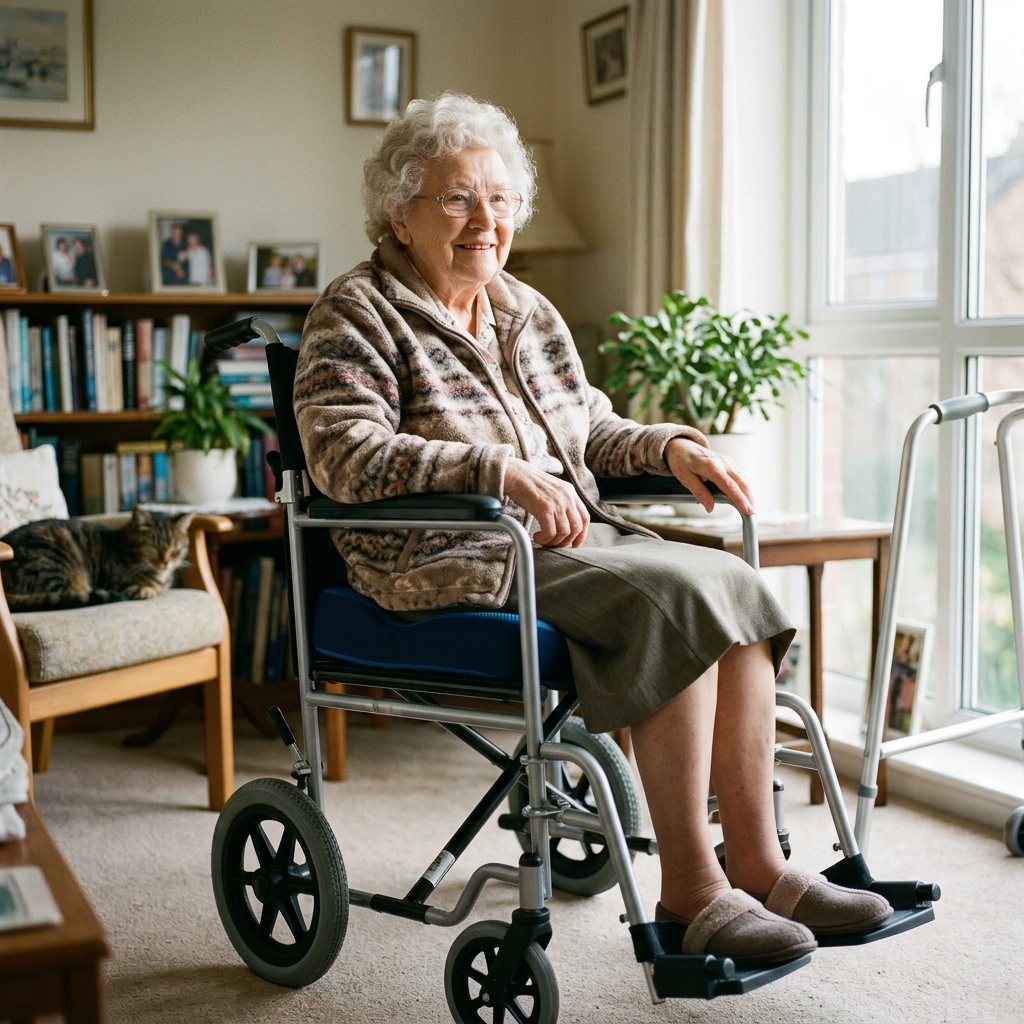
This guide is for adult children and caregivers choosing a cushion for a parent who sits in a wheelchair, recliner, or transport chair for hours a day and is at risk of or already developing a pressure sore, often after a stroke, a hospital stay, or a stretch of limited mobility. If you’re buying for yourself and simply want comfort, the same picks apply, but pay closest attention to the risk-level routing below rather than the softest option.
Pressure sores (bedsores, pressure ulcers) form where body weight presses skin against a hard surface long enough to cut off blood flow — most often the tailbone and the two “sit bones.” A good wheelchair cushion for pressure sores spreads that load and lets tissue breathe, but the cushion is only half the job. The other half is moving.
At a glance
Best Overall ProHeal Inflatable Air Cushion — ~$45 · deep-immersion air for prevention and early sores
Best No-Fuss Gel Drive Medical Skin Protection Gel-E — ~$55 · zero inflation, wipe-clean
Best for Accidents Vive Waterproof Gel-Foam Cushion — ~$45 · washable waterproof cover, incontinence-friendly
Best for Existing Wounds Vive Alternating Pressure Pad — ~$80 · powered, cells inflate and deflate on a cycle
Gold-Standard Air Cell ROHO Mosaic Cushion — ~$100 · dry-flotation air cells that shape to the body
Best Overall ProHeal Inflatable Wheelchair Air Cushion
Check price on Amazon → · around $45 (16″ × 16″)
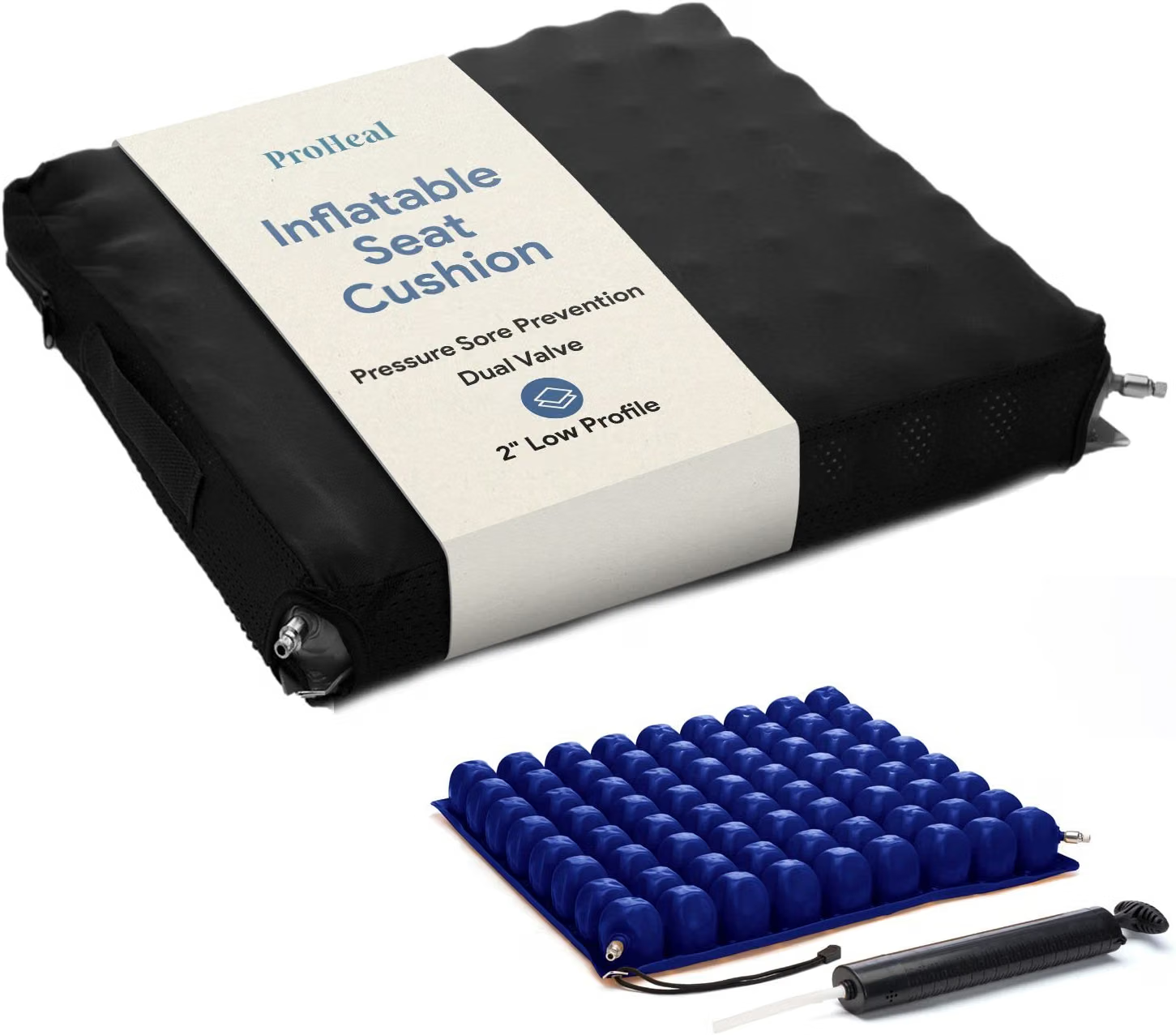
For most families shopping before a sore appears, this is the sweet spot: genuine air-immersion pressure redistribution at a gel-cushion price. The ProHeal uses inflatable cells that let the sit bones sink in rather than bear down, and it’s rated for pressure-sore treatment and prevention, not just comfort. Across 3,000-plus reviews the recurring praise is the dual-valve setup — soften one side independently if a wound or a bonier hip needs extra offloading — and a 500-pound capacity that outclasses most gel pads. Buyers caring for post-stroke parents repeatedly say it “actually held up” where cheaper foam flattened in weeks. It ships with a pump, nylon cover, and repair kit.
The good
- True air immersion at roughly the price of a basic gel cushion
- Dual valves let you offload one side for an existing sore or uneven hips
- 500 lb capacity and a 5-year warranty rare at this price
The catch
- Air cushions need an inflation check every week or two a con for a forgetful user living alone
- The nylon cover is functional, not plush
This is right if… you want the most protective mechanism you can get under $50 and don’t mind a periodic air check.
Look elsewhere if… the user can’t manage inflation and no caregiver will check it — go with a maintenance-free gel below.
Best No-Fuss Gel Drive Medical Skin Protection Gel-E
Check price on Amazon → · around $55 (16″ × 16″ × 3″)
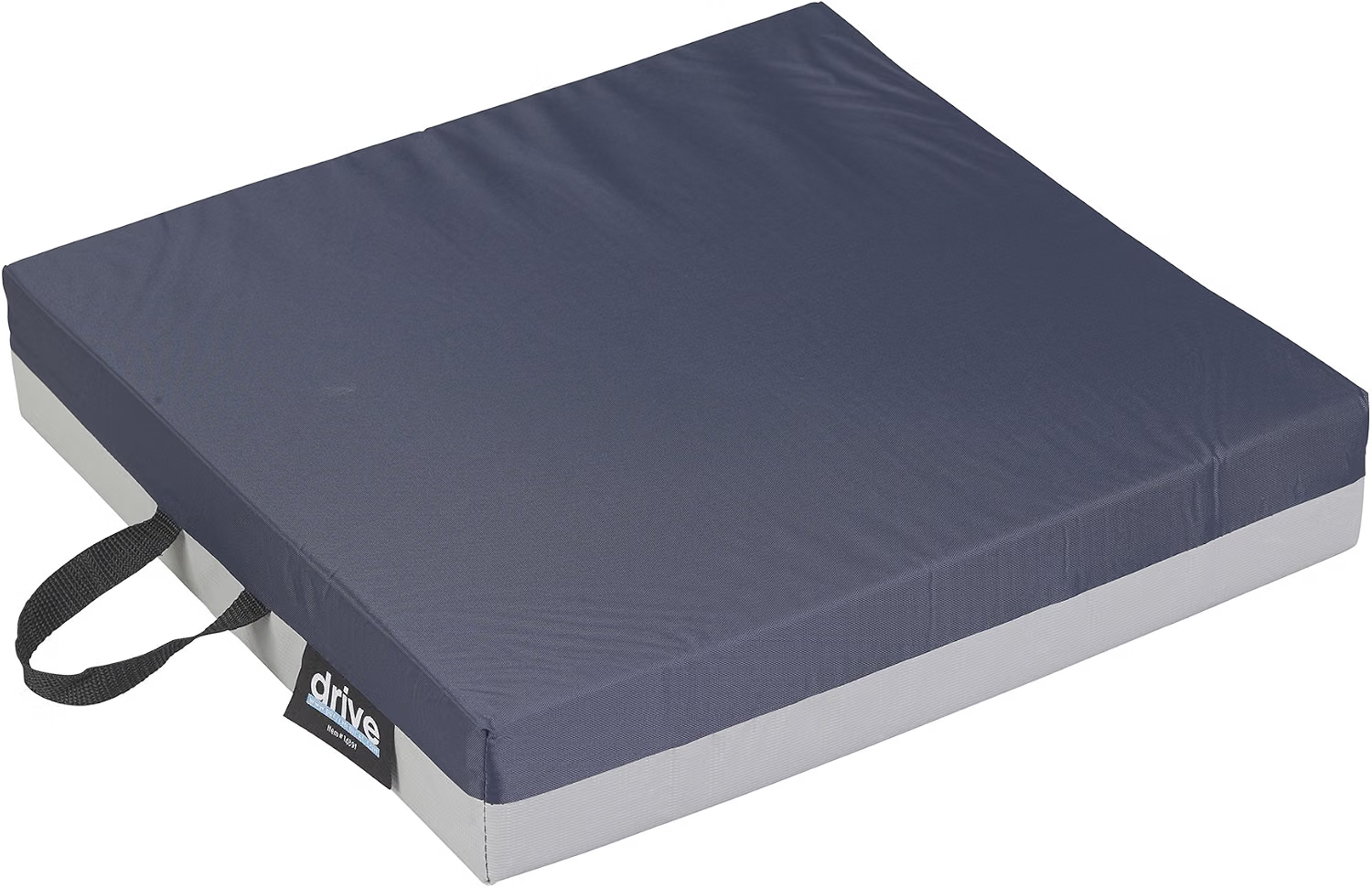
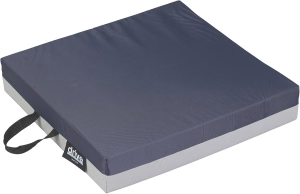
When no one will reliably check air pressure, a quality gel cushion is the honest recommendation — and the Drive Gel-E is the one OTs and medical-supply catalogs cite most. A viscous gel bladder sits over a firm polyurethane-foam base, so it redistributes weight without going flat or needing any upkeep beyond wiping the cover. Across roughly 4,000 reviews, the consistent theme is set-and-forget reliability for parents in assisted living where staff can’t fuss with valves. The gel also stays cooler than solid foam, which matters for skin that’s already fragile. It’s heavier than an air cushion and won’t immerse the sit bones as deeply, so we position it as prevention-and-comfort for low-to-moderate risk rather than a fix for an open wound.
The good
- Zero maintenance no inflating, no adjusting
- Gel base runs cooler than plain foam for sensitive skin
- Removable, water-resistant cover with a non-slip vinyl bottom
The catch
- Heavier than air or foam harder to move between chairs
- Less deep immersion than air, so not ideal for high-risk or existing sores
This is right if… the user or facility won’t maintain an air cushion and you want reliable, hands-off protection.
Look elsewhere if… there’s already a wound — step up to an air or alternating-pressure option.
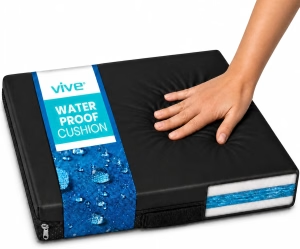
Best for Accidents Vive Waterproof Wheelchair Cushion
Check price on Amazon → · around $45 (16″ × 16″ × 3″)
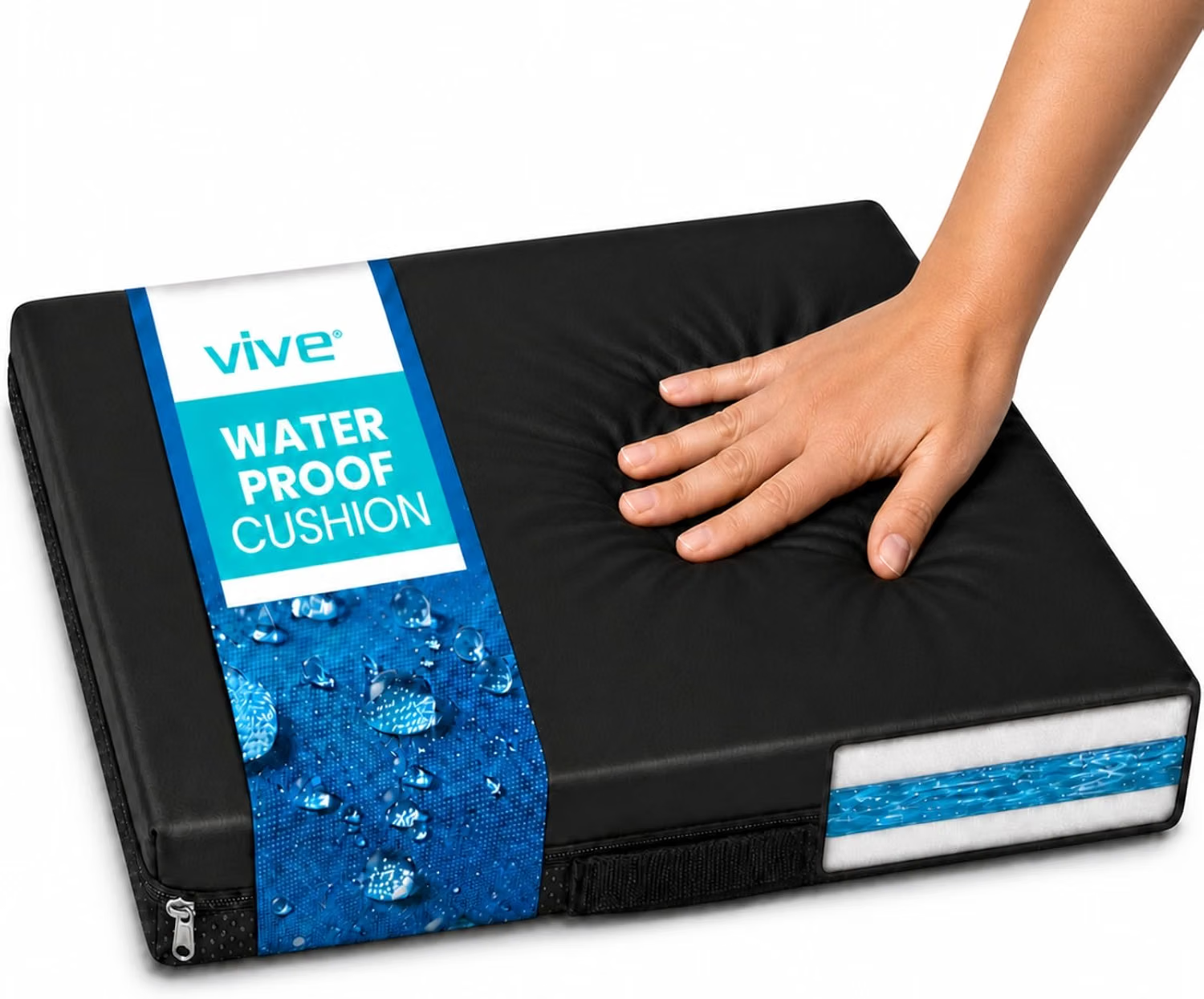
Incontinence and pressure risk almost always travel together, and moisture is what turns a red spot into a broken one. This is the cushion for that reality. Vive layers a dynamic gel center between dense foam and wraps the whole thing in a genuinely waterproof, machine-washable cover — so a nighttime accident wipes off the seat instead of soaking into it. Across 5,000-plus reviews, caregivers of bedbound-to-chair parents call the washable cover the deciding feature, and note the gel-foam blend gives more stability than a pure-air cushion for someone who lists to one side. It’s not the deepest offloader here, but paired with clean, dry skin it’s a smart everyday pick, and it drops onto a recliner or car seat just as easily as a wheelchair.
The good
- Truly waterproof, machine-washable cover for incontinence
- Gel-plus-foam gives steadier support for a parent who leans
- Works on wheelchairs, recliners, and car seats
The catch
- Foam layer can compress over a year of heavy daily use
- Less immersion than dedicated air cushions for the highest risk
This is right if… incontinence is part of the picture and a wipe-clean, washable surface is non-negotiable.
Look elsewhere if… the sole goal is maximum offloading for an established ulcer.
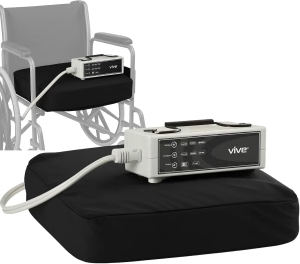
Best for Existing Wounds Vive Alternating Pressure Pad
Check price on Amazon → · around $80 (fits seats 18″ and wider)
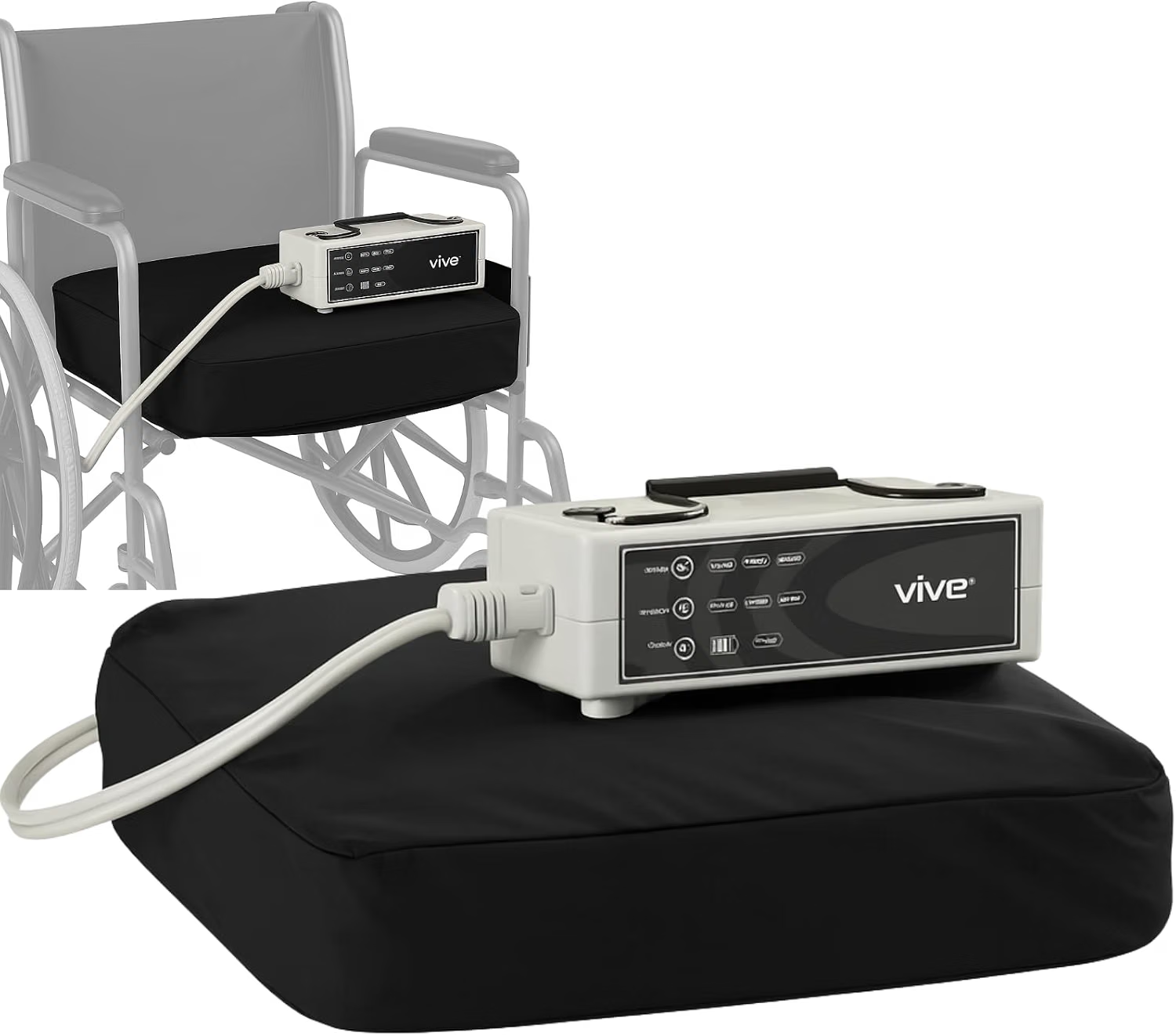
When there’s already a sore, or sensation is absent, a static cushion can’t do enough the contact site needs the load to physically move. This powered pad does that: five air cells inflate and deflate on a cycle so no single patch of skin bears weight continuously, the principle of a hospital alternating-pressure mattress shrunk to seat size. A rechargeable, quiet pump runs about eight hours per charge, and a static mode lets it double as a plain air cushion when unplugged. Skeptical reviewers repeatedly report it “made a real difference” for a parent recovering a Stage 1 or 2 sore. Capacity tops out near 220 pounds, so confirm the user’s weight, and use it alongside a wound-care plan, not instead of one.
The good
- Actively moves pressure, the strongest mechanism here for existing sores
- Rechargeable, quiet pump with ~8 hours per charge
- Static mode works as a backup air cushion
The catch
- 220 lb capacity — too low for heavier users
- A pump is one more thing to charge and maintain
This is right if… there’s a current or healing sore, or the user has no protective sensation.
Look elsewhere if… the user is over ~220 lb or you want a purely passive cushion.
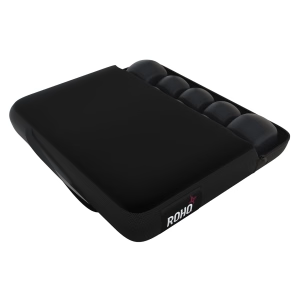
Gold-Standard Air Cell ROHO Mosaic Cushion
Check price on Amazon → · around $100 (16″ × 16″)
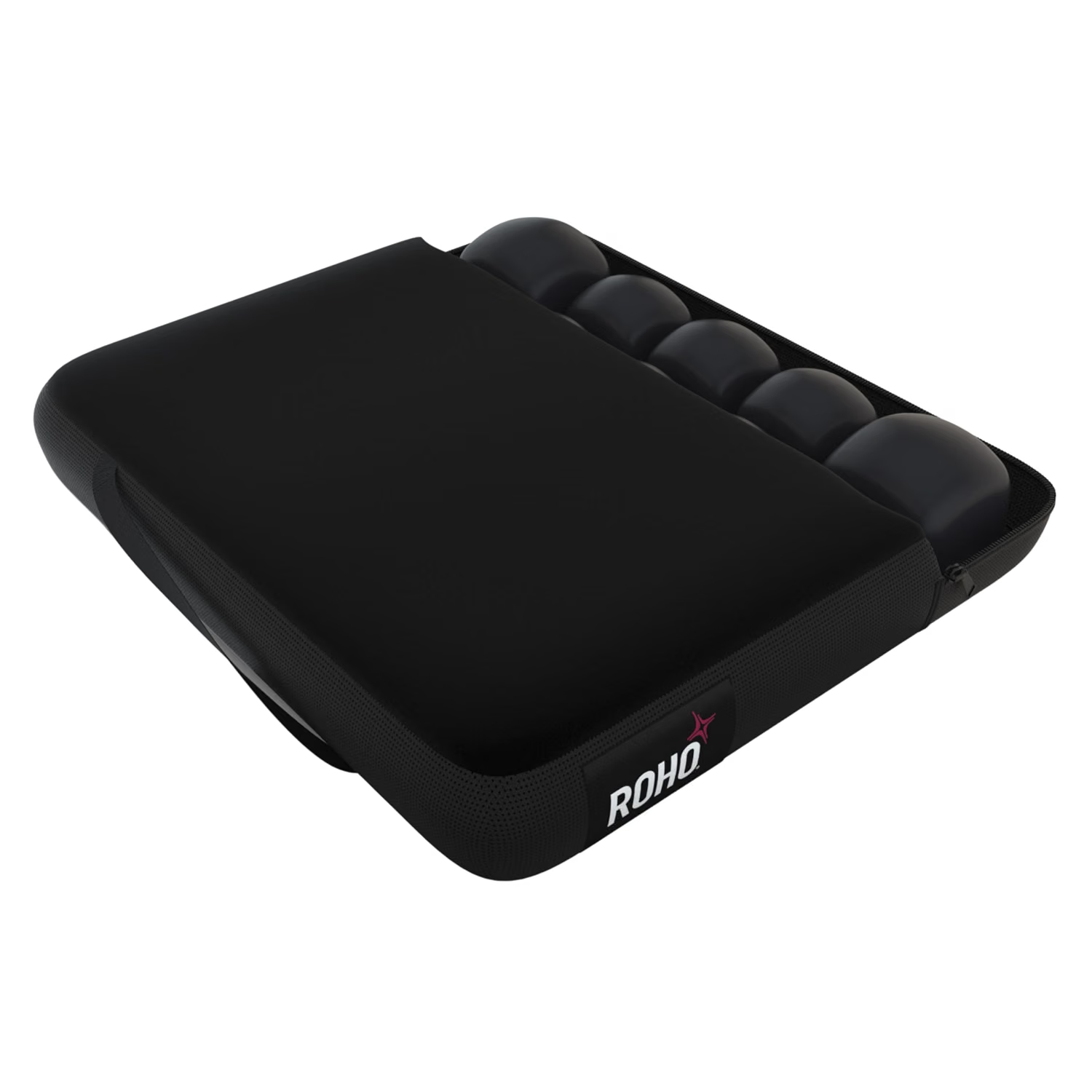
Ask a seating therapist which brand they trust for skin protection and the answer is almost always ROHO. Its interconnected air cells use “dry-flotation” the sit bones settle down into the cells rather than perch on top, and air shifts to match the body’s exact shape. The Mosaic is ROHO’s most affordable air-cell model and the one that fits an everyday budget, which is why it’s here. Be honest with yourself about the tier, though: the Mosaic is ROHO’s everyday line, rated for low-risk skin protection. If a parent has an established Stage 2-or-deeper wound, a therapist will likely spec the pricier High Profile or Quadtro Select — those are prescription-grade and run several hundred dollars. For prevention and light protection, the Mosaic delivers the genuine ROHO feel at a fraction of the cost.
The good
- Real ROHO air-cell dry-flotation, the therapist-trusted design
- Cells conform closely to the body for even load-spreading
- Heavy-duty, non-slip cover
The catch
- It’s the everyday line not the prescription High Profile for serious wounds
- 250 lb capacity and, like all air cushions, needs periodic inflation checks
This is right if… you want authentic ROHO protection for prevention without the prescription-model price.
Look elsewhere if… there’s a deep or non-healing wound — get an OT to spec the medical ROHO.
How the five compare
| Cushion | Mechanism | Best for | Capacity | ~Price |
|---|---|---|---|---|
| ProHeal Inflatable Air | Air immersion | Prevention + early sores | 500 lb | $45 |
| Drive Medical Gel-E | Gel over foam | No-maintenance protection | ~275 lb | $55 |
| Vive Waterproof Gel-Foam | Gel + foam, waterproof | Incontinence + comfort | ~265 lb | $45 |
| Vive Alternating Pressure | Powered alternating air | Existing wounds / no sensation | 220 lb | $80 |
| ROHO Mosaic | Air-cell dry-flotation | Therapist-grade prevention | 250 lb | $100 |
The conversation you’ll have
Cushions like these can land as an insult — proof, in a parent’s mind, that they’re “falling apart.” That resistance is normal, and pushing the safety angle usually backfires. What works better is framing the cushion as comfort, not correction. Instead of “You need this so you don’t get a bedsore,” try “This one’s supposed to make sitting through the whole afternoon a lot easier on you — want to try it in your chair?” Let the cushion prove itself; most people notice within a day that a long sit hurts less.
If a parent has a diagnosed risk or an actual sore, bring in the doctor or wound nurse as the messenger “Dr. Patel wants you on this cushion for a few weeks” carries more weight than a nudge from an adult child. And keep the skin conversation matter-of-fact: a quick daily look at the tailbone and hips, not a lecture. Our complete aging-in-place home safety checklist covers how to fold that kind of routine into a week without it feeling like surveillance.
Insurance and savings
Medicare can cover a wheelchair seat cushion, but the rules are specific. A general-use cushion (HCPCS code E2601/E2602) is covered only when the person has a Medicare-qualifying manual or power wheelchair and a face-to-face evaluation documents medical need. A skin-protection cushion (E2607/E2608) is covered when there’s a current pressure ulcer, a history of one at the contact site, or absent/impaired sensation — with a supplier-added KX modifier on the claim. The practical catch: Amazon isn’t an enrolled Medicare supplier, so buying here is out of pocket, but the same purchase is almost always FSA- and HSA-eligible as a qualified medical expense. If a sore already exists, ask the prescribing clinician to route a covered cushion through an enrolled durable-medical-equipment supplier and save your FSA dollars for the everyday backup.
What to actually look for
Match the mechanism to the risk, not the price
This is the choice that matters most. Low-to-moderate risk and prevention: a quality gel or air cushion. Moderate-to-high risk or a bony, low-weight parent: air immersion (ProHeal or ROHO). An established or healing sore, or no protective sensation: powered alternating pressure. A soft “comfort” foam cushion feels nice but redistributes little — for genuine ulcer risk it’s the wrong category entirely.
Get the size and weight capacity right
Measure the seat width and depth, then match the cushion — one that overhangs the frame or perches too small undoes the pressure math. Check the weight rating too: several excellent cushions cap at 220–275 pounds, which rules them out for heavier users. Our guide to lightweight transport wheelchairs explains how to measure a chair correctly before you buy anything that sits in it.
Plan for hygiene and upkeep
A cushion is only protective if it stays clean and correctly inflated. If incontinence is a factor, insist on a waterproof, washable cover. If no one will check air pressure weekly, choose gel over air. And build the cushion into a room-by-room safety plan rather than treating it as a standalone fix — our room-by-room aging-in-place modification guide shows where seating fits alongside beds, bathrooms, and transfers.
Frequently asked questions
Do wheelchair cushions actually prevent pressure sores?
Yes, but only as part of a routine. A randomized trial found skin-protection cushions lowered pressure-ulcer incidence in at-risk seniors versus generic foam. The cushion redistributes load; it can’t replace shifting position every one to two hours and checking skin daily. Cushion plus repositioning is what actually works.
Gel, air, or foam — which is best for pressure sores?
Air immersion (like ROHO or ProHeal) generally offers the most pressure relief and suits higher risk. Gel is a close, maintenance-free second for low-to-moderate risk. Plain foam offers the least redistribution and is best reserved for comfort, not sore prevention. Match the mechanism to the risk level.
How often should a parent reposition even with a good cushion?
Most wound-care guidance recommends shifting weight every one to two hours while seated — leaning side to side, doing seated push-ups, or being helped to stand briefly. A cushion buys time between shifts; it doesn’t eliminate the need. Set a phone or watch reminder to make it automatic.
Does Medicare cover a wheelchair cushion for pressure sores?
It can. A skin-protection cushion is covered when there’s a current or prior pressure ulcer at the contact site, or impaired sensation, ordered through an enrolled supplier with proper documentation. Amazon purchases are out of pocket but typically FSA- and HSA-eligible. Ask the prescriber to route a covered cushion through a medical-equipment supplier.
How long do these cushions last before replacing?
Foam and gel-foam cushions generally hold their shape one to two years of daily use before compressing; replace once the base bottoms out under the sit bones. Air cushions last longer if maintained but should be checked for leaks and correct inflation every week or two. Replace any cushion showing permanent flattening.
Can these be used on a recliner or regular chair, not just a wheelchair?
Most can. The gel and waterproof gel-foam picks work on recliners, dining chairs, and car seats. The alternating-pressure pad works anywhere it can reach an outlet or run on its charge. Just confirm the cushion sits flat and doesn’t overhang the seat, which reduces its effectiveness.
The shortlist
What we’d do tomorrow
If you’re starting this weekend, do these three things in order. First, be honest about risk: no wound and just long sitting means the ProHeal air cushion (or the maintenance-free Drive gel if no one will check inflation); a current or healing sore means the Vive alternating-pressure pad plus a call to the doctor. Second, measure the seat before ordering so the cushion fits. Third and this is the one that actually prevents sores set a repeating reminder to shift weight every one to two hours and glance at the skin once a day. The cushion buys time; the routine is what keeps skin intact.
— Sarah
Leave a Reply