
Best Shoes for Elderly Swollen Feet: Velcro & Wide Picks
By Sarah Mitchell · Editor, BuyingForMom · Updated September 2026
10-minute read · Balance & Mobility · 5 picks compared

Who this guide is for
This guide is for adult children buying everyday outdoor shoes for a parent whose feet swell — from edema, diabetes, arthritis, or long days on their feet — and who struggles with regular laces. If you’re shopping for yourself, the same picks apply; skip the “conversation” section near the end.
Swollen feet change the whole footwear math. The wrong pair genuinely raises fall risk, because a parent fighting a tight, hard-to-fasten shoe often gives up and shuffles around in socks or backless slippers instead. The best shoes for elderly swollen feet do three things at once: open wide enough to get a puffy foot in, adjust as the swelling rises and falls, and stay secure enough to walk safely — a narrower target than the “just buy wide” advice most roundups give.
Two details matter more than brand. First, the closure has to match the hands using it — a single big strap is far easier for arthritic fingers than two small ones or a lace. Second, swelling fluctuates, so a shoe that only fits at one size is the wrong shoe; you want room to loosen it by afternoon. The five picks below are built around those two ideas, not a features spreadsheet.
At a glance
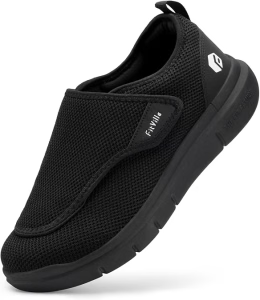
Best Overall FitVille EasyTop Wings (Men) — ~$79 · dual velcro straps that loosen as swelling rises.
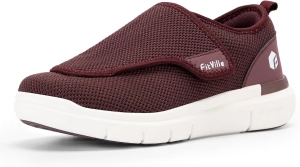
Best for Women FitVille EasyTop Wings V2 (Women) — ~$79 · same wide-and-adjustable build, women’s last.
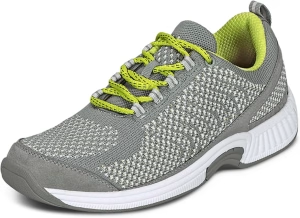
Best for Orthotics Orthofeet Coral Stretch Knit — ~$135 · removable insole, seam-free stretch upper.
Best for Balance Propét Stability X Strap — ~$85 · one big strap, wide stable base.
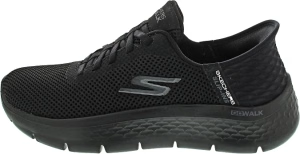
Best Hands-Free Skechers Slip-ins Go Walk — ~$75 · step in, no bending, no strap.
Best Overall FitVille EasyTop Wings (Men)
~$79 · Check price on Amazon →

This is the pick that best fits how swelling actually behaves. The EasyTop Wings opens with two independent hook-and-loop straps and a wing upper that folds all the way back, so a puffy foot goes in without a fight and you can crack the straps looser by afternoon when the ankle has ballooned. It comes in extra-wide up to 6E, genuinely rare, and the removable insole leaves room for a prescribed orthotic. Across 4,000-plus reviews the recurring caregiver note is “the only shoe that fit after the water pills stopped working,” with a rocker sole buyers with neuropathy say they can feel their footing in. The common complaint: order true to size, not up — sizing up left the heel sloppy for several reviewers.
The good
- Two straps adjust independently as swelling rises and falls through the day.
- Extra-wide up to 6E — accommodates serious edema and bunions.
- Removable insole makes room for custom orthotics.
The catch
- Sporty look won’t suit a parent who wants a dressier shoe.
- Order true-to-size; sizing up loosens the heel.
This is right if… your parent’s swelling changes hour to hour and they can still manage a strap.
Look elsewhere if… they can’t bend to reach two straps — see the hands-free pick below.
Best for Women FitVille EasyTop Wings V2 (Women)
~$79 · Check price on Amazon →
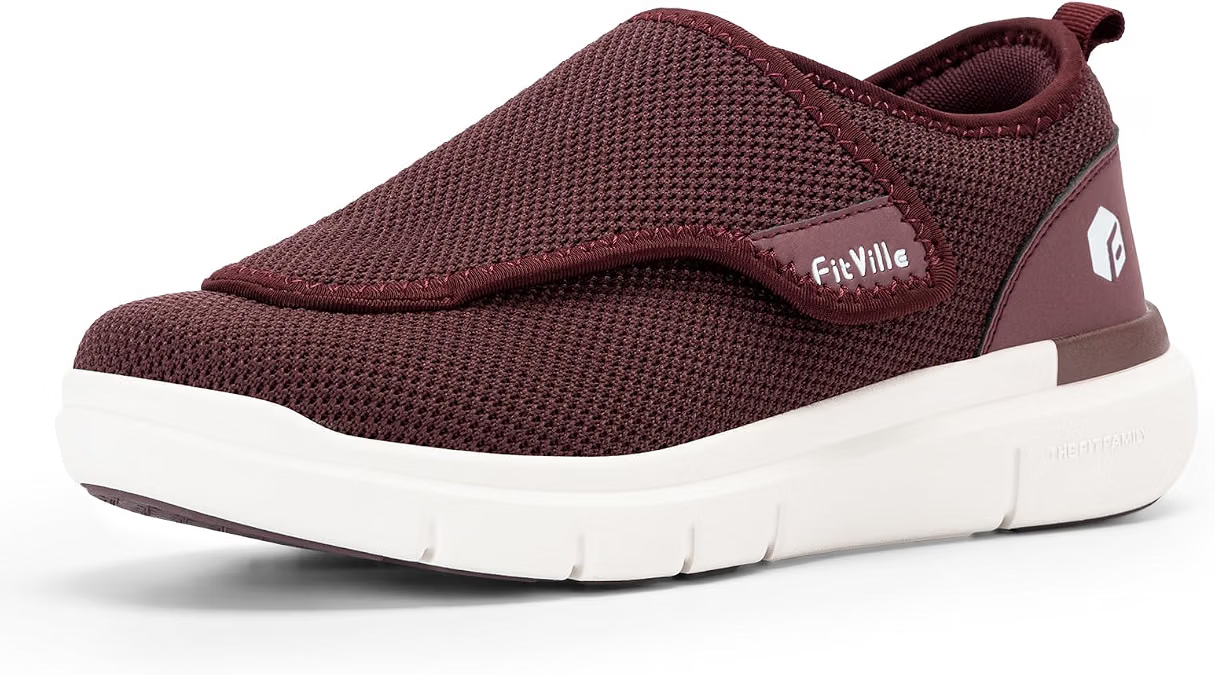
The women’s V2 is the same open-wide, adjust-as-you-go design on a women’s last — which matters, because most “wide women’s” shoes are just a men’s shoe in a lighter color that sits wrong through the heel. Verified buyers with lymphedema and diabetic swelling praise how far the upper folds back for dressing, and the lighter cushioning gets called out as easier on knees than heavier orthopedic shoes. Reviewers flag that the brightest colorways run out fast, and a few wanted a stiffer heel counter. For a woman who wants swollen-feet room in something that reads like a normal walking shoe, this is the value pick.
The good
- Built on a women’s last — proper heel fit, not a shrunken men’s shoe.
- Wing upper folds far back for easy dressing over a swollen foot.
- Lighter cushioning is gentler on knees and hips.
The catch
- Popular colors sell out; you may be choosing from what’s left.
- Heel counter is softer than a true stability shoe.
This is right if… you want the EasyTop’s adjustability in a women’s fit and everyday look.
Look elsewhere if… she needs maximum lateral stability — the Propét below is firmer underfoot.
Best for Orthotics Orthofeet Coral Stretch Knit
~$135 · Check price on Amazon →
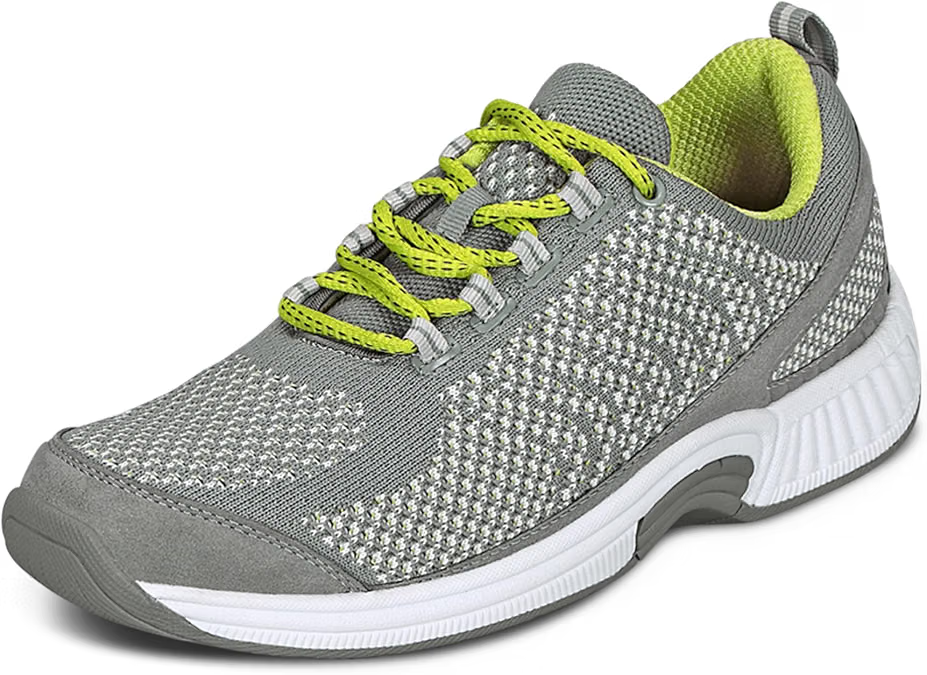
If a podiatrist has prescribed custom orthotics, Orthofeet is the name that comes up most in caregiver forums and the Coral is its most-reviewed swollen-feet model. The seam-free stretch-knit upper conforms around bunions and hammertoes without pressure points, and it ships with a removable multi-layer insole you pull out to drop your own orthotic in. Across thousands of reviews the pattern is “expensive but the only pair that stopped the rubbing,” often from people with diabetes or neuropathy who can’t risk a blister. It’s the priciest pick here, and the stretch upper alone doesn’t cinch down — choose a strap model if the foot needs holding. A 60-day wear-and-return policy takes the sting out of the price.
The good
- Seam-free stretch interior — no pressure points on bunions or hammertoes.
- Removable multi-layer insole makes real room for custom orthotics.
- Extended widths through extra-extra-wide.
The catch
- Most expensive pick by a wide margin (~$135).
- Slip-on stretch versions don’t cinch — choose a strap model for a foot that needs holding.
This is right if… your parent wears prescribed orthotics or has fragile diabetic skin.
Look elsewhere if… you’re on a budget — the FitVille pair covers most needs for half the price.
Best for Balance Propét Stability X Strap
~$85 · Check price on Amazon →
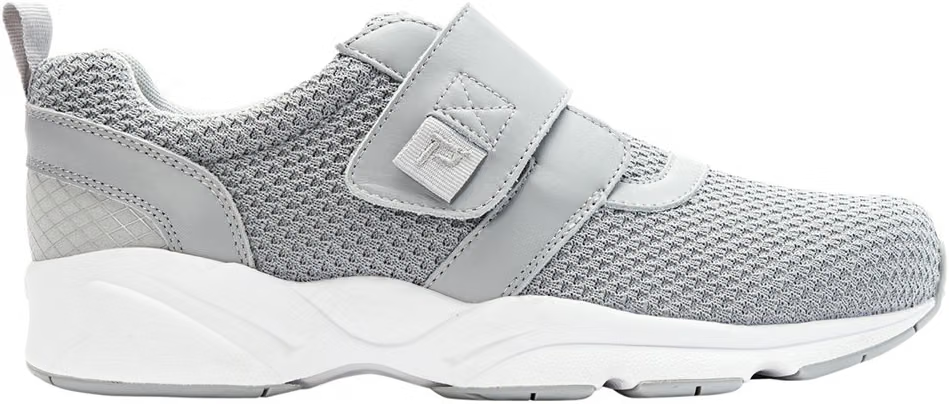
When the bigger worry is steadiness, not just fit, this is the shoe. The Stability X Strap uses one extra-large hook-and-loop strap — the single easiest closure here for arthritic hands or one working side after a stroke — over a wide forefoot and heel base with a firm shank underfoot. Physical therapists recommend Propét because it’s one of the few brands with a genuine XX-wide and 3E–5E range plus a stable platform. Reviewers with balance issues describe it as “planted,” and the breathable knit keeps a warm swollen foot cooler. The trade-off: one strap gives less fine control than the FitVille’s two, so for swelling that swings dramatically it’s less adaptable. Order the width up if between sizes.
The good
- One big strap the easiest closure here for weak or one-handed use.
- Wide, firm base built for stability, not just cushioning.
- True XX-wide and 3E–5E options.
The catch
- One strap adjusts less finely than two for big daily swings.
- Runs slightly snug — size the width up if between.
This is right if… balance is the priority and one simple strap is all their hands can manage.
Look elsewhere if… the swelling swings widely each day — two straps give more control.
Best Hands-Free Skechers Slip-ins Go Walk
~$75 · Check price on Amazon →
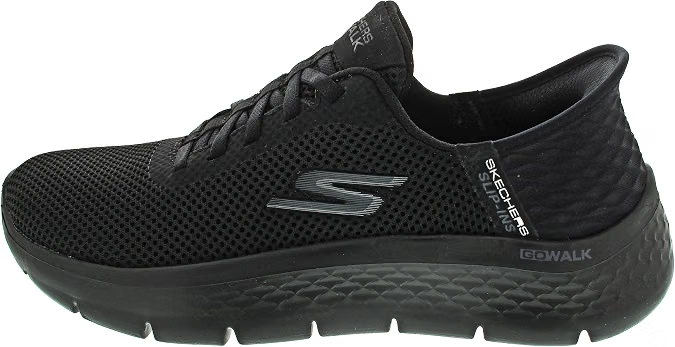
Sometimes the barrier isn’t the foot at all — it’s the bending. Skechers’ Slip-ins use a firm heel piece that folds flat as the foot steps in and springs back to hold the heel, so a parent who can’t reach their feet gets a shoe on with no hands and no strap. They come in wide widths with the memory-foam cushioning Skechers is known for, and they’re the most “normal-looking” pair here. Be honest about the limit: the collar is fixed, so Slip-ins suit mild-to-moderate swelling — a severely edematous foot may not clear the opening, and there’s no strap to loosen later. For a parent whose main problem is reaching down, though, nothing here is this effortless; verified buyers overwhelmingly cite “I can finally put my own shoes on.”
The good
- Truly hands-free — no bending, no strap, no laces.
- Available in wide widths with soft memory-foam cushioning.
- Looks like an ordinary sneaker.
The catch
- Fixed collar — best for mild-to-moderate swelling, not severe edema.
- No adjustable closure to loosen as the foot swells.
This is right if… bending down is the real obstacle and swelling is mild-to-moderate.
Look elsewhere if… the foot swells severely — a wing-and-strap shoe opens wider.
Quick comparison
| Shoe | Closure | Widths | Best for | ~Price |
|---|---|---|---|---|
| FitVille EasyTop Wings (Men) | 2 velcro straps | to 6E | Fluctuating swelling | ~$79 |
| FitVille EasyTop V2 (Women) | 2 velcro straps | to 4E | Women’s everyday fit | ~$79 |
| Orthofeet Coral | Stretch / strap | to XX-wide | Orthotics, fragile skin | ~$135 |
| Propét Stability X Strap | 1 large velcro strap | to 5E | Balance + easy closure | ~$85 |
| Skechers Slip-ins Go Walk | Hands-free step-in | Wide | Can’t bend down | ~$75 |
The conversation you’ll have
Footwear is quietly loaded for older adults. A parent who’s worn the same size since 1975 can hear “you need special shoes now” as “you’re falling apart,” and dig in. The resistance usually isn’t about the shoe — it’s about what the shoe admits. Lead with the problem they already feel, not the label on the box.
Try “Your feet look like they hurt by dinnertime — want to try a pair you can loosen when they swell?” instead of “These are diabetic shoes for your edema.” The first is about comfort tonight; the second is a diagnosis. If they balk at Velcro as “old-people shoes,” the hands-free Skechers read as ordinary sneakers. And frame it as a trial: order one pair, keep the box, send it back if it’s wrong. Low stakes lowers the wall.
Insurance and savings
Here’s the part most shoppers get wrong: ordinary comfort shoes aren’t covered, but therapeutic shoes can be. Under Medicare Part B’s Therapeutic Shoe benefit, a person with diabetes plus a qualifying foot condition (neuropathy, a past ulcer, poor circulation, deformity) may get one pair of prescribed therapeutic shoes and inserts per year, with Medicare covering 80% after the deductible — but only when a Medicare-enrolled podiatrist certifies the need and a qualified supplier furnishes them. An off-the-shelf Amazon pair bought on your own won’t qualify. Separately, most shoes here are FSA/HSA eligible for a documented medical need — keep the receipt. If your parent has diabetes, ask their podiatrist about the program before paying out of pocket.
What to actually look for
Match the closure to the hands, not the shoe
This is the decision that matters most and the one every generic roundup skips. A lace is out for most swollen feet. Between the alternatives: two straps give the finest control as swelling changes but need more dexterity; one large strap is the easiest single motion for arthritic or one-handed use; hands-free step-ins ask for nothing but can’t be loosened later. Pick for the person putting the shoe on. Our guide to no-tie laces and easy-on shoes goes deeper if regular laces are the sticking point.
Width and depth beat “stretchy”
A stretch upper alone is a trap for edema — it fits in the morning and squeezes by afternoon with no way to relieve it. What you want is genuine extra width (4E, 6E, XX-wide) and extra depth, so the foot has room top-to-bottom, paired with an adjustable closure you can open as the day goes on. Measure your parent’s foot at the end of the day, when it’s largest, and buy to that. Getting the fit right is also a core piece of fall prevention — our room-by-room aging-in-place safety checklist puts footwear alongside the other changes that keep an unsteady parent upright.
Firm sole, real tread, and a neuropathy check
Softer is not safer. A too-soft, too-thick sole makes an unsteady parent wobble; you want cushioning over a firm, stable platform with a real rubber tread — not a slick foam bottom. And a genuine caution: if your parent has diabetic neuropathy and can’t feel their feet, inspect their skin for the first two weeks — a seam they can’t feel can cause a blister that turns serious. For indoor wear, our non-slip slippers for swollen feet apply the same width-and-tread logic around the house.
Frequently asked questions
What kind of shoes should the elderly wear for swollen feet?
Look for genuine extra width and depth, an adjustable closure (Velcro straps or hands-free) rather than laces, a firm cushioned sole with real tread, and a stretchable or seam-free upper. The closure should match the person’s hand ability, and the shoe should open wide enough to get a swollen foot in easily.
Are Velcro or slip-on shoes better for seniors?
It depends on the barrier. Velcro is better when swelling fluctuates, because you can loosen it as the foot expands through the day. Hands-free slip-ins are better when the real problem is bending down to reach the feet. If swelling is severe, choose Velcro — a fixed slip-on collar can’t open far enough.
What is the best width for swollen feet?
Most people with edema need at least a wide (2E), and many need extra-wide (4E) or extra-extra-wide (6E/XX). Rather than guess, measure the foot at the end of the day when it’s most swollen and match that width. Extra depth matters as much as width for a foot that swells upward, not just outward.
Can the wrong shoes make swelling worse?
Yes. A too-tight shoe restricts circulation, worsens swelling, and can cause skin breakdown — especially in a foot with diabetic neuropathy that can’t feel the pressure. A non-adjustable “stretch” shoe that fits in the morning can act like a tourniquet by afternoon. Always leave room to loosen the fit as the day goes on.
When should you buy or try on shoes if your feet swell?
Buy and fit shoes at the end of the day, when feet are at their largest. A pair sized to a morning foot will feel tight by afternoon. When ordering online, measure late in the day and choose the width and adjustable closure that leave room to expand into.
Does Medicare cover shoes for swollen feet?
Only in specific cases. Medicare Part B’s Therapeutic Shoe benefit covers one pair per year for people with diabetes plus a qualifying foot condition, at 80% after the deductible, when prescribed by a podiatrist and supplied by an enrolled provider. Ordinary comfort shoes bought on your own aren’t covered, though many are FSA/HSA eligible with documentation.
The shortlist

What we’d do tomorrow
If you’re starting this weekend, do three things in order. First, measure your parent’s foot in the evening width included because that number, not their old shoe size, is what you’re buying. Second, set the closure by how their hands work: if two straps are manageable, order the FitVille EasyTop Wings; if bending is the wall, order the Skechers Slip-ins. Third, try them on that same evening when the feet are swollen — if they don’t open wide enough, send them back and size the width up. One good pair, fitted to the worst part of the day, changes whether your parent walks or shuffles.
— Sarah
Leave a Reply