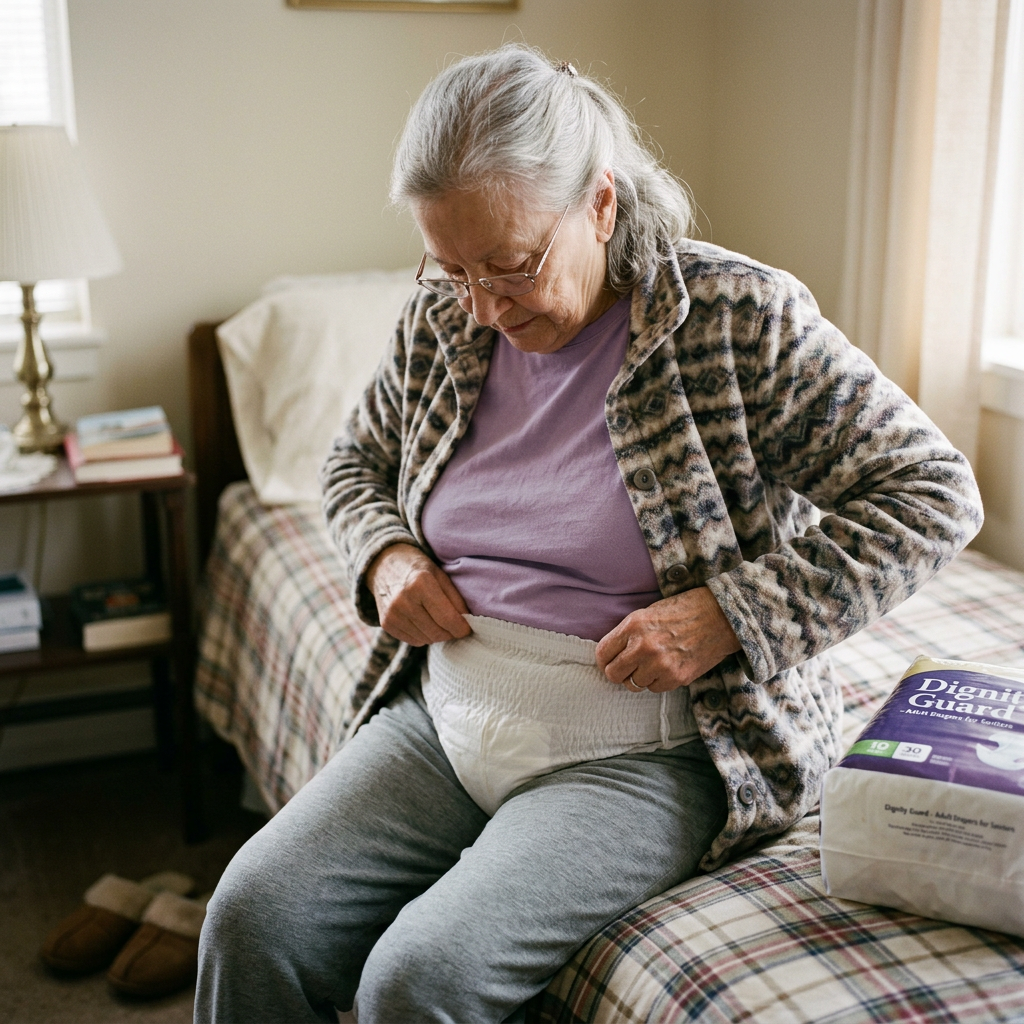
Best Adult Diapers for Seniors: Briefs & Pull-Ups
By Sarah Mitchell · Editor, BuyingForMom · Updated September 2026
10-minute read · Bedroom & Caregiver Resources · 5 picks compared

How we sorted through 40+ incontinence products in three weeks
We cross-referenced more than 8,000 verified-buyer reviews across Amazon, ConsumerReports’ incontinence testing, and the National Association For Continence’s guidance, then filtered against the pattern that shows up again and again in Reddit’s r/AgingParents and r/CaregiverSupport threads: families buy the wrong form, then blame the brand. We weighted overnight leak protection, fit range, tab-vs-pull-on usability, skin-friendly materials, and cost-per-change because a $2 overnight brief and a 60-cent daytime pull-up aren’t competing for the same job. Every product below is verified in stock on Amazon as of September 2026, and every pick names a real downside.
Who this guide is for
This guide is for adult children and caregivers buying disposable incontinence products for a parent — someone managing light daytime leaks, heavy overnight flooding, or full-time care. If you’re shopping for yourself, the same picks apply; skip the “conversation” section below. If your parent is mobile and changes themselves, you want a pull-up; if a caregiver does the changing or your parent is largely bedbound, you want a tab brief. That single fork decides most of this purchase.
Disposable products are only half of a real setup. Most families pair them with a washable layer under the sheets — see our guides to washable incontinence bed and chair pads and waterproof mattress protectors — so a single overnight leak doesn’t mean a 3 a.m. mattress change.
Adult diapers vs. pull-ups: the choice that comes first
“Adult diapers” is really two products. Pull-on protective underwear goes on like regular underwear and suits a parent who can walk to the toilet and pull them up and down independently — the discreet, everyday option. Tab-style briefs refasten at the hips and are designed to be changed while a person is lying down, making them the right tool when a caregiver does the changing, when your parent is bedbound, or when overnight volume is genuinely heavy. Buying a tab brief for an active parent feels infantilizing and gets refused; buying a pull-up for a bedbound parent means wrestling it up two legs at every change. Get the form right and the brand almost sorts itself out.
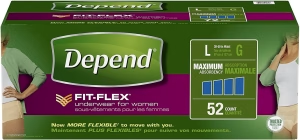
Best overall pull-up Depend FIT-FLEX for Women — ~$40/52ct · discreet daytime protection.
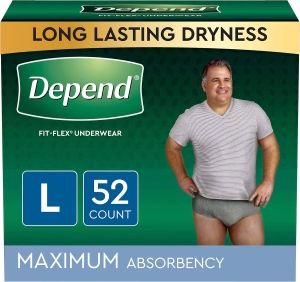
Best for men Depend FIT-FLEX for Men — ~$40/52ct · anatomically zoned, boxer-brief cut.
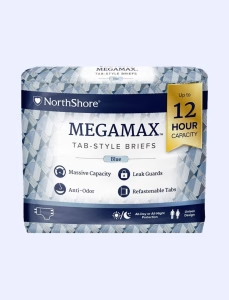
Best overnight / heavy NorthShore MegaMax Tab Briefs — ~$25/10ct · highest capacity, for caregiver changes.
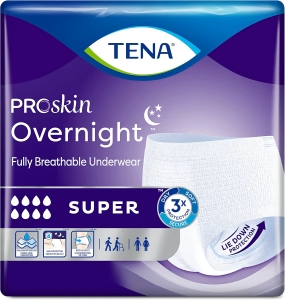
Best for sensitive skin TENA ProSkin Overnight Super — ~$55/56ct · breathable overnight pull-on.
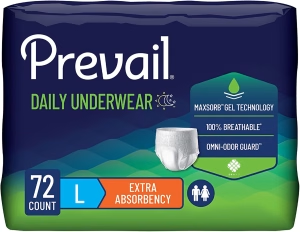
Best budget Prevail Per-Fit Daily Underwear — ~$45/72ct · about 60¢ a change.
Best Overall Pull-Up Depend FIT-FLEX for Women
~$40 for 52 (Maximum Absorbency) · Check price on Amazon →
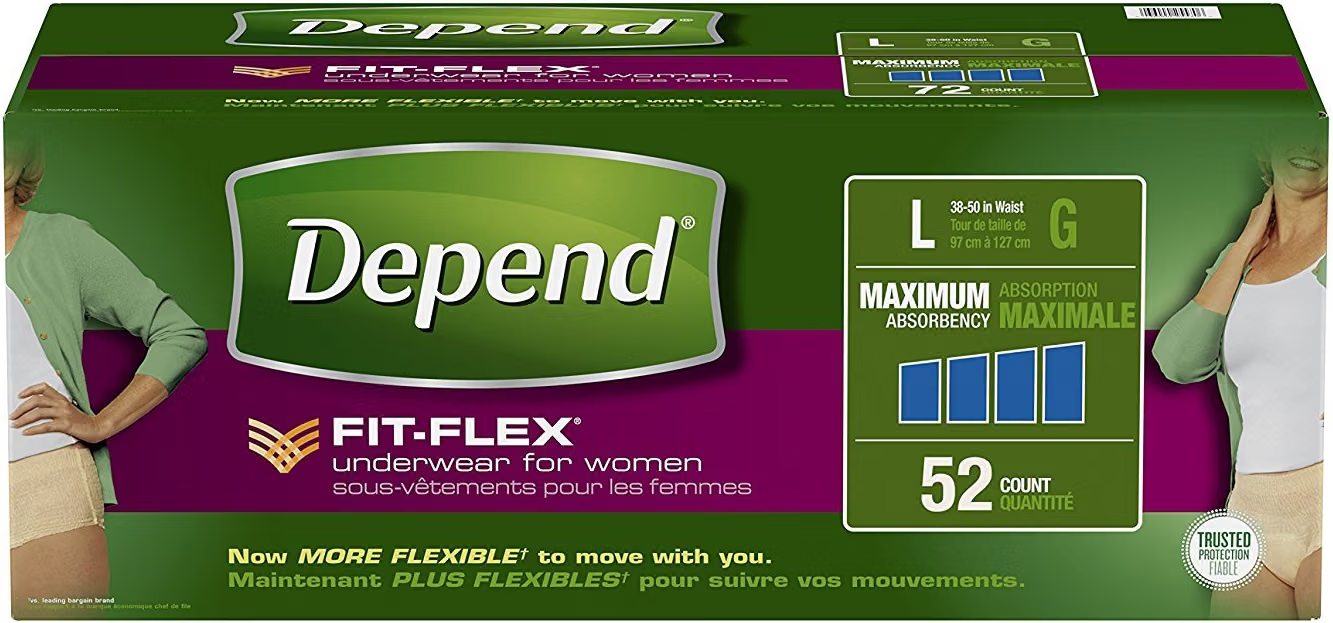
For the most common situation — a parent who still gets to the bathroom on her own but needs reliable insurance against leaks — this is the pick that draws the least resistance. Across more than 20,000 verified reviews, the FIT-FLEX earns its 4.5-star average on one recurring note: the elastic strands hug the body closely enough to disappear under slacks, which is what an independent parent cares about. Verified buyers consistently describe it as the product a reluctant parent will actually keep wearing, and those with light-to-moderate leakage rate the maximum-absorbency version as more than enough for daytime. The honest trade-off: this is a daytime and light-overnight product, not a flood-management brief, and a few reviewers note the newer packaging fits slightly trimmer.
The good
- Underwear-like cut that stays hidden under regular clothing.
- Form-fitting elastic reduces the gapping that causes side leaks.
- Widely stocked and easy to reorder in every size.
The catch
- Not built for heavy overnight volume pair with a bed pad or size up to an overnight product.
- Runs slightly trim; check the waist chart rather than assuming a clothing size.
This is right if… your mother is mobile, toilets independently, and wants protection nobody can see.
Look elsewhere if… she floods overnight or a caregiver does the changing.
Best for Men Depend FIT-FLEX for Men
~$40 for 52 (Maximum Absorbency) · Check price on Amazon →

Men’s incontinence products aren’t just women’s products in gray the absorbent core sits toward the front where it’s needed, and the cut mimics a boxer brief. That anatomical zoning is why male reviewers say this version outperforms unisex pull-ups, and why occupational therapists frequently steer men toward a gender-specific product. Across thousands of reviews the pattern is steady: dads who refused “diapers” will wear something that looks and feels like underwear. Like the women’s version, this is a daytime and moderate-overnight product; heavy nighttime volume calls for a tab brief. Some reviewers with larger builds find the waistband snug at the top of a size range, so measure before buying a case.
The good
- Front-weighted core matched to male anatomy.
- Boxer-brief look lowers the “I’m not wearing a diaper” resistance.
- Same trusted FIT-FLEX elastic as the women’s line.
The catch
- Moderate overnight capacity only; not for heavy flooding.
- Runs snug at the top of each size band.
This is right if… your father is active, toilets on his own, and balks at anything that reads as medical.
Look elsewhere if… he needs all-night heavy protection or caregiver-assisted changes.
Best Overnight / Heavy NorthShore MegaMax Tab-Style Briefs
~$25 for 10 (12-hour capacity) · Check price on Amazon →
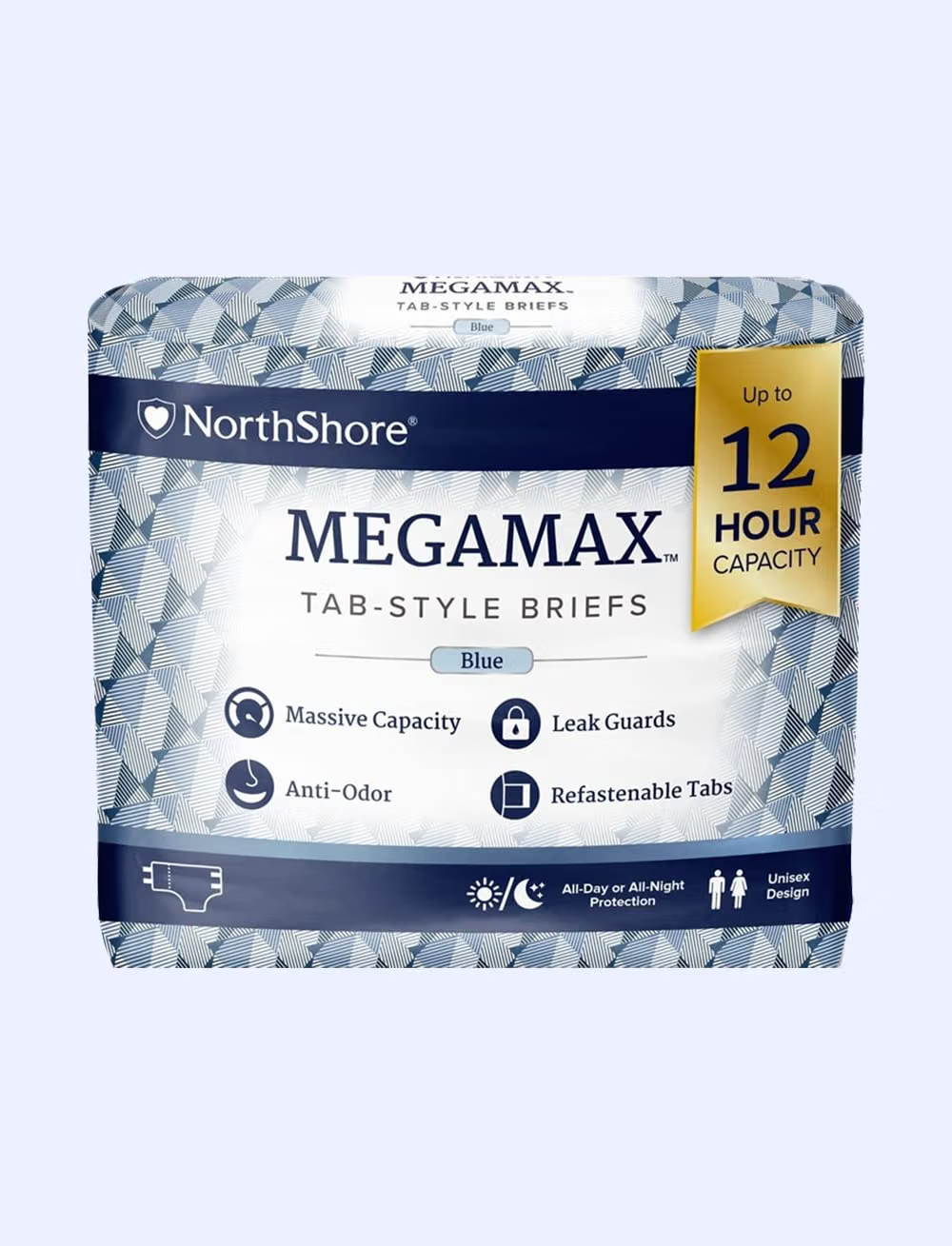
When the real problem is overnight flooding or full-time care, this is the brief caregivers reach for. The MegaMax is a cult favorite in caregiver forums for one measurable reason: reviewers consistently report it holds a full night — often 10 to 12 hours — where drugstore briefs quit at four, meaning fewer 3 a.m. changes and stripped beds. Refastenable tabs let you change a parent while they’re lying down, and the tall back panel is the detail bedbound-care reviewers cite most for stopping up-the-back leaks. It’s a premium product at roughly $2.30 a change and genuinely bulky — not for a parent who’s out at lunch. Buy it for the situation it’s built for and it earns the price.
The good
- Among the highest real-world overnight capacity you can buy.
- Refastenable tabs make lying-down changes manageable.
- Tall back panel stops the classic overnight up-the-back leak.
The catch
- Premium price per change — the most expensive pick here.
- Bulky under clothing; overkill for a mobile daytime parent.
This is right if… your parent floods overnight, is largely bedbound, or a caregiver does the changing.
Look elsewhere if… they’re active and independent — a pull-up will serve better and cost far less.
Best for Sensitive Skin TENA ProSkin Overnight Super
~$55 for 56 (unisex, heavy) · Check price on Amazon →

If skin breakdown is the worry — and for anyone in a product 24 hours a day, it should be — TENA’s ProSkin line is the one dermatology-minded caregivers name most. The pitch isn’t just absorbency; it’s a breathable, wetness-wicking layer designed to keep skin drier between changes, preventing the redness and rashes that sideline other products. Verified buyers managing a parent’s fragile skin repeatedly say this is the pull-on that let them stop fighting irritation. It’s a unisex pull-up with genuine overnight capacity, bridging daytime pull-ups and full tab briefs. The honest catch: it costs more per change, and a few reviewers wish the overnight version came in more sizes.
The good
- Breathable, skin-drying materials that reduce rash and redness.
- Overnight capacity in an easy pull-on form.
- Dermatologist-tested; a caregiver favorite for fragile skin.
The catch
- Pricier per change than a basic pull-up.
- Fewer size options in the overnight version.
This is right if… your parent has fragile or easily irritated skin and wears a product most of the day.
Look elsewhere if… cost per change is your top priority and skin isn’t a concern.
Best Budget Prevail Per-Fit Daily Underwear
0~$45 for 72 (~60¢ each) · Check price on Amazon →
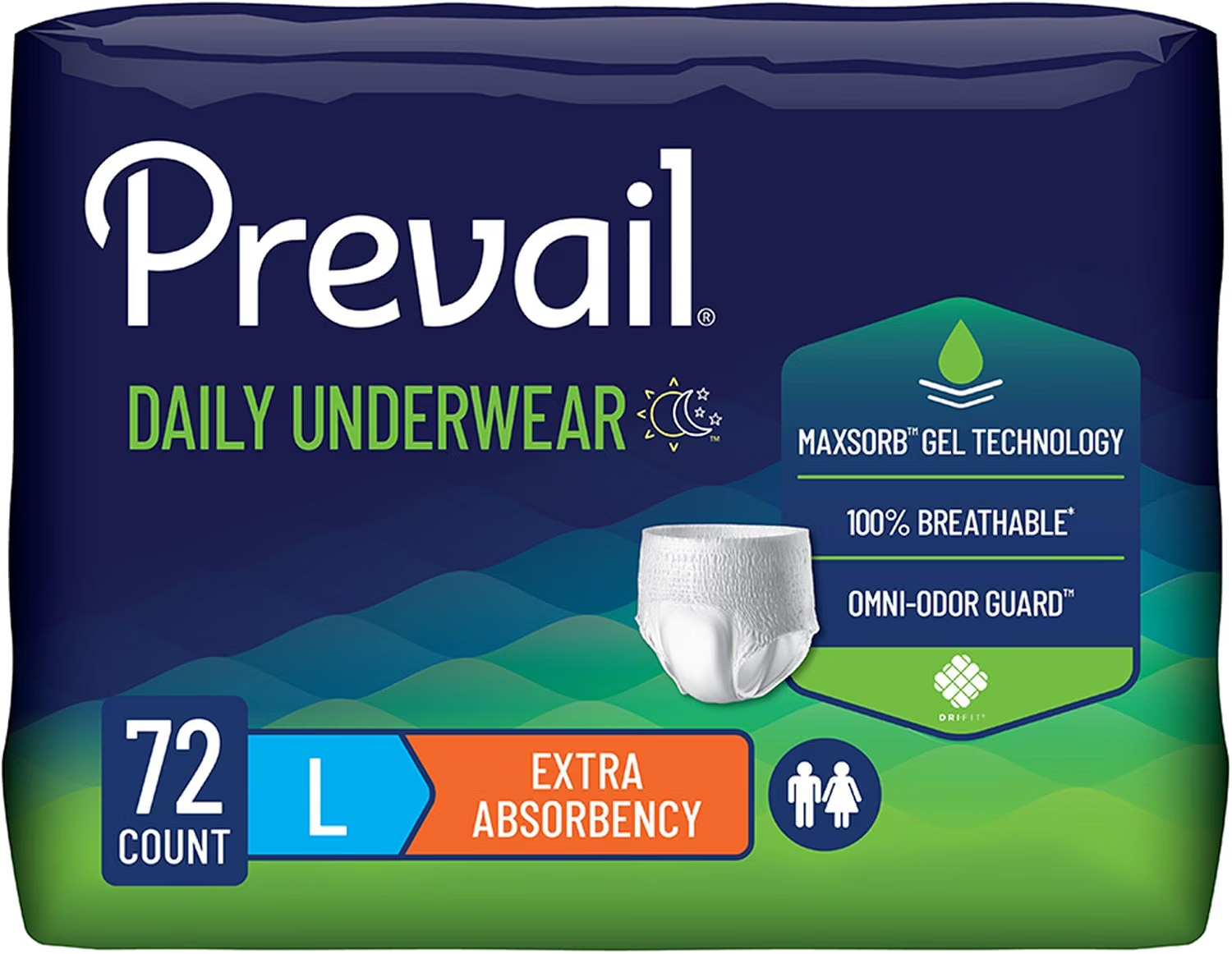
Incontinence is a repeat purchase, and at three to five changes a day the price per unit decides your yearly cost. Prevail keeps that number honest without dropping to bargain-bin quality. Verified buyers, many caregivers buying by the case consistently note it delivers name-brand daytime absorbency at roughly 60 cents a change, well under the premium pull-ups. It’s a professional-grade line used in care facilities, a quiet vote of confidence. The trade-offs are what you’d expect: the fit is a touch less contoured than Depend’s FIT-FLEX, and it’s a daytime and moderate-overnight product. For a parent who goes through a lot of them, the savings compound fast.
The good
- About 60¢ per change the lowest running cost here.
- Facility-grade absorbency at a consumer price.
- Sold in bulk cases that cut cost further.
The catch
- Fit is a little less trim than premium pull-ups.
- Daytime/moderate use — not a heavy overnight product.
This is right if… your parent uses several a day and yearly cost is the deciding factor.
Look elsewhere if… you want the most invisible fit or the heaviest overnight capacity.
Side-by-side comparison
| Product | Form | Best for | ~Cost/change |
|---|---|---|---|
| Depend FIT-FLEX (Women) | Pull-up | Daytime, discreet | ~77¢ |
| Depend FIT-FLEX (Men) | Pull-up | Active men | ~77¢ |
| NorthShore MegaMax | Tab brief | Overnight / bedbound | ~$2.30 |
| TENA ProSkin Overnight | Pull-up | Sensitive skin | ~98¢ |
| Prevail Per-Fit Daily | Pull-up | Budget / high volume | ~60¢ |
The conversation you’ll have
This is the hardest aging-in-place purchase to talk about, and rushing it backfires. Incontinence carries real shame for the generation that raised us, and a parent who feels handled will refuse outright — often insisting the leaks aren’t happening at all. The two moves that consistently work in caregiver accounts are language and control. On language: the word “diaper” is the tripwire. Say “protective underwear” or just “these,” and hand over the pull-up form, which looks and feels like the underwear they already wear.
On control, frame it as their decision rather than your intervention. Instead of “Mom, you need to wear these now,” try “I picked up a couple of kinds so you can tell me which one’s more comfortable I’ll return whatever you don’t like.” That single reframe turns a loss of dignity into a choice they’re making, and it’s why the pull-up almost always has to be the first product you introduce, even when the clinical need points to a brief. Moving to an overnight product later is then a much smaller conversation.
Insurance and savings
Here’s the reality most families learn the expensive way: Original Medicare (Parts A and B) does not cover disposable incontinence supplies it treats adult diapers and pull-ups as personal-care items, not durable medical equipment. There are three real paths to defraying the cost. Many Medicare Advantage plans include an over-the-counter benefit that can be spent on incontinence products — check your parent’s OTC catalog. Medicaid covers incontinence supplies in most states when a doctor documents medical necessity, often through a supply provider rather than a store. And disposable products are FSA- and HSA-eligible, so if you or your parent have either account, you can buy them with pre-tax dollars — the easiest saving for most families. Verify current coverage directly with the plan, since benefits change yearly.
What to actually look for
Form before absorbency
Decide pull-up versus tab brief first, because it dictates everything else. A parent who toilets independently needs a pull-up; one who is changed by someone else needs tabs. Getting this backward is the most consequential mistake — it’s how families end up with a closet of refused product. Our aging-in-place safety checklist covers how these products fit the wider bedroom and bathroom setup.
Match absorbency to the moment, don’t overbuy
Counterintuitively, the highest-capacity product is often the wrong choice. Oversized, over-thick diapers gap at the legs (causing the side leaks they were meant to stop), bunch, and trap moisture against the skin. Buy moderate protection for the day and a genuine overnight product only for the night — many families run two products rather than one heavy one around the clock. Our room-by-room modification guide rounds out an overnight setup.
Size by measurement, and protect the skin
Sizing varies by brand, so measure the waist and hips and read the manufacturer’s chart rather than assuming a clothing size carries over — a size that didn’t match expectations is the number-one review complaint on every brand. And because moisture against skin causes breakdown, change promptly, choose a breathable product for full-time wear, and keep a barrier cream on hand. If skin is already fragile, weight that above every other spec.
Frequently asked questions
What’s the difference between adult diapers and pull-ups?
Pull-ups (protective underwear) go on and off like regular underwear and suit a parent who toilets independently. Tab-style briefs — what most people mean by “adult diapers” refasten at the hips so they can be changed while lying down, making them right for bedbound care or heavy overnight volume. Choose the form before the brand.
What’s the best adult diaper for overnight?
For genuine overnight flooding, a high-capacity tab brief like the NorthShore MegaMax holds 10 to 12 hours and prevents the up-the-back leaks that ruin sheets. If your parent is mobile and needs an overnight pull-on instead, the TENA ProSkin Overnight Super offers real overnight capacity in an easier-to-manage form.
Does Medicare pay for adult diapers?
Original Medicare does not cover disposable incontinence supplies. However, many Medicare Advantage plans include an OTC allowance that can be spent on them, Medicaid covers them in most states with documented medical necessity, and they’re FSA- and HSA-eligible. Check your parent’s specific plan, as benefits change yearly.
How often should an adult diaper be changed?
Change promptly when wet or soiled roughly every three to four hours by day and once overnight with a high-capacity product. Leaving a wet product on to save money is a false economy; prolonged moisture against skin is the main cause of rashes and pressure-related breakdown.
How do you prevent skin rash from incontinence products?
Change promptly, choose a breathable product for all-day wear, clean gently and let skin dry fully before the next product, and apply a zinc-oxide or dimethicone barrier cream. If your parent’s skin is fragile, prioritize a skin-friendly line like TENA ProSkin over raw absorbency numbers, and check the skin at every change.
The shortlist
What we’d do tomorrow
If you’re starting this weekend, do three things in order. First, figure out the form if your parent still walks to the bathroom, buy one pack of the Depend FIT-FLEX pull-up (men’s version for dad) and nothing heavier yet. Second, if nights are the real problem, add a small pack of NorthShore MegaMax for overnight only, plus a washable pad under the sheets. Third, don’t buy a case until you’ve confirmed size and comfort with a single pack these are cheap to test and expensive to stockpile wrong. Lead with the pull-up, protect the skin, and let your parent keep the choice.
— Sarah
Leave a Reply