
Author: Sarah

  • 5 Best Folding Electric Wheelchairs for Seniors

    5 Best Folding Electric Wheelchairs for Seniors

    Disclosure: BuyingForMom is reader-supported. As an Amazon Associate we earn from qualifying purchases. When you buy through links in this article, we may earn an affiliate commission at no additional cost to you. We never recommend products we haven’t researched against verified-buyer review data. This article is editorial reporting, not medical advice.

    5 Best Lightweight Folding Electric Wheelchairs for Seniors

    By Sarah Mitchell · Editor, BuyingForMom · Updated September 2026

    11 min read · Walkers & Canes / Balance & Mobility · 5 picks compared

    The honest take: For most seniors and the families lifting the chair, buy the Vive Airframe Magnesium it hits the rare sweet spot of 42 pounds, a five-year warranty, and a real 265-pound capacity. Spend up only if a specific need forces it: go carbon-fiber (Vive Carbon) if someone frail is doing the trunk lift alone, or heavy-duty (ComfyGo Majestic IQ-8000) if your parent needs a 20-inch seat and 330-pound support. Skip the temptation to buy on range alone — a 28-mile spec sheet means nothing if the folded chair is too heavy for the person loading it.

    How we sorted through 40+ folding power chairs in three weeks

    We cross-referenced more than 8,000 verified Amazon reviews across 40-plus folding electric wheelchairs, then filtered against three things the spec sheets bury: the folded weight a real caregiver has to lift, the seat width measured against actual hip sizes, and whether the listing was genuinely purchasable (several popular “2026 best” picks were out of stock or third-party-only). Reddit caregiver threads and the pattern occupational therapists repeat both point the same way: the lightest chair the user can safely operate beats the most powerful one nobody can lift. Every pick below was verified in stock the week of publication.

    Who this guide is for

    This guide is for adult children buying a folding power chair for a parent who can still transfer and steer but can no longer walk long distances the grocery store, the airport, the church parking lot. If your parent rarely leaves the house, a standard (non-folding) power chair may fit better; if someone is always pushing, a lighter manual transport chair is cheaper. Everyone else: read on.

    A folding electric wheelchair is the device that gives an aging parent their radius back. Walking to the mailbox is fine; walking a mile of airport terminal is not, and that gap is exactly where independence quietly erodes. The best folding electric wheelchair for seniors collapses in seconds, drops into a car trunk, and lets one person — often a spouse in their seventies — get it in and out without a second set of hands.

    The catch nobody advertises is weight. A chair that supports 330 pounds and travels 19 miles sounds impressive until the folded frame weighs 55 pounds and an aging spouse is the one loading it. That’s why our picks lead with the trade-off between capacity, range, and liftability — a chair too heavy to load helps no one.

    At a glance

    Best Overall  Vive Airframe Magnesium · ~$1,800 — 42 lb, 265 lb capacity, 5-year warranty. The balanced everyday pick.

    Lightest to Lift  Vive Carbon Fiber · ~$2,000 — 35 lb heaviest piece. When one frail person loads it alone.

    Best Heavy-Duty  ComfyGo Majestic IQ-8000 · ~$1,800 — 20″ seat, 330 lb, 13 mi. Widest, most established.

    Longest Range + Remote  Tech 4 Remote Control · ~$1,300 — 19 mi, 350 lb, folds by remote. No bending to fold.

    Best Budget  ROPLASO One-Button Fold · ~$800 — 19″ seat, 330 lb, one-button 3-second fold.

    Best Overall Vive Airframe Magnesium Power Wheelchair

    ~$1,800 · Check price on Amazon →

    The Airframe is the chair we point most families toward because it refuses to make you choose between light and sturdy. Its magnesium-alloy frame keeps the whole rig at 42 pounds while still supporting 265 pounds and heights up to 6’1″, and it folds in seconds without tools. Across Vive’s power-chair reviews, buyers consistently praise two things: the genuinely tool-free fold and the five-year warranty, which is far longer than most Amazon-brand competitors offer. The single battery delivers around 10 miles — enough for errands and appointments — with a second battery port if a caregiver wants backup range for travel days.

    The good

    • 42 lb total with a magnesium frame — liftable by most caregivers
    • Five-year warranty, unusually long for this price
    • Second-battery port for doubling range on trips

    The catch

    • 265 lb capacity rules it out for heavier users
    • 10-mile single-battery range trails the long-haul picks below

    This is right if… your parent is average-sized and you want the safest bet that one person can still load into a trunk.

    Look elsewhere if… the user is over 265 lb or needs more than 10 miles between charges.

    Check Price on Amazon →

    Lightest to Lift Vive Carbon Fiber Power Wheelchair

    ~$2,000 · Check price on Amazon →

    When the person loading the chair is themselves frail an aging spouse, or a daughter with her own back trouble — the deciding number is the weight of the heaviest single piece, and this is where carbon fiber earns its premium. Vive’s Carbon Fiber model folds down so its heaviest lift is about 35 pounds once the 4-pound battery comes out separately, which is genuinely one of the lightest in the category. Verified buyers who fly frequently note it clears most airline gate-check requirements, and the 5-speed joystick is simple enough for shaky hands. The trade-off is a lower 225-pound capacity and a modest 6.2-mile base range, extendable to about 12.8 miles with a second battery.

    The good

    • Heaviest piece ~35 lb the easiest solo trunk load here
    • Battery detaches, so no single heavy chunk to hoist
    • Travel- and airline-friendly footprint

    The catch

    • 225 lb capacity is the lowest of our picks
    • Carbon-fiber premium pushes it to the top of the price range

    This is right if… a frail spouse or caregiver has to load the chair alone, or your parent flies often.

    Look elsewhere if… the user approaches 225 lb or you’d rather not pay the carbon premium.

    Check Price on Amazon →

    Best Heavy-Duty ComfyGo Majestic IQ-8000

    ~$1,800 · Check price on Amazon →

    The Majestic IQ-8000 is the pick when a standard 16- or 17-inch seat simply won’t do. Its 20-inch-wide seat and 330-pound capacity give larger users room the lighter chairs can’t, and ComfyGo is one of the more established names in the folding-power category, which shows up in the review pattern: buyers repeatedly cite the 3-second fold and the airline-approved battery as the features that made travel realistic again. It reaches about 13 miles on the standard battery. It is heavier than our lightweight picks, so this is a chair chosen for fit and durability rather than for the easiest possible trunk lift.

    The good

    • 20″ seat and 330 lb capacity for larger users
    • Fast 3-second fold, airline-approved battery
    • Established brand with a real dealer/service network

    The catch

    • Heavier than the lightweight picks — harder solo lift
    • Priced at the premium end for the category

    This is right if… your parent needs a wider seat and higher weight support and travels by air.

    Look elsewhere if… the priority is the absolute lightest chair for a single caregiver to load.

    Check Price on Amazon →

    Longest Range + Remote Tech 4 Remote Control Power Wheelchair

    ~$1,300 · Check price on Amazon →

    The Tech 4’s headline feature solves a real caregiver problem: a wireless remote that both drives and folds the chair, so nobody has to bend over a heavy frame to collapse it or maneuver it into a tight garage corner. On the numbers it’s the workhorse of this list dual 250W motors, 350-pound capacity, and up to 19 miles on two lithium batteries, the longest usable range here. It’s FAA-approved and folds to a compact 29″ x 14″ x 24″. Buyers note the remote-fold feature is the thing that sells spouses who couldn’t manage a manual fold. The trade-off is heft: at 59 pounds without the battery, the folded chair is a two-hands-and-a-knee lift, not a one-arm toss.

    The good

    • Remote drives and folds — no bending to collapse it
    • Longest range here (~19 mi) and 350 lb capacity
    • FAA-approved, compact folded footprint

    The catch

    • 59 lb frame is the heaviest to lift on this list
    • More features mean a slightly steeper learning curve

    This is right if… you want maximum range and a remote so no one has to stoop to fold or park it.

    Look elsewhere if… lifting the folded chair into a trunk falls to one small-framed person.

    Check Price on Amazon →

    Best Budget ROPLASO One-Button Folding Power Wheelchair

    ~$800 · Check price on Amazon →

    For families testing whether a power chair even fits their parent’s life before committing four figures, the ROPLASO is the reasonable entry point. It undercuts the field on price while still offering a widened 19-inch seat, a 330-pound capacity, and a one-button mechanism that collapses the frame in about 3 seconds. At 38 pounds (47 with the battery) it’s on the lighter side. Verified buyers rate it well for fold-and-go convenience; the honest caveat, as with most value-tier chairs, is a shorter warranty and thinner service backing, so it suits occasional use more than all-day driving.

    The good

    • Lowest price here by a wide margin
    • One-button 3-second fold, 19″ seat, 330 lb capacity
    • 38 lb frame is manageable for most caregivers

    The catch

    • Shorter warranty and thinner service network than premium brands
    • Best for occasional use, not all-day daily driving

    This is right if… you want an affordable first chair to prove out the need before spending more.

    Look elsewhere if… your parent will rely on it every day and needs long-term warranty support.

    Check Price on Amazon →

    How the five compare

    Chair Weight Capacity Range Best for
    Vive Airframe Magnesium 42 lb 265 lb ~10 mi Balanced everyday pick
    Vive Carbon Fiber ~35 lb (piece) 225 lb 6.2–12.8 mi Lightest solo lift / travel
    ComfyGo Majestic IQ-8000 Heavier 330 lb ~13 mi Wide 20″ seat, larger users
    Tech 4 Remote Control 59 lb 350 lb ~19 mi Range + remote fold
    ROPLASO One-Button 38 lb (47 w/ battery) 330 lb ~15 mi Budget / first chair

    The conversation you’ll have

    Powered mobility carries more emotional weight than a grab bar or a shower stool. For many older adults, sitting in a wheelchair feels like a line they didn’t want to cross, and pushing the purchase can trigger real resistance even when the need is obvious. The reframe that tends to land is one about range, not disability. Instead of “you need a wheelchair now,” try: “This is just for the long days — the airport, the whole farmers market — so you’re not wiped out by lunch and can save your energy for what you actually want to do.” Naming it a travel tool rather than a medical concession changes the whole conversation.

    It also helps to hand your parent the joystick first, in the driveway, before it’s ever used in public. Ten minutes of steering it themselves — feeling that they, not you, control where it goes — wins more buy-in than any amount of convincing.

    Insurance and savings

    Here’s the reality the manufacturer pages soften: Medicare Part B may cover a power wheelchair only when a doctor documents it as medically necessary for use inside the home, through an enrolled supplier. Lightweight folding travel chairs like these are frequently classified as “convenience items” for outside-the-home use and denied — so don’t assume the Amazon purchase will be reimbursed. If in-home medical need is real, ask the physician about the standard (non-folding) power-chair path through a Medicare supplier instead. The better near-term angle for travel chairs is an FSA or HSA: power wheelchairs are generally eligible when prescribed, so a doctor’s note plus your tax-advantaged account can effectively discount the purchase. Confirm specifics with CMS, your plan administrator, and IRS Publication 502.

    What to actually look for

    Start with who lifts it, not the range

    The most-ignored number on the spec sheet is the folded weight relative to the person loading the chair. A 55–60 lb frame is a two-person or two-hands-and-a-knee job; a 35–42 lb chair (or one whose battery detaches) is a realistic solo lift. Decide who will most often put it in the trunk, then buy for that person’s back — not for the biggest range number. For the broader room-by-room picture of where mobility dollars do the most good, see our complete aging-in-place home safety checklist.

    Match seat width and capacity to the actual user

    Standard folding chairs run a 16–18 inch seat; larger users need the 20-inch, 330-pound-rated models. Measure your parent’s hips seated and add an inch or two, and don’t round down to save money — a too-narrow seat gets left at home. If your parent is still walking short distances and only needs help occasionally, a walking aid may be the better first step; our guide to walkers for tall seniors over six feet covers that fit question in detail.

    Be honest about power vs. push

    A folding electric chair only makes sense if your parent can safely operate a joystick and wants to drive themselves. If someone is always pushing, a lighter, cheaper manual chair is the smarter buy — compare against our pick of a lightweight transport wheelchair before spending four figures on motors the household won’t use.

    Frequently asked questions

    Does Medicare cover a folding electric wheelchair for seniors?

    Sometimes, but rarely for these. Medicare Part B may cover a power wheelchair when a doctor documents it as medically necessary for use inside the home and it’s ordered through an enrolled supplier. Lightweight folding travel chairs are often deemed “convenience items” for outside use and denied.

    How much does a folding electric wheelchair weigh?

    Most fall between 35 and 60 pounds. Carbon-fiber and magnesium travel models can bring the heaviest single piece down near 35 pounds, especially when the battery detaches, while wider heavy-duty chairs with longer range often reach 55 to 60 pounds folded.

    What is the weight capacity of a folding electric wheelchair?

    Typically 220 to 350 pounds. Lightweight travel chairs usually cap around 220 to 265 pounds, while heavy-duty models with 19- to 20-inch seats support 330 to 350 pounds. Always check the stated capacity against the user’s weight before buying.

    Can you take a folding electric wheelchair on an airplane?

    Usually yes. Many folding power chairs use airline-approved lithium batteries and fold compactly enough to gate-check. Confirm your specific battery’s watt-hour rating with the airline in advance, carry the battery documentation, and expect to remove and carry the battery into the cabin.

    How far can a folding electric wheelchair go on one charge?

    Around 6 to 19 miles depending on the model and battery count. A single-battery travel chair covers roughly 6 to 13 miles, while dual-battery setups can reach about 19 miles. Real-world range drops with hills, heavier users, and cold weather, so buy some margin.

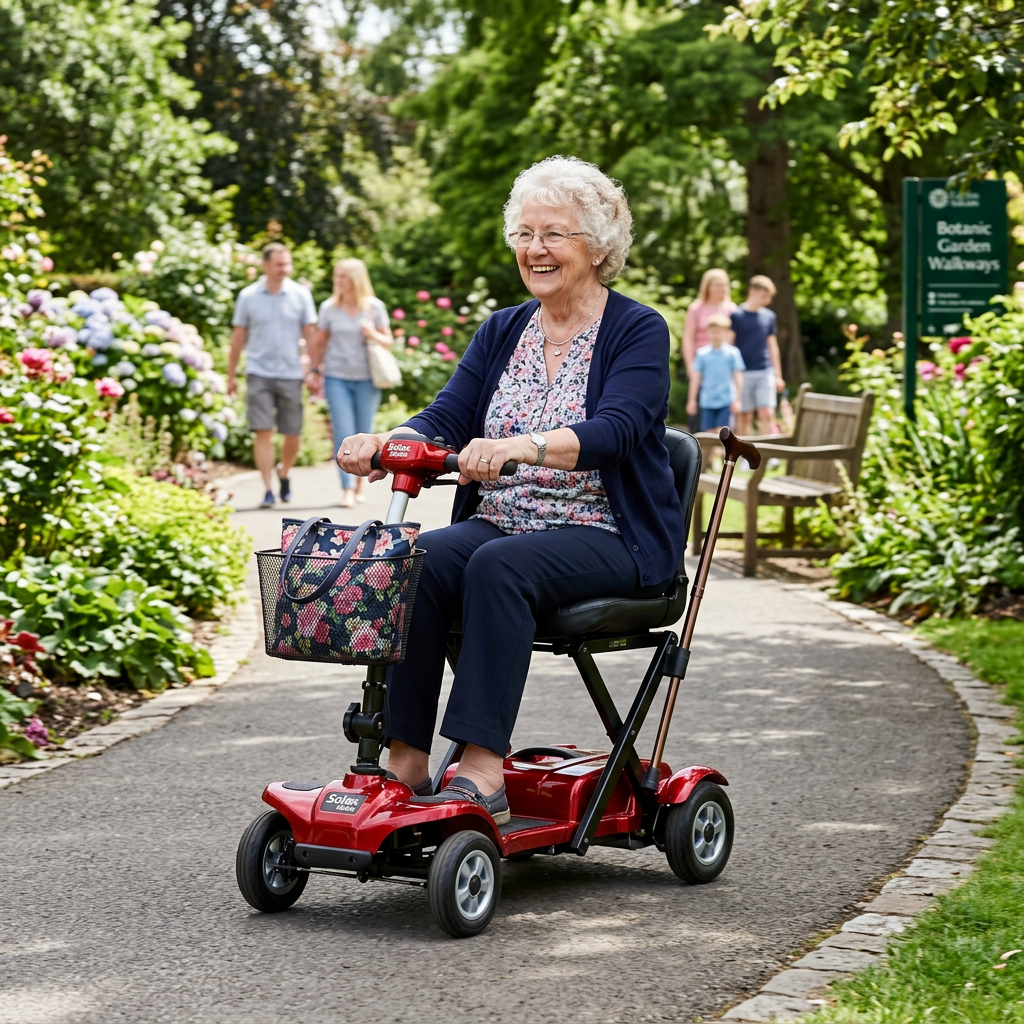
    Folding power wheelchair or mobility scooter — which is better for a senior?

    A power wheelchair turns tighter and works better indoors and for full-time seated users; a scooter suits someone who can walk short distances and mostly needs help over long outdoor stretches. Choose the wheelchair for indoor use and tight spaces, the scooter for outdoor errands and range.

    The shortlist

    Best Overall

    Vive Airframe Magnesium

    ~$1,800

    Check on Amazon →

    Lightest to Lift

    Vive Carbon Fiber

    ~$2,000

    Check on Amazon →

    Best Heavy-Duty

    ComfyGo Majestic IQ-8000

    ~$1,800

    Check on Amazon →

    Range + Remote

    Tech 4 Remote Control

    ~$1,300

    Check on Amazon →

    Best Budget

    ROPLASO One-Button

    ~$800

    Check on Amazon →

    What we’d do tomorrow

    If you’re starting this weekend, do three things in order. First, weigh the decision on the person who will load the chair most often — if that’s an aging spouse, the Vive Carbon Fiber’s 35-pound heaviest piece matters more than any range spec. Second, measure your parent’s seated hip width and check it against seat size before you buy; a too-narrow chair is the most common reason these get abandoned. Third, if there’s any chance of in-home medical need, ask the doctor about the Medicare power-chair path before paying out of pocket. For most families, the Vive Airframe Magnesium is the confident default light enough to actually use, sturdy enough to trust.

    — Sarah
    BuyingForMom is a reader-supported site. As an Amazon Associate we earn from qualifying purchases. When you buy through links on this site, we may earn an affiliate commission at no additional cost to you. See our Affiliate Disclosure for details. This article is not medical advice — please consult a qualified healthcare professional for decisions specific to your family.
  • 5 Best Folding Mobility Scooters for Seniors

    5 Best Folding Mobility Scooters for Seniors

    Disclosure: BuyingForMom is reader-supported. As an Amazon Associate we earn from qualifying purchases. When you buy through links in this article, we may earn an affiliate commission at no additional cost to you. We never recommend products we haven’t researched against verified-buyer review data. This article is editorial reporting, not medical advice.

    5 Best Folding Mobility Scooters for Seniors

    By Sarah Mitchell · Editor, BuyingForMom · Updated September 2026

    10-minute read · Walkers & Canes / Balance & Mobility · 5 picks compared

    The honest take: For most families, buy the Metro Mobility M1 it has the highest weight capacity of the group, the longest warranty, and the most consistent reviews. Choose the SuperHandy Passport only if the person loading it into a car is doing it alone and can’t lift more than about 35 pounds. And ignore the top-speed and total-weight numbers every other roundup leads with — the number that decides whether a folding scooter actually gets used is the weight of the single heaviest piece you have to lift into the trunk.

    How we sorted through 30-plus folding scooters in two weeks

    We cross-referenced more than 6,000 verified-buyer reviews across the folding and travel-scooter category, plus Consumer Reports’ scooter testing (which priced the segment from about $500 to $2,850), FAA and TSA lithium-battery rules, and the recurring complaints caregivers post on mobility forums. Two patterns ran through nearly every disappointed review. Families bought for total weight and top speed, then discovered the “60-pound” scooter came apart into a base piece that alone weighed 60 pounds impossible for one spouse to lift. And they confused a scooter that folds into one piece with one that breaks into several — different products with different failure points. So we ranked by who lifts it, where it’s used, and how it folds — not by the spec sheet.

    Who this guide is for

    This guide is for adult children or spouses buying a portable scooter for a parent who can still walk short distances but tires quickly, struggles with long store aisles or airports, or has stopped going places because getting around wears them out. If you’re shopping for yourself, the same picks apply  just pay extra attention to the “who lifts it” question below.

    A quick word on “folding” before you shop

    “Folding” covers two designs, and mixing them up is the costliest mistake here. One-piece folders collapse like a stroller into a single unit you lift whole lighter overall, but it’s one lift. Break-apart travel scooters separate into pieces so no single lift is the full weight, but the heaviest piece (the battery-and-motor base) can still be 40 to 60 pounds and reassembly takes a minute each time. Neither is better, the right one depends entirely on who’s loading it and their back.

    At a glance

    Best overall  Metro Mobility M1 — around $700 · highest capacity (300 lb) and longest warranty

    Lightest to load  SuperHandy Passport 3-Wheel — around $650 · 35 lb, one-step fold, airline-friendly

    No bending  Vive Auto-Folding Scooter — around $1,000 · folds by remote at the push of a button

    Tight indoor turns  Vive 3-Wheel Scooter — around $800 · sharpest turning radius for stores and apartments

    Heavy-duty  SuperHandy Explorer 4-Wheel — around $900 · 350 lb capacity, sturdier outdoor ride

    Best Overall Metro Mobility M1 4-Wheel Folding Scooter

    Around $700 · Check price on Amazon →

    The M1 earns the top spot on capacity and support, not gimmicks. It’s rated to 300 pounds the highest here — rides on four 9-inch airless tires with rear anti-tip wheels, and carries a five-year limited warranty no other pick matches. Across thousands of reviews, buyers praise the thickened, height-adjustable seat and the outdoor stability; the recurring complaint is honest and important — this is a break-apart scooter, and the base piece weighs about 60 pounds on its own. If the person loading it can’t manage a 60-pound lift, it’s the wrong pick despite everything else it does well. For a family with a stronger adult child or caregiver handling loading, it’s the most reassuring buy of the five.

    The good

    • Highest weight capacity here (300 lb) with a genuinely padded, adjustable seat
    • Four wheels plus anti-tip wheels — the most stable outdoor ride of the group
    • Five-year limited warranty and US-based support

    The catch

    • Heaviest piece is ~60 lb not a one-person lift for many spouses
    • Breaks into pieces rather than folding whole; reassembly takes a minute

    This is right if… a capable adult child or caregiver loads it and outdoor stability matters more than a light, single-piece lift.

    Look elsewhere if… the person traveling with it has to load it alone and can’t lift 60 pounds.

    Lightest to Load SuperHandy Passport 3-Wheel

    Around $650 · Check price on Amazon →

    If loading is the whole problem, this is the answer. The Passport folds in one step to roughly 24 by 22 by 17 inches and weighs about 35 pounds assembled — light enough for many spouses to lift into a trunk without help. It runs two removable 44.4-volt lithium batteries, delivers up to 13 miles per charge, and because each battery is well under the FAA’s 300-watt-hour limit, it’s genuinely airline- and cruise-friendly. Verified buyers repeatedly say the foldability and value beat their expectations. The trade-offs are real: a modest 3.7 mph top speed, a basic flat seat, and three wheels less planted than four on cambered sidewalks. As a get-through-the-airport scooter, though, nothing here loads easier.

    The good

    • About 35 lb and folds as one piece — the easiest solo load of the five
    • Two removable airline-legal batteries; up to 13 miles of range
    • Compact folded footprint fits a sedan trunk

    The catch

    • 3.7 mph top speed and a firm, basic seat — not built for long outdoor rides
    • 275 lb capacity and three wheels — less stable than the 4-wheel picks

    This is right if… one person loads it alone, or it needs to fly and go on cruises.

    Look elsewhere if… your parent weighs near the limit or spends hours outdoors on uneven ground.

    No Bending Vive Auto-Folding Mobility Scooter

    Around $1,000 · Check price on Amazon →

    This one solves a specific problem: the caregiver who can’t bend or crouch to fold a scooter by hand. At the push of a remote, it folds and unfolds itself into a compact upright shape that stands on its own for storage. It’s rated to 220 pounds, delivers about 11 miles per charge on flat-free tires, and is TSA approved. Vive is one of the most-reviewed names in home mobility, and buyers value the hands-free convenience but be clear-eyed about weight. Folding automatically doesn’t make it light: at roughly 64 pounds as one unit, it still has to be lifted into a trunk whole, so many owners pair it with a small trunk ramp or a second set of hands. It’s the priciest pick, and the premium buys the folding mechanism, not more range or capacity.

    The good

    • Remote-controlled auto fold/unfold — no bending or crouching
    • Stands upright folded and stores in a closet corner
    • TSA approved; well-supported, heavily reviewed brand

    The catch

    • ~64 lb as one piece auto-folding doesn’t solve the lift into a trunk
    • Most expensive pick, with lower capacity (220 lb) than the M1

    This is right if… bending to fold is the barrier and a ramp or second person can handle the lift.

    Look elsewhere if… a light solo lift is the real need — spend less on the Passport instead.

    Tight Turns Vive 3-Wheel Mobility Scooter

    Around $800 · Check price on Amazon →

    Three wheels turn sharper than four, and that’s the entire case for this scooter. If the trouble is navigating a crowded grocery store, a narrow apartment hallway, or a tight condo, the single front wheel gives it a noticeably smaller turning radius than any 4-wheel pick here. It collapses for travel, ships with a charger and basket, and runs an extended-range battery. Vive’s reviews on this model skew positive on maneuverability and value, with two consistent caveats: tight legroom for taller riders, and three wheels feel less planted on cambered paths or clearing a curb cut at an angle. Treat it as an indoor-and-errands scooter rather than an all-day outdoor cruiser, and it’s the most agile option of the five.

    The good

    • Sharpest turning radius here — built for stores and tight rooms
    • Collapses for travel; basket and charger included
    • Extended-range battery from a well-reviewed brand

    The catch

    • Tight legroom for taller riders
    • Three wheels feel less stable on slopes and cambered outdoor paths

    This is right if… indoor and grocery-store maneuverability is the priority.

    Look elsewhere if… most use is outdoors on uneven ground — choose a 4-wheel pick.

    Heavy-Duty SuperHandy Explorer 4-Wheel

    Around $900 · Check price on Amazon →

    When the rider is larger or the terrain is rougher, the Explorer has the most headroom. It’s rated to 350 pounds the highest capacity of all five — runs a 48-volt, 500-watt brushless motor, and rides on larger wheels near 5 mph for confident outdoor travel. The aluminum frame keeps it lighter than a same-size steel scooter, and buyers who use it for errands and light outdoor paths call the performance a step above what they expected at the price. It’s the least compact fold and the fastest, so it asks for more storage room and a rider comfortable with the extra speed. For a heavier parent who wants to cover real ground, it’s the sturdiest choice here.

    The good

    • Highest capacity of the five (350 lb) on a strong 48V motor
    • Larger wheels and ~5 mph the most capable outdoor ride
    • Aluminum frame is lighter than comparable steel scooters

    The catch

    • Least compact fold — needs more trunk and storage space
    • Faster top speed asks for a confident, steady rider

    This is right if… the rider is heavier or wants to cover real outdoor distance.

    Look elsewhere if… trunk space is tight or the person is nervous at higher speeds.

    How the five compare

    Scooter Capacity Fold type Best for Price
    Metro Mobility M1 300 lb Breaks apart Best overall / stability ~$700
    SuperHandy Passport 275 lb One-piece (35 lb) Solo loading / airline ~$650
    Vive Auto-Folding 220 lb Remote auto-fold No bending to fold ~$1,000
    Vive 3-Wheel 220 lb Collapsible Tight indoor turns ~$800
    SuperHandy Explorer 350 lb Folds (bulkier) Heavy-duty / outdoors ~$900

    Prices fluctuate on Amazon; figures are approximate as of September 2026.

    The conversation you’ll have

    A scooter can land harder than a grab bar or a nightlight, because for a lot of older adults it reads as a public announcement that they can’t walk anymore. Expect some resistance, and don’t argue the medical case. What works is framing it around what the scooter gives back rather than what it admits. Instead of “you need this so you don’t fall,” try “this is so you can do the whole farmers market with us instead of waiting in the car.” Naming a specific outing they’ve been giving up moves the object from a symbol of decline to a ticket to something they miss. And let them drive it first in an empty parking lot, alone, before anyone watches — the first few minutes of realizing they can go where they want again does more persuading than you can.

    Insurance and savings

    Here’s the reality most sellers won’t lead with: Medicare Part B may cover a scooter as durable medical equipment, but almost never one of these. Coverage requires a doctor’s prescription establishing a medical need inside the home, and the scooter must come from a Medicare-enrolled supplier — Amazon purchases don’t qualify, and travel scooters designed for outings rarely meet the “needed in the home” test. Where these scooters do save money is an FSA or HSA: a mobility scooter is generally an eligible expense with a letter of medical necessity, so a family with either account can effectively buy pre-tax. It’s worth a five-minute call to your plan administrator before you order. For the bigger picture on what’s covered, our complete aging-in-place safety checklist lays out where home-safety dollars go furthest.

    What to actually look for

    Start with the folded weight, not the total weight

    The single most useful number is the weight of the heaviest piece you’ll actually lift — the folded unit for a one-piece scooter, or the base for a break-apart. A scooter nobody can load stays in the garage. Decide who loads it and their honest lifting limit first, then shop to that number.

    Match the wheels to where it’s used

    Three wheels turn tighter and suit indoor and store use; four wheels are steadier on sidewalks, ramps, and cambered paths. Be honest about the mix. If most trips are outdoors on real ground, stability matters more than a sharp turning radius. If mobility is part of a broader plan for staying safe at home, our guide to walkers for tall seniors covers the walking-support side of the same question.

    Check capacity, range, and the battery rules for flying

    Buy at least 50 pounds of capacity headroom over the rider’s weight, and don’t over-buy range most seniors use a fraction of a 10-to-13-mile charge. If flying is on the table, confirm the lithium battery sits under the FAA’s 300-watt-hour limit (removable batteries make this easier). For a parent who isn’t ready for a powered scooter, a lighter push option like a lightweight transport wheelchair may be the better first step.

    Frequently asked questions

    How much does a folding mobility scooter cost?

    Most folding and travel scooters run roughly $600 to $1,200, and Consumer Reports priced the broader category from about $500 to $2,850. The picks here land between about $650 and $1,000. You’re paying for battery quality, capacity, and folding mechanism — a remote auto-fold commands the premium, not extra range.

    Can you take a folding mobility scooter on an airplane?

    Often yes, if the lithium battery stays under the FAA’s 300-watt-hour limit. Airlines allow the scooter to the gate and store it in the hold; removable batteries usually travel in the cabin. Call the airline ahead, and confirm your specific battery’s watt-hours before booking.

    Is a 3-wheel or 4-wheel scooter better for seniors?

    It depends on where it’s used. Three wheels turn tighter and shine indoors and in stores; four wheels give more stability on sidewalks, ramps, and uneven ground. For a parent who’s mostly outdoors, choose four wheels. For tight apartments and grocery aisles, three wheels maneuver better.

    Are folding mobility scooters covered by Medicare?

    Rarely. Medicare Part B may cover a scooter as durable medical equipment, but only with a doctor’s prescription showing it’s medically needed inside the home and only from an enrolled supplier — not Amazon. Travel scooters bought for outings generally don’t qualify. FSA and HSA funds are the more realistic savings route.

    How much weight can a folding mobility scooter hold?

    Most fold-and-travel models support 250 to 350 pounds. The picks here range from 220 pounds (the Vive models) to 350 pounds (the SuperHandy Explorer). Leave at least 50 pounds of headroom over the rider’s weight so the motor and battery aren’t strained on hills.

    How far can a folding mobility scooter go on one charge?

    Typical range is 7 to 18 miles, and the scooters here deliver about 10 to 13 miles. Real-world range drops with hills, heavier riders, and cold weather, so treat the advertised figure as a best case and don’t judge a scooter by range alone.

    The shortlist

    Best Overall

    Metro Mobility M1

    ~$700

    Check on Amazon →

    Lightest to Load

    SuperHandy Passport

    ~$650

    Check on Amazon →

    No Bending

    Vive Auto-Folding

    ~$1,000

    Check on Amazon →

    Tight Turns

    Vive 3-Wheel

    ~$800

    Check on Amazon →

    Heavy-Duty

    SuperHandy Explorer

    ~$900

    Check on Amazon →

    (more…)

  • Best Gifts for an Elderly Father Who Wants Nothing

    Best Gifts for an Elderly Father Who Wants Nothing

    Disclosure: BuyingForMom is reader-supported. As an Amazon Associate we earn from qualifying purchases. When you buy through links in this article, we may earn an affiliate commission at no additional cost to you. We never recommend products we haven’t researched against verified-buyer review data. This article is editorial reporting, not medical advice.

    Best Gifts for an Elderly Father Who Wants Nothing

    By Sarah Mitchell · Editor, BuyingForMom · Updated September 2026

    10-minute read · Gift Guides → For Dad · 5 picks compared

    The honest take: When an older dad says he “wants nothing,” he almost always means he doesn’t want more clutter and he doesn’t want to feel handled so buy the Ember Smart Mug² and stop there for most dads, because it fixes a daily annoyance he’ll never fix himself. The Kindle Paperwhite is the better call only if he still reads and squints at paperbacks. Skip the “grab bar in a gift box” impulse entirely a safety product he didn’t ask for reads as a verdict on his independence, not a present.

    How we sorted through 40-plus “gifts for dad” contenders in two weeks

    We started with what actually gets bought cross-referencing Amazon best-seller data in gifting, coffee, personal-care, and e-reader categories against more than 15,000 verified-buyer reviews and the recurring recommendations on caregiver forums like r/AgingParents. We threw out anything clinical (a father who says he needs nothing hears a shower chair as an insult), anything that adds clutter to a downsized home, and anything with a fussy setup a busy adult child ends up doing over the phone. What survived: five gifts that solve a small daily problem, respect his dignity, and — the part the 50-item mega-lists skip — sort cleanly by the kind of dad you’re buying for.

    Who this guide is for

    This is for the adult child staring at a birthday, Father’s Day, or the holidays with a dad who deflects every gift question. The picks below work whether he’s 68 and still golfing or 88 and mostly home and apply just as well to a father-in-law or uncle. Decode the “I don’t need anything,” then match the gift to the man.

    Decoding “I don’t want anything”

    “I don’t want anything” is rarely literal. In the review patterns and caregiver threads we read, it breaks into three quiet messages: don’t buy me clutter, don’t spend money on me, and don’t remind me I’m getting old. The gift that lands solves a real friction without triggering any of those. A mug that keeps coffee hot isn’t clutter — it replaces three trips to the microwave. A tag on his keys isn’t a comment on his memory — it ends the daily hunt by the front door.

    So the trick isn’t a cleverer object. It’s spotting the small daily aggravation he’s stopped mentioning — the reheated coffee, the lost remote, the paperback held at arm’s length and quietly fixing it. Below are the five we’d give, each mapped to the dad it fits.

    At a glance

    BEST OVERALL  Ember Smart Mug² (14 oz) — ~$130 · keeps coffee at his exact temperature for the whole cup.

    BEST FOR THE READER  Kindle Paperwhite (16 GB, 2024) — ~$160 · huge adjustable text, light enough for tired hands.

    BEST FOR DAILY DIGNITY  Philips Norelco Shaver 3500 — ~$60 · an easier, nick-free shave he’ll use every morning.

    BEST FOR THE MISPLACER  Apple AirTag (4-pack) — ~$75 · ends the daily hunt for keys, wallet, and remote.

    BEST FOR ACHES  RENPHO Shiatsu Neck & Shoulder Massager — ~$45 · heated deep-kneading relief in his own recliner.

    BEST OVERALL Ember Smart Mug² (14 oz) The wants-nothing classic

    If you buy one thing off this list, buy this. The Ember holds coffee or tea at a set temperature 120°F to 145°F for the length of a cup, quietly solving the one complaint older men never voice: the coffee goes cold before they finish it. Across 8,000-plus verified reviews the pattern is consistent — buyers call it the rare gadget an “impossible to shop for” parent uses every single day. It defaults to 135°F without the app, so a less tech-inclined dad can skip the phone pairing and just set it on the coaster. It’s the priciest pick here, and worth it precisely because it’s something he’d never buy himself.

    ~$130 · Check price on Amazon

    The good

    • Solves a genuine daily annoyance he’ll never fix himself — cold coffee.
    • Works with or without the app; defaults to a sensible 135°F on its own.
    • Reads as a treat, not a medical device — no dignity cost.

    The catch

    • Battery lasts about 80 minutes off the coaster it’s a desk/table mug, not a travel mug.
    • The most expensive gift on this list.

    This is right if… he’s a devoted coffee or tea drinker who reheats the same cup three times a morning.

    Look elsewhere if… he drinks his coffee fast or takes it on the road in a travel tumbler.

    BEST FOR THE READER Kindle Paperwhite (16 GB, 2024)

    For a father who still reads but has quietly stopped because the print is too small or the hardcovers too heavy, this is the most transformative gift here. The 2024 Paperwhite’s 7-inch glare-free screen dials font size, boldness, and warmth up to genuinely large-print levels — the same book, made readable again. Reviewers buying for aging parents note two things: the featherweight body is far easier on arthritic hands than a novel, and a charge lasts weeks. Load his first few books before you wrap it, and he opens it already reading rather than facing a setup screen.

    ~$160 · Check price on Amazon

    The good

    • Font size and boldness adjust to true large-print a real vision aid disguised as a gift.
    • Lighter than a paperback; kind to weak or arthritic hands.
    • Weeks of battery per charge; almost nothing to maintain.

    The catch

    • The touchscreen has a small learning curve for a dad who’s never used a tablet.
    • Books are separate purchases (or free via the library’s Libby app).

    This is right if… he’s a lifelong reader whose eyesight or grip has made physical books a chore.

    Look elsewhere if… he’s never enjoyed reading or is firmly attached to the feel of paper.

    BEST FOR DAILY DIGNITY Philips Norelco Shaver 3500

    A good electric shaver is the quiet dignity gift. For an older man whose hands aren’t as steady, a blade means nicks and effort; the Norelco 3500’s rotary heads flex over the jaw and neck and shave wet or dry, so a careful morning routine stays independent. Verified buyers many of them adult children reporting for a parent — praise it as the easy, low-maintenance choice for a dad who still wants to look put-together but no longer enjoys the fuss of a razor. At around $60 it’s the practical middle of this list: used every day, and something he’d otherwise limp along with an old shaver rather than replace himself.

    ~$60 · Check price on Amazon

    The good

    • Flexing rotary heads are forgiving of unsteady hands — fewer nicks.
    • Wet or dry use; rinses clean under the tap.
    • Cordless with a pop-up trimmer for sideburns and mustache.

    The catch

    • Won’t shave quite as close as a fresh blade for a heavy beard.
    • Replacement heads are an occasional cost every year or two.

    This is right if… he takes pride in a clean shave but finds the razor harder than it used to be.

    Look elsewhere if… he’s a committed wet-blade traditionalist or wears a full beard.

    BEST FOR THE MISPLACER Apple AirTag (4-Pack)

    If the recurring drama is the front-door hunt for keys, wallet, and remote, a four-pack of AirTags removes a daily frustration for him and for you. One goes on the keychain, one in the wallet, one taped inside the remote, one on the cane or car. When something goes missing, he (or you, remotely) can make it chime or see its last location. Reviewers frame it exactly as we would: not surveillance, but the end of the “where did I put it” spiral. The one requirement is that he or someone in the household uses an iPhone or iPad, which is what the Find My network runs on.

    ~$75 · Check price on Amazon

    The good

    • Ends the daily search for keys, wallet, and remote.
    • Four tags cover every commonly-lost item in one gift.
    • You can help locate a lost item remotely from your own phone.

    The catch

    • Requires an iPhone or iPad in the household — useless on Android alone.
    • The user-replaceable battery needs swapping about once a year.

    This is right if… he regularly misplaces everyday items and the family is in the Apple ecosystem.

    Look elsewhere if… he uses an Android phone and no household iPhone is available (a Tile tracker fits better there).

    BEST FOR ACHES RENPHO Shiatsu Neck & Shoulder Massager

    For the dad whose “I’m fine” hides a stiff neck and sore shoulders, this heated shiatsu massager is comfort he’d never buy himself. It drapes over the shoulders or across the lower back, and its deep-kneading nodes and gentle heat work the muscles while he sits in his own chair — no appointment, no asking anyone. It’s one of the most-gifted wellness items in its price range, and buyers specifically call out the auto-shutoff timer and overheat protection as reassuring for an older user who might doze off with it running. At around $45 it’s the budget pick that still feels indulgent.

    ~$45 · Check price on Amazon

    The good

    • Heated deep-kneading relief for neck, shoulders, and back at home.
    • Auto-shutoff timer and overheat protection for safe unattended use.
    • Genuinely indulgent for well under $50.

    The catch

    • The kneading can feel intense on the first try — start with a shirt on.
    • Corded, so he needs to sit near an outlet (a car adapter is included for the road).

    This is right if… he carries tension in his neck and shoulders and won’t spend on himself.

    Look elsewhere if… he has a pacemaker, recent neck surgery, or a spinal condition — check with his doctor first.

    How the five compare

    Gift Approx. price Best for Fixes
    Ember Smart Mug² ~$130 The coffee/tea drinker Coffee going cold
    Kindle Paperwhite ~$160 The reader with tired eyes Print too small/books too heavy
    Norelco Shaver 3500 ~$60 The proud groomer Nicks & effort with a blade
    Apple AirTag (4-pack) ~$75 The misplacer Lost keys/wallet/remote
    RENPHO Massager ~$45 The stoic with aches Neck & shoulder tension

    The conversation you’ll have

    The hard part with a “wants-nothing” dad isn’t the gift — it’s handing it over without making him feel managed. Fathers of this generation bristle at anything that hints they can’t cope, so frame the gift as a shared pleasure, never a fix for a shortcoming. Instead of “I got you this so you stop losing your keys,” try “I put these on my keys and it’s changed my life — got you a set.” Instead of “your eyes are getting bad,” try “you can make the words as big as you want on this.” Same gift, entirely different message: you’re sharing something good, not diagnosing a decline.

    If he protests that you shouldn’t have spent the money, don’t argue — let the object do the talking. The review stories all follow one arc: the dad who insisted he needed nothing used the mug, shaver, or tracker every day within a week. For more on introducing helpful products without friction, see our guide to thoughtful gifts for aging parents who “don’t need anything”.

    Insurance and savings

    Be clear-eyed: these are consumer products, not durable medical equipment, so Medicare won’t cover any of them and most won’t qualify for an FSA or HSA. The one gray area is a therapeutic massager — if a doctor recommends it in writing for a diagnosed condition, some FSA/HSA plans reimburse it, so check with the plan administrator first. For genuine home-safety spending — grab bars, ramps, stair rails — there are real coverage and tax angles, which we lay out in our room-by-room home safety checklist. For a gift, buy it as a gift and don’t expect a reimbursement.

    What to actually look for

    Solve a friction, don’t add an object

    The best gift for a man who “wants nothing” replaces a daily aggravation rather than adding to the shelf. Picture his ordinary Tuesday and find the small repeated grumble — the reheated coffee, the lost remote, the book held at arm’s length — and buy the fix for that. If nothing comes to mind, our Christmas gift guide for elderly parents uses the same “what annoys them daily” logic across more categories.

    Keep setup to near-zero

    A gift that needs a 40-minute phone tutorial becomes your burden, not his pleasure. Favor products that work out of the box, or that you can fully configure before wrapping — load a few books on the Kindle, pair the AirTags, charge the mug. The goal: he opens it and it simply works, no follow-up support calls.

    Protect his dignity above all

    Nothing sinks a gift faster than the whiff of “you’re declining.” Choose objects a man of any age would happily own — a nice mug, a sharp shaver, a good e-reader — over anything that looks like it came from a medical-supply catalog. When a genuine safety need exists, address it separately and practically, not disguised as a birthday present.

    Frequently asked questions

    What do you get an elderly father who wants nothing?
    Buy something that quietly fixes a daily annoyance rather than adds clutter — a temperature-control mug for cold coffee, an item tracker for lost keys, or an e-reader with large adjustable text. “Wants nothing” usually means “don’t buy me junk,” not “give me nothing.”

    What’s a good gift for an 80-year-old man who has everything?
    Skip more possessions and upgrade something he already does. If he drinks coffee, upgrade the cup. If he reads, upgrade to adjustable large print. If he shaves, upgrade to an easier razor. The best gift improves a familiar routine rather than starting a new one.

    What do you buy an elderly man with limited mobility?
    Focus on comfort he’ll use from his chair: a heated shiatsu massager, an e-reader lighter than a book, or item trackers so he isn’t getting up to hunt for misplaced things. Prioritize what makes staying comfortable and independent easier — not clinical equipment.

    What are practical gifts for seniors that they’ll actually use?
    Practical winners share one trait: they solve a real, recurring friction. Verified-buyer reviews rank temperature mugs, electric shavers, item trackers, and e-readers as gifts “impossible to shop for” parents end up using every day — because each removes a small daily hassle.

    My dad refuses gifts. How do I give one anyway?
    Frame it as a shared convenience, not a fix. Say “I got one and love it, so I got you a set,” rather than naming the problem it solves. Let the object prove itself — most reluctant recipients use a genuinely useful gift within a week and stop protesting.

    Are these gifts appropriate for a dad with early memory issues?
    Item trackers and simple, single-purpose devices work well; anything with a complicated interface may frustrate. Pre-configure everything before wrapping, keep the design familiar, and favor products with minimal setup and clear, tactile controls.

    The shortlist

    Best Overall

    Ember Smart Mug²

    ~$130

    Check on Amazon →

    Best for Readers

    Kindle Paperwhite

    ~$160

    Check on Amazon →

    Daily Dignity

    Norelco Shaver 3500

    ~$60

    Check on Amazon →

    For the Misplacer

    Apple AirTag (4-pack)

    ~$75

    Check on Amazon →

    Best for Aches

    RENPHO Massager

    ~$45

    Check on Amazon →

    What we’d do tomorrow

    If you’re shopping this weekend, do three things in order. First, name the one small thing that annoys him each morning — cold coffee, the key hunt, the squint at the newspaper. Second, buy the pick that fixes exactly that; for most dads that’s the Ember Smart Mug², and if he’s a reader, the Kindle Paperwhite. Third, set it up before you wrap it, and hand it over as a shared find, not a fix. A “wants-nothing” dad isn’t hard to shop for once you stop hunting for a bigger gift and start hunting for a smaller aggravation to end.

    — Sarah

    BuyingForMom is a reader-supported site. As an Amazon Associate we earn from qualifying purchases. When you buy through links on this site, we may earn an affiliate commission at no additional cost to you. See our Affiliate Disclosure for details. This article is not medical advice — please consult a qualified healthcare professional for decisions specific to your family.
  • Best Stocking Stuffers for Seniors

    Best Stocking Stuffers for Seniors

    Disclosure: BuyingForMom is reader-supported. As an Amazon Associate we earn from qualifying purchases. When you buy through links in this article, we may earn an affiliate commission at no additional cost to you. We never recommend products we haven’t researched against verified-buyer review data. This article is editorial reporting, not medical advice.

    Best Stocking Stuffers for Seniors

    By Sarah Mitchell · Editor, BuyingForMom · Updated September 2026

    8-minute read · Gift Guides · 5 stocking-sized picks, all under $25

    The honest take: The best stocking stuffer for a senior isn’t a novelty it’s a $15 fix for something that quietly got harder this year, so buy the Vive non-slip grip socks and a MagniPros lighted magnifier first. Skip the drugstore candy-and-chapstick pile it says “I grabbed something” instead of “I noticed.” The one splurge that isn’t a splurge is the jar opener; it’s the item most likely to get used every single morning.

    How we sorted through 40+ senior stocking stuffers in two weeks

    We started with the roughly forty items that dominate the “stocking stuffers for seniors” lists thermal socks, back scratchers, magnifiers, puzzle books, lotions, candy then threw out anything that was purely a novelty or a repeat of a full-size gift. What was left, we cross-referenced against thousands of verified Amazon reviews, occupational-therapist recommendations for low-vision and low-grip daily tasks, and the recurring wish-list patterns caregivers post in communities like r/AgingParents. The filter for every finalist was simple: does it fix one specific thing that got harder this year, is it genuinely stocking-sized and under $25, and would a parent actually reach for it in January — not leave it in a drawer? Five made the cut.

    Who this guide is for

    This guide is for adult children and grandkids filling a stocking for an aging parent or grandparent who insists they “don’t need anything” and who you don’t want to hand a pile of forgettable filler. If you’re shopping for a friend or for yourself, the same five picks apply; just skip the “conversation” section near the end, which is written for the gentle art of giving a safety-adjacent gift without it landing as a comment on someone’s decline.

    The stocking stuffers, at a glance

    Best overall  Vive Non-Slip Grip Socks (6 pairs) — ~$15 · warm feet plus real fall-prevention tread, the one gift that pulls double duty.

    Best for failing eyes  MagniPros 3X Handheld Lighted Magnifier — ~$20 · bright, glare-free lens for mail, menus, and pill bottles.

    Best for stiff hands  MAEXUS 5-in-1 Jar & Bottle Opener — ~$13 · the item most likely to get used every morning.

    Best for getting dressed  Lock Laces No-Tie Elastic Shoelaces (2-pack) — ~$9 · turns tie shoes into slip-ons, no bending.

    Best for fun  LotFancy Large-Print Playing Cards (12 decks) — ~$16 · jumbo index for game night and low vision.

    Best Overall Vive Non-Slip Grip Socks (6 Pairs)

    ~$15 · Check price on Amazon →

    Grip socks are the rare stocking stuffer that solves two problems in one: cold feet, which nearly every older adult complains about as circulation slows, and the slick-floor slips that send seniors to the ER. Across more than 10,000 verified reviews, the pattern buyers keep repeating is that the rubber tread actually bites on hardwood and tile rather than smearing like cheap novelty socks, and the non-binding cuff clears swollen ankles. The six-pair pack is the smart move. One pair lives in the wash, one by the bed, and you’ve stuffed a stocking with something a parent will wear daily through March. Physical therapists routinely hand these exact hospital-style socks to discharge patients for a reason.

    The good

    • Full-sole gripper tread rated well on hardwood, vinyl, and tile
    • Non-binding top clears swollen ankles and doesn’t leave marks
    • Six pairs means real everyday use, not a one-off

    The catch

    • One-size-fits-most runs large on very small feet
    • Grippers are not a substitute for proper footwear outdoors

    This is right if… your parent pads around the house in socks and you worry about slick floors.

    Look elsewhere if… they already wear supportive slippers all day — get them a better slipper instead.

    Check Price on Amazon →

    Best for Failing Eyes MagniPros 3X Handheld Lighted Magnifier

    ~$20 · Check price on Amazon →

    Small print is the quiet frustration nobody mentions — prescription labels, the back of a soup can, the newspaper crossword. MagniPros is the brand low-vision buyers and reviewers cite most, and this handheld 3X model earns it with a genuinely anti-glare lens and stepless dimmable LEDs, so a parent can dial the brightness up without the harsh reflection that makes cheaper magnifiers useless on glossy pages. Verified buyers with macular degeneration repeatedly note it’s the one they actually keep on the side table. It’s light, it fits a stocking, and unlike a novelty gift it earns a permanent spot by the mail pile. Pair it with a proper eye exam — a magnifier helps, but it doesn’t replace the doctor.

    The good

    • True anti-glare lens works on glossy labels and screens
    • Three light modes and stepless dimming for tired eyes
    • Lightweight and grippy — easy for arthritic hands to hold

    The catch

    • Runs on batteries — toss a spare set in the stocking too
    • 3X suits reading, not the deep magnification of severe low vision

    This is right if… they’ve started holding the mail at arm’s length or asking you to read labels.

    Look elsewhere if… vision loss is advanced — they’ll need a 5X–6X page magnifier or an electronic reader.

    Check Price on Amazon →

    Best for Stiff Hands MAEXUS 5-in-1 Jar & Bottle Opener

    ~$13 · Check price on Amazon →

    If one item on this list gets used every single morning, it’s this. A stuck pickle jar or a water-bottle cap is a daily indignity for arthritic or weak hands, and reviewers with rheumatoid arthritis describe the relief of finally opening things without waiting for someone to come home. MAEXUS’s kit handles five jobs — jars, bottle caps, soda tabs, pull-ring cans, and small twist-tops — with cushioned grips that multiply leverage so the wrist does less work. It’s compact enough for a stocking and cheap enough to feel like filler, yet it’s the pick most likely to change a small part of every day. Verified buyers do flag that the very largest industrial lids can still resist it.

    The good

    • Five openers in one compact, lightweight tool
    • Cushioned grips add leverage for weak or painful hands
    • Restores independence for the most frustrating daily task

    The catch

    • The largest, most stubborn lids can still need a second hand
    • Multiple pieces to keep together in a drawer

    This is right if… they’ve quietly stopped buying jarred foods because opening them hurts.

    Look elsewhere if… grip strength is nearly gone — a countertop-mounted electric jar opener is the better tool.

    Check Price on Amazon →

    Best for Getting Dressed Lock Laces No-Tie Elastic Shoelaces (2-Pack)

    ~$9 · Check price on Amazon →

    Bending to tie a shoe is where balance and back pain collide, and it’s one of the first things an aging parent gives up quietly. Lock Laces thread once and lock with a spring toggle, turning any tie shoe into a slip-on — no bending, no double knots that come loose mid-walk. It’s the no-tie brand reviewers reach for most, with buyers writing that a parent could finally put shoes on without help. At under ten dollars for two pairs it’s true stocking filler, but it removes a daily fall risk and a small blow to independence. The one caveat: they fit sneakers and walking shoes, not dress shoes with tiny eyelets.

    The good

    • Converts existing shoes — no need to buy new footwear
    • No bending to tie, and they never come undone mid-walk
    • Two pairs, plus a genuinely tiny price

    The catch

    • Best on athletic and walking shoes, not fine dress shoes
    • Initial threading is a two-minute setup you may need to do for them

    This is right if… bending down to tie laces has become a wobble or a groan.

    Look elsewhere if… they mostly wear loafers or Velcro shoes already — get the no-tie for their sneakers only.

    Check Price on Amazon →

    Best for Fun LotFancy Large-Print Playing Cards (12 Decks)

    ~$16 · Check price on Amazon →

    Not every stocking stuffer should be utility — the aging-care research is clear that connection and mental stimulation matter as much as safety, and a deck of cards delivers both. LotFancy’s jumbo-index decks print oversized numbers and suits that a parent with cataracts or macular changes can actually read across a table, which is the difference between joining game night and pretending to. Reviewers with low vision praise the readable faces, and the twelve-pack means you’re not hunting for a replacement when the dog chews one. It’s the pick that keeps a parent at the table instead of on the sidelines — and it invites you back for a standing card game, which is its own kind of gift.

    The good

    • Jumbo index readable across a table with low vision
    • Twelve decks — endless replacements and games
    • Invites connection, the thing that actually gets missed

    The catch

    • Standard paper stock, not waterproof plastic
    • Standard poker size — not oversized cards for the most severe vision loss

    This is right if… they love cards but squint at a normal deck.

    Look elsewhere if… hands are too weak to hold a fanned hand — a card holder is the companion buy.

    Check Price on Amazon →

    Quick comparison

    Pick Price Solves Best for
    Vive Grip Socks ~$15 Cold feet + slick-floor slips Everyone (best overall)
    MagniPros Magnifier ~$20 Small print, labels Failing eyes
    MAEXUS Jar Opener ~$13 Stuck jars & caps Stiff / weak hands
    Lock Laces ~$9 Bending to tie shoes Getting dressed
    LotFancy Cards ~$16 Boredom / isolation Fun & connection

    The conversation you’ll have

    Here’s the trap with practical gifts for a parent: the wrong framing turns a thoughtful item into a verdict. Hand over grip socks with “these are so you stop slipping,” and you’ve reminded them of every worry they’re trying not to have. The fix is to lead with warmth and use, not decline. Try “I got these because your feet are always freezing and I hate it” instead of “so you don’t fall.” For the magnifier, “the crossword print keeps shrinking, doesn’t it — this makes it fun again” lands far better than “for your eyes.” A stocking helps here, because small things read as thoughtful rather than as an intervention. If a parent brushes off a gift as fussing, the honest reply is the true one: “It’s a stocking stuffer. I just thought of you.” For the deeper picture of what actually keeps a parent safe and independent, our complete aging-in-place home safety checklist is the place to start after the holidays.

    Insurance and savings

    Be honest with yourself here: stocking stuffers are gifts, and gifts aren’t a Medicare or insurance line item — none of these five will be reimbursed as a holiday purchase. That said, two of them can technically qualify as eligible medical expenses if they’re bought as daily-living aids rather than presents. A low-vision magnifier is a recognized visual aid and is commonly FSA/HSA-eligible, and some Medicare Advantage plans include an over-the-counter benefit that covers items like magnifiers and grip socks through a plan catalog. Adaptive tools such as the jar opener may qualify for an FSA/HSA reimbursement with a doctor’s Letter of Medical Necessity (see IRS Publication 502 for the rules). For a gift, don’t overthink it — but if your parent needs several of these as everyday equipment, buying through an FSA/HSA card can quietly stretch the budget.

    What to actually look for

    Match the gift to what got harder — not to a category

    The reason most senior stocking-stuffer lists disappoint is that they’re sorted by product type, not by problem. Before you buy, name the one thing your parent has quietly started avoiding this year — reading the mail, opening jars, tying shoes — and buy for that. A gift aimed at a real friction gets used; a generic “fun gadget” ends up in a drawer. When in doubt, cold feet and small print are near-universal, which is why the socks and magnifier are the safe defaults. For the fuller room-by-room picture, our room-by-room aging-in-place modification guide maps friction to fixes.

    Grip, weight, and readability beat features

    For anything a senior holds — a magnifier, an opener, a deck of cards — the spec that matters isn’t the feature count, it’s whether stiff hands and aging eyes can actually use it. Look for cushioned or oversized grips, low weight, high-contrast large print, and controls with one obvious function rather than a cluster of tiny buttons. A cheaper tool that’s easy to grip beats a fancier one that hurts to hold. If you’re building a small kit of daily-living aids, our roundups of jar openers for arthritic hands and lighted magnifiers for reading go deeper on fit.

    Balance practical, comfort, and fun

    Aging-care specialists consistently advise mixing functional, comforting, and joyful items rather than loading a stocking with pure utility — a stocking of nothing but safety tools reads as a to-do list. The five here are built to that ratio: two practical fixes, one comfort item (the warm socks pull double duty), one dexterity aid, and one purely-for-fun deck. If your parent leans social, our non-slip grip sock guide and a good card game together make a warm, low-pressure gift they’ll use with you.

    Frequently asked questions

    What are good stocking stuffers for seniors?

    The best senior stocking stuffers fix a small daily friction: non-slip grip socks for cold feet and slick floors, a lighted magnifier for small print, a jar opener for stiff hands, no-tie elastic laces, and large-print playing cards. Aim for practical items under $25 that get used, not novelty filler.

    What do you put in an elderly person’s stocking?

    Balance three types: something practical (grip socks, a magnifier, a jar opener), something comforting (warm socks, hand lotion, favorite snacks), and something fun (large-print cards, a puzzle book). This mix feels like a thoughtful gift rather than a pile of medical supplies, which is what most seniors quietly prefer.

    What are good inexpensive gifts for elderly parents?

    Under $25, the highest-impact gifts solve everyday problems: grip socks (~$15), a lighted magnifier (~$20), a multi-jar opener (~$13), no-tie shoelaces (~$9), and large-print cards (~$16). Each removes a daily frustration, so it earns a permanent spot instead of being forgotten by January.

    What are good stocking stuffers for someone in a nursing home?

    Choose small-space, easy-clean, labeled items: non-slip grip socks (staff love them), a lighted magnifier, hand lotion, and large-print cards for the common room. Skip open flames, loose small parts, and anything valuable. A pack of grip socks marked with their name is a genuinely useful, low-cost pick.

    Are stocking stuffers a good idea for seniors with limited mobility?

    Yes — small, low-effort items shine here. No-tie laces remove bending, a jar opener restores independence, and grip socks add traction without new shoes. Focus on anything that reduces reaching, bending, or gripping strain, and pair the gift with a warm reason for it rather than a safety lecture.

    What small gifts help seniors stay independent?

    Adaptive daily-living aids do the most: a jar and bottle opener, no-tie elastic shoelaces, a lighted magnifier for labels, and a reacher-grabber. Each lets a parent do a task themselves instead of waiting for help, which protects both their independence and their dignity — the quiet goal behind most of these gifts.

    The shortlist

    Best Overall

    Vive Grip Socks (6 pairs)

    ~$15

    Check on Amazon →

    Best for Eyes

    3X Magnifier


    ~$20

    Check on Amazon →

    Best for Hands

    MAEXUS 5-in-1 Opener

    ~$13

    Check on Amazon →

    Best for Dressing

    Lock Laces (2-pack)

    ~$9

    Check on Amazon →

    Best for Fun

    LotFancy Large-Print Cards

    ~$16

    Check on Amazon →

    Last verified in stock: September 4, 2026

    What we’d do tomorrow

    If you’re filling a stocking this week, do three things in order. First, buy the grip socks and the jar opener they’re the two nearly everyone can use and the two most likely to get reached for daily. Second, add the pick that matches your parent’s specific friction, whether that’s the magnifier, the no-tie laces, or the large-print cards. Third, wrap them with a warm reason, not a safety lecture — and after the holidays, if you noticed anything that worried you, work through our gifts-for-aging-parents guide and the safety checklist together. Small gift, real difference.

    — Sarah

    BuyingForMom is a reader-supported site. As an Amazon Associate we earn from qualifying purchases. When you buy through links on this site, we may earn an affiliate commission at no additional cost to you. See our Affiliate Disclosure for details. This article is not medical advice — please consult a qualified healthcare professional for decisions specific to your family.

  • Best Gifts for Bedridden & Homebound Seniors

    Best Gifts for Bedridden & Homebound Seniors

    Disclosure: BuyingForMom is reader-supported. As an Amazon Associate we earn from qualifying purchases. When you buy through links in this article, we may earn an affiliate commission at no additional cost to you. We never recommend products we haven’t researched against verified-buyer review data. This article is editorial reporting, not medical advice.

    The 5 Best Gifts for Bedridden & Homebound Seniors

    By Sarah Mitchell · Editor, BuyingForMom · Updated September 2026

    9-minute read · Gift Guides · 5 hand-checked picks

    The honest take: If you’re buying for a parent who spends most of the day in bed, get the Vive Overbed Table first nothing improves a bedbound day more than being able to reach your own water, phone, and glasses. Add the SIMOLIO TV headphones only if boredom and TV volume are the real problem. Skip the giant “40 gifts” lists a bedbound parent needs reach, warmth, and connection, and four thoughtful things beat forty gimmicks.

    How we sorted through 40+ bedside gift ideas in a week of research

    We started with the 40-plus product ideas that dominate the “gifts for bedridden seniors” search results, then cross-referenced them against more than 15,000 verified Amazon reviews, occupational-therapist guidance on bedbound care, and the recurring requests families post in caregiver forums like r/AgingParents. We threw out anything that photographs well but does nothing for an actual bedbound day — decorative throws with no warmth, “activity kits” that require two working hands and good vision, gadgets that need app setup a homebound 84-year-old will never do. What survived is a short list organized around the four things that genuinely change life in a bed: reach (can they get to their own things), comfort (posture and warmth), stimulation (are they bored out of their mind), and connection (do they still feel part of the family).

    Who this guide is for

    This guide is for adult children and caregivers buying for a parent or loved one who is bedbound, homebound, or recovering from surgery or illness and spending most of the day in one room. The picks work equally well for a permanent situation and a temporary recovery. If you’re shopping for someone who’s homebound but still mobile within the house, every pick still applies — you can simply skip the section on gifting something that acknowledges “you can’t get up,” which is the part that stings.

    Here’s the uncomfortable truth the cheerful gift lists skip: the hardest parts of being bedridden are boredom, dependence, and the small indignity of having to ask for everything. A good gift chips away at one of those. Being able to reach your own glass of water without calling out is worth more than any novelty — the best gifts here aren’t the flashiest, they’re the ones that hand a little independence back.

    At a glance — our 5 picks

    Best Overall  Vive Overbed Table (XL) — ~$60 · everything within reach without asking

    Best for Comfort  Milliard Reading Pillow with Arms — ~$40 · sit up in bed without sliding down

    Best for TV  SIMOLIO Wireless TV Headphones — ~$70 · hear every word without blasting the room

    Best for Connection  Skylight Digital Photo Frame — ~$140 · family photos land on the nightstand from anywhere

    Best Budget  Catalonia Sherpa Wearable Blanket — ~$30 · warmth with arms free to move

    Best Overall Vive Overbed Table (XL)

    ~$60 · Check price on Amazon →

    Ask any caregiver what a bedbound parent needs most and “somewhere to put their things” comes up before anything sentimental. The Vive Overbed Table rolls up over the mattress on locking casters and raises from 28″ to 39″ with a one-touch lever, so a parent can eat, read, do a puzzle, or keep water, glasses, and a phone in arm’s reach without calling for help. Across thousands of verified reviews the recurring theme is exactly that — families describe it as the thing that “gave Mom her independence back at mealtimes.” The steel frame is rated to 50 pounds, the surface wipes clean, and verified buyers consistently flag it as sturdier than the wobbly hospital-style trays sold at the same price.

    The good

    • One-touch height lever — no reaching under to fiddle with a knob
    • Locking wheels roll it in over the bed, then hold firm
    • Big, easy-clean surface for meals, tablets, and hobbies

    The catch

    • The XL top does not tilt — choose the smaller tilting model if they read for hours
    • Base needs a few inches of clearance under the bed frame to roll under

    This is right if… your parent eats, reads, or uses a tablet in bed and constantly has to ask someone to hand things over.

    Look elsewhere if… their bed sits flush to the floor with no clearance underneath — measure first.

    Check Price on Amazon →

    Best for Comfort Milliard Reading Pillow with Arms

    ~$40 · Check price on Amazon →

    A bedbound parent who can’t sit upright ends up either flat on their back all day or slowly sliding down a stack of collapsing pillows. The Milliard Reading Pillow solves that with a firm shredded-memory-foam backrest and two built-in arms that hold posture in place the difference between watching TV comfortably and being propped at an awkward angle. Across 4,000-plus reviews the pattern is that the shredded fill “holds its shape” far longer than solid-foam wedges, and the cover unzips for the wash. Occupational therapists routinely suggest a proper backrest for long hours upright in bed — both for comfort and to make eating and drinking safer than lying nearly flat.

    The good

    • Built-in arms stop the slow slide down the headboard
    • Shredded memory foam keeps its loft; you can punch it back into shape
    • Zip-off, machine-washable cover

    The catch

    • It’s a big pillow — small-framed users may find it tall at first
    • New foam has a mild odor for a day or two; air it out before gifting

    This is right if… they read, watch TV, or eat sitting up in bed and never seem to find a comfortable angle.

    Look elsewhere if… they need medical positioning for reflux or breathing — an adjustable wedge is the better tool there.

    Check Price on Amazon →

    Best for TV SIMOLIO Wireless TV Headphones

    ~$70 · Check price on Amazon →

    Television is the companion of most bedbound days, and hearing loss turns it into a source of friction — the volume goes up, the rest of the house objects, and the parent still can’t follow the dialogue. The SIMOLIO set uses a radio-frequency transmitter (not finicky Bluetooth pairing), so it works through walls with no app and no setup ritual: dock the headphones to charge, lift them off to listen. A “clear dialog” mode lifts speech above background music, independent left/right balance helps when one ear is worse than the other, and it ships with a spare battery so the set never dies mid-movie. Families of hard-of-hearing parents consistently note that the household volume war simply ends.

    The good

    • RF connection — no pairing, works through walls, near-zero lag
    • Clear-dialog mode and L/R balance for uneven hearing loss
    • Spare battery included; charges on the dock

    The catch

    • Over-ear cups can feel warm during very long sessions
    • Older TVs may need the included optical or RCA cable identified first

    This is right if… the TV volume is a daily flashpoint and your parent still misses the dialogue.

    Look elsewhere if… they can’t manage over-ear headphones — a personal TV sound amplifier or soundbar may suit better.

    Check Price on Amazon →

    Best for Connection Skylight Digital Photo Frame

    ~$140 · Check price on Amazon →

    The loneliest part of being homebound is watching the family carry on without you. The Skylight Frame is the antidote that requires nothing of the recipient: relatives email a photo to the frame’s dedicated address and it appears on the nightstand, no app, no login, no buttons for your parent to learn. That “email a photo, it just shows up” simplicity is why it’s the most-recommended frame for tech-averse seniors, and across thousands of reviews the story that repeats is a grandchild’s photo landing on Grandma’s frame the same afternoon. One honest caveat: the optional Skylight Plus features carry a yearly subscription, but the core email-photos-to-the-frame function is free forever and is all most families ever use.

    The good

    • Relatives email photos in — nothing for the recipient to set up or operate
    • Bright touchscreen; the only control, and optional
    • Turns a distant family into a rotating slideshow on the nightstand

    The catch

    • Needs Wi-Fi — connect it for them before wrapping
    • Premium “Plus” tier is a paid subscription; the free tier is enough

    This is right if… family lives far away and your parent lights up at photos of the grandkids.

    Look elsewhere if… there’s no Wi-Fi in the home — a frame that loads from an SD card is the fix.

    Check Price on Amazon →

    Best Budget Catalonia Sherpa Wearable Blanket

    ~$30 · Check price on Amazon →

    Older adults who lie still all day get cold, and a loose blanket slides off the moment they shift or reach for something. The Catalonia wearable blanket wraps the body sherpa-lined and warm while leaving both arms free through sleeves — so a parent can hold a book, work the TV remote, or eat without shrugging the blanket off every few minutes. The open back means a caregiver can drape it without asking them to sit fully up, and the front pocket keeps the remote or phone from disappearing into the sheets. At around $30 it’s affordable enough to pair with something bigger, and verified buyers repeatedly describe it as the thing their bedbound parent “won’t take off.” Machine-washable, which makes it a practical gift rather than a decorative one.

    The good

    • Sleeves keep arms free — warmth without pinning them down
    • Front pocket corrals the remote and phone
    • Machine-washable and under $35

    The catch

    • One-size cut can swamp a very petite frame
    • Sherpa can feel too warm in an already-heated room

    This is right if… your parent is always cold but keeps losing the blanket every time they move.

    Look elsewhere if… they want the calming weight of a heavier blanket — a weighted throw is the different job.

    Check Price on Amazon →

    Quick comparison

    Gift ~Price Solves Best for
    Vive Overbed Table $60 Reach Meals, tablet, keeping things close
    Milliard Reading Pillow $40 Posture Sitting up comfortably in bed
    SIMOLIO TV Headphones $70 Hearing Clear TV without blasting the room
    Skylight Photo Frame $140 Connection Far-away family, tech-averse parent
    Catalonia Wearable Blanket $30 Warmth Always cold, arms free to move

    The conversation you’ll have

    Gifting for a bedridden parent carries a sting the cheerful lists never mention: a product that says “you can’t get up” can land as a reminder of everything they’ve lost. The way around it is to frame the gift as convenience or comfort, never as a concession to decline. Instead of “This overbed table is so you don’t have to keep asking us for things,” try “I got tired of your coffee going cold across the room — now it’s right where you want it.” Instead of “These headphones are because your hearing’s gotten bad,” try “Now you can watch your shows as loud as you like and nobody can complain.” Lead with the pleasure the gift adds, not the limitation it addresses. And if you can, set it up before you give it — a frame already glowing with grandkid photos or headphones already paired to the TV turns an abstract box into a moment.

    Insurance and savings

    Be realistic here: most comfort gifts are not covered by anyone. Original Medicare does not pay for overbed tables, reading pillows, photo frames, or blankets, and none of these are billable durable medical equipment. There is one useful angle, though — an FSA or HSA can sometimes reimburse an overbed table or a positioning pillow when a doctor writes a Letter of Medical Necessity, since the IRS allows FSA/HSA funds for equipment used primarily for medical care (IRS Publication 502). TV headphones bought specifically as an assistive listening device for documented hearing loss can occasionally qualify the same way. The photo frame and blanket are comfort items and won’t qualify anywhere. If a parent is recovering after a hospital stay, ask the discharge planner what the plan of care already covers before buying out of pocket.

    What to actually look for

    Start with reach, not sentiment

    The single biggest quality-of-life upgrade for a bedbound parent is being able to get to their own things. Before you buy anything decorative, solve reach: an overbed or bedside table that actually stays put beats a dozen novelties. If you’re outfitting the whole room, our complete aging-in-place home safety checklist lays out the priority order so you don’t buy backwards.

    Match the gift to the actual complaint

    Bored? Stimulation — a photo frame, an audiobook player, TV they can finally hear. Uncomfortable? Posture and warmth. Isolated? Connection. Buy for the complaint you actually hear, not the one a gift list assumes. If hearing is the recurring frustration, our roundup of the best wireless TV headphones for hard-of-hearing seniors goes deeper than one pick.

    Zero setup, or set it up yourself

    A homebound 84-year-old will not download an app or pair a device. The best bedside gifts either need no configuration or arrive ready because you did it first. Connect the Wi-Fi, load the photos, pair the headphones, charge the battery — then hand over something that already works. A gift that demands a learning curve becomes a drawer ornament.

    Frequently asked questions

    What do you buy someone who is bedridden?

    Buy for reach, comfort, stimulation, or connection — the four things that change a bedbound day. An overbed table so they can get to their own things, a supportive backrest pillow, wireless TV headphones, and a digital photo frame cover most needs. Skip decorative items that do nothing for daily life in bed.

    What do bedridden people need most?

    Independence in small things. Being able to reach water, a phone, and glasses without calling out, sit up comfortably, hear the television, and stay warm matters more than any novelty gift. Caregivers consistently report that a rolling overbed table and a good backrest improve daily life more than anything sentimental.

    What’s a good gift for someone who can’t get out of bed but has everything?

    A digital photo frame that relatives can email pictures to gives a homebound parent who “needs nothing” a fresh window into the family every day. Pair it with a wearable blanket that keeps arms free. Both add pleasure to the day without requiring a single button or setup step from them.

    How do you cheer up a bedridden elderly person?

    Fight boredom and isolation. Rotating family photos, a TV they can finally hear clearly, an audiobook subscription, or a window bird feeder give the day texture and connection. Presence still matters most, but a well-chosen gift keeps a parent engaged in the hours between visits.

    Are gifts for bedridden seniors FSA or HSA eligible?

    Sometimes. An overbed table or a positioning pillow can be FSA/HSA-reimbursed with a doctor’s Letter of Medical Necessity, since the IRS allows funds for equipment used primarily for medical care (Publication 502). Photo frames and blankets are comfort items and don’t qualify. Medicare doesn’t cover any of these.

    What should you avoid gifting a bedridden parent?

    Avoid anything that requires two strong hands, good vision, or app setup they’ll never do, and anything that loudly announces their decline. Fragile decor, complicated gadgets, and “activity kits” that demand fine motor control tend to end up unused. Choose zero-setup comfort and connection instead.

    The shortlist

    Best Overall

    Vive Overbed Table

    ~$60

    Check on Amazon →

    Best for Comfort

    Milliard Reading Pillow

    ~$40

    Check on Amazon →

    Best for TV

    SIMOLIO TV Headphones

    ~$70

    Check on Amazon →

    Best for Connection

    Skylight Photo Frame

    ~$140

    Check on Amazon →

    Best Budget

    Catalonia Wearable Blanket

    ~$30

    Check on Amazon →

    What we’d do tomorrow

    If you’re buying this week, start with the overbed table it’s the gift that returns the most independence for the money, and it’s useful the moment it rolls into place. Add the wearable blanket as an easy, affordable second gift that never misses. Then pick your third based on the complaint you hear most: if it’s boredom or loneliness, the photo frame; if it’s the TV, the headphones. Set up whatever needs Wi-Fi or pairing before you give it, and frame every one as a comfort you wanted them to have not a fix for something they’ve lost.

    — Sarah

    BuyingForMom is a reader-supported site. As an Amazon Associate we earn from qualifying purchases. When you buy through links on this site, we may earn an affiliate commission at no additional cost to you. See our Affiliate Disclosure for details. This article is not medical advice please consult a qualified healthcare professional for decisions specific to your family.
  • 5 Best Gifts for Nursing Home Residents

    5 Best Gifts for Nursing Home Residents

    Disclosure: BuyingForMom is reader-supported. As an Amazon Associate we earn from qualifying purchases. When you buy through links in this article, we may earn an affiliate commission at no additional cost to you. We never recommend products we haven’t researched against verified-buyer review data. This article is editorial reporting, not medical advice.

    5 Best Gifts for Seniors in a Nursing Home or Assisted Living

    By Sarah Mitchell · Editor, BuyingForMom · Updated September 2026

    9 min read · Gift Guides · 5 picks compared

    The honest take: If you’re buying for a parent in a facility, start with the Echo Dot — it fixes the one thing residents actually miss, which is easy contact with family, and it fits a crowded nightstand. Buy the American Lifetime Day Clock only if confusion about the day and date is a real, daily problem; for everyone else it’s overkill. Skip anything with an open flame, anything valuable enough to worry about, and anything that can’t survive a communal laundry — those three rules alone eliminate half of what the gift lists tell you to buy.

    How we sorted through 40+ nursing-home gift ideas in two weeks

    We started with the 12-to-62-item lists that dominate this search — A Place for Mom, U.S. News, and the big “inexpensive gifts” roundups — then cross-referenced them against verified-buyer reviews on Amazon, the posted gift policies of several assisted-living and skilled-nursing communities, and the recurring advice of activity directors and occupational therapists who work in these buildings. The pattern that emerged wasn’t a longer list. It was a shorter one, filtered by four facility realities the generic guides mention once and then ignore: rooms are small, laundry is communal (anything unlabeled disappears), open flames and loose bedding are often banned for safety and infection control, and expensive items make residents anxious about theft. Every pick below survives all four.

    Who this guide is for

    This is for the adult child or grandchild buying for a parent who has moved into assisted living, memory care, or a skilled-nursing facility — especially around the holidays, a birthday, or a first visit after the move. If you’re shopping for someone still living at home, the comfort and engagement picks still apply, but you can ignore the facility-constraint framing that shapes every recommendation here.

    At a glance

    Best Overall  Echo Dot (5th Gen) — ~$50 · hands-free calls and music without a phone to fumble with

    Best for Cold Rooms  Bedsure Sherpa Throw — ~$20 · machine-washable, non-heated, easy to label

    Best for Safe Feet  Vive Non-Slip Grip Socks (6 pairs) — ~$17 · a multipack survives communal laundry

    Best for Boredom  Large-Print Word Search 8-Book Set — ~$28 · includes a pen and magnifier

    Best for Confusion  American Lifetime Day Clock — ~$65 · the premium pick; spells out the day and date in plain words

    Best Overall Echo Dot (5th Generation)

    ~$50 · Check price on Amazon →

    The single thing residents tell families they miss most is easy contact, and the Echo Dot solves it better than a smartphone the resident has to unlock and navigate. Set it up once on the room’s Wi-Fi, add family as contacts, and your parent can say “Alexa, call my daughter” hands-free from the bed or chair — no dialing, no dropped call. Across more than 100,000 Amazon reviews it holds a 4.7-star average, and verified buyers repeatedly describe setting one up for a parent in a facility for drop-in calls and music from their era. The honest catch: it needs Wi-Fi and a family member to do the initial setup — the resident won’t configure it themselves, so plan to do that on your visit.

    The good

    • Hands-free calls and video-free voice contact with family, no phone to fumble
    • Fits a crowded nightstand; plays music, radio, audiobooks, and weather
    • Volume and reminders are adjustable for the resident, not the whole hall

    The catch

    • Requires room Wi-Fi and family setup — not plug-and-play for the resident
    • A confused resident may forget the wake word without a taped-on reminder card

    This is right if… your parent is cognitively intact enough to speak a command and mostly wants easier contact with the family.

    Look elsewhere if… the room has no Wi-Fi or your parent is in advanced memory care and can’t retain the wake word.

    Check Price on Amazon →

    Best for Cold Rooms Bedsure GentleSoft Sherpa Throw

    ~$20 · Check price on Amazon →

    Facility rooms run cold, and staff often can’t keep loose comforters on a bed for infection-control and fall reasons — which makes a lap-sized throw the practical warm gift. The Bedsure Sherpa is flannel on one side and plush sherpa on the other, 50-by-60 inches so it drapes a wheelchair or recliner without pooling on the floor, and it carries more than 300,000 Amazon ratings at roughly 4.7 stars. What matters for a facility: verified buyers report it survives repeated hot-water washing without matting, and because it’s non-heated there’s no cord and no fire-safety objection from staff. The catch owners note: it sheds a little lint on the first wash, and at throw size it’s a lap-and-shoulders blanket, not a full bedspread.

    The good

    • Non-heated, no cord or fire-safety issue, so staff won’t confiscate it
    • Machine-washable and holds up to communal hot-water laundry
    • Lap size drapes a wheelchair or recliner without dragging on the floor

    The catch

    • Sheds light lint on the first wash or two
    • Throw size, not a full bed blanket — size up if they want bed coverage

    This is right if… your parent is often cold in a chair or bed and you want something warm that staff will actually allow.

    Look elsewhere if… you specifically want a heated blanket — many facilities ban those, so check the policy first.

    Check Price on Amazon →

    Best for Safe Feet Vive Non-Slip Grip Socks (6 Pairs)

    ~$17 · Check price on Amazon →

    Grippy socks read as a small gift but do real work: falls are the leading injury risk in these buildings, and the smooth-soled hospital socks facilities issue are thin and forgettable. A six-pair set matters specifically because communal laundry eats socks — one nice pair vanishes, but a labeled multipack keeps a supply in rotation. Vive’s version is latex-free with grip tread on the sole, sizing that fits swollen feet, and a soft terry inside; reviewers who buy them for a parent in care cite the traction on smooth facility floors and the fact that they wash without the grips peeling. Occupational therapists we cross-referenced favor grip socks with tread on a single, clearly-marked side so the resident can feel which way is down. The catch owners flag: one-size can run snug on a very wide calf, and the grip is on one side only, so they need to go on correctly.

    The good

    • Real fall-prevention traction on smooth, hard facility floors
    • Six pairs — a labeled multipack survives communal laundry loss
    • Latex-free with a soft terry lining that fits swollen feet

    The catch

    • One-size can run snug on a very wide calf
    • Grip is on one side only — they must be put on correctly to work

    This is right if… your parent walks or transfers on their own and you want a practical, low-key safety gift.

    Look elsewhere if… they need a true adjustable slipper for edema — a Velcro slipper fits better than any sock.

    Check Price on Amazon →

    Best for Boredom Large-Print Word Search 8-Book Set

    ~$28 · Check price on Amazon →

    The quiet complaint from most residents is boredom between activities, and a large-print puzzle set is the rare gift that fills hours, needs no outlet, and takes up almost no room. This eight-book bundle is built for the job: over 700 word-find puzzles in genuinely large type, plus a pen and a handheld magnifier in the box. Verified buyers overwhelmingly describe gifting it to a parent in assisted living and reordering, and note the jumbo font actually works for low-vision eyes where “large print” often isn’t. It also sidesteps every facility rule — no flame, no cord, nothing valuable to lose. The honest catch: some puzzle themes repeat across the eight volumes, and the included magnifier is basic.

    The good

    • 700+ puzzles in true jumbo print — hours of low-effort engagement
    • Pen and magnifier included; nothing else to buy or plug in
    • Compact, flame-free, and worthless to a thief — passes every facility rule

    The catch

    • Some puzzle themes repeat across the eight books
    • The bundled magnifier is basic — not a fix for serious low vision

    This is right if… your parent still enjoys puzzles and reads with large print or light magnification.

    Look elsewhere if… memory loss has made word puzzles frustrating — a picture or reminiscence book lands better.

    Check Price on Amazon →

    Best for Confusion American Lifetime Day Clock

    ~$65 · Check price on Amazon →

    This is the premium pick, and the one to buy only for a specific problem: a parent who keeps losing track of the day and date. Instead of a cramped clock face, the American Lifetime spells it out in plain words — “Monday, September 7, 2026, Morning” — in large high-contrast type a low-vision reader can catch from across the room. Families in its 25,000-plus reviews describe it ending the repeated “what day is it” calls; thoughtfully, the packaging omits the words “dementia” and “memory loss,” so it reads as a gift, not a diagnosis. It runs on the included adapter with a battery backup, and custom alarms can prompt medication or a family call. The catch: it needs an outlet (the battery is backup only), and it’s priced high for a clock — you’re paying for the plain-language display, not the hardware.

    The good

    • Spells out the full day and date in large, high-contrast words
    • Discreet packaging — reads as a gift, not a medical device
    • Custom spoken alarms can cue medication or a scheduled call

    The catch

    • Needs a wall outlet; the battery is backup only
    • Premium price for a clock — justified only if orientation is a daily issue

    This is right if… your parent asks what day it is, or early memory changes make orientation a daily struggle.

    Look elsewhere if… they track time fine — a plain large-number clock costs a fraction and does the job.

    Check Price on Amazon →

    Quick comparison

    Gift ~Price Best for Facility-friendly?
    Echo Dot (5th Gen) $50 Easy family contact Yes (needs Wi-Fi)
    Bedsure Sherpa Throw $20 Warmth in a cold room Yes — non-heated
    Vive Grip Socks (6 pr) $17 Fall-safe feet Yes — label them
    Word Search 8-Book Set $28 Boredom / engagement Yes — no cord
    American Lifetime Day Clock $65 Day/date confusion Yes (needs outlet)

    The conversation you’ll have

    The resistance you hit when gifting to a parent in a facility isn’t usually “I don’t need help.” It’s “don’t spend money on me” and “I don’t have room for it” — a mix of guilt about the cost of care and a genuinely cramped space. The move is to frame the gift around connection or comfort rather than around the object. Instead of “I got you something for your room,” try “I set this up so we can talk whenever you want — just say my name and it calls me.” Instead of “here’s a blanket,” try “your room always feels cold when I visit, so this is for the chair.” Two practical notes prevent most problems: label everything with a laundry marker before it leaves your house, because unlabeled items disappear into communal laundry within a week; and loop in the activity director or a nurse before buying anything that plugs in or sits loose on a bed. For gift ideas that work whether or not your parent is in a facility, our guide to thoughtful gifts for aging parents who “don’t need anything” is the companion piece, and if memory changes are part of the picture, our gifts for seniors with dementia guide routes by stage.

    Insurance and savings

    Be clear-eyed here: gifts like these are consumer purchases, so Medicare and most insurance won’t touch them — there’s no coverage angle for a speaker, a blanket, a clock, or puzzle books. The one partial exception is fall-prevention items: non-slip grip socks are sometimes reimbursable through an FSA or HSA when a doctor documents them for fall prevention, though it varies by plan administrator and is rarely worth the paperwork for a $17 pack. If cost is the real concern, the better savings move is timing — the Echo Dot and similar devices see their steepest markdowns during major sale events, so a gift you plan a few weeks ahead often costs meaningfully less than a last-minute one.

    What to actually look for

    Start with the facility’s rules, not the wish list

    Before anything else, learn what the building bans. Open flames (candles, incense) are almost universally prohibited; many memory-care units restrict loose bedding, cords, and anything with small parts; and valuables invite anxiety and loss. A five-minute call to the front desk saves you from gifting something staff will quietly remove. Our complete aging-in-place safety checklist covers the same hazard categories that shape those facility rules, which helps you predict what will and won’t be allowed.

    Buy for the room they actually have

    A facility room is small — often a bed, a chair, a nightstand, and little else. Compact and flat wins: a lap throw over a full comforter, a book set over a bulky board game, a nightstand speaker over anything floor-standing. If a gift needs a surface it doesn’t have or a shelf that’s already full, it becomes clutter the resident feels guilty about rather than a pleasure.

    Match the gift to the person, not the category

    The generic lists fail because they treat every resident the same. A cognitively sharp parent wants connection and engagement; a parent with early memory changes benefits more from orientation and comfort than from a puzzle that now frustrates them. Route the pick by what your parent is actually dealing with this year — loneliness, cold, boredom, unsteady feet, or confusion — and you’ll pick better than any 62-item list can for you.

    Frequently asked questions

    What do you buy someone in a nursing home?

    Buy compact, practical comfort: a lap throw, non-slip grip socks, large-print puzzle books, or a simple voice speaker for easy family contact. Avoid open flames, valuables, and anything that can’t be labeled for communal laundry. Match the gift to whether the resident is bored, cold, lonely, or losing track of time.

    What should you NOT give a nursing home resident?

    Skip candles and anything with an open flame, expensive jewelry or electronics that invite theft anxiety, bulky items that crowd a small room, and unlabeled clothing that vanishes in shared laundry. Many facilities also restrict loose bedding, cords, and small parts in memory care, so confirm the rules before buying.

    Can you give food as a gift to a nursing home resident?

    Sometimes, but check first. Many residents have dietary restrictions — diabetic, low-sodium, or texture-modified diets — and some facilities limit outside food for safety. If food is allowed, favor individually wrapped, non-perishable items and clear it with a nurse. When in doubt, a non-food comfort gift avoids the problem entirely.

    What is a good gift for someone with dementia in a care home?

    Favor comfort and orientation over challenge: a soft weighted or plush blanket, a plain-language day clock, familiar music through a simple speaker, or a fidget/sensory item. Avoid gifts that require new learning or that can frustrate. Our dementia gift guide routes picks by stage, from early memory changes through advanced memory care.

    How much should you spend on a nursing home gift?

    Thoughtfulness beats price here, and expensive gifts can actually make residents anxious about theft in a shared setting. Most of the best-received gifts fall between $15 and $50. Spend more only on something with clear daily value — like a voice speaker for family calls or an orientation clock — not on a showpiece.

    The shortlist

    Echo Dot

    Best Overall

    Echo Dot (5th Gen)

    ~$50

    Check on Amazon →

    Sherpa Throw

    Best for Cold Rooms

    Bedsure Sherpa Throw

    ~$20

    Check on Amazon →

    Grip Socks

    Best for Safe Feet

    Vive Grip Socks (6 pr)

    ~$17

    Check on Amazon →

    Word Search Set

    Best for Boredom

    Large-Print Word Search 8-Book Set

    ~$28

    Check on Amazon →

    Day Clock

    Best for Confusion

    American Lifetime Day Clock

    ~$65

    Check on Amazon →

    Last verified in stock: September 4, 2026

    What we’d do tomorrow

    If you’re shopping this week, do three things in order. First, call the front desk and ask what the building bans flames, loose bedding, cords, outside food — so you don’t buy something staff will remove. Second, pick the one gift that matches what your parent is actually struggling with right now: the Echo Dot if it’s loneliness, the Sherpa throw if it’s cold, the grip socks if it’s unsteady feet, the word-search set if it’s boredom, the day clock if it’s losing track of time. Third, before it leaves your house, label it with a laundry marker. One well-chosen, labeled, facility-approved gift beats a box of five that end up in the lost-and-found by February.

    — Sarah

    BuyingForMom is a reader-supported site. As an Amazon Associate we earn from qualifying purchases. When you buy through links on this site, we may earn an affiliate commission at no additional cost to you. See our Affiliate Disclosure for details. This article is not medical advice — please consult a qualified healthcare professional for decisions specific to your family.
  • 5 Best Medication Lock Boxes for Seniors

    5 Best Medication Lock Boxes for Seniors

    Disclosure: BuyingForMom is reader-supported. As an Amazon Associate we earn from qualifying purchases. When you buy through links in this article, we may earn an affiliate commission at no additional cost to you. We never recommend products we haven’t researched against verified-buyer review data. This article is editorial reporting, not medical advice.

    5 Best Medication Lock Boxes for Seniors

    By Sarah Mitchell · Editor, BuyingForMom · Updated September 2026

    9-minute read · Pill Dispensers & Medication Safety · 5 picks compared

    The honest take: For most families, buy the Vaultz Locking Medicine Box and stop there — it’s roomy, keyless, and hard for a curious grandchild to crack. Step up to the wall-mounted, keyed Metateel steel cabinet only if the person you’re locking out has dementia, because a combination a confused parent can watch you dial is no lock at all. Skip the “locking pill dispenser” roundups you’ll see elsewhere those are automatic dispensers with a plastic cover, not a real safe, and they solve a different problem.

    How we sorted through 30-plus medication lock boxes in three weeks

    We started with roughly 30 locking medicine boxes, safes, cabinets, and single-bottle locks sold on Amazon, then cross-referenced more than 6,000 verified-buyer reviews, the Consumer Product Safety Commission’s child-resistant/senior-friendly certification list, and the CDC and SAMHSA guidance on preventing prescription misuse. Caregiver threads on r/AgingParents and r/dementia kept surfacing the same failure: people buy a box, then find the person they worried about either learned the combination by watching or couldn’t open it in an emergency. That pattern — not capacity, not looks drove every pick below.

    Who this guide is for

    This guide is for the adult child or caregiver who needs to control access to a parent’s medications whether the worry is a parent with memory loss taking a second dose they’ve forgotten, a visiting grandchild, a home aide or houseguest with access to opioids, or simply keeping high-risk prescriptions out of sight. If you’re only trying to remember doses rather than secure them, a lock box is the wrong tool — an automatic dispenser or a reminder timer is what you want, and we link to both below.

    The one question that picks the box: who must not get in?

    Here’s the reframe every generic roundup skips. A medication lock box has exactly one job let the right person in and keep the wrong person out — so the correct box depends entirely on who the wrong person is. If it’s a grandchild, you need a certified child-resistant lock, and a simple combination is fine. If it’s a parent with dementia who might double-dose, a combination is a liability: they can watch you dial it, or worse, they set it and forget it. There you want a key that the caregiver holds and a box bolted in place so it can’t be carried off to be worked on in private. If the risk is a houseguest or aide quietly taking one or two opioid pills at a time, you want tamper-evidence so a partial theft is visible. Match the lock to the threat, and the rest is details.

    At a glance

    Best Overall  Vaultz Locking Medicine Box — ~$25 — roomy keyless combo box for the everyday home.

    Best Child-Resistant  Safer Lock Box — ~$30 — CPSC-certified child-resistant and senior-friendly.

    Best for Dementia  Metateel Wall-Mount Steel Cabinet — ~$35 — caregiver-held key, bolts to the wall.

    Best Single-Bottle  Safe Rx Locking Pill Bottle — ~$13 — tamper-evident lock for one high-risk prescription.

    Best Heavy-Duty  Vaultz Steel Security Box — ~$38 — reinforced steel for theft-resistant storage.

    Best Overall  Vaultz Locking Medicine Box

    ~$25 · Check price on Amazon →

    For the ordinary household — a parent who’s mostly independent, grandkids who visit, nothing acutely alarming — this is the box we’d buy without overthinking it. The Vaultz box is nearly a foot wide, so a month of bottles, a blister pack, and a tube of cream all fit without a game of Tetris, and the chrome-steel corners mean it survives being dropped off a nightstand. Across more than 2,000 reviews the recurring praise is two words: “keyless” and “roomy.” There’s no key to lose, hide, or have a visitor find in a drawer, and it reads as an office cash box rather than a medical device which matters more than you’d think for getting a parent to accept it.

    The good

    • Genuinely roomy holds a full month of bottles plus supplies, not just a pill organizer.
    • Keyless 3-digit combo means nothing to lose or leave lying around.
    • Steel corners and metal trim shrug off drops and daily handling.

    The catch

    • A determined adult can watch you dial the 3 digits — not the pick for a parent you’re locking out of their own meds.
    • Not bolted down, so it can be carried off; it deters, it doesn’t defeat a determined thief.

    This is right if… you want one reliable, no-fuss box for a home where the main worry is visiting kids or general tidiness.

    Look elsewhere if… the person you’re securing meds from is the parent themselves — go to the keyed Metateel below.

    Check Price on Amazon →

    Best Child-Resistant  Safer Lock Box

    ~$30 · Check price on Amazon →

    If grandchildren are the reason you’re shopping, buy certified — don’t guess. The Safer Lock Box is one of the few medicine boxes tested and certified by the Consumer Product Safety Commission as both child-resistant and senior-friendly, which is the specific pairing that matters: hard for small hands, still workable for arthritic ones. It’s food-grade plastic with a 4-digit combination you set, sized about 7.5 by 5.5 by 3 inches — enough for several bottles, not a whole pharmacy. Verified buyers who cite the certification tend to be the same people who did the research after a scare, and the tone of those reviews is relief. It’s lighter and less imposing than the steel options, which is a feature when you want security without the box announcing “there are opioids in here.”

    The good

    • CPSC-certified child-resistant and senior-friendly — a genuine, tested credential, not a marketing line.
    • Set-your-own 4-digit combo; resettable if you think it’s been seen.
    • Light and discr reads as a lunchbox, not a safe.

    The catch

    • Plastic construction won’t stop a determined adult with time and a screwdriver.
    • Smaller than the Vaultz — a heavy-regimen household may need two.

    This is right if… the honest risk is a child or teen getting into pills, and you want a certified answer.

    Look elsewhere if… you need theft resistance against an adult — step up to steel.

    Check Price on Amazon →

    Best for Dementia  Metateel Wall-Mount Locking Medicine Cabinet

    ~$35 · Check price on Amazon →

    When the person you’re locking out has memory loss, a combination lock works against you — a parent can watch the digits, and even a self-set code gets forgotten or shared. The fix is a key the caregiver keeps, on a box that can’t be carried off to be worked on in private. The Metateel is all-steel, about 12 inches wide, ships with two keys, and mounts to the wall or bolts to a shelf. Reviewers who bought it for a parent with dementia make the point we’d make: the wall mount is the real feature, because a portable box just becomes a puzzle the parent works on all afternoon. It’s plainly a cabinet, not a decorative object — but in a closet or laundry room, out of the main sightline, that’s exactly right.

    The good

    • Caregiver-held key — nothing for a confused parent to watch, learn, or reset.
    • Bolts to the wall, so it can’t be relocated and pried at in private.
    • All-steel body and roomy shelf; holds a real household’s worth of medication.

    The catch

    • Requires basic installation — you’ll need a drill and two anchors.
    • Keys can be lost; keep a labeled spare somewhere the parent won’t find it.

    This is right if… you’re securing meds from a parent with dementia, or you want a fixed, theft-resistant location.

    Look elsewhere if… you rent and can’t drill, or you need something portable for travel.

    Check Price on Amazon →

    Best Single-Bottle  Safe Rx Locking Pill Bottle

    ~$13 · Check price on Amazon →

    Sometimes you don’t need to lock the whole cabinet — you need to secure the one bottle that worries you, usually an opioid or a controlled sleep or anxiety medication. The Safe Rx is a pill bottle with a built-in combination cap, CPSC-certified child-resistant and senior-friendly, and it’s tamper-evident: the design shows damage if someone tries to force it, so a partial theft doesn’t go unnoticed. That last part is the reason it earns a spot. As addiction-prevention groups point out, opioid pilfering is usually one or two pills at a time — invisible in a big shared box, obvious when a single locked bottle shows tampering. Reviewers use it for exactly this, and for travel, where a full lock box is overkill and a locked bottle slips into a bag.

    The good

    • Secures one high-risk prescription cheaply, without locking down everything else.
    • Tamper-evident — makes a partial-count opioid theft visible.
    • Pocket-sized and CPSC-certified; ideal for travel or a purse.

    The catch

    • One bottle’s worth of pills only — not a storage solution for a full regimen.
    • You transfer pills into it, so keep the original labeled bottle for dosing reference.

    This is right if… the real concern is a single controlled substance and who might take a few.

    Look elsewhere if… you need to secure a whole shelf of medications at once.

    Check Price on Amazon →

    Best Heavy-Duty  Vaultz Locking Security Box (Steel)

    ~$38 · Check price on Amazon →

    When the honest threat is an adult with time and motivation — an aide, a houseguest, a family member with a substance problem — plastic won’t cut it. This Vaultz is a sturdy steel box, roughly 9.9 by 7 by 7.75 inches, with reinforced corners and a 3-digit combination. Weight and rigidity are the point: it’s meaningfully harder to pry or crush than the everyday box, and heavy enough to be a nuisance to walk off with quietly. Reviewers who chose it over a standard medicine box almost always cite a specific person they needed to keep out. It’s not a gun safe — a determined thief with tools beats any consumer box — but for realistic household threats, this is the level of “serious” most families need.

    The good

    • Rigid steel with reinforced corners — real resistance to prying and crushing.
    • Heavy enough to deter a grab-and-go; keyless 3-digit combo.
    • Deep interior swallows a large regimen plus valuables.

    The catch

    • Heavier and bulkier than the everyday box — not for travel or a small counter.
    • Not bolted from the factory; anchor it or secure it inside a cabinet for real theft resistance.

    This is right if… you’re guarding against an adult with access, not just curious kids.

    Look elsewhere if… you want something light, discreet, and easy to move.

    Check Price on Amazon →

    How the five compare

    Box Lock type Best for Price
    Vaultz Medicine Box 3-digit combo Everyday home, roomy ~$25
    Safer Lock Box 4-digit combo Child-resistant (certified) ~$30
    Metateel Cabinet Caregiver key + wall mount Dementia / fixed location ~$35
    Safe Rx Bottle Combo cap, tamper-evident One high-risk Rx / travel ~$13
    Vaultz Steel Box 3-digit combo, steel Theft-resistant / adults ~$38

    The conversation you’ll have

    Locking up a parent’s medication can land as an insult — as if you don’t trust them in their own home — so how you introduce it matters as much as which box you buy. The move that works is to make it about the household, not about them. Instead of “I’m locking these up so you don’t take too many,” try: “With the grandkids in and out, and people coming through the house, I want everything in one safe spot — mind if I set this up?” That’s true, it’s not accusatory, and it gives the box a reason that isn’t a verdict on their memory. For a parent with dementia, skip the negotiation entirely and place the box somewhere out of the daily sightline; a lock that isn’t a constant visible reminder generates far less friction. And keep one thing honest with yourself: a lock box controls access, it doesn’t provide supervision. For advanced memory loss, it supplements a caregiver’s oversight — it doesn’t replace it.

    Insurance and savings

    Be prepared for a “no” here. A medication lock box is classified as a convenience or safety item, not durable medical equipment, so Original Medicare and most Medicare Advantage plans won’t cover one — the same way they don’t cover grab bars or most home-safety gear. The better news is that these boxes are inexpensive to begin with, and because they store medication they’re often FSA/HSA-eligible; check your plan’s eligible-expense list or ask your administrator, and keep the receipt. If a documented safety need is part of a broader medical situation, medication-safety supplies can sometimes fall under the IRS’s deductible medical-expense rules (Publication 502) once your total unreimbursed costs pass 7.5% of adjusted gross income — a conversation for your tax preparer, not a promise. For most families, though, the real “savings” is simply that a $25 box is cheaper than one preventable emergency-room visit.

    What to actually look for

    Match the lock to who you’re locking out

    This is the whole decision. Combination locks are convenient and keyless, but anyone who can watch you dial — or who set the code themselves — can open them, which makes a combo the wrong choice for securing meds from a person with dementia. There, a caregiver-held key wins. For children, buy a CPSC-certified child-resistant model rather than assuming a box is safe. For a single opioid or controlled medication, a tamper-evident lock beats a bigger box, because the goal is to detect a partial theft, not just deter it. If you’re still building out the wider home, our complete aging-in-place home safety checklist puts medication security in priority order against the other risks.

    Fixed vs. portable — and can it be carried off?

    A box that can be picked up and taken to another room is a box that can be worked on in private. If the person you’re securing against lives in the home, a model that mounts to a wall or bolts to a shelf is far more than a convenience — it’s the difference between a real barrier and a time-consuming puzzle. Portable boxes and single-bottle locks are the right call only when the threat comes from outside the household (visitors, travel) or when the person can’t physically tamper. Think about where the box lives before you think about how it looks.

    Remember: a lock secures, it doesn’t dose

    A lock box solves access, not scheduling. If the underlying problem is that a parent forgets whether they’ve taken a dose, locking the cabinet doesn’t fix the forgetting — it just adds a step. For that, an automatic pill dispenser built for dementia that releases only the current dose is the tool, and a vibrating or talking reminder timer covers the milder cases. Many families run both: a locked box for the bulk supply, and a dispenser or timer managing the daily doses. Decide which problem you’re actually solving — security or scheduling — and don’t buy the wrong category for the job.

    Frequently asked questions

    What is a medication lock box?

    A medication lock box is a lockable container — combination or keyed — that stores prescription and over-the-counter medicine so only authorized people can reach it. Families use them to prevent accidental double-dosing, keep pills away from children, and guard controlled substances like opioids against theft within the household.

    How do you secure medication from an elderly parent with dementia?

    Use a keyed box the caregiver controls rather than a combination the parent can watch or reset, and mount it out of the daily sightline so it isn’t a constant prompt to tamper. Pair it with an automatic dispenser for scheduled doses, and treat the lock as a supplement to supervision, not a replacement.

    Are medication lock boxes child-resistant?

    Some are certified, most are not — don’t assume. Look specifically for a box tested by the Consumer Product Safety Commission as child-resistant and senior-friendly, like the Safer Lock Box. A generic combination or keyed box deters children but hasn’t been validated to the CPSC standard, which matters if kids are your main concern.

    Where should you keep a medicine lock box?

    Keep it out of sight and out of easy reach — a high shelf or a closet in a cool, dry place, away from children, teens, and casual visitors. For a parent with dementia, a spot outside the daily sightline reduces the urge to tamper. Wall-mounted or bolted boxes should go where they can’t be pried at unseen.

    Does Medicare cover a medication lock box?

    Generally no. Medicare classifies a lock box as a convenience or safety item rather than durable medical equipment, so Original Medicare and most Advantage plans won’t pay for one. The boxes are inexpensive, though, and because they store medication they’re frequently FSA- or HSA-eligible — check your plan and save the receipt.

    What’s the difference between a locking pill dispenser and a medication lock box?

    A locking pill dispenser releases the current scheduled dose and locks the rest — it manages timing. A medication lock box simply secures the whole supply behind one lock — it manages access. Roundups that blend the two confuse the choice; decide whether your problem is a missed or doubled dose (dispenser) or unauthorized access (lock box).

    The shortlist

    Best Overall

    Vaultz Locking Medicine Box


    ~$25

    Check on Amazon →

    Best Child-Resistant

    Safer Lock Box

    ~$30

    Check on Amazon →

    Best for Dementia

    Metateel Wall-Mount Cabinet

    ~$35

    Check on Amazon →

    Best Single-Bottle

    Safe Rx Locking Pill Bottle

    ~$13

    Check on Amazon →

    Best Heavy-Duty

    Vaultz Steel Security Box

    ~$38

    Check on Amazon →

    What we’d do tomorrow

    If you’re setting this up this week, do three things in order. First, name the actual threat out loud is it a grandchild, a parent who double-doses, or an adult with access? because that one answer picks the box. Second, buy to match: the Vaultz Medicine Box for the ordinary home, the keyed Metateel cabinet if the risk is the parent themselves, or the Safe Rx bottle if it’s a single opioid. Third, place it before you fill it out of the daily sightline, and bolted down if the person you’re securing against lives there. Then have the household-not-a-verdict conversation, and if forgetting doses is also in play, add a dispenser rather than asking the lock to do a job it can’t.

    — Sarah

    BuyingForMom is a reader-supported site. As an Amazon Associate we earn from qualifying purchases. When you buy through links on this site, we may earn an affiliate commission at no additional cost to you. See our Affiliate Disclosure for details. This article is not medical advice please consult a qualified healthcare professional for decisions specific to your parent’s situation.
  • Best Gifts for Seniors With Dementia

    Best Gifts for Seniors With Dementia

    Disclosure: BuyingForMom is reader-supported. As an Amazon Associate we earn from qualifying purchases. When you buy through links in this article, we may earn an affiliate commission at no additional cost to you. We never recommend products we haven’t researched against verified-buyer review data. This article is editorial reporting, not medical advice.

    Best Gifts for Seniors With Dementia: 5 Picks Routed by Stage

    By Sarah Mitchell · Editor, BuyingForMom · Updated September 2026

    9 min read · Dementia & Memory · Gift Guides

    The honest take: If you want one gift that lands for almost anyone with dementia, buy the Joy for All Companion Pet and stop there — the calming effect on restlessness and sundowning is the single most-reported win in this category. The American Lifetime day clock is the right call only if your parent is early-stage and keeps asking what day it is; buy it before the confusion gets worse, not after. Skip anything with lots of buttons, tiny parts, or a screen that needs a password those don’t get used, they get put in a drawer.

    How we sorted through 40+ dementia gifts in two weeks. We started with the products that dominate Amazon’s “for dementia” and “for Alzheimer’s” listings, then cross-referenced roughly 60,000 verified-buyer reviews, the stage-by-stage guidance from the Alzheimer’s Association and A Place for Mom, and recurring mentions on r/dementia and r/AgingParents. We threw out anything a caregiver review flagged as overstimulating, a choking or wandering risk, or “too complicated — it sits unused.” What survived is five gifts, each matched to a specific point in the disease.

    Who this guide is for

    This is for the adult child or caregiver buying for a parent with Alzheimer’s or another dementia, who wants a gift that comforts rather than frustrates. The picks are organized by stage orientation and connection tools for early dementia, soothing and sensory items for the later stages. If you’re unsure of the stage, the companion pet and the fidget blanket work across almost all of them.

    Why “meet them where they are” beats a long list

    The best dementia gift, as one geriatric care expert put it, isn’t about the price tag — it’s about meeting the person where they are today. The kindest gifts feel familiar, ask very little, and never make the person feel tested. Most guides ignore that and hand you 30 or 40 items to sort yourself; we did the opposite — five picks, each tied to a specific need (orientation, connection, calm, music, busy hands) so you can shop by what your parent is struggling with this month.

    At a glance

    Best Overall  Joy for All Companion Pet — ~$110 · lifelike robotic cat or pup that purrs and responds to touch; calms restlessness at any stage.

    Best for Orientation  American Lifetime Day Clock — ~$70 · spells out the full day, date and time of day; for early-stage “what day is it?”

    Best for Connection  Skylight Digital Picture Frame (10″) — ~$160 · family emails photos straight to the frame; sparks conversation and reassurance.

    Best for Calm  iGuerburn Simple Music Player — ~$45 · one giant button, no Wi-Fi or screen; taps preserved musical memory.

    Best for Restless Hands  Assistex Fidget Blanket — ~$30 · OT-designed sensory lap blanket for the middle and later stages.

    Best Overall Joy for All Companion Pet

    ~$110 · Check price on Amazon →

    If you buy one thing on this page, buy this. The Joy for All robotic cat and companion pup look, sound and feel convincingly like the real thing soft fur, a purr or heartbeat you can feel, and sensors that trigger head turns, meows and paw movements at a touch. Across more than 20,000 verified reviews, the pattern is the same: a parent who paces or “sundowns” in the late afternoon settles when the pet is placed in their lap. It won the Dementia SMART Award from the Dementia Society of America, and it asks nothing of the person — no rules, no memory, just companionship. The cat is the most popular pick; the Freckled Pup (about $140) suits a dog person.

    The good

    • Calms agitation and sundowning without medication — the most-cited benefit in reviews.
    • Zero learning curve; works for every stage, including late-stage when little else lands.
    • Runs on batteries (4 C cells) — no charging, no Wi-Fi, no app.

    The catch

    • The meow or bark loop can feel repetitive, and up close it’s clearly a toy.
    • The fur can mat over time and needs occasional gentle brushing.

    This is right if… your parent shows restlessness, anxiety, or a history of loving pets.

    Look elsewhere if… they’d read a stuffed animal as condescending an early-stage parent may prefer the clock or frame below.

    Check Price on Amazon →

    Best for Orientation American Lifetime Day Clock

    ~$70 · Check price on Amazon →

    For an early-to-middle-stage parent who keeps asking what day it is or who takes morning pills at nigh a day clock is one of the few “gifts” that genuinely reduces daily friction. This one spells everything out in plain, non-abbreviated text: “Tuesday, September 8, 2026 Afternoon,” in letters large enough to read across a room. It’s the category’s runaway best-seller, with a 4.6-star average across roughly 40,000 reviews, and caregivers consistently say it cuts down the repeated “is it morning or night?” questions that wear a family out. It auto-dims at night and holds up to five spoken-alarm reminders for medication or meals. If you want a second display, see our roundup of dementia-friendly wall clocks.

    The good

    • Full day/date/time-of-day in clear text  no confusing abbreviations.
    • Auto-dimming night mode so it doesn’t glare in a bedroom.
    • Five customizable alarms double as medication and meal cues.

    The catch

    • Needs to stay plugged in; the backup battery only holds settings briefly through outages.
    • In later stages, some people stop registering the clock entirely — it works best when introduced early.

    This is right if… your parent is early-to-mid stage and losing track of day and time.

    Look elsewhere if… they’re past the point of reading a display — go to comfort items instead.

    Check Price on Amazon →

    Best for Connection Skylight Digital Picture Frame (10″)

    ~$160 · Check price on Amazon →

    Emotional memory often outlasts short-term memory in dementia, which is why a stream of familiar faces can be so grounding. The Skylight is the frame families reach for when the recipient can’t manage an app: relatives email photos to the frame’s private address and they appear automatically, no setup on your parent’s end. It carries a 4.6-star average and near-universal praise for being genuinely tech-averse-friendly the person just looks at the pictures. Choose photos deliberately: reviewers and specialists both note that images from earlier decades spark more recognition than last week’s snapshots. For the full field, including no-fee alternatives, see our guide to the best digital photo frames for seniors.

    The good

    • Family emails photos in the recipient does nothing but watch.
    • Bright touchscreen; the base experience needs no subscription.
    • Old family photos become a low-pressure conversation starter on visits.

    The catch

    • Skylight nudges you toward its ~$39/year “Plus” plan the #1 complaint; the frame works fine without it.
    • Initial Wi-Fi setup needs a family member; your parent can’t do it alone.

    This is right if… family lives far away and you want daily, effortless connection.

    Look elsewhere if… there’s no home Wi-Fi a printed photo album is the better gift.

    Check Price on Amazon →

    Best for Calm iGuerburn Simple Music Player

    ~$45 · Check price on Amazon →

    Musical memory is famously durable in dementia people who no longer recognize their own children will still sing along to the songs of their youth, and research links familiar music to real drops in agitation. The problem is that a smartphone or smart speaker is unusable at this stage. The iGuerburn solves it with brutal simplicity: one oversized button plays and pauses, a hidden side knob sets volume, and there’s no Wi-Fi, Bluetooth, screen or password anywhere. You load a 32GB card with their music once; from then on they press one button. Reviewers call it the rare device a person with dementia can actually operate independently.

    The good

    • One-touch play; nothing to learn, nothing to unlock.
    • No Wi-Fi, app or account,  it can’t get “stuck” on a login screen.
    • Familiar music reliably soothes restlessness and lifts mood.

    The catch

    • You have to load the person’s own music onto the card first — a one-time bit of fiddling for the gift-giver.
    • Sound quality is functional, not audiophile.

    This is right if… your parent had a lifelong soundtrack and needs a device they can run alone.

    Look elsewhere if… the household already has a caregiver happy to cue up a smart speaker.

    Check Price on Amazon →

    Best for Restless Hands Assistex Fidget Blanket

    ~$30 · Check price on Amazon →

    In the middle and later stages, hands often stay busy even when words are gone — fidgeting, pulling at clothing, wringing. A fidget (or “activity”) blanket gives that restlessness a soft, safe outlet: a lap-sized quilt covered in zippers, buttons, textures and pockets to explore. The Assistex version is designed with occupational-therapy input and reviews at 4.4 stars, with caregivers reporting it holds attention during the anxious late-afternoon hours and travels well to appointments. It asks for no memory and has no wrong way to use it — the point is comfort and occupied hands, and it machine-washes, which matters more than you’d think.

    The good

    • OT-designed textures and fasteners channel restless hands safely.
    • Portable and machine-washable — realistic for daily use.
    • No memory or skill required; there’s no way to “fail” at it.

    The catch

    • It’s lap-sized, not a bed blanket — some buyers expect it larger.
    • A few attachments can loosen with heavy daily handling.

    This is right if… your parent fidgets, paces, or picks at clothing and bedding.

    Look elsewhere if… they’re early-stage and would find it patronizing — start with the clock or frame.

    Check Price on Amazon →

    How the five compare

    Gift Best stage Approx. price Rating
    Joy for All Companion Pet Any / mid–late ~$110 4.4★ (20k+)
    American Lifetime Day Clock Early–mid ~$70 4.6★ (40k+)
    Skylight Picture Frame 10″ Early–mid ~$160 4.6★
    iGuerburn Music Player Any / mid–late ~$45 4.4★
    Assistex Fidget Blanket Mid–late ~$30 4.4★

    The conversation you’ll have

    The awkward part isn’t choosing the gift — it’s handing it over without your parent feeling handled. People with dementia are often acutely sensitive to being treated as diminished, and a gift that reads as “this is because you’re sick” can land badly. The fix is framing. Present the companion pet as a companion, not a therapy device: “I saw this and thought of you and Whiskers.” Give the music player already loaded and playing a favorite song, so the first experience is the music, not a gadget.

    For the day clock, skip the word “dementia” entirely — set it up yourself and say, “I got you a big clock so you don’t have to squint.” And if a gift doesn’t land on day one, don’t push; recognition and comfort sometimes arrive a week later. For the broader instinct behind gifting a parent who insists they need nothing, see our guide to thoughtful gifts for aging parents.

    Insurance and savings

    Be realistic: most dementia gifts are comfort and consumer items, and Medicare does not reimburse for a companion pet, a photo frame, or a fidget blanket. There’s no tidy insurance angle. The one exception worth knowing is that some FSA or HSA plans will cover items with a documented medical purpose — a day clock or sensory aid — if your parent’s physician writes a Letter of Medical Necessity. It’s rarely worth the paperwork for a $30 blanket, but for higher-ticket items it can be. When in doubt, check with the plan administrator first and keep the receipt.

    What to actually look for

    Match the gift to the stage, not the wish list

    Orientation and connection tools — the day clock, the photo frame — pay off most in early-to-middle dementia, while the person can still read a display and follow a photo. Comfort and sensory items — the pet, the music player, the fidget blanket — carry through the later stages, when almost everything else stops working. Buying a step ahead of where your parent is now usually beats buying for last year. If you’re mapping the whole home, our complete aging-in-place home safety checklist lays out the priority order.

    Rule out anything that frustrates, overstimulates, or endangers

    Caregivers and clinicians converge on the same “don’t” list: no gifts with many buttons or confusing instructions, no loud or busy-patterned items that overstimulate, no candles or bladed kitchen gadgets, and no small parts that pose a choking risk in later stages. Smart devices that need a password often cause anxiety rather than help. When unsure, ask the care team first — or skip that category.

    Favor the familiar over the novel

    A gift that connects to who the person has always been their music, their old photographs, the kind of pet they loved reaches past the disease in a way a clever new gadget can’t. Novelty asks the brain to learn; familiarity only asks it to recognize.

    Frequently asked questions

    What do you buy someone with dementia?

    Buy for comfort and familiarity, not for the calendar. The reliable winners are a robotic companion pet, a simple preloaded music player, an easy-to-read day clock, a digital photo frame family can update remotely, and a sensory fidget blanket. Match the gift to the person’s current stage and avoid anything that asks them to remember or learn.

    What gifts should you avoid for a dementia patient?

    Avoid anything with many buttons, confusing instructions, or a password, plus loud or busy-patterned items that overstimulate. Skip candles, bladed kitchen tools, and gifts with small parts that pose a choking risk in later stages. When you’re unsure whether an item is safe, check with the care team before buying.

    Do fidget blankets really help people with dementia?

    For many people in the middle and later stages, yes. A fidget blanket gives restless hands a safe, soothing outlet — the zippers, buttons and textures occupy the person without demanding memory or skill. Caregivers frequently report it eases anxious pacing and picking, especially during the difficult late-afternoon “sundowning” hours.

    Are robotic pets good for dementia patients?

    They’re one of the most consistently effective gifts in this category. Robotic pets like the Joy for All cat and pup mimic real animal sounds and movement, and are used in pet therapy to ease loneliness and agitation. They’re especially comforting for former pet owners and require nothing of the person beyond holding them.

    What is a good gift for late-stage dementia?

    Late-stage gifts should be purely sensory and comforting: a soft companion pet, familiar music through a one-touch player, a fidget blanket, or a soft lap robe. The person may not respond in words, but touch, sound and warmth still register. Skip anything that requires reading, remembering, or operating a device.

    What do you get someone with dementia who lives in a nursing home?

    Choose small-footprint, easy-clean, clearly labeled items with no open flame: a companion pet, a fidget blanket, a preloaded music player, or a photo frame for the room. Label belongings with the person’s name, keep it simple, and check the facility’s rules on electronics and batteries before you send anything.

    The shortlist

    Best Overall

    Joy for All Companion Pet

    ~$110

    Check on Amazon →

    Best for Orientation

    American Lifetime Day Clock

    ~$70

    Check on Amazon →

    Best for Connection

    Skylight Picture Frame 10″

    ~$160

    Check on Amazon →

    Best for Calm

    iGuerburn Music Player

    ~$45

    Check on Amazon →

    Best for Restless Hands

    Assistex Fidget Blanket

    ~$30

    Check on Amazon →

    Last verified in stock: September 3, 2026

    What we’d do tomorrow

    If you’re shopping this week, start with the Joy for All Companion Pet — the safest bet for almost any stage and the gift most likely to produce a visible moment of calm. If your parent is still early and time-confused, add the American Lifetime day clock and set it up yourself before you leave. And for the gift that keeps giving on every visit, order the Skylight frame and quietly load it with old photos first. Buy for who your parent is today, frame it with warmth, and don’t worry if it takes a few days to land.

    — Sarah

    BuyingForMom is a reader-supported site. As an Amazon Associate we earn from qualifying purchases. When you buy through links on this site, we may earn an affiliate commission at no additional cost to you. See our Affiliate Disclosure for details. This article is not medical advice — please consult a qualified healthcare professional for decisions specific to your parent’s situation.
  • 5 Best Toenail Clippers for Seniors

    5 Best Toenail Clippers for Seniors

    Disclosure: BuyingForMom is reader-supported. As an Amazon Associate we earn from qualifying purchases. When you buy through links in this article, we may earn an affiliate commission at no additional cost to you. We never recommend products we haven’t researched against verified-buyer review data. This article is editorial reporting, not medical advice.

    5 Best Toenail Clippers for Seniors

    By Sarah Mitchell · Editor, BuyingForMom · Updated August 2026

    10-min read · Foot care & daily living · 5 picks compared

    The honest take: For most older adults the problem isn’t the clipper — it’s which limitation you’re solving, so buy the EZPIK long-handle clipper if hands are weak and nails are thick, and stop there. Reach for the JoNeighbors 27.5-inch clipper only when your parent genuinely can’t bend to their feet. And skip the tiny drugstore clipper entirely — a 6mm jaw is exactly why thick nails split, pinch, and end up bleeding.

    How we sorted through 40+ senior nail clippers in three weeks

    We cross-referenced more than 8,000 verified Amazon reviews across 40-plus toenail clippers marketed to older adults, then filtered by the four barriers occupational therapists and podiatrists actually name: grip strength, reach, eyesight, and nail thickness. We read the recurring one- and two-star complaints — dull blades, jaws too narrow, handles that snap — and checked every finalist against manufacturer-stated jaw width. The five below aren’t the five most-reviewed; they’re the five that each solve a different problem, which is the part every generic “best of” list skips.

    Who this guide is for

    This guide is for adult children buying foot-care tools for a parent who has stopped being able to trim their own nails comfortably because their hands are arthritic, they can’t bend to reach their feet, their eyesight has dimmed, or their toenails have thickened with age. If you’re shopping for yourself, the same picks apply; just skip the “conversation” section, which is written for the awkward moment of taking over a parent’s foot care.

    Trimming toenails sounds trivial until it isn’t. As people age, nails thicken while the flexibility to reach them fades and bending to a far foot on an unsteady base is itself a documented fall risk. The right clipper removes force, distance, or squint from the equation; the wrong one — a narrow-jaw drugstore clipper — turns a five-minute task into a painful, nail-splitting ordeal that gets abandoned, and neglected nails are how ingrown nails and infections start. Below are the best toenail clippers for seniors in 2026, each matched to a specific limitation.

    At a glance

    Best Overall  EZPIK Long-Handle Thick-Nail Clipper — ~$13 — thick nails + weak grip, with a file included

    Best for Arthritis  ClipperPro Omega Swivel-Head Clipper — ~$25 — squeeze with your palm, not a pinch

    Best for No Bending  JoNeighbors 27.5″ Long-Reach Clipper + Magnifier — ~$16 — trim from a seated position

    Best Heavy-Duty  BEZOX Safety-Lock Thick-Nail Clipper — ~$15 — the hardest, thickest nails

    Best Complete Kit  Healthy Seniors 4-Piece Podiatry Set — ~$20 — clipper, rotating head, wide jaw + file

    Best Overall  EZPIK Long-Handle Thick-Nail Clipper

    ~$13 · Check price on Amazon →

    If you buy one clipper for an aging parent, this is the one. The 4.8-inch handle is the whole point: it gives real leverage, so a weak or arthritic hand can close a 15mm-wide jaw through a thick nail without white-knuckling it. Across the review base, verified buyers repeat that it “cuts thick nails in one squeeze” and lets an aging parent finally manage the task independently — the two things a standard clipper can’t deliver. The angled head lets you see the cutting line instead of trimming blind, and the included file rounds the sharp corner that causes ingrown nails. It’s not the fanciest tool here, but it solves the two most common problems — thick nails and weak grip — at the lowest price.

    The good

    • Long handle multiplies grip force — thick nails cut cleanly without strain
    • Wide 15mm jaw fits over overgrown nails instead of pinching them
    • Angled head plus a bundled file at a genuinely low price

    The catch

    • Still requires bending to reach the foot — no help for limited reach
    • No built-in magnifier, so low-vision users may need better lighting

    This is right if… your parent’s main struggles are grip strength and thick nails but they can still reach their feet.

    Look elsewhere if… they can’t bend down at all — you’ll want the long-reach pick below.

    Check Price on Amazon →

    Best for Arthritis  ClipperPro Omega Swivel-Head Clipper

    ~$25 · Check price on Amazon →

    A standard clipper asks you to pinch a tiny lever between thumb and forefinger — the exact motion arthritis takes away first. This surgeon-designed clipper replaces that pinch with a full-palm squeeze on a fat, ergonomic body, and its head swivels 180 degrees to meet the nail at the right angle without contorting the wrist. Verified buyers with rheumatoid and osteoarthritis leave the five-star reviews here, and the recurring line is “the only clipper my hands can still use.” It costs more than the others, and reviewers note the blade suits normal-to-moderate nails better than the very hardest — but for hands that can’t work a conventional clipper anymore, the palm-squeeze design is worth every dollar.

    The good

    • Palm-squeeze grip works when a thumb-and-finger pinch no longer does
    • 180° swivel head reaches awkward angles without wrist twisting
    • Large, non-slip body is easy to hold with limited dexterity

    The catch

    • Roughly double the price of the other clippers here
    • Best on normal-to-moderate nails; the very thickest may need the heavy-duty pick

    This is right if… arthritis or weak grip is the core problem and a conventional clipper has become unusable.

    Look elsewhere if… the nails are extremely thick or ram’s-horn shaped — go heavy-duty instead.

    Check Price on Amazon →

    Best for No Bending  JoNeighbors 27.5″ Long-Reach Clipper + Magnifier

    ~$16 · Check price on Amazon →

    For a parent who simply can’t reach their feet — hip replacement, a large midsection, back pain, or balance that makes bending dangerous — reach is the whole ballgame, and this 27.5-inch tool trims from a seated, upright position. The built-in magnifier is the feature reviewers single out most: it lets someone with dimming eyesight actually see the nail instead of guessing from two feet away. Verified buyers who describe themselves as post-surgery or “unable to bend for years” consistently call it “life-changing” and say it restored the independence of doing their own feet. The trade-off is control — a long lever is less precise than a clipper held at the toe — so it rewards a slow, deliberate hand. But for the reach problem specifically, nothing shorter works.

    The good

    • 27.5-inch reach trims toenails from a seated position — no bending
    • Built-in magnifier doubles as a vision aid for the actual cut
    • Wide jaw still handles thick nails despite the long handle

    The catch

    • Long lever means less precision — go slow, one small cut at a time
    • Bulkier to store than a pocket clipper

    This is right if… your parent genuinely cannot bend or reach their feet safely.

    Look elsewhere if… they can reach fine — a short clipper will give more control.

    Check Price on Amazon →

    Best Heavy-Duty  BEZOX Safety-Lock Thick-Nail Clipper

    ~$15 · Check price on Amazon →

    When toenails have thickened dramatically with age the hard, yellowed, almost hoof-like nails a normal clipper bounces off — you need a tool built for the job. This BEZOX clipper pairs a wide 15mm jaw with a heavier, sharper curved head and a tilted blade angled up into the nail crevices, so it bites into hardened nails instead of crushing them. The recurring five-star note is “finally cut through nails no other clipper could,” and buyers appreciate the safety lock that keeps the exposed blade closed between uses. It’s a specialist: on thin or normal nails it’s overkill, and the strong spring takes a firmer hand than the swivel pick. But for genuinely thick nails, it’s the one that works.

    The good

    • Cuts through severely thick, hardened nails other clippers can’t touch
    • Safety lock keeps the sharp blade closed and safe to store
    • Tilted, curved blade reaches into nail corners cleanly

    The catch

    • Firm spring needs a stronger hand — less ideal for severe arthritis
    • Overkill (and can over-cut) on thin or normal nails

    This is right if… the nails are extremely thick, hard, or overgrown and nothing else has worked.

    Look elsewhere if… hand strength is the limiting factor — the palm-squeeze swivel pick is gentler.

    Check Price on Amazon →

    Best Complete Kit  Healthy Seniors 4-Piece Podiatry Set

    ~$20 · Check price on Amazon →

    Fingernails and toenails don’t have the same needs, and a parent caring for all twenty digits is better served by a small kit than one compromise tool. This podiatrist-grade set bundles a heavy-duty wide-jaw toenail clipper, a 360-degree rotating-head clipper for fingernails and awkward angles, and a precision file. Verified buyers who bought it for a parent with both arthritis and thick nails call it “everything my dad needed in one box,” and reviewers flag it as a thoughtful, non-clinical gift. No single piece is quite as specialized as our dedicated winners — but for whole-hand-and-foot care and for gifting, the completeness wins.

    The good

    • Covers fingernails and toenails with the right tool for each
    • Rotating-head clipper adds angle flexibility for stiff hands
    • Presentable case makes it an easy, non-clinical gift

    The catch

    • No single piece is as specialized as a dedicated winner above
    • No long-handle option, so it doesn’t solve a reach problem

    This is right if… you want one gift-ready box that handles all twenty nails.

    Look elsewhere if… one specific barrier (reach, grip, or very thick nails) dominates — buy the dedicated pick.

    Check Price on Amazon →

    How the five compare

    Clipper Price Solves Best for
    EZPIK Long-Handle ~$13 Grip + thick nails Most people — start here
    ClipperPro Omega ~$25 Arthritis / weak grip Hands that can’t pinch
    JoNeighbors 27.5″ ~$16 Reach + vision Can’t bend to the feet
    BEZOX Safety-Lock ~$15 Very thick nails Hard, overgrown nails
    Healthy Seniors Kit ~$20 All 20 nails Whole-hand care + gifting

    The conversation you’ll have

    Taking over a parent’s foot care is one of the more quietly loaded moments in caregiving — feet feel private, and needing help with them can feel like a loss. Many older adults will insist they’re “managing fine” long after trimming has become painful or a soaked-in cut has gone unnoticed. Pushing on it directly usually backfires.

    Try framing the tool, not the deficit. Instead of “Let me cut your nails, you can’t reach anymore,” try: “I found this long-handled clipper that lets you do your own feet sitting up in your chair — want to try it? I’ll be right here for the back ones.” That keeps the independence with your parent and offers help as an option, not a takeover. And soften the nails first — podiatry clinics recommend a 10-minute warm soak — which makes the cut easier and turns it into a small comfort ritual instead of a chore.

    Insurance and savings

    Basic nail clippers aren’t reimbursable, but the picture changes with a medical need. Routine foot care is generally not covered by Original Medicare, with an important exception: Medicare Part B does cover medically necessary podiatry when a systemic condition such as diabetes or peripheral neuropathy makes at-home trimming risky. That’s the route to have a professional handle your parent’s nails at little to no out-of-pocket cost. On the savings side, foot-care tools bought to manage a diagnosed condition can often be paid for with pre-tax FSA or HSA dollars — keep the receipt and check your plan’s eligible-expense list. Our complete aging-in-place home safety checklist lays out where foot care fits in the bigger fall-prevention picture.

    What to actually look for

    Match the tool to the barrier, not the marketing

    Every clipper here is “for seniors,” but that label means nothing until you name the actual limitation. Weak grip calls for leverage or a palm-squeeze body; an inability to bend calls for a long handle; dimming eyesight calls for a magnifier; thick nails call for a wide, heavy jaw. Buy for the one or two barriers your parent actually has. The same problem-first logic runs through our room-by-room aging-in-place modification guide — the goal is always to remove the specific obstacle, not to buy the most-reviewed gadget.

    Jaw width and blade quality do the real work

    The single biggest reason drugstore clippers fail on aging nails is a narrow jaw — a 6mm opening can’t fit over a thickened nail, so it pinches and splits it. Look for a jaw that opens 15mm or wider, paired with sharp stainless steel. That combination is what turns “sawing painfully” into “one clean cut,” and it matters far more than color, brand, or how many pieces come in the box. If reaching the feet at all is the bottleneck, pair the right clipper with a long-handled reacher or grabber for the rest of the daily routine.

    Know when to stop and call a podiatrist

    No clipper is the right answer for every foot. If your parent has diabetes, poor circulation, or neuropathy — any condition where a small nick can become a serious wound they can’t feel — home trimming carries real risk, and a podiatrist is the safer call. The same goes for thick fungal nails, deeply ingrown nails, or nails so hardened they resist even the heavy-duty pick. A better clipper is worth it for ordinary age-related changes; it is not a substitute for professional care when a medical condition is in play.

    Frequently asked questions

    What is the best nail clipper for an elderly person with thick nails?

    Look for a wide jaw that opens 15mm or more with a sharp, heavy stainless-steel blade. The EZPIK long-handle clipper covers most people, while the BEZOX safety-lock model handles the very thickest, hardest nails. A narrow drugstore clipper is the wrong tool — it pinches thick nails and splits them.

    How do seniors cut their toenails when they can’t reach their feet?

    A long-handled clipper, like the 27.5-inch JoNeighbors model, lets an older adult trim from a seated, upright position without bending — important because bending to a far foot on an unsteady base is a genuine fall risk. A built-in magnifier helps them see the nail from that distance.

    Are long-handled toenail clippers actually any good?

    For the reach problem specifically, yes — they’re often the only workable option for someone who can’t bend. The trade-off is precision: a long lever is less controllable than a clipper held at the toe. Go slowly, take small cuts, and use one only when reach is genuinely the barrier.

    How often should an older adult trim their toenails?

    Roughly every six to eight weeks for most people, though thicker nails may need it more often. Trimming straight across (not curved down at the corners) helps prevent ingrown nails. Softening the nails with a 10-minute warm soak first makes the cut cleaner and less painful.

    Is it safe for someone with diabetes to cut their own toenails?

    Often it’s safer not to. Diabetes can reduce sensation and circulation, so a small nick may go unnoticed and become a serious wound. Many people with diabetes are advised to have a podiatrist manage their foot care — and Medicare Part B typically covers it as medically necessary. Ask your parent’s doctor.

    What helps someone with arthritis who can’t squeeze a normal clipper?

    A clipper you operate with a full-palm squeeze rather than a thumb-and-finger pinch, like the ClipperPro Omega, removes the exact motion arthritis takes away first. A long handle also multiplies force, so even a weak hand can close the jaw through a tough nail with less effort.

    The shortlist

    Best Overall

    EZPIK Long-Handle Clipper

    ~$13

    Check on Amazon →

    Best for Arthritis

    ClipperPro Omega

    ~$25

    Check on Amazon →

    Best for No Bending

    JoNeighbors 27.5″

    ~$16

    Check on Amazon →

    Best Heavy-Duty

    BEZOX Safety-Lock

    ~$15

    Check on Amazon →

    Best Complete Kit

    Healthy Seniors Set

    ~$20

    Check on Amazon →

    What we’d do tomorrow

    If you’re starting this weekend, do these three things in order. First, name the barrier: watch your parent try to trim one nail and note whether the struggle is grip, reach, vision, or nail thickness — that single observation picks the tool. Second, buy for that barrier, not the marketing: for most people the EZPIK long-handle clipper is the safe default, and it’s under $15. Third, before the first trim, run a 10-minute warm soak and offer the tool as help-if-you-want-it, not a takeover. And if diabetes or poor circulation is in the picture, book the podiatrist instead — that’s the one case where the smartest purchase is no clipper at all.

    — Sarah


    BuyingForMom is a reader-supported site. As an Amazon Associate we earn from qualifying purchases. When you buy through links on this site, we may earn an affiliate commission at no additional cost to you. See our Affiliate Disclosure for details. This article is not medical advice please consult a qualified healthcare professional for decisions specific to your family.

  • Best Christmas Gifts for Elderly Parents (2026)

    Best Christmas Gifts for Elderly Parents (2026)

    Disclosure: BuyingForMom is reader-supported. As an Amazon Associate we earn from qualifying purchases. When you buy through links in this article, we may earn an affiliate commission at no additional cost to you. We never recommend products we haven’t researched against verified-buyer review data. This article is editorial reporting, not medical advice.

    Best Christmas Gifts for Elderly Parents (2026)

    By Sarah Mitchell · Editor, BuyingForMom · Updated December 2026

    9 min read · Gift Guides → For Mom · 5 gifts compared

    The honest take: If your parent “doesn’t need anything,” stop shopping for a thing and buy the feeling they’re actually missing — for most families that’s connection, and the Aura Carver digital frame that fills with grandkid photos does that better than anything else here. The Bedsure heated throw and RockDove adjustable slippers are the safe, always-appreciated picks. Skip the gadget with a learning curve — a gift they can’t figure out by New Year’s just becomes one more thing that makes them feel behind.

    How we sorted through 60+ gift lists and 9,000+ reviews in two weeks

    The “best gifts for elderly parents” search returns the same thing over and over: piles of 20, 40, even 100 items ranked by nothing in particular. So we did the opposite. We cross-referenced more than sixty published senior gift guides, read through 9,000-plus verified Amazon reviews on the products that kept reappearing, and pulled the recurring themes from caregiver forums like Reddit’s r/AgingParents, where the same December frustration repeats: a parent who wants nothing, and an adult child who wants to give something that lands. We leaned on AARP’s aging-in-place gift guidance and Wirecutter’s testing on the one higher-ticket pick. Every product below was verified in stock this week. Instead of a longer list, you get five gifts, each mapped to a specific thing an aging parent tends to struggle with.

    Who this guide is for

    This is for the adult child staring at a blank list because their mom or dad “has everything” and waves off every suggestion. If that’s you, the trick isn’t finding a cleverer object it’s matching the gift to what’s quietly getting harder for them: seeing faces, staying warm, reading, getting around the house, or asking for help without feeling like a burden. If you’re buying for yourself, the same picks apply; just skip the conversation section near the end.

    Here’s what most gift guides miss. When an 80-year-old says they don’t need anything, they usually mean they don’t need more stuff — not that nothing would improve their day. A parent whose eyes have made the newspaper a chore, or who quietly turns the heat down to save money and sits cold, is only hard to shop for if you’re browsing a random list of 40 gadgets. Route the gift to the friction point and the “I don’t need anything” problem mostly solves itself.

    The five gifts below span roughly $20 to $140 four under $100, with the digital frame as the one splurge we think earns its spot. None look like medical equipment, which matters more than it sounds: a gift that says “I want you to enjoy your day” beats one that says “I’ve been worrying about you,” even when the underlying idea is the same.

    At a glance

    For a lonely parent  Aura Carver Digital Photo Frame — ~$140 — grandkid photos land on the frame straight from your phone.

    For hands-free help  Echo Dot with Clock (5th Gen) — ~$60 — timers, reminders, weather and music without a screen to learn.

    For a parent who’s cold  Bedsure Heated Throw Blanket — ~$35 — auto shut-off, machine washable, six heat levels.

    For failing eyes  MagniPros 3X Lighted Magnifier — ~$20 — brings back the crossword, the mail, the recipe box.

    For cozy, safe feet  RockDove Adjustable-Wrap Slippers — ~$28 — real non-slip sole, opens wide for swollen feet.

    Best for a Lonely Parent Aura Carver Digital Photo Frame

    ~$140 · Check price on Amazon →

    Ask caregivers what actually moved the needle for a parent living alone and the digital photo frame comes up again and again. The Aura Carver is the one that earns the gushing reviews: you and your siblings send photos from the Aura app on your phones and they appear on the frame minutes later — no fee, no storage limit, nothing to do on their end. It’s Wirecutter’s long-standing top pick, and across thousands of verified reviews the same note repeats: five-minute setup, and the recipient tears up on opening. The screen is sharp, the auto-brightness keeps it from glowing at night, and the gift keeps giving all year because you keep feeding it.

    The good

    • Family sends photos from their phones; nothing for your parent to operate
    • Free unlimited storage — no subscription, unlike some competitors
    • Auto-dimming screen and a genuinely simple one-minute setup

    The catch

    • The priciest gift here (~$140), and it needs home Wi-Fi to receive photos
    • You’ll want to preload it with photos before wrapping, or opening day falls flat

    This is right if… your parent lights up at pictures of the grandkids and lives too far away to see them often.

    Look elsewhere if… they don’t have Wi-Fi at home — an SD-card frame you load yourself makes more sense.

    Check Price on Amazon →

    Best for Hands-Free Help Echo Dot with Clock (5th Gen)

    ~$60 · Check price on Amazon →

    A parent who won’t wear a smartwatch or squint at a phone will happily talk to a little speaker on the kitchen counter. The Echo Dot with Clock adds a small LED display showing the time, a timer, or the outdoor temperature at a glance — details older adults check constantly — while Alexa handles the voice side: reminders to take pills, the weather, a hands-free call to family, or the music they grew up on. Verified buyers who bought it for aging parents consistently call the medication and appointment reminders the sleeper feature. It’s not a safety device and shouldn’t be sold as one, but as a low-pressure way to make the day easier — and keep a voice in the house — it punches well above $60.

    The good

    • All voice — no screen or buttons to learn
    • At-a-glance LED clock, timers, and weather; spoken reminders for meds and appointments
    • Hands-free calls to family and easy music playback

    The catch

    • Needs home Wi-Fi and a quick account setup — do this part for them
    • Voice recognition can stumble with soft or slurred speech

    This is right if… your parent is comfortable talking out loud to a device and could use gentle daily reminders.

    Look elsewhere if… they’re private about a microphone in the house, or have significant hearing loss that makes voice replies hard to catch.

    Check Price on Amazon →

    Best Cozy Gift Bedsure Heated Throw Blanket

    ~$35 · Check price on Amazon →

    Older adults feel the cold more — thinner skin, slower circulation, and a fixed income that makes turning up the thermostat feel wasteful. A heated throw is the rare gift that’s both indulgent and quietly practical, which is why it’s one of the most-gifted senior items on Amazon every December. The Bedsure earns its keep with six heat levels, a preheat function, and — the spec that matters for an aging parent — an automatic shut-off timer, so a blanket left on doesn’t become a hazard. It’s machine washable, which anyone who has cared for a parent knows is non-negotiable. Across a deep pile of reviews the soft flannel and fast warm-up draw the praise; the occasional complaint is that the controller buttons run small, so it’s worth showing them the settings once.

    The good

    • Automatic shut-off timer — real peace of mind on a heated item
    • Machine washable soft flannel; six heat levels and preheat
    • Genuinely affordable and universally well received

    The catch

    • Controller buttons are on the small side for arthritic hands
    • It’s a throw, not a full bed blanket — sized for a chair or couch

    This is right if… your parent runs cold, naps in a recliner, or keeps the heat low to save money.

    Look elsewhere if… they have dementia and might forget it’s plugged in — a plain, unheated weighted or fleece throw is safer.

    Check Price on Amazon →

    Best for Failing Eyes MagniPros 3X Lighted Magnifier

    ~$20 · Check price on Amazon →

    This is the twenty-dollar gift that gets the surprised phone call. When eyesight fades, the small pleasures go first — the crossword, the recipe card, the fine print on a pill bottle. A good lighted magnifier hands those back. The MagniPros 3X is a large-lens handheld with bright, evenly spread LEDs and an anti-glare coating that reviewers with macular degeneration specifically single out — cheap magnifiers create a hot spot that washes out the very text you’re trying to read, and this one doesn’t. Pair it with a large-print book or a puzzle and it turns from a tool into a whole afternoon.

    The good

    • Big lens with bright, even, anti-glare LED lighting — no washed-out hot spot
    • Light enough to hold for a full crossword; helpful for low vision and macular degeneration
    • Under $20 — an easy add-on or stocking gift

    The catch

    • Handheld, so it ties up one hand — a stand or hands-free model suits longer sessions
    • 3X suits reading; very fine detail work wants a higher-power lens

    This is right if… your parent has quietly stopped reading or doing puzzles because the print got too small.

    Look elsewhere if… their vision loss is advanced — a dedicated electronic video magnifier will serve better.

    Check Price on Amazon →

    Best Cozy-but-Practical RockDove Adjustable-Wrap Slippers

    ~$28 · Check price on Amazon →

    Slippers are the safe, always-worn gift — but most fuzzy pairs under the tree have slick soles and a fixed opening that won’t clear a swollen foot. The RockDove adjustable-wrap slipper fixes both quietly: a genuine indoor/outdoor rubber sole with real tread instead of a felt bottom, memory foam underfoot, and — the senior-specific detail — an adjustable wrap that opens wide for swelling, edema, or a bandaged foot, then cinches to a secure fit. Falls in older adults cluster at home, and smooth-soled slippers on hard floors are a known culprit, so a slipper that actually grips reduces risk without announcing it. Reviewers with wider or swollen feet call the adjustable fit the reason they finally found a slipper that works.

    The good

    • Real non-slip rubber tread — not a felt or foam sole
    • Adjustable wrap opens wide for swollen feet, then secures snugly
    • Machine washable memory foam; unisex sizing and a normal, non-medical look

    The catch

    • Sizing runs specific — check the chart, and keep the receipt for an easy swap
    • Open-back slide style; a full-back bootie suits a parent who needs more heel hold

    This is right if… your parent shuffles around the house in socks or worn-out slippers with no grip.

    Look elsewhere if… they need a fully enclosed heel for stability — choose a closed-back non-slip bootie instead.

    Check Price on Amazon →

    How the five compare

    Gift ~Price Best for the parent who… Needs Wi-Fi?
    Aura Carver Frame $140 …is far away and misses the grandkids Yes
    Echo Dot with Clock $60 …could use hands-free reminders and a voice Yes
    Bedsure Heated Throw $35 …is always cold in the chair No
    MagniPros Magnifier $20 …gave up reading as print got small No
    RockDove Slippers $28 …shuffles the house with no grip underfoot No

    The conversation you’ll have

    The hard part of gifting an aging parent isn’t the gift — it’s their reflex to say “you shouldn’t have, I don’t need anything.” Underneath that is often a worry that a practical gift is really a comment on how they’re slipping. So don’t frame it that way. Skip “I got you this because I’m worried about your eyes” and try, “I found this magnifier and thought of you doing the crossword — I want you to enjoy that again.” With the slippers, “these are just cozy, and the bottoms actually grip so the kitchen floor isn’t so slick” lands far better than “so you don’t fall.” Lead with the pleasure, mention the practicality second, almost in passing. And for the tech gifts, do the setup before you wrap them — a frame already showing photos or a speaker that answers on the first try feels like a delight, while a box of setup steps on Christmas morning feels like homework. For more on framing gifts they’ll actually accept, see our evergreen guide to thoughtful gifts for aging parents who “don’t need anything.”

    Insurance and savings

    Be honest with yourself here: these are gifts, not medical equipment, so most carry no insurance angle at all. A digital frame, a smart speaker, a heated throw, and slippers are consumer goods — Medicare won’t touch them and they aren’t FSA/HSA-eligible. The one partial exception is the lighted magnifier: because it’s a low-vision reading aid, some FSA/HSA plans will reimburse it, and a few Medicare Advantage plans include an over-the-counter (OTC) benefit that could cover a small item like it. If your parent has an OTC allowance, it’s worth a quick check before the plan-year money expires. But don’t overthink it — the point of these is the gift, and the savings, where any exist, are a bonus.

    What to actually look for in a gift for an aging parent

    A short, gentle learning curve

    The fastest way to make a parent feel behind is to hand them a gift they can’t figure out. If a device needs an account, an app, or a firmware update, plan to set it up yourself before it’s wrapped — or choose something with no learning curve at all. Voice-only and photos-appear-by-themselves both clear that bar; a touchscreen with menus often doesn’t. When in doubt, simpler wins.

    Safety that doesn’t look like safety

    Some of the best gifts quietly reduce risk — a slipper that grips, a heated blanket that shuts itself off, better light for reading. That’s very different from gifting an obvious safety product, which can feel like a verdict. If you do want to think about real home safety this season, do it separately from the gift, and start with our complete aging-in-place home safety checklist for the priority order. If a fall is your specific worry, our no-monthly-fee fall detection guide is a better fit than dressing up a medical alert as a present.

    Something they’ll use every single day

    The gifts that land touch a daily routine — the morning coffee, the afternoon crossword, the evening chill in the recliner. A novelty gadget gets admired once and shelved. Ask where in your parent’s actual day the gift would show up, and how often. If the honest answer is “every day,” you’ve found it.

    Frequently asked questions

    What do you get an elderly parent who has everything for Christmas?

    Stop shopping for an object and shop for an experience or a small daily improvement. A digital photo frame that fills with grandkid pictures, a warm heated throw, or a magnifier that brings back reading all give something they can’t buy for themselves — connection, comfort, and a restored small pleasure — rather than more stuff.

    What do elderly parents actually want for Christmas?

    Most say time with family first, and they mean it. After that, the gifts that land are ones that ease a daily friction point or keep them connected — photos of the grandkids, an easier way to stay warm, or a device that reads the weather aloud. Thoughtful beats expensive nearly every time.

    What is a good gift for a senior with limited mobility?

    Choose gifts that come to them rather than requiring them to get up. A voice assistant that answers hands-free, a digital frame on the side table, a heated throw for the recliner, and no-slip slippers all suit limited mobility. Avoid anything that assumes bending, reaching, or standing to enjoy it.

    What do you buy an 80-year-old who needs nothing?

    Match the gift to what’s quietly getting harder — seeing, staying warm, or feeling connected — rather than to a category. An 80-year-old who “needs nothing” will still use a brighter magnifier, a cozy heated blanket, or a frame showing family daily. Route to the friction point and the problem solves itself.

    Are digital photo frames a good gift for seniors?

    They’re one of the best, especially for a parent living alone or far from grandchildren. The key is choosing a frame relatives can send photos to from their phones with no action needed on the recipient’s end, and setting it up preloaded before wrapping so it delights on opening rather than requiring setup.

    What are good practical gifts for aging parents?

    Practical lands best when it doesn’t feel clinical: non-slip slippers with a real tread, a heated throw with auto shut-off, a lighted magnifier for reading, or a smart speaker for reminders. Each improves a daily routine while still feeling like a treat rather than a piece of medical equipment.

    The shortlist

    For a Lonely Parent

    Aura Carver Frame

    ~$140

    Check on Amazon →

    For Hands-Free Help

    Echo Dot with Clock

    ~$60

    Check on Amazon →

    Best Cozy Gift

    Bedsure Heated Throw

    ~$35

    Check on Amazon →

    For Failing Eyes

    MagniPros Magnifier

    ~$20

    Check on Amazon →

    Cozy & Safe Feet

    RockDove Slippers

    ~$28

    Check on Amazon →

    Last verified in stock: December 2026

    What we’d do tomorrow

    If you’re shopping this weekend, start with the one question that matters: what has quietly gotten harder for your parent this year? If the answer is loneliness, buy the Aura Carver frame, load it with photos tonight, and text your siblings to send more. If it’s the cold, the Bedsure heated throw is a near-guaranteed win under $40. If you just want the sure thing that always gets worn, the RockDove slippers and the MagniPros magnifier together come in under $50 and cover comfort and a restored small pleasure. Whatever you pick, do any setup before you wrap it — and lead with the joy, not the worry.

    — Sarah

    BuyingForMom is a reader-supported site. As an Amazon Associate we earn from qualifying purchases. When you buy through links on this site, we may earn an affiliate commission at no additional cost to you. See our Affiliate Disclosure for details. This article is not medical advice — please consult a qualified healthcare professional for decisions specific to your parent’s situation.