Author: Sarah

  • 5 Best Non-Slip Bath Treads for Seniors

    5 Best Non-Slip Bath Treads for Seniors

    Disclosure: BuyingForMom is reader-supported. As an Amazon Associate we earn from qualifying purchases. When you buy through links in this article, we may earn an affiliate commission at no additional cost to you. We never recommend products we haven’t researched against verified-buyer review data. This article is editorial reporting, not medical advice.

    5 Best Non-Slip Bath & Shower Treads for Seniors

    By Sarah Mitchell · Editor, BuyingForMom · Updated August 2026

    9 min read · Shower & Bath · 5 picks compared

    The honest take: If your parent’s tub has a smooth porcelain, fiberglass, or acrylic floor, buy the SlipX Solutions Clear Safety Treads and place them where feet actually land. That solves the problem for most bathrooms and costs less than lunch. The Secopad 24-pack is the right call only if you need to cover a long walk-in shower or want the scraper for a clean install. And skip treads entirely if the tub floor is already textured or has a molded non-slip bottom nothing sticks to it, and a good suction bath mat or a resurface is the honest fix instead.

    How we sorted through 40+ bath treads in two weeks

    We started with the current Amazon best-sellers in Bathtub Appliques and worked outward to roughly 40 listings, cross-referencing verified-buyer reviews, occupational-therapist fall-prevention guidance, and recurring complaints on Reddit caregiver threads and DIY forums. Two patterns decided almost everything. First, adhesion is entirely a function of surface: the one-star “wouldn’t stick” reviews were nearly always installs on a textured or already-non-slip tub floor, which manufacturers explicitly warn against. Second, the difference between a set that lasts three years and one that peels in a month is scrubbing the edges — mildew creeps under a lifted corner and does the rest. We weighted grip, edge durability, honest surface compatibility, and how discreet the treads look.

    Who this guide is for

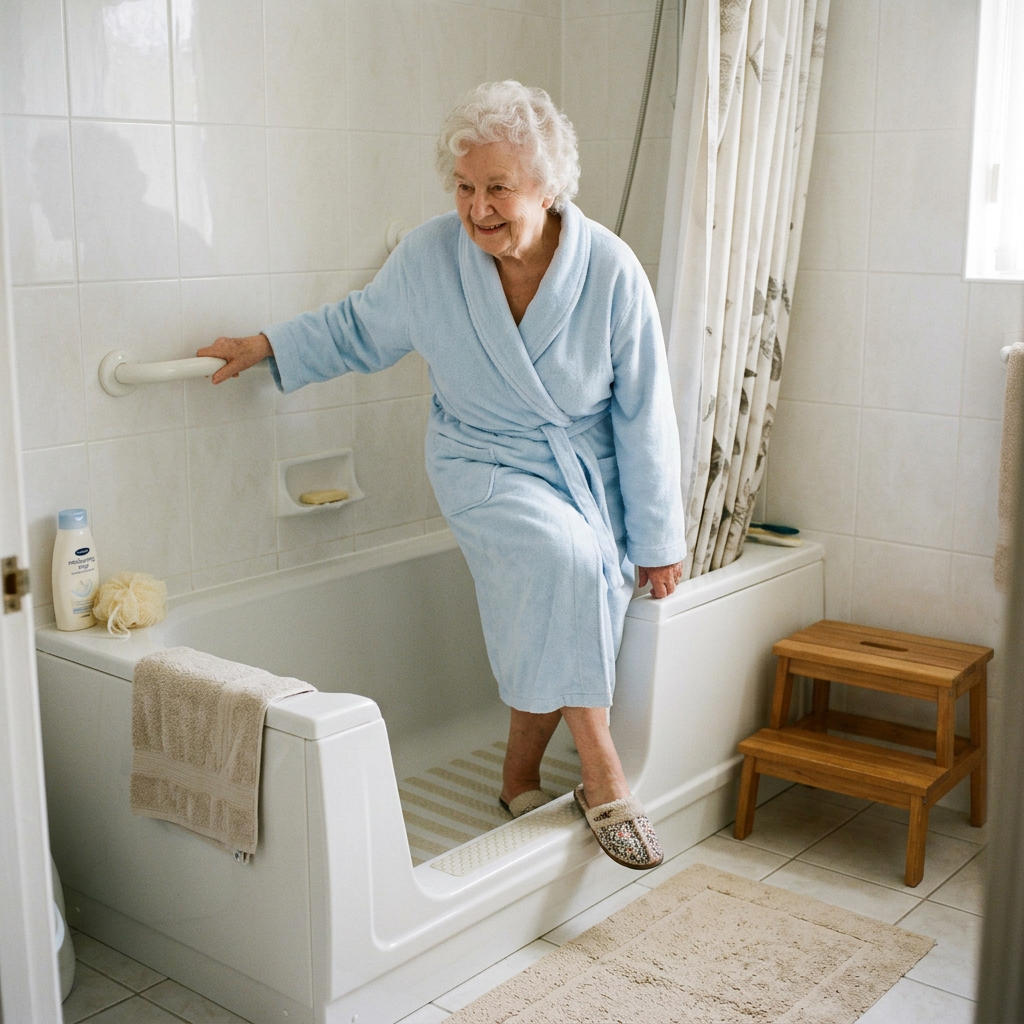
    This guide is for adult children adding a no-drill, low-cost layer of fall protection to a parent’s tub or shower the kind of upgrade you can do on a Saturday visit without calling a contractor. If you’re shopping for yourself, the same picks apply. The one thing to settle before you buy anything: run your hand across the tub floor. If it’s glassy-smooth, treads are perfect. If it’s already gritty or has a molded non-slip pattern, read the surface section below before you spend a dollar.

    Most falls among older adults happen in the bathroom, and stepping into and out of a wet tub is the single most dangerous moment. Non-slip treads won’t replace a grab bar or a sturdy shower chair — but as the cheapest single item on the whole aging-in-place list, they’re a rare case of near-zero cost buying real traction under wet feet. The trick is matching the tread to the tub, not grabbing the first “24 PCS clear” listing you see.

    At a glance

    Best Overall   SlipX Solutions Clear Safety Treads — ~$9 · discreet ovals that grip hard on any smooth tub.

    Best Coverage   Secopad 24-Pack with Scraper — ~$14 · most surface area, cleanest install.

    Least Clinical   SlipX Daisy Bath Treads — ~$8 · flower shapes that read as decor, not medical.

    Best Long Strips   Vive Non-Slip Bath Strips — ~$15 · long runs for full-length coverage.

    Best for Big Showers   V-TOP 30-Piece Clear Treads — ~$13 · high count for large walk-in floors.

    Best Overall  SlipX Solutions Clear Safety Treads

    ~$9 (12-pack, 7.5″ × 0.75″) · Check price on Amazon →

    SlipX has been the default name here for years, and across 8,000-plus verified reviews the pattern holds: on a clean, smooth tub these grip hard the moment they’re wet and stay put for years. The clear ovals are close to invisible once installed, which matters more than it sounds. A parent self-conscious about “medical-looking” additions is far likelier to leave them in place. Buyers stress that install discipline is everything: press each tread down firmly and give it a full 24 hours to cure before running water. The same-day showers are where most peeling reports come from.

    The good

    • Nearly invisible clear finish that doesn’t read as clinical
    • Aggressive wet grip that verified buyers trust after years of use
    • Cheapest real fall-prevention item you can buy for a tub

    The catch

    • Twelve small ovals cover a standard tub, but not a long walk-in floor
    • Unforgiving of a rushed install needs the full 24-hour cure

    This is right if… your parent has a standard smooth-bottom tub and you want the most trusted, most discreet option.

    Look elsewhere if… you need to cover a large shower floor — you’ll want a higher-count set.

    Check Price on Amazon →

    Best Coverage  Secopad 24-Pack with Scraper

    ~$14 (24 clear appliques + scraper) · Check price on Amazon →

    Secopad is one of the most-reviewed sets in the category, and its edge is simple: twice the pieces of a standard pack plus a bundled scraper that separates a clean install from a bubbled one. Verified buyers point to the scraper as the reason their treads sealed flat with no trapped air — the leading cause of early peeling. The clear discs run a touch larger than SlipX’s ovals, so 24 genuinely blanket a tub floor or reach up a walk-in shower. Reviewers with textured tubs report the same failure everyone else does: no adhesive tread bonds to a gritty surface, whatever the brand or count.

    The good

    • 24 pieces cover a full tub or a modest walk-in shower
    • Included scraper delivers a flatter, longer-lasting seal
    • Strong grip and near-invisible finish at a low per-piece cost

    The catch

    • More pieces means more edges to scrub, or mildew finds them
    • Discs can look busy if you over-apply — space them out

    This is right if… you want maximum coverage and the cleanest possible install.

    Look elsewhere if… you only need a few treads at the step-in point and don’t want leftovers.

    Check Price on Amazon →

    Least Clinical  SlipX Daisy Bath Treads

    ~$8 (18 flower-shaped treads) · Check price on Amazon →

    The biggest reason safety products get pulled out of a parent’s bathroom is that they look like they belong in a hospital. SlipX’s daisy treads quietly solve that they read as decor, and reviewers repeatedly mention a resistant parent accepting flowers where they’d refused plain gray strips. The grip is the same proven SlipX adhesive underneath; the shape is just the Trojan horse. Families with grandkids note the daisies double as kid-friendly. The tradeoff is coverage: 18 small flowers protect the key standing zones, not the whole tub.

    The good

    • Looks like decor, which wins over reluctant parents
    • Same trusted SlipX grip beneath the friendly shape
    • Kid- and grandkid-friendly for multigenerational homes

    The catch

    • 18 small flowers cover zones, not an entire tub floor
    • The colored versions are more visible than clear treads

    This is right if… your parent has resisted anything that looks like a “safety product.”

    Look elsewhere if… you want full, edge-to-edge coverage over a large surface.

    Check Price on Amazon →

    Best Long Strips  Vive Non-Slip Bath Strips

    ~$15 (24 long strips) · Check price on Amazon →

    Vive is a name families already trust from the mobility-aid aisle, and its bath strips take the long-run approach: continuous bands across the tub instead of scattered dots. Verified buyers like that a single strip lays an unbroken line of traction where the foot rolls on step-in, with fewer edges than a field of discs. The peel-resistant backing draws specific praise for staying flat on acrylic and fiberglass. As with every option here, reviews split cleanly on surface — glowing on smooth tubs, frustrated on textured ones — a reminder to check your tub first.

    The good

    • Continuous strips give an unbroken traction line, fewer edges to lift
    • Peel-resistant backing praised for staying flat on acrylic
    • Trusted brand with responsive customer support

    The catch

    • Strips are more visible than clear dots
    • Straight runs suit flat tubs better than contoured ones

    This is right if… you prefer long unbroken bands of grip over scattered dots.

    Look elsewhere if… the tub floor is heavily curved and strips won’t lie flat.

    Check Price on Amazon →

    Best for Big Showers  V-TOP 30-Piece Clear Treads

    ~$13 (30 clear treads + scraper) · Check price on Amazon →

    When the space to protect is a large walk-in shower rather than a single tub, piece count matters, and V-TOP’s 30-tread set gives the most floor coverage per dollar of anything we looked at. Verified buyers with roomy showers like having enough treads to lay a genuine grid rather than ration dots, and the bundled scraper again earns its keep for a bubble-free seal. Reviewers flag the usual caveats — alcohol-clean first, let it cure, smooth surfaces only. For a big shower on a smooth floor this is the value pick; for a small tub, you’ll have treads to spare.

    The good

    • 30 treads cover a large walk-in shower with room to spare
    • Included scraper for a flat, bubble-free seal
    • Lowest cost per tread in this roundup

    The catch

    • Overkill for a single standard tub
    • Best results demand an alcohol wipe-down before install

    This is right if… you’re covering a large walk-in shower floor on a budget.

    Look elsewhere if… you have a small tub and don’t want a pile of extras.

    Check Price on Amazon →

    Quick comparison

    Tread Count / shape Best for Price
    SlipX Clear Treads 12 clear ovals Standard smooth tub, most discreet ~$9
    Secopad 24-Pack 24 clear discs + scraper Maximum coverage, clean install ~$14
    SlipX Daisy Treads 18 flower shapes Reluctant parents, decor look ~$8
    Vive Bath Strips 24 long strips Unbroken traction lines ~$15
    V-TOP 30-Piece 30 clear treads + scraper Large walk-in showers ~$13

    The conversation you’ll have

    Most parents don’t resist treads because they think they’re unsafe they resist because “grip stickers” in the tub feel like an admission they’re not as steady as they were. That’s the real objection, and it’s worth sidestepping gently. Instead of “I’m worried you’ll fall,” which points at her decline, try “These take five minutes and they’re basically invisible — the tub gets slick and I’d rather not think about it.” Now it’s about the slippery tub, not her body. The daisy version helps most here: “these actually look kind of nice” lets a parent say yes without conceding anything. Install them during an ordinary visit rather than a Big Safety Talk and they just become part of the bathroom.

    Insurance and savings

    Set expectations honestly: original Medicare does not cover bathroom safety supplies like adhesive treads — they’re classified as home safety items, not durable medical equipment, so there’s no reimbursement to chase. The better news is that at roughly $8 to $15 a set, these are among the few aging-in-place products cheap enough that coverage barely matters. If you have a flexible spending account (FSA) or health savings account (HSA), fall-prevention items sometimes qualify with a letter of medical necessity from a physician, though for a $10 purchase most families simply pay out of pocket. Some Medicare Advantage plans now offer limited over-the-counter or home-safety allowances — worth a two-minute check of your parent’s plan benefits before you buy.

    What to actually look for

    Check the surface before anything else

    This is the one thing that decides whether treads work at all, and it’s the thing every generic roundup skips. Adhesive treads bond only to smooth, non-porous surfaces — porcelain, fiberglass, sealed acrylic. Run your hand across the tub floor: if it’s glassy, you’re set. If it’s already gritty or has a molded non-slip pattern, treads will lift within days no matter the brand, because the adhesive can’t make full contact. On a textured tub, the honest fix is a suction-cup non-slip bath mat or a professional resurface, not stickers. Never place treads over grout lines or the seams between tiles — the void underneath breaks the seal.

    Place them where feet actually land

    Coverage isn’t about carpeting the tub — it’s about protecting the two highest-risk zones: the step-in/step-out spot at the tub wall, and wherever your parent stands to wash. Map those before you peel a backing; for a walk-in shower, prioritize the threshold and the area under the showerhead. Treads are a floor solution, not a whole-safety solution — pair them with a grab bar for the transfer and, for anyone who tires standing, a shower chair. See our complete aging-in-place home safety checklist for the priority order of bathroom upgrades.

    Install clean, then maintain the edges

    Two habits separate a set that lasts years from one that peels in a month. First, install on a bone-dry, alcohol-wiped surface, press each tread down hard, and wait a full 24 hours before running water — nearly every “wouldn’t stick” review traces back to a same-day shower. Second, scrub around the edges weekly with a brush; mildew loves the tiny lip where a tread meets the tub, and once it lifts a corner the tread is done. When it’s finally time to replace them, a plastic scraper plus a little WD-40 or a vinegar soak lifts old treads and residue cleanly.

    Frequently asked questions

    Do adhesive bath treads actually work?

    Yes, on the right surface. On smooth porcelain, fiberglass, or sealed acrylic, quality treads meaningfully increase traction under wet feet and stay put for years. Their entire effectiveness depends on the tub being smooth; on a textured or already-non-slip floor, no adhesive tread bonds well and none will help.

    Will treads stick to a textured or non-slip tub?

    No. Adhesive treads need full contact with a smooth, non-porous surface. A molded non-slip tub bottom or a gritty coating prevents the adhesive from sealing, so treads lift within days. If your tub is already textured, use a suction-cup bath mat or have the tub professionally resurfaced instead.

    Do bathtub treads leave residue when you remove them?

    They can, especially older treads. To remove cleanly, loosen one edge with a fingernail and peel slowly, then soften any leftover adhesive with WD-40, a vinegar-soaked rag, or Goo Gone and lift it with a plastic scraper. On smooth tubs this comes off without marks.

    Do bathtub stickers get moldy?

    Mildew can grow along the edges where a tread meets the tub, particularly if a corner lifts. A weekly scrub around each tread with a brush prevents it. Replacing aged, lifting treads promptly also stops mold from building up underneath them.

    Are treads better than a bath mat?

    They serve different tubs. Treads suit smooth surfaces and stay permanently in place with nothing to trip over. A suction bath mat is the better choice for textured tubs where treads won’t stick, and it’s removable for cleaning — but a poorly suctioned mat can shift, so match the solution to your tub’s surface.

    How long do adhesive bath treads last?

    Installed correctly on a smooth surface, quality treads commonly last three to five years. Lifespan drops sharply with a rushed install or if edge mildew is left to spread. Inspect them a few times a year and replace any that have started to lift.

    The shortlist

    Best Overall

    SlipX Clear Safety Treads

    ~$9

    Check on Amazon →

    Best Coverage

    Secopad 24-Pack

    ~$14

    Check on Amazon →

    Least Clinical

    SlipX Daisy Treads

    ~$8

    Check on Amazon →

    Best Long Strips

    Vive Bath Strips

    ~$15

    Check on Amazon →

    Best for Big Showers

    V-TOP 30-Piece Treads

    ~$13

    Check on Amazon →

    What we’d do tomorrow

    If you’re tackling this on your next visit, do three things in order. First, run your hand across the tub floor smooth means treads will work, textured means stop and buy a suction mat instead. Second, if it’s smooth, order the SlipX Clear Treads for a standard tub, or the Daisy version if your parent has waved off “safety stuff” before. Third, install on a dry, alcohol-wiped surface, press hard, and leave it 24 hours before the next shower. Ten dollars and ten minutes buys real traction at the most dangerous spot in the house there’s almost no better return in the entire aging-in-place kit.

    — Sarah

    BuyingForMom is a reader-supported site. As an Amazon Associate we earn from qualifying purchases. When you buy through links on this site, we may earn an affiliate commission at no additional cost to you. See our Affiliate Disclosure for details. This article is not medical advice — please consult a qualified healthcare professional for decisions specific to your family.
  • 5 Best Digital Photo Frames for Seniors

    5 Best Digital Photo Frames for Seniors

    Disclosure: BuyingForMom is reader-supported. As an Amazon Associate we earn from qualifying purchases. When you buy through links in this article, we may earn an affiliate commission at no additional cost to you. We never recommend products we haven’t researched against verified-buyer review data. This article is editorial reporting, not medical advice.

    5 Best Digital Photo Frames for Seniors

    By Sarah Mitchell · Editor, BuyingForMom · Updated August 2026

    10 min read · Smart Home · 5 picks compared

    The honest take: For a parent who doesn’t use a smartphone and never will, buy the Skylight Frame and set it up before you gift it the email-a-photo system means the whole family can feed it without teaching Mom anything. If you want the sharpest screen and refuse to pay a yearly fee, the Aura Carver is the better call. Skip the temptation to save $10 by ignoring the subscription fine print Skylight’s best features hide behind a $39/year “Plus” charge, and that surprise renewal is the single most common complaint on every frame that has one.

    How we sorted through 30-plus frames in two weeks

    We cross-referenced more than 30 WiFi digital frames against 40,000-plus verified Amazon reviews, the recurring complaints families post on Trustpilot and Reddit, and the buying advice AARP and geriatric occupational therapists give about screens for aging eyes. We weighted three things the generic “14 best” roundups skip: how a photo actually reaches the frame (email, app, or memory card), whether the frame quietly needs a subscription to be worth owning, and whether a tech-averse parent can enjoy it with zero setup on their end. The picks below aren’t ranked by star count — they’re routed to a specific family situation.

    Who this guide is for

    This guide is for the adult child who wants to send a parent or grandparent a steady stream of new photos without asking them to learn an app, manage storage, or press anything. If your parent is comfortable with a phone, most of these still apply — but the “set it up before you wrap it” advice matters most when the recipient won’t touch the settings at all. It’s also written with memory loss in mind: a frame that cycles familiar faces can be a small, real comfort for someone with early dementia.

    At a glance

    1. Skylight Frame 10″ — ~$160 · Best overall for a non-tech parent. Family emails photos to one address; nothing for Mom to do.

    2. Aura Carver 10.1″ — ~$150 · Best for gifting. Sharpest screen, unlimited free storage, no subscription, ever.

    3. Nixplay Smart 10.1″ — ~$150 · Best for managing from afar. Email and app both work; you build the playlists remotely.

    4. Pix-Star 15″ — ~$150 · Best big screen for low vision. A genuinely large display, no fees, manage up to 25 frames.

    5. Dragon Touch Classic 10 — ~$60 · Best budget. Solid Frameo-app frame with SD and USB support for a fraction of the price.

    Best OverallSkylight Frame 10″

    ~$160 · Check price on Amazon →

    The Skylight earns its reputation on one design decision: every frame gets its own email address, so anyone in the family can send a photo the way they’d send an email — no app account, no invite, no learning curve for the recipient. Across thousands of reviews the pattern is remarkably consistent: families describe an intimidated grandparent waking up to fresh photos of grandchildren with genuine delight, and reviewers repeatedly call it the frame that “combats loneliness” for long-distance relatives. The 10-inch touchscreen is bright and the setup is a plug-in-and-connect-WiFi affair you’ll do for them in about five minutes. The catch that keeps it from being a runaway pick is money, not usability — see below.

    The good

    • Email-to-frame means zero effort for a non-tech parent — the strongest ease-of-use story here.
    • Bright 10″ touchscreen with an interface reviewers consistently call idiot-proof.
    • Any relative can contribute photos without creating an account.

    The catch

    • Video playback, captions, and some features sit behind Skylight Plus (~$39/year) — the top complaint across reviews.
    • Buyers report a surprise full-year charge after the 30-day trial lapses; cancel the trial if you only want stills.

    This is right if… your parent won’t touch a phone and you want the family to feed the frame effortlessly.

    Look elsewhere if… a yearly subscription for video is a dealbreaker the Aura below has none.

    Check Price on Amazon →

    Best for GiftingAura Carver 10.1″

    ~$150 · Check price on Amazon →

    Wirecutter’s long-standing pick for gifting, the Carver is the frame to buy when you want the nicest-looking result and refuse to pay a recurring fee. Its 1920×1200 screen is the sharpest in this group, and reviewers single out one clever touch: instead of shrinking vertical phone photos to a strip in the middle, it pairs two portrait shots side by side to fill the whole display. Storage is unlimited and free, an unlimited number of family members can be invited to contribute, and there is no subscription — the entire cost is the purchase price. The honest limitation is that the Carver is app-and-WiFi only, so it needs a relative with a smartphone to manage it and a home with steady internet; it also doesn’t play video clips. For a still-photo gift to a connected family, though, it’s the most polished experience on the list.

    The good

    • Sharpest screen here (1920×1200) with rich, accurate color.
    • Truly no subscription — unlimited free storage and unlimited invited contributors.
    • Pairs two portrait photos side by side instead of leaving ugly black bars.

    The catch

    • App-only setup needs a smartphone-comfortable family member; no email-to-frame option.
    • No video playback, and it needs constant WiFi to work.

    This is right if… you want the best-looking still-photo frame and a one-time cost with no strings.

    Look elsewhere if… the family manages photos by email or the recipient’s home has spotty WiFi.

    Check Price on Amazon →

    Best for Managing From AfarNixplay Smart 10.1″

    ~$150 · Check price on Amazon →

    Nixplay is the pick for the family member who wants to curate, not just dump photos. It accepts pictures by both email and app, and it lets you build shared playlists so you can queue a grandchild’s birthday album, schedule when the frame sleeps, and pull images straight from Google Photos, Facebook, or Instagram. Reviewers who manage a parent’s frame from another state praise exactly this control: you decide what shows and when, and Mom simply watches it change. The screen is a capable HD touchscreen, and the frame has the deepest feature set here. The trade-off is that Nixplay nudges you toward a Plus tier for extra cloud storage and features, so read what’s included before you assume everything is free. If you’re the designated tech person in the family, this is your frame.

    The good

    • Both email and app work — flexible for mixed-tech families.
    • Shared playlists and sleep scheduling give remote managers real control.
    • Pulls photos from Google Photos, Facebook, and Instagram.

    The catch

    • A Nixplay Plus tier upsells extra storage and features — confirm what your model includes.
    • The richer feature set means a slightly busier interface than the Skylight or Aura.

    This is right if… you’ll manage the frame remotely and want to control exactly what plays.

    Look elsewhere if… you want the absolute simplest setup with nothing to configure.

    Check Price on Amazon →

    Best Big ScreenPix-Star 15″

    ~$150 · Check price on Amazon →

    When the goal is a screen a parent with low vision can actually enjoy from across the room, the Pix-Star’s 15-inch display is the standout and it carries a 4.8-star rating across 2,000-plus reviews with no subscription of any kind. It receives photos by email and app, includes a motion sensor that wakes the frame when someone walks by, and lets one person manage up to 25 frames from a single free account, which is why extended families gift a matching set. Be clear-eyed about the trade-off: the 15-inch panel uses a 1024×768 resolution, so it spreads the same pixels over more glass. Sharp photos still look good, but heavily compressed images or shots from old phones can look soft, and the interface feels a generation behind the Aura. For maximizing visible size on a budget, it’s the right buy.

    The good

    • Genuinely large 15″ screen the easiest here to see from a chair across the room.
    • No subscription, free cloud, and one account manages up to 25 frames.
    • Motion sensor wakes the display when your parent walks in.

    The catch

    • 1024×768 resolution stretched over 15″ low-quality photos can look soft.
    • Interface and styling feel dated next to the newer frames.

    This is right if… visible size matters most — for a parent with low vision or a large room.

    Look elsewhere if… you want the crispest image; the smaller Aura is noticeably sharper.

    Check Price on Amazon →

    Best BudgetDragon Touch Classic 10

    ~$60 · Check price on Amazon →

    If a $150 frame feels like a lot to test whether your parent will even use one, the Dragon Touch Classic 10 is the low-risk way in. It’s a 10-inch IPS touchscreen that receives photos through the free Frameo app and, crucially, also accepts an SD card or USB stick — so you can preload it with a hundred family photos before it ever touches WiFi. Reviewers consistently rate it as punching above its price for setup simplicity, and at roughly a third the cost of the premium frames, it’s the sensible choice for a first frame or a second one for a spare room. The honest trade-offs: the Frameo app is less polished than Aura’s or Nixplay’s, and because it routes through a third-party cloud, privacy-minded families should know photos pass through Frameo’s servers. For the money, it delivers the core experience.

    The good

    • Roughly a third the price of the premium frames.
    • Accepts SD card and USB preload photos with no WiFi needed.
    • Simple Frameo-app sharing that any relative can install for free.

    The catch

    • Frameo app is less refined than Aura’s or Nixplay’s.
    • Photos route through Frameo’s third-party cloud, a consideration for privacy-minded families.

    This is right if… you want to test the idea cheaply or need a second frame for another room.

    Look elsewhere if… you want the most polished app or the sharpest, largest screen.

    Check Price on Amazon →

    Quick comparison

    Frame ~Price How photos arrive Best for Subscription?
    Skylight 10″ $160 Email Non-tech parent Optional (video)
    Aura Carver $150 App Gifting / sharpest screen None
    Nixplay 10.1″ $150 Email + app Remote managing Optional (storage)
    Pix-Star 15″ $150 Email + app Low vision / big screen None
    Dragon Touch 10 $60 App + SD/USB Budget / preloading None

    The conversation you’ll have

    A digital frame is one of the rare aging-in-place gifts that meets zero resistance nobody feels diminished by a screen full of grandchildren. Still, the way you hand it over matters. Don’t set it on the counter in its box and say “here’s your new photo frame, you connect it to the WiFi.” Set the whole thing up first, connect it to their network, load thirty or forty photos they’ll recognize, and prop it where they already sit. Then the line is simply: “I set this up so you’ll see new pictures of the kids without doing anything — it just changes on its own.” Framing it as something the family does for them rather than a device they have to run is the difference between a frame that lights up daily and one that ends up in a drawer. If your parent has memory loss, keep the rotation to familiar faces and add captions with names where the frame supports it.

    Insurance and savings

    A digital photo frame is a consumer electronic, not durable medical equipment, so Medicare and Medicare Advantage will not cover it and it is not FSA/HSA-eligible — don’t expect a reimbursement angle here the way you would with a grab bar or a lift chair. Two practical savings notes instead: these frames go on real sale around the holidays and Prime Day, often 20–30% off, so if it’s a gift you can time it; and if you’re buying a matched pair for two households, Pix-Star’s single-account-manages-many model and Aura’s unlimited-contributors both avoid any per-frame fees, which keeps a multi-frame family gift from turning into a stack of subscriptions.

    What to actually look for

    Match the sending method to the family, not the star rating

    This is the decision that determines whether the frame gets used. If the people sending photos live on their phones, an app frame (Aura, Nixplay) is fine. If the family is mixed — some app users, some who’d rather email — pick a frame that accepts email too (Skylight, Nixplay, Pix-Star). And if WiFi at the parent’s home is unreliable, choose one that also reads an SD card or USB (Dragon Touch) so you can preload it. A frame is only as good as the photos that reach it. For the wider picture of setting up a parent’s home, our complete aging-in-place home safety checklist walks through what to prioritize first.

    Read the subscription fine print before you buy

    The most common frustration across every review pool isn’t screen quality — it’s a surprise yearly charge. Some frames give you the full experience for the purchase price; others (notably Skylight, for video and captions) gate premium features behind an annual fee and auto-renew after a trial. Decide up front whether the extra features matter, and if they don’t, either buy a no-fee frame or cancel the trial the day it arrives.

    Size and brightness for aging eyes

    For a parent with declining vision, a 10-inch frame is the practical minimum and a 15-inch is easier to enjoy from across a room but resolution matters as much as size, since a big, low-resolution panel can look soft. Auto-brightness (which the Aura and others include) keeps the screen readable from morning glare to evening dim without anyone adjusting it. A frame that pairs well with familiar routines can also help someone with early memory loss; if that’s your situation, our guide to the best automatic pill dispensers for dementia patients covers other low-effort supports, and our round-up of thoughtful gifts for aging parents has more ideas in this vein.

    Frequently asked questions

    How do you set up a digital photo frame for an elderly person?

    Do it for them before gifting. Plug the frame in, connect it to their WiFi through the on-screen menu, and preload 30–40 familiar photos. Then all the parent does is look at it — the frame updates itself whenever family sends new pictures, with nothing for them to press or manage.

    Do digital photo frames need WiFi?

    Most modern frames need WiFi to receive photos remotely, which is the whole appeal. If the home has unreliable internet, choose a frame that also accepts an SD card or USB stick like the Dragon Touch so you can load photos directly without a connection.

    Can you send photos to a grandparent’s frame from your phone?

    Yes, that’s the core feature. Depending on the frame, you send photos through a free app (Aura, Nixplay) or by emailing them to the frame’s unique address (Skylight, Nixplay, Pix-Star). They appear on the frame within moments, from anywhere in the world.

    Do digital photo frames have monthly fees?

    Some do, most don’t. Aura, Pix-Star, and Dragon Touch charge nothing beyond the purchase price. Skylight and Nixplay offer optional paid tiers for extras like video playback or added cloud storage. Read what’s included before buying so a “free” frame doesn’t surprise you at renewal.

    Are digital photo frames good for dementia patients?

    They can be a real comfort. A steady rotation of familiar faces supports reminiscence and eases the isolation of memory loss. Keep the photo set to well-known people, add name captions if the frame allows, and avoid a firehose of unfamiliar images, which can confuse rather than soothe.

    What size digital photo frame is best for seniors?

    Ten inches is the practical minimum; 15 inches is easier to see from a chair or across a room. Prioritize resolution alongside size a large, low-resolution screen can look soft — and pick auto-brightness so the display stays readable through the day without adjustment.

    The shortlist

    Best Overall

    Skylight Frame 10″

    ~$160

    Check on Amazon →

    Best for Gifting

    Aura Carver 10.1″

    ~$150

    Check on Amazon →

    Manage From Afar

    Nixplay Smart 10.1″

    ~$150

    Check on Amazon →

    Best Big Screen

    Pix-Star 15″

    ~$150

    Check on Amazon →

    Best Budget

    Dragon Touch Classic 10

    ~$60

    Check on Amazon →

    What we’d do tomorrow

    If you’re setting this up this weekend, do three things in this order. First, pick by how photos will reach the frame: email for a non-tech parent (the Skylight), app with no fees for a connected family (the Aura Carver), or SD/USB if home WiFi is shaky (the Dragon Touch). Second, before you gift it, connect it to their network and preload 30–40 photos they’ll recognize so it’s alive the moment they see it. Third, tell the family the sending address or app, and set the expectation to send a few photos a week a frame only earns its spot when the pictures keep coming. Do that, and you’ve given a gift that quietly pays off every single day.

    — Sarah

    BuyingForMom is a reader-supported site. As an Amazon Associate we earn from qualifying purchases. When you buy through links on this site, we may earn an affiliate commission at no additional cost to you. See our Affiliate Disclosure for details. This article is not medical advice please consult a qualified healthcare professional for decisions specific to your parent.
  • 5 Best Blood Pressure Monitors for Seniors

    5 Best Blood Pressure Monitors for Seniors

    Disclosure: BuyingForMom is reader-supported. As an Amazon Associate we earn from qualifying purchases. When you buy through links in this article, we may earn an affiliate commission at no additional cost to you. We never recommend products we haven’t researched against verified-buyer review data. This article is editorial reporting, not medical advice.

    5 Best Blood Pressure Monitors for Seniors

    By Sarah Mitchell · Editor, BuyingForMom · Updated August 2026

    10-min read · Smart Home & Health Monitoring · 5 picks compared

    The honest take: For most older adults, buy the Omron Platinum it flags the irregular heartbeats that get more common with age and averages three readings the way a clinic does. If your parent squints at small screens or refuses anything with an app, the A&D Medical UA-651 is the smarter call: one button, a huge display, and no phone required. Skip every wrist monitor you see marketed to seniors the American Heart Association is blunt that upper-arm cuffs are more accurate, and accuracy is the entire point.

    How we sorted through 30-plus home blood pressure monitors in three weeks

    We started with the roughly 30 upper-arm and wrist monitors that dominate Amazon’s senior-facing listings, then narrowed hard. Every finalist had to be clinically validated (we cross-checked models against the independent validatebp.org registry and each maker’s FDA-clearance claims), carry a cuff that actually fits a real range of arms, and hold up across thousands of verified-buyer reviews. We leaned on American Heart Association and Mayo Clinic guidance for the technique rules, mined caregiver threads on Reddit for the complaints that don’t show up in star ratings, and checked live Amazon stock on every pick before writing a word. What we did not do is rank by star count alone the difference that matters for an 80-year-old is rarely the brand.

    Who this guide is for

    This guide is for adult children setting up home monitoring for a parent after a hypertension diagnosis, a hospital discharge, or a doctor’s “keep an eye on it at home.” If you’re buying for yourself, the same picks apply; just skip the conversation section near the end. The through-line: the monitor is the easy part. Choosing one that fits the arm, that your parent can actually read and operate, and that gets confirmed against the doctor’s cuff matters more than any spec on the box.

    Home blood pressure monitoring, briefly and why the device is the easy part

    Roughly 80% of adults over 65 have high blood pressure, and a home blood pressure monitor for seniors is how you and the doctor spot patterns a single office reading misses the morning spikes, the medication that’s wearing off by evening, the “white coat” numbers that look scary at the clinic but settle at home. The catch is that a home reading is only as good as the setup behind it. The single most common mistake, cited by clinicians and echoed across buyer reviews, is the wrong cuff size: a cuff that’s too small reads falsely high, too large reads falsely low, and no amount of brand prestige fixes a cuff that doesn’t fit.

    So the real job isn’t finding “the most accurate monitor” in the abstract nearly every validated upper-arm model is accurate enough. The job is matching the monitor to your parent’s actual barrier: small print they can’t read, arthritis that makes a phone app a non-starter, an irregular heartbeat that needs flagging, or a caregiver two states away who needs to see the numbers. That’s how we’ve organized the five picks below.

    At a glance: the 5 picks

    Best Overall  Omron Platinum (BP5450) — ~$85 · AFib flag + 3-reading averaging, the do-it-right default

    Best Simple  A&D Medical UA-651 — ~$40 · One button, huge LCD, no app — for the tech-averse

    Best Big Display  Omron Silver (BP5250) — ~$50 · Oversized backlit numbers for low vision

    Best for Caregivers  Withings BPM Connect — ~$100 · Wi-Fi sync so family sees readings from anywhere

    Best Budget  iHealth Track (KN-550BT) — ~$30 · Wide-range cuff + backlit screen for the price

    Best Overall  Omron Platinum (BP5450)

    ~$85 · Check price on Amazon →

    Omron is the brand most cardiologists name first, and the Platinum is the model that earns it. It takes three consecutive readings and reports the average — the same approach a clinic uses to smooth out the one-off spike and it flags an irregular heartbeat during the measurement, which matters because atrial fibrillation becomes far more common with age and often shows up first as an off reading at home. Across thousands of verified reviews the recurring praise is consistency between the machine and the doctor’s cuff; the backlit dual-display shows systolic, diastolic, and pulse at once, and it stores 100 readings each for two users, so a couple can share one device. It’s the pick we’d hand almost any older adult who’s willing to press two buttons.

    The good

    • Triple-reading averaging + irregular-heartbeat (AFib) detection clinic-style rigor
    • Backlit two-line display and a pre-formed cuff that’s easy to wrap one-handed
    • Two-user memory (100 readings each) plus optional free Omron Connect app

    The catch

    • The standard cuff tops out around 17″; very large arms need Omron’s wide-range cuff, bought separately
    • A few buyers find the app pairing fussy — though the monitor works fully without ever opening it

    This is right if… your parent can manage a two-button routine and you want the most doctor-aligned numbers.

    Look elsewhere if… even two buttons and a menu feel like too much — go to the A&D below.

    Check Price on Amazon →

    Best Simple  A&D Medical UA-651

    ~$40 · Check price on Amazon →

    If the phrase “download the app” ends the conversation, this is the monitor. The A&D UA-651 does exactly one thing — press the single large button, and it reads and stores the result on a big, high-contrast LCD, no smartphone in the loop. A&D is a name clinicians know from the office-grade equipment they use, and this consumer model carries a wide-range cuff (roughly 8.6″–16.5″) plus the four AA batteries in the box, so it’s ready the minute it arrives. Verified buyers who bought it for a parent repeatedly describe the same relief: nothing to pair, nothing to charge, nothing to explain twice. Its “Snapshot” averaging quietly settles multiple readings into one baseline without the user having to think about it.

    The good

    • True one-button operation — the lowest-friction monitor here
    • Large, plain LCD numbers and a wide-range cuff that fits most arms out of the box
    • Batteries included; runs on AA (or an optional AC adapter) with no app or account

    The catch

    • No Bluetooth, so a remote caregiver can’t see readings automatically — someone logs them by hand
    • The display isn’t backlit; it needs decent room light to read at a glance

    This is right if… your parent wants to press one button and be done, with zero technology to manage.

    Look elsewhere if… you need the numbers to reach your phone from across the country — see the Withings.

    Check Price on Amazon →

    Best Big Display  Omron Silver (BP5250)

    ~$50 · Check price on Amazon →

    When the obstacle is eyesight, the Omron Silver is built around it: an oversized, backlit display whose digits are large enough to read from an arm’s length without glasses. It keeps the parts of the Platinum that matter most — clinically validated accuracy, irregular-heartbeat flagging, a pre-formed one-handed cuff — while trimming to a single user and a friendlier price. Reviewers with macular degeneration or cataracts single out the readability as the reason they returned two other monitors and kept this one. It pairs with the free Omron Connect app if you want history on a phone, but a parent can ignore the app entirely and still get a big, glowing, easy-to-read result.

    The good

    • Genuinely large backlit numbers — the standout pick for low vision
    • Irregular-heartbeat detection and validated accuracy carried over from pricier Omrons
    • Works fully offline; optional app for readings history

    The catch

    • Single-user memory only  not ideal if two people share one device
    • No triple-averaging like the Platinum; you take repeat readings yourself if you want an average

    This is right if… reading the screen is the main hurdle and one person will use it.

    Look elsewhere if… two users need separate histories — the Platinum stores both.

    Check Price on Amazon →

    Best for Caregivers  Withings BPM Connect

    ~$100 · Check price on Amazon →

    For the family managing a parent’s health from a distance, the Withings BPM Connect is the pick that closes the loop. It’s FDA-cleared and syncs over both Wi-Fi and Bluetooth to the free Health Mate app — meaning once it’s set up, your parent just presses the button and the reading appears on your phone, with no logging or texting numbers back and forth. It gives immediate color-coded feedback on the device itself (green through red) so the person taking the reading understands it in the moment, and it can share a trend history straight with a doctor. It’s the sleekest, most travel-friendly monitor here; the trade-off is that it asks for the most setup up front, which for a remote family usually means doing that setup before you hand it over.

    The good

    • Wi-Fi + Bluetooth auto-sync — readings reach a caregiver’s phone with zero manual logging
    • On-device color-coded result so the reading makes sense immediately
    • Rechargeable, compact all-in-one design that travels well

    The catch

    • The most app-dependent monitor here — best when an adult child does the initial setup
    • Small on-device screen; a low-vision parent will lean on the phone app, not the cuff itself

    This is right if… you’re monitoring a parent remotely and want the numbers to come to you automatically.

    Look elsewhere if… your parent won’t touch a smartphone and lives nearby — the A&D or Omron Silver fit better.

    Check Price on Amazon →

    Best Budget  iHealth Track (KN-550BT)

    ~$30 · Check price on Amazon →

    Budget monitors usually cut the cuff or the display; the iHealth Track keeps both. For around thirty dollars it pairs a wide-range cuff (fitting roughly 8.7″–16.5″ arms) with a large backlit screen and optional Bluetooth to the iHealth app — the features that seniors and caregivers actually ask for, at the price point where most families start. Verified buyers consistently note that readings track closely with the doctor’s office and that setup is genuinely simple. It’s also the most forgiving pick for larger arms out of the box, and an extra-large cuff is sold separately if you need to go past 16.5″. The trade-off for the price is a plasticky feel and a shorter track record than Omron, but on the numbers that matter it holds its own.

    The good

    • Wide-range cuff and a backlit display at a true budget price
    • Optional Bluetooth + app history without forcing a phone on anyone
    • Extra-large cuff available separately for bigger arms (up to ~18.9″)

    The catch

    • Lighter, more plastic build than the Omron or A&D units
    • Single-user memory on the device; multi-user tracking lives in the app

    This is right if… you want the core senior-friendly features at the lowest sensible price.

    Look elsewhere if… you want AFib flagging and triple-averaging — that’s the Platinum.

    Check Price on Amazon →

    How the 5 compare

    Monitor ~Price Standout feature Best for
    Omron Platinum $85 AFib flag + 3-reading average The do-it-right default
    A&D UA-651 $40 One button, no app Tech-averse parents
    Omron Silver $50 Oversized backlit numbers Low vision
    Withings BPM Connect $100 Wi-Fi auto-sync to family Remote caregivers
    iHealth Track $30 Wide cuff + backlight, cheap Budget buyers

    The conversation you’ll have

    Handing a parent a blood pressure monitor can land the wrong way — it can feel like being told they’re fragile, or being watched. The reframe that works is partnership, not surveillance. Instead of “You need to start checking your blood pressure,” try: “The doctor wants a few readings between visits so your medication is dialed in right — want me to set it up so it’s just one button?” You’ve moved the ask from their decline to the doctor’s plan, and you’ve taken the setup off their plate.

    Then make the first reading painless: do it together, at the kitchen table, and write the target range on a sticky note next to the monitor so a number in context doesn’t cause alarm. Agree on a simple rhythm — many doctors suggest a reading or two in the morning and evening for a week before an appointment, not obsessive all-day checking, which only feeds anxiety. If your parent lives alone and you’re remote, the Withings quietly removes the “did you check today?” nagging entirely.

    Insurance and savings

    Original Medicare (Part B) generally does not cover a home blood pressure monitor — the main exception is people on dialysis, where it can be covered as durable medical equipment with a doctor’s order. That’s the reality most families run into. The workarounds worth knowing: these monitors are almost always FSA- and HSA-eligible (all five here qualify), so pre-tax dollars cover them; some Medicare Advantage plans include an over-the-counter or home-health allowance that can reimburse one; and if a physician prescribes 24-hour ambulatory monitoring specifically, that clinical service may be covered even when the store-bought device isn’t. Keep the receipt, under IRS Publication 502, a monitor bought for a diagnosed condition can count toward the medical-expense deduction if you itemize above the 7.5%-of-income threshold.

    What to usually look for

    Cuff fit first: It outranks the brand

    Measure your parent’s upper-arm circumference with a cloth tape before you buy anything. A cuff that’s too small reads falsely high and too large reads falsely low, and this single factor causes more bad home readings than any other. Most picks here fit up to about 16.5″; larger arms need a wide-range or extra-large cuff (iHealth and Omron both sell them). Getting this right is the highest-leverage decision on the page — more than price, more than the logo. It’s the same “measure before you buy” discipline that runs through our complete aging-in-place home safety checklist.

    Match the display and controls to the person

    Be honest about eyesight and dexterity. Low vision points to the Omron Silver’s oversized backlit digits; arthritis or a flat refusal of technology points to the A&D’s single button; a remote family points to the Withings’ auto-sync. A monitor your parent can’t read or won’t operate simply won’t get used, no matter how accurate it is on paper. This is the same “fit the tool to the actual person” logic we apply room by room in our room-by-room aging-in-place modification guide.

    Insist on validation, and confirm it at the office

    Choose an upper-arm monitor that’s clinically validated — the American Heart Association favors upper-arm cuffs over wrist models, and you can check a device against the independent registry at validatebp.org. Then bring the new monitor to the next appointment so the doctor can watch the technique and confirm it against the office cuff. A validated device paired with home health awareness — the same mindset behind our guide to no-monthly-fee fall detection devices — is what turns a gadget into useful data.

    Frequently asked questions

    What is the most accurate blood pressure monitor for seniors?

    A clinically validated upper-arm monitor with a correctly sized cuff is the most accurate choice. The Omron Platinum leads our picks because it averages three readings and flags irregular heartbeats, but any validated upper-arm model reads accurately when the cuff fits and the technique is right.

    Which arm should you use to take blood pressure?

    Use the same arm every time for consistent trends, and support it at heart level while seated with feet flat and back supported. Doctors sometimes suggest the left arm, but the rule that matters most is consistency — pick one arm and stick with it for every reading.

    Are wrist blood pressure monitors accurate for the elderly?

    Wrist monitors are more sensitive to arm and wrist position, so they’re easier to use wrong and generally less reliable than upper-arm cuffs. The American Heart Association recommends upper-arm monitors for routine home use. Reserve wrist models for people who genuinely can’t fit an arm cuff.

    How often should an older adult check blood pressure at home?

    Follow the doctor’s guidance, but a common approach is a reading or two in the morning and evening for the week before an appointment, rather than checking all day. Take readings at the same times, and record them so patterns not single numbers — guide decisions.

    Does Medicare cover a home blood pressure monitor?

    Original Medicare usually doesn’t, with dialysis patients the main exception. Some Medicare Advantage plans offer an OTC or home-health allowance that can cover one, and all of these monitors are FSA/HSA-eligible, letting you buy with pre-tax dollars. Check your specific plan for details.

    How do I know my monitor is reading correctly?

    Bring it to the next doctor’s visit so your provider can compare it against the office cuff and watch your technique. You can also confirm the model is listed on validatebp.org. Manufacturers suggest re-checking accuracy against a reference device every one to two years.

    The shortlist

    Best Overall

    Omron Platinum

    ~$85

    Check on Amazon →

    Best Simple

    A&D UA-651

    ~$40

    Check on Amazon →

    Best Big Display

    Omron Silver

    ~$50

    Check on Amazon →

    Best for Caregivers

    Withings BPM Connect

    ~$100

    Check on Amazon →

    Best Budget

    iHealth Track

    ~$30

    Check on Amazon →

    Last verified in stock: August 28, 2026

    What we’d do tomorrow

    If you’re setting this up this weekend, do three things in order. First, wrap a cloth tape around your parent’s upper arm and note the circumference that decides the cuff, and the cuff decides everything. Second, pick by barrier, not brand: the Omron Platinum for the do-it-right default, the A&D UA-651 if technology is a non-starter, the Withings BPM Connect if you’re monitoring from afar. Third, put it in the next appointment bag so the doctor can confirm it against the office cuff on day one. Set up right, it stops being a gadget and starts being the thing that keeps small problems small.

    — Sarah

    BuyingForMom is a reader-supported site. As an Amazon Associate we earn from qualifying purchases. When you buy through links on this site, we may earn an affiliate commission at no additional cost to you. See our Affiliate Disclosure for details. This article is not medical advice please consult a qualified healthcare professional for decisions specific to your parent’s situation.
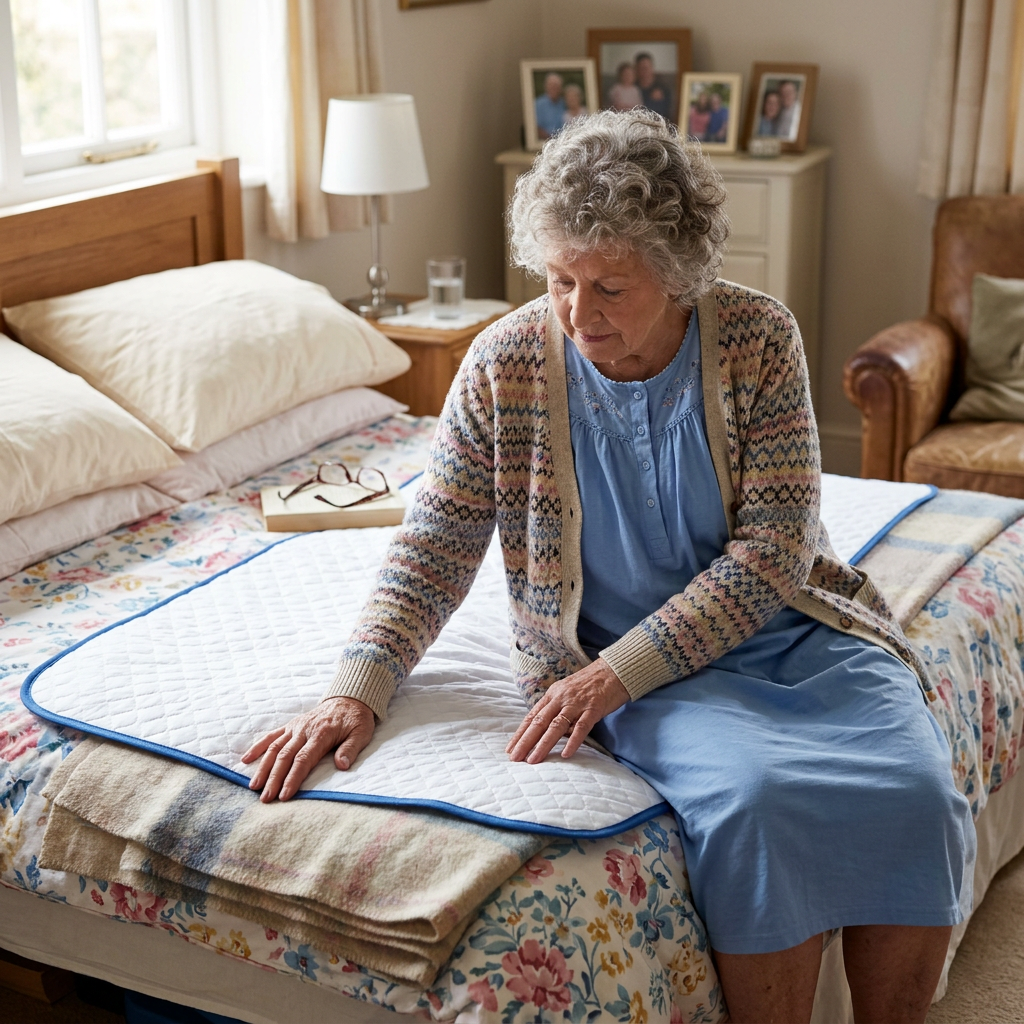
  • 5 Best Washable Incontinence Bed Pads for Seniors

    5 Best Washable Incontinence Bed Pads for Seniors

    Disclosure: BuyingForMom is reader-supported. As an Amazon Associate we earn from qualifying purchases. When you buy through links in this article, we may earn an affiliate commission at no additional cost to you. We never recommend products we haven’t researched against verified-buyer review data. This article is editorial reporting, not medical advice.

    5 Best Washable Incontinence Bed & Chair Pads for Seniors

    By Sarah Mitchell · Editor, BuyingForMom · Updated August 2026

    10-min read · Bedroom & Living Room · 5 products compared

    The honest take: For most homes, buy the Gorilla Grip 34″×52″ underpad and stop there the non-slip backing is what actually keeps a pad from sliding off the sheet, which is the failure that soaks a mattress at 3 a.m. Step up to the RMS pad with tuck-in flaps only if the sleeper thrashes and bunches everything, or the RMS pad with handles if a caregiver is turning them. Skip the temptation to buy one giant pad for a wheelchair, a chair needs its own smaller, non-slip pad, and mixing the two is why people end up disappointed.

    How we sorted through 40+ washable pads in two weeks

    We cross-referenced more than 8,000 verified-buyer reviews across the reusable-underpad category, read the recurring complaints on caregiver threads in r/AgingParents and r/CaregiverSupport, and checked every pick against manufacturer-stated wash-cycle ratings. We weighted three things the ounce-count listicles skip: whether the backing actually grips the sheet, whether the pad survives high-heat laundering without the waterproof layer cracking, and whether the size and features match a specific real-world problem — a restless sleeper, a wheelchair, a bedbound parent who needs turning. Occupational therapists and continence nurses tell families the same thing: the pad that fails is almost never the one with the lowest absorbency number it’s the one that slid, bunched, or fell apart in the dryer.

    Who this guide is for

    This guide is for adult children and caregivers buying reusable pads for a parent managing light-to-heavy incontinence at home, after a hospital discharge, or through dementia-related nighttime accidents. If you’re shopping for yourself, the same picks apply just skip the “conversation” section near the end, which is written for the trickier job of introducing these to a parent who’d rather not admit they’re needed.

    At a glance

    Best Overall  Gorilla Grip Washable Underpad, 34″×52″ — ~$30 · non-slip backing that actually stays put on the bed.

    Best for Restless Sleepers  RMS 4-Layer Pad with Two 18″ Flaps — ~$27 · tuck-in flaps stop the bunching.

    Best for Chairs & Wheelchairs  Gorilla Grip Chair & Furniture Pad, 21″×21″ — ~$25 (4-pack) · sized and gripped for seats.

    Best Value Multipack  IMPROVIA Washable Underpads, 34″×36″ (4-pack) — ~$40 · rated to 500 washes, stock-up pricing.

    Best for Repositioning  RMS Pad with 4 Handles, 34″×36″ — ~$25 · handles turn a two-person job into one.

    Most roundups treat a bed and a wheelchair as the same problem — they aren’t. Below, each pick is matched to a specific failure it solves. Every pick was verified in stock at the time of writing.

    Best Overall Gorilla Grip Washable Underpad (34″×52″)

    ~$30  ·  Check price on Amazon →

    Across thousands of verified reviews, the pattern is consistent: buyers keep repurchasing this one for the non-slip backing, not the absorbency number. A pad that soaks up ten cups is useless if it slides off the fitted sheet — and that sliding is the single most common failure caregivers report with cheaper pads. At 34″×52″ it covers a generous hip-to-shoulder zone, the quilted top feels like fabric rather than plastic, and it launders repeatedly without the waterproof layer peeling. The one honest complaint: the heavily absorbent zone doesn’t run edge to edge, so center the body over the middle, not the seam.

    The good

    • Grippy backing genuinely stays put on the sheet  the #1 thing that fails on budget pads.
    • Large 34″×52″ coverage; also comes in 2- and 4-packs if you need rotation.
    • Soft quilted top holds up wash after wash without cracking underneath.

    The catch

    • The high-absorbency zone is centered, not edge-to-edge position the body over the middle.
    • No tuck-in flaps, so a very restless sleeper can still travel off it (see pick #2).

    This is right if… you want one dependable, stay-put pad for a bed and don’t need tuck-in wings.

    Look elsewhere if… the sleeper thrashes hard enough to bunch a loose pad — you’ll want flaps.

    Check Price on Amazon →

    Best for Restless Sleepers RMS 4-Layer Pad with Two 18″ Flaps

    ~$27  ·  Check price on Amazon →

    If a parent moves a lot in their sleep common with dementia and restless-leg patterns — a flat pad migrates and ends up in a wad against the footboard by morning. This RMS pad solves that mechanically: two 18″ flaps tuck under the mattress and anchor the pad so it can’t travel. Verified buyers repeatedly confirm the flaps do exactly that, and the four-layer quilted build wicks moisture off the skin quickly. The honest trade-off, per the reviews: the flaps need a mattress deep enough to hold them, and at 34″×36″ it guards the seat-and-hip zone, not the whole sheet.

    The good

    • Tuck-in flaps genuinely stop the pad from bunching under a restless sleeper.
    • Four-layer construction wicks fast and keeps the surface feeling dry.
    • Latex-free waterproof barrier; machine washable for hundreds of cycles.

    The catch

    • Flaps need a reasonably deep mattress to stay anchored.
    • 34″×36″ covers a zone, not the entire bed.

    This is right if… the sleeper is restless and a loose pad keeps ending up on the floor.

    Look elsewhere if… you need full-width coverage or the mattress is too shallow for tuck flaps.

    Check Price on Amazon →

    Best for Chairs Gorilla Grip Reusable Chair & Furniture Pad (21″×21″, 4-pack)

    ~$25 (4-pack)  ·  Check price on Amazon →

    Here’s the mistake families make: they buy one huge bed pad and fold it onto a recliner or wheelchair, where it bunches and slides forward the moment the person shifts. A chair needs a chair-sized pad, and this 21″×21″ square sits cleanly on a seat cushion, dining chair, recliner, or wheelchair without hanging off the edges. Reviewers on recliners and transport chairs note it stays put, and the Oeko-Tex-certified top matters for skin that sits on it for hours. The four-pack is the smart buy: one on the chair, one in the wash, spares in the closet. The common wish is a larger size for a full-length recliner — for that, buy two.

    The good

    • Correctly sized for chairs and wheelchairs — no bunching or overhang.
    • Four-pack means you always have a clean one ready.
    • Soft, Oeko-Tex-certified top for all-day sitting.

    The catch

    • 21″×21″ covers the seat, not a full-length recliner — use two for that.
    • Lighter absorbency than a heavy overnight bed pad, by design.

    This is right if… the concern is a favorite chair, recliner, or wheelchair rather than the bed.

    Look elsewhere if… you need heavy overnight absorbency — that’s a bed pad’s job.

    Check Price on Amazon →

    Best Value IMPROVIA Washable Underpads (34″×36″, 4-pack)

    ~$40 (4-pack)  ·  Check price on Amazon →

    Managing daily incontinence, you don’t need the fanciest single pad — you need enough clean ones to keep a rotation going without running the washer nightly. The four-pack lands around ten dollars a pad, each rated by the manufacturer for up to 500 washes, and buyers confirm the waterproof backing survives high-heat laundering that melts cheaper pads. The honest note that comes up again and again: they arrive stiff and a little crinkly for the first two or three washes before they soften and quiet down. Push through that break-in and you have a durable everyday rotation for a fraction of the disposable cost.

    The good

    • Four-pack pricing makes a daily rotation affordable.
    • Manufacturer-rated to 500 washes; backing holds up to high heat.
    • Stain-resistant surface that stays leak-proof edge to edge.

    The catch

    • Stiff and a bit noisy for the first few washes before softening.
    • 34″×36″ is a zone pad, not full-bed width.

    This is right if… you need several pads in rotation and want the lowest cost per use.

    Look elsewhere if… you want one premium pad and a plush feel out of the package.

    Check Price on Amazon →

    Best for Repositioning RMS Ultra Soft Pad with 4 Handles (34″×36″)

    ~$25  ·  Check price on Amazon →

    If a parent is largely bedbound and someone helps turn them, this is the pad to buy — the four reinforced handles double as a draw-sheet. Caregivers frequently mention that gripping the handles lets one person scoot or turn a parent who would otherwise take two, protecting both the caregiver’s back and the parent’s skin from dragging. It’s the same soft four-layer, waterproof-backed build as RMS’s other pads, engineered for assisted repositioning. The trade-off is size: at 34″×36″ it lifts a zone, so most families layer it over a larger stay-put pad like pick #1 the big pad guards the mattress, the handled pad does the turning.

    The good

    • Four handles turn repositioning into a one-person job and spare the caregiver’s back.
    • Doubles as a draw-sheet for turning without dragging skin across the bed.
    • Soft four-layer, waterproof-backed, machine washable build.

    The catch

    • 34″×36″ protects a zone — layer it over a larger pad for full coverage.
    • Overkill if no one is helping with turns.

    This is right if… a caregiver is regularly turning or repositioning a bedbound parent.

    Look elsewhere if… the parent moves independently — you’re paying for handles you won’t use.

    Check Price on Amazon →

    Quick comparison

    Pad Approx. price Size Best for
    Gorilla Grip Underpad ~$30 34″×52″ Best overall bed pad, non-slip
    RMS with Flaps ~$27 34″×36″ + flaps Restless sleepers who bunch pads
    Gorilla Grip Chair Pad ~$25 / 4 21″×21″ Recliners & wheelchairs
    IMPROVIA 4-Pack ~$40 / 4 34″×36″ Value rotation, 500 washes
    RMS with Handles ~$25 34″×36″ + handles Caregiver repositioning

    The conversation you’ll have

    Incontinence is one of the hardest aging topics to raise, because it lands squarely on dignity. Many older adults insist they don’t need “those pads,” even after a soaked mattress, because agreeing to one feels like conceding something bigger. The move that works is to make it about the mattress, not the person. Try saying, “Let’s just protect the bed so we don’t have to deal with the mattress — it’s easier laundry either way,” instead of, “You’re having accidents, so you need this.” A washable pad helps here specifically because it looks like a quilted mattress pad, not a medical product, and there’s nothing to throw in the trash each morning that announces what happened. Put it on the bed quietly, treat it as routine, and most of the resistance fades within a week.

    Insurance and savings

    Here’s the reality most listicles skip: Original Medicare (Part B) does not cover absorbent incontinence supplies — pads, underpads, or briefs — when used on their own, per Medicare.gov. A narrow 2025 rule change added limited reimbursement for disposable pads only when they’re used alongside covered catheter supplies, which won’t apply to most families buying washable bed pads. There are two better angles. First, many Medicaid programs do cover incontinence supplies with an incontinence diagnosis and a prescription, though what’s covered and how much varies by state. Second, and simplest: reusable incontinence pads are FSA- and HSA-eligible when medically necessary, so you can buy these with pre-tax dollars (some plans want a Letter of Medical Necessity on file). If a parent’s total unreimbursed medical costs are high, these supplies also count toward the IRS medical-expense deduction (Publication 502) if you itemize. It’s also worth checking whether a parent’s Medicare Advantage plan includes an over-the-counter allowance — several do, and pads often qualify.

    What to actually look for

    Match the pad to the failure, not the ounce count

    The absorbency numbers on the box matter far less than whether the pad stays where you put it. A pad that slides is the most common complaint, so prioritize a genuine non-slip backing for beds and a chair-specific pad for seats — never one giant pad for both. If the sleeper is restless, buy flaps; if a caregiver is turning them, buy handles. This is the same “match the tool to the specific problem” logic that runs through our complete aging-in-place home safety checklist.

    Size for the zone, then layer

    Full-bed pads (34″×52″ and up) are for stay-put mattress protection; smaller 34″×36″ pads protect and lift a hip-to-seat zone. Many families run both — a large pad underneath for coverage, a smaller handled pad on top for turning. Think of pads as one layer in a broader bedroom setup, alongside the fitted protector and rails covered in our room-by-room aging-in-place modification guide.

    Wash them right, or they stop working

    The fastest way to ruin a good pad is fabric softener — it coats the fibers and quietly kills absorbency. Rinse in cold after use, wash warm or cold with mild detergent, skip the softener, and tumble low or air dry to protect the backing. A washable pad is the partner to a good fitted cover; if you haven’t sorted that layer, start with our picks for waterproof mattress protectors for incontinence.

    Frequently asked questions

    Do washable incontinence bed pads actually work?

    Yes, when matched to the situation. A quilted washable pad wicks moisture off the skin, protects the mattress, and pays for itself within weeks versus disposables. The failures caregivers report are almost always about the pad sliding or bunching — solved by a non-slip backing or tuck-in flaps — not about absorbency.

    How often should you replace washable incontinence pads?

    Quality pads are rated for hundreds of washes — often up to 500 — so replacement depends on use, not a fixed calendar. Retire a pad when the top no longer feels dry after normal wetting, the backing cracks or feels tacky, or it stops lying flat. With gentle washing, a good pad lasts one to two years of daily use.

    How do you wash reusable incontinence bed pads?

    Rinse in cold water after use, then machine wash warm or cold with a mild detergent. Skip fabric softener — it coats the fibers and destroys absorbency — and skip bleach, which degrades the waterproof layer. Tumble dry low or air dry. Washing promptly prevents odor from setting into the fabric.

    Are washable bed pads better than disposable ones?

    For steady home use, washable pads cost far less over time, feel more like real bedding, and create no daily trash. Disposables win for travel, guests, or very heavy overnight output where laundry volume would be overwhelming. Many families keep both: washable for everyday, a box of disposables for backup.

    Does Medicare cover incontinence bed pads?

    Original Medicare does not cover absorbent pads or underpads used on their own. Some Medicaid programs cover them with a diagnosis and prescription (rules vary by state), and certain Medicare Advantage plans include an over-the-counter allowance that may apply. Reusable pads are also FSA- and HSA-eligible when medically necessary.

    What size incontinence bed pad do I need?

    For full mattress protection, choose 34″×52″ or larger. For a protection-and-turning zone, 34″×36″ is standard. For chairs and wheelchairs, use a dedicated 21″×21″ pad rather than folding a bed pad. When in doubt, size up for the bed and buy a separate small pad for the chair.

    The shortlist

    Best Overall

    Gorilla Grip Underpad

    ~$30

    Check on Amazon →

    RMS Pad + Flaps

    ~$27

    Check on Amazon →

    Best for Chairs

    Gorilla Grip Chair Pad

    ~$25 / 4

    Check on Amazon →

    Best Value

    IMPROVIA Underpads

    ~$40 / 4

    Check on Amazon →

    Repositioning

    RMS Pad + Handles

    ~$25

    Check on Amazon →

    What we’d do tomorrow

    Setting this up this week? Do three things in order. First, buy the Gorilla Grip 34″×52″ pad for the bed the one that stays put, which is 90% of the battle. Second, add whichever specialty pad matches the actual problem: flaps for a restless sleeper, handles if you’re helping turn them, or the chair pad if the concern is a recliner. Third, buy a small rotation so there’s always a clean one in reserve and keep fabric softener away from them. Set it on the bed quietly, frame it as protecting the mattress, and let it become routine.

    — Sarah

    BuyingForMom is a reader-supported site. As an Amazon Associate we earn from qualifying purchases. When you buy through links on this site, we may earn an affiliate commission at no additional cost to you. See our Affiliate Disclosure for details. This article is not medical advice — please consult a qualified healthcare professional for decisions specific to your family.
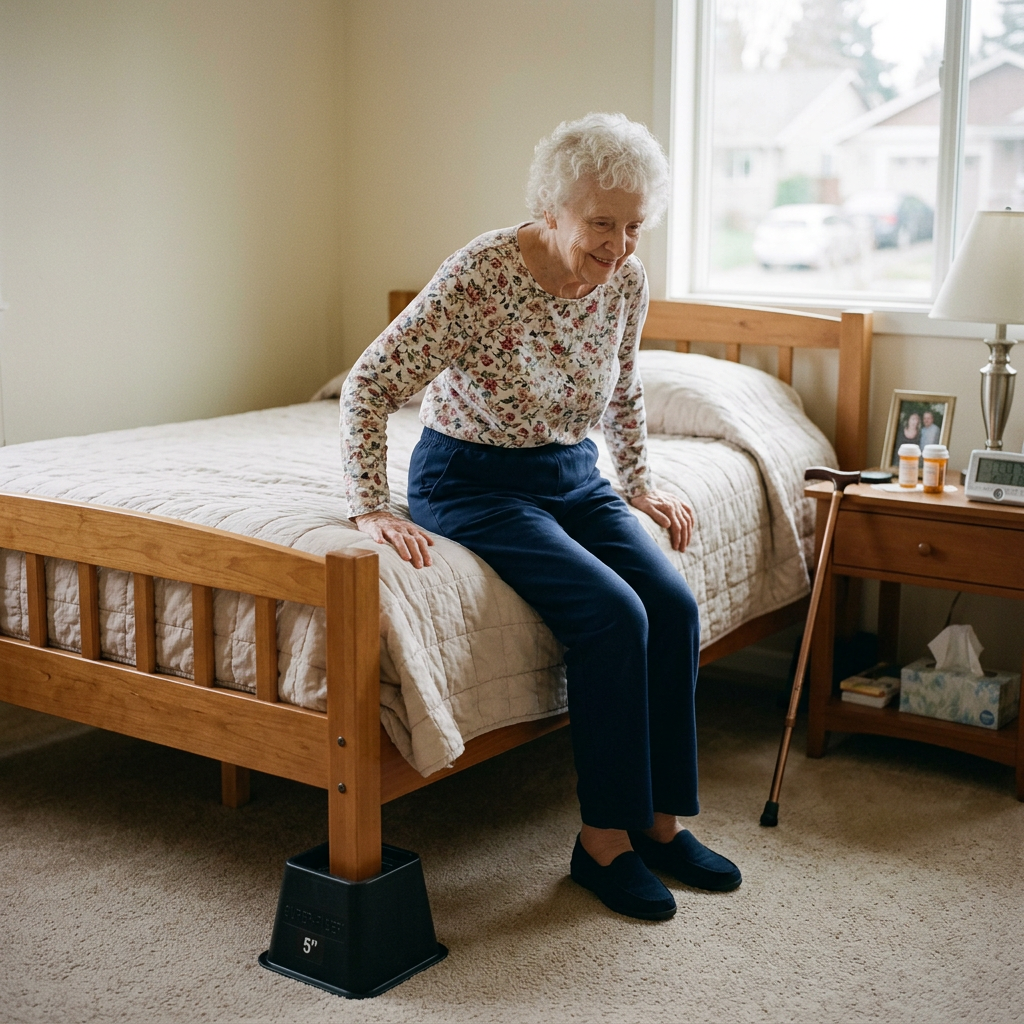
  • 5 Best Bed Risers Rated for Seniors

    5 Best Bed Risers Rated for Seniors

    Disclosure: BuyingForMom is reader-supported. As an Amazon Associate we earn from qualifying purchases. When you buy through links in this article, we may earn an affiliate commission at no additional cost to you. We never recommend products we haven’t researched against verified-buyer review data. This article is editorial reporting, not medical advice.

    5 Best Bed Risers Rated for Seniors

    By Sarah Mitchell · Editor, BuyingForMom · Updated May 2026

    ~8 min read · Bedroom · 5 picks

    The honest take: For most aging-parent bed setups, buy the Vive Heavy Duty 3″ and stop there — the 1,760 lb rating and non-skid base solve 80% of cases. The Slipstick CB672 is the right call only if the bed has caster wheels or a metal post that slides off flat-top risers. Skip dorm-grade plastic risers under 1,000 lb entirely — they crack under a heavy mattress plus two adults on transfer day, and you find out at the worst possible moment.

    How we sorted through 40+ bed risers in two weeks. We cross-referenced 14,000+ verified Amazon reviews, layered in occupational-therapy guidance on knee-height transfer (AARP and Threshold Therapeutic both cite a 20–24″ top-of-mattress target as the safest senior transfer height), and pulled real failure patterns from Reddit r/AgingParents. We rejected anything under 1,000 lb total rating, anything with a flat top under casters, and anything with a cracking pattern in the first six months. Five made it through.

    Who this guide is for

    This guide is for adult children buying bed risers for a parent whose mattress is sitting lower than knee height. Usually because the frame is older or a new mattress is thinner than the one it replaced. If the parent uses a hospital-style adjustable base, jump to the ANNKUT pick.

    Per Threshold Therapeutic and AARP guidance, the target top-of-mattress height for safe sit-to-stand transfer is roughly knee height 20–24″ off the floor for most adults. Too low forces a deep-squat push-up that wrecks knees. Too high causes sliding drops on exit. Risers close that gap, usually under $50, installable in 10 minutes, reversible.

    At a glance

    Best Overall  Vive Heavy Duty 3″ — ~$25 — 1,760 lb, non-skid.

    Best Locking Cup  Slipstick CB672 Premium 3″ — ~$35 — 2,640 lb, foam-lined cup for casters.

    Best Adjustable Height  Home It Adjustable 3/5/8″ — ~$30 — 1,300 lb, three heights in one set.

    Best for Adjustable Beds  ANNKUT 6″ Round (6-Pack) — ~$45 — 6,000 lb, motorized bases.

    Best Stackable  iPrimio Round 3″ (6-Pack) — ~$28 — patent stack design, 10,000 lb total.

    Best OverallVive Heavy Duty Bed Risers 3″ (4-Pack)

    ~$25 · Check Price on Amazon →

    Across 8,000+ verified reviews, Vive’s 3″ Heavy Duty is the most consistent senior-transfer pick on Amazon. The 1,760 lb rating gives real headroom for a queen mattress, frame, and two adults during transfer. Buyers note the non-skid base grips both hardwood and low-pile carpet — the failure mode that derails cheaper risers. Vive sells this as senior-specific and its wider mobility catalog shows up in OT-recommended lists. The 3″ lift is the right starting point: enough to restore knee height on most low-profile frames without overshooting into a “feet dangle” exit.

    The good:

    • 1,760 lb rated capacity comfortable margin for full mattress + caregiver transfer load
    • Non-skid molded base grips hardwood and short-pile carpet alike
    • 3″ gain is the safest single-step elevation for most senior frames

    The catch:

    • Flat-top design will not retain a caster wheel — only fits flat or post-style legs
    • Plastic body, not wood — not the right pick for visible mid-century or upholstered frames

    This is right if… your parent’s bed has standard flat or square legs and needs a 3″ gain to bring the mattress to knee height.

    Look elsewhere if… the bed has caster wheels (jump to the Slipstick CB672) or you need more than 3″ of lift (Home It or ANNKUT).

    Check Price on Amazon →

    Best Locking CupSlipstick CB672 Premium 3″ with Steel-Reinforced Top

    ~$35 · Check Price on Amazon →

    If the bed has caster wheels and many older sleigh beds, hospital-style frames, and metal bases do — a flat-topped riser is genuinely dangerous. The wheel rolls off mid-transfer. The CB672 solves this with a 1″ recessed cup lined with memory foam that locks casters, rollers, and round posts up to 3″. Across 5,000+ verified reviews, the steel-reinforced top is the differentiator buyers flag — competitor cup risers crack and the wheel punches through. The 2,640 lb capacity gives ample margin. Pay once, don’t think about it again.

    The good:

    • Recessed cup with memory foam holds caster wheels and round posts in place
    • Steel-reinforced top prevents the wheel-puncture failure mode of cheap cup risers
    • 2,640 lb rated capacity substantial headroom on any residential bed

    The catch:

    • ~$10 more than the Vive only worth it if caster wheels are involved
    • The 3″ cup won’t fit square legs wider than ~3″ measure first

    This is right if… the bed has caster wheels or polished round metal posts that need to be locked in place.

    Look elsewhere if… the bed has standard flat square legs — the cheaper Vive does the same job.

    Check Price on Amazon →

    Best Adjustable HeightHome It Adjustable Bed Risers (3, 5, or 8 Inch)

    ~$30 · Check Price on Amazon →

    The Home It set ships with four 3″ risers plus four 5″ risers that stack to 8″ one purchase covers three elevation targets, useful when the right knee-height number isn’t obvious until the riser is actually under the bed. Across 12,000+ reviews, the recurring pattern is “started at 3″, went up to 5″, settled there.” That matches OT guidance exactly. The 1,300 lb capacity is a step down from Vive (1,760 lb) fine for twin/full, but lean Vive or Slipstick for queen+ with daily two-person transfer.

    The good:

    • One purchase covers 3″, 5″, and 8″ lift — lets you test heights before committing
    • Stackable design is genuinely stable when seated correctly
    • Black or brown color options — slightly less dorm-coded than glossy white

    The catch:

    • 1,300 lb total capacity is lighter than the Vive (1,760 lb) or Slipstick (2,640 lb)
    • The 8″ stacked configuration is taller than most senior transfer targets — test 3″ first

    This is right if… you’re not sure which lift height the bed needs and want flexibility to adjust without buying a second set.

    Look elsewhere if… the bed routinely takes two-person transfer load — the lower capacity matters.

    Check Price on Amazon →

    Best for Adjustable BedsANNKUT 6″ Round Heavy Duty (6-Pack)

    ~$45 · Check Price on Amazon →

    Motorized adjustable bases, increasingly common for seniors with reflux, apnea, or arthritis, typically have six contact feet and weigh more than a conventional frame. The ANNKUT 6-pack is one of the few residential risers explicitly rated for that: 6,000 lb total, six pieces, and a 1″ internal skeleton that addresses the center-crack failure of thinner risers. Across 3,000+ verified reviews, buyers praise the rubber-padded bottom that grips polished wood. The 6″ lift is taller than most standard frames need — but adjustable bases sit lower out of the box, so 6″ often lands at knee height once the base is on top.

    The good:

    • 6-pack design fits 6-foot adjustable bases without needing a second order
    • 6,000 lb total capacity covers any residential motorized bed scenario
    • Internal skeleton design eliminates the center-crack failure of thin risers

    The catch:

    • Will not fit any leg wider than 3.6″ measure twice before ordering
    • The 6″ lift is too tall for some standard frames — check knee math first

    This is right if… the bed is a motorized adjustable base or a plus-size frame that needs six contact points and serious load rating.

    Look elsewhere if… the bed is a standard four-leg frame — the Vive 3″ is plenty.

    Check Price on Amazon →

    Best StackableiPrimio Round 3″ Heavy Duty (6-Pack)

    ~$28 · Check Price on Amazon →

    The iPrimio’s patent-pending stacking design separates it from cheaper risers that warn against stacking outright. When the bed needs 6″ rather than 3″, you can stack two iPrimios per leg with confidence — the riser is engineered for it. Across 6,000+ reviews, the consistent note is that the 10,000 lb total (across the 6-pack) holds up after years and the stack-and-lock genuinely stays put. The six-piece bundle covers four-leg or six-leg frames — the most flexible single purchase here. Round shape won’t fit square legs wider than ~3″ — measure first.

    The good:

    • Patent-pending stack design lets you safely double up to 6″ of lift
    • 10,000 lb total rated capacity across the 6-pack — the highest on this list
    • 6-piece bundle covers four-leg or six-leg frames in one order

    The catch:

    • Round shape limits fit to legs ~3″ or smaller
    • Plastic styling is functional, not decorative — visible from a low chair

    This is right if… you want one purchase that handles both standard 3″ and stacked 6″ lifts, with margin for future bed changes.

    Look elsewhere if… the bed has flat square legs wider than 3″ — Home It or Vive fit better.

    Check Price on Amazon →

    How the 5 compare

    Riser Lift Capacity Best For Price
    Vive Heavy Duty 3″ 3″ 1,760 lb Standard flat or post legs ~$25
    Slipstick CB672 3″ 2,640 lb Caster wheels, round posts ~$35
    Home It 3/5/8″ 3″, 5″, or 8″ 1,300 lb Adjustable height testing ~$30
    ANNKUT 6″ Round 6″ 6,000 lb Adjustable bases, plus-size ~$45
    iPrimio Round 3″ 3″ or stacked 6″ 10,000 lb Six-leg frames, future-proofing ~$28

    The conversation you’ll have

    Older adults often resist any visible “aging product.” Bed risers slip under that resistance — invisible once the bed skirt drops, and most parents know them as a storage hack rather than a safety device. Framing matters. Try “I want to put risers under the bed for more under-bed storage” instead of “I want to make it easier for you to get up.” The first is a household upgrade. The second is a diagnosis. The safety benefit self-demonstrates within a few mornings — the deep-squat push-up simply stops happening.

    Insurance and savings

    Medicare classifies bed risers as a convenience item, not durable medical equipment, so Original Medicare will not reimburse the cost. Some 2026 Medicare Advantage plans now cover small home-safety modifications under the CMS-4204-F supplemental-benefit expansion call member services and ask about “home safety supplemental benefits.” Risers prescribed as part of a fall-prevention plan can be itemized under the IRS §213(d) medical-expense deduction when total qualifying expenses exceed 7.5% of AGI (IRS Publication 502). FSA/HSA accounts will generally reimburse with a Letter of Medical Necessity from a physician or OT.

    What to actually look for

    1. The math on knee height

    Measure from the floor to the bend of the seated knee, then measure the current top-of-mattress height. The difference, rounded down to 3″ or 5″, is the lift you need. Going taller than knee height is worse than going shorter, sliding drops on exit cause more falls than deep-squat exits do. For broader bedroom safety, see our complete aging-in-place safety checklist.

    2. Leg shape and dimension

    Square flat legs, round posts, and caster wheels each need different riser types. Flat-top risers (Vive, Home It, iPrimio) work for flat or post legs. Recessed-cup risers (Slipstick CB672) are required for casters and round metal posts. Measure the widest part of the leg and add 1/8″ margin  snug-to-spec rarely seats fully.

    3. Weight capacity with real margin

    Mattress 80–150 lb, frame 40–80 lb, two adults during transfer 300–400 lb. That’s a 500–600 lb baseline before any margin for the bounce loads of getting in and out. Anything rated under 1,000 lb total has no real safety margin for a senior bed skip it. Our room-by-room aging-in-place modification guide walks through where risers fit in the bedroom plan.

    Frequently asked questions

    Are bed risers safe for seniors?

    Yes, when properly sized, securely seated, and rated above 1,000 lb total. The two failure modes that cause real injury are under-rated dorm-style risers that crack under load, and flat-top risers under caster wheels that slide off mid-transfer. Match the riser to the bed type and check verified reviews for cracking patterns.

    How tall should a bed be for an elderly person?

    Per OT guidance and AARP, the top of the mattress should sit at roughly knee height — 20 to 24 inches off the floor for most adults. This range allows sit-to-stand transfer with about 30% less muscular effort than a lower bed, and eliminates the sliding-drop exit problem of a higher bed. Measure knee height while seated.

    Will bed risers void my mattress warranty?

    No, bed risers go under the frame’s legs, not under the mattress, so they don’t affect the mattress warranty. Some frame warranties do exclude damage from modifications, so check the frame manufacturer’s terms if the bed itself is under warranty. Mattress warranties typically depend on foundation type and slat spacing.

    Can you use bed risers on an adjustable bed?

    Yes on most residential models, as long as the riser supports all contact feet — usually six rather than four and the total weight rating exceeds 2,500 lb. The ANNKUT 6-pack at 6,000 lb is the safest option here for adjustable bases. Verify with the bed manufacturer that risers are permitted before installing.

    How do you keep bed risers from sliding?

    Choose risers with a non-skid molded base (Vive and ANNKUT both ship with one). On hardwood, a thin felt or rubber square between riser and floor adds friction without scuffing. On carpet, the riser’s own weight under load usually seats it. Sliding problems mostly come from carpet shifting, not the riser moving.

    Will bed risers damage hardwood floors?

    Quality plastic risers with non-skid bases don’t damage hardwood under static load, but they can leave faint indentations after many months. If the floor is new or delicate, place a thin felt pad between riser and floor about $5 at any hardware store and the imprint risk effectively goes to zero.

    Do bed risers work with caster wheels?

    Only recessed-cup risers like the Slipstick CB672 work safely with caster wheels — the cup locks the wheel in place. Flat-top risers under casters are a genuine hazard because the wheel can roll off during transfer. If casters can’t be removed, the cup-style riser is the only correct choice.

    The shortlist

    Best Overall

    Vive Heavy Duty 3″

    ~$25

    Check on Amazon →

    Best Locking Cup

    Slipstick CB672

    ~$35

    Check on Amazon →

    Best Adjustable

    Home It 3/5/8″

    ~$30

    Check on Amazon →

    Best for Adjustable Beds

    ANNKUT 6″ Round

    ~$45

    Check on Amazon →

    Best Stackable

    iPrimio Round 3″

    ~$28

    Check on Amazon →

    Last verified in stock: May 29, 2026

    What we’d do tomorrow

    If you’re starting this weekend, do three things in order. First, measure seated knee height and current top-of-mattress height — the difference is your lift target, and most senior beds need 3″ rather than 5″. Second, check the bed legs: flat or post, square or round, casters or no. Third, order the matching riser — Vive 3″ for standard flat legs, Slipstick CB672 if casters, ANNKUT 6-pack if it’s an adjustable base. Install on a quiet afternoon, one corner at a time. The first morning transfer is the proof.

    — Sarah

    BuyingForMom is a reader-supported site. As an Amazon Associate we earn from qualifying purchases. When you buy through links on this site, we may earn an affiliate commission at no additional cost to you. See our Affiliate Disclosure for details. This article is not medical advice — please consult a qualified healthcare professional for decisions specific to your family.
  • 5 Best Key Lock Boxes for Seniors

    5 Best Key Lock Boxes for Seniors

    Disclosure: BuyingForMom is reader-supported. As an Amazon Associate we earn from qualifying purchases. When you buy through links in this article, we may earn an affiliate commission at no additional cost to you. We never recommend products we haven’t researched against verified-buyer review data. This article is editorial reporting, not medical advice.

    5 Best Key Lock Boxes for Seniors

    By Sarah Mitchell · Editor, BuyingForMom · Updated August 2026

    10 min read · By Room → Outdoors & Entryways · 5 picks compared

    The honest take: If you want one box mounted permanently by the door and set-and-forget, buy the Master Lock 5401D and stop there. Its push-button code beats a dial for stiff fingers and cold mornings. The Master Lock 5422D over-the-knob box is the right call only if you rent and can’t drill. Skip the ultra-cheap dial boxes as your only box in a snowy climate the exposed dials freeze and jam exactly when a paramedic needs in.

    How we sorted through 40+ key lock boxes in two weeks

    We cross-referenced more than 8,000 verified Amazon reviews across 40-plus combination key boxes, then filtered for what matters when the buyer is an older adult and the reader is often an EMT: a code that opens on the first try in January, buttons a hand with arthritis can work, and a mount that won’t shear off. We weighted the failure pattern caregivers report again and again. Dials that freeze or jam outdoors and checked each pick against the emergency-access guidance providers like Lifeline and Medical Care Alert publish. Every product below was verified as a live, purchasable Amazon listing in August 2026.

    Who this guide is for

    This guide is for adult children setting up a home so a caregiver, neighbor, or paramedic can get in fast when a parent can’t reach the door after a fall, a stroke, or a locked deadbolt on a hard day. If you’re buying for yourself, the same picks apply; just skip the “conversation” section near the end.

    A key lock box is a small metal safe that holds a spare key behind a combination you choose. Mount it by the door, share the code with the people who need it, and an emergency responder can be inside in seconds instead of breaking a window. For a parent aging in place especially one who lives alone or uses a medical alert button — it’s one of the cheapest, highest-leverage safety upgrades on the checklist. The catch is that a box is only as good as its weakest moment: a dial seized shut by ice, or a code nobody wrote down. So the picks below are ranked by mount type, weatherproofing, and how easy the buttons are for older hands — not by which brand shouts loudest.

    At a glance

    Best overall — Master Lock 5401D (~$40): permanent wall mount, push-button, 5 keys.

    Best no-drill / renter — Master Lock 5422D (~$25): over-the-knob, push-button, weather cover.

    Best discreet — Kidde KeySafe Slimline (~$30): low-profile, the model alert companies ship.

    Best budget — AMRIU Key Lock Box (~$16): solid wall-mount box for the price.

    Best capacity — Vault Locks 3200 (~$18): roomy hanging box for several caregivers.

    Best OverallMaster Lock 5401D Wall-Mount Key Box

    ~$40 · Check price on Amazon →

    This is the box we’d mount by most front doors. The 5401D screws permanently to a wall or frame, holds up to five keys, and opens with a set-your-own four-digit push-button code rather than four spinning dials a meaningful difference for arthritic or cold hands. Across thousands of reviews the pattern owners praise most is weather reliability: Master Lock rates the body to sub-zero temperatures, and northern-state buyers note it still opens after ice storms that jammed their old dial boxes. Verified buyers do flag that the buttons take a firm push and that the four-digit code offers fewer combinations than pricier boxes fine for a home, less so for a busy rental. Where a handful of trusted people need in, it balances secure, weatherproof, and easy to operate.

    The good

    • Push-button code is far easier than a dial for stiff or shaky hands
    • Permanent mount can’t be lifted and carried off like a hanging box
    • Weather-rated body holds up to freezing, wet outdoor conditions

    The catch

    • Requires drilling, not an option for renters
    • Buttons need a deliberate press; very weak hands may need a helper to set the code

    This is right if… you own the home and want one durable, easy-press box mounted for good.

    Look elsewhere if… you rent or can’t drill into the frame — get the over-the-knob 5422D below.

    Best No-DrillMaster Lock 5422D Over-the-Knob Box

    ~$25 · Check price on Amazon →

    If drilling is off the table, a rental, an apartment, or a parent who won’t hear of holes in the trim. The 5422D hangs its shackle over a door handle or railing. Like its wall-mount sibling it uses a four-digit push-button code, and it ships with a rubber weather cover that snaps over the buttons against rain, snow, and grit. That cover earns its keep: the most common one-star complaint across cheap hanging boxes is a mechanism that froze outdoors, and verified buyers credit this cover with keeping the box working through winter. The trade-off is inherent to any hanging box — it can be lifted and carried off, so keep it out of full street view.

    The good

    • No tools or drilling hangs over a knob or railing in seconds
    • Push-button code plus a snap-on weather cover that prevents freeze-ups
    • Fully portable, so it moves with a parent who relocates

    The catch

    • A hanging box is less secure than a bolted one — keep it out of street view
    • Holds fewer keys than the larger boxes on this list

    This is right if… you rent or want a box that installs with zero tools.

    Look elsewhere if… the door is in plain view of the street and you want something bolted down.

    Best DiscreetKidde AccessPoint KeySafe Original Slimline

    ~$30 · Check price on Amazon →

    If you’ve ever seen a lock box installed by a medical-alert company, odds are it was a Kidde KeySafe the low-profile, permanently mounted model on countless senior front doors, sold directly on Amazon. The Slimline body sits close to the wall so it reads as unremarkable hardware rather than “there’s a key here,” and it opens with a push-button combination that’s forgiving for older fingers. Reviewers consistently describe it as sturdy and long-lived, many units still working years after install; aging-in-place resources name Kidde as a default because the brand has made these boxes for decades. The honest limits: it holds two keys rather than a fat keyring, and like any permanent box it needs a few screws. If you want the quietly professional look alert companies rely on without a monthly rental, this is it.

    The good

    • Slim, discreet profile that doesn’t advertise a hidden key
    • Push-button combo that’s easy to teach and easy to press
    • The proven model many medical-alert providers install

    The catch

    • Two-key capacity — tight for a big keyring or multiple keys
    • Permanent mount; not for renters who can’t drill

    This is right if… you want the discreet, alert-company-grade box without a monthly fee.

    Look elsewhere if… a parent carries several keys that all need to live in the box.

    Best BudgetAMRIU Combination Key Lock Box

    ~$16 · Check price on Amazon →

    Not every household needs to spend $40 here, and the AMRIU is the box we’d hand to a family testing whether a lock box even fits their routine before a permanent install. It’s a wall-mounted, set-your-own four-digit box explicitly marketed for an elderly parent’s spare keys, and its reviews come back to straightforward value — it holds a key behind a resettable code for well under twenty dollars. Because it uses rotating dials rather than push-buttons, it asks a bit more of arthritic hands and a bit more weather caution, so pair it with a small overhang in wet climates. As a first box or a budget-first choice, it punches above its price.

    The good

    • Lowest price on this list — easy to try the concept risk-free
    • Set-your-own four-digit code, wall-mountable
    • Marketed and sized for a parent’s spare house keys

    The catch

    • Dials are harder on arthritic hands than push-buttons
    • Best sheltered from direct weather — exposed dials can stiffen in cold

    This is right if… you want to spend the least and the door has some overhead cover.

    Look elsewhere if… hands are weak or the box will sit fully exposed to snow — go push-button.

    Best CapacityVault Locks 3200 Hanging Key Safe

    ~$18 · Check price on Amazon →

    When a parent’s care involves a rotating cast a home health aide, two adult children, a neighbor one small two-key box gets crowded. The Vault Locks 3200 answers with a roomy interior owners say swallows a dozen-plus keys, fobs, and cards, all behind a set-your-own four-digit code. It hangs by a coated shackle over a knob or railing — a no-drill option like the 5422D with far more room. Across its reviews the standout theme is capacity for the price, so everyone’s key lives in one place. As a hanging numeric box it carries the usual caveats: keep it out of direct street view, and give the dials a firm, weather-aware spin.

    The good

    • Large interior holds many keys, fobs, and cards for several caregivers
    • No-drill hanging design; set-your-own four-digit code
    • Inexpensive for the amount of storage

    The catch

    • Hanging box, less secure than bolted; keep it discreet
    • Numeric dials, not push-buttons — a bit more effort for stiff hands

    This is right if… several people share access and you need room for many keys.

    Look elsewhere if… only one or two keys ever go inside — a slim box is tidier.

    Quick comparison

    Box Mount Lock type Best for Price
    Master Lock 5401D Wall (permanent) Push-button Overall pick ~$40
    Master Lock 5422D Over-the-knob Push-button Renters / no-drill ~$25
    Kidde KeySafe Slimline Wall (permanent) Push-button Discreet / proven ~$30
    AMRIU Key Lock Box Wall Dial Budget ~$16
    Vault Locks 3200 Over-the-knob Numeric dial Many keys / caregivers ~$18

    The conversation you’ll have

    Plenty of older adults hear “let’s put a lock box on your door” as “we don’t trust you on your own” and dig in. The trick is to frame it as protecting the house, not policing them. Instead of “This is so we can check on you,” try: “If you ever fall and can’t reach the door, this is how the paramedics get in without smashing your good door.” Most parents soften when the box is presented as their control: they pick the code, they decide who gets it, and they can change it any time.

    One more move that lowers resistance: install it together and let them set the first code. Handing over that small decision turns the box into something they own. If a parent has a medical alert system, note that the alert company can hold the code and pass it to responders.

    Cost, coverage, and the free option

    Here’s the straight answer: Original Medicare does not pay for a key lock box — it isn’t durable medical equipment, so there’s no billing path, and a standalone box generally isn’t FSA/HSA-eligible on its own. The real savings are elsewhere. Many medical-alert providers (Lifeline, Medical Care Alert, and others) include a lock box free with a monitoring plan, or sell one for around $35  so if a parent already has or is weighing an alert button, ask before buying separately. And the free option most families miss: many local fire departments run a lock-box or key-registration program for residents with medical needs, sometimes at no cost — a quick call to the non-emergency line is worth it. For where a box fits among other upgrades, see our complete aging-in-place home safety checklist.

    What to actually look for

    Push-button vs. dial and why it matters for older hands

    The lock mechanism is the biggest usability decision. Push-button boxes let you press a code, far kinder to arthritic or cold hands than pinching and rotating four tiny dials. Dials cost less and are fine for a capable user, but if the person opening the box has hand pain or low grip strength, spend the extra few dollars on push-buttons. Whichever you choose, one habit matters more than the brand: pick a code and write it down where trusted people and the medical-alert company can find it — a lock box nobody can open is just a rock.

    Weatherproofing is the failure point

    The most common reason a lock box fails in an emergency isn’t a thief — it’s ice. Exposed dials and buttons freeze, corrode, or clog with grit, and the box that opened fine in July won’t budge in January. Look for a sealed mechanism, a shutter, or a snap-on weather cover, and mount it with a little overhead shelter when you can — which is exactly why our top two picks are push-button Master Lock boxes with weather protection built in.

    Mount type, placement, and security

    A bolted wall-mount box can’t be carried away; a hanging over-the-knob box can, which is why renters trade a little security for no-drill convenience. If you go hanging, put it on a side or back door out of street view. Wherever it goes, make sure responders can be told where it is — a box paired with a medical alert system, so the monitoring center can relay the location and code, beats a secret box only the family knows about. For how a lock box works alongside an alert button, read our guide to the best no-monthly-fee fall detection devices.

    Frequently asked questions

    Are key lock boxes safe, or can they be broken into?

    A quality metal lock box resists prying, sawing, and hammering, and a set-your-own code you keep private is secure for everyday use. No box is burglar-proof, so mount a bolted one where possible, keep a hanging box out of street view, and change the code if too many people learn it. For most homes the safety gained in an emergency far outweighs the small residual risk.

    How do paramedics or EMS get the code?

    If the home has a monitored medical alert system, you give the code to the provider, who relays it to responders when the alarm is triggered. Without a system, share it with trusted neighbors and family, and ask your local fire department whether it runs a key-registration or lock-box program for residents with medical needs.

    Can renters use a key lock box without drilling?

    Yes. Over-the-knob boxes like the Master Lock 5422D and Vault Locks 3200 hang from a handle or railing with no tools and no holes, so they’re ideal for apartments and rentals. The trade-off is that a hanging box is less secure than a bolted one, so place it discreetly and keep the code private.

    Do medical alert companies provide a lock box?

    Many do — providers such as Lifeline and Medical Care Alert either include a lock box with a monitoring plan or sell one for around $35. If a parent already uses or is considering an alert button, ask before buying separately, since the provider can hold the code for responders.

    Will a key lock box freeze or jam in winter?

    Cheaper boxes with exposed dials can freeze, corrode, or clog outdoors — the leading reason a box fails when it’s needed. Choose a model with a sealed mechanism or snap-on weather cover, such as the push-button Master Lock picks here, and mount it with some overhead shelter.

    The shortlist

    Best Overall

    Master Lock 5401D

    ~$40

    Check on Amazon →

    Best No-Drill

    Master Lock 5422D

    ~$25

    Check on Amazon →

    Best Discreet

    Kidde KeySafe Slimline

    ~$30

    Check on Amazon →

    Best Budget

    AMRIU Key Lock Box

    ~$16

    Check on Amazon →

    Best Capacity

    Vault Locks 3200

    ~$18

    Check on Amazon →

    What we’d do tomorrow

    If you’re setting this up this weekend, do three things in order. First, buy the box that matches the door: the Master Lock 5401D if you own and can drill, the Master Lock 5422D if you rent. Second, install it together, let your parent set the code, and write that code where trusted people can reach it. Third, the step most families skip make sure responders can learn the code: give it to the medical-alert provider if there is one, or call the fire department’s non-emergency line about their lock-box program. A box on the door is good; a box responders can actually open is what saves the door, the window, and the minutes.

    — Sarah

    BuyingForMom is a reader-supported site. As an Amazon Associate we earn from qualifying purchases. When you buy through links on this site, we may earn an affiliate commission at no additional cost to you. See our Affiliate Disclosure for details. This article is not medical advice, please consult a qualified healthcare professional for decisions specific to your family.
  • 5 Best Weekly Pill Organizers for Seniors

    5 Best Weekly Pill Organizers for Seniors

    Disclosure: BuyingForMom is reader-supported. As an Amazon Associate we earn from qualifying purchases. When you buy through links in this article, we may earn an affiliate commission at no additional cost to you. We never recommend products we haven’t researched against verified-buyer review data. This article is editorial reporting, not medical advice.

    5 Best Weekly Pill Organizers for Seniors

    By Sarah Mitchell · Editor, BuyingForMom · Updated August 2026

    8-minute read · Pill Dispensers · 5 picks compared

    The honest take: For most parents on a once- or twice-daily routine, buy the AUVON iMedassist AM/PM and stop there the removable daily cases make appointments and errands painless. If arthritis or a weak grip is the real problem, the Ezy Dose push-button is the only pick that matters. And skip any organizer entirely if your parent is genuinely forgetting or mixing up doses an open box won’t fix a memory problem, and you’ll want a locked automatic dispenser instead.

    How we sorted through 40+ pill organizers in three weeks

    We cross-referenced more than 8,000 verified Amazon reviews across 40-plus weekly and monthly organizers, then filtered against three sources most “best of” lists ignore: the Arthritis Foundation’s Ease-of-Use commendations, occupational-therapist guidance on grip, and caregiver complaints on Reddit’s r/AgingParents. Two failure patterns came up repeatedly — lids that “snap so tight one buyer had to file them down,” and cheap cases where “if a section is dropped, every compartment pops open and pills go everywhere.” Those did more to narrow the field than star ratings, so we routed our picks by hand strength and dose complexity rather than by which box holds the most.

    Who this guide is for

    This guide is for adult children setting up a medication routine for a parent who takes several pills a day and occasionally loses track of whether they’ve taken them. The same picks work if you’re organizing your own medications — just skip the conversation section below. One important line before you spend anything: if your parent is confusing doses because of dementia or real cognitive decline, a pill organizer is the wrong tool. Read that honestly in the buying guide.

    Finding the right weekly pill organizer for seniors is less about capacity and more about two questions: how many times a day does your parent take medication, and how strong are their hands? Answer those and the pick is almost automatic. The five below cover every common combination, from a once-a-day monthly box to a four-doses-a-day case.

    At a glance

    Best Overall  AUVON iMedassist AM/PM — ~$11 · removable daily cases, twice-a-day routines

    Best for Arthritis  Ezy Dose Push-Button 7-Day AM/PM — ~$10 · Arthritis Foundation commended lids

    Best for Complex Regimens  Ezy Dose 7-Day 4-Times-a-Day XL — ~$12 · morning/noon/evening/bed

    Best Spring-Open  AUVON Spring-Open AM/PM — ~$13 · one-press lids for neuropathy or one-handed use

    Best for Once-Daily  Once-a-Day 31-Day Monthly — ~$13 · fill once a month, single daily dose

    Best Overall AUVON iMedassist Moisture-Proof Weekly AM/PM

    ~$11 · Check price on Amazon →

    The AUVON iMedassist is the organizer we’d hand most families first, and the reason is the removable daily cases: each day pops out of the tray so your parent can slip Tuesday into a pocket for a doctor’s appointment instead of hauling the whole week around. Across more than 4,000 reviews the consistent praise is that the compartments are genuinely large — vitamins, fish-oil softgels, and full-size tablets fit without cramming, the failure mode that makes people give up on smaller boxes. The moisture-proof seals matter more than they sound: bathrooms are humid, and cheaper cases let tablets soften. It’s a twice-a-day (AM/PM) layout, ideal for the most common senior routine of a morning and evening dose.

    The good

    • Removable single-day cases for travel and appointments
    • Large compartments swallow bulky supplements without jamming
    • Moisture-proof seals keep tablets from softening in a humid bathroom

    The catch

    • Lids use a firm friction snap — fine for most, but not the easiest for severe arthritis
    • Two-a-day layout only; a four-dose regimen needs the XL model below

    This is right if… your parent takes medication once or twice a day and wants to carry a single day out of the house.

    Look elsewhere if… opening a firm snap-lid is painful — go with the push-button pick below.

    Check Price on Amazon →

    Best for Arthritis Ezy Dose Push-Button Weekly 7-Day AM/PM

    ~$10 · Check price on Amazon →

    If arthritis, carpal tunnel, or a weak grip is the actual reason your parent struggles with pills, this is the pick and it isn’t close. The Ezy Dose push-button design earned the Arthritis Foundation’s Ease-of-Use commendation because the lid pops open with a light press of one button rather than a fingernail-and-pinch pry, the exact motion that defeats swollen or stiff hands. Verified buyers with rheumatoid arthritis repeatedly say it’s the first organizer they can open without help. The contoured “scoop” bottom is a quiet win too: pills slide into a corner instead of hiding flat against the base, so tremoring or low-vision users aren’t chasing a pill around the compartment.

    The good

    • One-button lids open with almost no grip strength (Arthritis Foundation commended)
    • Scoop-bottom compartments corral pills for easy pickup
    • Clear lids make a missed dose obvious

    The catch

    • Days don’t detach individually — you carry the whole week
    • Buttons can pop open if the case is dropped, so it’s less travel-secure

    This is right if… hand strength or arthritis is the main barrier to a parent managing their own pills.

    Look elsewhere if… your parent travels a lot and needs to grab a single sealed day.

    Check Price on Amazon →

    Best for Complex Regimens Ezy Dose 7-Day 4-Times-a-Day XL

    ~$12 · Check price on Amazon →

    When a parent is on a genuinely complex schedule a heart or diabetes regimen with doses at breakfast, noon, dinner, and bedtime a two-slot AM/PM box forces guesswork, and guesswork is where double-doses happen. This XL Ezy Dose splits every day into four clearly labeled compartments (Morn, Noon, Eve, Bed) with the same arthritis-friendly push-button lids as the pick above. Reviewers managing eight-plus medications a day call it the difference between a working system and a pile of loose bottles. The 2XL compartments are the largest in Ezy Dose’s line — which matters when four time-slots means a lot of pills per day.

    The good

    • Four labeled doses a day removes AM/PM guesswork on complex regimens
    • Same push-button, arthritis-friendly lids as the twice-daily model
    • Largest compartments in the Ezy Dose range for high pill counts

    The catch

    • Bigger footprint — it takes up real counter space
    • Overkill (and confusing) for a parent on just one or two daily doses

    This is right if… your parent takes medication three or four times a day and needs each dose separated.

    Look elsewhere if… the regimen is once or twice daily — the extra slots just invite mistakes.

    Check Price on Amazon →

    Best Spring-Open AUVON Spring-Open Weekly AM/PM

    ~$13 · Check price on Amazon →

    The spring-open AUVON solves a narrower problem beautifully: opening a compartment with one hand, or with fingers that can’t do a coordinated pinch at all. A light press releases a spring-loaded lid that pops fully open on its own — useful for a parent recovering from a stroke who has one strong side, or for someone with neuropathy who can push but can’t grip. The silicone-edged lids also seal more firmly than a bare plastic snap, addressing the classic complaint that dropped organizers spring open and scatter pills. It’s a touch pricier and the spring is one more part that can wear, but for one-handed use it’s the standout.

    The good

    • Spring lids pop fully open from a single light press — true one-handed use
    • Silicone-edged seals hold shut better than bare plastic snaps
    • Color-coded AM/PM rows reduce dosing confusion

    The catch

    • Priciest pick here and the spring is an extra part that can wear over time
    • Days aren’t individually removable for travel

    This is right if… your parent has one-sided weakness (post-stroke) or neuropathy and needs a lid that opens itself.

    Look elsewhere if… a simple, cheaper snap or push-button lid already works fine.

    Check Price on Amazon →

    Best for Once-Daily Once-a-Day 31-Day Monthly Organizer

    ~$13 · Check price on Amazon →

    If your parent takes their pills once a day, a weekly box means refilling 52 times a year and every refill is a chance to make a mistake. This 31-day monthly organizer flips that: fill it once, and the month runs itself. Each day gets a large compartment with a removable lid for easy loading, plus an extra slot for an as-needed pill. It’s the pick most often chosen by a caregiver who visits once a month and sets the whole month up in one sitting. The trade-off is scope, it’s a single dose per day, so it won’t work for anyone splitting medication into morning and evening. For a simple once-daily routine, though, filling twelve times a year instead of fifty-two is a real reduction in error opportunities.

    The good

    • Fill once a month — twelve refills a year instead of fifty-two
    • Large per-day compartments plus an extra as-needed slot
    • Ideal for a caregiver who sets up a full month on one visit

    The catch

    • Once-daily only — no AM/PM split
    • A month of pills in one box is a lot to lose if it’s misplaced

    This is right if… your parent takes a single daily dose and you’d rather refill monthly than weekly.

    Look elsewhere if… any medication is taken more than once a day — you need an AM/PM box.

    Check Price on Amazon →

    Comparison at a glance

    Organizer Layout Best for Price
    AUVON iMedassist 7-day AM/PM, removable Most people, travel ~$11
    Ezy Dose Push-Button 7-day AM/PM Arthritis, weak grip ~$10
    Ezy Dose 4x/Day XL 7-day, 4 doses Complex regimens ~$12
    AUVON Spring-Open 7-day AM/PM, spring lids One-handed, neuropathy ~$13
    Once-a-Day 31-Day Monthly, once daily Single daily dose ~$13

    The conversation you’ll have

    Handing a parent a pill organizer can land as an accusation — “you can’t be trusted to take your medicine” — even when you mean it as help. The resistance is usually about dignity, not the box. The move that works is to frame it as a system rather than a supervision tool, and to make it theirs.

    Instead of “I got you this so you stop forgetting your pills,” try: “Filling this on Sundays means you never have to stand at the counter with a row of bottles trying to remember what you already took.” One frames a deficiency; the other frames a convenience. Let your parent choose the color, keep the box where they already keep their coffee or glasses rather than somewhere “medical,” and let them do the Sunday fill themselves for as long as they can. It works best when it feels like their routine, not your intervention.

    Insurance and savings

    Set expectations here: Original Medicare does not cover pill organizers. They aren’t classed as durable medical equipment, so Part B won’t reimburse a plain plastic box the way it might a walker. FSA and HSA eligibility is a gray area — unlike a pill splitter, which is generally reimbursable, a basic organizer is often treated as a dual-purpose item and may require a letter of medical necessity from your parent’s doctor before an FSA administrator will approve it. It’s worth a quick call to the plan before assuming.

    The real savings argument isn’t the tax angle — it’s what a $12 box prevents. Medication non-adherence and dosing errors drive a large share of avoidable ER visits among older adults, and a single missed blood-thinner or doubled blood-pressure dose can mean a hospital stay that costs thousands. Against that, the organizer is the cheapest safety device in the house. For where medication management fits alongside fall prevention, see our complete aging-in-place home safety checklist.

    What to actually look for

    Match the lid to the hands, not the price

    The single biggest reason a pill organizer gets abandoned is a lid the owner can’t open. Friction snap-lids are cheapest and fine for strong hands; push-button and spring-open designs cost a dollar or two more and are worth every cent for arthritis, neuropathy, or one-handed use. If your parent already struggles with jar lids or bottle caps, the same weak grip shows up here — don’t save two dollars on the box. Our guide to pill splitters and crushers uses the same grip-first logic for tablets that need cutting.

    Size the doses to the routine

    More compartments is not better — it’s just more chances to fill a slot wrong. Buy the layout that matches the actual schedule: once-daily gets a monthly box, morning-and-night gets AM/PM, and only genuinely complex regimens need a four-times-a-day case. An organizer with more slots than the routine requires quietly increases errors, because empty compartments look like missed doses.

    Know the ceiling of an open box

    This is the honest limit every “best of” list skips. A pill organizer is a memory and dexterity aid — it helps someone who occasionally loses track. It cannot stop a parent with real cognitive decline from re-opening a compartment, taking a second dose, or ignoring it entirely. If forgetting has tipped into confusion, an open box is not enough; you want a locked, alarmed device that dispenses only the right dose at the right time. Our roundup of automatic pill dispensers for dementia covers exactly when to make that jump.

    Frequently asked questions

    What is the best pill organizer for seniors?

    For most seniors on a once- or twice-daily routine, the AUVON iMedassist AM/PM is the best all-around choice — large compartments, removable daily cases for travel, and moisture-proof seals. If arthritis or weak grip is the main issue, the Ezy Dose push-button model is a better fit because its one-press lids need almost no hand strength.

    What is the best pill organizer for arthritis or weak hands?

    The Ezy Dose push-button weekly organizer earned the Arthritis Foundation’s Ease-of-Use commendation because its lids open with a light press of one button instead of a fingernail pinch. For one-handed or post-stroke use, the AUVON spring-open model goes further, popping each lid fully open on its own from a single touch.

    Is a weekly or monthly pill organizer better for seniors?

    It depends on the schedule. A weekly AM/PM box is best for anyone taking pills more than once a day, since it separates morning and evening doses. A monthly organizer is better only for a simple once-daily routine, where filling twelve times a year instead of fifty-two cuts down on refill errors.

    How do you keep an elderly person from forgetting to take medication?

    An organizer paired with a fixed daily anchor — pills next to the morning coffee — solves ordinary forgetfulness. But if a parent is genuinely confused about whether they’ve taken a dose, an open organizer won’t help. That situation calls for a locked automatic dispenser with an alarm that releases only the correct dose at the scheduled time.

    Are AM/PM pill organizers worth it?

    Yes, for anyone on a twice-daily schedule. Splitting each day into a clearly labeled morning and evening compartment is the simplest way to prevent the two most common errors — skipping the evening dose or accidentally doubling up. For a single daily pill, a one-slot layout is simpler and less confusing.

    How do you clean a pill organizer?

    Empty it completely, wash with warm soapy water, and let it air-dry fully before refilling — residual moisture can soften tablets. Avoid the dishwasher unless the box says it’s safe, since heat can warp the lids and ruin the seals. A quick monthly cleaning keeps powder residue from building up.

    The shortlist

    Best Overall

    AUVON iMedassist AM/PM

    ~$11

    Check on Amazon →

    Best for Arthritis

    Ezy Dose Push-Button

    ~$10

    Check on Amazon →

    Complex Regimens

    Ezy Dose 4x/Day XL

    ~$12

    Check on Amazon →

    Best Spring-Open

    AUVON Spring-Open

    ~$13

    Check on Amazon →

    Best Once-Daily

    Once-a-Day 31-Day

    ~$13

    Check on Amazon →

    What we’d do tomorrow

    If you’re setting this up this weekend, do three things in order. First, count how many times a day your parent actually takes medication that one number picks the layout (monthly for once-daily, AM/PM for twice, four-a-day XL for complex). Second, watch them open a jar; if it’s a struggle, buy the push-button model and skip the friction-lid ones. Third, be honest about memory if the problem is confusion rather than convenience, step up to a locked automatic dispenser instead. Match the box to the routine and the hands, and a $12 purchase becomes one of the most useful safety devices in the house.

    — Sarah

    BuyingForMom is a reader-supported site. As an Amazon Associate we earn from qualifying purchases. When you buy through links on this site, we may earn an affiliate commission at no additional cost to you. See our Affiliate Disclosure for details. This article is not medical advice, please consult a qualified healthcare professional or pharmacist for decisions specific to your family.
  • 5 Best No-Spill Cups for Seniors

    Disclosure: BuyingForMom is reader-supported. As an Amazon Associate we earn from qualifying purchases. When you buy through links in this article, we may earn an affiliate commission at no additional cost to you. We never recommend products we haven’t researched against verified-buyer review data. This article is editorial reporting, not medical advice.

    5 Best No-Spill & Adaptive Drinking Cups for Seniors

    By Sarah Mitchell · Editor, BuyingForMom · Updated August 2026

    10-min read · Kitchen & Daily Living · 5 picks compared

    The honest take: If a parent’s problem is spilling, buy the Providence Kennedy Cup it seals completely, even upside down, and is the only cup here that works in bed. If the problem is swallowing safely, the Vive Nosey Cup matters more than any lid, because it keeps the chin tucked. Skip the pretty “adult tumbler” sippy cups sold as senior products. Most have no weighted base and tip the moment a shaking hand lets go.

    How we sorted through 30-plus adaptive cups in three weeks. We cross-referenced more than 6,000 verified-buyer reviews across Amazon’s Daily Living Cups & Glasses category, weighed them against occupational-therapist guidance and how speech-language pathologists talk about safe sipping, and pulled recurring complaints from caregiver threads on Reddit and dysphagia forums. We anchored the swallow-safety picks to published clinical work a 2024 Scientific Reports study on anti-choking cup design notes that a controlled sip for someone at risk of aspiration is often under 20 ml, and that an inner-slope shape lets a person drink without tipping the head back. Every cup below was a live, purchasable Amazon listing in August 2026.

    Who this guide is for

    This guide is for adult children and caregivers buying a cup for a parent who spills, chokes, or struggles to hold a normal glass, whether from a hand tremor, arthritis, a recent stroke, or dysphagia. The right cup depends entirely on which of those is happening, so we’ve routed each pick to a specific problem rather than crowning one winner. If you’re shopping for yourself, the same picks apply.

    Dehydration is one of the quietest risks in an aging-in-place home. Older adults feel thirst less reliably, and when drinking becomes messy or frightening. A shaking hand that sloshes coffee, a swallow that triggers a cough many people simply drink less. A good no-spill cup for an elderly parent removes the friction so hydration stops being a battle. But “no-spill” means different things: sealing a lid, weighting a base, cutting a notch for the nose, or slowing the flow. Buying the wrong mechanism is the single most common reason these cups end up in a drawer. Below, we match five proven cups to five real drinking problems.

    At a glance

    Best Overall  Providence Kennedy Cup — ~$13 — seals completely, even upside down; the go-to for drinking in bed.

    Best for Swallowing  Vive Nosey Cup (3-pack) — ~$13 — nose cutout keeps the chin tucked for safer swallows.

    Best for Tremors  Ableware No-Tip Weighted Base Cup — ~$16 — weighted bottom and two handles resist tipping.

    Best Everyday No-Spill  UPKOCH Adaptive Straw Cup — ~$11 — valve straw only releases when sipped; two easy-grip handles.

    Best Spill-Back Lid  Ableware Novo Spill-Proof Cup — ~$14 — dish-shaped lid catches liquid back into the cup if tipped.

    Best Overall Providence Kennedy Cup

    ~$13 · Check price on Amazon →

    The Kennedy Cup is the one cup here that genuinely does not spill screw the lid on and it can be turned fully upside down without leaking, so it works for someone drinking while lying flat or reclined in a hospital bed. Across thousands of verified reviews, caregivers of people with Parkinson’s, ALS, and post-surgery recovery describe it as the product that ended the wet-sheets problem. A recessed straw draws liquid only when the person sips, and the 7-ounce cup is light, BPA-free, and dishwasher-safe. It looks like a mug with a lid rather than a medical device, which matters for dignity. For the core job get fluids in without a mess nothing here is as bulletproof.

    The good

    • Truly seals, holds liquid even upside down, so it works lying down
    • Recessed straw releases liquid only on an active sip
    • Lightweight, BPA-free, dishwasher-safe, made in the USA

    The catch

    • The narrow internal straw needs a pipe brush to clean thoroughly
    • Flow is deliberately slow; thick liquids and pulp can clog it

    This is right if… your parent drinks in bed, or a tremor makes any open cup a spill risk.

    Look elsewhere if… they need to see and control swallow size — a nosey cup suits dysphagia better.

    Check Price on Amazon →

    Best for Swallowing Vive Nosey Cup (3-Pack)

    ~$13 · Check price on Amazon →

    If the real problem is a scary swallow rather than a spill, the mechanism that matters is the cutout, not a lid. The Vive Nosey Cup has a crescent notch that clears the bridge of the nose, so the person can tip the cup to finish a drink without tilting their head back — the head-back motion that speech-language pathologists warn opens the airway and raises aspiration risk. The set includes 4, 8, and 12-ounce sizes with printed ounce and milliliter markings, so a caregiver can monitor intake and keep sips small. Reviewers with cervical-spine issues, dysphagia, and stroke recovery consistently note easier, calmer drinking. The honest limitation: it’s an open cup, so it won’t stop spills if a shaking hand knocks it.

    The good

    • Nose cutout keeps the chin tucked for a safer swallow
    • Three sizes with volume markings to track and pace intake
    • Inexpensive, dishwasher-safe, works hot or cold

    The catch

    • It’s an open cup, no lid, so it doesn’t prevent knock-over spills
    • Semi-clear plastic feels lightweight rather than premium

    This is right if… a swallow evaluation flagged head position, or drinking triggers coughing.

    Look elsewhere if… the main issue is spilling from tremor — choose a sealed or weighted cup.

    Check Price on Amazon →

    Best for Tremors Ableware No-Tip Weighted Base Cup

    ~$16 · Check price on Amazon →

    For a hand tremor, the fight is less about the lid and more about what happens when the cup gets set down or bumped. Ableware’s No-Tip cup solves that with a wide, weighted base that resists tipping and two handles that give a weak grip two points of contact. It ships with two interchangeable lids one small-spout, one larger-opening. So you can dial the flow to the person’s ability. Occupational therapists frequently reach for this style of two-handle weighted cup for Parkinson’s and essential tremor, and reviewers echo that the base stays put where lighter tumblers skitter and topple. Capacity is modest and the plastic is utilitarian, but the stability is the point.

    The good

    • Weighted, wide base resists tipping from bumps and shaky hands
    • Two handles give a weak or unsteady grip real security
    • Two swappable lids let you match the flow to their ability

    The catch

    • Smaller capacity means more frequent refills
    • Institutional look is more clinical than the Kennedy cup

    This is right if… a tremor causes tip-overs and a two-handed hold helps steady the cup.

    Look elsewhere if… they drink lying down — a sealed Kennedy cup is the better fit.

    Check Price on Amazon →

    Best Everyday No-Spill UPKOCH Adaptive Straw Cup

    ~$11 · Check price on Amazon →

    This is the cup for ordinary daily use,  the one that lives on the nightstand or the arm of the recliner. The UPKOCH pairs two easy-grip handles with a lidded straw fitted with a silicone valve, so liquid only moves when the person actively sips; set it down, knock it, or hold it sideways and it stays put. A silicone ring around the rim adds spill insurance, and the 350-ml size is manageable for a smaller hand. Two honest notes from reviews: the anti-leak valve takes a firmer pull than a plain straw, which can frustrate a very weak sip, and the multi-part straw means more pieces to wash. For most everyday situations, it’s the easy, affordable default.

    The good

    • Valve straw releases liquid only on an active sip genuinely leak-resistant
    • Two contoured handles and a light body suit a small or weak hand
    • Looks like a travel cup, not a hospital product

    The catch

    • The anti-leak valve needs a firmer pull hard for a very weak sip
    • Several straw parts to disassemble and clean

    This is right if… you want one affordable everyday cup that resists knock-over spills.

    Look elsewhere if… their sip is very weak — the valve resistance will tire them.

    Check Price on Amazon →

    Best Spill-Back Lid Ableware Novo Spill-Proof Cup

    ~$14 · Check price on Amazon →

    The Novo cup uses a clever dish-shaped lid: liquid rises into a shallow well as the person drinks, and if the cup tips, the fluid drains back into the cup rather than onto a lap. That makes it a smart pick for someone with limited coordination who can drink from a rim but can’t be trusted not to knock the cup. There’s no straw to clean and no valve to fight, which some users far prefer to the UPKOCH. The trade-off: flow is intentionally gentle a sip-and-savor cup, not one for a fast drink and capacity is modest. As spill insurance with nothing to disassemble, it earns its place.

    The good

    • Dish lid drains spills back into the cup instead of onto the person
    • No straw and no valve nothing to disassemble or clog
    • Drink from the rim naturally, one-handed if needed

    The catch

    • Flow is gentle by design,  not for a quick, big drink
    • Modest capacity, like most adaptive cups

    This is right if… they can drink from a rim but knock the cup, and hate straws and valves.

    Look elsewhere if… they drink lying down or need a sealed, fully leak-proof cup.

    Check Price on Amazon →

    How the five compare

    Cup Mechanism Best for ~Price
    Providence Kennedy Fully sealed lid + recessed straw Drinking in bed; heavy tremor $13
    Vive Nosey (3-pack) Nose cutout, chin-tuck Dysphagia; swallow safety $13
    Ableware No-Tip Weighted base + two handles Hand tremor; tip-overs $16
    UPKOCH Straw Cup Valve straw + handles Everyday no-spill use $11
    Ableware Novo Spill-back dish lid Rim drinker who knocks the cup $14

    The conversation you’ll have

    This is where good intentions go wrong. Hand a proud parent something that reads as a “sippy cup” and it can land as an insult and the cup goes in a cupboard, unused. The trick is to frame it around the drink, not the disability. Instead of “This will stop you spilling,” try “This one keeps your coffee hot and doesn’t slosh in the car want to try it?” Let them choose between two options rather than presenting one as a fix, and lead with a cup that doesn’t look medical: the Kennedy cup and the UPKOCH both pass as ordinary travel mugs, which makes the first yes far easier.

    If the issue is swallowing rather than pride, borrow a professional’s authority. A line like “The therapist mentioned a cup shaped to keep your chin down this is that one” reframes the cup as prescribed help, not a downgrade.

    Insurance and savings

    Set expectations honestly: Original Medicare does not cover adaptive drinking cups. They’re classified as personal convenience items rather than durable medical equipment, and at roughly $11–$16 each they fall well below any deductible anyway. The better angle is a tax-advantaged account: cups bought for a diagnosed need (dysphagia, Parkinson’s, stroke recovery) are generally eligible for FSA and HSA reimbursement as medical supplies, sometimes with a letter of medical necessity. If your parent has a Medicare Advantage plan, check its over-the-counter (OTC) benefit — many issue a quarterly allowance that covers exactly these daily-living aids. Keep the receipt either way.

    What to actually look for

    Match the mechanism to the problem, not the price

    Every mistake here starts with buying a “no-spill cup” without asking why it spills. A sealed lid solves a bed-drinker’s problem but does nothing for a scary swallow; a nose cutout protects the swallow but won’t stop a knock-over. Diagnose first — grip, tremor, coordination, or swallowing? — then pick the cup built for that. A hydration plan is one line in a bigger picture; our complete aging-in-place home safety checklist lays out the priority order for the whole home.

    Flow control and swallow safety

    For anyone at risk of aspiration, how much liquid arrives per sip is a safety feature, not a nicety clinical work on anti-choking cups points to controlled sips well under 20 ml and a design that avoids tipping the head back. Recessed straws, valve straws, and nose cutouts all help pace intake. But no cup replaces a professional swallow evaluation. If a parent coughs, gurgles, or sounds “wet” after drinking, treat that as a medical flag for a speech-language pathologist before you rely on any cup. The same care applies to solids see our guide to adaptive plates and scoop dishes for seniors.

    Cleaning, capacity, and dignity

    A cup that’s a chore to wash gets used less, so fewer parts wins for daily use the straw-free Novo and the sealed Kennedy are easy to live with, while multi-part valve straws demand a pipe brush. Weigh capacity against refills, and don’t discount looks: a cup that passes for a travel mug gets used, while an obviously clinical one gets resented. Hydration is part of the whole-home picture our room-by-room aging-in-place modification guide walks through.

    Frequently asked questions

    What cup is best for an elderly person with tremors?
    A weighted, wide-based cup with two handles is the standard choice, because the fight with a tremor is keeping the cup upright and controlled. The Ableware No-Tip resists tipping and gives two grip points. For a heavy tremor, a fully sealed Kennedy cup adds spill protection if the hand still shakes mid-sip.

    What is a nosey cup used for?
    A nosey cup has a crescent notch cut for the bridge of the nose, letting a person drink to the bottom without tilting the head back. That matters for dysphagia and after a stroke, because a head-back position opens the airway and raises the risk of liquid going down the wrong way. It keeps the chin gently tucked.

    How do dysphagia cups help prevent choking?
    They control two things: sip size and head position. Recessed or valve straws slow the flow so only a small, safe amount arrives per sip, and cutout designs keep the chin down so the airway stays protected. They reduce risk but don’t eliminate it a diagnosed swallowing problem still needs a speech-language pathologist.

    Are adaptive drinking cups covered by Medicare or FSA?
    Original Medicare doesn’t cover them, they’re treated as convenience items, not durable medical equipment. FSA and HSA accounts generally do reimburse them as medical supplies when there’s a diagnosed need, sometimes with a letter of medical necessity. Medicare Advantage plans may cover them through a quarterly over-the-counter allowance.

    Which cup lets you drink lying down?
    The Providence Kennedy Cup is built for it. Once the lid is screwed on, it won’t leak even turned fully upside down, and a recessed straw releases liquid only on an active sip. That makes it the go-to for someone drinking in a hospital bed or reclined, where an open or dish-lid cup would spill.

    The shortlist

    Best Overall

    Providence Kennedy Cup

    ~$13

    Check on Amazon →

    Best for Swallowing

    Vive Nosey Cup (3-Pack)

    ~$13

    Check on Amazon →

    Best for Tremors

    Ableware No-Tip Weighted Cup

    ~$16

    Check on Amazon →

    Best Everyday

    UPKOCH Adaptive Straw Cup

    ~$11

    Check on Amazon →

    Best Spill-Back

    Ableware Novo Spill-Proof Cup

    ~$14

    Check on Amazon →

    What we’d do tomorrow

    If you’re sorting this out this week, do three things in order. First, name the actual problem watch one full drink and decide whether it’s grip, tremor, coordination, or swallowing. Second, if there’s any coughing or “wet” voice after drinking, call the doctor about a swallow evaluation before you rely on a cup. Third, buy for the problem you named: the Providence Kennedy Cup for spills and bed-drinking, the Vive Nosey Cup for swallow safety, or the Ableware No-Tip cup for a tremor. At $11–$16, buy two and keep the better fit.

    — Sarah

    BuyingForMom is a reader-supported site. As an Amazon Associate we earn from qualifying purchases. When you buy through links on this site, we may earn an affiliate commission at no additional cost to you. See our Affiliate Disclosure for details. This article is not medical advice — please consult a qualified healthcare professional, and a speech-language pathologist for any swallowing concern, for decisions specific to your family.
  • 5 Best Transfer Boards for Seniors

    5 Best Transfer Boards for Seniors

    Disclosure: BuyingForMom is reader-supported. As an Amazon Associate we earn from qualifying purchases. When you buy through links in this article, we may earn an affiliate commission at no additional cost to you. We never recommend products we haven’t researched against verified-buyer review data. This article is editorial reporting, not medical advice.

    5 Best Transfer Boards for Seniors in 2026

    By Sarah Mitchell · Editor, BuyingForMom · Updated August 2026

    10-min read · Balance & Mobility · 5 picks compared

    The honest take: For most families, the sealed-wood Vive Transfer Board is the one to buy and stop shopping firm, notched, and priced right. Go curved plastic only if a fixed wheelchair armrest is in the way, or bariatric wood if your parent is over about 300 pounds. And skip the board entirely if your parent can’t bear any weight or push up with their arms at that point you need a lift, not a bridge.

    How we sorted through 40+ transfer boards in three weeks

    We started with every transfer and slide board carrying a verifiable Amazon listing roughly forty across wood, plastic, curved, and bariatric styles — and narrowed by three things that predict a safe transfer: real weight rating, whether the ends taper thin enough to tuck under a seated hip, and how the board behaves on the two hardest moves (wheelchair-to-bed and wheelchair-to-car). We cross-referenced more than 6,000 verified-buyer reviews, transfer-technique guidance from UMass Memorial Health and the caregiver-training group Trualta, and the patterns caregivers describe on Reddit’s r/AgingParents. The point every OT makes is the one we lead with: the board is only half the equation — the person still has to bridge across it with their arms, so match the board to the strength that’s actually left.

    Who this guide is for

    This is for adult children and family caregivers helping a parent who can no longer safely stand and pivot between a wheelchair, bed, chair, toilet, or car seat — often after a stroke, hip surgery, or hospital discharge — but who still has enough upper-body strength to scoot. If your parent can pivot on their feet with a gait belt, you may not need a board yet; if they can’t bear any weight, see the note below on when a board is the wrong tool.

    A transfer board (also called a slide board) is a smooth, tapered plank that bridges two surfaces so a seated person slides across in short scoots instead of standing. Get the wrong one — too short for the gap, too flimsy for the weight, or too thick to tuck under a hip — and it sits in a closet while everyone goes back to risky lifting. The picks below cover the honest range, from a $22 budget board to a 735-pound bariatric plank.

    At a glance

    Best Overall  Vive Transfer Board (30″) — ~$40 · sealed wood, notched ends, the safe default for most transfers.

    Best Budget  DMI Wood Transfer Board (24″) — ~$22 · FSA-eligible Scotch pine, 440 lb, shortest gaps.

    Best Heavy-Duty  DMI Bariatric Board (32″×10″) — ~$45 · 735 lb capacity, two cut-out handles.

    Best Handholds  Drive Medical Lifestyle Board (30″) — ~$50 · lacquered birch with two hand grips for control.

    Best Curved  KRT Curved Transfer Board — ~$50 · flared polyethylene that clears a fixed wheelchair arm.

    Best Overall  Vive Transfer Board (30″)

    ~$40 · Check price on Amazon →

    If you buy one board without an OT in the room to advise you, make it this one. Vive’s 30-inch sealed-wood board hits the geometry most home transfers need: long enough to bridge a wheelchair to a bed or car seat, with notched, tapered ends thin enough to slide under a seated hip. Across more than 4,000 verified reviews the praise is consistent — it’s rigid and doesn’t flex mid-scoot the way cheap plastic does. The common complaint is honest: at roughly five pounds it’s heavier than plastic, and the surface feels cold on bare skin (a pillowcase over it fixes that).

    The good

    • Rigid sealed wood that doesn’t flex under real weight
    • Tapered, notched ends tuck cleanly under a hip
    • 30-inch length bridges the hardest gaps (bed, car)

    The catch

    • Heavier than plastic — noticeable for a caregiver lifting it repeatedly
    • Wood surface feels cold on bare skin; a pillowcase over it helps

    This is right if… your parent has decent arm strength and you want the safe, do-everything default.

    Look elsewhere if… a fixed wheelchair armrest blocks the board’s path — you’ll want the curved pick below.

    Check Price on Amazon →

    Best Budget  DMI Wood Transfer Board (24″)

    ~$22 · Check price on Amazon →

    The cheapest board we’d actually trust. DMI’s 24-inch solid Scotch-pine board is FSA- and HSA-eligible, rated to 440 pounds, and does one job well: short, same-height transfers like wheelchair-to-toilet or wheelchair-to-shower-bench. Verified buyers using it for tight bathroom transfers consistently call it sturdy for the money; nearly all the disappointment comes from people who bought the 24-inch to reach a bed and found it too short. Match the length to your gap and it’s a genuine value — just note there are no hand cut-outs, so a caregiver grips the edges.

    The good

    • Lowest price of any board we’d recommend
    • FSA/HSA eligible — spend pre-tax dollars
    • Solid 440 lb rating in a compact 24-inch length

    The catch

    • 24 inches is too short for a wide wheelchair-to-bed gap
    • No cut-out handles, so it’s harder to reposition

    This is right if… your transfers are short and same-height, like chair-to-toilet in a small bathroom.

    Look elsewhere if… you’re bridging to a bed or car — size up to the 30-inch Vive.

    Check Price on Amazon →

    Best Heavy-Duty  DMI Bariatric Board (32″×10″)

    ~$45 · Check price on Amazon →

    Standard boards top out around 400 to 440 pounds, and exceeding that rating is exactly the shortcut that ends a transfer on the floor. This DMI bariatric board is built for it: a wider 10-inch platform, an extra-thick Scotch-pine plank, two cut-out handles, and 735-pound capacity. Reviewers who bought it for a heavier parent note the same relief — it doesn’t creak or bow the way a standard board did. The width is the point and the trade-off: 10 inches feels stable but is harder to tuck under a hip, so it’s overkill for a lighter parent. Buy it for the capacity, not because bigger sounds safer.

    The good

    • 735 lb capacity genuine bariatric headroom
    • Wider 10-inch platform feels stable mid-transfer
    • Two cut-out handles make it easier to place and carry

    The catch

    • Heavy and bulky overkill for a lighter parent
    • The 10-inch width is harder to slide under a hip

    This is right if… your parent is over about 300 pounds or a standard board has flexed under them.

    Look elsewhere if… your parent is lighter — the extra size just makes transfers harder.

    Check Price on Amazon →

    Best Handholds  Drive Medical Lifestyle Board (30″)

    ~$50 · Check price on Amazon →

    Drive Medical’s lacquered-birch board is the one to reach for when control matters more than saving a few dollars. Rated to 440 pounds, it adds two hand cut-outs that give both caregiver and person something to grip — useful for guiding a scoot in controlled increments instead of one long slide. OTs often point families toward a handled board when a parent has one strong side after a stroke, since they can use the strong-side grip to pull themselves across. Reviewers note the lacquer is smoother than raw wood — a plus for sliding, but never use it on a wet surface without a towel down.

    The good

    • Two hand grips for controlled, incremental scoots
    • Smooth lacquered birch slides easily
    • Great for one-strong-side (post-stroke) transfers

    The catch

    • Slicker lacquer needs a towel on any damp surface
    • Slightly pricier than the Vive for a similar length

    This is right if… your parent has one strong side or you want handholds for control.

    Look elsewhere if… you mainly do wet-bathroom transfers — the lacquer needs a towel there.

    Check Price on Amazon →

    Best Curved  KRT Curved Transfer Board

    ~$50 · Check price on Amazon →

    Straight boards assume you can lay the board flat between two surfaces but many wheelchairs have fixed armrests sitting right in the path, and that’s where a curved board earns its keep. KRT’s polyethylene board has an arched shape and flared ends that route the transfer around an obstacle instead of fighting it, and the plastic is far lighter than any wood board here — a real plus for caregivers with wrist or back issues. Buyers who transfer in and out of a car especially favor the curve. The honest trade-off: plastic feels less solid than wood to some users, and curved boards take practice to position this is the pick where an OT’s coaching pays off most.

    The good

    • Curved shape clears a fixed wheelchair armrest
    • Much lighter than wood — easy on a caregiver’s wrists
    • Follows the natural arc of a car transfer

    The catch

    • Plastic feels less solid than wood to some users
    • Curved boards take practice to position right

    This is right if… a fixed armrest is in the way or car transfers are your main use.

    Look elsewhere if… your transfers are simple, flat, and same-height — a straight wood board is simpler.

    Check Price on Amazon →

    Transfer boards compared at a glance

    Board Price Type & capacity Best for
    Vive 30″ ~$40 Sealed wood · ~400+ lb The safe do-everything default
    DMI 24″ Wood ~$22 Scotch pine · 440 lb Short same-height transfers, budget
    DMI Bariatric 32″×10″ ~$45 Heavy wood · 735 lb Heavier parents, max capacity
    Drive Medical 30″ ~$50 Birch, hand grips · 440 lb One-strong-side / post-stroke control
    KRT Curved ~$50 Curved plastic · ~400 lb Fixed armrests, car transfers

    The conversation you’ll have

    A transfer board can land badly if it’s framed as proof your parent can’t stand anymore — for many older adults, standing to move is tied up with dignity, and a board that says “you’re a person who slides now” gets left in the box. The reframe that works is about conserving energy, not conceding it. Instead of “you can’t stand safely anymore,” try “let’s save your standing for walking to the kitchen — this just takes the scary sit-to-sit part off your legs.” You’re not taking standing away; you’re spending it where it matters.

    It also helps to make the first transfers about your back, not their weakness: “the doctor said I’ll hurt myself lifting you the old way humor me.” And borrow a professional’s authority: when an OT recommends and demonstrates the board, it stops being a family argument and becomes doctor’s orders.

    Insurance and savings

    Here’s the money reality most families get wrong. Original Medicare (Part B) covers reusable, “primarily medical” durable equipment, but low-cost transfer boards are generally treated as inexpensive convenience items and rarely approved on their own — Medicare is far more likely to authorize a patient lift for someone who truly can’t assist. Don’t count on it paying for a $40 board. The reliable path is your FSA or HSA: transfer and slide boards are widely eligible medical expenses (the DMI wood board lists FSA/HSA eligibility outright), so you can buy one pre-tax. If your out-of-pocket medical costs are high enough to itemize, a medically necessary board can also count toward the IRS medical-expense deduction under Publication 502. When in doubt, ask the OT to write the recommendation.

    What to actually look for

    Match the board type to the transfer, not the price

    The biggest mistake is buying by price instead of geometry. A straight wood board is the right default for flat, same-height moves; a curved plastic board earns its cost only when a fixed armrest or car door is in the way; and a bariatric board is about capacity, not “more is safer.” Measure your gap wheelchair-to-bed is usually the widest and buy a length that clearly bridges it. Our complete aging-in-place home safety checklist shows how transfers fit the bigger fall-prevention picture.

    Weight rating, edges, and surface

    Never buy a board rated close to your parent’s weight — leave a real margin, because a transfer puts dynamic, shifting load on the plank. Look for tapered, notched ends thin enough to slip under a seated hip; a thick, blunt end is the reason many boards never get used. Consider surface, too: sealed or lacquered wood slides well but is cold and slick when wet, while textured plastic grips more. Whatever you choose, the room matters as much as the board — see our room-by-room aging-in-place modification guide for clearing the path and anchoring the surfaces you transfer between.

    Know when a board is the wrong tool

    This is the part the listicles skip. A transfer board is a bridge, not a lift — it only works if your parent can bear some weight through their arms and bridge across in short scoots. If they can’t push up with their arms or hold themselves upright once seated, no board is safe, and you’re into lift or sling territory. A proper transfer belt for the standing-pivot moves you can still do safely is often the better middle step; our guide to gait and transfer belts for seniors covers when a belt beats a board. And whatever you buy, have a therapist demonstrate the first transfers — every credible source, ours included, treats that as non-negotiable.

    Frequently asked questions

    How do you use a transfer board?

    Position the two surfaces close, with the destination ideally slightly lower. Tuck one end of the board under the person’s hip and rest the other on the target seat. With a gait belt on, they push up on their fists and scoot across in several short moves rather than one long slide, keeping fingers off the edges.

    What is the weight limit of a transfer board?

    Standard boards are typically rated 200 to 500 pounds, with most quality wood boards at 400 to 440 pounds. Bariatric boards go higher — the DMI board here holds 735 pounds. Always leave a comfortable margin above your parent’s weight, since a transfer applies shifting, dynamic load rather than a still one.

    What’s the difference between a transfer board and a slide board?

    The terms overlap. “Transfer board” usually means a rigid plank you scoot across; “slide board” is often used the same way, though it can also describe one paired with a low-friction slide sheet for the weakest users. For home use, most people mean the rigid board reviewed here.

    Does Medicare pay for a transfer board?

    Usually not. Medicare Part B covers durable medical equipment, but inexpensive transfer boards are typically treated as low-cost convenience items and rarely approved alone; a patient lift is more likely to be authorized for someone who can’t assist. The dependable savings route is an FSA or HSA, where boards are generally eligible.

    Can a senior use a transfer board alone?

    Some can, after training, if they have good arm strength and sitting balance — but the safe default is caregiver assistance, especially at first. Nearly every clinical source recommends learning the technique with a physical or occupational therapist and wearing a gait belt before anyone attempts an independent transfer.

    The shortlist

    Best Overall

    Vive Transfer Board 30″

    ~$40

    Check on Amazon →

    Best Budget

    DMI Wood Board 24″

    ~$22

    Check on Amazon →

    Best Heavy-Duty

    DMI Bariatric 32″×10″

    ~$45

    Check on Amazon →

    Best Handholds

    Drive Medical 30″

    ~$50

    Check on Amazon →

    Best Curved

    KRT Curved Board

    ~$50

    Check on Amazon →

    Last verified in stock: August 23, 2026

    What we’d do tomorrow

    If you’re starting this weekend, do three things in order. First, measure the widest gap your parent actually crosses almost always wheelchair-to-bed and buy a board that clearly bridges it; for most families that’s the 30-inch Vive board, or the curved KRT if a fixed armrest is in the way. Second, buy a gait belt at the same time so you never transfer without one. Third, the step that makes the board actually get used ask your parent’s doctor for an occupational-therapy referral and have the OT demonstrate the first few transfers in the real rooms of the house. The board is cheap; the training is what keeps everyone off the floor.

    — Sarah

    BuyingForMom is a reader-supported site. As an Amazon Associate we earn from qualifying purchases. When you buy through links on this site, we may earn an affiliate commission at no additional cost to you. See our Affiliate Disclosure for details. This article is not medical advice, please consult a qualified healthcare professional, such as a physical or occupational therapist, for decisions specific to your parent’s situation.
  • 5 Best Anti-Fatigue Kitchen Mats for Seniors

    5 Best Anti-Fatigue Kitchen Mats for Seniors

    Disclosure: BuyingForMom is reader-supported. As an Amazon Associate we earn from qualifying purchases. When you buy through links in this article, we may earn an affiliate commission at no additional cost to you. We never recommend products we haven’t researched against verified-buyer review data. This article is editorial reporting, not medical advice.

    5 Best Anti-Fatigue Kitchen Mats for Seniors

    By Sarah Mitchell · Editor, BuyingForMom · Updated August 2026

    10-min read · Kitchen · 5 picks compared

    The honest take: For most kitchens, buy the ComfiLife 3/4-inch mat and stop there it hits the firm-but-cushioned sweet spot without the wobble a plush mat adds. Reach for the firmer Sky Solutions mat instead only if the person standing on it has real balance trouble, and skip anything advertised as “extra plush” or “1-inch thick” for an unsteady parent, softer is not safer.

    How we sorted through 40+ anti-fatigue mats in three weeks

    We cross-referenced more than 40 kitchen and standing mats against roughly 90,000 verified Amazon reviews, then filtered them through a lens most roundups skip: what helps an older adult standing at the sink, not a warehouse worker on concrete. We weighted three things — the firmness-versus-comfort balance flagged by occupational therapists and certified ergonomists, the height and taper of the mat’s edge (the part that becomes a trip lip), and the grip of the backing on tile and hardwood. Where reviewers reported a mat that curled, slid, or “felt like standing on a mattress,” we noted it, because for a senior those are safety issues, not annoyances.

    Who this guide is for

    This guide is for adult children buying a kitchen mat for a parent who stands to cook, wash dishes, or make coffee and comes away with aching feet, knees, or a sore lower back. It’s also for the parent shopping for themselves. If the person you’re shopping for has significant balance problems or has fallen before, read the balance section carefully the “best” mat for them is probably not the softest one on the page.

    Standing on a hard kitchen floor is quietly punishing. The cushioning in a good anti-fatigue kitchen mat encourages tiny, constant shifts in the leg muscles that keep blood moving, reducing the foot, leg, and back fatigue that builds over a few minutes at the counter. For an older adult with arthritis or a stiff lower back, that relief is the whole point. But the same softness that relieves a healthy cook’s feet can work against an unsteady parent’s balance, so the right pick depends as much on the person as on the mat.

    At a glance

    Best Overall  ComfiLife 3/4″ (~$32) — firm-but-cushioned, ideal thickness, beveled edge.

    Best Budget  KitchenClouds Cushioned Mat (~$15) — soft, low-profile, wipes clean, 21,000+ reviews.

    Best for Balance  Sky Solutions 3/4″ (~$25) — denser, firmer, less “sink” for unsteady standers.

    Best Long Runner  Sky Solutions 24″x70″ (~$50) — one piece from sink to stove, fewer edges.

    Premium  WellnessMats Trellis 2’x3′ (~$130) — seamless, won’t flatten, 20-year warranty.

    Best Overall  ComfiLife Anti-Fatigue Floor Mat, 3/4″

    ~$32 · Check price on Amazon →

    The ComfiLife is the mat we’d hand almost anyone, because it lands on the 3/4-inch thickness reviewers and ergonomists agree is the practical sweet spot — enough give to unload the joints, not so much that standing feels like balancing on a cushion. Across more than 40,000 reviews, the recurring praise is “firm but forgiving,” and the high-density core doesn’t bottom out or develop a permanent foot-shaped dent the way cheaper foam does. The edges are beveled so a slipper or a walker foot rolls on rather than catching, and the textured non-slip backing holds on tile and sealed hardwood. It comes in muted colors that read as a kitchen rug, not a gym accessory — which matters when you’re trying to get a parent to actually keep it down.

    The good

    • 3/4″ thickness hits the comfort-versus-stability sweet spot
    • Beveled edges reduce the trip lip; walker- and cart-friendly
    • Dense core resists flattening; wipes clean, stain-resistant top

    The catch

    • Ships rolled and can take a day or two to lie fully flat
    • One-mat size (20″x32″) only covers a single station, not a galley

    This is right if… your parent wants real standing relief without the wobble a plush mat adds.

    Look elsewhere if… you need to cover a long stretch of counter — size up to the runner below.

    Check Price on Amazon →

    Best Budget  KitchenClouds Cushioned Kitchen Mat

    ~$15 · Check price on Amazon →

    If you’re not sure a mat will get used and don’t want to spend much to find out, the KitchenClouds is the low-risk try. It carries more than 21,000 reviews at a steady 4.4 stars, and buyers consistently describe the memory-foam top as pillow-soft the moment you step on. Its advantage for seniors is counterintuitive: at roughly half an inch it sits lower than the thicker picks, so the edge is a smaller lip to clear a genuine plus for anyone who shuffles or drags a foot. The waterproof surface wipes clean when something drips. The trade-off is durability: the soft foam compresses faster over a year of daily standing than the denser mats here, and a few reviewers note the edges can lift on textured tile until it settles.

    The good

    • Lowest price and lowest profile — smaller trip lip to clear
    • Plush memory-foam feel that’s easy on tender feet and knees
    • Waterproof, wipe-clean top; 21,000+ reviews at 4.4 stars

    The catch

    • Soft foam compresses faster than denser mats over a year
    • Edges can lift on textured tile until it settles flat

    This is right if… you want an inexpensive, low-profile mat to test whether one gets used at all.

    Look elsewhere if… the mat will get hours of daily standing — spend up for a denser core.

    Check Price on Amazon →

    Best for Balance  Sky Solutions Anti-Fatigue Mat, 3/4″

    ~$25 · Check price on Amazon →

    When the person standing on the mat has balance trouble, firmness beats plushness and the Sky Solutions is the firmer of our two 3/4-inch picks. Reviewers who compare it to memory-foam mats call it “supportive” rather than “sinky,” and that denser feel is what an ergonomist would steer an unsteady stander toward, because a foot that sinks less has less correcting to do. It’s a huge seller with hundreds of thousands of units behind it, a stain-resistant diamond-textured top, and a one-year guarantee that’s rare at this price. It won’t feel as cloud-like as the KitchenClouds, and that’s the point: for a parent who’s fallen before, you want a stable, slightly cushioned platform, not a soft one they have to fight.

    The good

    • Firmer, denser core more stable for unsteady standers
    • Beveled diamond-textured top; grippy non-slip backing
    • One-year guarantee; hundreds of thousands of units sold

    The catch

    • Less plush underfoot, comfort-seekers may want softer
    • Standard 20″x32″ size covers one station only

    This is right if… the person has balance issues or a fall history and needs stability first.

    Look elsewhere if… the goal is pure plush comfort and balance isn’t a concern.

    Check Price on Amazon →

    Best Long Runner  Sky Solutions Runner, 24″x70″

    ~$50 · Check price on Amazon →

    In a galley kitchen where the sink, stove, and counter all sit along one wall, two small mats create two edges to trip over and a cold gap between. The 24-by-70-inch Sky Solutions runner solves that with a single continuous piece across the whole working stretch — one taper to step onto and cushioning the whole way. It shares the firmer, stable feel of its smaller sibling, which suits a parent who moves back and forth along the counter rather than standing in one spot. The main caution is size — measure the run first, because 70 inches is real floor space, and you want the far edge to end at a natural stopping point, not mid-stride.

    The good

    • One continuous piece, fewer edges than two separate mats
    • Covers the full sink-stove-counter run in a galley layout
    • Same firm, stable 3/4″ core as the balance pick

    The catch

    • 70 inches is a big footprint — measure before buying
    • Costs roughly double a single-station mat

    This is right if… the kitchen is a galley and your parent works along the whole counter.

    Look elsewhere if… they stand at one spot — a single mat is cheaper and easier to place.

    Check Price on Amazon →

    Premium  WellnessMats Trellis, 2’x3′

    ~$130 · Check price on Amazon →

    The WellnessMats is the mat you buy when you don’t want to think about it again. Instead of foam that compresses, it’s a single molded piece of dense polyurethane, made in the USA and backed by a 20-year warranty, the reason occupational therapists and durability-focused reviewers keep naming it. It won’t flatten, curl, or tear at the seams, because there are no seams; the whole edge tapers to the floor in one continuous no-trip bevel. Verified buyers who’d replaced two or three cheap mats frame it as the one they should have bought first. The catch is price, roughly four times our overall pick — so it’s the right call when a parent stands in the kitchen daily and you’d rather spend once than replace foam annually.

    The good

    • Seamless polyurethane won’t flatten, curl, or tear
    • Continuous tapered no-trip edge; grips without a separate backing
    • Made in USA, 20-year warranty, a genuine buy-it-once

    The catch

    • Roughly 4x the price of our overall pick
    • Firm, thin-feeling surface, less “plush” than foam mats

    This is right if… your parent stands in the kitchen daily and you want to buy once, for good.

    Look elsewhere if… the budget is tight or you’re not sure the mat will get regular use.

    Check Price on Amazon →

    Compare the five at a glance

    Mat Approx. price Feel Best for
    ComfiLife 3/4″ ~$32 Firm-cushioned Most kitchens (overall)
    KitchenClouds ~$15 Soft, low profile Budget / lowest trip lip
    Sky Solutions 3/4″ ~$25 Firm, stable Balance / fall history
    Sky Solutions 24″x70″ ~$50 Firm, stable Galley / long counter
    WellnessMats Trellis ~$130 Firm, seamless Buy-it-once durability

    The conversation you’ll have

    A kitchen mat is one of the easiest aging-in-place upgrades to introduce, because it doesn’t announce itself as a “safety product.” Nobody feels older for owning a comfortable mat. The resistance you’re more likely to hit is the opposite worry — an unsteady parent who’s been told to clear the floors of rugs may see a mat as one more thing to trip on, and they’re not wrong to ask. Lead with comfort, not caution.

    Try saying “I got you a cushioned mat so your feet and back don’t ache when you’re cooking” rather than “this will help you not fall.” The first frames it as a small kindness; the second turns a gift into a verdict about their independence. Then handle the trip worry out loud together: put the mat down, walk the edge onto it a few times, and point out that the beveled edge tapers to the floor instead of sitting up like a rug lip. If it doesn’t feel right within a day or two, it goes back — that reassurance is often what gets it kept.

    Insurance and savings

    Set expectations honestly: Original Medicare does not cover an anti-fatigue kitchen mat. Medicare’s durable medical equipment rules require an item to be “primarily medical” and prescribed for a diagnosis, and a comfort mat doesn’t qualify — the same reason grab bars and shower chairs are excluded. If your parent has a Medicare Advantage plan, check it: a number of MA plans now offer an over-the-counter or home-safety allowance that can stretch to fall-prevention items, and a mat may be eligible where the plan says so. An FSA or HSA generally won’t reimburse a kitchen mat without a documented medical need, but if a doctor or occupational therapist recommends one in writing for a specific condition, keep that note (see IRS Publication 502). At these prices the real savings play is simpler than paperwork buy the mat that lasts instead of replacing a cheap one every year.

    What to actually look for

    Thickness: for a senior, firmer usually wins

    This is where senior shopping diverges from everyone else’s. The general sweet spot is 3/8 to 3/4 inch — enough to cushion without feeling unstable. But occupational therapists and certified ergonomists warn that a too-soft or too-thick mat forces the feet, ankles, and lower back into constant micro-corrections, “similar to standing on a mattress,” which raises balance and trip risk. For a steady cook, chase comfort. For an unsteady parent, choose the firmer mat and never stack two for extra plush. Our complete aging-in-place home safety checklist lays out where a kitchen mat fits in the wider priority order.

    The edge is the part that trips people

    The single most important safety feature is a beveled edge — one that tapers down to the floor rather than sitting up as a lip. A square-edged mat is a trip hazard; a well-beveled one lets a slipper, a walker foot, or a cart roll on without catching. Lower-profile mats have a smaller lip to begin with, which is why the thinner budget pick can be the safer choice for someone who shuffles. Whatever you choose, position the far edge to end at a wall or cabinet toe-kick, not in the middle of a walking path. For the room-by-room view of trip-hazard fixes, our room-by-room aging-in-place modification guide covers the whole house.

    Grip, cleanability, and the floor underneath

    A mat that slides is worse than no mat, so look for a textured or rubberized non-slip backing and test it on the actual floor — some backings grip tile beautifully and skate on waxed hardwood. A wipe-clean, waterproof top matters in a kitchen where spills happen, and it’s easier for arthritic hands than a mat that has to be hauled to the wash. And remember the mat isn’t the only thing on the floor: a curling throw rug near the sink undoes everything, so if there’s a loose rug in the kitchen, fix or remove it our guide to rug grippers that stop slipping and curling rugs covers that companion problem.

    Frequently asked questions

    Are anti-fatigue mats good for seniors?

    Yes, for most older adults they reduce foot, leg, and back fatigue while standing at the counter, which encourages standing longer and more comfortably. The caveat is balance: for a parent who is unsteady or has fallen, choose a firmer, lower-profile mat with a beveled edge rather than a thick, plush one.

    How thick should a kitchen anti-fatigue mat be?

    Aim for 3/8 to 3/4 inch. That range cushions the joints without feeling unstable. Thinner than 3/8 inch won’t relieve much pressure, and mats near or above an inch can feel like standing on a mattress — comfortable for the steady, but a balance risk for an older adult.

    Can an anti-fatigue mat be a trip hazard?

    It can, if it has a square, raised edge or slides on the floor. Choose a mat with a beveled edge that tapers to the floor and a non-slip backing, position it so the far edge ends at a wall or cabinet, and never stack two mats. Done right, the trip risk is minimal.

    Do anti-fatigue mats help with back pain?

    They can. The cushioning prompts small, constant leg-muscle movements that improve circulation and reduce the strain hard floors put on the feet, legs, and lower back. They won’t cure a back condition, but many people with arthritis or general stiffness report noticeably less soreness after standing.

    What’s the difference between an anti-fatigue mat and a fall mat?

    They’re different products. An anti-fatigue mat is thin and firm, made for standing comfort. A fall mat is a thick, soft impact pad placed beside a bed to cushion a fall and because it’s soft and tall, it’s a poor standing surface. Don’t substitute one for the other.

    How do you keep an anti-fatigue mat from sliding?

    Start with a mat that has a textured or rubberized non-slip backing, then test it on your actual floor. On slick or waxed surfaces, a thin non-slip rug pad underneath adds grip. Keep the underside and floor clean, since dust and grease are what let a mat drift.

    Are anti-fatigue mats safe with a walker or wheelchair?

    With a beveled edge, yes — a walker or wheelchair rolls onto a low, tapered mat without catching. Favor a firmer 3/4-inch or thinner mat over a plush one, since soft foam is harder to roll across, and make sure the edge tapers fully to the floor on the approach side.

    The shortlist

    Best Overall

    ComfiLife 3/4″

    ~$32

    Check on Amazon →

    Best Budget

    KitchenClouds

    ~$15

    Check on Amazon →

    Best for Balance

    Sky Solutions 3/4″

    ~$25

    Check on Amazon →

    Best Long Runner

    Sky Solutions 24″x70″

    ~$50

    Check on Amazon →

    Premium

    WellnessMats Trellis

    ~$130

    Check on Amazon →

    Last verified in stock: August 21, 2026

    What we’d do tomorrow

    If you’re setting this up this week, do three things in order. First, measure the spot where your parent actually stands. One station takes a single mat, a long counter takes the runner. Second, match the feel to the person: steady cook, get the ComfiLife 3/4-inch; unsteady or a fall history, get the firmer Sky Solutions; tight budget, start with the KitchenClouds. Third, when it arrives, put it down together, walk the beveled edge a few times, and make sure any loose kitchen rug is gripped down or gone. That’s the whole job, a more comfortable kitchen that’s also a little safer, without it ever feeling like a medical purchase.

    — Sarah


    BuyingForMom is a reader-supported site. As an Amazon Associate we earn from qualifying purchases. When you buy through links on this site, we may earn an affiliate commission at no additional cost to you. See our Affiliate Disclosure for details. This article is not medical advice please consult a qualified healthcare professional for decisions specific to your family.