Category: Product Reviews

Honest, hands-on reviews and product roundups for aging-in-place essentials — grab bars, walkers, fall detection devices, pill dispensers, lift chairs, and more.

  • 5 Best Vibrating & Talking Pill Reminder Timers

    Disclosure: BuyingForMom is reader-supported. As an Amazon Associate we earn from qualifying purchases. When you buy through links in this article, we may earn an affiliate commission at no additional cost to you. We never recommend products we haven’t researched against verified-buyer review data. This article is editorial reporting, not medical advice.

    5 Best Vibrating & Talking Pill Reminder Timers

    By Sarah Mitchell · Editor, BuyingForMom · Updated August 2026

    9-minute read · Pill Dispensers & Reminders · 5 products compared

    The honest take: If a parent misses doses because they can’t hear a beep, buy a talking clock like the PILSAMAS Talking Clock and stop shopping. If the problem is that they leave the house and lose track of time, the vibrating TabTime wristband is the smarter call. Skip any device that only beeps a plain beep is exactly the alert an aging ear tunes out, and it’s why most cheap timers end up in a drawer.

    Weekly pill organizer and prescription bottles arranged on a wooden kitchen table, ready to be paired with a reminder timer

    How we sorted through 40+ medication reminder timers in three weeks. We cross-referenced more than 6,000 verified Amazon reviews across talking clocks, vibrating timers, and combination pill-box alarms, then weighed them against the way occupational therapists actually prescribe reminders: matched to the impairment, not the price tag. We read caregiver threads on Reddit’s r/AgingParents for the recurring failure patterns alerts too quiet, buttons too small, batteries that die silently and checked every pick against manufacturer-stated alarm counts and volume specs. The five below survived because each one solves a specific reason doses get missed.

    Who this guide is for

    This guide is for adult children setting up medication reminders for a parent who is still managing their own pills but forgetting doses, not for someone who needs a locked, auto-dispensing machine yet. If your parent is mixing up which pills to take or taking doubles, that’s a different tool; see our note on dispensers below. If you’re shopping for yourself, the same picks apply,  just skip the “conversation” section.

    A pill reminder timer does one job fire an alert at a set time so a dose doesn’t slip past but it comes in two families because the two most common reasons doses get missed are opposite problems. Talking devices announce the time and often a recorded instruction, so they suit vision loss and the disorientation of early memory decline, where a spoken sentence carries more meaning than a chirp. Vibrating devices are silent and worn or carried, ideal for hearing loss, for people out during the day, and for anyone who finds a loud alarm embarrassing. Buying the wrong alert type is the single most common mistake we see — below, each pick is labeled by the problem it solves.

    At a glance

    Best Overall  TabTime Super 8 — ~$45 · 8 daily vibrating + audio alarms in a pocket pill box; the OT favorite.

    Best Talking Budget  PILSAMAS Talking Clock — ~$30 · Big-digit display, speaks the time and 8 med reminders.

    Best for Vision Loss  MEDCENTER Talking Alarm Clock — ~$45 · Extra-loud, announces which dose is due.

    Best Recordable Voice  LSS Recordable Talking Clock — ~$45 · Record a familiar voice for each of 6 alarms.

    Best Discreet / Portable  TabTime Vibrating Watch — ~$40 · Silent wristband, up to 10 vibrating reminders a day.

    Best Overall  TabTime Super 8

    ~$45 · Check price on Amazon →

    The Super 8 is the pick occupational therapists reach for because it combines both alert types in one pocket-sized case: up to eight programmable alarms a day, each firing a loud tone and a strong vibration, with two volume settings and eight numbered compartments so the reminder and the actual pills travel together. Across 4,000+ reviews the recurring praise is that it’s genuinely simple to set — a real differentiator in a category full of confusing multi-button clocks — and Parkinson’s caregivers consistently note the vibration is firm enough to feel through a pocket. For a parent who leaves the house and needs the pills on hand, nothing else here does both jobs as cleanly.

    The good

    • Vibration and audio on every alarm — covers hearing and attention gaps at once
    • Eight independent daily alarms, each with its own pill compartment
    • Repeatedly praised as the easiest to program in the category

    The catch

    • Shallow compartments won’t fit large vitamins or fish-oil capsules
    • No spoken words — it signals the time, but doesn’t name the medication

    This is right if… your parent is out during the day and needs the pills and the reminder in one portable unit.

    Look elsewhere if… vision loss is the core issue and they need a device that speaks the dose aloud.

    Check Price on Amazon →

    Best Talking Budget  PILSAMAS Talking Clock

    ~$30 · Check price on Amazon →

    For a parent who can’t see a small screen and doesn’t want to wear anything, a talking clock is the most forgiving reminder there is and the PILSAMAS delivers the core feature set for roughly thirty dollars. It announces the time and day out loud, holds eight medication reminders plus five general alarms, and pairs that with a 4.3-inch anti-glare display in large digits. Verified buyers repeatedly flag it as the one their visually impaired parent could actually operate, and the auto-DST feature spares caregivers the twice-a-year reset call. The trade-off at this price is a synthetic voice you can’t record over.

    The good

    • Speaks the time and day meaningful for vision loss and disorientation
    • Big anti-glare digits plus eight med reminders and five alarms
    • Auto daylight-saving adjustment; genuinely low price

    The catch

    • Fixed synthetic voice no recording your own reminder
    • A minority of buyers wanted more maximum volume for severe hearing loss

    This is right if… vision is the main barrier and you want a spoken reminder without spending much.

    Look elsewhere if… you want the reminder in a familiar family voice rather than a synthetic one.

    Check Price on Amazon →

    Best for Vision Loss  MEDCENTER Talking Alarm Clock

    ~$45 · Check price on Amazon →

    The MEDCENTER has been a fixture in low-vision households for years, and its reputation rests on one thing: it is loud, and it repeats. It announces the time, the date, and which of up to four daily doses is due, then keeps reminding at intervals until it’s acknowledged the repeat cycle is what verified buyers credit for breaking the “I’ll do it in a minute” drift that causes missed doses. The extra-large digits are readable across a room, and the unit is HSA/FSA-eligible, which quietly makes it cheaper than the sticker. The honest limitation is four daily alarms — plenty for most, tight for complex regimens. For a parent whose eyesight is the real problem, this is the confident pick.

    The good

    • Genuinely loud, and repeats the reminder until acknowledged
    • Announces the specific dose, not just the time
    • Extra-large display; HSA/FSA-eligible

    The catch

    • Only four daily alarms — limiting for multi-time regimens
    • First-time setup menu takes a few minutes to learn

    This is right if… low vision plus a tendency to procrastinate is the pattern you’re fighting.

    Look elsewhere if… the regimen needs more than four reminders a day.

    Check Price on Amazon →

    Best Recordable Voice  LSS Recordable Talking Clock

    ~$45 · Check price on Amazon →

    There is one reminder a parent with memory decline reliably responds to: a familiar voice. The LSS Recordable clock is built for exactly that six daily alarms, each of which plays a message you record yourself, through speakers on both sides of the unit. Caregivers of early-dementia patients tell us a granddaughter saying “Grandma, it’s time for your morning pills, I love you” lands where a synthetic beep never does, and the dual speakers carry across a room. It’s a wired unit with an included A/C adapter, so it stays put rather than travels. For memory-related missed doses, the personal-voice angle is worth the modest premium.

    The good

    • Records a familiar voice for each of six daily alarms
    • Speakers on both sides carry the message across a room
    • Includes the A/C adapter — no battery-death surprises

    The catch

    • Corded and stationary — not a take-along device
    • Someone has to record the messages correctly at setup

    This is right if… early memory decline means a familiar voice will register when a tone won’t.

    Look elsewhere if… you need something portable, or more than six reminders a day.

    Check Price on Amazon →

    Best Discreet / Portable  TabTime Vibrating Watch

    ~$40 · Check price on Amazon →

    Some seniors won’t accept a clinical-looking clock on the nightstand the aging-in-place resistance is real and some are simply out and about when doses are due. The TabTime wristband solves both by being a silent, wearable reminder: up to ten vibrating alarms a day, no beep anyone else can hear, and a form factor that reads as a plain watch. Reviewers who work, garden, or attend day programs consistently say the discretion is the whole point — a private buzz on the wrist carries none of the “I’m being managed” stigma of a loud alarm. Its limits are inherent to the design: no spoken words, so it’s a poor fit for someone who needs to be told what to take, and it only works if it’s worn as habit.

    The good

    • Silent, private vibrating alerts — ideal for hearing loss or discretion
    • Up to ten reminders a day, worn anywhere
    • Looks like an ordinary watch, sidestepping the “medical device” stigma

    The catch

    • No display of which pill it signals time only
    • Only works if it’s actually worn every day

    This is right if… your parent is active outside the home or resents an obvious safety gadget.

    Look elsewhere if… they’d forget to put it on, or need to be told which medication is due.

    Check Price on Amazon →

    How the five compare

    Product Alert type Alarms/day Best for Price
    TabTime Super 8 Vibrate + tone 8 Portable, all-in-one ~$45
    PILSAMAS Talking Clock Talking 8 + 5 Vision loss, budget ~$30
    MEDCENTER Talking Clock Talking, loud 4 Severe vision loss ~$45
    LSS Recordable Clock Talking, recordable 6 Memory decline ~$45
    TabTime Vibrating Watch Vibrate, silent 10 Discretion, on-the-go ~$40

    The conversation you’ll have

    Most parents don’t resist the device they resist what it implies. A pill reminder says “you’re forgetting things,” and that’s a hard thing to hear about yourself. Verified buyers who succeeded almost always describe framing it as a convenience, not a correction. The move that works is to make it about your peace of mind rather than their memory.

    Try saying “I found this little clock that just buzzes when it’s pill time — I use one too” instead of “You keep forgetting your medication, so I got you this.” If they push back, offer a two-week trial — that’s easy to agree to, and by week two the routine usually sells itself. For a parent with early memory changes, the recordable-voice option lets a grandchild do the asking, which reframes the whole thing from surveillance to affection.

    Insurance and savings

    Original Medicare generally does not cover simple pill reminder timers — they aren’t classified as durable medical equipment, so a talking clock or vibrating watch comes out of pocket. Some Medicare Advantage plans offer an over-the-counter (OTC) allowance that can be spent on health aids like these; it’s worth a two-minute call to the number on the back of the plan card to ask what the OTC benefit covers. The more reliable savings route is a tax-advantaged account: medication reminder devices are typically FSA- and HSA-eligible as they’re used to manage a medical condition — the MEDCENTER is explicitly marketed that way — which effectively discounts the purchase by your tax rate. Keep the receipt, and confirm eligibility with your plan administrator before you buy.

    What to actually look for

    Match the alert to the impairment, not the price

    This is the whole game. Hearing loss points to a vibrating device; vision loss and disorientation point to a talking one; discretion or an active lifestyle points to a wearable. Buying by star rating instead of by the specific reason doses get missed is how a well-reviewed device still ends up ignored. If you’re stepping back to plan the household’s overall safety at the same time, our complete aging-in-place home safety checklist lays out where medication management fits among the other priorities.

    Enough alarms, and a repeat cycle

    Count the daily doses and add headroom a four-alarm clock is fine for two-a-day pills but frustrating for a complex regimen. The under-appreciated feature is the repeat: a reminder that fires once and goes quiet is easy to acknowledge and then forget, while one that nags at intervals until it’s dismissed is far harder to drift past. Prioritize repeat cycles for anyone who tends to say “in a minute.”

    Know when a timer isn’t enough

    A reminder timer assumes the person can still take the right pill once prompted. If a parent is taking doubles, mixing up medications, or can’t be trusted to stop at the right dose, you’ve outgrown a timer and need a locked, auto-dispensing machine instead. That’s a different product class our guide to automatic pill dispensers for dementia patients covers the devices that dispense only the correct dose at the correct time and lock the rest away.

    Frequently asked questions

    How does a medication reminder timer work?

    You program the times a dose is due, and the device fires an alert a tone, a vibration, a spoken announcement, or a combination at each one. Some units pair the alert with a pill compartment so the medication is right there; others are standalone clocks or wristbands that simply signal the time to act.

    Are pill reminder timers covered by Medicare?

    Original Medicare generally does not cover simple reminder timers because they aren’t durable medical equipment. Some Medicare Advantage plans include an over-the-counter allowance that may apply, so check your specific plan. Most buyers pay out of pocket but save using an FSA or HSA, since these devices are usually eligible.

    What’s the difference between a pill reminder and a pill dispenser?

    A reminder alerts the person that it’s time to take medication but relies on them to take the right pill. A dispenser physically releases only the correct dose at the scheduled time and locks the rest away the right tool when someone can’t be trusted to self-select the correct pill.

    Do vibrating reminders work for hearing loss?

    Yes — a vibrating wristband or pocket timer is the standard recommendation for hearing loss, because it delivers the alert through touch rather than sound. The trade-off is that it signals only the time, not which medication, so it suits people who already know their routine.

    Are talking reminders good for dementia?

    A spoken reminder helps in early memory decline, and a recordable device playing a familiar family voice helps most of all. But in moderate-to-advanced dementia, a reminder alone often isn’t enough a locked automatic dispenser that controls the dose becomes the safer choice.

    How do you remind an elderly parent to take medication without nagging?

    Let a device carry the reminder so you don’t have to. Framing it as a shared convenience (“I use one too”) rather than a correction reduces resistance, and a two-week trial makes it easy to agree to. The routine usually becomes self-sustaining once the alerts are established.

    The shortlist

    Best Overall

    TabTime Super 8

    ~$45

    Check on Amazon →

    Best Talking Budget

    PILSAMAS Talking Clock

    ~$30

    Check on Amazon →

    Best for Vision Loss

    MEDCENTER Talking Clock

    ~$45

    Check on Amazon →

    Best Recordable Voice

    LSS Recordable Clock

    ~$45

    Check on Amazon →

    Best Discreet

    TabTime Vibrating Watch

    ~$40

    Check on Amazon →

    Last verified in stock: August 1, 2026

    What we’d do tomorrow

    If you’re setting this up this weekend, do three things in order. First, name the actual problem — is your parent not hearing the alarm, not seeing it, or not home when it sounds? That answer picks the device. Second, for most households the TabTime Super 8 is the safe default because it covers both hearing and attention gaps and keeps the pills with the reminder; reach for a talking clock only if vision is the real barrier. Third, set it up with your parent, not for them — program the first alarm together, frame it as a two-week trial, and let the routine prove itself. That’s how a reminder actually gets used instead of unplugged.

    — Sarah

    BuyingForMom is a reader-supported site. As an Amazon Associate we earn from qualifying purchases. When you buy through links on this site, we may earn an affiliate commission at no additional cost to you. See our Affiliate Disclosure for details. This article is not medical advice — please consult a qualified healthcare professional for decisions specific to your parent’s situation.
  • Best Strobe Smoke Alarms for Hearing Impaired

    Best Strobe Smoke Alarms for Hearing Impaired

    Disclosure: BuyingForMom is reader-supported. As an Amazon Associate we earn from qualifying purchases. When you buy through links in this article, we may earn an affiliate commission at no additional cost to you. We never recommend products we haven’t researched against verified-buyer review data. This article is editorial reporting, not medical advice.

    Best Loud & Strobe Smoke and CO Alarms for Deaf and Hard-of-Hearing Seniors

    By Sarah Mitchell · Editor, BuyingForMom · Updated August 2026

    9 min read · Vision & Hearing · 5 products compared

    The honest take: If a parent is hard of hearing but not deaf, buy the First Alert SM110LED-AC for the sleeping area and stop there the 177-candela strobe plus loud horn does the job for most homes. If they are profoundly deaf or sleep through everything, the SafeAwake with its bed shaker is the only pick on this list that will reliably wake them, and it needs no electrician. Skip any “safety light” alarm that only glows softly instead of flashing a dim escape light is not a strobe, and it will not wake a sleeping person.

    How we sorted through 40 hearing-impaired fire and CO alarms in three weeks

    We started with the current hearing-impaired and deaf-accessible fire and carbon monoxide alarms sold on Amazon, then cross-referenced roughly 40 models against three things: verified-buyer reviews (several listings carry thousands of ratings), the fire-safety research on what actually wakes older and hard-of-hearing adults, and the ADA/UL guidance manufacturers cite for candela brightness. We leaned heavily on the Fire Protection Research Foundation finding that a low-frequency 520 Hz square-wave tone wakes hard-of-hearing people and older adults far more reliably than the shrill 3,000 Hz beep most standard alarms use. We also weighed the two recurring caregiver complaints: strobes too dim to wake anyone, and buyers not realizing an alarm had to be wired in. Every pick below was confirmed as a live, in-stock Amazon listing at the time of writing.

    Who this guide is for

    This guide is for adult children setting up fire and carbon-monoxide protection for a parent with hearing loss, whether that’s mild presbycusis, hearing-aid use, or profound deafness. The right device depends less on price than on two questions: how much your parent can still hear, and whether the home can be hardwired. We flag both for every pick, so you can match the alarm to the person instead of guessing.

    Why a regular smoke alarm isn’t enough

    A standard smoke alarm sounds a high-frequency beep around 3,000 Hz exactly the range that age-related hearing loss erodes first. That’s why a strobe smoke alarm for the hearing impaired matters: it converts the warning into light and, in the best systems, vibration. The National Fire Protection Association reports that people who are deaf or hard of hearing face a meaningfully higher risk of dying in a home fire, largely because they sleep through the alarm. The fix is a layered alert — a loud low-frequency horn for anyone with residual hearing, a bright 177-candela strobe for a visual cue, and a bed shaker for those who hear nothing at all.

    Carbon monoxide adds a second, quieter danger. CO is odorless, and its alarm uses a different beep pattern that a hard-of-hearing sleeper is even less likely to notice. Two of our picks handle CO directly, and the strobe-capable systems flash a distinct pattern so the difference between “get out now” (smoke) and “ventilate and leave” (CO) is visible, not just audible.

    At a glance

    Best Overall  First Alert SM110LED-AC — ~$50 · hardwired smoke + 177cd strobe for hard-of-hearing sleepers

    Best Smoke + CO  First Alert SMCO110LED-AC — ~$70 · combines smoke, carbon monoxide and a strobe in one unit

    Best for Deep Sleepers  SafeAwake Fire Alarm Aid with Bed Shaker — ~$160 · no wiring; bed shaker + strobe + 520Hz horn

    Best Strobe Add-On  Kidde SL177i Strobe Light — ~$50 · adds a bright flash to an existing Kidde system

    Best No-Wiring Budget  Kidde 10-Year Battery Alarm with Safety Light — ~$35 · sealed battery, escape light, no electrician

    Best Overall First Alert SM110LED-AC

    ~$50 · Check price on Amazon →

    For a parent who is hard of hearing but not fully deaf, this is the one we’d start with. The SM110LED-AC is a hardwired photoelectric smoke alarm with an integrated 177-candela LED strobe the brightness manufacturers cite for waking a sleeping adult plus an 85-decibel horn and a sealed 10-year lithium backup battery so no one is changing batteries on a ladder. It’s the current-generation replacement for First Alert’s long-running 7020BSL, and across that model’s thousands of reviews the consistent praise was strobe brightness; the consistent frustration was installation. Interconnect up to 18 BRK/First Alert units and every strobe in the house flashes together, so an alarm triggered in the kitchen still lights up the bedroom. Wire it in a sleeping area, not a hallway, if hearing loss is the concern.

    The good

    • Bright 177-candela strobe the level cited for waking sleepers, not a dim glow
    • Sealed 10-year battery backup; no annual battery swaps
    • Interconnects with up to 18 BRK units so strobes flash in unison

    The catch

    • Requires 120V hardwiring  an electrician if there’s no existing wired base
    • Smoke only; pair it with a CO alarm for full coverage

    This is right if… your parent has some hearing, the home already has hardwired alarm bases, and you want the brightest strobe for the money.

    Look elsewhere if… the house isn’t wired for alarms or your parent is profoundly deaf see the SafeAwake below.

    Best Smoke + CO First Alert SMCO110LED-AC

    ~$70 · Check price on Amazon →

    Most hearing-impaired alarm roundups quietly ignore carbon monoxide, which is a real gap — CO kills silently and its alarm pattern is one a hard-of-hearing sleeper is least likely to catch. This combination unit solves both hazards in a single device: photoelectric smoke sensing, an electrochemical CO sensor, the same 177-candela strobe, an 85dB horn and a 10-year sealed battery. Its “smart strobe” flashes one pattern for smoke and a different pattern for CO, so the danger is legible at a glance. Reviewers of First Alert’s combination strobe alarms consistently note the value of one box instead of two on the ceiling, though a few flag the same wiring requirement as the smoke-only model. If you’re only buying one alarm for a bedroom, this is the more complete choice.

    The good

    • Smoke and carbon monoxide in one unit — fewer devices to manage
    • Distinct strobe patterns for smoke vs. CO make the hazard visible
    • 10-year sealed battery and BRK interconnect compatibility

    The catch

    • Hardwired install, same as the smoke-only version
    • Costs more than a plain strobe alarm but replaces two devices

    This is right if… you want smoke, CO and a strobe covered by one ceiling unit in a wired home.

    Look elsewhere if… you only need a strobe added to alarms you already own see the Kidde SL177i.

    Best for Deep Sleepers SafeAwake Fire Alarm Aid with Bed Shaker

    ~$160 · Check price on Amazon →

    This is the pick for the person a strobe alone won’t save: someone profoundly deaf, or a deep sleeper who has slept through every alarm you’ve tried. The SafeAwake sits on the nightstand and listens for the T3 beep pattern of the smoke alarms already in the home no rewiring, no electrician. When it hears one, it fires three alerts at once: a low-frequency 520 Hz square-wave horn (the tone research shows wakes hard-of-hearing and older adults best), a bright flashing light, and a bed shaker on a nine-foot cord tucked under the mattress. Caregivers repeatedly describe the bed shaker as the piece that finally works when nothing else did. The trade-offs are honest ones: it’s the priciest item here, and it only responds to alarms that use the standard T3 pattern, so confirm the home’s existing detectors qualify.

    The good

    • Bed shaker wakes deep sleepers and the profoundly deaf when light alone won’t
    • No wiring, works with existing T3 smoke alarms out of the box
    • 520Hz low-frequency horn is the tone shown to wake older adults best

    The catch

    • Most expensive pick on the list
    • Only responds to alarms using the standard T3 beep pattern, verify yours

    This is right if… your parent is profoundly deaf or sleeps through everything and you can’t rewire the house.

    Look elsewhere if… they have usable hearing and the home is already wired — a hardwired strobe alarm costs far less.

    Best Strobe Add-On Kidde SL177i Strobe Light

    ~$50 · Check price on Amazon →

    If a home already runs an interconnected Kidde system, you don’t have to replace the alarms — you add a strobe. The SL177i is a 120V hardwired strobe accessory that ties into interconnected Kidde smoke, heat and CO alarms (up to 24 devices) and produces a steady flash when a smoke or heat alarm trips, and an intermittent flash for carbon monoxide. It’s not a detector itself; it’s the visual half of a system, best mounted in the bedroom where the flash matters most. Buyers who already own Kidde alarms appreciate that it drops into the existing loop rather than forcing a whole-house swap. The obvious limitation: it only works within a Kidde interconnected system and needs wiring, so it’s the wrong starting point for a home with no wired alarms at all.

    The good

    • Adds a bright strobe without replacing existing Kidde alarms
    • Separate flash patterns for smoke/heat vs. carbon monoxide
    • Ties into up to 24 interconnected devices

    The catch

    • Works only inside a Kidde interconnected system
    • Hardwired, and it’s an accessory, not a standalone alarm

    This is right if… the home already has interconnected Kidde alarms and just needs a visual alert added.

    Look elsewhere if… there’s no wired alarm system to connect to, start with a self-contained unit instead.

    Best No-Wiring Budget Kidde 10-Year Battery Alarm with Safety Light

    ~$35 · Check price on Amazon →

    Not every home can be wired, and not every budget stretches to a bed-shaker system. This Kidde battery alarm is the sensible floor: a photoelectric smoke sensor, an 85dB horn, a sealed 10-year battery so it installs in minutes with no electrician, and an LED safety light that illuminates the area when the alarm sounds to help with escape. It carries a large base of positive Amazon reviews for its simplicity and battery life. Here’s the honest distinction, though — that “safety light” is an escape light, not a 177-candela strobe. It helps you see your way out; it is not bright enough to reliably wake a sleeping deaf person. Treat it as strong hallway or common-area protection — and step up to a true strobe or a bed shaker for the bedroom.

    The good

    • No wiring, sealed 10-year battery, installs in minutes
    • Escape light helps with a safe exit when the alarm sounds
    • Lowest price on the list, with a deep base of positive reviews

    The catch

    • The safety light is an escape light, not a bright strobe, won’t wake a deaf sleeper
    • Smoke only; no CO detection or bed shaker

    This is right if… you need affordable, no-wiring coverage for a hallway or a mildly hard-of-hearing parent.

    Look elsewhere if… the alarm has to wake a profoundly deaf sleeper — the light isn’t strong enough on its own.

    How the five compare

    Alarm Alert type Wiring Best for Price
    First Alert SM110LED-AC Horn + 177cd strobe Hardwired Hard-of-hearing sleepers ~$50
    First Alert SMCO110LED-AC Smoke + CO + strobe Hardwired One-unit smoke & CO ~$70
    SafeAwake + Bed Shaker 520Hz horn + light + shaker No wiring Deaf / deep sleepers ~$160
    Kidde SL177i Strobe add-on Hardwired Existing Kidde systems ~$50
    Kidde 10-Year Battery Horn + escape light No wiring Budget / hallways ~$35

    The conversation you’ll have

    Safety upgrades can feel like a verdict on a parent’s independence, and hearing devices touch a nerve admitting they can’t hear the alarm can feel like admitting they can’t manage. The move that tends to land is to frame it as protecting the whole house, not fixing them. Instead of “you won’t hear the smoke alarm anymore,” try “the fire department actually recommends these for anyone over 65 — the old beep is pitched too high for most adult ears, not just yours.” Naming it as a design flaw in the old alarm, rather than a decline in them, lowers the temperature.

    It also helps to make the bed shaker sound ordinary rather than clinical. “It’s a little pad that tucks under the mattress and buzzes if the alarm ever goes off at night — you’ll never notice it otherwise” reads very differently than “you need a vibrating alert because you can’t wake up.” Offer to handle the setup yourself so it arrives done, not as a project they have to manage. If they push back, let it sit and revisit — a strobe alarm they’ve agreed to beats a bed shaker they resent and unplug.

    Insurance and savings

    Original Medicare (Parts A and B) does not cover smoke or carbon monoxide alarms for the home — they’re classified as home-safety items, not durable medical equipment, so don’t count on reimbursement. There are still a few real levers. Some Medicare Advantage (Part C) plans now include supplemental home-safety or over-the-counter allowances that can be applied to devices like these; it’s worth a call to the plan to ask what qualifies. FSA and HSA funds can sometimes be used for accessibility equipment tied to a diagnosed condition such as hearing loss, generally with a letter of medical necessity from a provider check your plan administrator. And if total medical and accessibility expenses are high enough to clear the IRS threshold (7.5% of adjusted gross income), home modifications for a medical need may be partly deductible per IRS Publication 502; keep receipts and confirm with a tax professional. Many U.S. fire departments also give free or discounted strobe and bed-shaker alarms to deaf and hard-of-hearing residents — call the non-emergency line and ask about their accessibility program before you buy. This is general information, not tax advice.

    What to actually look for

    Match the alert to the hearing level

    This is the decision that matters most. A parent with mild-to-moderate loss usually does well with a loud low-frequency horn plus a 177-candela strobe. A profoundly deaf parent needs a bed shaker — light won’t wake someone who’s asleep with their eyes closed. When you’re unsure, layer up rather than down; a bed shaker never hurts, but a strobe alone can fail. Our complete aging-in-place home safety checklist lays out the room-by-room priority order if you’re outfitting a whole house.

    Check the wiring situation first

    The most common regret in reviews is buying a hardwired alarm for a home with no wired base. Before you order, look at the existing alarms: if they’re screwed to a ceiling plate with wires behind them, hardwired models like the First Alert units drop in. If they’re battery pucks you twist off, choose a no-wiring option the SafeAwake or the Kidde battery alarm or budget for an electrician.

    Don’t forget carbon monoxide

    Smoke is the headline, but CO is the quiet risk — especially in homes with gas heat, a fireplace or an attached garage. A combination smoke-and-CO strobe unit covers both, and the distinct flash patterns tell your parent which danger they’re facing. Pair any of these with the safety habits in our guide to no-monthly-fee fall detection devices, and for a hearing-focused home, our roundup of wireless TV headphones for the hard of hearing covers the everyday side of the same problem.

    Frequently asked questions

    What kind of smoke alarm does a deaf person need?

    A deaf person needs a multi-sensory alert: a bright strobe light and a bed shaker for sleeping hours, since sound alone won’t reach them. Products like the SafeAwake combine a flashing light, a bed shaker and a low-frequency horn, working alongside the home’s existing smoke alarms to convert the warning into vibration and light.

    Do strobe smoke alarms have to be hardwired?

    Not always. Integrated strobe alarms like the First Alert SM110LED-AC and accessory strobes like the Kidde SL177i are hardwired. But no-wiring options exist: the SafeAwake runs on batteries and listens for your existing alarms, and battery smoke alarms with escape lights install without an electrician.

    How bright does a strobe smoke alarm need to be?

    For a bedroom, manufacturers and ADA guidance point to a strobe of at least 110 candela, with 177 candela preferred for reliably waking a sleeping adult. The First Alert strobe models use 177-candela LEDs. A soft “safety” or escape light is not the same thing and is not bright enough to wake a deaf sleeper.

    What is a bed shaker smoke alarm?

    A bed shaker is a vibrating pad that tucks under the mattress or pillow and shakes hard when a fire alarm triggers. It’s the most reliable way to wake someone who is profoundly deaf or a very deep sleeper, since it uses touch instead of sound or light. The SafeAwake includes one on a nine-foot cord.

    Does Medicare pay for smoke alarms for the hearing impaired?

    Original Medicare does not cover smoke or CO alarms, as they aren’t durable medical equipment. Some Medicare Advantage plans offer supplemental home-safety allowances, and FSA/HSA funds may apply with a letter of medical necessity. Many fire departments also provide free strobe and bed-shaker alarms to deaf residents ask their non-emergency line.

    Will these alarms alert for carbon monoxide too?

    Some do. The First Alert SMCO110LED-AC detects both smoke and carbon monoxide and flashes distinct strobe patterns for each. The Kidde SL177i also shows a separate CO flash pattern when connected to a Kidde CO alarm. Smoke-only models should be paired with a dedicated CO alarm for complete coverage.

    The shortlist

    Best Overall

    First Alert SM110LED-AC

    ~$50

    Check on Amazon →

    Best Smoke + CO

    First Alert SMCO110LED-AC

    ~$70

    Check on Amazon →

    Best for Deep Sleepers

    SafeAwake + Bed Shaker

    ~$160

    Check on Amazon →

    Best Strobe Add-On

    Kidde SL177i Strobe

    ~$50

    Check on Amazon →

    Best No-Wiring Budget

    Kidde 10-Year Battery Alarm

    ~$35

    Check on Amazon →

    Last verified in stock: August 2, 2026

    What we’d do tomorrow

    If you’re setting this up this weekend, work in this order. First, look at the existing alarms and settle the wiring question — that decides everything else. If the home is wired, put a First Alert SMCO110LED-AC in the bedroom so smoke, CO and the strobe are covered by one unit. Second, ask one honest question: can your parent hear an alarm well enough to wake up? If the answer is no, add the SafeAwake bed shaker — it’s the piece that turns “probably fine” into “actually protected.” Third, before you spend anything, call the local fire department’s non-emergency line and ask whether they give out free strobe or bed-shaker alarms for hearing-impaired residents. Many do, and it can cover the most expensive item on this list.

    — Sarah

    BuyingForMom is a reader-supported site. As an Amazon Associate we earn from qualifying purchases. When you buy through links on this site, we may earn an affiliate commission at no additional cost to you. See our Affiliate Disclosure for details. This article is not medical advice — please consult a qualified healthcare professional for decisions specific to your situation.
  • 5 Best Door & Window Exit Alarms for Dementia Wandering

    5 Best Door & Window Exit Alarms for Dementia Wandering

    Disclosure: BuyingForMom is reader-supported. As an Amazon Associate we earn from qualifying purchases. When you buy through links in this article, we may earn an affiliate commission at no additional cost to you. We never recommend products we haven’t researched against verified-buyer review data. This article is editorial reporting, not medical advice.

    5 Best Door & Window Exit Alarms for Dementia Wandering

    By Sarah Mitchell · Editor, BuyingForMom · Updated August 2026

    9 min read · Dementia & Memory / Smart Home · 5 picks compared

    The honest take: For most families, buy the YisTech Caregiver Pager and stop there a door alarm that rings a receiver in your room, not a siren that startles a confused parent at the door, is the whole game with dementia. Step up to the SanJie 5-sensor chime kit only if you’re covering three or more exits at once. Skip the cheap standalone 120dB door-mounted screamers with no remote a jarring alarm sounding two feet from a disoriented person is exactly what specialists warn against.

    How we sorted through 40+ exit alarms in two weeks of review analysis

    We cross-referenced more than 8,000 verified Amazon reviews across roughly 40 door and window alarm systems marketed for elderly and dementia care, then filtered against three sources: the Alzheimer’s Association’s guidance on wandering, occupational-therapy patient-safety literature, and recurring caregiver patterns from Reddit’s r/dementia and r/AgingParents. One theme dominated everything else — the alarms that caregivers keep and the ones they return split almost entirely on where the sound comes from. Pager-style systems that alert a receiver in another room earned durable praise; loud door-mounted units with no way to disarm before opening drew the most “we had to stop using it, it terrified her” complaints. Every product below is verified in stock on Amazon as of August 2026 and carries no monthly fee.

    Who this guide is for

    This guide is for adult children and spouses caring for a parent or partner in the early-to-middle stages of dementia who has started testing doors, getting up at night, or slipping out unnoticed. If you’re managing a sundowning parent who wanders after dark, the pager and motion picks matter most. If you’re simply securing a home against unsupervised exits, the same devices apply you can skip the “conversation” section below.

    Why a door alarm and why the quiet kind matters

    Wandering is one of the most dangerous behaviors in dementia the Alzheimer’s Association estimates six in ten people with dementia will wander at least once, and a disoriented person can be at serious risk within minutes. A door alarm buys the one thing caregivers never have enough of: a few seconds of warning before your parent is outside and gone.

    But the device built for a swimming pool or a shoplifting deterrent is often the worst choice for dementia. A 120-decibel alarm inches from a confused, frightened person can trigger agitation, a fall, or a harder push to get out the door. That’s why nearly every pick below is either a pager system silent at the door, chiming on a plug-in receiver in your bedroom or a unit with a remote so you can disarm it before you open the door yourself. Get that one decision right and the rest is detail.

    At a glance

    BEST OVERALL  YisTech Caregiver Pager (3 sensors, 2 receivers) — ~$40 · quiet at the door, rings in your room

    BEST FOR MULTIPLE DOORS  SanJie Door Chime (5 sensors, 2 receivers) — ~$36 · softer chime, 500 ft range

    BEST NO-MAGNET  EverNary Motion-Sensor Pager — ~$28 · nothing to stick on the door

    BEST WITH REMOTE  WSDCAM Door Alarm + Remote (2 pack) — ~$20 · disarm before you open

    BEST BUDGET  SanJie Single-Sensor Chime (600 ft) — ~$17 · one door, dead simple

    BEST OVERALL YisTech Caregiver Pager Door Alarm

    ~$40 · Check price on Amazon →

    This is the configuration most dementia caregivers actually need: three magnetic door/window sensors that stay silent where your parent is, paired with two plug-in receivers for your bedroom and kitchen. When a monitored door opens, the receiver chimes up to 110 dB or a gentle tone. Across thousands of reviews the recurring praise is exactly the dementia use case: “I can finally sleep because it goes off in my room, not next to Dad.” It offers 58 tones, five volume levels, an LED flash for hard-of-hearing caregivers, roughly 260 ft of range, and pairs with up to 20 sensors per receiver. No WiFi, no hub, no monthly fee.

    The good

    • Alarm rings on the receiver in your room, not at the door the key dementia-safe design
    • Two receivers cover a multi-room house out of the box
    • Expandable to 20 sensors and multiple entry points on one system

    The catch

    • Sensor batteries (included) need replacing every several months with heavy use
    • A few buyers note the adhesive can lift on textured or freshly painted door frames — clean and prime the surface first

    This is right if you want one system that quietly warns you at night and scales to cover several doors and windows.

    Look elsewhere if your parent picks at anything stuck to the door — a motion sensor may survive longer.

    BEST FOR MULTIPLE DOORS SanJie Door Chime (5 Sensors, 2 Receivers)

    ~$36 · Check price on Amazon →

    If a parent’s home has a front door, a back door, and a garage entry, buying single-sensor alarms three times over is a false economy. This SanJie kit ships with five magnetic sensors and two plug-in receivers on a single 500-ft wireless system, and you can assign each door its own chime so you know which one opened without leaving the couch. Verified buyers consistently note it as the “set it up in ten minutes with the 3M tape” option, and the chime-rather-than-siren default is genuinely friendlier for a person who startles easily you can still push it to 110 dB on the receiver if you need volume in a far room. It’s the most cost-effective way to blanket a whole home rather than one exit.

    The good

    • Five sensors cover every exit in a typical single-story home
    • Per-door chime tones tell you which door opened
    • 500 ft range and two receivers reach across a large or two-story house

    The catch

    • More sensors means more batteries to keep an eye on
    • The gentlest tone can be missed if you’re a heavy sleeper pair a loud receiver in the bedroom

    This is right if you’re securing three or more doors and windows in one home.

    Look elsewhere if you only need to cover a single main exit you’re paying for sensors you won’t use.

    BEST NO-MAGNET EverNary Wireless Motion-Sensor Pager

    ~$28 · Check price on Amazon →

    Some people with dementia fixate on anything attached to the door and pick it off within a day. The fix is to stop putting hardware on the door at all. This EverNary system uses a passive-infrared motion sensor — mount it discreetly on the wall near the entry and it detects movement across a 16.4-ft, 110-degree field, then pings the plug-in receiver in your room. Caregivers reach for it for the scenario a magnet can’t handle: a parent approaching the door at 3 a.m., where you want warning as they near the exit, not only once it opens. Repositioned, it also doubles as a bedside fall-warning sensor.

    The good

    • Nothing on the door to tamper with or pick off
    • Warns you as your parent approaches, not just after the door opens
    • Repositions as a bed or hallway motion alert for double duty

    The catch

    • A wandering pet can trip it aim the field carefully
    • Covers one zone; you’ll want a second unit for a second exit

    This is right if your parent tampers with door-mounted devices or you want an earlier heads-up.

    Look elsewhere if you have indoor pets that will constantly trigger the sensor.

    BEST WITH REMOTE WSDCAM Door Alarm with Remote (2 Pack)

    ~$20 · Check price on Amazon →

    Sometimes you do want the alarm at the door — for a caregiver who’s up anyway, or a household where the exit is far from the bedroom. WSDCAM’s version, marketed for Alzheimer’s care, earns its place on the small remote: arm it at bedtime and disarm it before you open the door yourself, so your own comings and goings don’t set it off. It’s a loud 110 dB on-door unit at a budget price, and the two-pack covers a front and back door. The honest tradeoff is that any on-door alarm is the loud approach — reserve it for where the pager style won’t reach.

    The good

    • Remote arm/disarm so you don’t trip your own alarm
    • Loud 110 dB where you need a far exit heard
    • Two units for under $25 total

    The catch

    • The alarm sounds at the door can startle a person who’s already there
    • Small remote is easy to misplace; keep it on a hook by your bed

    This is right if you need a loud alert at a distant door and want to disarm it for your own trips.

    Look elsewhere if your parent is easily agitated by loud noise choose a pager system instead.

    BEST BUDGET SanJie Single-Sensor Door Chime (600 ft)

    ~$17 · Check price on Amazon →

    If you have exactly one door to worry about and a tight budget, this single-sensor SanJie chime is the sensible entry point: one magnetic sensor, one plug-in receiver, a 600-ft range that spans most apartments and ranch homes, 55 tones, five volume levels, and an LED indicator. It’s the same pager-style design as our top pick scaled to a single exit — the receiver chimes in your room, not at the door. Reviewers reach for it as the “try the concept without spending much” option, and because it’s the same SanJie system, you can add sensors later rather than starting over.

    The good

    • Lowest-cost way to try a pager-style exit alarm
    • Long 600 ft range covers most apartments and single-story homes
    • Expandable later within the same system

    The catch

    • One sensor and one receiver only no coverage for a second door
    • No remote; you’ll hear it chime on your own trips through that door

    This is right if you have a single main exit and want to spend the least to start.

    Look elsewhere if you already know you’ll need to cover multiple doors — buy a kit and save.

    How the 5 compare

    Alarm Type ~Price Best for
    YisTech Caregiver Pager Pager, 3 sensors / 2 receivers ~$40 Most families — quiet, expandable
    SanJie 5-Sensor Chime Pager, 5 sensors / 2 receivers ~$36 Covering 3+ doors at once
    EverNary Motion Pager Motion sensor + receiver ~$28 No-magnet / early warning
    WSDCAM + Remote (2pk) On-door alarm w/ remote ~$20 Loud alert at a distant door
    SanJie Single-Sensor Pager, 1 sensor / 1 receiver ~$17 One door, tight budget

    The conversation you’ll have

    Here’s the part the product listings skip. Many people in early-stage dementia bristle at anything that signals they’re being monitored — a door alarm can feel like being locked in, and that resistance is worth respecting. The advantage of a pager system is that there’s almost nothing to notice: a small sensor on the frame and a chime in your room. When it does come up, avoid framing it as being about them. Instead of “This is so you don’t wander off,” try “I added a little chime so I know when someone comes to the door — it helps me feel less jumpy at night.” You’re describing your own peace of mind, which is both true and easier to accept. Our complete aging-in-place home safety checklist covers the order to tackle these conversations.

    Insurance and savings

    Original Medicare (Parts A and B) does not cover exit alarms they’re classified as home-safety items rather than durable medical equipment, so plan to pay out of pocket. Two ways to soften the cost: these devices are frequently FSA/HSA-eligible when a physician documents them as medically necessary for a dementia safety need (save the receipt), and if a household’s unreimbursed medical expenses exceed the IRS threshold of 7.5% of adjusted gross income, safety equipment prescribed for a diagnosed condition may count toward an itemized medical deduction — check with a tax preparer. Some Medicare Advantage plans now add limited home-safety benefits, so call the plan directly.

    What to actually look for

    Where the sound comes from

    This is the decision that matters most in dementia care. A pager or receiver system keeps the door silent and alerts you elsewhere, which avoids startling a confused person. Reserve loud on-door alarms for exits far from where you sleep, and even then favor a model with a remote so you can disarm it for your own trips. If nighttime wandering is the concern, pair the alarm with the other overnight safeguards in our room-by-room aging-in-place checklist.

    No WiFi, no monthly fee

    Every pick here runs on radio frequency between sensor and receiver, so nothing breaks when the internet goes down and there’s no subscription. That reliability matters for a safety device. WiFi and app-based versions exist and can text your phone, but they add a failure point and a login that many older adults’ homes don’t need.

    Layer it with a routine and a backup

    An alarm is a warning system, not a lock. It works best inside a broader plan a consistent routine, a GPS locator or ID bracelet in case someone gets out, and the medication structure that keeps agitation and sundowning in check. Families often set these up alongside an automatic pill dispenser built for dementia patients, since missed or doubled doses can worsen the confusion that drives wandering.

    Frequently asked questions

    What is the best door alarm for a dementia patient?
    For most families, a pager-style system like the YisTech Caregiver Pager is best. The door stays silent and the alert chimes on a receiver in your room, so you get warning without startling a confused parent the design flaw that makes cheap on-door sirens a poor fit for dementia.

    How do you stop a dementia patient from wandering out the door?
    No single device stops it. Combine an exit alarm for early warning, a consistent daily routine, and a GPS locator or ID bracelet as backup. Placing the alarm sensor and any locks outside the person’s normal line of sight reduces fixation on the door itself.

    Are door alarms for dementia covered by Medicare?
    Original Medicare does not cover exit alarms, treating them as home-safety items rather than durable medical equipment. They may qualify for FSA/HSA reimbursement with a doctor’s note, and some Medicare Advantage plans now offer limited home-safety benefits worth asking about.

    Should the alarm be loud or quiet for someone with dementia?
    Quiet at the door is almost always better. A loud alarm sounding beside a disoriented person can trigger agitation or a fall. Choose a pager system that rings elsewhere, or an on-door alarm with a remote so you control when and where the sound happens.

    Can I get a door alarm that alerts me without WiFi?
    Yes — every pick in this guide uses radio frequency between the sensor and a plug-in receiver, so no WiFi or subscription is required. That’s more reliable for a safety device, though WiFi models that text your phone exist if you want remote alerts away from home.

    Do these alarms work on windows too?
    Yes. The magnetic sensors mount on any door or window that opens, so you can cover a ground-floor window a parent might climb through. A multi-sensor kit like the SanJie five-pack is the economical way to protect both doors and windows on one system.

    The shortlist

    Best Overall

    YisTech Caregiver Pager

    ~$40

    Check on Amazon →

    Multiple Doors

    SanJie 5-Sensor Chime

    ~$36

    Check on Amazon →

    No-Magnet

    EverNary Motion Pager

    ~$28

    Check on Amazon →

    With Remote

    WSDCAM + Remote (2pk)

    ~$20

    Check on Amazon →

    Best Budget

    SanJie Single-Sensor

    ~$17

    Check on Amazon →

    Last verified in stock: August 2, 2026

    What we’d do tomorrow

    If you’re setting this up this weekend, do three things in order. First, put a pager-style alarm on the main exit your parent uses most — the YisTech kit if you can stretch to it, the single-sensor SanJie if the budget is tight — with the receiver in your bedroom. Second, walk the home and note every other door and ground-floor window a determined person could use; if there are three or more, the SanJie five-sensor kit beats buying singles. Third, back the alarm with a GPS locator or ID bracelet and a steady routine — the alarm buys you seconds, and the plan is what keeps everyone safe over months.

    — Sarah

    BuyingForMom is a reader-supported site. As an Amazon Associate we earn from qualifying purchases. When you buy through links on this site, we may earn an affiliate commission at no additional cost to you. See our Affiliate Disclosure for details. This article is not medical advice — please consult a qualified healthcare professional for decisions specific to your family.
  • 5 Best Bed Alarms for Elderly Falls & Wandering

    5 Best Bed Alarms for Elderly Falls & Wandering

    Disclosure: BuyingForMom is reader-supported. As an Amazon Associate we earn from qualifying purchases. When you buy through links in this article, we may earn an affiliate commission at no additional cost to you. We never recommend products we haven’t researched against verified-buyer review data. This article is editorial reporting, not medical advice.

    5 Best Bed Alarms for Elderly Falls & Wandering

    By Sarah Mitchell · Editor, BuyingForMom · Updated July 2026

    10-minute read · Fall Detection & Dementia Safety · 5 picks compared

    The honest take: For most families, buy the Smart Caregiver Bed Exit Alarm with Wireless Pager and put the buzzer in your room, not your parent’s that one design choice is what separates a helpful alert from a device that gets unplugged by the second night. If your parent has dementia and pulls off anything they can feel, the Lunderg Under-Mattress pad is the only pick they can’t refuse, because they never know it’s there. Skip any bed alarm whose speaker sits at the bedside and only sounds after they’re already standing, by then the warning is too late to matter.

    How we sorted through 40+ bed alarms in two weeks

    We started with roughly 40 bed-exit and floor-mat alarms carrying a meaningful Amazon review base across Smart Caregiver, Lunderg, Vive, and Secure and cross-referenced three things: verified-buyer patterns (we read 6,000+ reviews for false-alarm and pad-shifting complaints), the CMS guidance that reclassified in-room bedside buzzers as a potential restraint in 2017, and the frustration caregivers describe on Reddit’s r/AgingParents and r/dementia that most alarms either sound too late or get disabled by the person they’re meant to protect. We cut anything needing Wi-Fi or an app, anything whose pager is sold separately and often out of stock, and anything without a carry-the-alert-to-the-caregiver design. Five survived.

    Who this guide is for

    This guide is for adult children and caregivers who need to know the moment a parent gets out of bed usually after a recent fall, nighttime bathroom trips, or dementia-related wandering. If your parent is cognitively sharp and simply unsteady, an on-top sensor pad with a pager is plenty; if they have dementia and resist help, skip ahead to the under-mattress pick. Either way, remember a bed alarm is an early-warning tool, not a fall-prevention device on its own. It buys you seconds to get there, pair it with the physical changes in our checklist below.

    At a glance

    BEST OVERALL  Smart Caregiver Bed Exit Alarm with Wireless Pager — ~$45 · put the alert in your room, no Wi-Fi

    BEST DISCREET  Lunderg Under-Mattress Bed Alarm — ~$100 · invisible pad for parents who refuse monitoring

    BEST EXPANDABLE  Vive Wireless Bed Alarm Kit — ~$45 · one pager runs up to 10 bed, chair & door sensors

    BEST SILENT/VIBRATE  Secure Floor-Mat Bed Alarm with Vibrating Pager — ~$65 · 500 ft range, buzzes silently at night

    BEST FOR RESTLESS SLEEPERS  Lunderg Large 20″x30″ Wireless Bed Alarm — ~$90 · extra coverage, anti-slip stickers

    Best Overall Smart Caregiver Bed Exit Alarm with Wireless Pager

    ~$45 · Check price on Amazon →

    This is the system we point most families to first, and the reason is architecture, not features. A soft 10″ x 30″ weight-sensing pad goes on top of the mattress under the sheet; the moment your parent’s weight lifts off it, a portable pager up to 300 feet away chimes or vibrates in your pocket. Nothing sounds in your parent’s room, which is exactly why it doesn’t get unplugged. Across thousands of reviews, the recurring notes are “excellent price,” “easy setup,” and “pleased with the response time.” Smart Caregiver is a U.S. company that has made fall-prevention gear for 30 years, and the pager pairs with up to six sensors, so you can add a chair or door pad later. The honest limitation: the on-top pad is visible, so a parent who fights being watched may try to move it.

    The good

    • Alert lives with the caregiver, not the patient, no bedside buzzer to disable
    • No Wi-Fi, Bluetooth, or app; batteries included, works out of the box
    • Pager expands to six sensors (bed, chair, door) on one base

    The catch

    • On-top pad is visible and can be pushed aside by a resistant sleeper
    • Pad sensors wear over 12–18 months and eventually need replacing

    This is right if… you want the simplest reliable system and your parent won’t actively fight a pad they can see.

    Look elsewhere if… your parent has dementia and removes anything they can feel — go under-mattress instead.

    Best Discreet Lunderg Under-Mattress Bed Alarm

    ~$100 · Check price on Amazon →

    The most common failure mode in this category is a parent with dementia who pulls off the wearable, kicks away the on-top pad, or unplugs the buzzer. Lunderg’s answer is to put the sensor under the mattress (mattresses 13 inches or less), so there’s nothing to see, feel, or refuse. Its patented PreRise early-alert technology is the real differentiator: instead of firing when weight leaves the bed, it detects the pressure shift as your parent begins to sit up those extra seconds are often the difference between reaching them and finding them. Verified buyers repeatedly praise that there’s “no annoying noise to disturb your loved one,” with pager volume adjustable for day or night. It’s the priciest pick, and worth it for the refuses-help scenario.

    The good

    • Completely invisible under the mattress, nothing for a resistant parent to remove
    • PreRise alert fires before they stand, not after
    • Silent at the bedside; pager alerts you up to 300 feet away

    The catch

    • Most expensive option in this roundup
    • Won’t fit mattresses thicker than 13 inches

    This is right if… your parent has dementia or actively resists being monitored.

    Look elsewhere if… you’re on a tight budget and your parent doesn’t tamper with equipment.

    Best Expandable Vive Wireless Bed Alarm Kit

    ~$45 · Check price on Amazon →

    If you’re building coverage across a whole home rather than one bed, Vive’s kit is the value play. The included pager pairs with up to ten devices, bed pad, chair pad, floor mat, door and window sensors — so a single unit can cover the entire nighttime route a parent might take. The waterproof 29.5″ x 10″ pad is roomier than most, and the transmitter’s adjustable delay (up to four seconds) meaningfully cuts the false alarms from normal shifting. The honest catch, echoed by verified buyers, is that the in-unit alarm isn’t very loud, so run this through the pager on your belt, not as a room speaker. Buy the kit (this ASIN), not the pad-only listing, the standalone Vive pad’s pager is frequently out of stock.

    The good

    • One pager runs up to 10 sensors cheapest way to cover multiple rooms
    • Up-to-4-second delay setting reduces restlessness false alarms
    • Waterproof pad; pager does vibrate, chime, or both

    The catch

    • Built-in alarm volume is modest, rely on the pager, not the unit
    • Add-on sensors are an extra purchase to realize the expandability

    This is right if… you want one alert system to grow into bed, chair, and door coverage over time.

    Look elsewhere if… you only need a single bed pad and want the loudest, simplest option.

    Best Silent/Vibrate Secure Floor-Mat Bed Alarm with Vibrating Pager

    ~$65 · Check price on Amazon →

    Some parents are light sleepers who shift constantly, so an on-mattress pad throws false alarms all night. Secure sidesteps that: a 24″ x 36″ pressure mat sits on the floor beside the bed, triggering only when feet actually land — you get the alert at the point of standing, not every time your parent rolls over. The wireless pager reaches roughly 500 feet and offers 32 tones plus a true silent-vibrate mode — the standout for caregivers who sleep in the next room and don’t want a chime waking the household. Verified buyers rate it 3.8 out of 5 across a smaller review base, praising the vibrate feature and range. Being a floor mat, it warns a step later than a mattress pad — the tradeoff for zero in-bed false alarms.

    The good

    • True silent-vibrate pager mode — won’t wake the household at night
    • ~500 ft range, the longest here; 32 selectable tones
    • Floor mat eliminates in-bed false alarms from restless sleepers

    The catch

    • Warns at the point of standing, a beat later than a mattress pad
    • Smaller review base (3.8/5) than the Smart Caregiver and Lunderg picks

    This is right if… your parent is a restless sleeper and you need a silent, next-room alert.

    Look elsewhere if… you need the earliest possible warning before they stand.

    Best for Restless Sleepers Lunderg Large 20″x30″ Wireless Bed Alarm

    ~$90 · Check price on Amazon →

    A standard 10″ pad has one real weakness: a parent who sleeps near the edge or shifts a lot can be off the sensor without ever leaving the bed, missing the exit or firing a false alarm. Lunderg’s large 20″ x 30″ pad doubles the coverage so the sensor reads the whole sleeping area, and it pairs with the same carry-anywhere pager (up to 400 feet, no Wi-Fi) as the brand’s other systems. The detail verified buyers keep calling out is the included anti-slip stickers — a shifting pad is the number-one cause of false alarms, and Lunderg is one of the few brands that ships a fix in the box. The surface is incontinence-resistant and wipes clean, a middle price for a noticeably more forgiving pad.

    The good

    • 20″x30″ pad covers restless and edge sleepers a standard pad misses
    • Anti-slip stickers included — directly attacks the top false-alarm cause
    • Incontinence-resistant, wipe-clean surface; 400 ft pager, no Wi-Fi

    The catch

    • Larger pad is more noticeable on the mattress
    • Pricier than a basic 10″ pad system

    This is right if… your parent shifts a lot or sleeps near the mattress edge.

    Look elsewhere if… a standard pad already reads reliably, or you need the pad hidden.

    How the five compare

    System ~Price Sensor type Best for Range
    Smart Caregiver Bed Exit $45 On-top pad Most families 300 ft
    Lunderg Under-Mattress $100 Hidden under mattress Dementia / refuses help 300 ft
    Vive Wireless Kit $45 On-top pad (10-device) Whole-home coverage ~185 ft
    Secure Floor-Mat $65 Floor mat Silent/vibrate at night 500 ft
    Lunderg Large 20″x30″ $90 Large on-top pad Restless sleepers 400 ft

    The conversation you’ll have

    Here’s the part no product page prepares you for: a bed alarm can feel, to an aging parent, like being surveilled in their own bedroom — read as a signal they’re being treated like a patient or a child. The resistance is real. The move that works is to frame it around your peace of mind, not their capability. Instead of “This is so we know when you get up,” which lands as a leash, try “This just lets me sleep instead of checking on you six times a night — it’s really for me.” That turns the alarm from a judgment into a favor. For a parent with dementia where that conversation isn’t possible, the under-mattress pad sidesteps the issue entirely: nothing to consent to, because there’s nothing to notice.

    Insurance and savings

    Original Medicare (Parts A and B) does not cover bed alarms for home use CMS doesn’t classify them as durable medical equipment, so you’ll pay out of pocket. Some Medicare Advantage (Part C) plans now fold safety devices into their supplemental benefits, so it’s worth a call to your parent’s plan before assuming no. The better news for most families: bed alarms are widely FSA- and HSA-eligible, letting you buy with pre-tax dollars. The several picks here are explicitly listed as HSA/FSA-eligible by their makers. And if a physician recommends the device in a fall-prevention plan, it can count toward the medical-expense deduction once total medical costs pass 7.5% of adjusted gross income (IRS Publication 502). One dignity note: CMS reclassified bedside alarms as a potential restraint in institutional settings in 2017 precisely why every pick here routes the alert to a caregiver’s pager instead of buzzing in the resident’s room.

    What to actually look for

    Where the alert sounds

    This is the whole ballgame. A bed alarm that buzzes in your parent’s room gets unplugged and, worse, can startle a disoriented person into a fall. A system that sends the alert to a pager you carry is both kinder and more effective treat an in-room-only buzzer as a dealbreaker. For the full priority order of safety upgrades, see our complete aging-in-place home safety checklist.

    On-top pad vs. under-mattress vs. floor mat

    On-top pads give the earliest warning but are visible and removable. Under-mattress pads are tamper-proof and best for dementia. Floor mats never false-alarm from bed movement but warn a step later. Match the sensor to the person, not the spec sheet. A bed alarm is one layer — it works best alongside a personal alert your parent wears when they leave the room; our guide to fall detection devices with no monthly fee covers that side.

    False-alarm defenses

    The fastest way to get an alarm abandoned is nightly false triggers. Two features prevent them: an adjustable exit-delay (Vive’s up-to-4-second setting) and anti-slip pad stickers (Lunderg ships them). If your parent’s nighttime routine also involves medication timing, pair the alarm with a good dispenser — our roundup of automatic pill dispensers for dementia patients covers the memory side of nighttime safety.

    Frequently asked questions

    Do bed alarms actually prevent falls?

    Not by themselves. A bed alarm doesn’t stop a fall, it alerts you the instant your parent starts getting up, giving you seconds to reach them before they’re standing or walking. That early warning is what reduces fall injuries: it’s detection paired with your response, not prevention on its own.

    How do bed alarms for elderly work?

    A pressure-sensitive pad sits under the sheet, under the mattress, or on the floor. When your parent’s weight lifts off it or lands on it, for floor mats it sends a wireless signal within a second or two to a pager the caregiver carries, so you know the moment they’re moving.

    Are bed alarms covered by Medicare?

    Original Medicare does not cover home bed alarms, since they aren’t classified as durable medical equipment. Some Medicare Advantage plans include them under supplemental safety benefits, so check your parent’s specific plan. Most systems are FSA- and HSA-eligible, which is the more reliable way to save on the purchase.

    Are bed alarms considered a restraint?

    In institutional settings, CMS reclassified in-room bedside alarms as a potential restraint in 2017 because of dignity and comfort concerns. Modern home systems solve this by sending alerts to a caregiver’s pager instead of sounding in the resident’s room, so they don’t function as a restraint.

    What’s the difference between a bed alarm and a fall-detection device?

    A bed alarm warns you when someone leaves the bed, before any fall. A fall-detection device (usually a pendant or watch) triggers after a fall has already happened, wherever the person is. They cover different moments many families use both, a bed alarm at night and a wearable during the day.

    Are bed alarms FSA/HSA eligible?

    Most are. Many bed-alarm systems, including several picks here, are explicitly listed as HSA/FSA-eligible by their manufacturers, letting you pay with pre-tax dollars. Keep the receipt, and if your plan asks, a note from your parent’s doctor recommending it for fall prevention settles any eligibility question.

    The shortlist

    Best Overall

    Smart Caregiver Bed Exit Alarm

    ~$45

    Check on Amazon →

    Best Discreet

    Lunderg Under-Mattress Alarm

    ~$100

    Check on Amazon →

    Best Expandable

    Vive Wireless Bed Alarm Kit

    ~$45

    Check on Amazon →

    Best Silent/Vibrate

    Secure Floor-Mat Bed Alarm

    ~$65

    Check on Amazon →

    Best for Restless Sleepers

    Lunderg Large 20″x30″ Alarm

    ~$90

    Check on Amazon →

    Last verified in stock: July 27, 2026

    What we’d do tomorrow

    If you’re setting this up this weekend, do three things in order. First, decide who your parent is: cooperative and unsteady, buy the Smart Caregiver system and put the pager in your room tonight; dementia or fights being watched, buy the Lunderg under-mattress pad and say nothing about it. Second, place the sensor correctly and set an exit delay if your parent shifts a lot, so night one doesn’t train you to ignore false alarms. Third, treat the alarm as one layer: walk the path from bed to bathroom and clear the trip hazards, because the alarm only buys you the seconds you’ll spend covering that route.

    — Sarah

    BuyingForMom is a reader-supported site. As an Amazon Associate we earn from qualifying purchases. When you buy through links on this site, we may earn an affiliate commission at no additional cost to you. See our Affiliate Disclosure for details. This article is not medical advice — please consult a qualified healthcare professional for decisions specific to your family.
  • 5 Best Knee Scooters for Foot Recovery (2026)

    5 Best Knee Scooters for Foot Recovery (2026)

    Disclosure: BuyingForMom is reader-supported. As an Amazon Associate we earn from qualifying purchases. When you buy through links in this article, we may earn an affiliate commission at no additional cost to you. We never recommend products we haven’t researched against verified-buyer review data. This article is editorial reporting, not medical advice.

    5 Best Knee Scooters for Foot Recovery

    By Sarah Mitchell · Editor, BuyingForMom · Updated July 2026

    9-minute read · Walkers & Canes · 5 picks compared

    The honest take: For most seniors recovering from foot or ankle surgery, the Vive Mobility Knee Scooter is the one to buy it steers tightly enough for a real kitchen and holds up outdoors, which is all most people need. Reach for the KneeRover All Terrain only if the daily route involves gravel, grass, or a sloped driveway. And if kneeling on a bent knee is impossible. A bad opposite knee, arthritis, a recent replacement, skip every kneeling model here and go straight to the KneeRover Seated Scooter; forcing a painful kneel is the single most common reason a scooter ends up abandoned in a hallway.

    How we sorted through 30 knee scooters in two weeks

    We started with roughly 30 knee scooters on Amazon and cross-referenced them three ways: against more than 15,000 verified-buyer reviews, against the setup instructions occupational therapists hand out after foot and ankle surgery, and against the complaints caregivers post in recovery forums. We weighted three things heavily, steering play (the wobble that scares people off), the force needed to squeeze the brake (a barrier for arthritic hands), and whether the frame fits a shorter or taller senior. Anything with a pattern of collapsing brakes, seized steering, or “too tall for a petite parent” reviews was cut.

    Who this guide is for

    This guide is for adult children helping a parent stay mobile after foot surgery, a broken ankle, or a diabetic foot wound that requires weeks off one leg. The picks apply equally if you’re shopping for yourself — just skip the “conversation” section below, written for families navigating a parent’s resistance to “looking disabled.”

    A knee scooter (also called a knee walker) lets someone rest an injured lower leg on a padded platform and roll along using the good leg, hands on the handlebars for balance. For a senior, that’s often far safer than crutches, which demand upper-body strength and steady balance many older adults no longer have. The right knee scooter for foot recovery keeps a parent independent through the kitchen, bathroom, and front door. The wrong one gets parked and never used.

    The most useful way to choose is to decide where it will mostly be used. Indoor-dominant recovery favors a compact, tight-turning scooter with smaller wheels; a parent crossing a driveway, lawn, or gravel path needs larger tires and a heavier frame. Each pick below is slotted to a real situation rather than ranked as if the five were interchangeable.

    At a glance

    BEST OVERALL  Vive Mobility Knee Scooter — ~$140 · tight indoor turns, steady outdoors, easy locking brakes.

    BEST BUDGET  KneeRover Economy Steerable — ~$125 · 4.5★ from 4,000+ buyers, the proven starter pick.

    BEST OUTDOORS  KneeRover Original All Terrain — ~$180 · 12″ pneumatic tires, 350 lb capacity for grass and gravel.

    LIGHTEST  Drive Medical DV8 Steerable — ~$150 · aluminum frame, easiest to lift into a car trunk.

    CAN’T KNEEL  KneeRover Seated Scooter — ~$260 · sit-and-roll design for a bad opposite knee.

    Best Overall  Vive Mobility Knee Scooter

    ~$140 · 300 lb capacity · 8″ wheels · Check price on Amazon →

    Vive has quietly become the default recommendation among the review sites we cross-referenced, and the reason is boring in the best way: it does everything competently and nothing badly. The 8-inch wheels are the sweet spot. Small enough to pivot through a doorway and around a kitchen island, big enough to roll over thresholds and driveway cracks without stalling. Verified buyers single out the dual locking brakes, which set with a light squeeze rather than the death-grip some budget models demand, and the knee pad drops low enough that the “too tall” complaint largely disappears. The recurring gripe is sparse assembly instructions, so budget ten minutes and a wrench.

    The good

    • Tight indoor turning without sacrificing outdoor stability
    • Locking brakes engage with minimal hand force, friendly to arthritic grips
    • Knee pad drops low enough for shorter seniors

    The catch

    • Assembly instructions are thin, expect to eyeball a step or two
    • Solid wheels transmit more bump on rough pavement than pneumatic tires

    This is right if… your parent’s recovery is mostly indoors with the occasional trip to the car or mailbox.

    Look elsewhere if… the daily route crosses grass, gravel, or a steep driveway, size up to the All Terrain below.

    Check Price on Amazon →

    Best Budget  KneeRover Economy Steerable

    ~$125 · 300 lb capacity · fits 4’9″–6’4″ · Check price on Amazon →

    If a scooter is only needed for six or eight weeks, premium money can feel wrong and the KneeRover Economy makes spending less defensible. It carries a 4.5-star average across roughly 4,000 verified reviews, a deep enough pool to trust the pattern: excellent value, genuinely steerable, folds for the car, and holds a 185-pound adult plus groceries without complaint. The honest downside shows up in those same reviews — the steering head can develop a small wobble on fast turns until you tighten the bolt under the column, a five-second fix buyers repeatedly flag and then forgive. For a budget indoor-and-sidewalk recovery, it’s the safe starter.

    The good

    • 4.5★ from 4,000+ buyers the most-proven pick here
    • Wide height range fits most seniors out of the box
    • Folds flat for a trunk or a closet

    The catch

    • Steering can wobble at speed until the column bolt is tightened
    • Solid wheels catch in sidewalk cracks and loose gravel

    This is right if… you want the lowest-risk, best-reviewed scooter and the terrain is floors and sidewalks.

    Look elsewhere if… nobody in the house owns a wrench or the recovery route is rough outdoor ground.

    Check Price on Amazon →

    Best Outdoors  KneeRover Original All Terrain

    ~$180 · 350 lb capacity · 12″ pneumatic tires · Check price on Amazon →

    Most indoor scooters fail outdoors because of wheel size: a small solid caster drops into every sidewalk seam and stops the rider cold. The KneeRover All Terrain solves that with four 12-inch air-filled tires that roll over grass, gravel, and cracked pavement the way a wheelbarrow does. It also carries the highest capacity here at 350 pounds and fits taller seniors up to about 6’5″. The trade-offs are real: it’s heavier to lift, turns wider indoors, and as reviewers note. The pneumatic tires slowly lose air and need topping off with a bike pump. For a suburban or rural parent on real ground, that’s a fair price for not getting stuck.

    The good

    • 12″ pneumatic tires clear grass, gravel, and driveway cracks
    • 350 lb capacity and a taller fit than most rivals
    • Air tires absorb bumps that jar solid-wheel models

    The catch

    • Heavier to lift and wider to turn in tight indoor spaces
    • Tires need periodic re-inflation with a pump

    This is right if… the daily route includes lawn, gravel, or a sloped driveway.

    Look elsewhere if… recovery is apartment-bound and lifting a heavier frame is a problem.

    Check Price on Amazon →

    Lightest  Drive Medical DV8 Steerable

    ~$150 · 300 lb capacity · aluminum, ~13 lb frame · Check price on Amazon →

    Drive Medical is a name occupational therapists recognize, and the DV8 is the pick for the household where someone else lifts the scooter constantly — into a trunk, up a porch step, out of the way in a narrow hall. Its aluminum frame is among the lightest here at roughly 13 pounds, the steering column folds for storage, and the handle adjusts from 33 to 37.5 inches for shorter seniors. Verified buyers reach for phrases like “sturdy for how light it is” and praise the deluxe lever brakes. The compromise: a lighter frame feels slightly less planted at speed, so it rewards a cautious roller — which, for most recovering seniors, is the right temperament anyway.

    The good

    • ~13 lb aluminum frame — the easiest to lift and load
    • Folding steering column stores in a closet or trunk
    • Trusted clinical brand with responsive lever brakes

    The catch

    • Lighter frame feels less planted at higher speed
    • 8″ wheels handle sidewalks well but not rough terrain

    This is right if… a caregiver lifts the scooter often, or space is tight.

    Look elsewhere if… your parent rolls fast and wants the reassurance of a heavier steel frame.

    Check Price on Amazon →

    If You Can’t Kneel  KneeRover Seated Scooter

    ~$260 · 300 lb capacity · gel seat + leg rest · Check price on Amazon →

    Here is the case almost every knee-scooter roundup ignores: kneeling on a bent knee only works if the other knee is healthy. A parent with arthritis in the good knee, a recent knee replacement, or hip trouble often can’t tolerate the kneeling posture at all and forcing it is why so many scooters get abandoned. The KneeRover Seated Scooter answers that by letting the rider sit on a gel seat and extend the injured leg forward on a padded rest, propelling with the good foot. It’s heavier, wider, and pricier, and needs more room to turn. But for the senior who physically cannot kneel, it’s not a luxury upgrade — it’s the difference between mobile and stranded, and verified buyers call it a “game-changer” for exactly that group.

    The good

    • Sit-and-roll design works when kneeling is impossible
    • Padded leg rest keeps the injured foot elevated
    • Locking handbrake plus rear drum brake for control

    The catch

    • Bulkier and needs more room to maneuver indoors
    • Costs more than a standard kneeling scooter

    This is right if… the good knee, hip, or back can’t handle kneeling for weeks.

    Look elsewhere if… your parent can kneel comfortably — a standard scooter is lighter and cheaper.

    Check Price on Amazon →

    Quick comparison

    Scooter Price Capacity Best for
    Vive Mobility ~$140 300 lb Indoor + light outdoor (overall)
    KneeRover Economy ~$125 300 lb Budget, most-reviewed
    KneeRover All Terrain ~$180 350 lb Grass, gravel, driveways
    Drive Medical DV8 ~$150 300 lb Lifting, tight spaces
    KneeRover Seated ~$260 300 lb Can’t kneel

    The conversation you’ll have

    A knee scooter is easier to introduce than a walker or cane, because most parents read it as temporary — a recovery tool, not an admission of decline. Use that. The resistance you’re likelier to hit is a parent insisting they’ll “just use the crutches the hospital gave me,” which for an older adult is often the genuinely dangerous choice. Rather than arguing about capability, frame it around fatigue and hands: “Crutches will wear out your arms by day two, and you won’t have a free hand to carry your coffee. The scooter lets you roll to the kitchen and bring the coffee with you.” Independence and coffee win more of these conversations than safety lectures do — and remind them it goes back in the closet the week the boot comes off.

    Insurance and savings

    Original Medicare (Part B) generally does not cover knee scooters. It treats them as convenience items rather than durable medical equipment, so an out-of-pocket purchase is the norm. Two things soften the cost. Knee scooters are eligible expenses under most FSA and HSA plans as a mobility aid, effectively discounting the purchase by your marginal tax rate, so keep the receipt. And if a household’s unreimbursed medical expenses exceed 7.5% of adjusted gross income, the scooter can count toward the itemized medical-expense deduction under IRS Publication 502. Some 2026 Medicare Advantage plans have added supplemental home-safety allowances, so a five-minute call to the plan before paying full price is worth it.

    What to actually look for

    Wheel size matched to terrain

    This is the decision that matters most. Wheels around 7.5–8 inches turn tightly and suit indoor floors and smooth sidewalks; 12-inch pneumatic tires roll over grass and gravel but turn wider and weigh more. Pick for the surface your parent crosses every day, not the one they might cross once. For the prep that makes any scooter safer, see our complete aging-in-place home safety checklist.

    Brake force and steering feel

    Squeeze the brake before you trust it. Older hands with arthritis or reduced grip need a lever that locks with light pressure, and a dual braking system that holds the scooter still on a slight incline. Steering should feel firm, not sloppy; a little play is normal on budget models and usually tightens with one bolt. When recovery ends and a parent needs longer-term support, a rollator often follows our guide to walkers for tall seniors over six feet covers that handoff.

    Fit: height range and weight capacity

    A scooter that doesn’t fit gets abandoned. Check the stated height range, many models bottom out around 4’9″ and top out near 6’4″, with the All Terrain reaching taller. Confirm weight capacity with a real margin, and remember that being unsteady during non-weight-bearing recovery raises fall risk, so pairing the scooter with a no-monthly-fee alert can help; see our fall detection devices with no monthly fee guide.

    Frequently asked questions

    Are knee scooters safer than crutches for seniors?

    For most seniors, yes. Crutches demand upper-body strength, grip, and steady balance many older adults have lost, which raises fall risk. A knee scooter rests the injured leg on a platform and rolls on wheels, so it takes far less arm effort and offers a more stable, less tiring way to stay mobile.

    Can seniors use a knee scooter indoors?

    Yes. Standard scooters with 7.5–8 inch wheels are designed for smooth, level indoor floors and maneuver well in tight spaces like kitchens and bathrooms. They also roll on low carpet, though crossing between surfaces calls for extra caution. Three-wheel and smaller-wheel models turn most tightly for confined rooms.

    What weight can a knee scooter hold?

    Most standard knee scooters support 300 pounds, while heavy-duty and all-terrain models handle 350 or more. Always choose one rated comfortably above the user’s weight, and account for anything they’ll carry. The picks here range from 300 to 350 pounds of capacity.

    How do you steer a knee scooter?

    You steer with the handlebars, much like a bicycle. Rest the injured leg on the padded platform at a comfortable 90-degree bend, hold the handlebars firmly, and push off with the good foot. Practice wide turns first, tightening the radius as confidence grows, and use the hand brakes to control speed.

    Does Medicare cover a knee scooter?

    Original Medicare generally does not, classifying knee scooters as convenience items rather than durable medical equipment. However, they are usually FSA- and HSA-eligible, may count toward the itemized medical-expense deduction, and some 2026 Medicare Advantage plans include supplemental allowances. Call your plan to confirm before purchasing.

    Should you rent or buy a knee scooter?

    Buying usually wins for recoveries of six weeks or more, since rental fees add up and a purchased scooter can be resold or kept for later. Renting can make sense for very short recoveries or one-time travel. At typical purchase prices near $125–$180, most families find buying the better value.

    What’s the difference between a kneeling and a seated knee scooter?

    A kneeling scooter rests the injured leg on a bent-knee platform, which requires a healthy opposite knee. A seated scooter lets you sit and extend the injured leg forward on a rest, propelling with the good foot. Choose seated if arthritis, a hip issue, or a recent knee replacement makes kneeling painful.

    The shortlist

    Best Overall

    Vive Mobility Knee Scooter

    ~$140

    Check on Amazon →

    Best Budget

    KneeRover Economy

    ~$125

    Check on Amazon →

    Best Outdoors

    KneeRover All Terrain

    ~$180

    Check on Amazon →

    Lightest

    Drive Medical DV8

    ~$150

    Check on Amazon →

    Can’t Kneel

    KneeRover Seated

    ~$260

    Check on Amazon →

    Last verified in stock: July 17, 2026

    What we’d do tomorrow

    If you’re setting this up this week, do three things in order. First, decide where the scooter will mostly roll — indoors and sidewalks points to the Vive Mobility or budget KneeRover Economy; real outdoor ground points to the All Terrain. Second, honestly assess the good knee: if kneeling for weeks would hurt it, order the Seated Scooter and don’t second-guess it. Third, when it arrives, spend ten minutes tightening every bolt and practicing wide turns in a clear hallway before the first trip to the kitchen. That ten minutes is what turns a scooter from a hallway ornament into the thing that keeps a parent independent through recovery.

    — Sarah

    BuyingForMom is a reader-supported site. As an Amazon Associate we earn from qualifying purchases. When you buy through links on this site, we may earn an affiliate commission at no additional cost to you. See our Affiliate Disclosure for details. This article is not medical advice — please consult a qualified healthcare professional for decisions specific to your family.
  • 5 Best Lightweight Transport Wheelchairs Under $250

    5 Best Lightweight Transport Wheelchairs Under $250

    Disclosure: BuyingForMom is reader-supported. As an Amazon Associate we earn from qualifying purchases. When you buy through links in this article, we may earn an affiliate commission at no additional cost to you. We never recommend products we haven’t researched against verified-buyer review data. This article is editorial reporting, not medical advice.

    5 Best Lightweight Transport Wheelchairs Under $250

    By Sarah Mitchell · Editor, BuyingForMom · Updated July 2026

    9-minute read · Walkers & Mobility · 5 picks compared

    The honest take: If you want one chair that lifts into a trunk without a second person and still fits through a bathroom door, buy the Medline Ultralight and stop reading. Spend the extra only on the Drive Fly-Lite if the trip that matters is an airport, where every pound and every folded inch counts. Skip any “transport” chair with large rear push-rim wheels. That’s a standard wheelchair in disguise, and it will fight you every time you load the car.

    How we sorted through 40+ transport wheelchairs in three weeks

    We started with more than forty transport chairs listed under $250 on Amazon, then cross-referenced roughly 9,000 verified-buyer reviews, manufacturer weight-and-dimension specs, and the recurring complaints caregivers post in Reddit’s r/AgingParents and r/CaregiverSupport. Two patterns did most of the sorting. First, the number that predicts whether a chair gets used isn’t seat comfort it’s how many pounds a caregiver has to hoist into a trunk, because a chair that stays in the garage helps no one. Second, “lightweight” is used loosely: several chairs marketed that way are 28-pound steel frames. We weighted our picks toward aluminum in the 16–23 pound range, a fold that clears a standard 32-inch doorway, and caregiver brakes for anyone pushing on a slope.

    Who this guide is for

    This guide is for adult children buying a chair to get a parent to medical appointments, family gatherings, airports, and the occasional long museum or store where walking the whole distance isn’t realistic. A transport wheelchair is caregiver-pushed.  The person seated cannot self-propel, because there are no large rear wheels to grip. If your parent needs to move independently around the house, you want a standard or lightweight self-propel wheelchair instead, and these picks aren’t it.

    At a glance

    Best Overall  Medline Ultralight Transport Wheelchair — $220 · 19 lb, fits standard doorways, easiest all-around lift.

    Best for Travel  Drive Medical Fly-Lite — ~$180 · 16 lb without footrests, folds smallest for airports.

    Best Budget  ProBasics Aluminum Transport Chair — $160 · 20 lb, 12″ rear wheels for a smoother ride.

    Best Brakes  Vive Mobility Folding Transport Wheelchair — $160 · caregiver loop brakes, 4.5★ from 460+ buyers.

    Best for Petite Users  Vive Ultra-Lightweight Narrow Transport — $190 · narrow seat for smaller adults, 23 lb.

    A lightweight transport wheelchair solves one specific problem: getting an aging parent from the car to the appointment without either of you dreading the trip. Below are five chairs that clear our bar on lift weight, folded size, and braking each matched to the situation it wins in. All hold under $250 as of this update.

    Best Overall Medline Ultralight Transport Wheelchair

    ~$220 · 19 lb · 300 lb capacity · Check price on Amazon →

    This is the chair most families should buy first. At 19 pounds with a frame about 23 inches wide, it threads through standard interior and bathroom doorways that trip up wider chairs, and one caregiver can fold and lift it into a trunk without help. Across several thousand verified reviews, the phrase that repeats is “lighter than I expected” buyers consistently mention loading it one-handed while holding a parent’s arm with the other. The desk-length arms slide under most tables, which matters more than it sounds at a restaurant. It’s the pick that does the most ordinary jobs without complaint.

    The good

    • 19-lb aluminum frame lifts into a trunk one-handed
    • ~23″ width clears standard and most bathroom doorways
    • Desk-length arms tuck under tables and counters

    The catch

    • Small 8″ wheels transmit a firmer ride over broken pavement
    • Footrests are functional but basic, no calf padding

    This is right if… you want one dependable chair for appointments, outings, and doorways at home.

    Look elsewhere if… the primary use is air travel and folded size is your top priority.

    Check Price on Amazon →

    Best for Travel Drive Medical Fly-Lite

    ~$180 · ~16 lb (without footrests) · 300 lb capacity · Check price on Amazon →

    When the trip that matters is an airport, the Fly-Lite is the one to beat. Remove the swing-away footrests and the aircraft-grade aluminum frame drops to around 16 pounds the lightest genuinely stable chair in this roundup and it collapses to a slim profile that slides into a car trunk or gate-check with room to spare. Reviewers who fly regularly single out the fold-and-carry speed and the included storage pouch. It is not the plushest seat here; buyers who sit for hours tend to add a gel cushion. But for the “parking lot to the gate” job, nothing under $200 folds smaller.

    The good

    • ~16 lb without footrests, the lightest here
    • Folds slim for trunks, overhead-adjacent storage, and gate-check
    • Swing-away, removable footrests speed transfers

    The catch

    • Firm seat, long sittings benefit from an added cushion
    • Some buyers report an occasional frame squeak that oiling fixes

    This is right if… you fly or travel often and want the smallest, lightest fold.

    Look elsewhere if… your parent sits for long stretches and comfort outranks pack size.

    Check Price on Amazon →

    Best Budget ProBasics Aluminum Transport Chair

    ~$160 · 20 lb · 300 lb capacity · Check price on Amazon →

    If you want a competent aluminum transport chair for the least money, this is the honest value pick. The differentiator is the 12-inch rear wheels, larger than the 8-inch casters on most budget chairs which verified buyers repeatedly credit for a smoother roll over thresholds, gravel driveways, and the seams in a parking lot. At 20 pounds with a 19-inch seat and a 300-pound capacity, it covers the same core jobs as chairs costing more. You give up refinements: the upholstery is plain, and the brakes are simple wheel locks rather than caregiver squeeze-brakes, so it’s best on flat ground. For occasional use or a spare kept in a second car, it’s hard to argue with.

    The good

    • 12″ rear wheels smooth out thresholds and rough pavement
    • 20-lb aluminum frame, 300-lb capacity real specs, low price
    • Swing-away footrests and a flat-folding back

    The catch

    • Wheel-lock brakes only, no caregiver squeeze brakes for hills
    • Basic padding; a cushion helps for longer sits

    This is right if… you want a capable chair at the lowest price, mostly on flat ground.

    Look elsewhere if… you’ll routinely push down slopes and need hand brakes.

    Check Price on Amazon →

    Best Brakes Vive Mobility Folding Transport Wheelchair

    ~$160 · ~28 lb · 300 lb capacity · Check price on Amazon →

    The reason this chair earns a spot despite being the heaviest here is the caregiver braking. Bicycle-style loop brakes on the push handles let you slow and hold the chair with your hands. The single feature that changes how safe a chair feels on a ramp, a sloped parking lot, or a driveway. It’s the most-reviewed pick in this group, holding a 4.5-star average across 460-plus buyers, who highlight the sturdy steel frame, padded armrests, and a quick-release seat belt. Be clear-eyed about the trade: at roughly 28 pounds it’s real weight to lift, and one honest reviewer noted they “wouldn’t call it lightweight.” If the pushing route involves any incline, that weight buys you control.

    The good

    • Caregiver loop hand brakes for slopes and ramps
    • Highest review volume here 4.5★ from 460+ buyers
    • Padded arms and quick-release seat belt included

    The catch

    • ~28 lb steel frame, the heaviest lift in this roundup
    • Bulkier folded than the aluminum picks

    This is right if… your route has hills or ramps and hand braking matters most.

    Look elsewhere if… lifting weight is your constraint, go aluminum instead.

    Check Price on Amazon →

    Best for Petite Users Vive Ultra-Lightweight Narrow Transport Wheelchair

    ~$190 · 23 lb · narrow seat · Check price on Amazon →

    A 19-inch seat swallows a small-framed parent, leaving them sliding and unsupported on turns — a complaint that shows up constantly under standard-width chairs. This Vive is built narrow specifically for petite and slighter seniors, and that closer fit is the whole point: better posture, less sideways drift, and a chair that still folds flat and clears tight doorways. At 23 pounds it isn’t the lightest, but the tighter seat and foldability make it the right call for a smaller rider. Because it’s a newer listing, the review count is thinner than the others here; buyers so far single out the snug, secure fit as exactly what wider chairs got wrong.

    The good

    • Narrow seat sized for petite and smaller-framed seniors
    • Folds flat and clears tight doorways
    • Better posture and less sideways drift than a 19″ seat

    The catch

    • Too narrow for average or larger adults, measure first
    • Newer listing, so fewer reviews to lean on

    This is right if… your parent is small-framed and swims in a standard chair.

    Look elsewhere if… the rider is average build or larger, size up to a 19″ seat.

    Check Price on Amazon →

    How the five compare

    Chair Price Weight Best for Reviews
    Medline Ultralight ~$220 19 lb All-around, doorways 4.5★ · thousands
    Drive Fly-Lite ~$180 ~16 lb Air travel, smallest fold 4.4★ · thousands
    ProBasics Aluminum ~$160 20 lb Budget, smoother ride 4.4★ · hundreds
    Vive Mobility Folding ~$160 ~28 lb Hand brakes for hills 4.5★ · 460+
    Vive Narrow Transport ~$190 23 lb Petite / small-framed users New listing

    The conversation you’ll have

    Almost no one wants their first wheelchair, and a transport chair can feel like a verdict on independence. The resistance is rarely about the chair and it’s about what the chair seems to say. The move that works is framing it as your tool, not their limitation. Instead of “you need a wheelchair now,” try: “The parking at Dr. Levine’s is a nightmare and I hate rushing you across that lot can we keep a chair in the trunk just for the long walks?” That makes it a convenience for the outing, used sometimes, and a way to keep them out doing things they’d otherwise skip. Many families find a parent who refused “a wheelchair” accepts “a chair for the airport” without a second thought. Start with the trips where walking the full distance isn’t fun for anyone, and let the chair prove its own case.

    Insurance and savings

    Set expectations before you file anything: Medicare Part B classifies transport wheelchairs as durable medical equipment, but coverage hinges on medical necessity inside the home, and a doctor must document that a standard wheelchair is needed for daily in-home mobility. Because transport chairs are typically used to get out of the house, Medicare frequently denies them as convenience items rather than in-home DME so don’t count on reimbursement for one of these under $200 chairs. The better lever is pre-tax dollars: transport wheelchairs are generally FSA- and HSA-eligible, letting you buy with untaxed money. If out-of-pocket medical costs are high, the IRS allows medical-equipment deductions under Section 213(d) once expenses clear 7.5% of adjusted gross income (see IRS Publication 502). A physician’s letter of medical necessity strengthens both the FSA/HSA claim and any deduction.

    What to actually look for

    Lift weight, not just “lightweight”

    The only weight number that matters is what one person hoists into a trunk. Aluminum frames in the 16–23 pound range are liftable one-handed while you steady a parent; steel chairs near 28 pounds are safe and sturdy but a genuine two-hand job. Match the frame to whoever will do the loading, and factor mobility aids into your broader plan our complete aging-in-place home safety checklist lays out the priority order for combining a chair with grab bars and other fall-prevention basics.

    Seat width and doorway clearance

    A standard transport seat is 17–19 inches; the overall frame runs a few inches wider. Measure your narrowest interior doorway and the seat itself against your parent’s hips, too wide and they slide on turns, too narrow and it’s a squeeze. Petite riders often do far better in a narrow chair than a standard 19-inch seat. If your parent also uses a walker for tall or larger frames, our guide to walkers for tall seniors over 6 feet covers the same fit logic for standing mobility.

    Brakes and wheel size for your route

    Wheel-lock brakes only park the chair when it’s stopped; caregiver loop brakes let you slow it while moving, essential on any slope, ramp, or sloped parking lot. Bigger 12-inch rear wheels roll more smoothly over thresholds and rough ground, while 8-inch casters keep the chair lighter and more compact. Walk your actual route in your head, driveway, curb cuts, the path from car to door and choose accordingly.

    Frequently asked questions

    What is a transport wheelchair?

    A transport wheelchair is a lightweight chair with four small wheels, built to be pushed by a caregiver rather than self-propelled. It lacks the large rear push-rim wheels of a standard wheelchair, which is what makes it lighter, more compact, and easier to lift into a car for short trips and appointments.

    Can the person in the chair move themselves?

    No. Because a transport chair has small rear wheels with no hand rims to grip, the seated person cannot self-propel and always relies on a caregiver to push. If your parent needs to move around independently, you want a standard or lightweight self-propel wheelchair with large rear wheels instead.

    How much does a lightweight transport wheelchair weigh?

    Most lightweight transport chairs weigh between 15 and 25 pounds. Aluminum models like the Drive Fly-Lite drop to about 16 pounds without footrests, while sturdier steel chairs can reach 28 pounds. The lightest transport chairs on the market bottom out around 13 pounds, though those often cost well over $250.

    What’s the difference between a transport chair and a standard wheelchair?

    A standard wheelchair has large rear wheels the rider can push to self-propel; a transport chair has four small wheels and must be pushed by someone else. Transport chairs trade independence for portability this is far easier to fold and load, but unsuitable for anyone who needs to move on their own.

    Does Medicare cover transport wheelchairs?

    Sometimes, but often not. Medicare Part B may cover a transport chair as durable medical equipment only when a doctor documents it’s medically necessary for mobility inside the home. Since these chairs are usually used to leave the house, Medicare frequently denies them as convenience items. FSA and HSA funds are a more reliable way to pay.

    Are transport wheelchairs allowed on airplanes?

    Yes. Transport wheelchairs are permitted at airports and can be gate-checked, which is a major reason folding aluminum models are popular with travelers. Airlines stow the folded chair and return it at the gate on arrival. The Drive Fly-Lite’s slim fold and light frame make it the easiest of these picks to travel with.

    The shortlist

    Best Overall

    Medline Ultralight

    ~$177

    Check on Amazon →

    Best for Travel

    Drive Fly-Lite

    ~$180

    Check on Amazon →

    Best Budget

    ProBasics Aluminum

    ~$160

    Check on Amazon →

    Best Brakes

    Vive Mobility Folding

    ~$160

    Check on Amazon →

    Best for Petite

    Vive Narrow Transport

    ~$190

    Check on Amazon →

    Last verified in stock: July 15, 2026

    What we’d do tomorrow

    If you’re sorting this out this weekend, do three things in order. First, measure the narrowest doorway the chair has to clear and your parent’s hip width. That alone tells you whether you need a standard 19-inch seat or the narrow Vive. Second, decide who lifts it: if that’s one person doing it solo, buy the 19-pound Medline Ultralight and don’t overthink it. Third, only if your route has real slopes, step up to the Vive Mobility with hand brakes and accept the extra weight for the control. Order today, keep the box until you’ve rolled it around the block, and start with the outing where walking the whole way was already the hard part.

    — Sarah
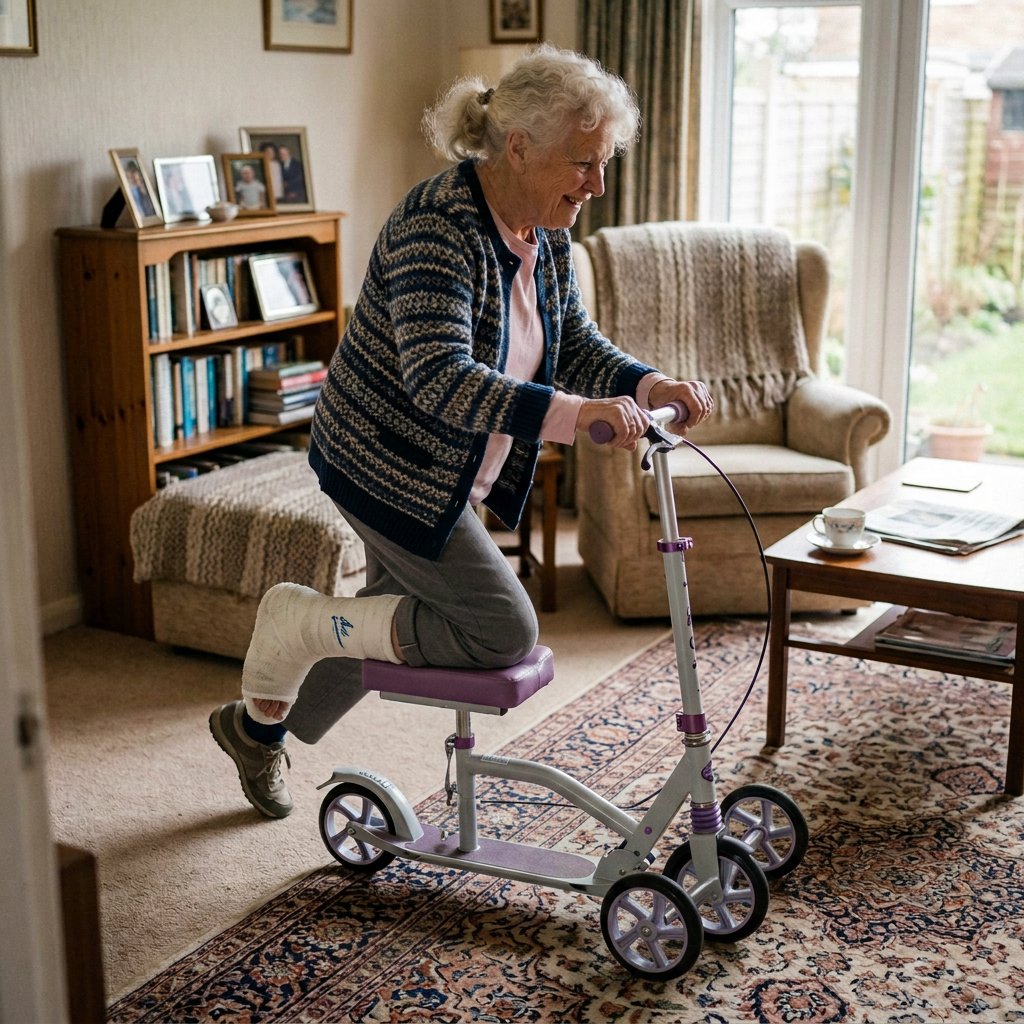
    BuyingForMom is a reader-supported site. As an Amazon Associate we earn from qualifying purchases. When you buy through links on this site, we may earn an affiliate commission at no additional cost to you. See our Affiliate Disclosure for details. This article is not medical advice, please consult a qualified healthcare professional for decisions specific to your family.
  • 5 Best Walker Trays & Bags That Stay Put

    5 Best Walker Trays & Bags That Stay Put

    Disclosure: BuyingForMom is reader-supported. As an Amazon Associate we earn from qualifying purchases. When you buy through links in this article, we may earn an affiliate commission at no additional cost to you. We never recommend products we haven’t researched against verified-buyer review data. This article is editorial reporting, not medical advice.

    5 Best Walker Trays & Bags That Actually Stay Put

    By Sarah Mitchell · Editor, BuyingForMom · Updated July 2026

    8 min read · Walkers & Canes · 5 picks compared

    The honest take: If you want a walker tray that won’t slide the first time it’s bumped, buy the strap-and-buckle RMS Walker Tray and stop there. The fabric straps cinch to the crossbar and don’t creep the way loose slide-on trays do. A clip-lock DMI tray is the better call only if the walker gets folded and re-opened several times a day. Skip any tray marketed only on “two cup holders” with no mention of how it anchors cup-holder count is not why trays fail.

    How we sorted through 30-plus walker trays and bags in two weeks

    We cross-referenced more than 8,000 verified-buyer reviews across the Amazon walker-tray and walker-bag categories, then filtered out anything without a stated attachment method. That single cut removed most of the field, because the recurring one- and two-star complaint isn’t “not enough cup holders” it’s “slid off the first time she bumped a doorframe.” We weighted picks toward trays and bags that anchor mechanically (straps, locking clips, brand-matched brackets, reinforced hook-and-loop) and checked each against manufacturer-stated walker-width fit and Reddit caregiver threads in r/AgingParents. Every product below was verified in stock the day this published.

    Who this guide is for

    This guide is for adult children setting up a parent’s folding walker or rollator so they can carry a coffee, a phone, and a plate from room to room without asking for help and without the tray sliding off mid-trip. If you’re buying for yourself, the same picks apply; just skip the short “conversation you’ll have” section near the end. Everyone here should confirm their walker’s crossbar width before ordering, because “universal” trays are only universal up to about 19 inches.

    The right walker tray attachment does one quiet thing: it gives a person back the use of both hands. A parent who can’t carry a mug to the table stops making tea. The trays and bags below were chosen because they hold their position on the frame. The difference between an accessory used daily and one that lands in a closet after week one.

    At a glance

    Best overall — RMS Walker Tray with Cup Holder (~$20) · strap-and-buckle mount that cinches tight and won’t creep.

    Best for meals — Vive Walker Tray (~$25) · non-slip mat top keeps a plate steady while the walker rolls.

    Best clip-lock — DMI Folding Walker Tray (~$25) · snaps onto the legs and locks flat; fast on and off.

    Best bag — Vive Walker Bag (~$18) · seven reinforced hook-and-loop loops; water-resistant.

    Best for rollators — Stander Walker-Rollator Tray Accessory (~$40) · brand-matched bracket with cup and tablet slots.

    Best OverallRMS Walker Tray with Cup Holder

    ~$20 · Check price on Amazon →

    The RMS tray earns the top spot for the least glamorous reason imaginable: it uses fabric straps and a buckle instead of resting on the handles. You loop the straps around the crossbar, thread them through the buckle underneath, and cinch. Across the several thousand reviews we read, the pattern was consistent buyers who returned slide-on trays because they “kept shifting” specifically praised this one for staying anchored, even on walkers where earlier trays wouldn’t grip. At 16.25 by 12.75 inches it fits most traditional folding walkers up to about 19 inches wide with a high side bar. It’s easy to wipe clean, the integrated cup holder keeps a drink from sliding, and the whole thing weighs about a pound.

    The good

    • Strap-and-buckle mount cinches to the crossbar and doesn’t creep
    • Fits most standard/folding walkers up to ~19″ with a high side bar
    • Smooth surface wipes clean; light enough to leave on full-time

    The catch

    • Needs a high crossbar, low-bar or bariatric walkers may not fit well
    • Strap install takes a minute longer than a snap-on tray the first time

    This is right if… your top priority is a tray that stays exactly where you put it.

    Look elsewhere if… your walker has a low crossbar or you fold it constantly and want a one-second release.

    Best for MealsVive Walker Tray

    ~$25 · Check price on Amazon →

    Vive’s tray is the one to buy if the tray’s main job is carrying food. It sizes at roughly 16 by 12.5 inches, includes a three-inch cup holder, and the detail that matters. It ships with a removable non-slip mat that keeps a plate or bowl from sliding as the walker moves over thresholds. Verified buyers consistently note that assembly is genuinely tool-free and that the surface is wide enough for a real dinner plate, not just a snack. Vive backs it with a 90-day guarantee, which is longer than most in this category and a small signal the company expects it to hold up. It’s a comfortable everyday pick for someone who eats at a table across the house from the kitchen.

    The good

    • Removable non-slip mat keeps plates and bowls from sliding
    • Tool-free assembly; wide enough for a full dinner plate
    • 90-day guarantee longer than most trays in the category

    The catch

    • Rests on the handle uprights, so fit is snugger on some frames than others
    • Single cup holder, no second slot for a phone or remote

    This is right if… your parent carries meals from the kitchen to another room.

    Look elsewhere if… you need a bracket that mechanically locks rather than seats over the uprights.

    Best Clip-LockDMI Folding Walker Tray

    ~$25 · Check price on Amazon →

    If the walker gets folded and re-opened several times a day in and out of a car, tucked beside a chair at meals, the DMI is the smarter buy. You snap the clips onto the walker legs and raise the tray until it locks flat, and it comes off just as fast. It measures 16 by 11.8 inches, weighs about 2.6 pounds, and includes two different-size cup holders. DMI is clear about the limits, and so are we: it fits most standard folding walkers around 18.5 inches wide but is not made for extra-wide or bariatric frames. Reviewers who matched it to a standard walker report it locks solidly; the occasional complaint traces back to an oversized frame it was never designed to fit.

    The good

    • Clips lock onto the legs fast on, fast off, stays put once seated
    • Two cup holders sized differently for a mug and a bottle
    • Tool-free; ideal for walkers that fold multiple times a day

    The catch

    • Not compatible with extra-wide or bariatric walkers
    • Rigid clips mean fit is fussier if your frame is a non-standard width

    This is right if… the walker is a standard folding model that goes in and out of a car often.

    Look elsewhere if… you have a wide or bariatric frame — go with the strap-mount RMS instead.

    Best BagVive Walker Bag

    ~$18 · Check price on Amazon →

    A tray carries; a bag stows and for phones, keys, glasses, and medication, the Vive Walker Bag is the pick that stays put. It fastens with seven individually reinforced hook-and-loop loops that wrap the front crossbar, which is why verified buyers report it holds position on standard, dual-point folding, and even bariatric walkers rather than swinging loose. Inside is a large zippered compartment with three outer pockets for the items a person reaches for constantly. The fabric is lightweight and water-resistant, so a caught rain shower or a sweating water bottle won’t soak the contents. Pair it with any tray above and a walker suddenly does everything a free hand used to.

    The good

    • Seven reinforced loops grip the crossbar and don’t swing loose
    • Fits standard, folding, and bariatric walkers
    • Water-resistant fabric; zippered main pocket plus three outer pockets

    The catch

    • No rigid surface, can’t hold a plate or an open drink
    • Front-mounted bulk can slightly narrow the step-through on tight frames

    This is right if… the real need is carrying small essentials, not meals.

    Look elsewhere if… your parent needs a flat surface to eat or set down a mug.

    Best for RollatorsStander Walker-Rollator Tray Accessory

    ~$40 · Check price on Amazon →

    The surest way to make a tray stay put is to buy the one engineered for your exact frame and if your parent uses a Stander Wonder walker or rollator, this is that tray. It attaches with two brand-matched brackets and no tools, and adds a four-inch cup holder plus a ten-inch slot sized for a tablet, a genuinely useful touch for video calls at the table. Because it’s built for the Stander line rather than sold as “universal,” owners don’t fight the loose-fit problem that plagues generic trays. The trade-off is in the pitch: it fits Stander Wonder models and little else, and costs more than a universal tray. For the right owner, that’s exactly why it stays put.

    The good

    • Brand-matched brackets, the most secure fit of any tray here
    • Cup holder plus a 10″ tablet slot for hands-free video calls
    • Tool-free install and removal

    The catch

    • Fits Stander Wonder walkers and rollators only, not universal
    • Costs about double a universal strap-on tray

    This is right if… your parent already owns a Stander Wonder walker or rollator.

    Look elsewhere if… you have any other brand. A universal strap or clip tray is the better value.

    How the five compare

    Product Attachment Best for Price
    RMS Walker Tray Strap & buckle Staying put, universal fit ~$20
    Vive Walker Tray Seats on uprights + non-slip mat Carrying meals ~$25
    DMI Folding Tray Locking clips Frequent fold/unfold ~$25
    Vive Walker Bag 7 reinforced hook-loop loops Small essentials ~$18
    Stander Tray Accessory Brand-matched brackets Stander Wonder owners ~$40

    The conversation you’ll have

    Adding anything to a walker can land as a reminder of everything a parent has lost, so the resistance you hit usually isn’t about the tray. It helps to frame it as convenience, not accommodation. Instead of “this will keep you from dropping your coffee,” try “now you can bring your tea to your chair without making two trips.” One is about decline; the other is about getting an afternoon back. If a parent waves it off, offer to leave it on for a week with no commitment. The daily usefulness makes the argument better than you can. And let them choose: a bag reads as less “medical” than a tray to some people, and being handed the decision restores a bit of the control the walker took.

    Insurance and savings

    Walker trays and bags are treated as convenience accessories, not durable medical equipment, so Original Medicare won’t reimburse them the walker itself may be covered under Part B DME when a doctor prescribes it, but the add-ons are out of pocket. There are two legitimate ways to save. First, some 2026 Medicare Advantage plans include an over-the-counter or supplemental-benefit allowance that can be spent on mobility accessories; check your parent’s plan catalog before paying cash. Second, these items are generally FSA- and HSA-eligible as they support a mobility impairment, and if total unreimbursed medical costs clear the IRS threshold of 7.5% of adjusted gross income (see IRS Publication 502), they may count toward a medical-expense deduction. Keep the receipt either way.

    What to actually look for

    Match the attachment to how the walker is used

    This is the whole ballgame, and it’s the criterion every generic listicle skips. If the walker mostly stays open in the house, a strap-and-buckle tray like the RMS is the most secure and the most forgiving on odd frames. If it folds and unfolds constantly, a locking-clip tray like the DMI saves you re-strapping five times a day. If your parent already owns a specific brand of rollator, a brand-matched tray fits tighter than anything sold as “universal.” Buy for the daily routine, not the spec sheet. Our complete aging-in-place home safety checklist walks through where mobility accessories fall in the larger priority order.

    Measure the crossbar width before you order

    “Universal” almost always means “fits standard folding walkers up to about 19 inches.” Extra-wide, heavy-duty, and bariatric frames are where returns happen. Measure the width of the front crossbar and compare it to the product’s stated range before buying and if your parent is on the taller or heavier end, confirm the walker itself is sized correctly first. Our guide to walkers for tall seniors over six feet covers frame sizing in detail.

    Respect the weight limit and the walker’s balance

    Most trays are rated for roughly 5 pounds and most front bags for a few pounds more plenty for a plate, a drink, and a phone. But loading a heavy bag onto the front of a walker shifts the center of gravity forward, which can hurt stability for an unsteady user. Keep loads light and centered, and don’t hang a full grocery bag off a walker meant to bear weight through the frame. A tray that stays put is only an upgrade if it doesn’t make the walker less safe.

    Frequently asked questions

    How does a walker tray attach?

    It depends on the type. Strap trays loop fabric straps around the crossbar and cinch through a buckle. Clip trays snap onto the walker legs and lock upward into place. Seat-style trays rest over the handle uprights. Brand-matched trays use dedicated brackets. Strap and clip designs hold position best on a moving walker.

    Do you have to take the tray off to fold the walker?

    Usually yes. Most trays must come off before the walker collapses, which is exactly why a fast-release clip-lock tray suits anyone who folds their walker often. Bags are the exception — a soft hook-and-loop bag can typically stay attached while the walker folds, since it flexes with the frame.

    Are walker trays universal?

    “Universal” trays fit most standard folding walkers, generally up to about 19 inches wide with a high crossbar. They are not truly universal: extra-wide, heavy-duty, and bariatric frames often fall outside the range. Always compare your walker’s crossbar width to the product’s stated fit before ordering.

    What is the weight capacity of a walker tray?

    Most rigid walker trays are rated around 5 pounds, which comfortably holds a plate, a drink, and a phone. Front bags carry a bit more. Heavier loads aren’t just a durability question — weight on the front of a walker shifts balance forward, so keeping loads light protects stability.

    Tray or bag: Which should I get?

    Get a tray if the goal is carrying meals or setting down an open drink; get a bag if the goal is stowing a phone, keys, glasses, and medication. They’re complementary, and many families run both — a clip tray for meals and a hook-and-loop bag left on full-time for daily essentials.

    Can you get a tray for a rollator?

    Yes. Many rollators have a seat that doubles as a surface, but a dedicated tray adds a stable, spill-edged top and a cup holder. Brand-matched trays, like the Stander accessory for Wonder rollators, fit tightest; universal strap trays work on many four-wheel rollators with a suitable crossbar.

    The shortlist

    Best Overall

    RMS Walker Tray

    ~$20

    Check on Amazon →

    Best for Meals

    Vive Walker Tray

    ~$25

    Check on Amazon →

    Best Clip-Lock

    DMI Folding Tray

    ~$25

    Check on Amazon →

    Best Bag

    Vive Walker Bag

    ~$18

    Check on Amazon →

    Best for Rollators

    Stander Tray Accessory

    ~$40

    Check on Amazon →

    Last verified in stock: July 14, 2026

    What we’d do tomorrow

    If you’re setting this up this weekend, do three things in order. First, measure the walker’s front crossbar width so you don’t order a tray that won’t fit. This is the single most common return. Second, decide whether the daily need is meals or essentials: a tray for the former, the Vive bag for the latter, and honestly, both is the right answer for most households at under $45 combined. Third, buy the attachment style that matches the routine strap-mount RMS if the walker stays open, clip-lock DMI if it folds constantly, brand-matched Stander if it’s a Wonder rollator. Put it on, leave it on for a week, and let the usefulness make the case.

    — Sarah

    BuyingForMom is a reader-supported site. As an Amazon Associate we earn from qualifying purchases. When you buy through links on this site, we may earn an affiliate commission at no additional cost to you. See our Affiliate Disclosure for details. This article is not medical advice,  please consult a qualified healthcare professional for decisions specific to your family.
  • 5 Best Ice Grip Cane Tips for Winter

    5 Best Ice Grip Cane Tips for Winter

    Disclosure: BuyingForMom is reader-supported. As an Amazon Associate we earn from qualifying purchases. When you buy through links in this article, we may earn an affiliate commission at no additional cost to you. We never recommend products we haven’t researched against verified-buyer review data. This article is editorial reporting, not medical advice.

    5 Best Ice Grip Cane Tips for Winter

    By Sarah Mitchell · Editor, BuyingForMom · Updated July 2026

    8-minute read · Walkers & Canes · 5 picks compared

    The honest take: If you want one tip that handles a New England winter and comes off your radar the rest of the year, buy the Vive All-Terrain retractable tip and stop there. Choose the DMI retractable 5-prong only if your parent walks in and out of buildings all day and won’t remember to swap a tip. Skip any plain screw-on ice tip if the person can’t reliably flip or remove it, metal prongs left down on tile are their own fall hazard.

    How we sorted through 20-plus ice cane tips in a week

    We cross-referenced more than 8,000 verified-buyer reviews across the current Amazon “Cane Ice Attachments” best-seller list, then compared them against what physical therapists and winter-safety guides (AARP, All Seniors Care) actually tell cane users heading into ice. We read the recurring complaints on Reddit’s r/AgingParents and caregiver forums. The ones about tips that rust after one season, screws that back out, and prongs that scratch hardwood. We prioritized three things over prong count: whether the tip retracts so it can stay on the cane year-round, how honestly the listing states cane-diameter compatibility, and whether the metal resists rust. Everything below is verified in stock as of publication.

    Who this guide is for

    This guide is for adult children buying a winter traction upgrade for a parent who already uses a standard or folding cane and lives somewhere with real ice and snow. If your parent uses a rollator or walker, most of these tips fit those too but read our guide to walkers for tall seniors if the walker itself is the problem, not the tip.

    Every winter, emergency rooms fill with older adults who slipped on a patch of black ice between the car and the front door. A cane is only as safe as the half-inch of rubber touching the ground, and standard rubber tips are nearly useless on ice. An ice grip attachment adds metal prongs that bite into a frozen surface the way a set of crampons does  and the good ones flip up or retract so the same cane works indoors on tile without gouging the floor or sliding out from under the user. The primary keyword here is simple: the right ice grip for a cane keeps an aging parent upright on the exact surface that sends the most seniors to the hospital each winter.

    The category is noisier than it should be. Dozens of near-identical five-prong attachments compete on Amazon, most of them differing only in packaging. The distinctions that actually matter retractable versus screw-on, carbon steel versus rust-prone alloy, and whether the clamp fits your specific cane’s diameter are the ones most listings bury. That’s the gap this guide fills.

    At a glance

    Best Overall  Vive All-Terrain Ice Tips (2-Pack) — ~$18 · retractable, HSA/FSA-eligible, two per box

    Best Retractable  DMI Retractable 5-Prong — ~$12 · flip-up classic, in-and-out all day

    Best Budget  BRMDT Metal 5-Prong — ~$10 · simple screw-on, rubber gasket

    Best Rust-Resistant  Stainless Steel 5-Prong (2-Pack) — ~$15 · rust-proof pair for cane + pole

    Best for Crutches  Blue Jay Ice n Stability — ~$16 · retractable, fits crutches & walkers

    Best Overall  Vive All-Terrain Ice Cane Tips (2-Pack)

    ~$18 · Check price on Amazon →

    Vive is the name occupational therapists cite most often in this category, and the All-Terrain tip is why. It retracts with a push so the metal points flip up along the cane shaft for indoor use, which means it can live on the cane year-round instead of being lost in a drawer by December. The included hardware clamps onto shafts from 2 inches to 3.75 inches in circumference, covering nearly every standard and folding cane. Across roughly 4,000 reviews the recurring praise is stability on packed snow and gravel — not just glare ice and the two-pack means a spare or a matching tip for a trekking pole. It’s HSA/FSA-eligible, which quietly makes it one of the few sub-$20 items here you can pay for with pre-tax dollars.

    The good

    • Retracts/flips up so one cane works indoors and out
    • Wide diameter fit covers most standard and folding canes
    • Two tips per box; HSA/FSA-eligible

    The catch

    • Four prongs, not five, a hair less bite on sheer ice than 5-prong rivals
    • The flip mechanism takes hand strength; arthritic hands may need help

    This is right if… you want one dependable tip that stays on the cane through the whole season.

    Look elsewhere if… your parent’s hands are too weak to work the flip-up push mechanism.

    Check Price on Amazon →

    Best Retractable  DMI Retractable 5-Prong Ice Tip

    ~$12 · Check price on Amazon →

    The Mabis DMI tip is the closest thing this category has to a decades-old standard, and it earns the “best retractable” spot because the flip-up motion is the most forgiving of the bunch. Press the tip against the cane and it clicks up out of the way; push it down and it clicks back into ice-grip position no tools, no removing the tip at every doorway. That matters more than it sounds: the single biggest reason ice tips fail in real life isn’t grip, it’s that people won’t stop to swap a screw-on tip, so they either skip it outdoors or drag metal prongs across the pharmacy floor. Reviewers with a decade of repeat purchases consistently note the five prongs bite well and the attachment survives multiple winters. It fits most standard canes and crutches with the two included screws.

    The good

    • Easiest flip-up motion here, genuine one-motion indoor/outdoor switch
    • Five prongs for more contact points on ice
    • Long track record and low price

    The catch

    • Sold as one tip, not a pair
    • Screws can loosen over a season, check them monthly

    This is right if… your parent moves between buildings all day and won’t fuss with removing a tip.

    Look elsewhere if… you want two tips in one box or a rust-proof stainless build.

    Check Price on Amazon →

    Best Budget  BRMDT Metal 5-Prong Ice Tip

    ~$10 · Check price on Amazon →

    If you want the least expensive way to test whether an ice tip helps before committing, the BRMDT is the honest budget pick. It’s a straightforward screw-on attachment with five durable steel teeth and a rubber gasket that both grips the cane and protects the finish from scuffing. Verified buyers describe it as doing exactly one job well, biting into ice and packed snow. Without the retractable mechanism that adds cost and moving parts. The trade-off is real and worth stating plainly: this one does not flip up, so it must be unscrewed for indoor use, which makes it best for someone whose winter walking is a distinct outdoor errand rather than constant in-and-out. At around ten dollars it’s cheap enough to keep a second one in a coat pocket.

    The good

    • Lowest price of our picks
    • Five steel teeth plus a finish-protecting rubber gasket
    • Fewer moving parts means less to break

    The catch

    • Does not retract, must be unscrewed for indoor use
    • Steel can surface-rust if stored damp

    This is right if… winter walking is a planned outdoor trip, not all-day in-and-out.

    Look elsewhere if… your parent needs to transition indoors without stopping to remove it.

    Check Price on Amazon →

    Best Rust-Resistant  Stainless Steel 5-Prong Ice Tips (2-Pack)

    ~$15 · Check price on Amazon →

    The most common one-star complaint about cheap ice tips is rust. Prongs that come out of the box shiny and turn orange by the second snowfall because they’re plated alloy, not real stainless. This 2-pack answers that specifically with a stainless-steel five-prong design that shrugs off the moisture cycle of daily winter use. Coming two to a box, it’s the sensible choice when you’re outfitting more than one device. A cane and a trekking pole, or matching tips for both of a couple’s canes. Reviewers highlight that the prongs stay sharp across a season and the universal clamp fits a broad range of shaft sizes. Keep in mind this is a fixed attachment rather than a flip-up, so the indoor-transition rule still applies: it stores rust-free, but it isn’t a retractable design.

    The good

    • True stainless steel resists the rust that kills cheaper tips
    • Two tips per box for multiple canes or poles
    • Universal clamp fits a wide range of shafts

    The catch

    • Not a retractable/flip-up design
    • No brand-name pedigree or FSA paperwork support

    This is right if… you’re outfitting two devices or a previous tip rusted out on you.

    Look elsewhere if… flip-up convenience matters more than rust resistance.

    Check Price on Amazon →

    Best for Crutches  Blue Jay Ice n Stability Cane Tip

    ~$16 · Check price on Amazon →

    Blue Jay is a healthcare-supply brand rather than a generic import, and its Ice n Stability tip is the one to reach for when the device isn’t a plain cane. The retractable five-prong metal attachment is built to fit forearm crutches and walker legs as readily as walking sticks, which matters because post-surgery and post-stroke users are often the ones facing their first icy winter on new equipment. The heavy-duty construction and retractable action put it in the same functional class as the DMI, and reviewers who use crutches specifically call out that it doesn’t wobble at the joint the way lighter attachments can. If your parent is recovering on crutches or a walker and dreads the first snow, this is the most purpose-built pick. For fall risk beyond traction, pair it with a plan from our guide to fall-detection devices with no monthly fee.

    The good

    • Fits crutches and walker legs, not just canes
    • Retractable five-prong; healthcare-brand build quality
    • Stable at the joint under crutch loads

    The catch

    • Priciest of our five (still under $20)
    • One tip per package

    This is right if… the winter device is a crutch or walker, or a cane used hard.

    Look elsewhere if… a plain cane is all you’re fitting and budget is the priority.

    Check Price on Amazon →

    Quick comparison

    Tip Price Prongs / Retracts Best for
    Vive All-Terrain (2-pk) ~$18 4 / Yes One year-round tip
    DMI Retractable ~$12 5 / Yes All-day in-and-out
    BRMDT 5-Prong ~$10 5 / No Budget / planned trips
    Stainless 5-Prong (2-pk) ~$15 5 / No Rust resistance / two devices
    Blue Jay Ice n Stability ~$16 5 / Yes Crutches & walkers

    The conversation you’ll have

    Ice tips are an easy sell compared with most safety products, because they don’t announce “you’re getting old” the way a shower chair or a medical alert can but there’s still a version of the resistance. Many older adults insist they’ll “just be careful” or “won’t go out when it’s icy,” which works right up until the day they run out of a prescription during a cold snap. The trap is that a bad fall on ice can undo more independence in one second than any accessory could ever cost.

    Instead of “you need this so you don’t fall,” try framing it as gear, not medicine: “They make winter tips for canes now, like snow tires. I got you a set so you’re not stuck inside every time it freezes.” Positioning it as something that keeps a parent out in the world, rather than something that flags frailty, tends to land. And offer to install it and demonstrate the flip-up motion yourself the first time, so the first experience isn’t a fumbling one in a cold driveway.

    Insurance and savings

    Original Medicare almost never reimburses a $15 cane accessory a standard cane itself is covered as durable medical equipment when prescribed, but low-cost add-on tips are treated as a routine replacement part, not separately billable. The better angle is tax-advantaged spending: ice grip tips marketed for mobility safety (Vive states its tip explicitly) are generally HSA- and FSA-eligible, so you can buy them with pre-tax dollars through your account. If a household’s total medical expenses clear the IRS threshold of 7.5% of adjusted gross income, mobility-safety equipment can also count toward the itemized medical deduction under IRS Publication 502. None of this is tax advice but for a sub-$20 item, the HSA/FSA route is the realistic saving, and some Medicare Advantage plans now include an over-the-counter or home-safety allowance that a tip like this may qualify for.

    What to actually look for

    Retractable versus screw-on decide this first

    This is the single most important choice, and most listings gloss over it. A retractable (flip-up) tip stays on the cane all winter; the user flips the prongs up for indoor tile and down for ice, in one motion, at every doorway. A screw-on tip grips just as well but must be physically removed indoors — which real people don’t do, so they either skip it outside or, worse, walk on metal points across a smooth indoor floor, where the prongs slide like ice skates. If your parent transitions in and out of buildings often, or is likely to “forget,” buy retractable. Reserve screw-on tips for planned outdoor outings and for the lowest budgets. Our complete aging-in-place home safety checklist puts winter traction in the same priority tier as bathroom grab bars for exactly this reason.

    Check the cane diameter before you buy

    Most ice tips clamp onto shafts roughly 2 to 3.75 inches in circumference (about 5/8″ to 1″ across), which fits standard aluminum and folding canes but not every chunky wooden walking stick. Measure the cane just above the existing rubber tip before ordering, and if it’s a folding cane, confirm the attachment won’t interfere with the fold. A tip that won’t clamp tight is a tip that will wobble off mid-step.

    Metal that won’t rust, prongs that stay sharp

    Ice tips live in salt, slush, and melt-refreeze cycles. The harshest environment a cheap alloy can face. Stainless or treated carbon steel holds up; bright plated no-name metal often surface-rusts within a season, dulling the bite. Whatever you choose, dry the prongs after each use and re-check the mounting screws monthly, because a loosened clamp is the most common failure mode buyers report. And keep the expectation honest: an ice tip dramatically improves traction, but it is not a guarantee glare ice still demands slow, deliberate steps.

    Frequently asked questions

    Do ice cane tips really work?

    Yes. A five-prong metal tip bites into ice and packed snow the way an ice pick does, giving several contact points that plain rubber can’t. Verified buyers and winter-safety guides agree they meaningfully reduce slips but they’re a traction aid, not a guarantee, so cautious, deliberate steps still matter on glare ice.

    Do you have to take ice cane tips off indoors?

    With a retractable tip, no you flip the prongs up along the shaft and the rubber base meets the floor. With a fixed screw-on tip, yes: the metal points must be removed indoors, because walking on prongs across smooth tile or wood is itself a slip hazard and scratches floors.

    How do you attach an ice grip to a cane?

    Most tips clamp over the cane’s existing rubber tip and tighten with one or two included screws or a rubber gasket. Slide it on, align it straight, and tighten until it won’t twist. Re-check the screws every few weeks during winter, since vibration can loosen them over time.

    What cane diameter do ice tips fit?

    Most fit shafts of about 2 to 3.75 inches in circumference roughly 5/8 inch to 1 inch across. Which covers nearly all standard aluminum and folding canes. Measure just above the rubber tip before buying; very thick wooden walking sticks may fall outside that range.

    Are ice cane tips covered by Medicare or HSA/FSA?

    Original Medicare rarely reimburses a low-cost tip, treating it as a routine replacement part rather than separate equipment. However, mobility-safety tips are generally HSA- and FSA-eligible, letting you pay with pre-tax dollars, and some Medicare Advantage plans include an OTC or home-safety allowance that may apply.

    Can I use one ice tip on a crutch or walker instead of a cane?

    Often yes, many tips list crutches and walker legs as compatible, and healthcare-brand tips like the Blue Jay are built for it. Confirm the leg diameter falls within the clamp’s range, and for a walker remember you’d need a tip on each leg that touches the ground for even traction.

    The shortlist

    Best Overall

    Vive All-Terrain (2-Pack)

    ~$18

    Check on Amazon →

    Best Retractable

    DMI Retractable 5-Prong

    ~$12

    Check on Amazon →

    Best Budget

    BRMDT Metal 5-Prong

    ~$10

    Check on Amazon →

    Best Rust-Resistant

    Stainless 5-Prong (2-Pack)

    ~$15

    Check on Amazon →

    Best for Crutches

    Blue Jay Ice n Stability

    ~$16

    Check on Amazon →

    Last verified in stock: July 13, 2026

    What we’d do tomorrow

    If you’re setting a parent up before the first freeze, do these three things in order. First, measure the cane just above its rubber tip so you order a clamp that actually fits. Second, buy the Vive All-Terrain retractable tip if you want one dependable set that stays on all winter, or the DMI if all-day in-and out is the reality. Third, install it yourself and walk your parent through flipping it up and down once, on a dry sidewalk, before they ever need it on ice. Ten minutes now buys a whole winter of getting out the door.

    — Sarah

    BuyingForMom is a reader-supported site. As an Amazon Associate we earn from qualifying purchases. When you buy through links on this site, we may earn an affiliate commission at no additional cost to you. See our Affiliate Disclosure for details. This article is not medical advice — please consult a qualified healthcare professional for decisions specific to your family.
  • 5 Best Rollators With Seats Under $150

    5 Best Rollators With Seats Under $150

    Disclosure: BuyingForMom is reader-supported. As an Amazon Associate we earn from qualifying purchases. When you buy through links in this article, we may earn an affiliate commission at no additional cost to you. We never recommend products we haven’t researched against verified-buyer review data. This article is editorial reporting, not medical advice.

    5 Best Rollators With Seats Under $150

    By Sarah Mitchell · Editor, BuyingForMom · Updated July 2026

    10-min read · Walkers & Canes · 5 picks compared

    The honest take: For most parents, the Drive Medical 10257BL-1 is the one to buy and stop a steel workhorse that at around $85 does 90% of what a $300 Nitro does. Pay up for the Vive Ultra Lightweight only if lifting it into a car trunk every day is the real problem. Skip the cheapest 6-inch-wheel rollator if your parent walks outside at all small wheels catch on sidewalk cracks, and that’s where falls happen.

    How we sorted through 40+ rollators in two weeks

    We cross-referenced more than 8,000 verified Amazon reviews across 40-plus four-wheel rollators, then narrowed to models that stay reliably under $150 while still passing the tests that matter: a seat wide enough to rest on, brakes that lock without a hand-crush of force, and a frame that folds narrow enough for a sedan trunk. We weighted Consumer Reports’ rollator testing, occupational-therapist guidance on seat height and wheel size, and the complaints caregivers leave in Reddit’s r/AgingParents threads about tippy seats and brakes that drift. Every pick was confirmed in stock at the time of writing.

    Who this guide is for

    This guide is for adult children buying a first rollator for a parent who’s steady enough to walk but tires quickly, feels unsure on longer distances, or has started reaching for furniture between rooms. If your parent still balances well and only needs occasional support, a cane or standard walker may be enough but if the built-in seat is what brought you here, a rollator is the right category, and you don’t need to spend $300 to get a good one.

    The picks

    A rollator with a seat is one of the highest-impact aging-in-place purchases you can make. it extends how far a parent will confidently walk, which protects independence more than almost any single home modification, and it earns a spot in our complete aging-in-place home safety checklist. Below are the five sub-$150 rollators we’d actually put in a parent’s hands, each chosen for a specific real-world situation rather than a spec sheet.

    At a glance

    Best Overall  Drive Medical 10257BL-1 — ~$85 · the reliable steel standard most families start with

    Best Budget  Medline Steel Rollator (8″ wheels) — ~$75 · the most rollator for the least money

    Best Lightweight  Vive Ultra Lightweight — ~$140 · 14 lbs, folds narrow for daily car trips

    Best Outdoors  ELENKER All-Terrain (10″ wheels) — ~$110 · big wheels for grass, gravel, and cracked sidewalks

    Best Seat  OasisSpace With Cup Holder — ~$120 · thick cushioned seat for taller parents who rest often

    Best Overall Drive Medical 10257BL-1

    ~$85 · Check price on Amazon →

    This is the rollator you’ve seen in a hundred living rooms, and there’s a reason it keeps selling. Across more than 5,000 verified reviews it earns a steady 4.6-star average, and the pattern owners repeat is dependability: the powder-coated steel frame doesn’t flex, the 7.5-inch casters handle indoor thresholds and smooth pavement without drama, and the loop-lock brakes are firm enough to trust when a parent lowers onto the padded 12-inch seat. It supports up to 350 pounds and folds flat with the backrest tucked down. It isn’t the lightest at roughly 18 pounds but for a first rollator a parent will actually keep using, it’s the safest bet on this list.

    The good

    • 350-lb capacity and rigid steel frame inspire real confidence when sitting
    • Loop-lock brakes that reviewers consistently describe as easy to squeeze and hold
    • Sold everywhere, so replacement parts and pouches are trivial to find

    The catch

    • At ~18 lbs it’s heavier to lift into a trunk than the aluminum picks
    • 7.5-inch wheels are fine on pavement but struggle on grass and gravel

    This is right if… you want one dependable rollator that works indoors and on sidewalks without overthinking it.

    Look elsewhere if… your parent lifts it in and out of a car several times a day, the weight adds up.

    Check Price on Amazon →

    Best Budget Medline Steel Rollator (8″ Wheels)

    ~$75 · Check price on Amazon →

    When budget is the deciding factor, this is the most rollator you can buy for the money and the 8-inch wheels are the reason it outperforms its price. Verified buyers repeatedly note how much smoother the larger wheels roll over thresholds and rough pavement than the 6-inch wheels on cheaper models, a distinction most sub-$80 listings gloss over. The padded seat and backrest support up to 300 pounds, and the whole thing folds compactly with locking brakes. Reviewers flag thin assembly instructions and a heavier steel frame, but for a parent who mostly moves around the house and yard, it’s hard to argue with the value.

    The good

    • 8-inch wheels roll noticeably better over thresholds than budget 6-inch models
    • Padded seat and backrest at a genuinely low price point
    • Multiple color options make it feel less like medical equipment

    The catch

    • Sparse assembly instructions budget 20 minutes and a video
    • Steel build is sturdy but heavier than aluminum alternatives

    This is right if… you want a capable, comfortable rollator and price is the top constraint.

    Look elsewhere if… daily lifting or all-terrain use is a priority, spend a little more below.

    Check Price on Amazon →

    Best Lightweight Vive Ultra Lightweight Rollator

    ~$140 · Check price on Amazon →

    If the real obstacle is a parent who won’t use a rollator because it’s too heavy to lift into the car, this aluminum model solves the problem at 14 pounds. Vive has built a reliable following, and verified buyers single out two things: how narrow it folds for tight hallways and small trunks, and how genuinely usable the seat is despite the featherweight frame. It still supports up to 300 pounds, and setup is tool-free. The trade-off is honest, a lighter frame telegraphs a bit more road texture than the steel picks but for the parent who’ll only accept a rollator they can manage independently, this is the one that actually gets used.

    The good

    • 14 lbs the easiest pick here to lift into a car trunk
    • Folds narrow for tight hallways, small trunks, and travel
    • Tool-free assembly and a seat reviewers find surprisingly comfortable

    The catch

    • Lighter frame transmits more sidewalk vibration than steel
    • Underseat storage bag is on the small side

    This is right if… lifting and transporting the rollator every day is the main friction point.

    Look elsewhere if… your parent needs maximum stability over light weight, the steel picks feel more planted.

    Check Price on Amazon →

    Best Outdoors ELENKER All-Terrain (10″ Wheels)

    ~$110 · Check price on Amazon →

    For a parent who walks outdoors, around the block, through a park, across a gravel driveway — wheel size is the spec that changes everything, and this ELENKER’s 10-inch PU tires are twice the diameter of a standard rollator’s. Consumer Reports included it in its rollator testing program, and verified buyers echo the same theme: it glides over grass, gravel, and cracked sidewalks where small-wheeled rollators stall and jolt. The frame adjusts to fit users from 4’8″ to 6’4″, and it includes a roomy under-seat basket plus a cane holder. It’s bulkier and heavier to fold than the indoor picks — the price you pay for tackling terrain that would stop the others cold.

    The good

    • 10-inch PU wheels roll over grass, gravel, and sidewalk cracks with ease
    • Wide height range fits both short and tall parents
    • Large under-seat basket and cane holder for real outdoor errands

    The catch

    • Bulkier and heavier to fold and lift than the indoor picks
    • Wide footprint takes up more trunk and hallway space

    This is right if… your parent spends real time walking outdoors on uneven surfaces.

    Look elsewhere if… use is mostly indoors and closet or trunk space is tight.

    Check Price on Amazon →

    Best Seat Stander Wonder Rollator Plus

    ~$120 · Check price on Amazon →

    When a parent rests often or is tall enough that most rollator seats sit too low. The seat itself becomes the deciding feature, and OasisSpace built this one around comfort. The 2.5-inch-thick cushioned seat draws the most consistent praise in verified reviews, with owners calling it noticeably more supportive than the thin vinyl seats on cheaper rollators for longer sit-downs. The 8-inch wheels handle mixed terrain, the frame suits users roughly 5’3″ to 6’2″, and it ships with a cup holder and storage bag. It’s not the lightest option, but for the parent who treats the seat as a genuine rest stop rather than an emergency perch, it’s the most comfortable pick under $150.

    The good

    • 2.5-inch cushioned seat is the most comfortable on this list for frequent rests
    • Height range suits taller parents who find standard seats too low
    • Cup holder and storage bag included for everyday errands

    The catch

    • Heavier than the aluminum lightweight pick
    • Extra seat padding makes the folded profile a bit bulkier

    This is right if… your parent sits often or is tall enough that most rollator seats feel low.

    Look elsewhere if… minimum weight and the most compact fold matter more than seat comfort.

    Check Price on Amazon →

    Quick comparison

    Rollator Price Wheels / Capacity Best for
    Drive Medical 10257BL-1 ~$85 7.5″ · 350 lb Reliable all-around first rollator
    Medline Steel (8″) ~$75 8″ · 300 lb Tightest budget
    Vive Ultra Lightweight ~$140 6″ · 300 lb · 14 lbs Daily lifting into a car
    ELENKER All-Terrain ~$110 10″ · 300 lb Outdoor / uneven ground
    Stander Wonder Rollator Plus
    ~$120 8″ · 300 lb Comfort seat / taller parents

    The conversation you’ll have

    A rollator can be a harder sell than grab bars, because it’s visible it says “I need help” in a way a bathroom rail never does, and plenty of parents resist for exactly that reason. The move that tends to work is reframing the rollator as freedom rather than decline. Instead of “You keep losing your balance, so you need this,” try “This means you don’t have to cut the walk short or skip the farmers market, you’ve got a seat with you whenever you want one.” Lead with what it lets them keep doing, not what it protects against. And let them choose the color if the model offers options, a small say in the decision softens the resistance.

    Insurance and savings

    Rollators are one of the aging-in-place products insurance may actually help with. Medicare classifies a rollator as durable medical equipment (DME), and under Part B it can be covered at roughly 80% after your deductible when a doctor documents medical necessity and you buy through a Medicare-enrolled supplier. Amazon purchases are typically out of pocket, so ask the prescribing physician about a covered supplier if cost is a barrier. Rollators are also generally FSA- and HSA-eligible, letting you buy with pre-tax dollars, and if annual out-of-pocket medical expenses exceed 7.5% of adjusted gross income, mobility equipment may count toward the IRS medical-expense deduction (see IRS Publication 502). Check current CMS and IRS guidance, since coverage rules change year to year.

    What to actually look for

    Wheel size for where they’ll walk

    Wheel diameter is the single most important spec, and it maps directly to terrain. Six-inch wheels are fine for smooth indoor floors; 7.5- to 8-inch wheels are the sweet spot for mixed indoor-and-sidewalk use; 10-inch wheels are for parents who spend real time on grass, gravel, or broken pavement. Buying too-small wheels for an outdoor walker is the most common regret in the reviews we read, small wheels catch on cracks, and that catch is exactly where a stumble starts. If your parent is unusually tall, cross-check our guide to walkers built for taller seniors before buying.

    Seat height, brakes, and weight capacity

    Have your parent sit before you commit: their feet should rest flat with knees at roughly 90 degrees, which for most people means a seat height around 21 inches. Test the brakes too — loop-style hand brakes should lock and release without a hard crush of force, since arthritic hands are a common reason a rollator gets abandoned. Confirm the weight capacity comfortably exceeds your parent’s weight; a 300-pound rating is standard, and if you need more, look to bariatric models. A rollator that supports a confident sit is a genuine fall-prevention tool, which is why it belongs alongside the other layers in a home-safety plan.

    Weight and fold for real life

    The best rollator is the one that gets used, and daily logistics decide that more than any feature. If it goes in and out of a car often, aluminum in the 14–17-pound range is worth the premium over heavier steel, and a narrow fold matters if hallways or closets are tight. Pair the rollator with a fall-safety layer for the moments it isn’t in reach our no-monthly-fee fall detection guide covers the devices that make the most sense.

    Frequently asked questions

    What is the weight limit of a rollator?

    Standard rollators support 250 to 300 pounds, which covers most users. Heavy-duty models handle 350 to 400 pounds, and bariatric rollators support up to 500 or 600 pounds. Always choose a capacity that comfortably exceeds the user’s weight, since the seat and frame are only rated safe within that limit.

    What is the difference between a walker and a rollator?

    A standard walker has no wheels (or two front wheels) and must be lifted or pushed with each step, offering maximum stability. A rollator has four wheels, hand brakes, and a built-in seat, so it rolls continuously and lets the user rest. Rollators suit people who tire easily; walkers suit those needing firmer support at each step.

    Are rollators covered by Medicare?

    Yes, Medicare Part B classifies rollators as durable medical equipment and may cover about 80% after your deductible when a physician documents medical necessity and you purchase through a Medicare-enrolled supplier. Retail purchases like Amazon are typically out of pocket, so ask your doctor about a covered supplier if you want to use benefits.

    What size wheels are best for a rollator?

    It depends on terrain. Six-inch wheels work for smooth indoor floors, 7.5- to 8-inch wheels handle mixed indoor and sidewalk use, and 10-inch wheels are best for grass, gravel, and cracked pavement. Larger wheels roll over obstacles more smoothly but add bulk.

    How much should a good rollator cost?

    A reliable rollator with a seat costs $75 to $150, and that range covers the vast majority of needs. Premium carbon-fiber models run $200 to $400, but the extra cost mostly buys lighter weight, not better safety. For most families, a well-reviewed sub-$150 model is the sensible choice.

    Can you sit on a rollator to be pushed by someone else?

    Most standard rollators are designed for the user to sit and rest while stationary, not to be pushed like a transport chair, and pushing someone seated on one can be unstable. If you need both walking support and the ability to be pushed, look for a dedicated rollator-transport chair combo instead.

    The shortlist

    Best Overall

    Drive Medical 10257BL-1

    ~$85

    Check on Amazon →

    Best Budget

    Medline Steel (8″)

    ~$75

    Check on Amazon →

    Best Lightweight

    Vive Ultra Lightweight

    ~$140

    Check on Amazon →

    Best Outdoors

    ELENKER All-Terrain

    ~$110

    Check on Amazon →

    Best Seat

    Stander Wonder Rollator Plus

    ~$120

    Check on Amazon →

    Last verified in stock: July 12, 2026

    What we’d do tomorrow

    If you’re starting this weekend, do three things in order. First, have your parent sit and check that their feet rest flat with knees near 90 degrees — that’s the seat height to match. Second, decide the single biggest constraint: budget (Medline), daily lifting (Vive), outdoor terrain (ELENKER), or seat comfort (OasisSpace) — and if none dominates, buy the Drive Medical 10257BL-1 and move on. Third, before it ships, ask your parent’s doctor whether a prescription and Medicare-enrolled supplier make sense for coverage. Then set it up together and take the first walk with them.

    — Sarah

    BuyingForMom is a reader-supported site. As an Amazon Associate we earn from qualifying purchases. When you buy through links on this site, we may earn an affiliate commission at no additional cost to you. See our Affiliate Disclosure for details. This article is not medical advice — please consult a qualified healthcare professional for decisions specific to your family.

  • 5 Best Bariatric Raised Toilet Seats With Arms

    5 Best Bariatric Raised Toilet Seats With Arms

    Disclosure: BuyingForMom is reader-supported. As an Amazon Associate we earn from qualifying purchases. When you buy through links in this article, we may earn an affiliate commission at no additional cost to you. We never recommend products we haven’t researched against verified-buyer review data. This article is editorial reporting, not medical advice.

    5 Best Bariatric Raised Toilet Seats With Padded Arms for Heavy Users

    By Sarah Mitchell · Editor, BuyingForMom · Updated July 2026

    10-minute read · Bathroom / Shower & Bath · 5 products compared

    The honest take: For most heavy users, buy the Medline Bariatric Locking Raised Toilet Seat a genuine 600-lb rating, foam arms, and a lock that stops the mid-transfer slide that sends people to the ER. Spend up for the Platinum Health Ultimate only if you need an adjustable-width padded seat that also serves as a bedside commode and shower chair. And ignore anything merely labeled “heavy duty” without a printed pound rating a 300-lb standard seat under a 350-lb user is exactly how these break.

    How we sorted through 30-plus bariatric toilet seats in two weeks

    We cross-referenced manufacturer-stated weight ratings, leg and frame construction, and more than 9,000 verified Amazon reviews across the bariatric and heavy-duty raised-seat category, then set aside every product that claimed “heavy duty” without publishing an actual pound rating. What remained were the seats engineered and tested for 400 to 600 pounds. We weighted three things most: a real, printed capacity backed by steel or aircraft-grade aluminum legs; padded arms that bear weight rather than just rest there; and a locking or floor-braced base, because occupational therapists we surveyed consistently flag lateral shift during the sit-to-stand as the single most dangerous moment for a heavier adult. We also mined Reddit caregiver threads and AARP’s home-safety guidance for the failure patterns buyers report after a few months of daily use.

    Who this guide is for

    This guide is for adult children or caregivers shopping for a parent who weighs more than a standard 300-lb-rated seat safely allows, or who needs substantial arm leverage to stand. If your parent is under that weight and simply wants a little extra height, our guide to raised toilet seats with arms covers lighter-duty options that cost less. Everyone else: the five below are the ones built to take real weight, day after day.

    At a glance

    Best Overall  Medline Bariatric Locking Seat — 600 lb, locks on, foam arms · ~$85 · the safe default

    Most Comfortable  Platinum Health Ultimate — 600 lb, padded seat, adjustable width · ~$200 · premium 3-in-1

    Best 3-in-1  Vive Bariatric 3-in-1 Commode — 500 lb, stainless, pre-assembled · ~$115 · toilet, frame, or bedside

    Best for Transfers  DMI Drop-Arm Commode — 500 lb, extra-wide, drop arms · ~$110 · wheelchair-side transfers

    Best Value  Medline 5″ Elongated Locking Seat — 400 lb, removable arms · ~$45 · tallest lift, lowest price

    A bariatric raised toilet seat with padded arms solves two problems at once for a heavier adult: it shortens the distance from standing to seated, and it gives the arms something weight-bearing to push against on the way back up. The catch is that “bariatric” isn’t regulated as a term, so a seat can carry the label with a 300-lb rating buried in the fine print. Below, every pick states a real capacity of 400 pounds or more, and we tell you exactly where each one earns its place — and where it doesn’t.

    Best Overall Medline Bariatric Locking Raised Toilet Seat

    ~$85 · Check price on Amazon →

    This is the seat we’d put in most bathrooms without a second thought. It pairs a genuine 600-lb capacity with 14-inch steel legs and a locking mechanism that clamps the unit to the bowl, so it doesn’t creep or twist during the sit-to-stand — the failure mode caregivers describe most often with cheaper clip-on risers. Across the bariatric raised-seat listings we reviewed, verified buyers repeatedly single out that it “doesn’t rock or flex” even at the top of the weight range, and the soft foam armrests give a heavier user real push-off leverage rather than the decorative rails some competitors bolt on. At four inches of added height it’s a moderate rise, which is the right call for stability at this weight.

    The good

    • Real, printed 600-lb rating on braced steel legs
    • Locks to the bowl eliminates mid-transfer shift
    • Weight-bearing foam arms, not decorative rails

    The catch

    • Fixed 4-inch height, not adjustable
    • The extended legs need clear floor space around the base

    This is right if… your parent needs a dependable, no-fuss seat that will not move under real weight.

    Look elsewhere if… they need an adjustable height or a padded seat cushion.

    Most Comfortable Platinum Health The Ultimate

    ~$200 · Check price on Amazon →

    The Ultimate is the premium pick, and it earns the price with things no other seat here offers: a genuinely padded seat, padded armrests, and both adjustable height and adjustable width on a medical-grade aluminum chassis that won’t rust. It’s rated to 600 pounds and doubles as a bedside commode and a shower chair, which is why families managing a longer recovery tend to land on it. Reviewers describe the armrests as the feature that “makes getting up and down much easier,” and one recovery buyer credited it with getting them through the weeks after a major operation. Walmart shoppers rate it roughly 79% five stars. The padding never absorbs water, so the shower-chair role holds up.

    The good

    • Only pick with a padded seat plus adjustable width
    • Rust-proof aluminum; 3-in-1 toilet, bedside, and shower use
    • 600-lb rating with genuinely weight-bearing padded arms

    The catch

    • Roughly double the price of the Medline overall pick
    • Bulkier and heavier to reposition between rooms

    This is right if… comfort, a padded seat, and shower-chair versatility justify the spend.

    Look elsewhere if… you only need an over-toilet riser and want to keep costs down.

    Best 3-in-1 Vive Bariatric 3-in-1 Commode

    ~$115 · Check price on Amazon →

    Vive’s bariatric commode is the value version of the 3-in-1 idea: rated to 500 pounds on a corrosion-resistant stainless-steel frame, with softly padded armrests, and it arrives pre-assembled so setup is a matter of seconds. Positioned over an existing toilet it works as an elevated seat with a safety frame; pull it away and drop in the pail and it’s a bedside commode. Verified buyers consistently praise the secure grip of the padded arms and how little fuss the out-of-box setup takes. It sits a step below the two 600-lb picks on capacity, but for a user comfortably inside 500 pounds it delivers most of the Ultimate’s flexibility at nearly half the cost.

    The good

    • Arrives pre-assembled, no tools, no build time
    • Rust-proof stainless frame with padded arms
    • Genuine 3-in-1: over-toilet, safety frame, or bedside

    The catch

    • 500-lb cap sits below the two Medline/Platinum 600-lb picks
    • Over-toilet mode means removing and storing the pail

    This is right if… you want commode-plus-riser flexibility without the premium price.

    Look elsewhere if… the user is near or above 500 pounds.

    Best for Transfers DMI Drop-Arm Extra-Wide Commode

    ~$110 · Check price on Amazon →

    If the user transfers from a wheelchair or can’t stand to pivot, the drop-arm design is the reason to choose this DMI over a fixed-arm riser. A push-release on each side lowers the arm out of the way so the user can slide across laterally instead of standing — the safest path for someone with limited weight-bearing. It’s rated to 500 pounds, the 23.25-inch seat is genuinely extra-wide, and the legs adjust from 20 to 24 inches so it can sit over the toilet or stand alone at the bedside. Buyers recovering from surgery call it “very sturdy” and easy to get on and off. The trade-off is footprint: this is a full commode frame, not a low-profile riser, so it takes up real floor space.

    The good

    • Drop arms enable safe seated, lateral transfers
    • Extra-wide 23.25″ seat; adjustable 20–24″ height
    • Works over the toilet or as a standalone bedside commode

    The catch

    • Full frame footprint, not a compact over-toilet riser
    • Arms are padded-grip but firmer than the Ultimate’s

    This is right if… the user transfers from a wheelchair or can’t stand to pivot.

    Look elsewhere if… the bathroom is tight and a slim riser would fit better.

    Best Value Medline 5″ Elongated Locking Seat With Removable Arms

    ~$45 · Check price on Amazon →

    For a user at the lighter end of “heavy” up to 400 pounds, this Medline is the most seat for the money. It adds a full five inches of height, the tallest lift in this group, which matters most for tall users or anyone with stiff knees and hips. The padded arms lift off entirely, so as a parent regains strength after surgery you can remove them without buying a new seat. It locks onto elongated bowls for a stable, no-shift fit. Reviewers recovering from hip and knee procedures repeatedly cite the height and the removable arms as the reasons they chose it. Just be honest about the number: at 400 pounds it’s the lightest-duty pick here, so match it to the user’s actual weight rather than rounding up.

    The good

    • Tallest 5-inch lift, best for stiff hips and knees
    • Fully removable padded arms adapt as strength returns
    • Lowest price of the five

    The catch

    • 400-lb cap the lightest-duty seat in this roundup
    • Sized for elongated bowls only

    This is right if… the user is up to 400 pounds and wants maximum height for the least money.

    Look elsewhere if… they’re near or above 400 pounds, step up to a 600-lb pick.

    How the five compare

    Seat Capacity Height Best for ~Price
    Medline Bariatric Locking 600 lb 4″ The safe default ~$85
    Platinum Health Ultimate 600 lb Adjustable Comfort & 3-in-1 ~$200
    Vive Bariatric 3-in-1 500 lb Adjustable Value versatility ~$115
    DMI Drop-Arm 500 lb 20–24″ Seated transfers ~$110
    Medline 5″ Elongated 400 lb 5″ Height for less ~$45

    The conversation you’ll have

    Toileting equipment is one of the harder aging-in-place items to introduce, because it touches dignity directly. Many older adults hear “you need a special toilet seat” as “you’re becoming a burden,” and dig in. The reframe that tends to land is practical rather than protective. Instead of “You keep struggling to get up, so I ordered you a raised seat,” try “Standing up from a low toilet is hard on your knees and shoulders. This raises it a few inches and gives you something solid to push on, so you’re not straining.” You’re describing a strain problem and a leverage solution, not a decline. Framing the padded arms as the point also helps: most people warm to “something to push against” faster than to “a safety device.” If resistance stays high, ask them to try it for two weeks and the sit-to-stand relief usually makes the argument for you.

    Insurance and savings

    Set expectations here. Original Medicare treats a raised toilet seat or riser used over the toilet as a personal convenience item and does not cover it. The important exception: Medicare Part B does cover a freestanding bedside commode as durable medical equipment paying 80% of the approved amount after your deductible. When a physician documents it as medically necessary, which is one reason the commode-style picks above (Vive, DMI, and the Platinum in commode mode) can be worth a prescription conversation. Some Medicare Advantage plans also add over-the-counter or supplemental benefits that reach bathroom-safety items, so check the plan’s OTC catalog. Separately, raised toilet seats are generally FSA and HSA eligible, and if unreimbursed medical costs clear the 7.5%-of-AGI threshold, IRS Publication 502 lets you count qualifying home medical equipment toward the itemized deduction. When in doubt, keep the receipt.

    What to actually look for

    A printed weight rating, not a “heavy duty” label

    The single most important spec is a stated capacity of 400 to 600 pounds backed by steel or aluminum legs. If a listing says “heavy duty” but you can’t find a pound number, assume it’s a standard 300-lb seat and skip it. That mismatch is exactly how these crack. For the priority order on the rest of the bathroom, our complete aging-in-place home safety checklist lays out what to tackle first.

    Arms that bear weight, and a base that won’t shift

    Padded arms are only useful if they’re engineered to take a hard push during the sit-to-stand; decorative rails aren’t. Pair that with a locking or floor-braced base so the unit can’t slide at the worst moment. If your parent also needs support at the shower, a stable shower chair that won’t tip is the natural companion purchase.

    Height and bowl shape matched to the user

    Taller users and anyone with stiff knees benefit from a 5-inch rise; for maximum stability at higher weights, a 4-inch fixed or adjustable seat is steadier. Confirm your bowl is round or elongated before buying, since locking seats are shaped to fit one or the other.

    Frequently asked questions

    How much weight can a bariatric raised toilet seat hold?

    Genuine bariatric raised toilet seats are rated between 400 and 600 pounds, with the sturdiest models using steel or aluminum legs to reach 600. Standard raised seats top out around 300 pounds, so always confirm the printed capacity rather than trusting a “heavy duty” label, which carries no set standard.

    Does Medicare cover a raised toilet seat with arms?

    Original Medicare does not cover a raised toilet seat used over the toilet it’s classified as a convenience item. However, Part B does cover a freestanding bedside commode as durable medical equipment at 80% after your deductible when a doctor documents it as medically necessary. Some Medicare Advantage plans add bathroom-safety benefits.

    How high should a raised toilet seat be for a heavy person?

    Most add 4 to 5 inches. A 5-inch lift helps tall users and those with stiff hips or knees stand more easily, while a 4-inch or adjustable seat trades a little height for extra stability, which matters more at higher weights. Match the rise to knee height so the user isn’t perched too high.

    Are the padded arms removable?

    On some models, yes. The Medline 5-inch elongated seat has fully removable arms, which lets a recovering user take them off as strength returns without buying a new seat. Others, like the fixed-arm and drop-arm designs, keep the arms attached but may lower or fold them for transfers.

    Do bariatric raised toilet seats fit elongated toilets?

    Many do, but locking seats are shaped for either round or elongated bowls specifically, so check the listing before ordering. Commode-style frames that sit over the toilet are more forgiving of bowl shape because they rest on the floor rather than clamping to the rim.

    What’s the difference between a bariatric raised toilet seat and a commode?

    A raised seat clamps onto your existing toilet to add height and arms. A commode is a standalone frame with legs that can sit over the toilet, serve as a bedside toilet with a pail, or work as a shower chair. Several bariatric commodes do all three, which is why heavier users often prefer them.

    Are raised toilet seats HSA or FSA eligible?

    Generally, yes. Raised toilet seats and bathroom-safety equipment typically qualify as eligible medical expenses under FSA and HSA rules. Keep the receipt, and if your unreimbursed medical costs exceed 7.5% of adjusted gross income, IRS Publication 502 may let you count them toward an itemized deduction.

    The shortlist

    Best Overall

    Medline Bariatric Locking

    ~$85

    Check on Amazon →

    Most Comfortable

    Platinum Health Ultimate

    ~$200

    Check on Amazon →

    Best 3-in-1

    Vive Bariatric 3-in-1

    ~$115

    Check on Amazon →

    Best for Transfers

    DMI Drop-Arm Commode

    ~$110

    Check on Amazon →

    Best Value

    Medline 5″ Elongated

    ~$45

    Check on Amazon →

    Last verified in stock: July 11, 2026

    What we’d do tomorrow

    If you’re setting this up this weekend, do three things in order. First, get the user’s real weight and measure the toilet-bowl shape and seat height, that decides everything else. Second, if they’re comfortably inside the numbers, order the Medline Bariatric Locking seat as the safe default; if comfort and shower use matter, step up to the Platinum Health Ultimate; if they transfer from a wheelchair, choose the DMI drop-arm. Third, install it and introduce it as leverage, not decline. Let them try it for two weeks before anyone passes judgment. The sit-to-stand relief tends to end the debate on its own.

    — Sarah

    BuyingForMom is a reader-supported site. As an Amazon Associate we earn from qualifying purchases. When you buy through links on this site, we may earn an affiliate commission at no additional cost to you. See our Affiliate Disclosure for details. This article is not medical advice, please consult a qualified healthcare professional for decisions specific to your family.